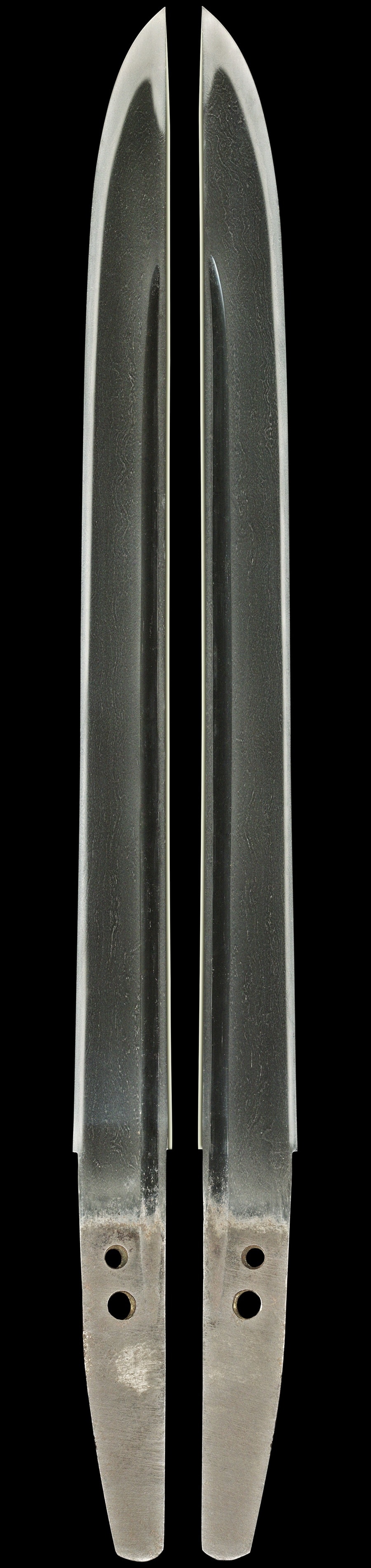
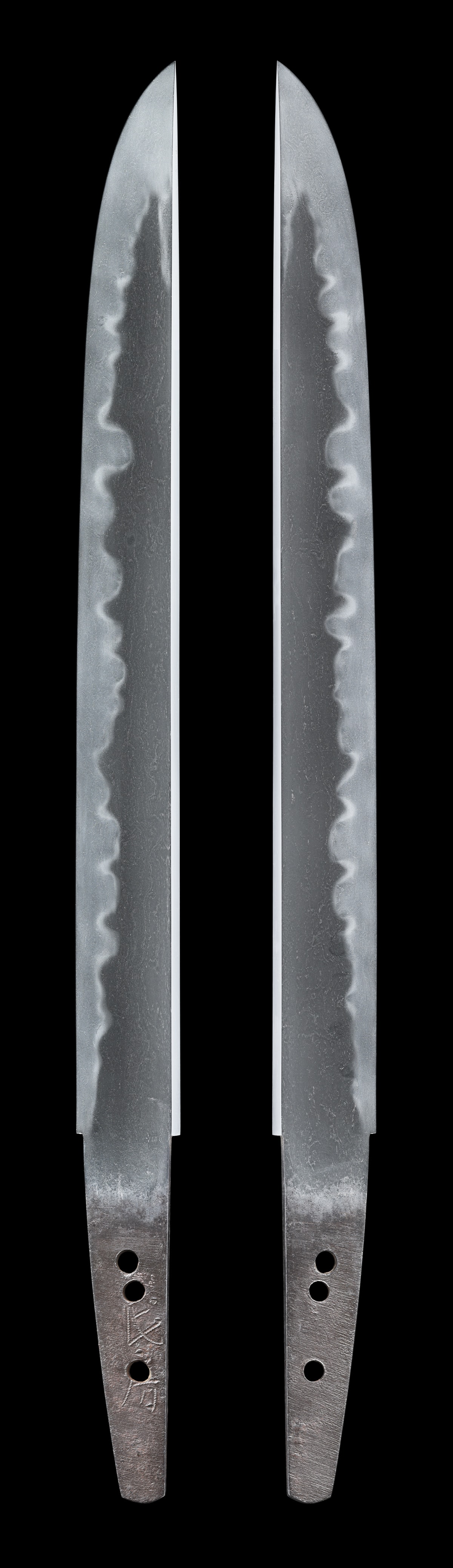
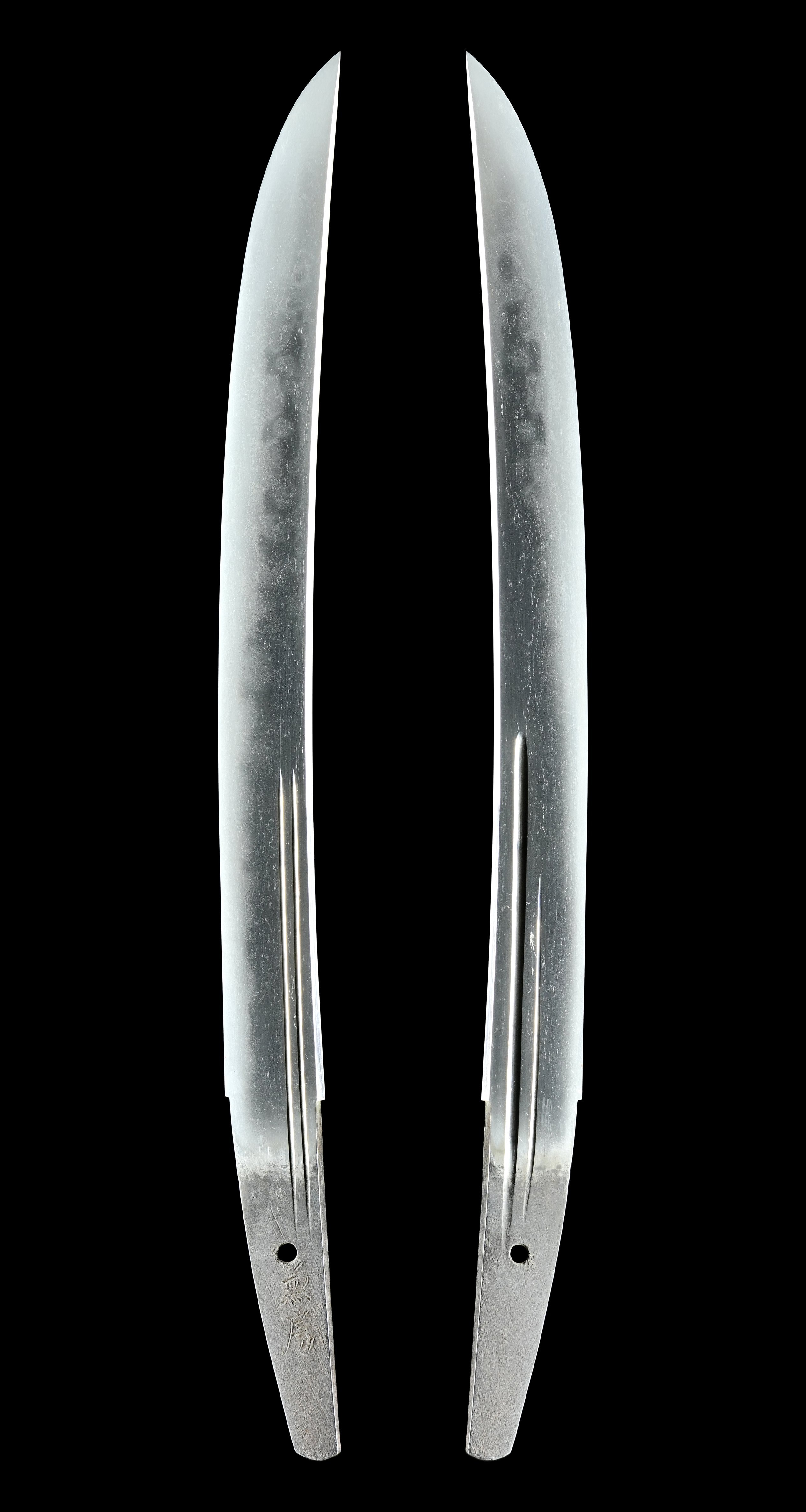
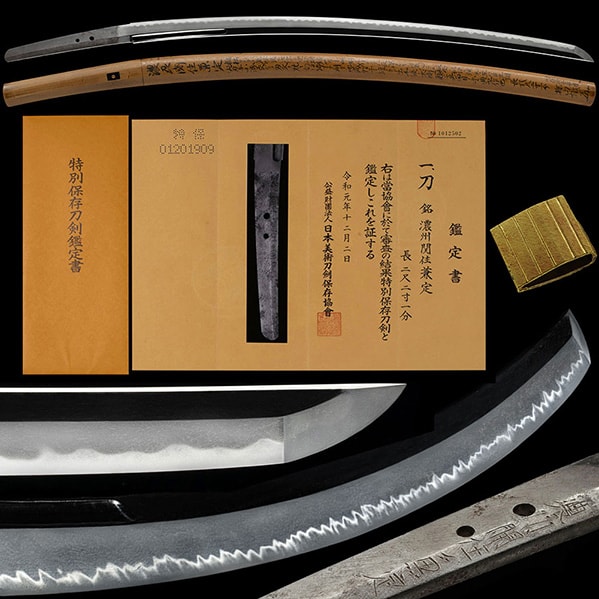
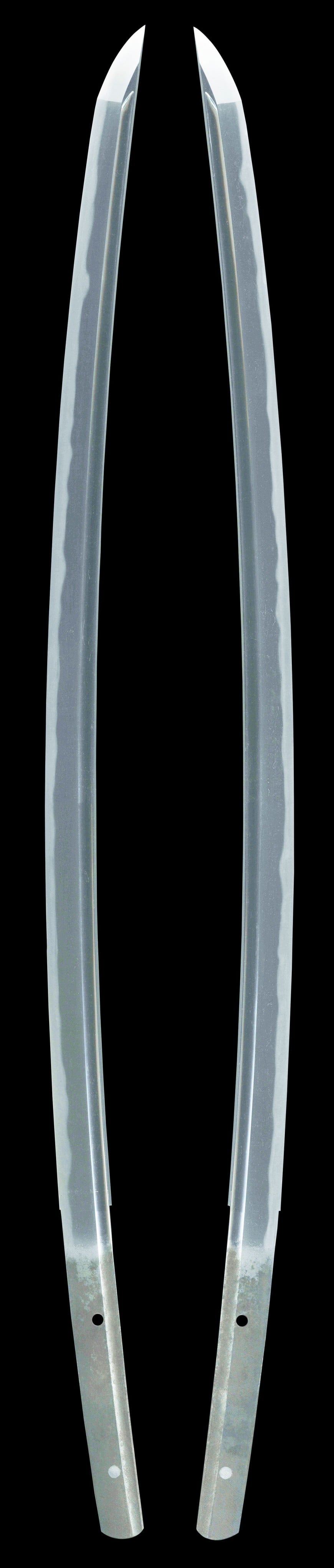
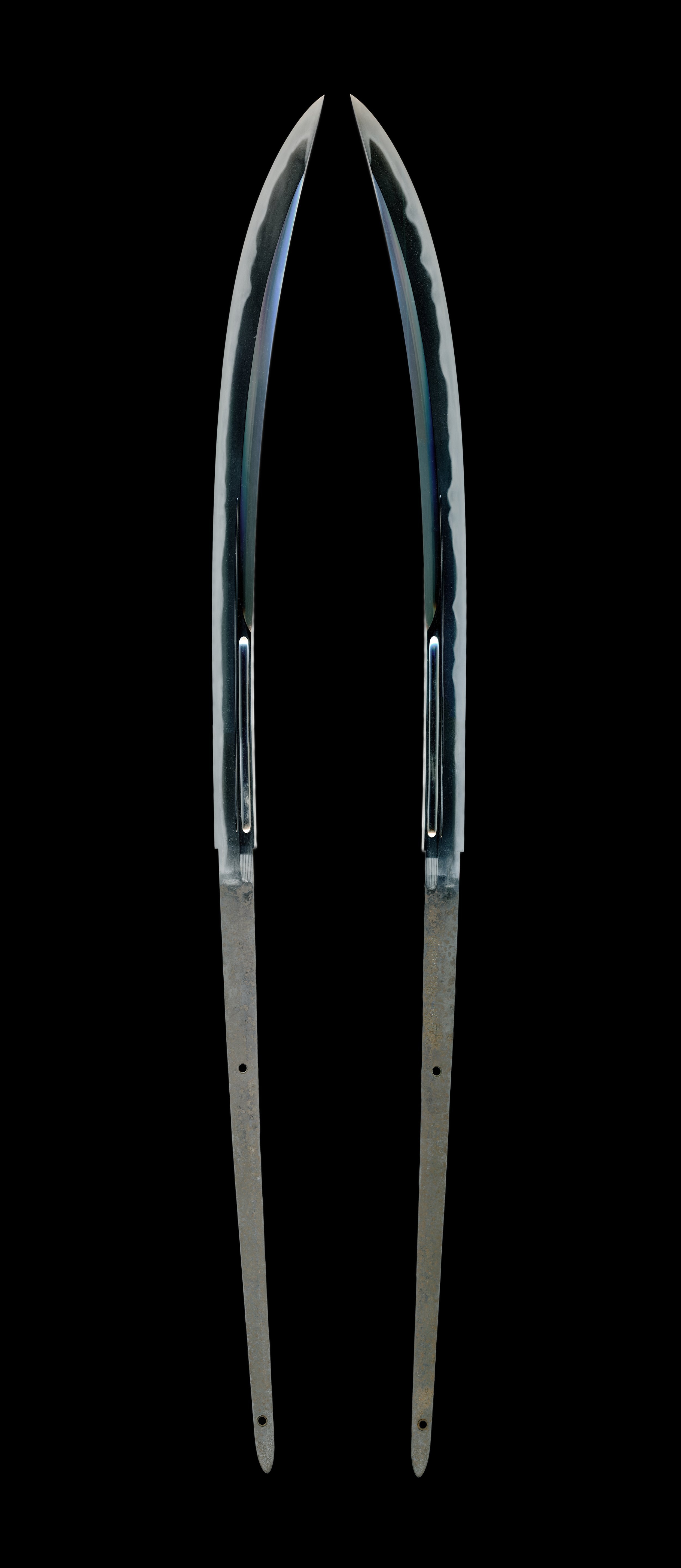
Hanjo is one of the most thinly recorded of all the smiths who reached the rank: across four designated blades the published sources can say only that he was the son or a disciple of Hankei, and that beyond this affiliation virtually nothing is known of him. No by him has ever been seen. The whole surviving body is a single and a few , and the four that carry an official record were designated across nearly forty years, from the 32nd session of 1985 to the 70th of 2024, every one signed with a plain two-character chisel-cut read Hanjo or Shigemasa. The published record places him securely within the line of Hankei, the celebrated early- master who revived in Owari and the manner of Norishige, and it rests that placement not on a document but on the blades themselves: his working style, the construction of his tang, and the character of his signature are so close to Hankei's that the calls his membership in the line certain. Like Hankei, the published sources say, Hanjo took Norishige as his model.
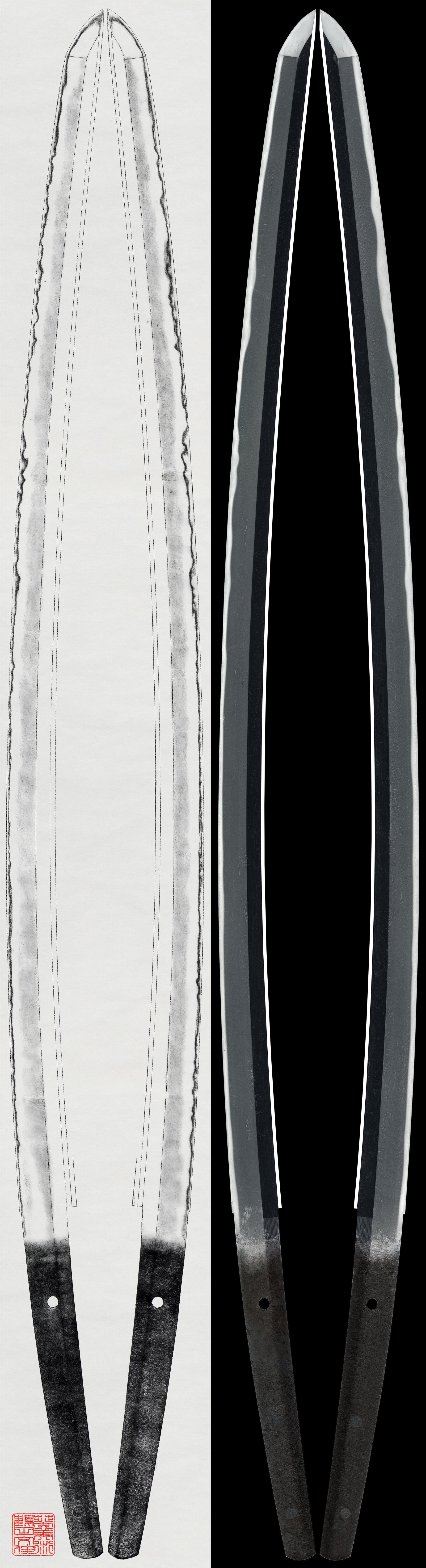
His is one settled hand, modeled on Norishige and carried at full strength rather than divided into manners. The shape is the readiest tell: a wide or , the proportions slightly extended, the thick and the curvature shallow or nearly absent, the back formed in and dropping steeply. The names this stocky bearing as a recognizable trait shared by the Hankei and Hanjo , describing it as a form that is wide for its length yet somewhat shortened in overall dimension, in their words wide for the breadth but with the measure somewhat drawn in. Over that robust frame he forges a large and mixed with and a flowing grain, a that stands up strongly, takes thick , and is run through with stout, black, frequent . On the 41st-session and on the 2024 the published sources name this surface outright as the so-called , the dark, strand-like pattern that is the central recognition point of the Hankei line and the most direct inheritance from Norishige.
The is where Hanjo is read first, and the temper answers it in the key. He sets a shallow , sometimes a , mixed with and at times , entering well, the deep, the thick with a coarser intermixed that leaves the line a little uneven. Across the whole of it run and bold , with and frequent , small and appearing in places along the back, the tending throughout toward a subdued cast. The answers in a small round or a large round with a deep return, vigorous brushing the point into a flame-like shape, the often most conspicuous from the up through the tip. None of this is decorative in the sense. It is the streaming, -laden activity of the tradition as Norishige left it, reproduced by a second-generation hand with the intent and, the insists, with no inferiority to the master's own .
That one settled manner does admit a single recorded departure. On the 39th-session of 1993 the published sources read, in the -and- temper and in a that rises in with a pointed tendency on the and a that runs down into the as , an aim not at Norishige but at , conceived as they put it within the tradition with an eye toward a master ranked above Norishige. They call it an ambitious piece in which the smith took the style of that higher hand into account. They are careful to add, though, that apart from the cutting line the general aspect of the and still shows the Norishige tendency that is this smith's customary working range, so that the aim is a deliberate variation laid over a fixed hand and not a second manner. The build and the steep drop of the back, the sources note, betray the Norishige model even here.
What distinguishes Hanjo within his own school is less a divergence than a faithful continuation. He has no recorded successor and no separate lineage of his own; his standing is that of the clearest surviving witness to the second generation of the Hankei manner. The published sources draw the comparison the smith himself invited, holding his and filled with vigor and pronouncing the work comparable to the master's, in their phrase a finish that fully equals Hankei's own . Set against the great originals he derives from, his blades carry the standing grain and dark of Norishige without the at its most extreme, and the -broken of the line rather than the flamboyant of or the long Yamashiro ; his bright streaming and the subdued, -deep set his work apart and place it squarely in the Hankei descent.
Hanjo is, in the end, a connoisseur's documentary smith rather than a market name. Four blades stand on the official record, all at the tier and none above it, and the published sources value them less for splendor than for evidence, calling each precious as material for understanding the work-range of so scarcely recorded a hand. No provenance of named owners attaches to them in the record, and with no known and only a handful of and a lone surviving, a blade by Hanjo is among the rarer things a collector of - work could hope to encounter; when one does appear it comes from time to time and with patience, never in quantity. For the student of the Hankei line it is the more valuable for that scarcity, a sound and vigorous example of how Norishige's manner was carried a generation past its revival, and the published record returns again and again to that judgment, that the work shows a quality fully the equal of the master and is treasured as the documentary trace of a smith of whom almost nothing else remains.