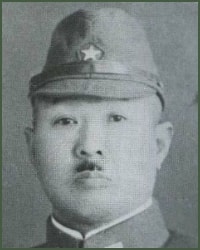
The twentieth century nearly killed the craft twice: wartime distortion, then the occupation ban. The NBTHK’s founding in 1948 and licensed forging from 1953 rebuilt the sword as an art, crowned by Living National Treasures and the mukansa rank.
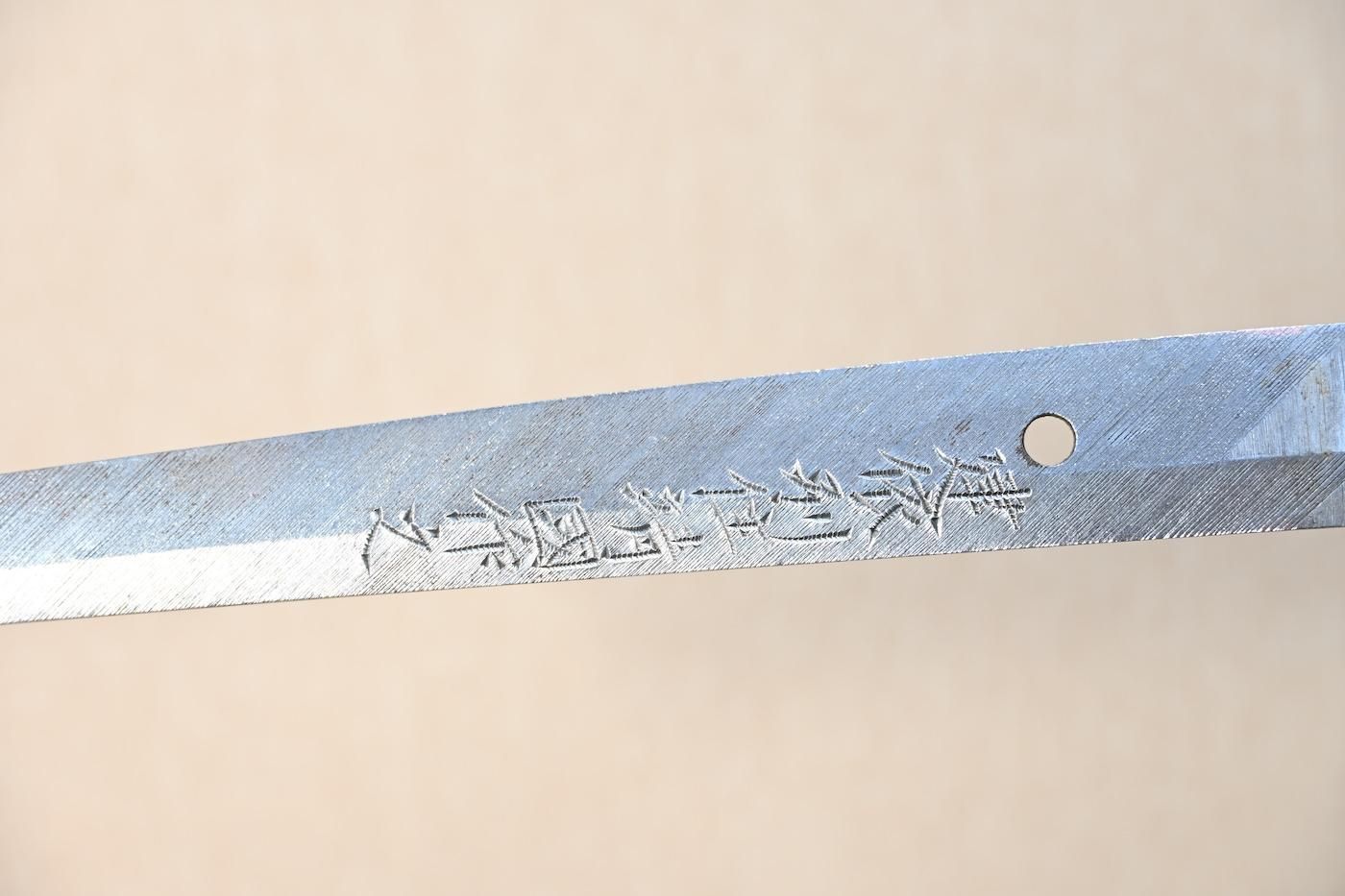
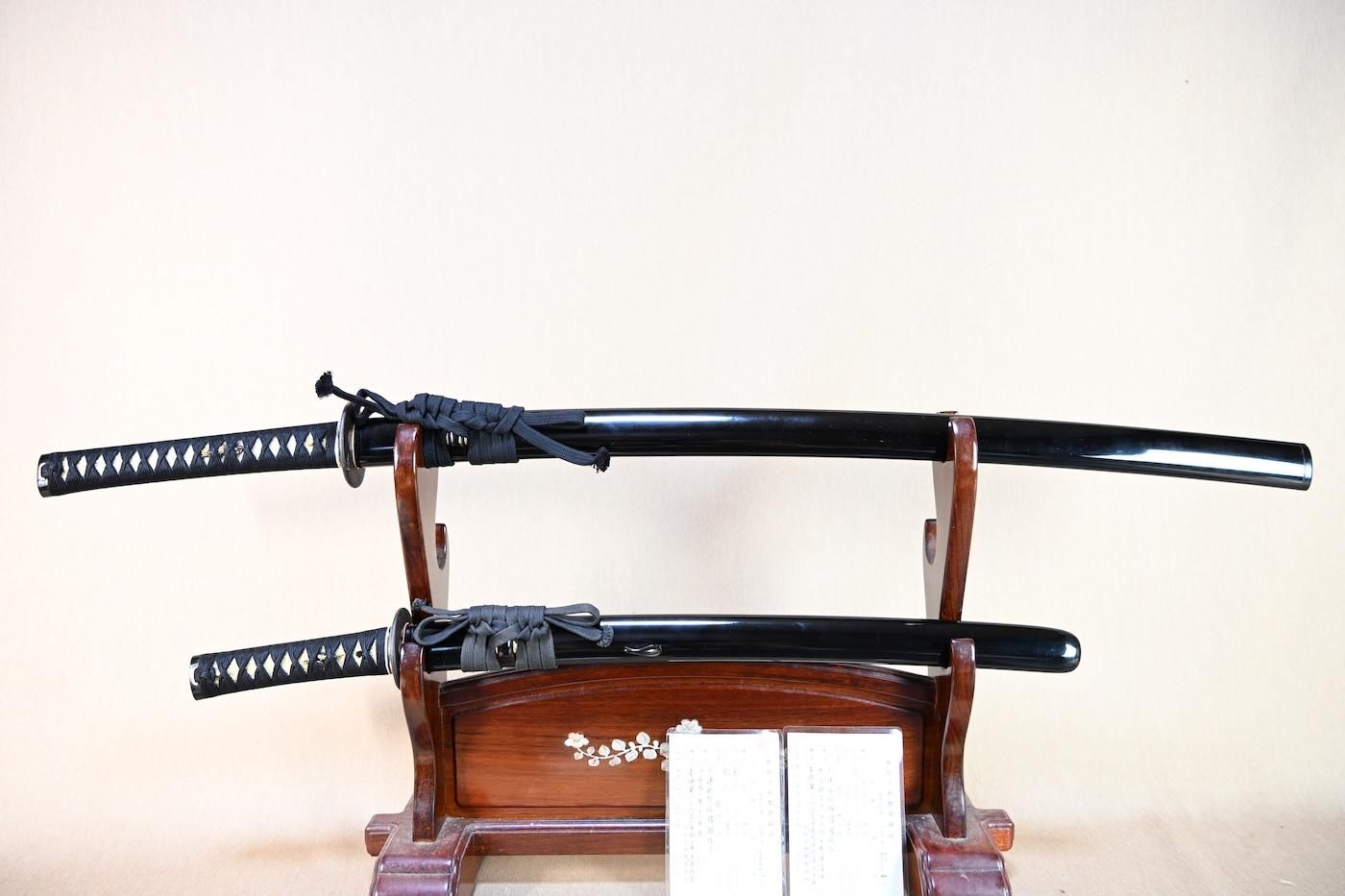
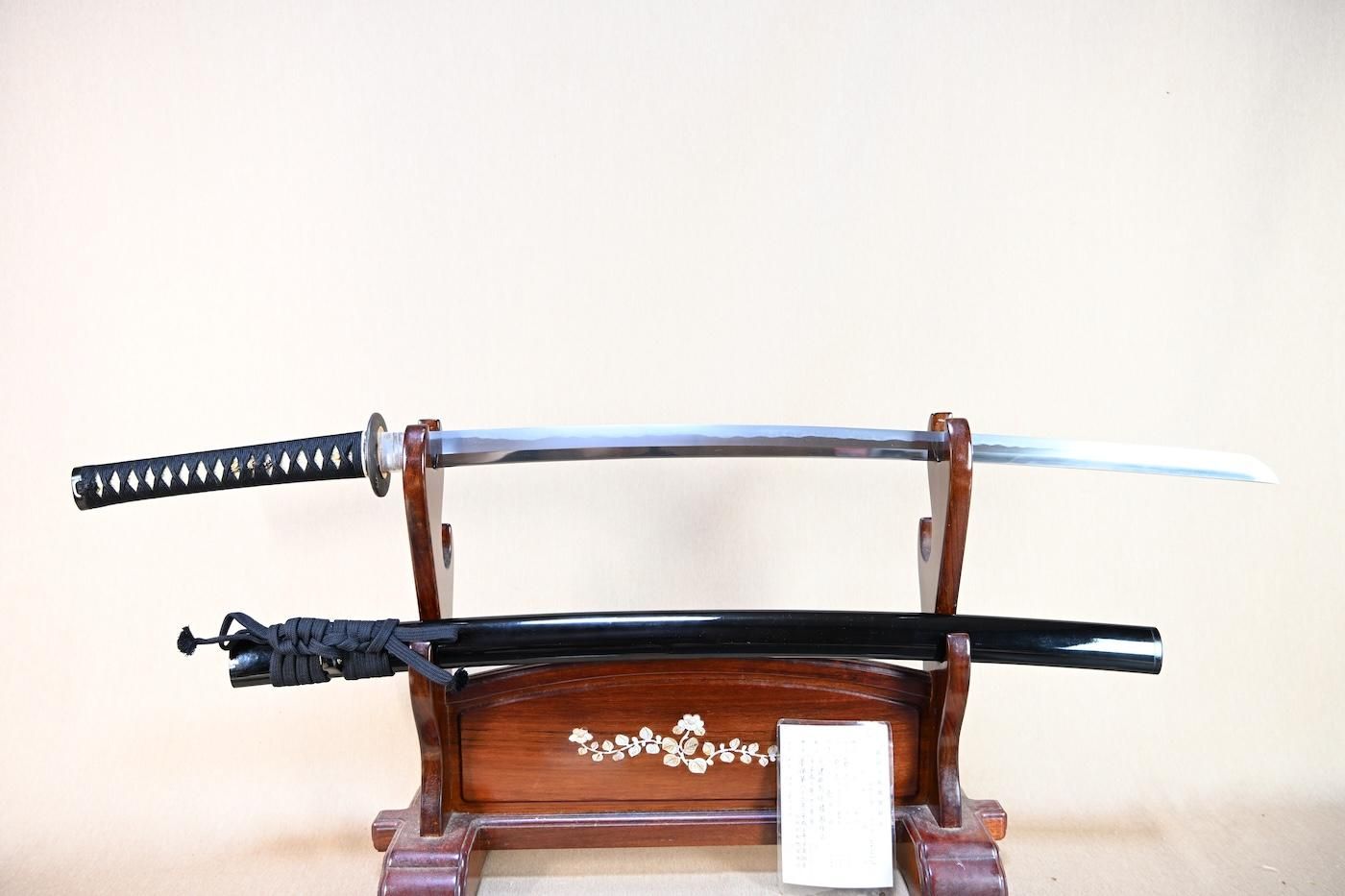
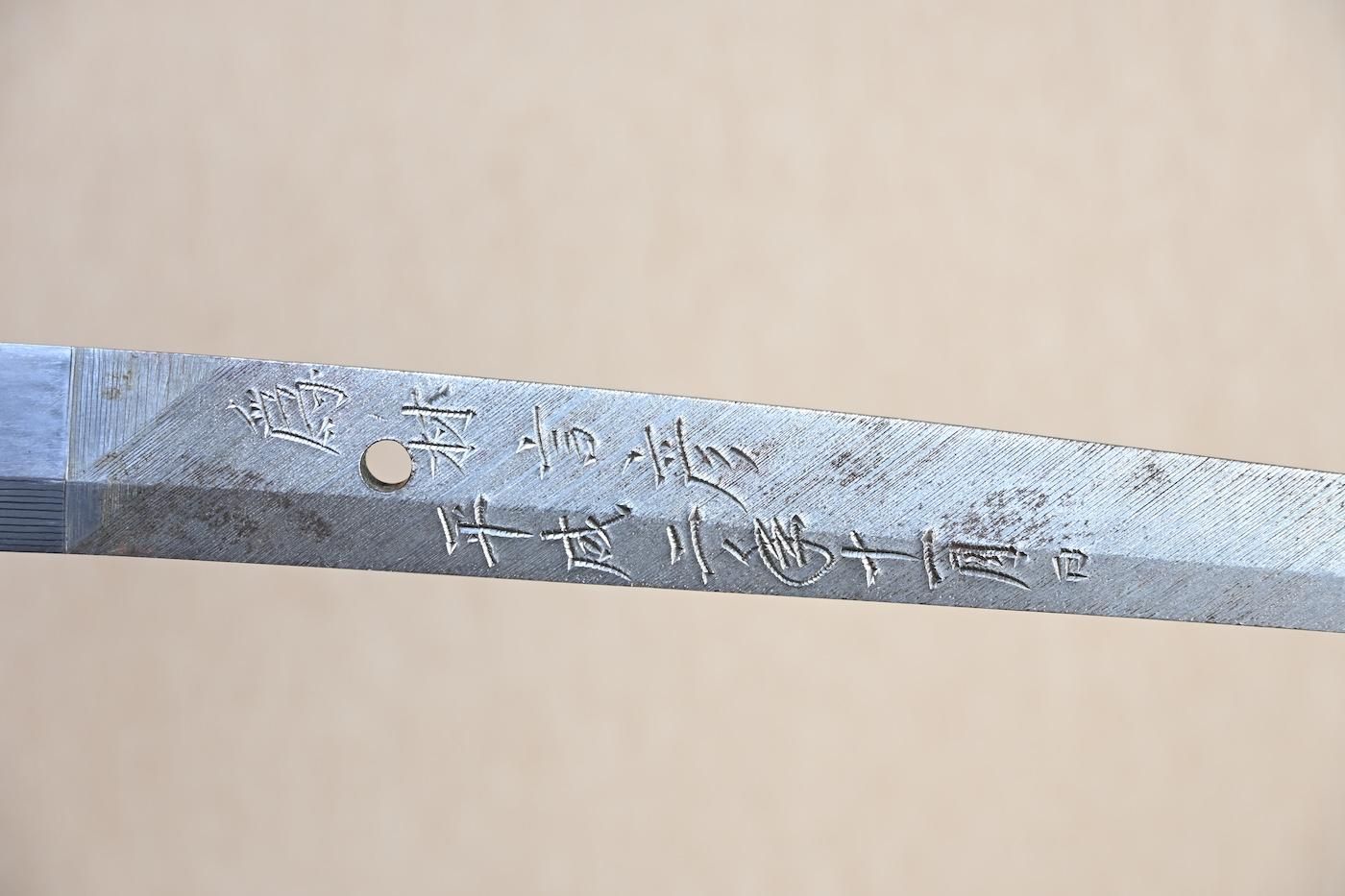
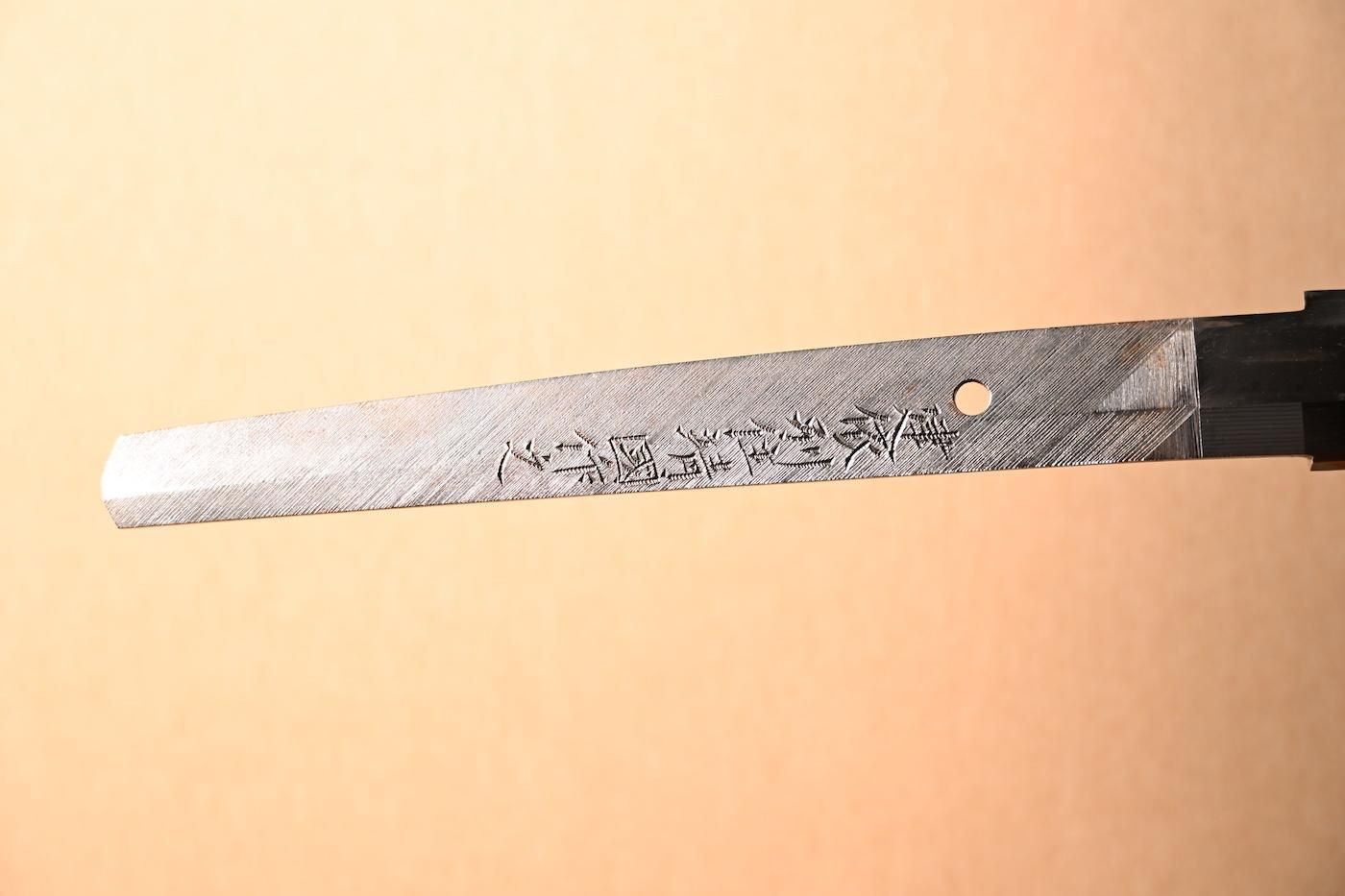
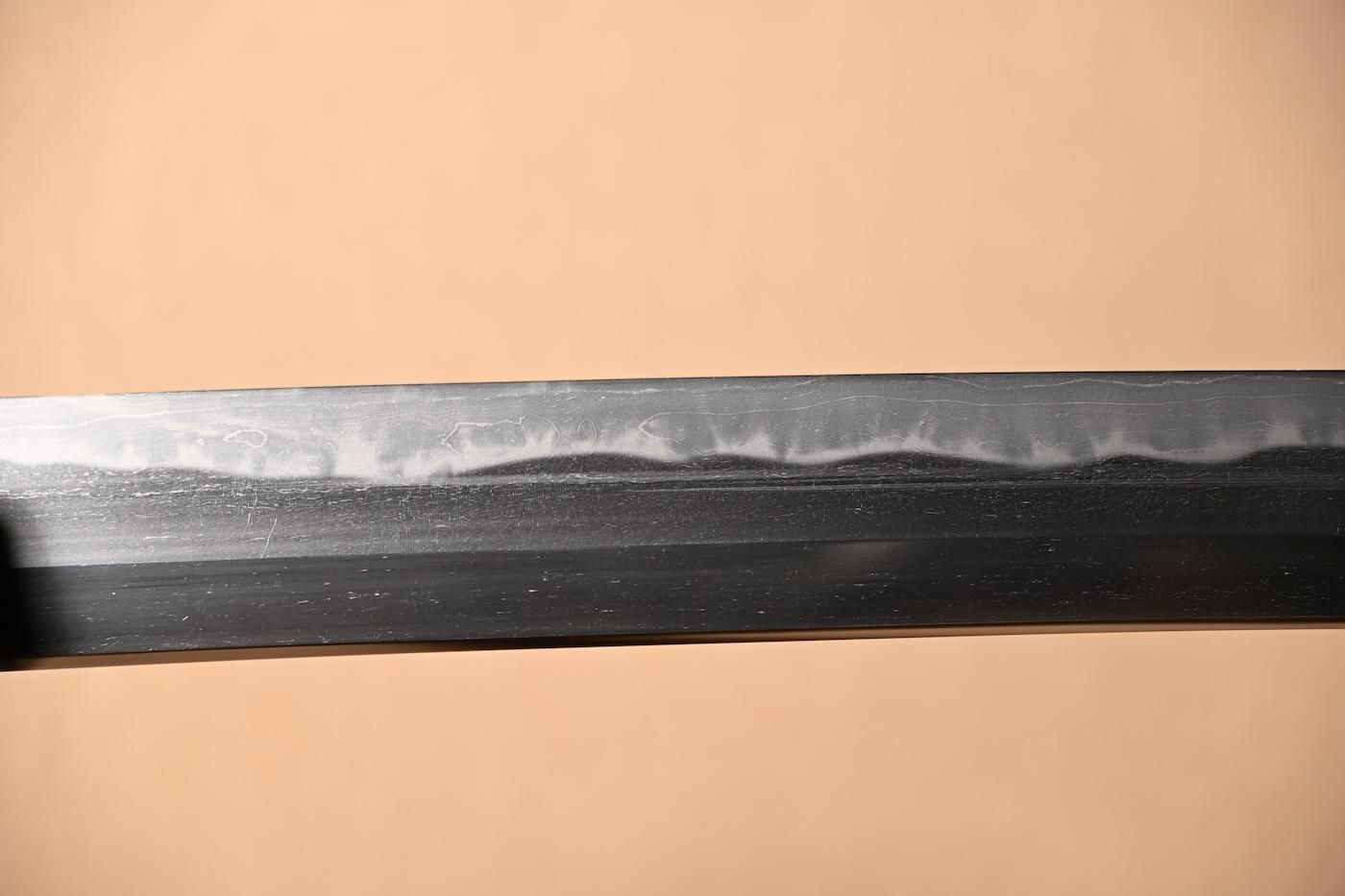
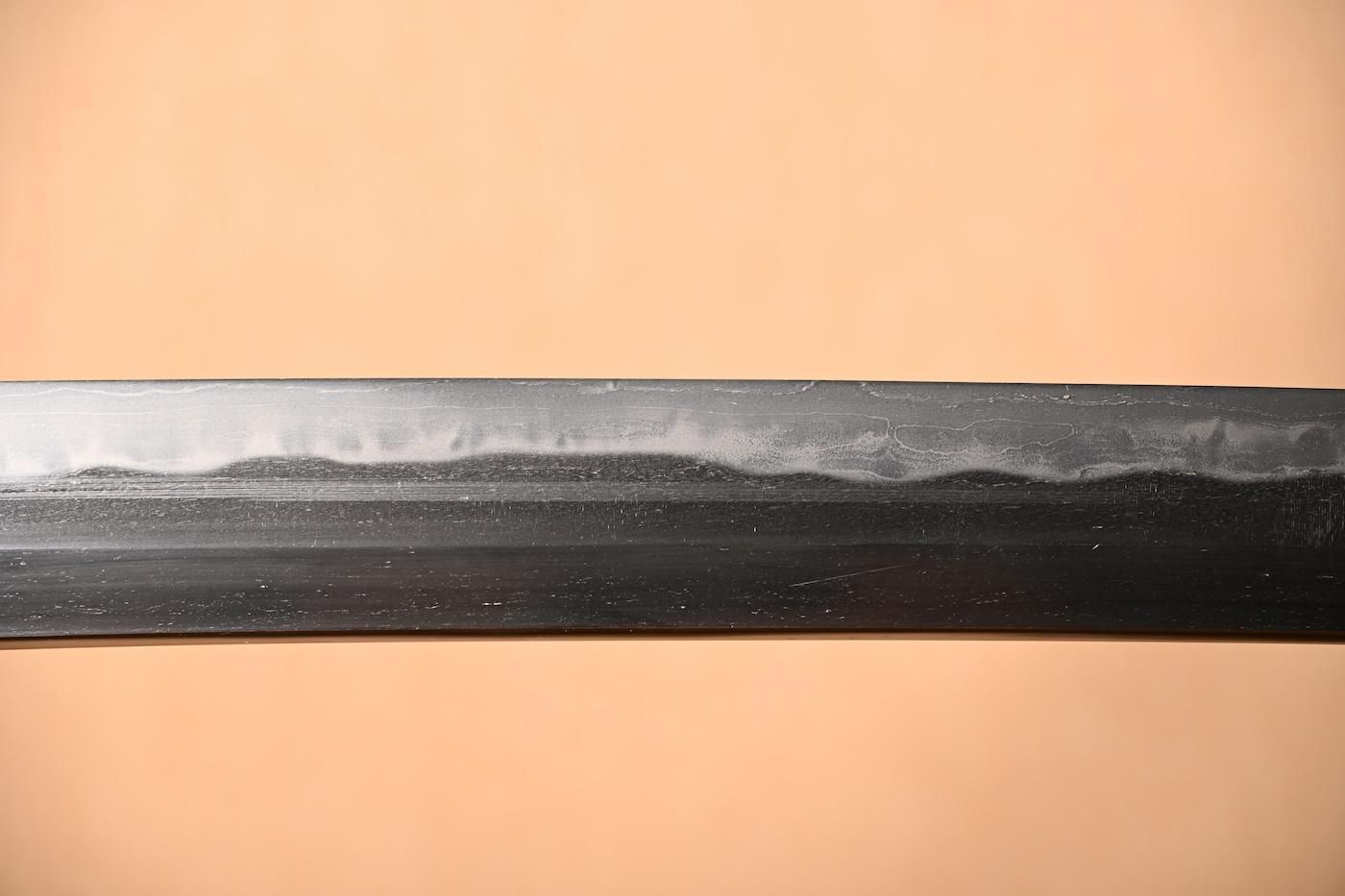
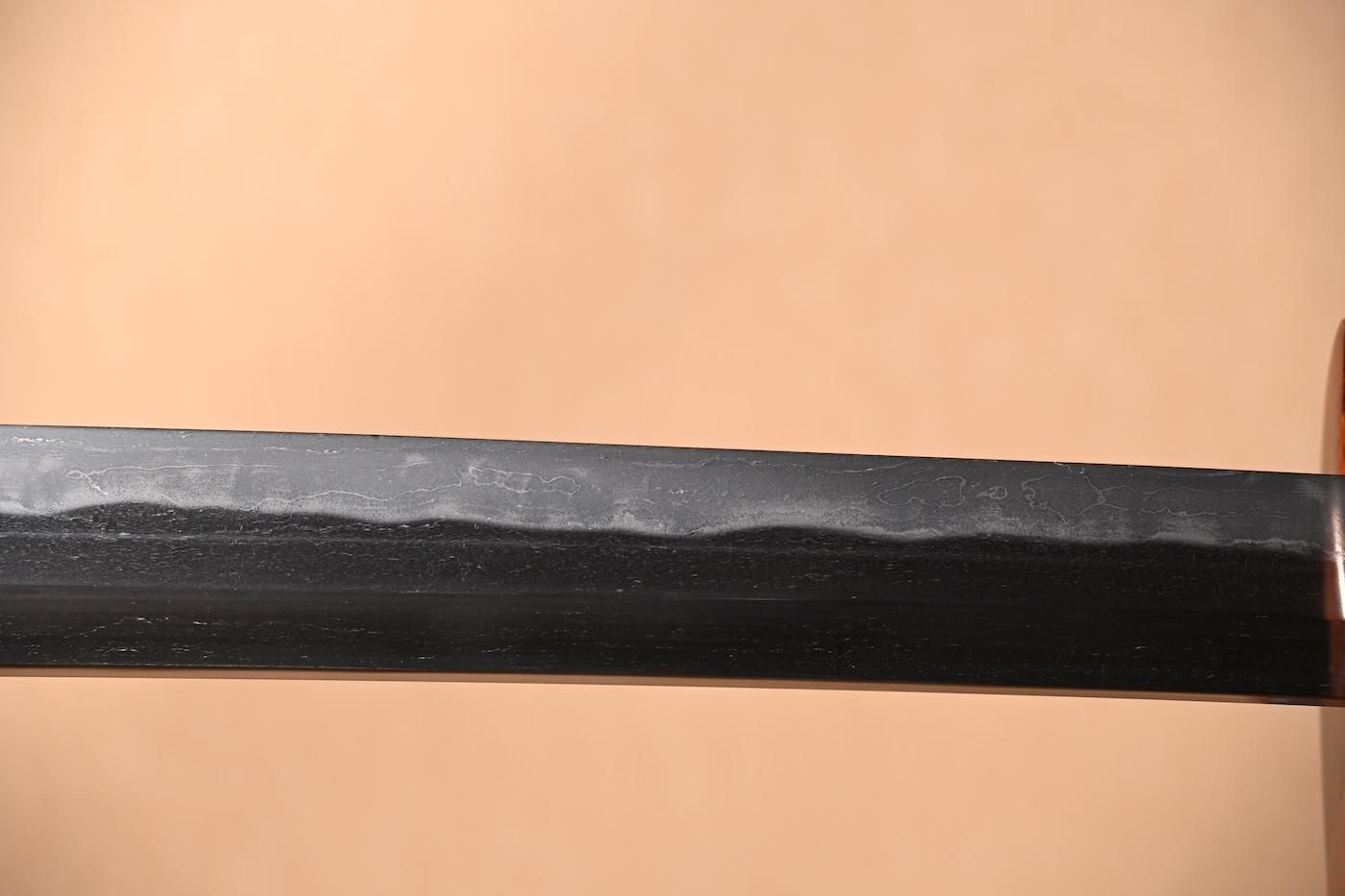
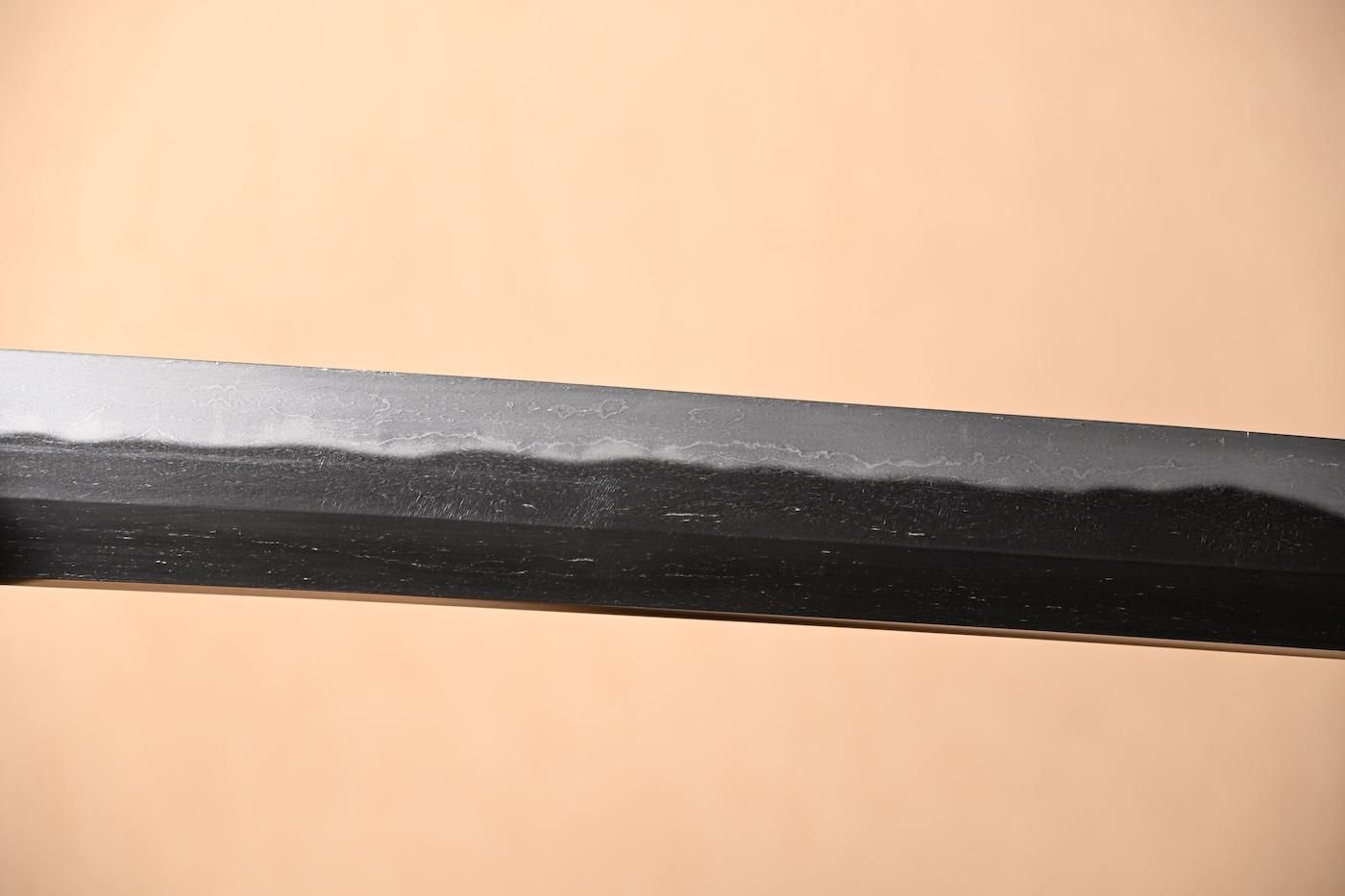
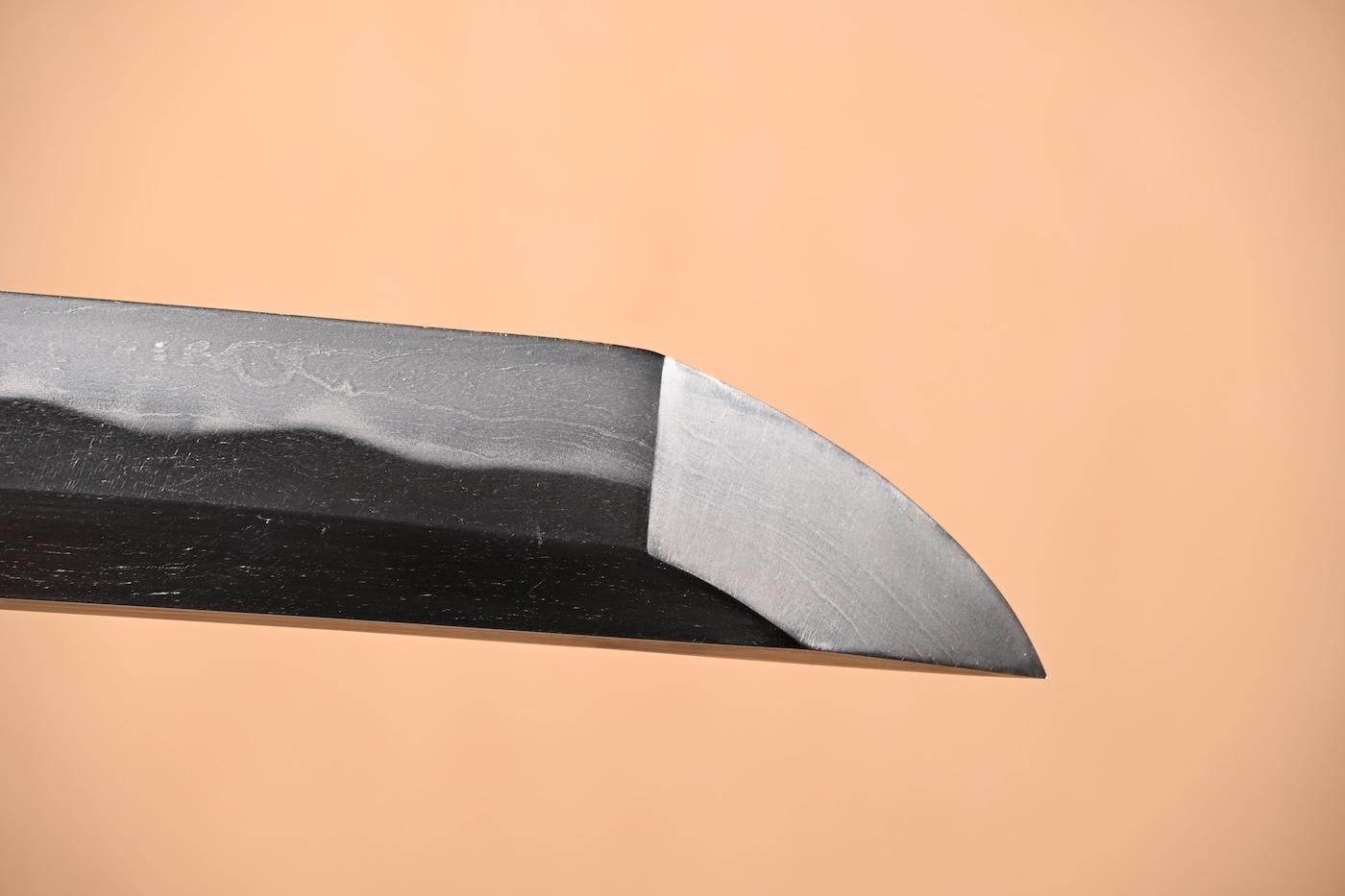
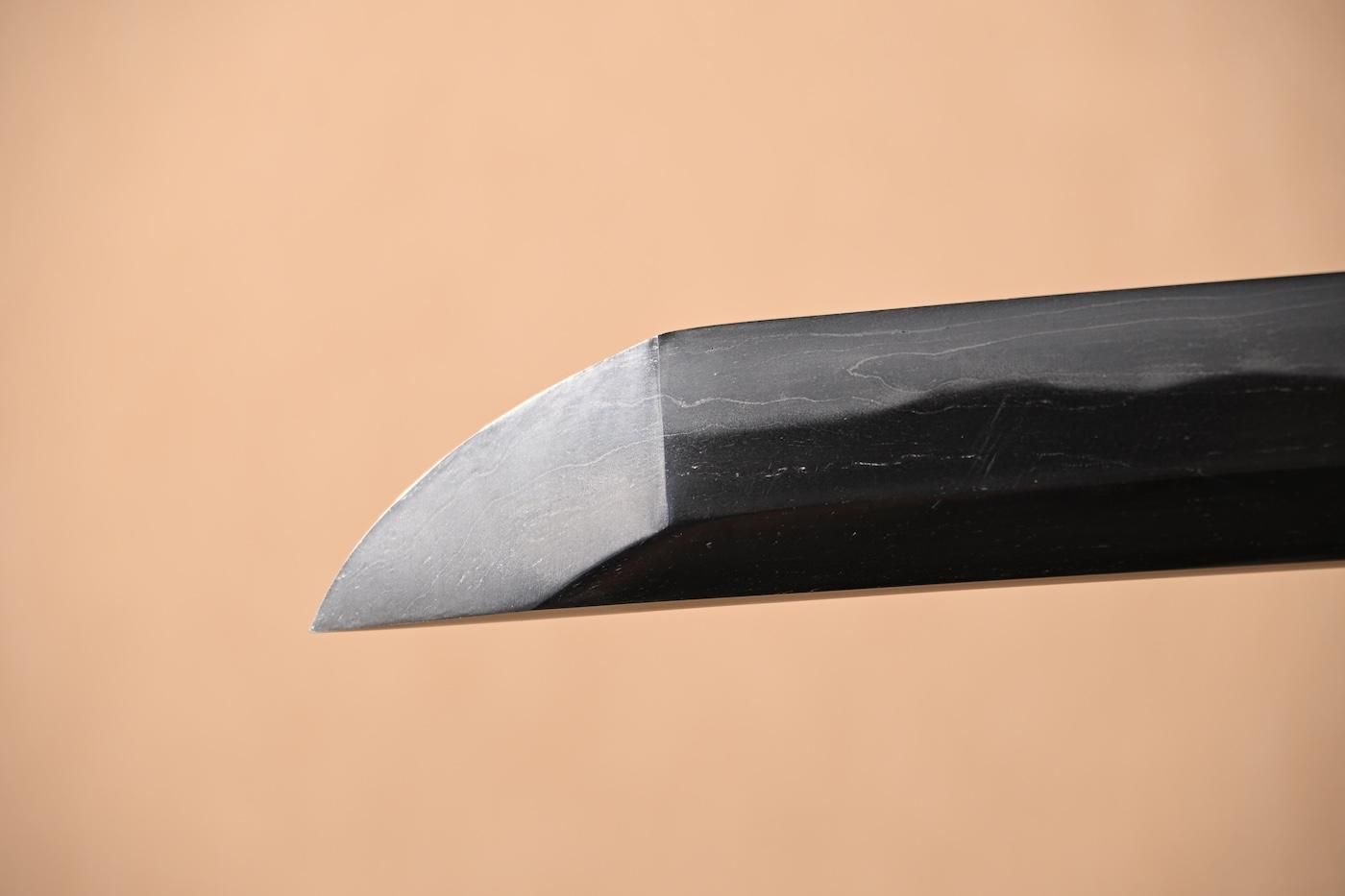
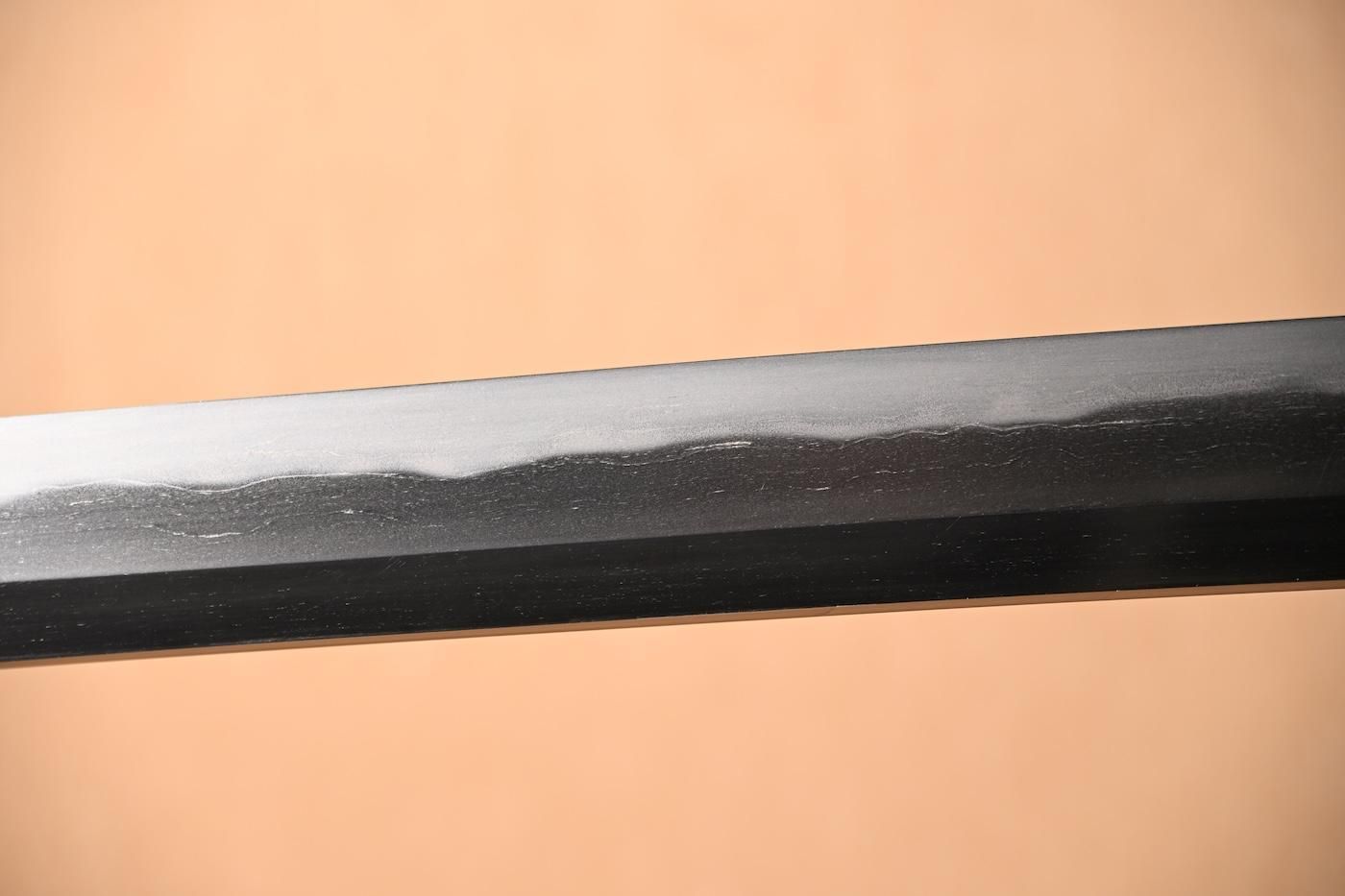
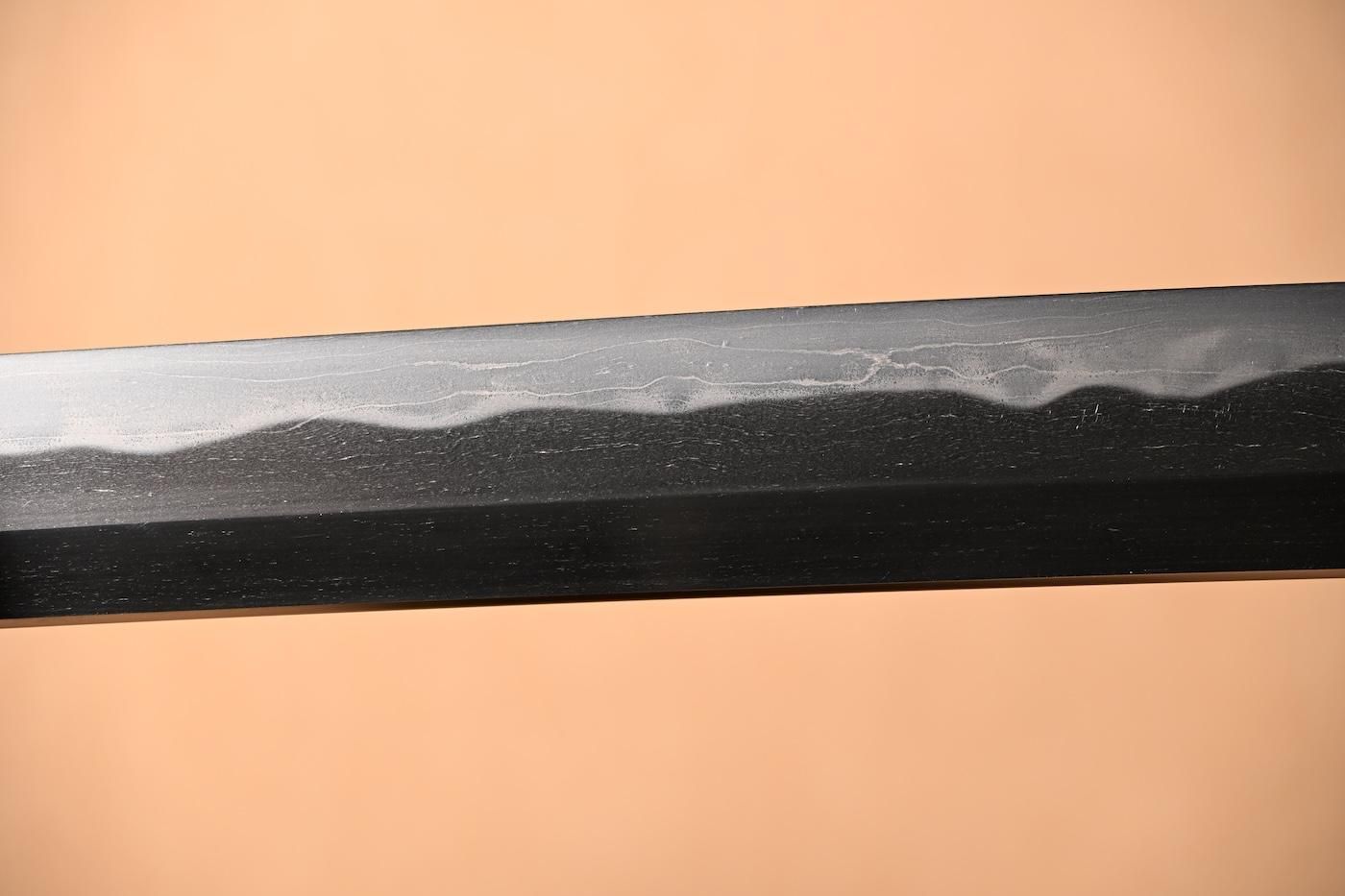
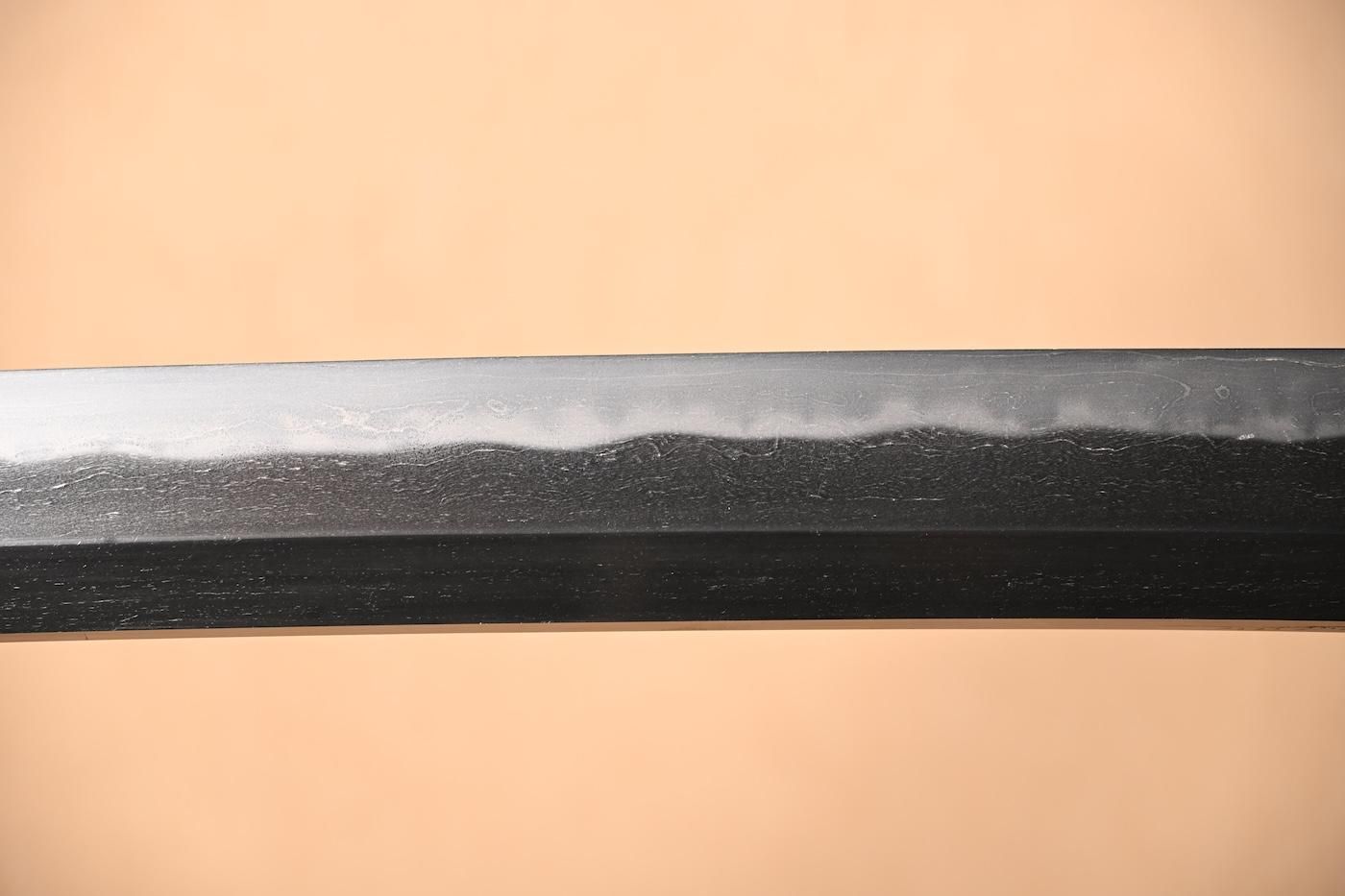
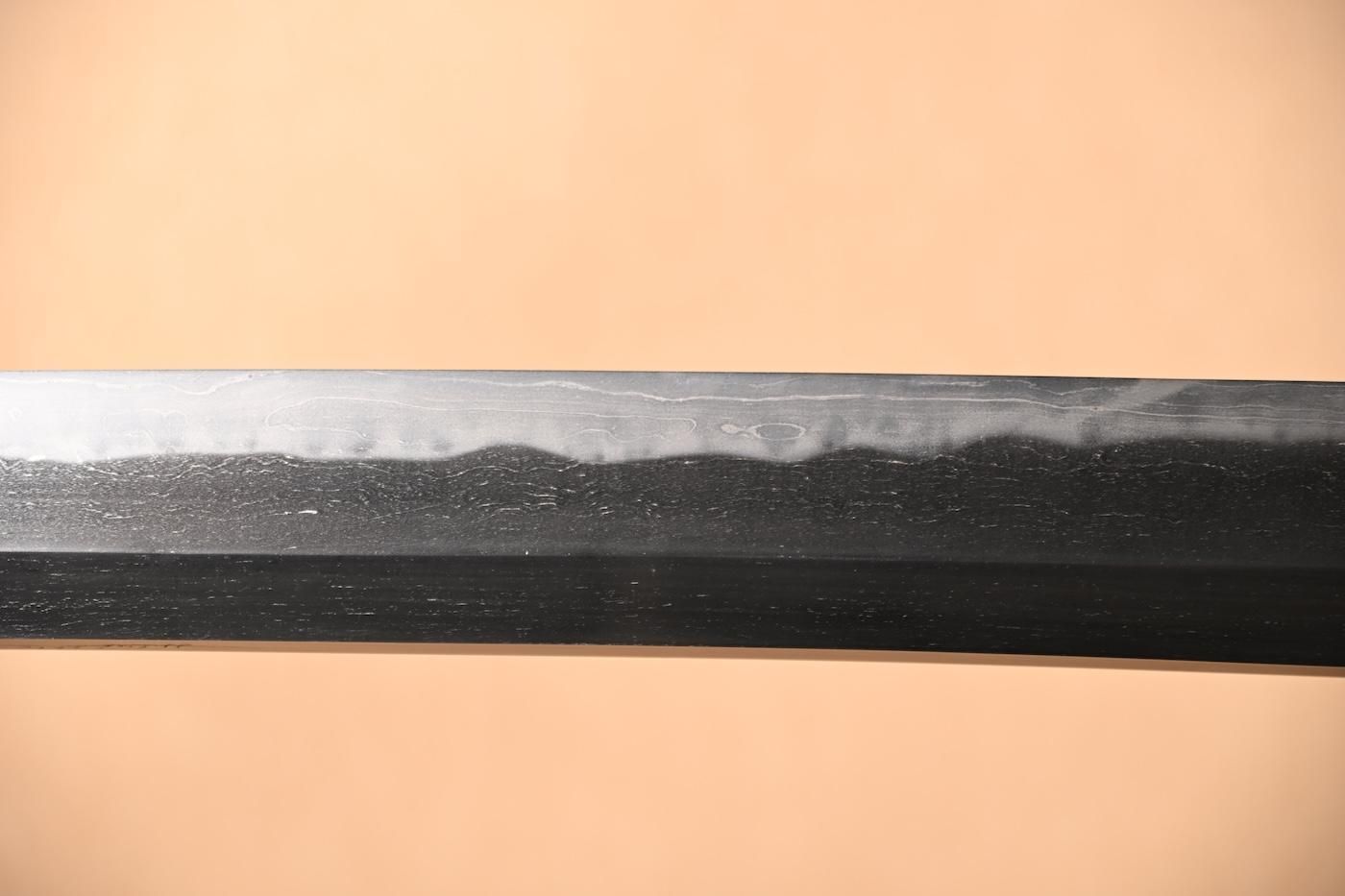
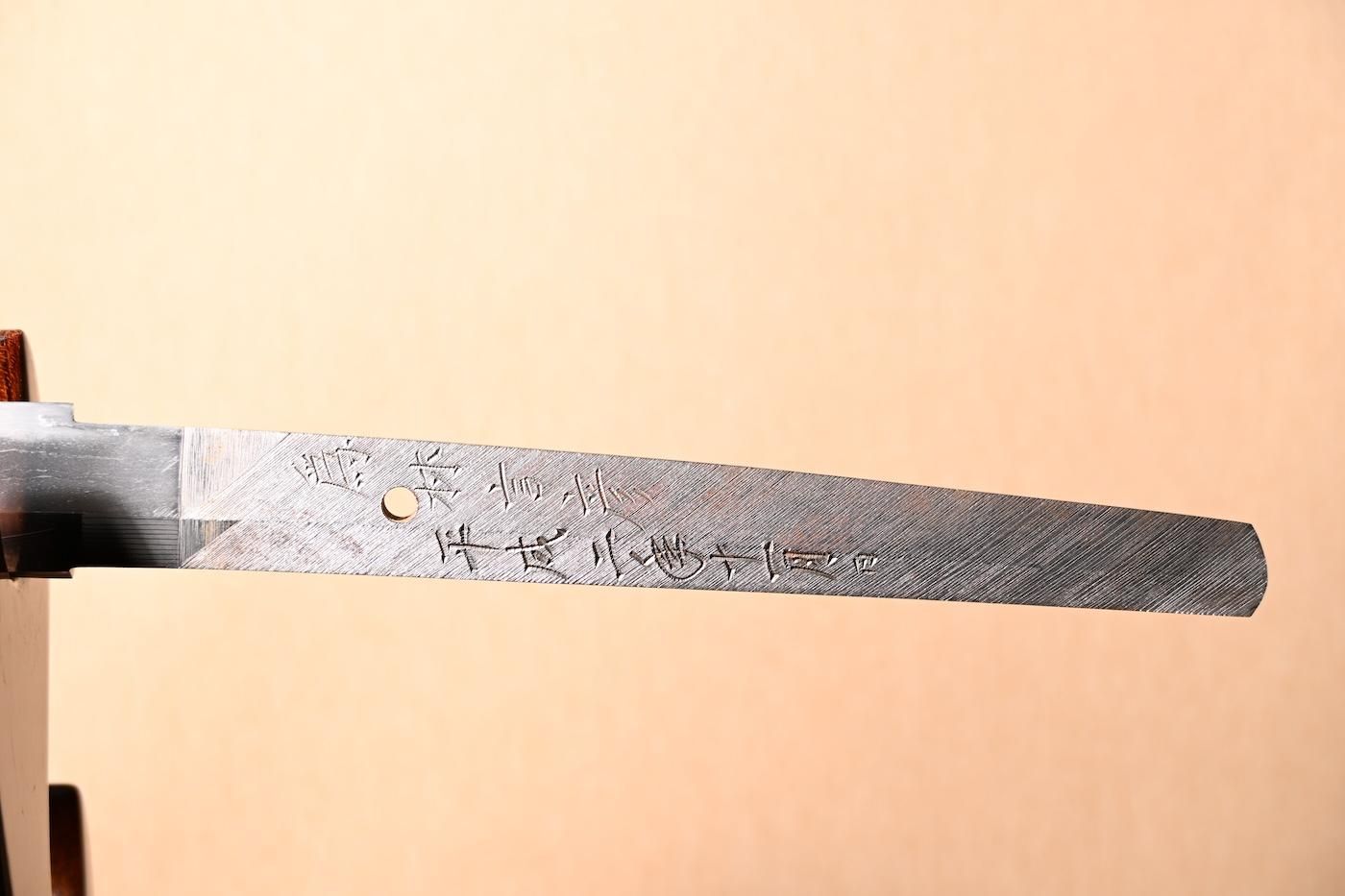
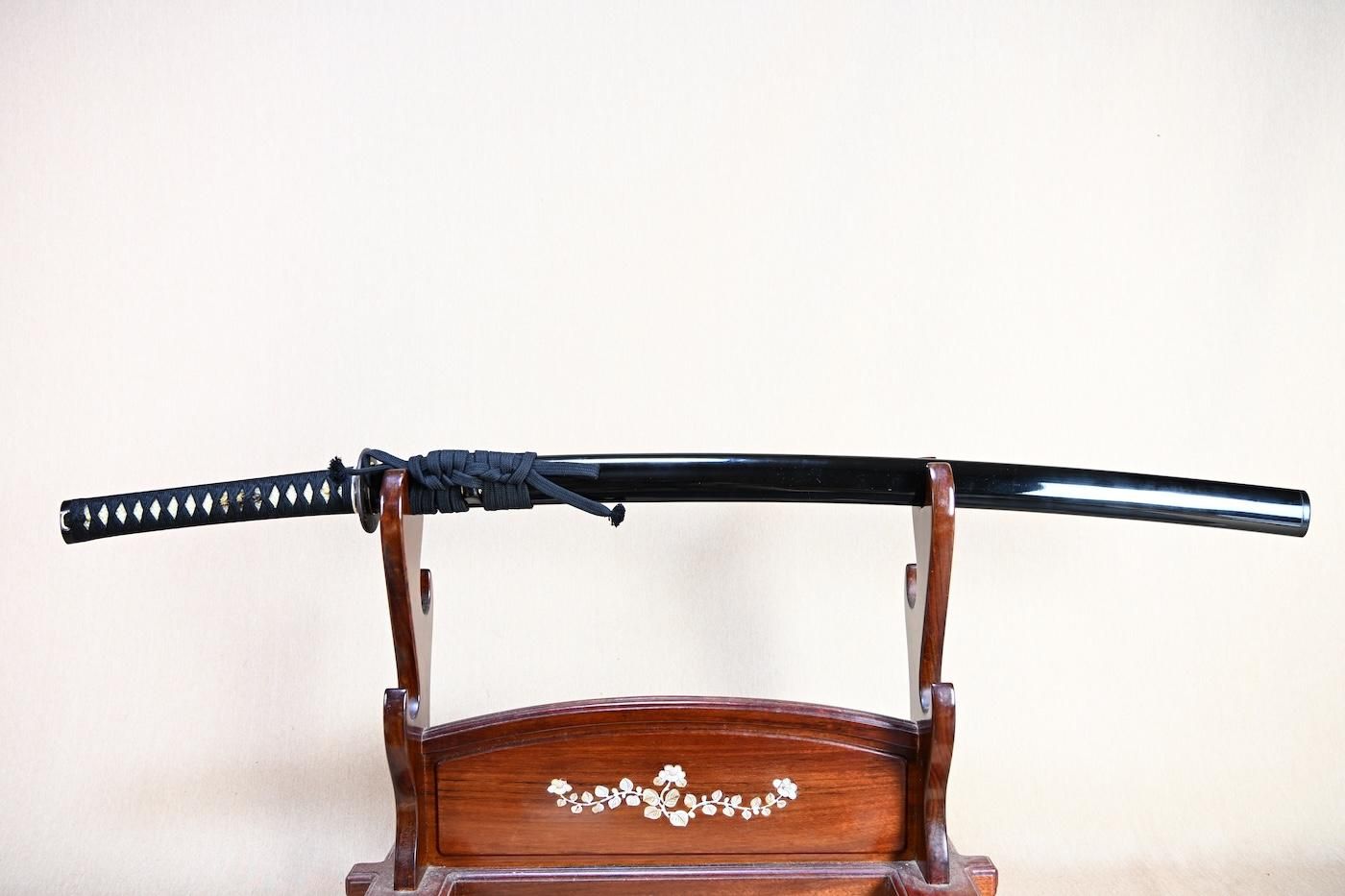
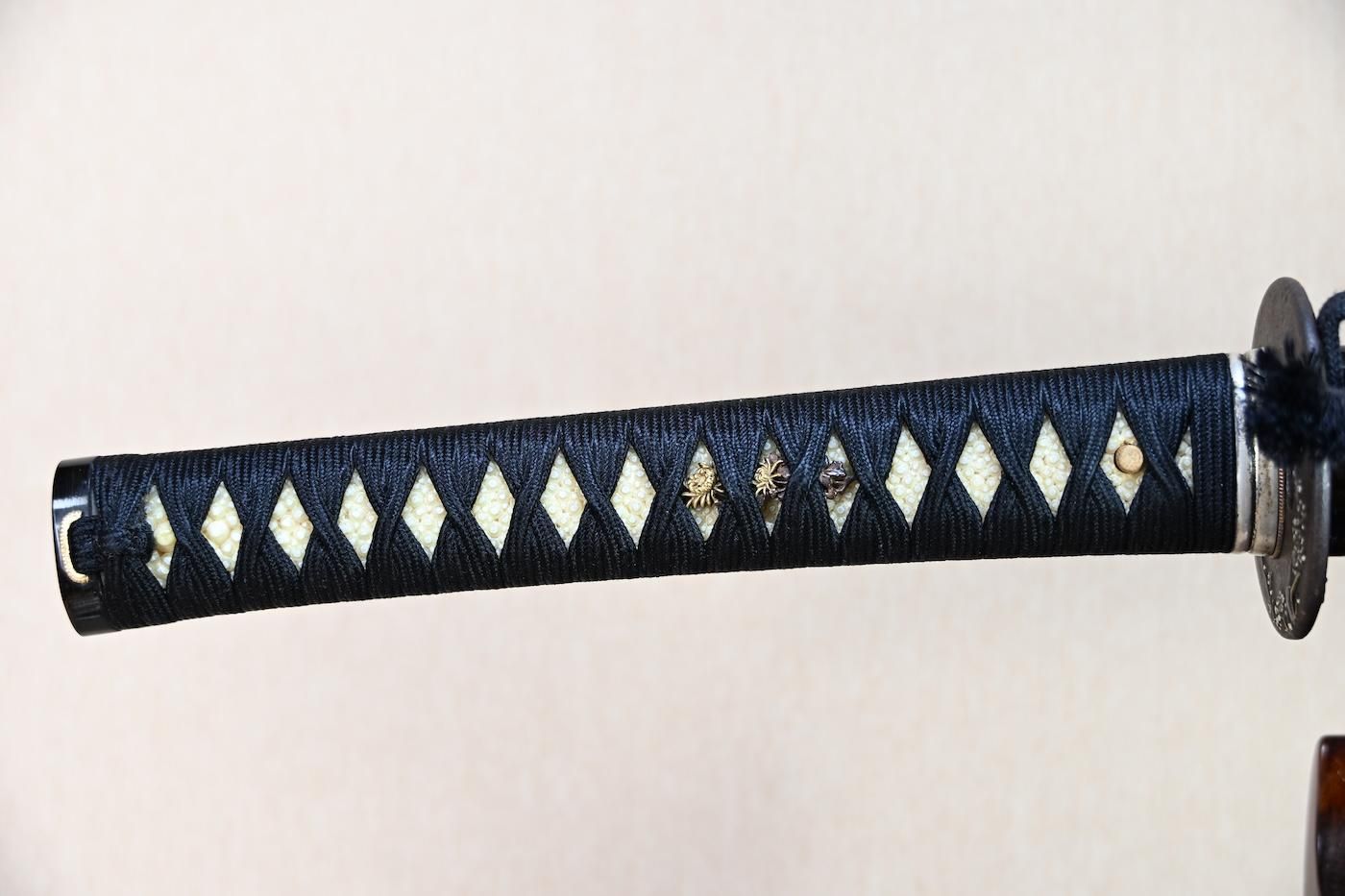
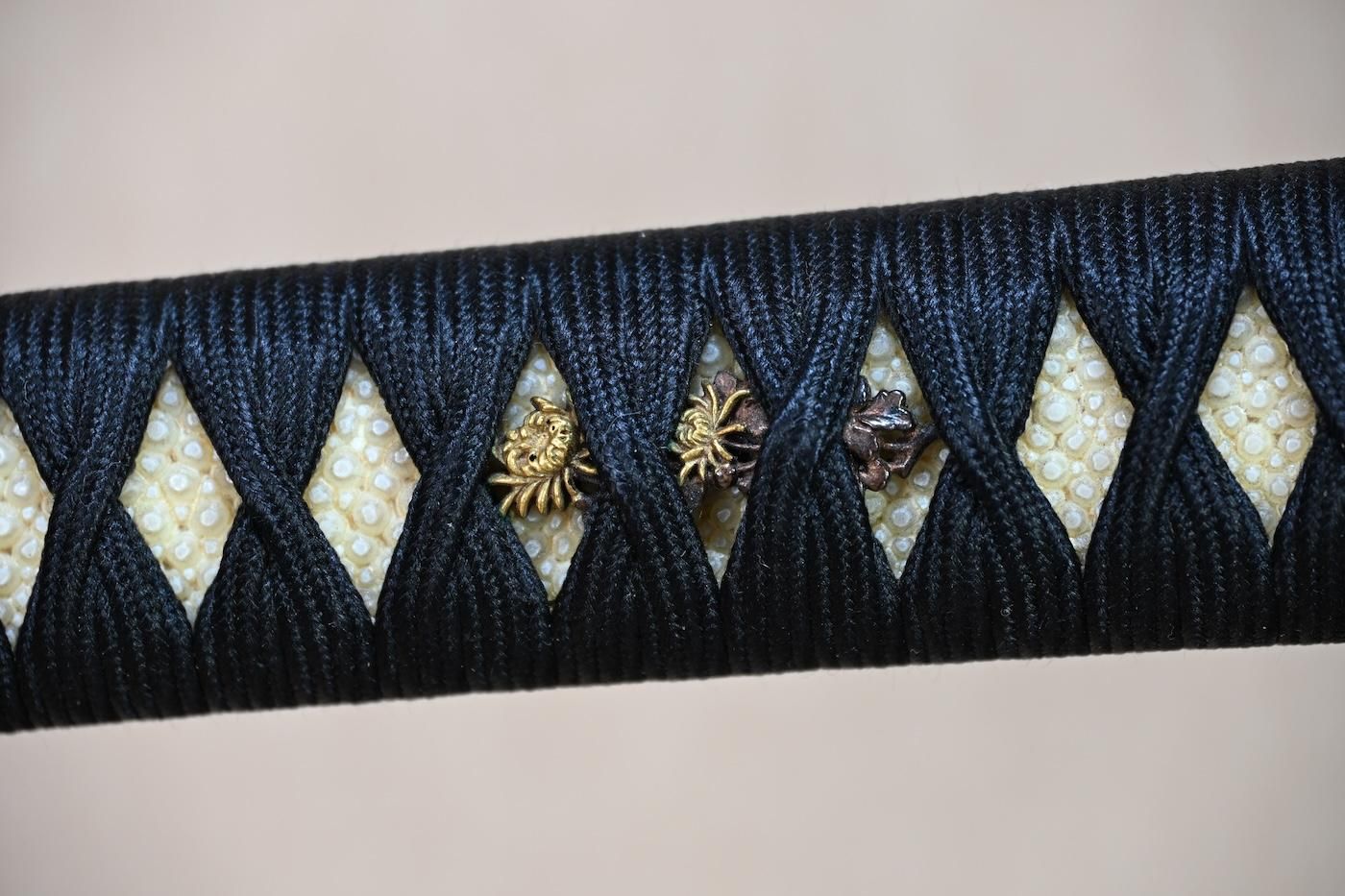
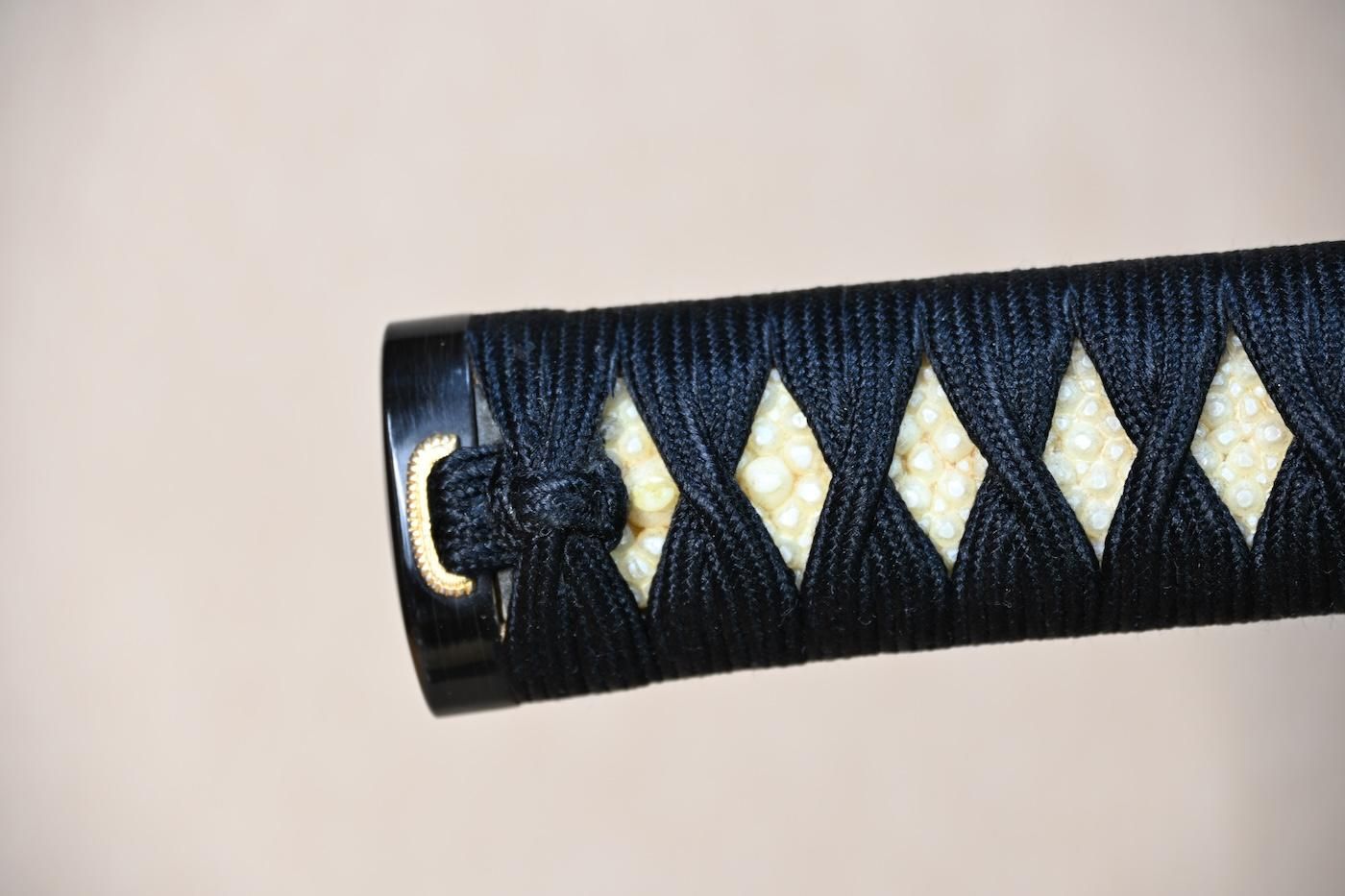
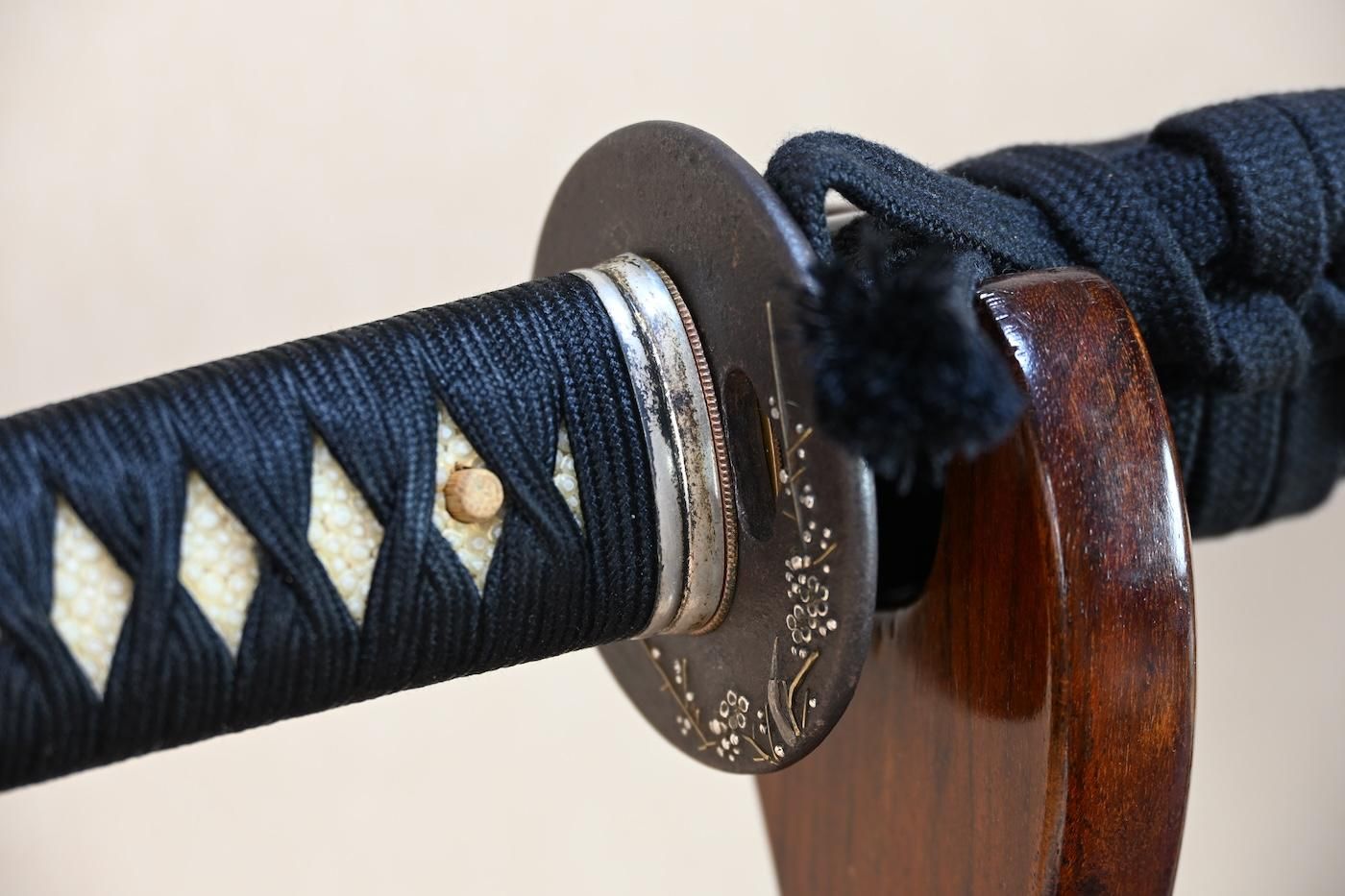
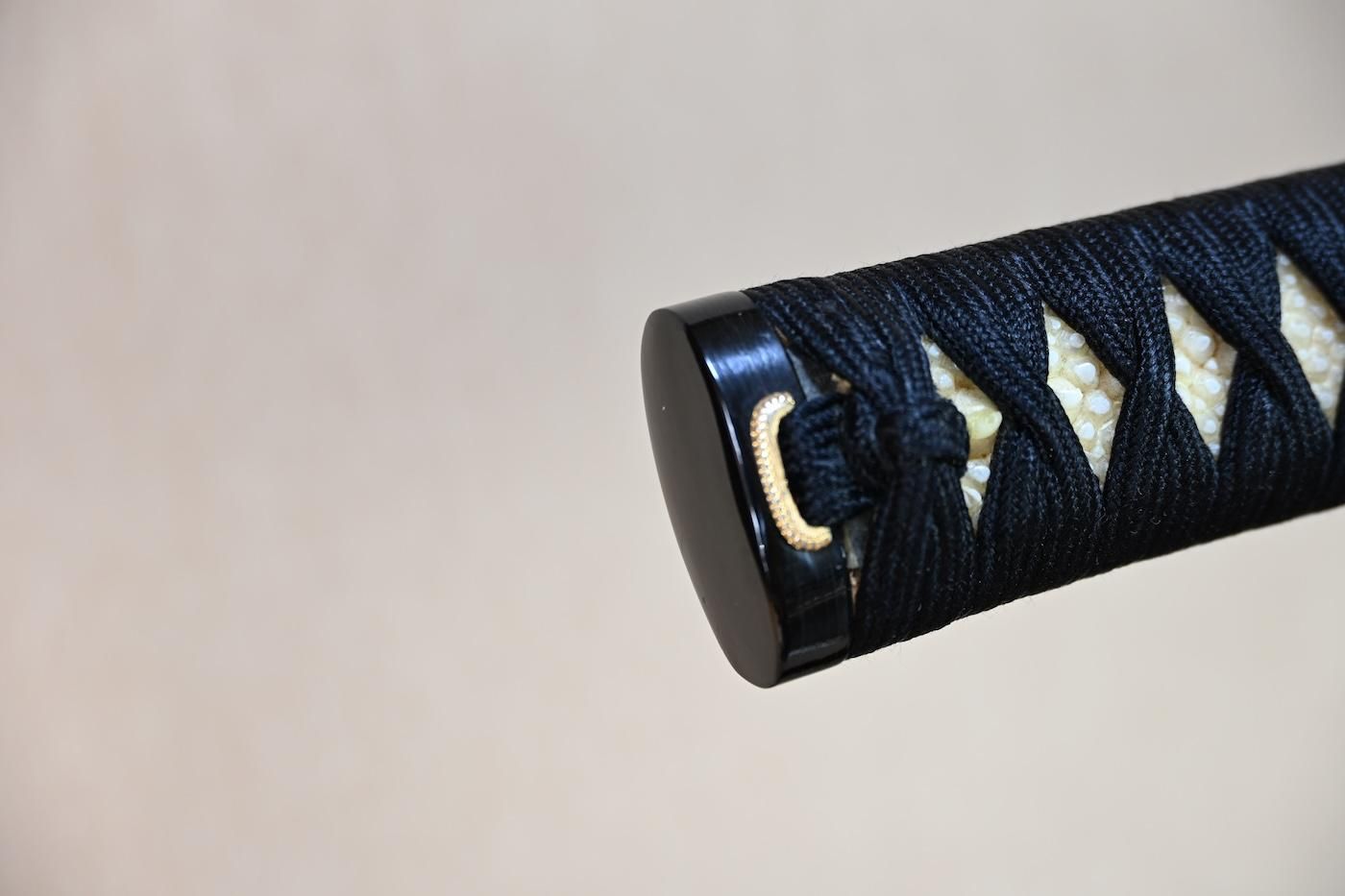
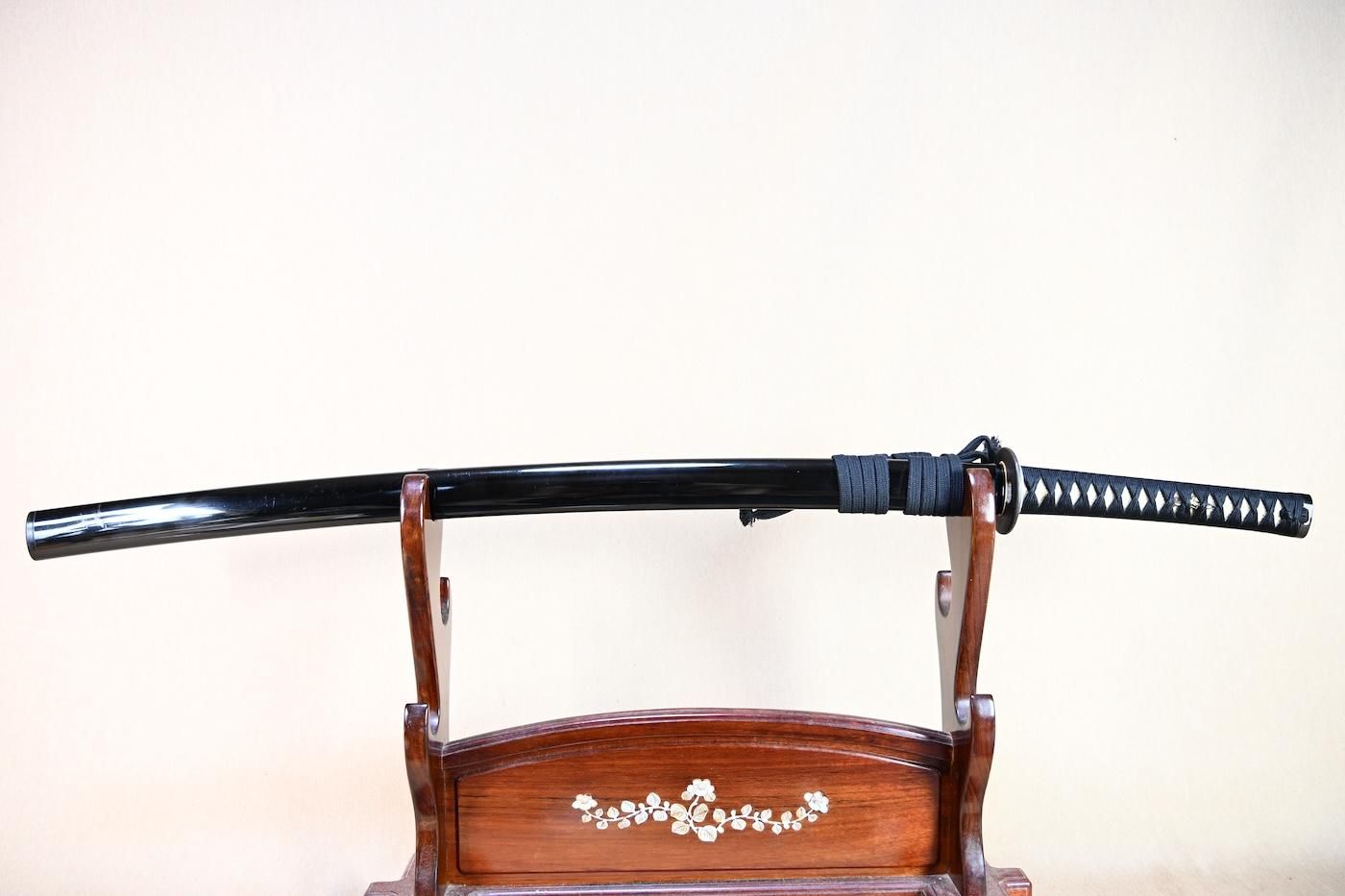
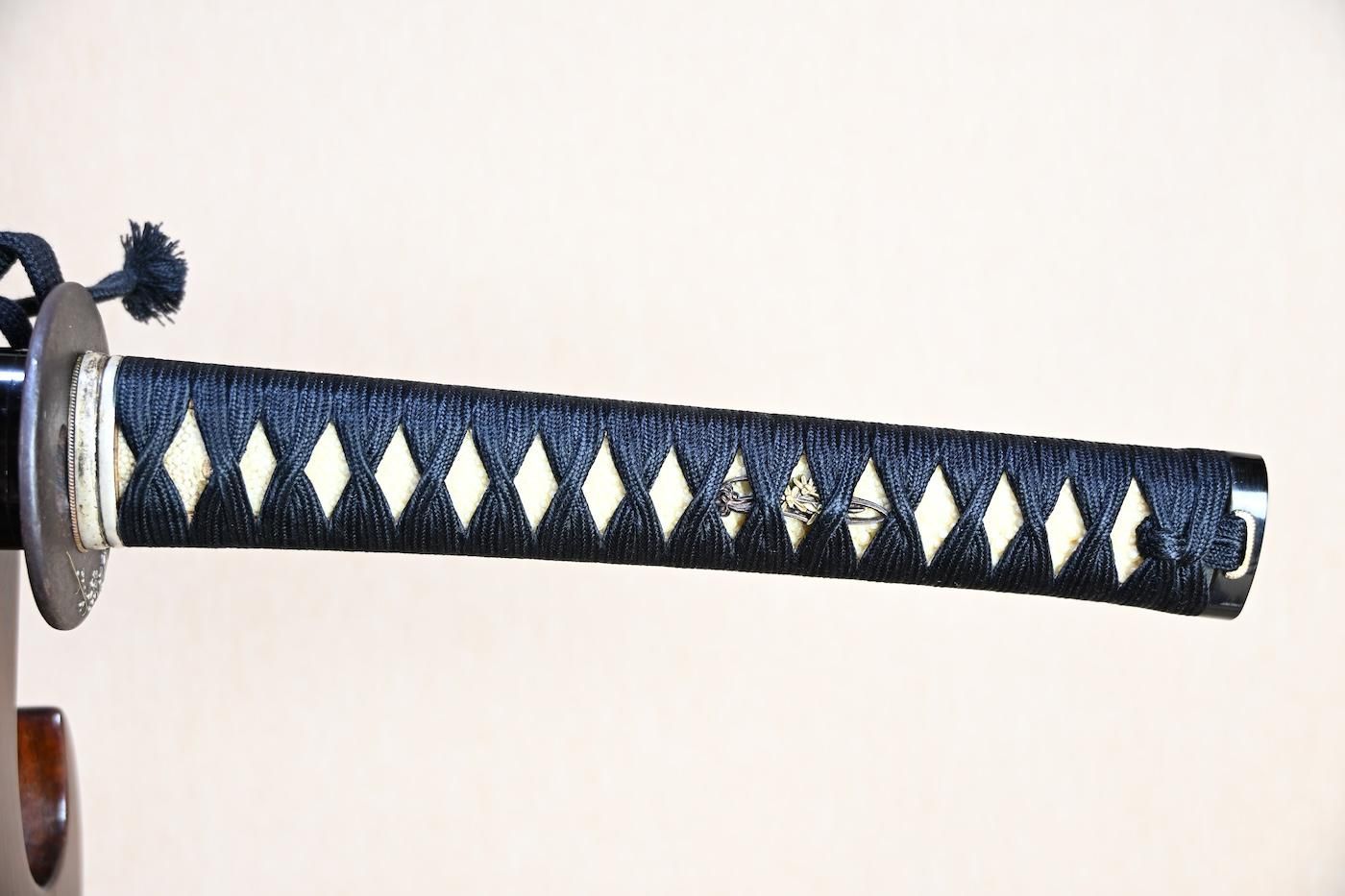
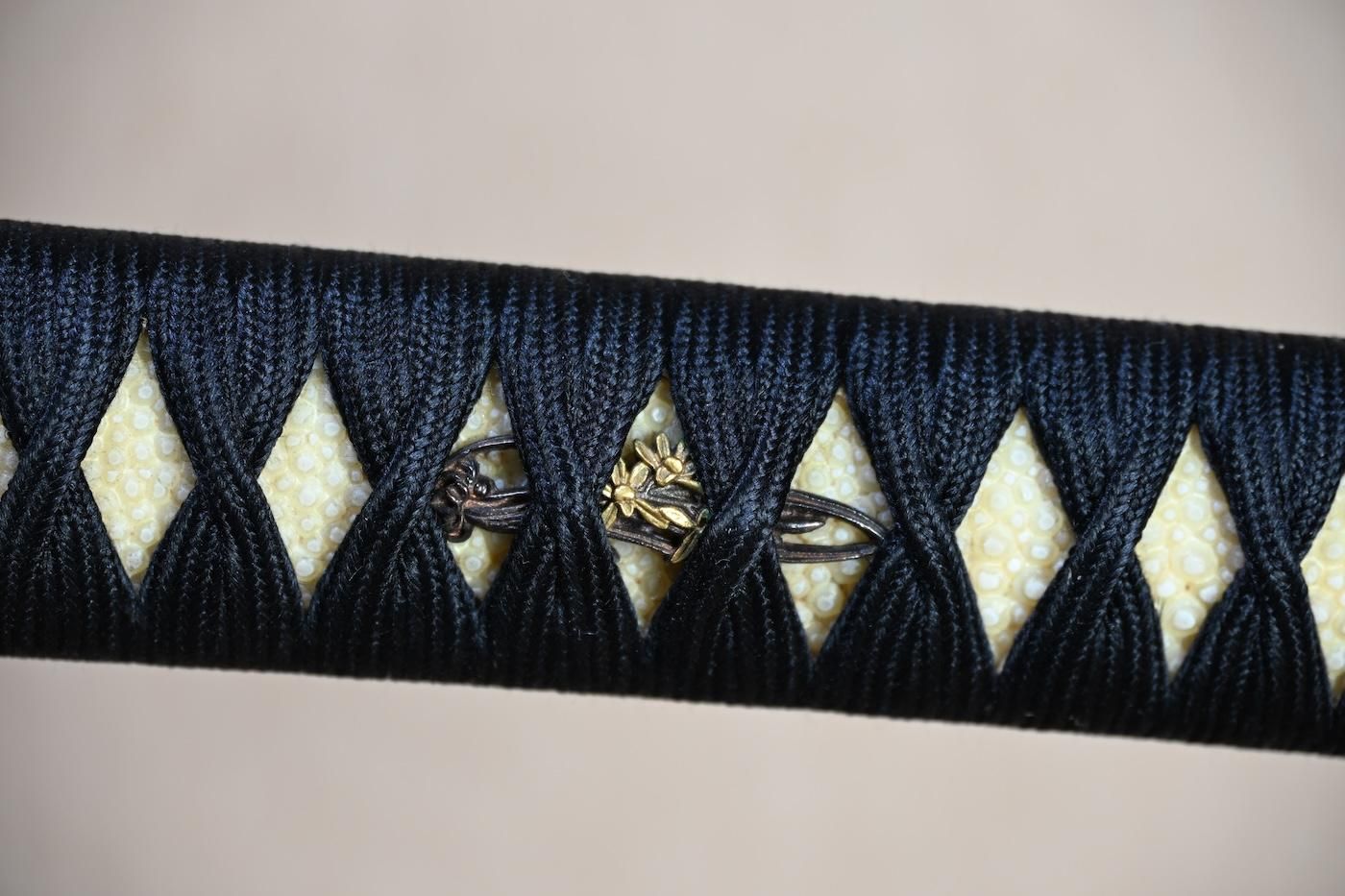
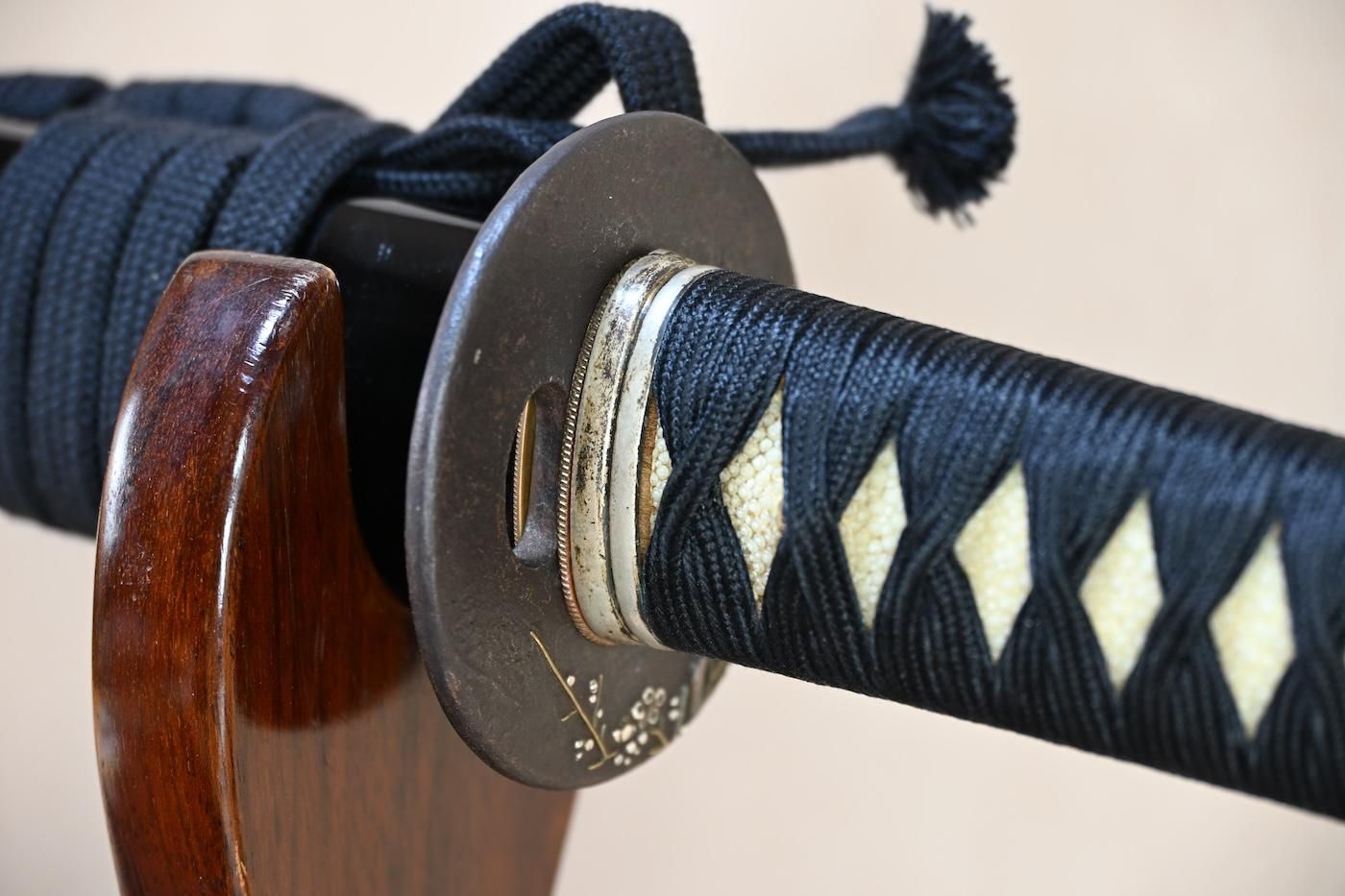
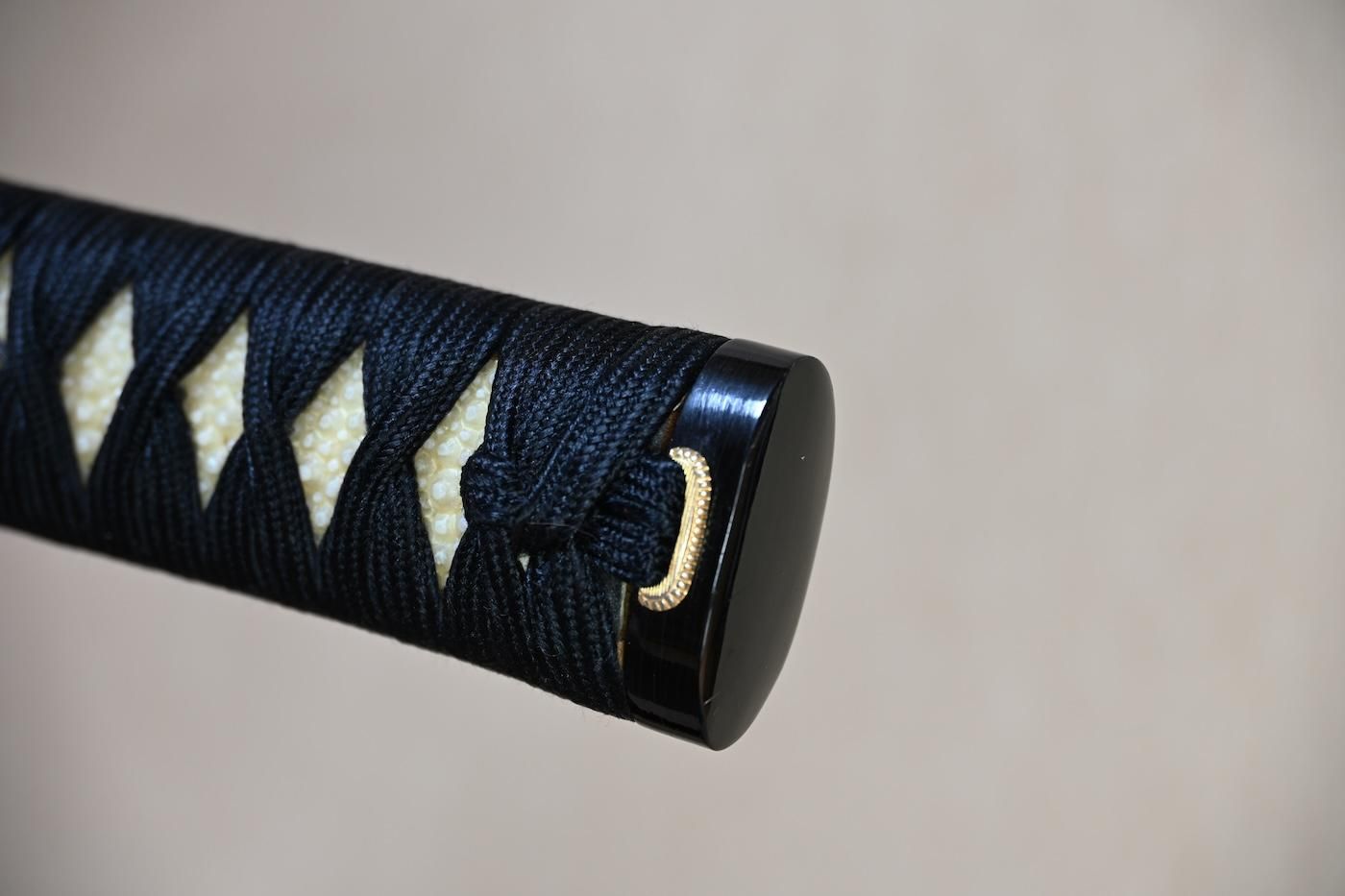
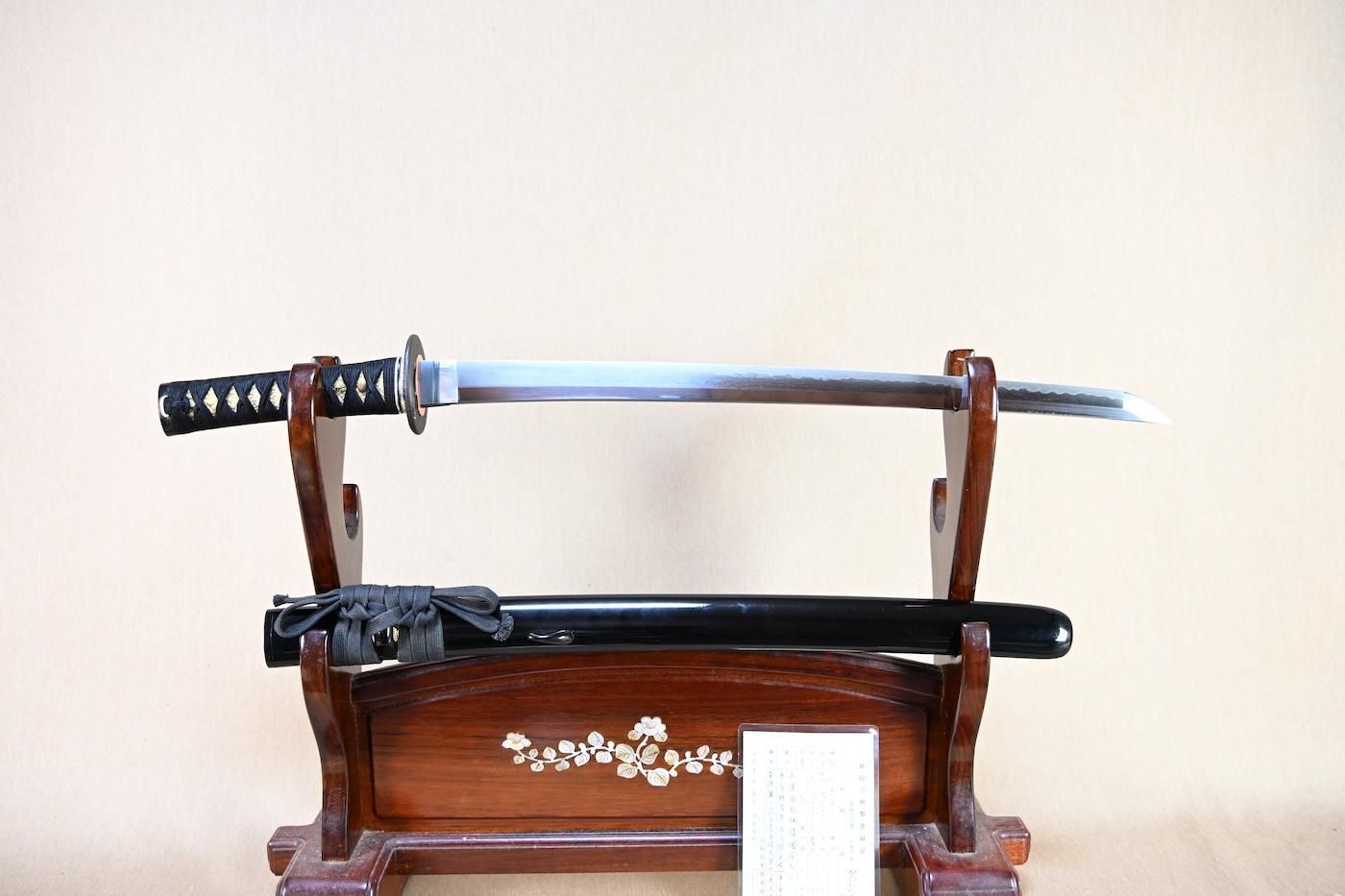
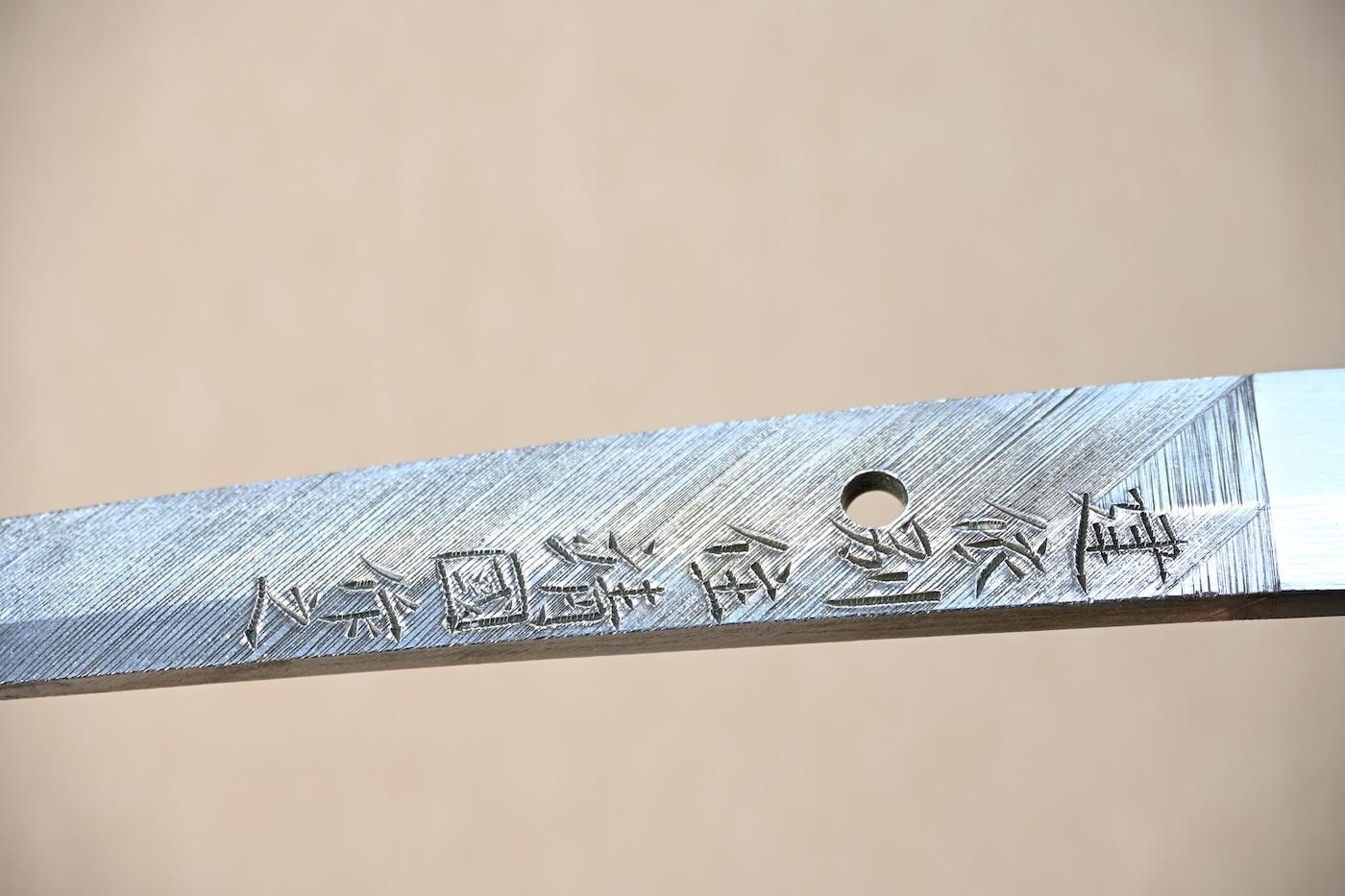
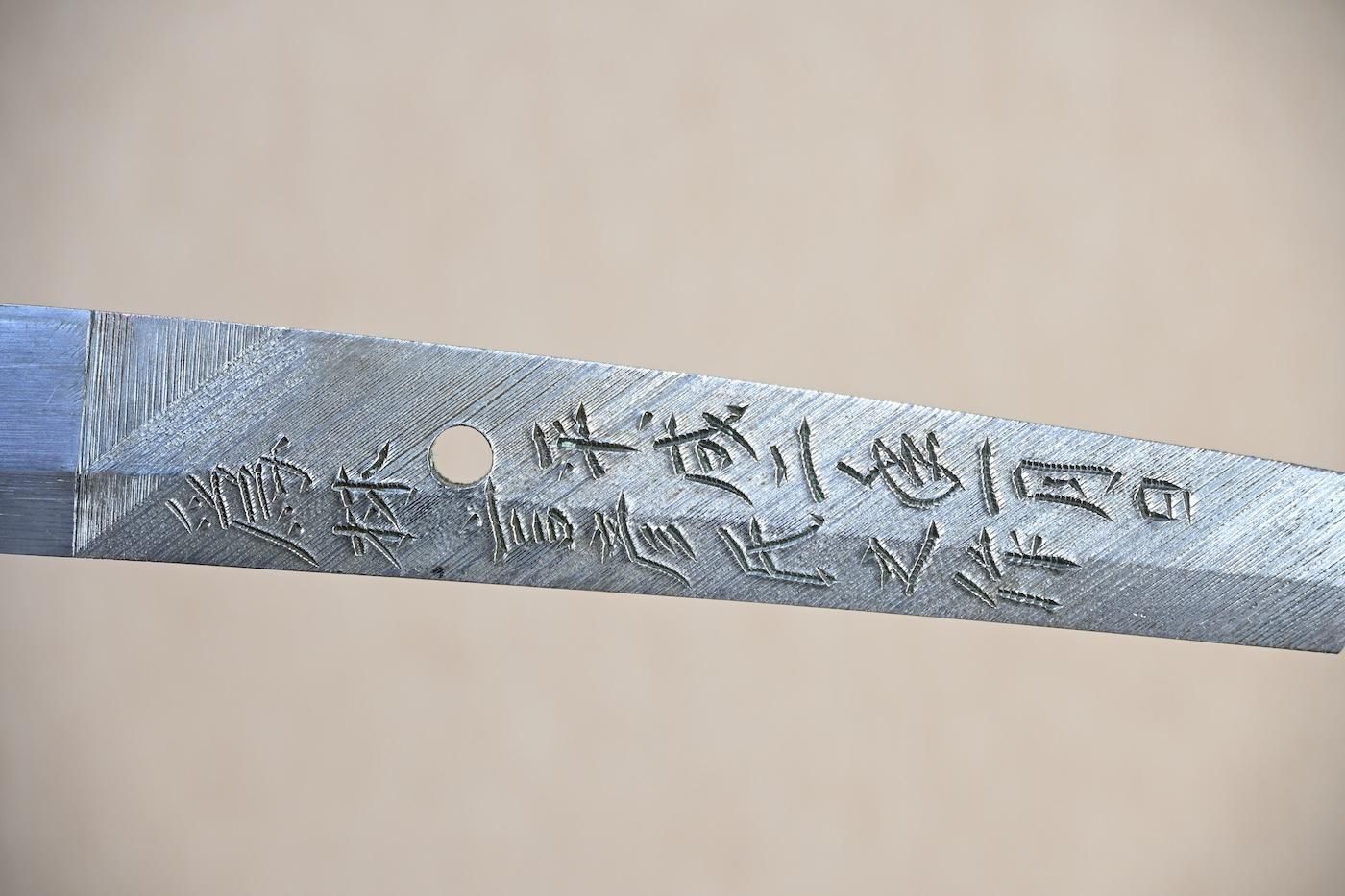
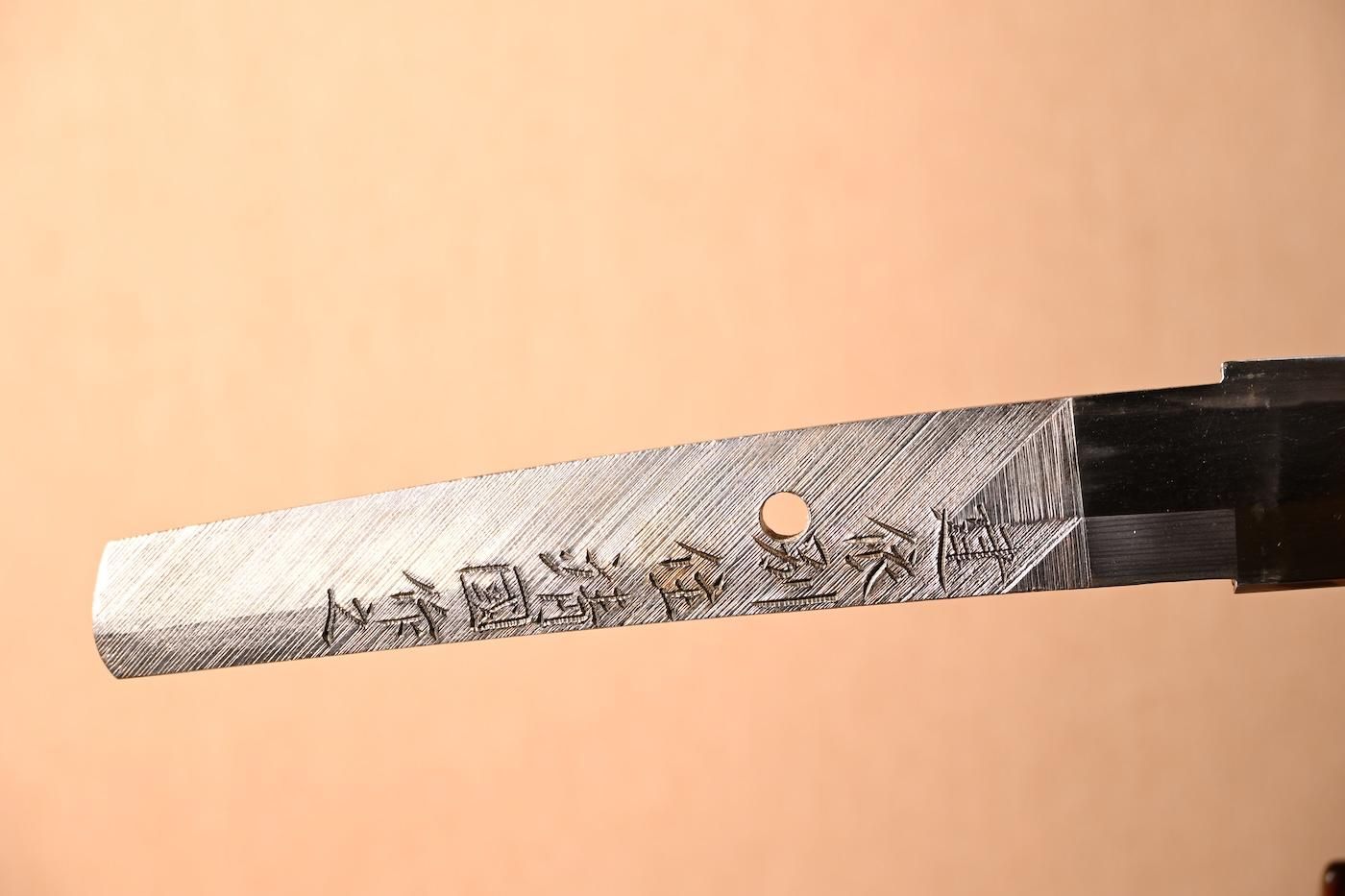
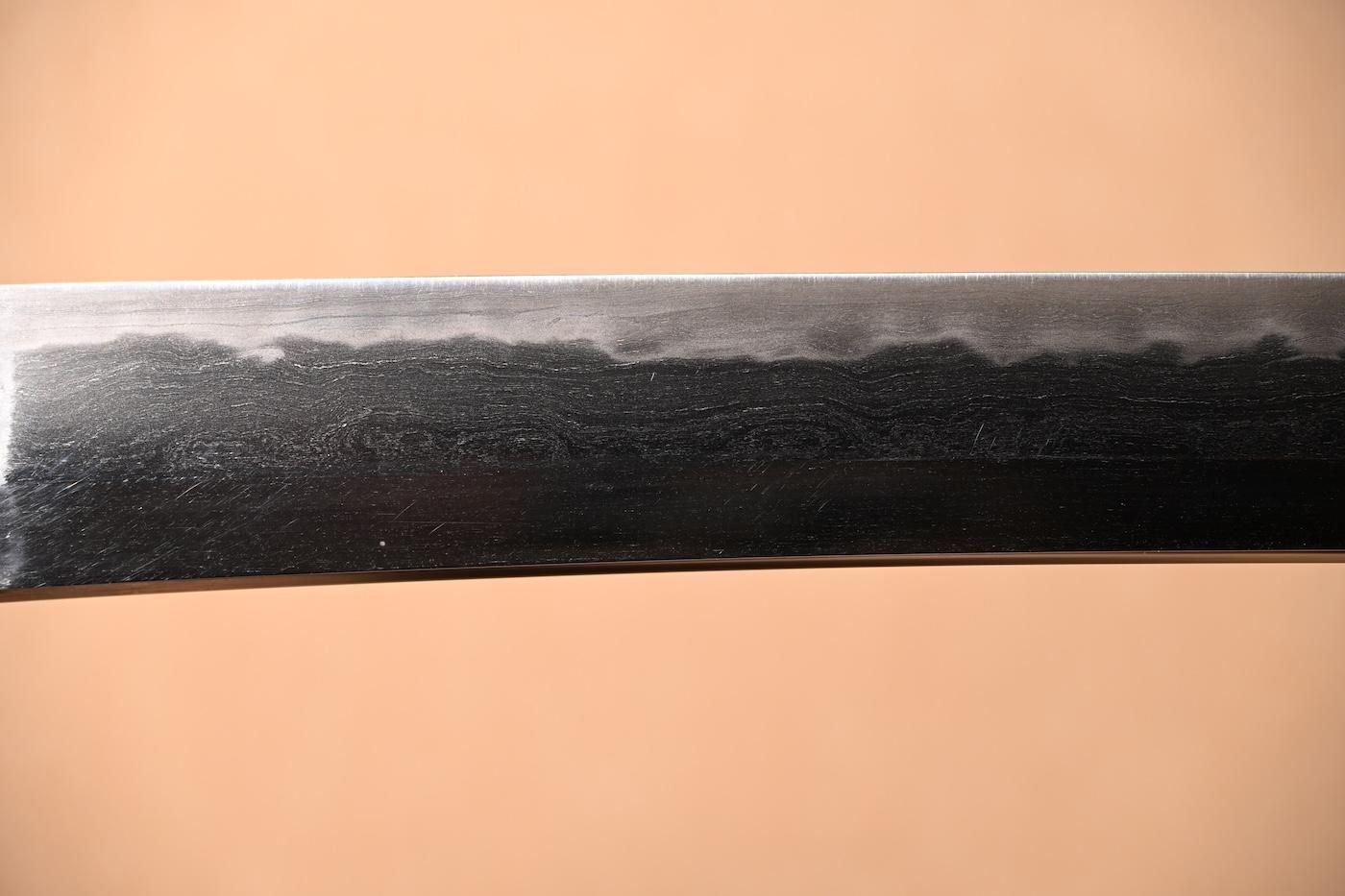
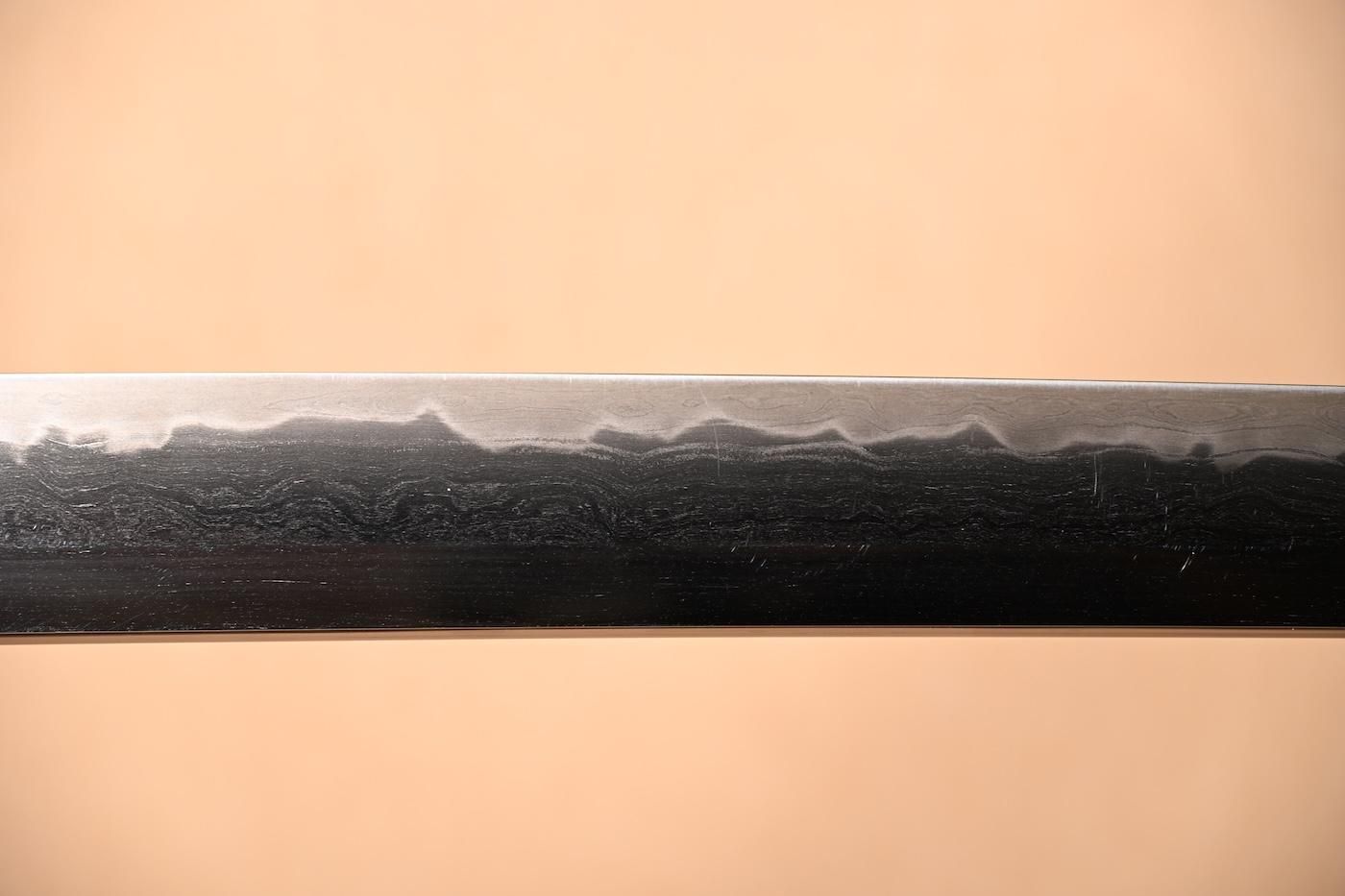
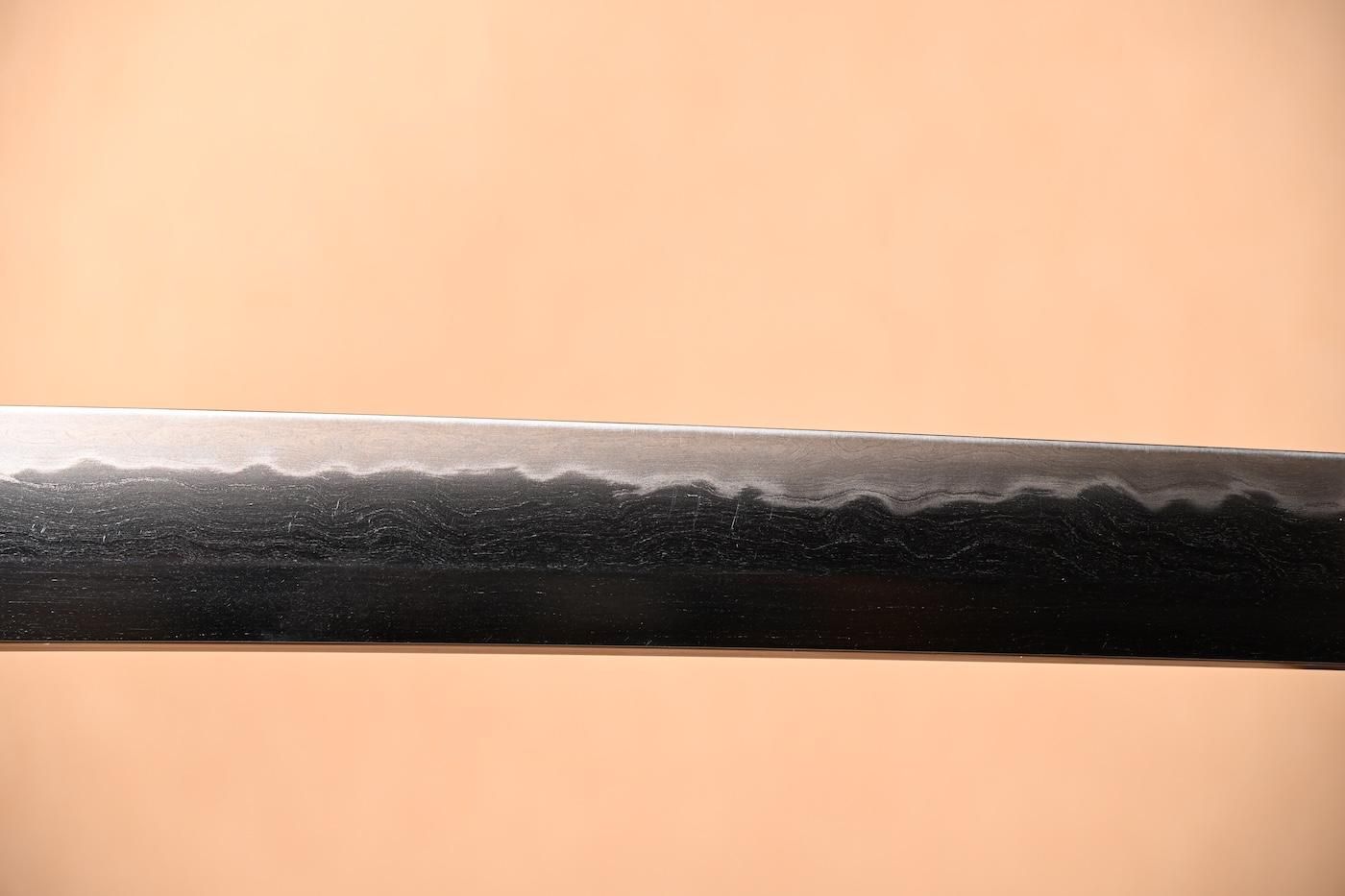
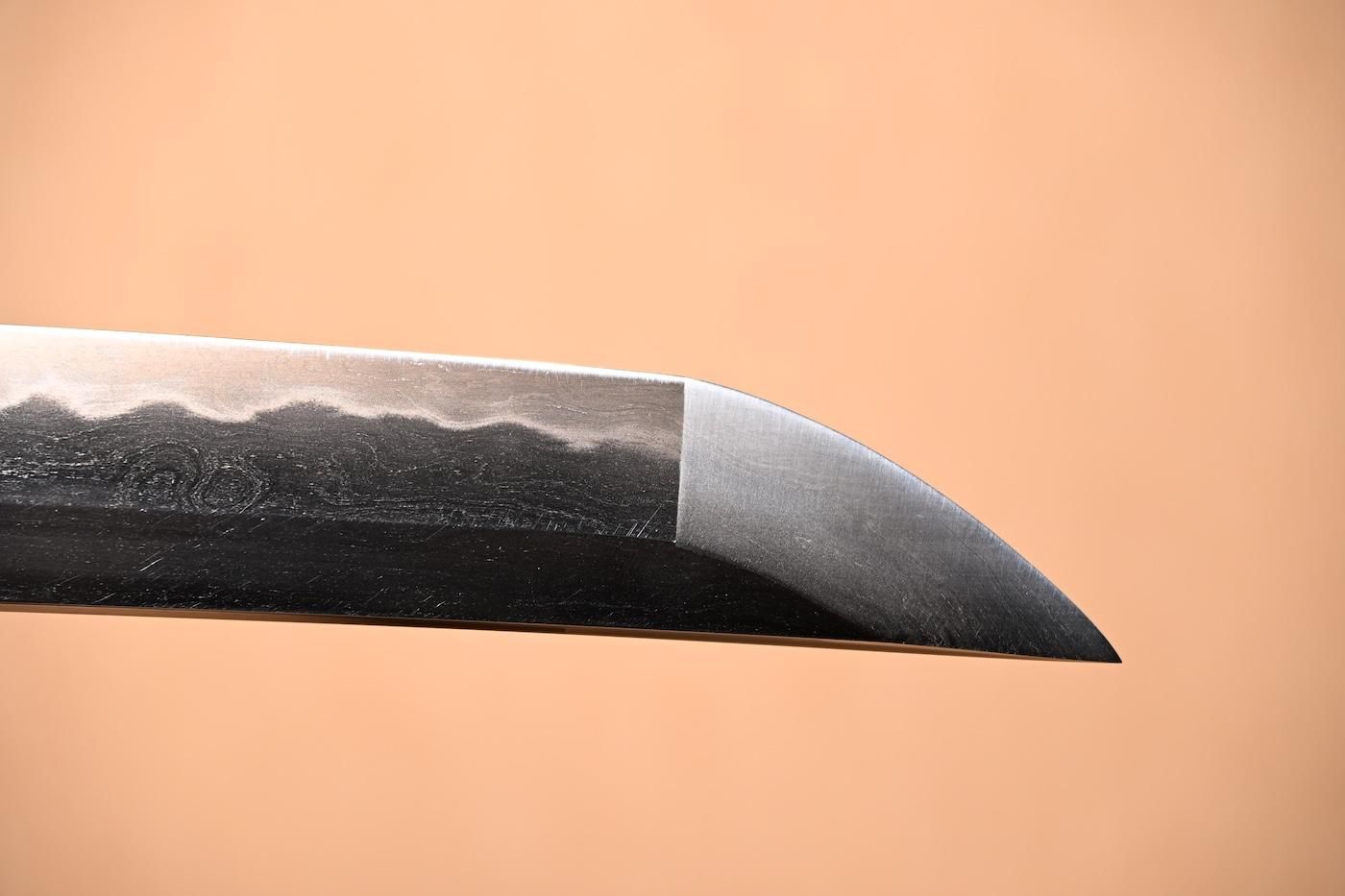
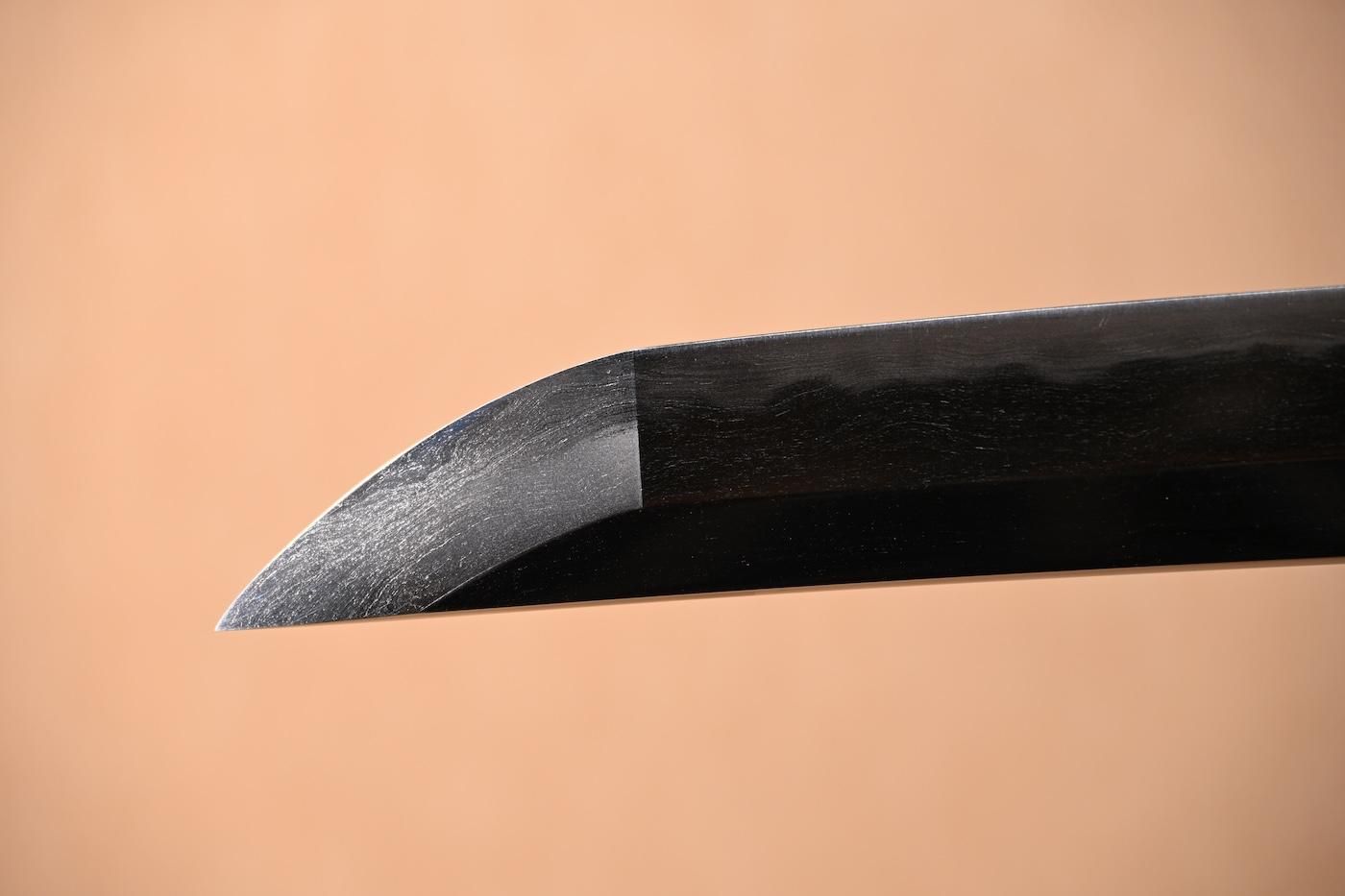
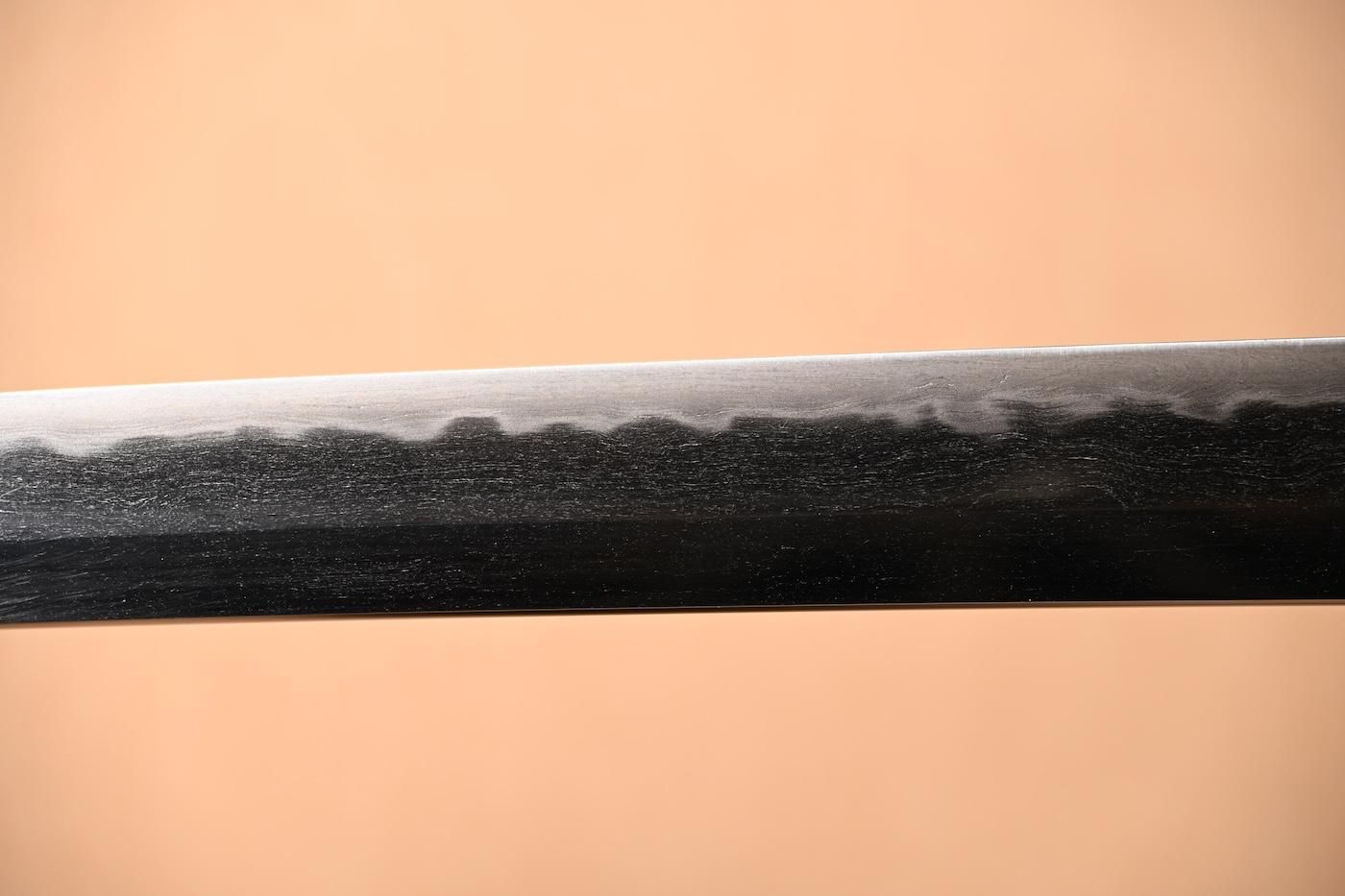
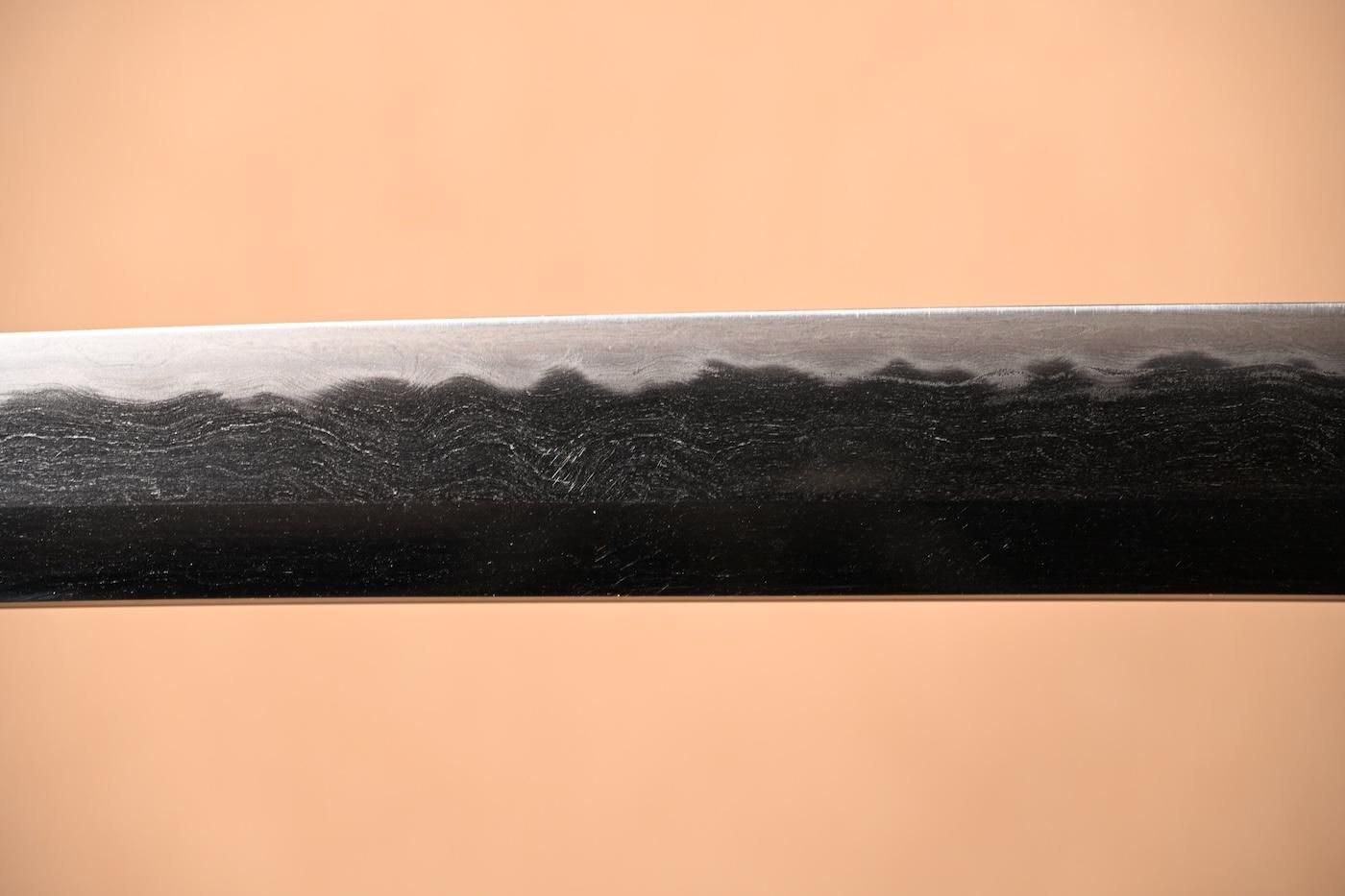
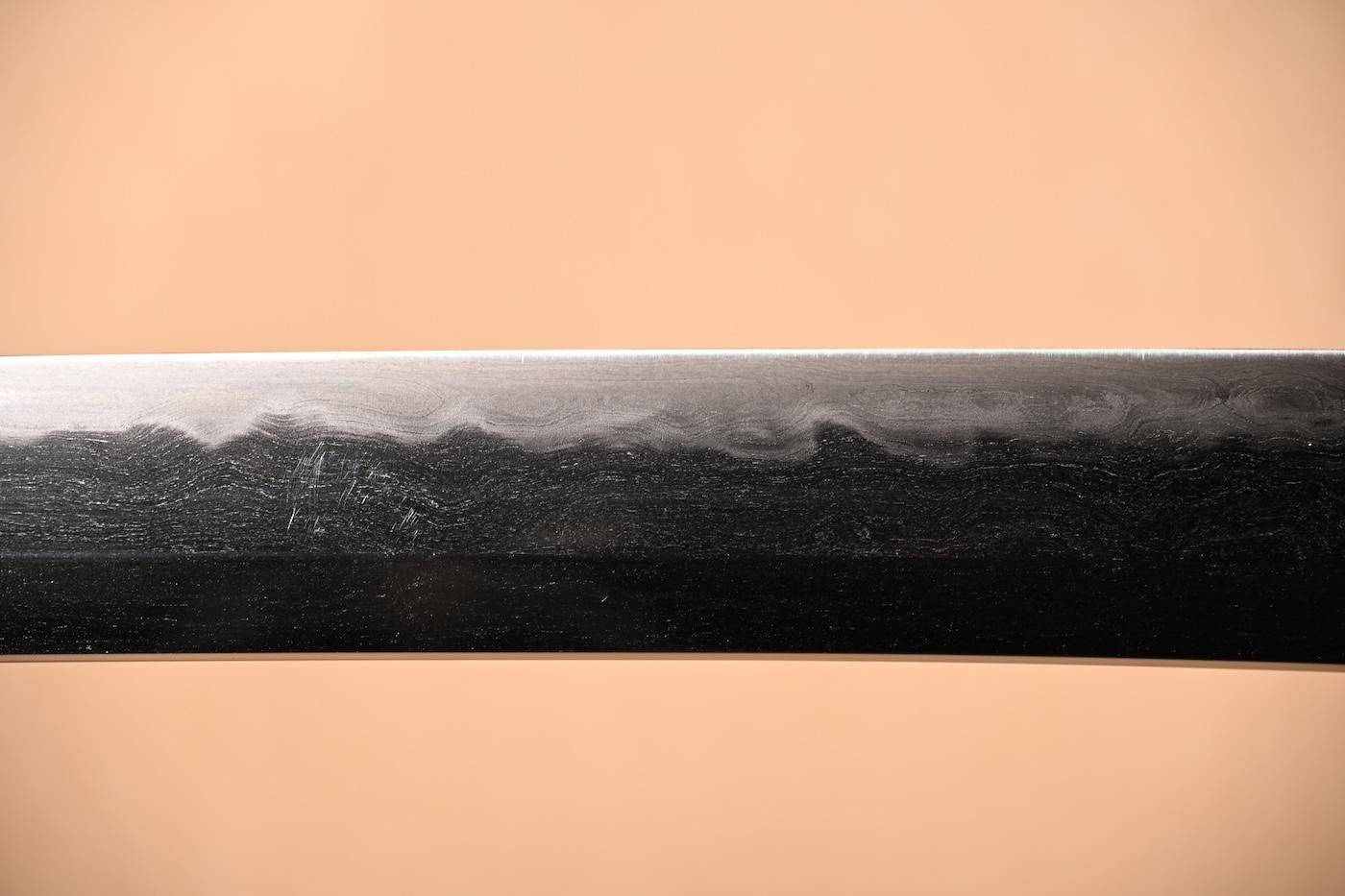
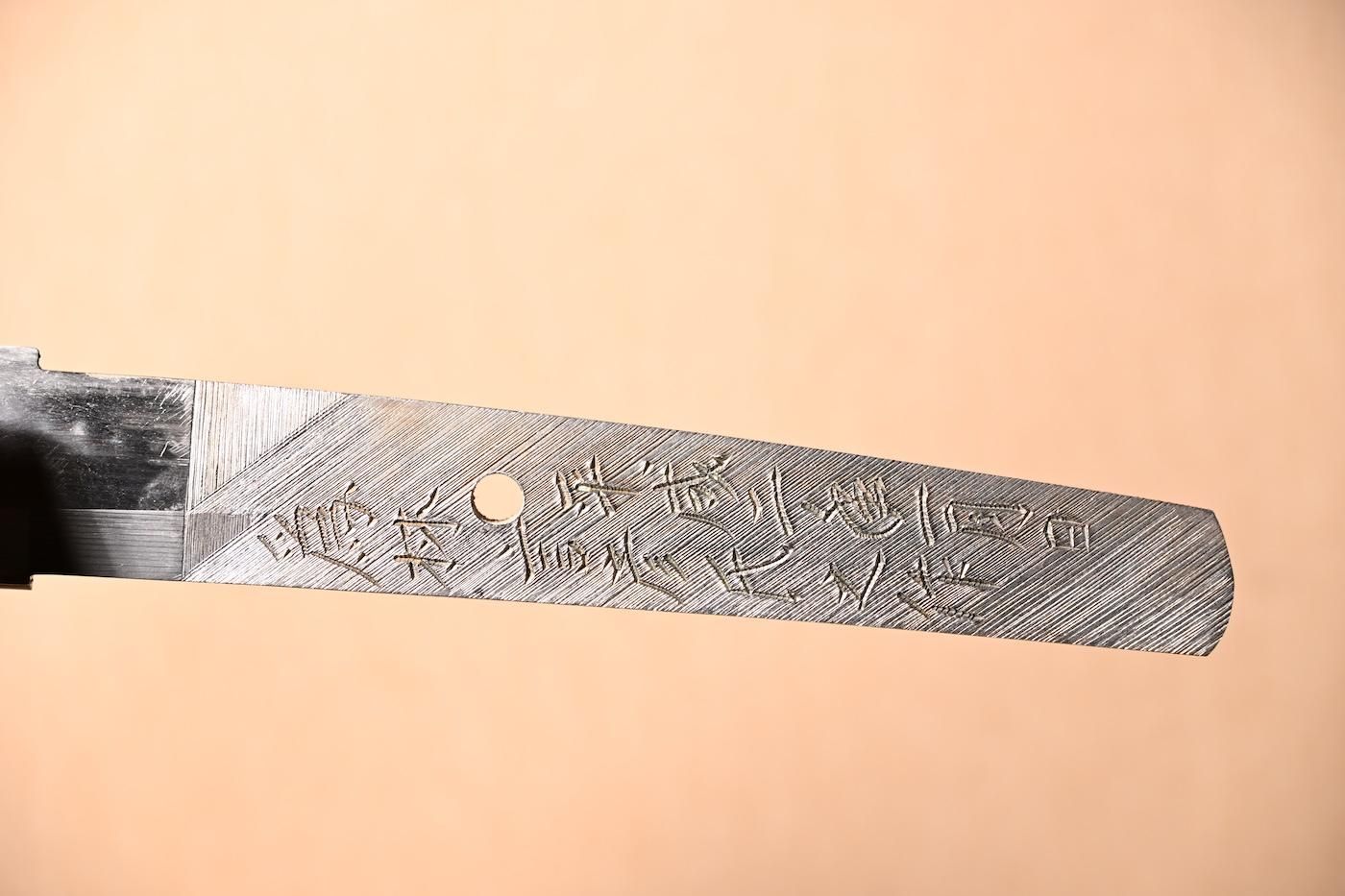
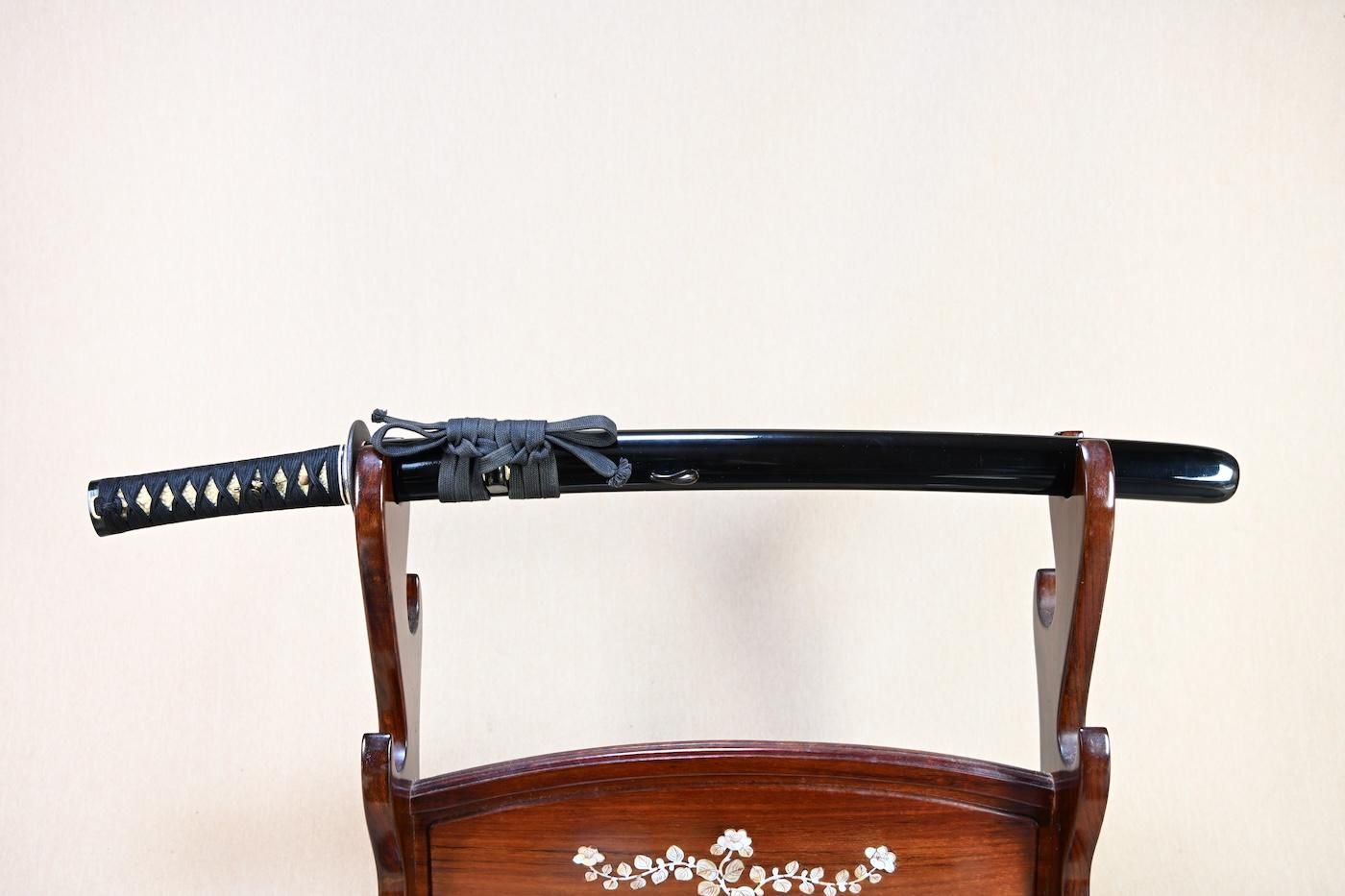
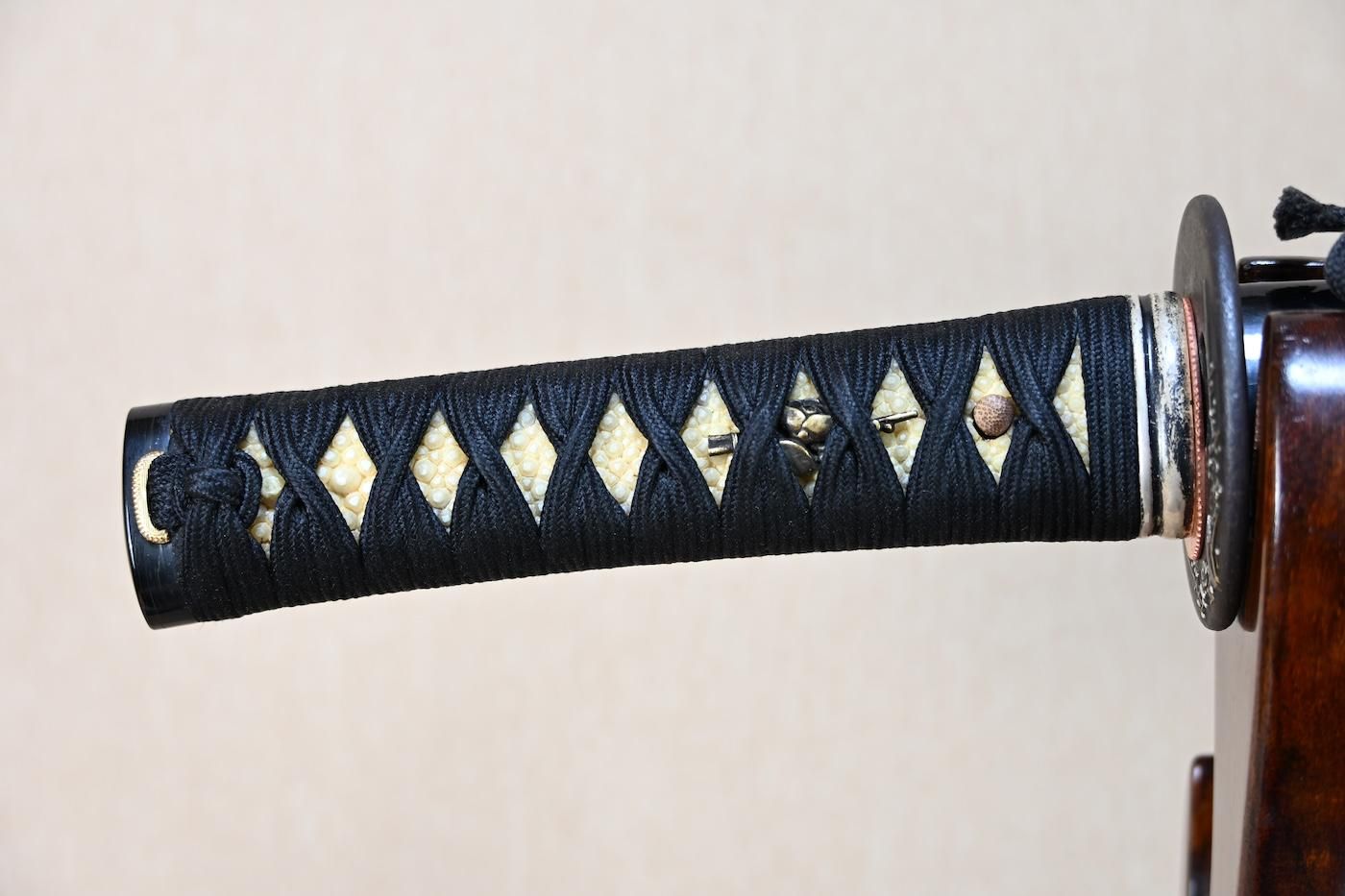
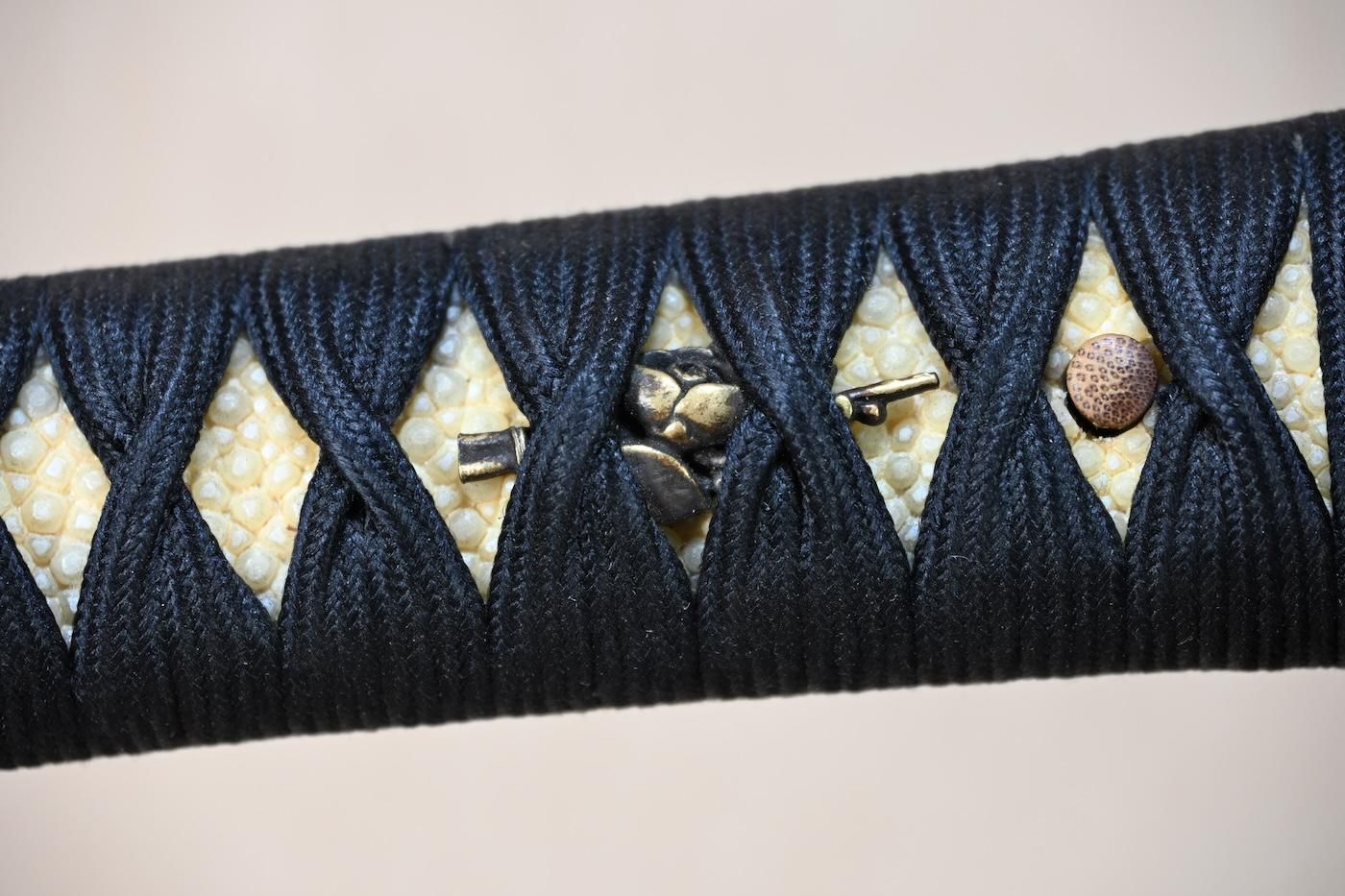
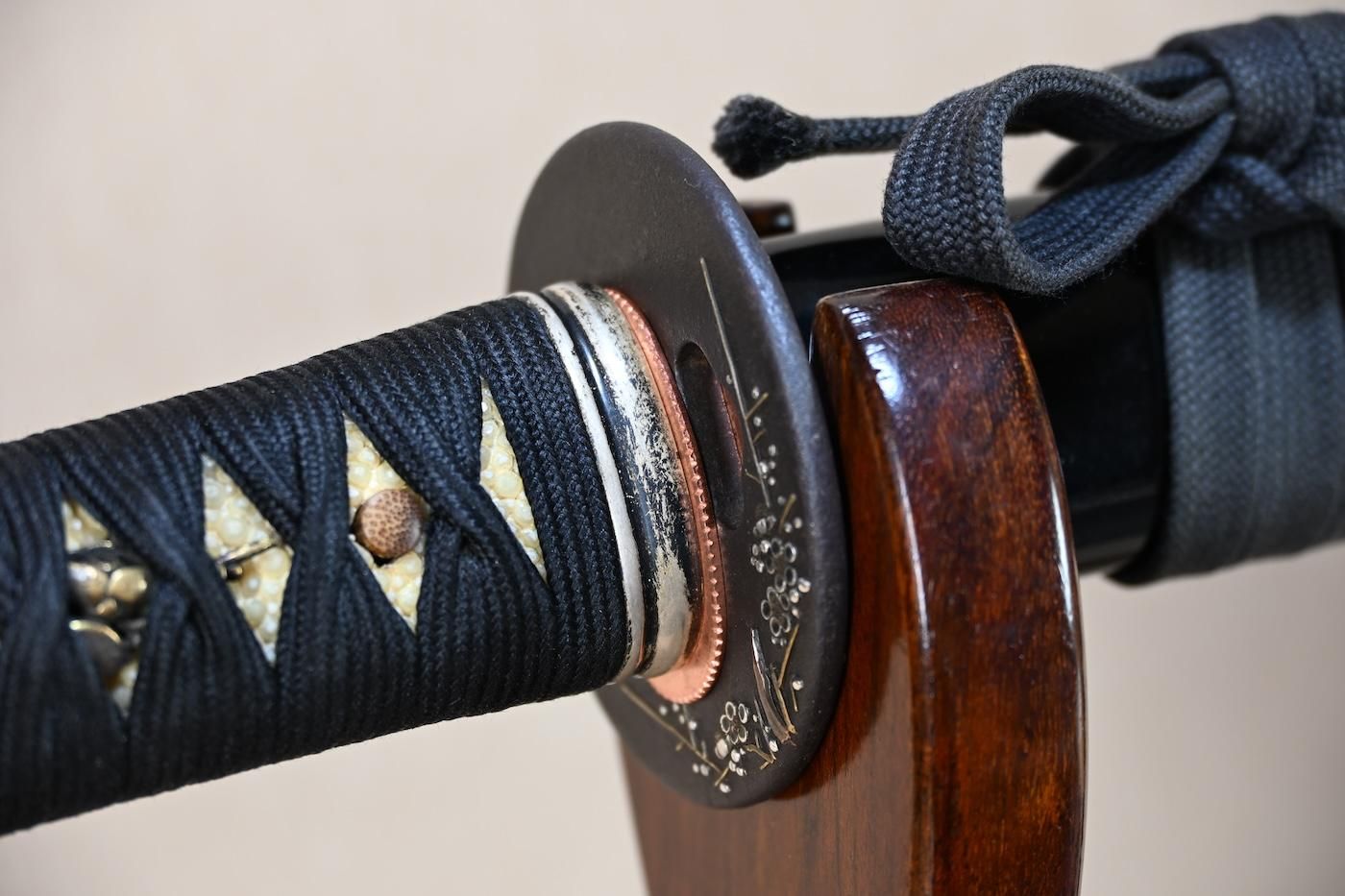
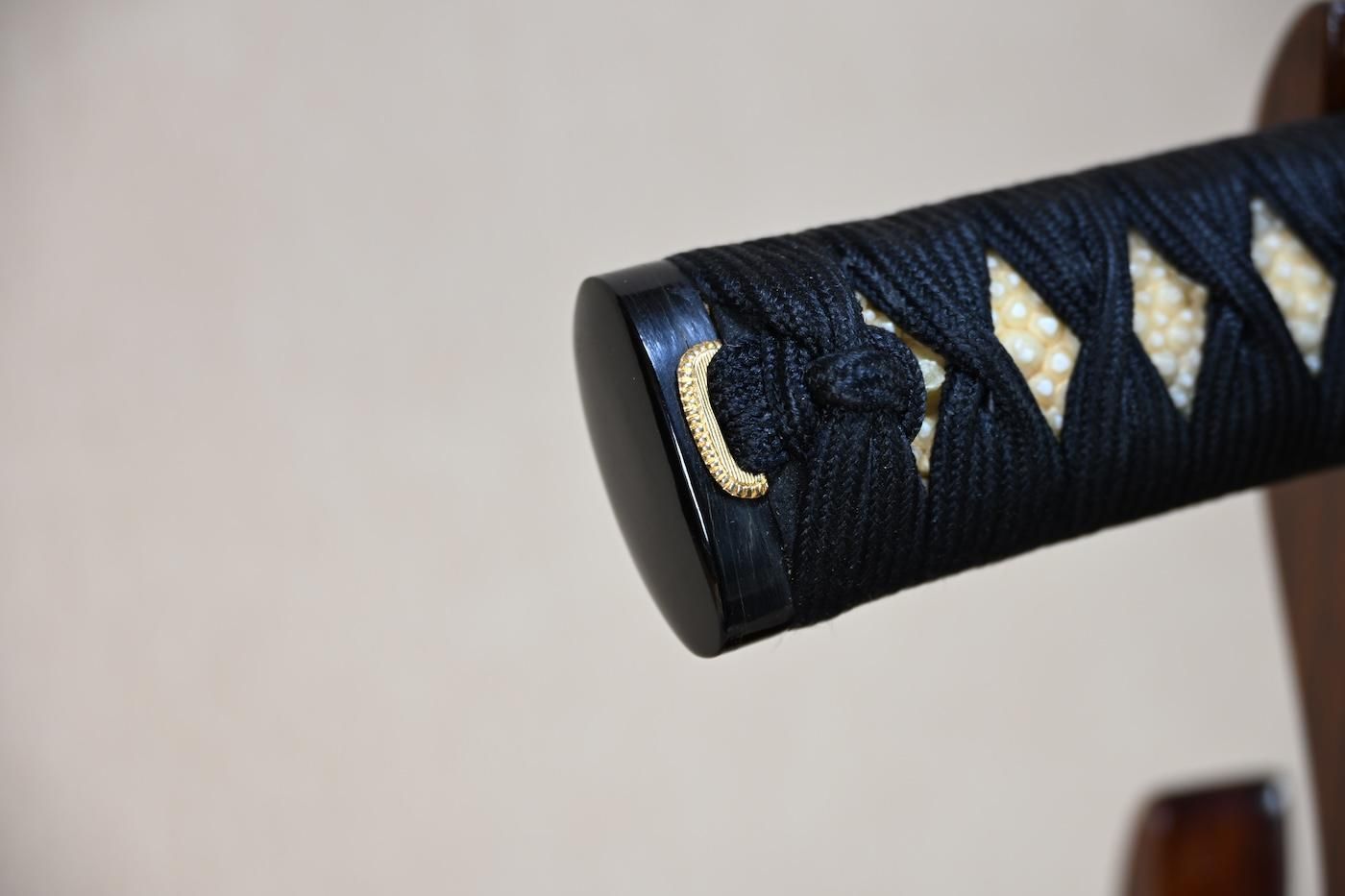
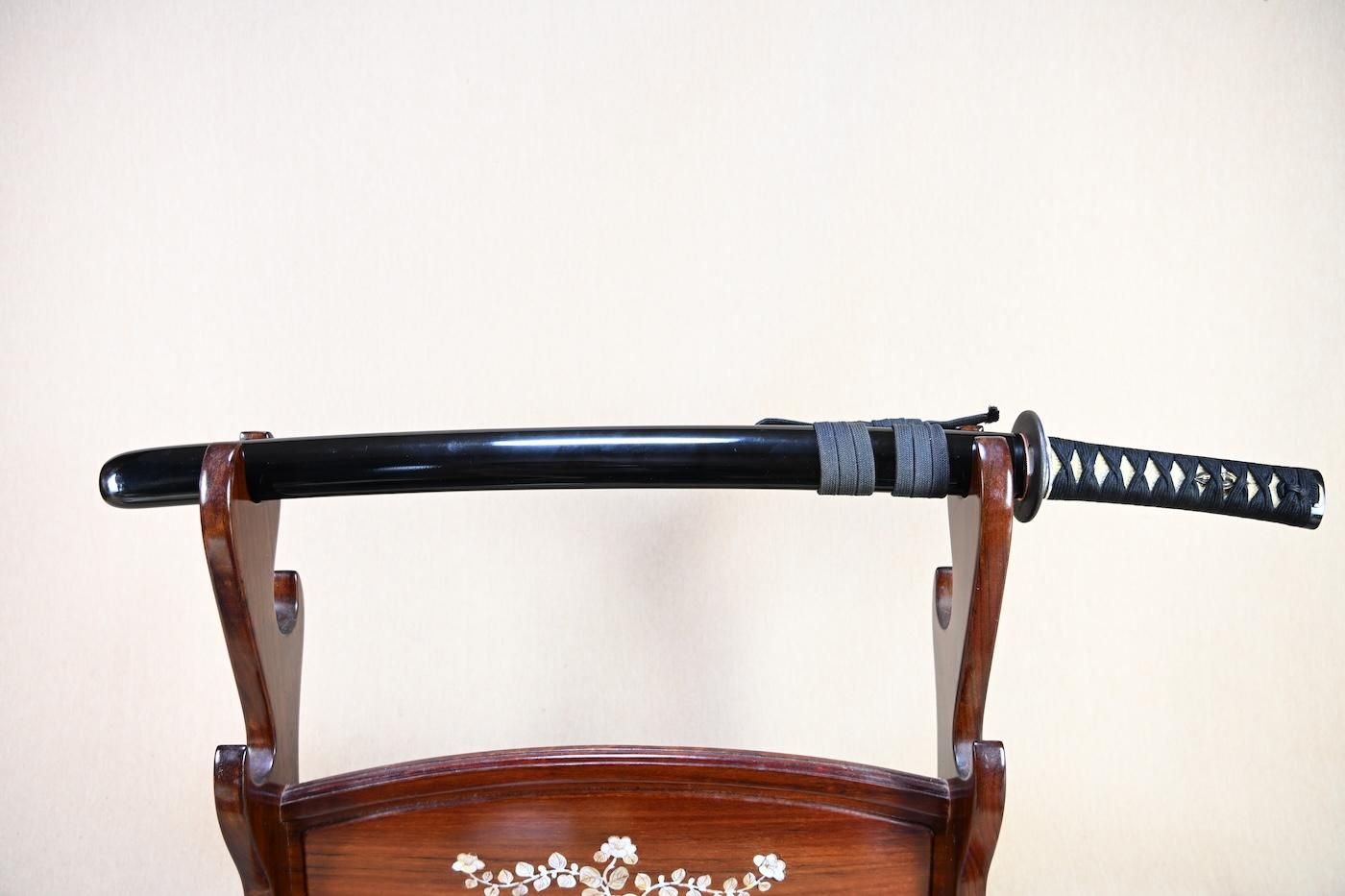
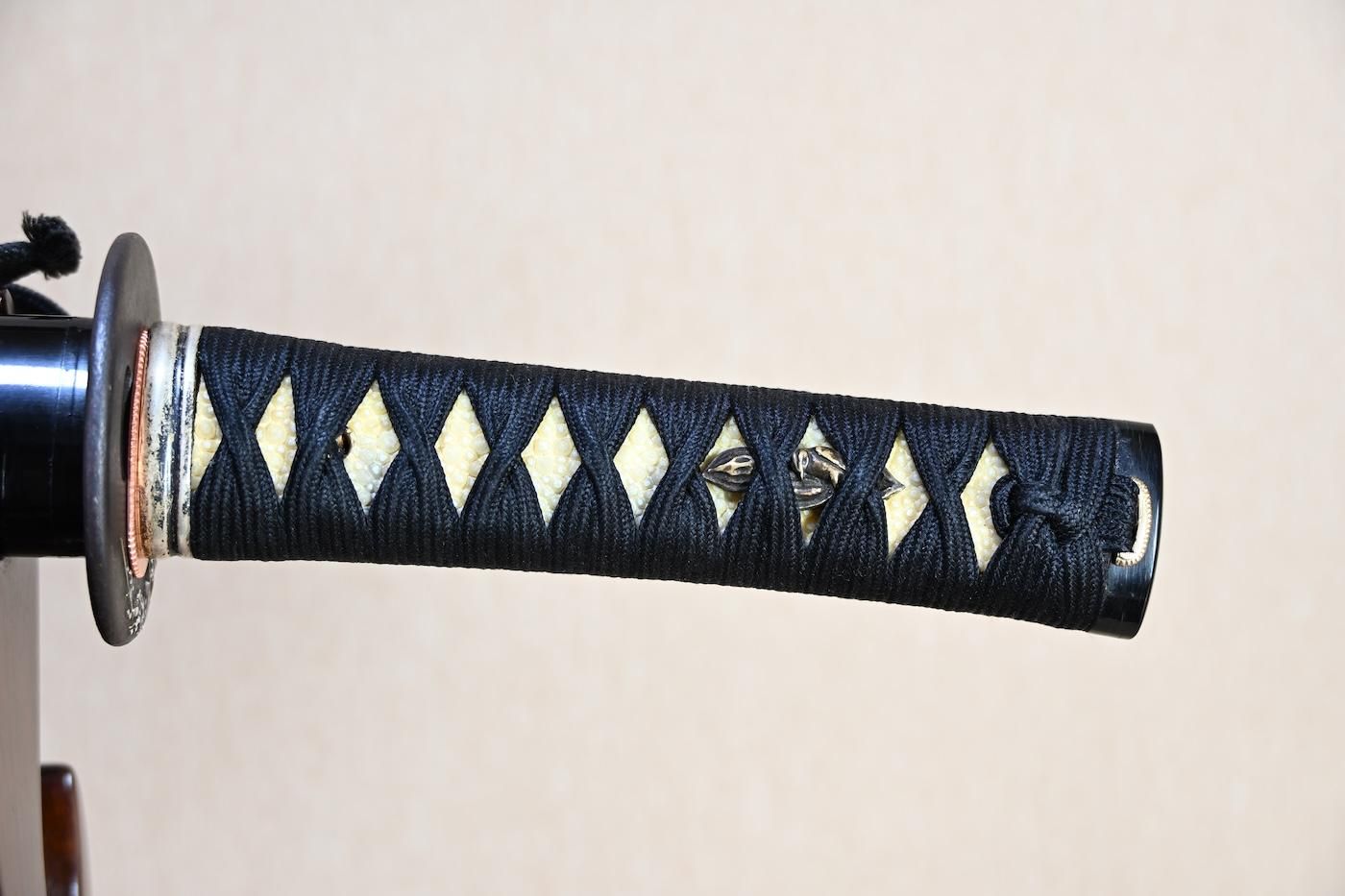
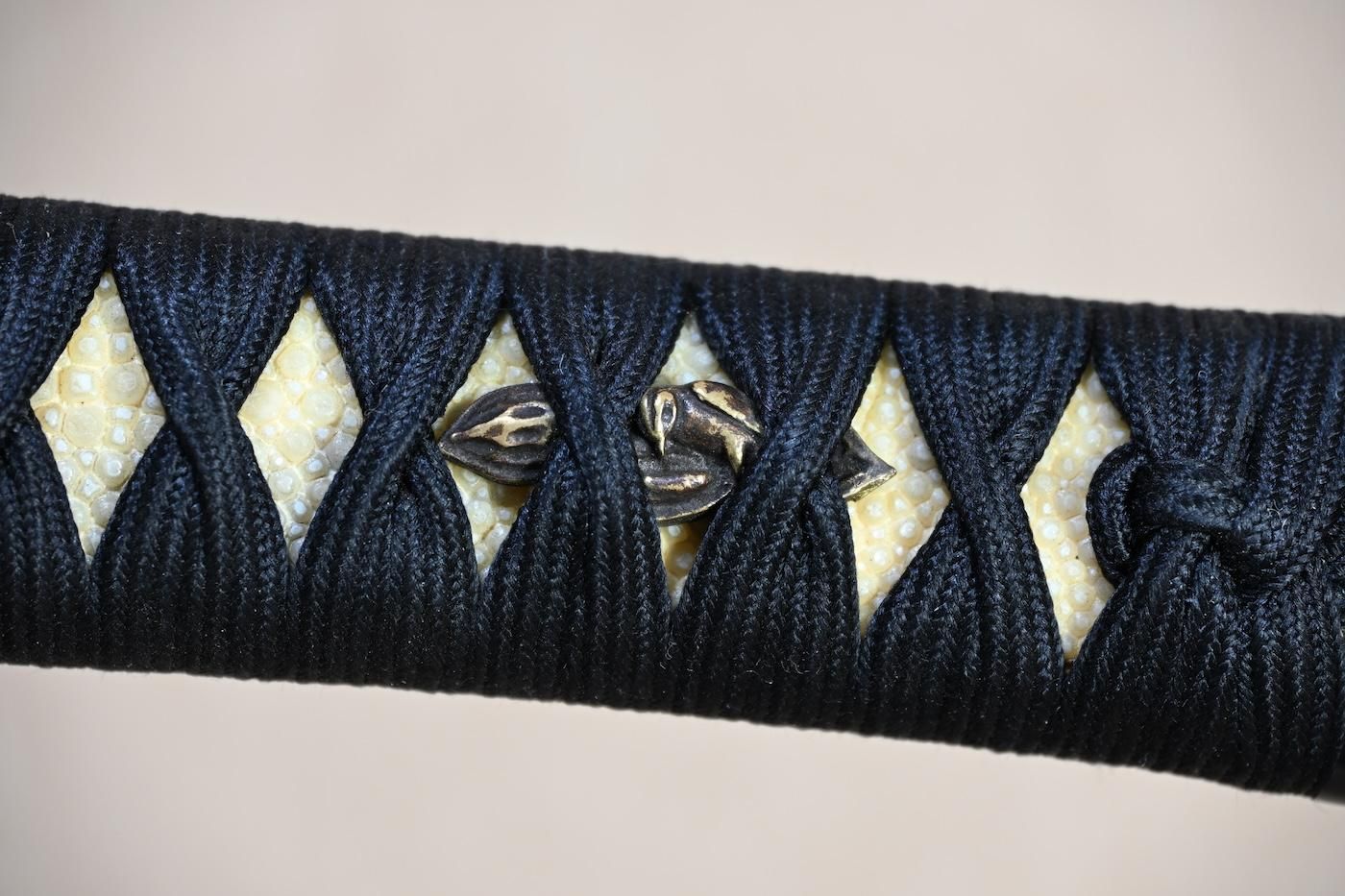
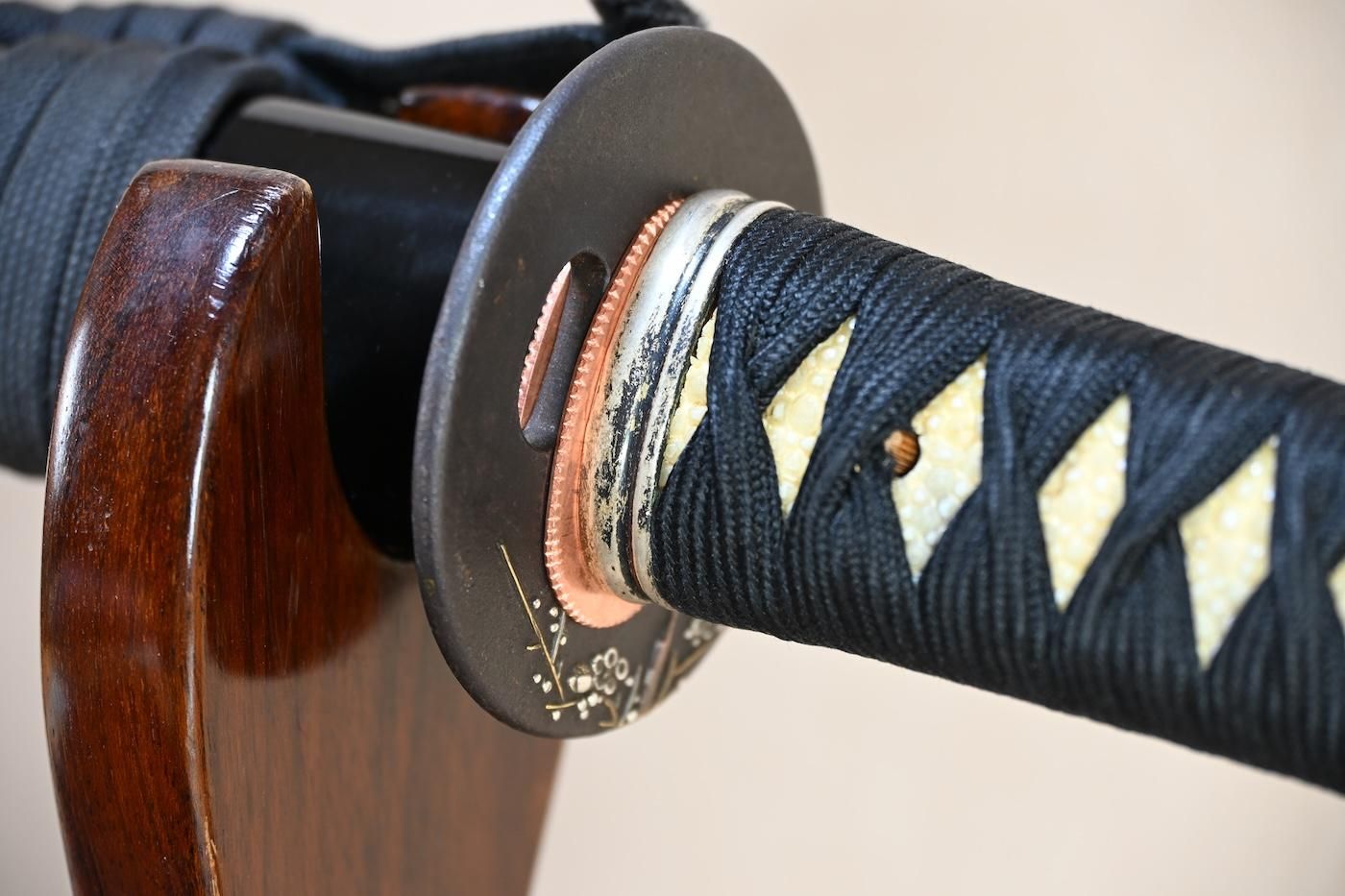
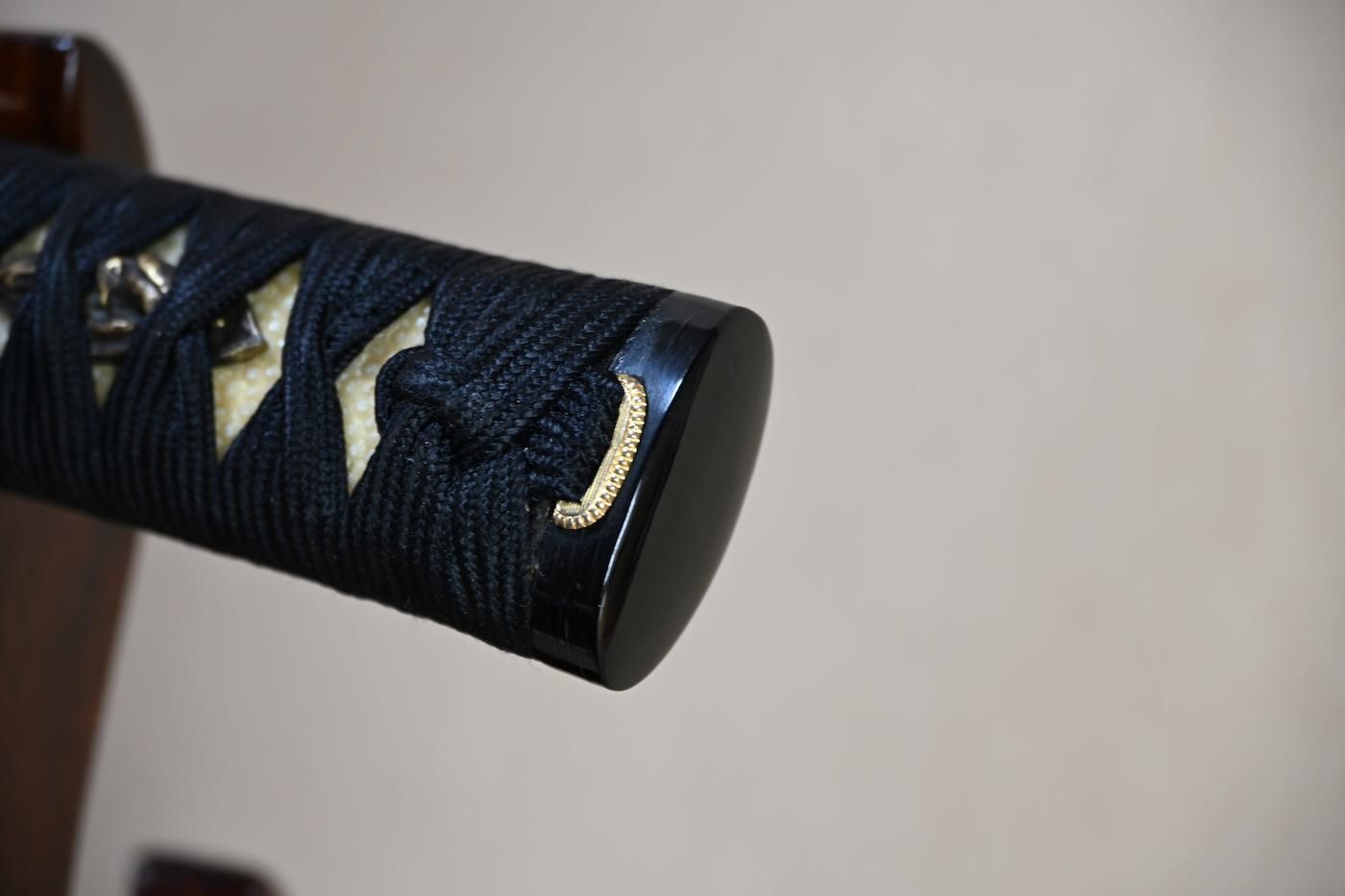
This is a daisho set (katana and wakizashi) made by Kariya Naohide, a Yasukuni swordsmith. The katana has a nagasa of 71.8cm and the wakizashi is 48.2cm, both signed with the date Heisei 2 (1990). They come with a matching koshirae set, featuring silver fuchi, horn kashira, silk tsukamaki, and tsuba with plum motif inlay. These blades are suitable for appreciation, iaido, and tameshigiri.
 NihontoWatch
mei · Yasukuni · Gendaito · nagasa 71.8cm · sori 1.6cm
Shōwa to the present: destruction and revival
The twentieth century nearly killed the craft twice: wartime distortion, then the occupation ban. The NBTHK’s founding in 1948 and licensed forging from 1953 rebuilt the sword as an art, crowned by Living National Treasures and the mukansa rank.
We could not find an authenticity certificate on the seller’s listing. Japanese swords and fittings are normally papered by the NBTHK (or the NTHK). Without one, the attribution is the seller’s own assessment and has not been independently verified — treat it with caution and ask the dealer about certification before buying.
Please contact us promptly after the item's arrival. Except where the item is defective, we cannot accept returns. For returns due to customer circumstances, the cost is the customer's responsibility. In the case of a defective item, we bear the cost.
¥594,000
This is a daisho set (katana and wakizashi) made by Kariya Naohide, a Yasukuni swordsmith. The katana has a nagasa of 71.8cm and the wakizashi is 48.2cm, both signed with the date Heisei 2 (1990). They come with a matching koshirae set, featuring silver fuchi, horn kashira, silk tsukamaki, and tsuba with plum motif inlay. These blades are suitable for appreciation, iaido, and tameshigiri.
NihontoWatchmei · Yasukuni · Gendaito · nagasa 71.8cm · sori 1.6cm
Shōwa to the present: destruction and revival
The twentieth century nearly killed the craft twice: wartime distortion, then the occupation ban. The NBTHK’s founding in 1948 and licensed forging from 1953 rebuilt the sword as an art, crowned by Living National Treasures and the mukansa rank.
We could not find an authenticity certificate on the seller’s listing. Japanese swords and fittings are normally papered by the NBTHK (or the NTHK). Without one, the attribution is the seller’s own assessment and has not been independently verified — treat it with caution and ask the dealer about certification before buying.
Please contact us promptly after the item's arrival. Except where the item is defective, we cannot accept returns. For returns due to customer circumstances, the cost is the customer's responsibility. In the case of a defective item, we bear the cost.
¥594,000