 NihontoWatchNihontoWatch
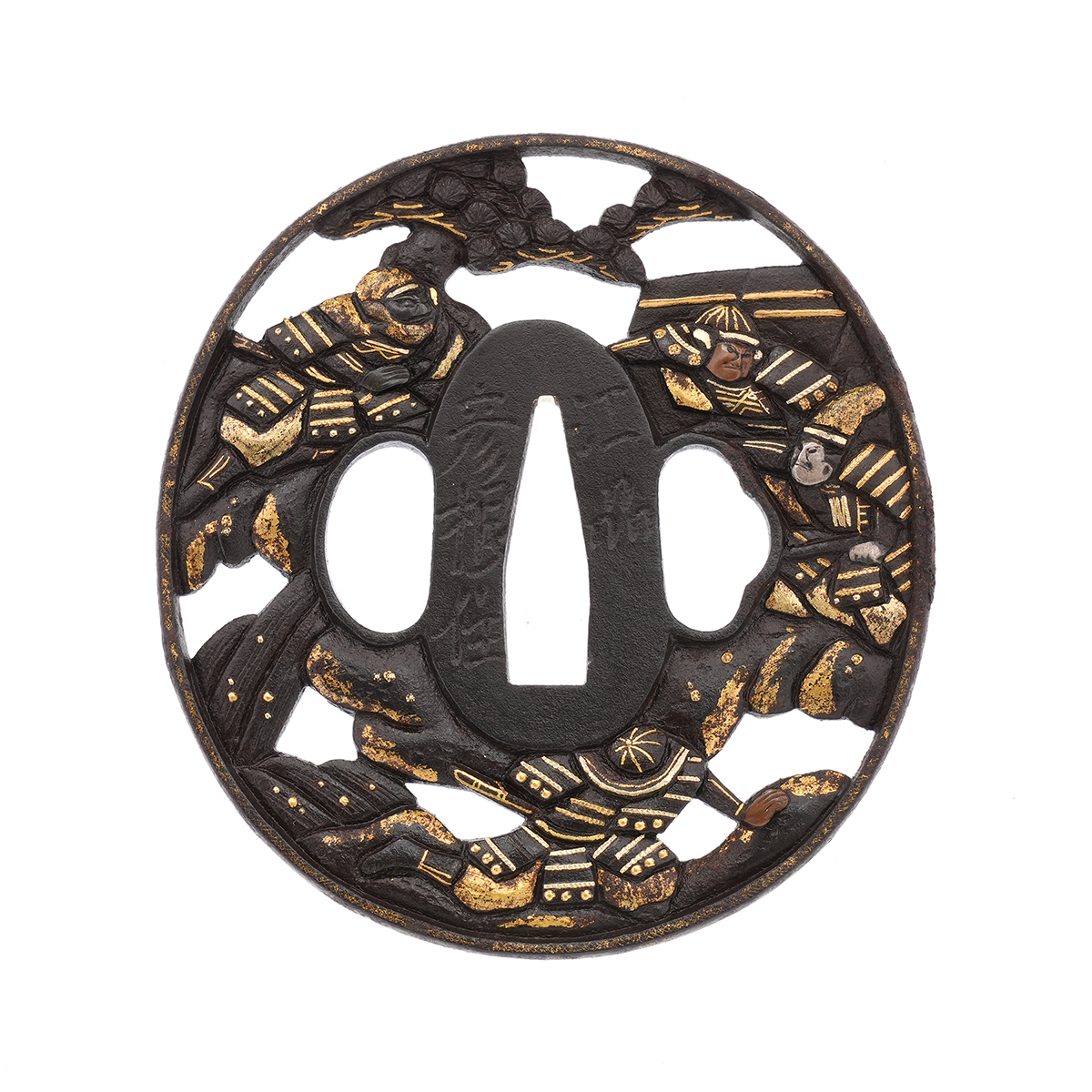
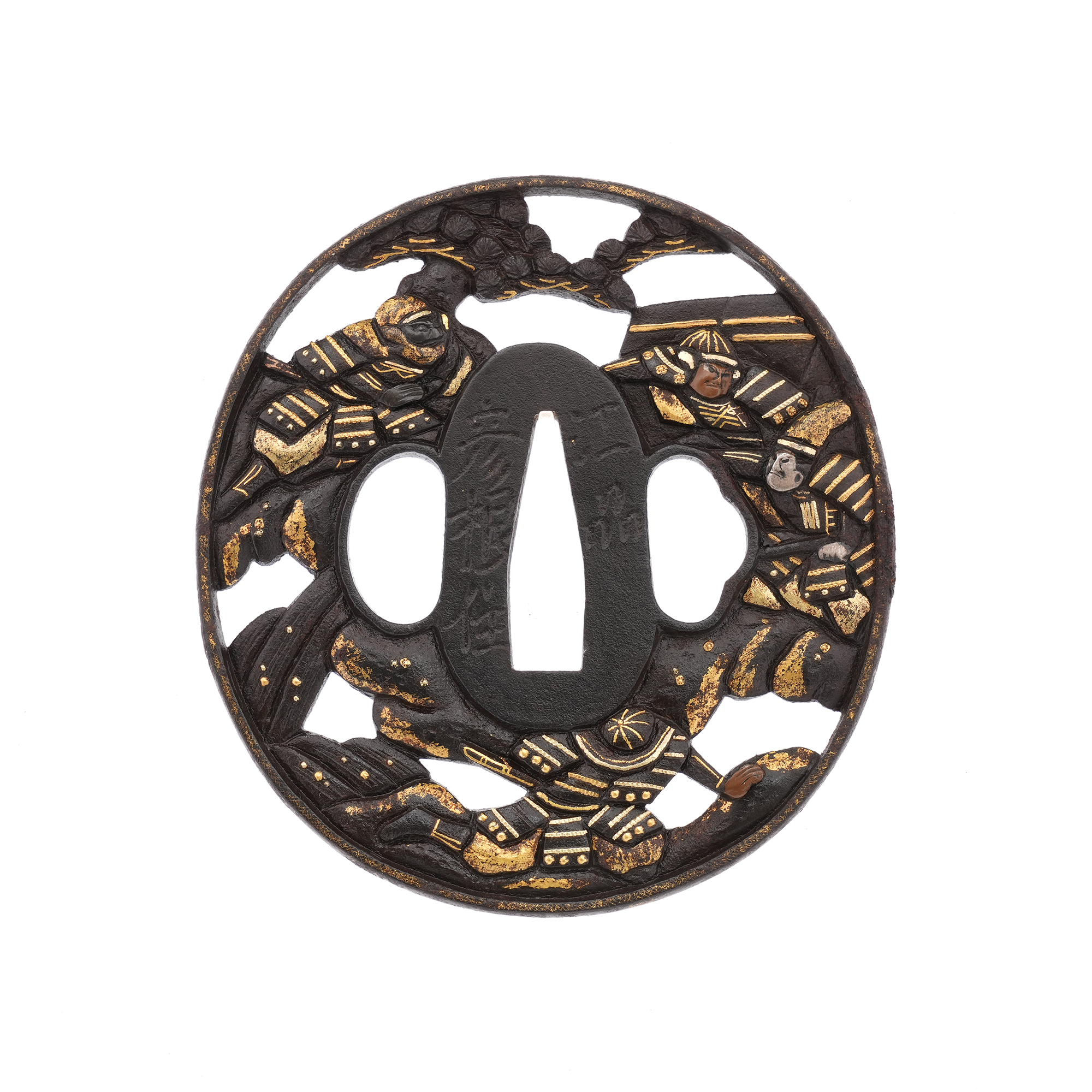
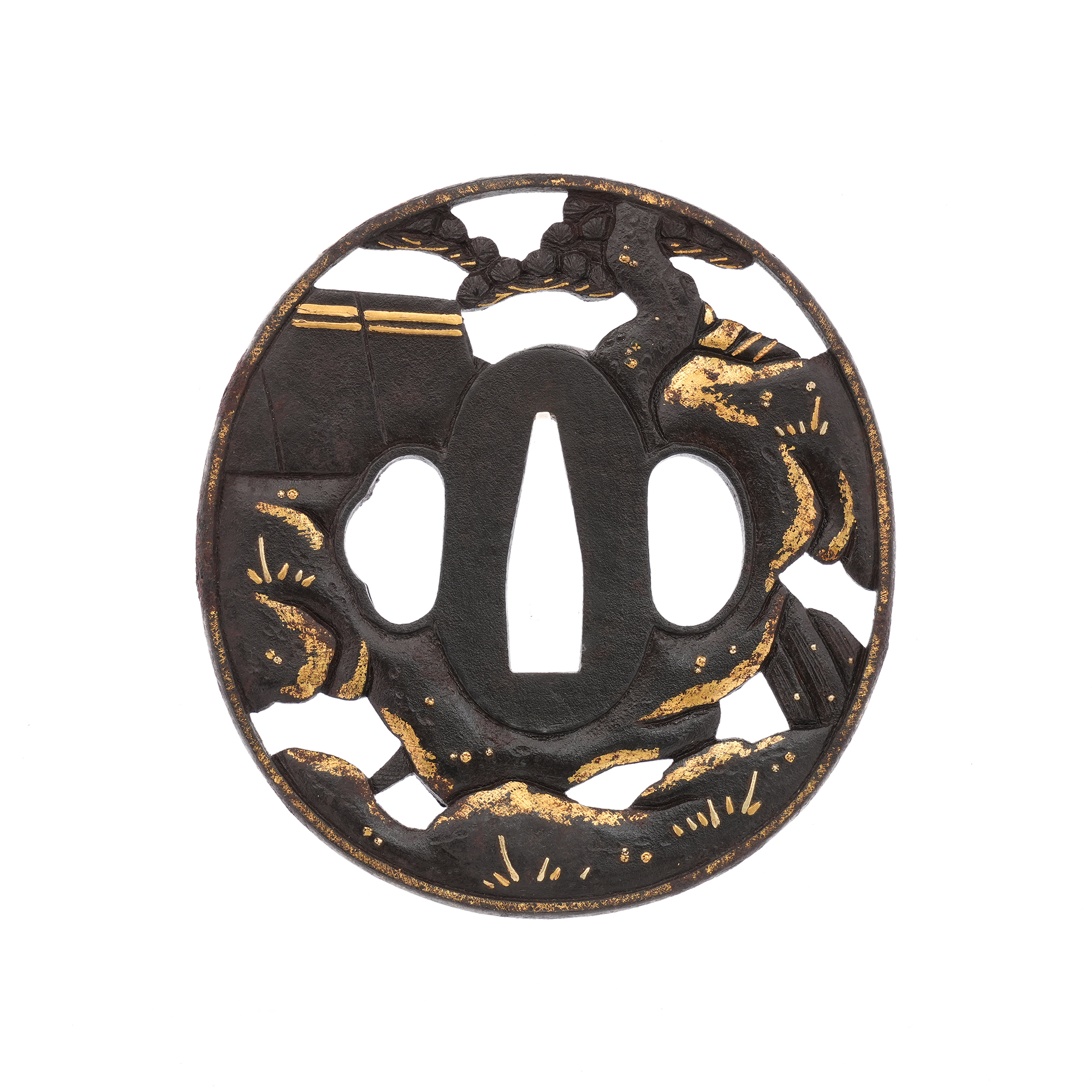
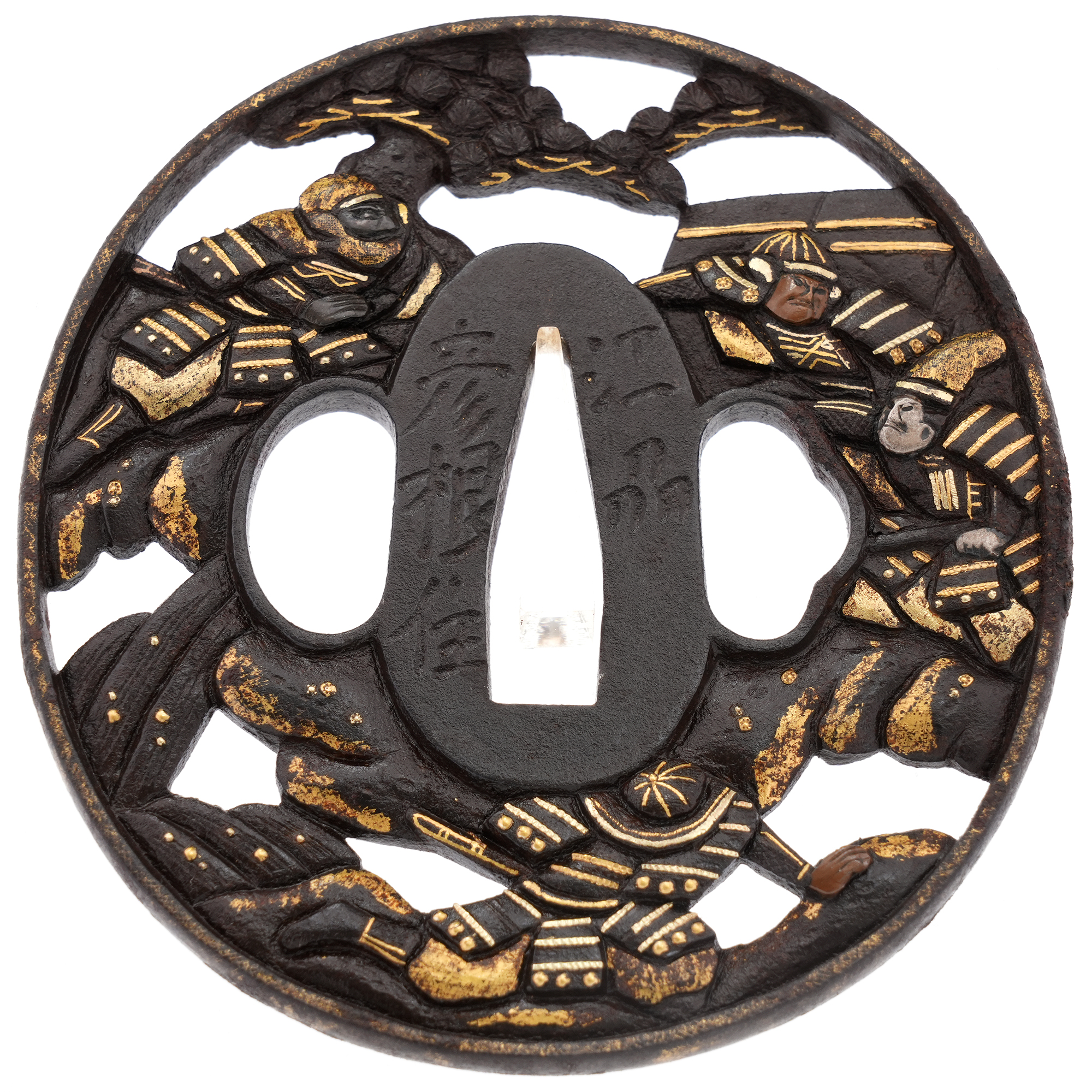
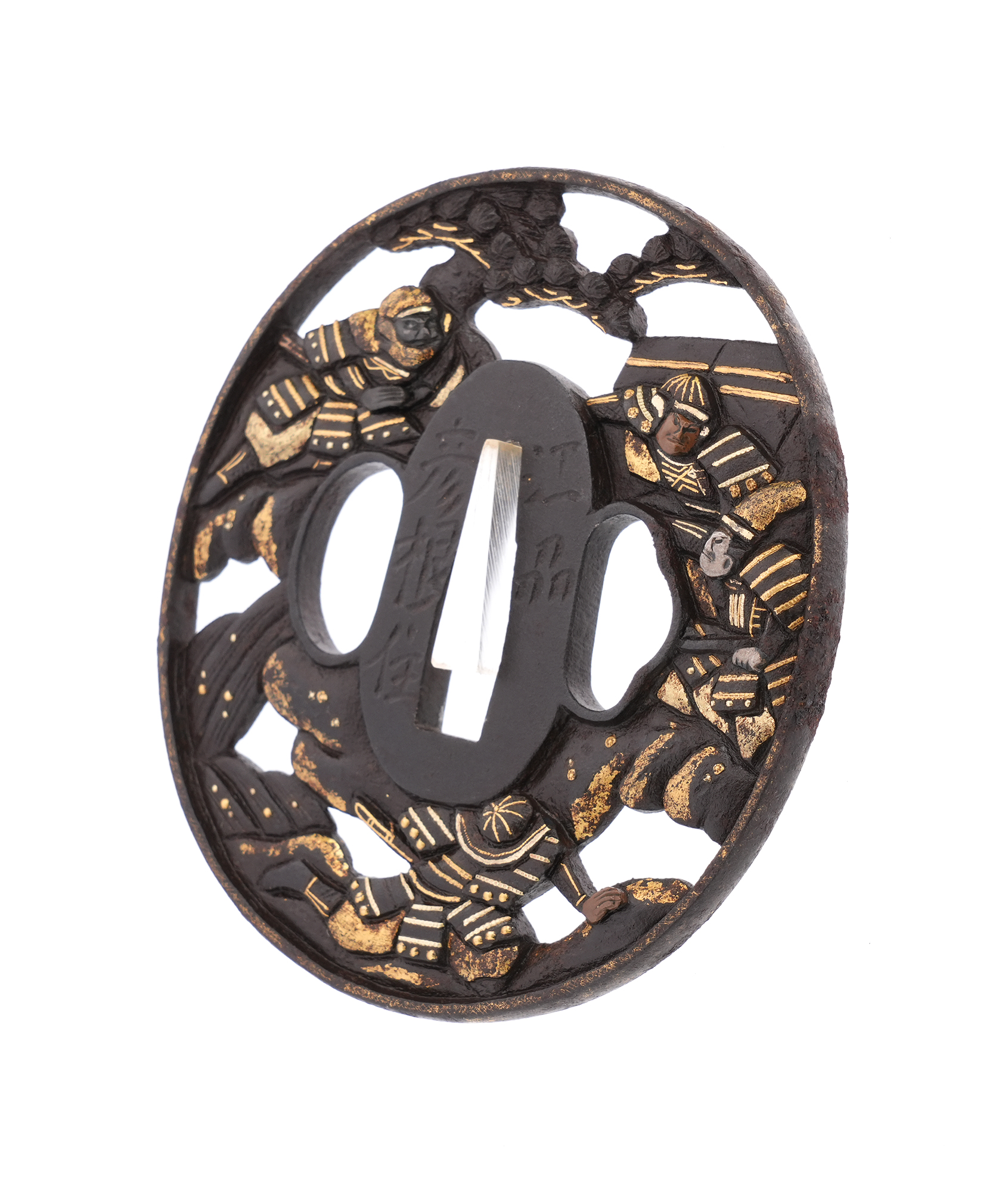
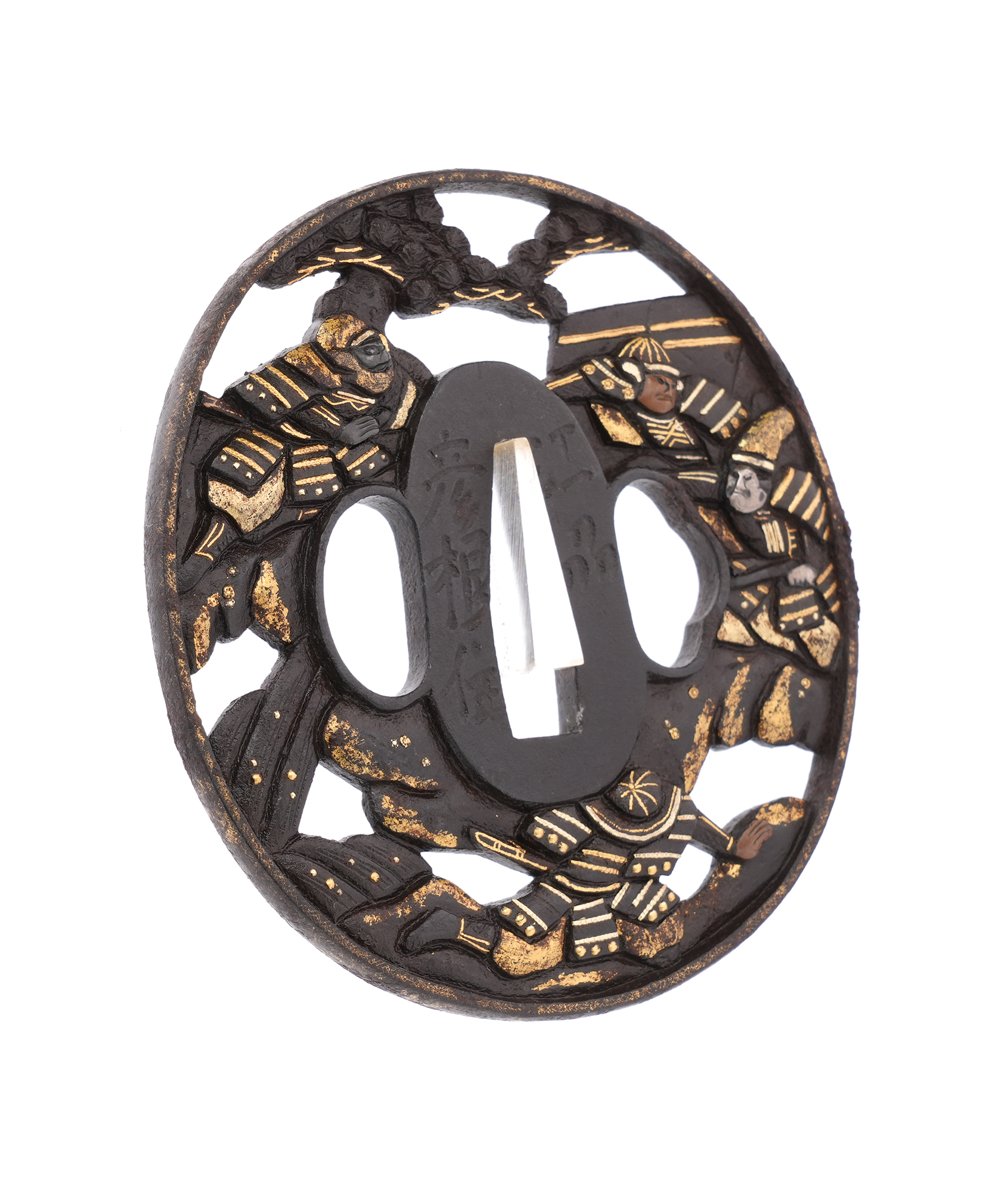
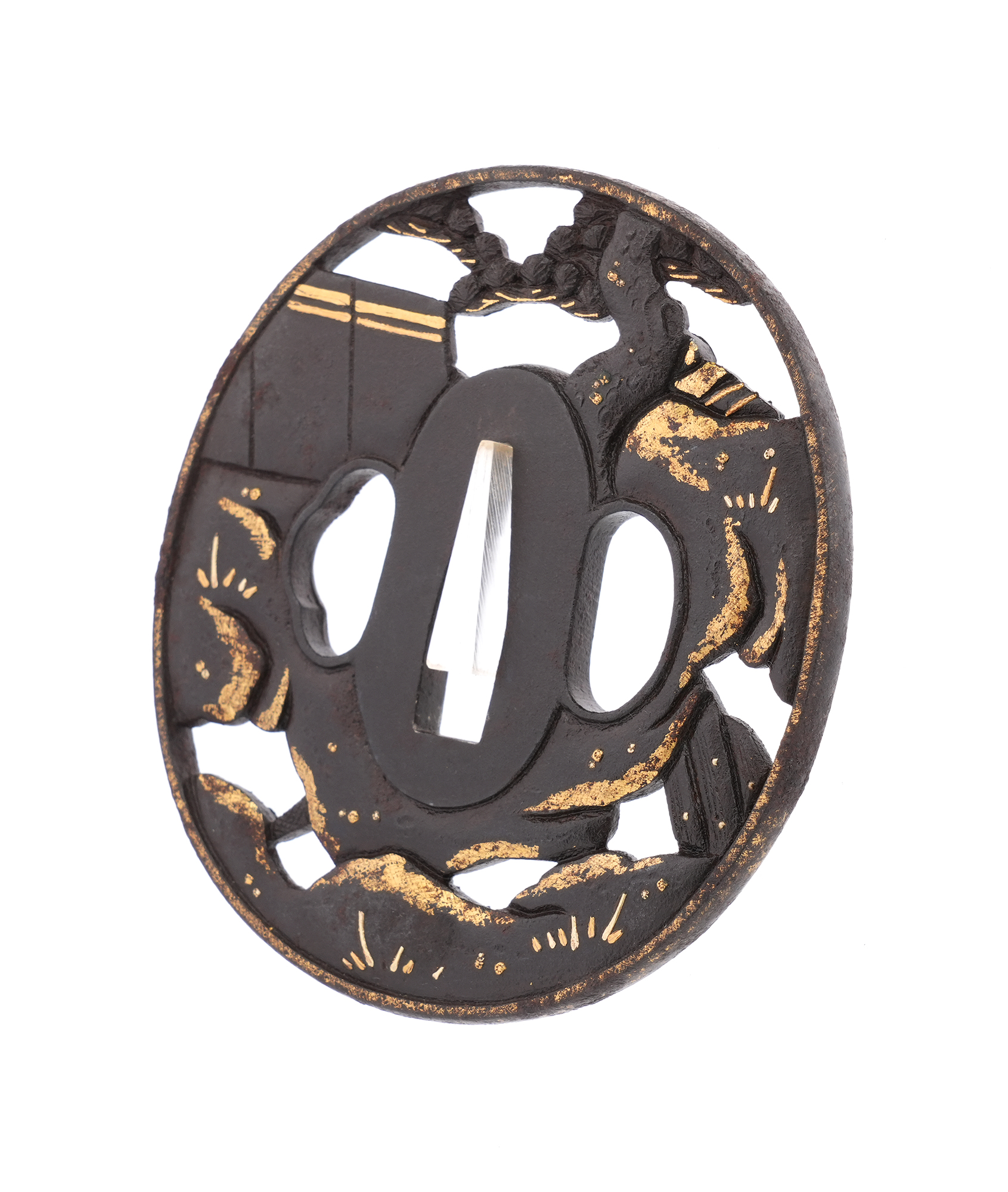
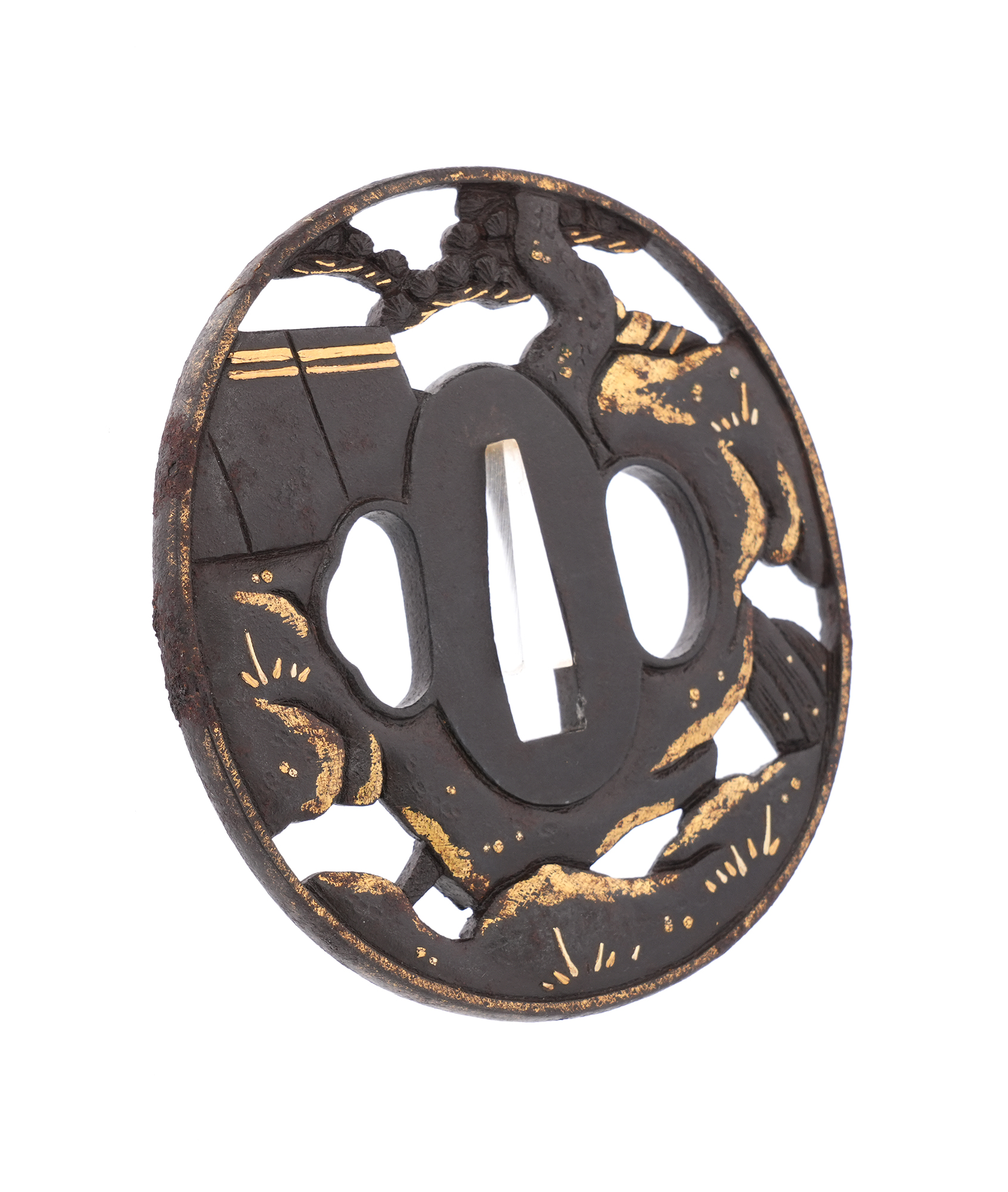
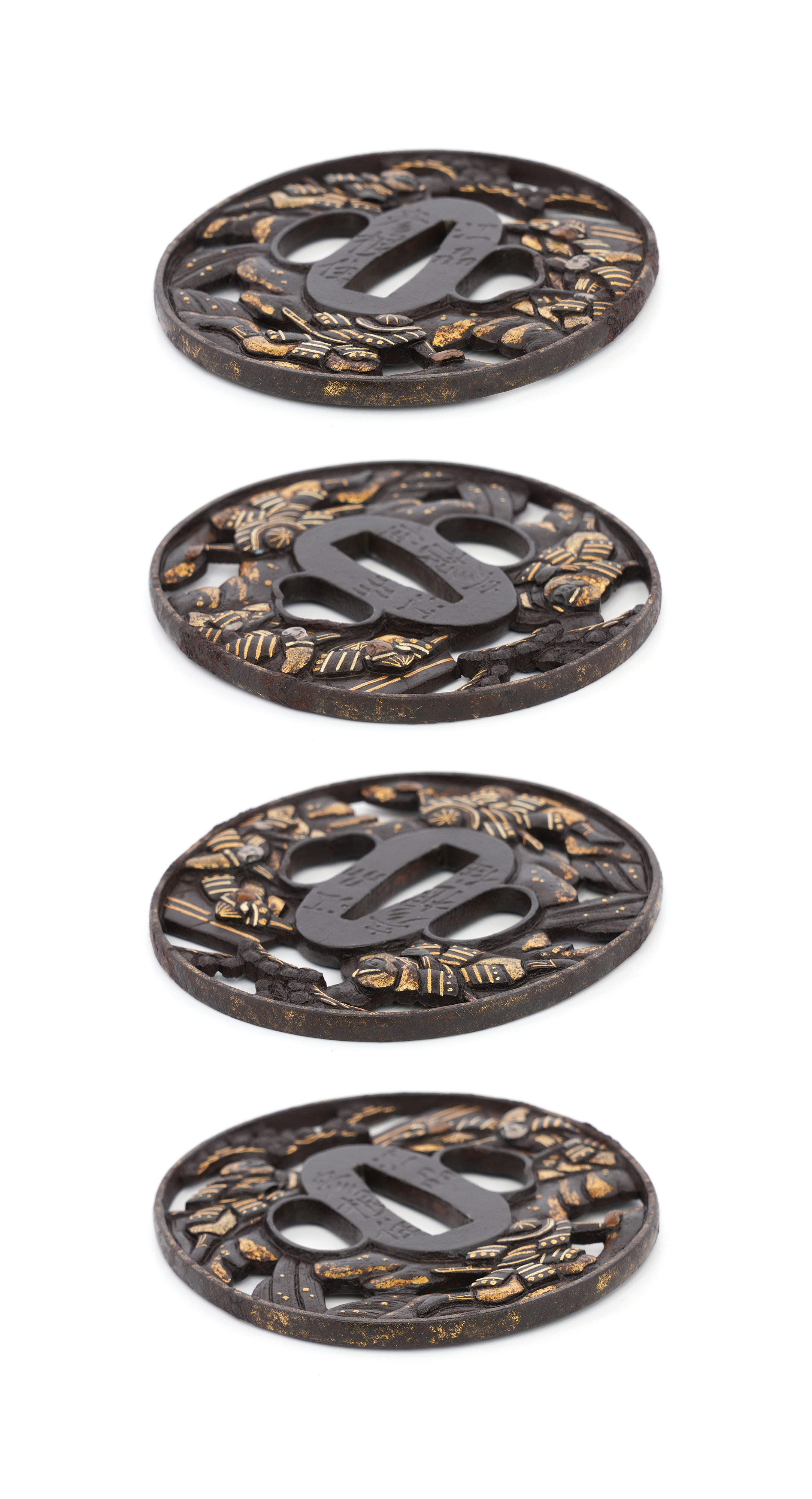
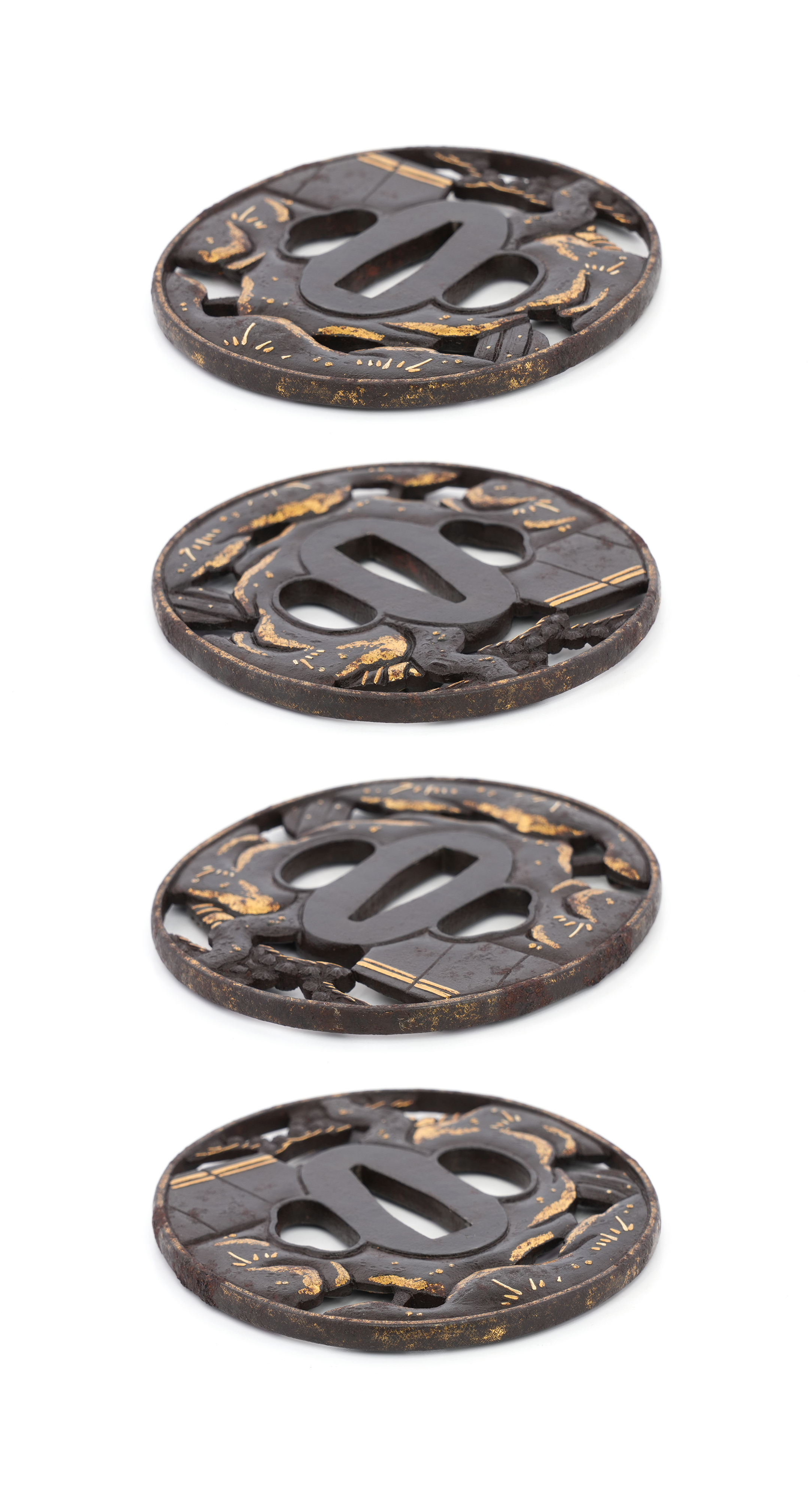
The late Edo period Hikone-bori flourished during the Edo period centered around Omi Hikone, and the school known by the name Mogarashi Soten completed a brilliant style by densely carving warriors, sennin, and historical figures into tetsu-ji, incorporating iroe of gold, silver, and suaka. The expression of creating depth through sukashi while layering figures and applying nunome-zogan to the details of armor and drapery was particularly popular, and this piece well demonstrates the gorgeous and narrative-rich style of Hikone-bori. Four warriors are arranged across the entire maru-gata surface, depicting Musashibo Benkei at the upper left and Minamoto no Yoshitsune wearing an eboshi and taking command on the right. By layering shields and pine trees in the background and adding flowing water at the lower left, not only the figures but even the scenery surrounding the battlefield are condensed into the limited space, while the gold color remaining in the details of the armor odoshi-ito, kabuto, and weapons, along with the iroe used for faces and hands, give vivid life to each warrior. The reverse side is structured to show the back of the omote side's nikubori-sukashi as it is, without adding new motifs, a tailoring that allows one to fully appreciate the skeleton of the sukashi and the depth of the carving. The gold nunome-zogan shows a moderate amount of rubbing due to many years, which brings the brilliant battle scene together into a calm koshoku, instead creating a profound dignity. The dense composition with four warriors arranged in layers, the nikubori rich in three-dimensional feel, the complex ji-sukashi, and the colorful iroe become one, and because new scenes appear every time one follows the details in hand, it is a fascinating piece with endless viewing appeal for those who like the stories of Minamoto no Yoshitsune and Musashibo Benkei or the luxurious decorativeness of Hikone-bori.
NihontoWatchOffered by Toushin

We couldn’t find current papers for this piece. Ask the dealer whether it has been, or can be, submitted to shinsa. — Hoshi

As written by the shop
Machine translation from the shop's Japanese · may contain errors ·
We could not find an authenticity certificate on the seller’s listing. Japanese swords and fittings are normally papered by the NBTHK (or the NTHK). Without one, the attribution is the seller’s own assessment and has not been independently verified — treat it with caution and ask the dealer about certification before buying.
As a rule we do not accept returns, except when we have sent a different item from the one ordered or when there is a significant discrepancy between the description and the item. If you wish to return an item, please contact us within 3 days of its arrival and then send it back.
¥154,000