The twentieth century nearly killed the craft twice: wartime distortion, then the occupation ban. The NBTHK’s founding in 1948 and licensed forging from 1953 rebuilt the sword as an art, crowned by Living National Treasures and the mukansa rank.
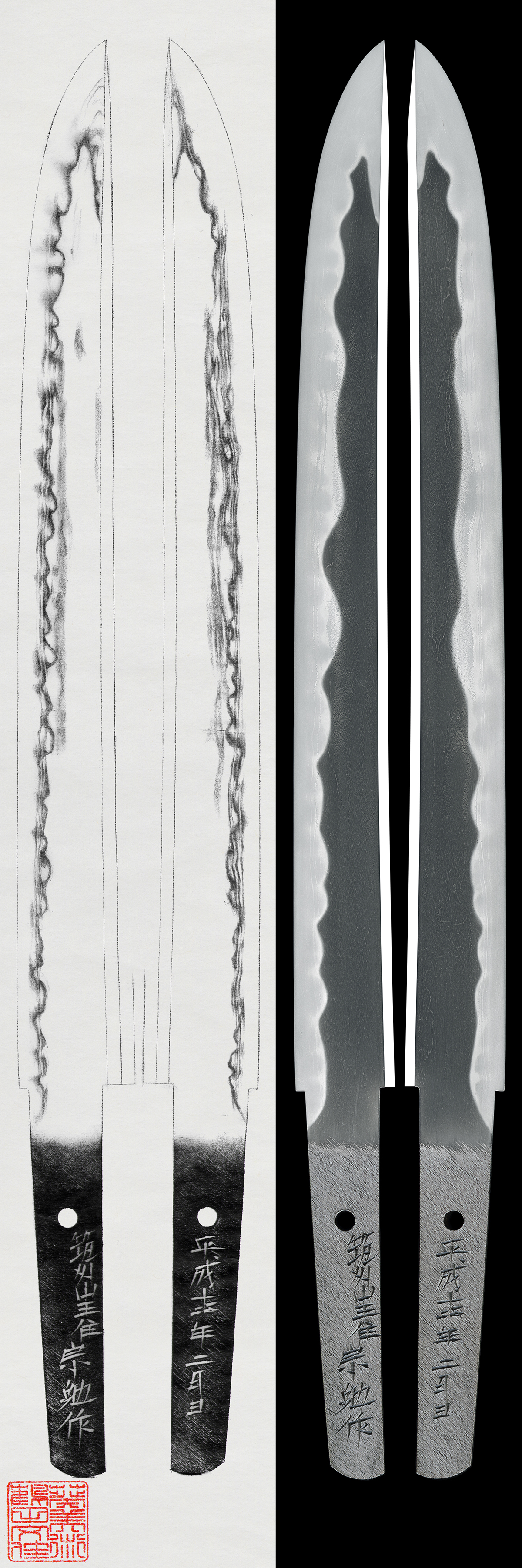
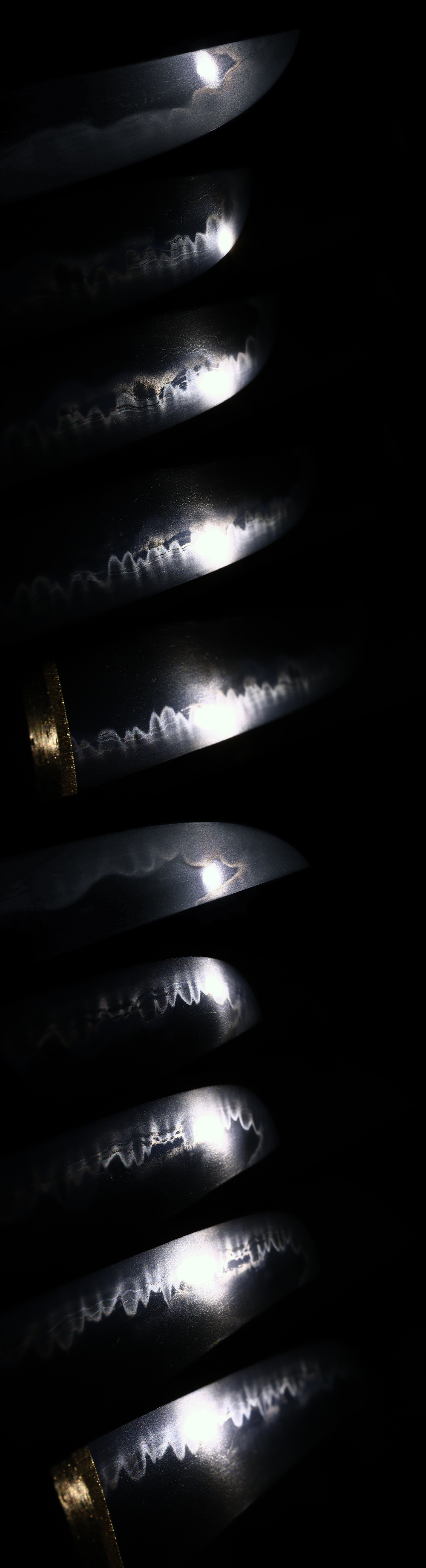
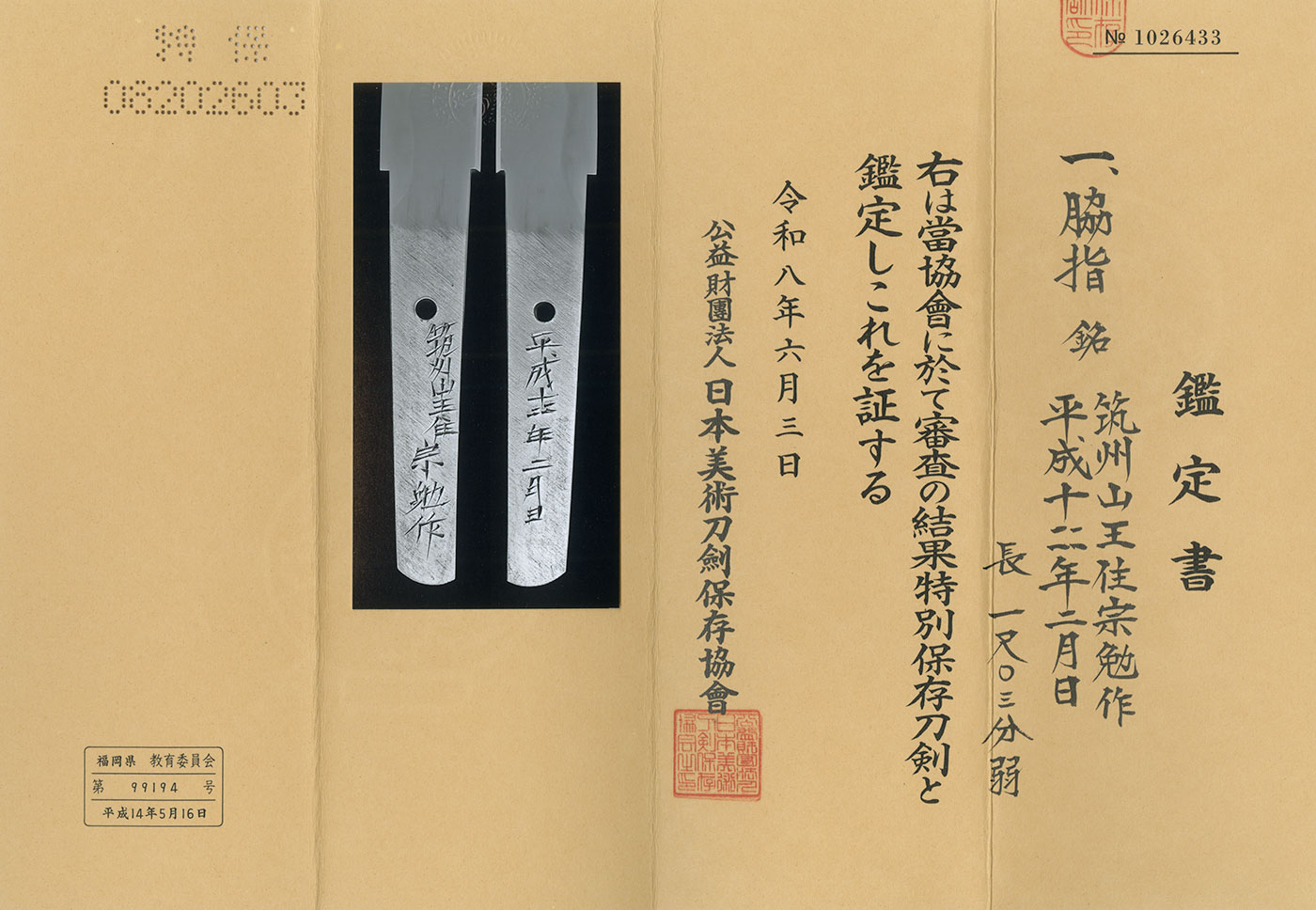
Ordering number:AS25758Wakizashi in Shirasaya(NBTHK Tokbetsu Hozon Token)Signature: Chikushu Sanno Ju So Tsutomu SakuMukansa SwordsmithNBTHK Tokubetsu Hozon TokenA date in February, 2002(We divide 4 sections for each sword as Saijyo Saku, Jyojyo Saku, Jyo Saku and Regular Saku)This work is ranked as Jyojyo Saku for a piece dated February, 2002.The blade has been polished.Habaki: Gold-plated double habakiBlade Length: 31.2 cm (12.28 in)Curvature (Sori): 0.1 cm (0.04 in)Mekugi hole: 1Width at Base (Motohaba): 2.79 cm (1.10 in)Width at Tip (Sakihaba): cmThickness (Kasane): 0.74 cm (0.29 in)Blade Weight: 290 gramsEra: February, 2002 (Heisei 14)Shape: A work made in the manner of Samonji.The kissaki is sharply pointed with a turning-back boshi, and sunagashi and kinsuji work actively throughout.Jigane: Itame hada, very well forged and refined.Sunagashi and kinsuji appear clearly, making this a powerful sun-nobi tanto.Hamon: Formed with a Sanju-ba (triple temper line), and a sharply pointed kissaki appears.Features: Chikushu Sanno Ju So Tsutomu Saku is a leading modern master smith of Fukuoka City, Fukuoka Prefecture, who was active from the Showa era into the Heisei era.Japanese swords by So Riki also bear this signature.He was particularly skilled at making copies of Minamoto Kiyomaro and Nagasone Kotetsu, and received numerous special awards.The swordsmith So Tsutomu (real name: So Tsutomu) was born in 1927 (Showa 2).In 1946 (Showa 21) he studied under his father, the swordsmith So Masamitsu, and refined his sword-making technique.He later won many special awards at the Shinsaku Meito Ten (New Sword Exhibition), including the Commissioner for Cultural Affairs Award and the Kunzan Prize, and he is a contemporary swordsmith of the very highest level, certified as Mukansa.He continued to win special awards at new sword competitions year after year.His record includes 3 Effort Awards and 4 selections at the Sword Forging Technique Presentation, and 1 Encouragement Award, 6
Offered by Aoi Art
This piece has sold
Get an email when a new Tsutomu piece hits the market.


Fukuoka · around 1926-1989
Shōwa to the present: destruction and revival
The twentieth century nearly killed the craft twice: wartime distortion, then the occupation ban. The NBTHK’s founding in 1948 and licensed forging from 1953 rebuilt the sword as an art, crowned by Living National Treasures and the mukansa rank.
A Hozon-certified blade judged to show notably superior workmanship and a better state of preservation. The bar is higher: re-tempered blades and most unsigned Muromachi/Edo works are excluded.
The NBTHK (Nihon Bijutsu Tōken Hozon Kyōkai, the Society for the Preservation of Japanese Art Swords) is a public-interest incorporated foundation founded in 1948 and supervised by Japan’s Agency for Cultural Affairs (Bunkachō); it is based at the Japanese Sword Museum in Tokyo. Its expert panels physically examine each submitted work (shinsa) and issue a certificate (kanteishō) ranking it by artistic and historical merit. NBTHK papers are the most widely recognized standard of authentication for Japanese swords and fittings.
NBTHK official siteIf you wish to return an item, please notify us within 3 days of receipt. After this period we cannot accept cancellations. Please ship the return to us within 5 business days. Cancellation is conditional on the item being kept in the same condition as at the time of sale, so please handle it with care.