Muromachi turned sword making into an industry: the uchigatana rose with massed infantry warfare, Osafune and Seki produced bundle swords beside custom orders, and the Ming trade carried Japanese blades abroad by the tens of thousands.
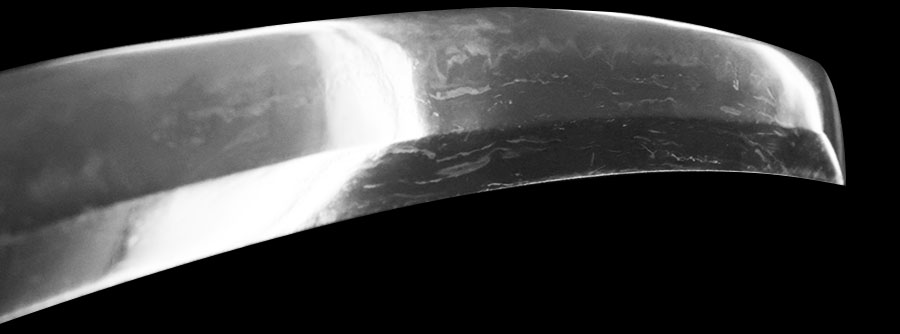
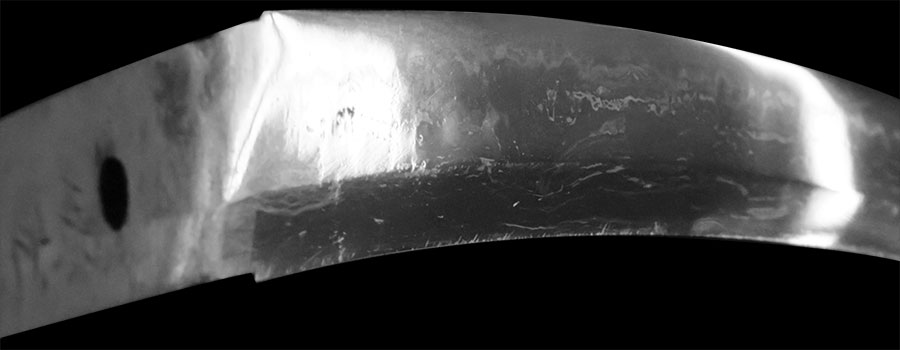
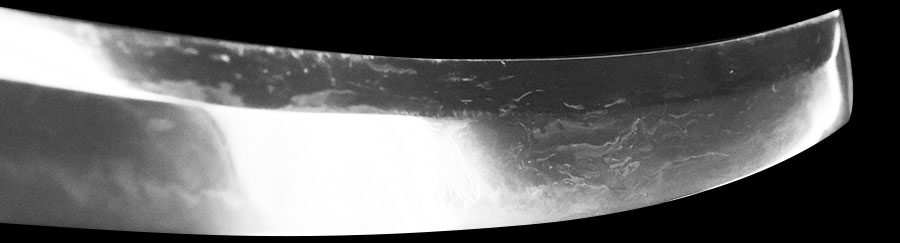
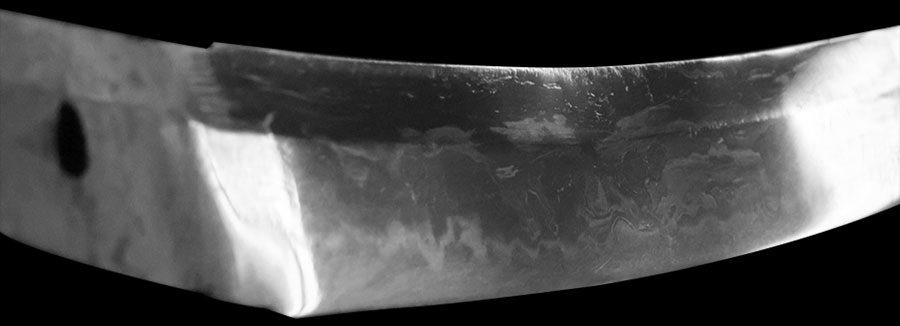
Weight: toshin only 287g It has arrived, it has arrived—a wakizashi by Kashu Katsumitsu has arrived. Today, they are popular alongside the famous Kashu Kiyomitsu. Speaking of Katsumitsu, Bizen Osafune Katsumitsu is particularly famous and comes to mind, but this wakizashi is a very rare work by Kashu Katsumitsu from around the Daiei era (1521) of the Muromachi period (505 years ago). This is an old wakizashi from the time when Takeda Nobutora (father of Takeda Shingen of Kai) was fighting Uesugi Norifusa of Echigo. The sugata of this wakizashi shows a good, nimble wakizashi form with a difference between the moto-mihaba and saki-mihaba and a graceful sori. The jigane is itame-hada mixed with mokume-hada, exhibiting a faint utsuri in the ji. The hamon is nioi-deki with nie, featuring a gunome-midareba that is intricately disordered; even when testing it by cutting paper, it cuts very well, as these old-style blades are indeed exceptionally sharp. From any angle, it does not look like a refined Bizen-no-kuni Osafune Katsumitsu wakizashi, but it cuts remarkably well. Because many Kashu Katsumitsu blades were consumed during the Sengoku period, please consider it wonderful and rare that one exists today like this wakizashi. For the sword world, it is a blessing just for a Kashu Katsumitsu wakizashi to exist correctly. On this occasion, an elderly doctor and long-time collector told me, "I have grown old, so please pass this on at a low price to someone who desires it," and taking him at his word, I am offering this at a special, ultra-low price. Please, by all means, enjoy it.
 NihontoWatch
Muromachi · nagasa 43.4cm · sori 1cm










Kaga · around 1521-1528
Tōken Taikan top 76%
3 pieces on the market now
The Muromachi period (1392 to 1573)
Muromachi turned sword making into an industry: the uchigatana rose with massed infantry warfare, Osafune and Seki produced bundle swords beside custom orders, and the Ming trade carried Japanese blades abroad by the tens of thousands.
We could not find an authenticity certificate on the seller’s listing. Japanese swords and fittings are normally papered by the NBTHK (or the NTHK). Without one, the attribution is the seller’s own assessment and has not been independently verified — treat it with caution and ask the dealer about certification before buying.
For returns due to customer circumstances, the cost is the customer's responsibility. For returns due to our mis-shipment or a defective item, we bear the cost.
¥130,000
Weight: toshin only 287g It has arrived, it has arrived—a wakizashi by Kashu Katsumitsu has arrived. Today, they are popular alongside the famous Kashu Kiyomitsu. Speaking of Katsumitsu, Bizen Osafune Katsumitsu is particularly famous and comes to mind, but this wakizashi is a very rare work by Kashu Katsumitsu from around the Daiei era (1521) of the Muromachi period (505 years ago). This is an old wakizashi from the time when Takeda Nobutora (father of Takeda Shingen of Kai) was fighting Uesugi Norifusa of Echigo. The sugata of this wakizashi shows a good, nimble wakizashi form with a difference between the moto-mihaba and saki-mihaba and a graceful sori. The jigane is itame-hada mixed with mokume-hada, exhibiting a faint utsuri in the ji. The hamon is nioi-deki with nie, featuring a gunome-midareba that is intricately disordered; even when testing it by cutting paper, it cuts very well, as these old-style blades are indeed exceptionally sharp. From any angle, it does not look like a refined Bizen-no-kuni Osafune Katsumitsu wakizashi, but it cuts remarkably well. Because many Kashu Katsumitsu blades were consumed during the Sengoku period, please consider it wonderful and rare that one exists today like this wakizashi. For the sword world, it is a blessing just for a Kashu Katsumitsu wakizashi to exist correctly. On this occasion, an elderly doctor and long-time collector told me, "I have grown old, so please pass this on at a low price to someone who desires it," and taking him at his word, I am offering this at a special, ultra-low price. Please, by all means, enjoy it.
NihontoWatchMuromachi · nagasa 43.4cm · sori 1cm
Kaga · around 1521-1528
Tōken Taikan top 76%
3 pieces on the market now
The Muromachi period (1392 to 1573)
Muromachi turned sword making into an industry: the uchigatana rose with massed infantry warfare, Osafune and Seki produced bundle swords beside custom orders, and the Ming trade carried Japanese blades abroad by the tens of thousands.
We could not find an authenticity certificate on the seller’s listing. Japanese swords and fittings are normally papered by the NBTHK (or the NTHK). Without one, the attribution is the seller’s own assessment and has not been independently verified — treat it with caution and ask the dealer about certification before buying.
For returns due to customer circumstances, the cost is the customer's responsibility. For returns due to our mis-shipment or a defective item, we bear the cost.
¥130,000


