 NihontoWatchNihontoWatch
Owari Kinko refers to sword fitting metalworkers who developed their craft centered in Owari Province, a region where samurai culture flourished since ancient times and demand for swords and tosogu was high, fostering a unique sword fitting culture such as Owari tsuba primarily made of tetsu-ji; meanwhile, during the Edo period, metalworkers who applied carving and zogan using irogane such as shakudo and suaka were also active, producing a variety of tosogu that reflected the status and aesthetic sensibilities of the samurai class while maintaining a basis in practicality, and although the specific artist's name for this work is not identified, it is a superior set of daisho matching pieces judged as "Owari Kinko" based on its style and further appraised as Tokubetsu Hozon Tosogu. This work is based on a shakudo migaki-ji with excellent color, with the fuchi-kashira of the daito and shoto aligned in the same design, featuring a detailed sayagata pattern spread across the entire surface of the kashira bordered by elegant karakusa-mon, while the fuchi features bands of raimon, karakusa-mon, and sayagata arranged from the top, each expressed through precise kin-zogan in a truly magnificent set of daisho fuchi-kashira; the appearance of fine gold lines continuing in an orderly fashion against the background of the deep black shakudo-ji is extremely vivid yet never descends into gaudiness, and through the regular repetition of geometric patterns and the clear contrast between the two colors of gold and black, it possesses the status and refinement appropriate for the sword fittings of a samurai. The particular highlight is not the amount of gold itself, but the volume of work and high level of skill required to deploy such detailed and well-proportioned patterns across all four pieces of the fuchi and kashira; while sayagata is an auspicious pattern of interlocking manji shapes used since ancient times in textiles and craft designs, in this work it is connected regularly without interruption using extremely fine lines, and by combining it with raimon and karakusa-mon of different characters, it provides variety and dignity to geometric patterns that tend to become monotonous, and in the chisel work that fits three types of pattern bands without failure not only on the wide surface of the kashira but also in the limited space of the fuchi-koshi measuring only 7.9 mm, one can see the certain ability of a metalworker who paid attention to every detail. Furthermore, while the dimensions of the dai and sho are similar, there is great value in the fact that they have been handed down together to this day as a set for daisho koshirae maintaining the same design and style, possessing a unified beauty that cannot be obtained from individual fuchi-kashira, and the combination of deep black shakudo and kin-zogan is easy to match with various saya-nuri such as shu-nuri, kuro-roiro, and ishime-ji; if actually used for a daisho koshirae, it is guaranteed to tighten the overall appearance of the sword fittings while adding a certain brilliance and status, making it a very attractive set not only as tosogu for appreciation but also as fittings for newly tailoring a high-grade daisho koshirae. This work is accompanied by a Tokubetsu Hozon Tosogu kanteisho judged as "Owari Kinko" despite being mumei, and considering the shakudo migaki-ji with excellent luster, the design unified across all four pieces, the dense composition combining multiple layers of raimon, karakusa-mon, and sayagata, the volume of work finished without gaps through kin-zogan, and above all the rarity of having been handed down to the present day as a complete daisho set, it is a piece whose value should not be measured by the presence or absence of an artist's name alone, but is a superior work of Owari Kinko whose quality of craftsmanship itself should be fully appreciated; the sight of the four pieces stored together in a specially made ochikomi paulownia box also conveys the dignity of a set, making it a deeply attractive masterpiece recommended for both collecting and practical use.
Offered by Toushin

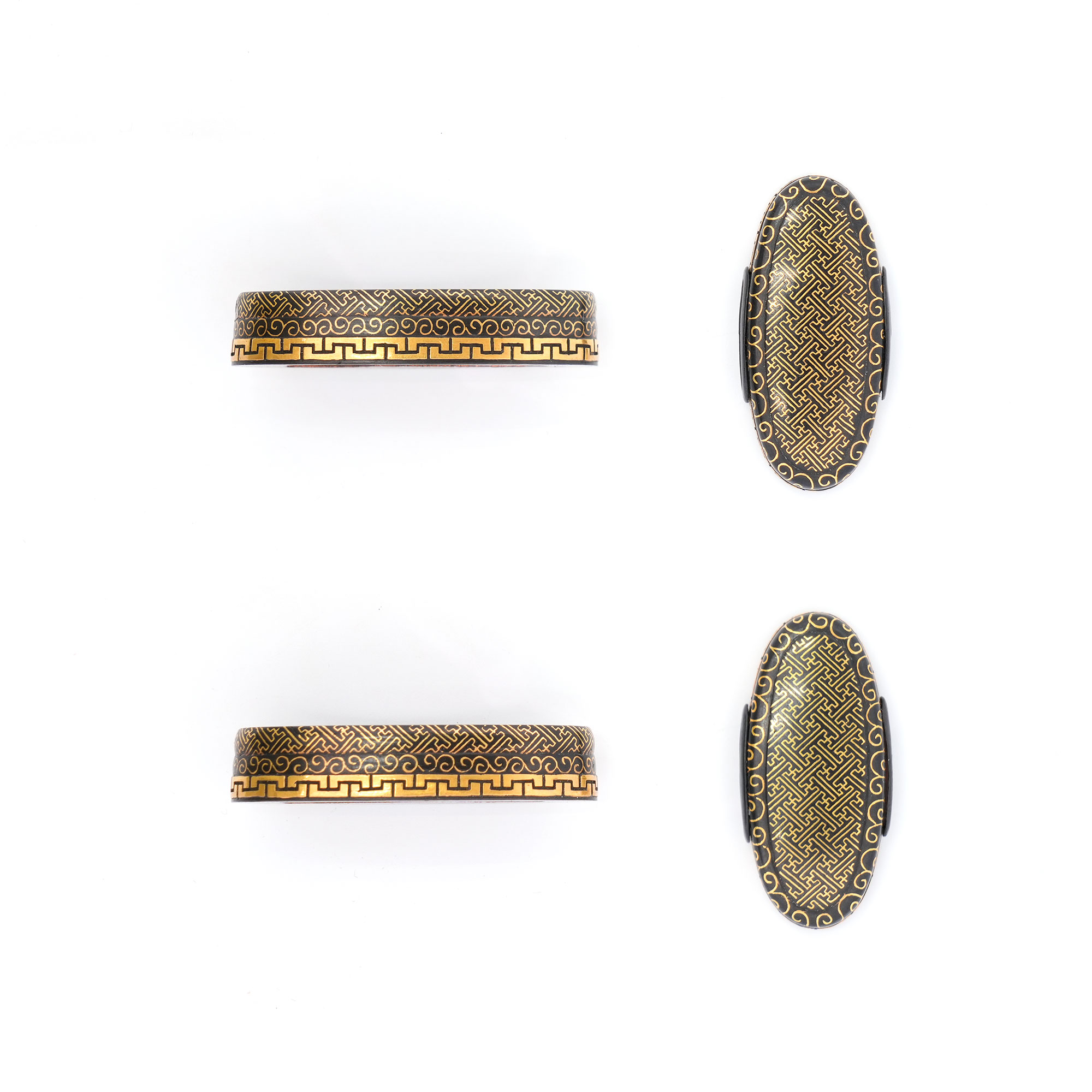
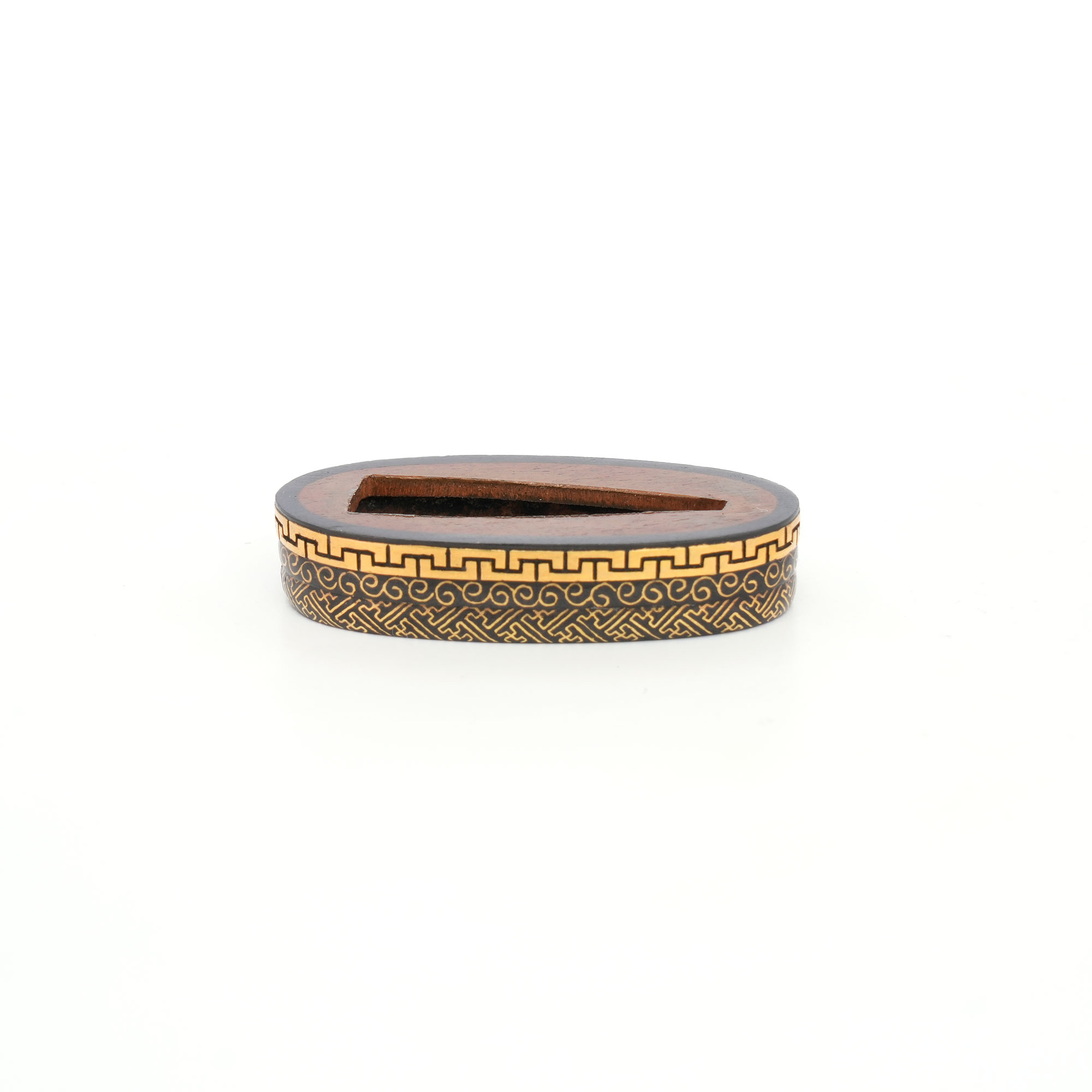
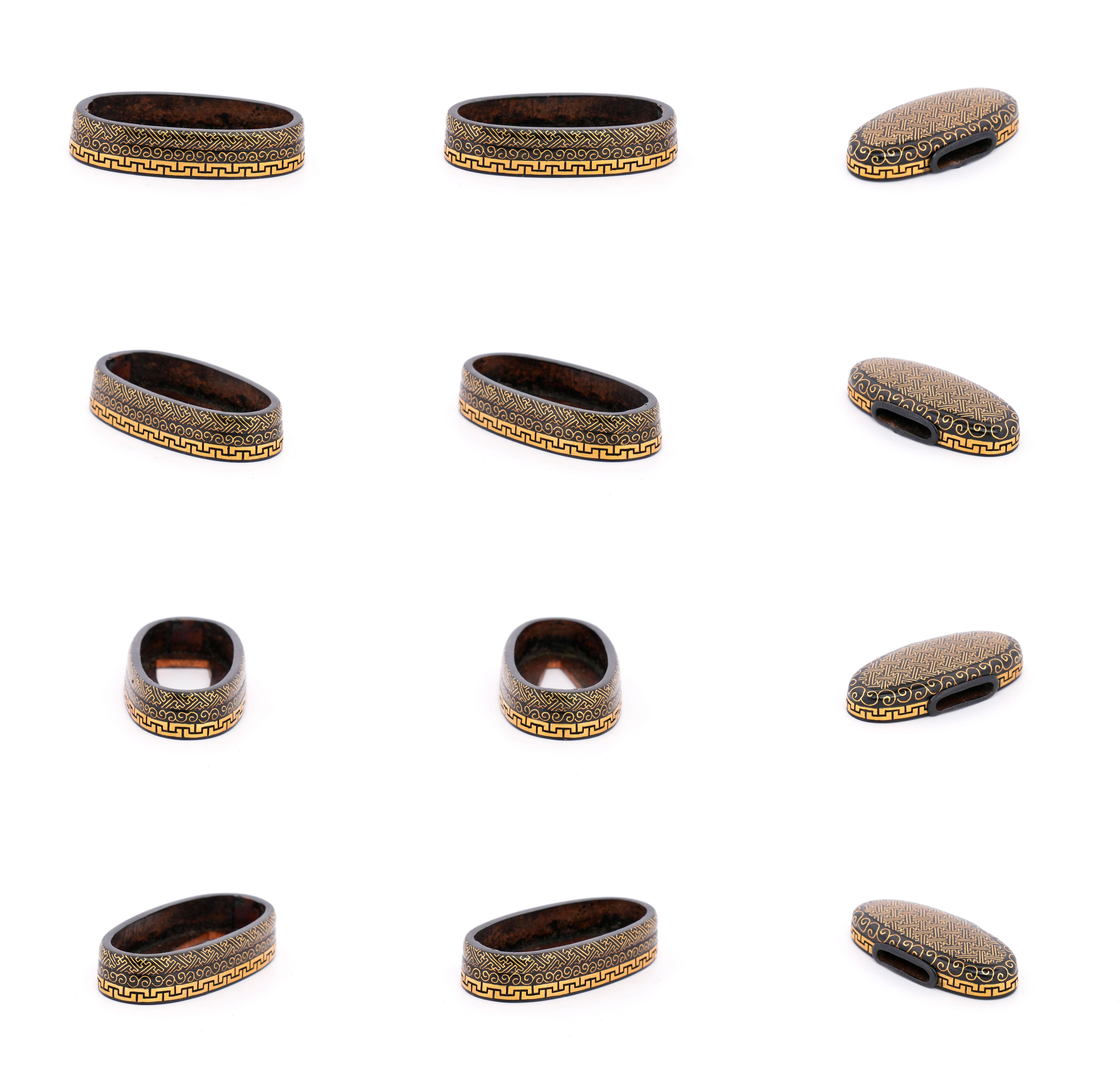
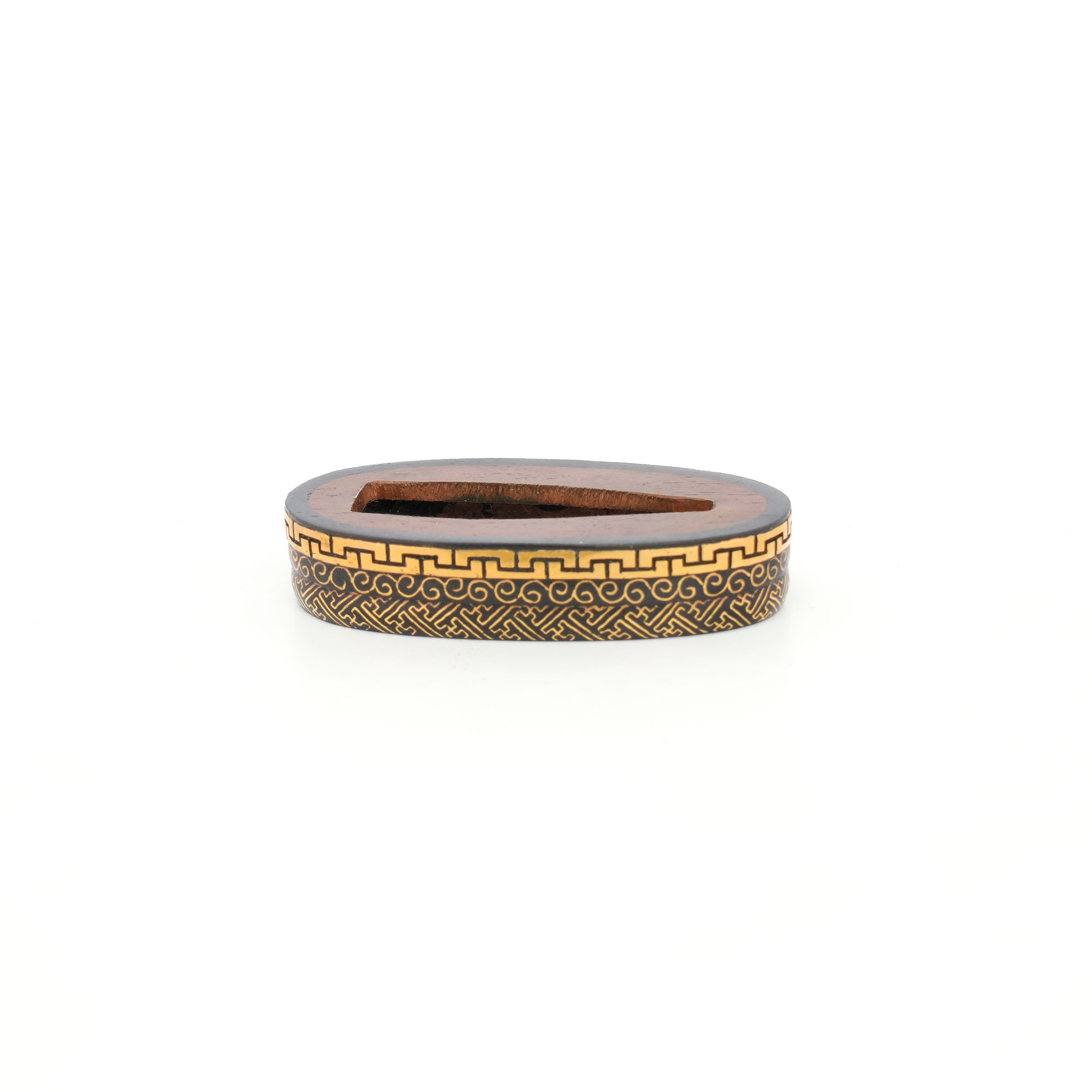
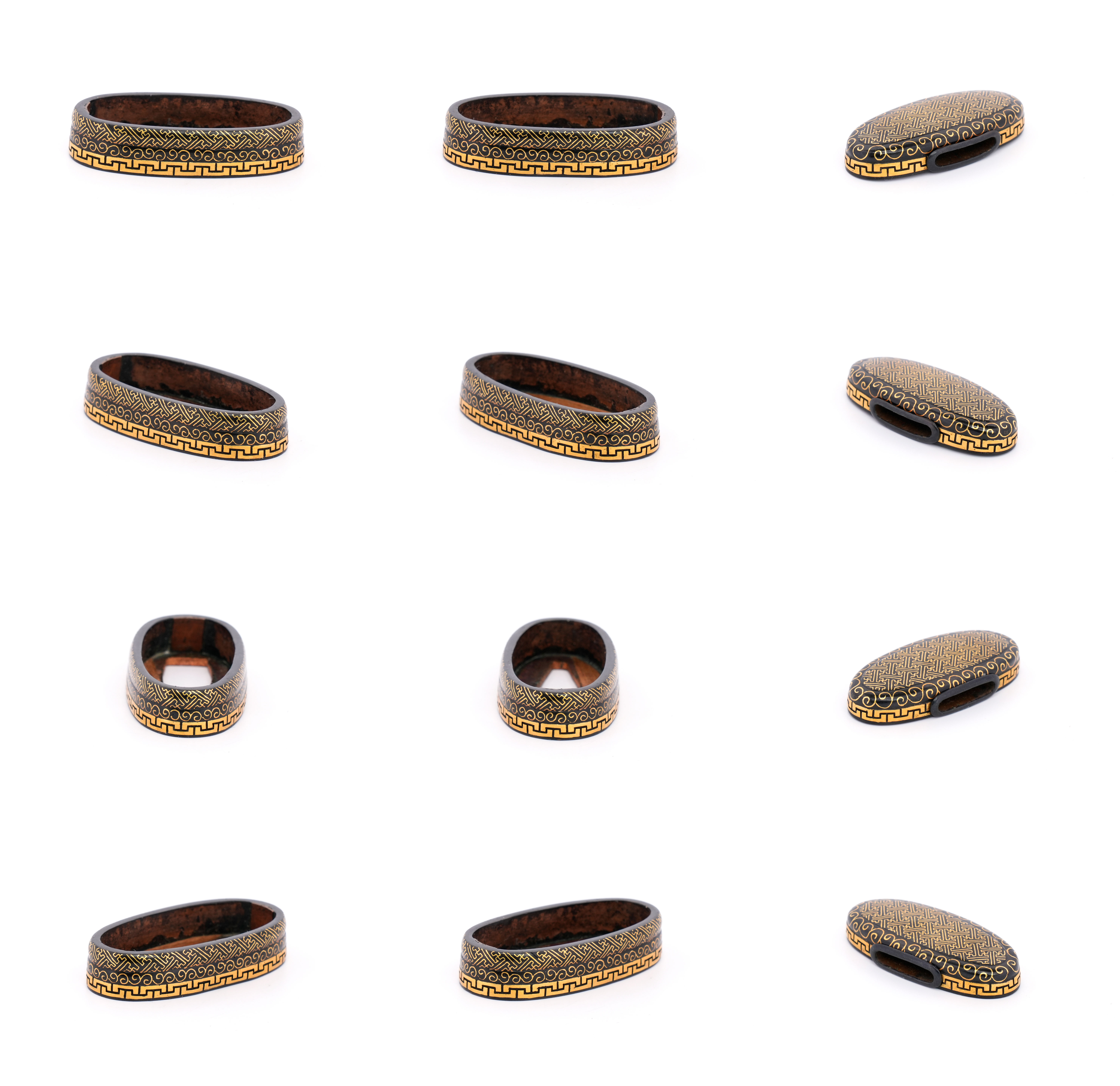
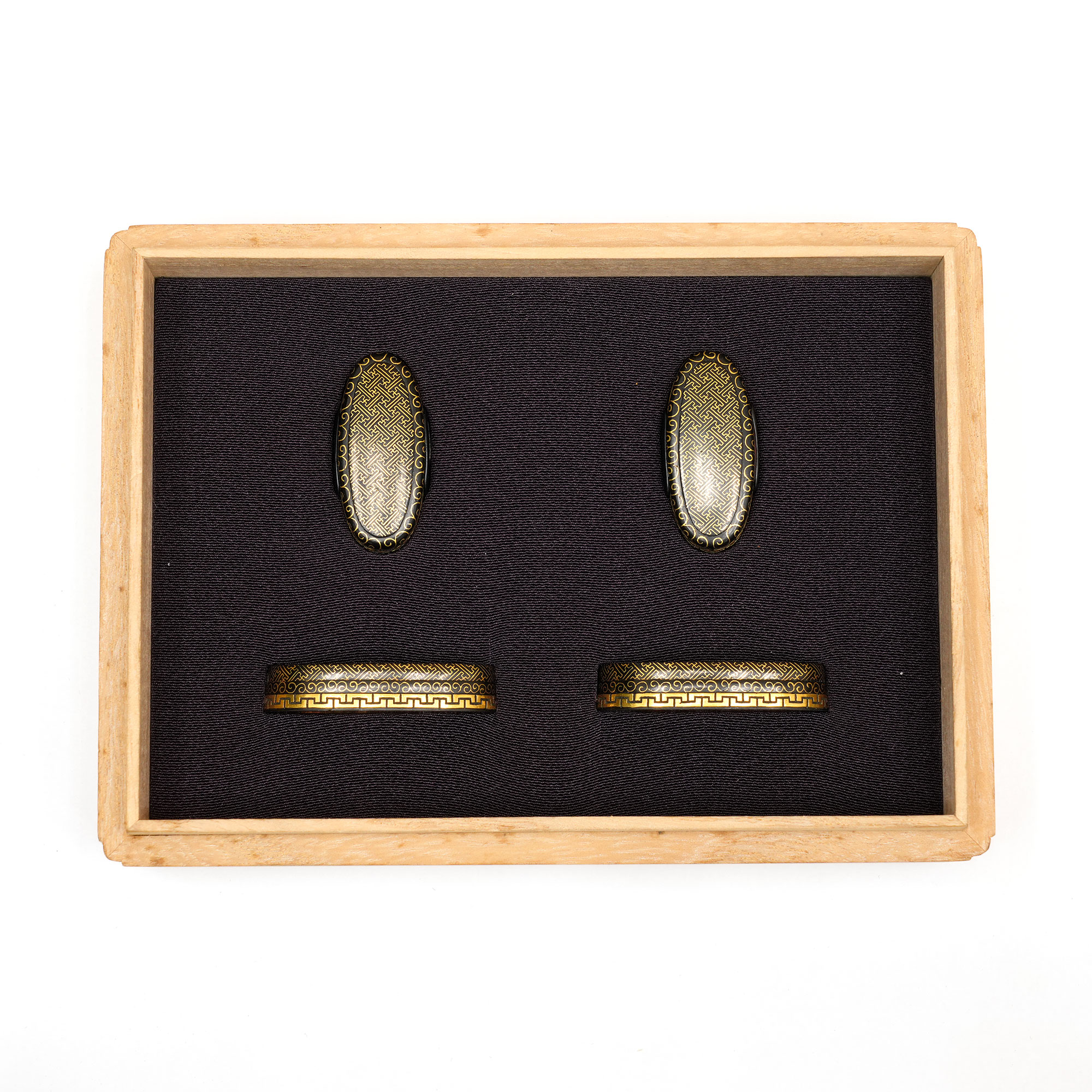
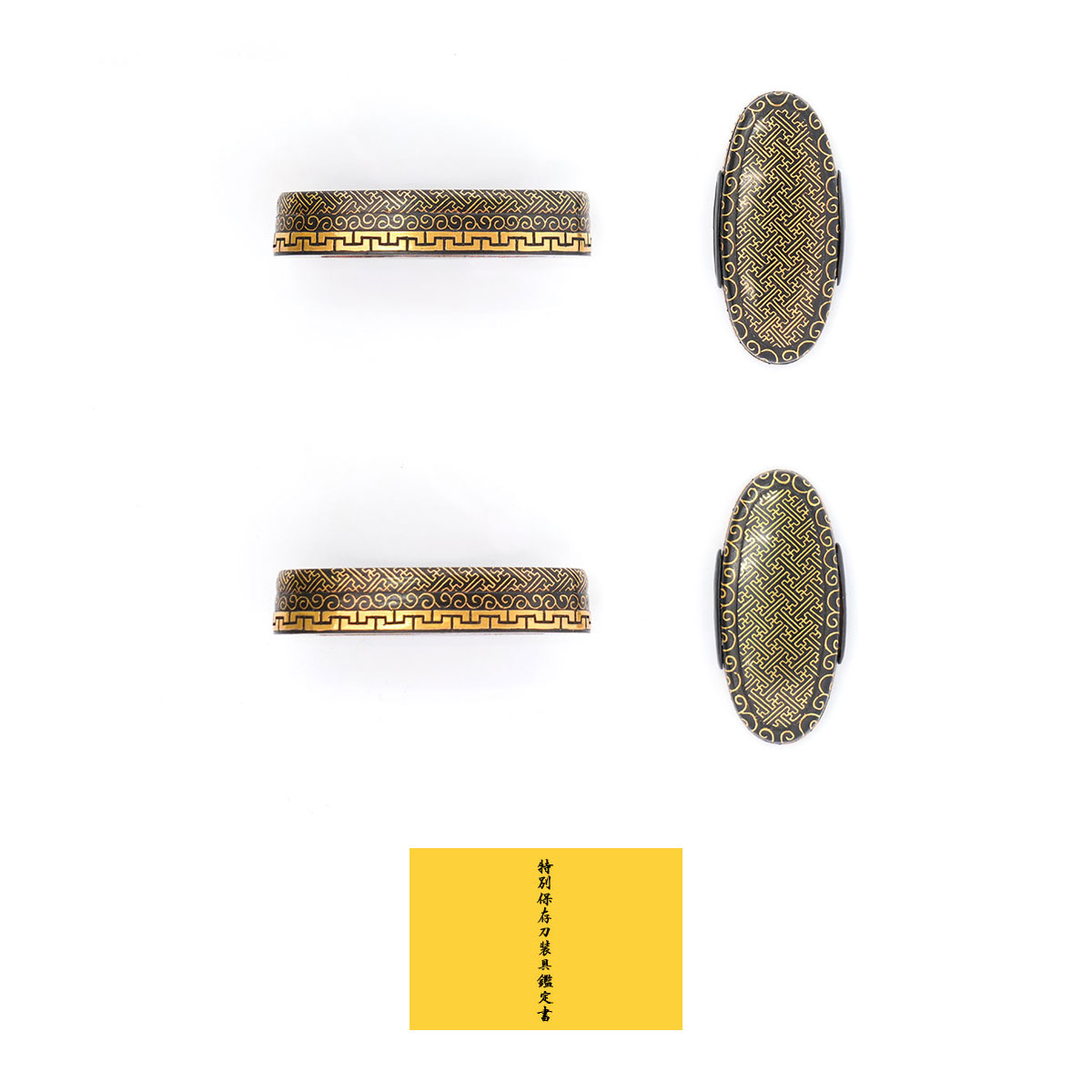
Owari Kinko
Edo
Owari
Unsigned
Tokuho (NBTHK)
As written by the shop
Machine translation from the shop's Japanese · may contain errors ·
A Hozon-certified fitting of notably superior craftsmanship and condition, often with signature or workmanship of high reference value.
The NBTHK (Nihon Bijutsu Tōken Hozon Kyōkai, the Society for the Preservation of Japanese Art Swords) is a public-interest incorporated foundation founded in 1948 and supervised by Japan’s Agency for Cultural Affairs (Bunkachō); it is based at the Japanese Sword Museum in Tokyo. Its expert panels physically examine each submitted work (shinsa) and issue a certificate (kanteishō) ranking it by artistic and historical merit. NBTHK papers are the most widely recognized standard of authentication for Japanese swords and fittings.
NBTHK official siteAs a rule we do not accept returns, except when we have sent a different item from the one ordered or when there is a significant discrepancy between the description and the item. If you wish to return an item, please contact us within 3 days of its arrival and then send it back.
¥880,000