Two courts, sixty years of war, and the most dramatic silhouettes in the sword’s history: broad blades, extended points, true ōdachi later cut down into the majestic katana collectors prize. The Sōshū manner was the style of the age.
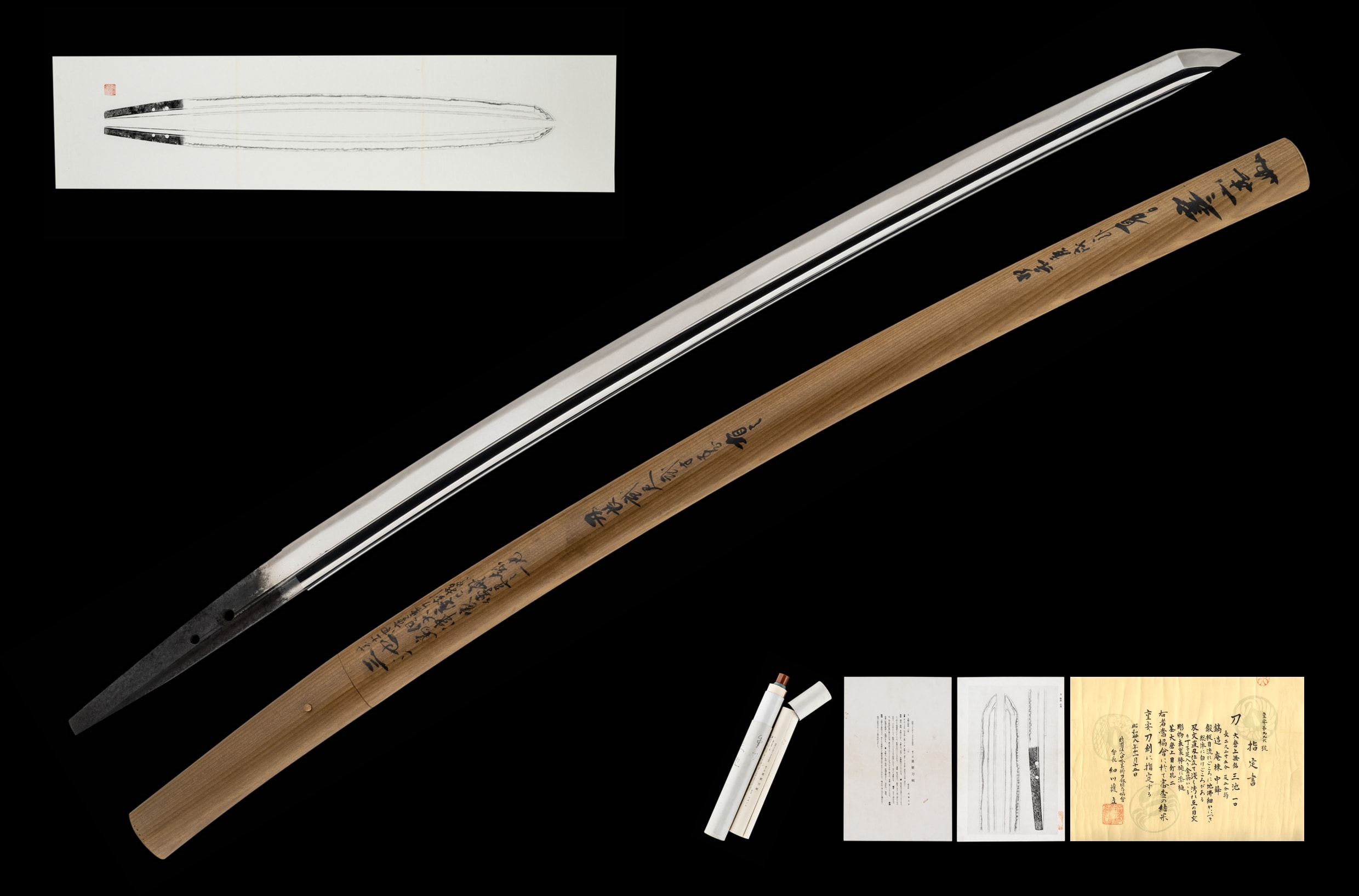
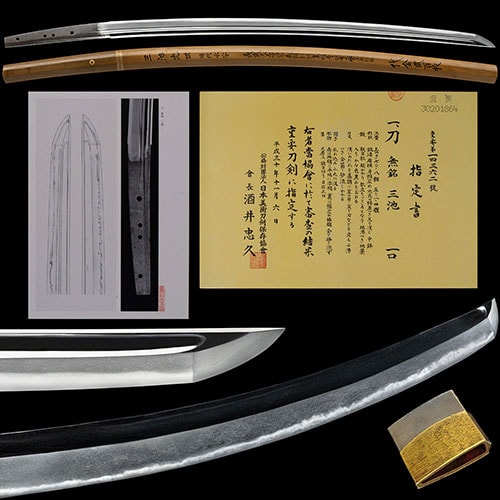
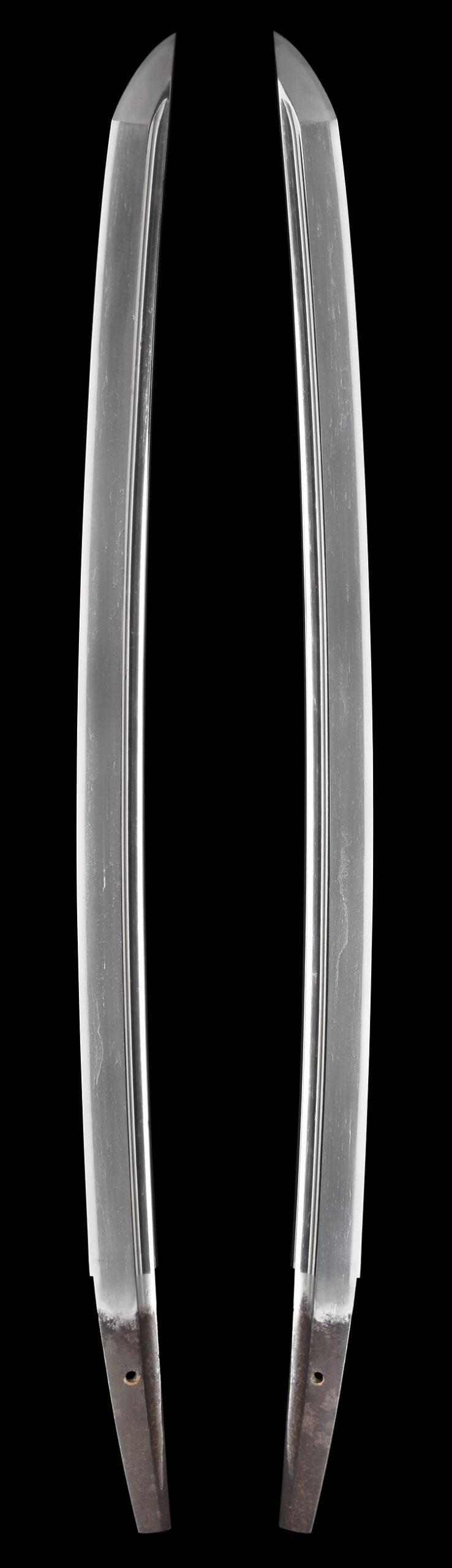
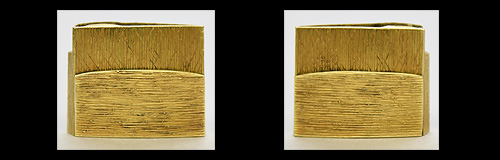
This is a mumei wakizashi attributed to Sue-Miike from the Chikugo province, dating to the late Nanbokucho period. It features a hira-zukuri iori-mune construction with an o-suriage nakago. The blade exhibits a midare-ba hamon with ko-nie, sunagashi, and kinsuji, showing a bright and clear appearance. It comes with a shirasaya and is accompanied by a Special Kicho Token certificate.
 NihontoWatch
mumei · Miike · Nanbokucho · nagasa 54.2cm · sori 1.1cm



Wakimono · Chikugo
2 pieces on the market now
Among the oldest of the Kyushu lineages, the Miike school (三池) takes its name from the locality of Miike in Chikugo province, where its founder, Tenta Mitsuyo (also given as Denta Mitsuyo, 光世), worked in the late Heian period at the very threshold of the early Kamakura. The members place the line at the head of an ancient Kyushu hand whose representative work is the meibutsu Ōdenta of the Maeda house, counted among the Tenka-goken, the five swords ranked above all others in Japan. The school's accounts are equally plain that little of the founder's own hand survives; the signed blades that carry the Mitsuyo name from the Kamakura period into the Muromachi are read as the work of successors who inherited the signature rather than as the founder's own. So the name is the lineage: Mitsuyo was not one man but a succession, and the NBTHK reads the designated work that descends to us as the school manner carried intact. By the Nanbokuchō period the line had begun to scatter, one branch relocating to Aki province as a tantō dated Meitoku 2 (1391) attests, and the members note that the traditional style effectively closes with that era, little of its former character remaining into the Muromachi. In their own descriptions the members hold the Miike hand to a quiet register built on a distinctive ground. The forging is itame mixed with mokume that flows conspicuously and stands somewhat, at times inclining toward masame-gakari, with ji-nie and chikei adhering; tighter examples settle into a dense ko-itame. The members linger longest on the jigane itself, naming it a sticky, nettori surface soft to the eye, inclining toward a whitish shirake tone with shirake-utsuri (and on broader blades a jifu, midare-utsuri tendency) rising over the steel. The temper is consistently suguha-based: a slender hoso-suguha on the hira-zukuri work and a chū-suguha carrying ko-gunome or ko-midare on the katana, all in ko-nie-deki, with sunagashi, yō, kinsuji within the edge, and in places nijūba, hotsure, and kuichigai-ba; even where the ha is bright the nioiguchi tends to a subdued shizumi cast.
The bōshi runs straight and returns in a calm ko-maru, on some blades a hakikake turning to ko-maru or a yakizume. The sugata is the grand early figure, a broad shinogi-zukuri tachi of moderate kasane with deep koshizori and funbari, a compact chū-kissaki at times forming an ikubi (boar's neck), while the tantō are hira-zukuri with uchizori and somewhat thick kasane. Where the members locate the school's own individuality is the carving: wide, comparatively shallow bō-hi run as kaki-nagashi or kaki-tōshi, often with an accompanying soe-hi, and on some pieces bonji above koshi-hi or suken in relief. For kantei the members read the work not by date but by manner and attesting inscription, and the discriminators are the ground and the groove rather than the temper. A measured suguha in ko-nie belongs to several traditions; a Yamashiro or Rai ji keeps a clear, bright steel, whereas the Miike ji whitens and softens into the nettori character, so the soft shirake ground together with the wide shallow bō-hi pulls the work back to Chikugo. Mitsuyo stands in a rare double light, a maker famous for one unrepeatable masterpiece and the head of a recognizable hand traced across three centuries. The Ōdenta, transmitted in the Maeda house, is patrimony and never offered; the Sohaya-no-tsurugi, a blade of Tokugawa Ieyasu, is kept at the Kunōzan Tōshōgū, and a tantō at Honmyō-ji, with a signed katana in the Seikadō Bunko and a naginata in the Tokyo National Museum. The later attestations are themselves part of the record: one ō-suriage katana carries a gold-inlaid Mitsuyo read as an authentication by such authorities as Hon'ami Kōchū, another a large gold-powder Miike Mitsuyo with a red origami valuing it at seven mai of gold in Kanbun 1, and imperial transmission through the Katsura-no-miya family marks certain Aki-branch pieces. Most surviving work is gathered into shrines, temples, and long-standing collections, so a privately held Mitsuyo comes to market only seldom, and as a notable event when it does. Learn more →
| Smith | Era | Designated |
|---|---|---|
| Mitsuyo光世 | 1293-1299 | 5 |
| Motozane元眞 | 1074-1077 | 0 |
| Sukenaga助永 | 1394-1428 | 0 |
| Kuninaga國永 | 1120-1124 | 0 |
| Mitsuyo光世 | 1074-1077 | 1 |
The Nanbokuchō period (1333 to 1392)
Two courts, sixty years of war, and the most dramatic silhouettes in the sword’s history: broad blades, extended points, true ōdachi later cut down into the majestic katana collectors prize. The Sōshū manner was the style of the age.
We could not find an authenticity certificate on the seller’s listing. Japanese swords and fittings are normally papered by the NBTHK (or the NTHK). Without one, the attribution is the seller’s own assessment and has not been independently verified — treat it with caution and ask the dealer about certification before buying.
Within one week of the item's arrival (cooling-off is possible within Japan only). For defects that differ from the purchase conditions, we will accept the return and refund the payment. For other cases such as overseas, we will consult separately.
¥280,000
This is a mumei wakizashi attributed to Sue-Miike from the Chikugo province, dating to the late Nanbokucho period. It features a hira-zukuri iori-mune construction with an o-suriage nakago. The blade exhibits a midare-ba hamon with ko-nie, sunagashi, and kinsuji, showing a bright and clear appearance. It comes with a shirasaya and is accompanied by a Special Kicho Token certificate.
NihontoWatchmumei · Miike · Nanbokucho · nagasa 54.2cm · sori 1.1cm
Wakimono · Chikugo
2 pieces on the market now
Among the oldest of the Kyushu lineages, the Miike school (三池) takes its name from the locality of Miike in Chikugo province, where its founder, Tenta Mitsuyo (also given as Denta Mitsuyo, 光世), worked in the late Heian period at the very threshold of the early Kamakura. The members place the line at the head of an ancient Kyushu hand whose representative work is the meibutsu Ōdenta of the Maeda house, counted among the Tenka-goken, the five swords ranked above all others in Japan. The school's accounts are equally plain that little of the founder's own hand survives; the signed blades that carry the Mitsuyo name from the Kamakura period into the Muromachi are read as the work of successors who inherited the signature rather than as the founder's own. So the name is the lineage: Mitsuyo was not one man but a succession, and the NBTHK reads the designated work that descends to us as the school manner carried intact. By the Nanbokuchō period the line had begun to scatter, one branch relocating to Aki province as a tantō dated Meitoku 2 (1391) attests, and the members note that the traditional style effectively closes with that era, little of its former character remaining into the Muromachi. In their own descriptions the members hold the Miike hand to a quiet register built on a distinctive ground. The forging is itame mixed with mokume that flows conspicuously and stands somewhat, at times inclining toward masame-gakari, with ji-nie and chikei adhering; tighter examples settle into a dense ko-itame. The members linger longest on the jigane itself, naming it a sticky, nettori surface soft to the eye, inclining toward a whitish shirake tone with shirake-utsuri (and on broader blades a jifu, midare-utsuri tendency) rising over the steel. The temper is consistently suguha-based: a slender hoso-suguha on the hira-zukuri work and a chū-suguha carrying ko-gunome or ko-midare on the katana, all in ko-nie-deki, with sunagashi, yō, kinsuji within the edge, and in places nijūba, hotsure, and kuichigai-ba; even where the ha is bright the nioiguchi tends to a subdued shizumi cast.
The bōshi runs straight and returns in a calm ko-maru, on some blades a hakikake turning to ko-maru or a yakizume. The sugata is the grand early figure, a broad shinogi-zukuri tachi of moderate kasane with deep koshizori and funbari, a compact chū-kissaki at times forming an ikubi (boar's neck), while the tantō are hira-zukuri with uchizori and somewhat thick kasane. Where the members locate the school's own individuality is the carving: wide, comparatively shallow bō-hi run as kaki-nagashi or kaki-tōshi, often with an accompanying soe-hi, and on some pieces bonji above koshi-hi or suken in relief. For kantei the members read the work not by date but by manner and attesting inscription, and the discriminators are the ground and the groove rather than the temper. A measured suguha in ko-nie belongs to several traditions; a Yamashiro or Rai ji keeps a clear, bright steel, whereas the Miike ji whitens and softens into the nettori character, so the soft shirake ground together with the wide shallow bō-hi pulls the work back to Chikugo. Mitsuyo stands in a rare double light, a maker famous for one unrepeatable masterpiece and the head of a recognizable hand traced across three centuries. The Ōdenta, transmitted in the Maeda house, is patrimony and never offered; the Sohaya-no-tsurugi, a blade of Tokugawa Ieyasu, is kept at the Kunōzan Tōshōgū, and a tantō at Honmyō-ji, with a signed katana in the Seikadō Bunko and a naginata in the Tokyo National Museum. The later attestations are themselves part of the record: one ō-suriage katana carries a gold-inlaid Mitsuyo read as an authentication by such authorities as Hon'ami Kōchū, another a large gold-powder Miike Mitsuyo with a red origami valuing it at seven mai of gold in Kanbun 1, and imperial transmission through the Katsura-no-miya family marks certain Aki-branch pieces. Most surviving work is gathered into shrines, temples, and long-standing collections, so a privately held Mitsuyo comes to market only seldom, and as a notable event when it does. Learn more →
| Smith | Era | Designated |
|---|---|---|
| Mitsuyo光世 | 1293-1299 | 5 |
| Motozane元眞 | 1074-1077 | 0 |
| Sukenaga助永 | 1394-1428 | 0 |
| Kuninaga國永 | 1120-1124 | 0 |
| Mitsuyo光世 | 1074-1077 | 1 |
The Nanbokuchō period (1333 to 1392)
Two courts, sixty years of war, and the most dramatic silhouettes in the sword’s history: broad blades, extended points, true ōdachi later cut down into the majestic katana collectors prize. The Sōshū manner was the style of the age.
We could not find an authenticity certificate on the seller’s listing. Japanese swords and fittings are normally papered by the NBTHK (or the NTHK). Without one, the attribution is the seller’s own assessment and has not been independently verified — treat it with caution and ask the dealer about certification before buying.
Within one week of the item's arrival (cooling-off is possible within Japan only). For defects that differ from the purchase conditions, we will accept the return and refund the payment. For other cases such as overseas, we will consult separately.
¥280,000