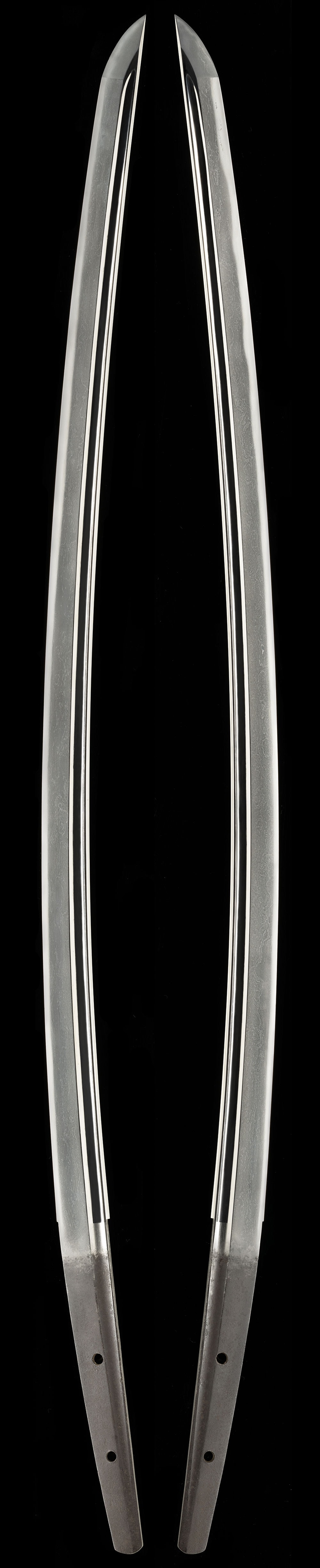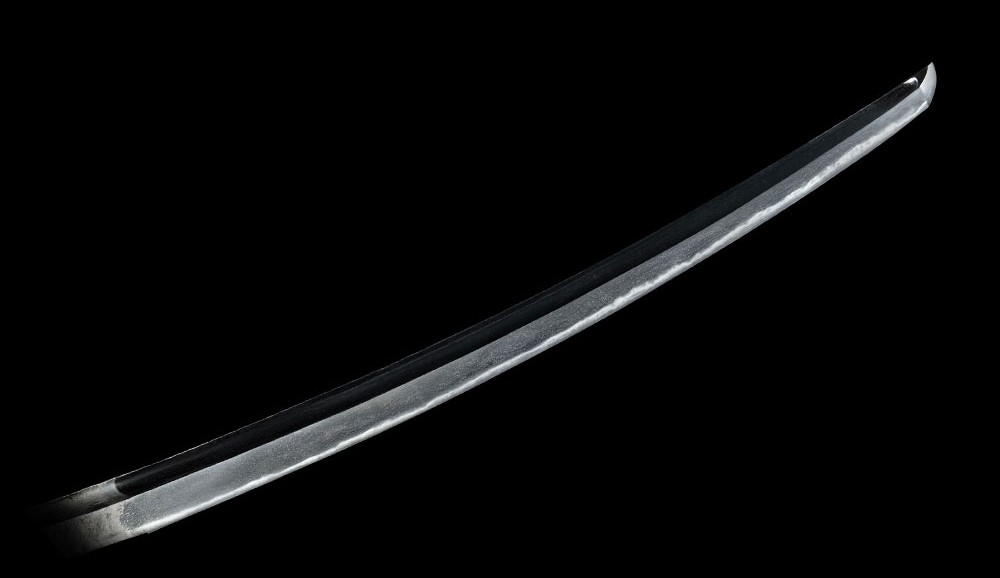
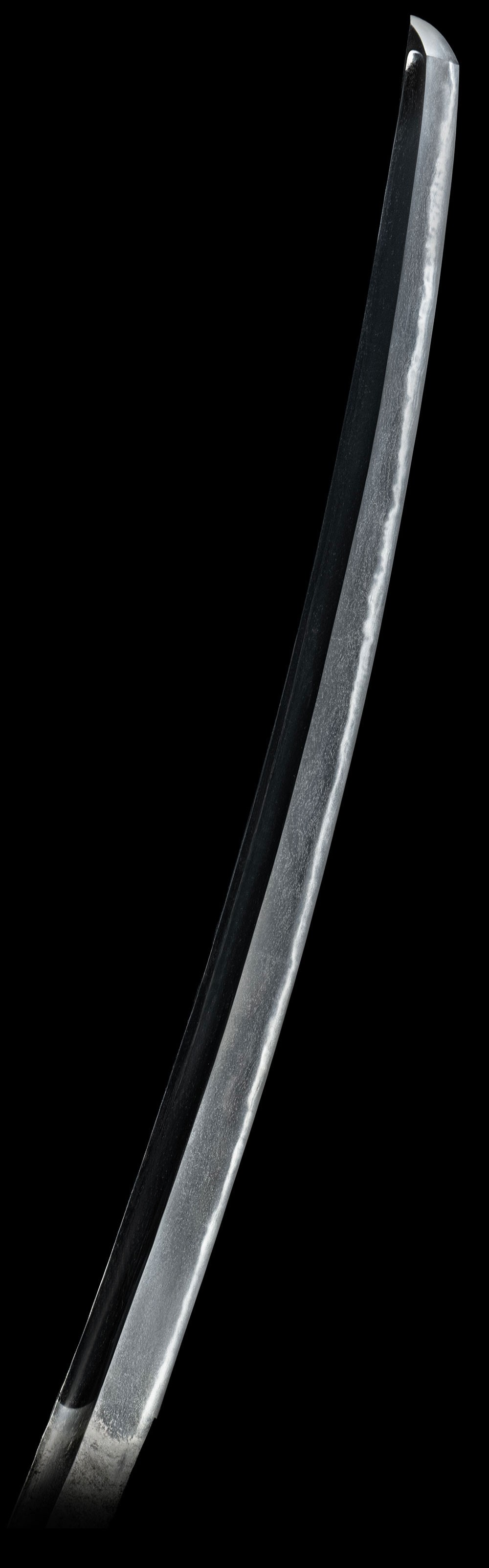
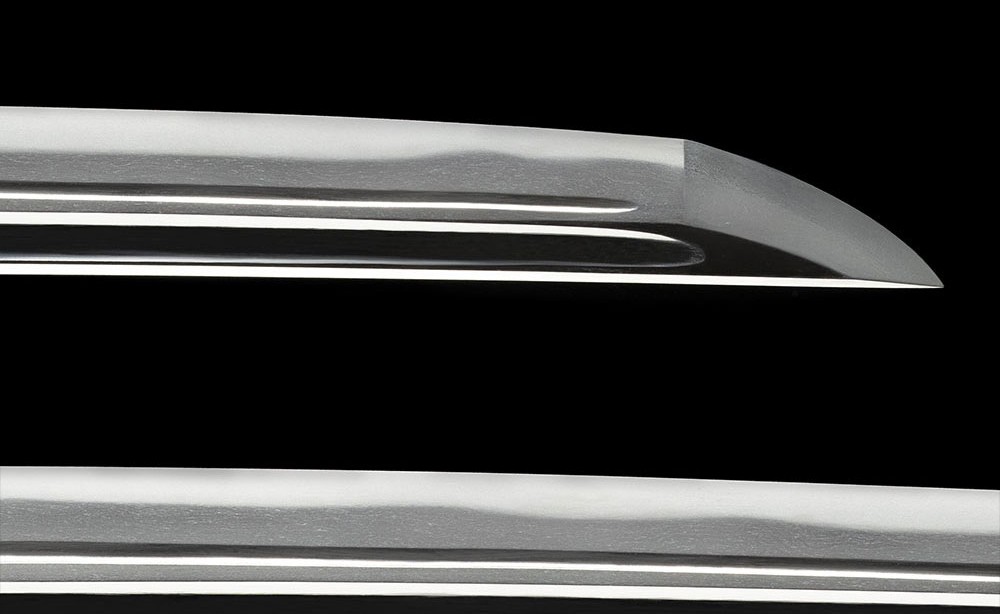
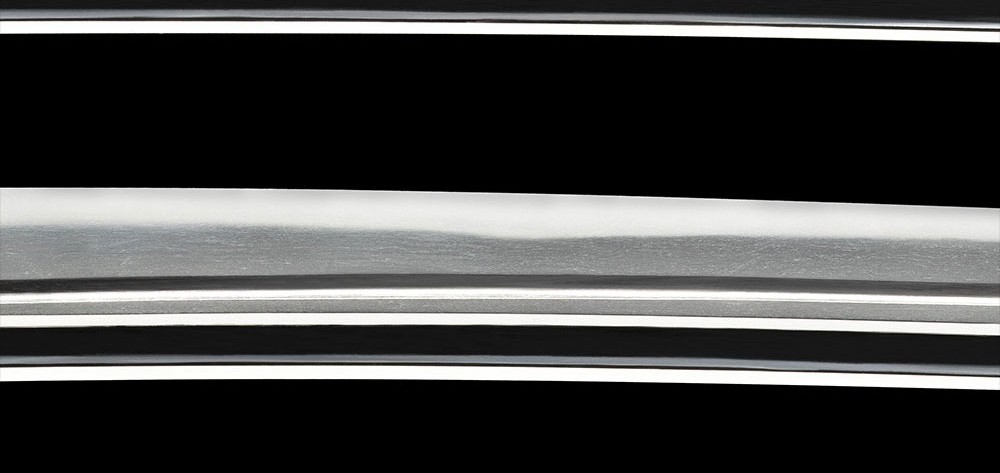
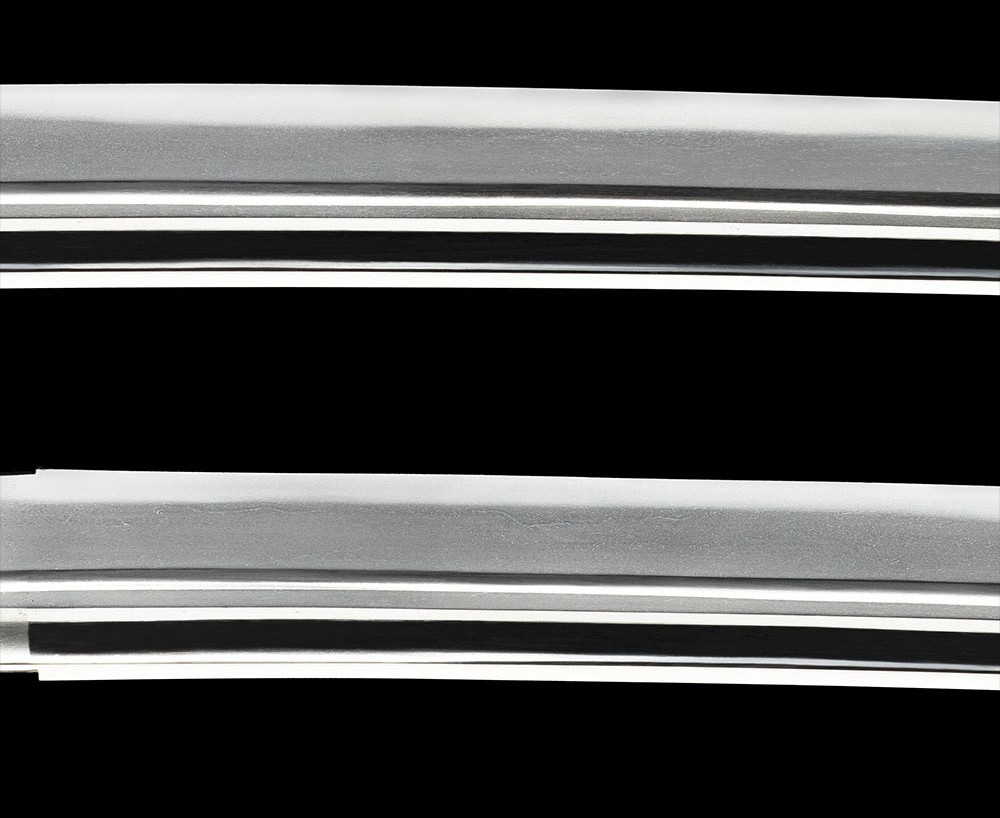
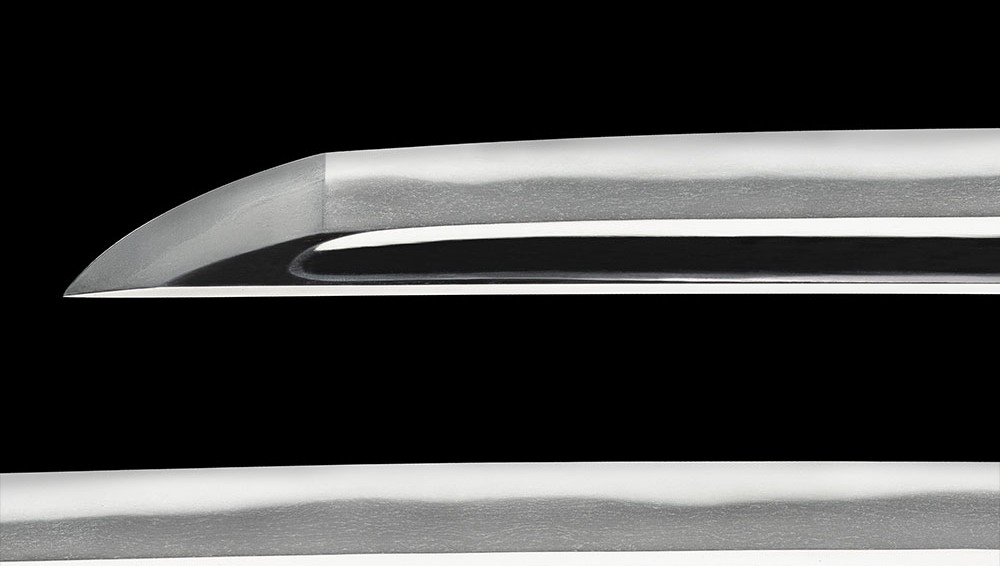
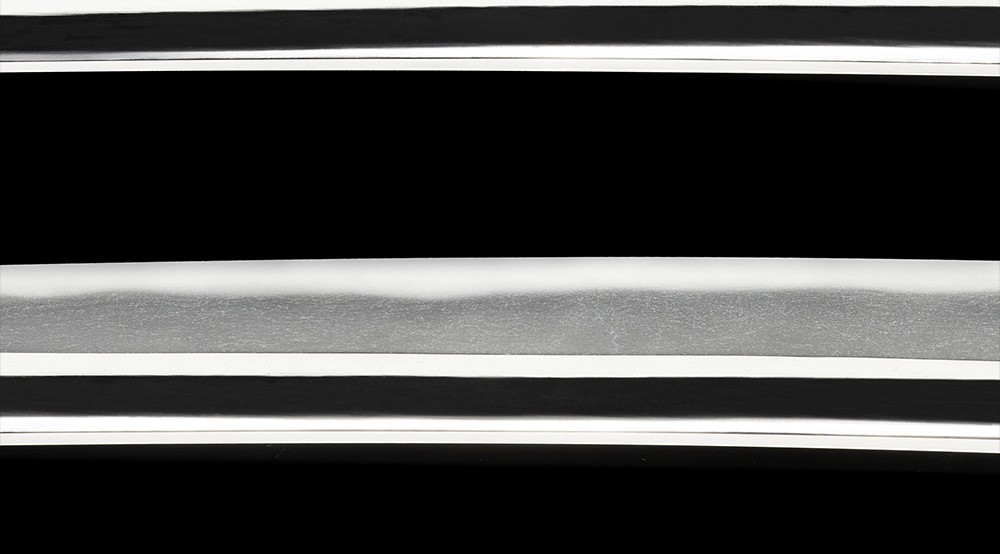
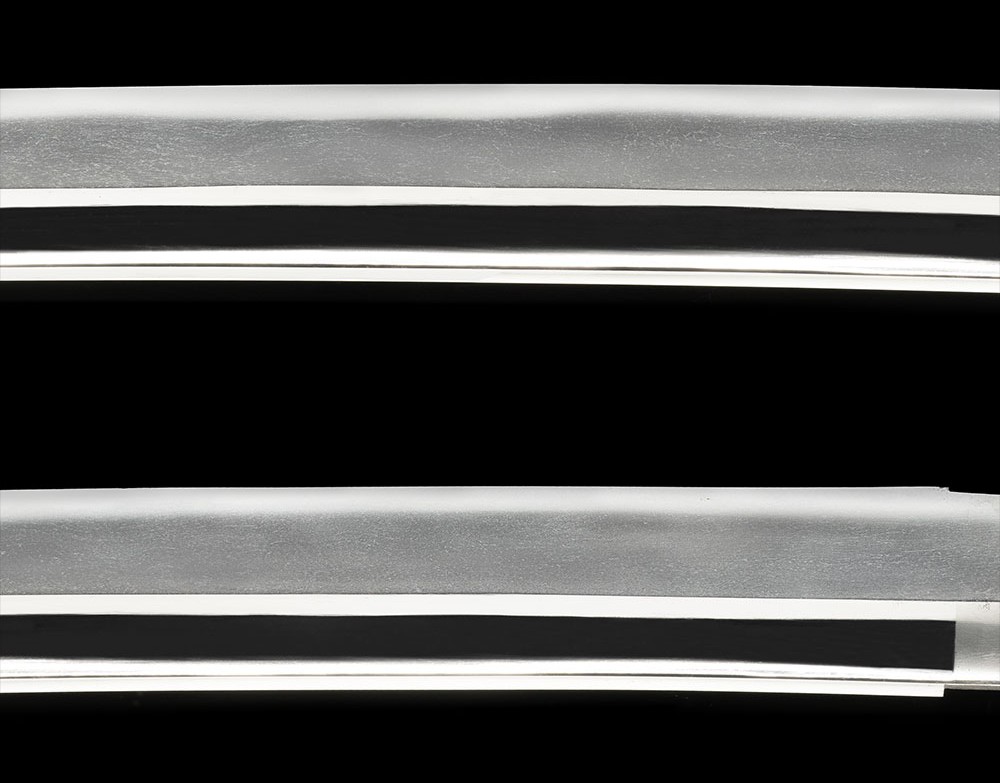
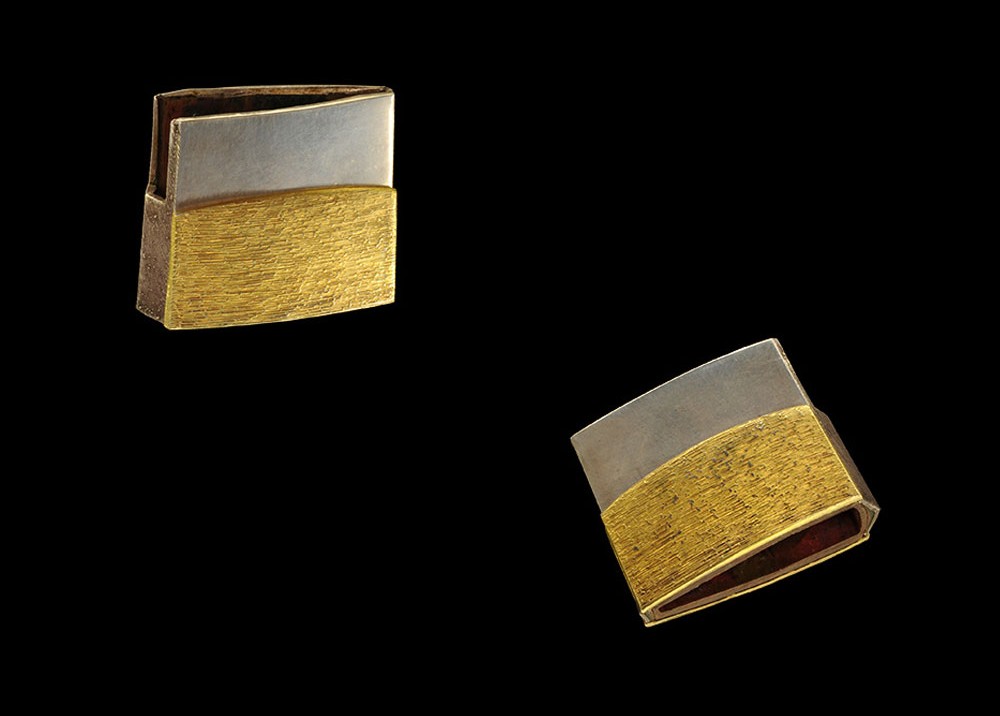
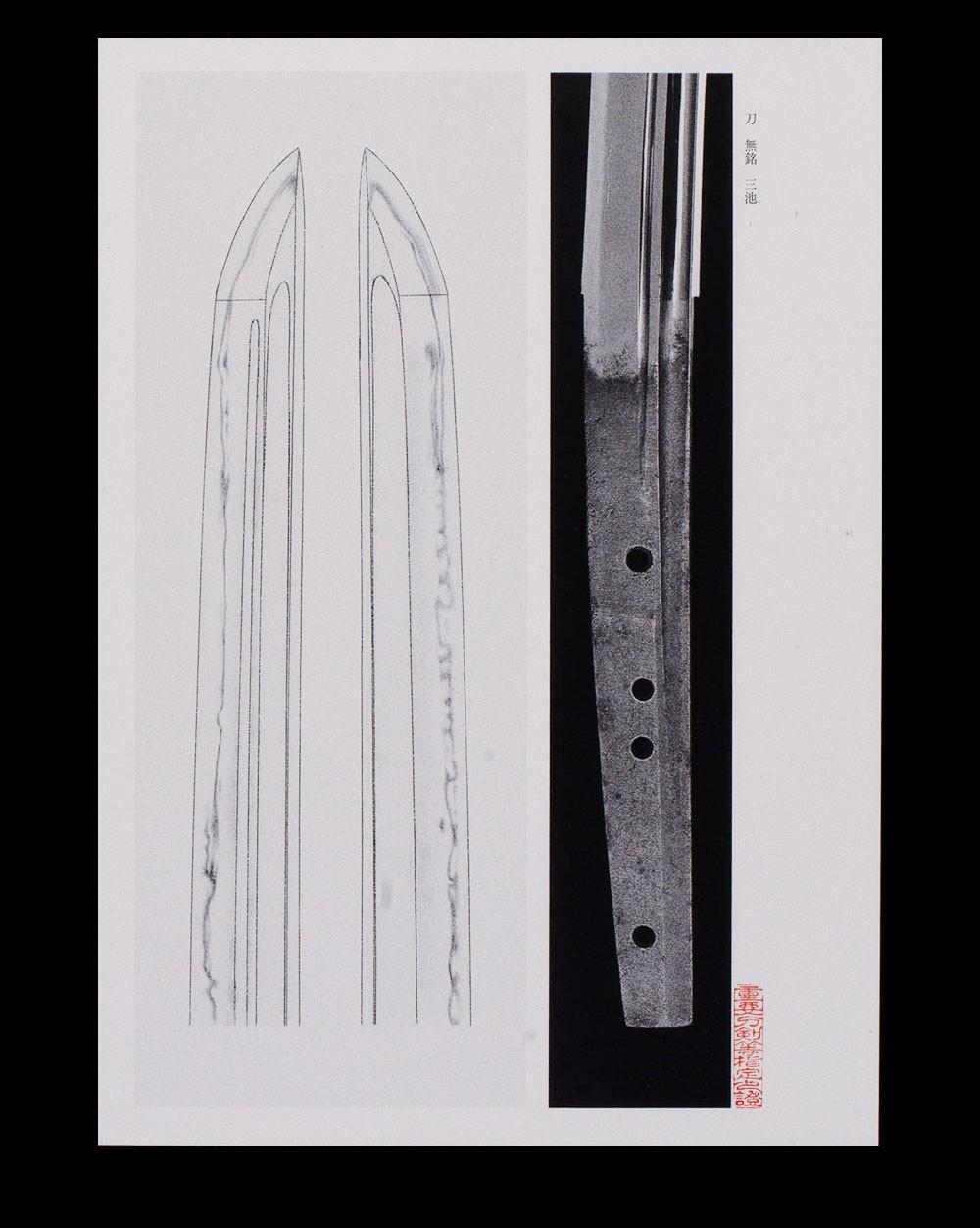
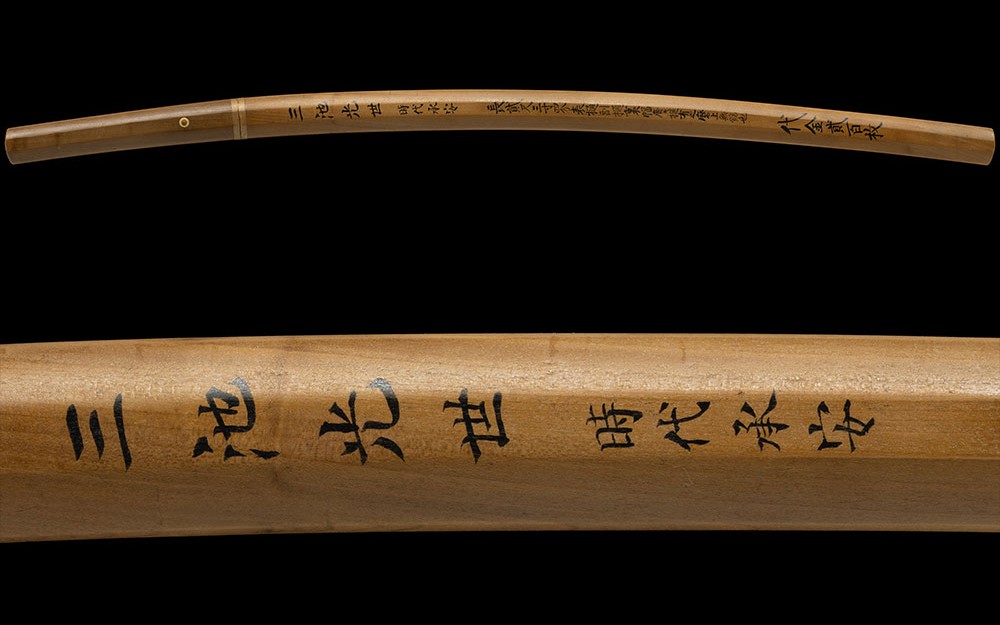
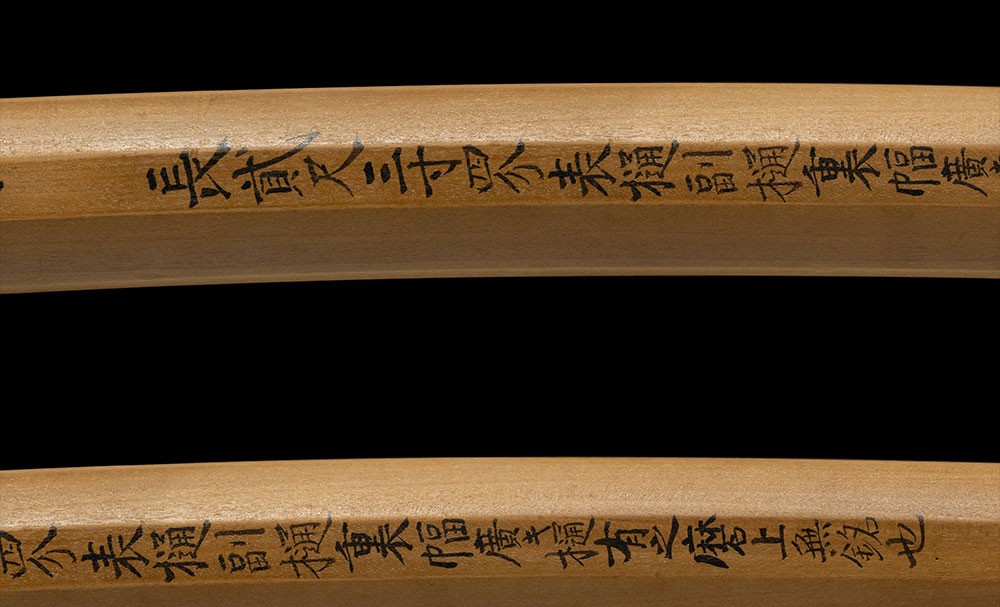
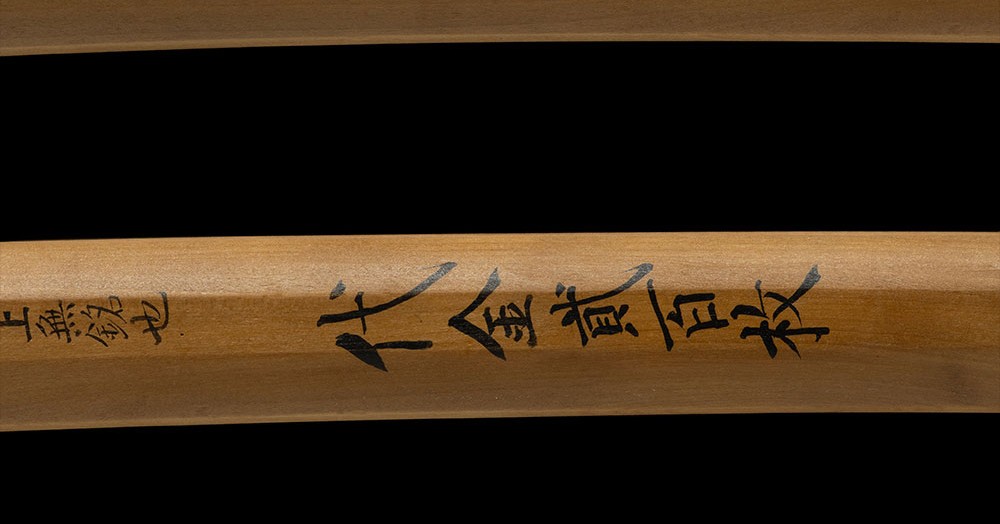
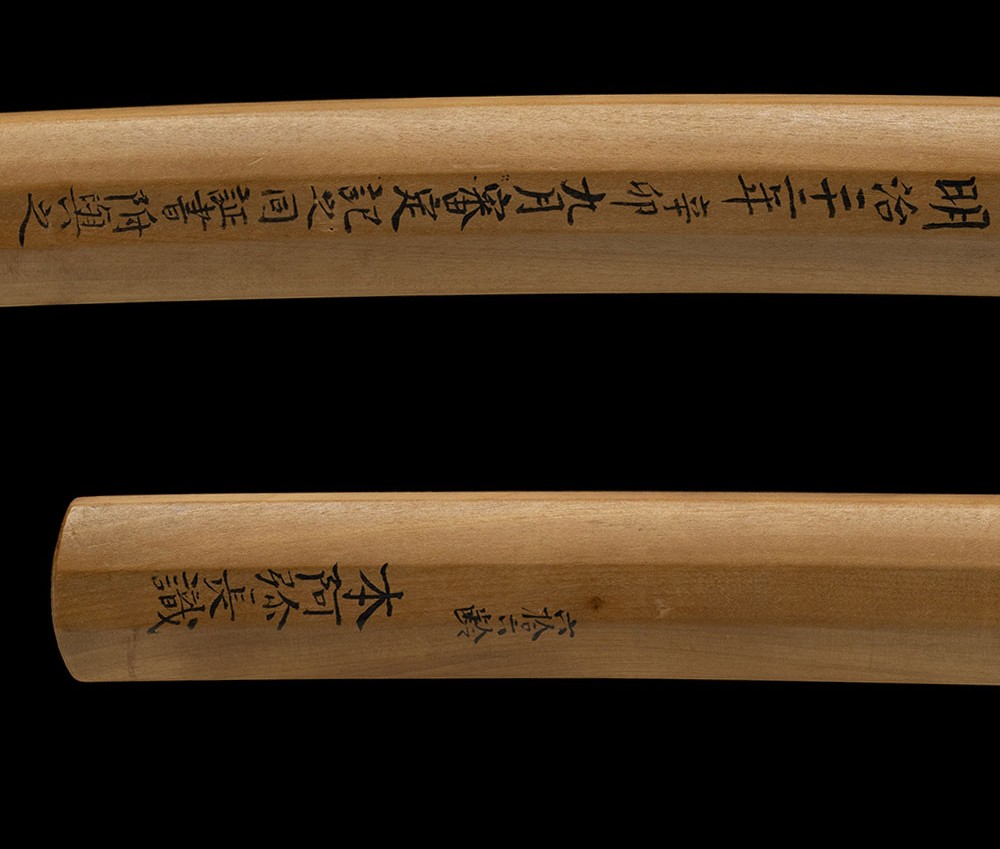
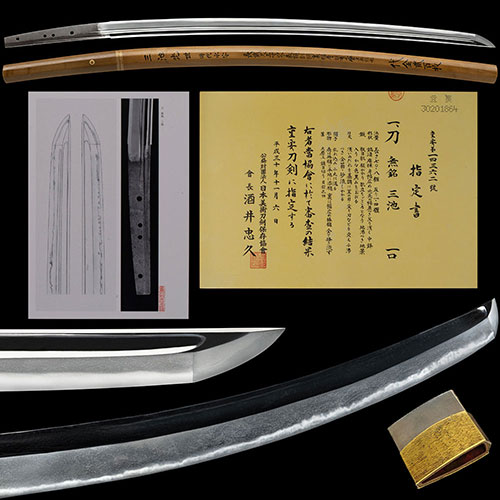
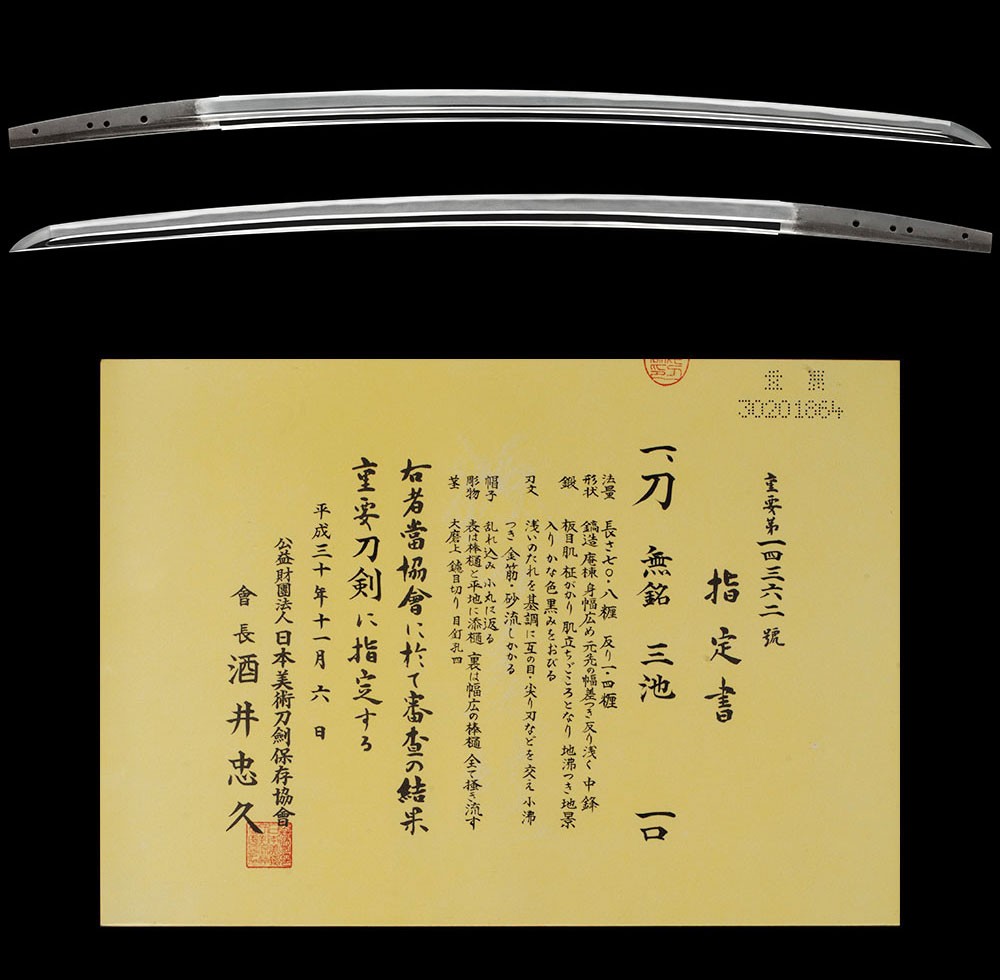
This katana is made by Miike Mitsuyo from Chikugo province. It features a wide mihaba and vivid utsuri, with frequent kinsuji. The blade is a masterpiece with abundant charm, registered as an Aichi Daimyo (feudal lord).
mei · Miike · Koto · nagasa 70.8cm · sori 1.4cm


Wakimono · Chikugo · around 1074-1077
Tōken Taikan top 2%
1 piece on the market now
Miike Denta Mitsuyo was a swordsmith who resided at Miike in Chikugo Province. The founder is identified as a renowned master of the late Heian period, whose representative work is the celebrated meibutsu Odenta, transmitted in the Maeda family. "Mitsuyo" was not a single individual: the same name was successively borne from the Kamakura period into the Muromachi period. Across all eras, signed works are exceedingly few. One branch of later smiths relocated to Aki Province, as documented by dated tanto from Meitoku 2 (1391). The school's traditional style effectively comes to an end with the Nanbokucho period; in the Muromachi period, little of its former character remains.
From the time of the Odenta onward, the Miike style shares traits common to early Kyushu workmanship. The forging is itame that flows conspicuously, at times inclining toward masame, with ji-nie presenting a "sticky" texture; shirake-utsuri (whitish utsuri) is characteristic. The hamon is predominantly suguha-cho in ko-nie-deki, with a tendency toward hotsure and elements of kuichigai-ba, showing a nioiguchi with a shizumi (subdued) inclination. The boshi runs straight and returns in ko-maru. An individuality of the school can be observed in its preference for carving wide, comparatively shallow bo-hi, often accompanied by auxiliary soe-hi, executed in kaki-nagashi or kaki-toshi. The blade form characteristically shows a wide mihaba with a compact kissaki forming an ikubi (boar's-neck) appearance.
The NBTHK characterizes even later-generation works as preserving the traditional manner in both ji and ha, and notes the school's stylistic continuity from the Heian through the Nanbokucho period. Across the corpus, the Miike school occupies a distinctive position among early Kyushu traditions, unified by the flowing grain, subdued nioiguchi, and broad sculptural grooves that define its identity from the time of its celebrated founder onward.
Where Mitsuyo stands among comparable artisans: across all of nihontō, and within tradition, era, and period. The tiers (Foremost · Leading · Major · Notable) weigh official designations from the NBTHK and Japan's Agency for Cultural Affairs, together with historical honors of lasting repute such as the Sansaku and Meibutsu-chō.
Select a lens to see how it's measured.
Wakimono · Chikugo
1 piece on the market now
Among the oldest of the Kyushu lineages, the Miike school (三池) takes its name from the locality of Miike in Chikugo province, where its founder, Tenta Mitsuyo (also given as Denta Mitsuyo, 光世), worked in the late Heian period at the very threshold of the early Kamakura. The members place the line at the head of an ancient Kyushu hand whose representative work is the meibutsu Ōdenta of the Maeda house, counted among the Tenka-goken, the five swords ranked above all others in Japan. Learn more →
| Smith | Era | Designated |
|---|---|---|
| Mitsuyo光世 | 1293-1299 | 5 |
| Sukenaga助永 | 1394-1428 | 0 |
| Kuninaga國永 | 1120-1124 | 0 |
| Moritsuna守綱 | 1120-1124 | 0 |
| Motozane元眞 | 1074-1077 | 0 |
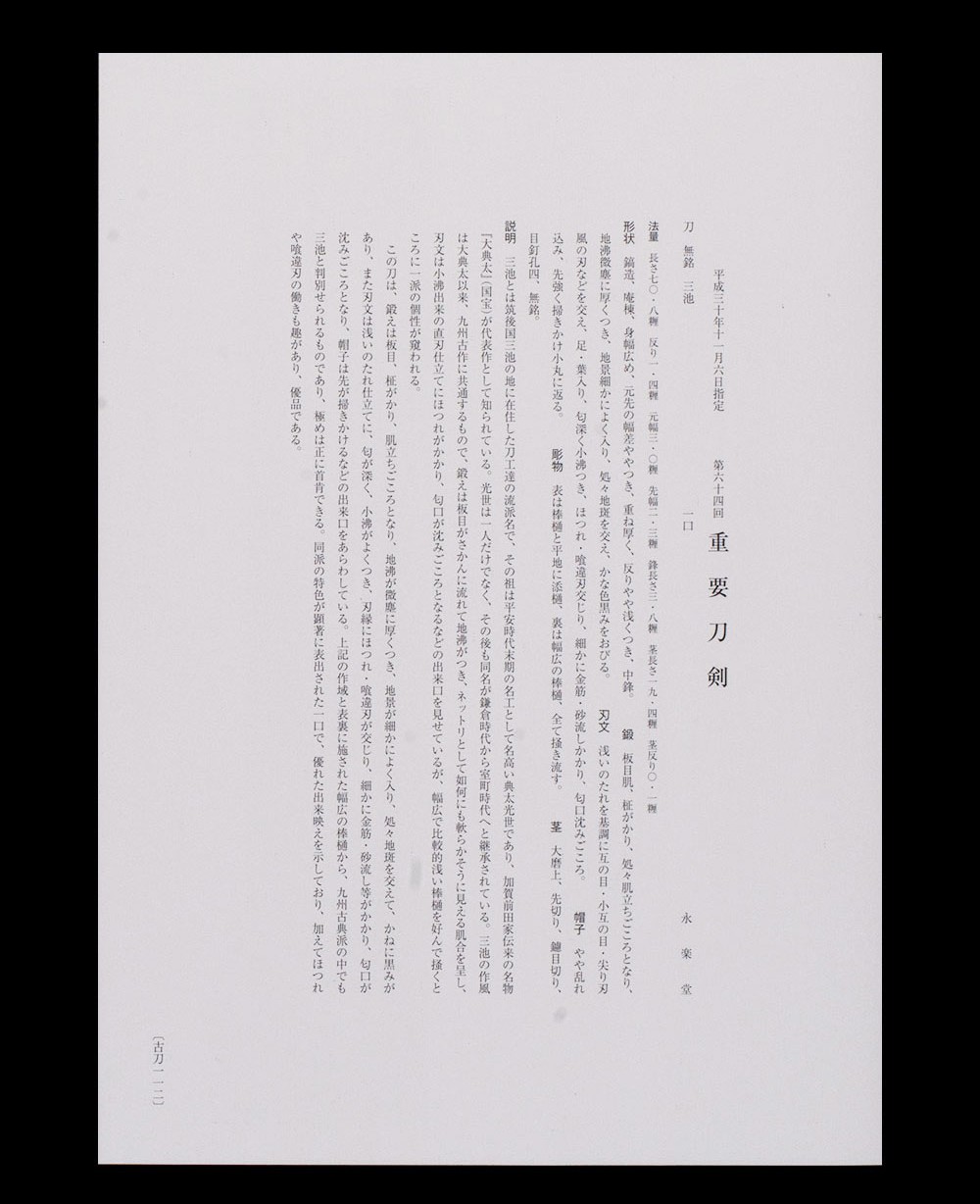
A blade of top-grade workmanship and condition, formally judged to rank with a nationally recognized Important Art Object (Jūyō Bijutsuhin). Awarded only at the NBTHK’s competitive annual examination.
Of Japan’s roughly 2.5 million registered swords, only 12,358 (about 1 in 202) have ever attained Jūyō.
The NBTHK (Nihon Bijutsu Tōken Hozon Kyōkai, the Society for the Preservation of Japanese Art Swords) is a public-interest incorporated foundation founded in 1948 and supervised by Japan’s Agency for Cultural Affairs (Bunkachō); it is based at the Japanese Sword Museum in Tokyo. Its expert panels physically examine each submitted work (shinsa) and issue a certificate (kanteishō) ranking it by artistic and historical merit. NBTHK papers are the most widely recognized standard of authentication for Japanese swords and fittings.
NBTHK official siteReturns/exchanges/cancellations not accepted after shipment except for significant defects; if defective, return/exchange possible within 3 days of arrival (return shipping paid by customer).
This katana is made by Miike Mitsuyo from Chikugo province. It features a wide mihaba and vivid utsuri, with frequent kinsuji. The blade is a masterpiece with abundant charm, registered as an Aichi Daimyo (feudal lord).
mei · Miike · Koto · nagasa 70.8cm · sori 1.4cm


Wakimono · Chikugo · around 1074-1077
Tōken Taikan top 2%
1 piece on the market now
Miike Denta Mitsuyo was a swordsmith who resided at Miike in Chikugo Province. The founder is identified as a renowned master of the late Heian period, whose representative work is the celebrated meibutsu Odenta, transmitted in the Maeda family. "Mitsuyo" was not a single individual: the same name was successively borne from the Kamakura period into the Muromachi period. Across all eras, signed works are exceedingly few. One branch of later smiths relocated to Aki Province, as documented by dated tanto from Meitoku 2 (1391). The school's traditional style effectively comes to an end with the Nanbokucho period; in the Muromachi period, little of its former character remains.
From the time of the Odenta onward, the Miike style shares traits common to early Kyushu workmanship. The forging is itame that flows conspicuously, at times inclining toward masame, with ji-nie presenting a "sticky" texture; shirake-utsuri (whitish utsuri) is characteristic. The hamon is predominantly suguha-cho in ko-nie-deki, with a tendency toward hotsure and elements of kuichigai-ba, showing a nioiguchi with a shizumi (subdued) inclination. The boshi runs straight and returns in ko-maru. An individuality of the school can be observed in its preference for carving wide, comparatively shallow bo-hi, often accompanied by auxiliary soe-hi, executed in kaki-nagashi or kaki-toshi. The blade form characteristically shows a wide mihaba with a compact kissaki forming an ikubi (boar's-neck) appearance.
The NBTHK characterizes even later-generation works as preserving the traditional manner in both ji and ha, and notes the school's stylistic continuity from the Heian through the Nanbokucho period. Across the corpus, the Miike school occupies a distinctive position among early Kyushu traditions, unified by the flowing grain, subdued nioiguchi, and broad sculptural grooves that define its identity from the time of its celebrated founder onward.
Where Mitsuyo stands among comparable artisans: across all of nihontō, and within tradition, era, and period. The tiers (Foremost · Leading · Major · Notable) weigh official designations from the NBTHK and Japan's Agency for Cultural Affairs, together with historical honors of lasting repute such as the Sansaku and Meibutsu-chō.
Select a lens to see how it's measured.
Wakimono · Chikugo
1 piece on the market now
Among the oldest of the Kyushu lineages, the Miike school (三池) takes its name from the locality of Miike in Chikugo province, where its founder, Tenta Mitsuyo (also given as Denta Mitsuyo, 光世), worked in the late Heian period at the very threshold of the early Kamakura. The members place the line at the head of an ancient Kyushu hand whose representative work is the meibutsu Ōdenta of the Maeda house, counted among the Tenka-goken, the five swords ranked above all others in Japan. Learn more →
| Smith | Era | Designated |
|---|---|---|
| Mitsuyo光世 | 1293-1299 | 5 |
| Sukenaga助永 | 1394-1428 | 0 |
| Kuninaga國永 | 1120-1124 | 0 |
| Moritsuna守綱 | 1120-1124 | 0 |
| Motozane元眞 | 1074-1077 | 0 |
A blade of top-grade workmanship and condition, formally judged to rank with a nationally recognized Important Art Object (Jūyō Bijutsuhin). Awarded only at the NBTHK’s competitive annual examination.
Of Japan’s roughly 2.5 million registered swords, only 12,358 (about 1 in 202) have ever attained Jūyō.
The NBTHK (Nihon Bijutsu Tōken Hozon Kyōkai, the Society for the Preservation of Japanese Art Swords) is a public-interest incorporated foundation founded in 1948 and supervised by Japan’s Agency for Cultural Affairs (Bunkachō); it is based at the Japanese Sword Museum in Tokyo. Its expert panels physically examine each submitted work (shinsa) and issue a certificate (kanteishō) ranking it by artistic and historical merit. NBTHK papers are the most widely recognized standard of authentication for Japanese swords and fittings.
NBTHK official siteReturns/exchanges/cancellations not accepted after shipment except for significant defects; if defective, return/exchange possible within 3 days of arrival (return shipping paid by customer).