The twentieth century nearly killed the craft twice: wartime distortion, then the occupation ban. The NBTHK’s founding in 1948 and licensed forging from 1953 rebuilt the sword as an art, crowned by Living National Treasures and the mukansa rank.
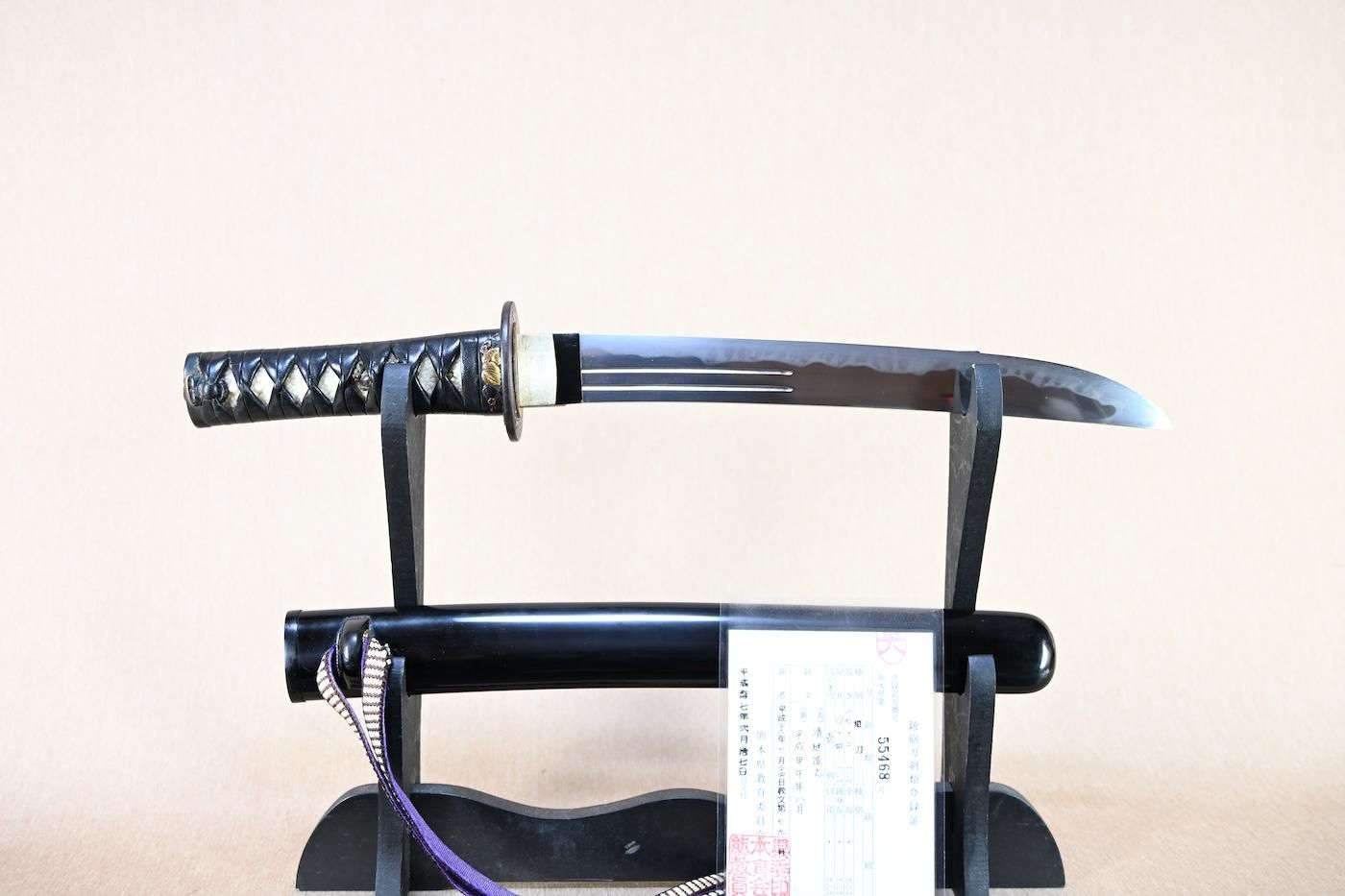
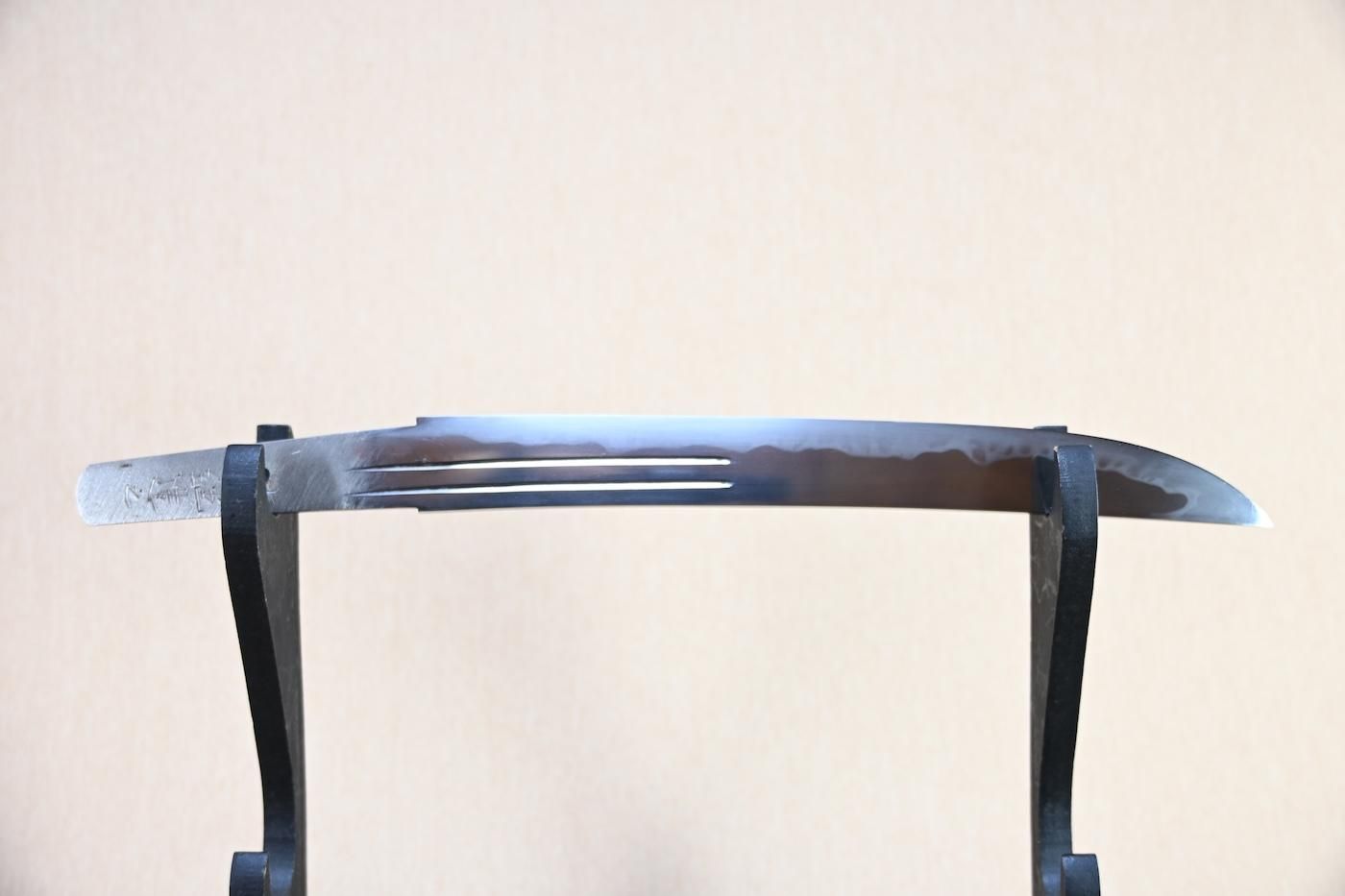
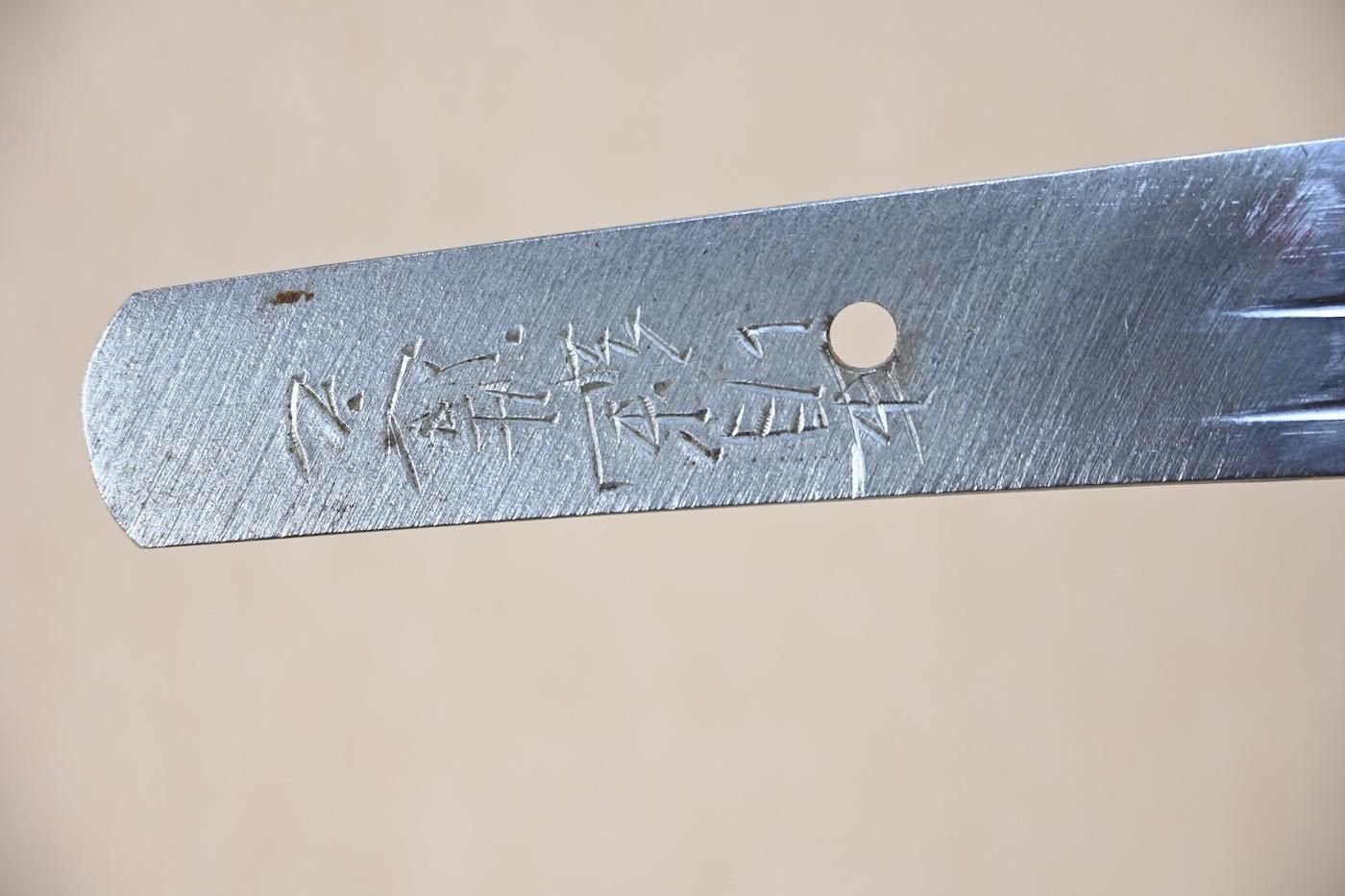
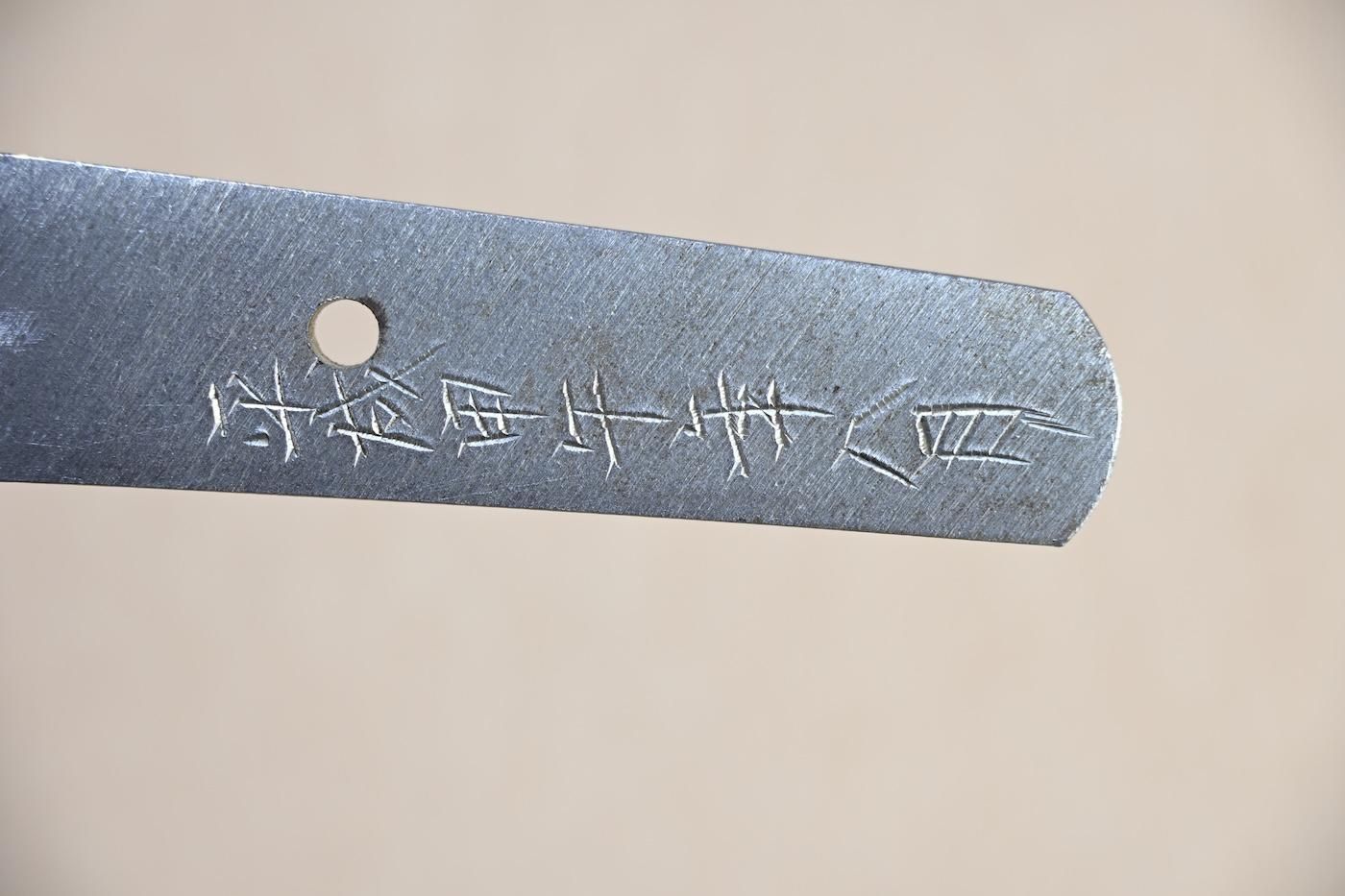
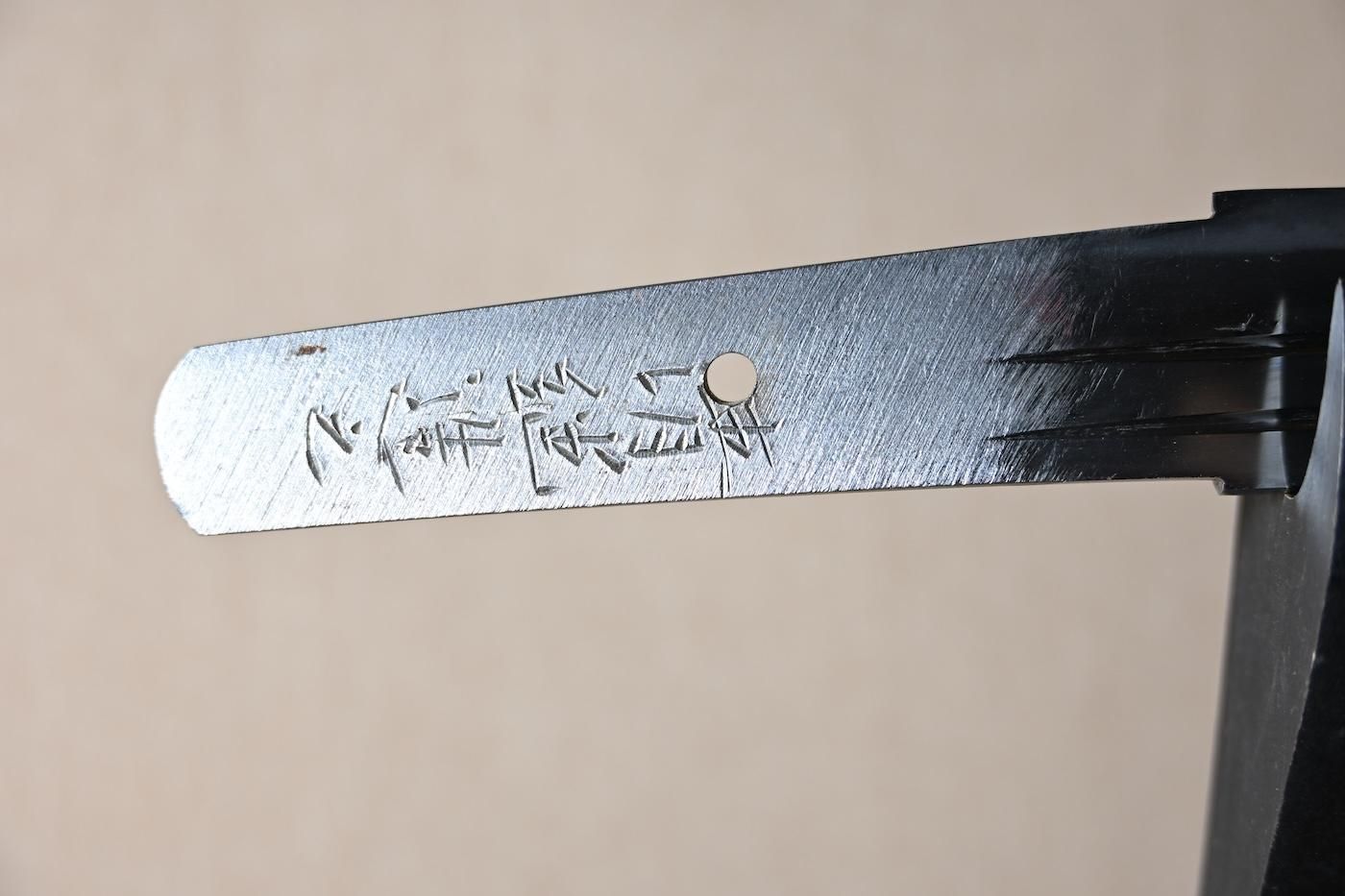
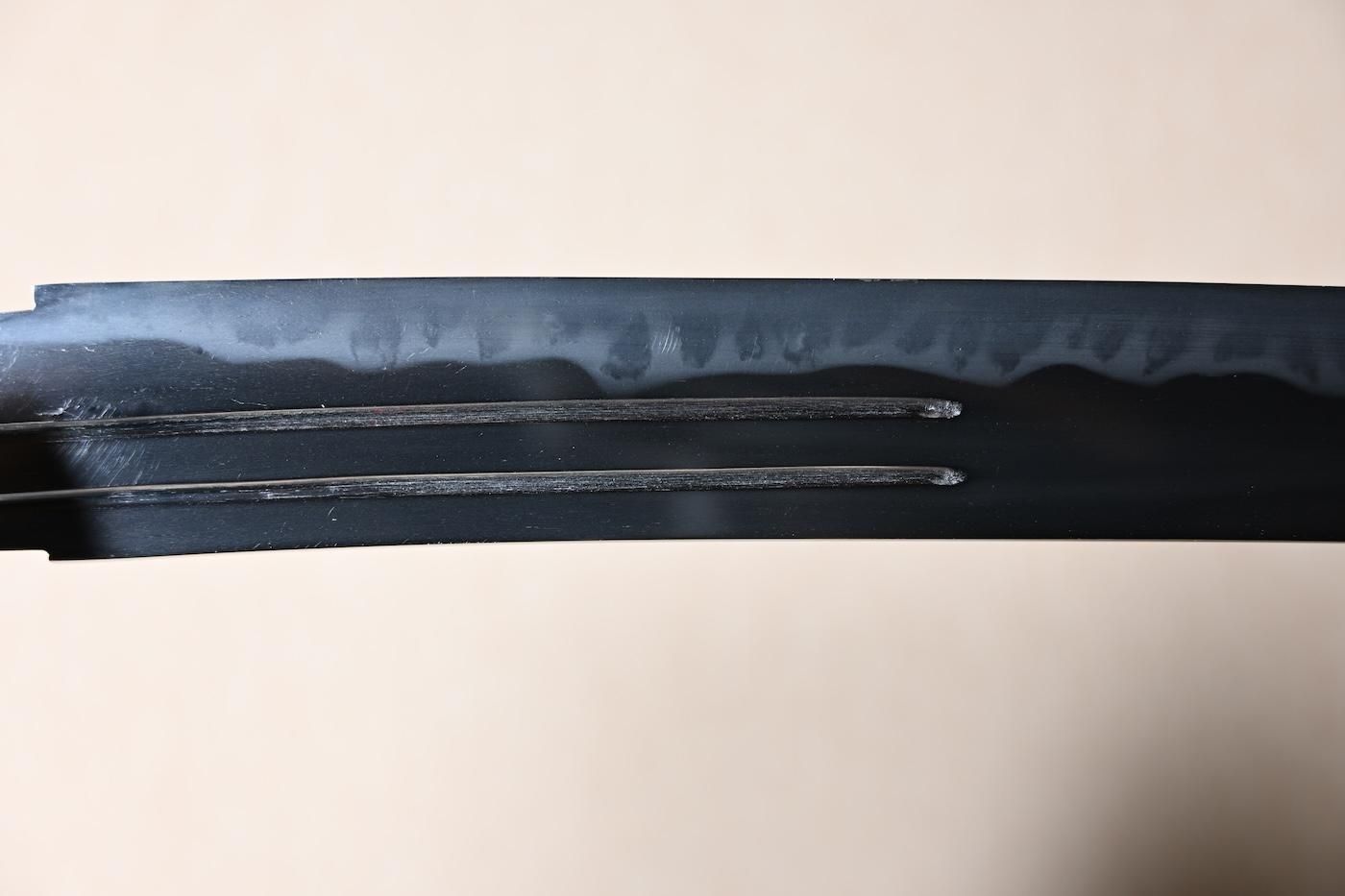
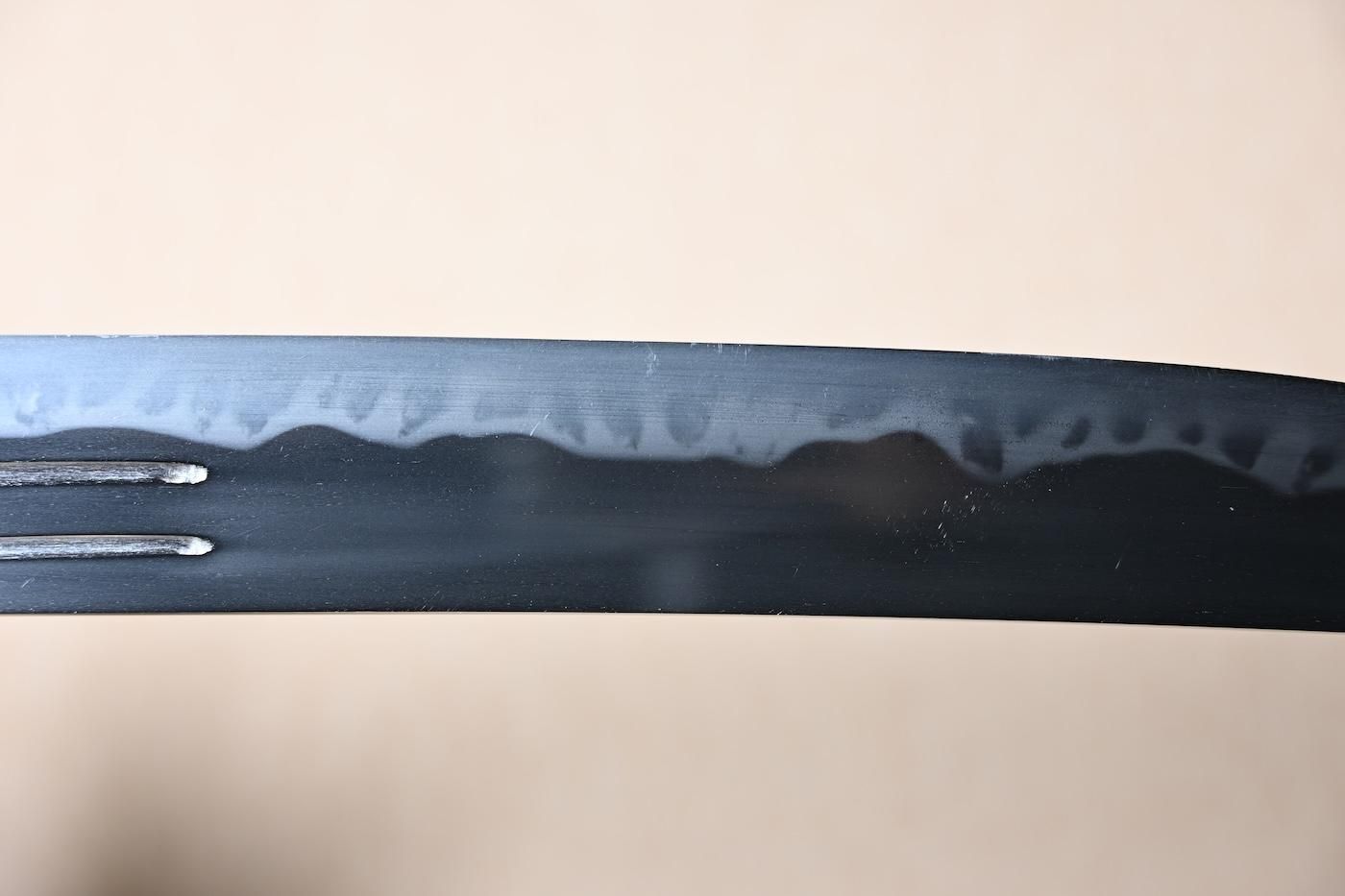
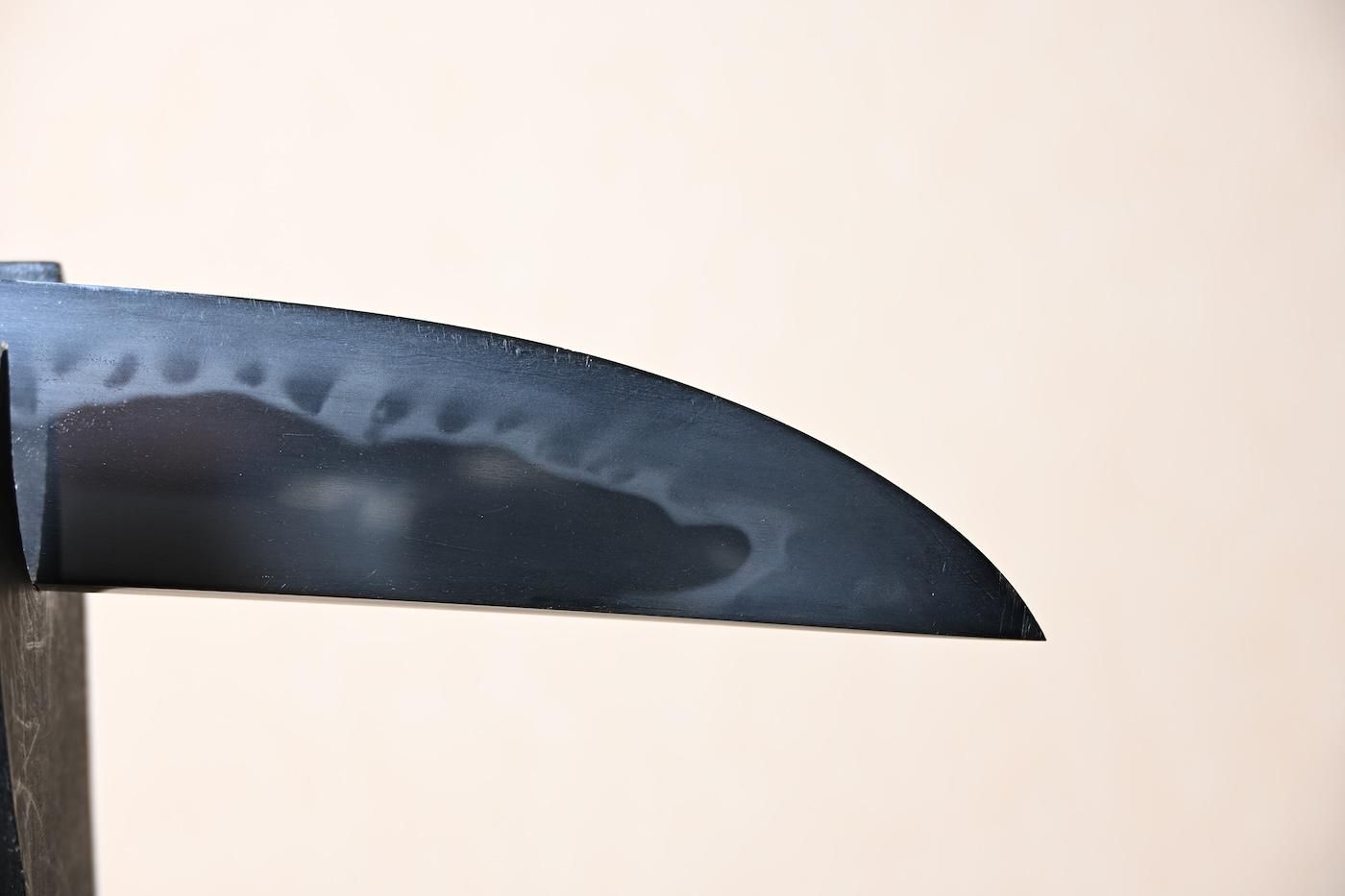
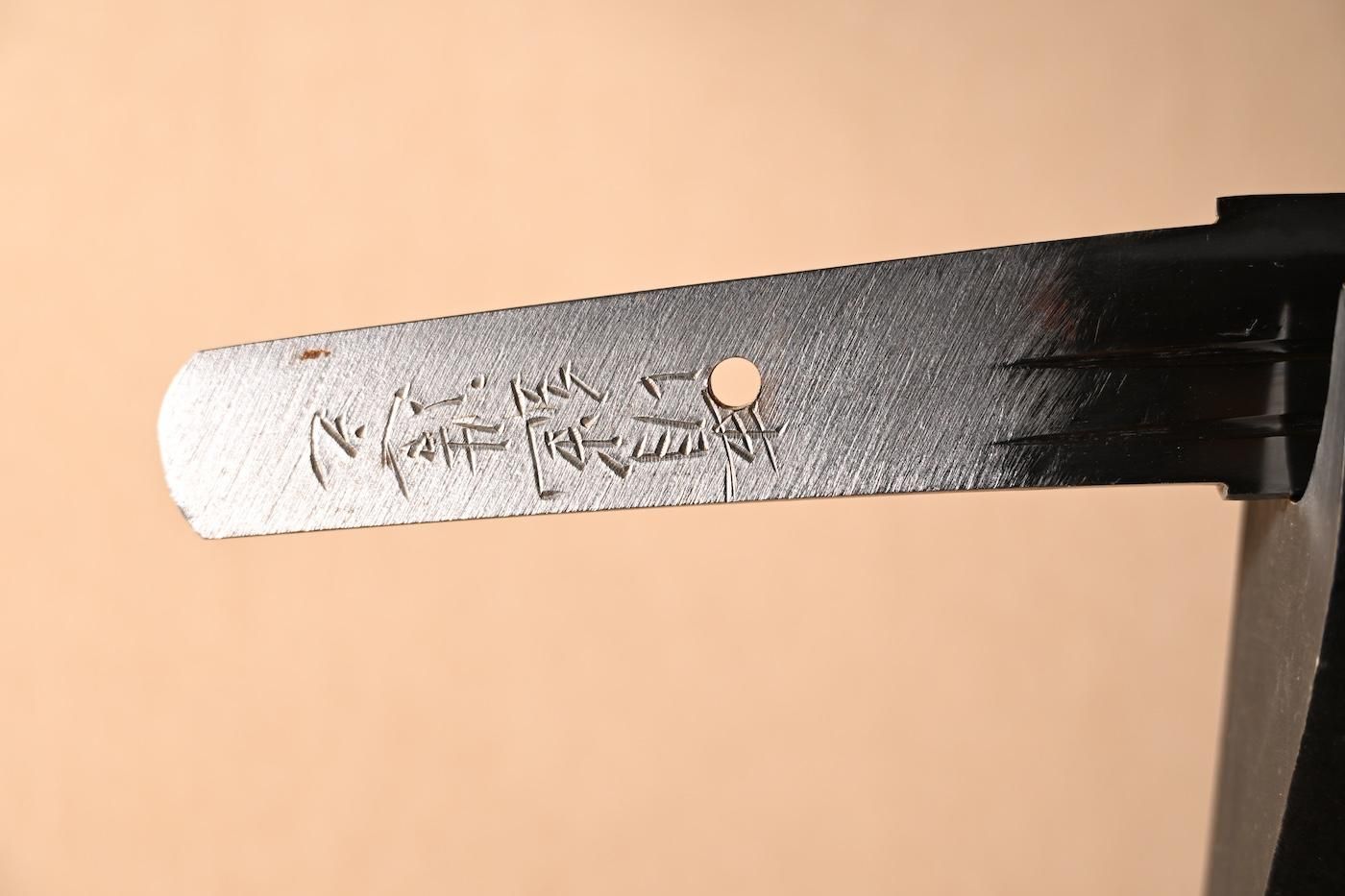
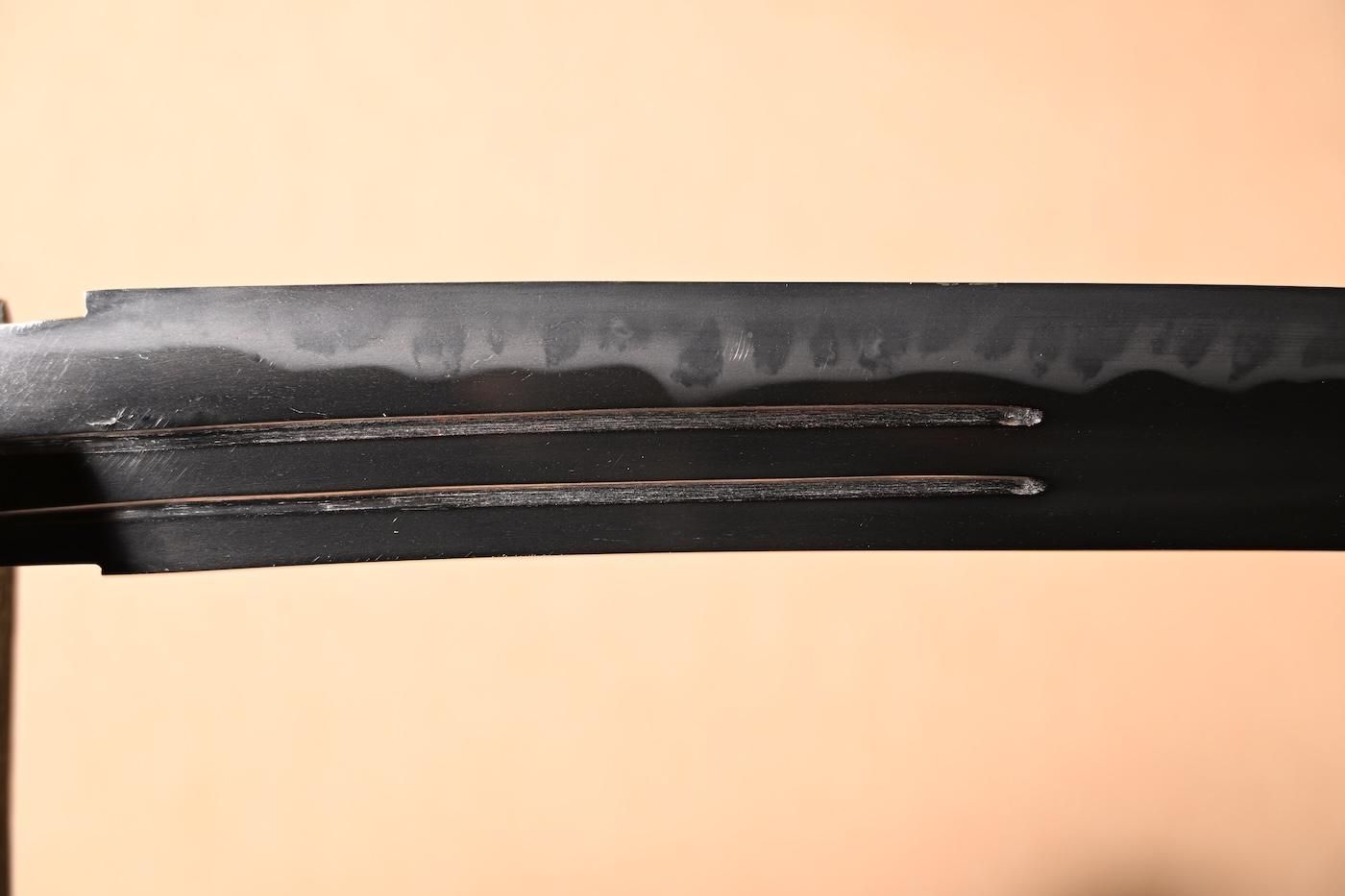
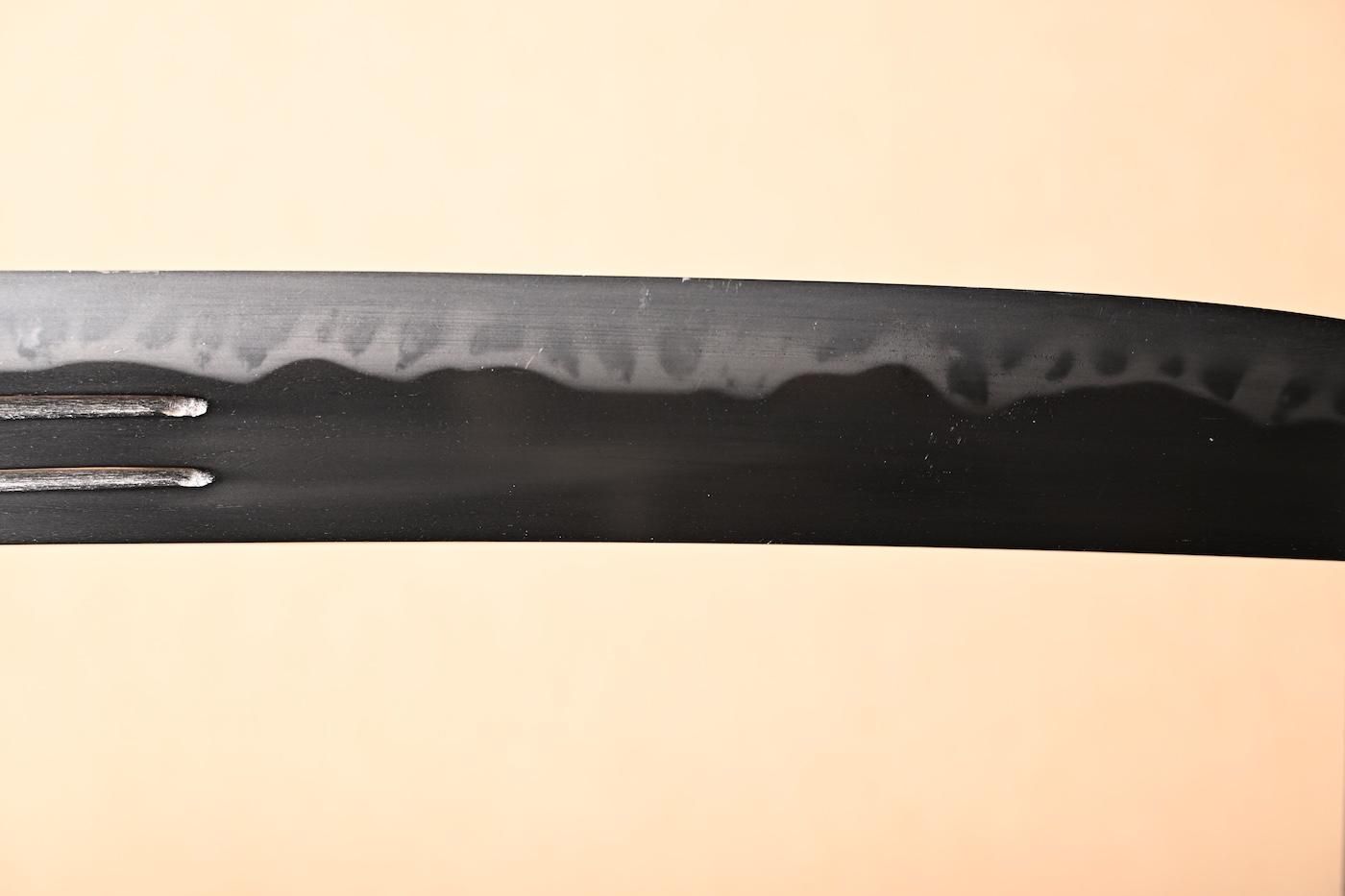
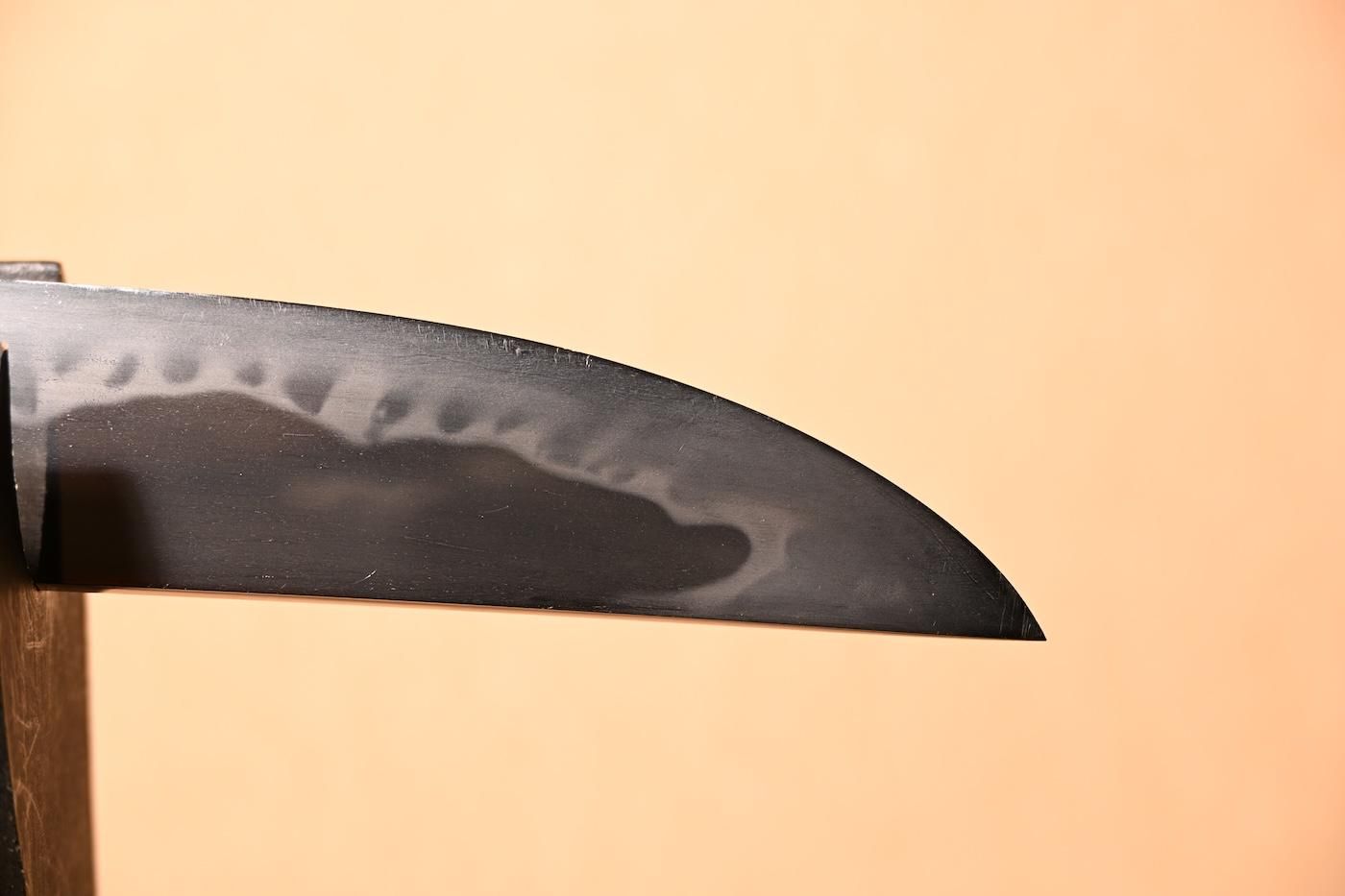
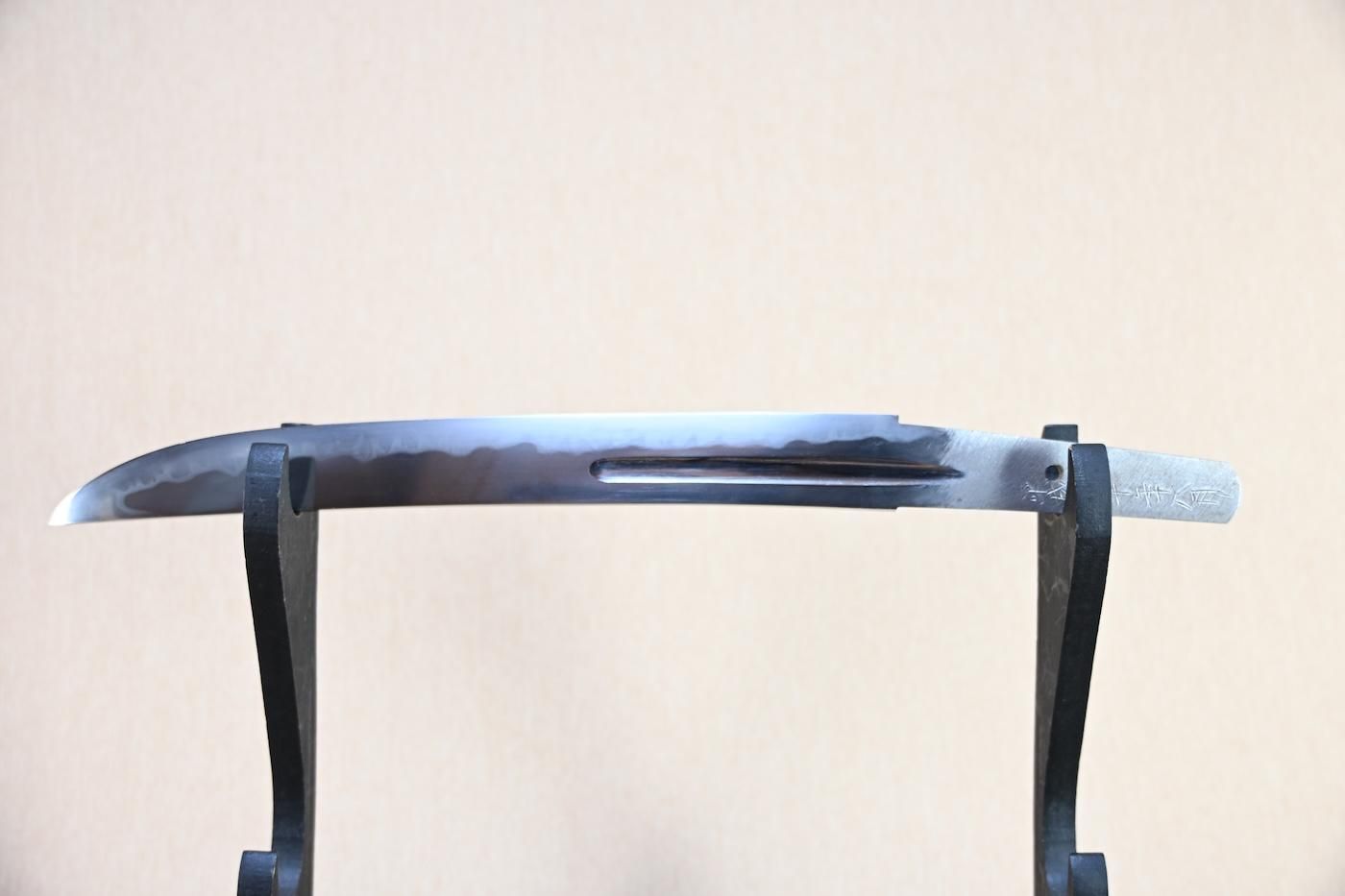
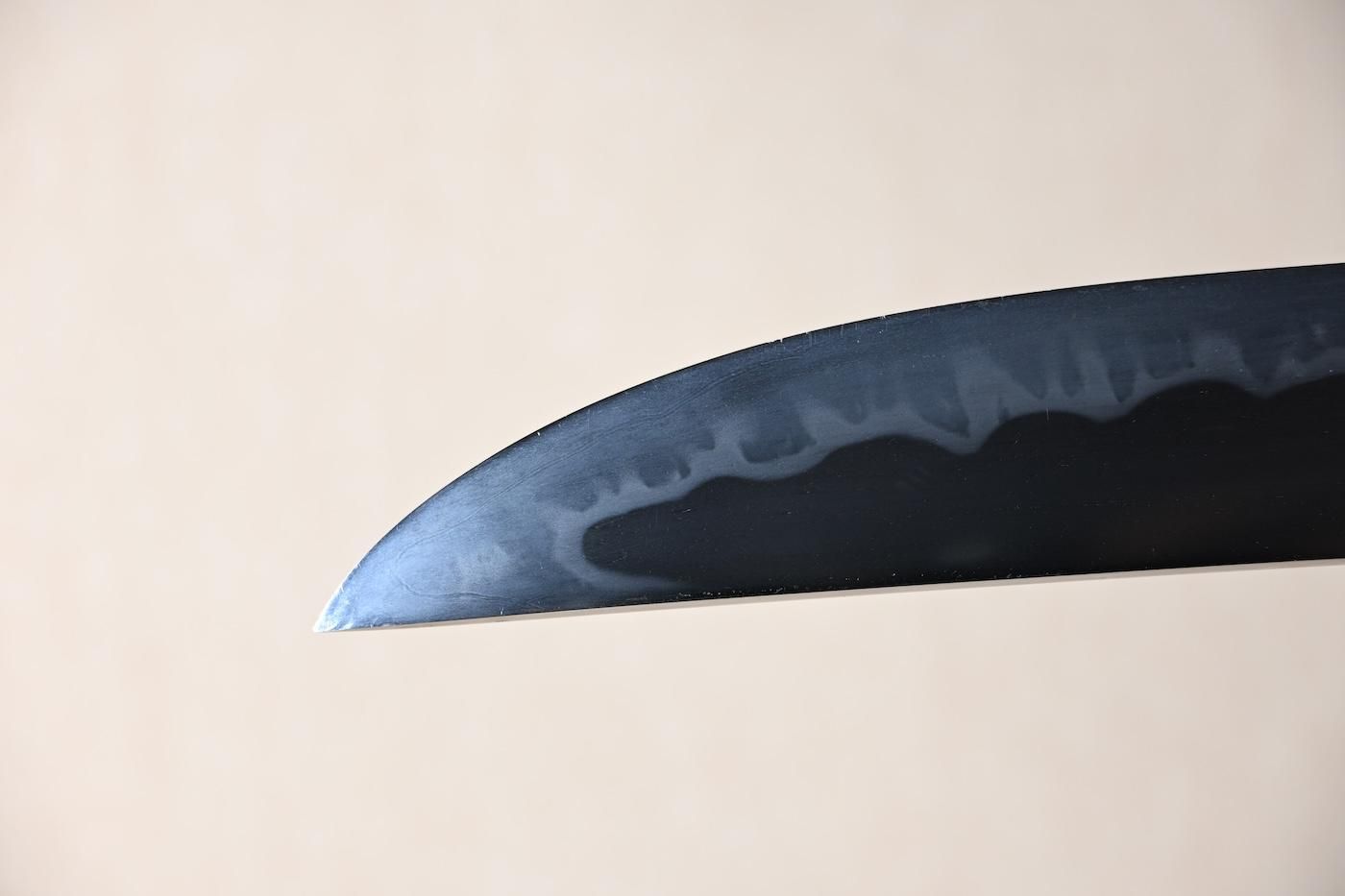
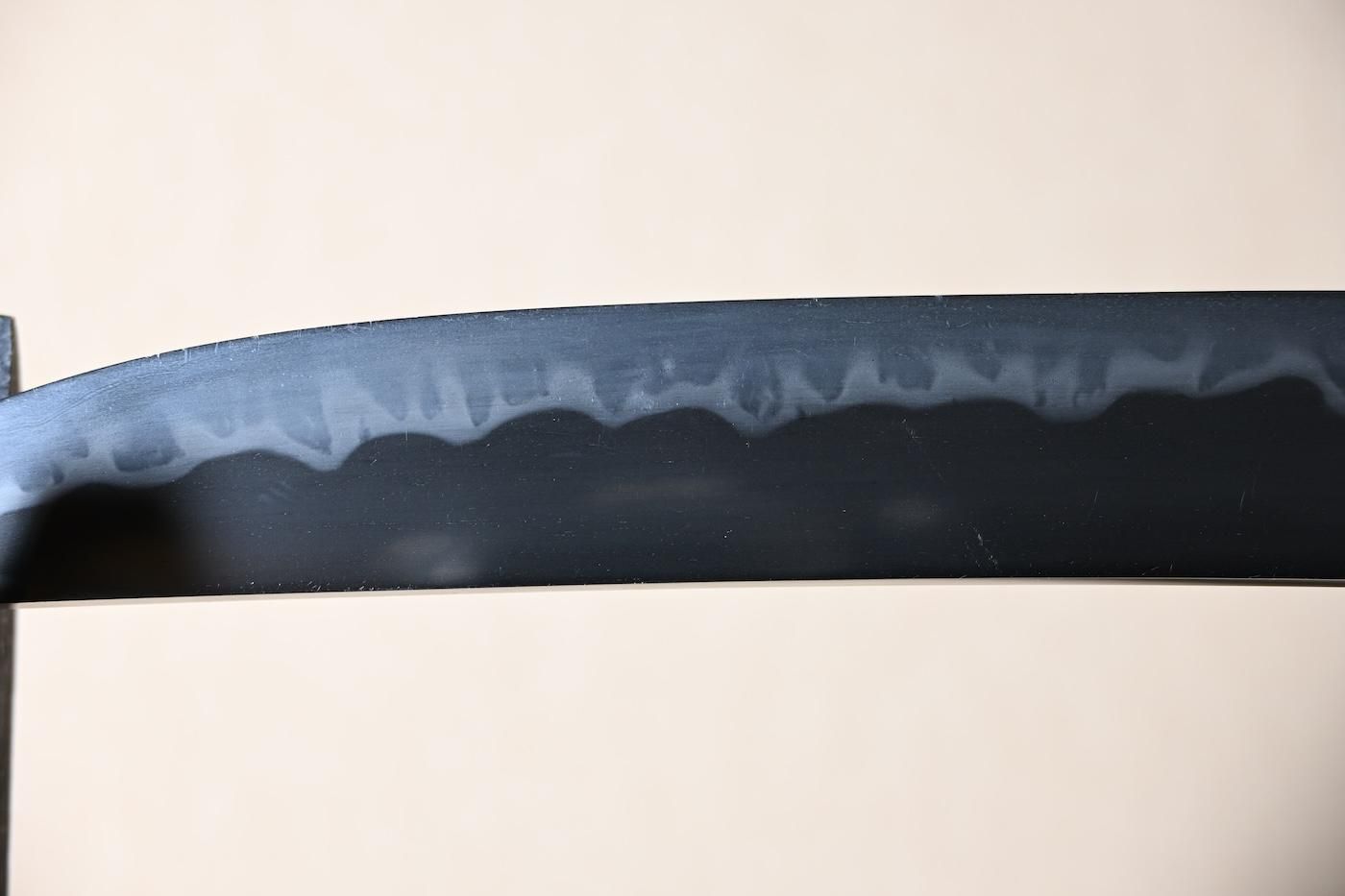
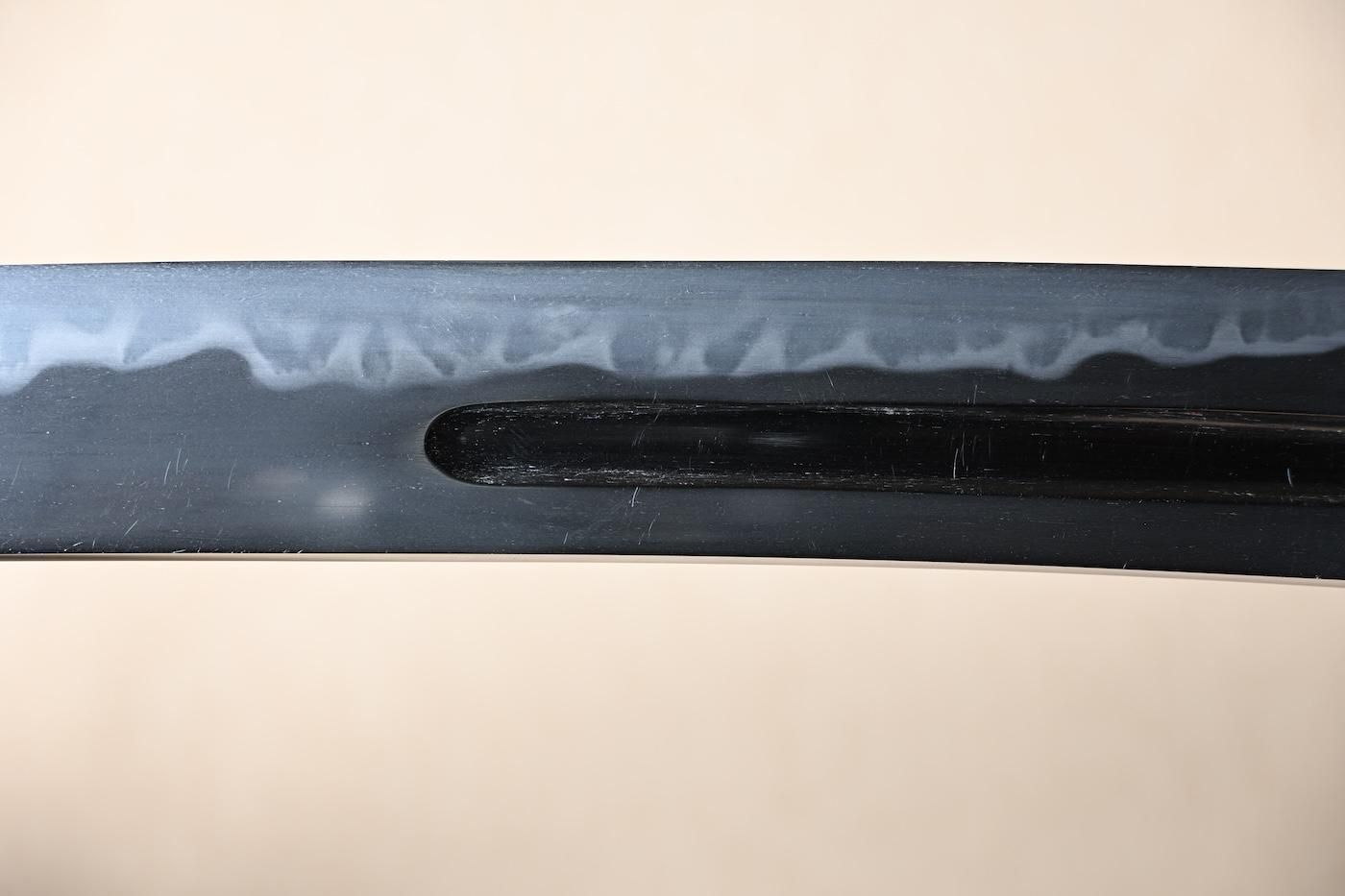
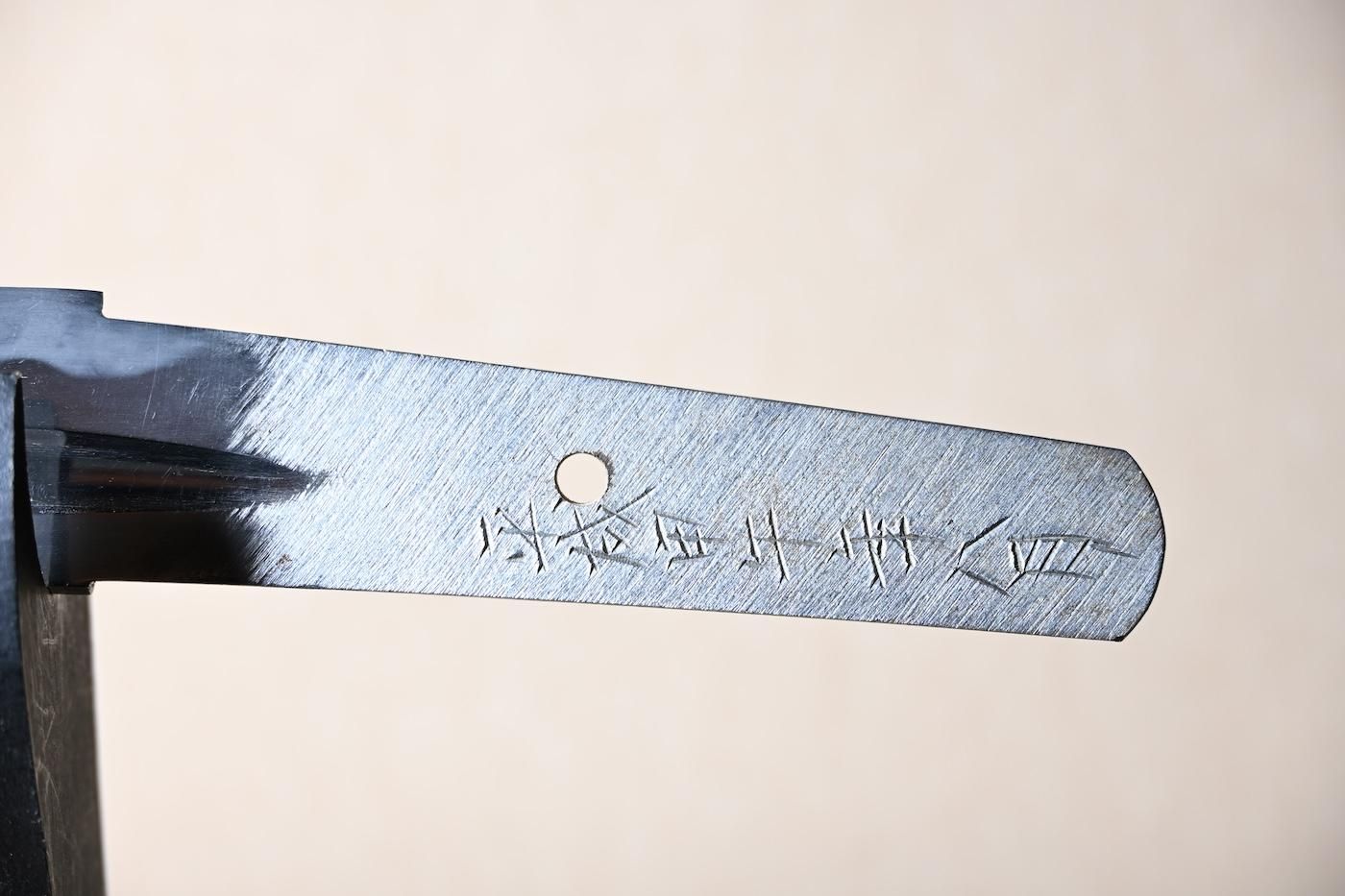
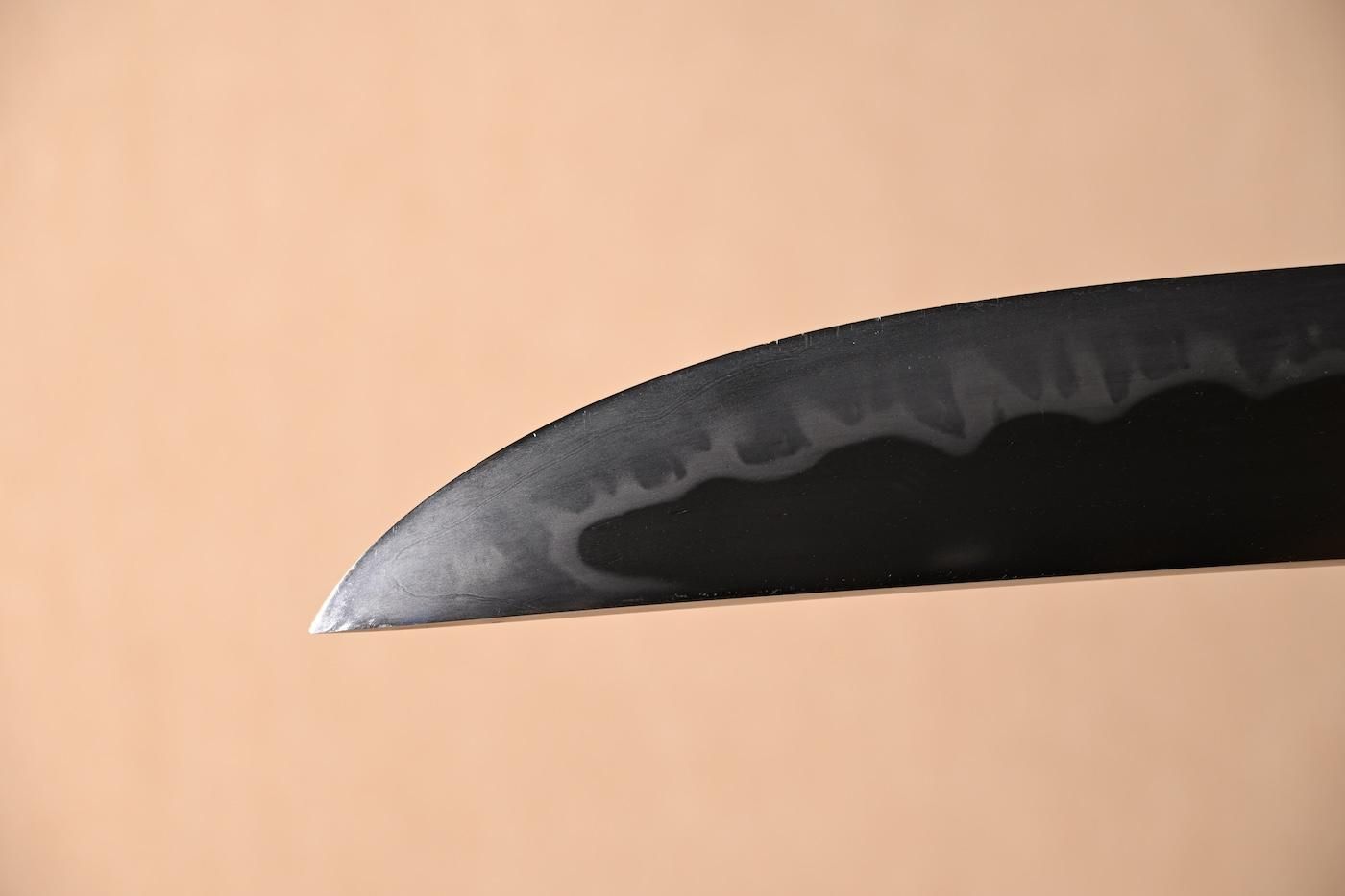
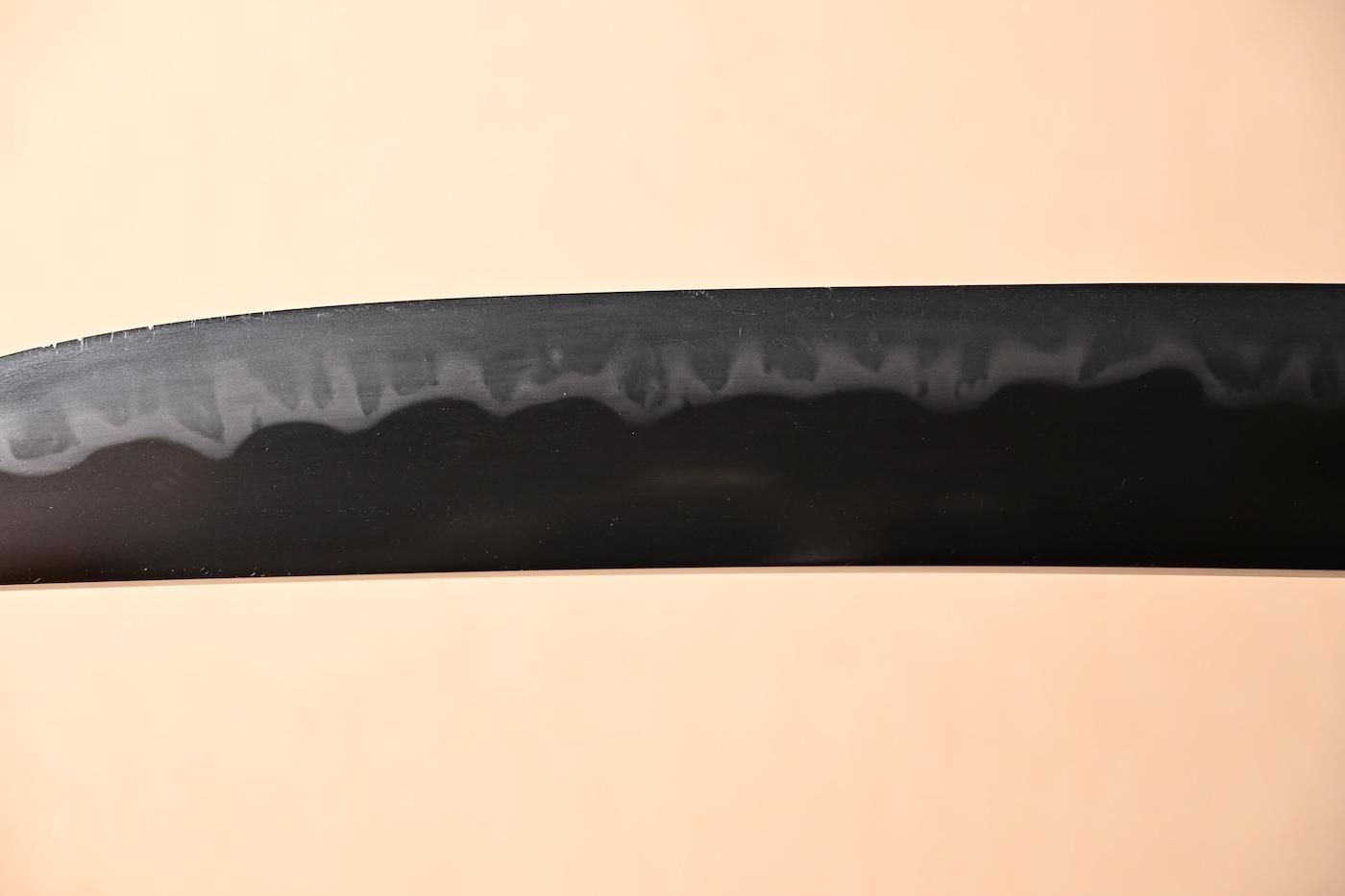
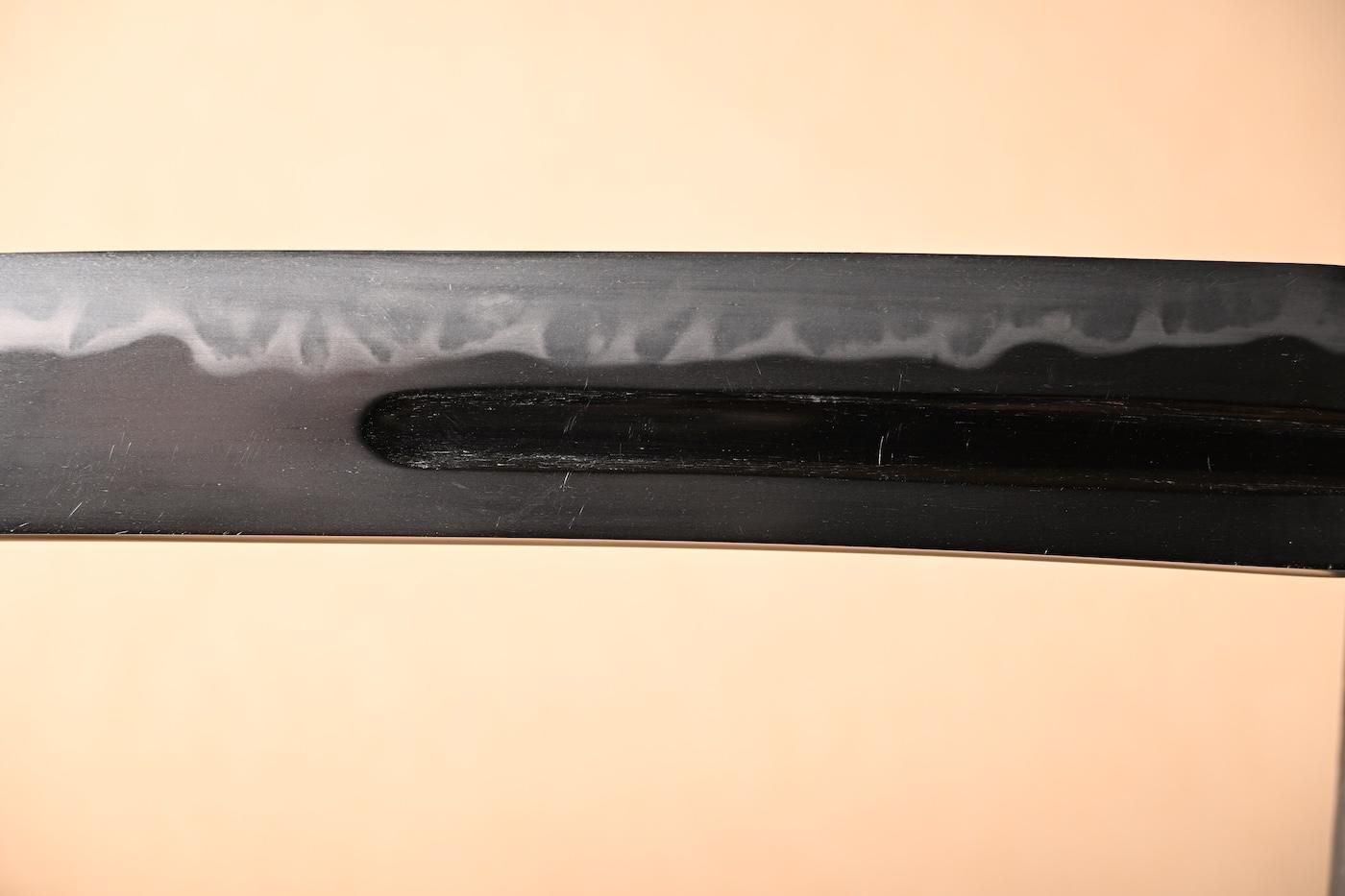
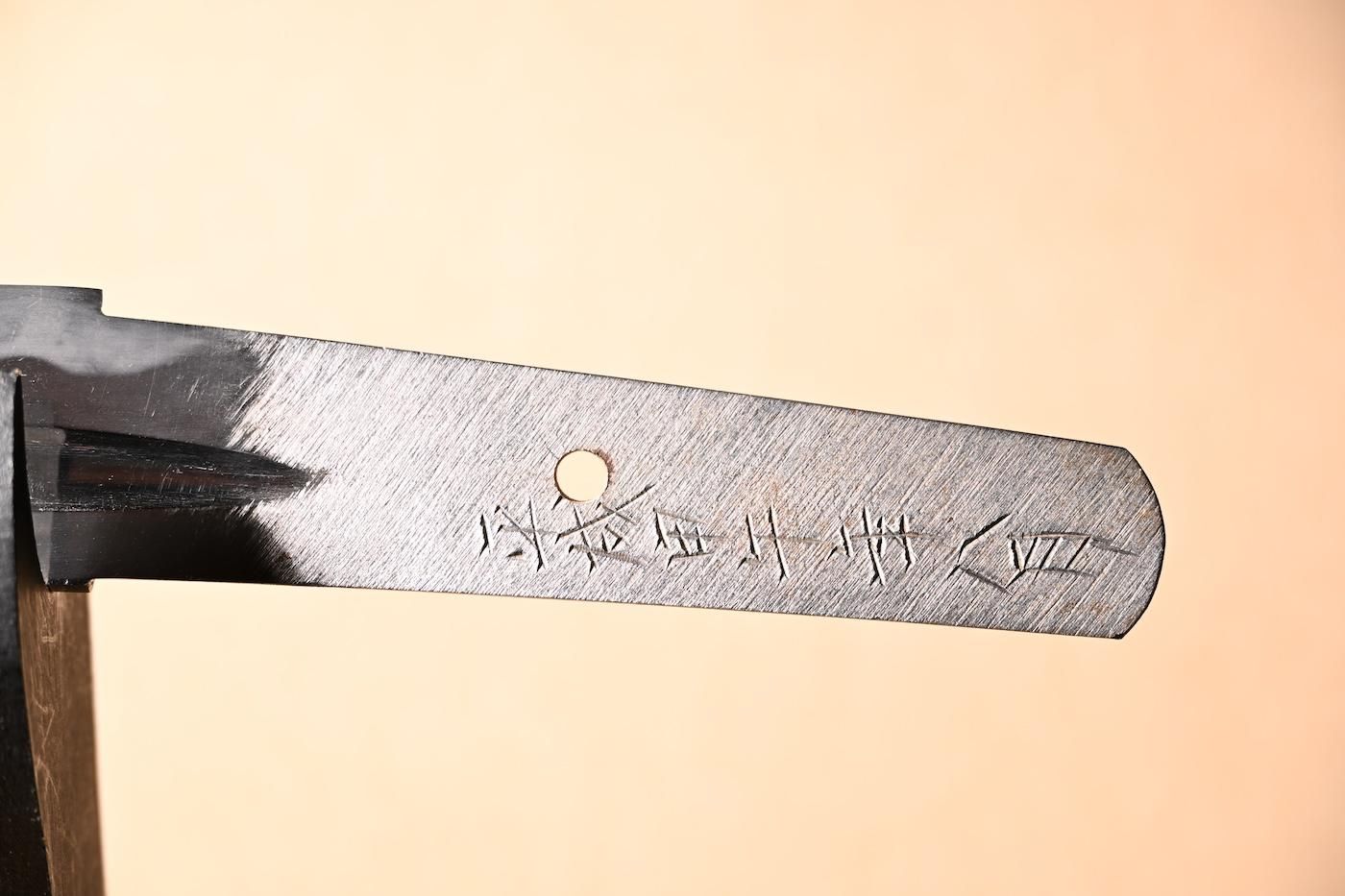
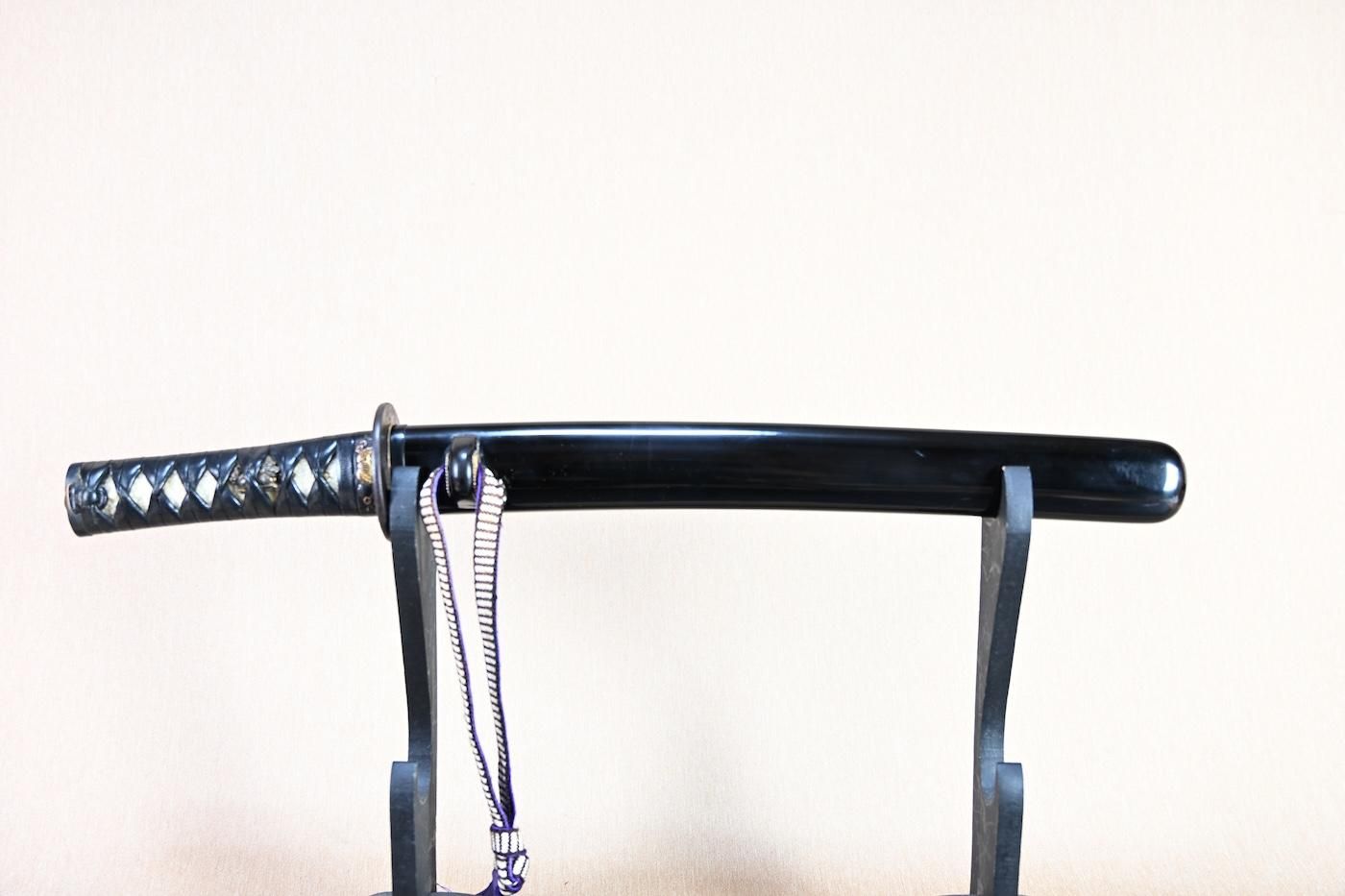
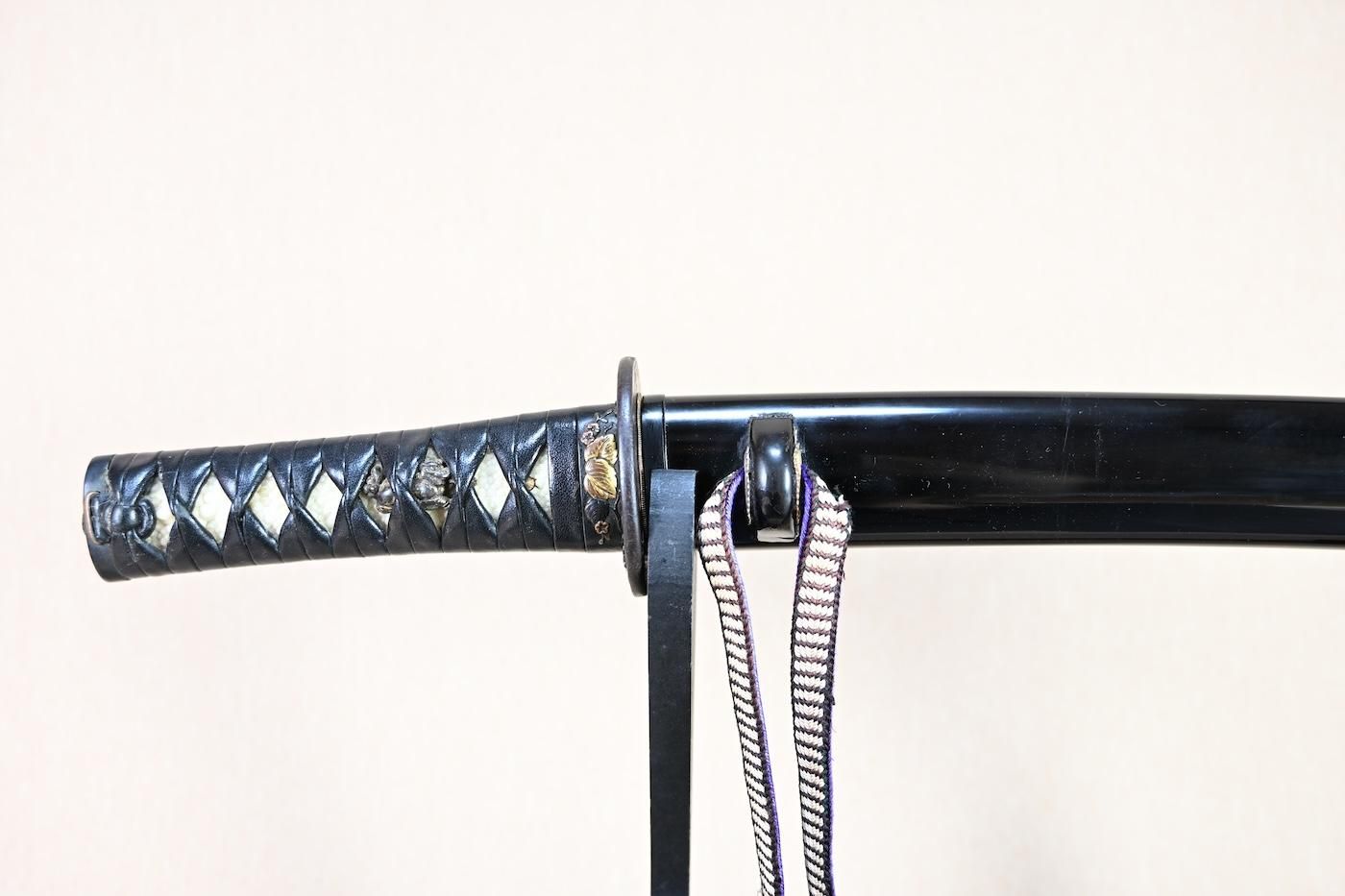
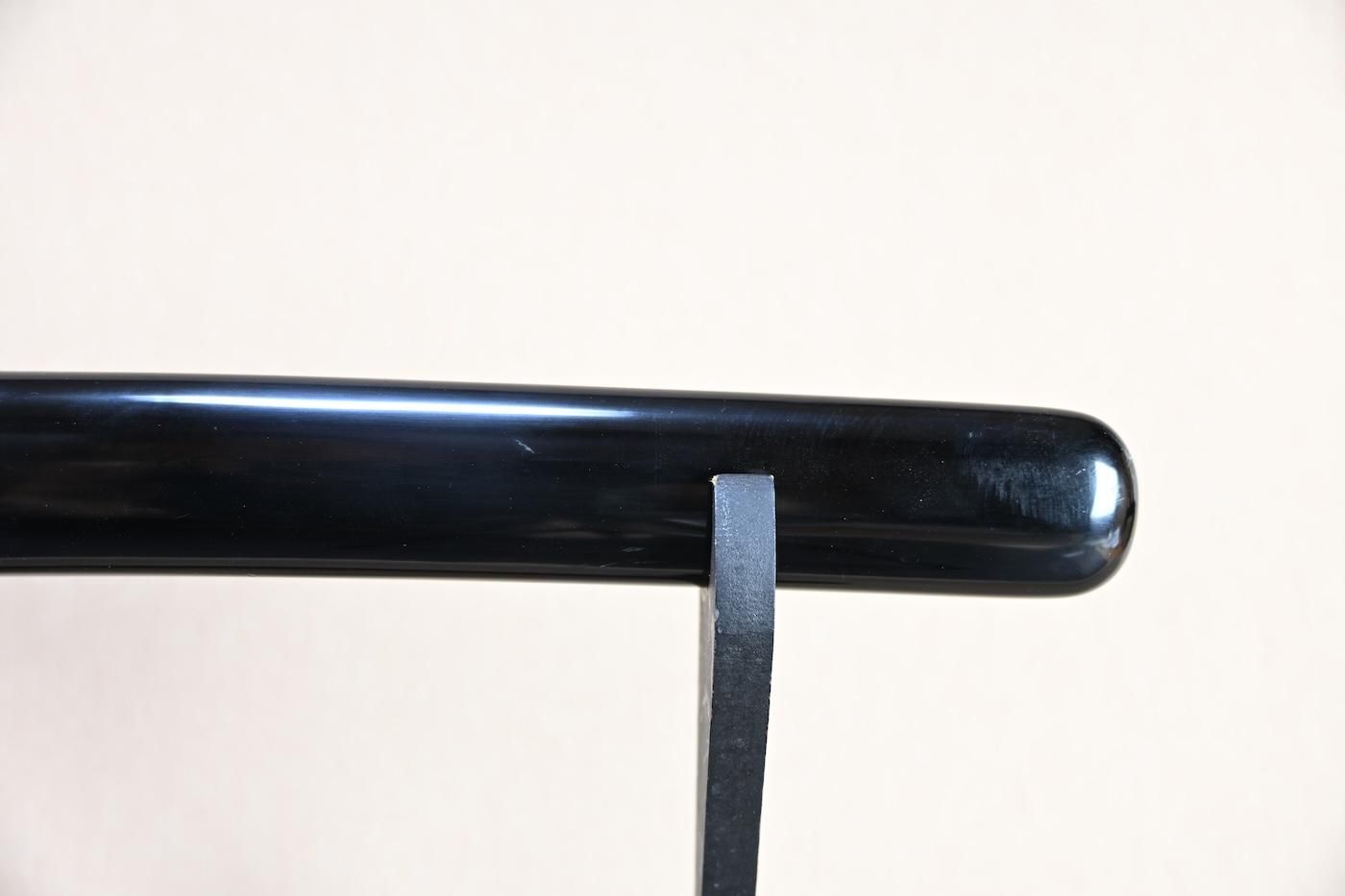
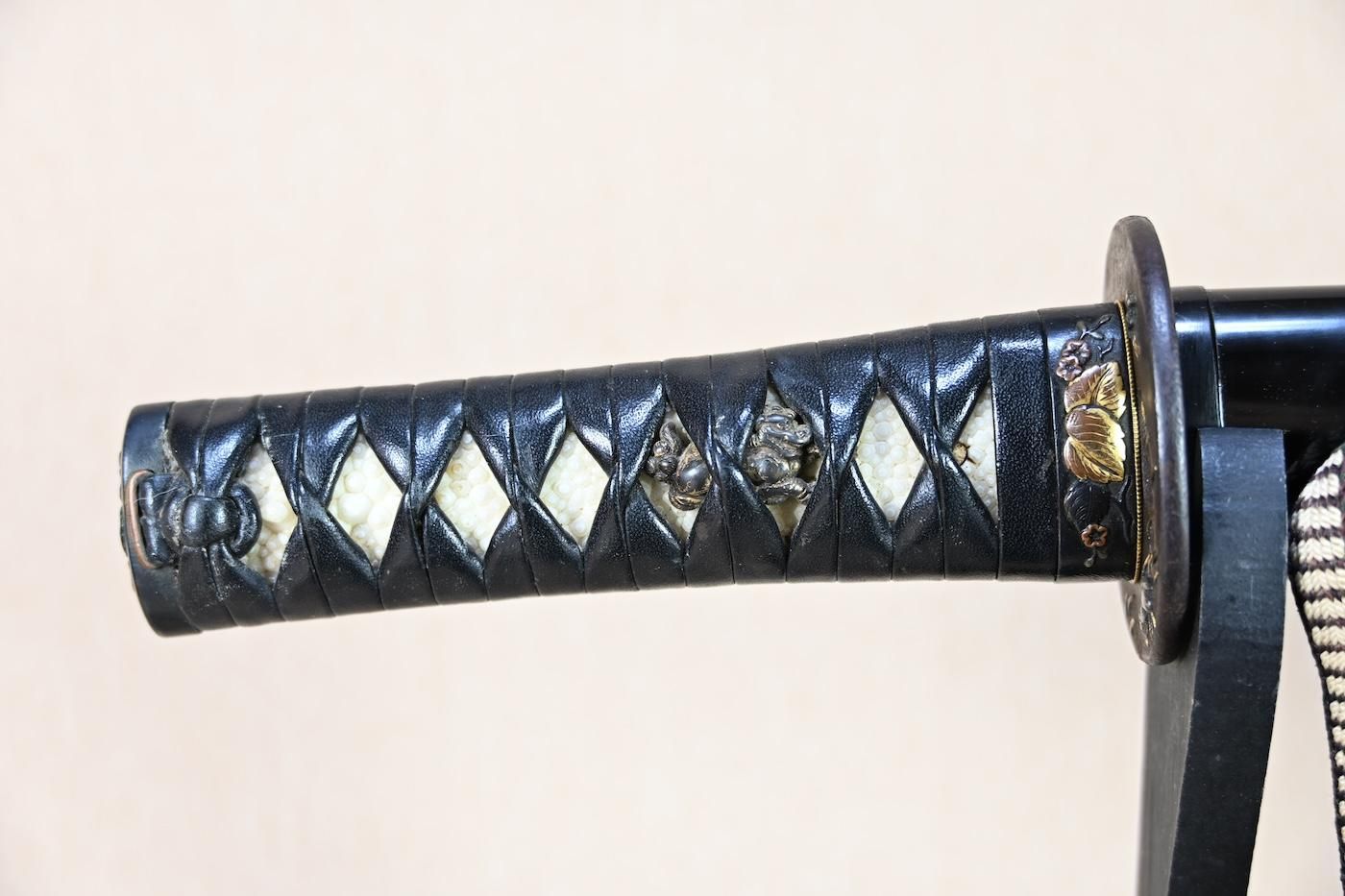
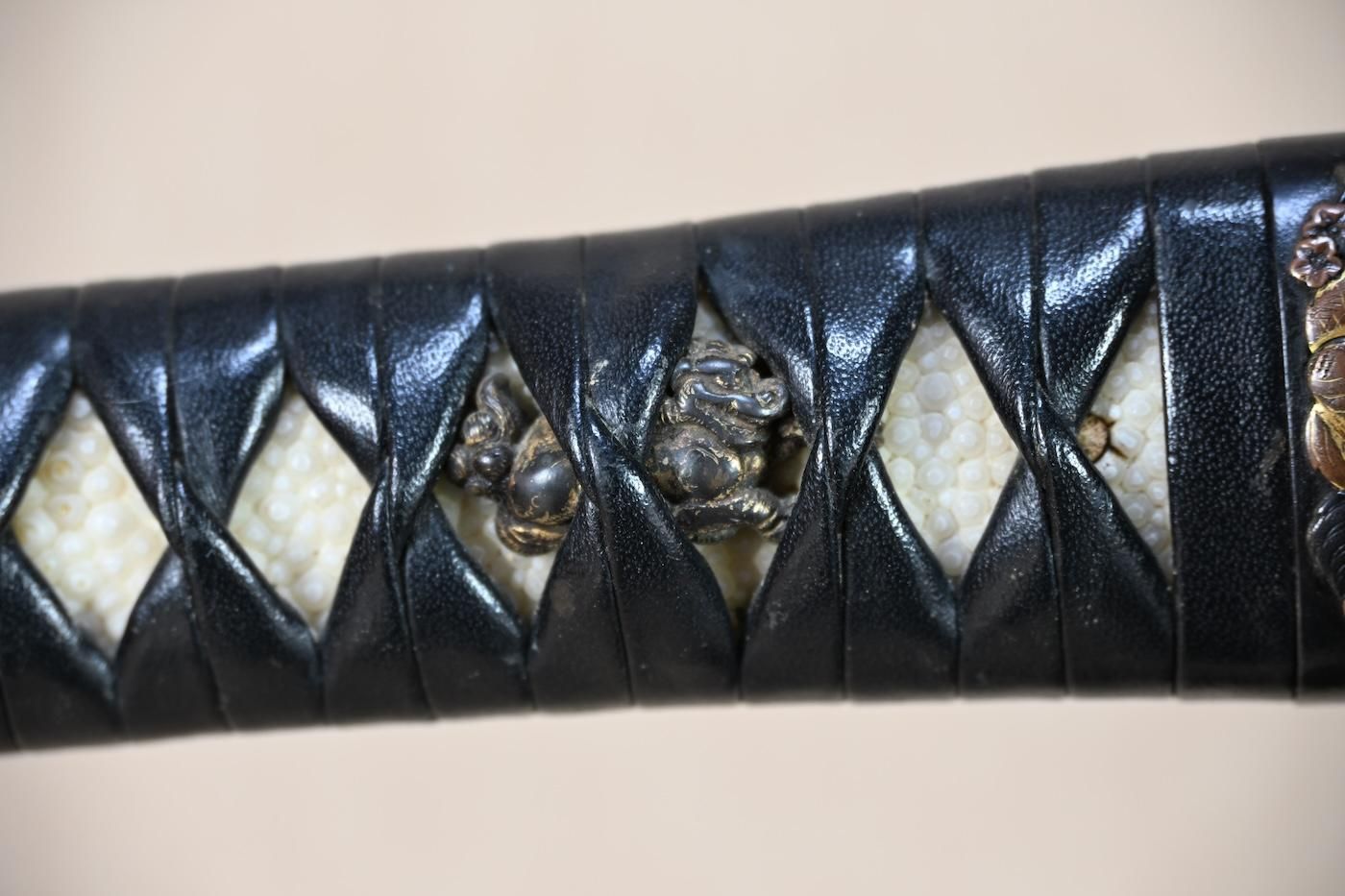
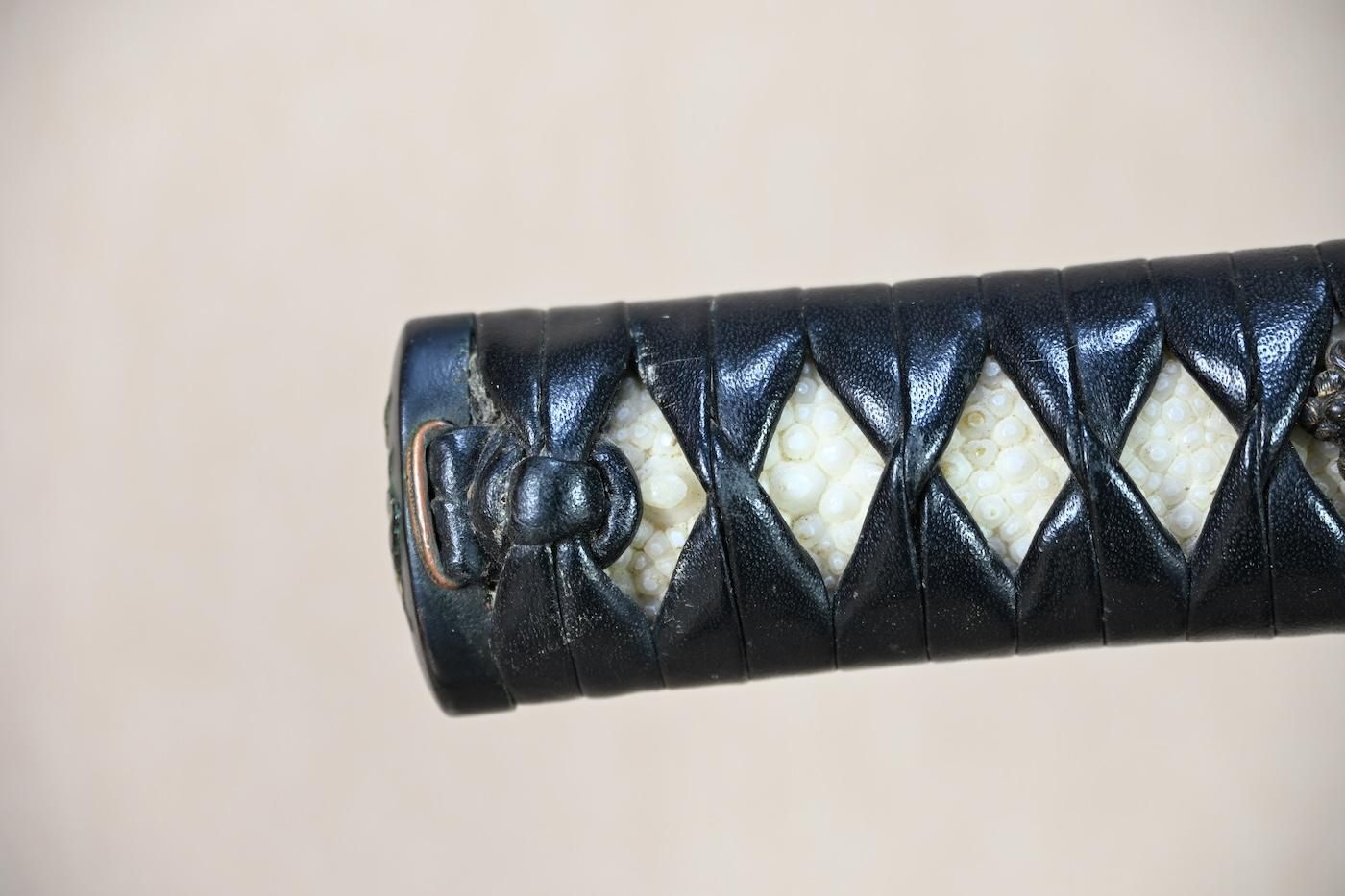
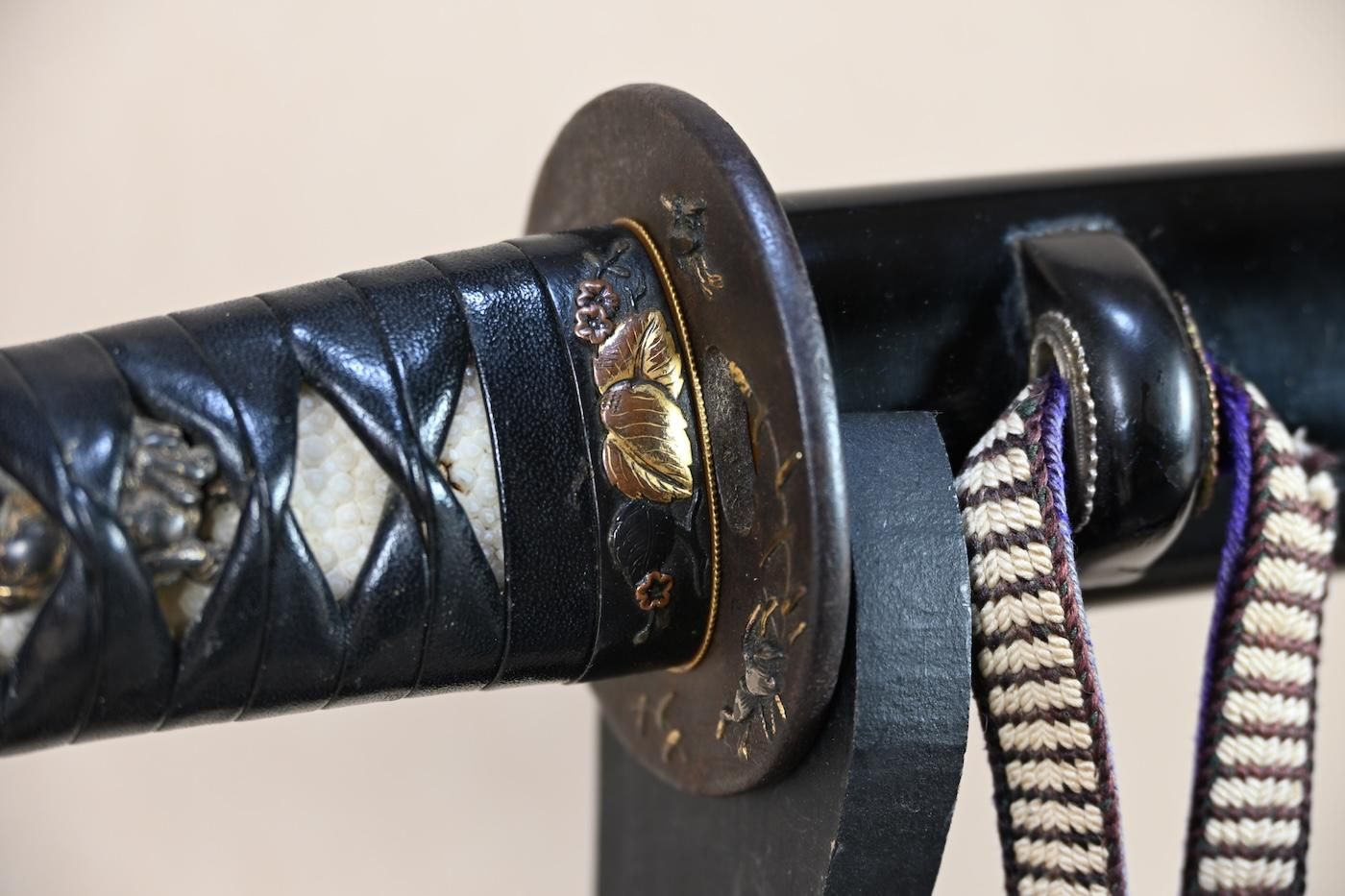
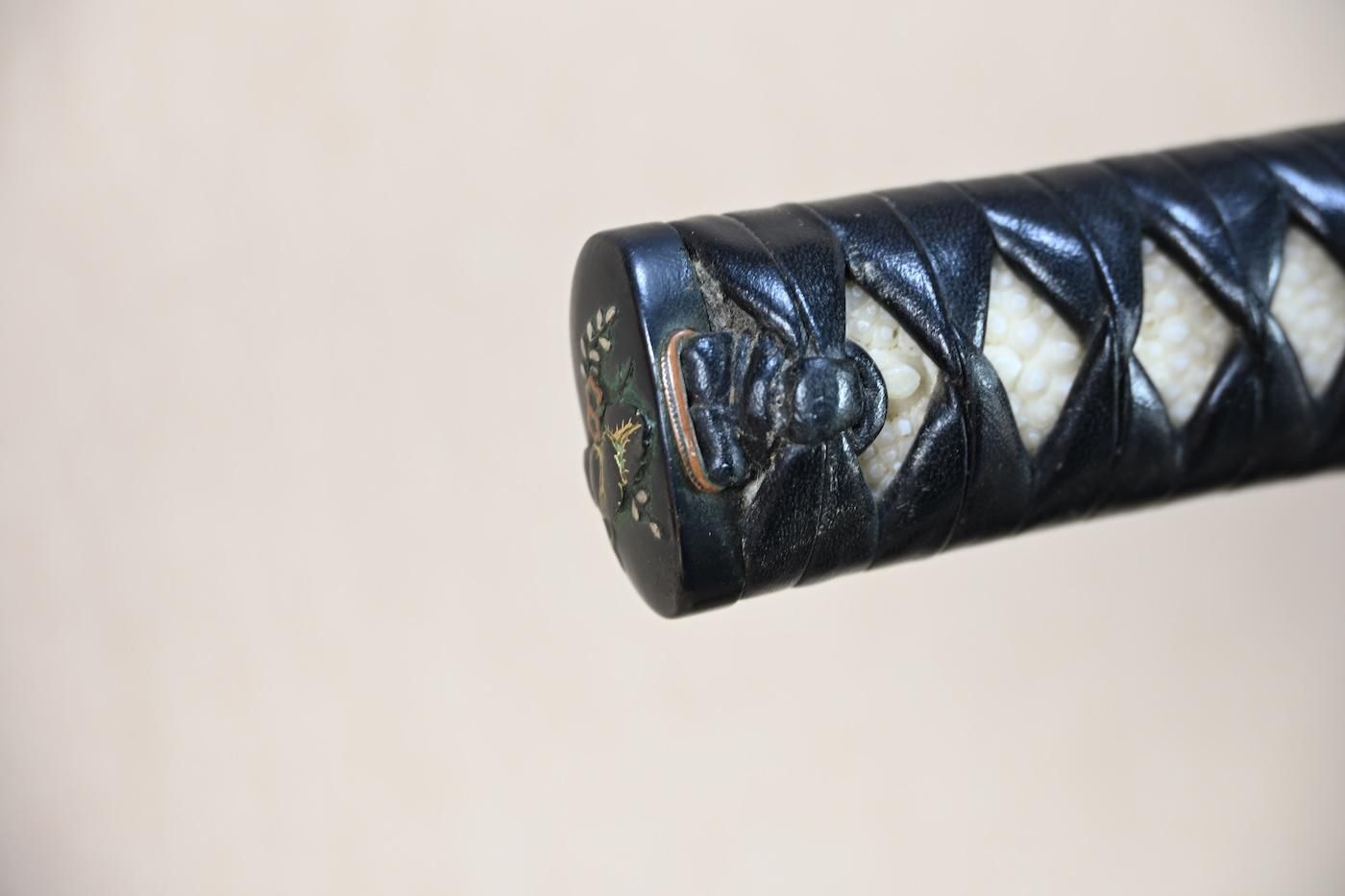
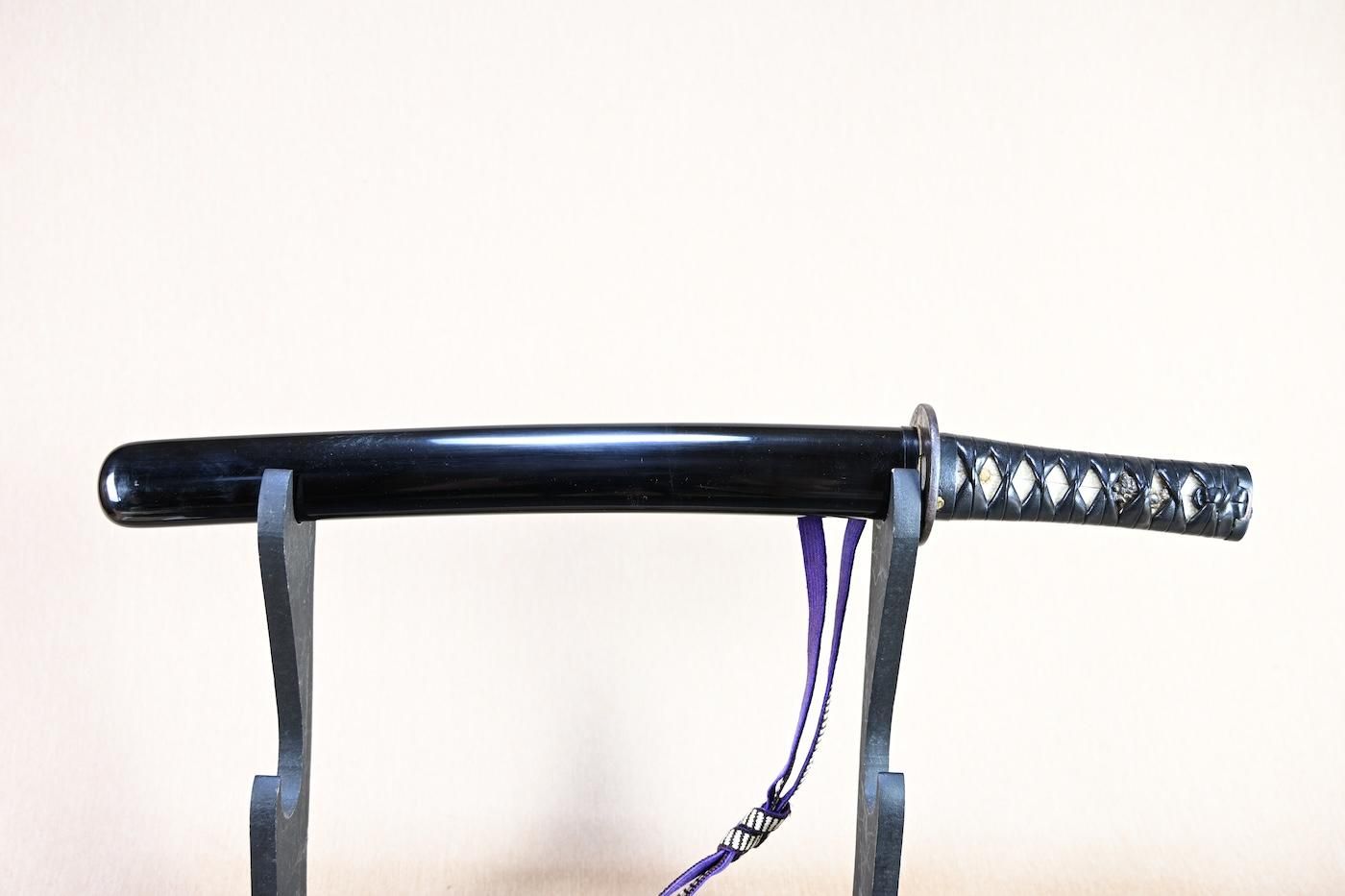
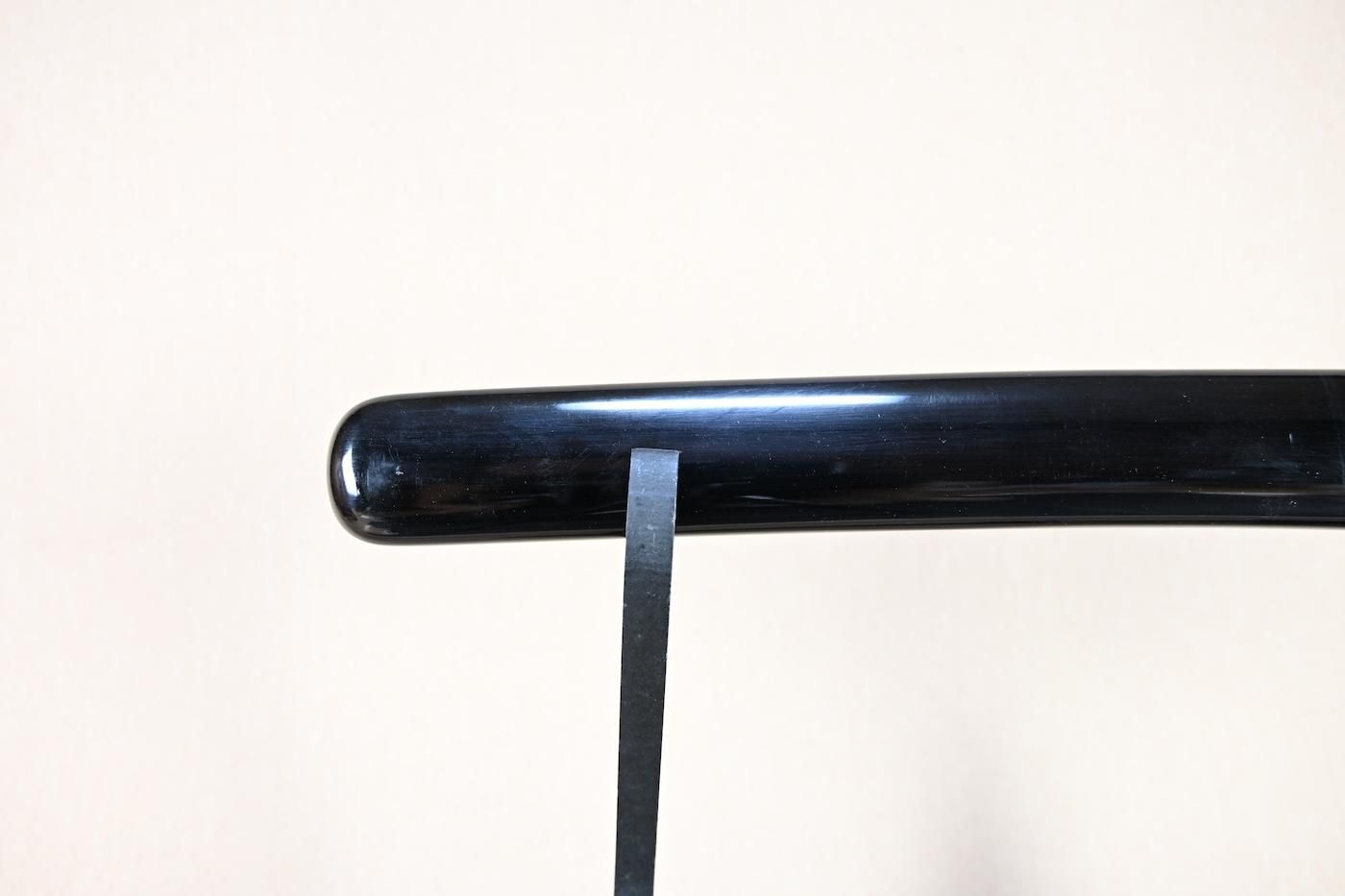
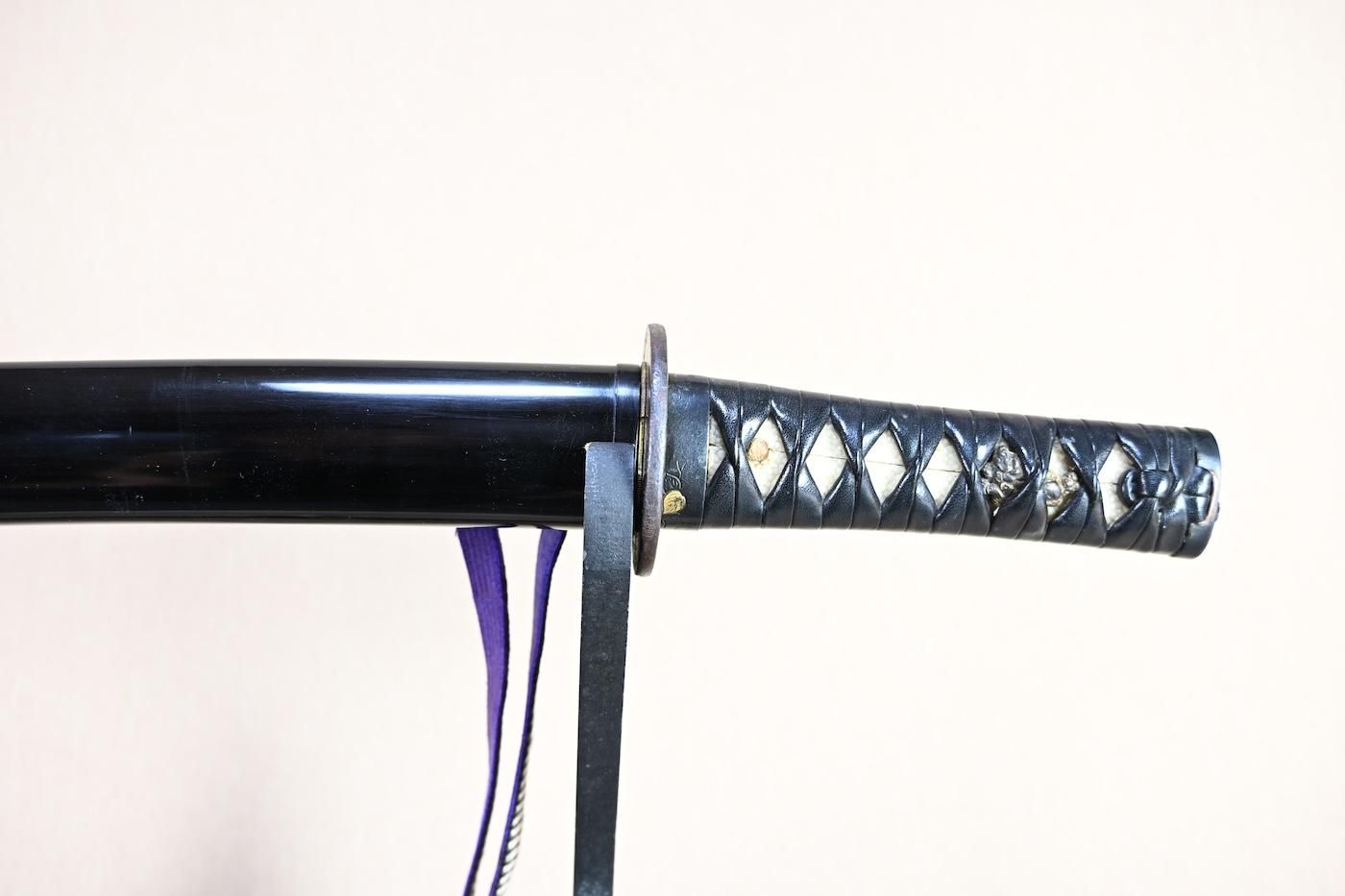
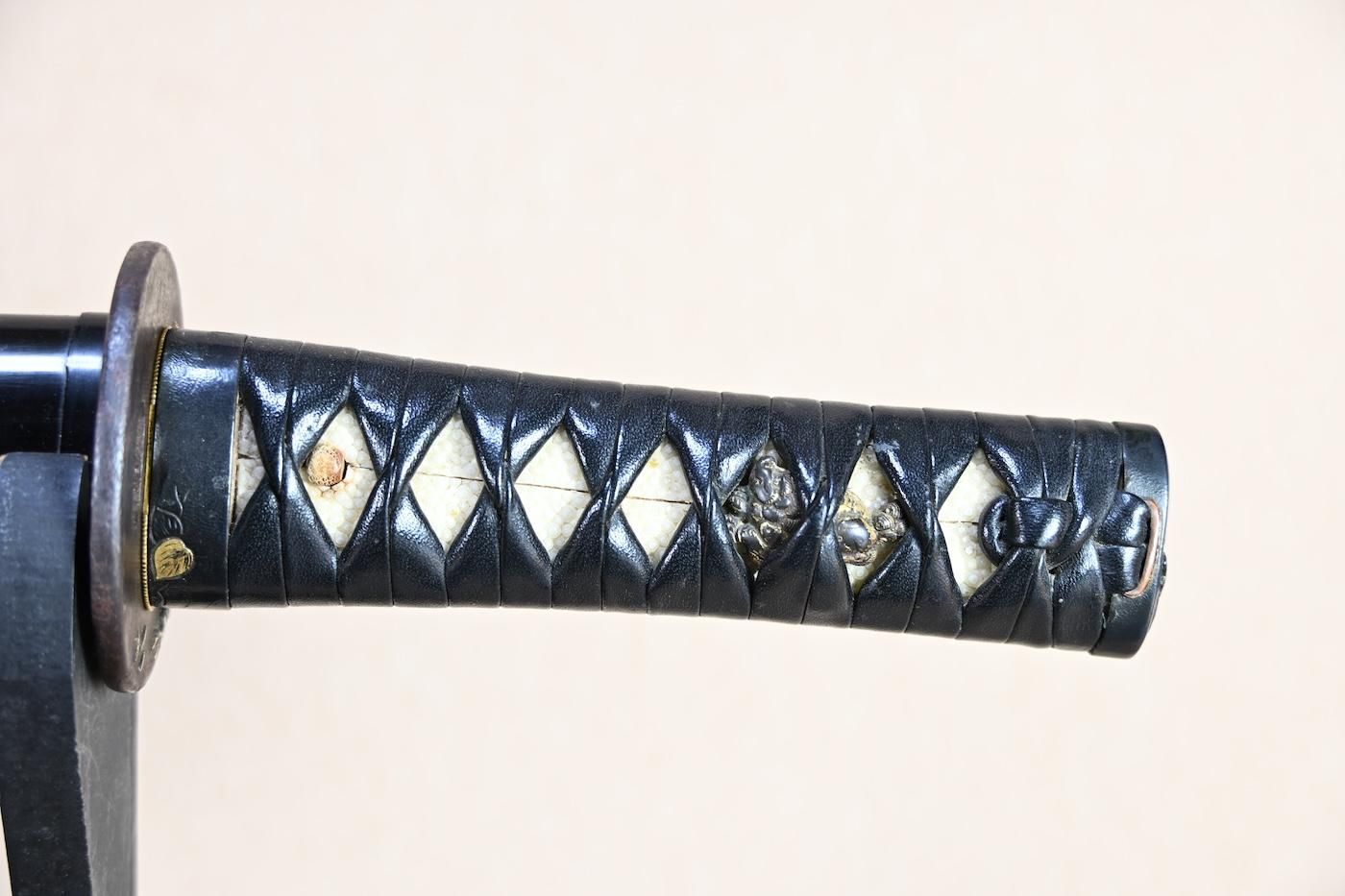
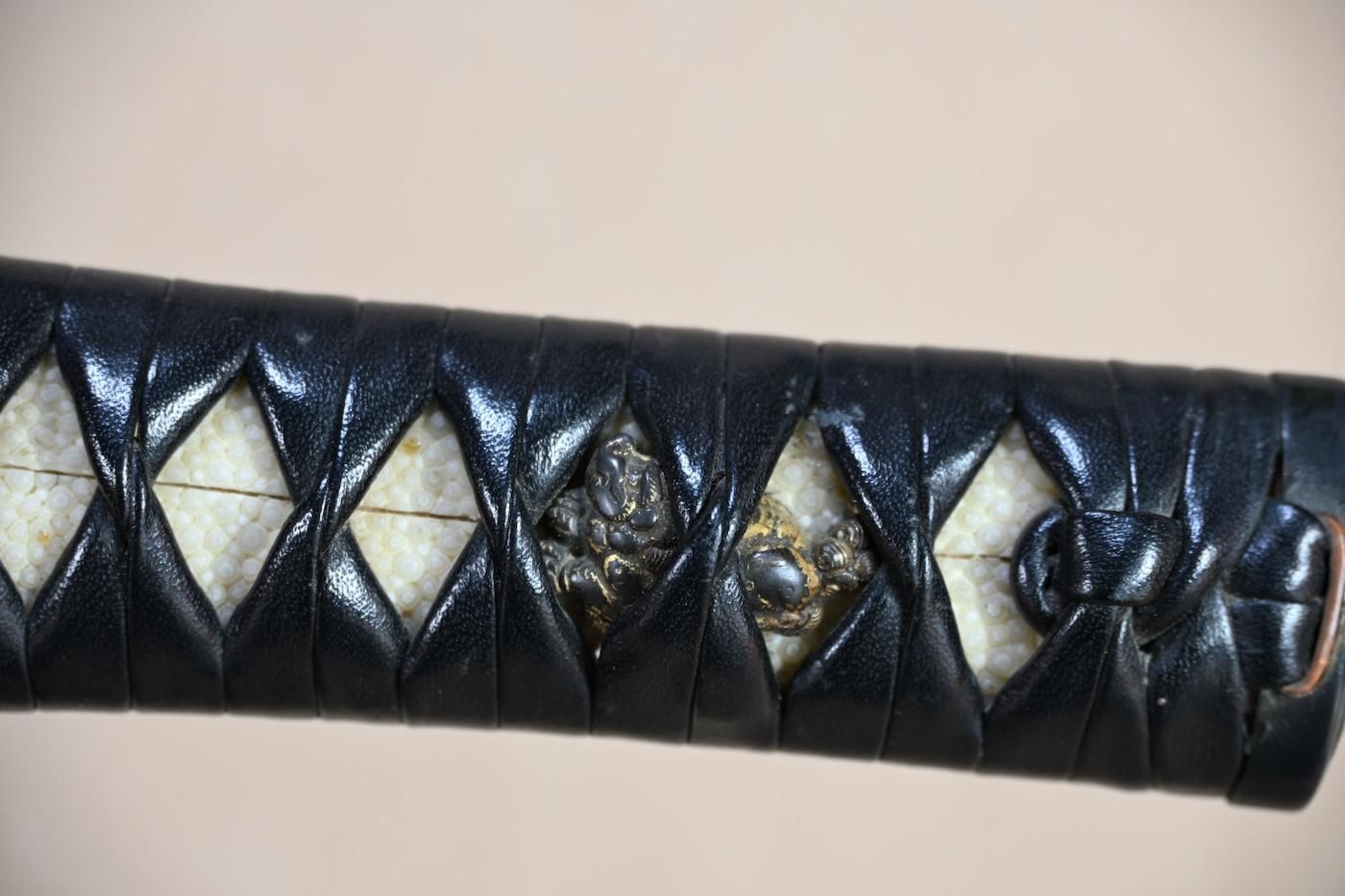
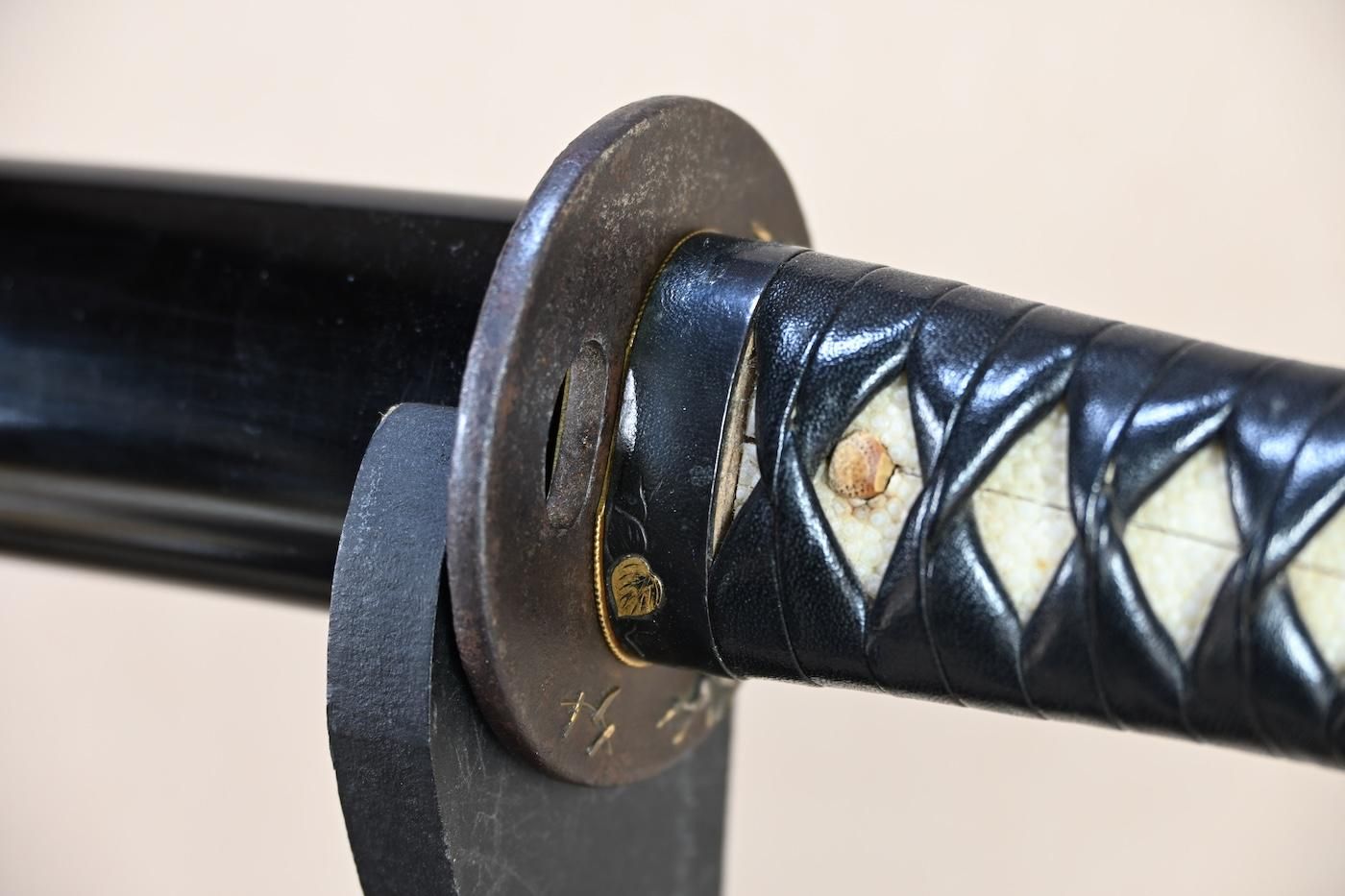
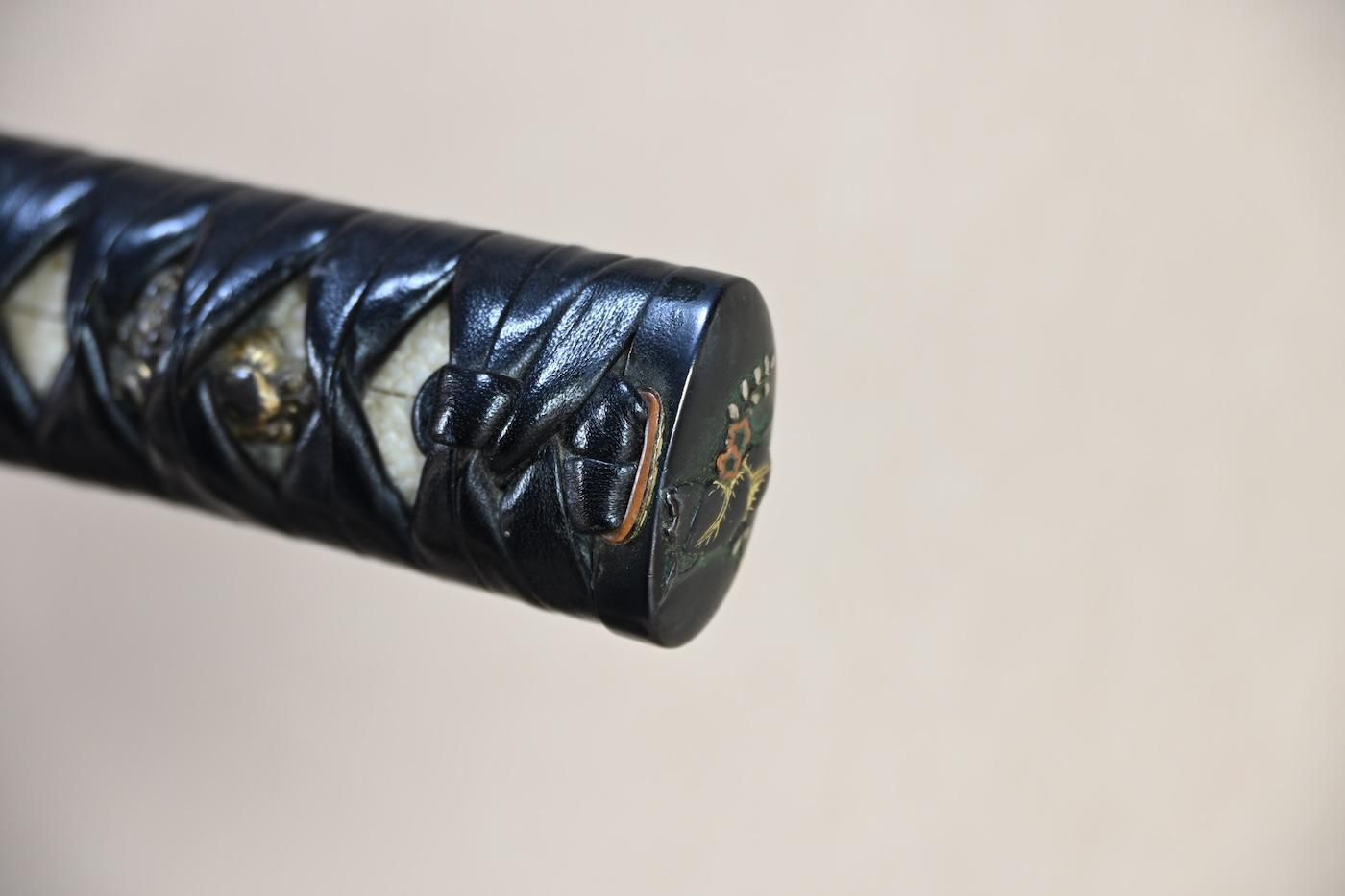
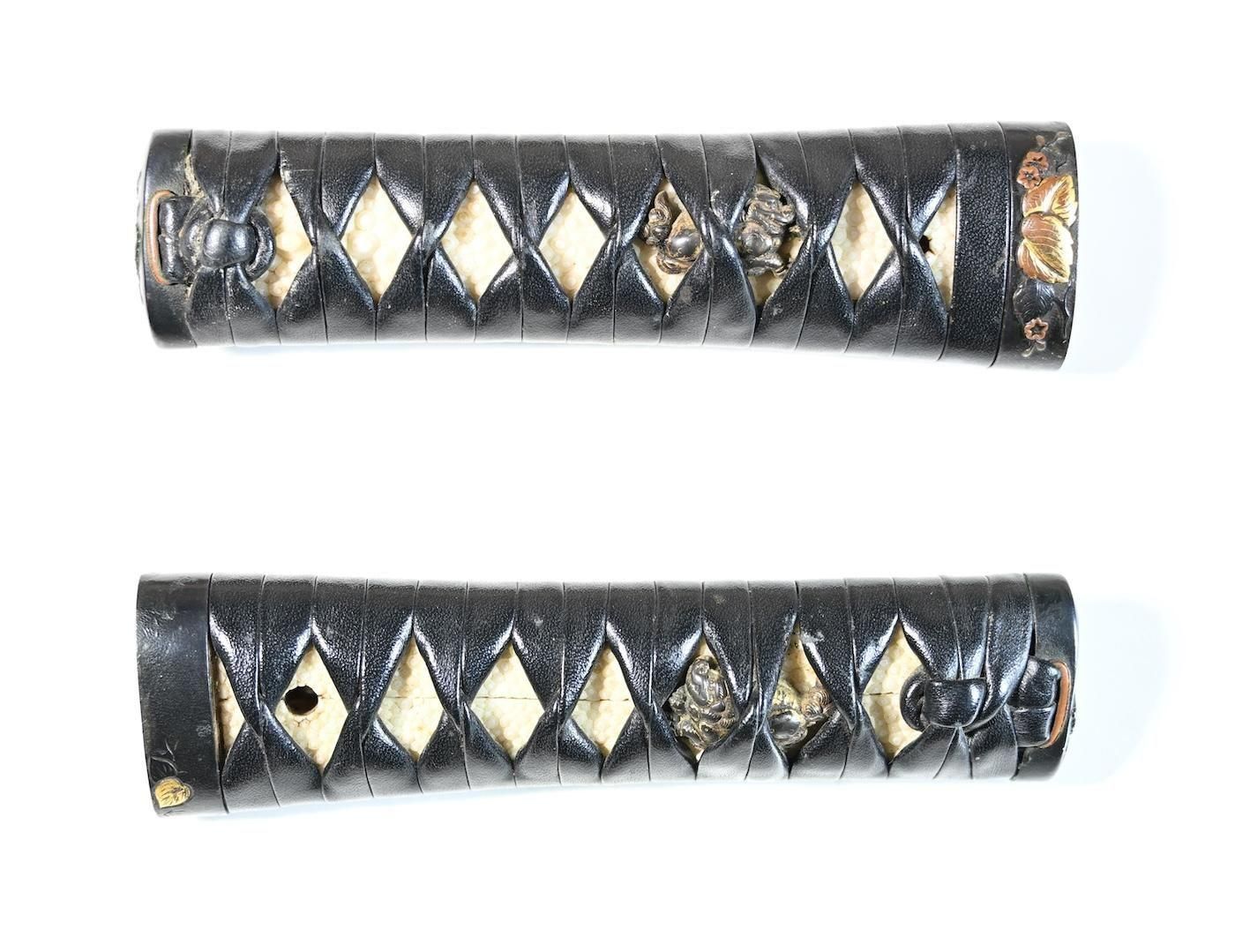
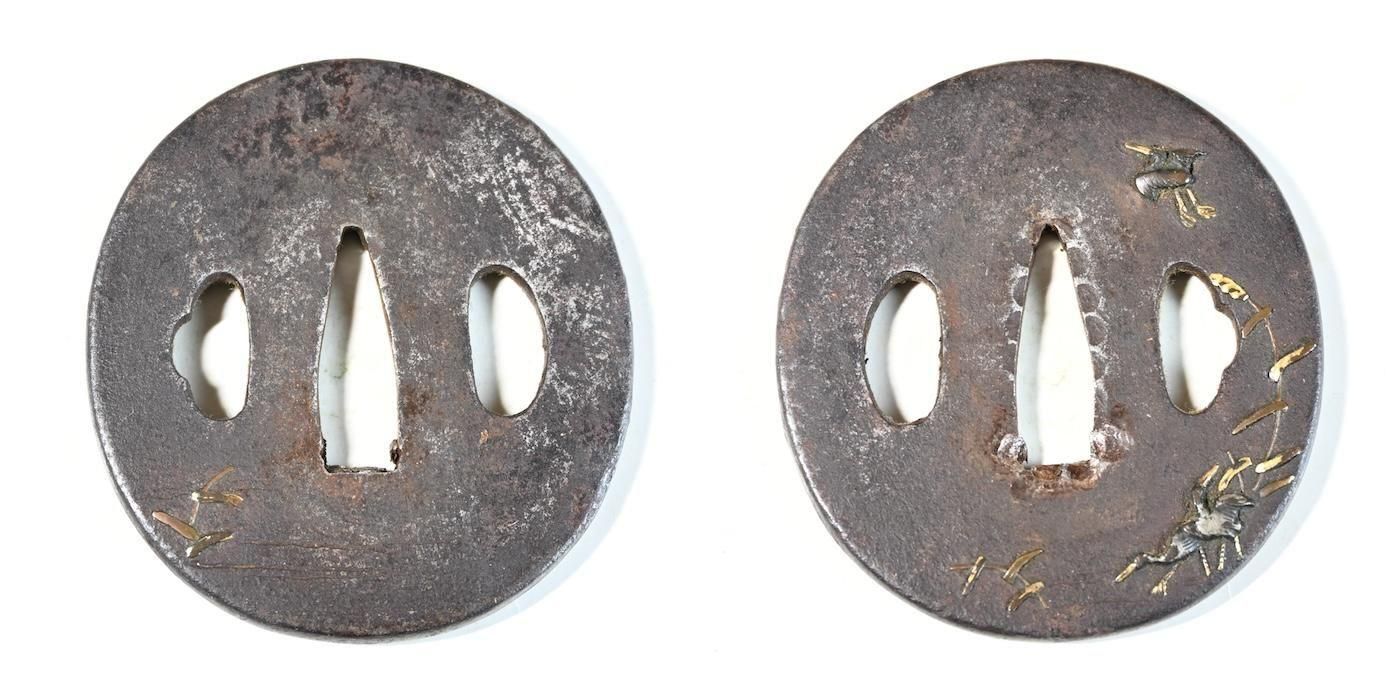
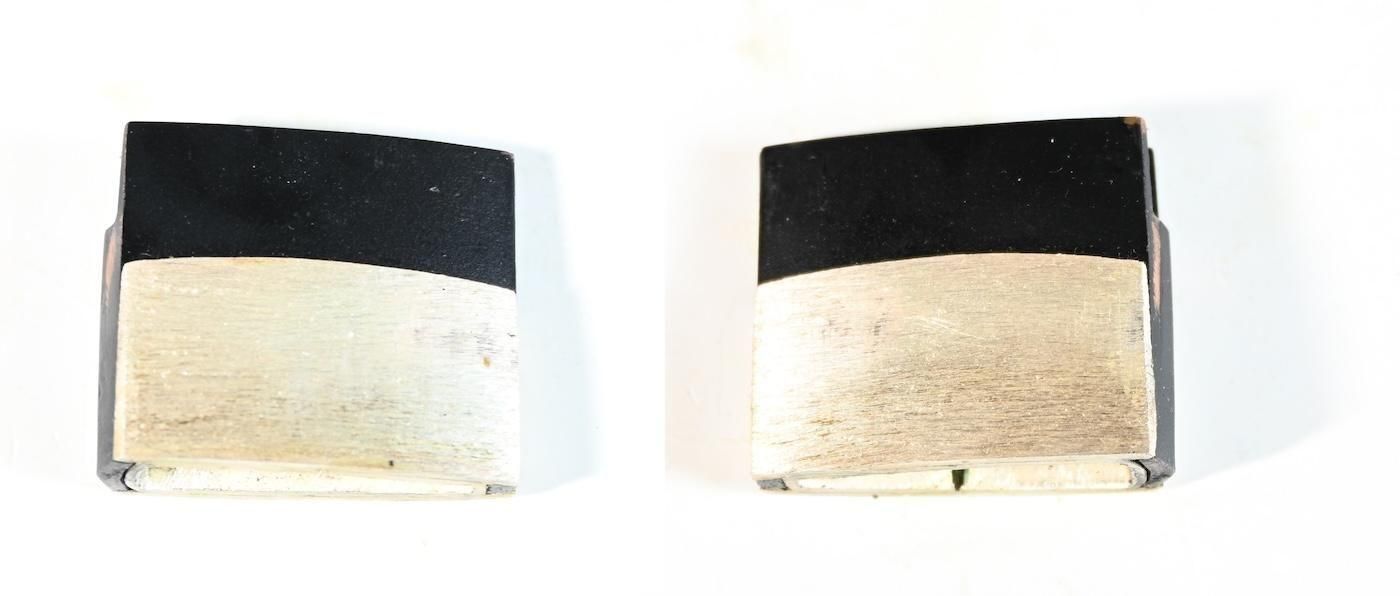
This is a tanto by smith Kiyotsugu (松永源六郎), made in 2014 (Heisei 26). It features a wide body and slight sori, reminiscent of Nanbokucho period blades, despite its slightly shorter length. The jigane is tightly forged in a muji-fu style, and the hamon is a magnificent choji-midare with thick ashi, making it a superb piece for appreciation. It comes with a koshirae featuring a gourd-motif fuchi-kashira, lion menuki, and a round inlaid tsuba, all housed in a jet-black ro-saya.
 NihontoWatch
mei · Gendaito · nagasa 27.2cm · sori 0.4cm
Higo · around 1975-2025
Shōwa to the present: destruction and revival
The twentieth century nearly killed the craft twice: wartime distortion, then the occupation ban. The NBTHK’s founding in 1948 and licensed forging from 1953 rebuilt the sword as an art, crowned by Living National Treasures and the mukansa rank.
We could not find an authenticity certificate on the seller’s listing. Japanese swords and fittings are normally papered by the NBTHK (or the NTHK). Without one, the attribution is the seller’s own assessment and has not been independently verified — treat it with caution and ask the dealer about certification before buying.
Please contact us promptly after the item's arrival. Except where the item is defective, we cannot accept returns. For returns due to customer circumstances, the cost is the customer's responsibility. In the case of a defective item, we bear the cost.
This is a tanto by smith Kiyotsugu (松永源六郎), made in 2014 (Heisei 26). It features a wide body and slight sori, reminiscent of Nanbokucho period blades, despite its slightly shorter length. The jigane is tightly forged in a muji-fu style, and the hamon is a magnificent choji-midare with thick ashi, making it a superb piece for appreciation. It comes with a koshirae featuring a gourd-motif fuchi-kashira, lion menuki, and a round inlaid tsuba, all housed in a jet-black ro-saya.
NihontoWatchmei · Gendaito · nagasa 27.2cm · sori 0.4cm
Higo · around 1975-2025
Shōwa to the present: destruction and revival
The twentieth century nearly killed the craft twice: wartime distortion, then the occupation ban. The NBTHK’s founding in 1948 and licensed forging from 1953 rebuilt the sword as an art, crowned by Living National Treasures and the mukansa rank.
We could not find an authenticity certificate on the seller’s listing. Japanese swords and fittings are normally papered by the NBTHK (or the NTHK). Without one, the attribution is the seller’s own assessment and has not been independently verified — treat it with caution and ask the dealer about certification before buying.
Please contact us promptly after the item's arrival. Except where the item is defective, we cannot accept returns. For returns due to customer circumstances, the cost is the customer's responsibility. In the case of a defective item, we bear the cost.