Muromachi turned sword making into an industry: the uchigatana rose with massed infantry warfare, Osafune and Seki produced bundle swords beside custom orders, and the Ming trade carried Japanese blades abroad by the tens of thousands.
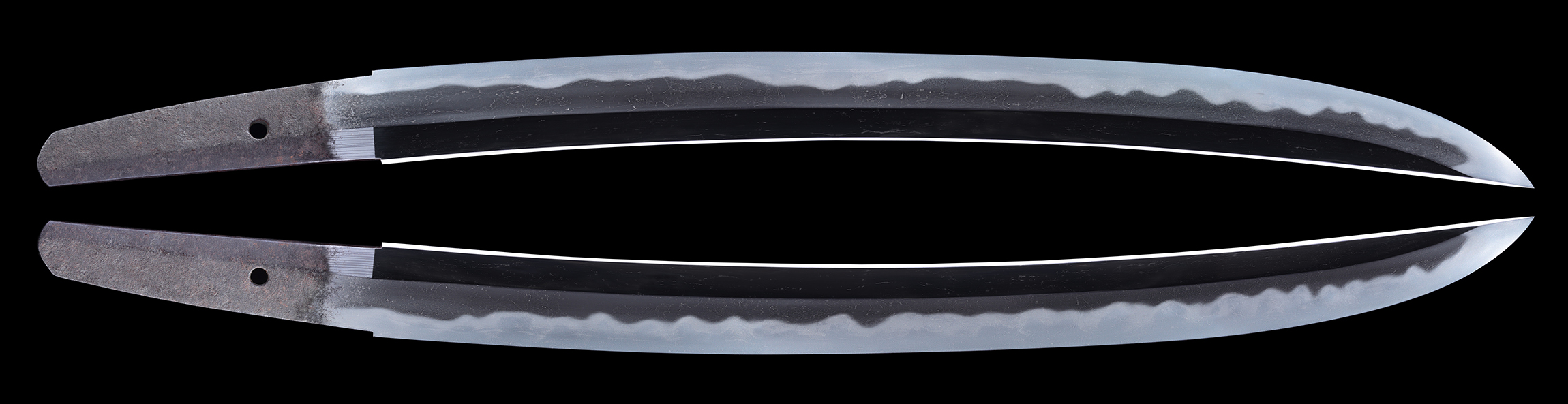
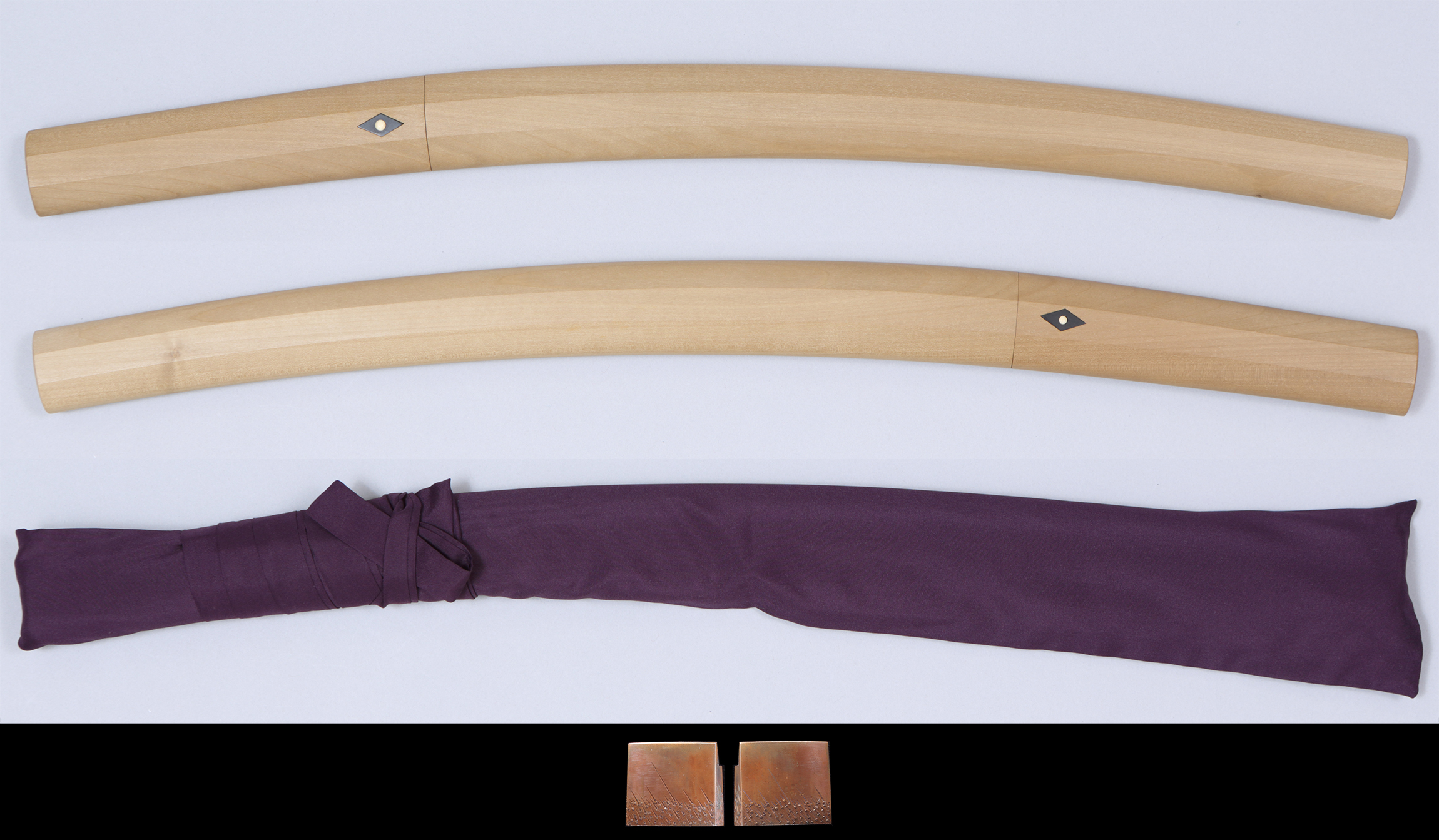
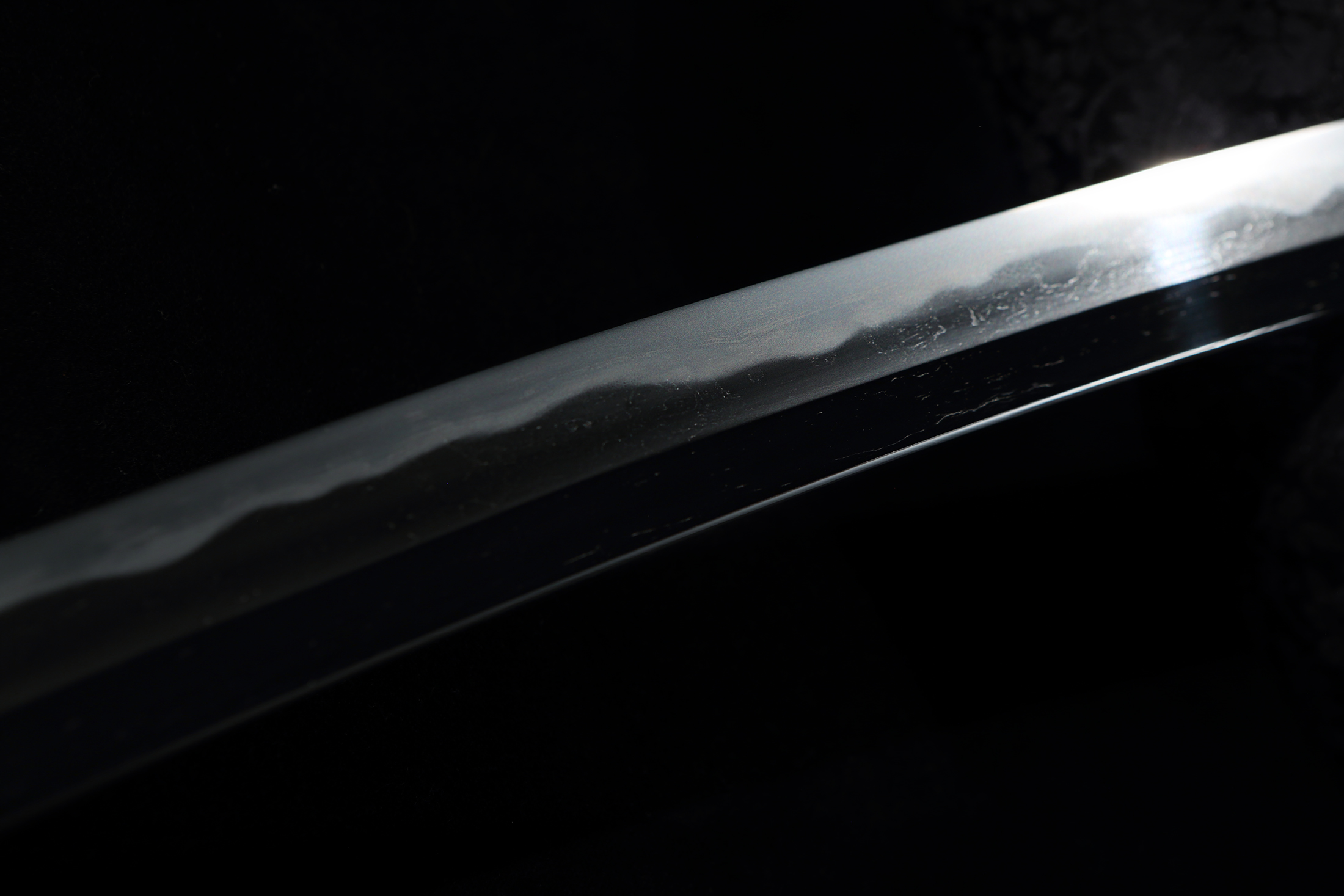
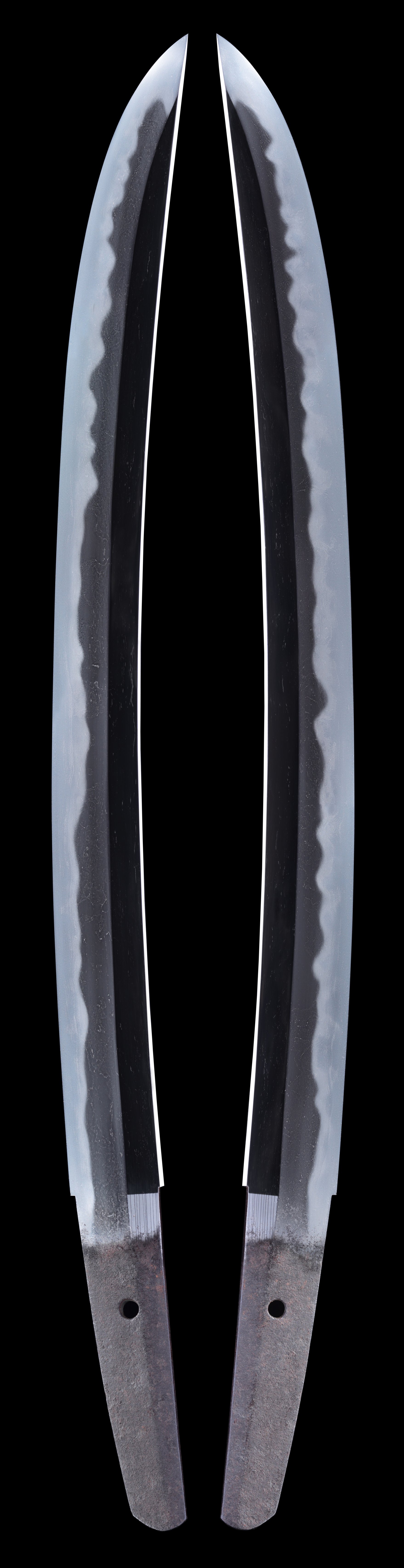
This is a sturdy Shobu-zukuri wakizashi with a strong saki-sori, reminiscent of a naginata that has been suriage. It features a short nakago and a nie-deki gunome-midare hamon. The blade is in good condition, with only a shallow 3cm kitae-ware on the shinogi-ji in the middle of the omote side.
 NihontoWatch
mumei · Muromachi · nagasa 38.4cm · sori 1.2cm
Kinko · Musashi
8 pieces on the market now
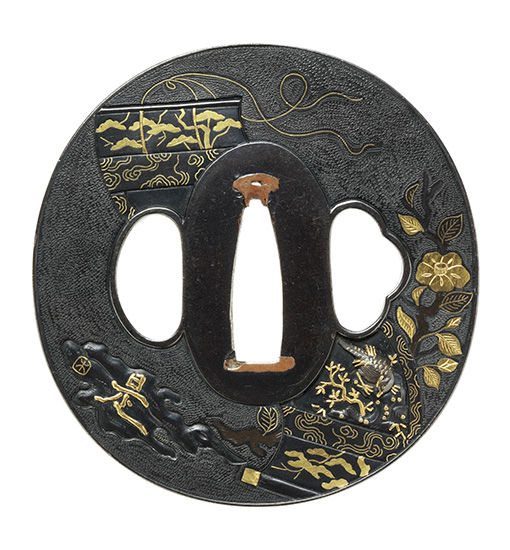
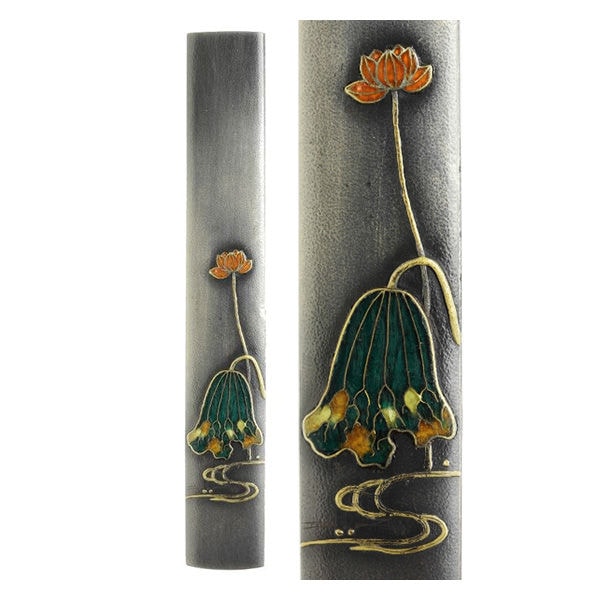
The Edo Hirata school descends from Hirata Dōnin (平田道仁), the craftsman who expressed the sumptuous, luxurious beauty of Momoyama-period art in sword fittings through the technique of shippō (七宝, cloisonné enamel). Commonly known as Hikoshirō, Dōnin was a native of Kyoto, and his skills are traditionally said to have been learned from Korea. Cloisonné of that time accorded with contemporary taste and was employed for architectural metal fittings at sites such as Fushimi Castle and the Jurakudai, attracting great attention as a fresh form of decorative craft. Around the Keichō era (1596–1615) Dōnin entered the service of Tokugawa Ieyasu; he moved from Sunpu to Edo, and thereafter the Hirata family — distinct from the Higo Hirata line — served generation after generation as official retained artisans (kakae-kō) of the Tokugawa shogunate, granted a residence in Edo and a stipend of ten persons' rations. His eldest son and successor, the second-generation Shūichi (就一), had an audience with Tokugawa Iemitsu in Shōhō 3 (1646) and was maintained as a bakufu craftsman specializing in mounting ornaments. The school's defining art is cloisonné applied to sword fittings, above all gold-wire cloisonné inlay (kin-sen shippō zōgan) and the distinctive Hirata manner of flush enamel inlay (shippō suemon-zōgan), set against grounds of polished or stone-textured shakudō, iron, and brass. Mount Fuji was the subject at which the first and second generations most excelled — the summit crowned in pure-white enamel snow, the long foothills shimmering in pale blue, with gold inlay for rocks symbolizing wealth — alongside lotus blossoms on the water, willows with small birds, snow-capped mountain ranges, rain dragons (uryū), and floral arabesques.
The palette centers on a richly opalescent, milky-toned enamel inherited from Dōnin, joined by emerald-like transparent green and fresh hues of vermilion, yellow, and blue. " Successive heirs used Hikoshirō as their common name, and signed works from the first through the fourth generations are exceedingly few. From around the fifth-generation Jūmon (就門), a small number of works without cloisonné appear; the eighth-generation Harunari (春就), unlike other heads of the house, also studied chōkin (metal carving) under the Yasuda family, likewise shogunal purveyors, producing yōbori menuki and takabori iroe work on nanako-ji, a manner transmitted in turn to the ninth-generation Shūshō (就将). The cloisonné techniques were guarded as an isshi sōden — a secret, single-heir transmission — down into the Meiji era, when the family applied its hereditary art to the manufacture of the decorations and orders of the Japanese state, beginning with the Order of the Golden Kite (Kinshi Kunshō). Patronage remained at the highest level throughout: the tenth-generation Hikoshirō Haruyuki (春行) fulfilled a shogunal commission ordered in Genji 1 (1864) and completed in Keiō 1 (1865) that was transmitted within the Tokugawa house; a ceremonial aikuchi mounting with fittings by Harunari passed down as an heirloom of the Kishū Tokugawa family; and Shūshō worked on commission from the Lord of Nagashima. The school's influence extended beyond the main line — Nakamura Haruhiro, retained craftsman of the Daishōji Maeda house, became a pupil of Harunari and was permitted to use the Hirata surname. Dōnin's Momoyama-period masterpieces, with their antique elegance and dignified restraint, are esteemed as revealing "the very essence of Japanese cloisonné art,"[[c:1]] and celebrated examples were treasured in collections such as that of Ryūshidō, Mitsumura Toshimo — securing the Edo Hirata line's place as the fountainhead of cloisonné in the tosogu canon. Learn more →
| Smith | Era | Designated |
|---|---|---|
| Donin道仁 | — | 31 |
| Harunari春就 | — | 6 |
| Haruyoshi春美 | — | 0 |
| Shigekata重賢 | 1670 | 1 |
| Harumasa春正 | — | 0 |
The Muromachi period (1392 to 1573)
Muromachi turned sword making into an industry: the uchigatana rose with massed infantry warfare, Osafune and Seki produced bundle swords beside custom orders, and the Ming trade carried Japanese blades abroad by the tens of thousands.
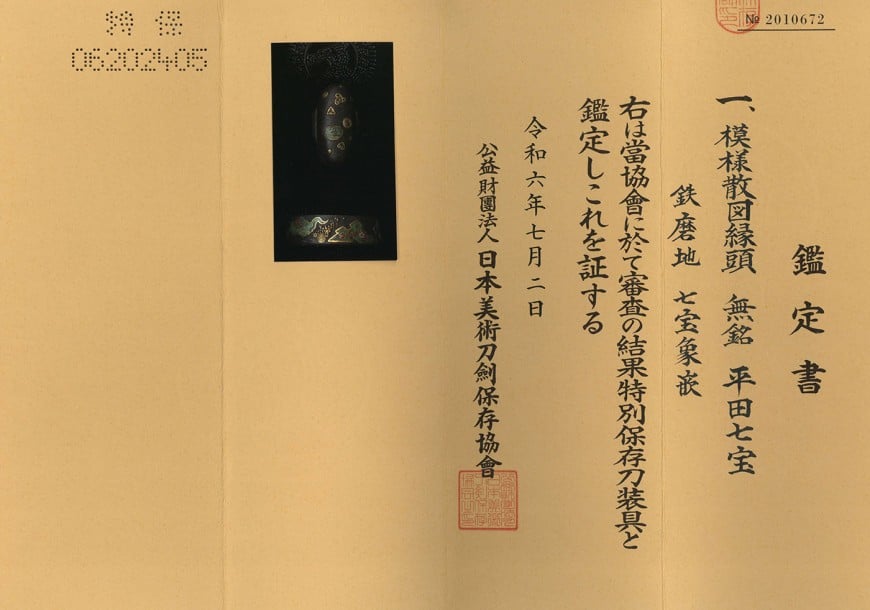
We could not find an authenticity certificate on the seller’s listing. Japanese swords and fittings are normally papered by the NBTHK (or the NTHK). Without one, the attribution is the seller’s own assessment and has not been independently verified — treat it with caution and ask the dealer about certification before buying.
If you judge that the condition of the delivered item differs significantly from the photos or description on our site, a return is possible. However, the return shipping cost is the customer's responsibility. To use cooling-off, please apply in writing by postal mail within one week of the item's arrival. The return shipping cost is the customer's responsibility.
¥290,000
This is a sturdy Shobu-zukuri wakizashi with a strong saki-sori, reminiscent of a naginata that has been suriage. It features a short nakago and a nie-deki gunome-midare hamon. The blade is in good condition, with only a shallow 3cm kitae-ware on the shinogi-ji in the middle of the omote side.
NihontoWatchmumei · Muromachi · nagasa 38.4cm · sori 1.2cm
Kinko · Musashi
8 pieces on the market now
The Edo Hirata school descends from Hirata Dōnin (平田道仁), the craftsman who expressed the sumptuous, luxurious beauty of Momoyama-period art in sword fittings through the technique of shippō (七宝, cloisonné enamel). Commonly known as Hikoshirō, Dōnin was a native of Kyoto, and his skills are traditionally said to have been learned from Korea. Cloisonné of that time accorded with contemporary taste and was employed for architectural metal fittings at sites such as Fushimi Castle and the Jurakudai, attracting great attention as a fresh form of decorative craft. Around the Keichō era (1596–1615) Dōnin entered the service of Tokugawa Ieyasu; he moved from Sunpu to Edo, and thereafter the Hirata family — distinct from the Higo Hirata line — served generation after generation as official retained artisans (kakae-kō) of the Tokugawa shogunate, granted a residence in Edo and a stipend of ten persons' rations. His eldest son and successor, the second-generation Shūichi (就一), had an audience with Tokugawa Iemitsu in Shōhō 3 (1646) and was maintained as a bakufu craftsman specializing in mounting ornaments. The school's defining art is cloisonné applied to sword fittings, above all gold-wire cloisonné inlay (kin-sen shippō zōgan) and the distinctive Hirata manner of flush enamel inlay (shippō suemon-zōgan), set against grounds of polished or stone-textured shakudō, iron, and brass. Mount Fuji was the subject at which the first and second generations most excelled — the summit crowned in pure-white enamel snow, the long foothills shimmering in pale blue, with gold inlay for rocks symbolizing wealth — alongside lotus blossoms on the water, willows with small birds, snow-capped mountain ranges, rain dragons (uryū), and floral arabesques.
The palette centers on a richly opalescent, milky-toned enamel inherited from Dōnin, joined by emerald-like transparent green and fresh hues of vermilion, yellow, and blue. " Successive heirs used Hikoshirō as their common name, and signed works from the first through the fourth generations are exceedingly few. From around the fifth-generation Jūmon (就門), a small number of works without cloisonné appear; the eighth-generation Harunari (春就), unlike other heads of the house, also studied chōkin (metal carving) under the Yasuda family, likewise shogunal purveyors, producing yōbori menuki and takabori iroe work on nanako-ji, a manner transmitted in turn to the ninth-generation Shūshō (就将). The cloisonné techniques were guarded as an isshi sōden — a secret, single-heir transmission — down into the Meiji era, when the family applied its hereditary art to the manufacture of the decorations and orders of the Japanese state, beginning with the Order of the Golden Kite (Kinshi Kunshō). Patronage remained at the highest level throughout: the tenth-generation Hikoshirō Haruyuki (春行) fulfilled a shogunal commission ordered in Genji 1 (1864) and completed in Keiō 1 (1865) that was transmitted within the Tokugawa house; a ceremonial aikuchi mounting with fittings by Harunari passed down as an heirloom of the Kishū Tokugawa family; and Shūshō worked on commission from the Lord of Nagashima. The school's influence extended beyond the main line — Nakamura Haruhiro, retained craftsman of the Daishōji Maeda house, became a pupil of Harunari and was permitted to use the Hirata surname. Dōnin's Momoyama-period masterpieces, with their antique elegance and dignified restraint, are esteemed as revealing "the very essence of Japanese cloisonné art,"[[c:1]] and celebrated examples were treasured in collections such as that of Ryūshidō, Mitsumura Toshimo — securing the Edo Hirata line's place as the fountainhead of cloisonné in the tosogu canon. Learn more →
| Smith | Era | Designated |
|---|---|---|
| Donin道仁 | — | 31 |
| Harunari春就 | — | 6 |
| Haruyoshi春美 | — | 0 |
| Shigekata重賢 | 1670 | 1 |
| Harumasa春正 | — | 0 |
The Muromachi period (1392 to 1573)
Muromachi turned sword making into an industry: the uchigatana rose with massed infantry warfare, Osafune and Seki produced bundle swords beside custom orders, and the Ming trade carried Japanese blades abroad by the tens of thousands.
We could not find an authenticity certificate on the seller’s listing. Japanese swords and fittings are normally papered by the NBTHK (or the NTHK). Without one, the attribution is the seller’s own assessment and has not been independently verified — treat it with caution and ask the dealer about certification before buying.
If you judge that the condition of the delivered item differs significantly from the photos or description on our site, a return is possible. However, the return shipping cost is the customer's responsibility. To use cooling-off, please apply in writing by postal mail within one week of the item's arrival. The return shipping cost is the customer's responsibility.
¥290,000