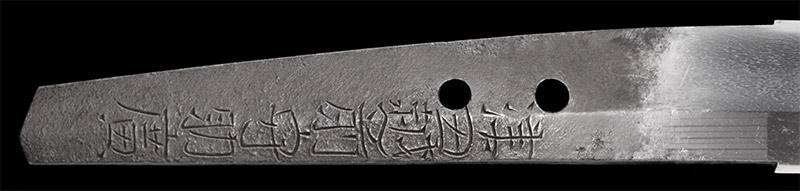
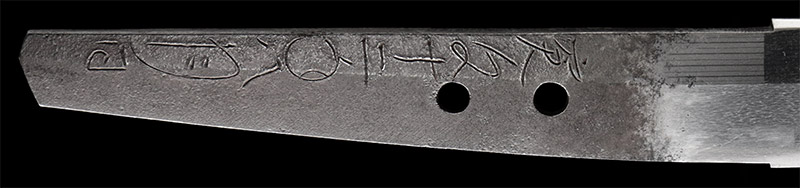
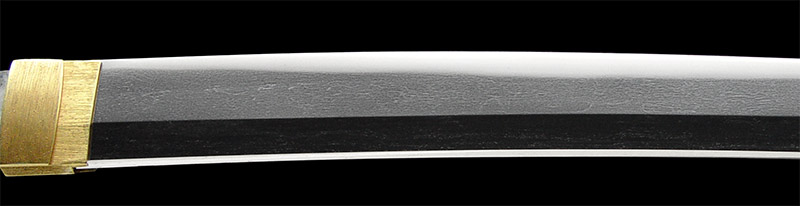
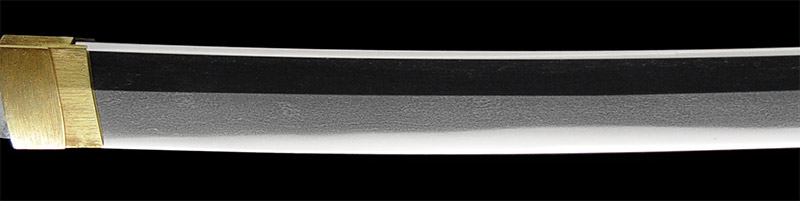
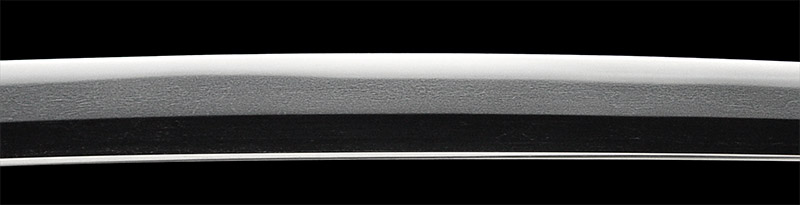
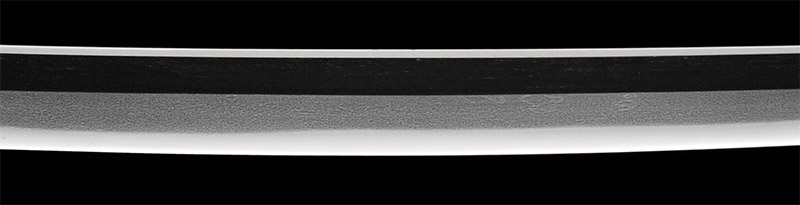
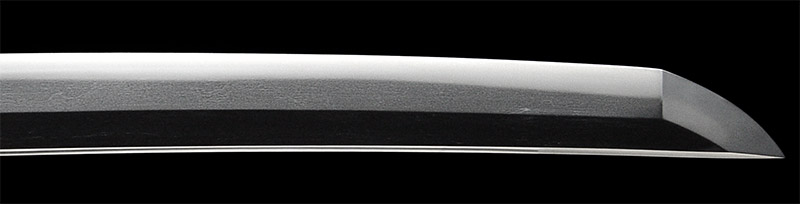
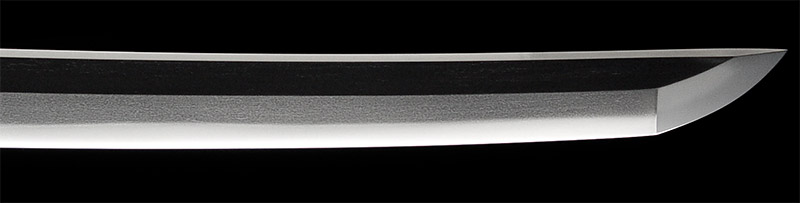
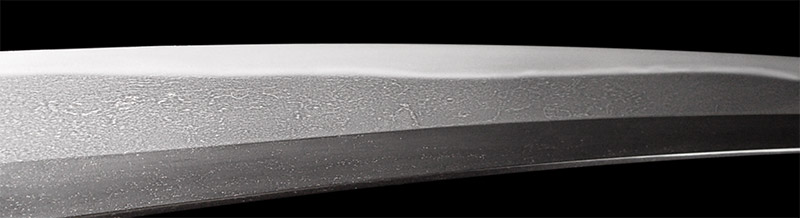
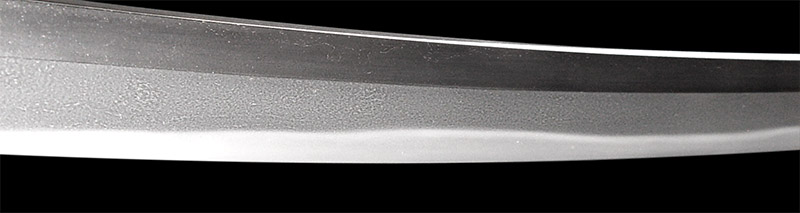
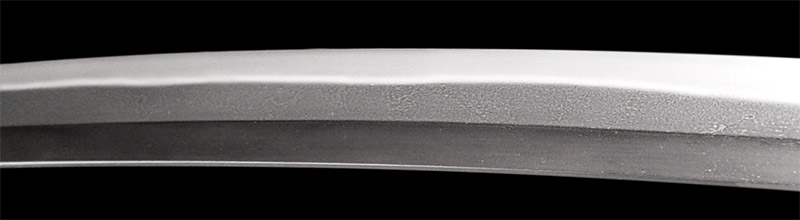
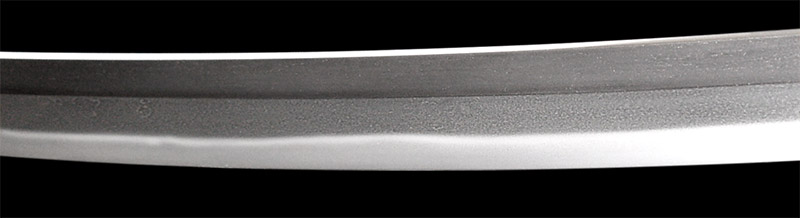
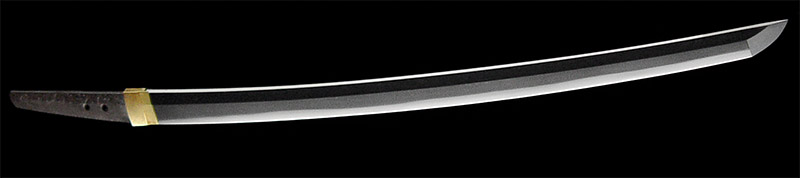
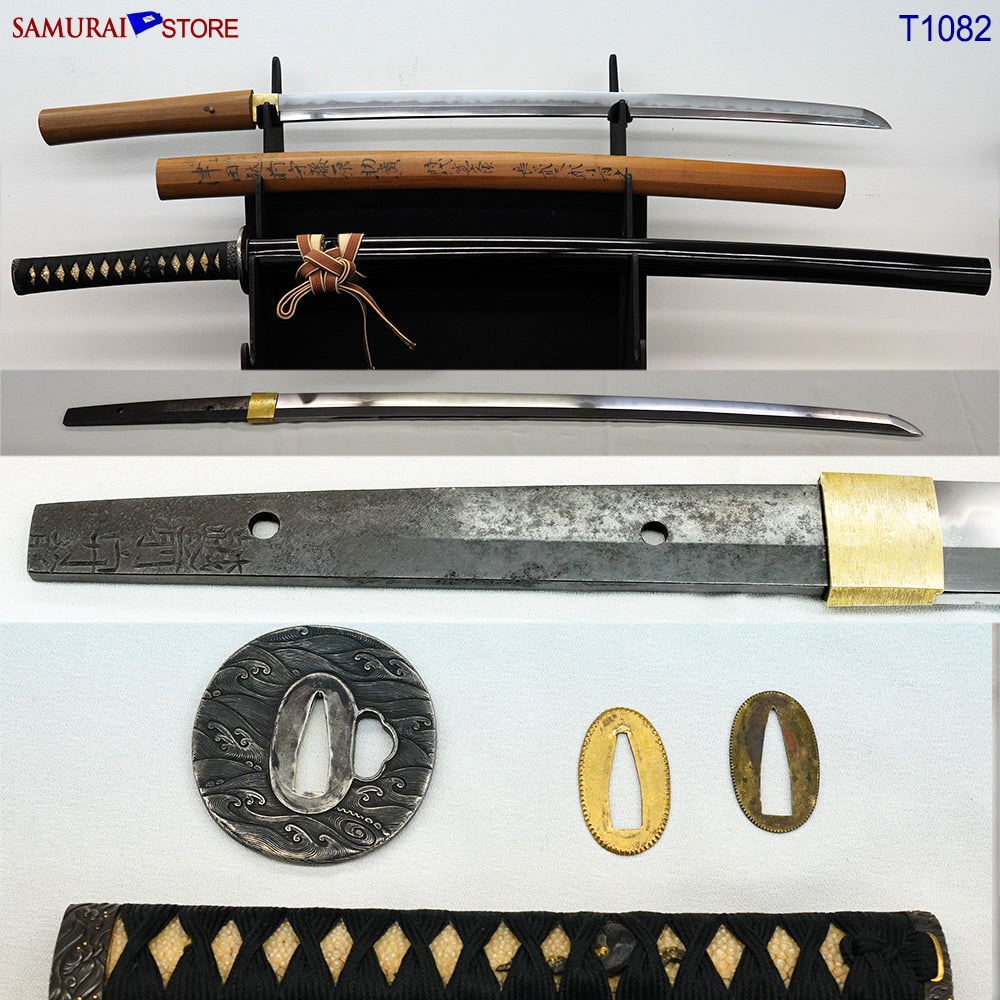
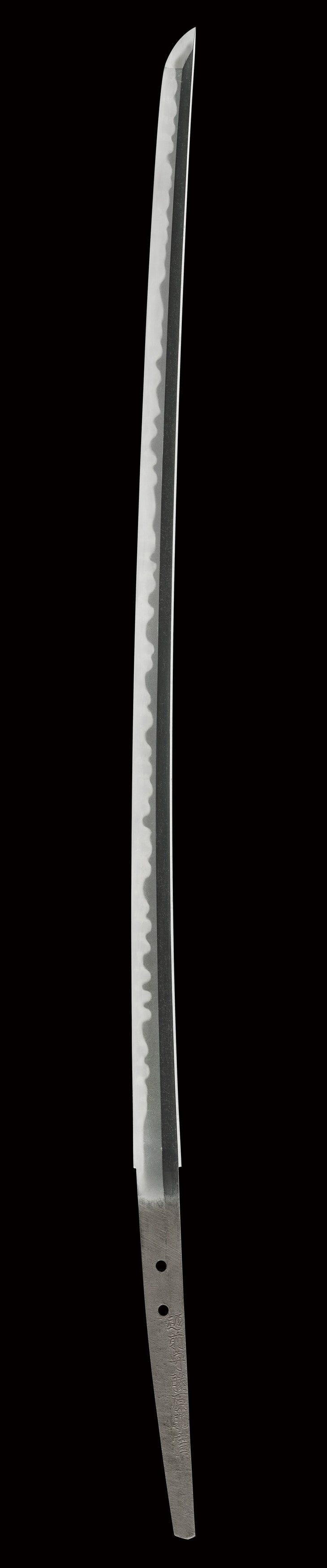
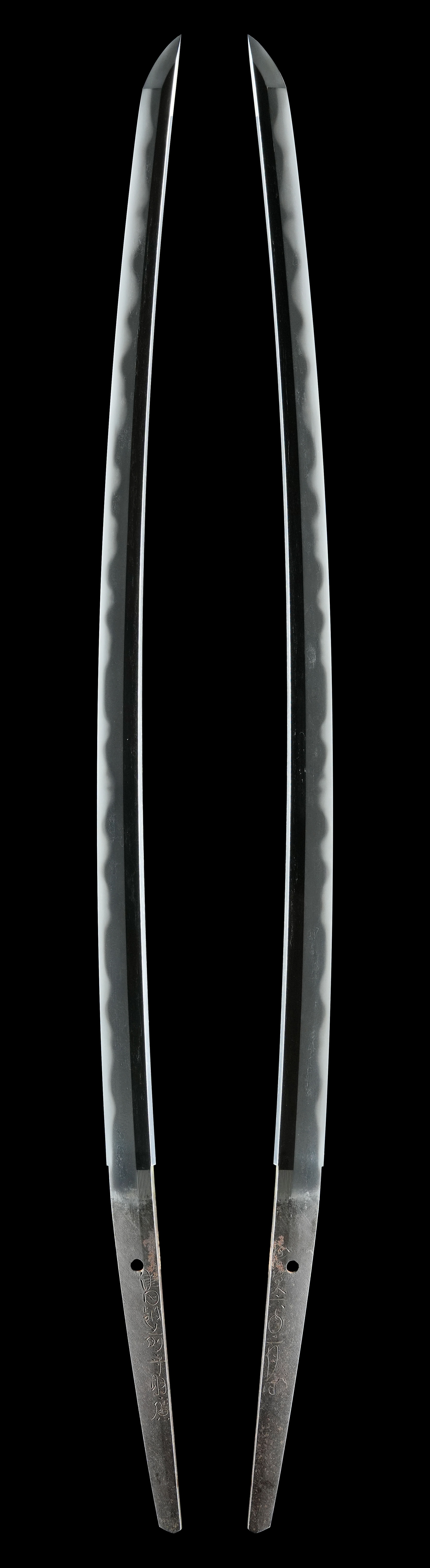
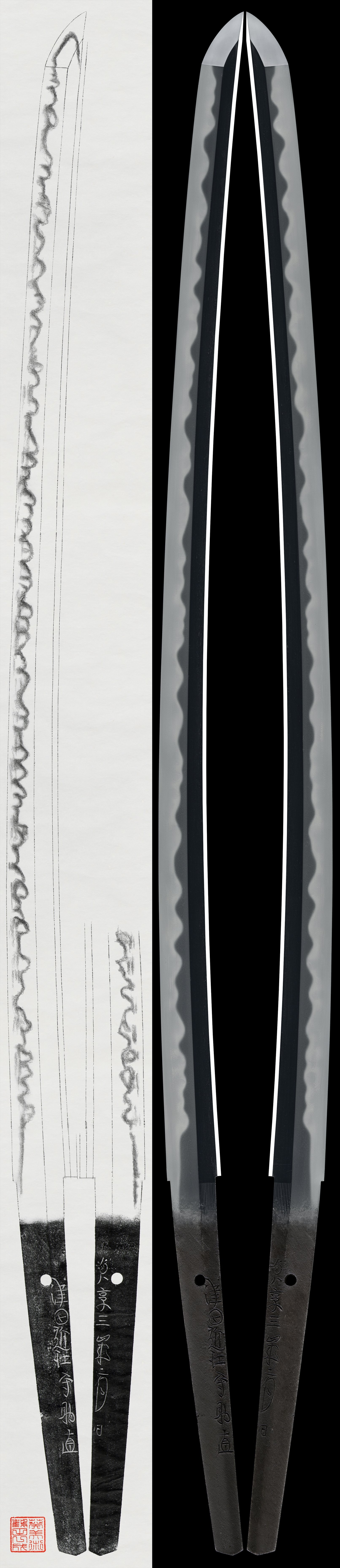
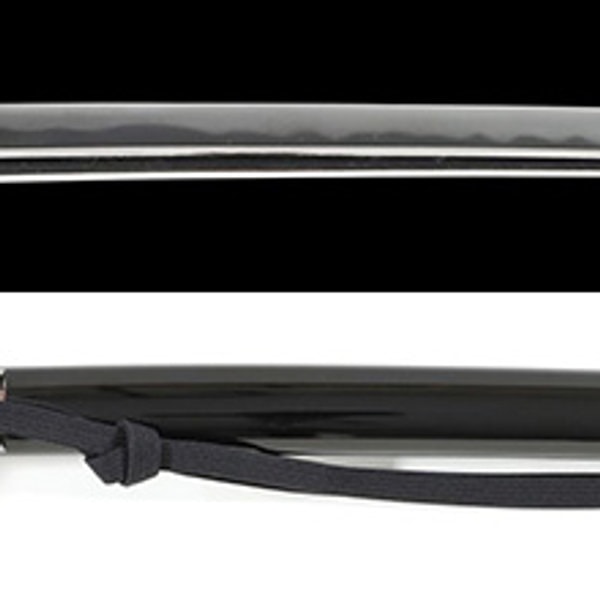
The Sukehiro line worked in Osaka through the middle decades of the Edo period, its center of gravity in the Kanbun and Enpō years when the city's swordsmiths set the fashion for the age. The first generation, traditionally said to have begun as a kazūchi (mass-production) smith of Tsuda in Kokuga-shō, Harima, went to Osaka and studied under the first-generation Kawachi no Kami Kunisuke; from the added inscription sōhorō on his signed blades he is commonly called Soboro Sukehiro. Because Kunisuke came from the Ishidō lineage, the first generation's chōji-midare, with a tendency toward a tight nioiguchi and ko-nie mixing ashi and yō, reads at a glance as Ishidō work, though the brightness of his nioiguchi already surpasses that of other Ishidō smiths. The second generation, Tsuda Echizen no Kami Sukehiro, was born in Kan'ei 14 (1637) at Uchide in Settsu, common name Jinnojō; he became his master's adopted son, received the title Echizen no Kami in Meireki 3 (1657), and in Kanbun 7 (1667) entered the service of Aoyama Inaba no Kami Munetoshi, castellan of Osaka Castle. His chief pupil, Tsuda Ōmi no Kami Sukenao of Takagi in Ōmi, later married into the family and carried the manner forward. Across the line the jigane is a tightly forged Osaka ko-itame-hada in which fine, dust-like ji-nie adheres thickly and minute chikei enter, the steel reading clear and bright. The second generation's career describes a single arc through the setsumei: early chōji-midare in the Ishidō manner, then gunome-midare, and finally the tōran-midare he originated, the billowing-wave temper for which the name is known. His mature blades open with a straight yakidashi at the base and rise into a large gunome and chōji in the tōran sweep, ashi entering, the nioi deep, ko-nie adhering thickly, kinsuji and sunagashi running, the nioiguchi bright and clear.
His suguha drew equal regard, set beside that of Inoue Shinkai as the twin peak of Osaka shintō: here the nie particles fall finer and more evenly than Shinkai's, the temper carries a shallow five-fold notare and broadens from below the yokote, and the habuchi shows minute activity likened to the fine tearing of hōsho paper. Muneyaki and bead-like tobiyaki appear in places. The progress of the signature, from the angular kaku-Tsuda gyōsho to the rounded maru-Tsuda sōsho adopted from Enpō 2 (1674), itself marks the deepening conviction of his tōran. Sukenao inherited the tōran-midare faithfully and also worked in gunome-midare and notare-suguha, his best pieces approaching the master so closely that they call him to mind at a glance. A collector reads a Sukehiro blade by these points: the cleanly packed Osaka ko-itame without the least looseness, the suguha yakidashi at the base, the deep and luminous nioiguchi, and, above all, the regular cadence of the tōran wave with its evenly seated nie. The line carries documentary as well as aesthetic weight. The great Enpō 6 tachi called Murasame, forged at Aoyama Munetoshi's command and kept by the Aoyama house for rain-prayer rites, bears Buddhist bonji and horimono attributed to the carver Nagasaka Yū, Hōken; a surviving gassaku with Inoue Shinkai, praised in Kamata Gyomyō's Shintō Bengi, stands among the essential documents of Osaka shintō. Ranked in his own day beside Nagasone Kotetsu of Edo and Shinkai of Osaka, the second-generation Sukehiro gave the shintō period one of its enduring signature styles, and the line of his pupils kept the bright Osaka hand and the tōran wave in circulation after his death in Tenna 2 (1682). Learn more →