














The twentieth century nearly killed the craft twice: wartime distortion, then the occupation ban. The NBTHK’s founding in 1948 and licensed forging from 1953 rebuilt the sword as an art, crowned by Living National Treasures and the mukansa rank.
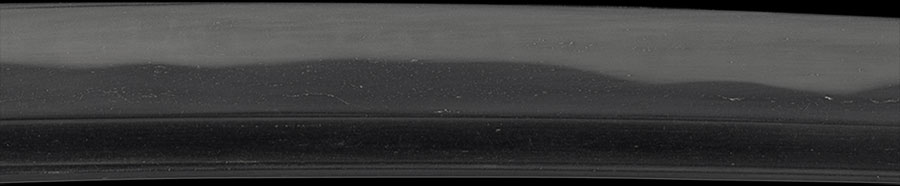
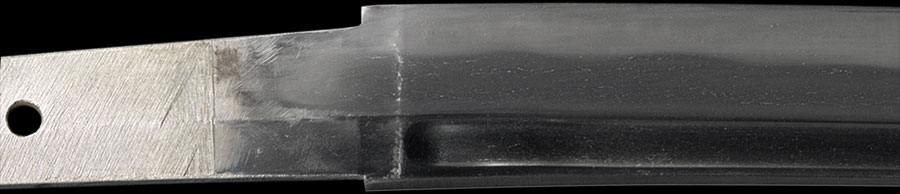
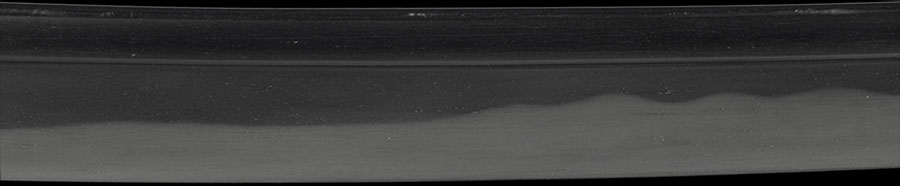
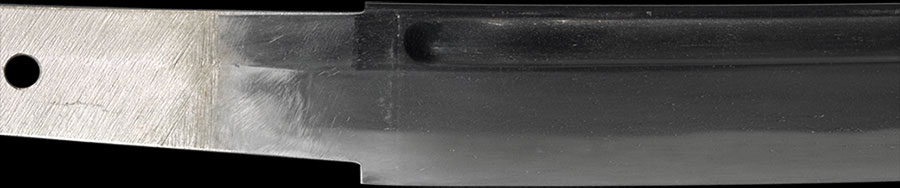
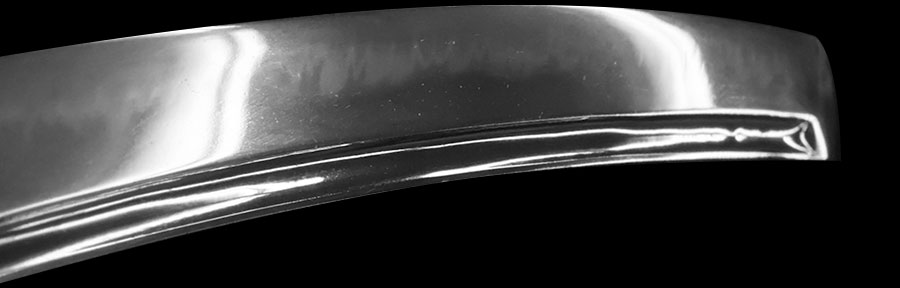
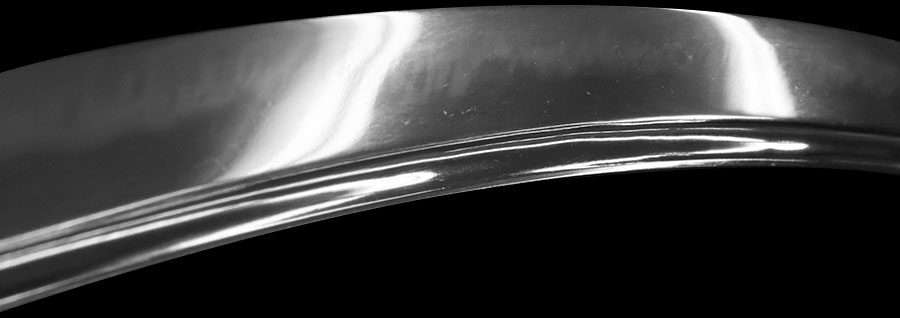
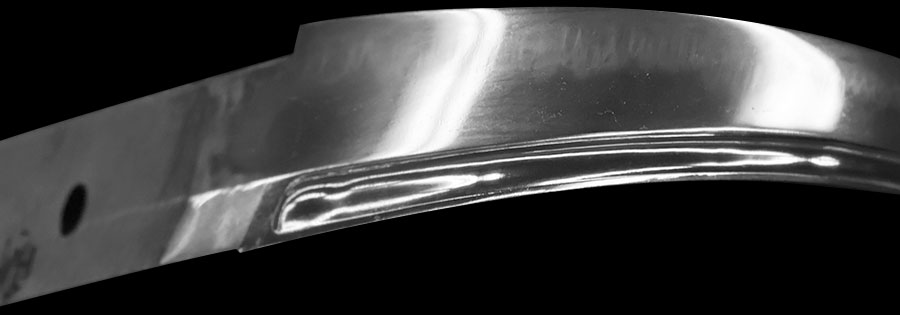
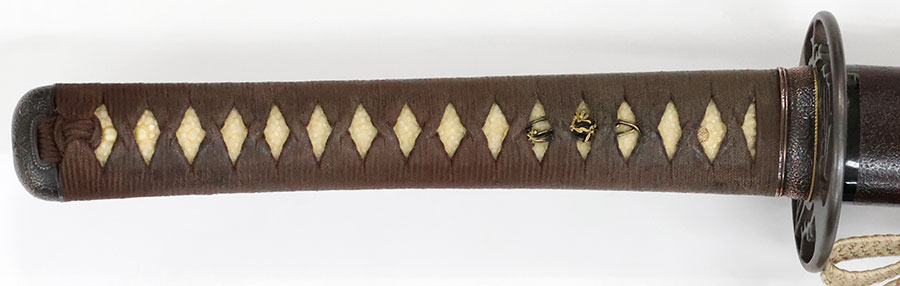
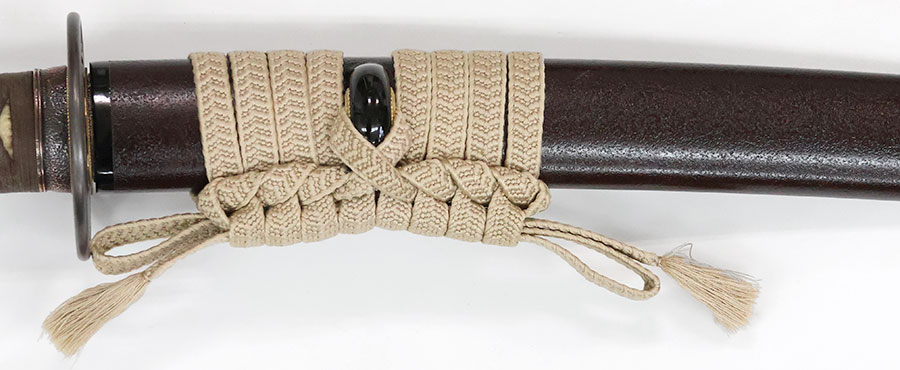
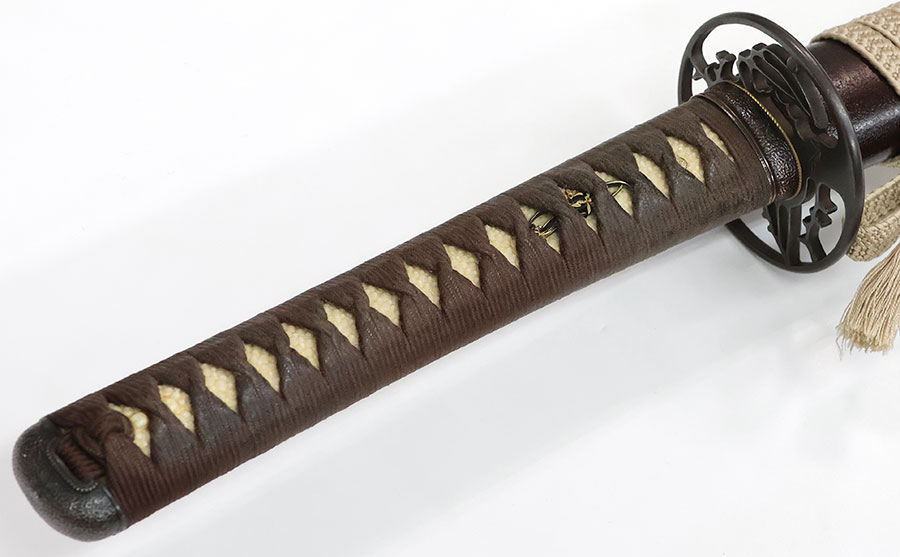
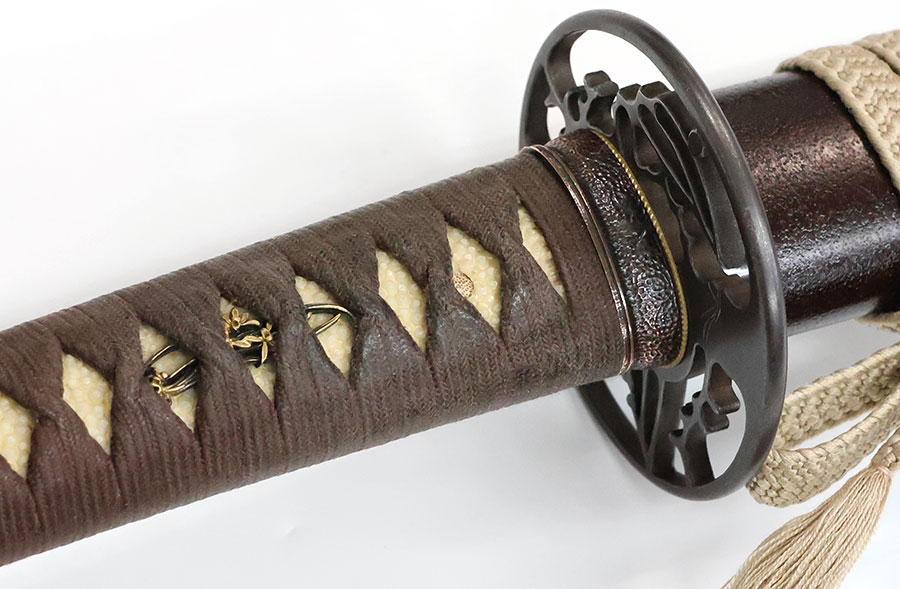
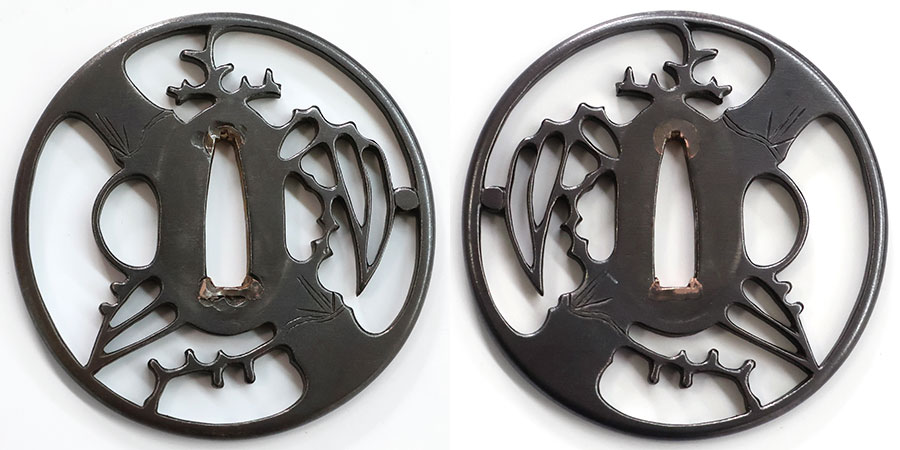
(Shimane Prefecture Jyuyo Mukei Bunkazai Designation) It has arrived, it has arrived; the smith of this sword, Unshu Ju Sadateru, is a very famous master smith who frequently appears on television in the living room, lives in Okuizumo—the local area world-famous for "Tatara Seitetsu" Japanese steelmaking which produces the Tamahagane necessary for making nihonto and was broadcast on NHK television—and is designated as a Shimane Prefecture Jyuyo Mukei Bunkazai. He is the eldest son of the three brothers Kobayashi Sadateru, Sadanori, and Sadanaga. He is a contemporary master craftsman who has won the Tokusho Mainichi Shimbunsha Sho and numerous other awards at the Shinsaku Meito Ten. This sword exhibits a sugata from the middle Kamakura period with a wide moto-mihaba and a wide saki-mihaba; the jigane is a well-tightened itame hada, and the horimono is a skillfully carved bo-hi kakinagashi that produces a good sound when swung. The hamon is a nioi-deki gunome choji with konie and many gunome ashi, wonderfully and successfully reproducing a masterpiece of Fukuoka Ichimonji of Bizen, the pinnacle of Kamakura period swords. Currently, swords by the smith Sadateru are extremely popular and difficult to obtain. Because we received this from an old sukyosha who had it specially commissioned but said, "I have grown old, so please pass it on to a successor at a low price," we are offering it at a special bargain price. Please by all means enjoy this masterpiece by the smith Unshu Ju Sadateru, who is designated as a Shimane Prefecture Jyuyo Mukei Bunkazai.
Sadateru貞照
Offered by Nipponto


As written by the shop
Machine translation from the shop's Japanese · may contain errors ·
Izumo · around 1926-1989
1 piece on the market now
Shōwa to the present: destruction and revival
The twentieth century nearly killed the craft twice: wartime distortion, then the occupation ban. The NBTHK’s founding in 1948 and licensed forging from 1953 rebuilt the sword as an art, crowned by Living National Treasures and the mukansa rank.
We could not find an authenticity certificate on the seller’s listing. Japanese swords and fittings are normally papered by the NBTHK (or the NTHK). Without one, the attribution is the seller’s own assessment and has not been independently verified — treat it with caution and ask the dealer about certification before buying.
For returns due to customer circumstances, the cost is the customer's responsibility. For returns due to our mis-shipment or a defective item, we bear the cost.
¥650,000