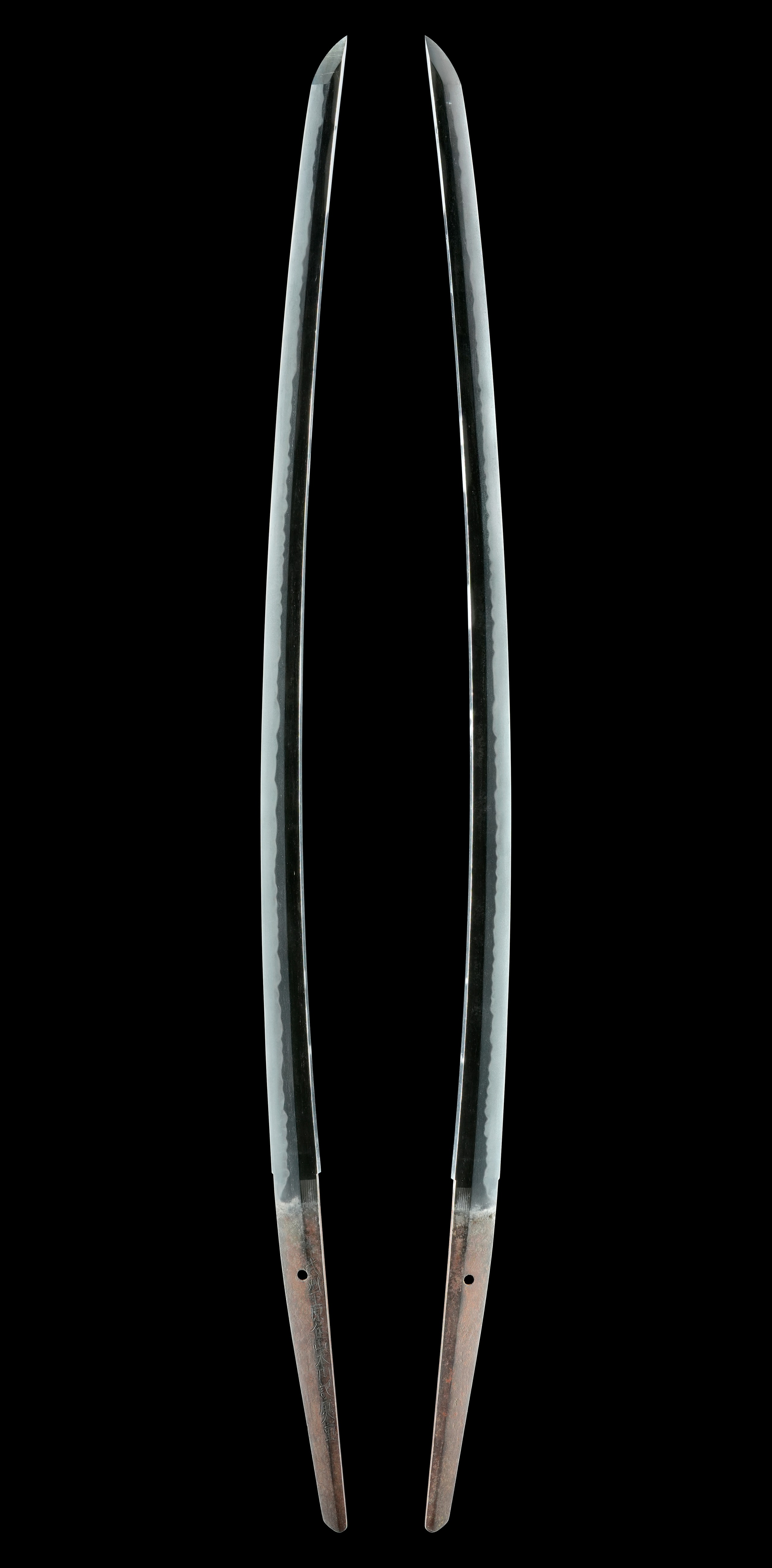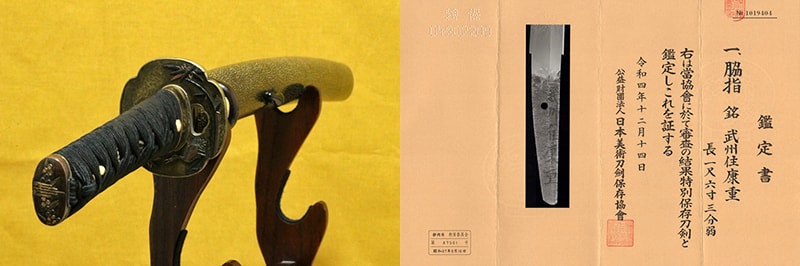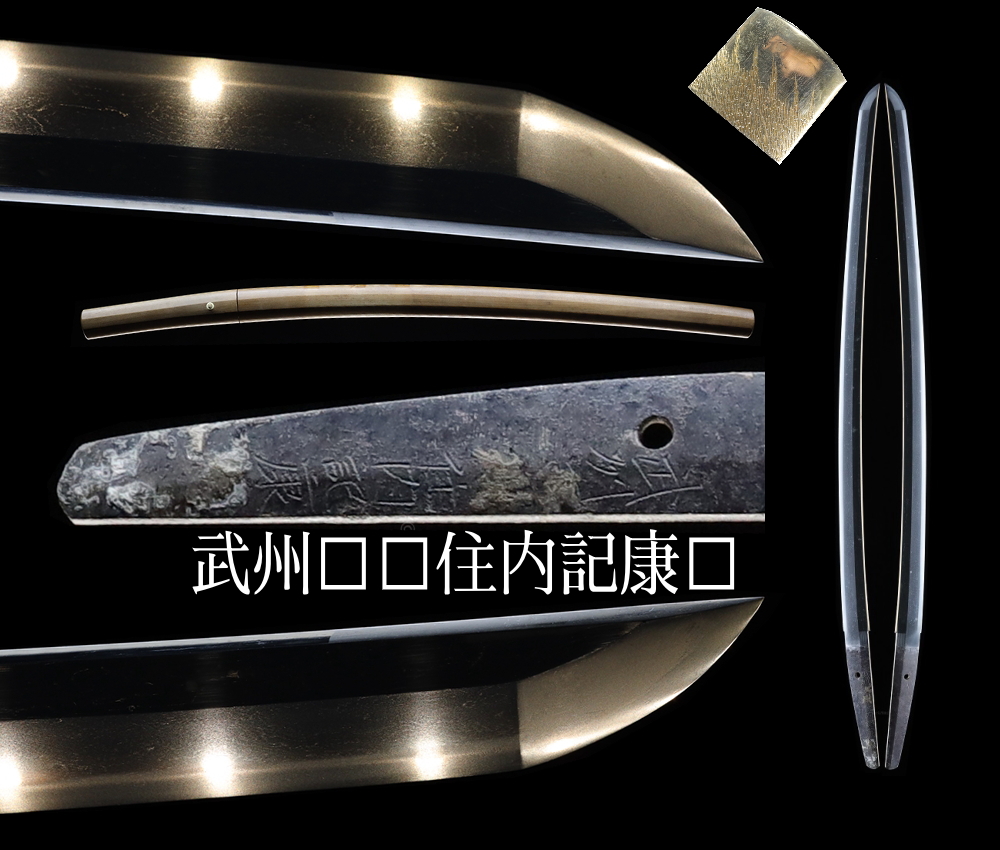



This katana is attributed to Yasushige, from Musashi province. It features a nagasa of 60.1cm and a sori of 1.3cm, housed in a shirasaya. The blade exhibits a straight hamon (suguha) with fine nie and uniform yakiba, and a mokume hada (wood grain pattern) jigane that is well-forged. Although there is some light rust, the blade's features are clear enough for appraisal, with the dealer confident it will be certified as Yasushige.
mumei · Edo · nagasa 60.1cm · sori 1.3cm


Musashi · around 1624-1644
Fujishiro Jo saku · Tōken Taikan top 77%
1 piece on the market now
We could not find an authenticity certificate on the seller’s listing. Japanese swords and fittings are normally papered by the NBTHK (or the NTHK). Without one, the attribution is the seller’s own assessment and has not been independently verified — treat it with caution and ask the dealer about certification before buying.
This katana is attributed to Yasushige, from Musashi province. It features a nagasa of 60.1cm and a sori of 1.3cm, housed in a shirasaya. The blade exhibits a straight hamon (suguha) with fine nie and uniform yakiba, and a mokume hada (wood grain pattern) jigane that is well-forged. Although there is some light rust, the blade's features are clear enough for appraisal, with the dealer confident it will be certified as Yasushige.
mumei · Edo · nagasa 60.1cm · sori 1.3cm


Musashi · around 1624-1644
Fujishiro Jo saku · Tōken Taikan top 77%
1 piece on the market now
We could not find an authenticity certificate on the seller’s listing. Japanese swords and fittings are normally papered by the NBTHK (or the NTHK). Without one, the attribution is the seller’s own assessment and has not been independently verified — treat it with caution and ask the dealer about certification before buying.