The twentieth century nearly killed the craft twice: wartime distortion, then the occupation ban. The NBTHK’s founding in 1948 and licensed forging from 1953 rebuilt the sword as an art, crowned by Living National Treasures and the mukansa rank.
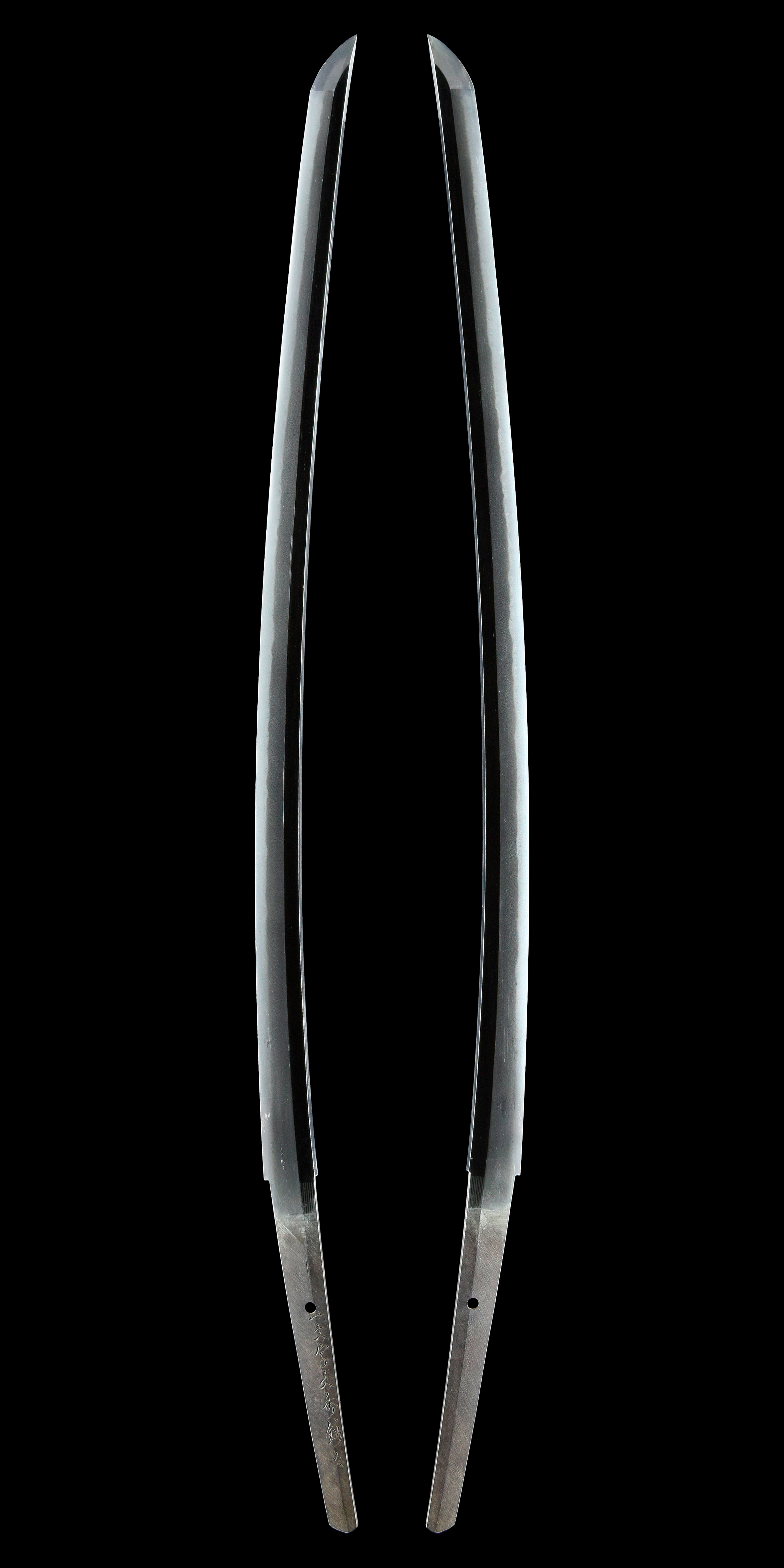
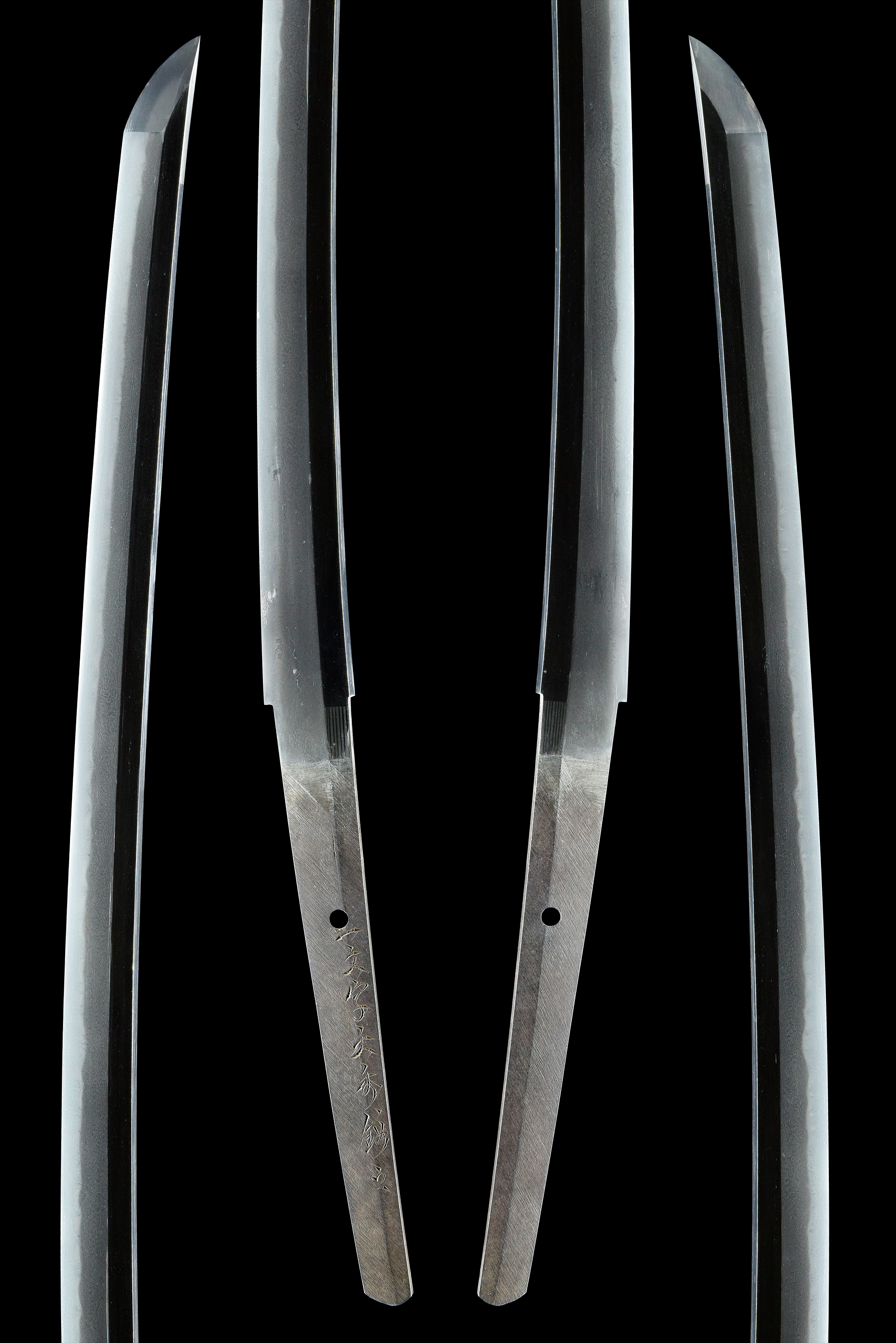
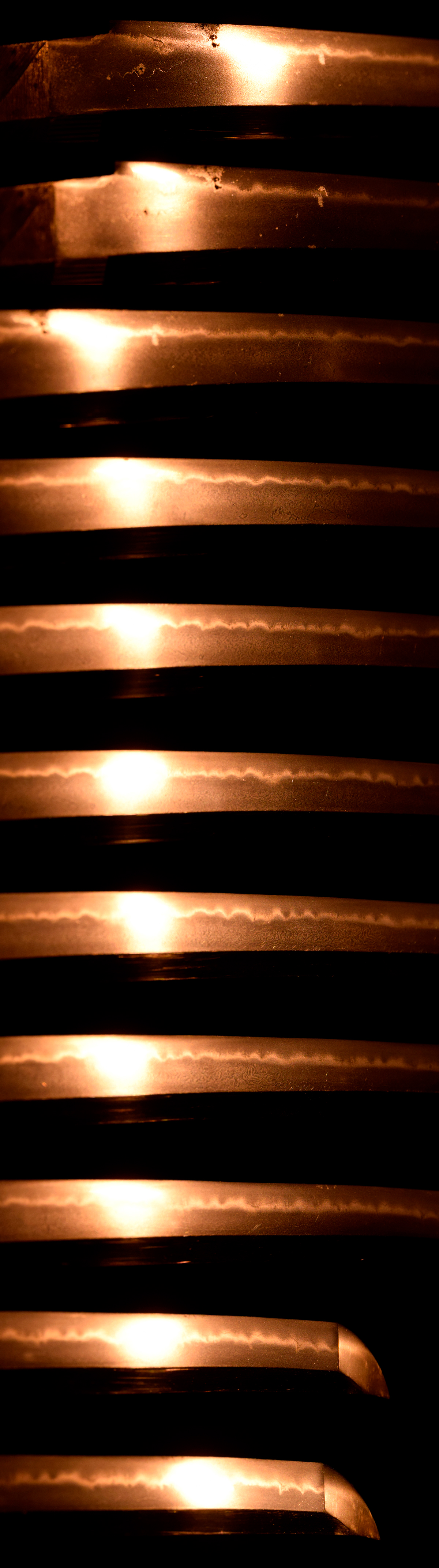
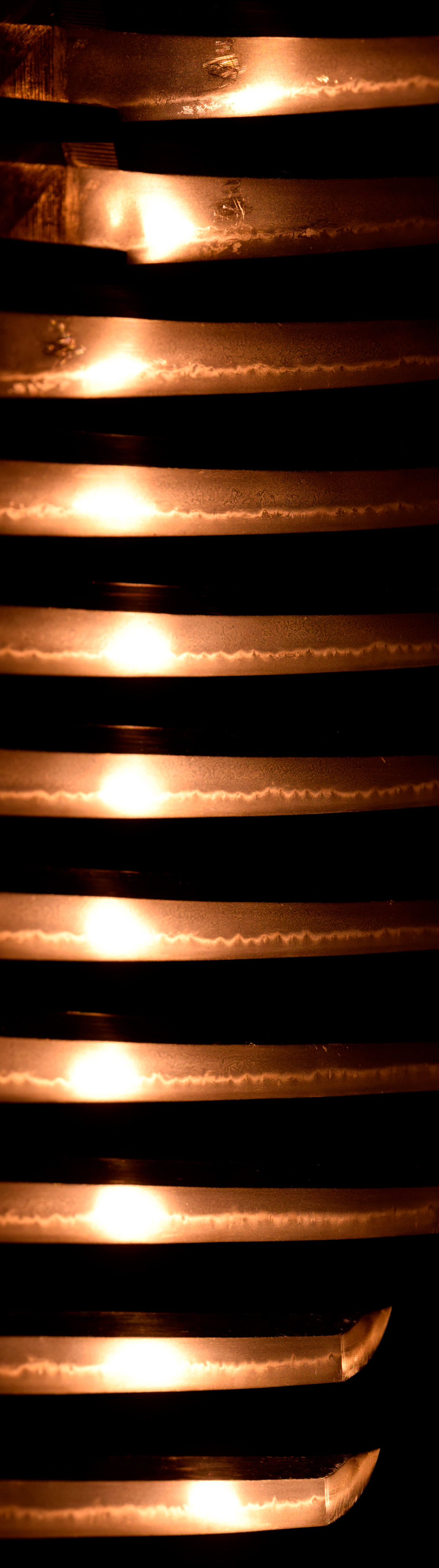
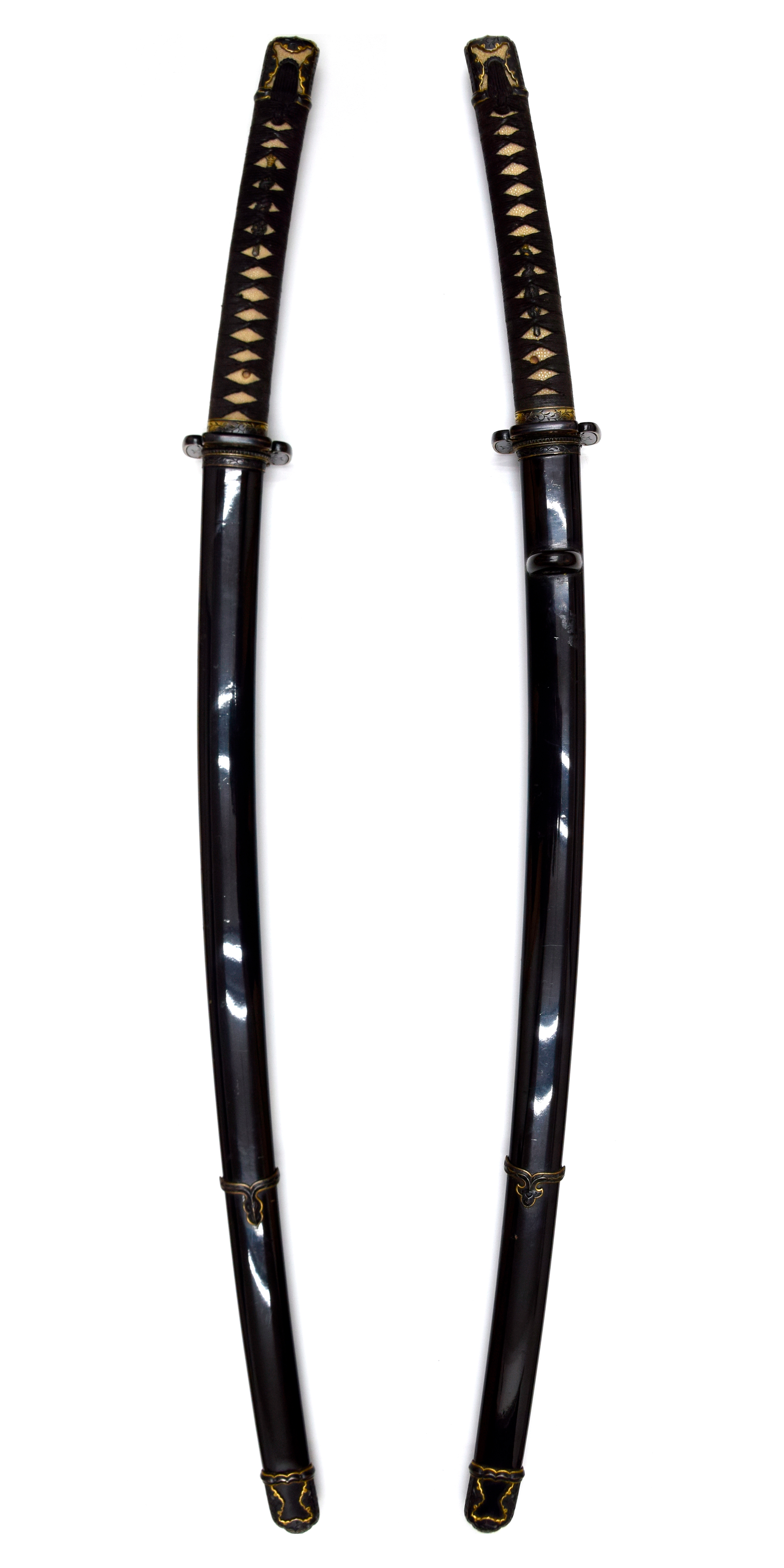
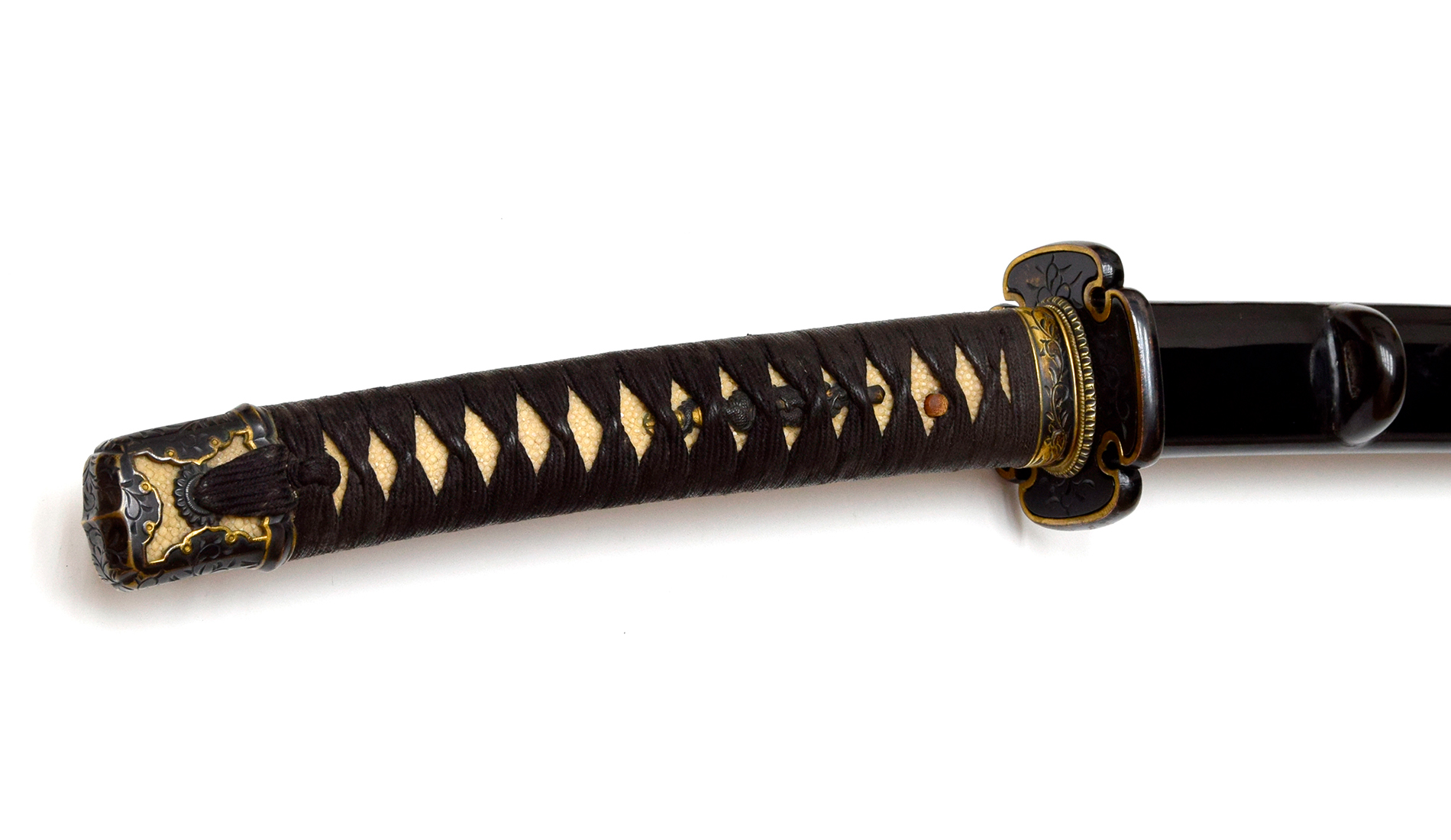
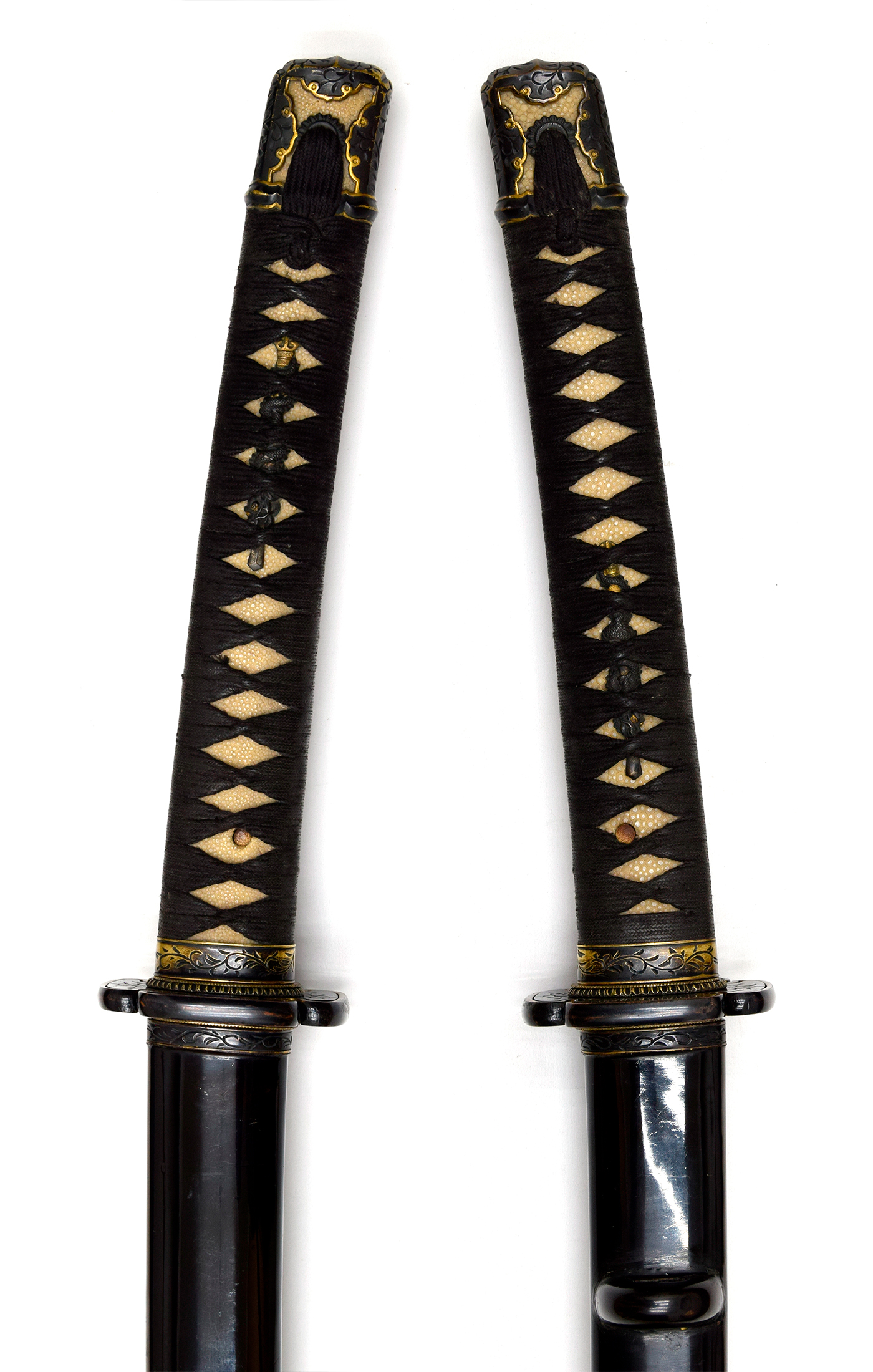
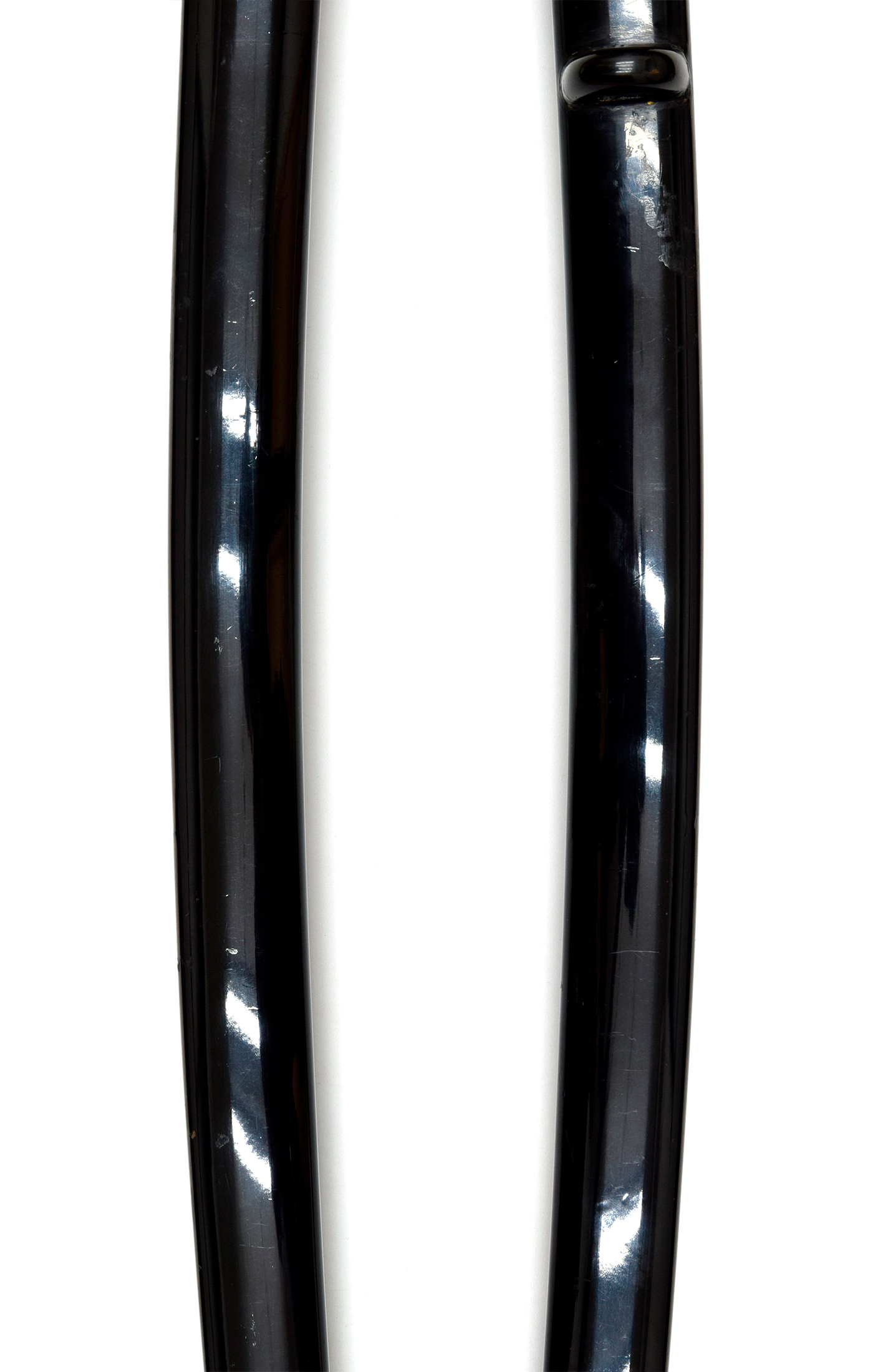
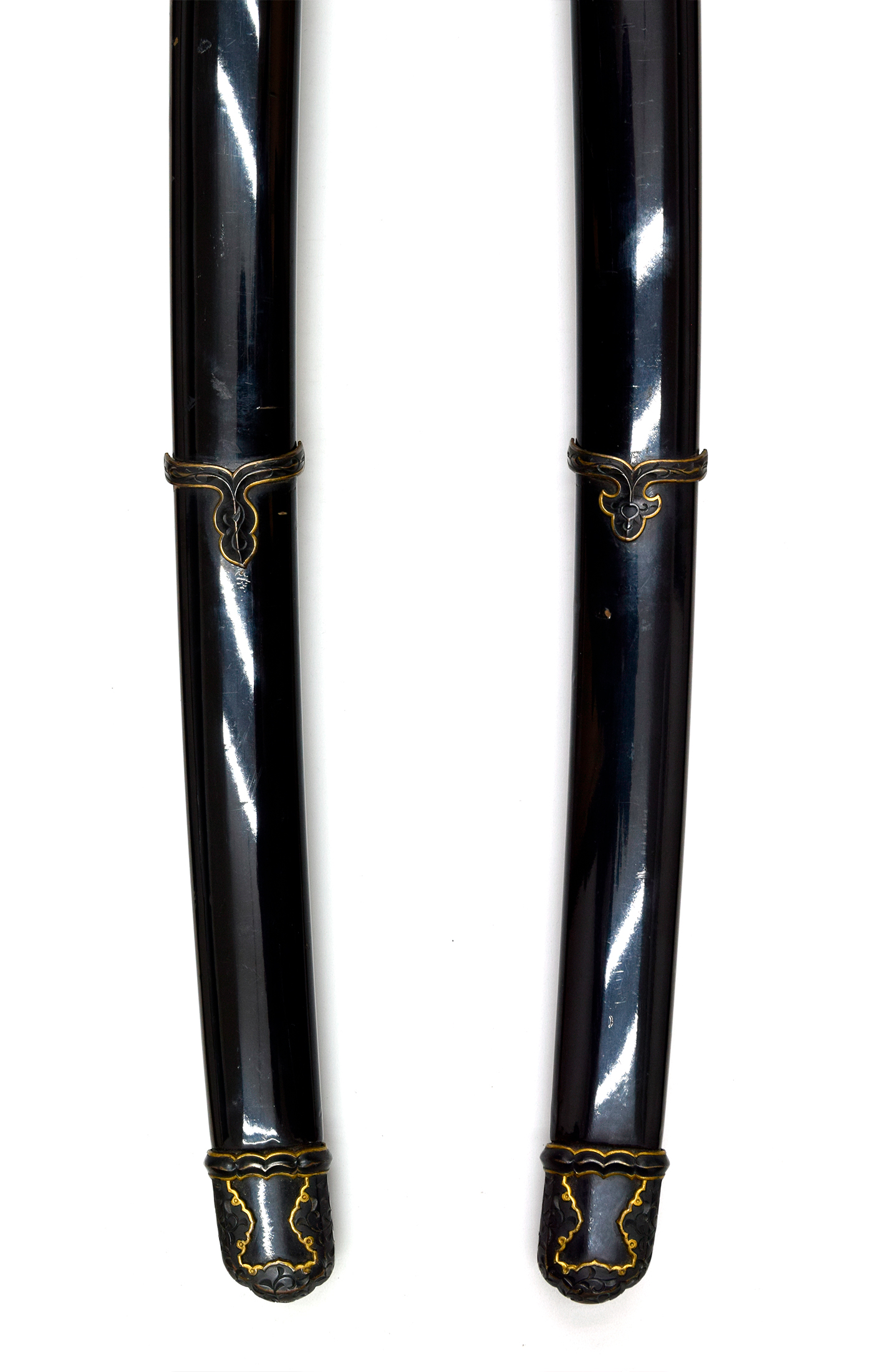
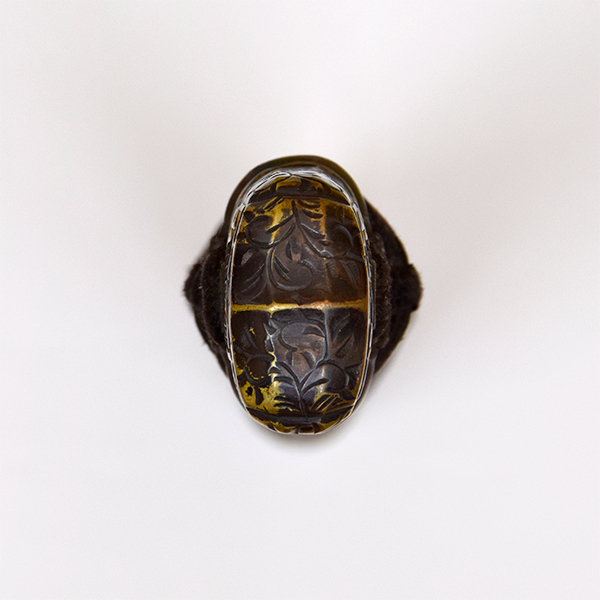
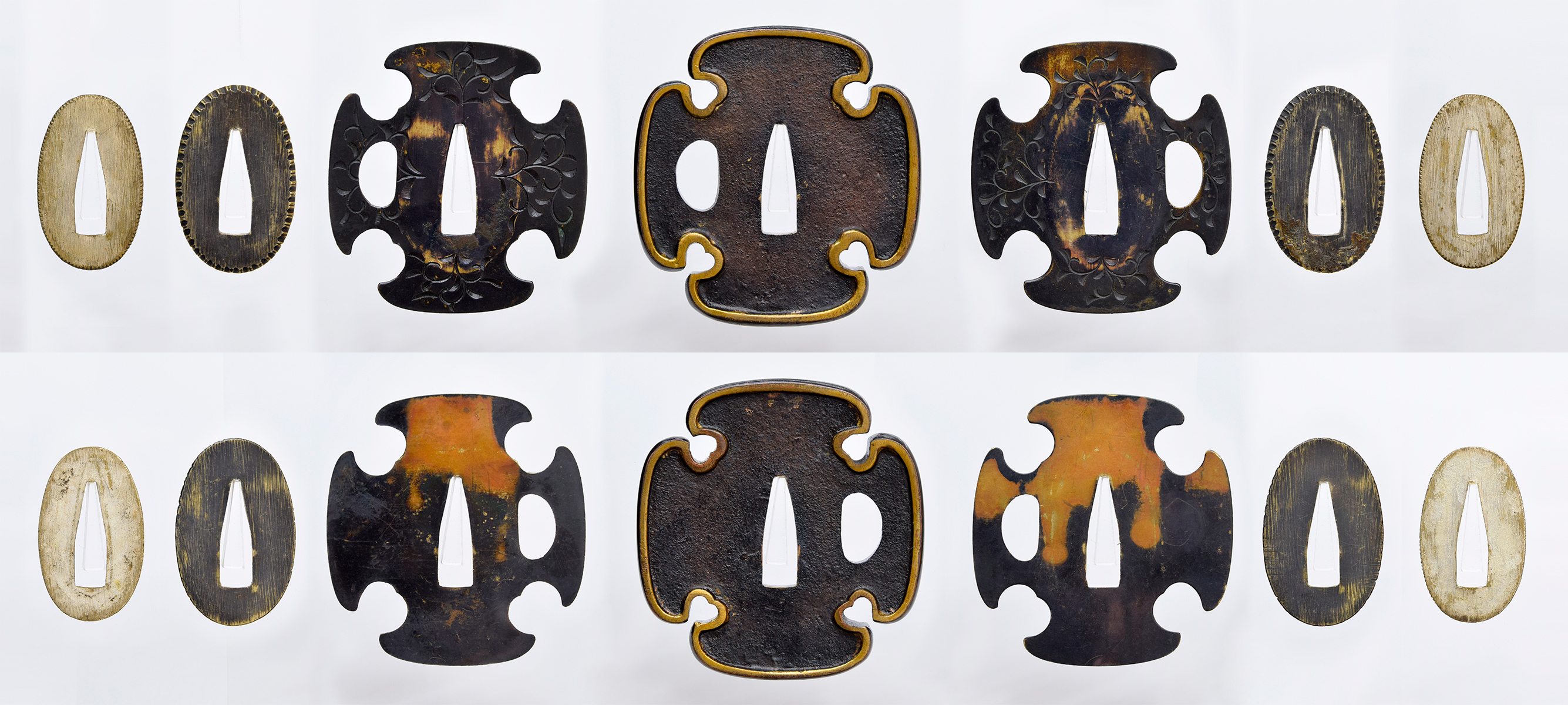
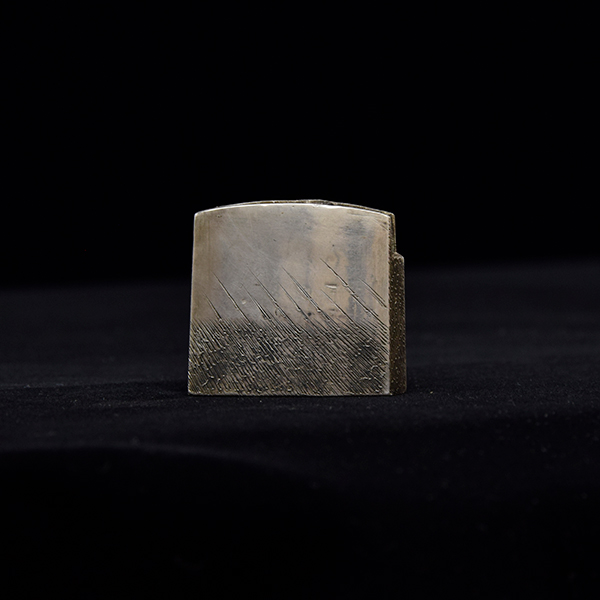
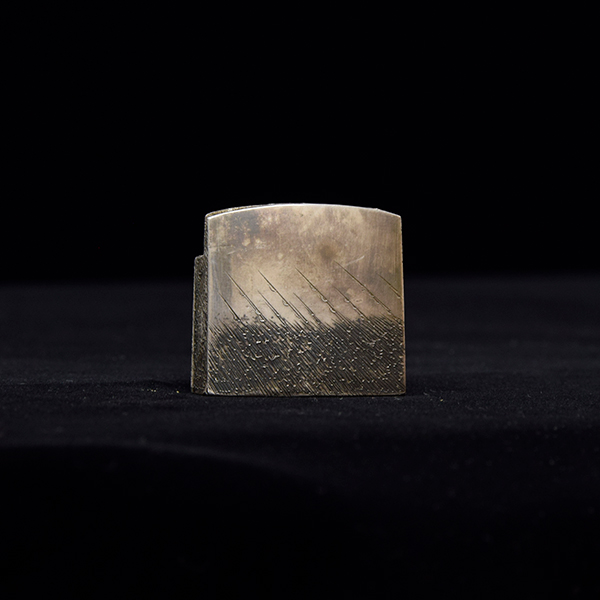
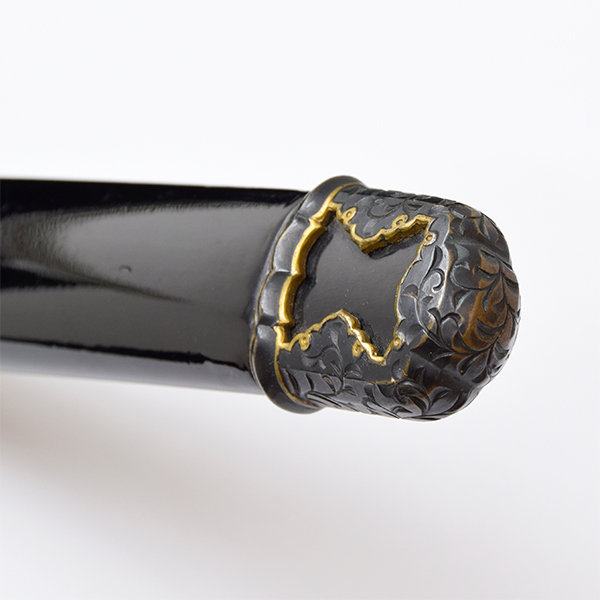
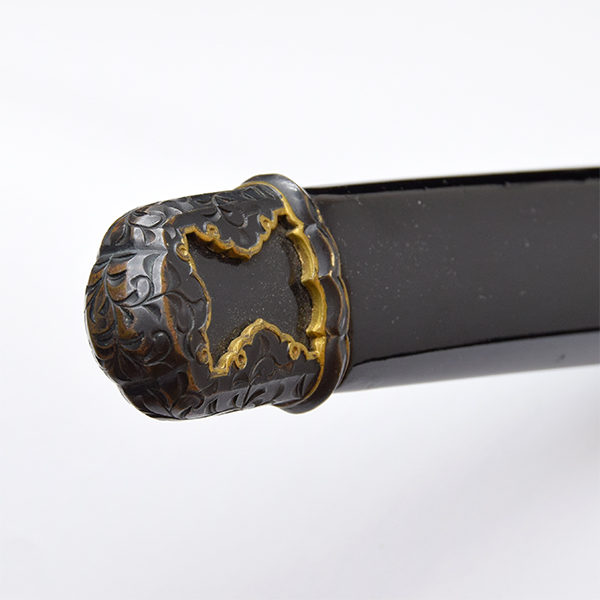
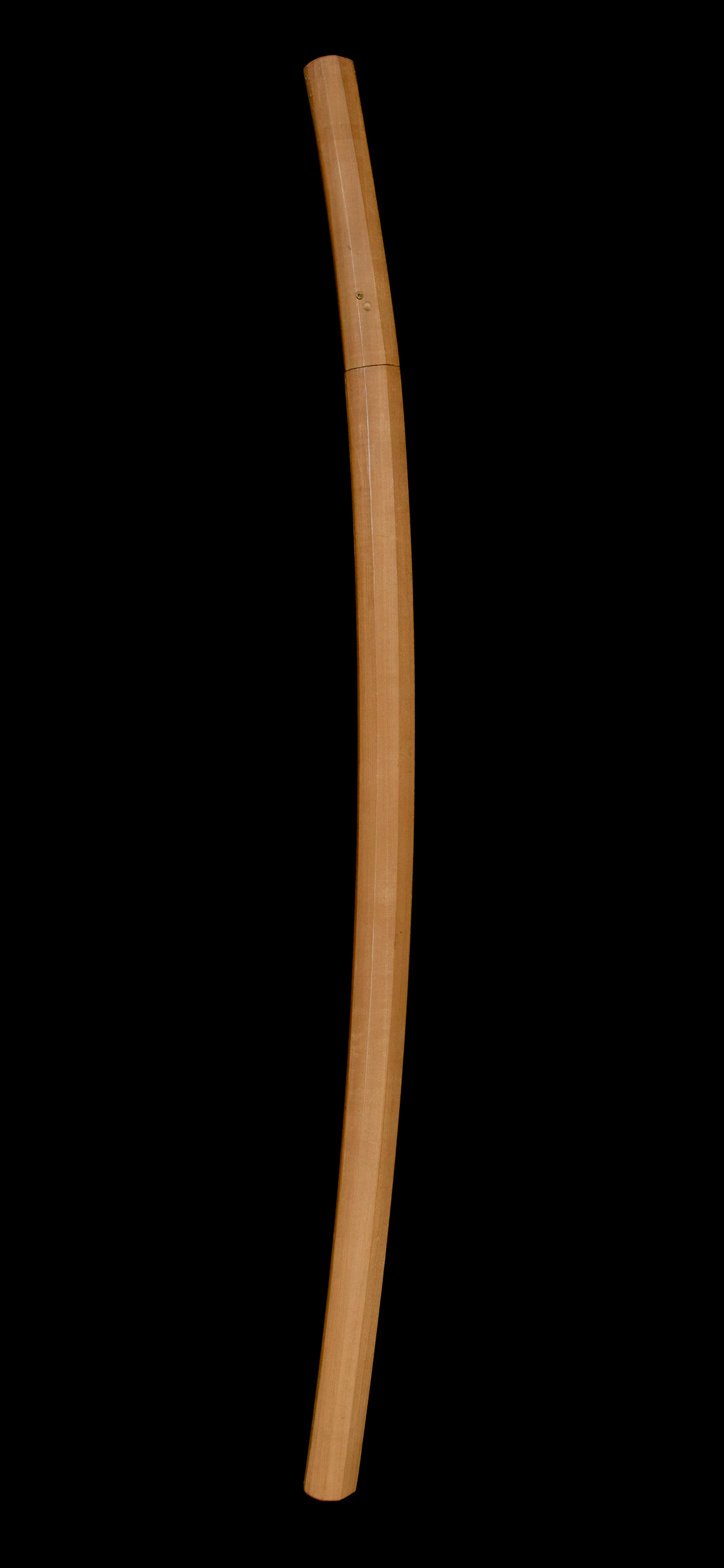
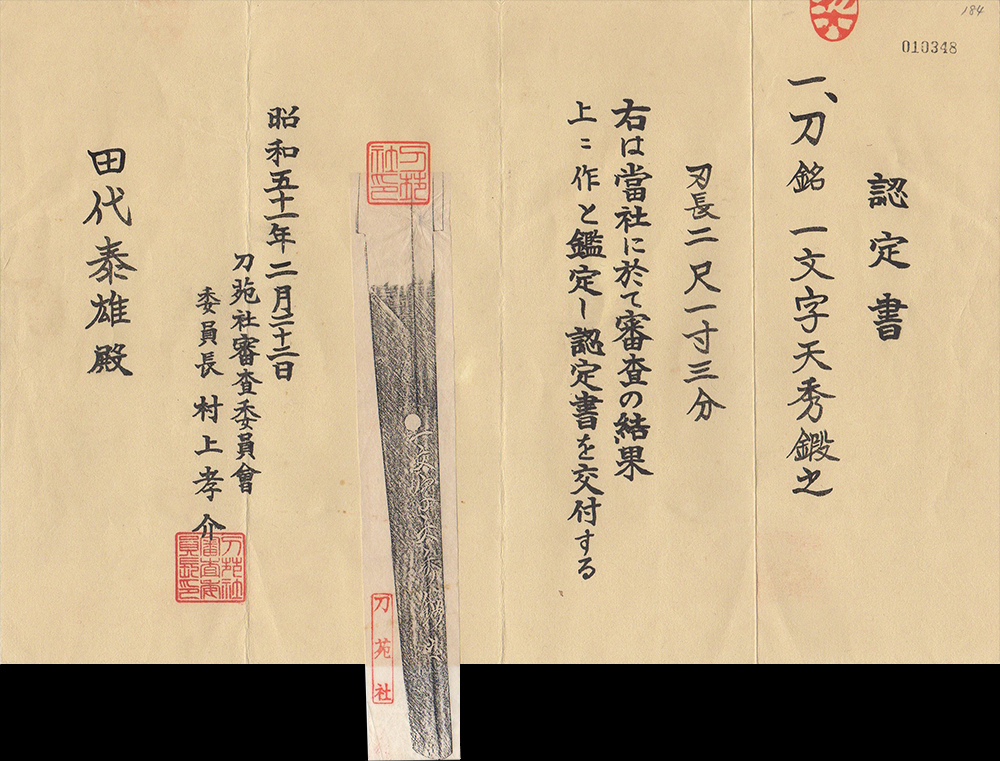
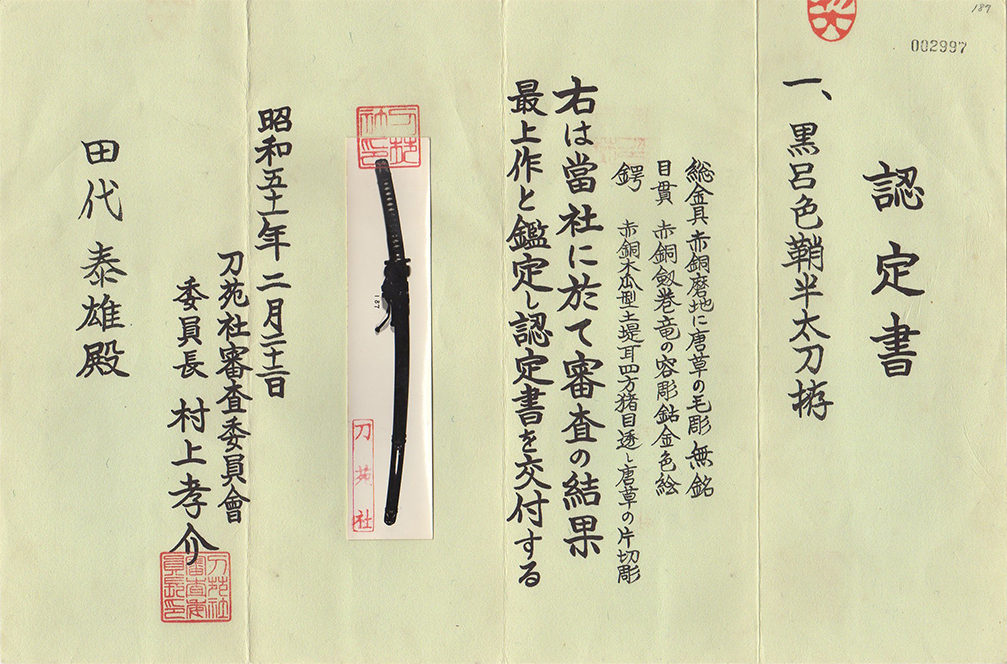
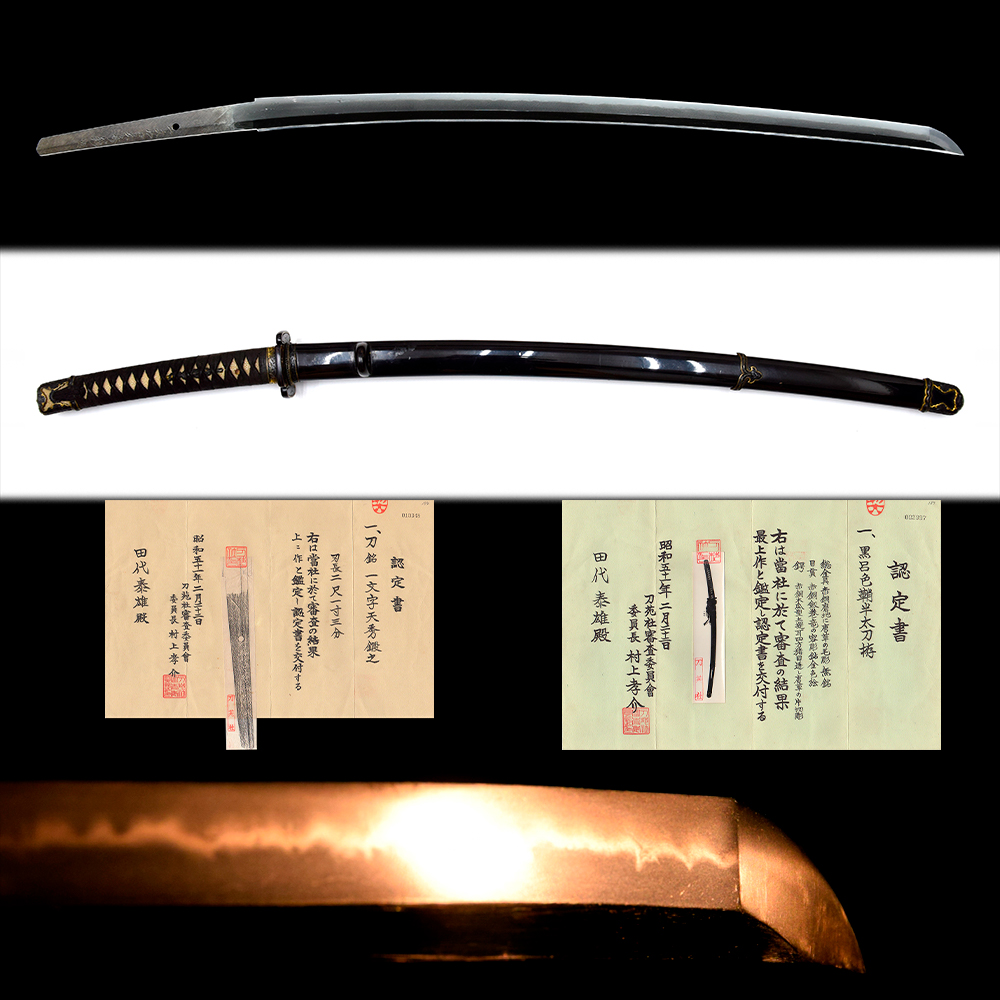
Fukumoto Amahide, whose real name was Fukumoto Hideyoshi, was a tosho who belonged to the Seki Nihonto Tanrenjo Co., Ltd. and used the name Ichimonji Amahide. He was active during the early Showa period and forged numerous military toshin; he has an established reputation for their toughness and sharpness, and in the Seidai Tosho Retsu, he is ranked as Joko, Taigomonosaki Sekiwake-kaku. This katana has a difference between the moto and saki that does not noticeably widen, and the kissaki is slightly extended, giving a sense of goso. In the mokume-kitae and densely forged jigane, chikei can be seen in various places, appearing just like chirimen. The hamon is a nioiguchi bright and clear suguha-style gunome-midare mixed with togari-gunome, with ashi entering the yakigashira to divide the peaks of the midare into two or three parts; the hachu and habuchi entwine with the jigane to show complex keshiki, and with kinsuji entering, it is a rikisa showing truly magnificent dekiguchi that will be irresistible to those who like hadamono. As it is a well-made itto, I believe those who have the means should by all means apply a superior kenma to enjoy the further wonders of the jiba. The accompanying koshirae is a han-dachi koshirae with a matching set of kanagu, which has a sense of profound weight and allows one to feel the beauty of shitsujitsu-goken. When drawing the sword from the saya and taking a stance, the balance is extremely good with the center of gravity at the hand, and there is no rattling in the tsuka at all, being in good condition.
Offered by Toushin
3 on the market


As written by the shop
Machine translation from the shop's Japanese · may contain errors ·
Gifu · around 1926-1989
3 pieces on the market now
Shōwa to the present: destruction and revival
The twentieth century nearly killed the craft twice: wartime distortion, then the occupation ban. The NBTHK’s founding in 1948 and licensed forging from 1953 rebuilt the sword as an art, crowned by Living National Treasures and the mukansa rank.
We could not find an authenticity certificate on the seller’s listing. Japanese swords and fittings are normally papered by the NBTHK (or the NTHK). Without one, the attribution is the seller’s own assessment and has not been independently verified — treat it with caution and ask the dealer about certification before buying.
As a rule we do not accept returns, except when we have sent a different item from the one ordered or when there is a significant discrepancy between the description and the item. If you wish to return an item, please contact us within 3 days of its arrival and then send it back.
¥440,000