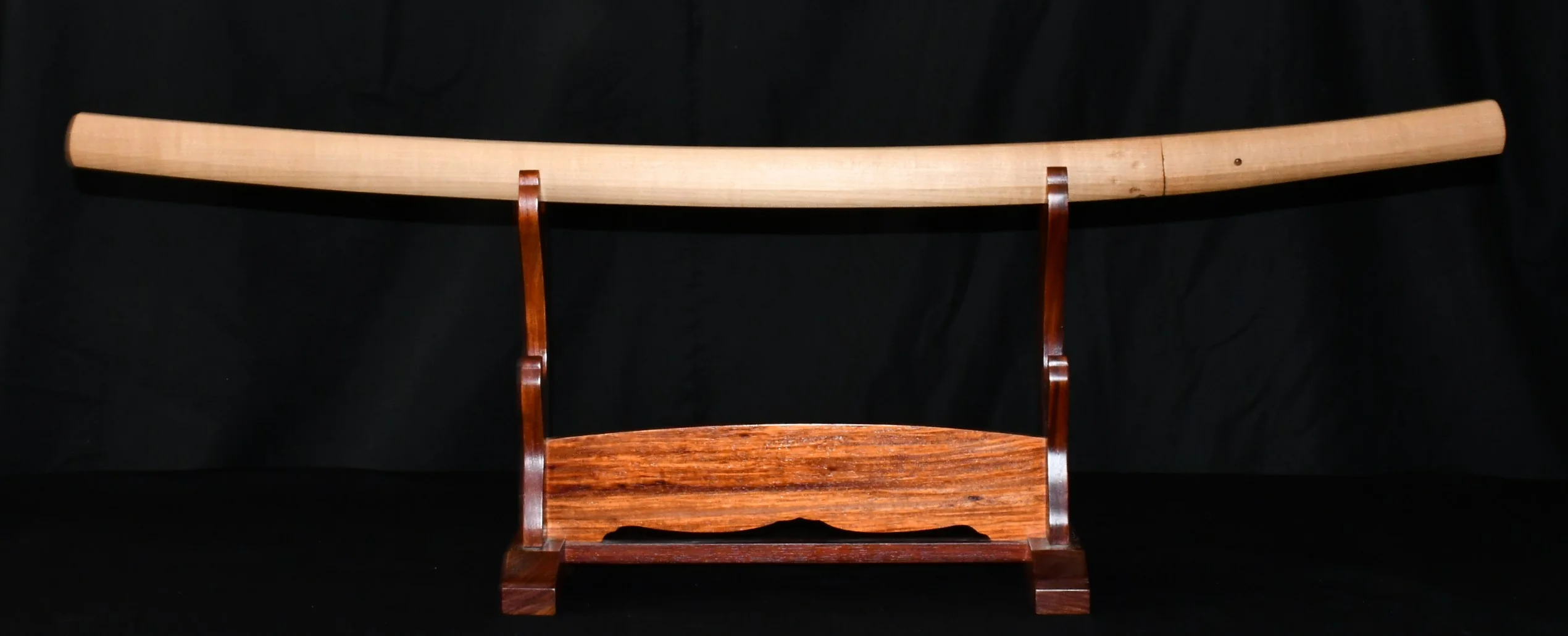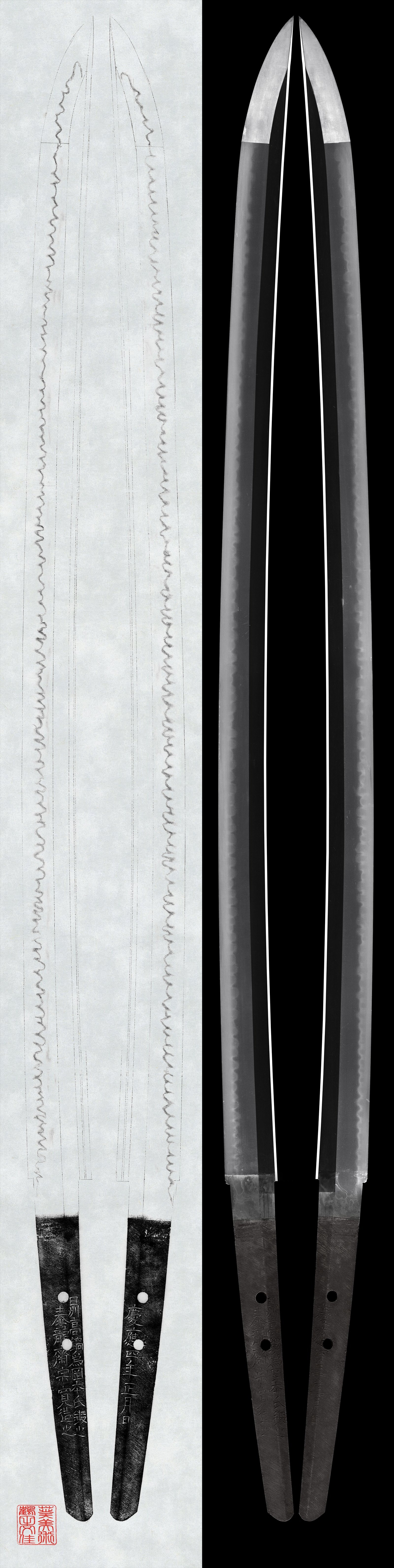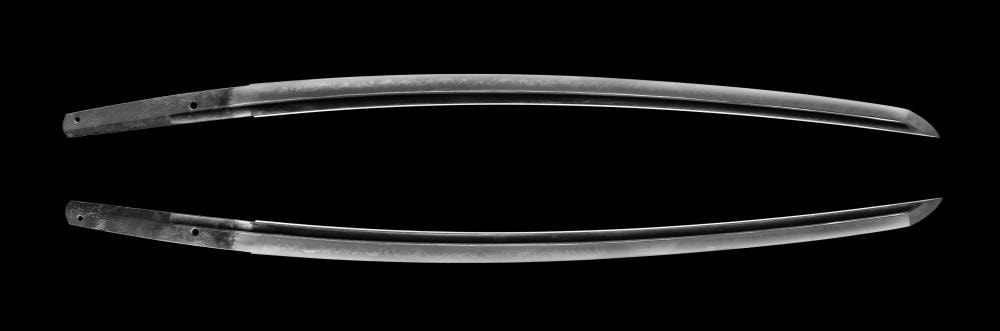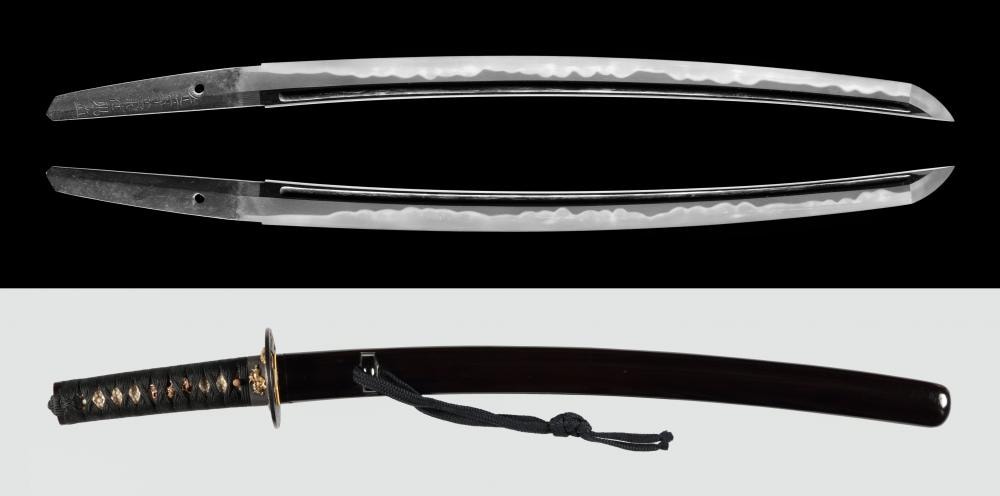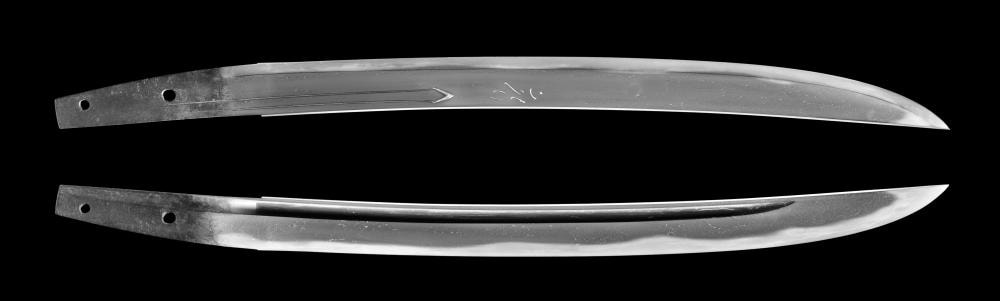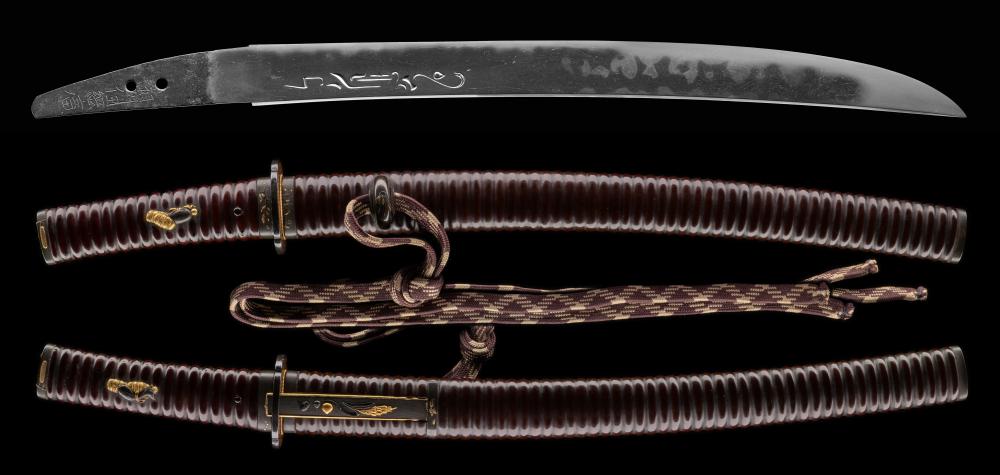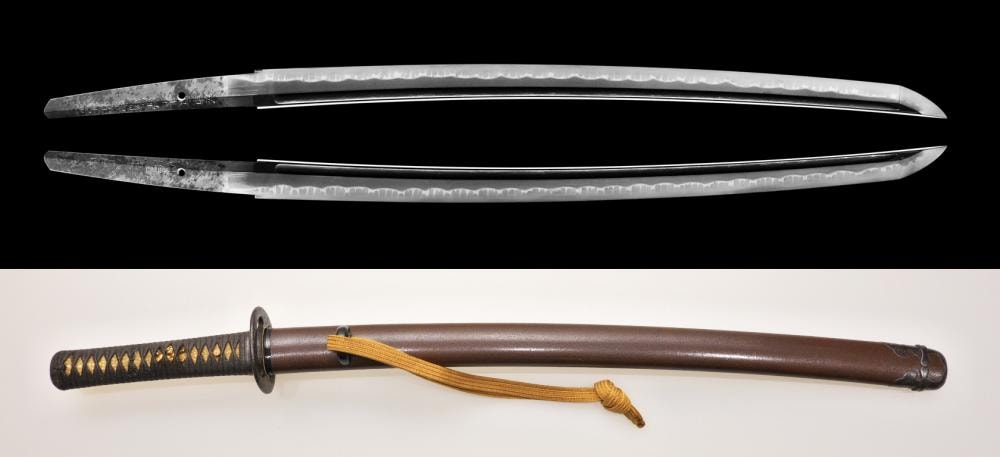
脇指 於東京泰龍斎宗寛造之 明治二年八月日 (Wakizashi Oite Tokyo Tairyusai Sokan(Munehiro) A.D.1869)
SOLD
Tracked across 76 dealers worldwide · price history · sold archive
Edo
Specifications
53.9 cm
1.2 cm
3.16 cm
About the maker
Koyama Munetsugu Sokan宗寛
Sokan was born in the early Bunsei era (1818-1830) as the son of Ono Heizo, in the castle town of Shirakawa in Oshu. His teacher in swordmaking was Koyama Munetsugu, and his forging career appears to have begun around the end of the Tempo era (1830-1844). From around the beginning of the Kaei era he served as a retained smith of the Shimosa Furukawa Domain. Among his later works are examples signed "Abukuma-gawa Sokan," in which he adopted as a surname the Abukuma River of his native region. He began regularly using the art name Tairyusai from around Ansei 1 (1854). His residence in Edo was at Fukagawa Hakozaki. Initially cutting his signatures in *kaisho* (standard script), from around the eighth month of Ansei 4 (1857) he changed to *reisho* (clerical script). He was also adept at carving on sword blades and likely served as a capable assistant to his teacher. He continued making swords into the Meiji era, but no works are seen after the Haitorei; he died on January 23, Meiji 16 (1883). Sokan's blades present the bold, imposing *sugata* characteristic of the *shinshinto* period: wide *mihaba*, thick *kasane*, shallow *sori*, and large *kissaki*, imparting a powerful appearance. The forging shows tightly packed *ko-itame* with thickly adhering *ji-nie* and abundant fine *chikei*; the faintly standing, distinctive *midare-utsuri* characteristic of this smith also appears. The *hamon* is based on *choji* mixed with *ko-gunome*, *gunome*, and angular-headed forms, with long *ashi* entering well; the temper is *nioi*-dominant with *ko-nie* and occasional *ara-nie*, with fine *kinsuji* and *sunagashi*, and a bright and clear *nioiguchi*. In his comparatively early works the *choji* rises and falls with pronounced variation, producing a more splendid and flamboyant effect, while later works feature a linked succession of somewhat smaller-patterned temper elements. The *boshi* characteristically runs in *midare-komi* with *ko-maru* and a long *kaeri*. The NBTHK recognizes Sokan as a smith of high technical ability whose finest works demonstrate that capability to its fullest. His earlier pieces are noted for greater variation within the *choji* pattern, with the hardened edge displaying noticeable change and a more brilliant effect, while late works show the bright, clear edge standing out strikingly against the robust form. Both *ji* and *ha* in his superior examples are described as *kenzen* (sound and well-preserved), a recurring evaluative commendation. The cutting-test inscriptions that frequently accompany his blades, often by Iga Norishige — counted among the "Four Heavenly Kings" of late-Bakumatsu connoisseurship — are noted as possessing great documentary value, further attesting to the esteem in which Sokan's work was held among warrior patrons of the period.