The twentieth century nearly killed the craft twice: wartime distortion, then the occupation ban. The NBTHK’s founding in 1948 and licensed forging from 1953 rebuilt the sword as an art, crowned by Living National Treasures and the mukansa rank.
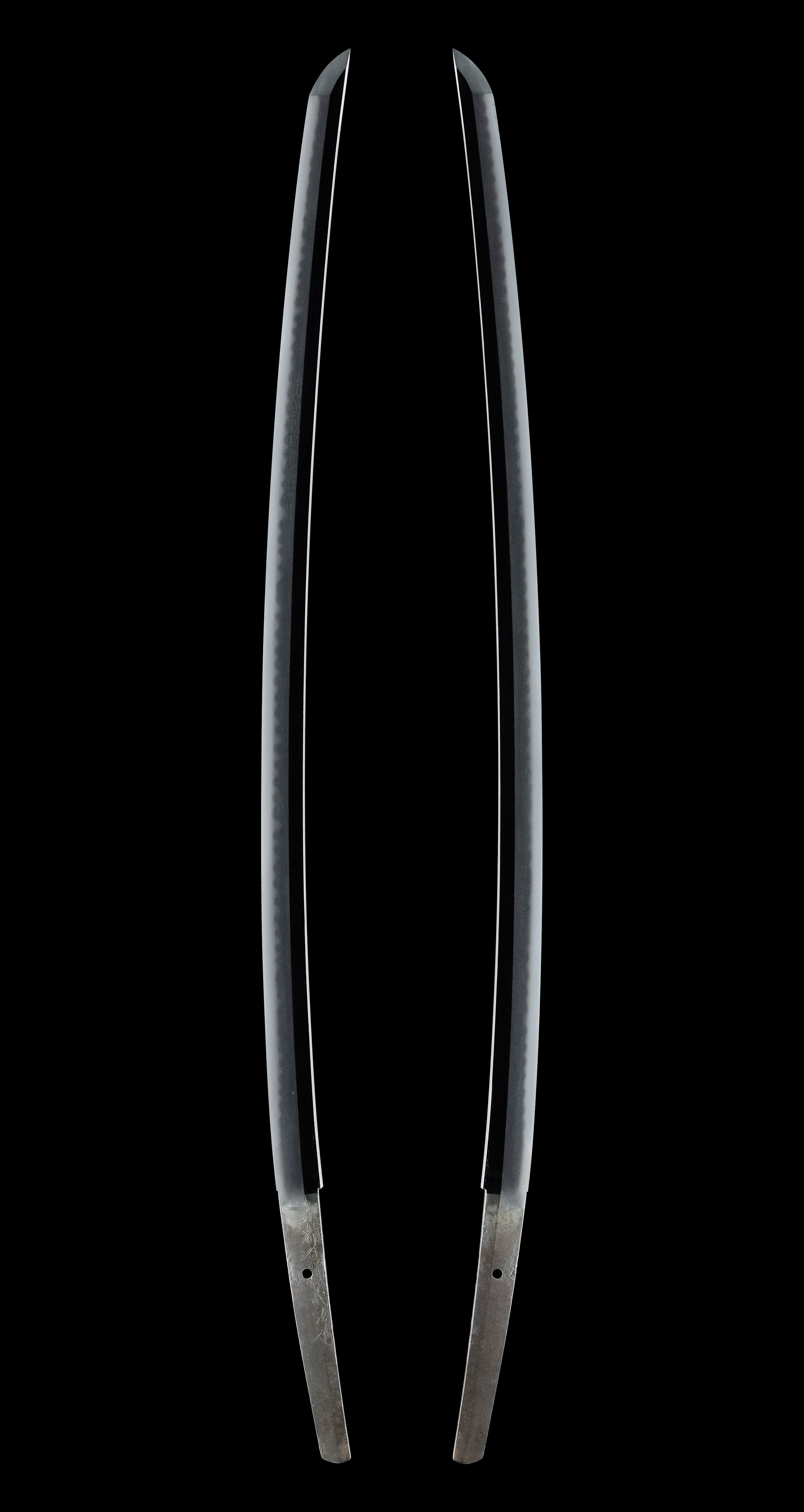
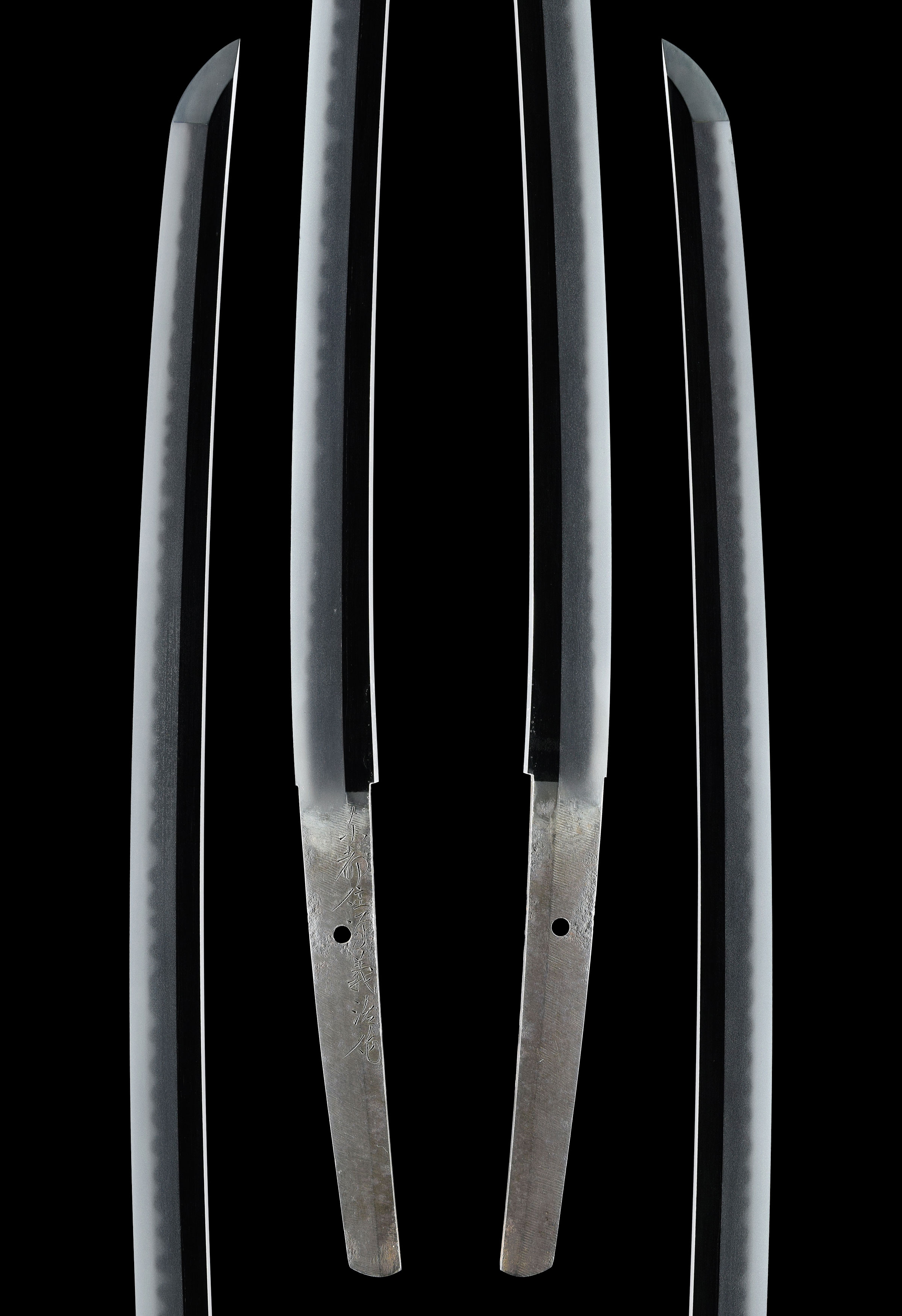
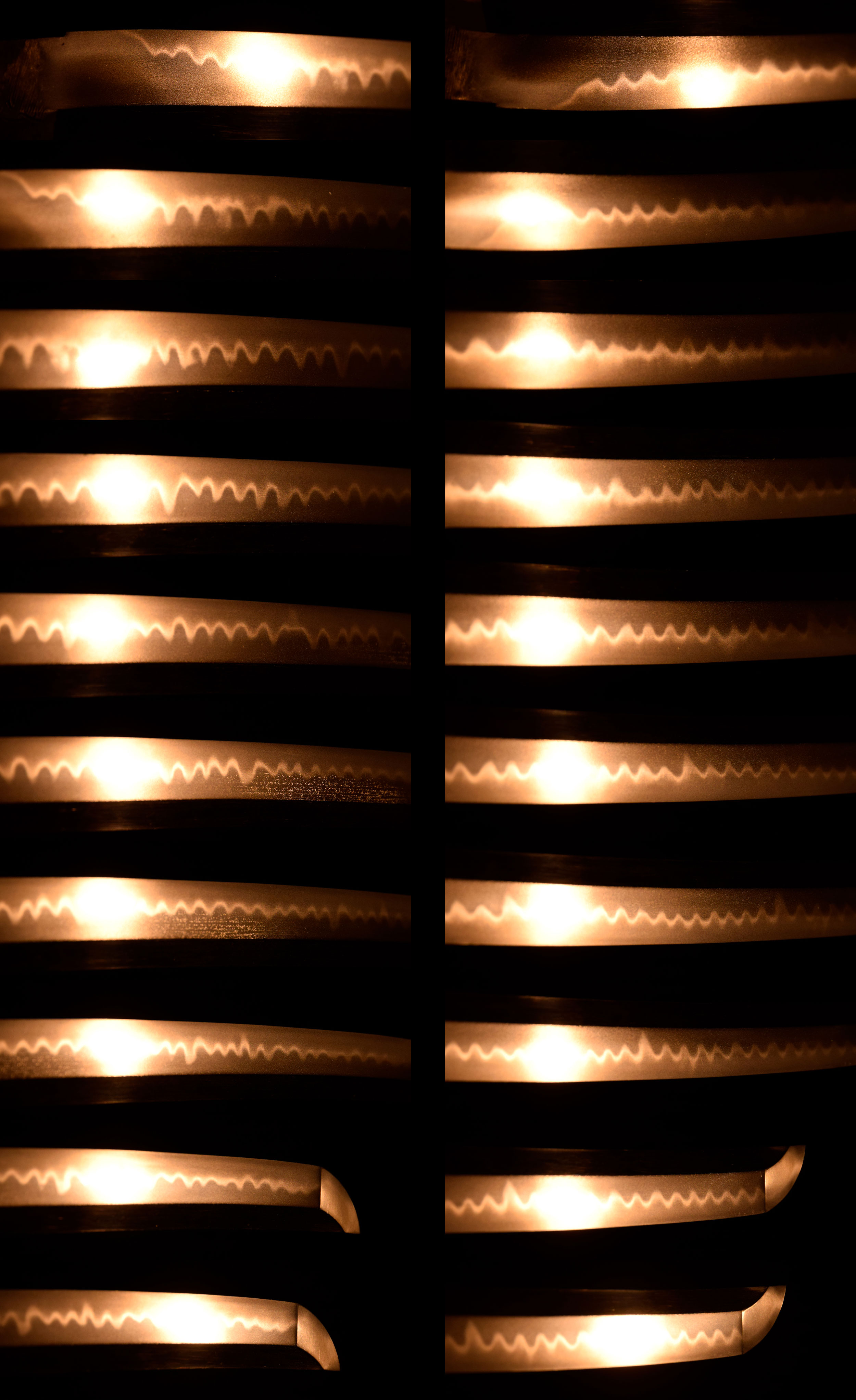
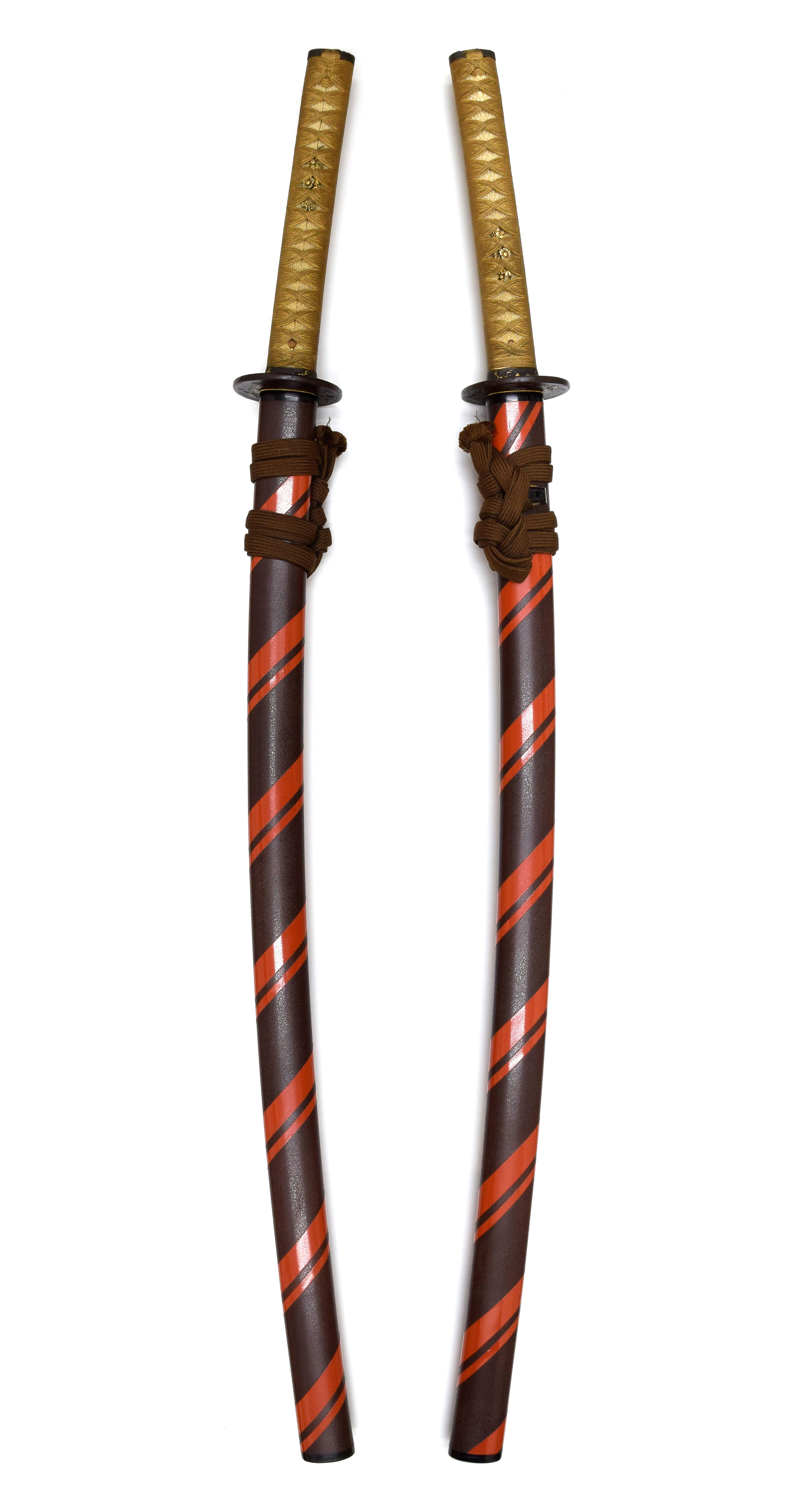
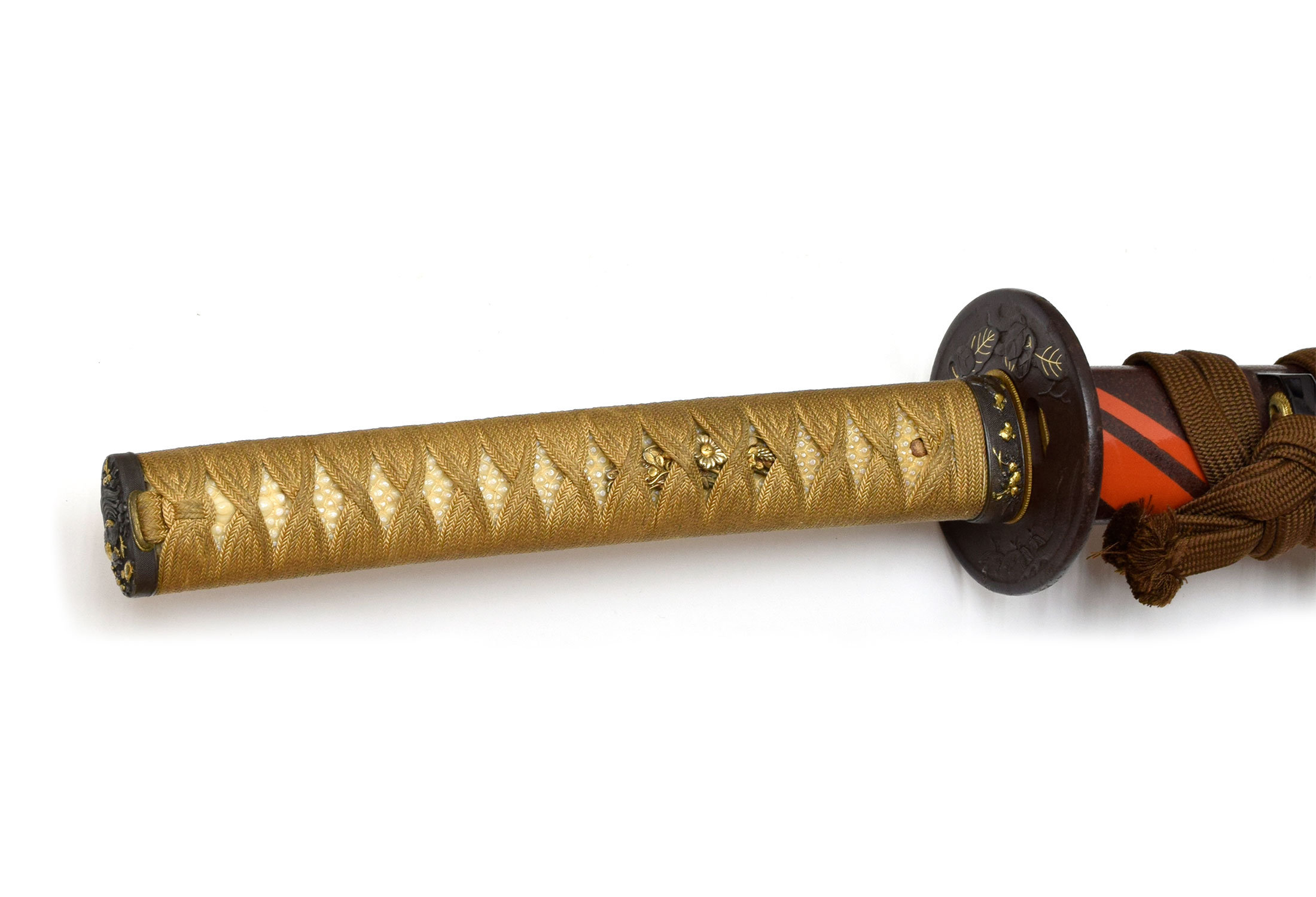
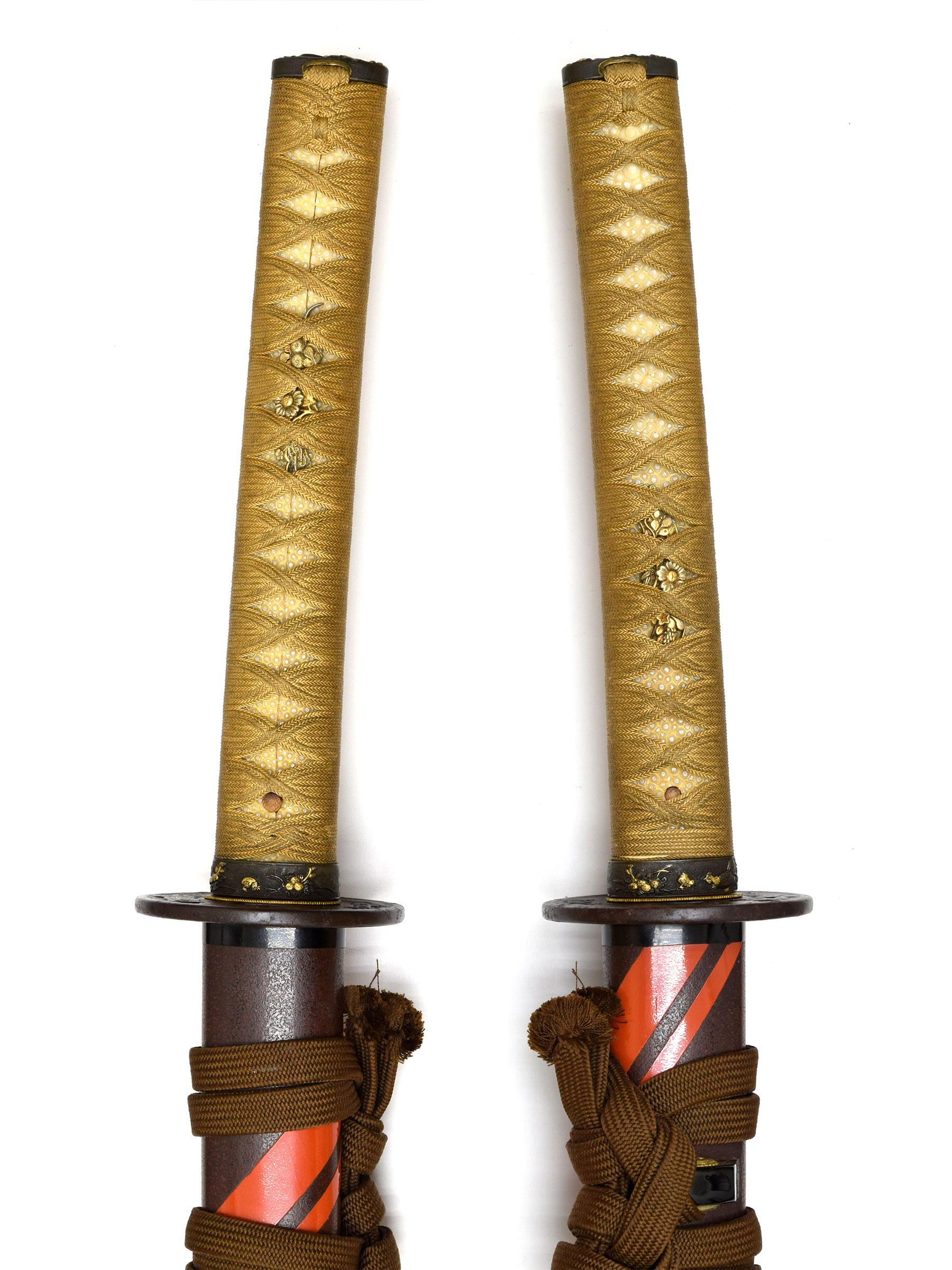
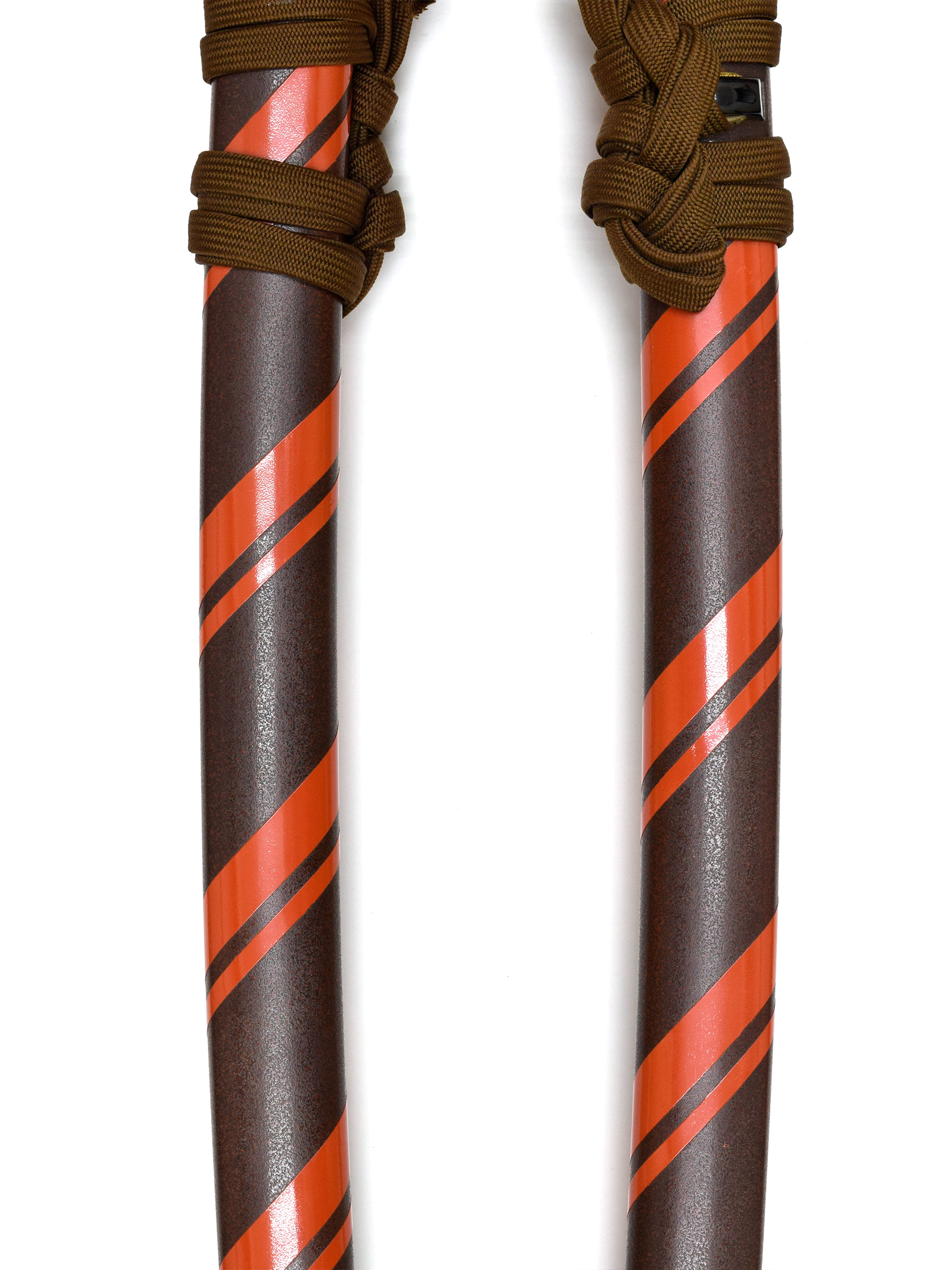
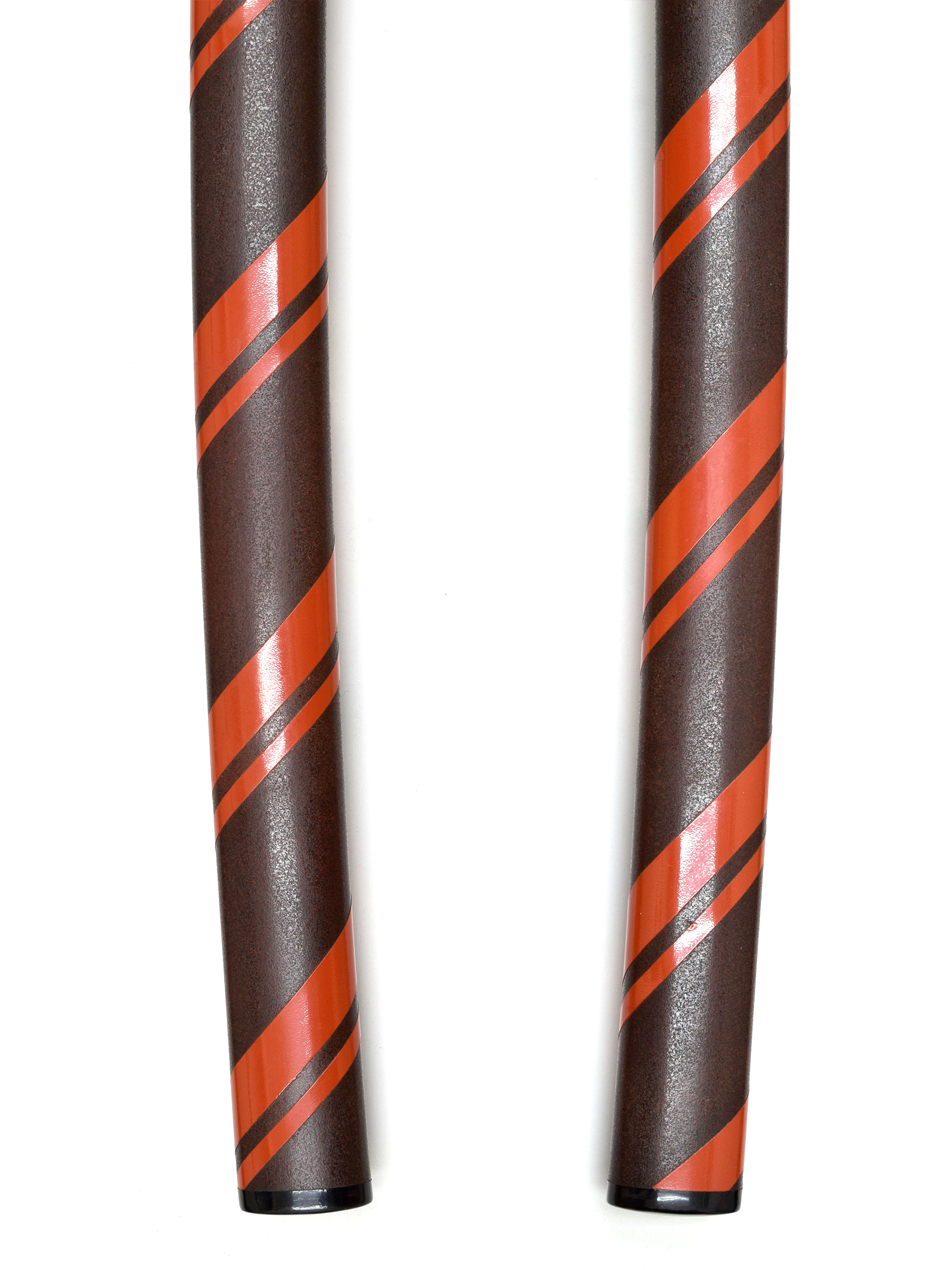
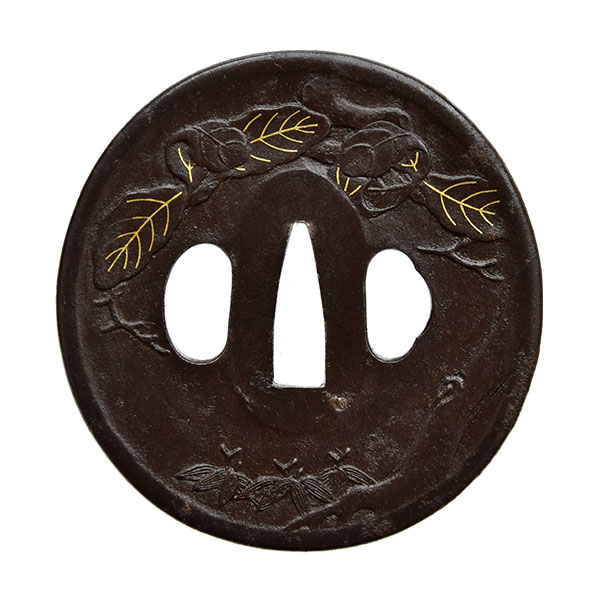
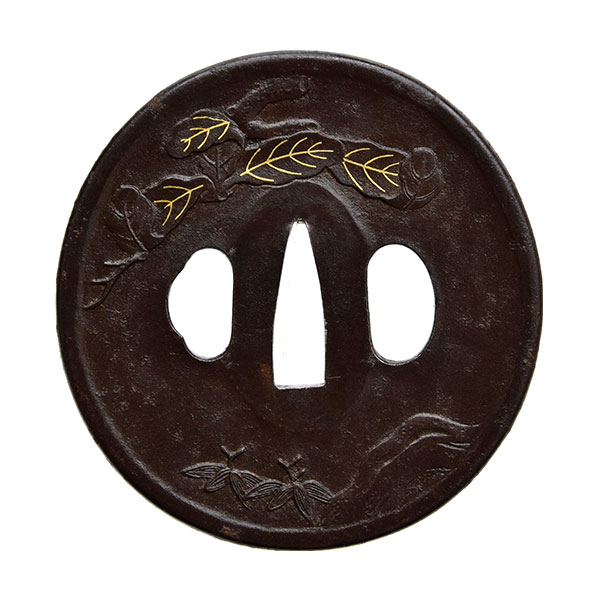
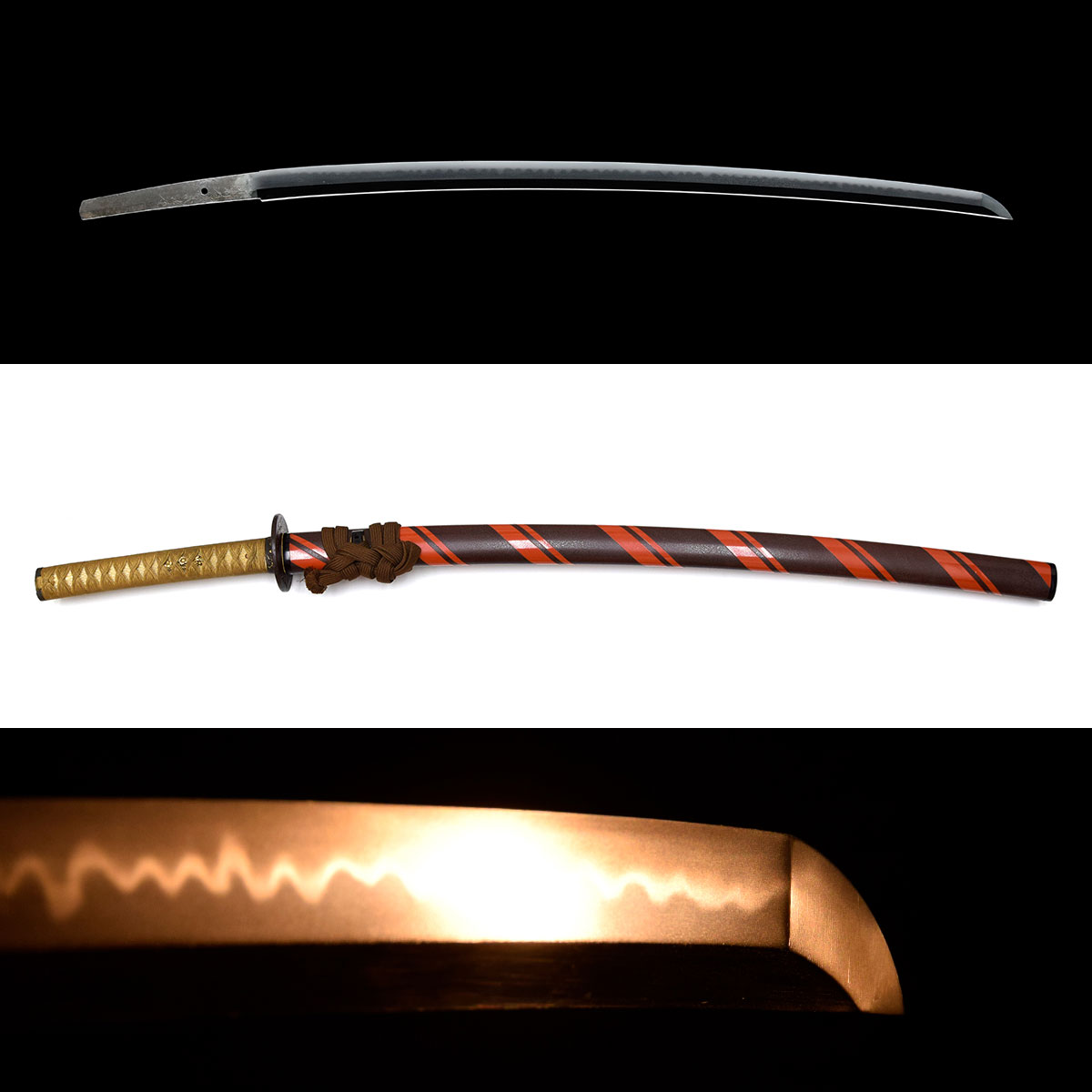
Yoshiharu was a student of Kurihara Hikosaburo Akihide and learned swordmaking at the Nihonto Denshusho; he was a tosho of the same era as Kasama Ikkansai Shigetsugu and Miyairi Yukihira, and was engaged in the production of gunto during the war. The mei of Yoshiharu was followed in the early period as the former mei of his son, the tosho Shimbo Motohira, who is remarkably active. Despite being a toko of high skill, his details are not recorded in the Nihonto Meikan. This katana has a jitetsu of ko-itame that is well-kneaded and densely packed, with thick ji-nie and a mixture of fine, flickering chikei, presenting an exquisite jihada that looks just like chirimen. The hamon is based on a gunome-midare with a bright and clear nioiguchi and yakiotoshi; the interior of the ha contains deep ashi in places and mixes in blades with a togariba-gokoro that gives a sense of sharpness, making for a dekiguchi rich in highlights. The boshi is sugu with a maru saki kaeri, further enhancing the overall dignity. The accompanying koshirae is also deeply atmospheric, with a stylish saya featuring red hirumaki on a brown ishime-ji, and a tsuka with unohana-iro jabara-maki, a tailoring refined in both color tone and design. One can naturally see how much deep affection the previous owner poured into this katana. When actually drawing the sword from the saya and taking a stance, the balance is easy to handle with the center of gravity shifted from the middle toward the hand; although tsuba-nari is observed, there is no rattling in the tsuka, providing sufficient reassurance for practical use. A small amount of light rust is recognized on the sashi-omote, but it is to an extent that can be sufficiently removed by partial polishing, and there is no major hindrance to appreciation or preservation. As a blade that combines artistic quality and practicality, it is a masterpiece I can recommend with confidence. *Consignment item
Offered by Toushin


Machine translation of the shop's Japanese ·
Machine translation from the shop's Japanese · may contain errors ·
around 1926-1989
2 pieces on the market now
Shōwa to the present: destruction and revival
The twentieth century nearly killed the craft twice: wartime distortion, then the occupation ban. The NBTHK’s founding in 1948 and licensed forging from 1953 rebuilt the sword as an art, crowned by Living National Treasures and the mukansa rank.
We could not find an authenticity certificate on the seller’s listing. Japanese swords and fittings are normally papered by the NBTHK (or the NTHK). Without one, the attribution is the seller’s own assessment and has not been independently verified — treat it with caution and ask the dealer about certification before buying.
As a rule we do not accept returns, except when we have sent a different item from the one ordered or when there is a significant discrepancy between the description and the item. If you wish to return an item, please contact us within 3 days of its arrival and then send it back.
¥605,000