The twentieth century nearly killed the craft twice: wartime distortion, then the occupation ban. The NBTHK’s founding in 1948 and licensed forging from 1953 rebuilt the sword as an art, crowned by Living National Treasures and the mukansa rank.
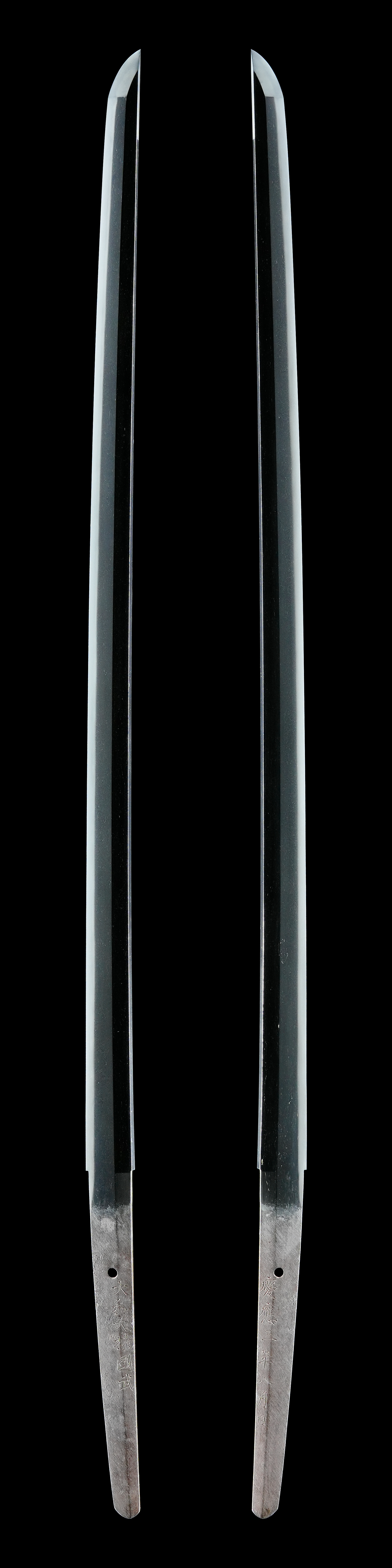
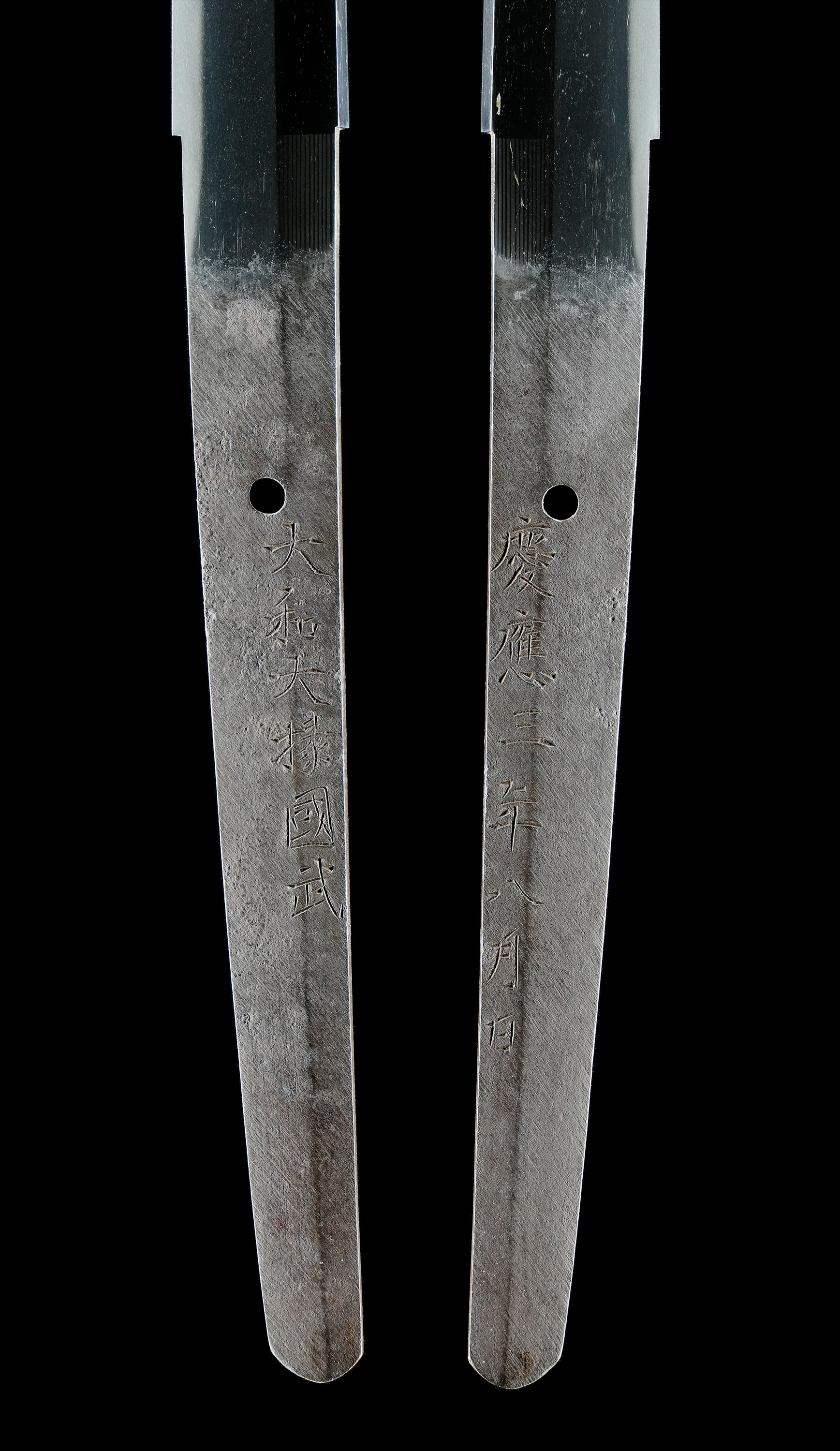
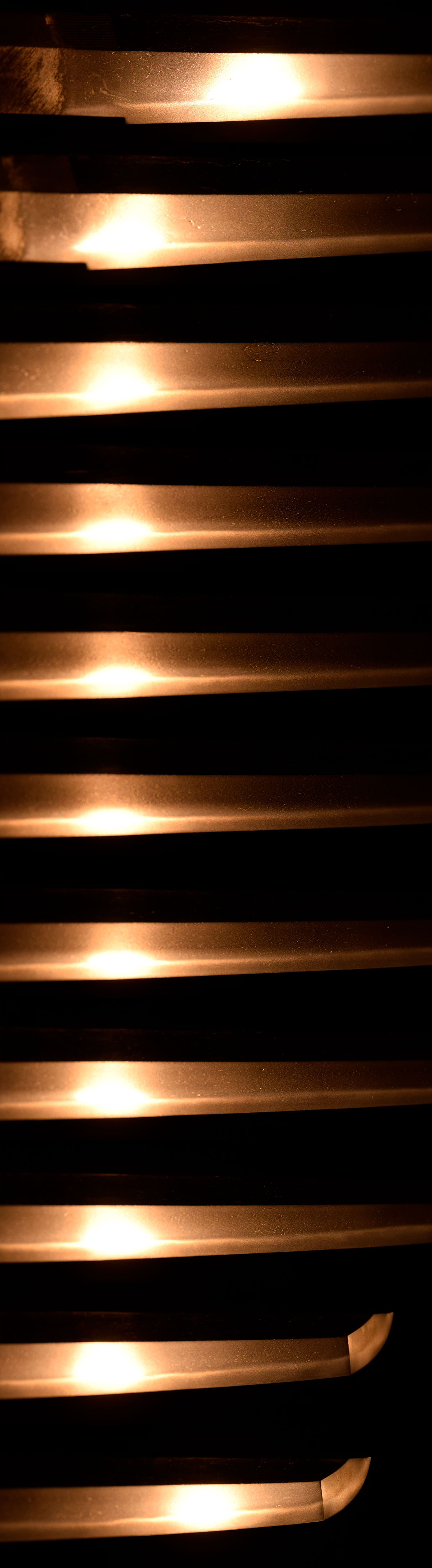
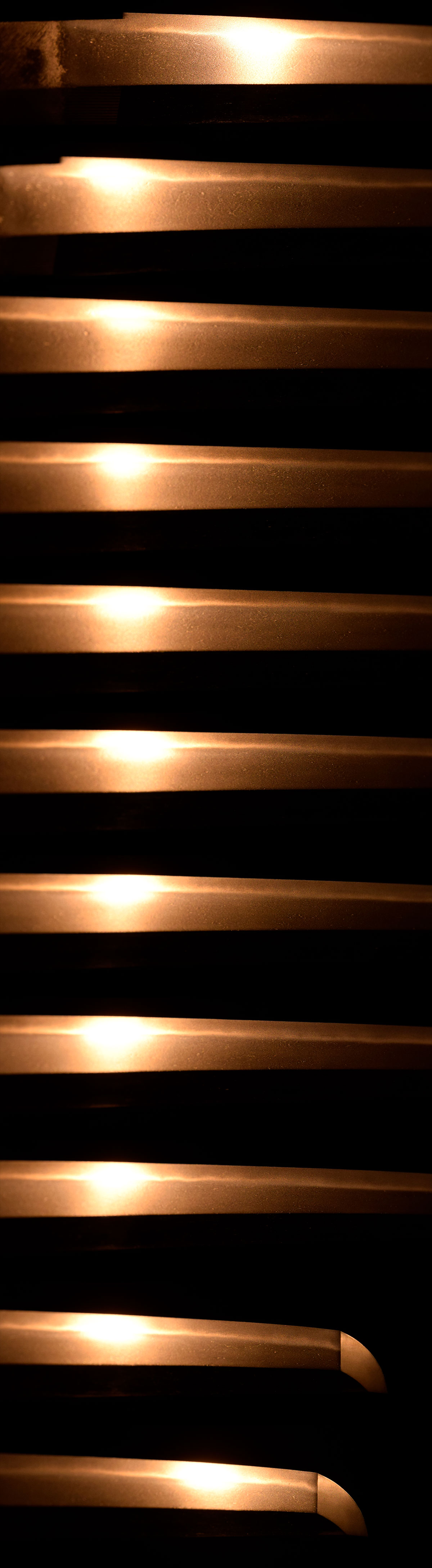
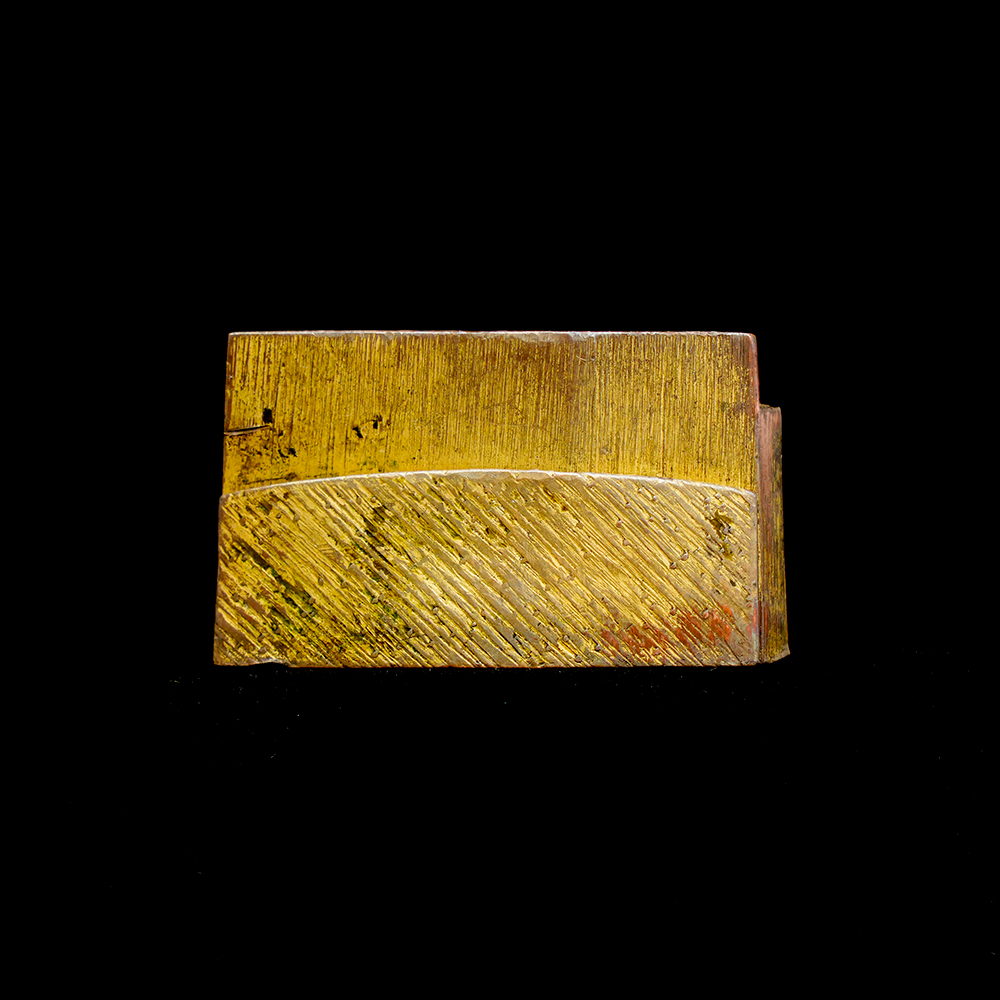
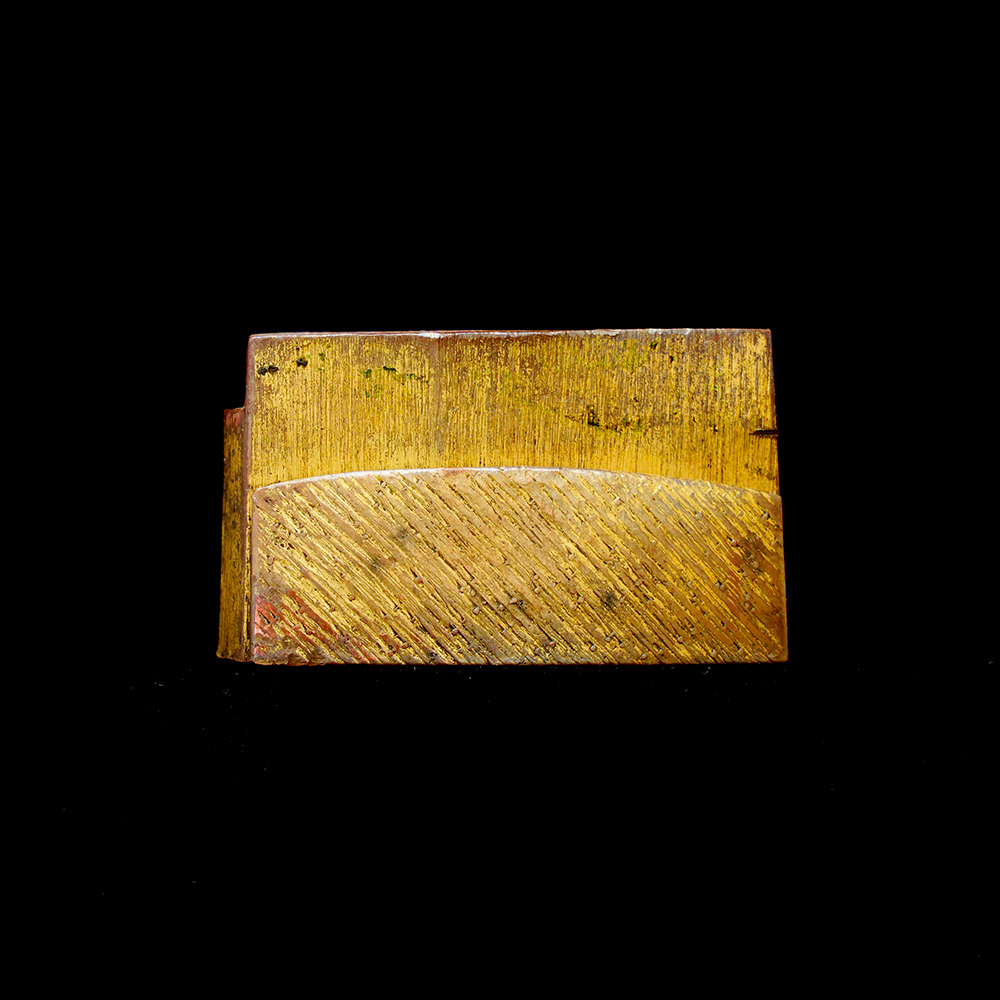
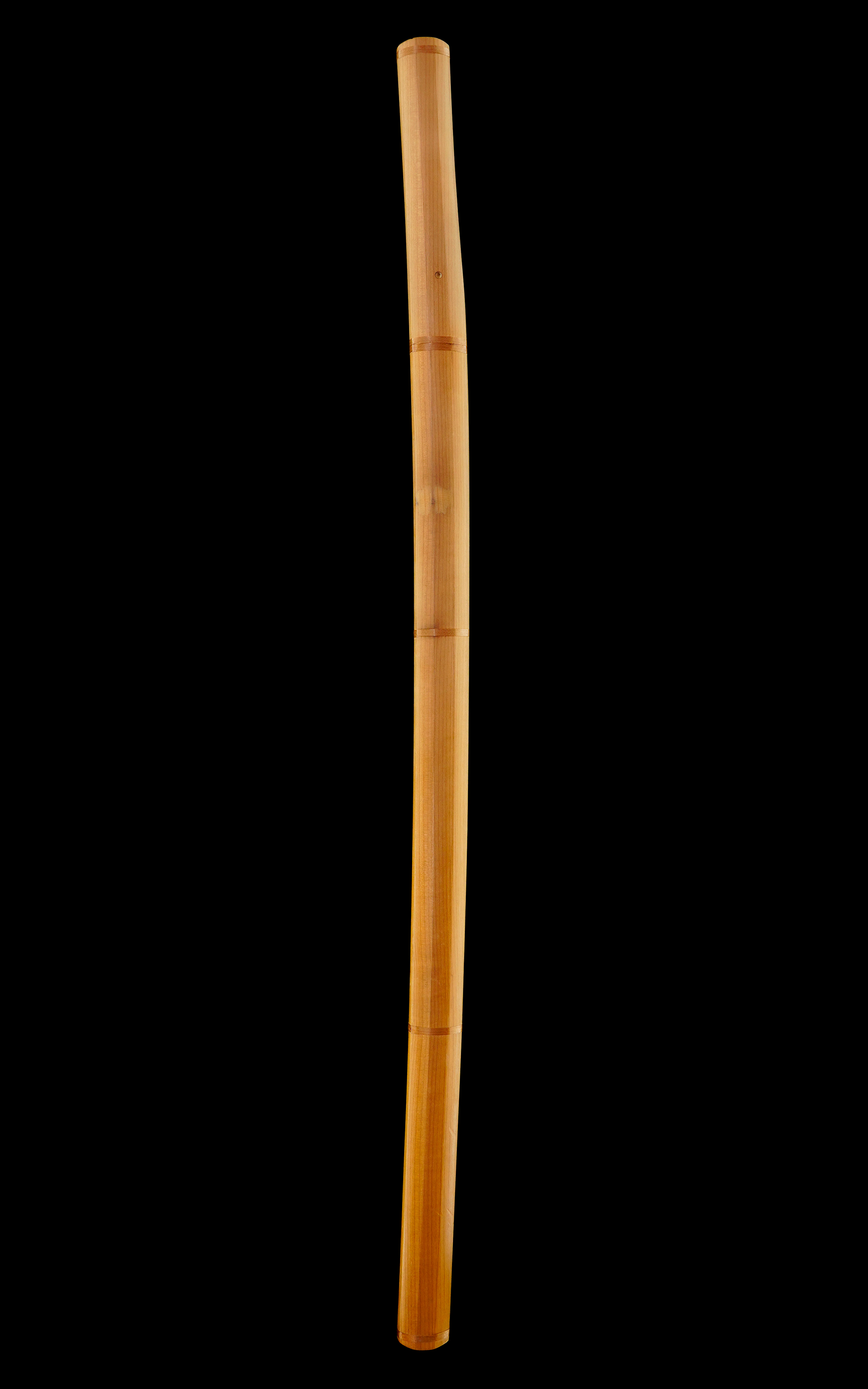
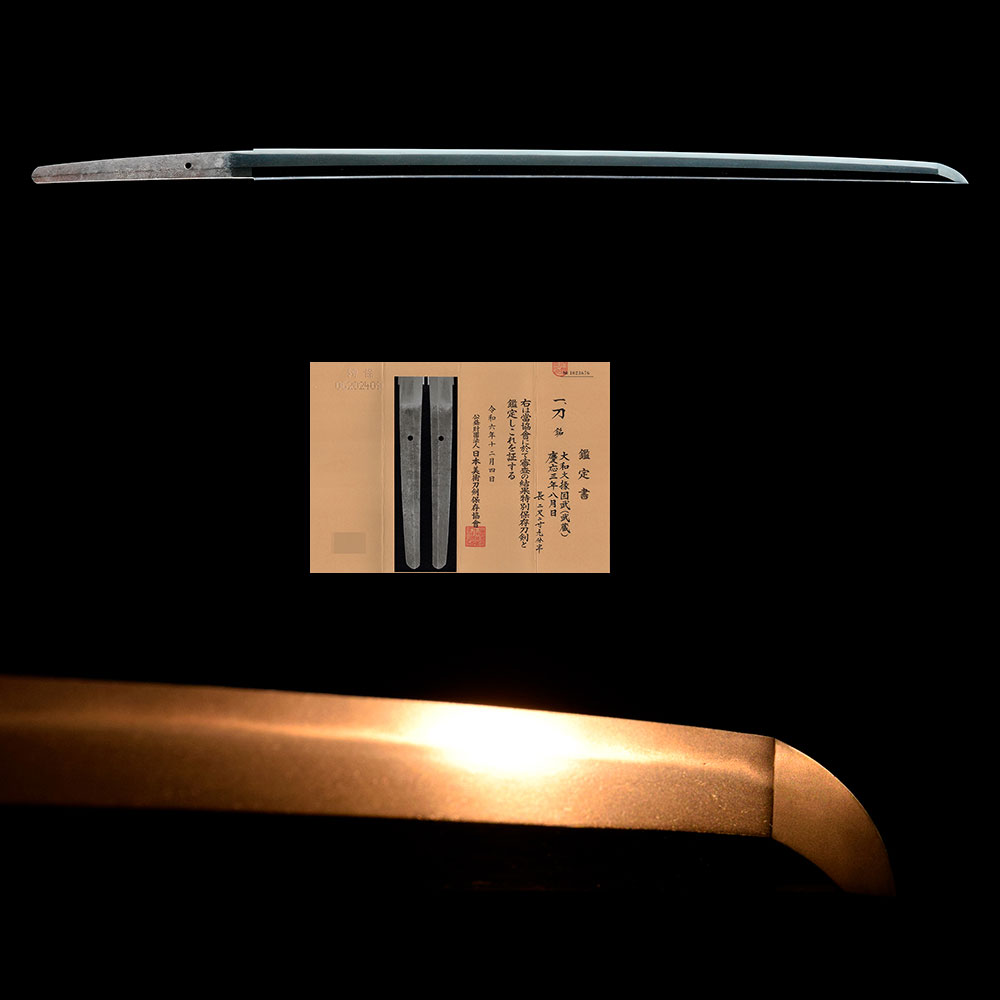
Yamato Daijo Kunitake used the go Seiryushi and resided in Edo around the Keio era to forge swords. His first mei was Seiryushi Minamoto Kunitake. After receiving the title of Yamato Daijo, he signed his mei as Yamato Daijo Kunitake. This katana is a sword forged in response to an order emphasizing practical use due to the social conditions of the time, with a wide difference between the moto-haba and saki-haba and a kissaki that is slightly elongated. By making the sori extremely shallow, it is suited for iai-nuki such as nukitsuke and nukiuchi, and furthermore, the tsukurikomi is designed to increase striking power; the jigane is a well-kneaded ko-itame mixed with moku and contains chikei, and while he tempered a suguha focused on practical utility with a bright and clear nioiguchi, the nie of the nioiguchi is deep with a soft, airy feeling, showing a dekiguchi that is difficult to break, with the yakihaba widening slightly below the yokote and the boshi becoming sugu with a saki-yakizume style. Polishing was performed at our shop. Please enjoy the clarity of the ji and ha that have just been polished.
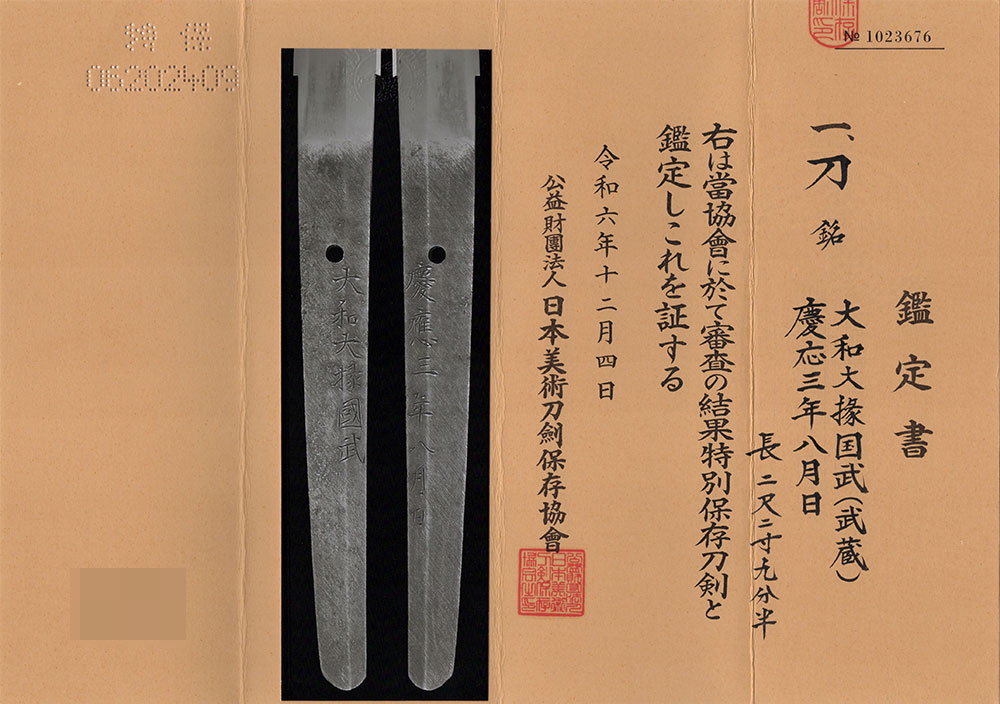
Certificate reading — 銘 大和大掾国武(武蔵) 慶応三年八月日
Offered by Toushin
4 on the market


As written by the shop
Machine translation from the shop's Japanese · may contain errors ·
Musashi · around 1989-2019
4 pieces on the market now
Shōwa to the present: destruction and revival
The twentieth century nearly killed the craft twice: wartime distortion, then the occupation ban. The NBTHK’s founding in 1948 and licensed forging from 1953 rebuilt the sword as an art, crowned by Living National Treasures and the mukansa rank.
A Hozon-certified blade judged to show notably superior workmanship and a better state of preservation. The bar is higher: re-tempered blades and most unsigned Muromachi/Edo works are excluded.
The NBTHK (Nihon Bijutsu Tōken Hozon Kyōkai, the Society for the Preservation of Japanese Art Swords) is a public-interest incorporated foundation founded in 1948 and supervised by Japan’s Agency for Cultural Affairs (Bunkachō); it is based at the Japanese Sword Museum in Tokyo. Its expert panels physically examine each submitted work (shinsa) and issue a certificate (kanteishō) ranking it by artistic and historical merit. NBTHK papers are the most widely recognized standard of authentication for Japanese swords and fittings.
NBTHK official siteAs a rule we do not accept returns, except when we have sent a different item from the one ordered or when there is a significant discrepancy between the description and the item. If you wish to return an item, please contact us within 3 days of its arrival and then send it back.
¥1,100,000