 NihontoWatchNihontoWatch
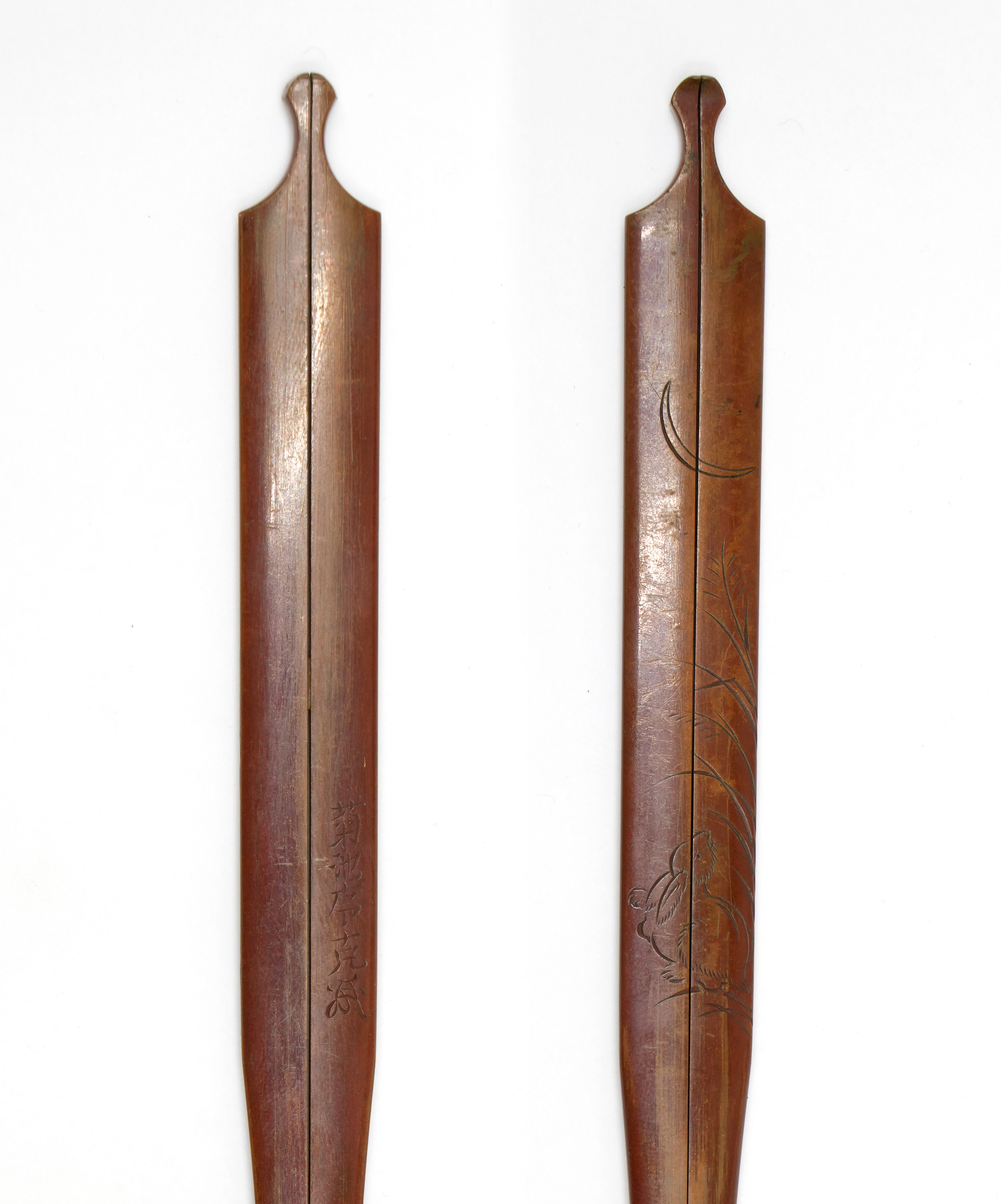
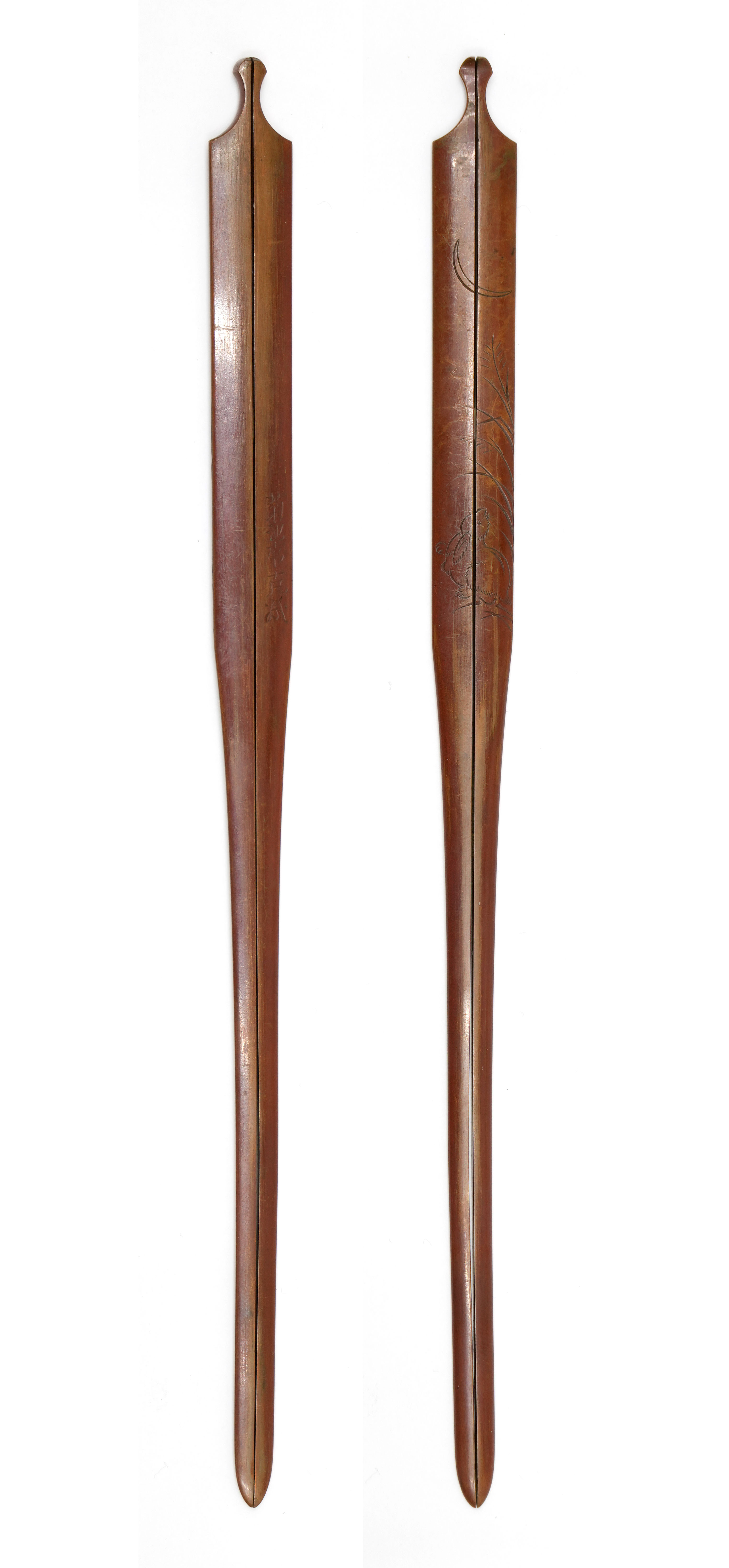
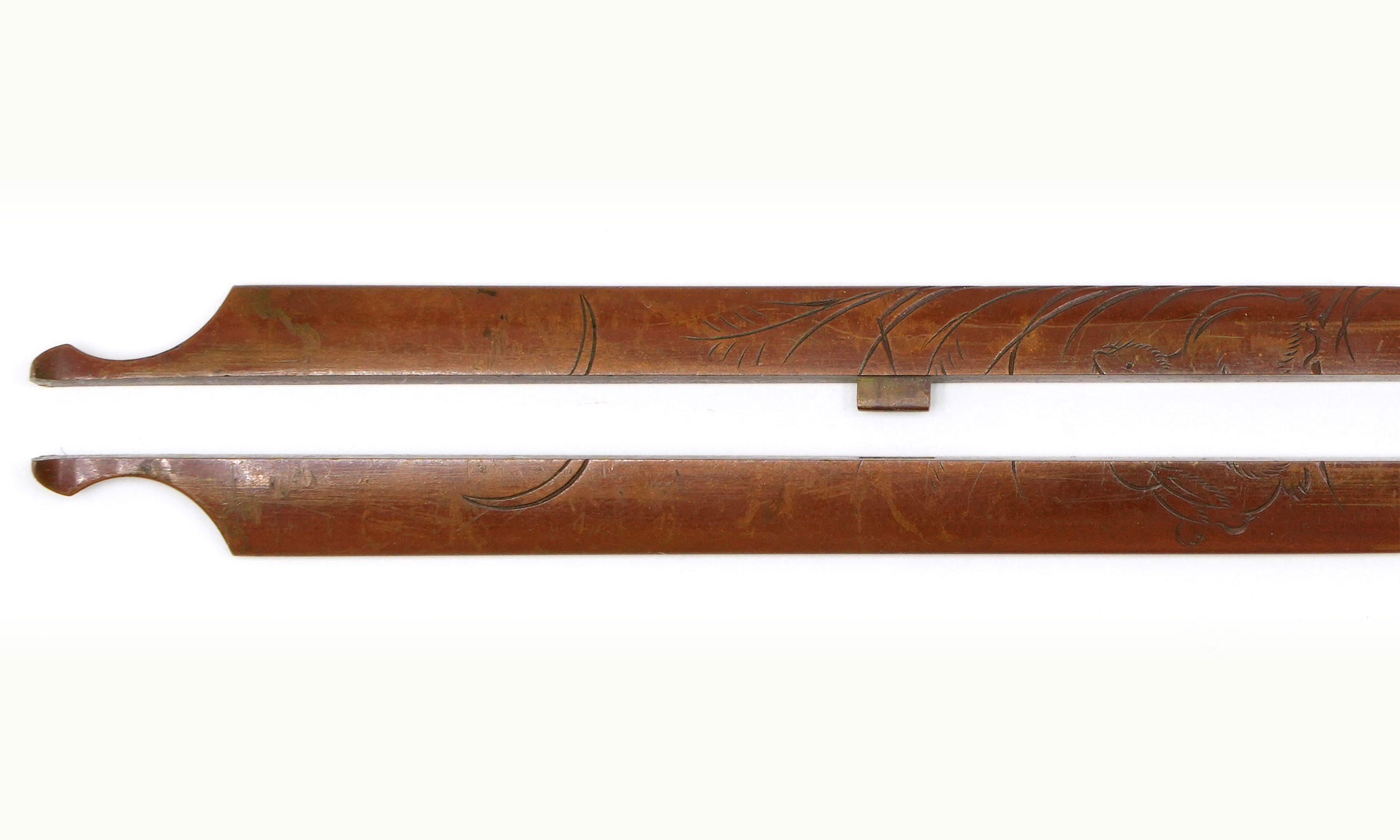
Kikuchi Tsunekatsu was born in the first year of Horeki (1751) in the middle of the Edo period, and was a sword fitting artisan active from the middle Edo period Horeki (1751~) through the late period around Meiwa, commonly known as Seijiro. He used the go Soryuken and Gidoken, and after entering the priesthood in his later years, he also used the go Soju. It is said that he lived in Negishi, Shitaya, Edo, and he learned the techniques of the Yokoya and Yanagawa schools from Inagawa Naokatsu, founded the Kikuchi school, and trained many disciples. He was skilled in takabori iroe as well as kebori and katakiribori, and while the year of his death is unknown, his survival past the age of 64 has been confirmed through his works. This warigogai is a work that depicts a rabbit looking up at a crescent moon in a truly adorable manner using Tsunekatsu's specialty katakiribori on a suaka migaki-ji, and it is a masterpiece that exudes elegance within its unadorned simplicity.
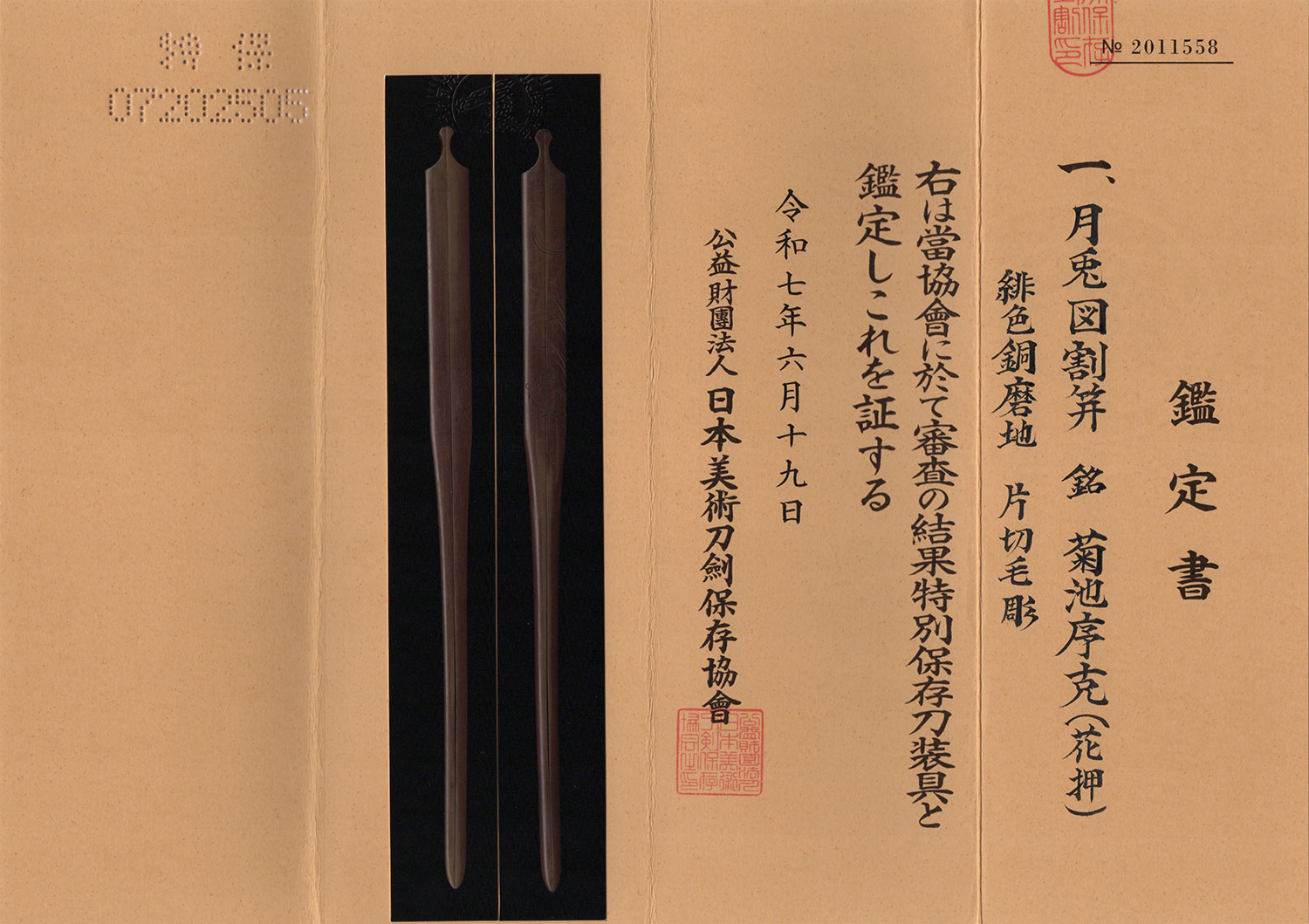
Certificate reading — 銘 菊池序克(花押)
NihontoWatchOffered by Toushin
3 on the market
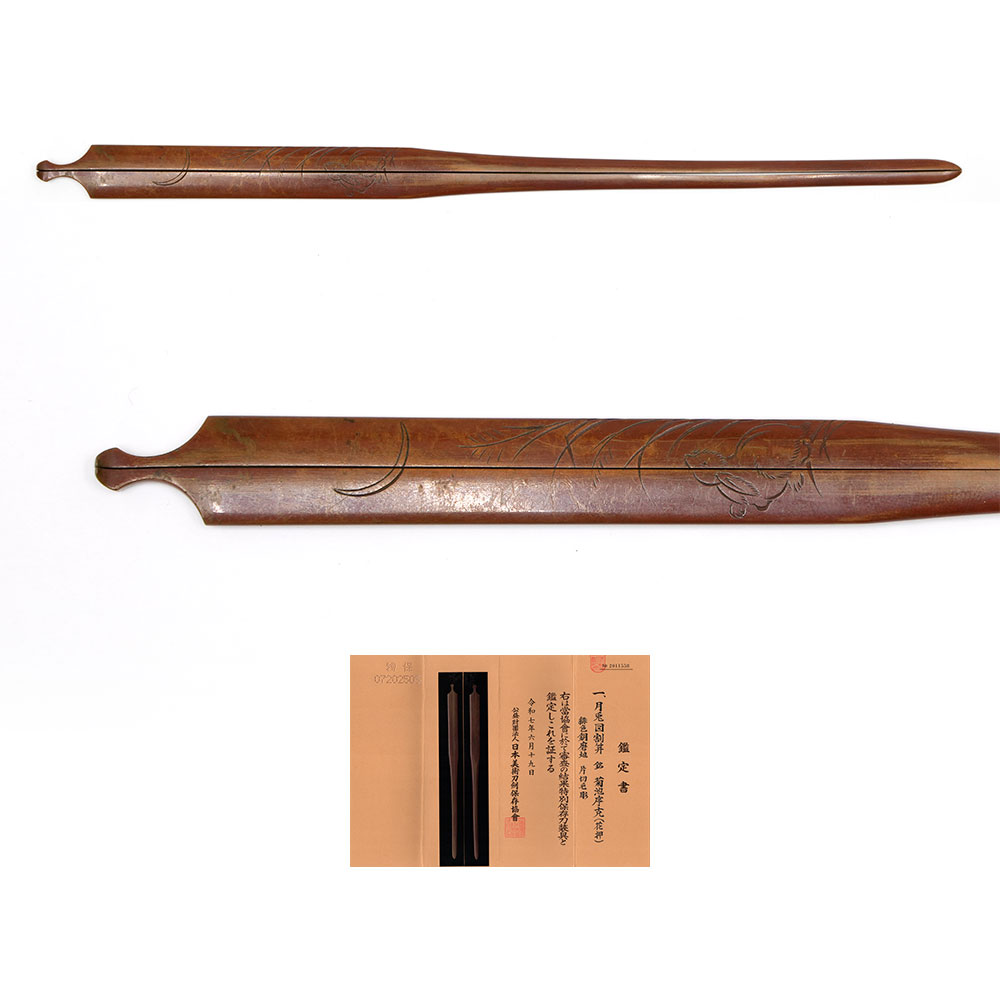
Kikuchi Tsunekatsu
Edo
Signed
Tokuho (NBTHK)
As written by the shop
Machine translation from the shop's Japanese · may contain errors ·
around 1670
3 pieces on the market now
Where Tsunekatsu stands among comparable artisans: across all of nihontō, and within tradition, era, and period. The tiers (Foremost · Leading · Major · Notable) weigh official designations from the NBTHK and Japan's Agency for Cultural Affairs, together with historical honors of lasting repute such as the Sansaku and Meibutsu-chō.
Select a lens to see how it's measured.
A Hozon-certified fitting of notably superior craftsmanship and condition, often with signature or workmanship of high reference value.
The NBTHK (Nihon Bijutsu Tōken Hozon Kyōkai, the Society for the Preservation of Japanese Art Swords) is a public-interest incorporated foundation founded in 1948 and supervised by Japan’s Agency for Cultural Affairs (Bunkachō); it is based at the Japanese Sword Museum in Tokyo. Its expert panels physically examine each submitted work (shinsa) and issue a certificate (kanteishō) ranking it by artistic and historical merit. NBTHK papers are the most widely recognized standard of authentication for Japanese swords and fittings.
NBTHK official siteAs a rule we do not accept returns, except when we have sent a different item from the one ordered or when there is a significant discrepancy between the description and the item. If you wish to return an item, please contact us within 3 days of its arrival and then send it back.
¥440,000