Muromachi turned sword making into an industry: the uchigatana rose with massed infantry warfare, Osafune and Seki produced bundle swords beside custom orders, and the Ming trade carried Japanese blades abroad by the tens of thousands.
 NihontoWatchNihontoWatch
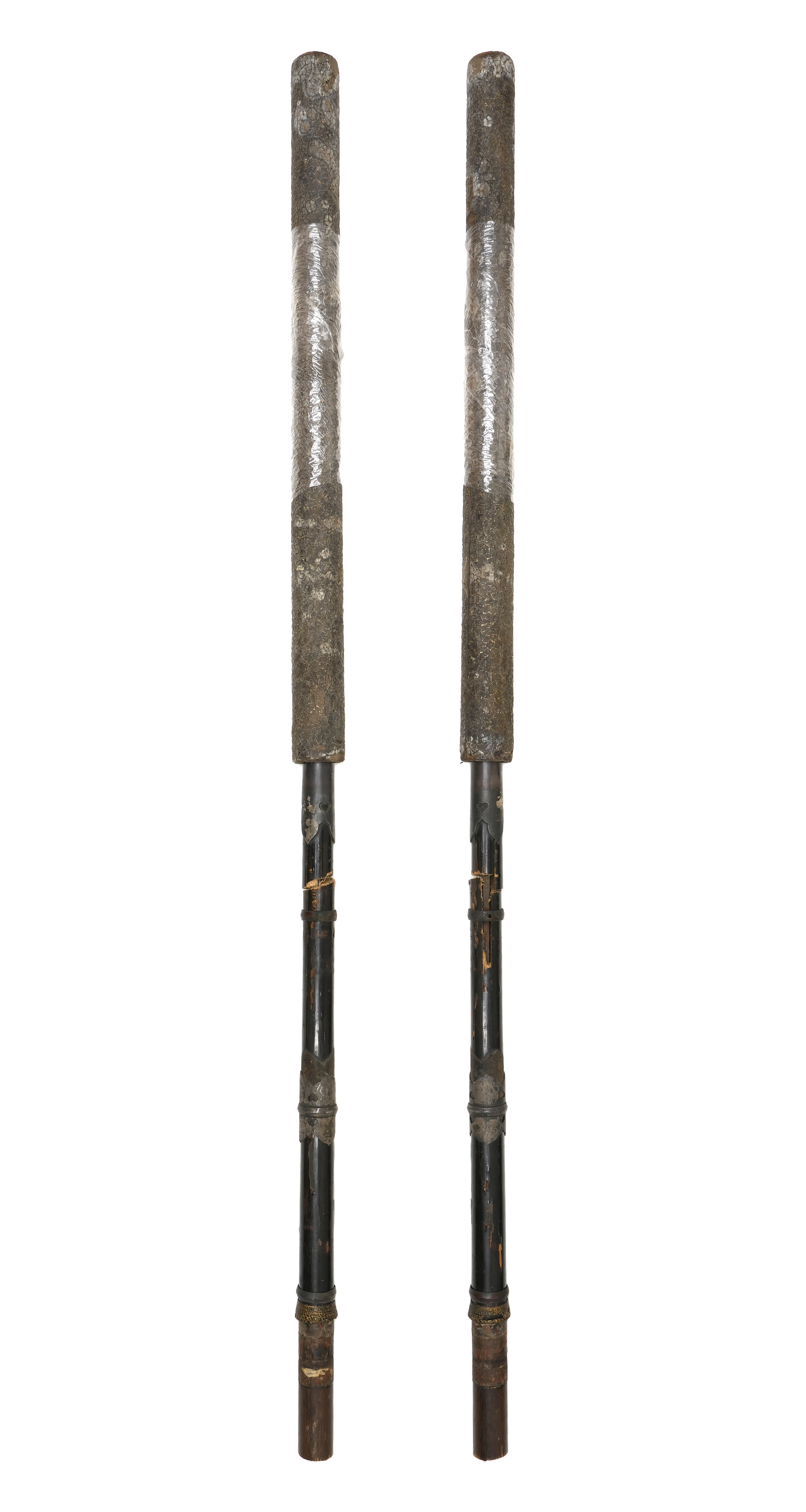
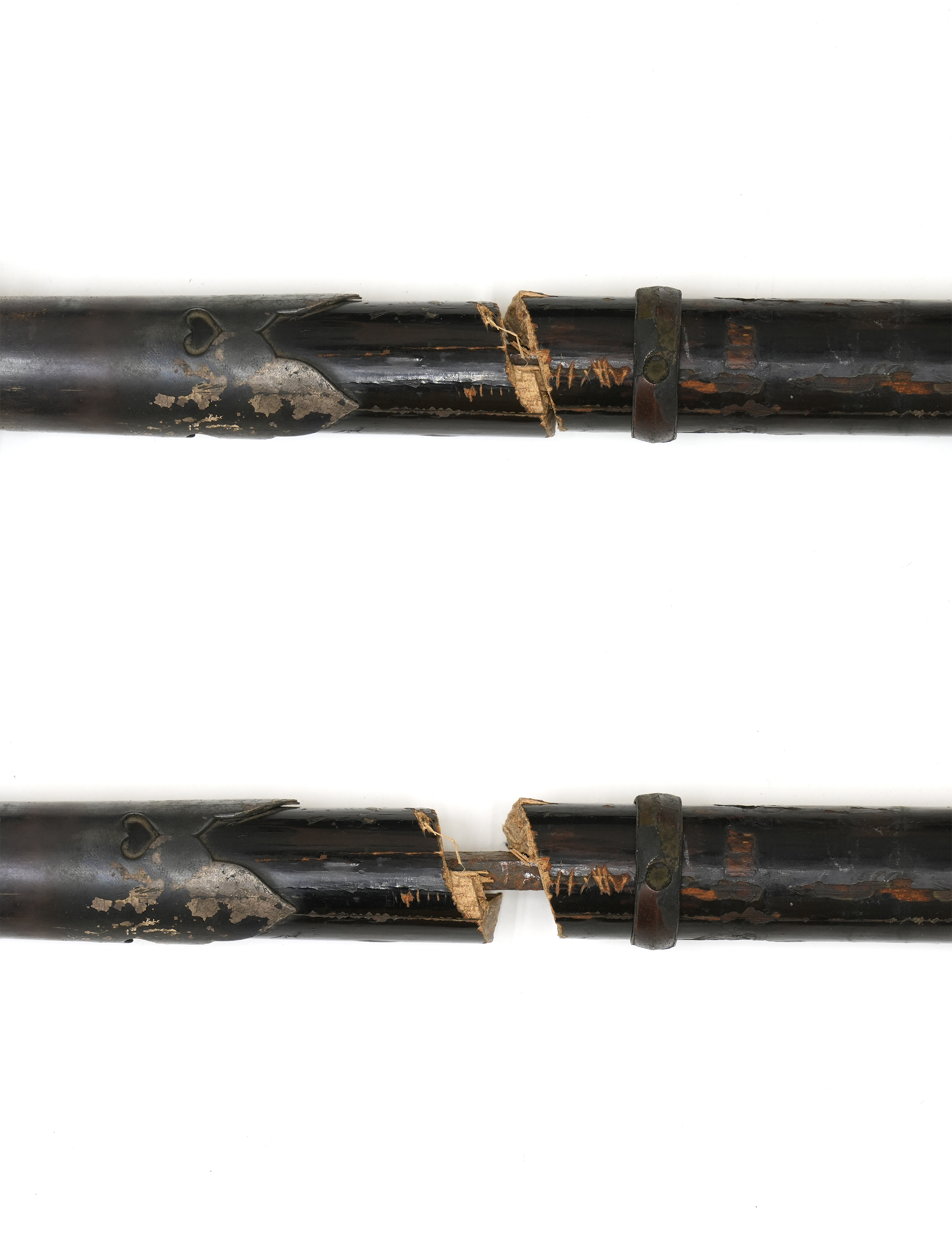
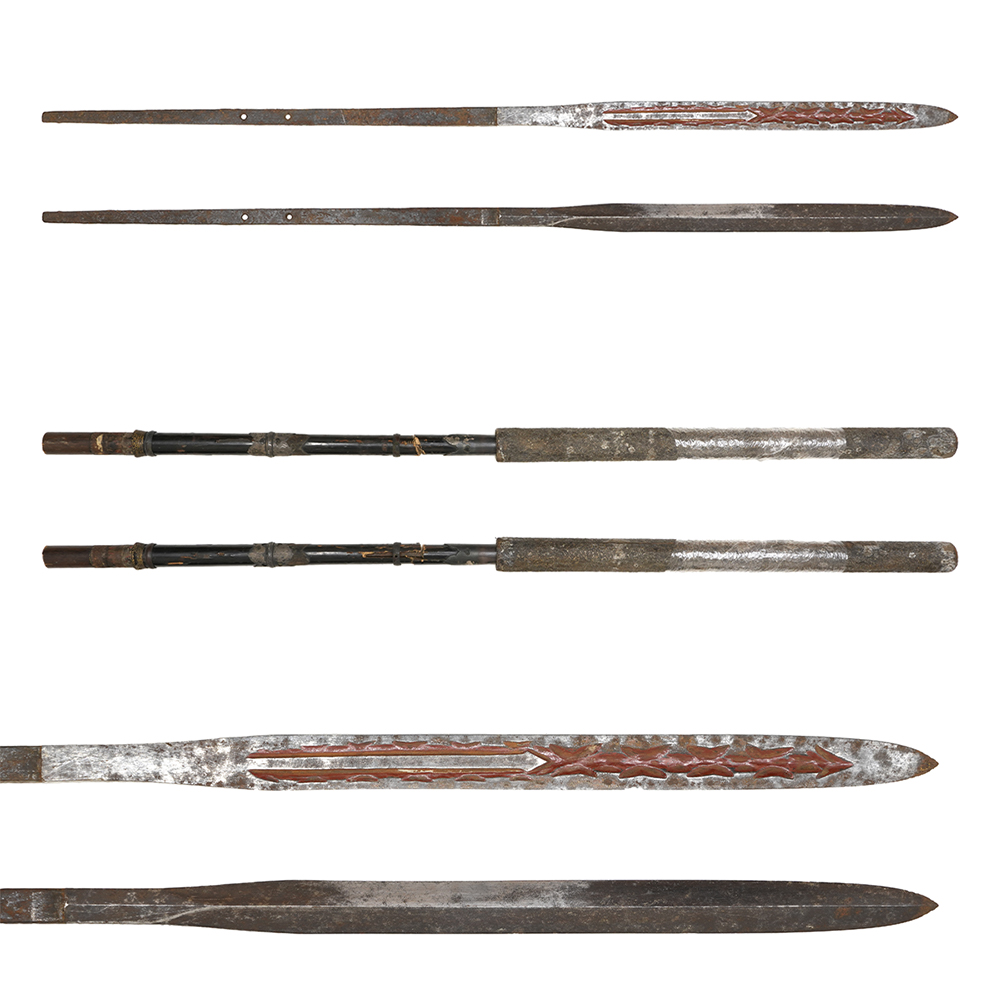
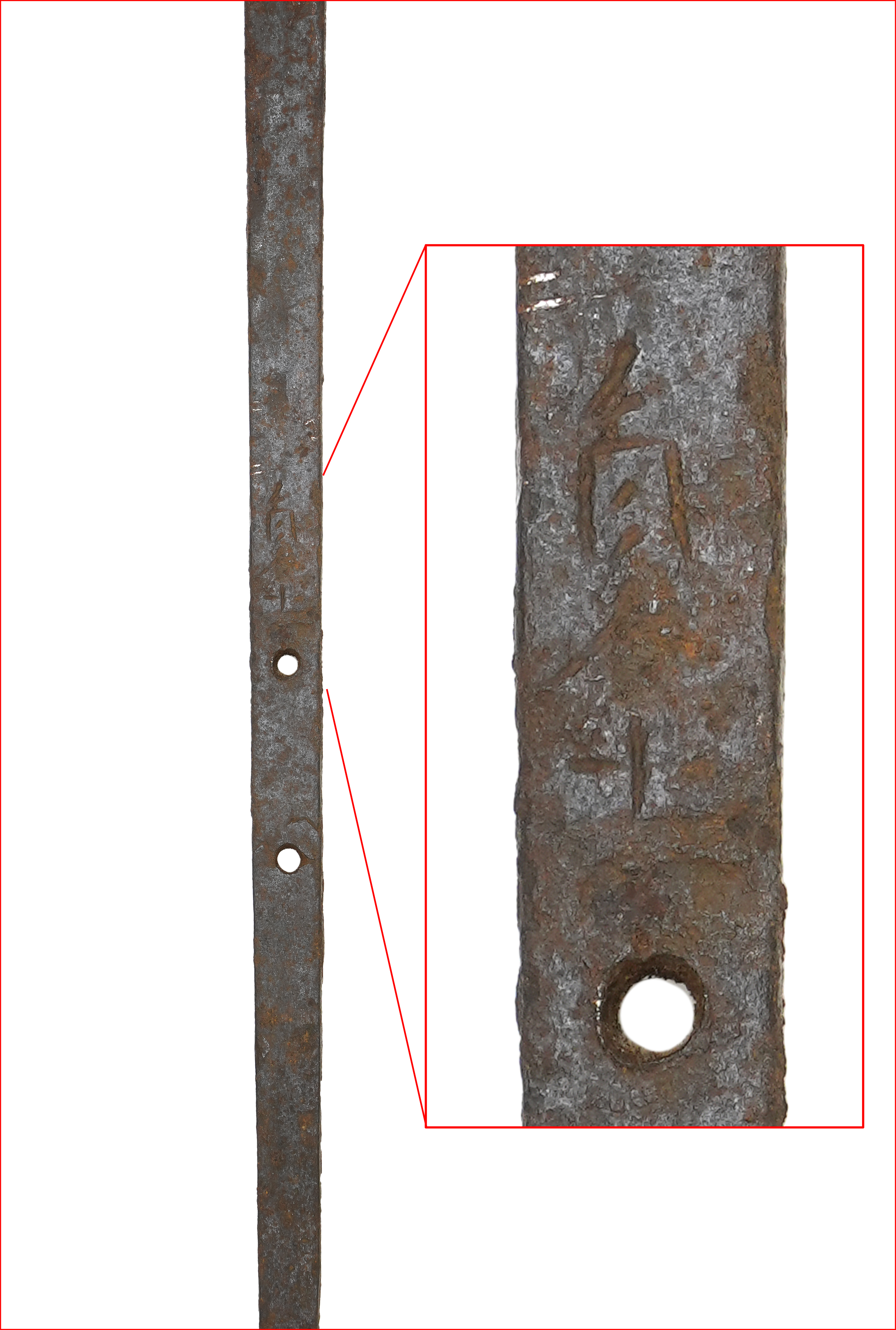
Consulting the meikan, about twelve swordsmiths who signed with the mei "Sadayoshi" can be confirmed in the Koto period, but since the production period can be seen as early to mid-Muromachi from the taihai of this yari, the candidates would be various smiths from Mikawa, Bizen, and Seki. Among them, examples of signing with a niji-mei as "Sadayoshi" are seen in the Sadayoshi of Seki, who is considered a strong possibility. However, as it is currently covered in rust, identifying which Sadayoshi it is by is difficult, and one would wish to seek the judgment of an appropriate appraisal organization after performing polishing. As a yari collector would perceive at a glance, it is clear from the shape of the long, protruding kerakubi that this is an old work not dating later than the mid-Muromachi period. The hi carved into the flat surface is a tagane-bori commonly referred to as "mukade," but in the case of this yari, it is not a simple mukade-bori, but a high-ranking work that also includes a suken. In addition to being an imposing o-mi-yari with a ha-tachi exceeding 1 shaku, the fact that gin-kise kanagu are used on the koshirae fragments suggests it was owned by a high-ranking joshi. It must have been a truly magnificent koshirae. While I can surmise it is due to recent housing circumstances, I only strongly pray that you will absolutely avoid such a foolish act as cutting the tsuka. Receiving wounds also remain on the kerakubi, vividly conveying traces of having survived actual combat during the Sengoku period. What kind of busho wielded this yari, and what kind of battlefields did he charge through? It is a single yari for which romance never ends just by imagining.
NihontoWatchOffered by Toushin
We couldn’t find current papers for this piece. Ask the dealer whether it has been, or can be, submitted to shinsa. — Hoshi

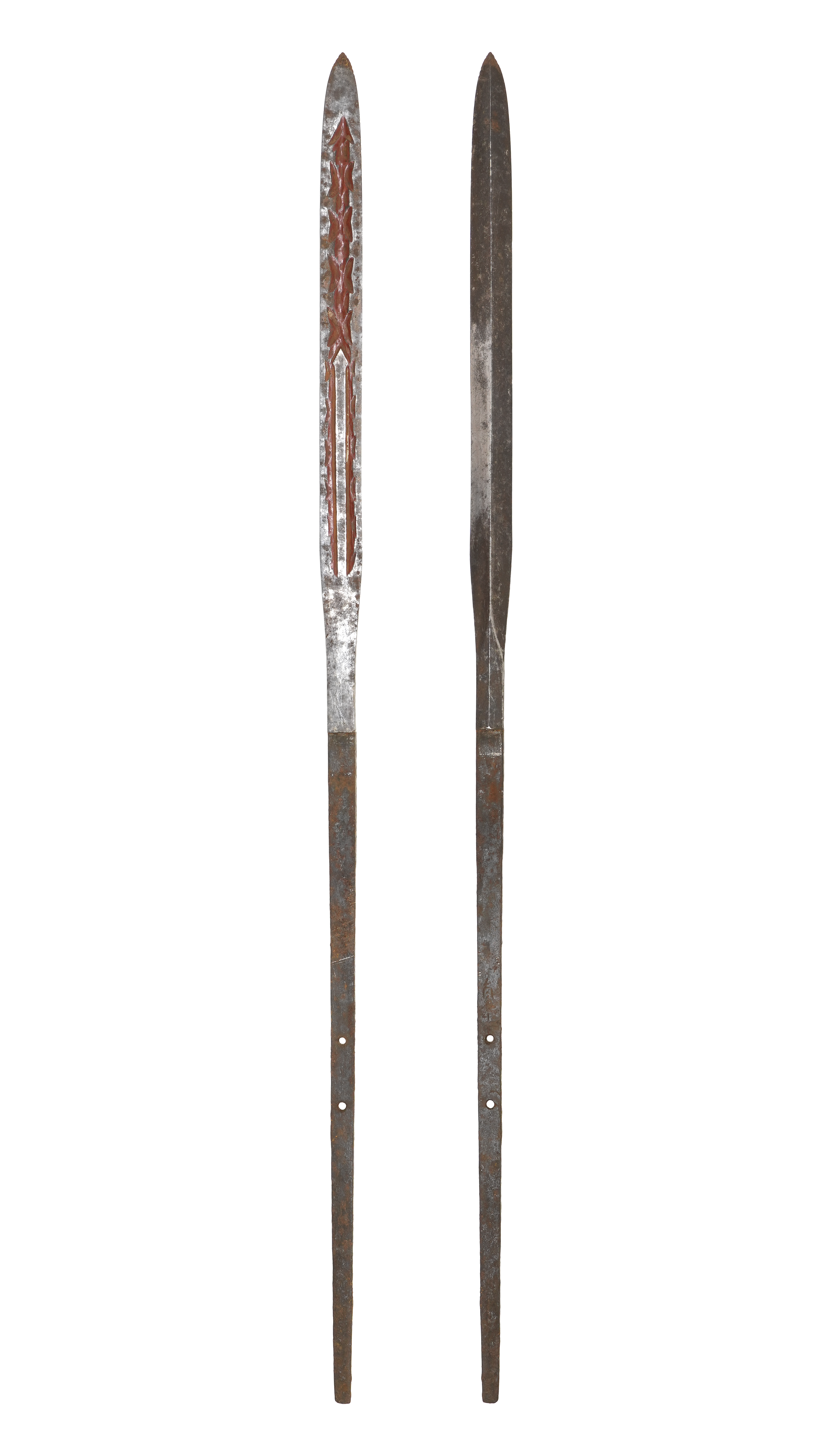
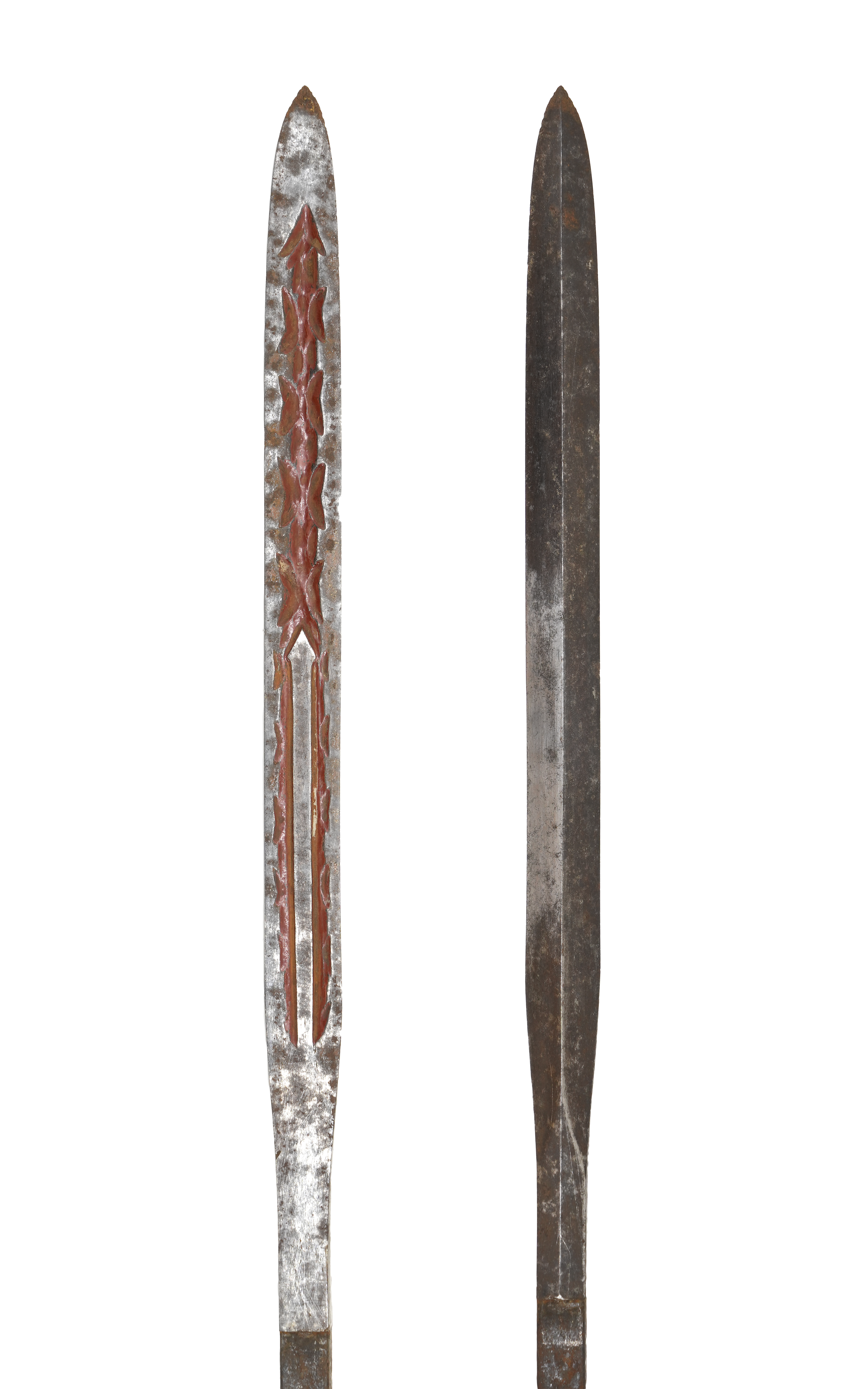
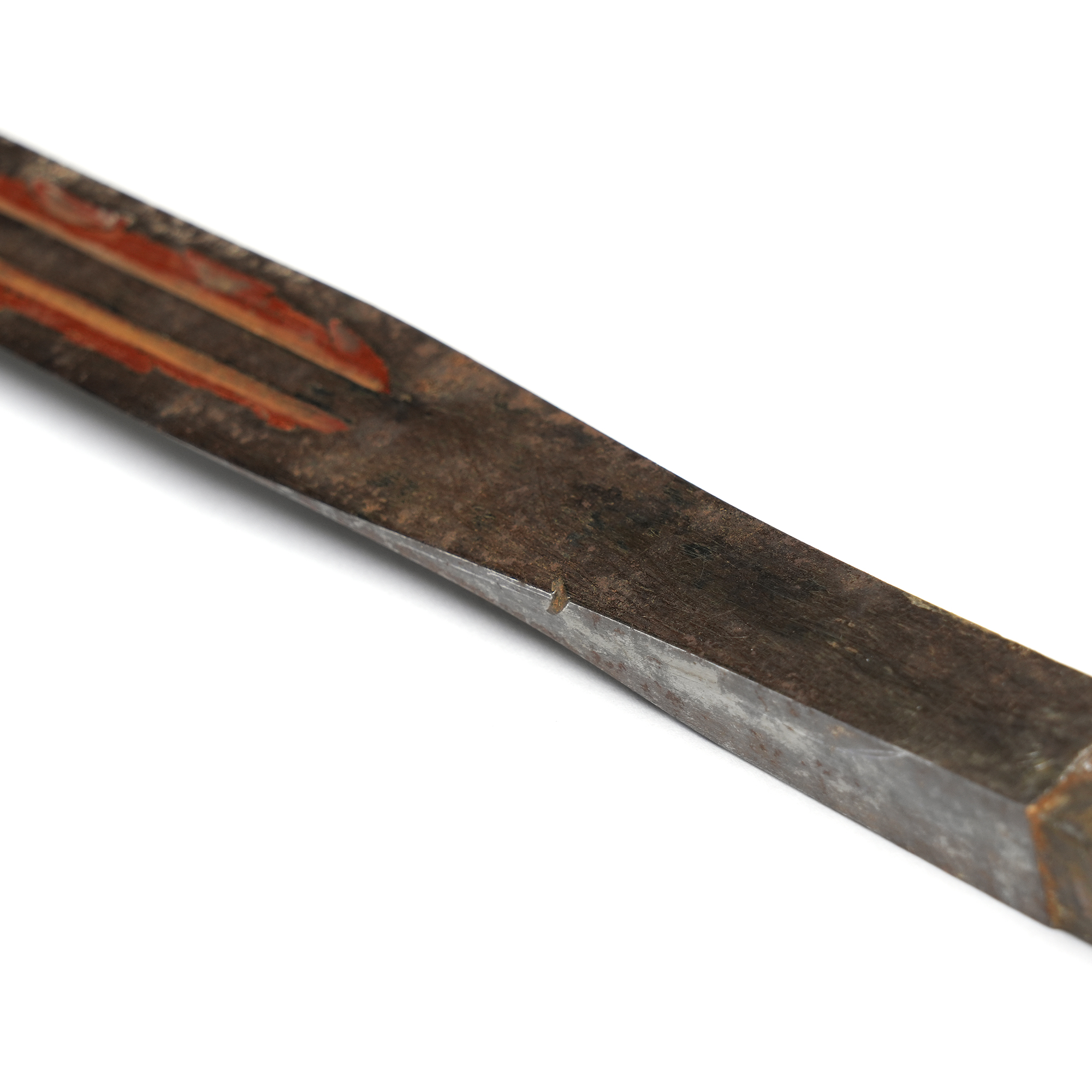
As written by the shop
Machine translation from the shop's Japanese · may contain errors ·
Mikawa · around 1429-1441
The Muromachi period (1392 to 1573)
Muromachi turned sword making into an industry: the uchigatana rose with massed infantry warfare, Osafune and Seki produced bundle swords beside custom orders, and the Ming trade carried Japanese blades abroad by the tens of thousands.
We could not find an authenticity certificate on the seller’s listing. Japanese swords and fittings are normally papered by the NBTHK (or the NTHK). Without one, the attribution is the seller’s own assessment and has not been independently verified — treat it with caution and ask the dealer about certification before buying.
As a rule we do not accept returns, except when we have sent a different item from the one ordered or when there is a significant discrepancy between the description and the item. If you wish to return an item, please contact us within 3 days of its arrival and then send it back.
¥110,000