Around 1800 Suishinshi Masahide argued in his writings that the craft must return to the old masters’ methods: the fukkotō revival. His greatest successor Naotane worked convincingly in Bizen and Sōshū manners that had been dead for centuries.
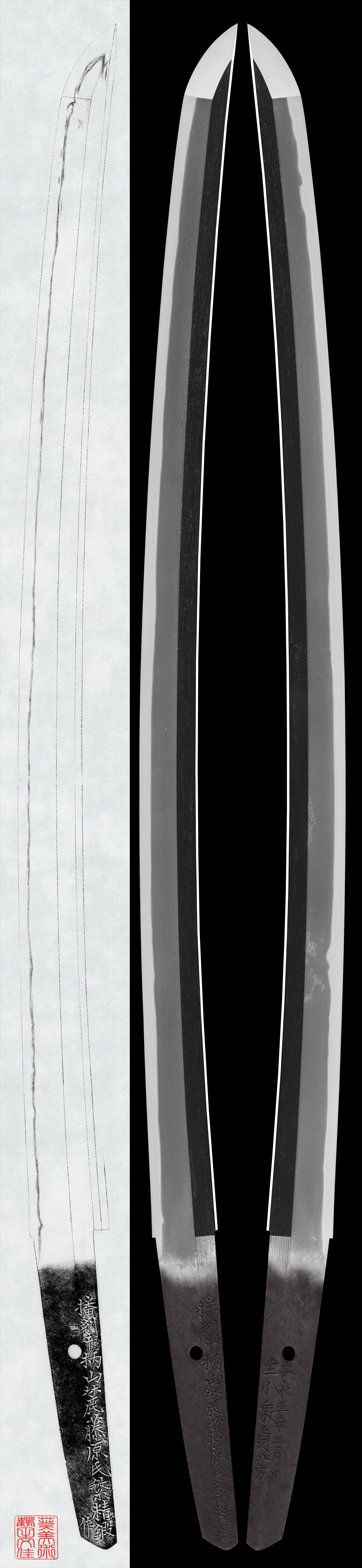
This is a hirazukuri wakizashi signed by Tegarayama Ujishige. Ujishige was a swordsmith who took his name from Tegarayama at Himeji Castle in Harima Province, where he established his forge. The listing mentions his lineage, including Soshu Ujishige, Tanko Ujishige, and the master smith Tegarayama Masashige, known for his vibrant toran-midare hamon.
 NihontoWatch

Shinshinto · Harima · around 1751-1764
Shinshinto · Harima
6 pieces on the market now
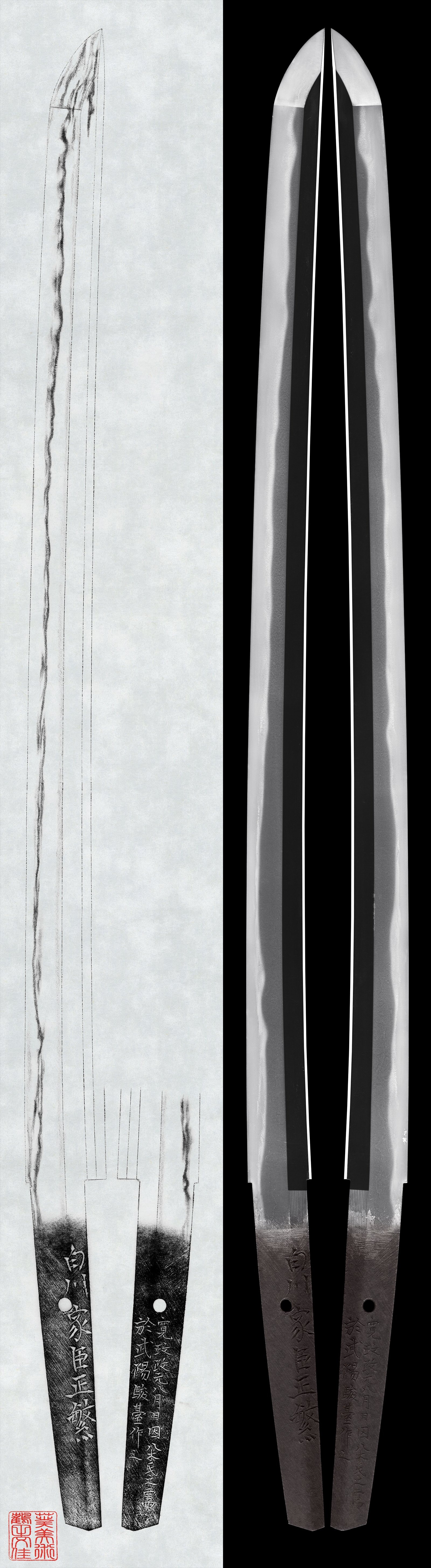
At the foot of Mount Tegara in Himeji, Harima province, a family of smiths took the mountain's name as their own across successive generations, descending from the first-generation Yamato no Daijō Fujiwara Ujishige. The setsumei trace this Banshū line through its best-documented figure, Tegarayama Masashige[[c:1]], commonly called Asashichi or Chōshichi and using the art name Tankasai. He was the younger brother of the third-generation Tegarayama Ujishige, first succeeded to the name of the fourth-generation Ujishige, and only later changed his signature to Masashige. In Tenmei 8 (1788) he entered the service of Matsudaira Sadanobu, lord of Shirakawa in Ōshū, as a retained smith (kakae-kaji) and moved to Edo, where he resided at Surugadai in Kanda; in the fourth month of Kyōwa 3 (1803) he received the honorary title Kai no Kami. One setsumei records that in Edo he studied under Suishinshi Masahide. Around the start of the Bunsei era he forged for a time in Osaka before returning to Edo, and from his lord Rakuō he was granted the two characters "Shinmyō," which he cut on the works he held most successful. The hand the setsumei describe is a Soshu-toned revival built on the tōran-midare of Tsuda Echizen no Kami Sukehiro, whose style Masashige privately admired (shishuku). The forging runs to tightly compacted ko-itame-hada with ji-nie adhering thickly, fine chikei entering, and at times a quiet near-muji ground; the steel reads clear.
Most blades open with a suguha or sugu yakidashi at the base and then rise into a billowing tōran-style large gunome-midare, mixed with notare, slightly pointed (togari-gokoro) elements, and arrow-nock (yahazu) shapes likened to surging waves. The temper carries deep nioi, evenly adhering ko-nie, ashi and yō, with sunagashi and kinsuji threading the edge and tobiyaki, yubashiri, and muneyaki breaking out above it; the nioiguchi tends bright. The bōshi is generally sugu ending in ko-maru, sometimes with hakikake and a long kaeri. Beyond this signature manner he also worked shallow notare of wide yakihaba and plain suguha, so the orderly large gunome that refuses to collapse, the pointed accents within the ha, and the wide mihaba of his forms serve as the readiest marks of his work. Across the register the kantei points cluster around that controlled tōran and its lively ji and ha, while one wakizashi, mingling yahazu into the edge, prompts the observation that Gonnoshin Terukane may also have been in mind. Self-carved horimono recur and aid attribution: jewel-chasing and ascending or descending dragons, bonji, the sankō-tsuka-ken, and hi, with tangs reading "hori dōsaku" to record the smith's own chisel. Several inscriptions carry documentary weight, naming Surugadai and Shundai in Buyō as places of forging, Ishū Dewa iron also used by Katayama Munetsugu, and a commission for Kosugi Tamenaga, a retainer of the Koga domain; a Juyo wakizashi signed "Ōshū Shirakawa kashin Masashige" bears self-cut dragon, bonji, and sankō-tsuka-ken recorded on its tang. The blades signed with bold, thick-chisel mei over ubu tangs finished in keshō ō-sujikai, dated through the Kansei and Kyōwa years, mark Tegarayama as a Himeji-rooted shinshintō line whose strength lay in the recreation of Sukehiro's waves. Learn more →
| Smith | Era | Designated |
|---|---|---|
| Masashige正繁 | 1789-1801 | 13 |
| Ujishige氏繁 | 1751-1764 | 0 |
| Ujishige氏繁 | 1781-1789 | 0 |
| Ujishige氏繁 | 1789-1801 | 0 |
| Masanao正直 | 1804-1818 | 0 |
The Shinshintō revival
Around 1800 Suishinshi Masahide argued in his writings that the craft must return to the old masters’ methods: the fukkotō revival. His greatest successor Naotane worked convincingly in Bizen and Sōshū manners that had been dead for centuries.
We could not find an authenticity certificate on the seller’s listing. Japanese swords and fittings are normally papered by the NBTHK (or the NTHK). Without one, the attribution is the seller’s own assessment and has not been independently verified — treat it with caution and ask the dealer about certification before buying.
If, due to our fault, the item differs significantly from its proper condition, the item may be returned. Cooling-off is within one week of the item's arrival.
This is a hirazukuri wakizashi signed by Tegarayama Ujishige. Ujishige was a swordsmith who took his name from Tegarayama at Himeji Castle in Harima Province, where he established his forge. The listing mentions his lineage, including Soshu Ujishige, Tanko Ujishige, and the master smith Tegarayama Masashige, known for his vibrant toran-midare hamon.
NihontoWatchShinshinto · Harima · around 1751-1764
Shinshinto · Harima
6 pieces on the market now
At the foot of Mount Tegara in Himeji, Harima province, a family of smiths took the mountain's name as their own across successive generations, descending from the first-generation Yamato no Daijō Fujiwara Ujishige. The setsumei trace this Banshū line through its best-documented figure, Tegarayama Masashige[[c:1]], commonly called Asashichi or Chōshichi and using the art name Tankasai. He was the younger brother of the third-generation Tegarayama Ujishige, first succeeded to the name of the fourth-generation Ujishige, and only later changed his signature to Masashige. In Tenmei 8 (1788) he entered the service of Matsudaira Sadanobu, lord of Shirakawa in Ōshū, as a retained smith (kakae-kaji) and moved to Edo, where he resided at Surugadai in Kanda; in the fourth month of Kyōwa 3 (1803) he received the honorary title Kai no Kami. One setsumei records that in Edo he studied under Suishinshi Masahide. Around the start of the Bunsei era he forged for a time in Osaka before returning to Edo, and from his lord Rakuō he was granted the two characters "Shinmyō," which he cut on the works he held most successful. The hand the setsumei describe is a Soshu-toned revival built on the tōran-midare of Tsuda Echizen no Kami Sukehiro, whose style Masashige privately admired (shishuku). The forging runs to tightly compacted ko-itame-hada with ji-nie adhering thickly, fine chikei entering, and at times a quiet near-muji ground; the steel reads clear.
Most blades open with a suguha or sugu yakidashi at the base and then rise into a billowing tōran-style large gunome-midare, mixed with notare, slightly pointed (togari-gokoro) elements, and arrow-nock (yahazu) shapes likened to surging waves. The temper carries deep nioi, evenly adhering ko-nie, ashi and yō, with sunagashi and kinsuji threading the edge and tobiyaki, yubashiri, and muneyaki breaking out above it; the nioiguchi tends bright. The bōshi is generally sugu ending in ko-maru, sometimes with hakikake and a long kaeri. Beyond this signature manner he also worked shallow notare of wide yakihaba and plain suguha, so the orderly large gunome that refuses to collapse, the pointed accents within the ha, and the wide mihaba of his forms serve as the readiest marks of his work. Across the register the kantei points cluster around that controlled tōran and its lively ji and ha, while one wakizashi, mingling yahazu into the edge, prompts the observation that Gonnoshin Terukane may also have been in mind. Self-carved horimono recur and aid attribution: jewel-chasing and ascending or descending dragons, bonji, the sankō-tsuka-ken, and hi, with tangs reading "hori dōsaku" to record the smith's own chisel. Several inscriptions carry documentary weight, naming Surugadai and Shundai in Buyō as places of forging, Ishū Dewa iron also used by Katayama Munetsugu, and a commission for Kosugi Tamenaga, a retainer of the Koga domain; a Juyo wakizashi signed "Ōshū Shirakawa kashin Masashige" bears self-cut dragon, bonji, and sankō-tsuka-ken recorded on its tang. The blades signed with bold, thick-chisel mei over ubu tangs finished in keshō ō-sujikai, dated through the Kansei and Kyōwa years, mark Tegarayama as a Himeji-rooted shinshintō line whose strength lay in the recreation of Sukehiro's waves. Learn more →
| Smith | Era | Designated |
|---|---|---|
| Masashige正繁 | 1789-1801 | 13 |
| Ujishige氏繁 | 1751-1764 | 0 |
| Ujishige氏繁 | 1781-1789 | 0 |
| Ujishige氏繁 | 1789-1801 | 0 |
| Masanao正直 | 1804-1818 | 0 |
The Shinshintō revival
Around 1800 Suishinshi Masahide argued in his writings that the craft must return to the old masters’ methods: the fukkotō revival. His greatest successor Naotane worked convincingly in Bizen and Sōshū manners that had been dead for centuries.
We could not find an authenticity certificate on the seller’s listing. Japanese swords and fittings are normally papered by the NBTHK (or the NTHK). Without one, the attribution is the seller’s own assessment and has not been independently verified — treat it with caution and ask the dealer about certification before buying.
If, due to our fault, the item differs significantly from its proper condition, the item may be returned. Cooling-off is within one week of the item's arrival.