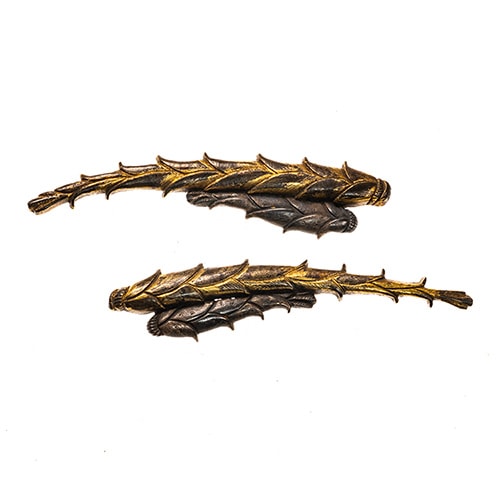
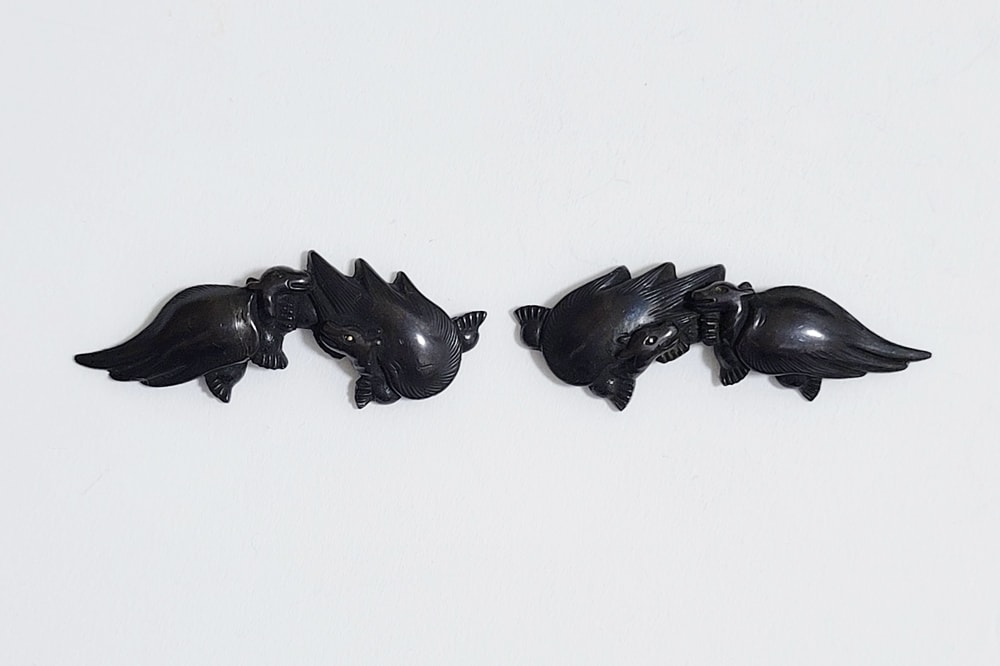
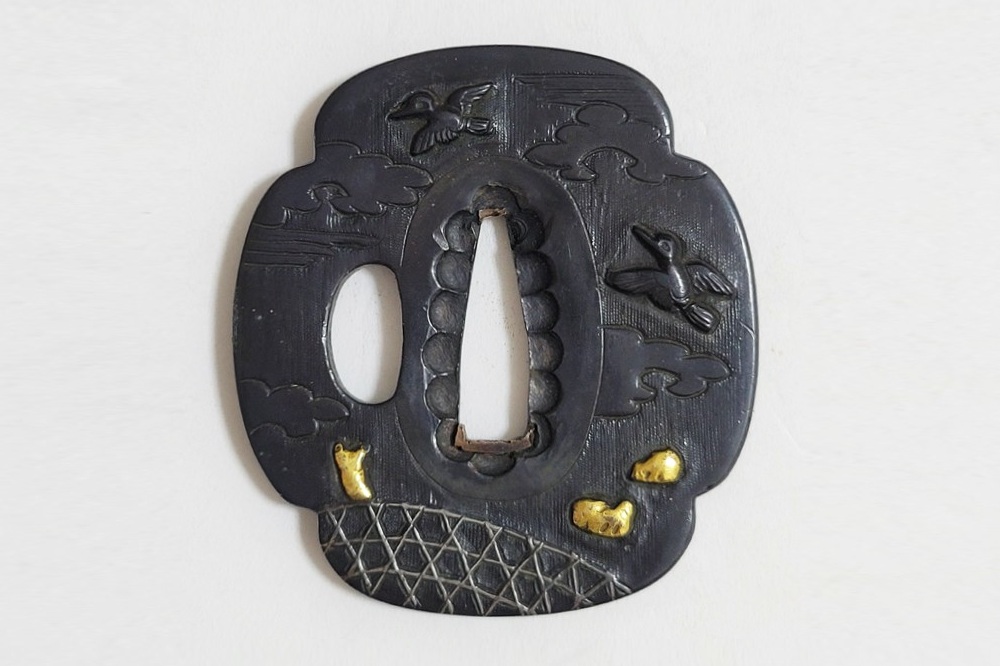
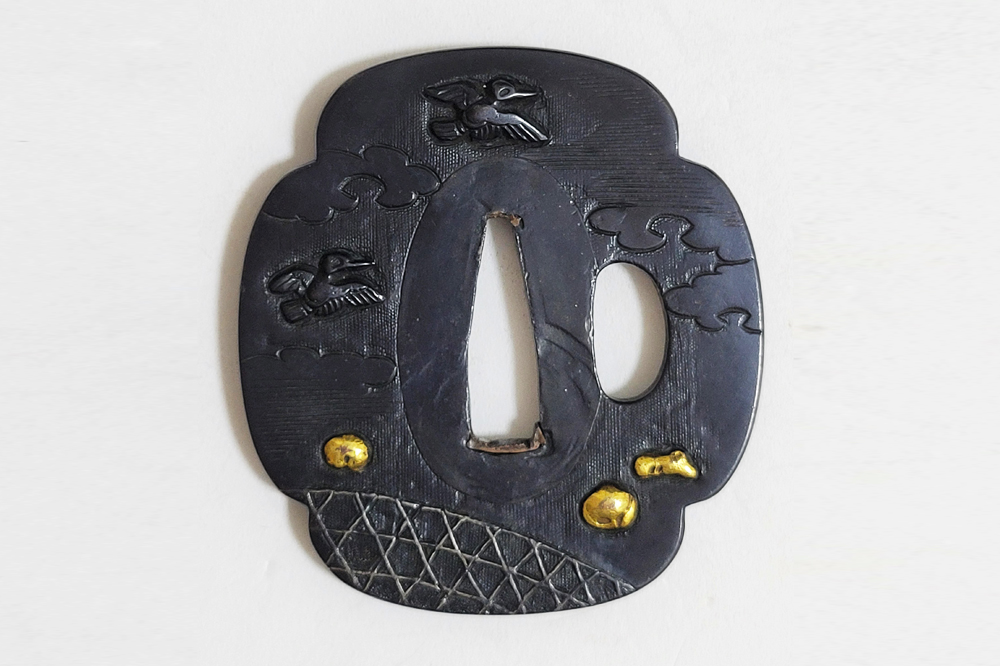
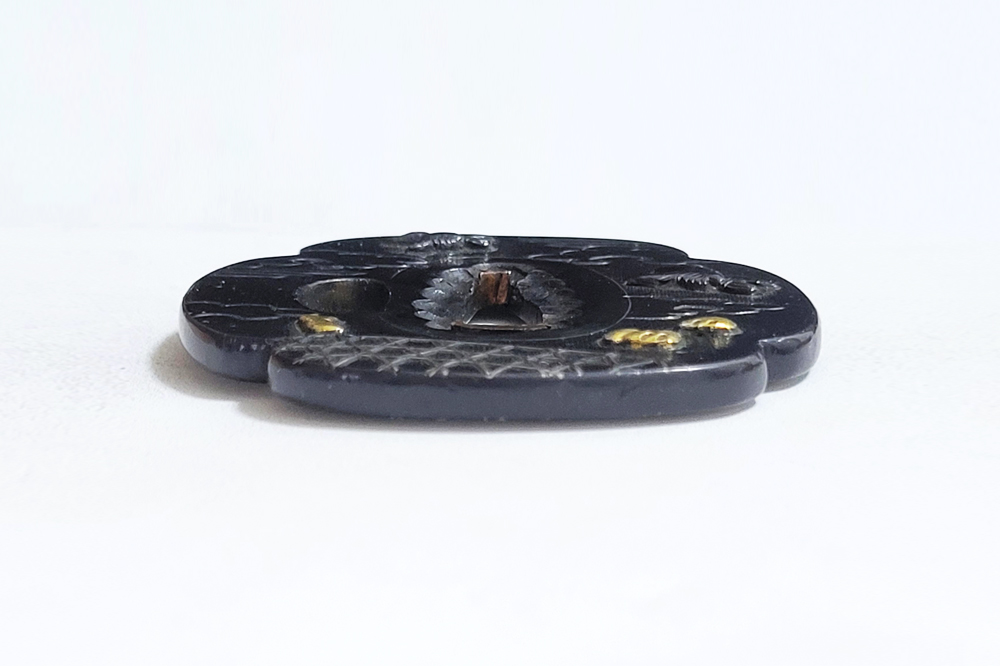
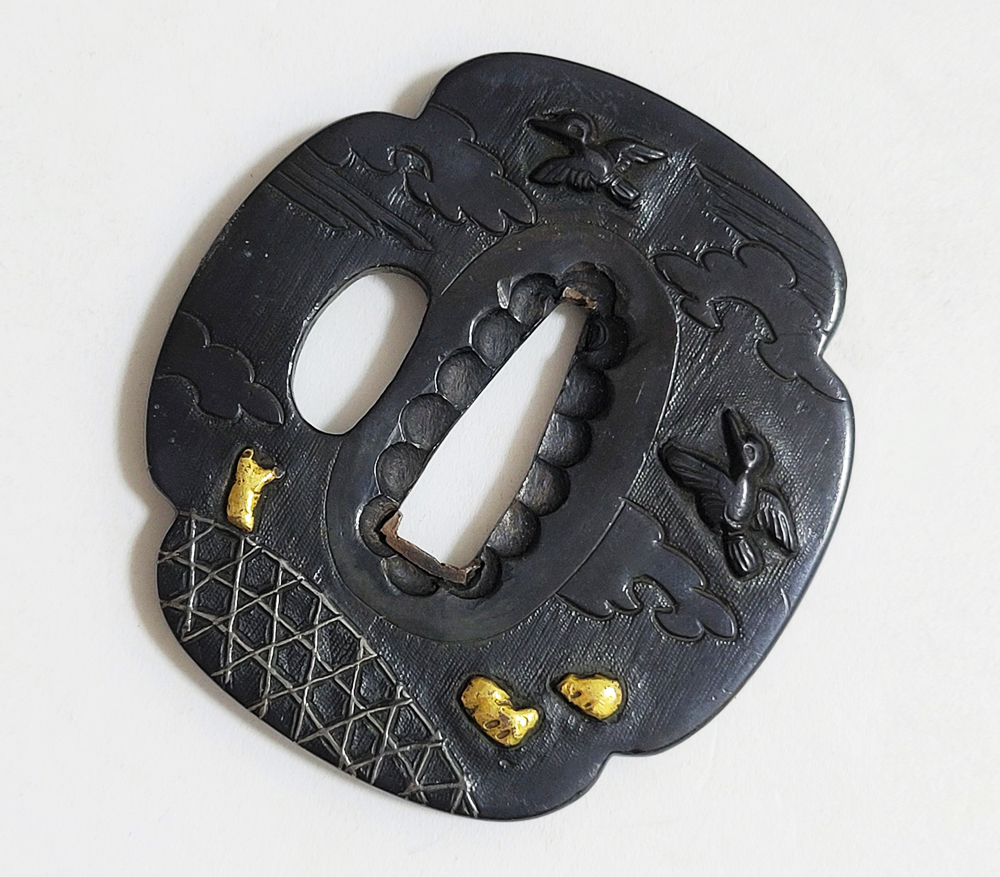
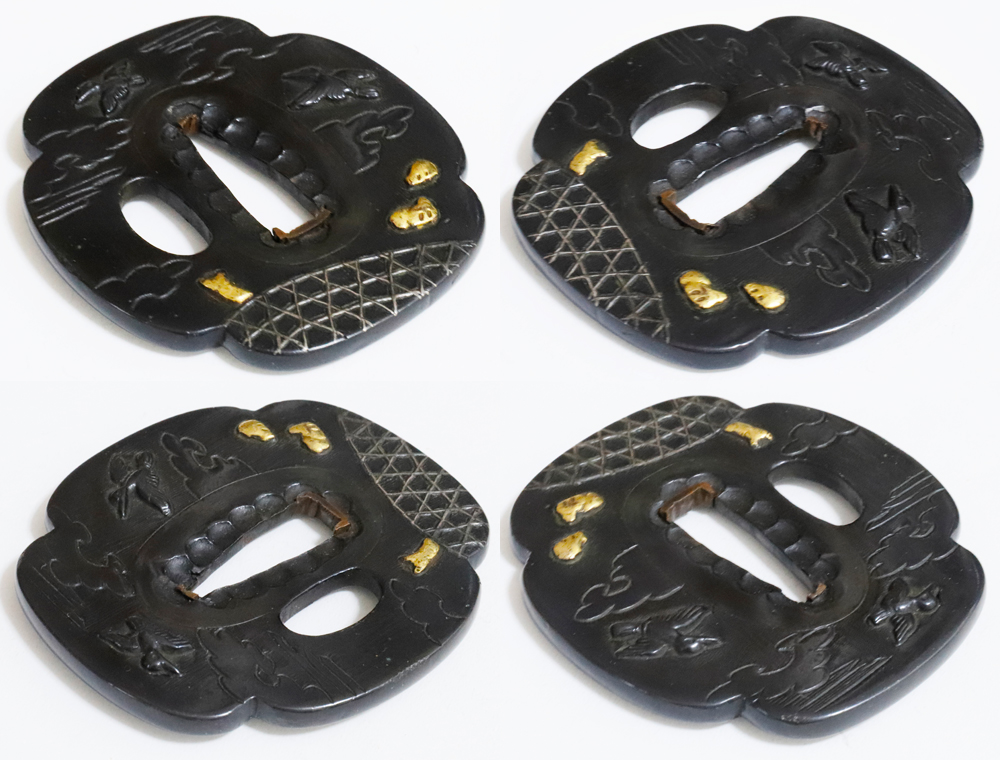
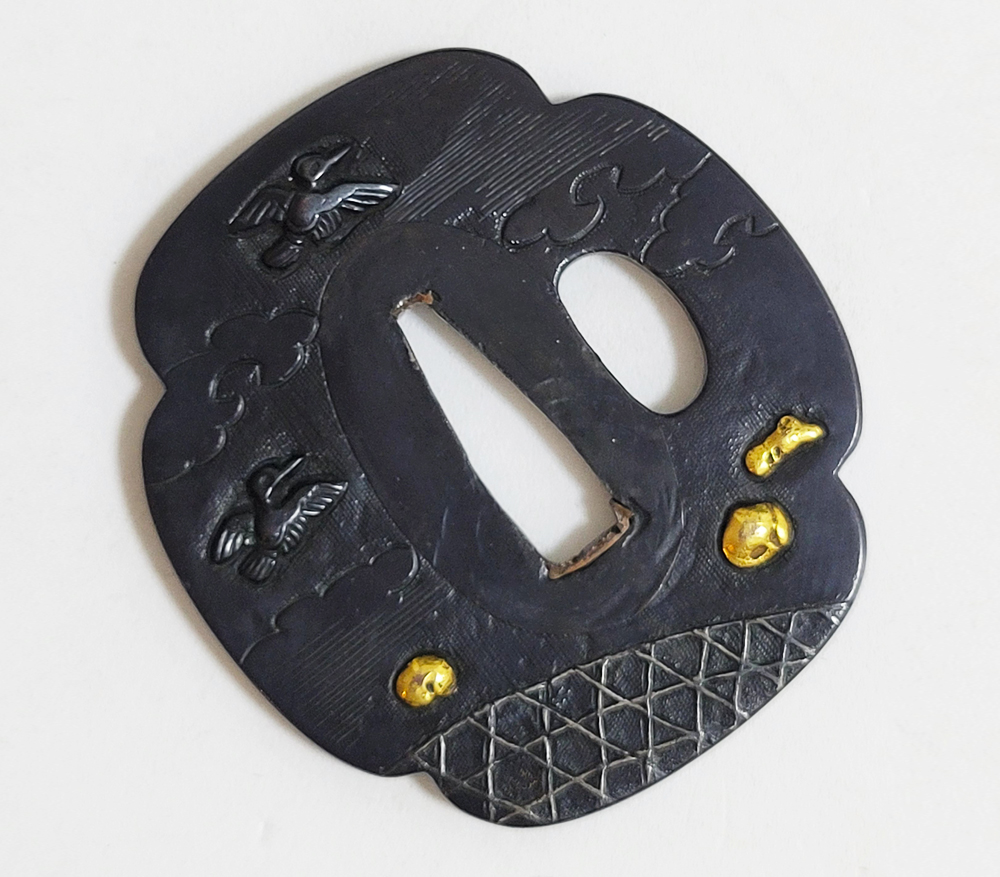
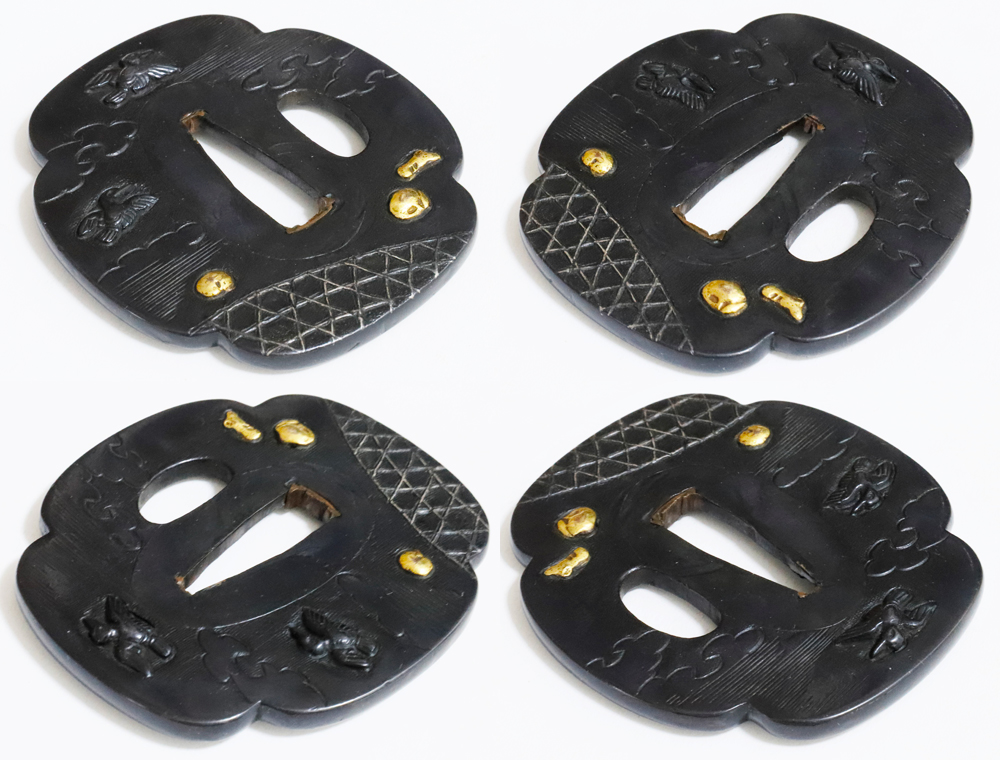
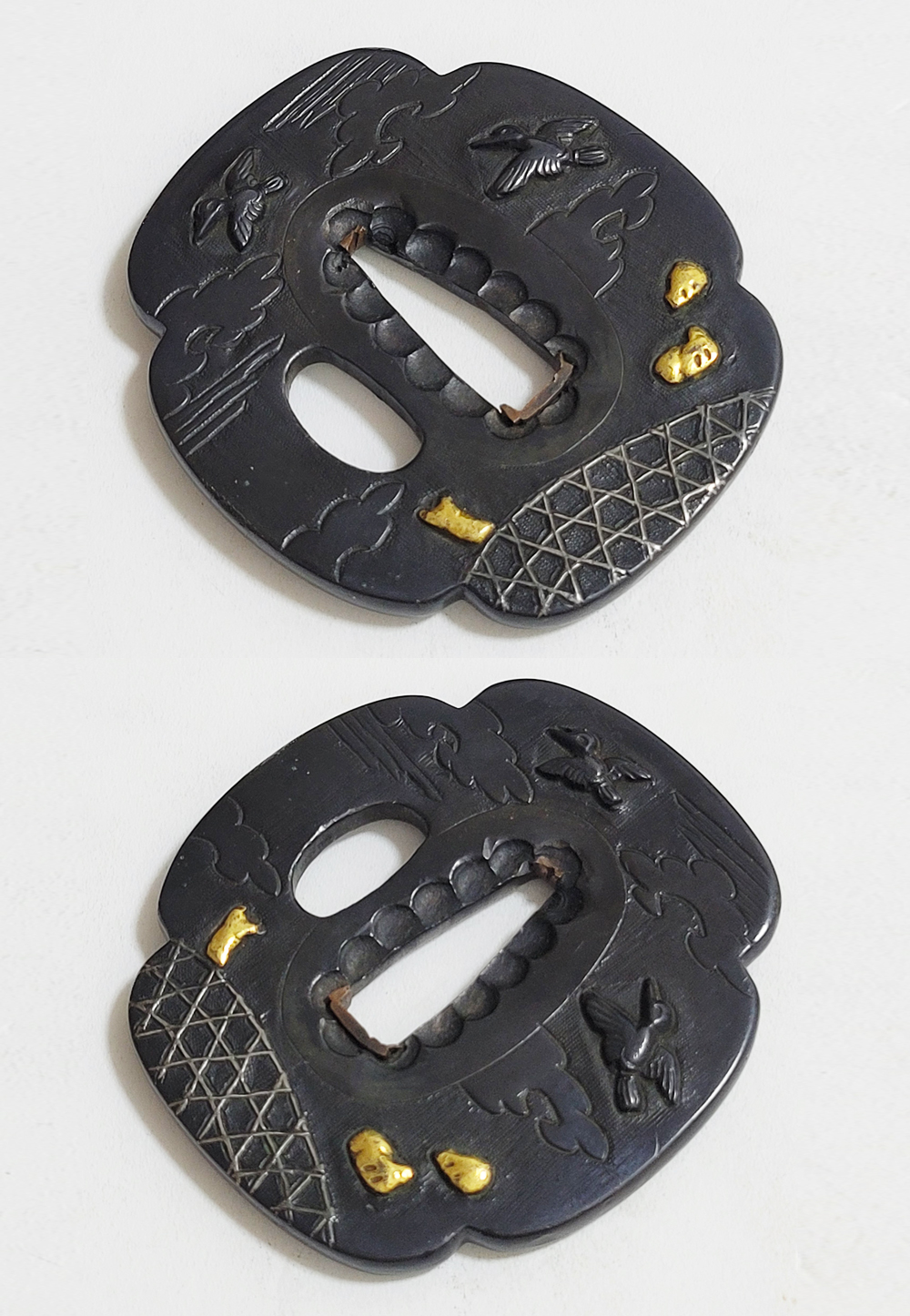
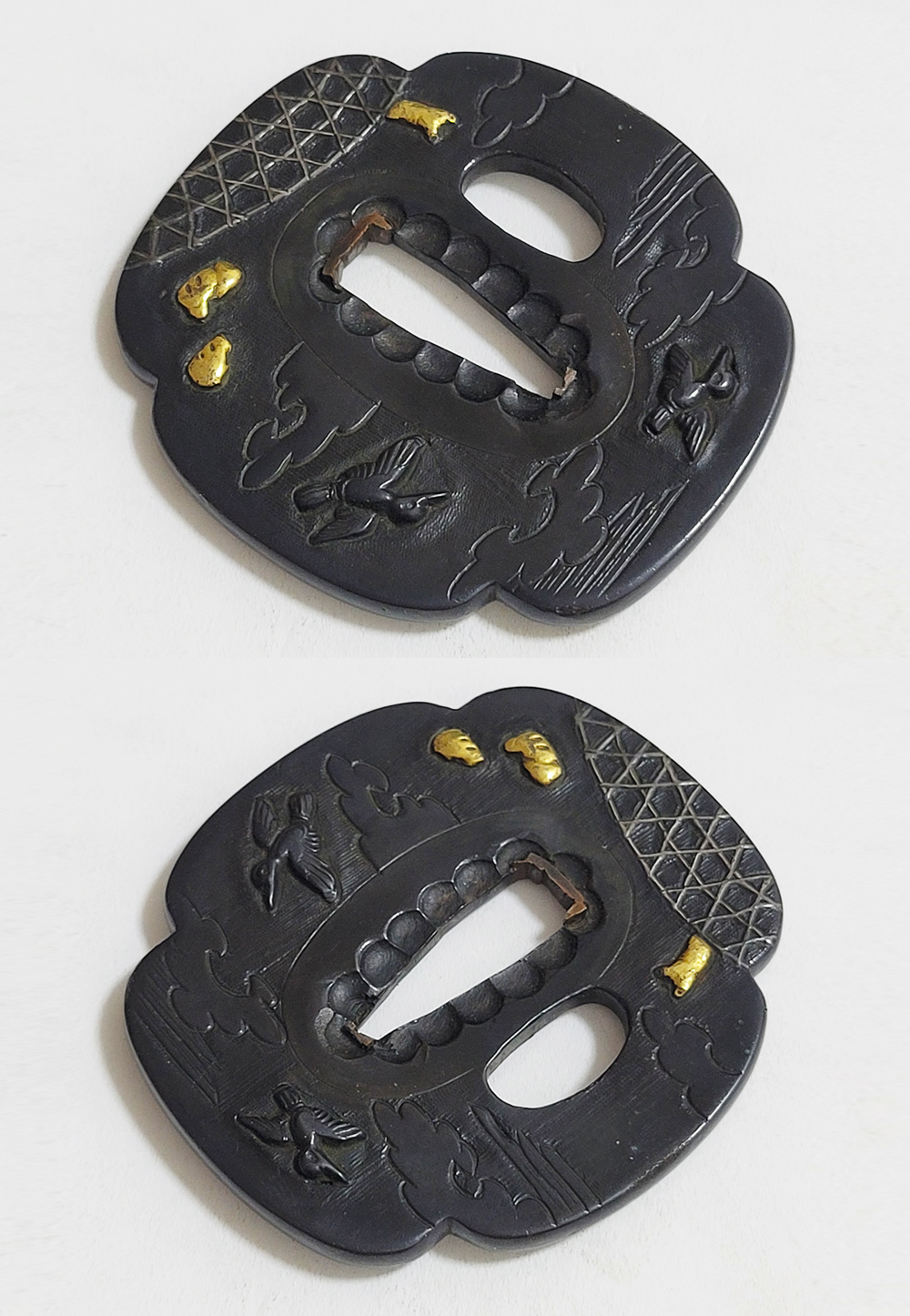
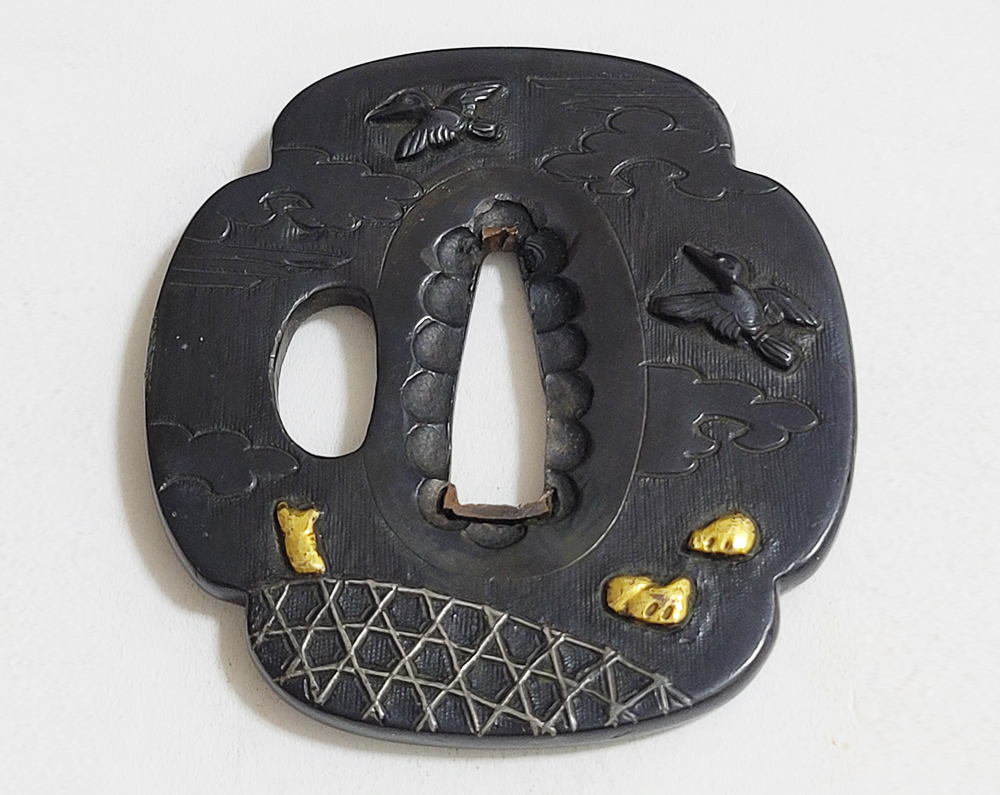
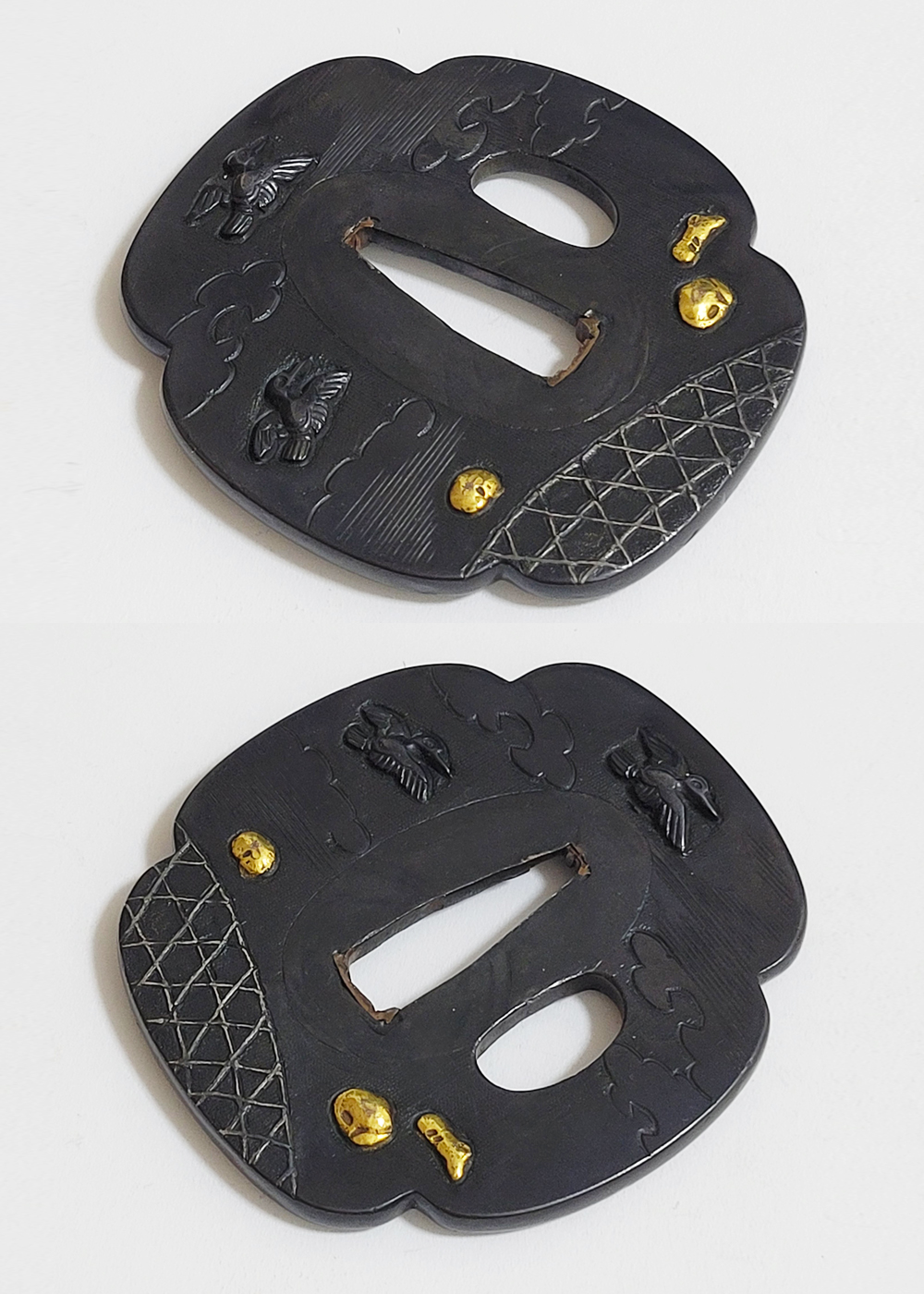
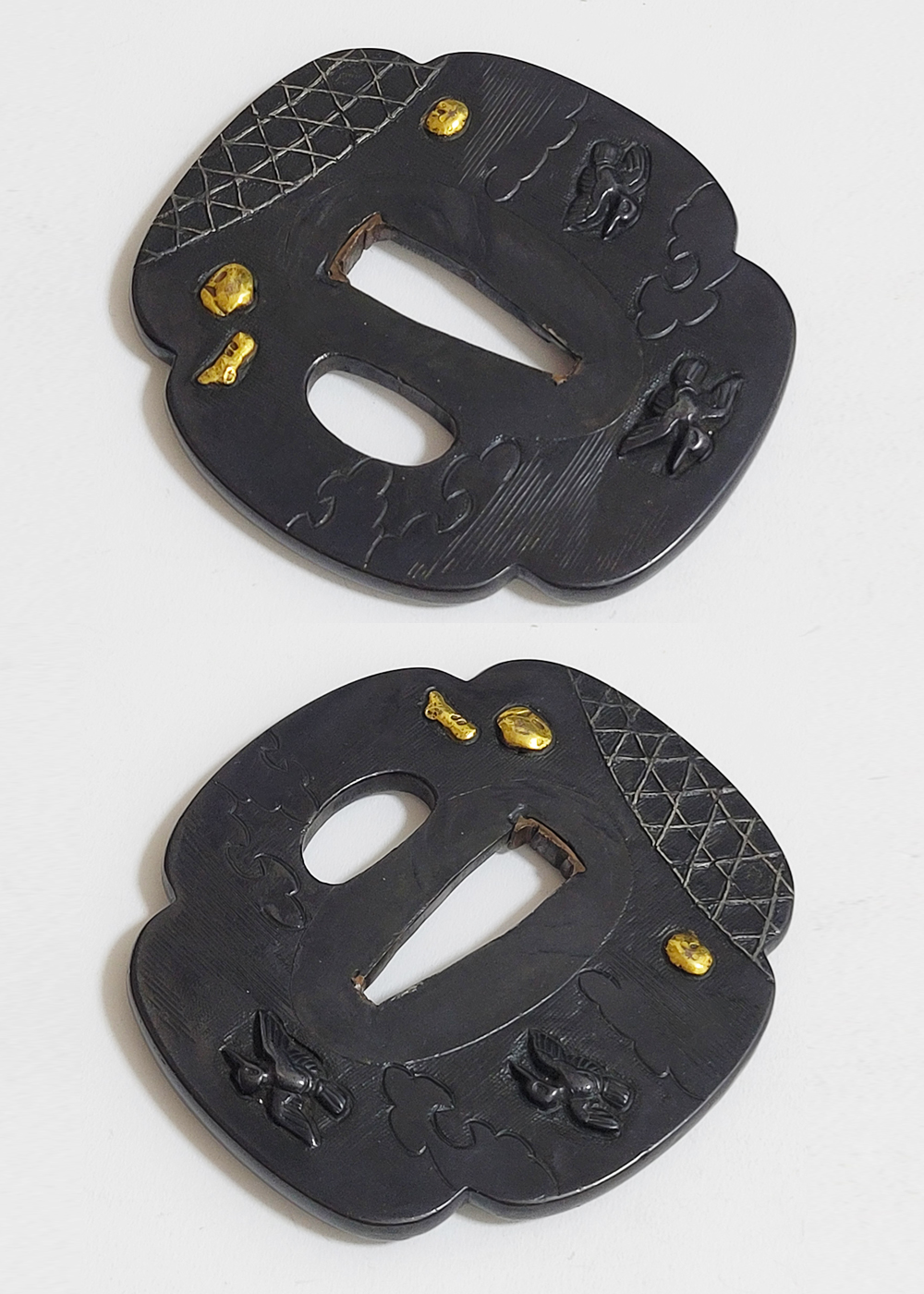
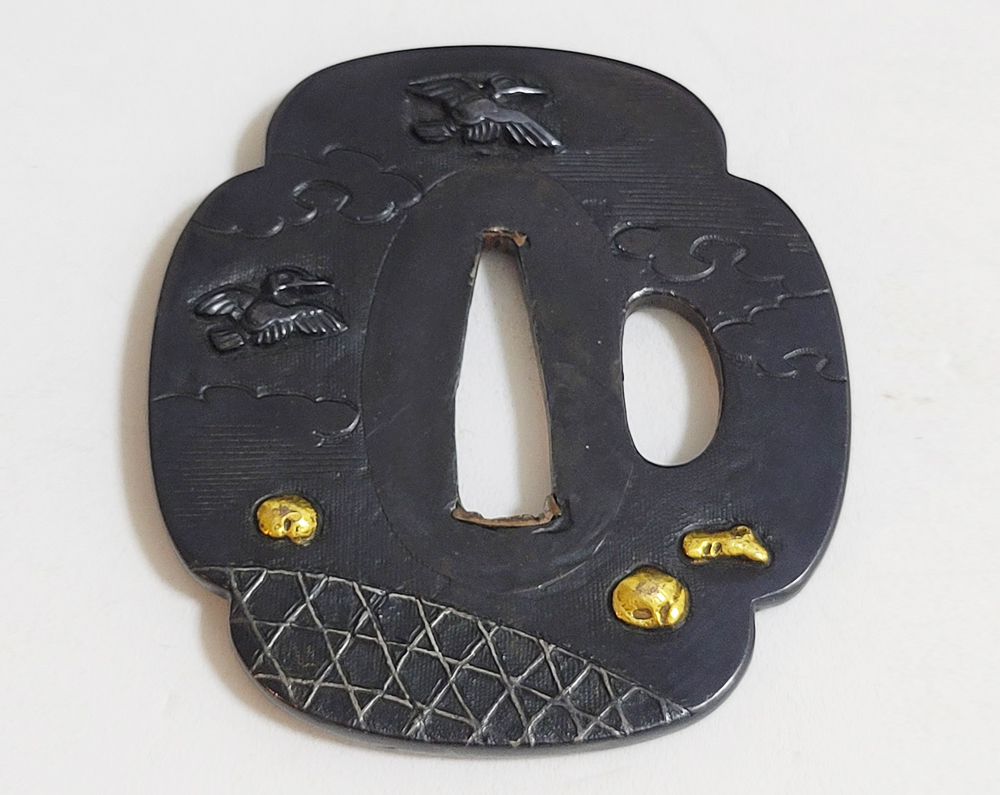
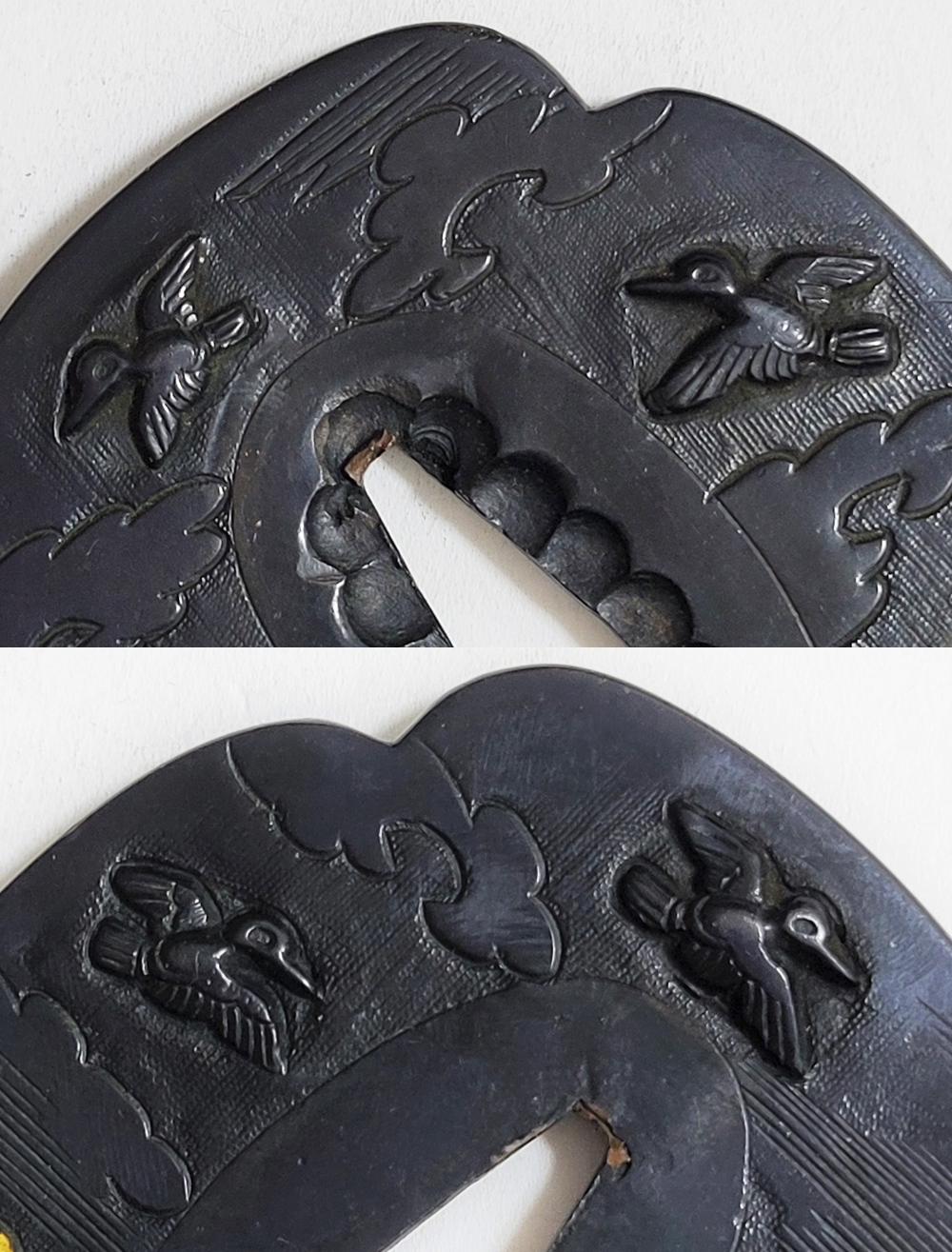
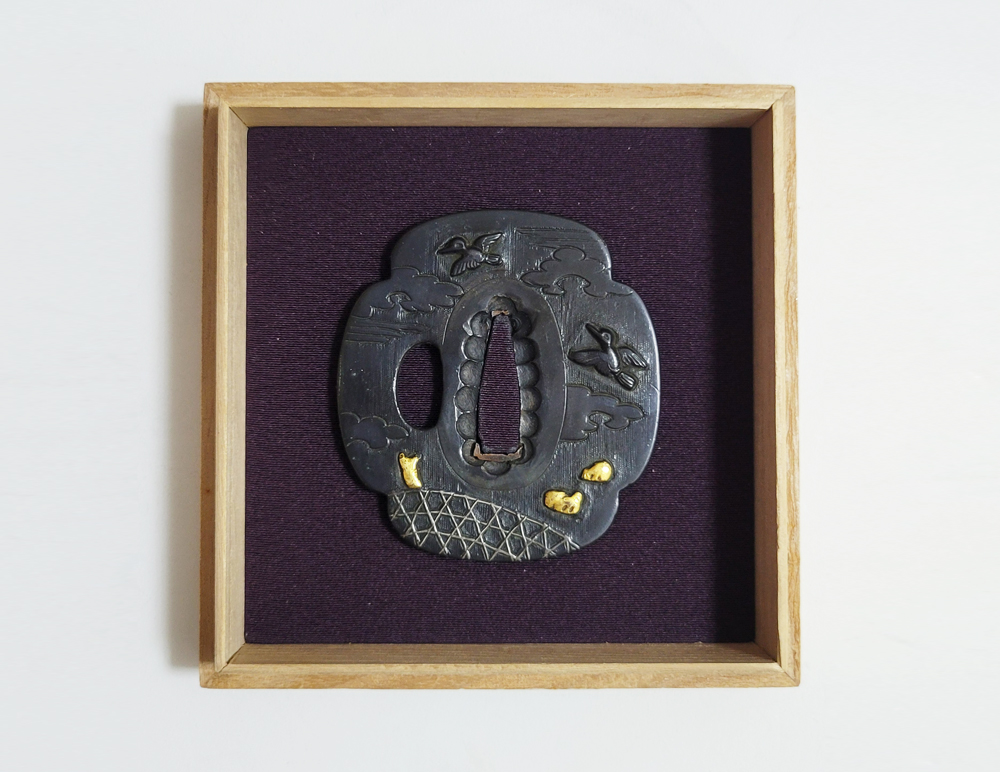
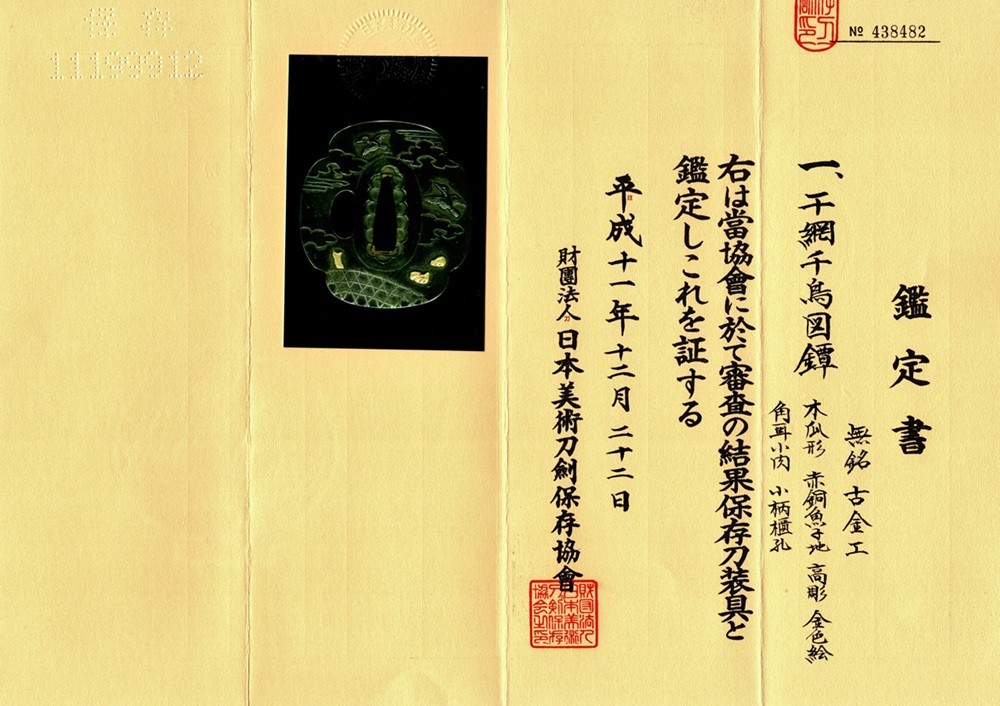
This is a tsuba attributed to Ko-Kinko, featuring a design of a drying net and plovers. Ko-Kinko refers to early kinko works from the Muromachi period that cannot be specifically attributed to Goto, Kyo, or Mino schools. This piece showcases high-quality shakudo with a well-used nanako ground, creating a deep, subdued color. The design skillfully depicts a quiet beach scene with a drying net and plovers flying in the sky, rendered in high-relief carving, inlay, and thin-relief carving. Silver inlay of a diagonal lattice pattern on the drying net and gold-painted stones floating on waves add a vibrant touch to the simple composition, exuding elegance and refinement. It passed the Hozon Tosogu appraisal in 1999.
 NihontoWatchBETA
mumei · Ko-Kinko · Momoyama
Momoyama
Unsigned
Hozon (NBTHK)
Certifies a genuine fitting worth preserving: a correct signature, or, if unsigned, an identifiable era and school, with recognized artistic and craft value.
The NBTHK (Nihon Bijutsu Tōken Hozon Kyōkai, the Society for the Preservation of Japanese Art Swords) is a public-interest incorporated foundation founded in 1948 and supervised by Japan’s Agency for Cultural Affairs (Bunkachō); it is based at the Japanese Sword Museum in Tokyo. Its expert panels physically examine each submitted work (shinsa) and issue a certificate (kanteishō) ranking it by artistic and historical merit. NBTHK papers are the most widely recognized standard of authentication for Japanese swords and fittings.
NBTHK official siteDomestic: items may be returned within 7 days in original condition for a full refund (buyer covers transport). Overseas orders: no-refunds, no-returns.
This is a tsuba attributed to Ko-Kinko, featuring a design of a drying net and plovers. Ko-Kinko refers to early kinko works from the Muromachi period that cannot be specifically attributed to Goto, Kyo, or Mino schools. This piece showcases high-quality shakudo with a well-used nanako ground, creating a deep, subdued color. The design skillfully depicts a quiet beach scene with a drying net and plovers flying in the sky, rendered in high-relief carving, inlay, and thin-relief carving. Silver inlay of a diagonal lattice pattern on the drying net and gold-painted stones floating on waves add a vibrant touch to the simple composition, exuding elegance and refinement. It passed the Hozon Tosogu appraisal in 1999.
NihontoWatchBETAmumei · Ko-Kinko · Momoyama
Momoyama
Unsigned
Hozon (NBTHK)
Certifies a genuine fitting worth preserving: a correct signature, or, if unsigned, an identifiable era and school, with recognized artistic and craft value.
The NBTHK (Nihon Bijutsu Tōken Hozon Kyōkai, the Society for the Preservation of Japanese Art Swords) is a public-interest incorporated foundation founded in 1948 and supervised by Japan’s Agency for Cultural Affairs (Bunkachō); it is based at the Japanese Sword Museum in Tokyo. Its expert panels physically examine each submitted work (shinsa) and issue a certificate (kanteishō) ranking it by artistic and historical merit. NBTHK papers are the most widely recognized standard of authentication for Japanese swords and fittings.
NBTHK official siteDomestic: items may be returned within 7 days in original condition for a full refund (buyer covers transport). Overseas orders: no-refunds, no-returns.