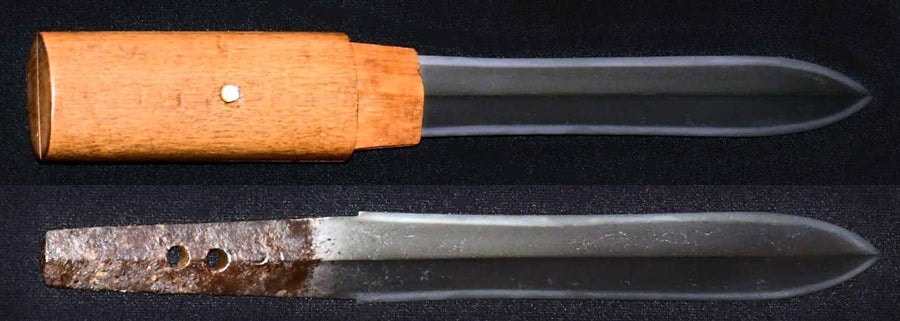
Around 1800 Suishinshi Masahide argued in his writings that the craft must return to the old masters’ methods: the fukkotō revival. His greatest successor Naotane worked convincingly in Bizen and Sōshū manners that had been dead for centuries.
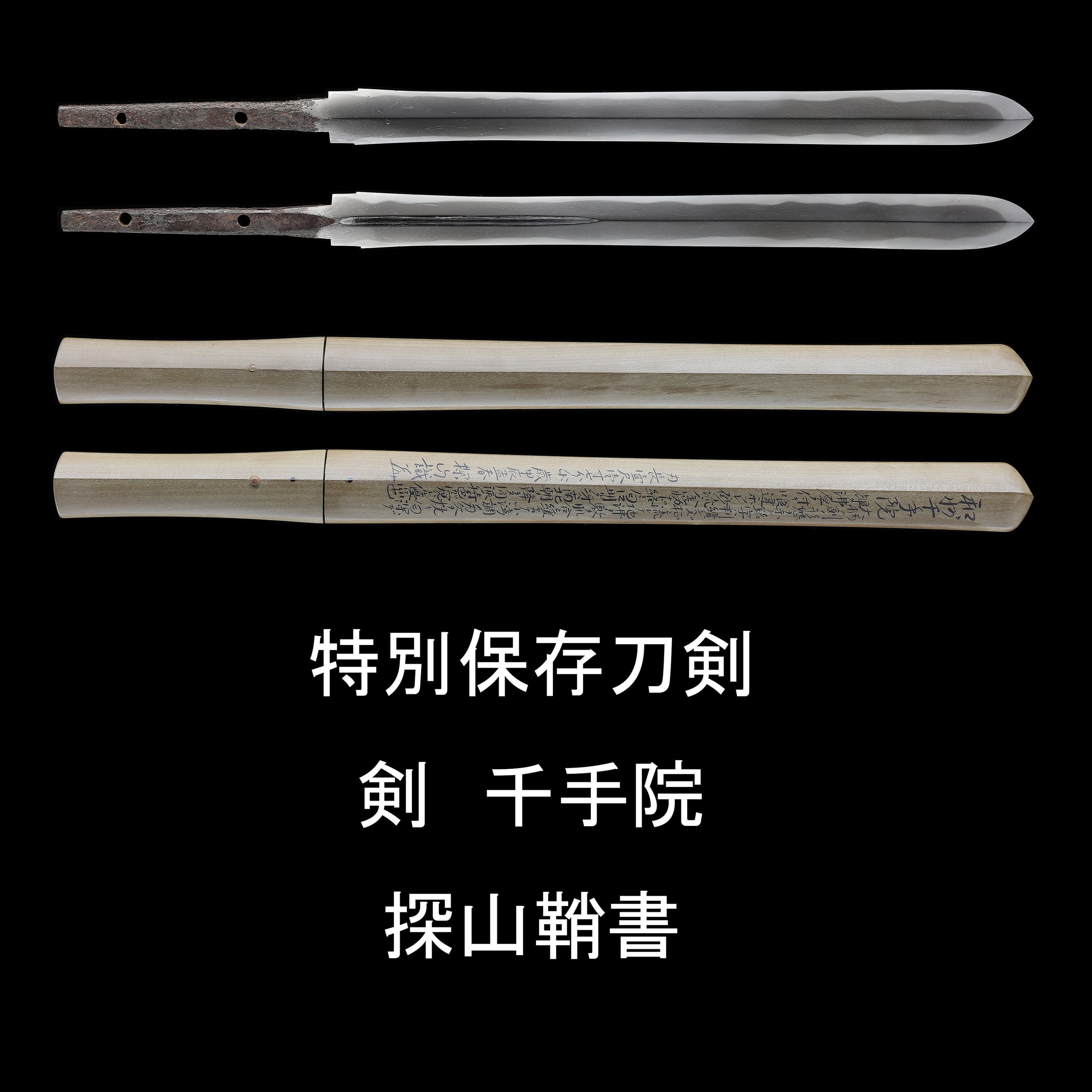
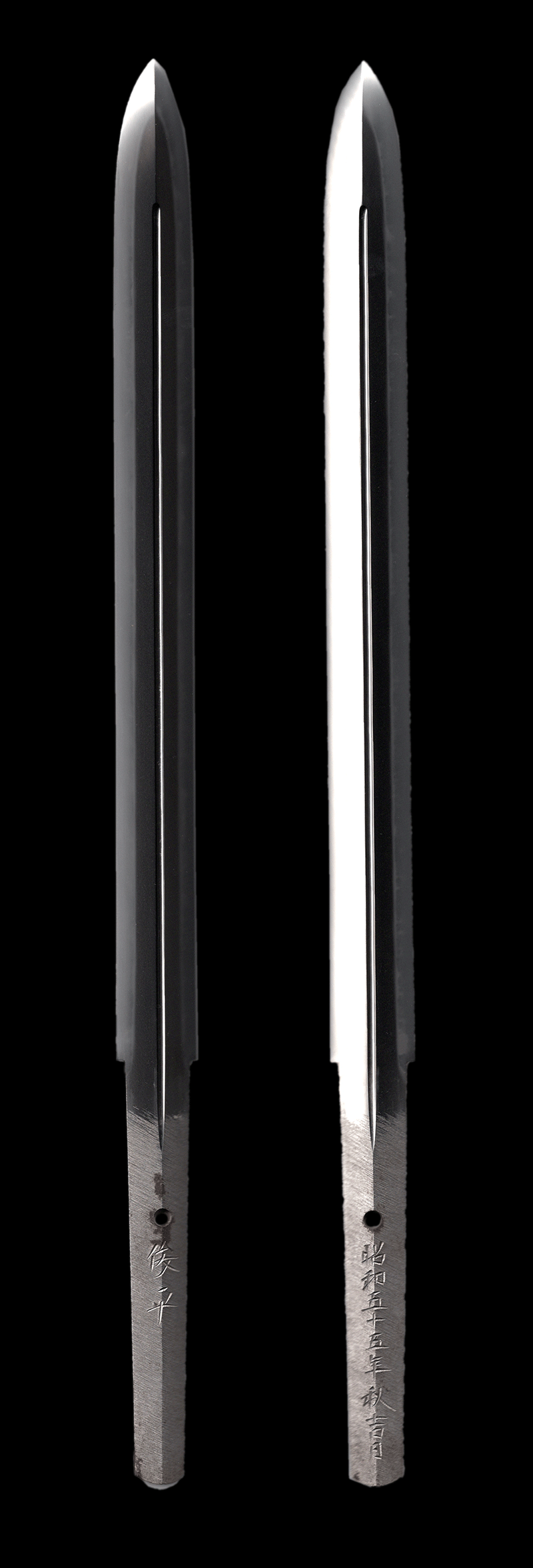
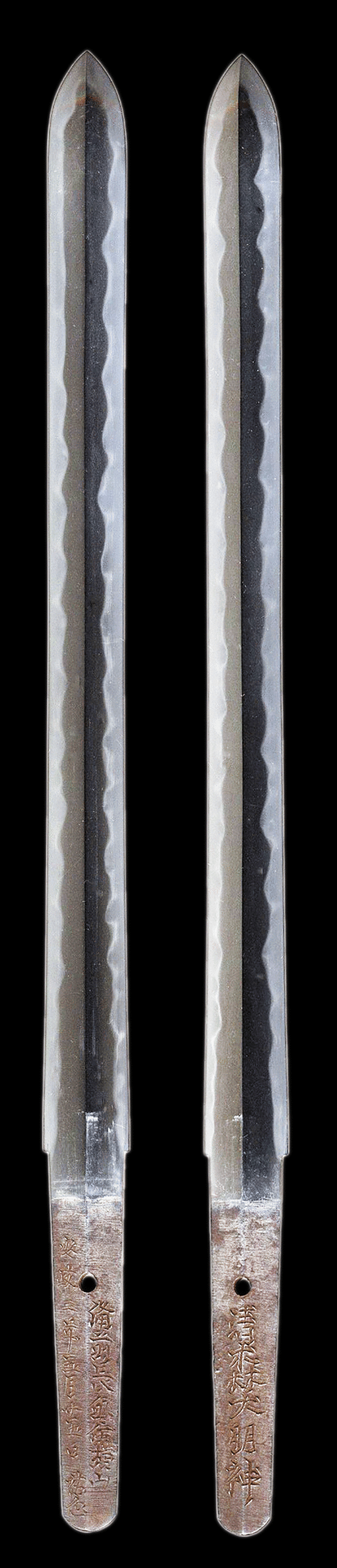
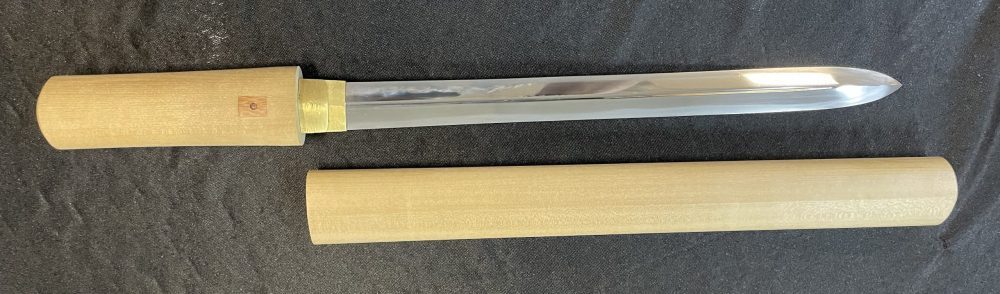
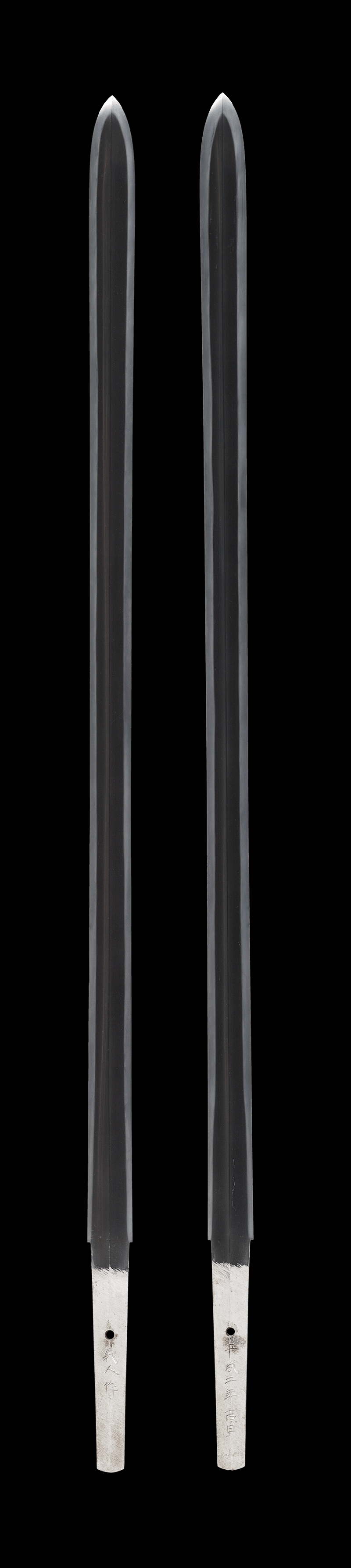
This wakizashi is signed by Minamoto Hidetatsu, dated Tenpo 2nd year (1831). Hidetatsu, also known as Egawa Tarozaemon Hidetatsu, was a prominent figure in the late Edo period, known for his studies in Western learning and military science. He was a student of Taikei Naotane, one of the most famous Shin-Shinto smiths, and this blade represents his early work in sword forging.
 NihontoWatch
mei · Shin-shinto
The Shinshintō revival
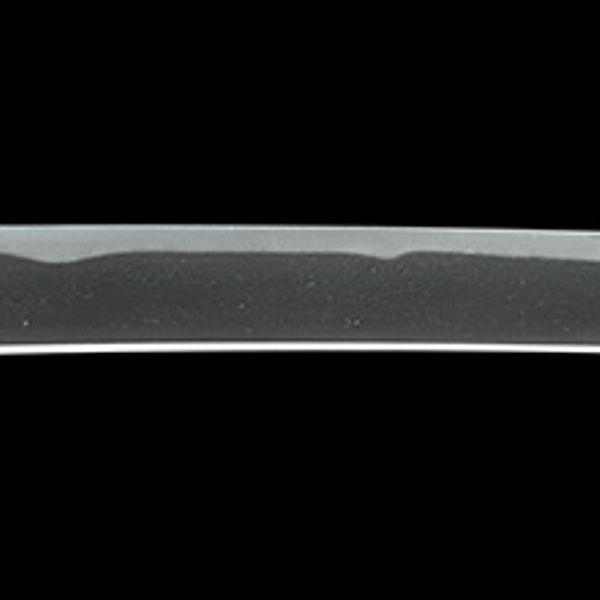
Around 1800 Suishinshi Masahide argued in his writings that the craft must return to the old masters’ methods: the fukkotō revival. His greatest successor Naotane worked convincingly in Bizen and Sōshū manners that had been dead for centuries.
We could not find an authenticity certificate on the seller’s listing. Japanese swords and fittings are normally papered by the NBTHK (or the NTHK). Without one, the attribution is the seller’s own assessment and has not been independently verified — treat it with caution and ask the dealer about certification before buying.
If, due to our fault, the item differs significantly from its proper condition, the item may be returned. Cooling-off is within one week of the item's arrival.
 Koshirae
Price on request