 NihontoWatchNihontoWatch
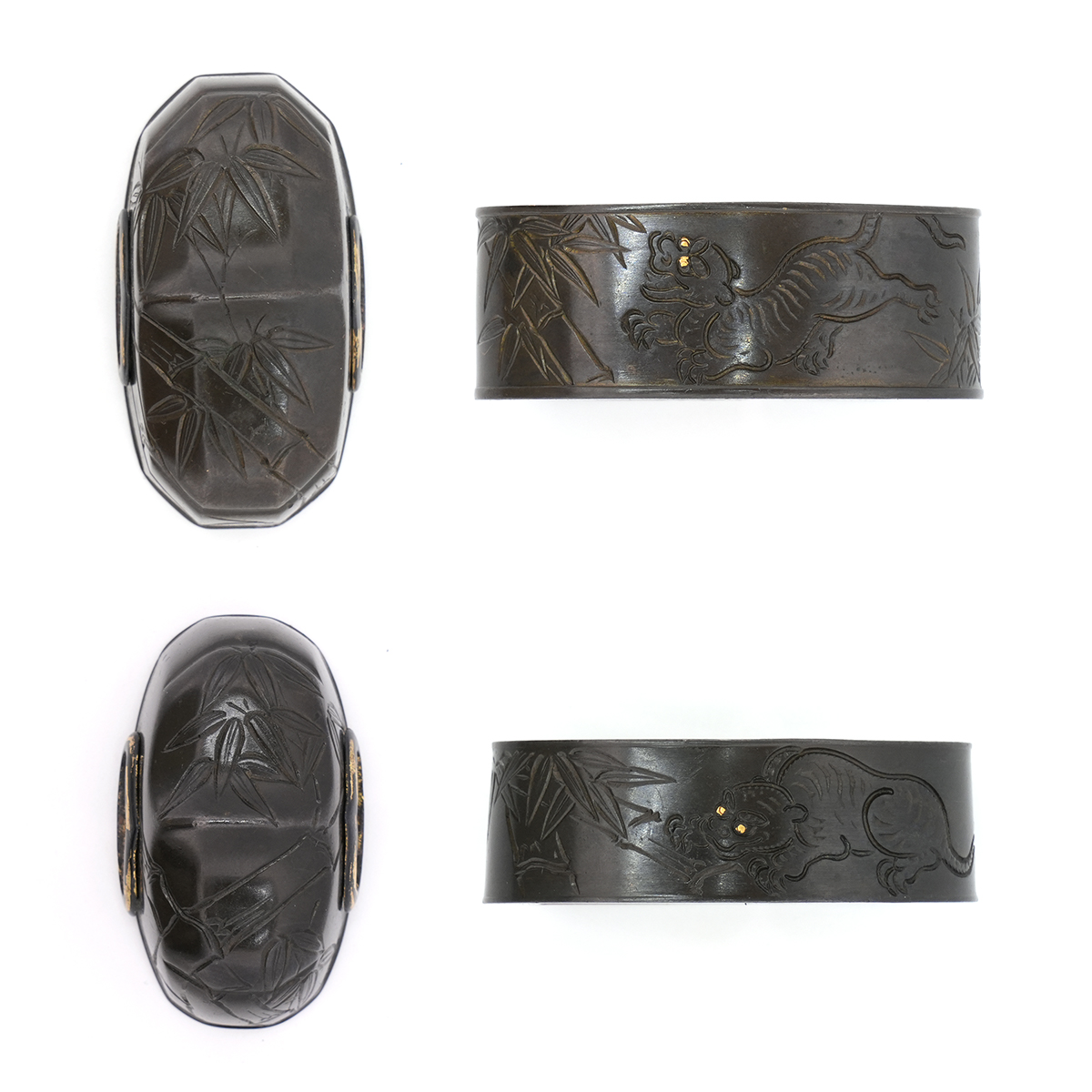
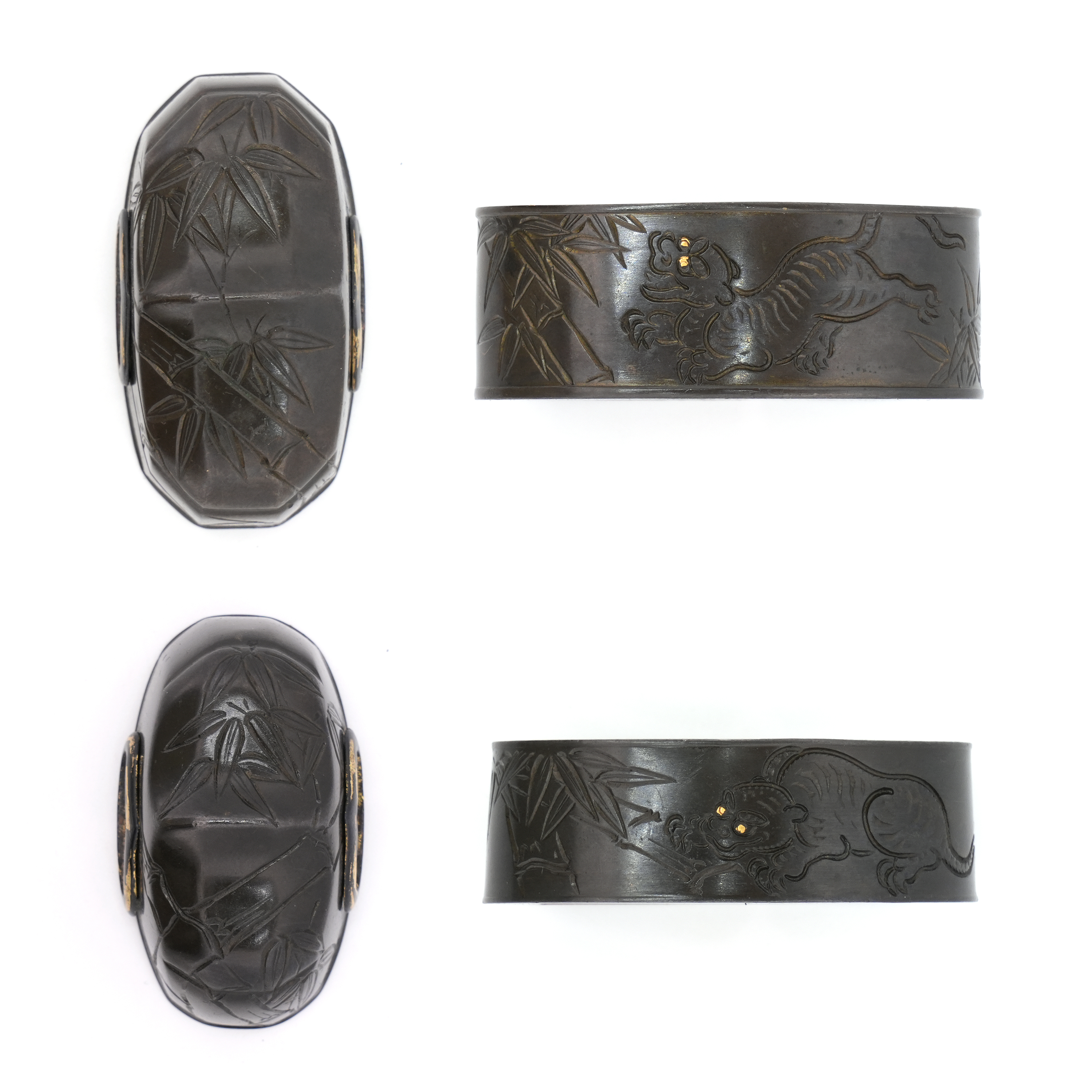
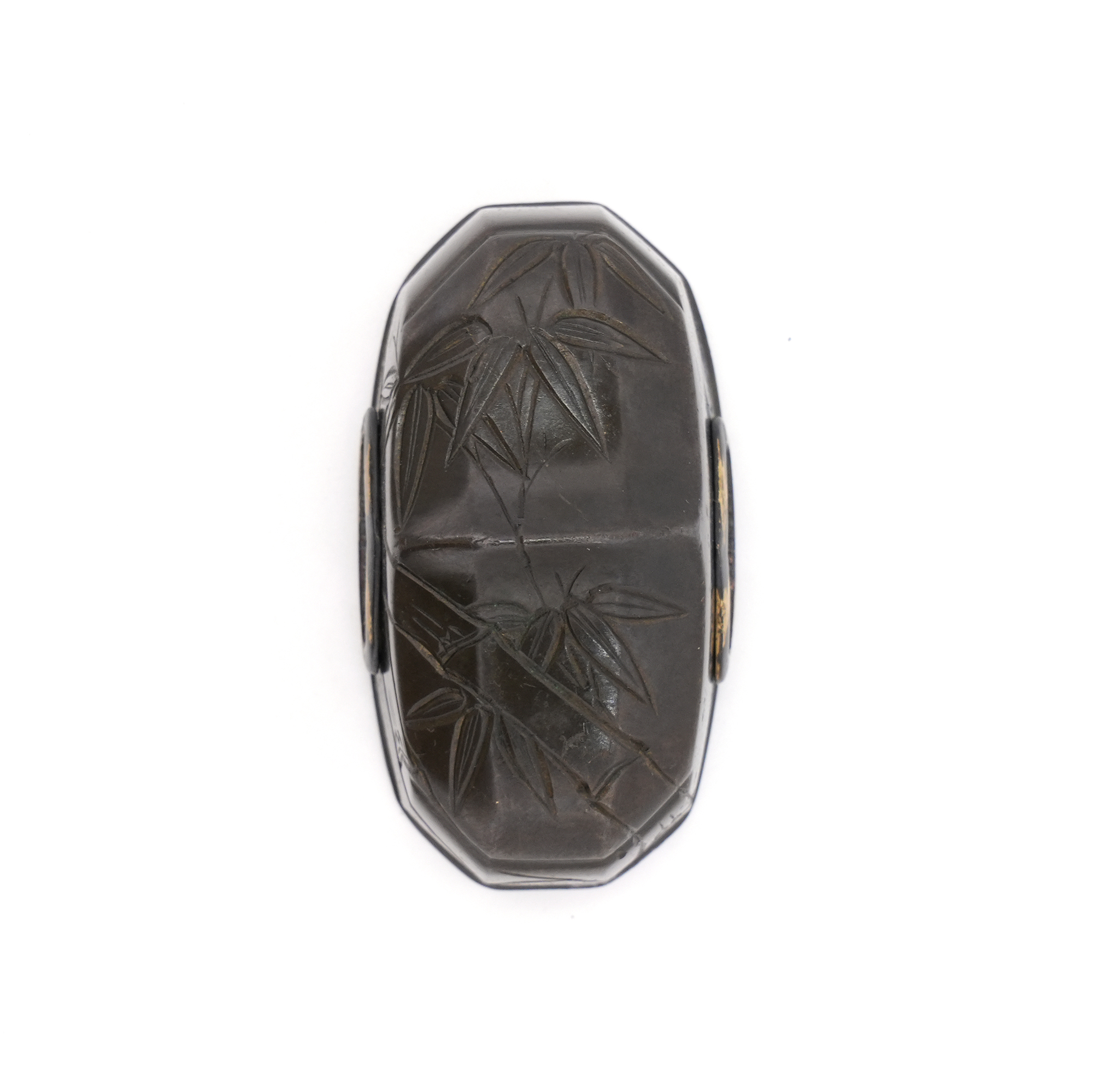
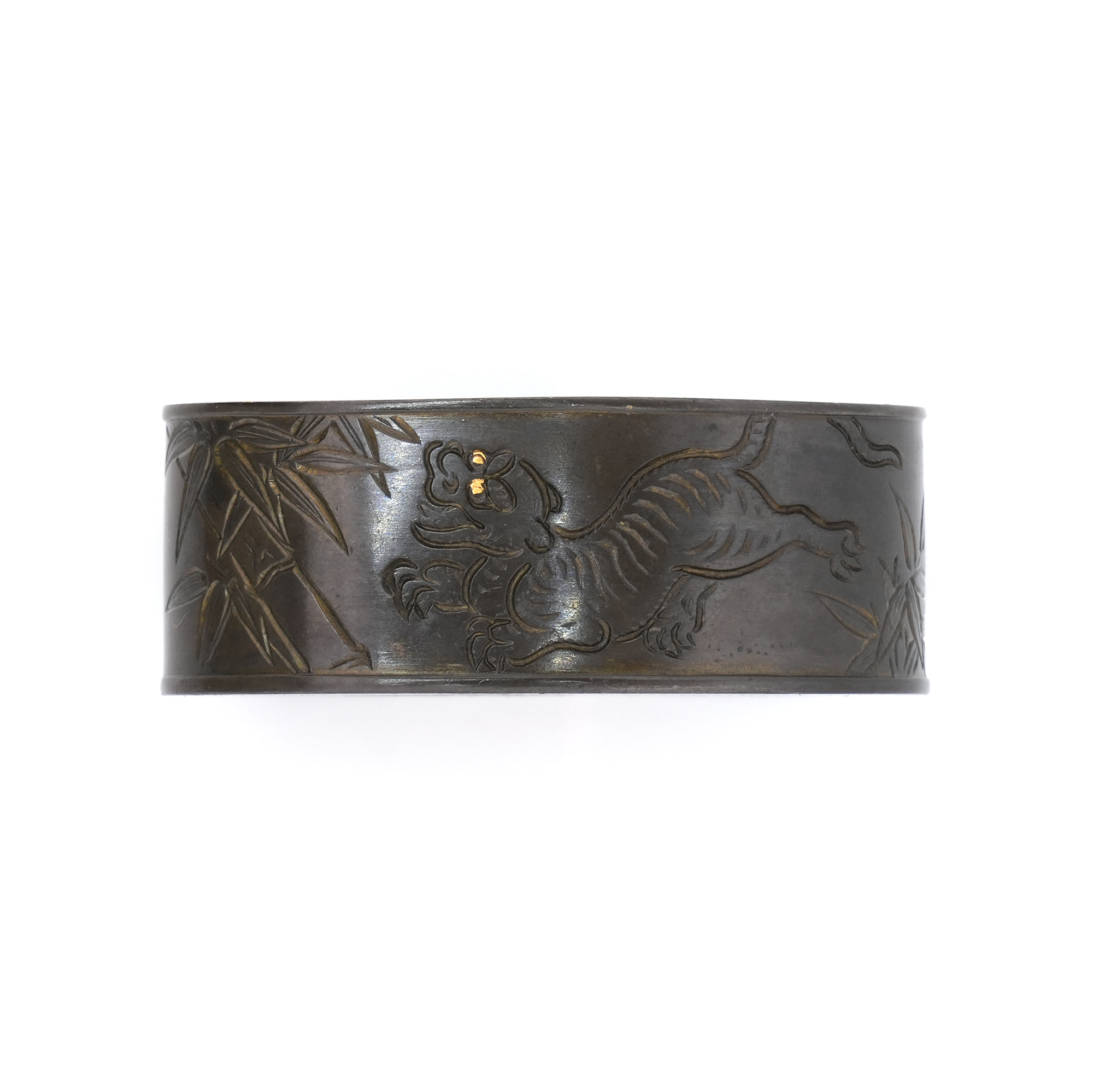
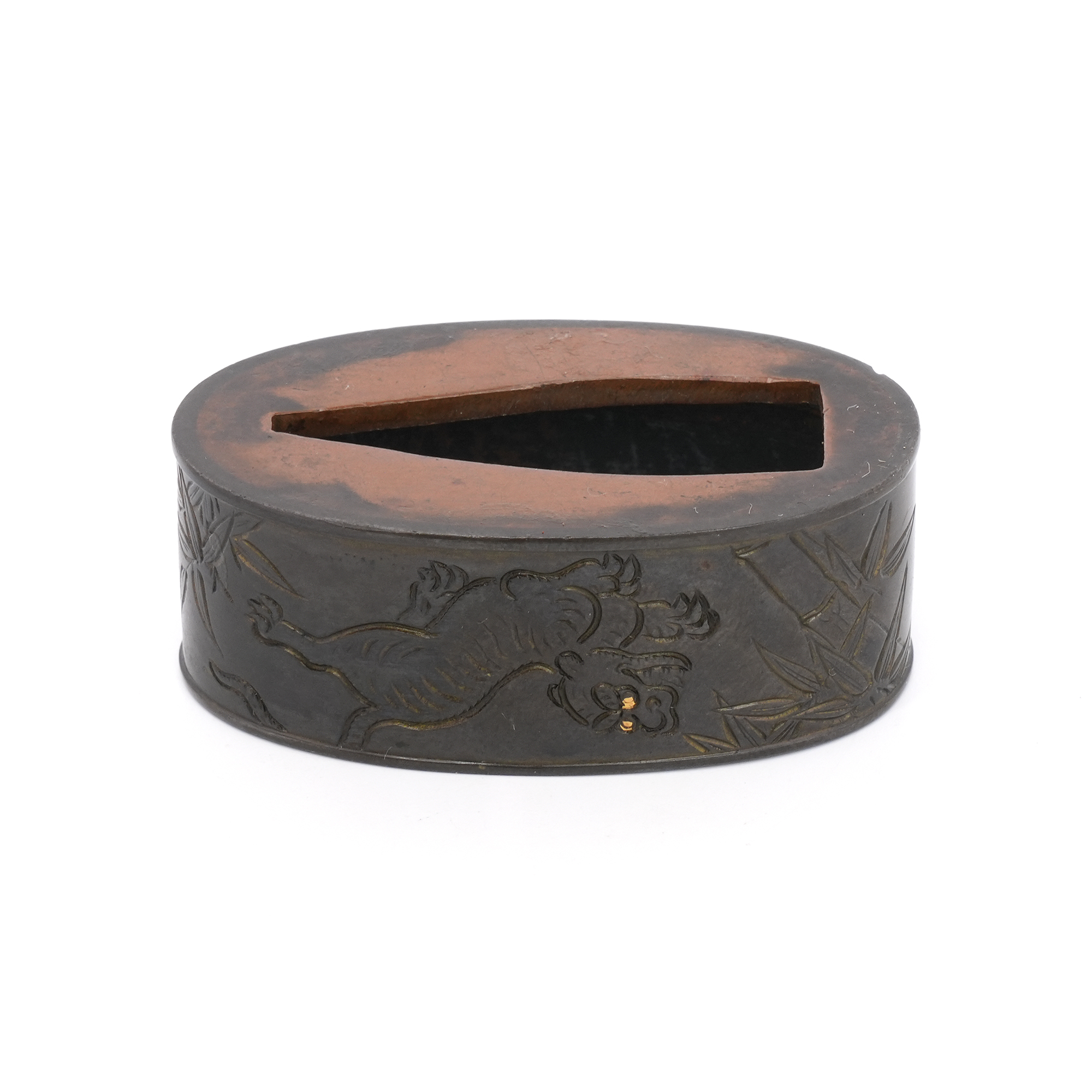
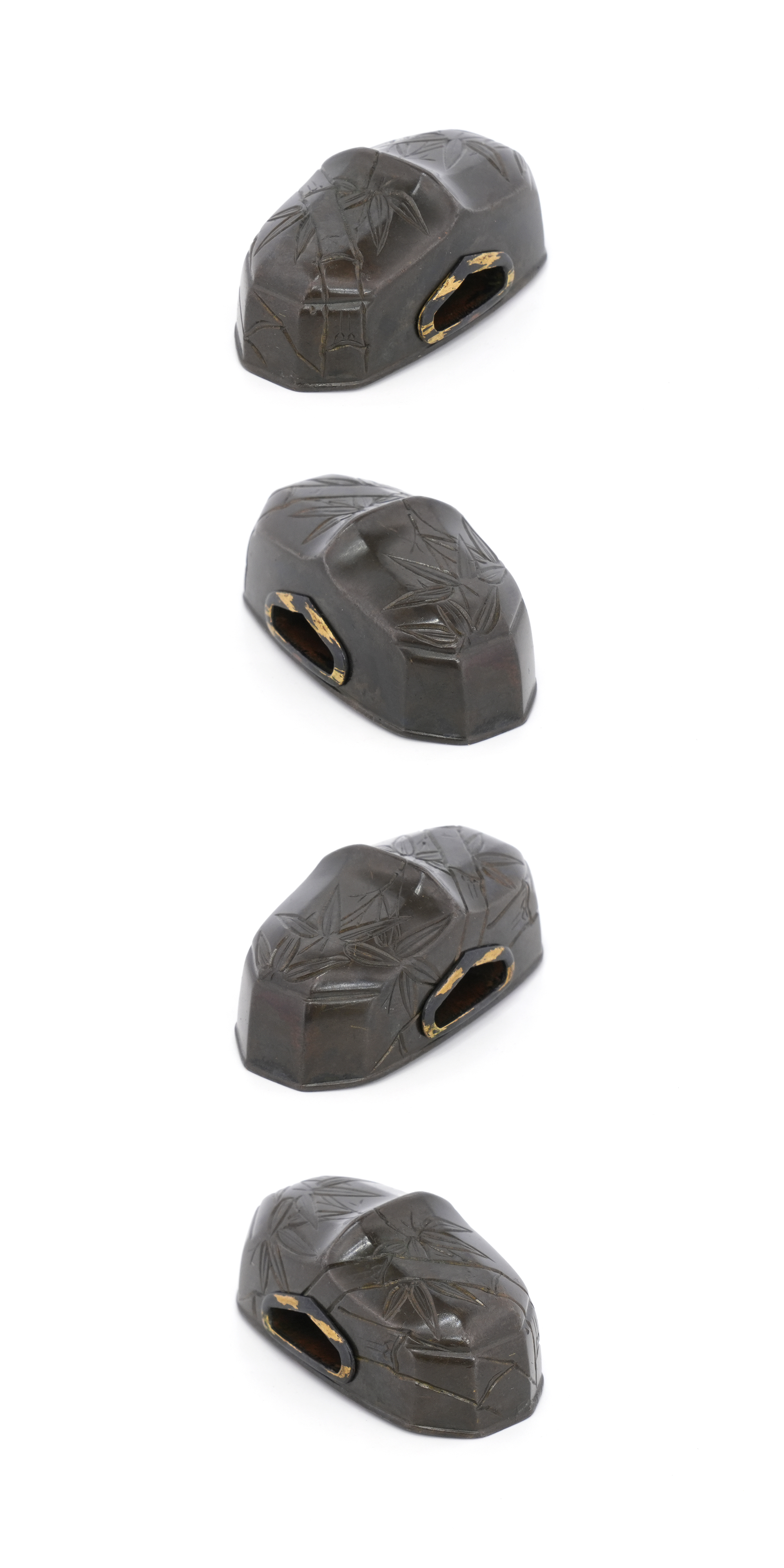
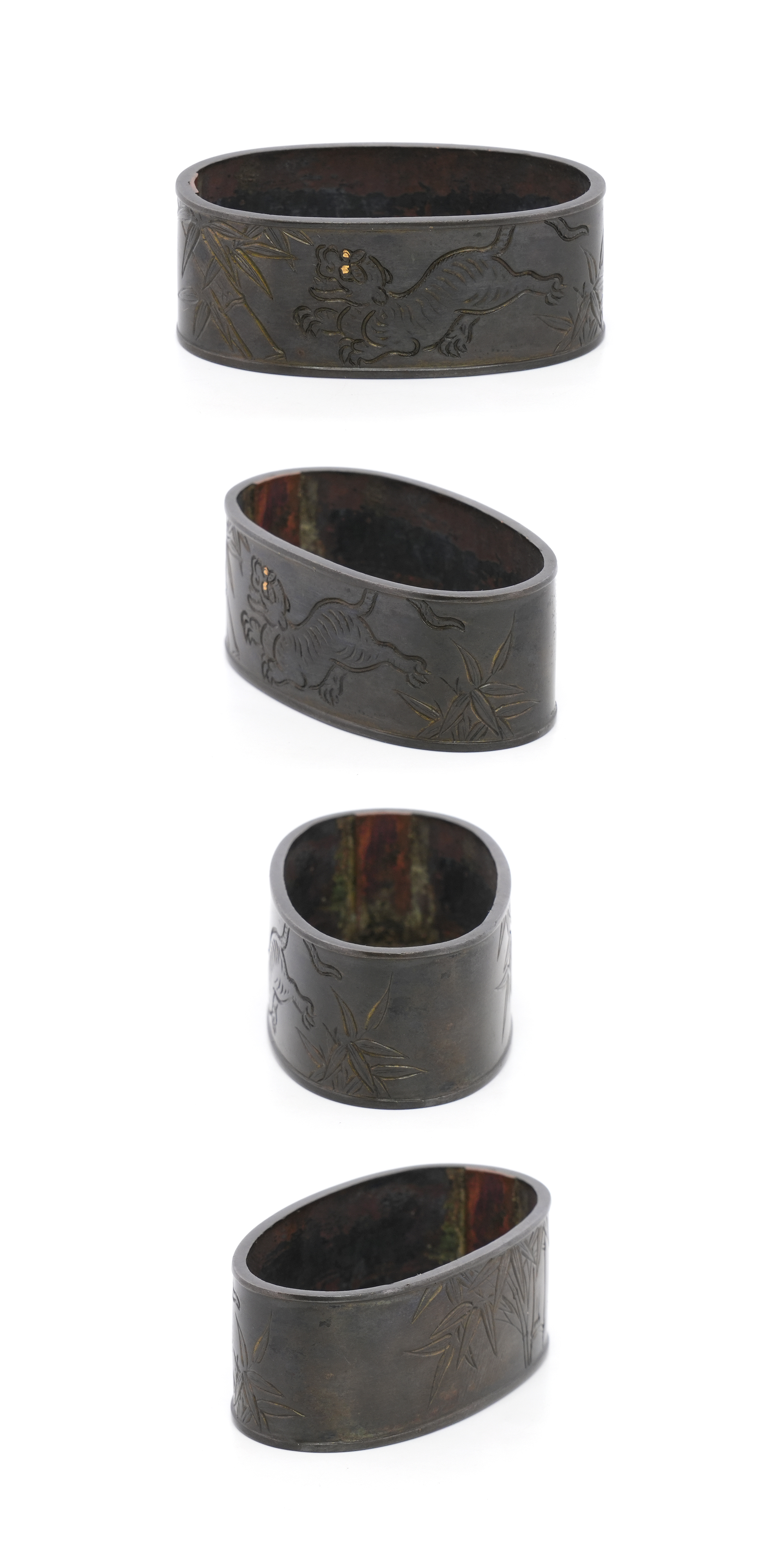
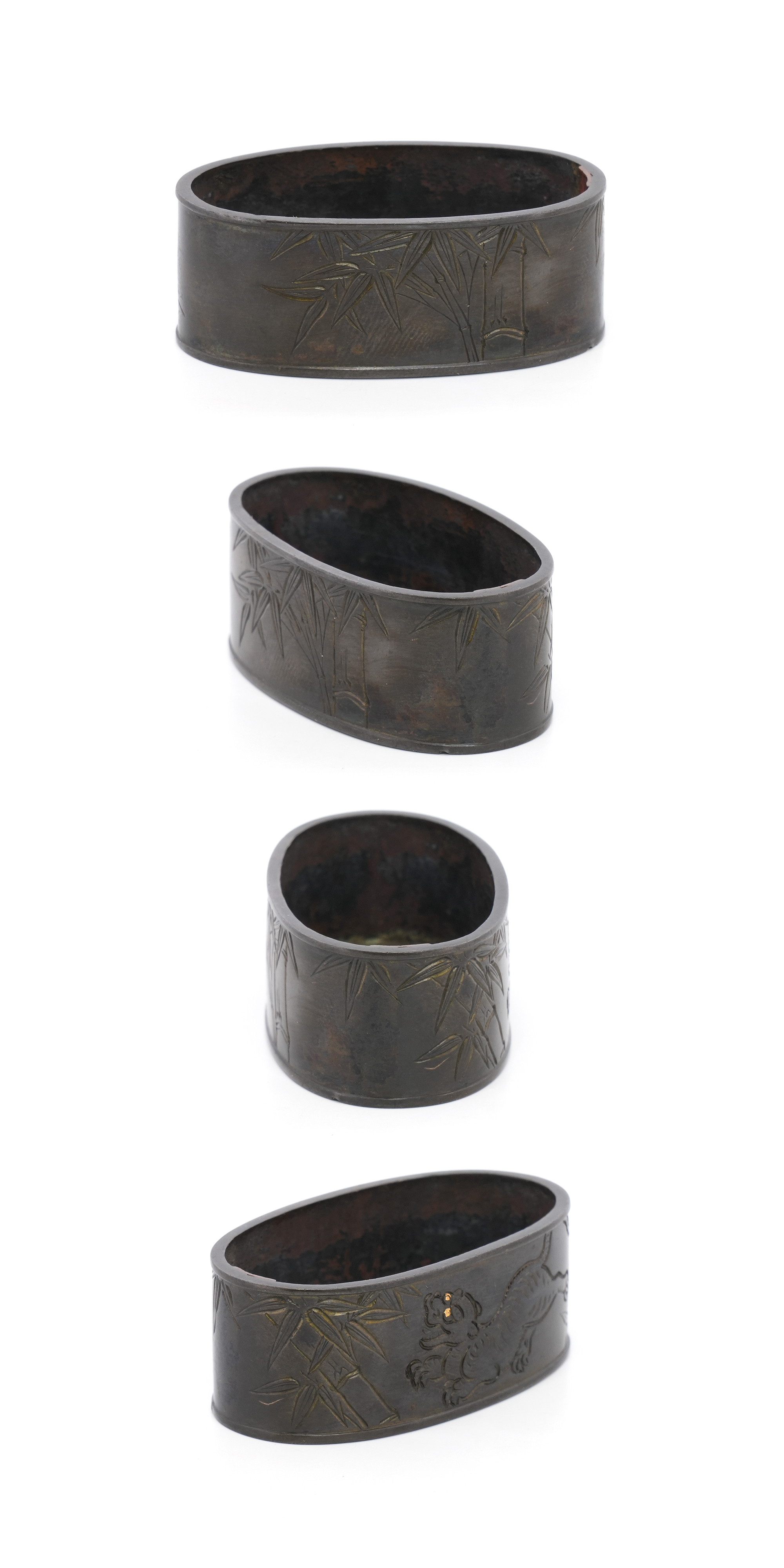
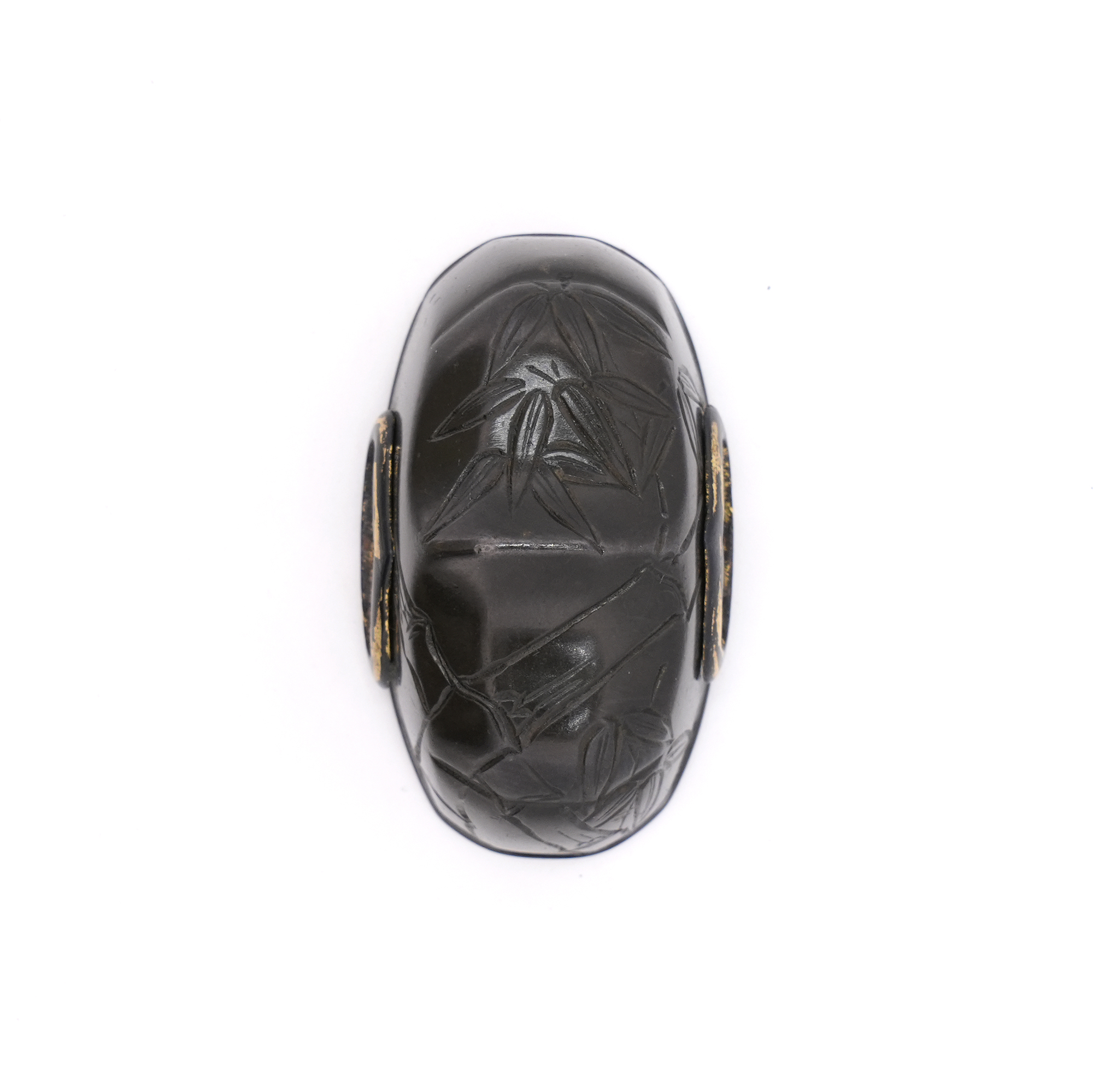
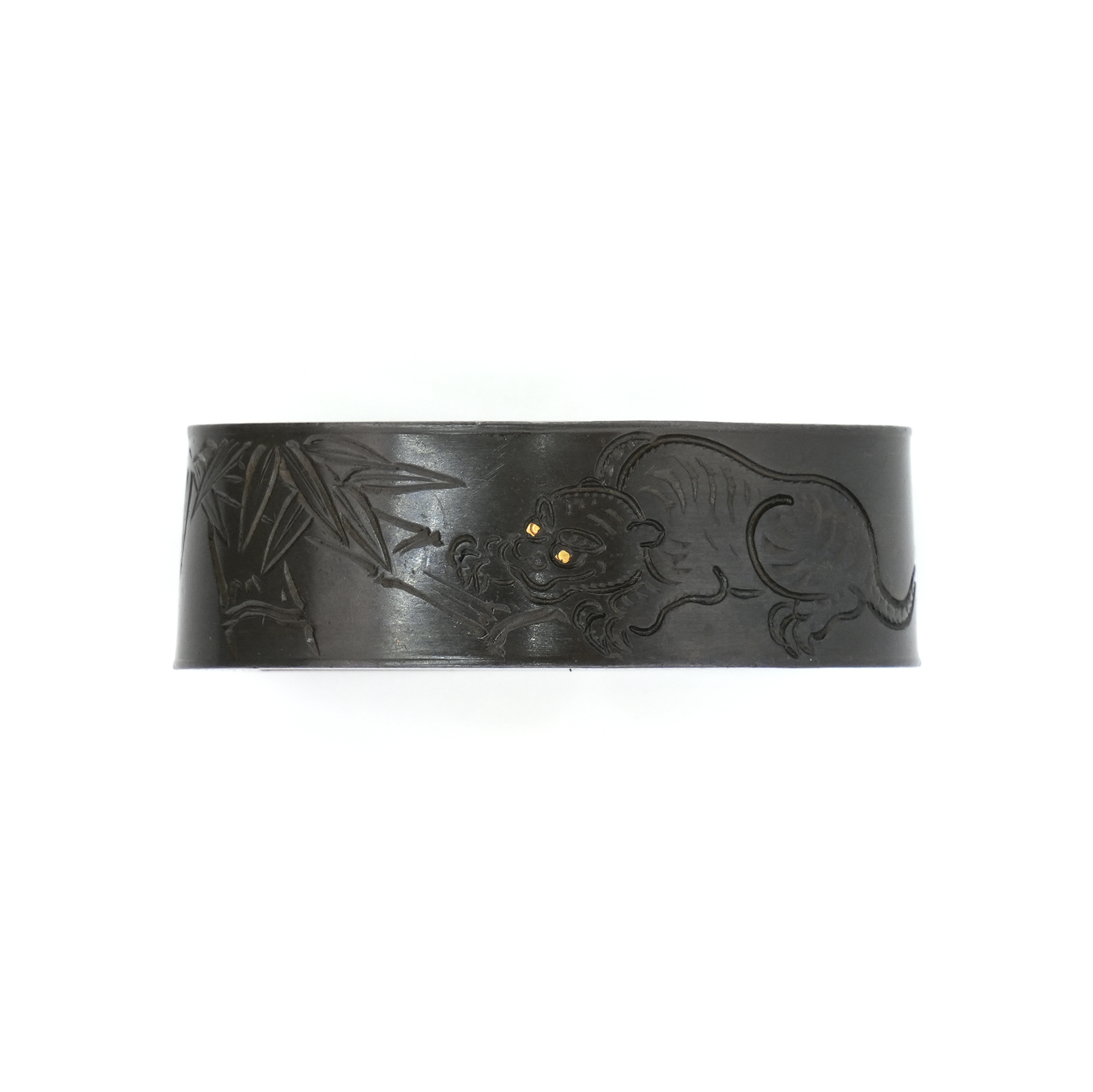
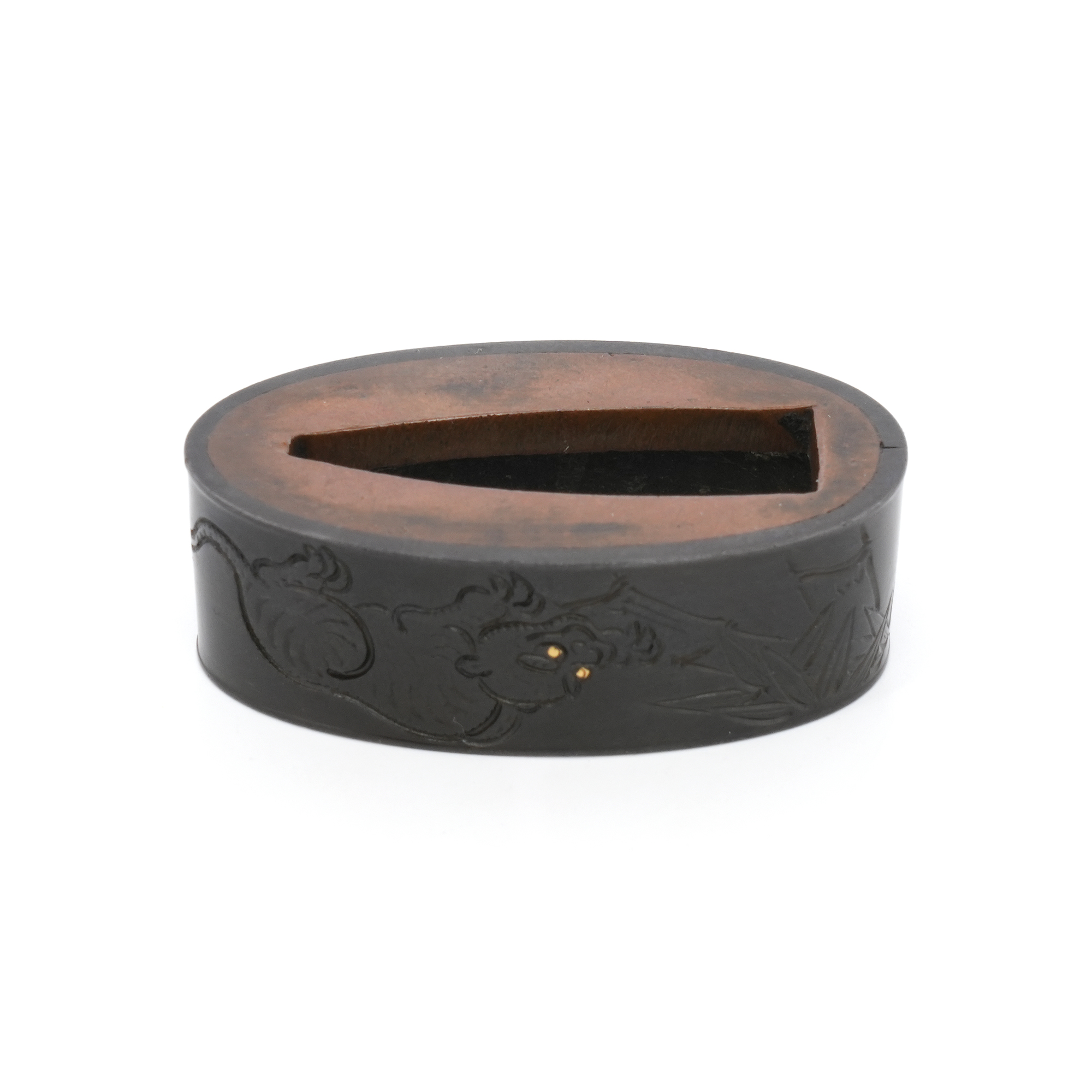
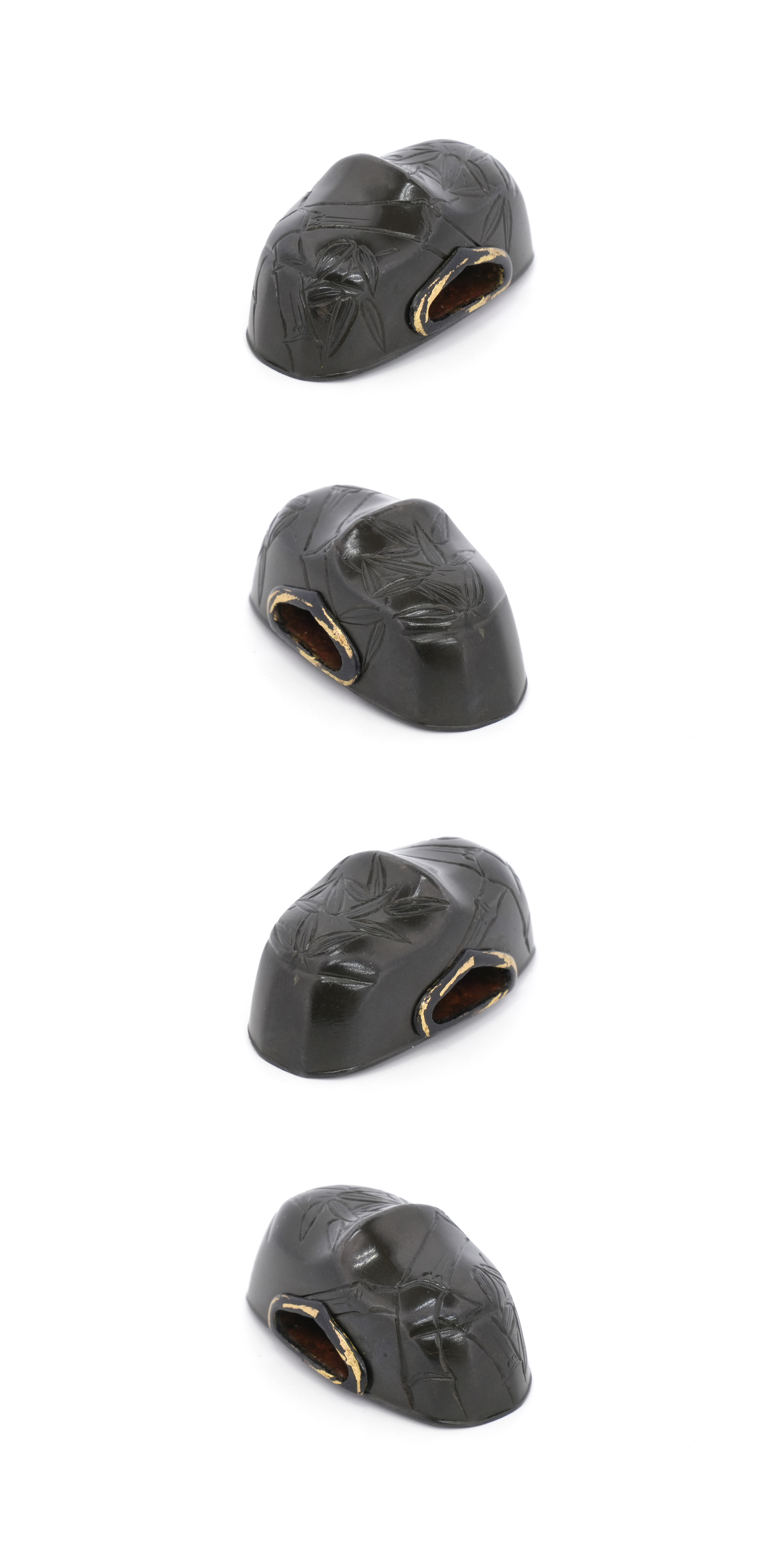
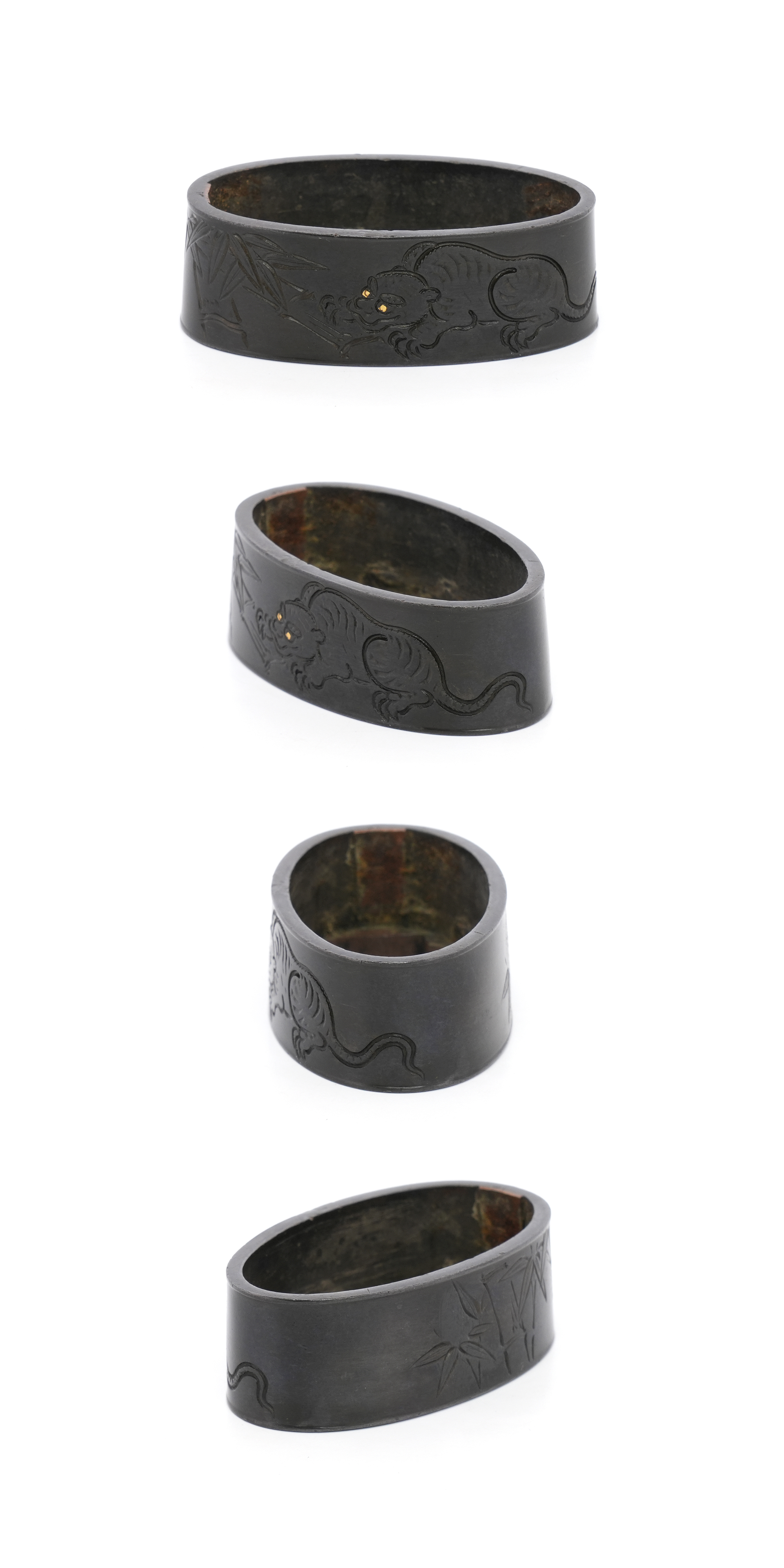
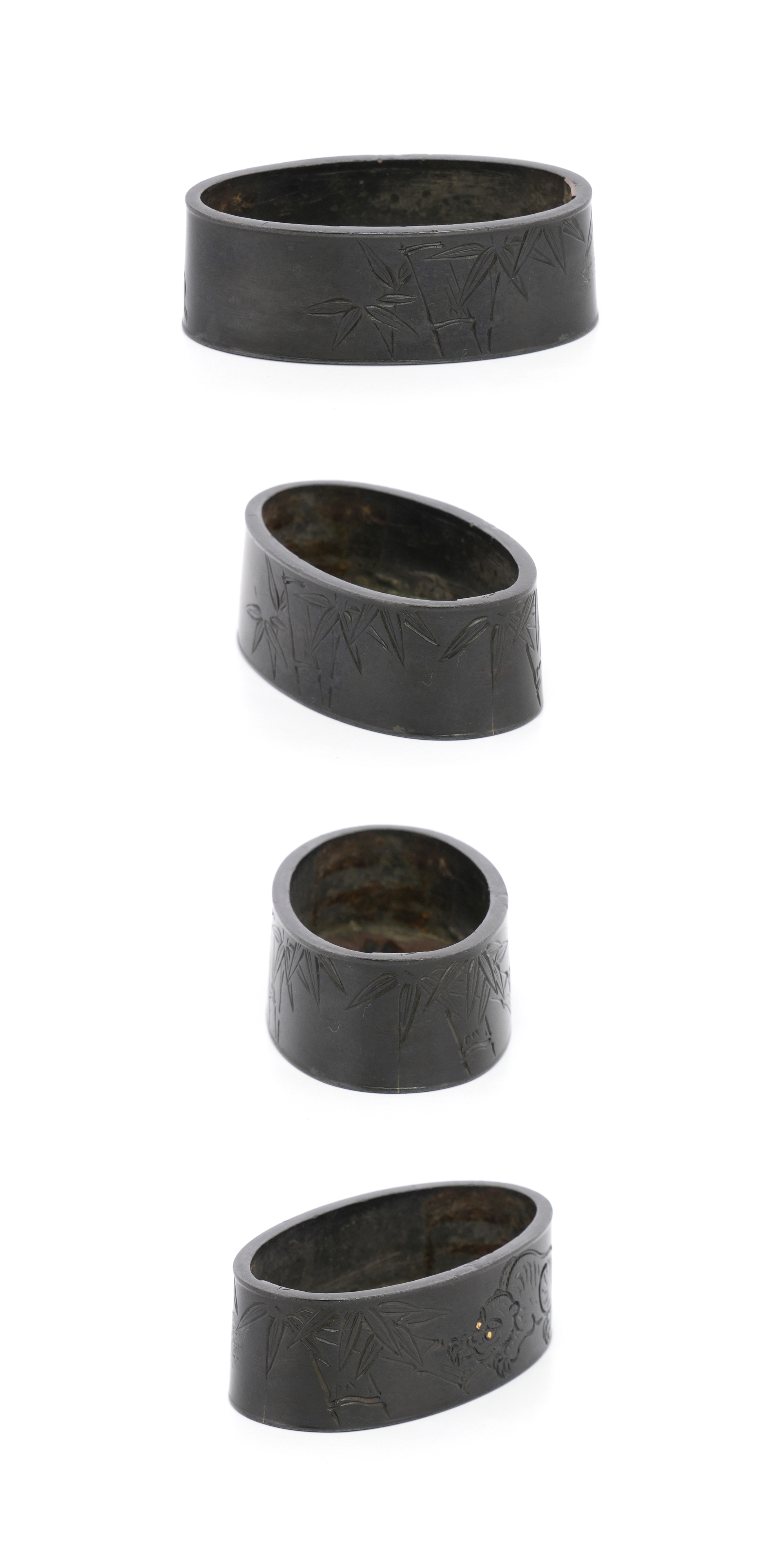
The Taketora-zu (bamboo and tiger) motif has its origins in Chinese painting and has been widely adopted in Japan for ink wash paintings, screen paintings, textiles, and arms and armor. The bamboo, which remains green throughout the four seasons and is supple yet difficult to break, is layered with wishes for integrity and longevity, while the tiger, which dominates all beasts, is entrusted with the powers of bravery, dignity, and warding off evil. The design of combining a fierce tiger with a quiet bamboo grove to capture both strength and softness in a single scene suits the attire of the samurai class well. In this set, the fuchi and kashira for both the daito and wakizashi are matched with the same motif, creating a continuous scene of a bamboo grove across the koshirae of the daisho. The ground is a shakudo migaki-ji with a deep blackish tone. It is a refined construction that avoids the extensive use of flashy iroe, instead placing the calm ground color and the lines of the tagane as the main features. On the fuchi of the daito, a fierce tiger leaping vigorously from the shadows of the bamboo is arranged prominently; the moment it lifts its front legs powerfully and extends its hind legs and tail backward is fully developed across the horizontal surface. On the other hand, the fuchi of the shoto depicts a tiger crouching low and stepping out from the depths of the bamboo grove. While both are Taketora-zu, the daito is given a sense of dynamism, while the shoto is given a quiet tension. Gold iroe is added to the eyes, making the center of the expression shine sharply and creating a small, effective focal point on the screen, which is based on a single black tone. The figure of the tiger is made to emerge gently from the ground by mixing nikubori and kebori. While capturing the contours that continue from the forehead to the nasal bridge, cheeks, shoulders, torso, and limbs with powerful tagane, the stripes on the body are carved as if flowing, and the claws, whiskers, mane, and tips of the tail are finely distinguished. Unlike takabori, which is deeply raised, this piece expresses the tension of muscles and movement through the strength and weakness of the lines while maintaining a wide margin of the migaki-ji. When viewed from the front, the figure of the tiger appears from the quiet blackish tone, and when light is received at an angle, the depth of the carving and the luster of the metal shift, with the bamboo leaves and fur appearing one after another as you change the angle in your hand. On the kashira of both the daito and shoto, no tiger is placed; instead, bamboo with spreading leaves is wrapped around the entire surface, naturally connecting the scene of the fierce tiger on the fuchi running through the bamboo shadows to the end of the tsuka. The bamboo nodes, thin branches, and overlapping leaves are carefully expressed with kebori and shallow carving. By changing the direction of the leaves along the refined contour where the corners of the kashira are slightly rounded, the composition makes the curved surface function as a single painting. The shitodome are made of shakudo with gold iroe in a striped pattern, designed to evoke the fur of the tiger. This clever touch, which connects the motif to the functional fittings, further enhances the perfection of the daisho set. Within the deep shakudo color, the gold of the tiger's eyes and the shitodome respond to each other in a lively manner, adding a restrained yet memorable brilliance. A daisho set of tosogu conveys to the present day the status of the samurai who carried a daito and wakizashi as a single unit. The fact that four pieces sharing the same metal, carving technique, and motif remain together holds a collecting appeal different from that of individual fuchi and kashira. In particular, the fuchi of the daito has a sufficient dimension of 40.15 mm in length, and the shoto is 39.0 mm. When actually used for a daisho koshirae, they will look excellent on a black urushi saya or an ishimeji-nuri saya, and within the calm color tone, the tiger's gaze and the line-engraved bamboo grove create a dignified focal point. Although mumei, the beautiful blackish shakudo migaki-ji, the tigers with different postures for the daito and shoto, the bamboo grove that spreads naturally over the curved surfaces, and the horikuchi that makes use of the margins all offer a solid visual experience. One can enjoy the aesthetic consciousness of Edo kinkou, which is restrained and differs in taste from gorgeous takabori iroe. It combines a high-grade motif of the tiger, which symbolizes bravery, and bamboo, which represents integrity, with the sense of unity unique to a daisho set, and dimensions that are large and suitable for practical use. This is a set with a strong presence that I would like to recommend not only to those who like Taketora-zu and animal metalwork, but also to those who are considering the production of a full-scale daisho koshirae.
Offered by Toushin

We couldn’t find current papers for this piece. Ask the dealer whether it has been, or can be, submitted to shinsa. — Hoshi

Edo Kinko
Edo
Unsigned
Machine translation of the shop's Japanese ·
Machine translation from the shop's Japanese · may contain errors ·
We could not find an authenticity certificate on the seller’s listing. Japanese swords and fittings are normally papered by the NBTHK (or the NTHK). Without one, the attribution is the seller’s own assessment and has not been independently verified — treat it with caution and ask the dealer about certification before buying.
As a rule we do not accept returns, except when we have sent a different item from the one ordered or when there is a significant discrepancy between the description and the item. If you wish to return an item, please contact us within 3 days of its arrival and then send it back.
¥550,000