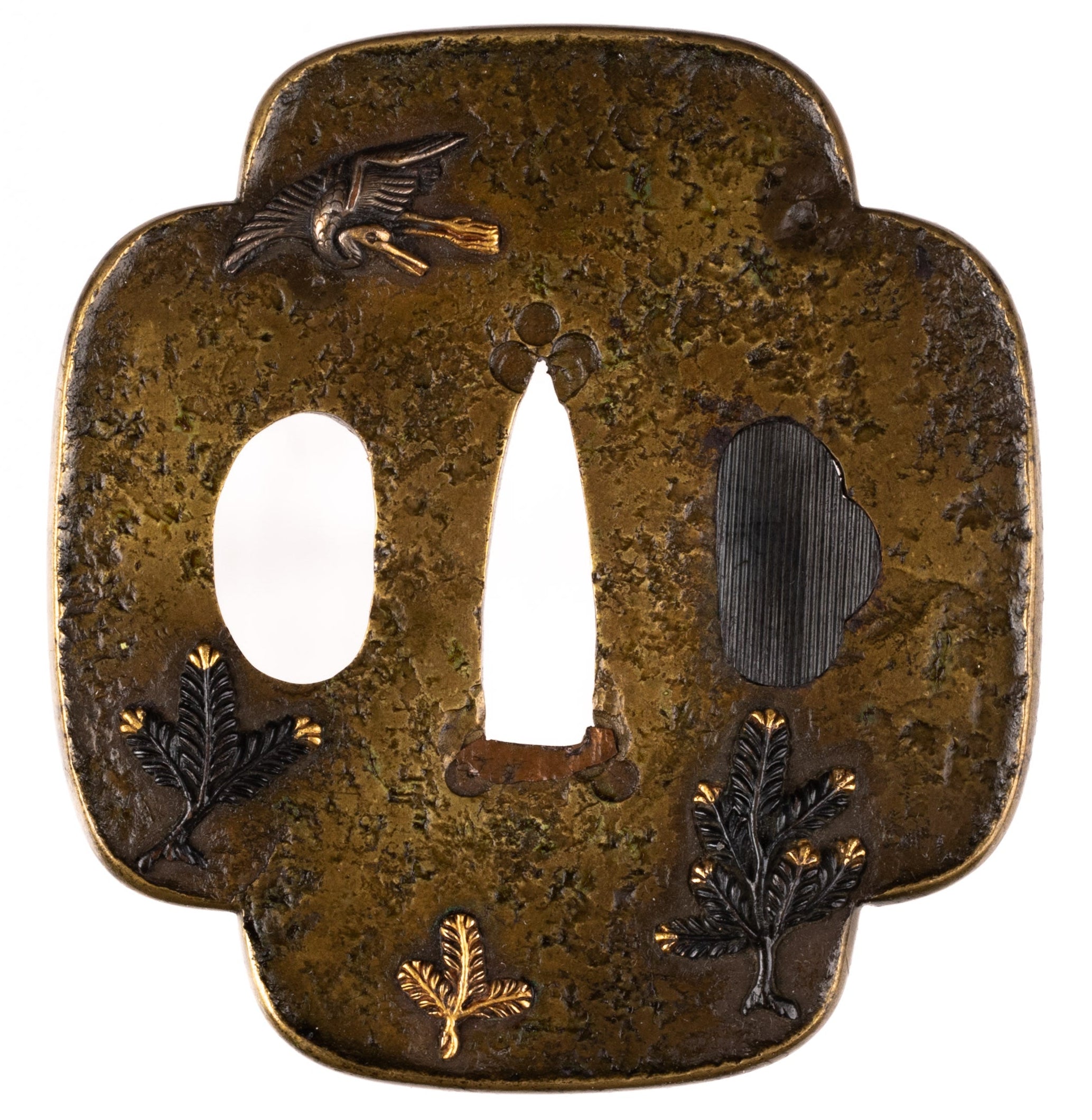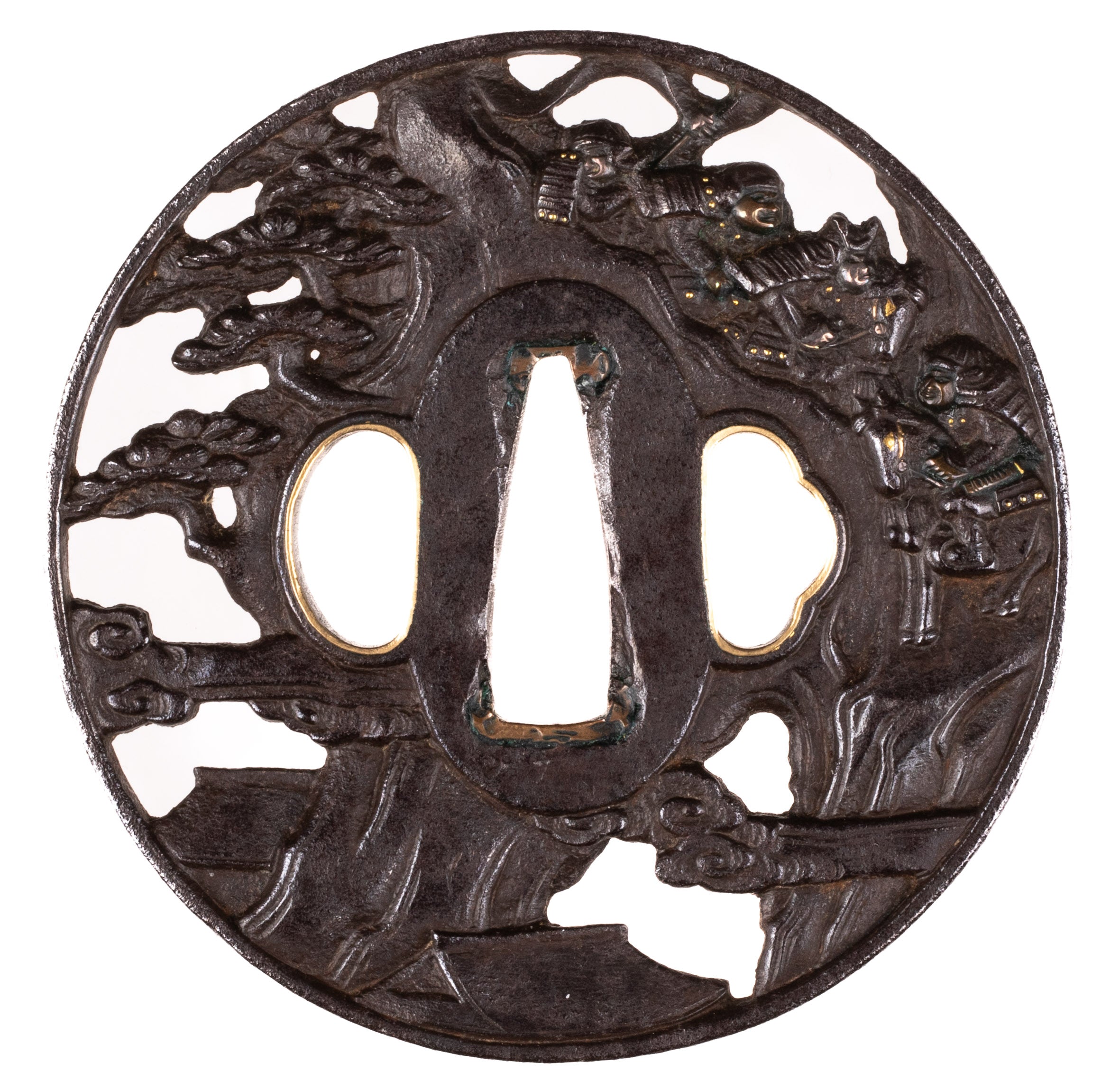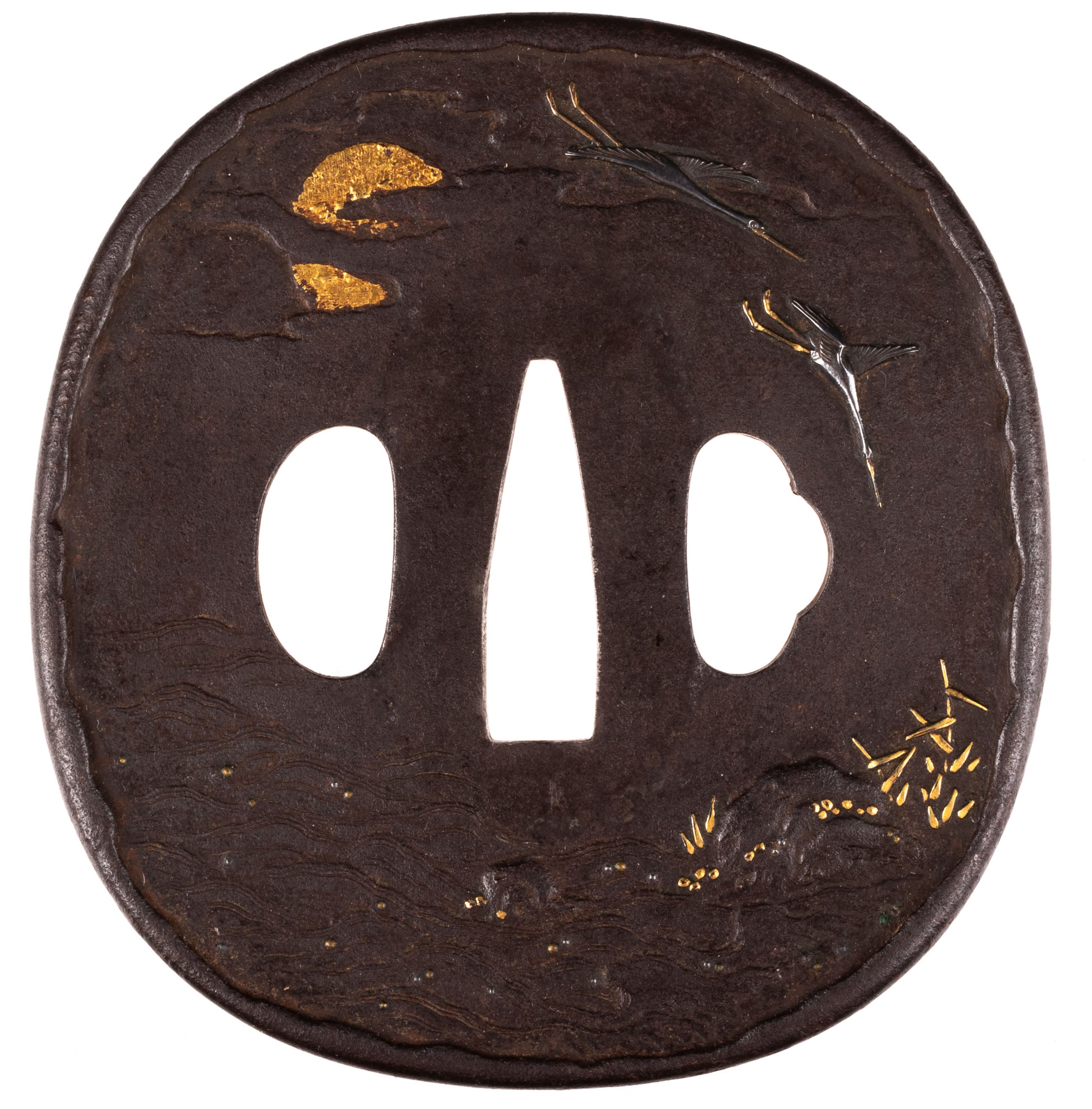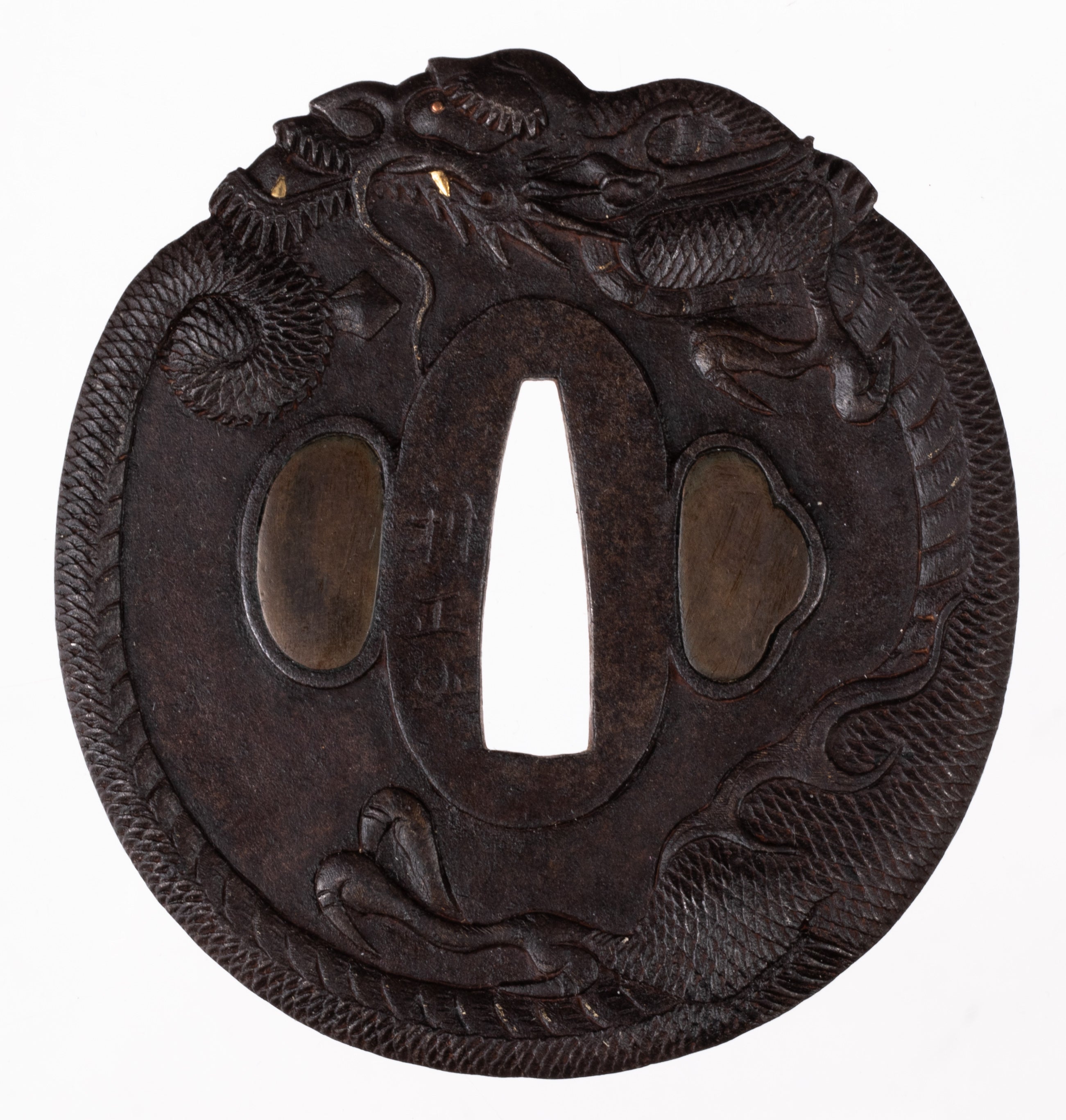
Iron tsuba signed Toshimasa with Kao, with NBTHK Hozon Tosogu. Dragon
SOLD
Tracked across 81 dealers worldwide · price history · sold archive
About the maker
Egawa Toshimasa利政
Egawa Toshimasa, whose common name was Seikichi, was born in Mito in An'ei 2 (1773). He traveled to Edo and entered the atelier of Yokoya Eisei, where he came to the attention of a senior fellow pupil, Katsura Eiju, who arranged his adoption into the Katsura house. Toshimasa inherited Eiju's common name Saichiro, assumed the art-name Katsura Sorin, and continued in his adoptive father's role as a *kakae-ko* (retained craftsman) to the Arima family, lords of Kurume Domain. He used both the Egawa and Katsura surnames throughout a remarkably long career: signed works are recorded at age seventy-five (Ka'ei 1), eighty-two (Ansei 2), and eighty-eight. Grounded in the carving techniques of the Yokoya school and its *iebori* (hereditary atelier) lineage, Toshimasa characteristically employs *shakudo nanako-ji* combined with *takabori* and *iroe* to render birds and animals, horses, fish and shellfish, and insects with what the NBTHK describes as "a dignified, elevated tone." His relief work is distinguished by pronounced *niku* and powerful modeling, while his choice of subject and naturalistic observation of posture and movement also reveal "the fresh, innovative sensibility associated with *machibori*" -- the town-carver idiom that operated outside hereditary workshop conventions. He excelled at *issaku-kanagu* (unified fitting suites), coordinating design programs across *tsuba*, *fuchi-kashira*, *kozuka*, *kogai*, and *menuki* with lavish use of gold and silver inlay. The NBTHK's assessments consistently affirm that Toshimasa's compositions display "a high degree of refinement" and that his painstaking *chokin* results in work of "notably elevated dignity appropriate to daimyo equipment." Whether depicting the shishi-and-peony theme at which the Yokoya school excelled or distributing twenty-two insects across a *mushi-zukushi* ensemble with minute fidelity, the evaluations find that "the distinctive qualities and accomplished skill of Egawa Toshimasa are amply demonstrated" and that "the artist's strengths are fully manifested."