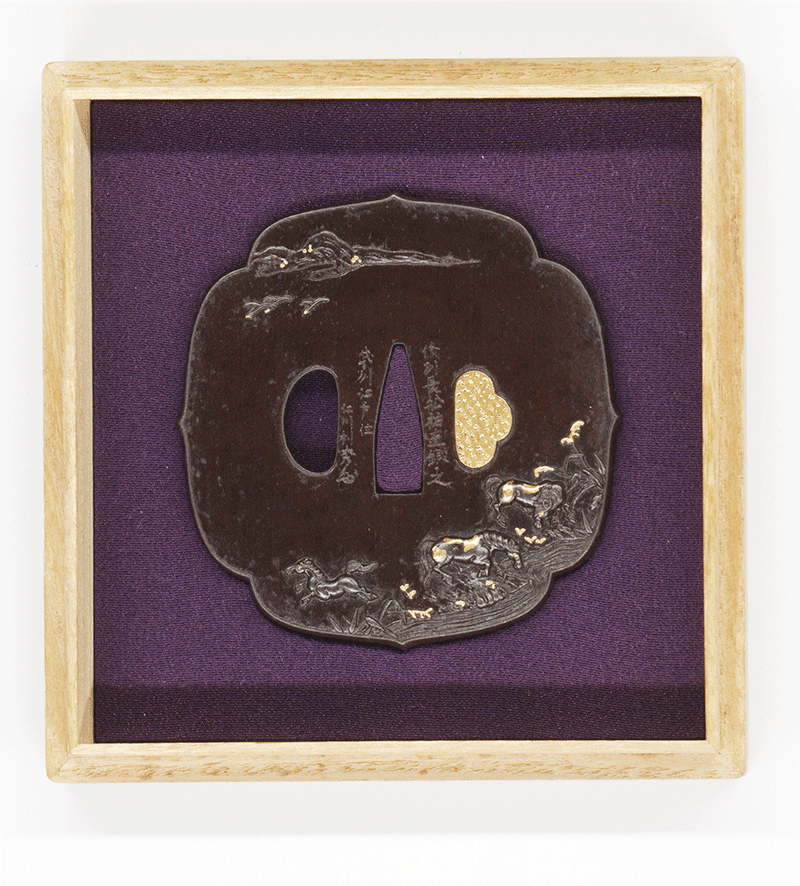
Toshimasa, whose common name was Seikichi, was born in Mito in An'ei 2 (1773). He traveled to and entered the atelier of Yokoya Eisei, where he came to the attention of a senior fellow pupil, Katsura Eiju, who arranged his adoption into the Katsura house. Toshimasa inherited Eiju's common name Saichiro, assumed the art-name Katsura Sorin, and continued in his adoptive father's role as a kakae-ko (retained craftsman) to the Arima family, lords of Kurume Domain. He used both the and Katsura surnames throughout a remarkably long career: signed works are recorded at age seventy-five (Ka'ei 1), eighty-two (Ansei 2), and eighty-eight.
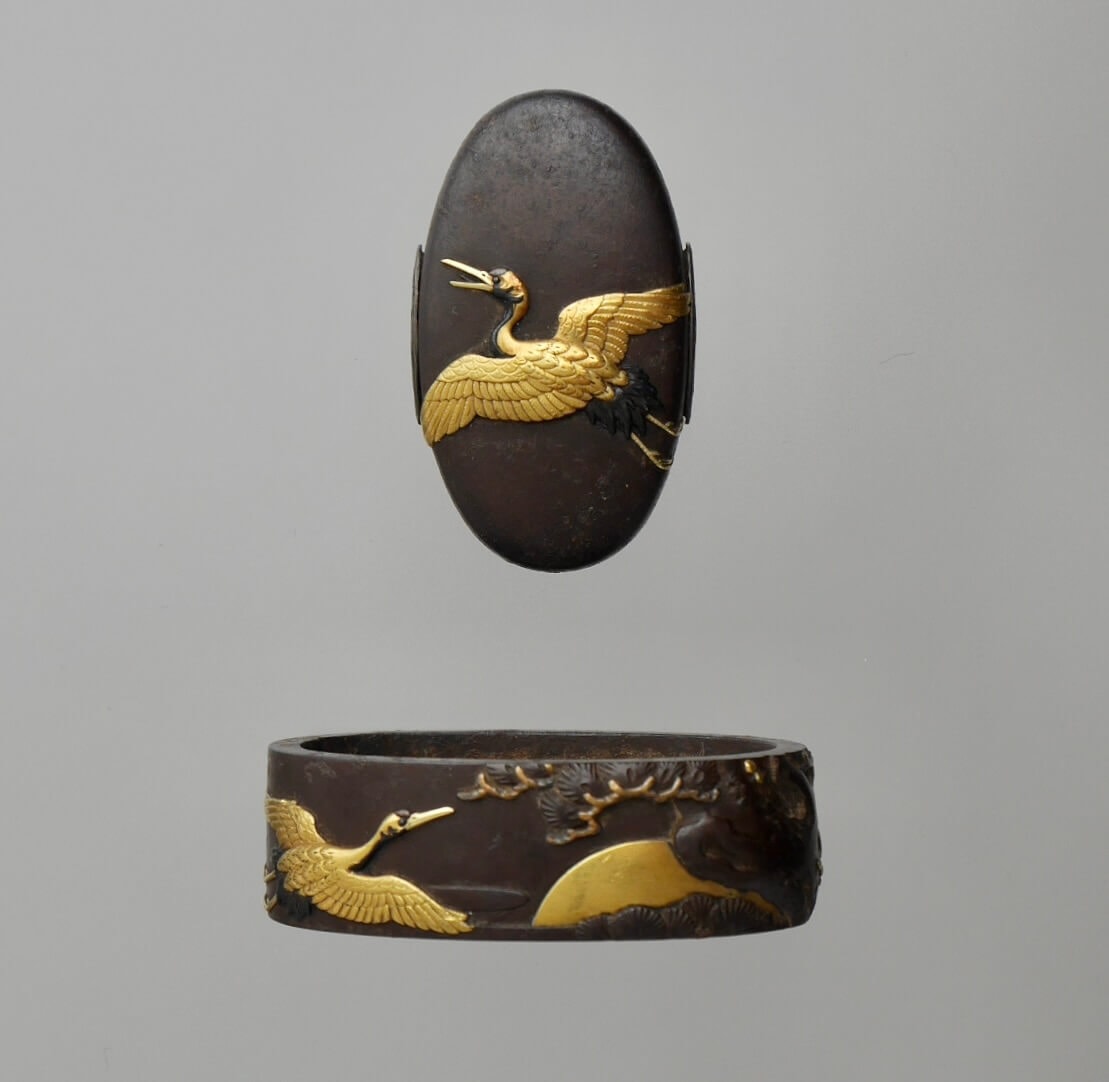
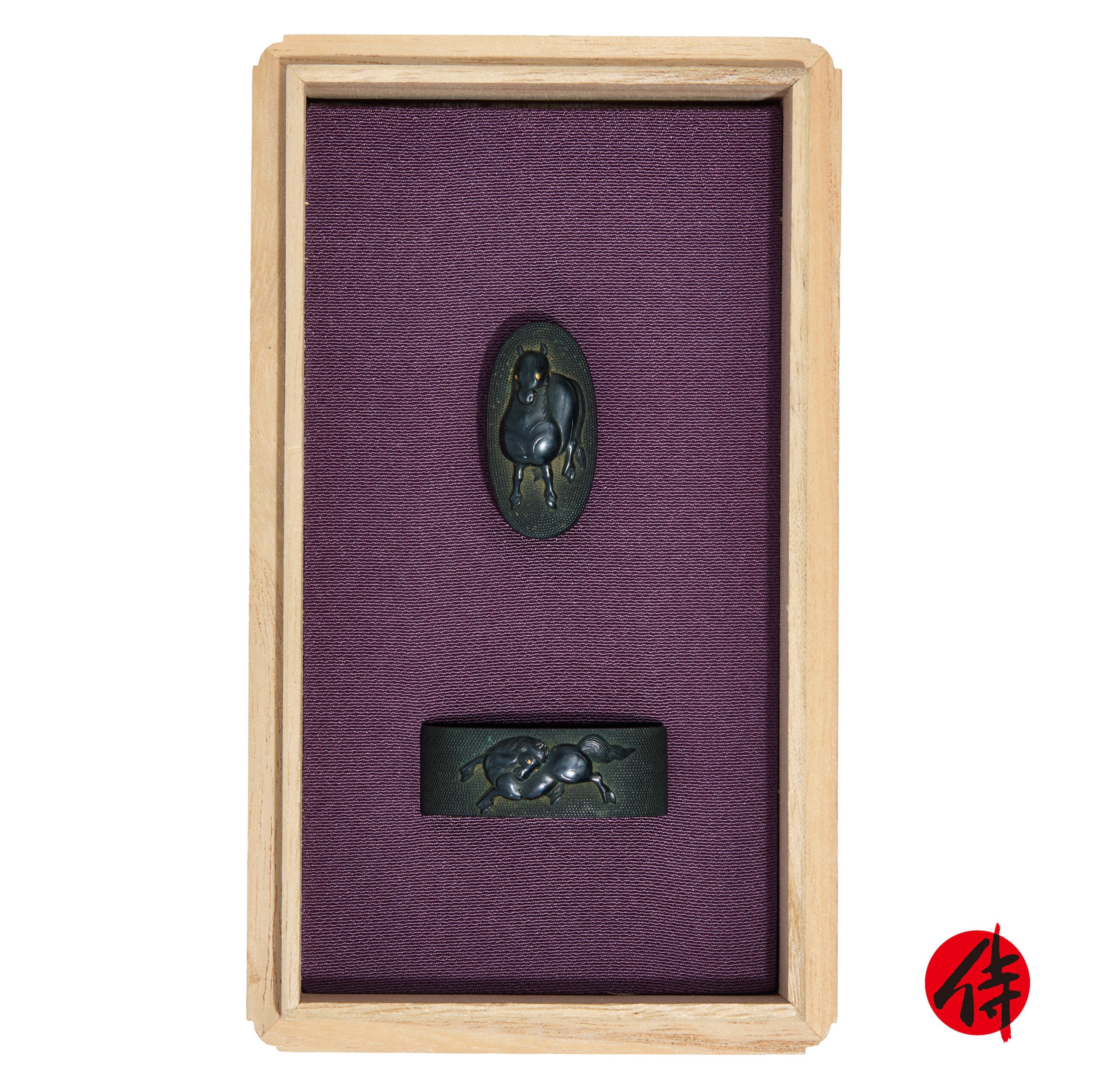
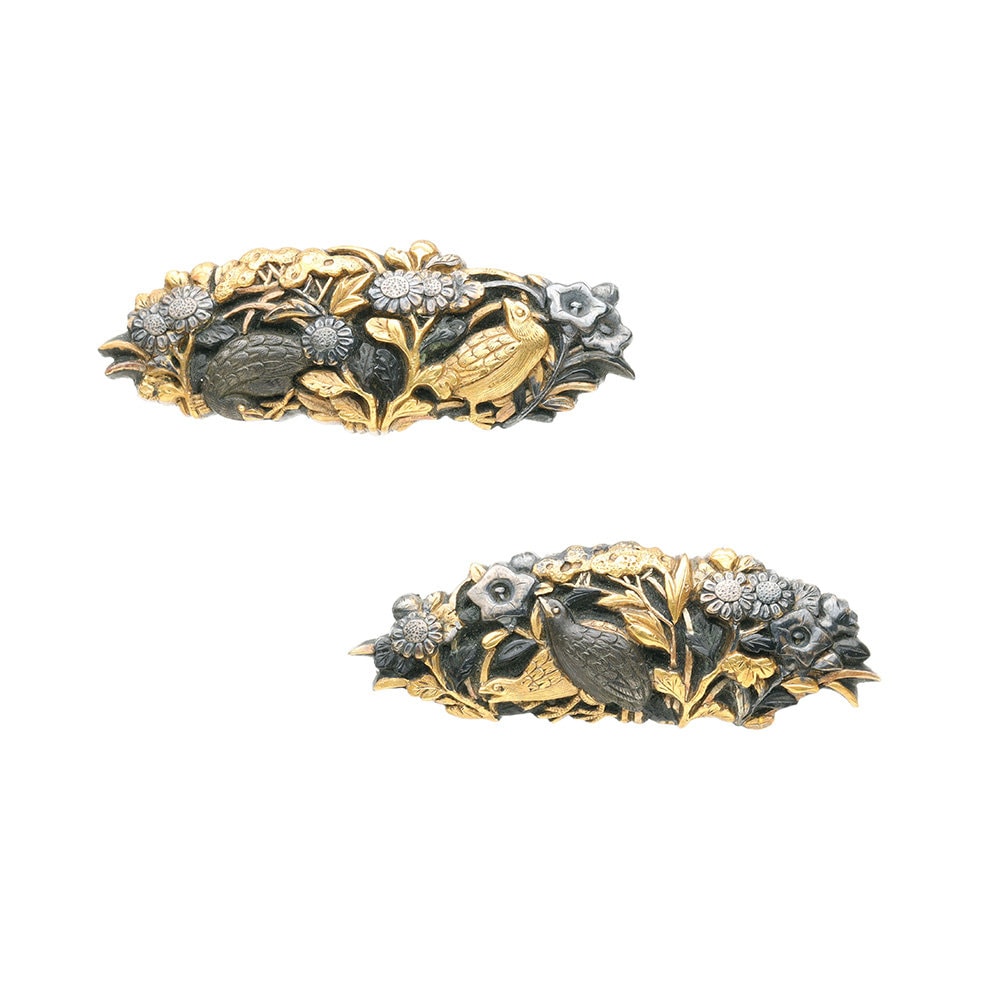
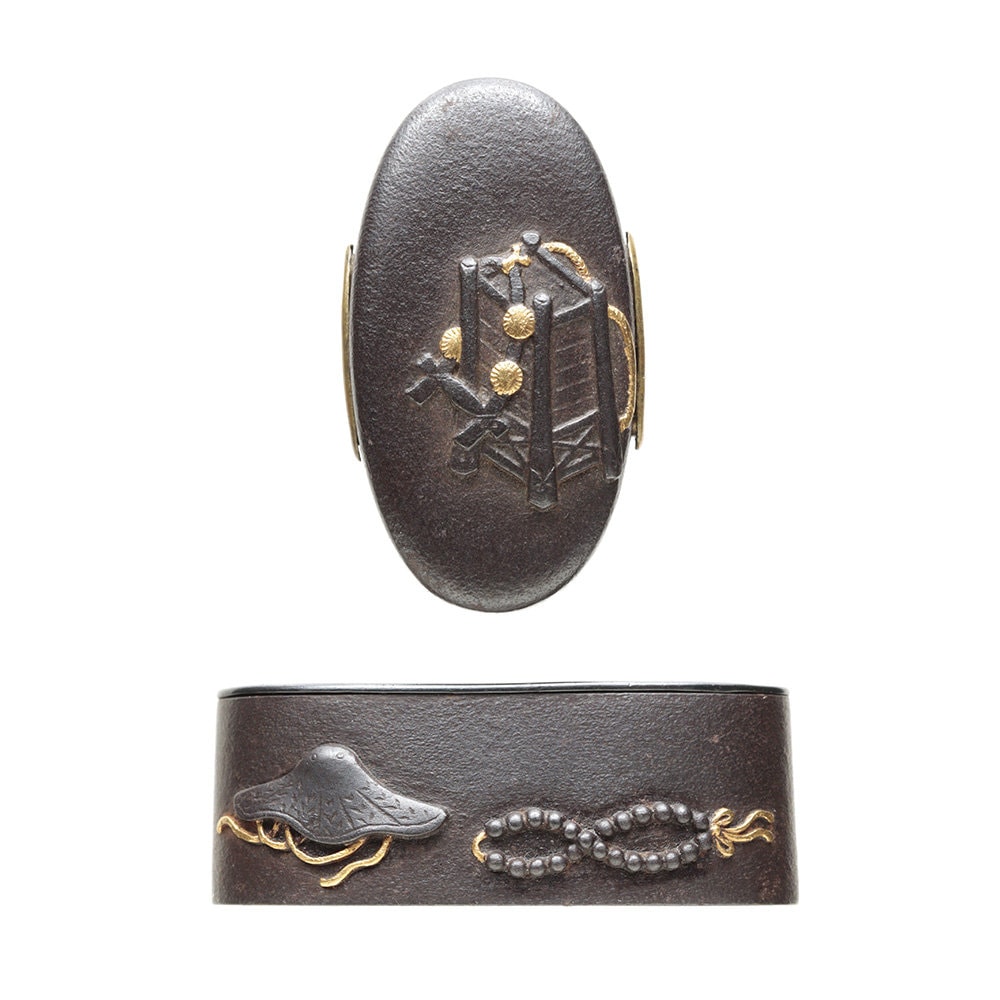
Grounded in the carving techniques of the Yokoya school and its iebori (hereditary atelier) lineage, Toshimasa characteristically employs combined with and to render birds and animals, horses, fish and shellfish, and insects with what the describes as "a dignified, elevated tone." His relief work is distinguished by pronounced and powerful modeling, while his choice of subject and naturalistic observation of posture and movement also reveal "the fresh, innovative sensibility associated with " -- the town-carver idiom that operated outside hereditary workshop conventions. He excelled at - (unified fitting suites), coordinating design programs across , , , , and with lavish use of gold and silver inlay.
The 's assessments consistently affirm that Toshimasa's compositions display "a high degree of refinement" and that his painstaking chokin results in work of "notably elevated dignity appropriate to equipment." Whether depicting the shishi-and-peony theme at which the Yokoya school excelled or distributing twenty-two insects across a mushi-zukushi ensemble with minute fidelity, the evaluations find that "the distinctive qualities and accomplished skill of Toshimasa are amply demonstrated" and that "the artist's strengths are fully manifested."