Around 1800 Suishinshi Masahide argued in his writings that the craft must return to the old masters’ methods: the fukkotō revival. His greatest successor Naotane worked convincingly in Bizen and Sōshū manners that had been dead for centuries.
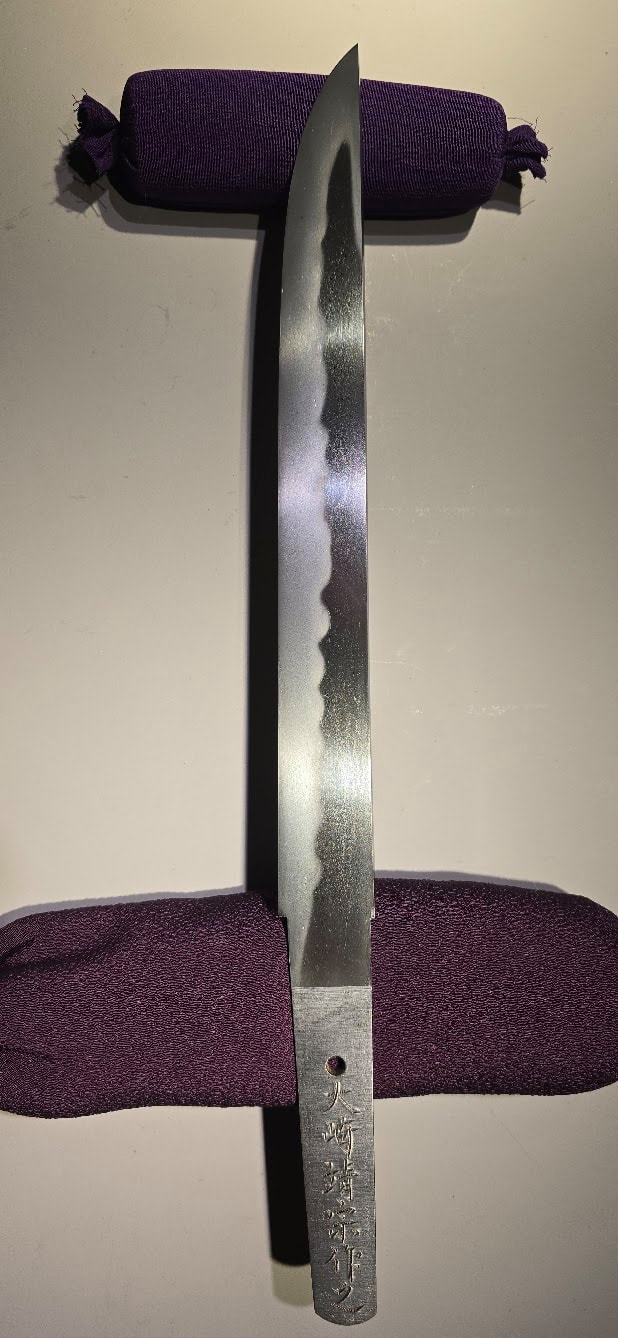
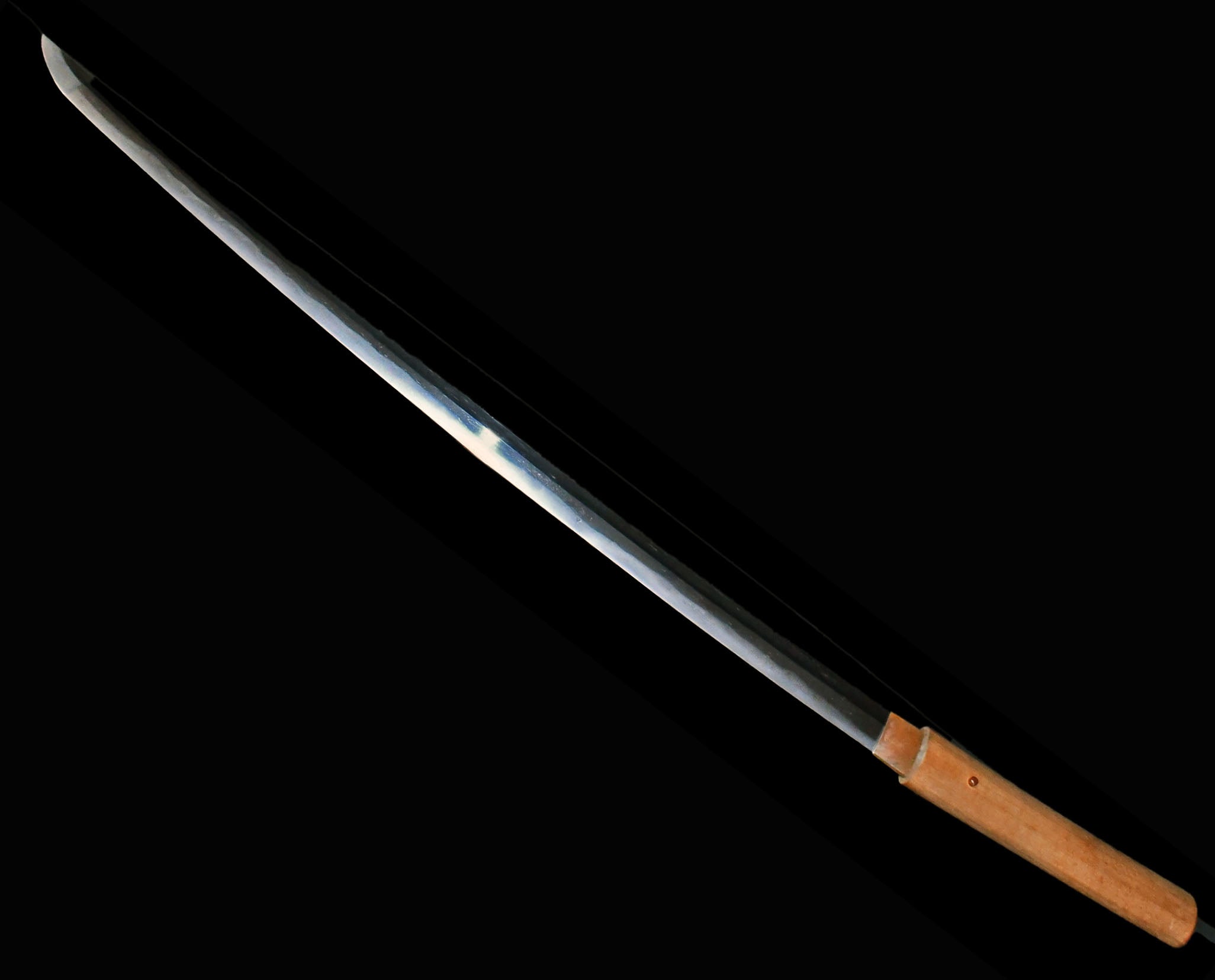
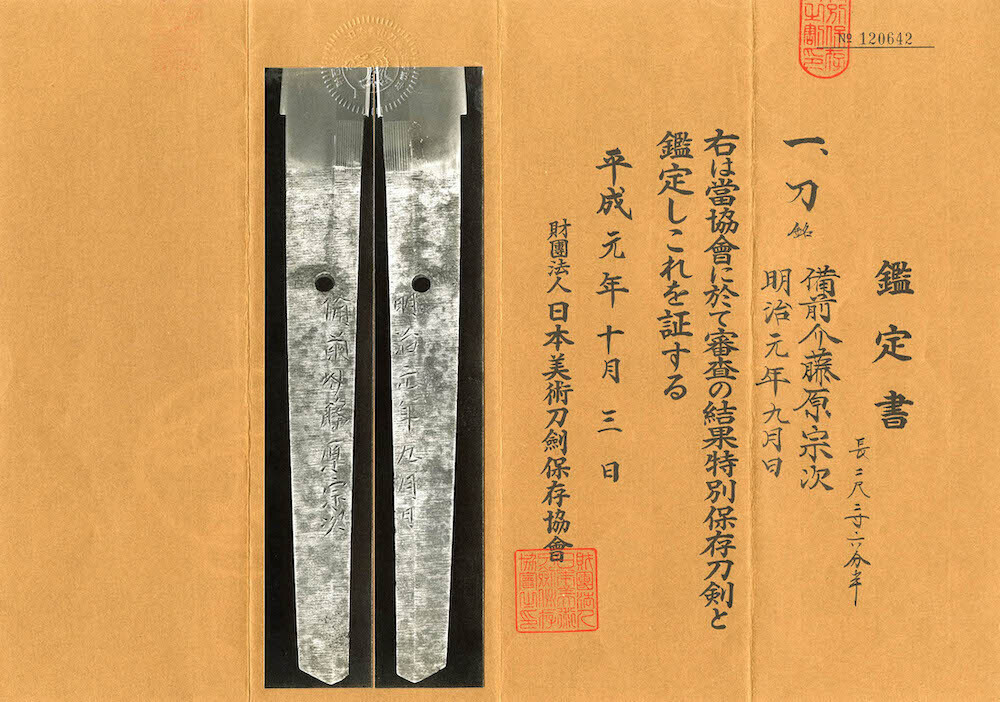
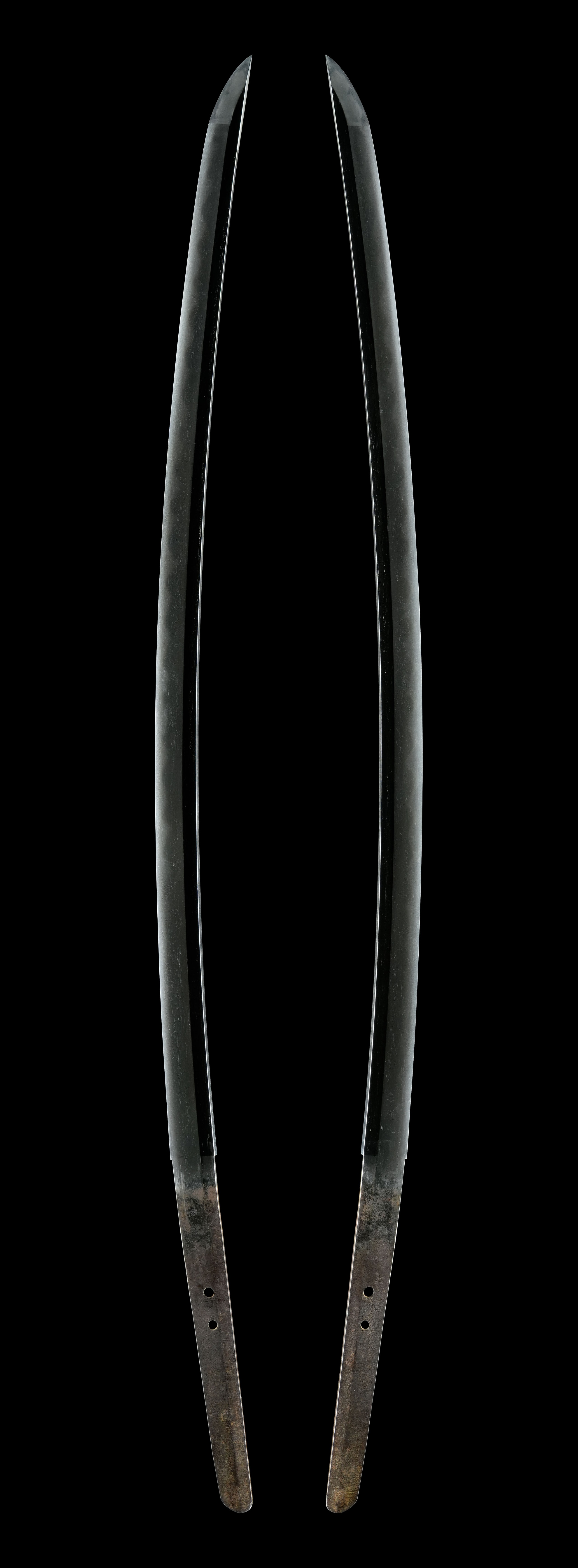
Tokubetsu Hozon Token 『 Bizen no suke Fujiwara Munetsugu, Meiji 1 nen 9 gatsu hi 』 Token Type: 『Katana』 Mei: 『Bizen no suke Fujiwara Munetsugu, Meiji 1 nen 9 gatsu hi』 『Bizen no suke fujiwara MUNETSUGU, Meiji 1 nen 9 gatsu hi』 Nihonto Kanteisho: 『Nihon Bijutsu Token Hozon Kyokai Tokubetsu Hozon Token』 NBTHK 『Tokubetsu Hozon Paper』 Jidai: 『Meiji 1 nen』 Production age 『1868』 Token Iretsu: 『Shinshinto Jojo-saku』 Koyama Munetsugu was a master of the Shinshinto Bizen-den style, and alongside the rare master smith "Kiyomaro," he stands as the leading figure among Bizen-den swordsmiths. Born in Oshu Shirakawa in Kyowa 3, his zokumei was Sobei, and he used the go Issensai and Seiryosai. His elder brothers were Munehira and Munetoshi. While it is said his teacher was Kato Tsunahide, considering his style, it is believed the influence of the younger brother Kato Tsunatoshi was greater. Initially a retained smith for the Shirakawa Matsudaira family, after the domain was transferred to Koshu Kuwana, he resided in Edo and crafted swords as a smith for the Kuwana domain. His residence was said to be in Azabu Nagasaka. He received the title of Bizen no suke in Koka 2. His production period spanned from the latter half of Bunsei to the early years of Meiji. His style was consistently Bizen-den, succeeding in firing nioi-gachi choji-midare on a beautiful, well-tightened jigane. This work is a production from Munetsugu's final years, his most mature period. It displays a variety of ha including choji-midare mixed with kobushi-gata style choji, kawazu-gata style choji, angular ha, and gunome. It features long ashi, a soft nioiguchi with konie, and other excellent characteristics. It is finished with a more flamboyant choji-dominant midare-ba than usual, and it is noteworthy that the nioiguchi is bright and clear. This is a superior masterpiece that fully demonstrates the smith's true ability, and it is also desirable that both the ji and ha are kenzen. 『Keijo』: Shinogi-zukuri, iori-mune, sori is jinjo and kenzen, chu-kissaki. 『Kitae』: Ko-itame hada well-kneaded and splendidly tightened, ji-nie attaches finely and densely, hada is moist. 『Hamon』: Bizen-den, koshi-hiraki gunome choji-midare, mixed with togari-ba, tobiyaki, and kobushi-gata choji style, yo and ashi enter well, nioi-deki with konie, ha is bright and clear. 『Boshi』: Midare-komi, saki is ko-maru with deep kaeri. 『Nakago』: Ubu, yasurime kiri, maru-mune, nakago-jiri iriyama-gata, mekugi-ana one. 『Tsuke』: Shirasaya 『Size』 Nagasa: 68.8cm, Sori: 1.5cm, Moto-haba: 3.2cm, Saki-haba: 2.2cm, Moto-kasane: 0.8cm, Saki-kasane: 0.5cm
 NihontoWatch
signed · Bizen · Shin-Shinto · nagasa 68.8cm · sori 1.5cm



The Shinshintō revival
Around 1800 Suishinshi Masahide argued in his writings that the craft must return to the old masters’ methods: the fukkotō revival. His greatest successor Naotane worked convincingly in Bizen and Sōshū manners that had been dead for centuries.
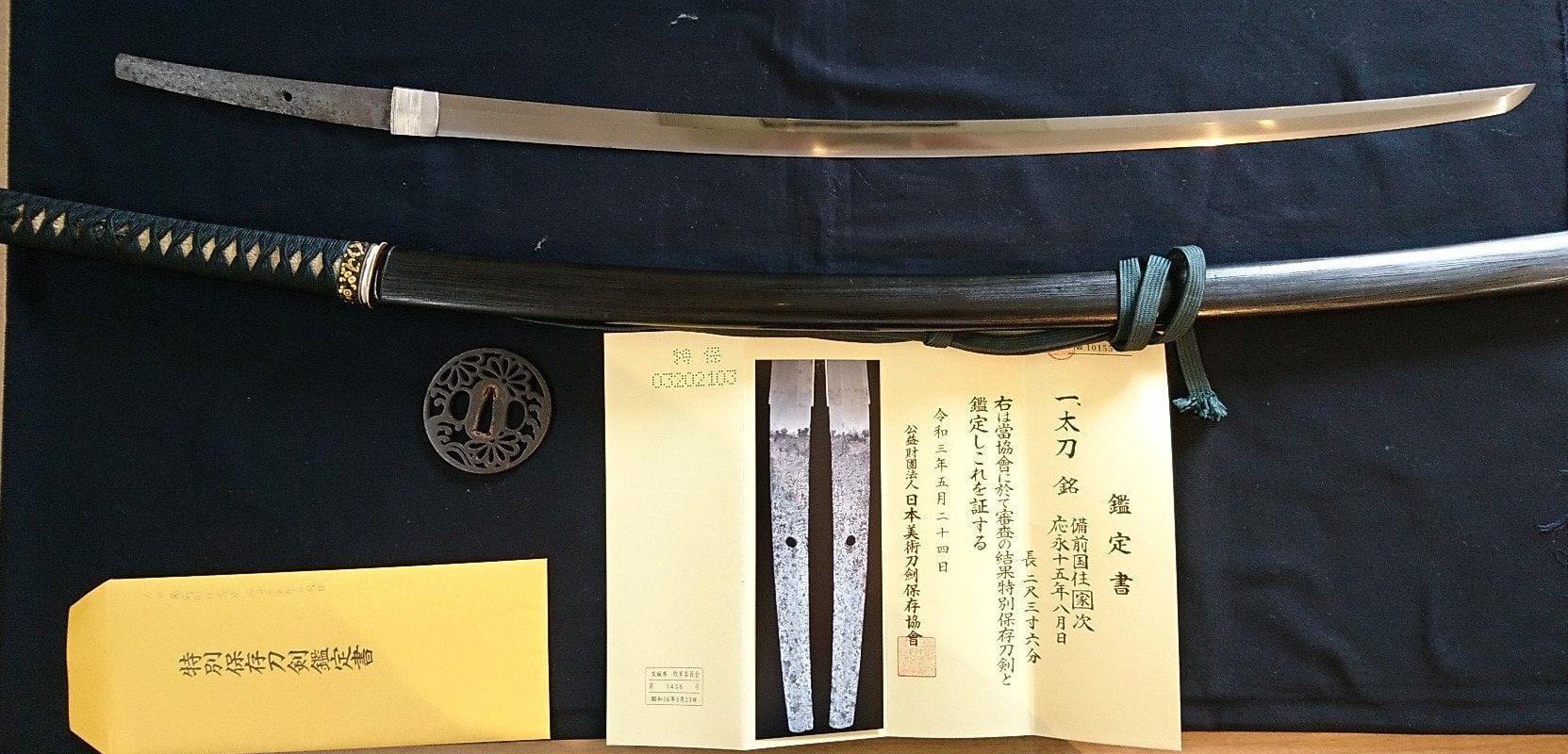
A Hozon-certified blade judged to show notably superior workmanship and a better state of preservation. The bar is higher: re-tempered blades and most unsigned Muromachi/Edo works are excluded.
The NBTHK (Nihon Bijutsu Tōken Hozon Kyōkai, the Society for the Preservation of Japanese Art Swords) is a public-interest incorporated foundation founded in 1948 and supervised by Japan’s Agency for Cultural Affairs (Bunkachō); it is based at the Japanese Sword Museum in Tokyo. Its expert panels physically examine each submitted work (shinsa) and issue a certificate (kanteishō) ranking it by artistic and historical merit. NBTHK papers are the most widely recognized standard of authentication for Japanese swords and fittings.
NBTHK official siteWhen the item reaches you, please check immediately for damage and that it matches your order. We bear the shipping cost for a return; please send it freight-collect. Costs other than the item price cannot be refunded.
 Koshirae