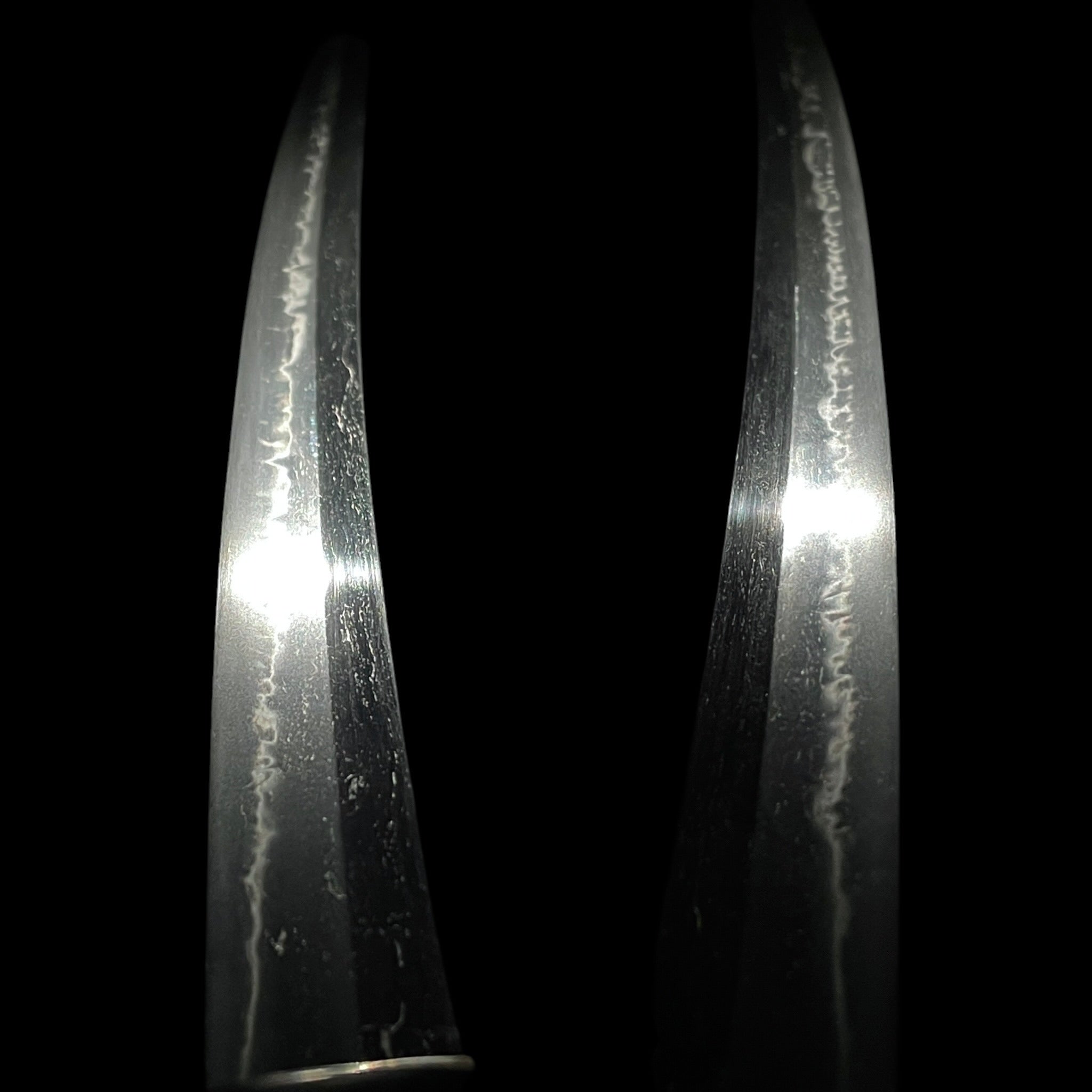
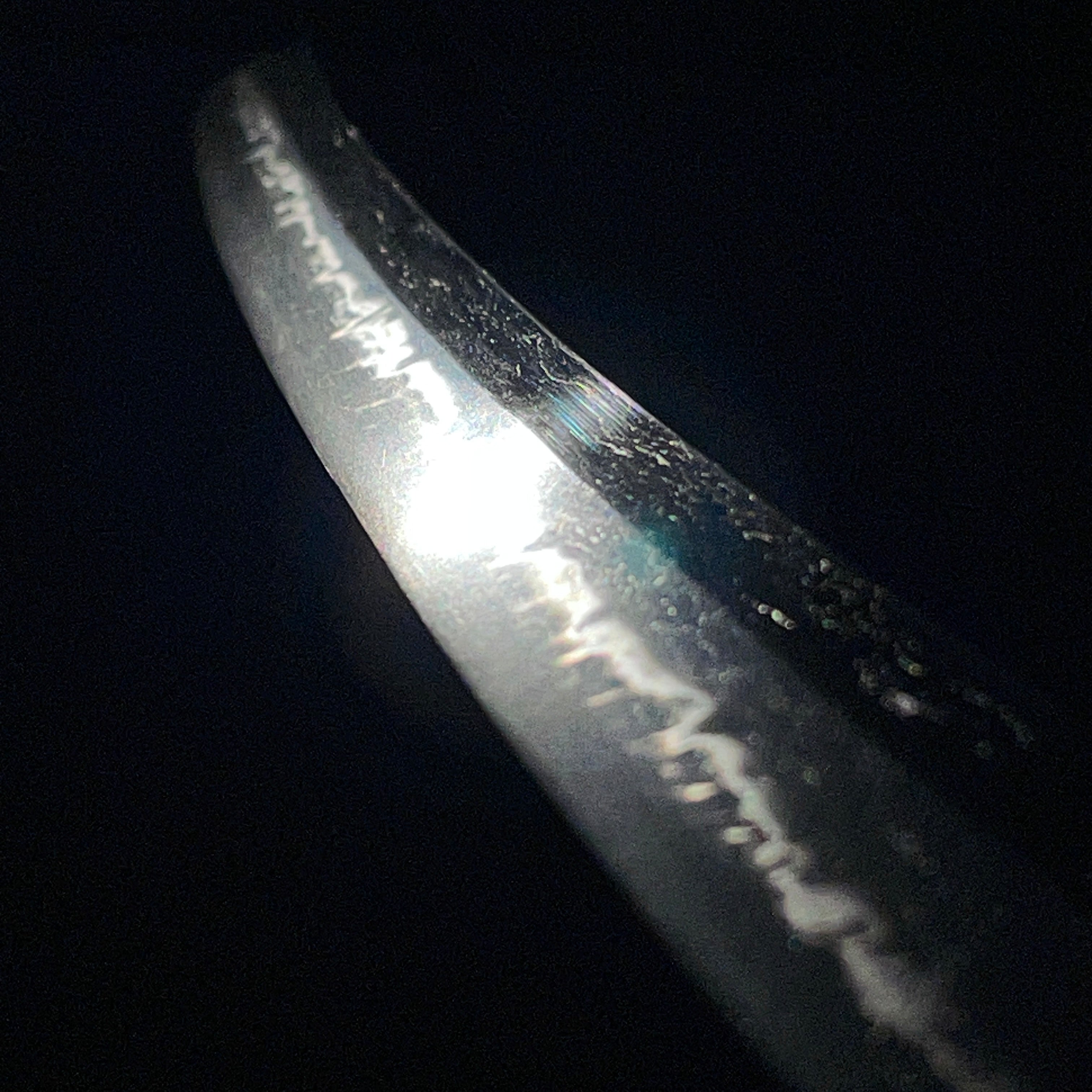
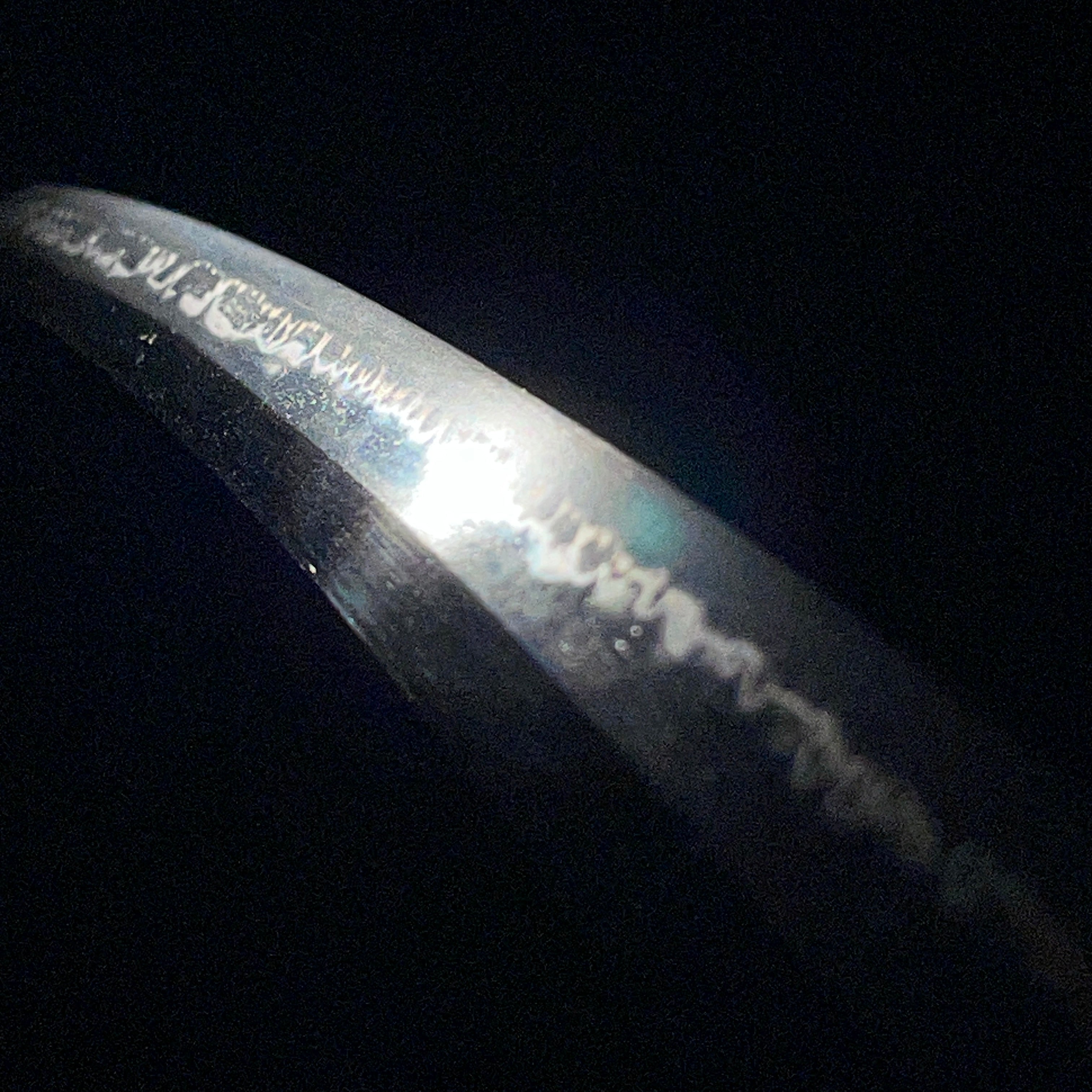
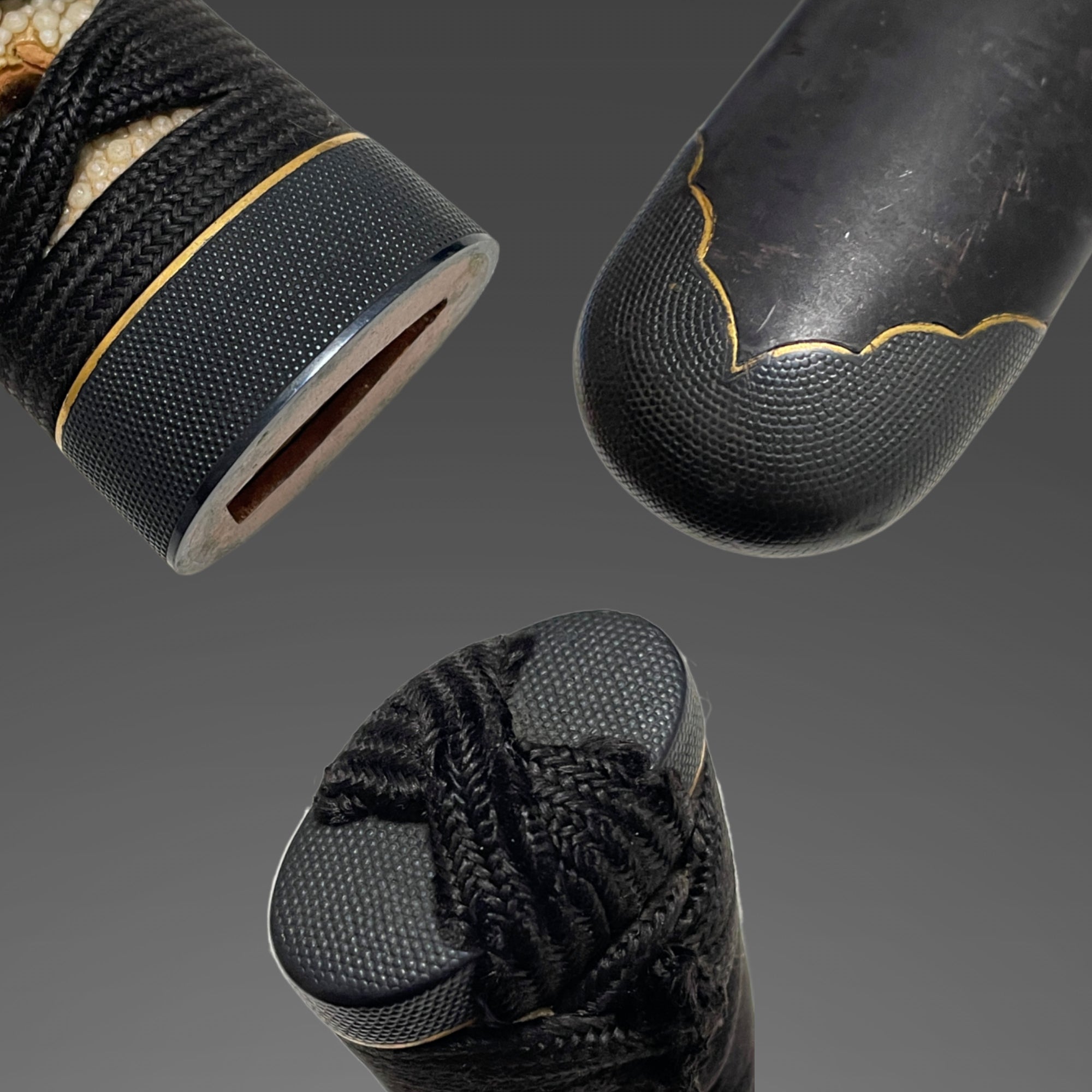
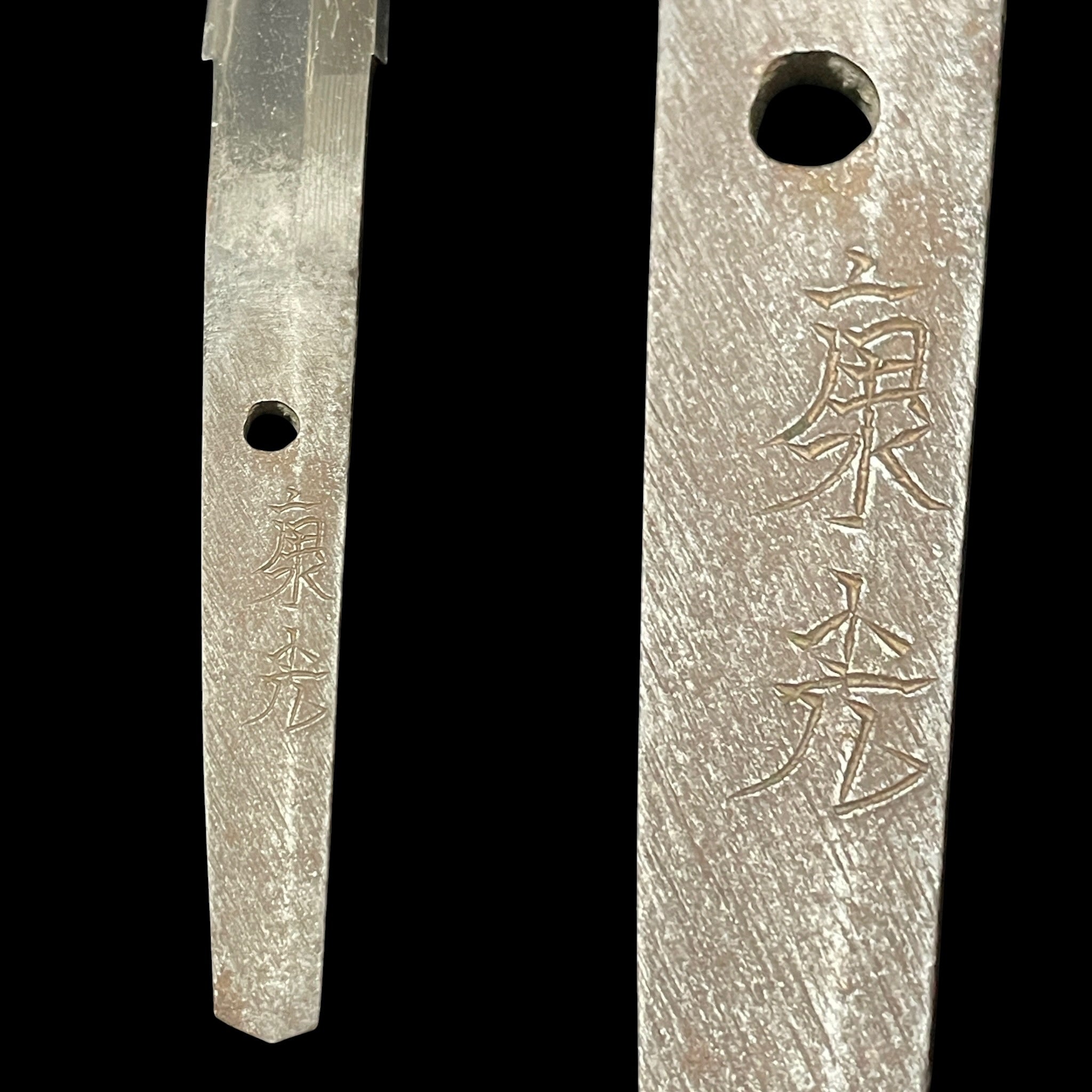
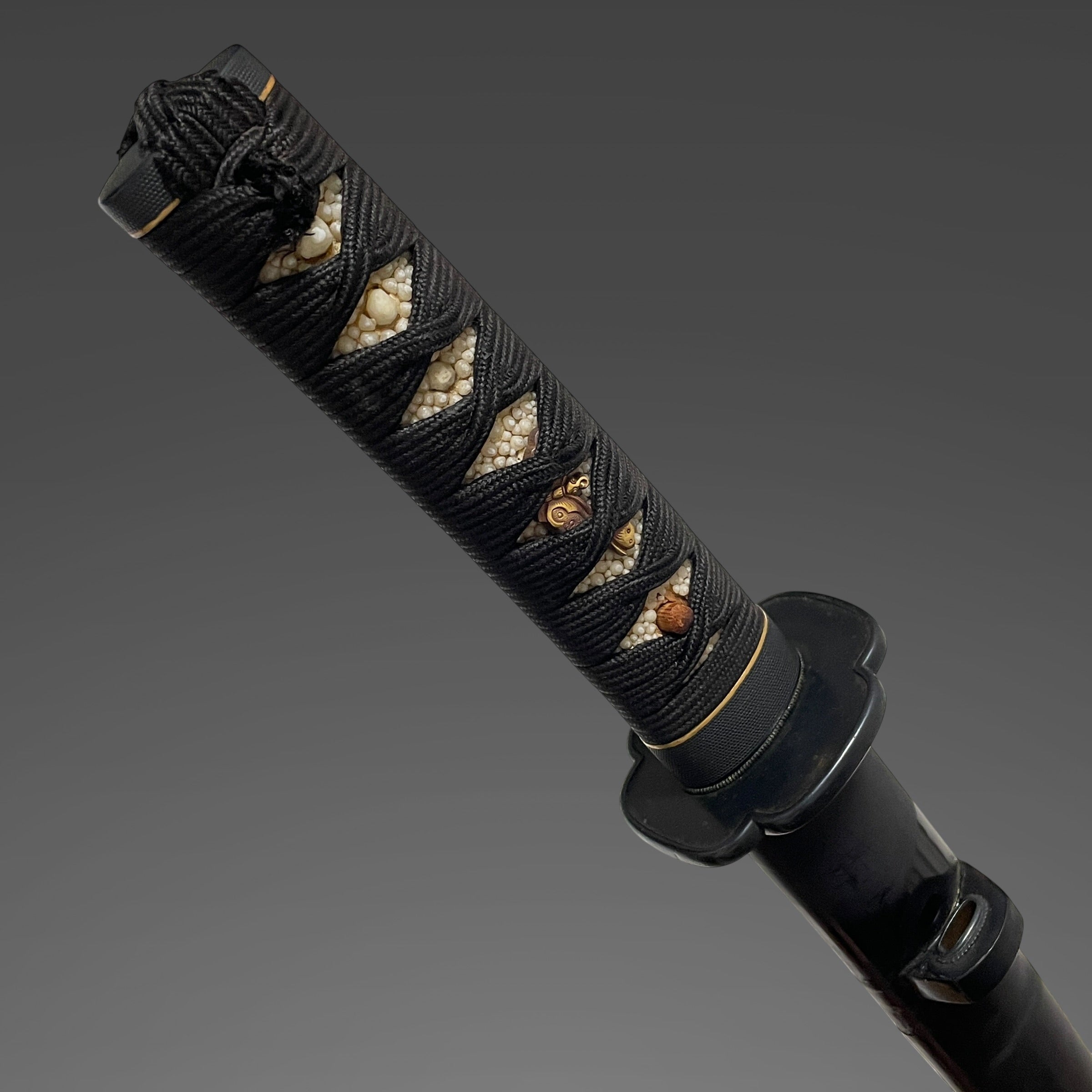
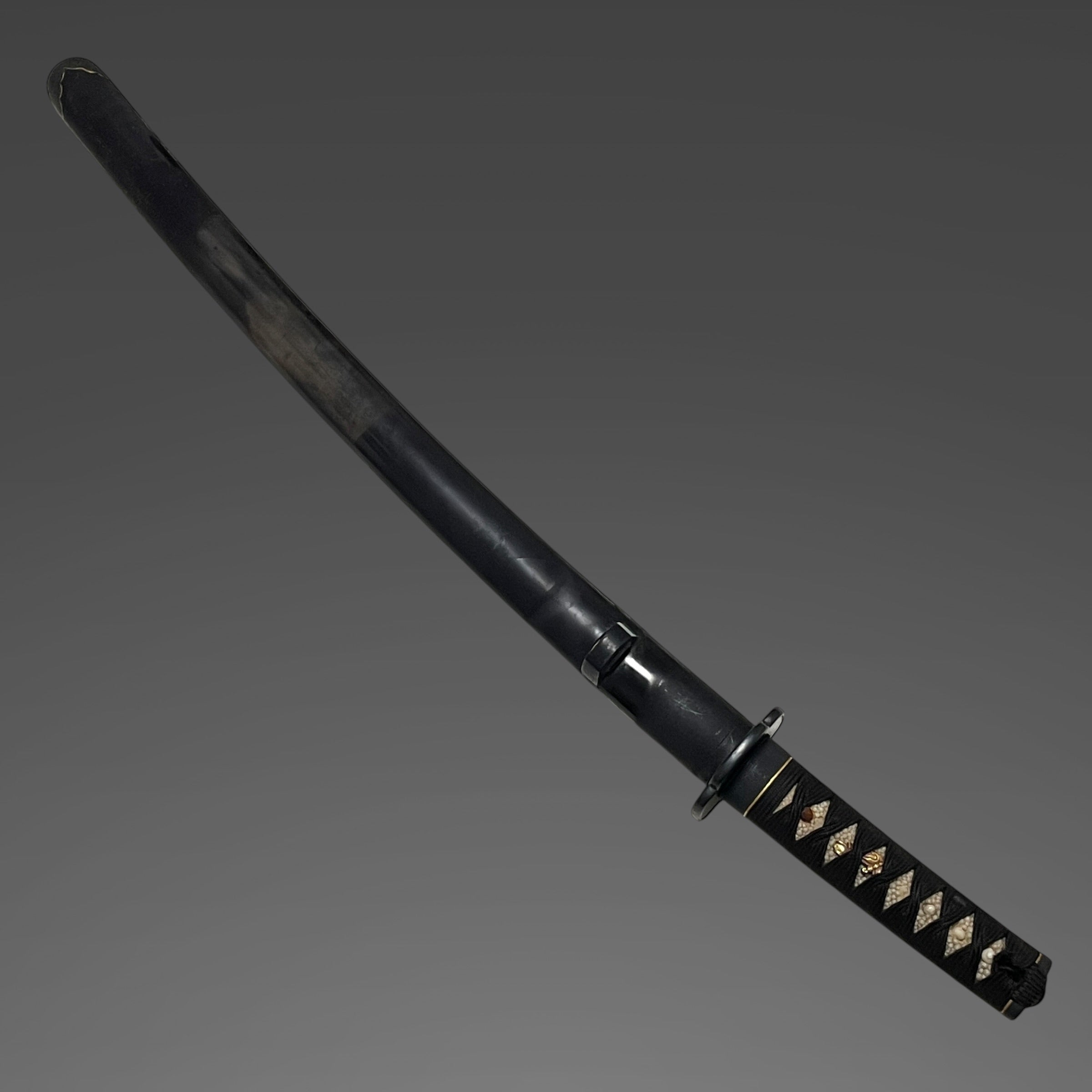
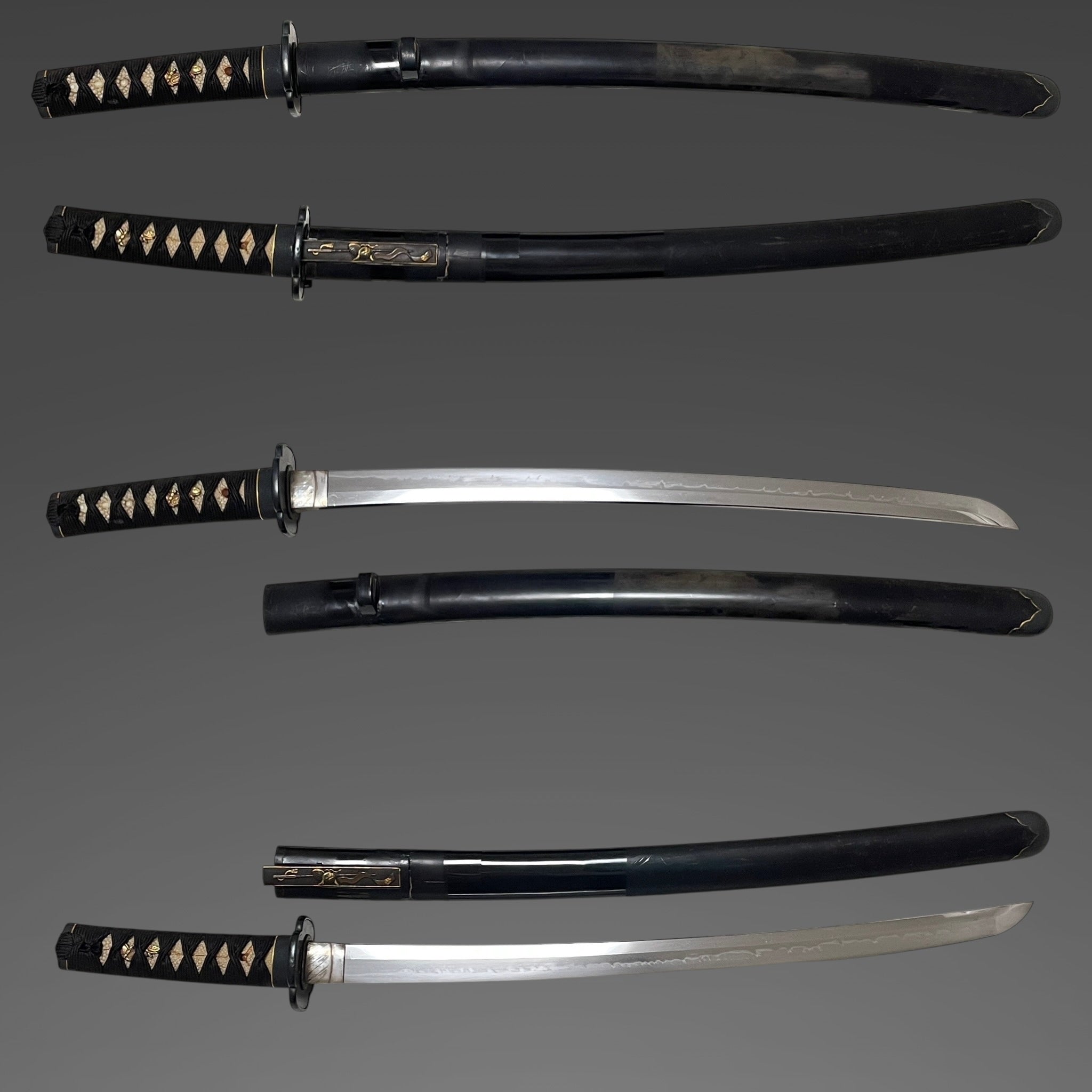
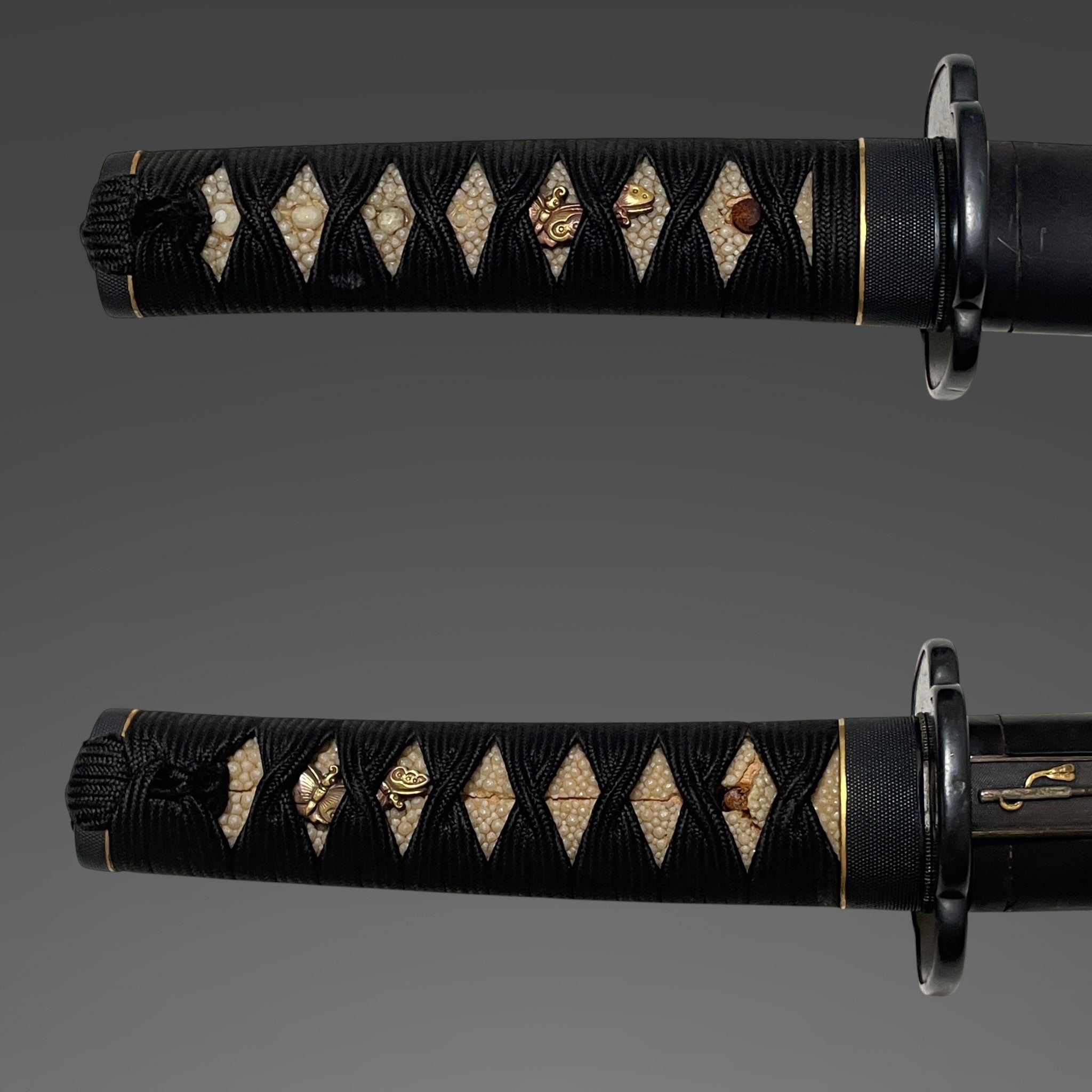
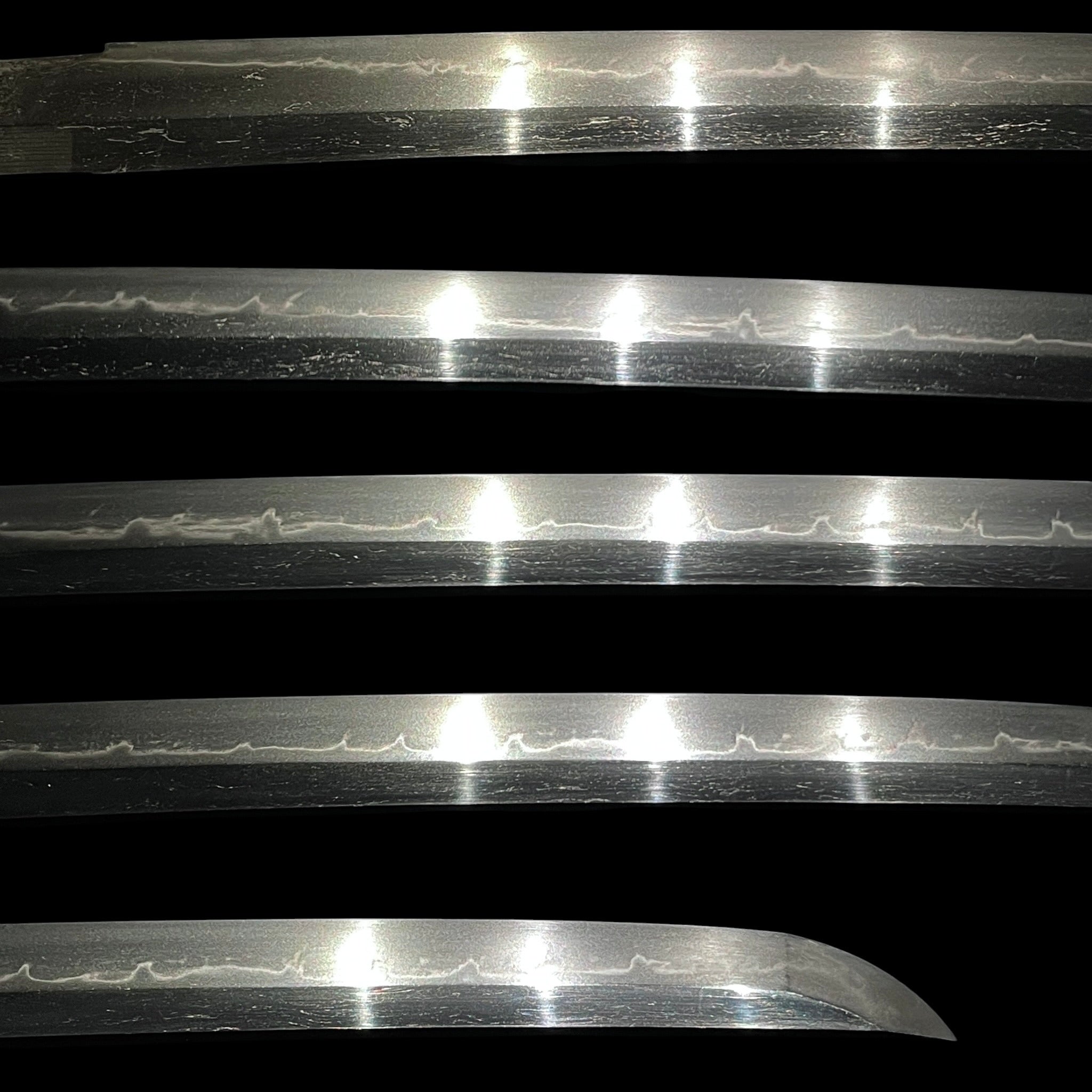
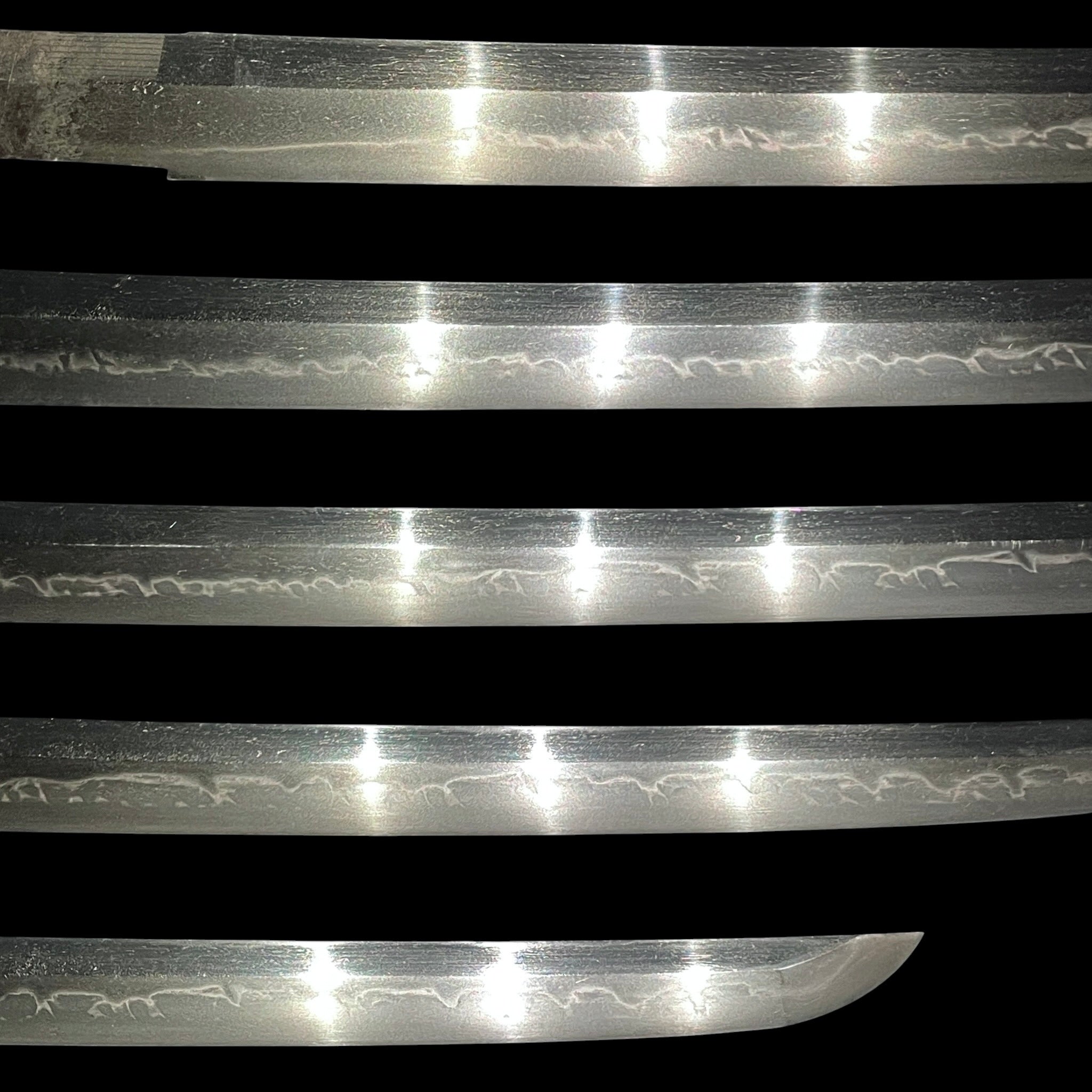
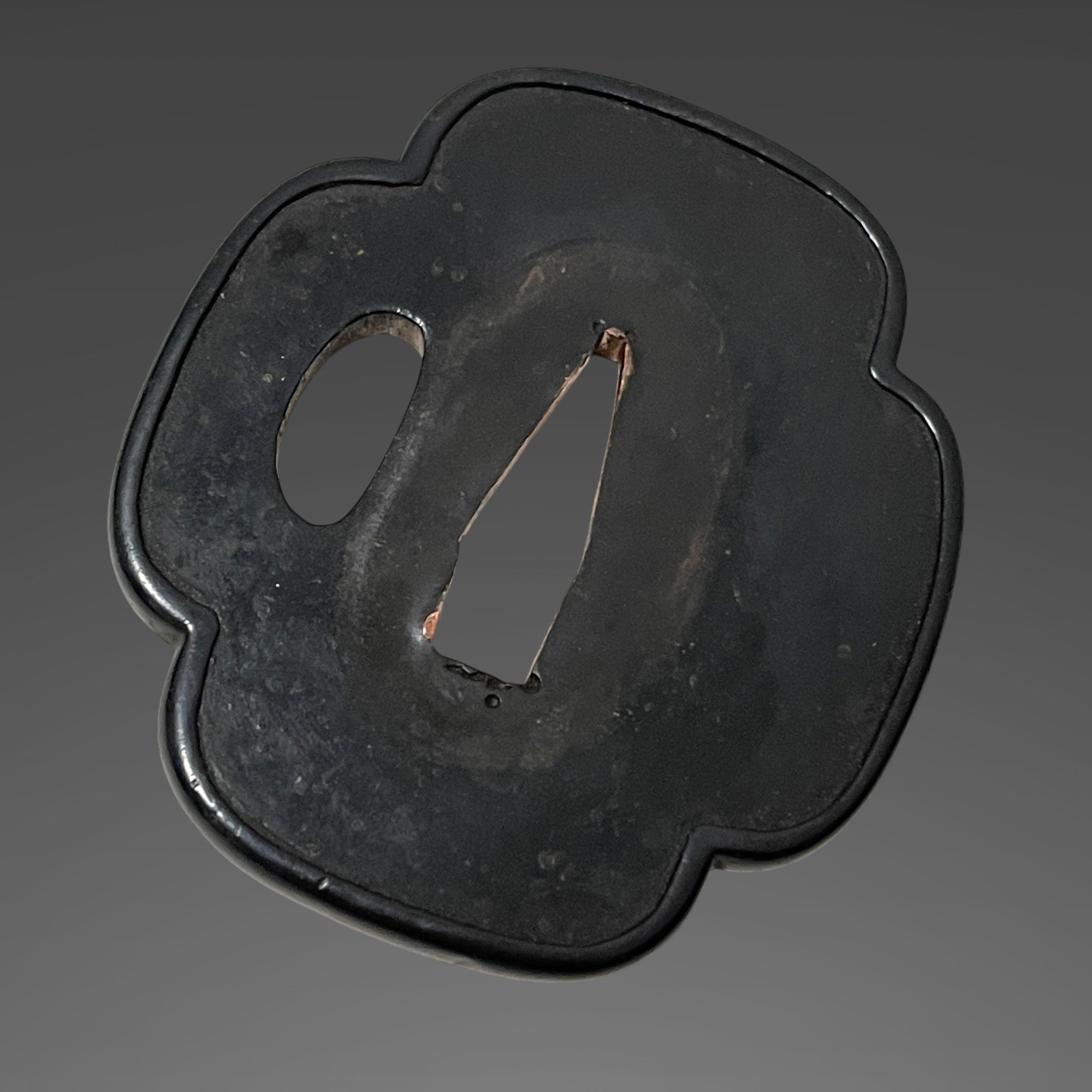
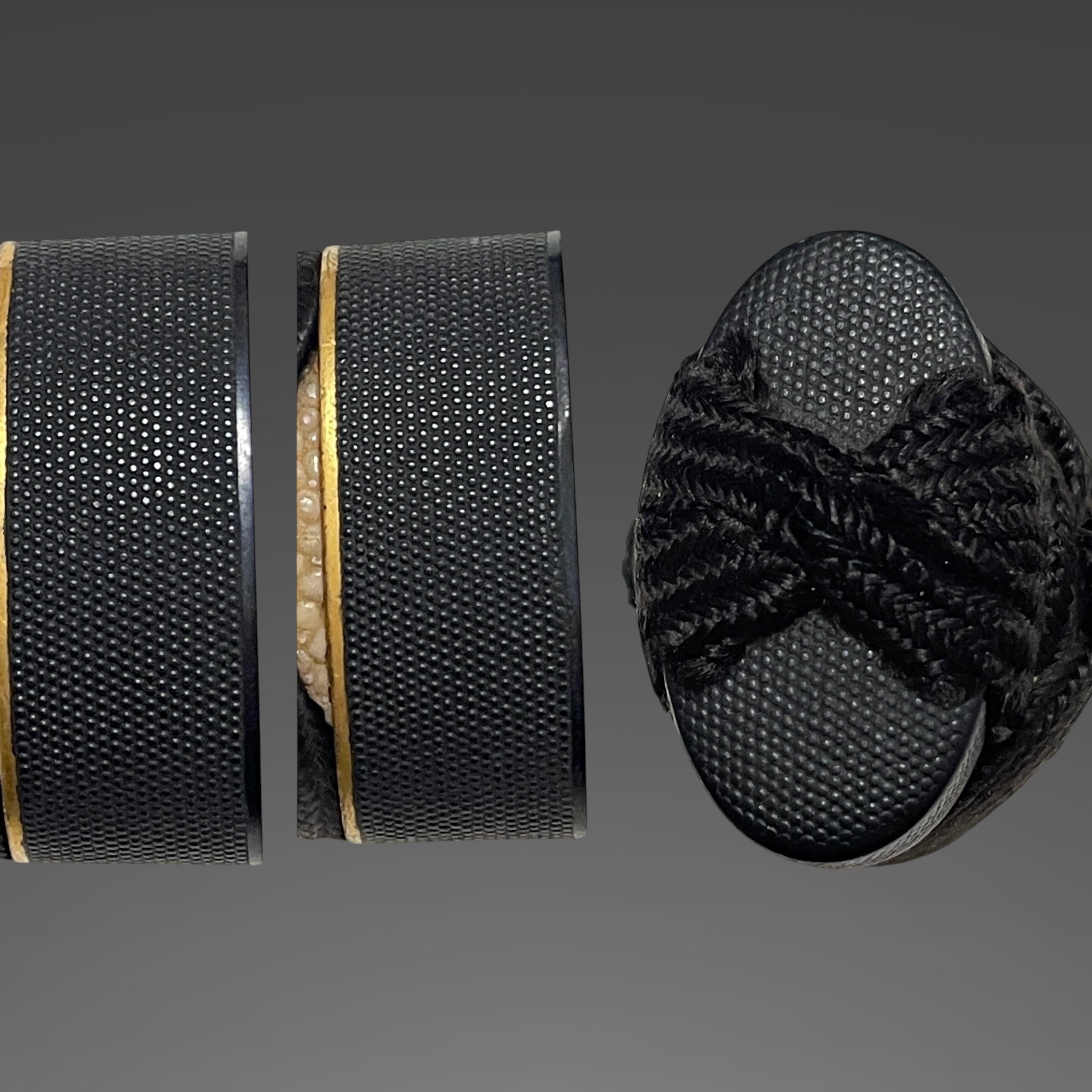
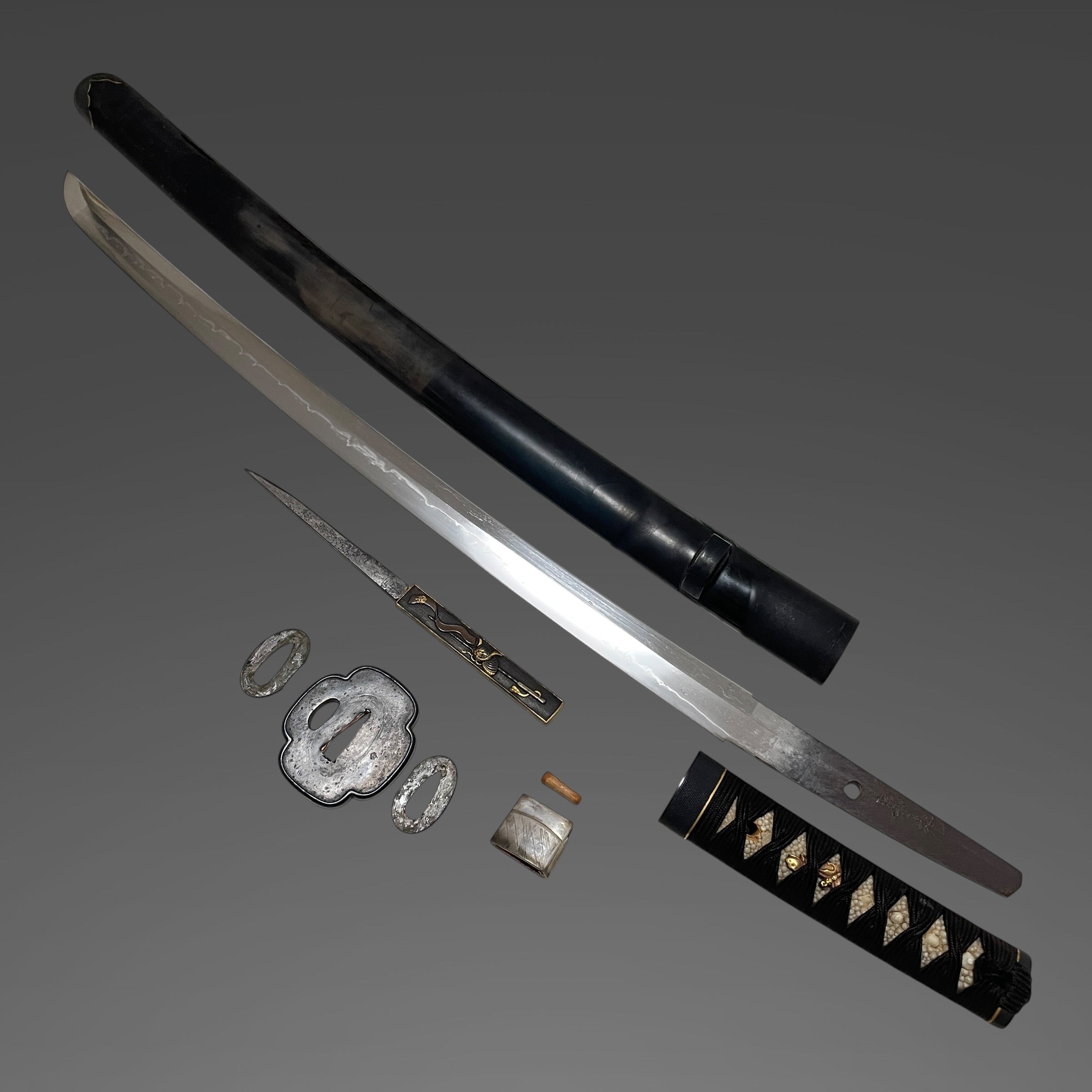
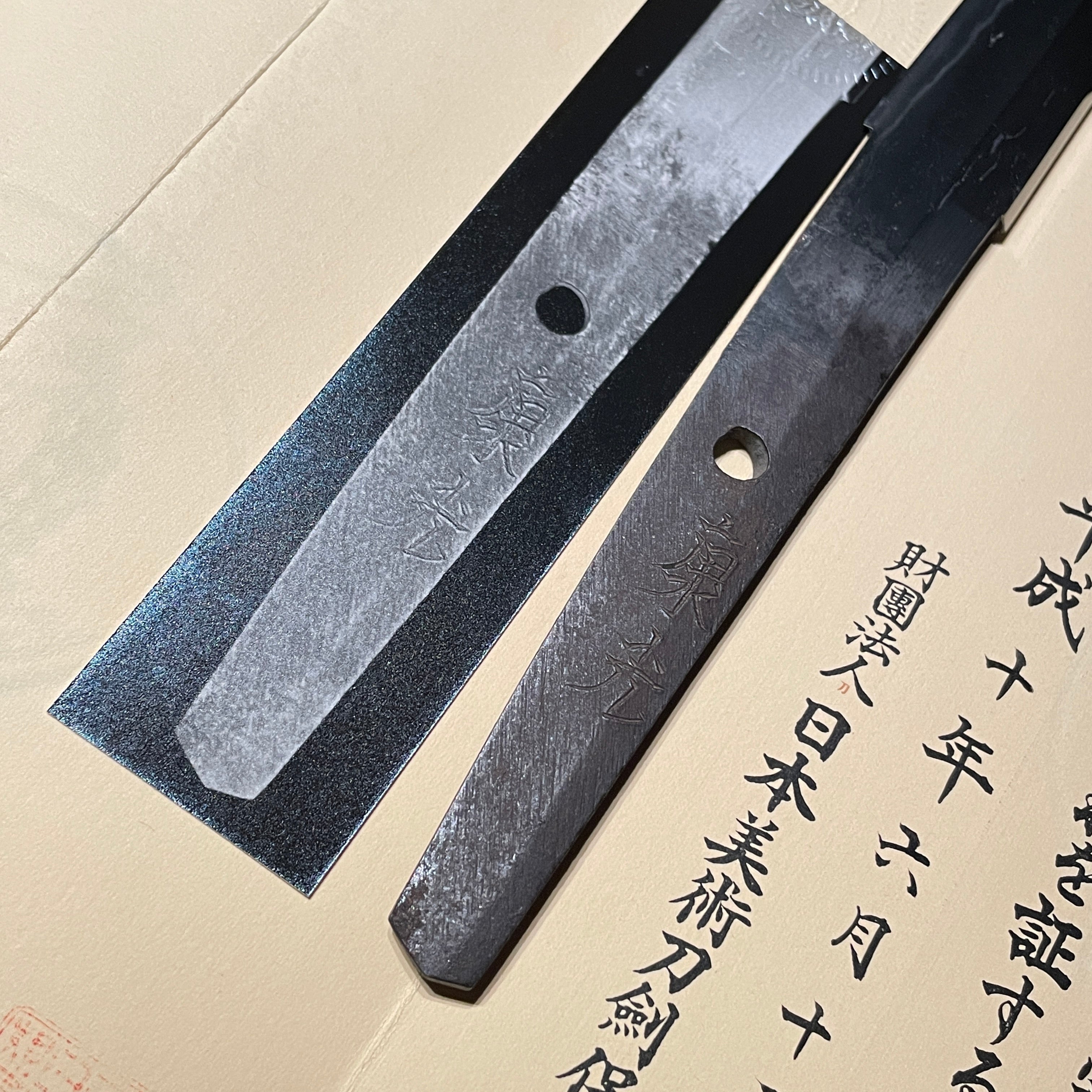
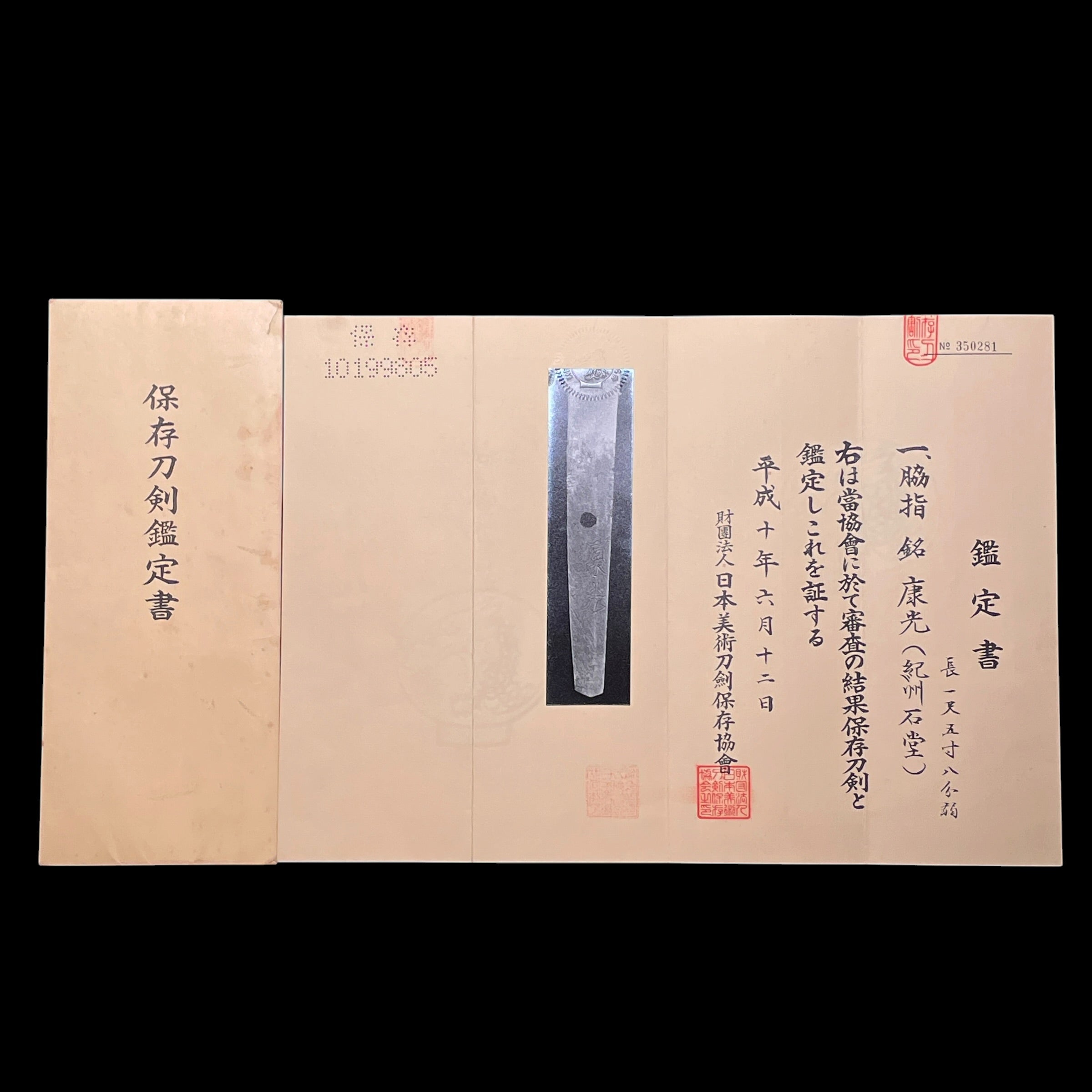
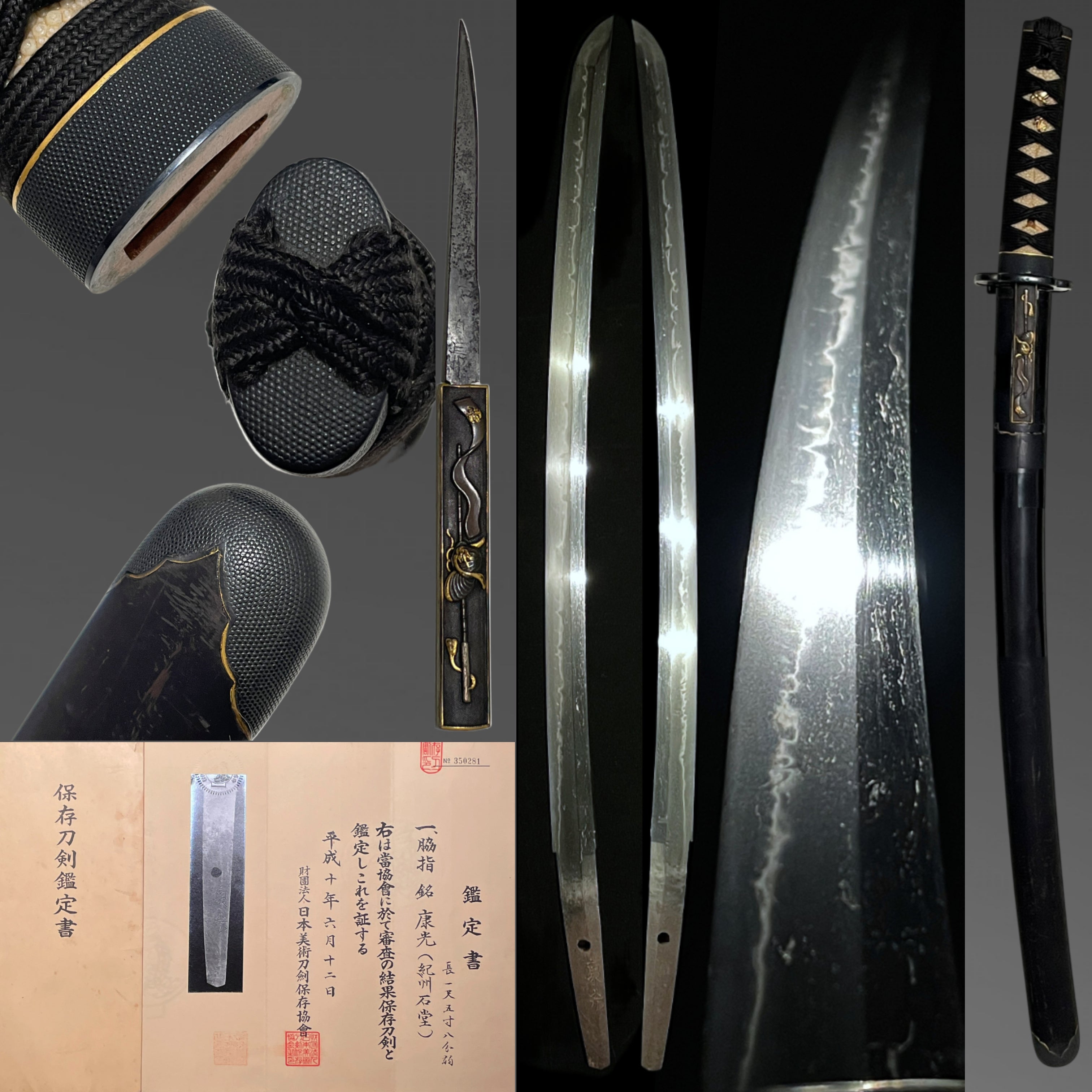
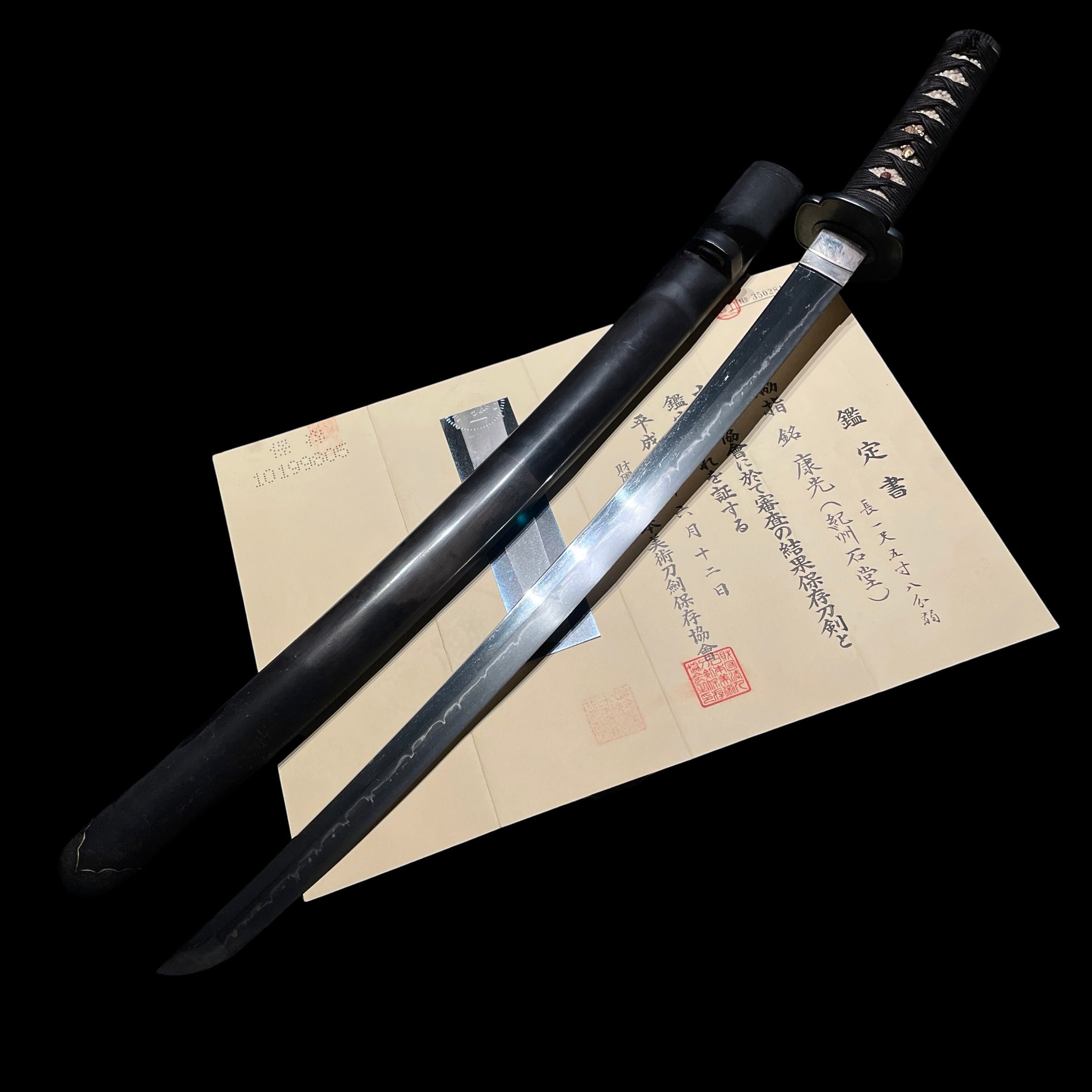
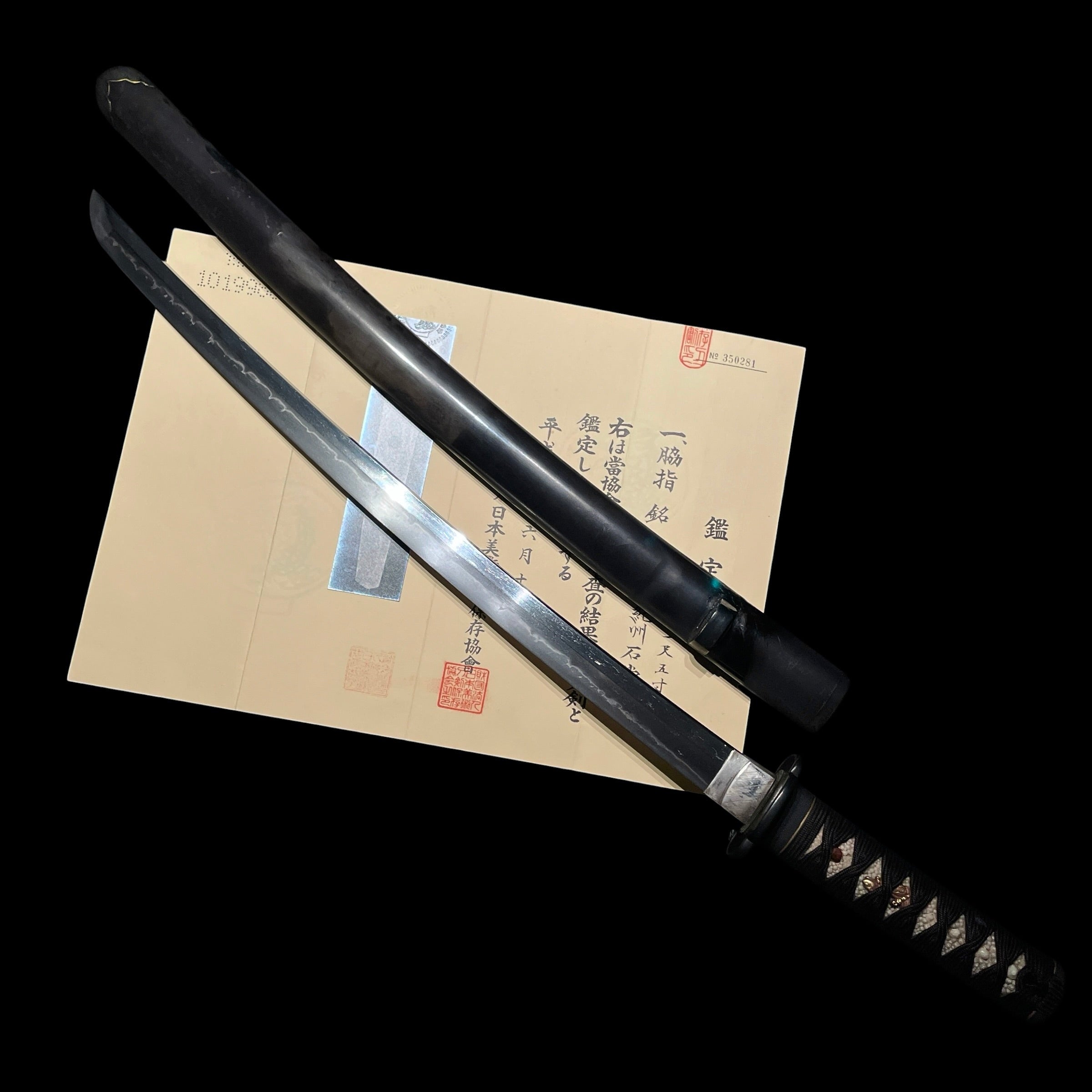
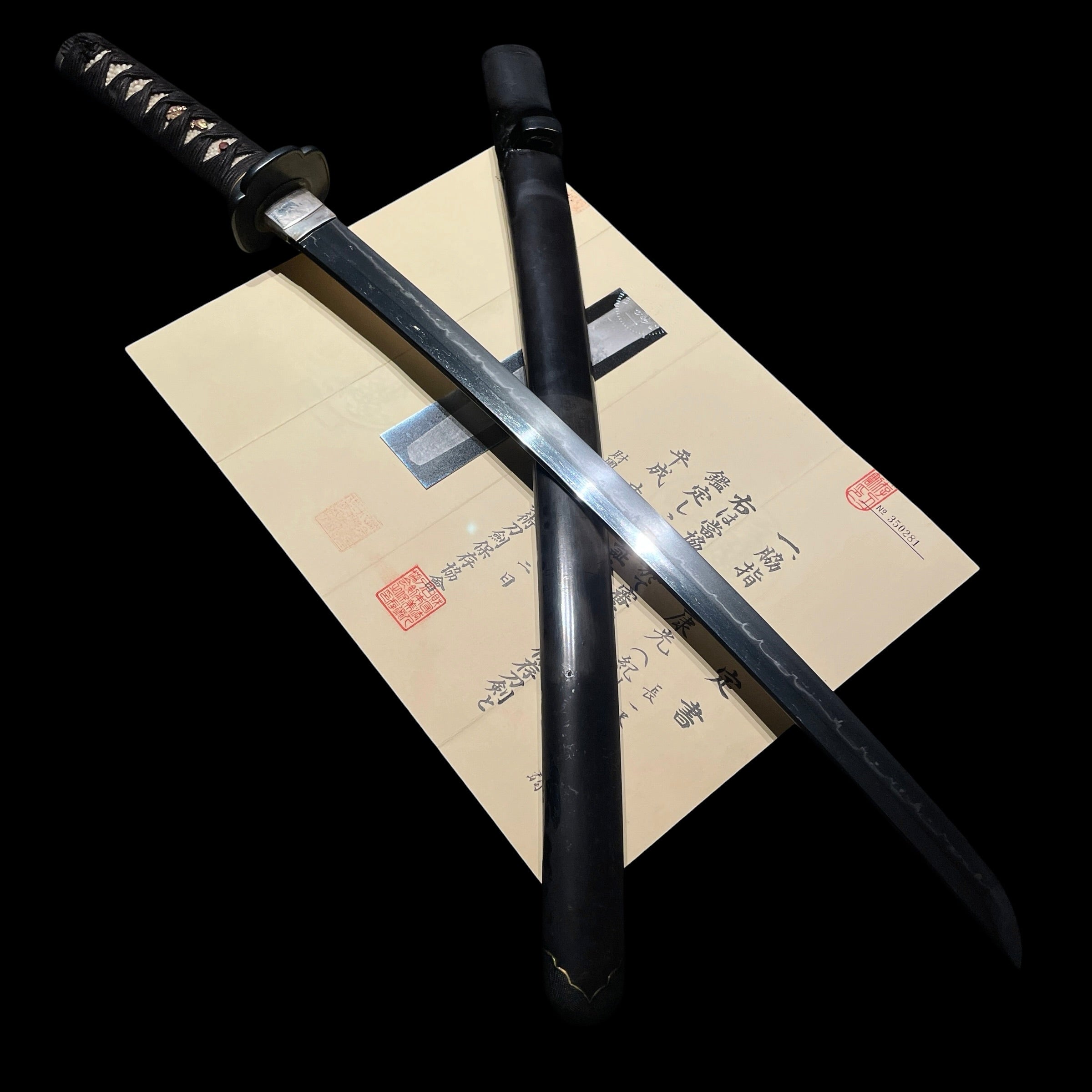
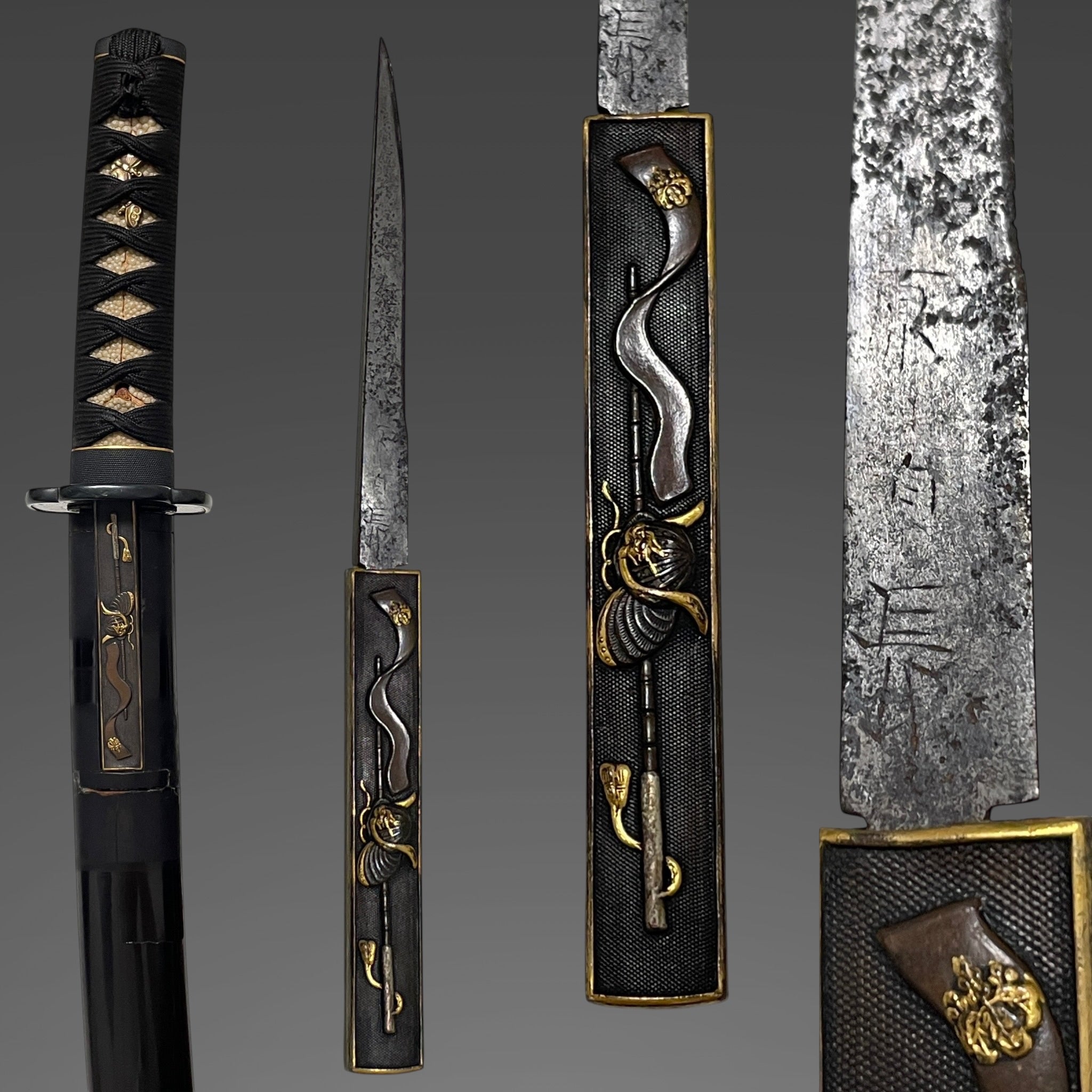
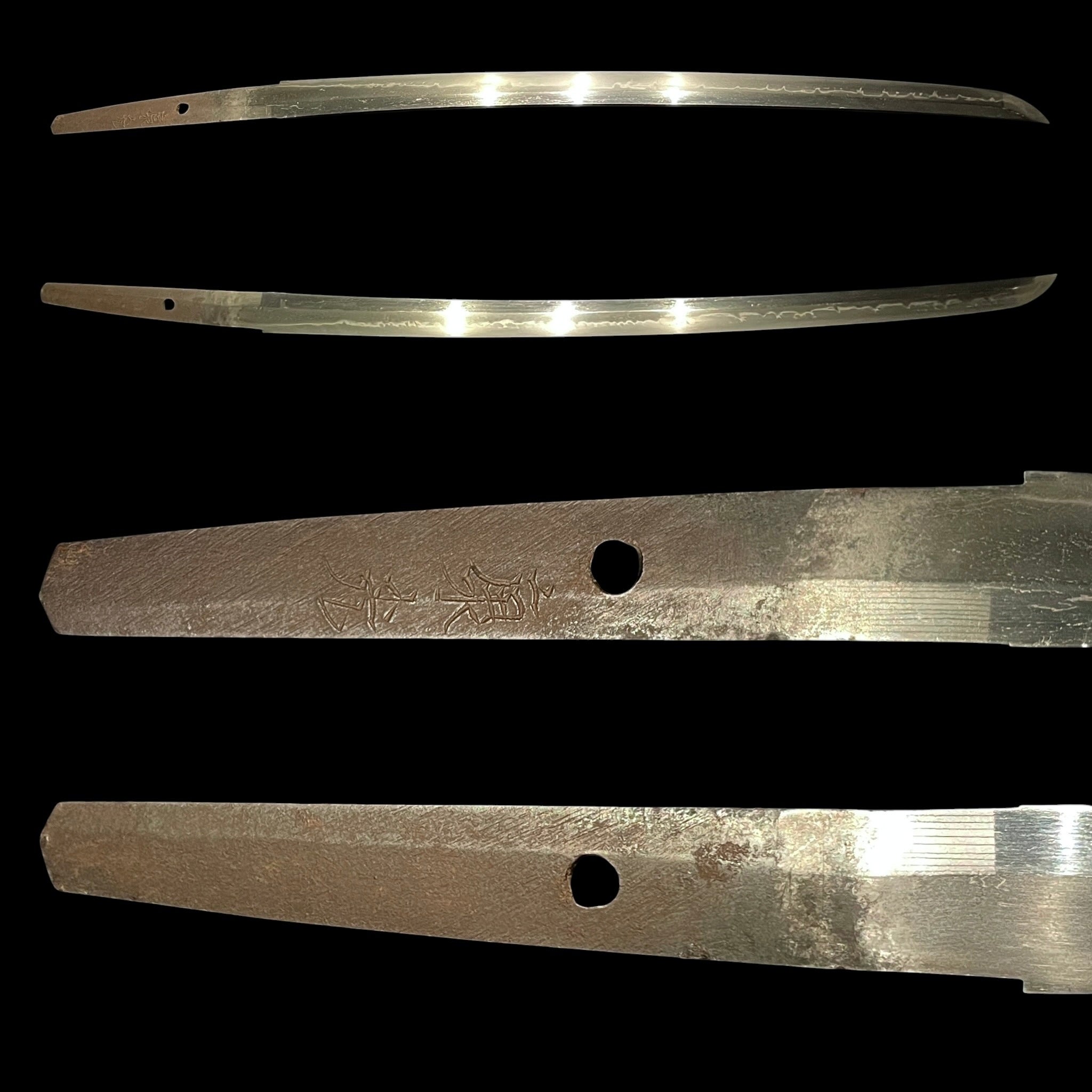
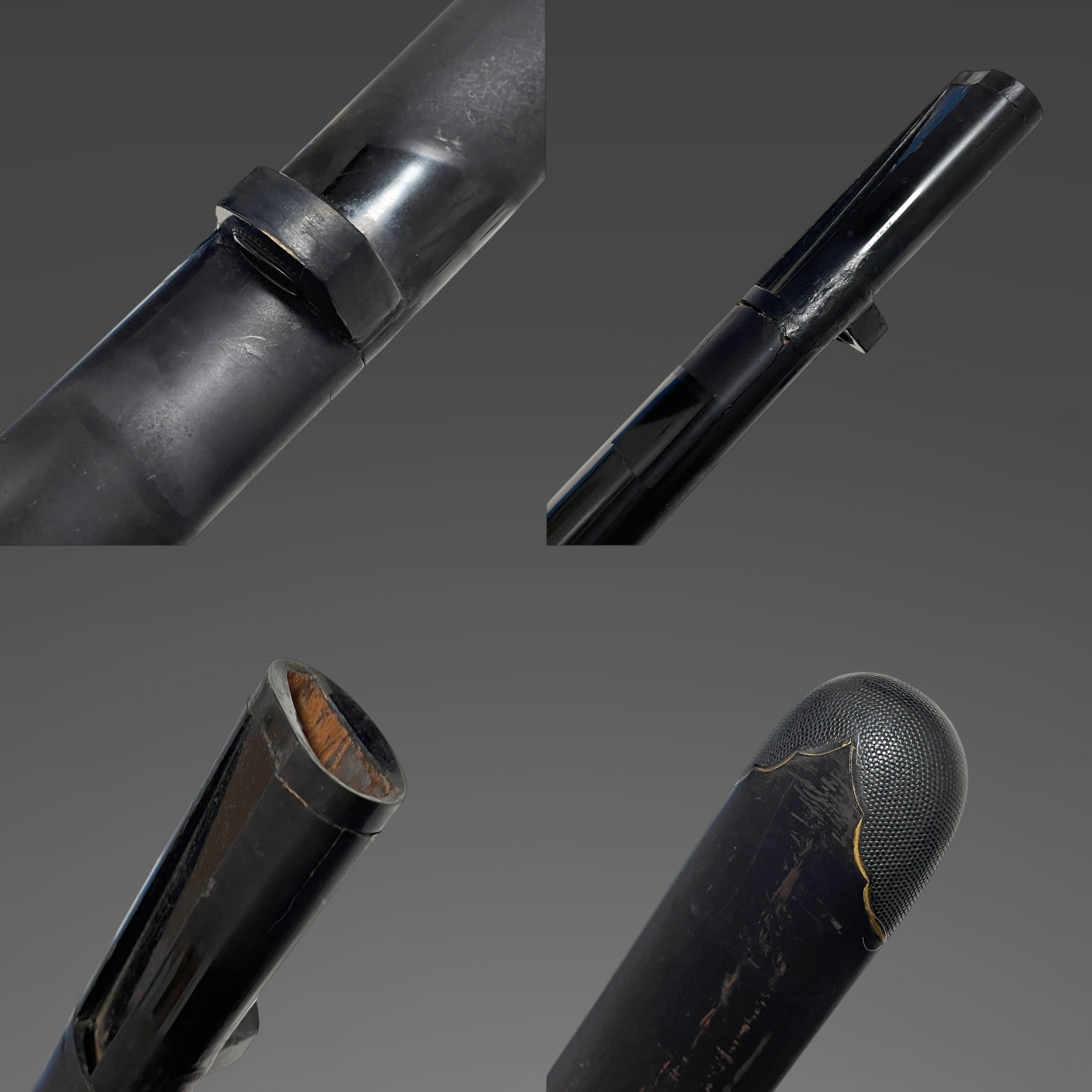
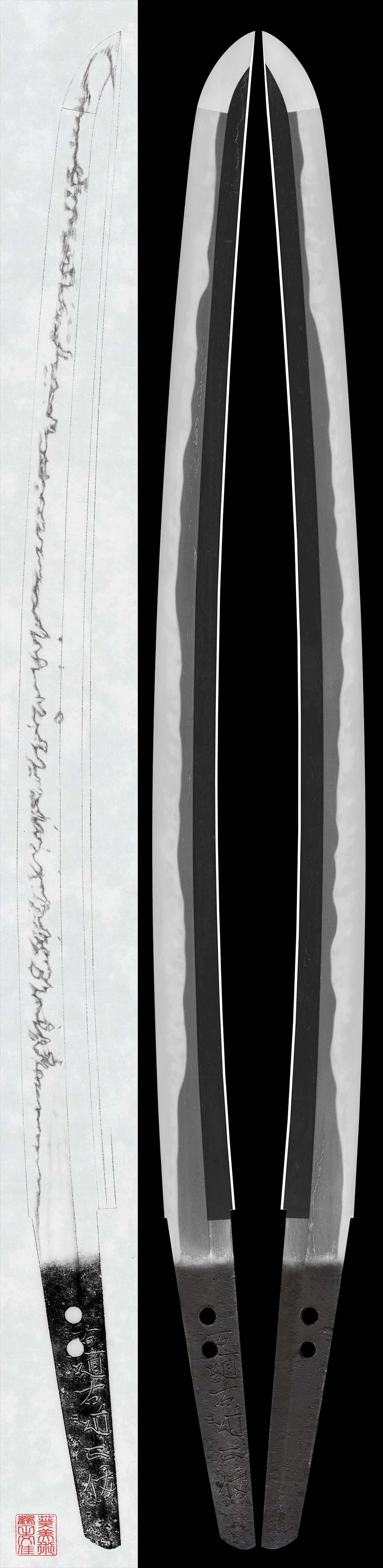
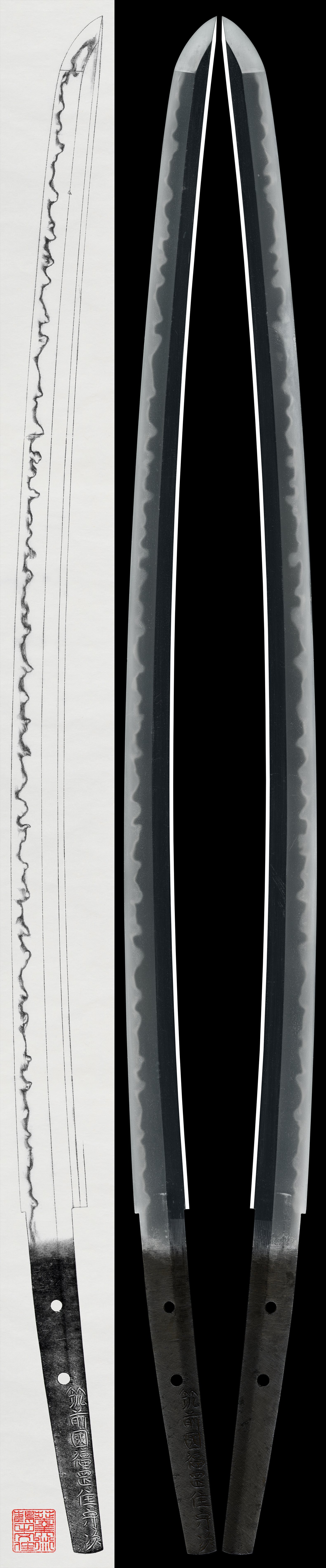
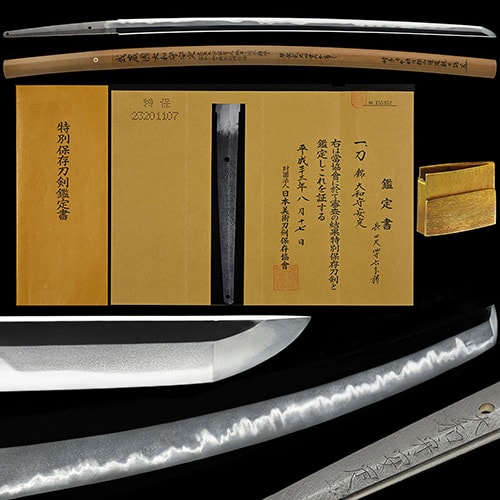
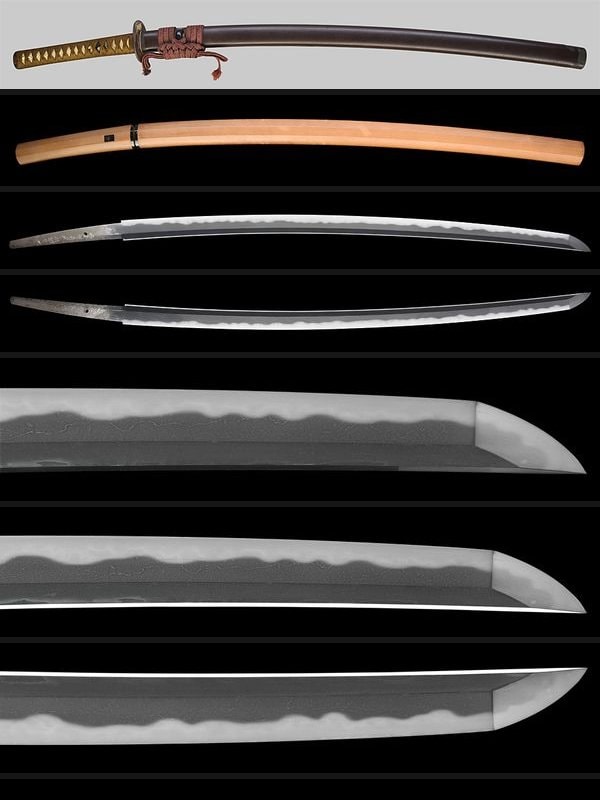
This is a wakizashi from the early Edo period, signed by Yasumitsu of the Kishu Ishido school. It features an amazing hamon and comes with shakudo nanako fittings. The blade is accompanied by an NBTHK Hozon Certificate.
mei · Kishu Ishido · Shinto · nagasa 47.7cm · sori 1cm


Shinto · Kii
1 piece on the market now
| Smith | Era | Designated |
|---|---|---|
| Masatoshi正俊 | — | 1 |
Certifies a genuine blade worth preserving: a signature confirmed correct, or, if unsigned, an era, province, and school that the NBTHK can reliably identify.
The NBTHK (Nihon Bijutsu Tōken Hozon Kyōkai, the Society for the Preservation of Japanese Art Swords) is a public-interest incorporated foundation founded in 1948 and supervised by Japan’s Agency for Cultural Affairs (Bunkachō); it is based at the Japanese Sword Museum in Tokyo. Its expert panels physically examine each submitted work (shinsa) and issue a certificate (kanteishō) ranking it by artistic and historical merit. NBTHK papers are the most widely recognized standard of authentication for Japanese swords and fittings.
NBTHK official siteSwords are non-returnable (blades cannot be re-imported to Japan). Insured shipping; damage/loss claims reported within 5 days of receipt. Cancellation fee 10% before shipment; not possible after shipment.
This is a wakizashi from the early Edo period, signed by Yasumitsu of the Kishu Ishido school. It features an amazing hamon and comes with shakudo nanako fittings. The blade is accompanied by an NBTHK Hozon Certificate.
mei · Kishu Ishido · Shinto · nagasa 47.7cm · sori 1cm


Shinto · Kii
1 piece on the market now
| Smith | Era | Designated |
|---|---|---|
| Masatoshi正俊 | — | 1 |
Certifies a genuine blade worth preserving: a signature confirmed correct, or, if unsigned, an era, province, and school that the NBTHK can reliably identify.
The NBTHK (Nihon Bijutsu Tōken Hozon Kyōkai, the Society for the Preservation of Japanese Art Swords) is a public-interest incorporated foundation founded in 1948 and supervised by Japan’s Agency for Cultural Affairs (Bunkachō); it is based at the Japanese Sword Museum in Tokyo. Its expert panels physically examine each submitted work (shinsa) and issue a certificate (kanteishō) ranking it by artistic and historical merit. NBTHK papers are the most widely recognized standard of authentication for Japanese swords and fittings.
NBTHK official siteSwords are non-returnable (blades cannot be re-imported to Japan). Insured shipping; damage/loss claims reported within 5 days of receipt. Cancellation fee 10% before shipment; not possible after shipment.