 NihontoWatchNihontoWatch
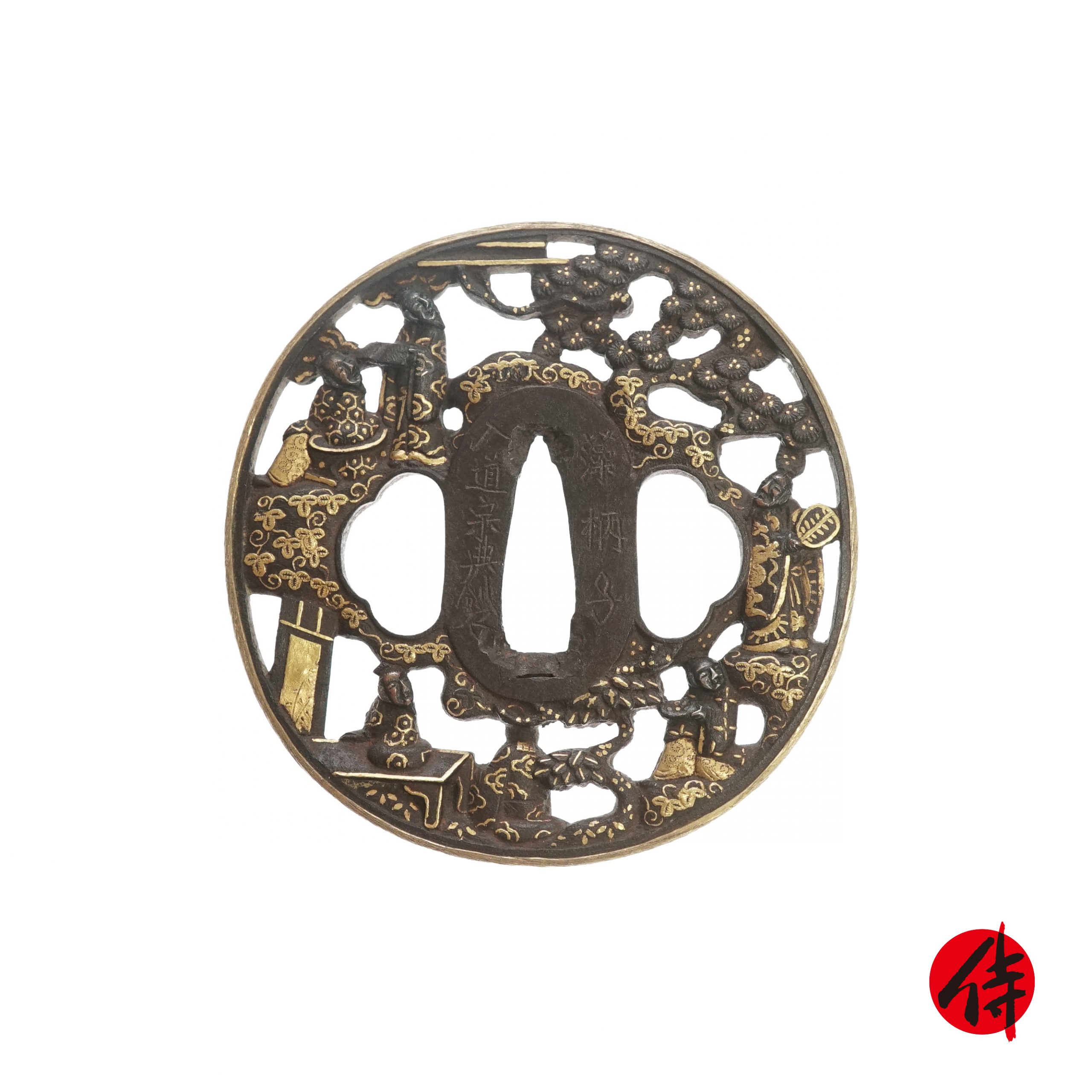
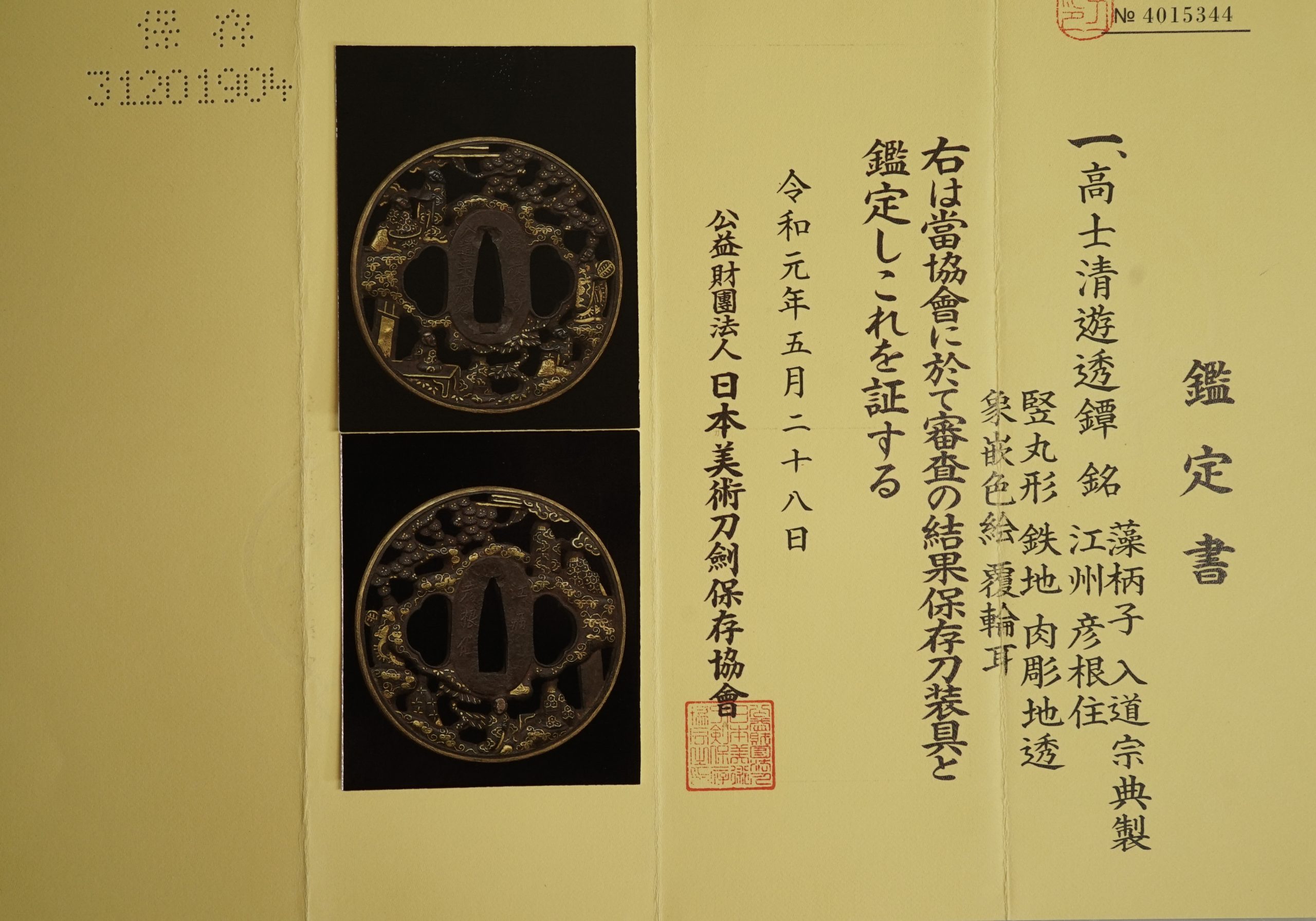
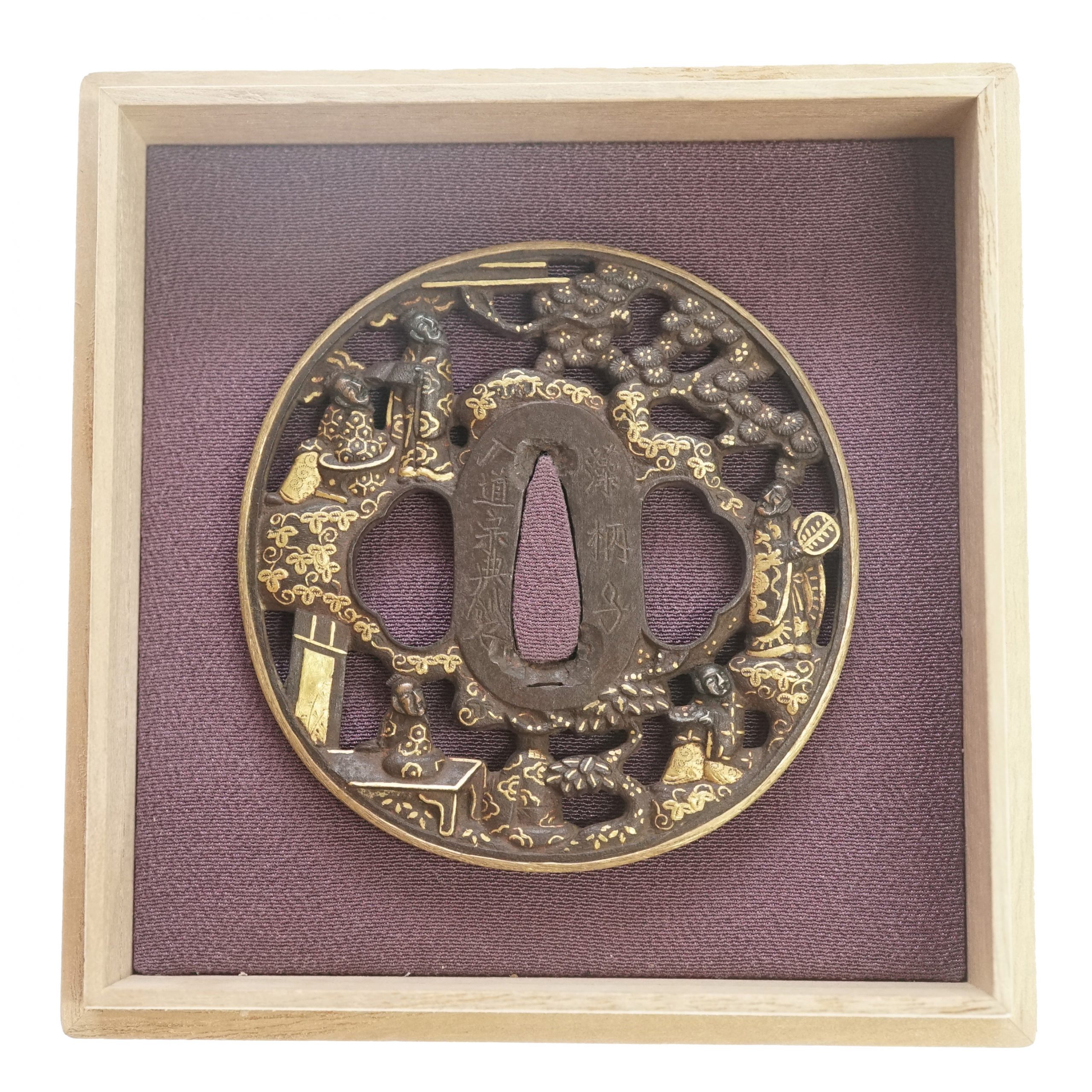
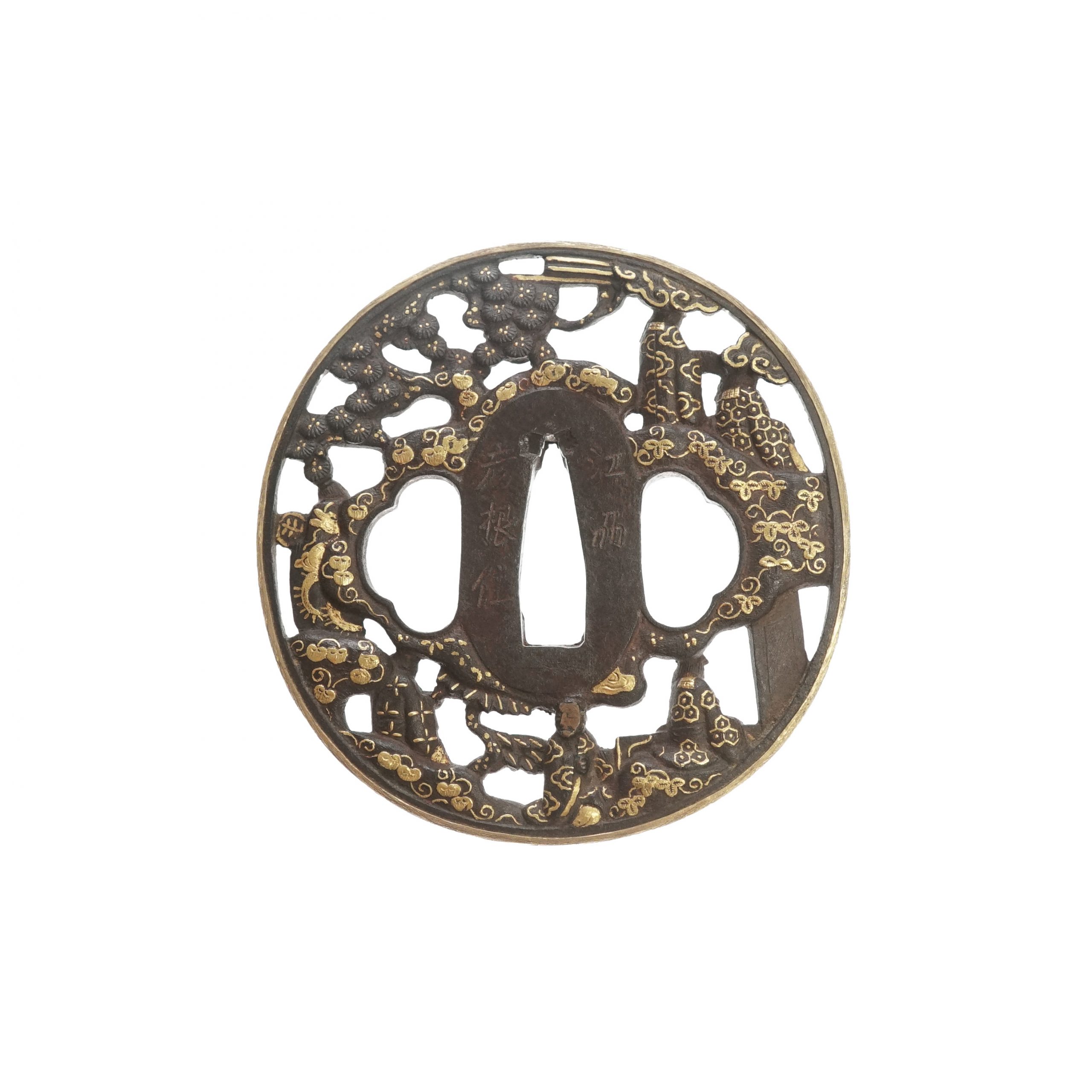
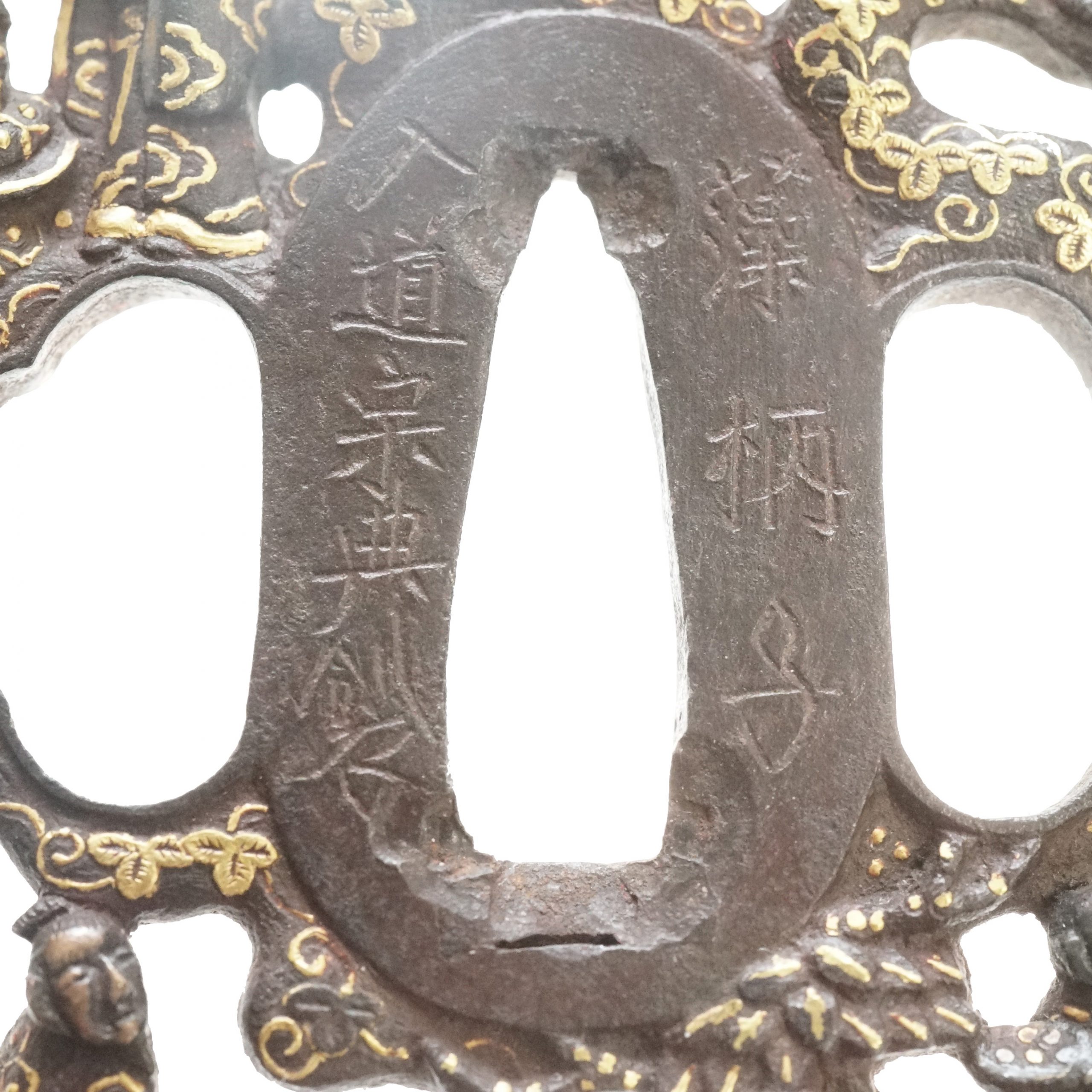
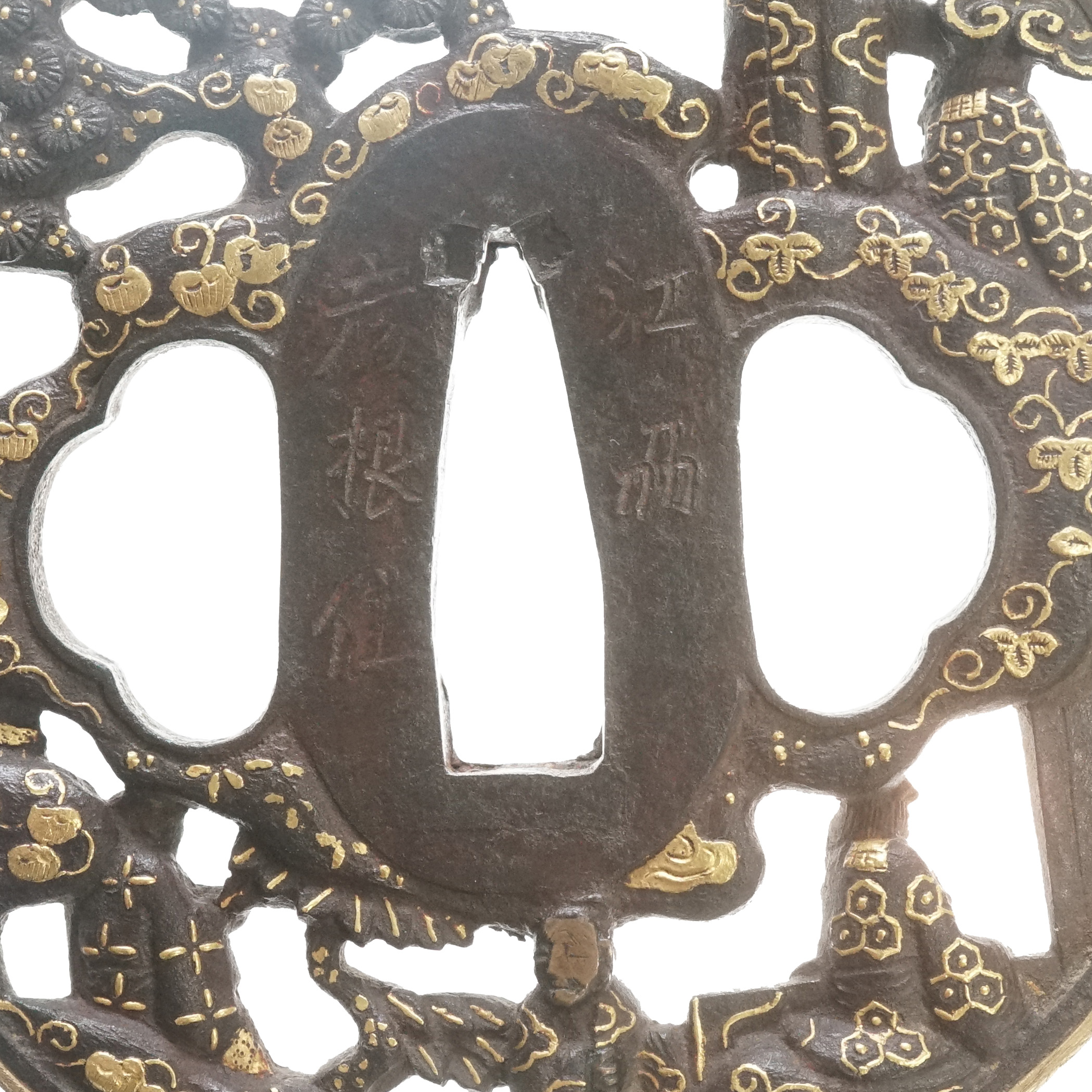
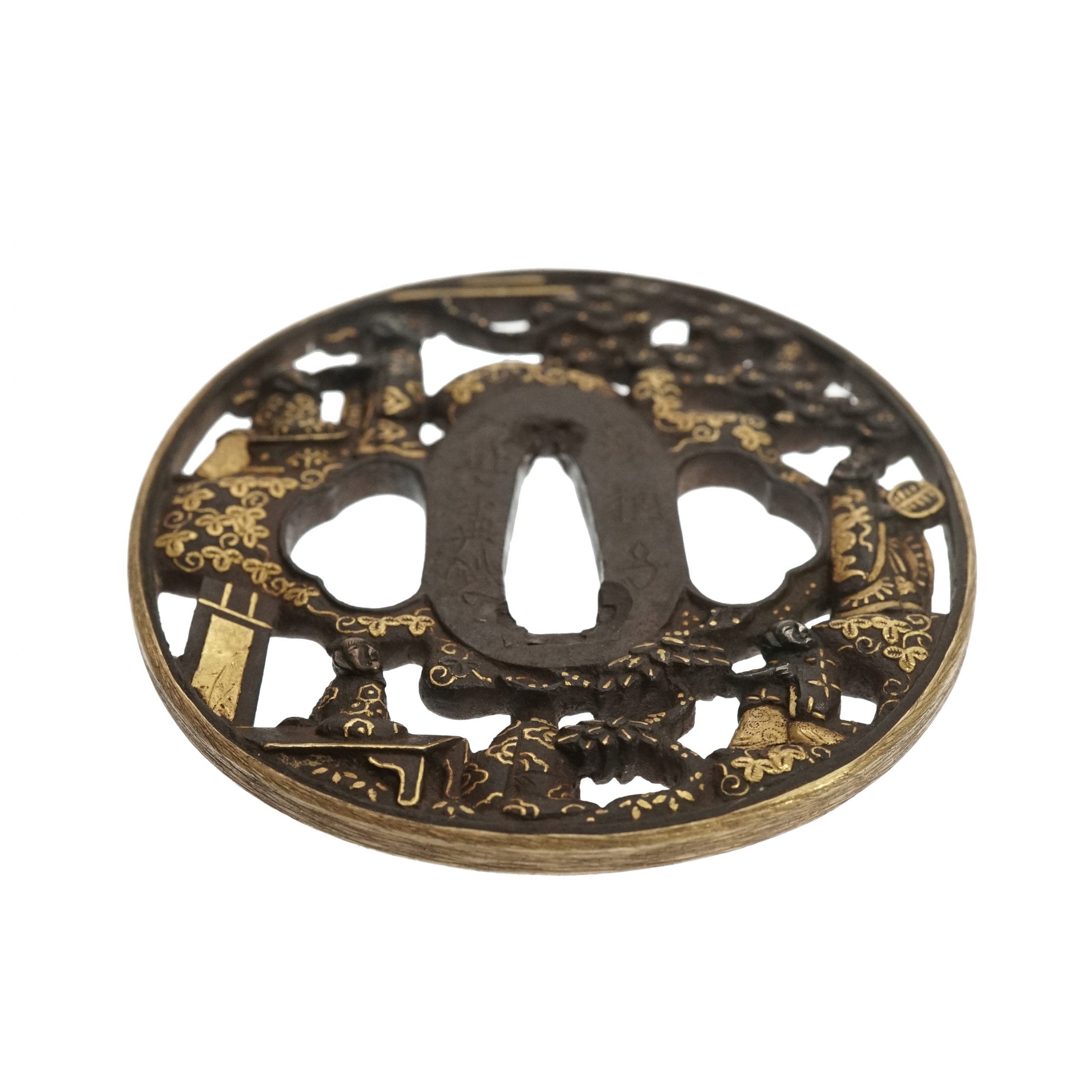
An Iron Tsuba circle shape with two holes Mogarashi Nyudo Soten is the son of the first Soten, who was a famous metalworker in the middle of the Edo period. He was excellent at the same type of engraving technique as his father. This Tsuba describes “Koushi Seiyu Zu” with openwork. It is a popular motif that has been designed since ancient times. Koushi means an honorable person, and Seiyu means to travel. It would be a longing for sages to indulge in hobbies and arts in nature, far away from the world. Each wise person’s face is clearly engraved. Trees, clouds, cloths and blank space are inlaid with gold. You will appreciate its stunning beauty. It is his notable technique. For example, if you focus on sage’s clothes pattern, you will find be able to find a kind of good-luck pattern. Please look at men who wear clothes that are designed with the Kikkou pattern. Kikkou means a turtle’s shell. It’s a continuous geometric pattern connecting regular hexagons up and down. The turtle lives a long life; therefore, turtle and turtle’s shell pattern represent longevity. Kikkou pattern has been familiar to people for a long time ago. Another example to check his high-quality inlay technique is the dragon pattern inlaid on the sage cloth, which is engraved on the right side of the surface. Dragon is a very famous and popular motif. It is a beast that is a symbol of auspicious signs. Its body is likened nine animals: antlers are deer, the head is a camel, eyes are demons, the neck is a snake, belly is Mizuchi (mythical animal in Japan which looks like a snake and have a horn and four legs), scales are fish, claws are falcons, palms are tigers, and ears are cows. It was thought that Dragon would reign at the top of all animals because of its odd-looking appearance. It is treated as the all-purpose auspicious pattern. This Tsuba is recognized by The Society for Preservation of Japanese Art Swords, which is known as NBTHK.
NihontoWatchOffered by Samurai Museum
This piece has sold
Get an email when a new Soten piece hits the market.

Omi · around 1679-1751
1 piece on the market now
Certifies a genuine fitting worth preserving: a correct signature, or, if unsigned, an identifiable era and school, with recognized artistic and craft value.
The NBTHK (Nihon Bijutsu Tōken Hozon Kyōkai, the Society for the Preservation of Japanese Art Swords) is a public-interest incorporated foundation founded in 1948 and supervised by Japan’s Agency for Cultural Affairs (Bunkachō); it is based at the Japanese Sword Museum in Tokyo. Its expert panels physically examine each submitted work (shinsa) and issue a certificate (kanteishō) ranking it by artistic and historical merit. NBTHK papers are the most widely recognized standard of authentication for Japanese swords and fittings.
NBTHK official siteReturns/exchanges limited to defects caused by shipping (except willful misconduct or gross negligence by the company); customers must contact within 72 hours of receiving the product.