 NihontoWatchNihontoWatch
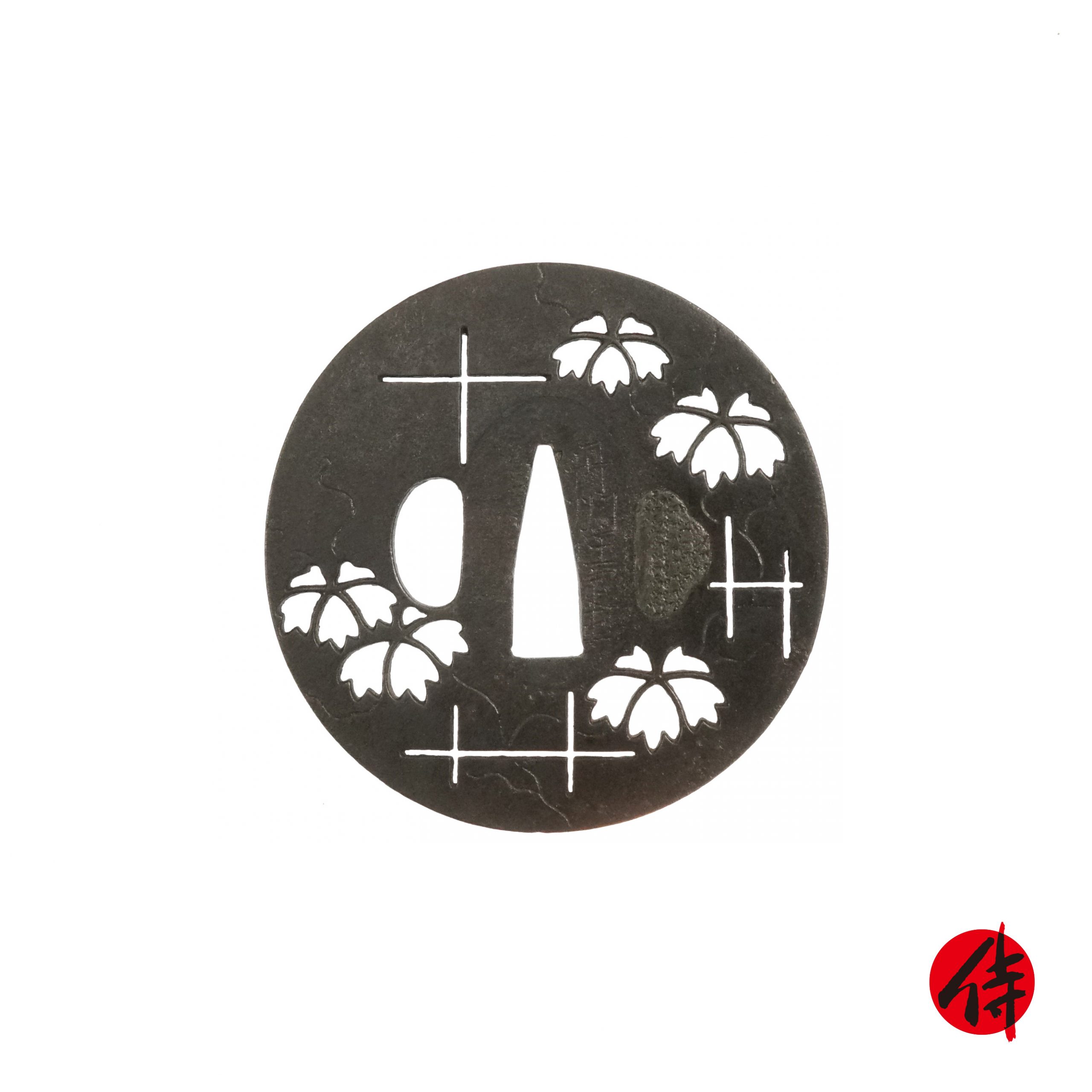
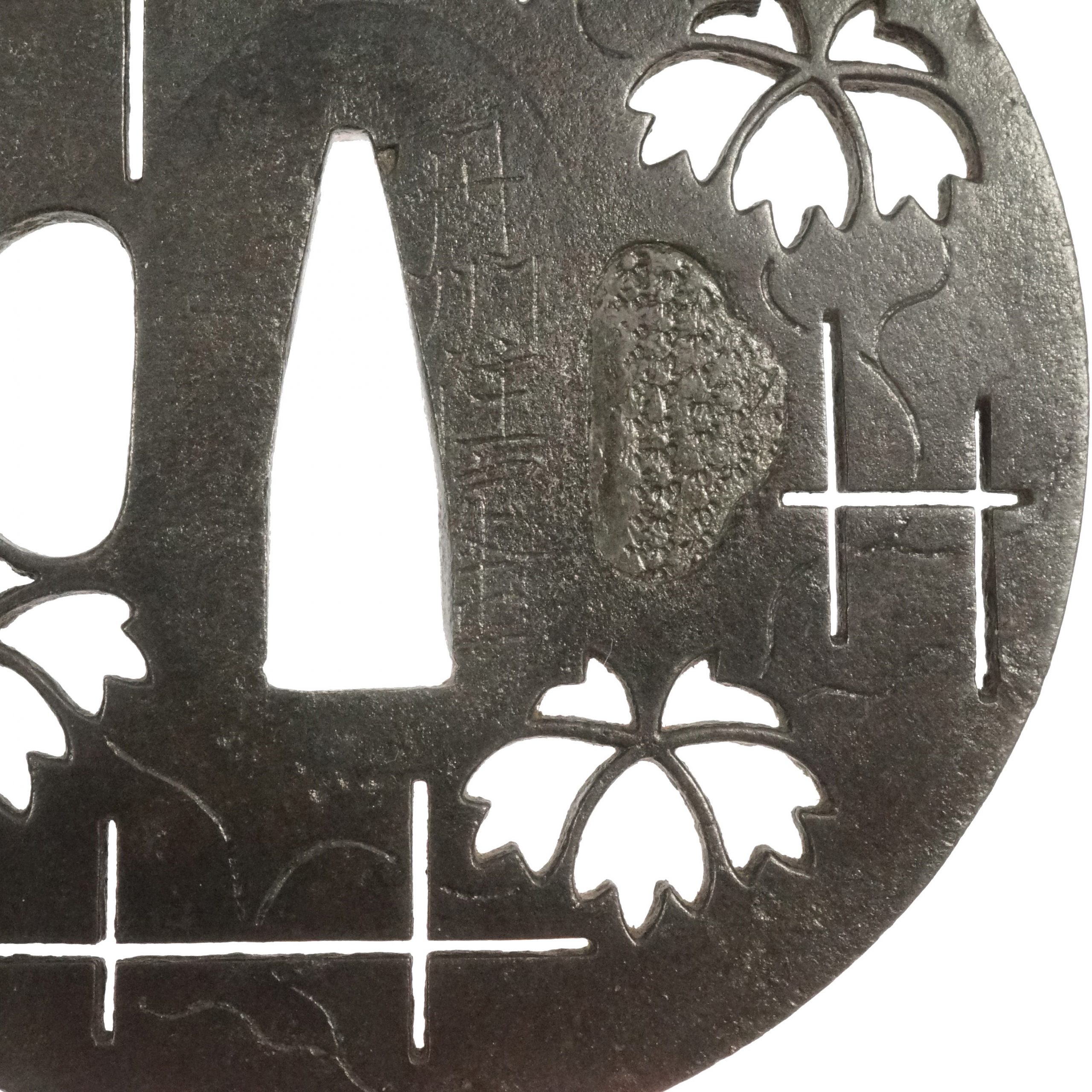
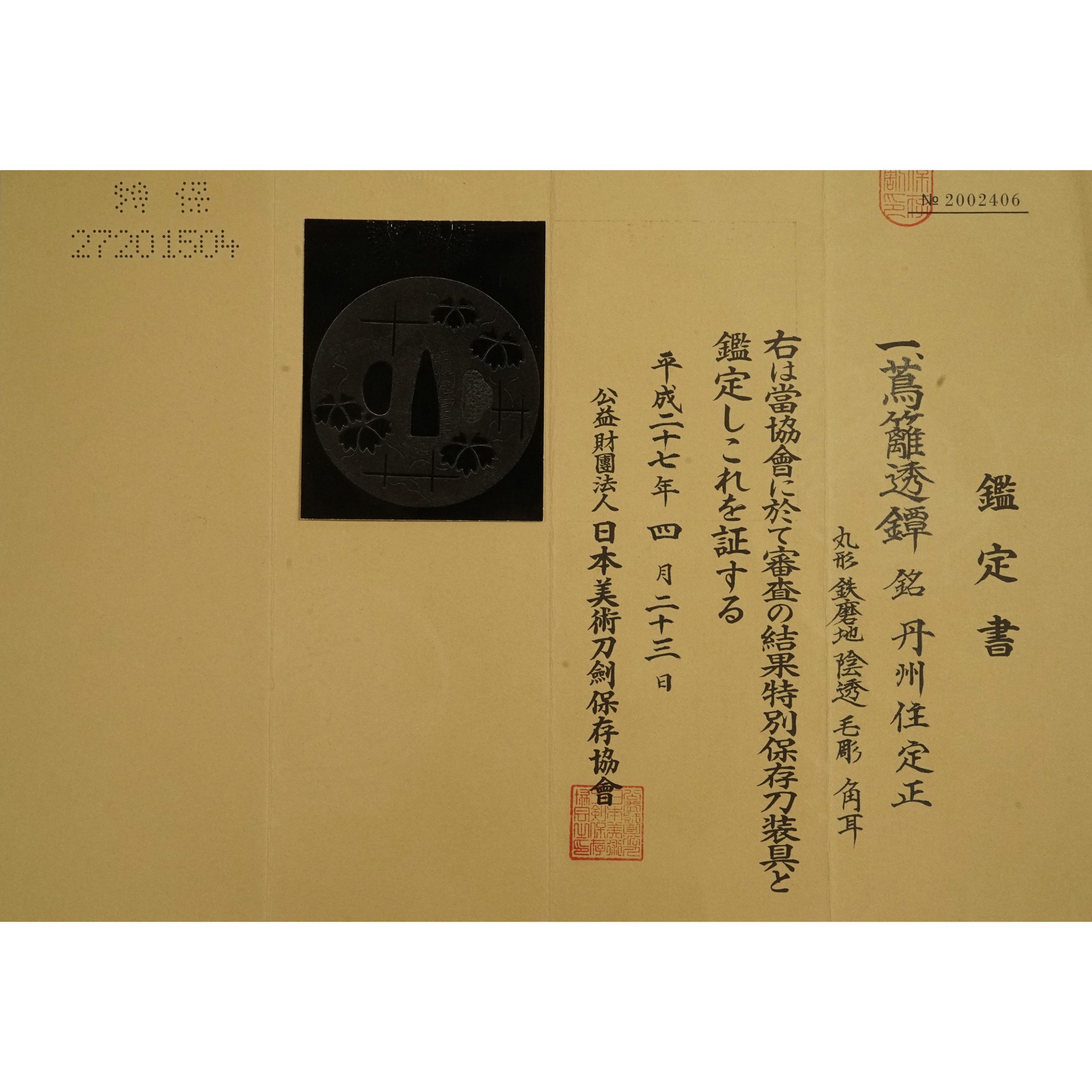
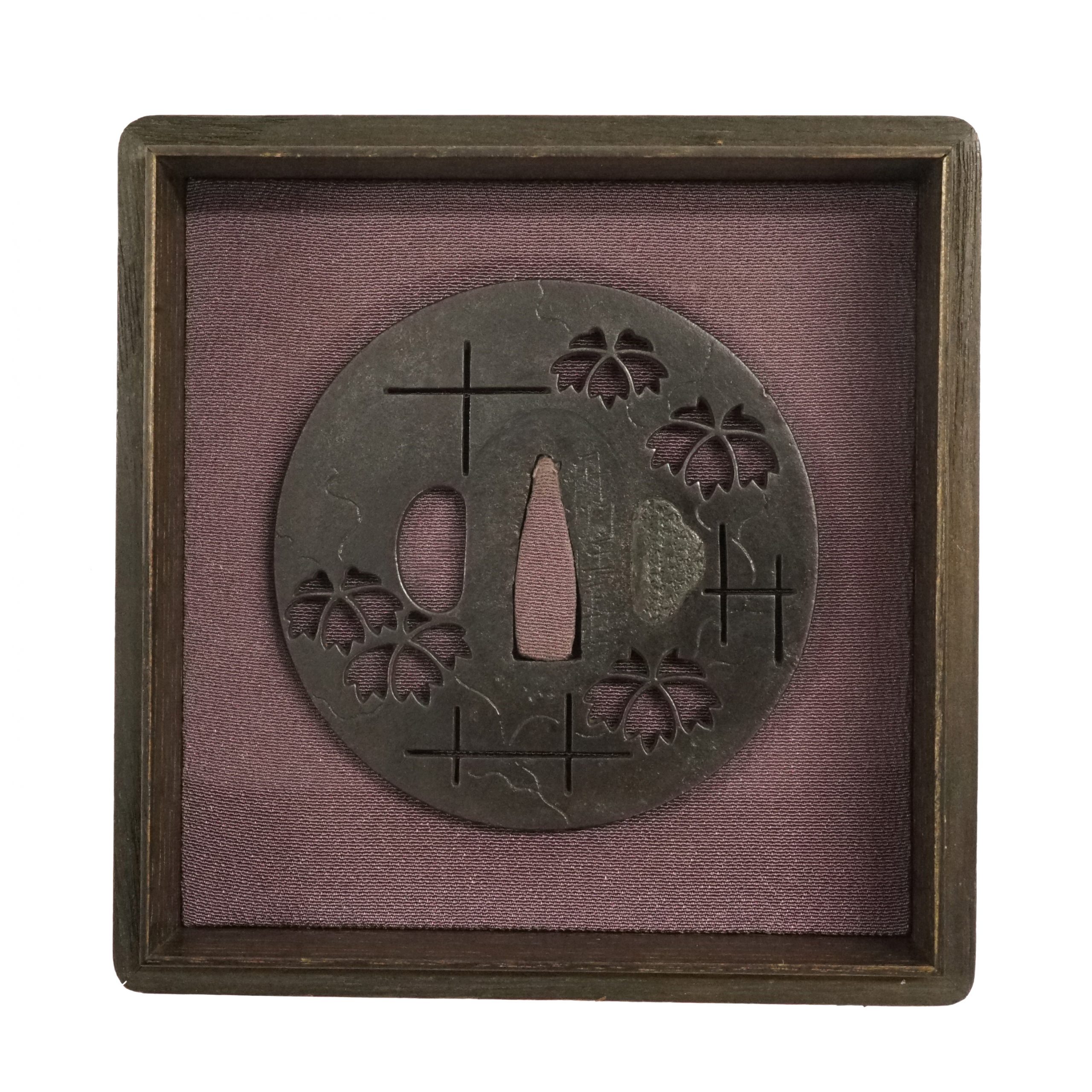
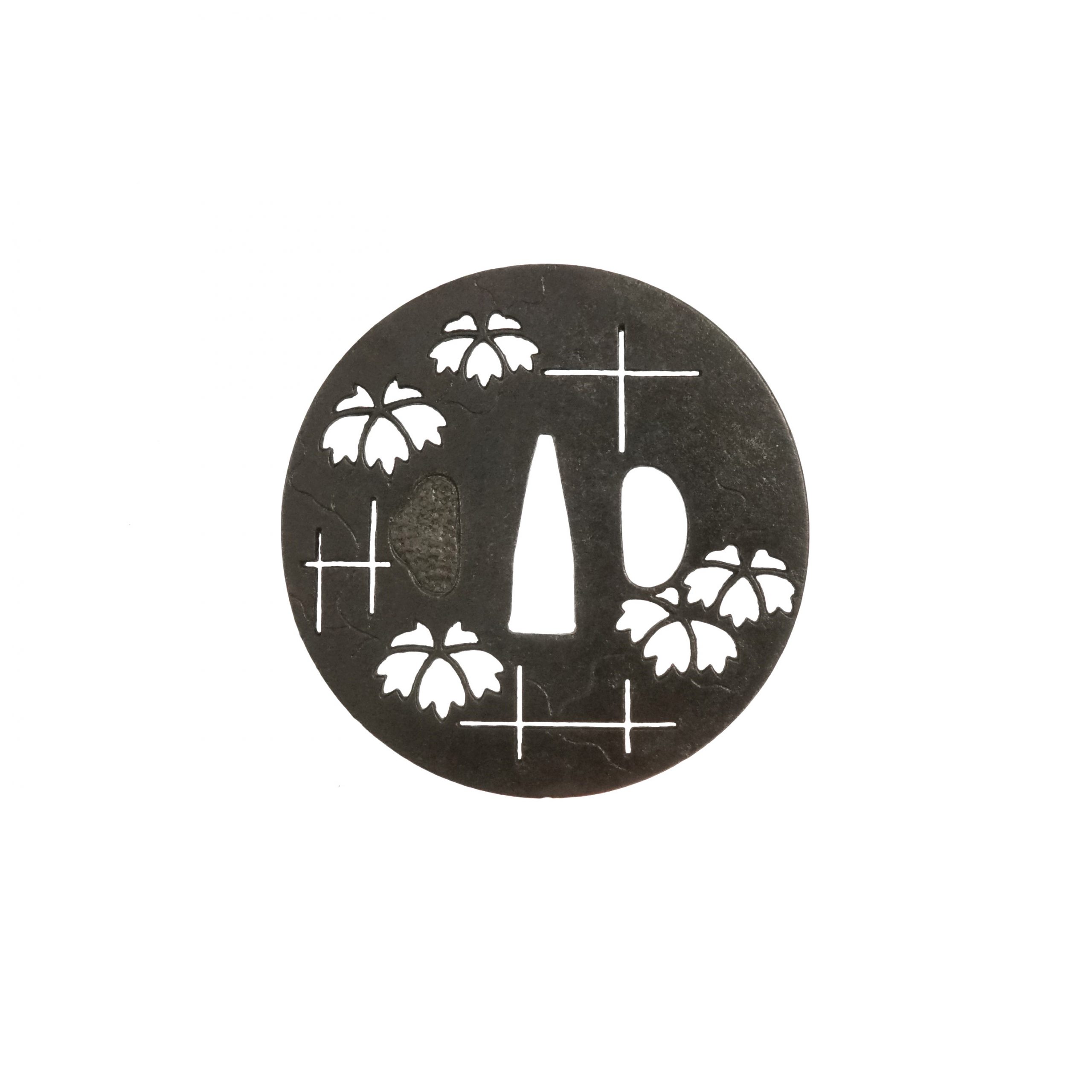
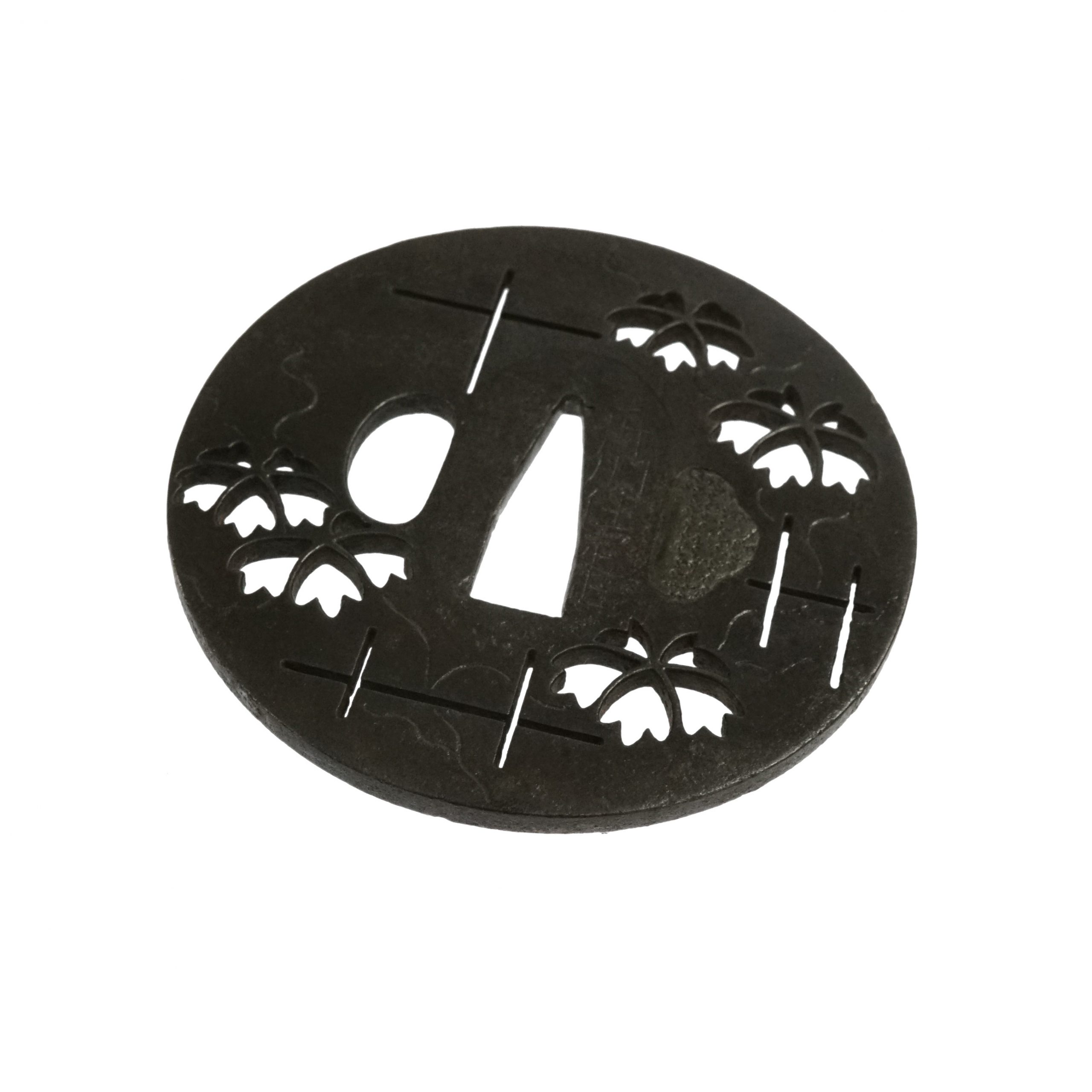
Circle-shaped Tsuba made from iron. Tsuta (蔦, ivy) and Magaki (籬, a fence made of bamboo or brushwood) are engraved. The large plant design with openwork makes a gorgeous appearance to this work. Ivy has vitality, and it thrives strongly; therefore, this plant pattern represents prosperity and longevity. The combination of Magaki and flowers such as chrysanthemum, Japanese apricot blossom, or autumn plants are popular motifs. Sadamasa school trained lots of disciples. The first and the second, both of them cut the same signature “丹州住定正,” as you can see between Nakago-Hitsu and Kougai-Hitsu. They were good at making circle-shaped iron Tsuba with Kaku-Mimi (角耳, the edge is cut a right angle), with Sukashi-Bori (openwork) designs. This Tsuba is recognized by The Society for Preservation of Japanese Art Swords, which is known as NBTHK. Authentication Paper They authenticated the Tsuba on Apr 23th in the 27th year of Heisei (2015). They appraised it as Tokubetsu Hozon Tousougu, the Tsuba worth preserving for Japanese society.
NihontoWatchSadamasa定正
Offered by Samurai Museum

Tanba
4 pieces on the market now
A Hozon-certified fitting of notably superior craftsmanship and condition, often with signature or workmanship of high reference value.
The NBTHK (Nihon Bijutsu Tōken Hozon Kyōkai, the Society for the Preservation of Japanese Art Swords) is a public-interest incorporated foundation founded in 1948 and supervised by Japan’s Agency for Cultural Affairs (Bunkachō); it is based at the Japanese Sword Museum in Tokyo. Its expert panels physically examine each submitted work (shinsa) and issue a certificate (kanteishō) ranking it by artistic and historical merit. NBTHK papers are the most widely recognized standard of authentication for Japanese swords and fittings.
NBTHK official siteReturns/exchanges limited to defects caused by shipping (except willful misconduct or gross negligence by the company); customers must contact within 72 hours of receiving the product.