 NihontoWatchNihontoWatch
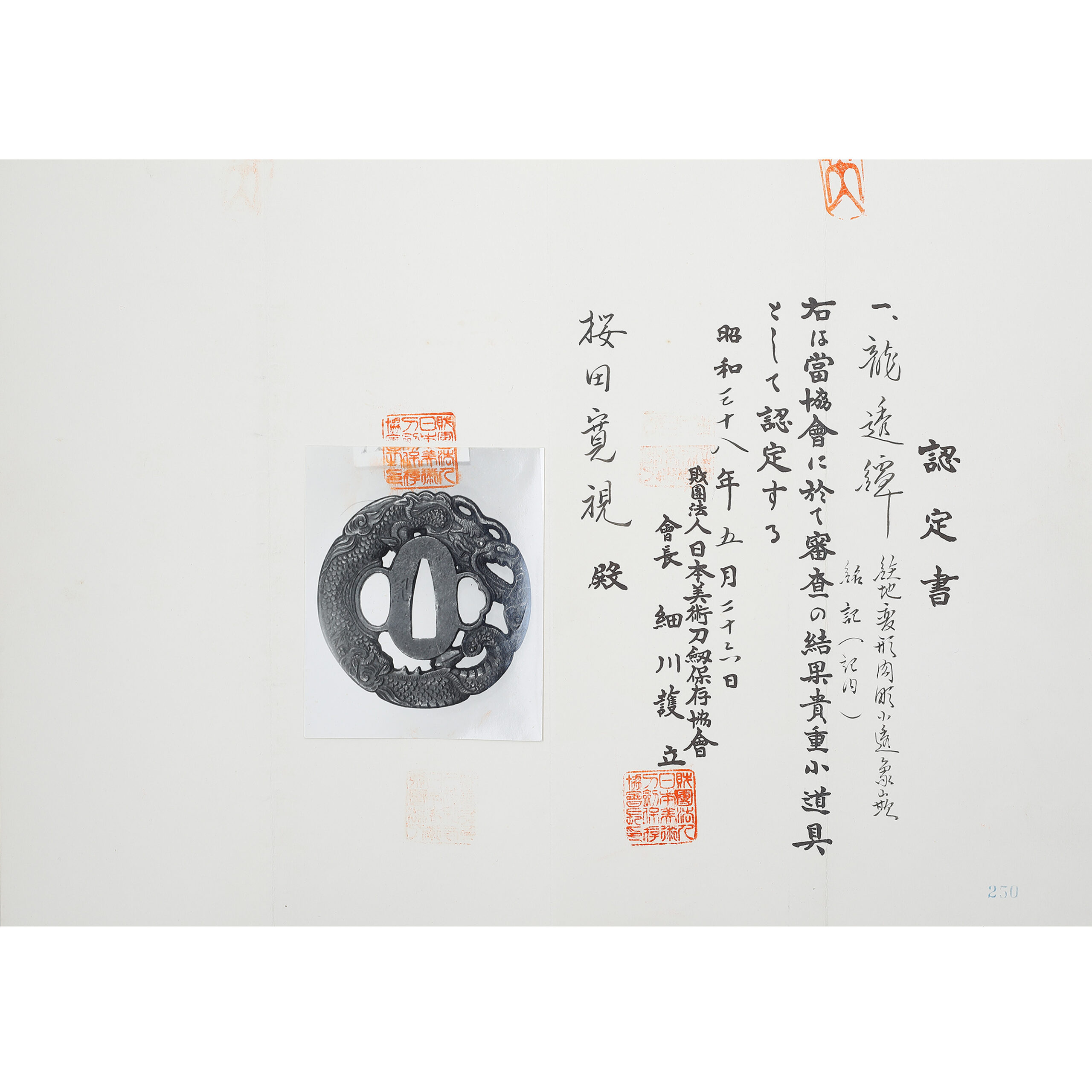
This Tsuba is recognized by The Society for Preservation of Japanese Art Swords, which is known as NBTHK and this was signed by Kinai school (記内派). Kinai school was founded by the first generation Gonbe (権兵衛), and flourished in Echizen province (today’s Fukui prefecture) until around 1681. The hallmark of their craftsmanship is their engraving techniques, with many pieces featuring dragon designs. About the design, it depicts a large dragon (龍, Ryu) and a cloud and it shows that this dragon is a Unryu (雲龍, cloud dragon). Initially, the dragon is an imaginary creature found in ancient Chinese traditions or myths. Furthermore, it is regarded as a symbolic beast of auspicious signs. Its body is likened to nine animals: antlers are deer, the head is a camel, eyes are demons, the neck is a snake, belly is Mizuchi (蛟, mythical animal in Japan which looks like a snake and have a horn and four legs), scales are fish, claws are falcons, palms are tigers, and ears are cows. It was thought that the dragon would reign at the top of all animals because of its odd-looking appearance. In ancient China, the dragon pattern was used for emperors’ clothing so that people strictly defined its shape or even the number of nails. On the other hand, the dragon pattern does not have detailed rules to represent classes in Japan. However, still, it maintains its meaning as the all-purpose auspicious pattern. Also, in Japan, there is a belief that worships dragon as a water god and is called Ryujin Shinkou (竜神信仰). Since rice cultivation flourished in this country, water is always an essential resource. Therefore, the dragon motif has been familiar to Japanese people since a long time ago. Authentication Paper They authenticated the Tsuba on May 26th in the 38th year of Showa (1963). They appraised it as Kichou Kodougu, the Tsuba an old form of the certificate.
NihontoWatchOffered by Samurai Museum
This piece has sold
Get an email when new Kinai School work hits the market.

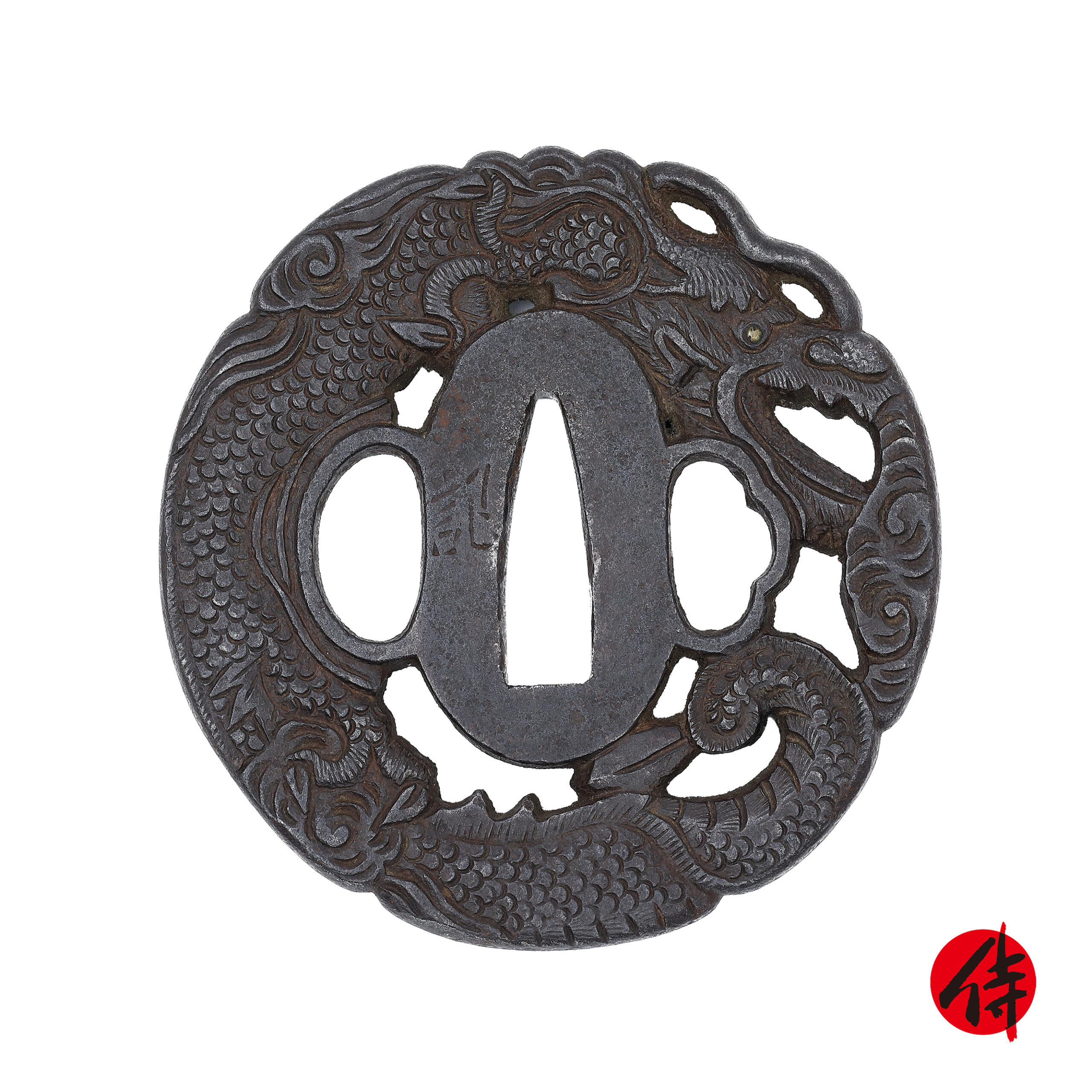
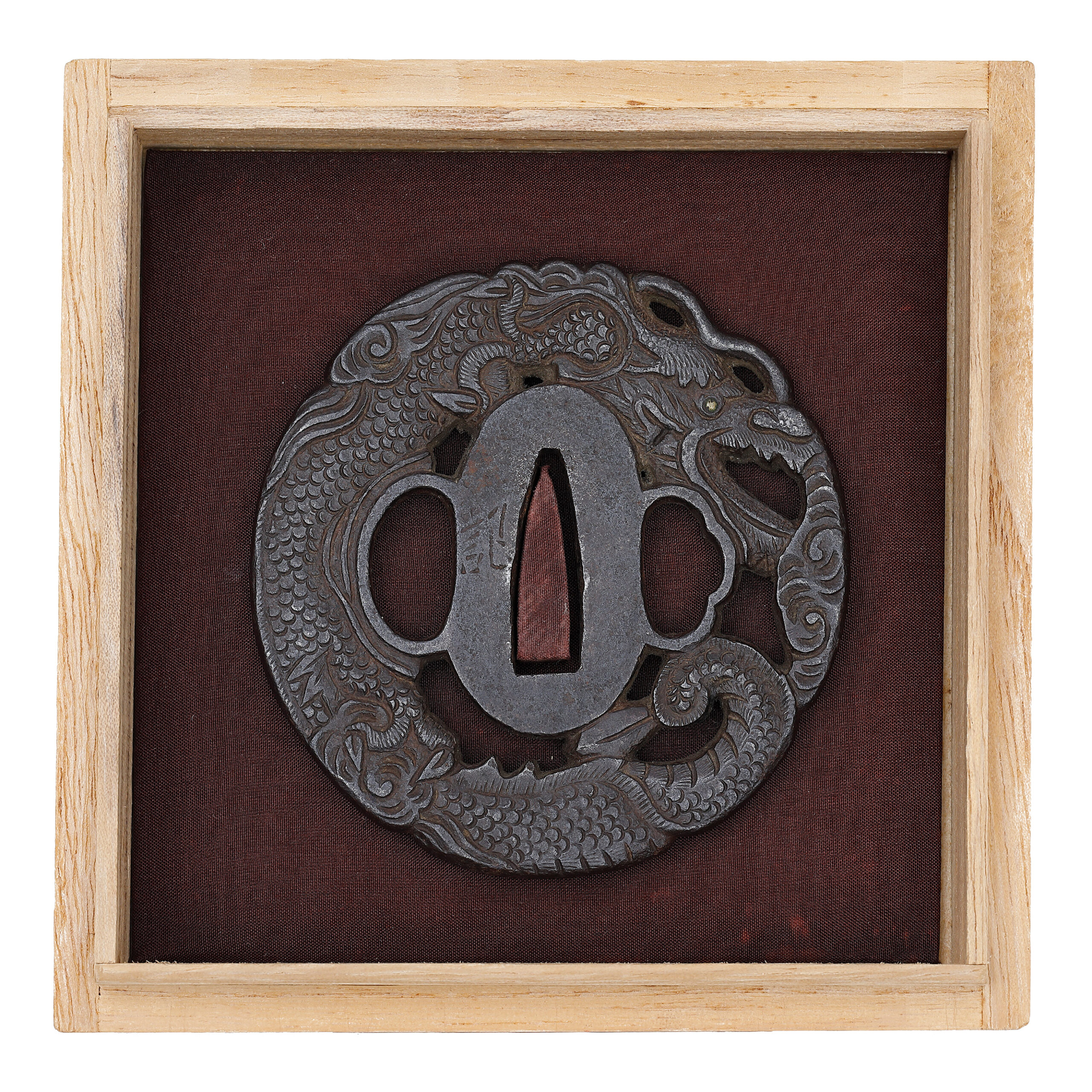
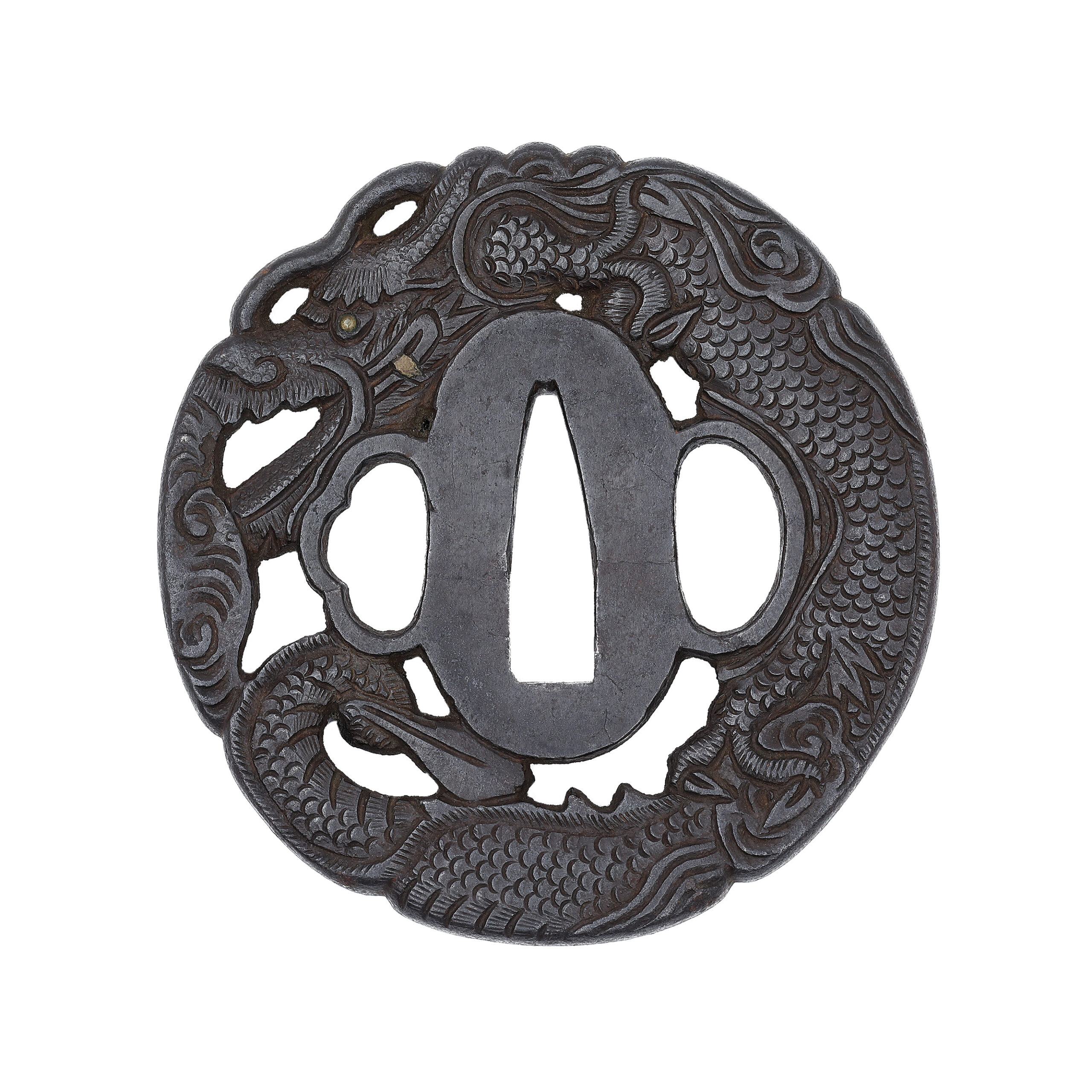
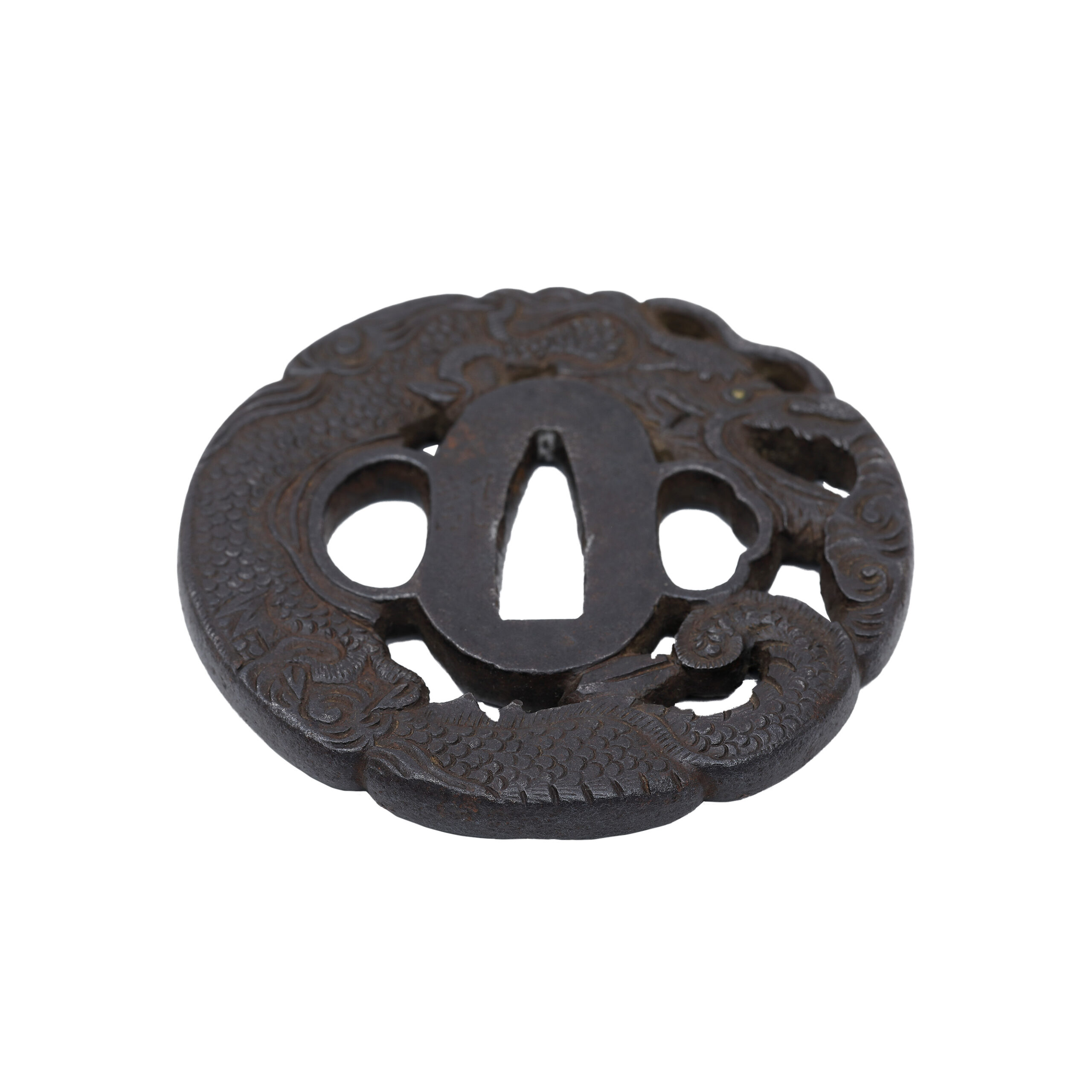
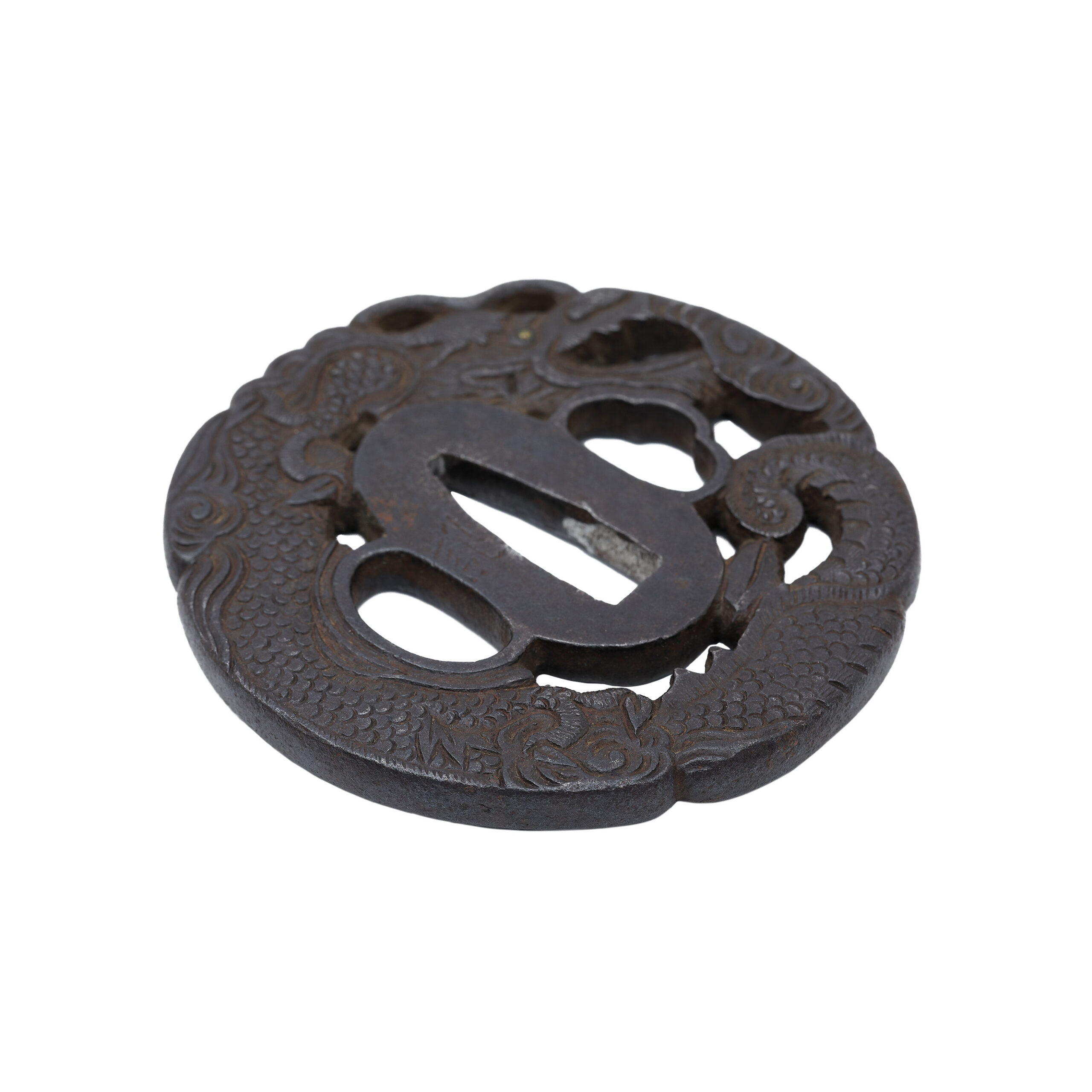
Iron-tsuba · Echizen
This work carries older NBTHK “Kichō”-era papers, which the NBTHK no longer issues and largely disavows today. To confirm the attribution, submission to an official Japanese examination body (such as the NBTHK or NTHK) for modern certification could be considered.
Returns/exchanges limited to defects caused by shipping (except willful misconduct or gross negligence by the company); customers must contact within 72 hours of receiving the product.