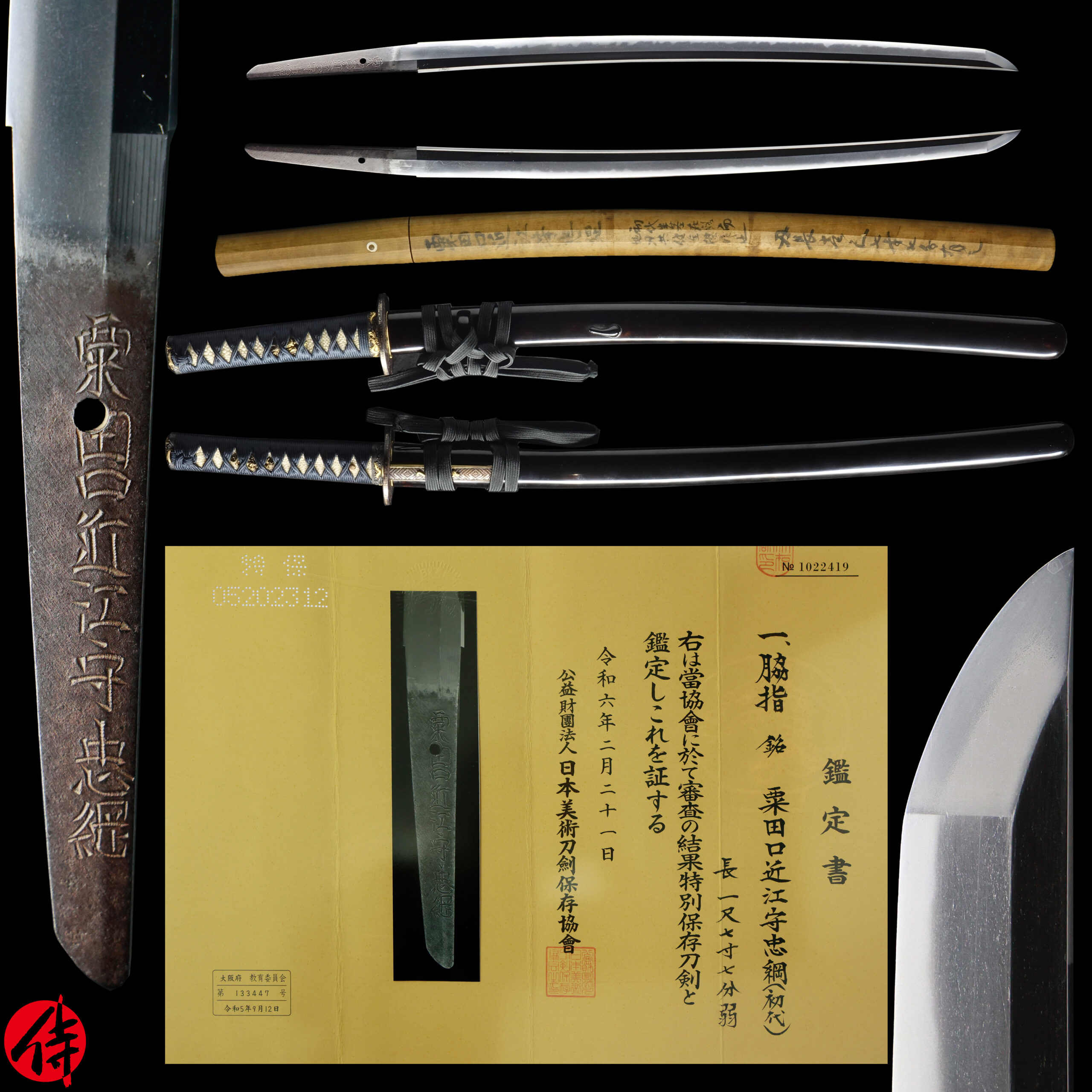
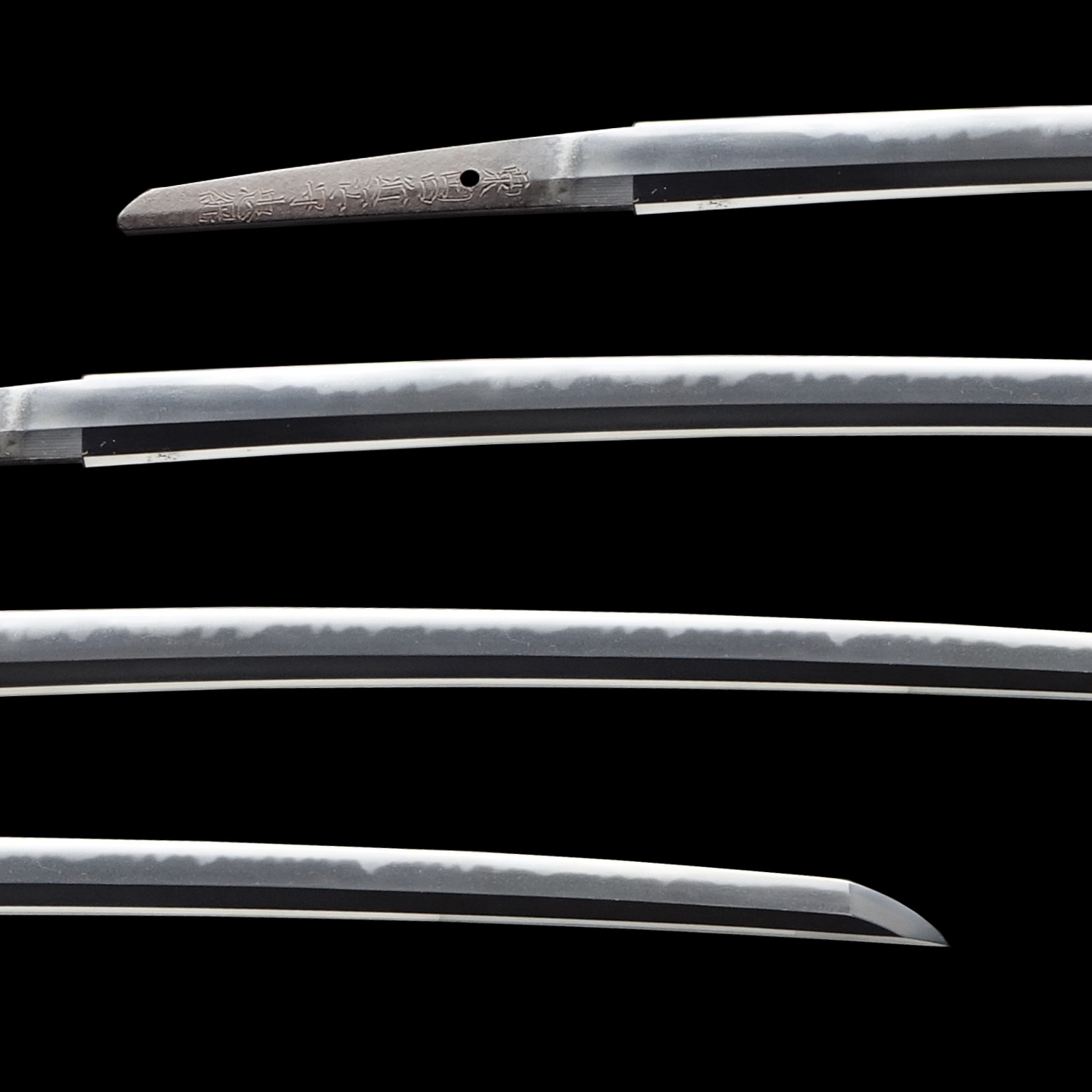
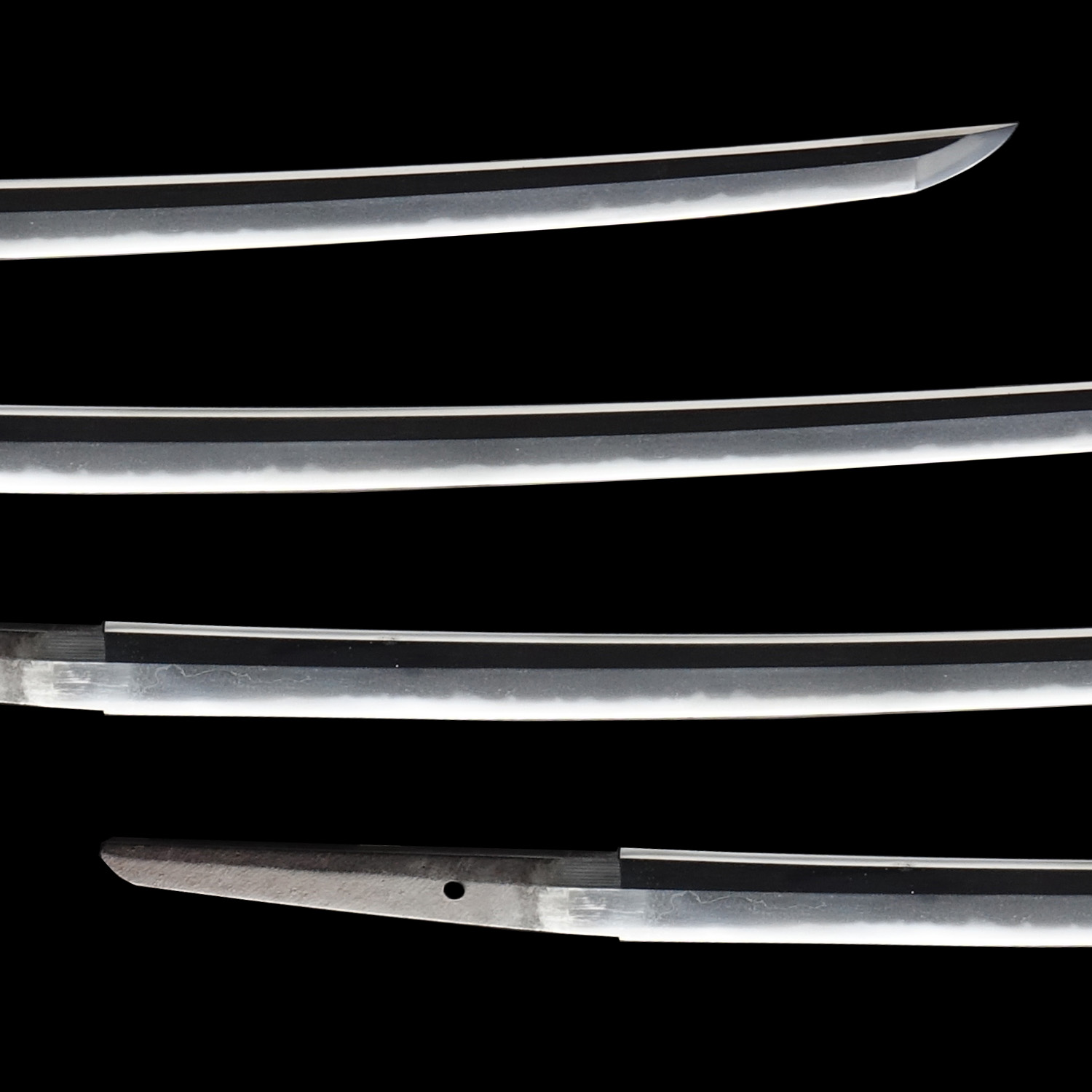
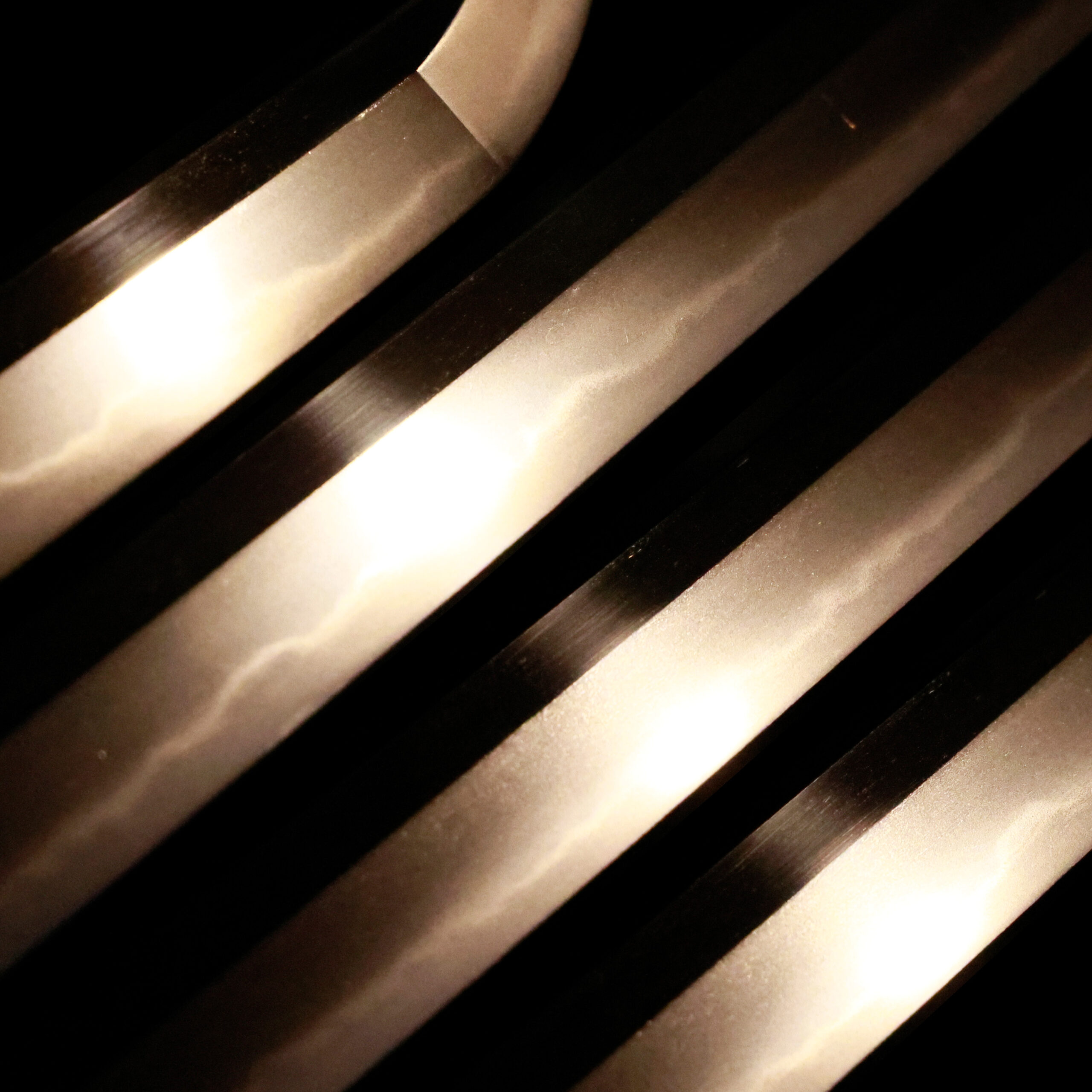
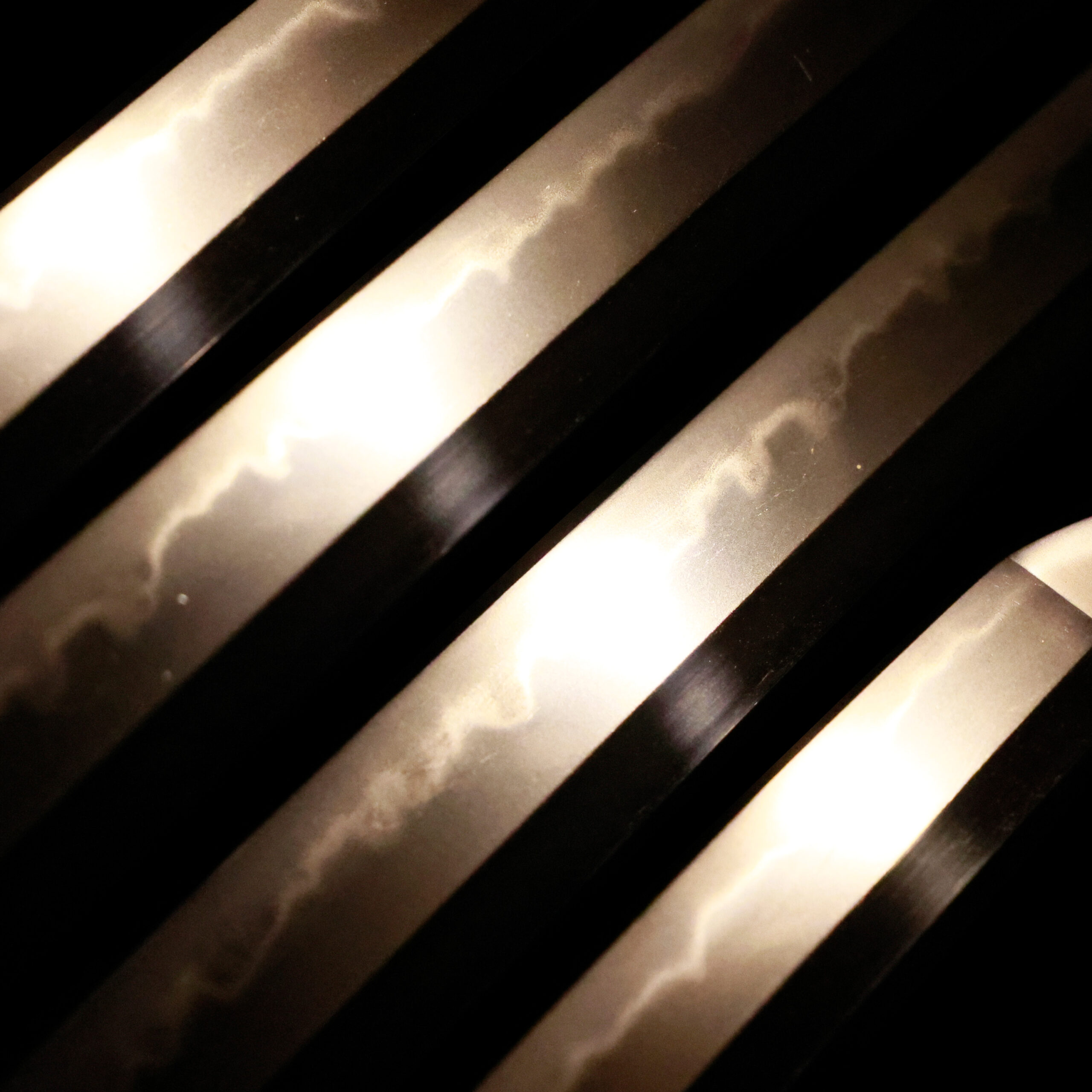
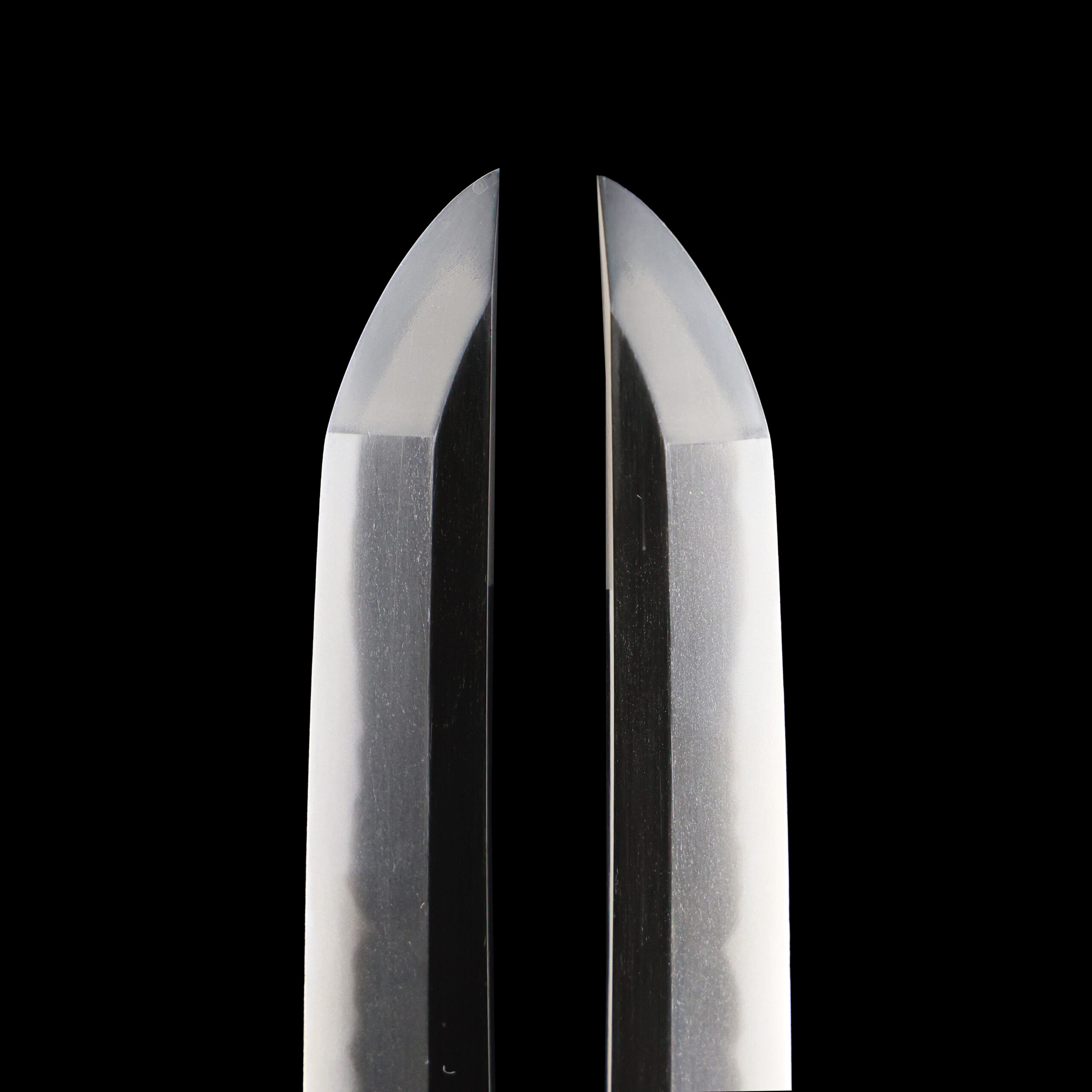
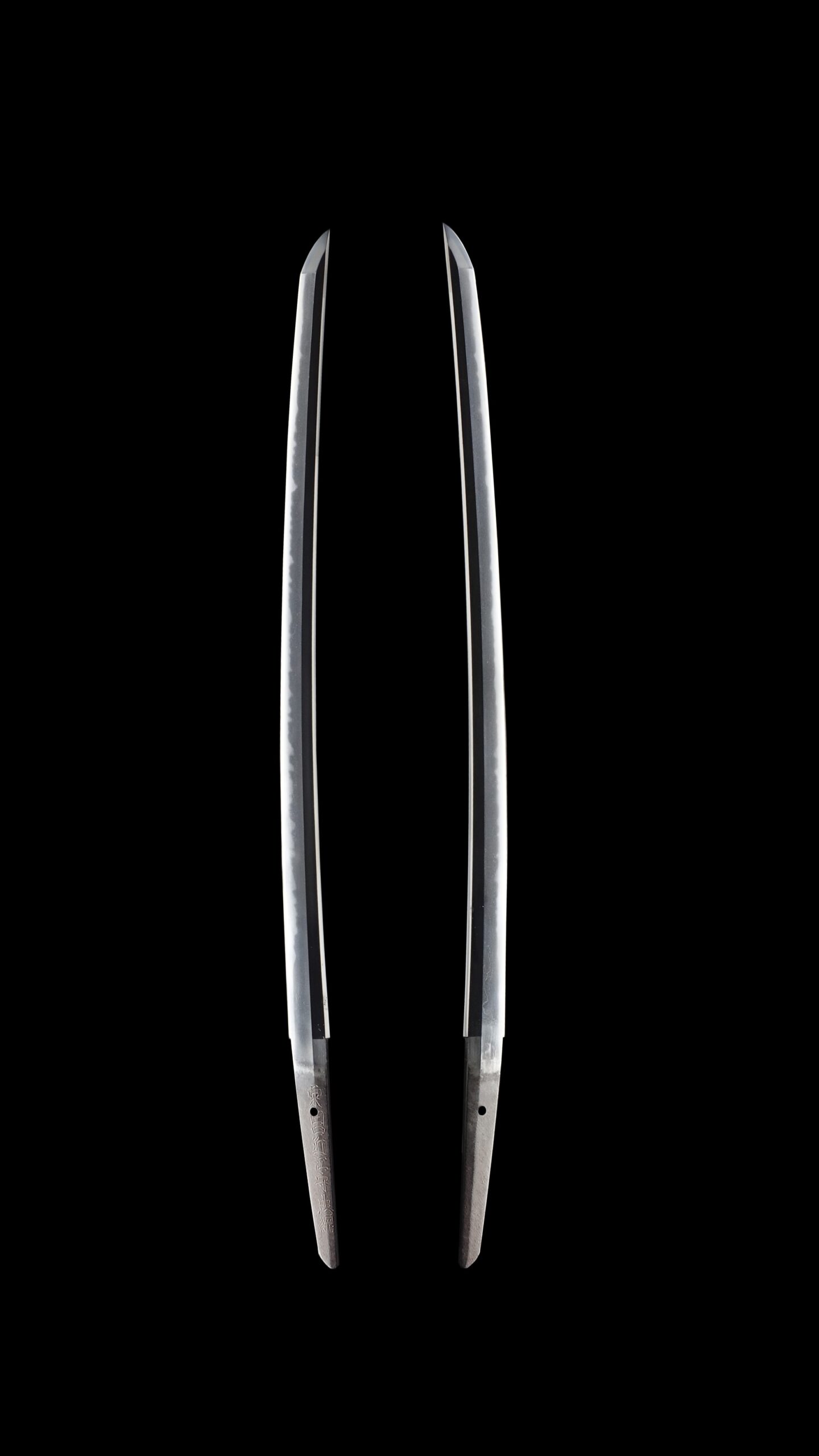
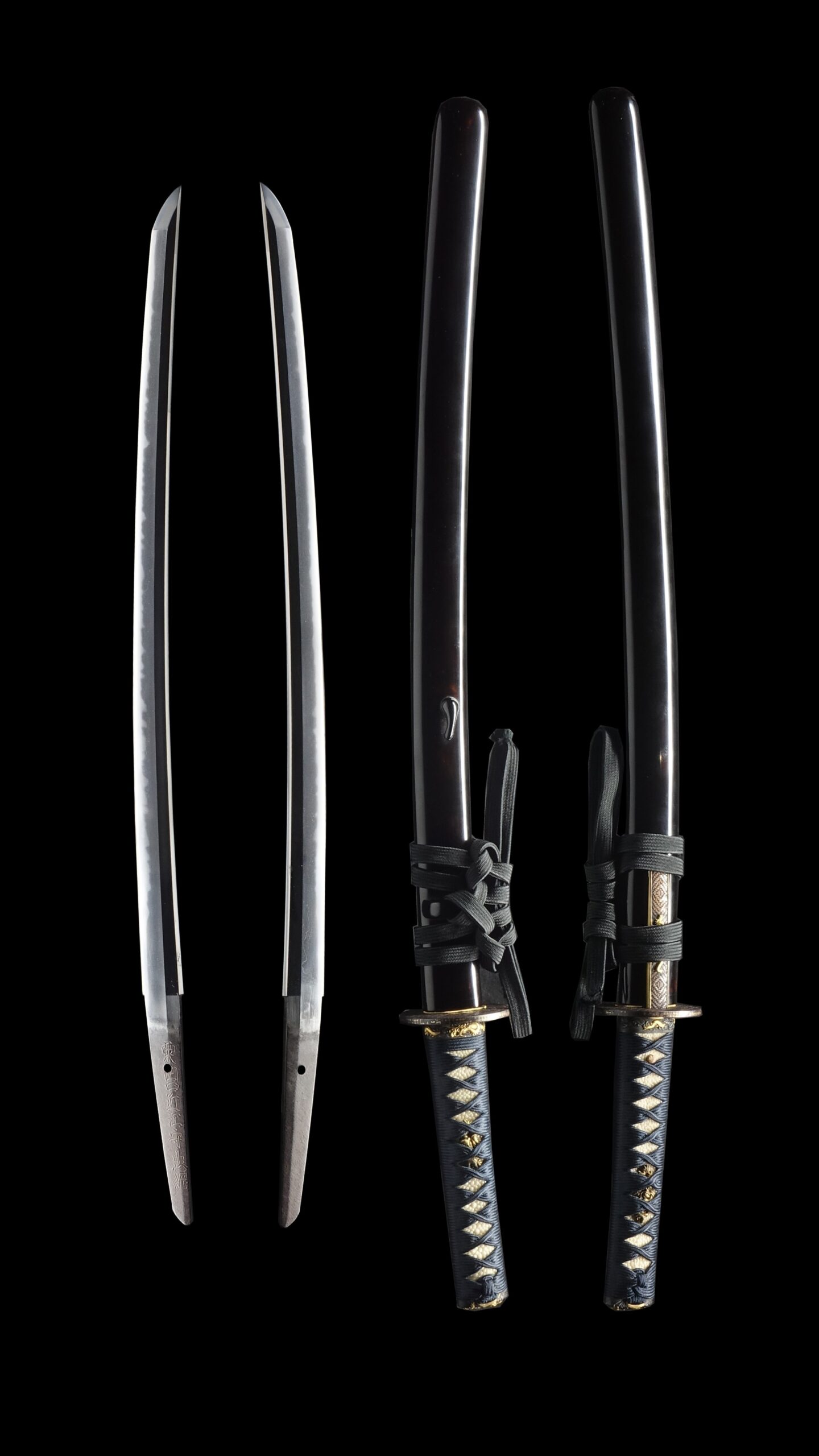
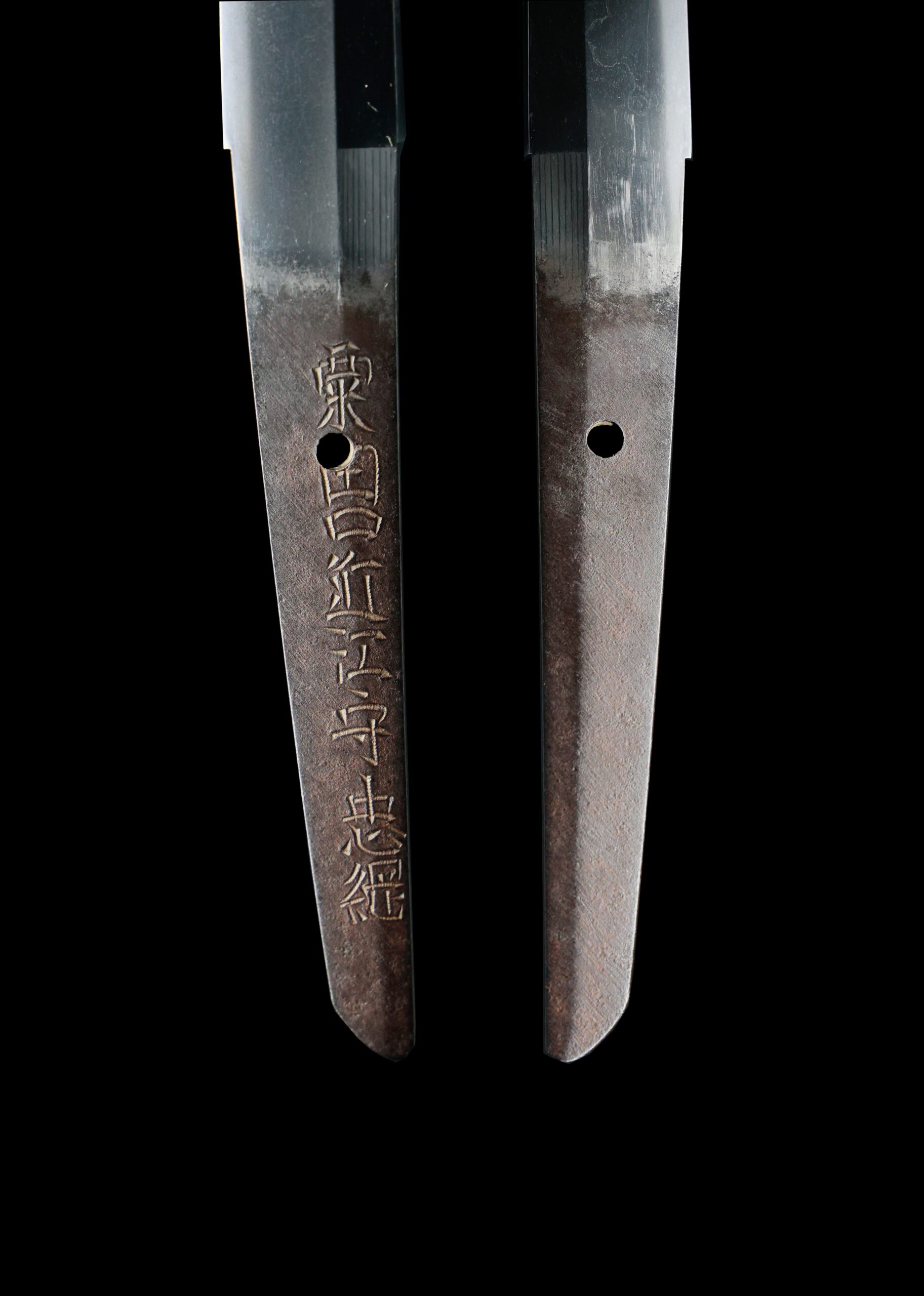
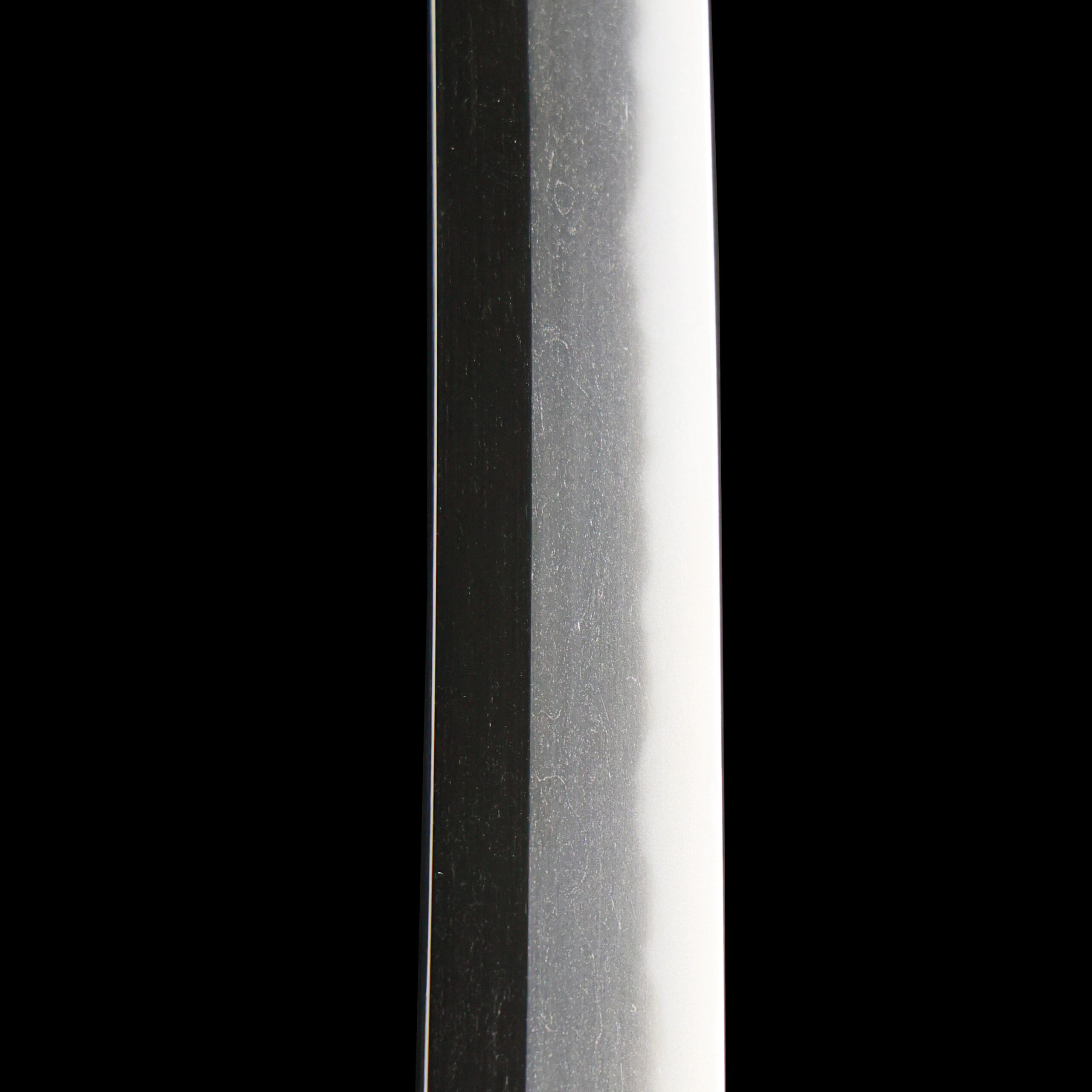
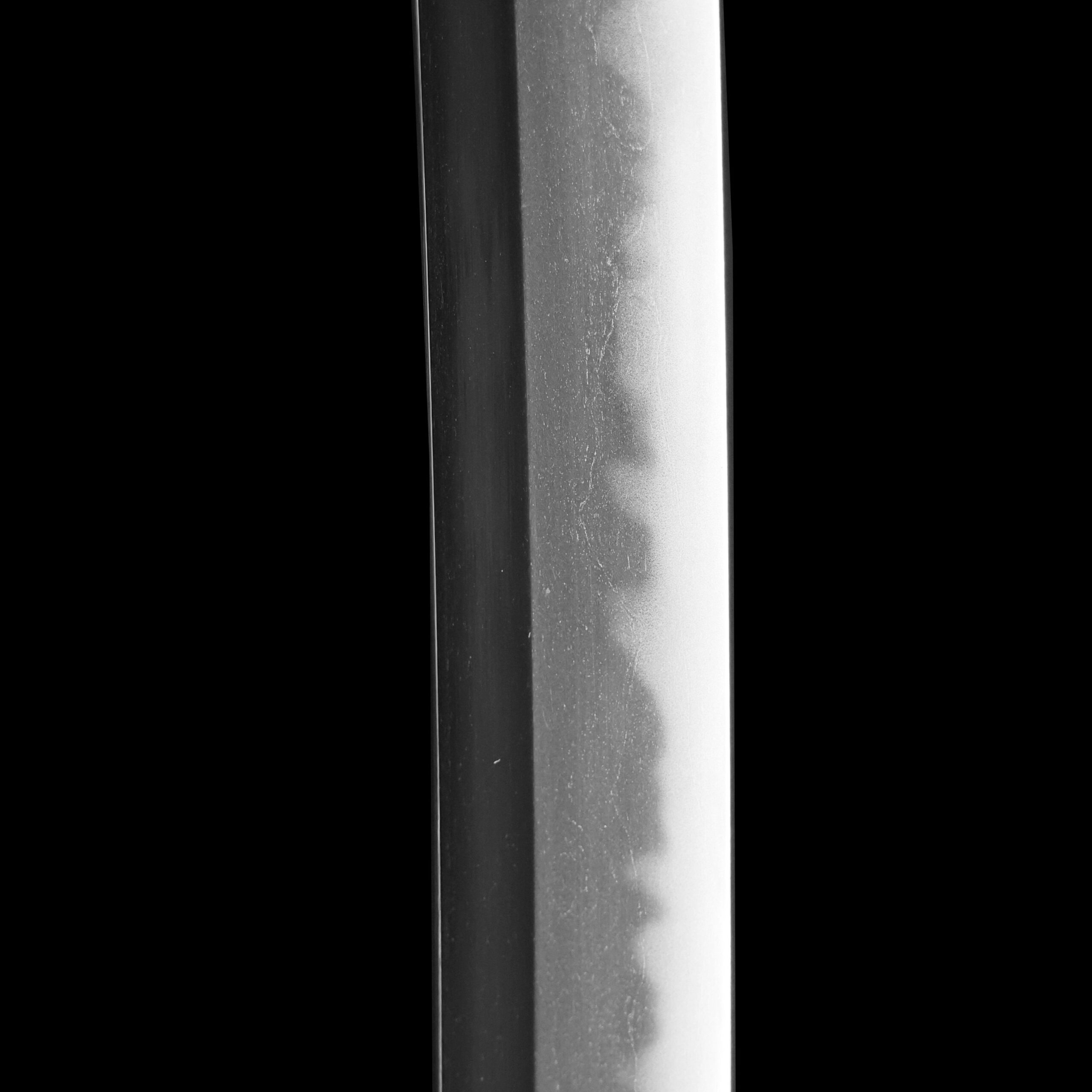
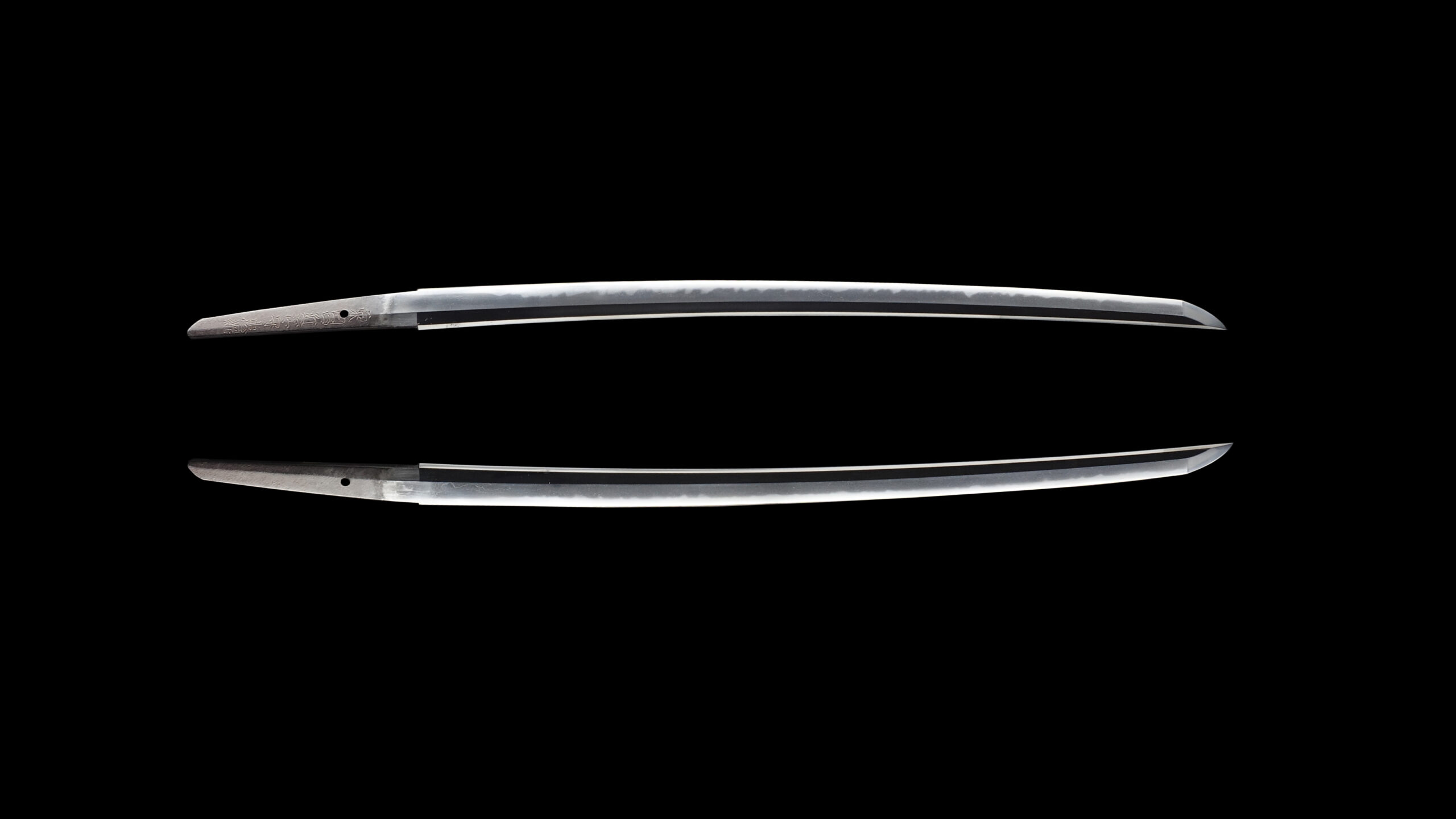
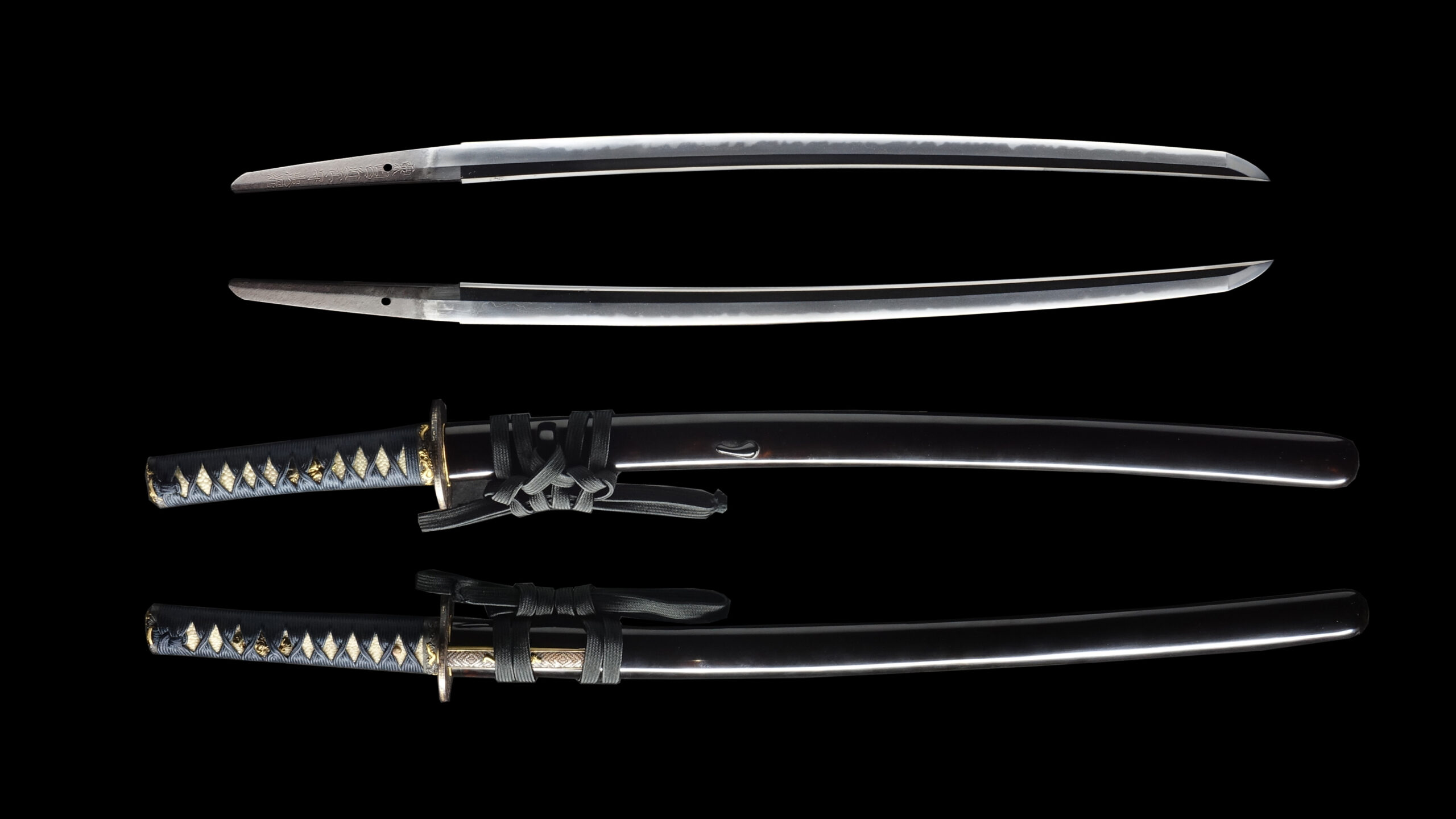
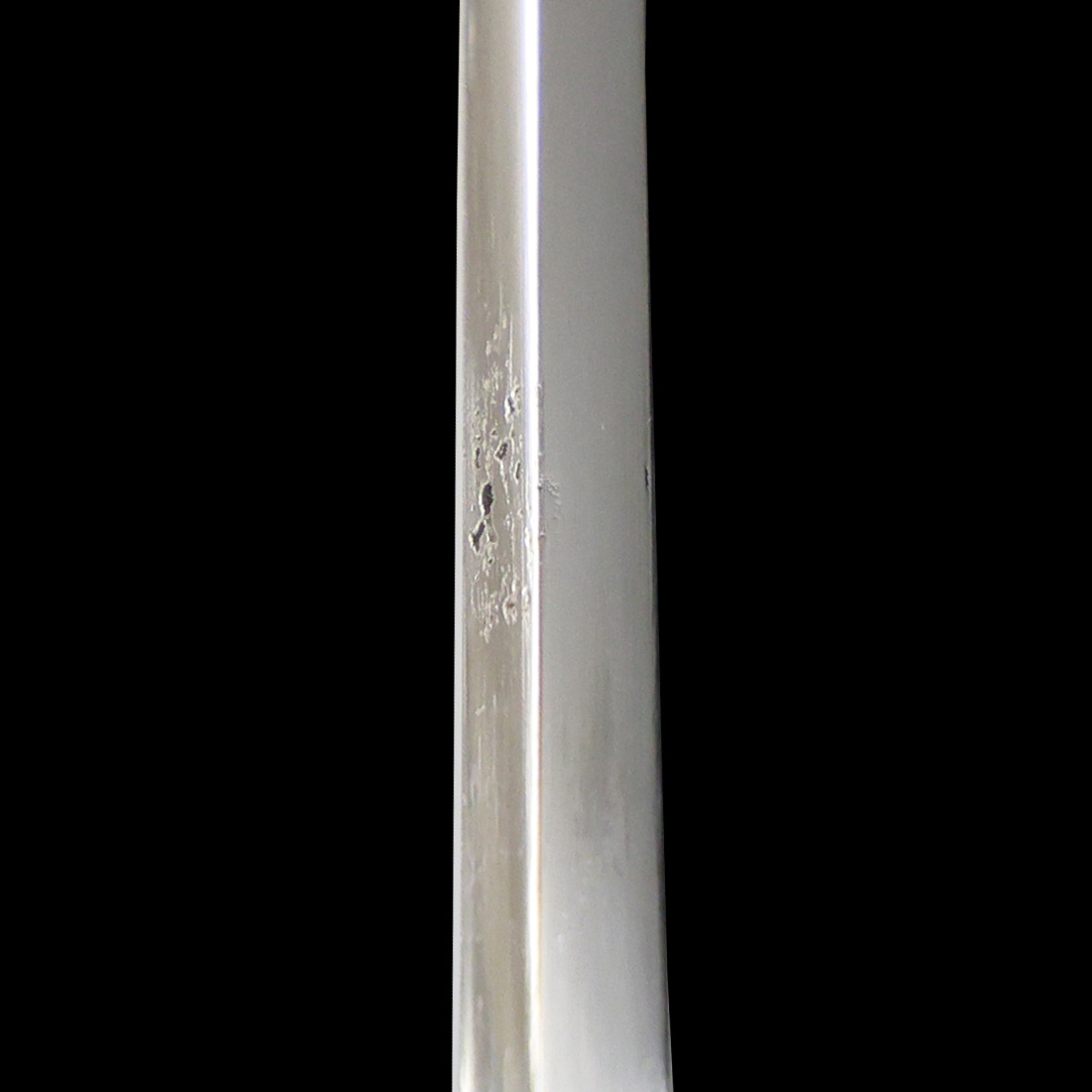
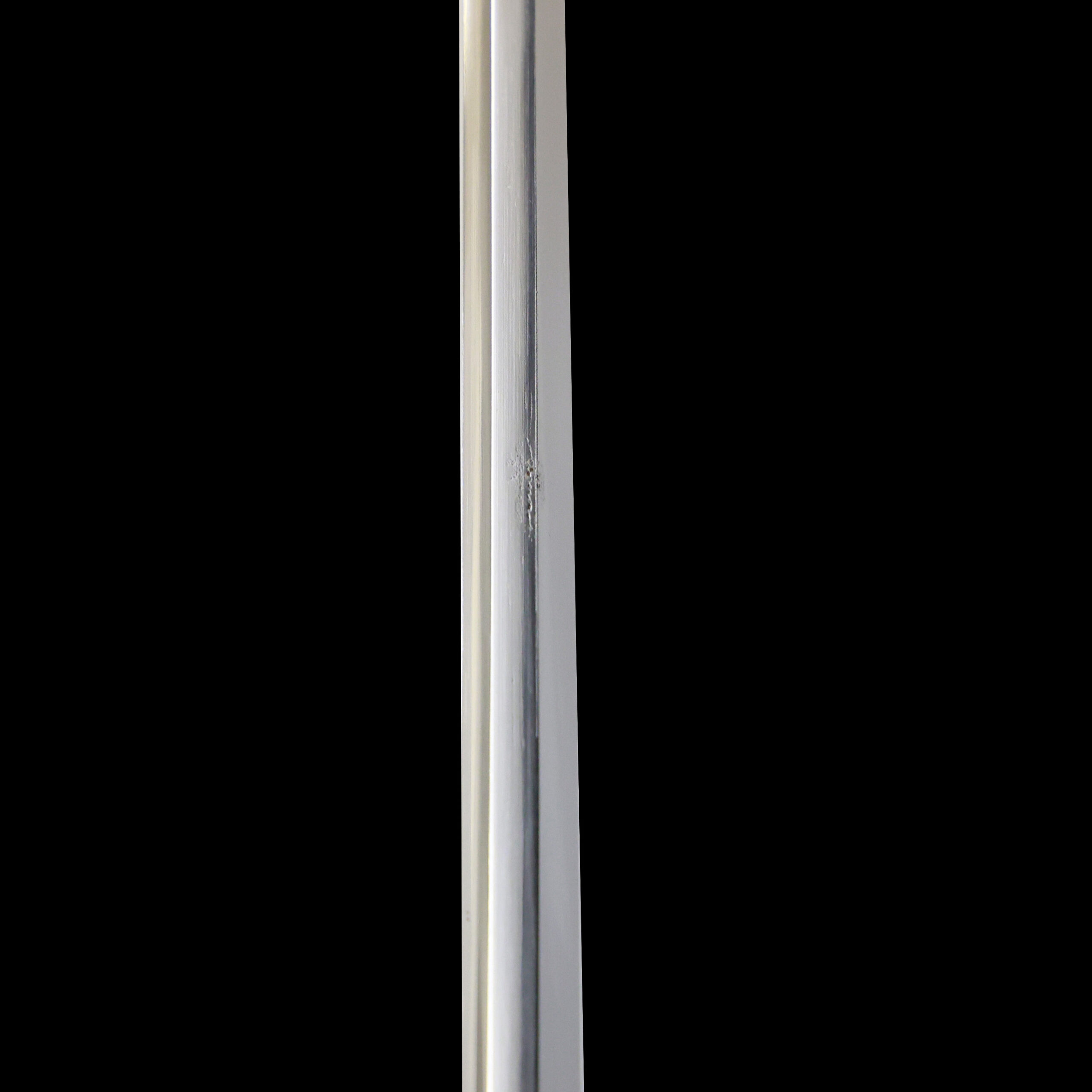
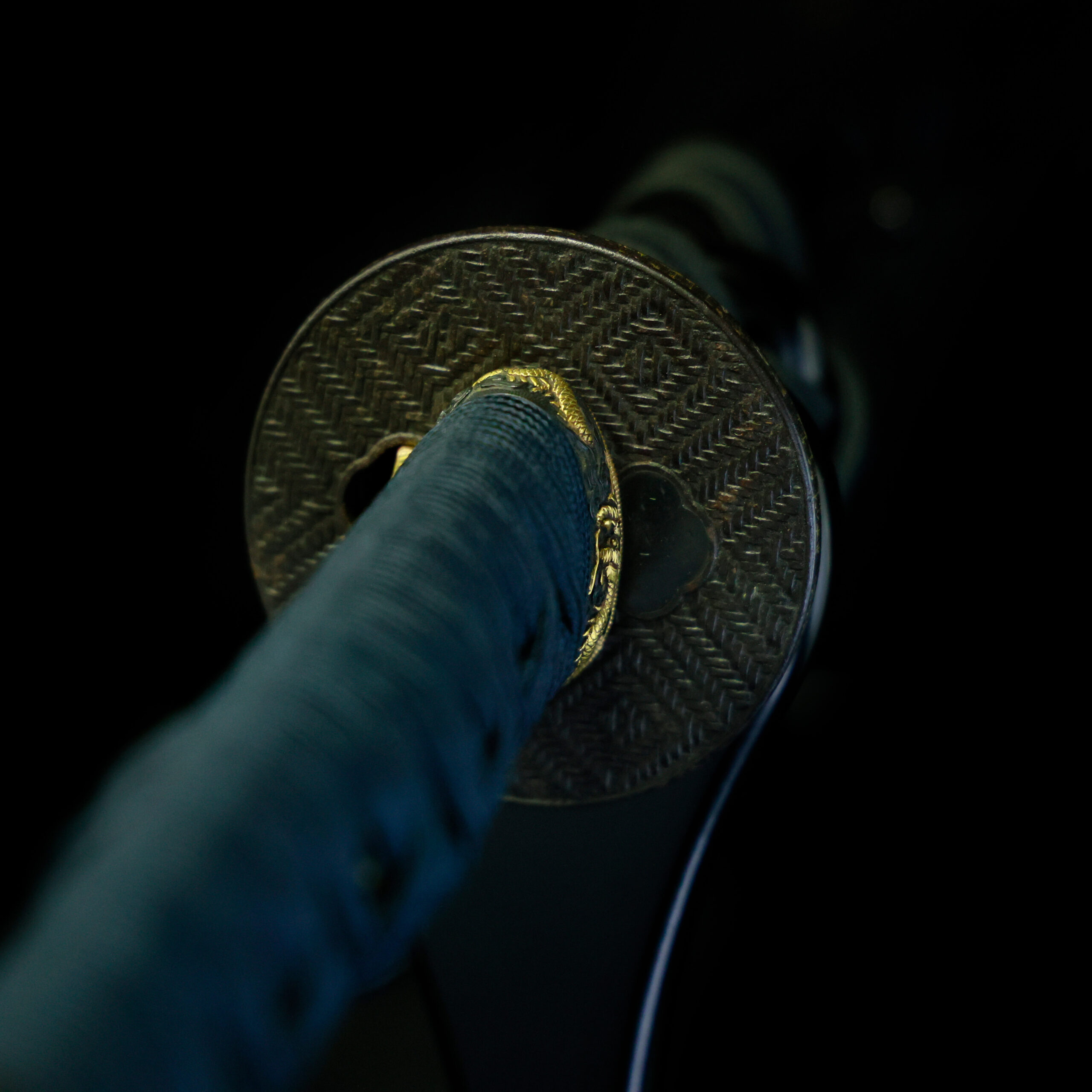
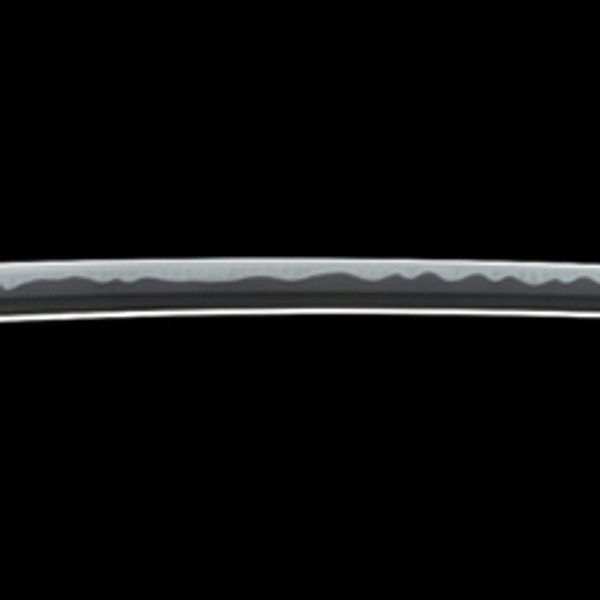
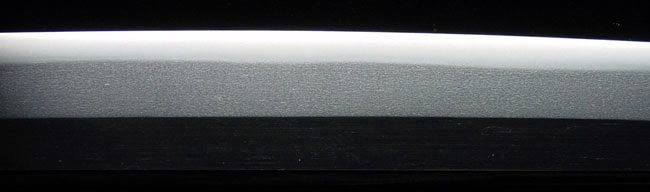
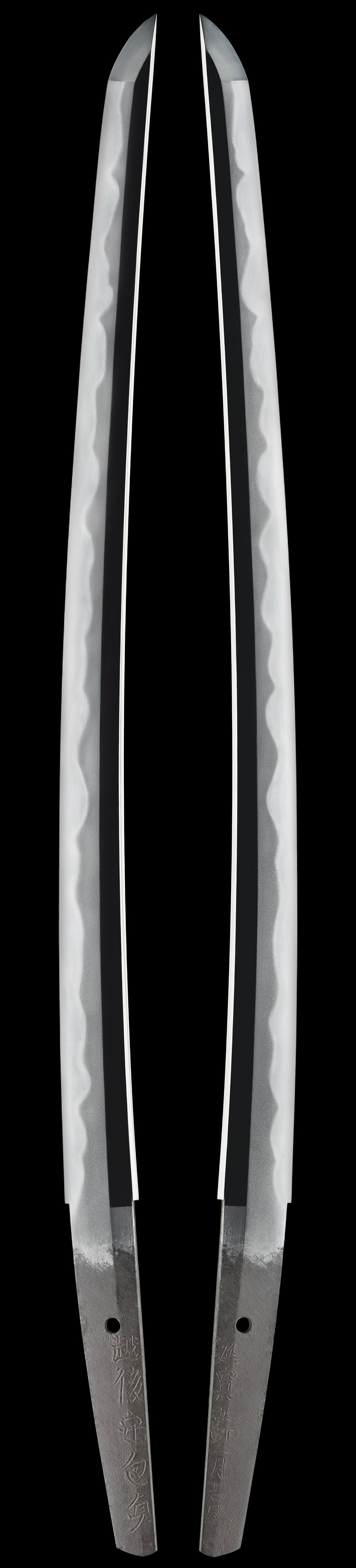
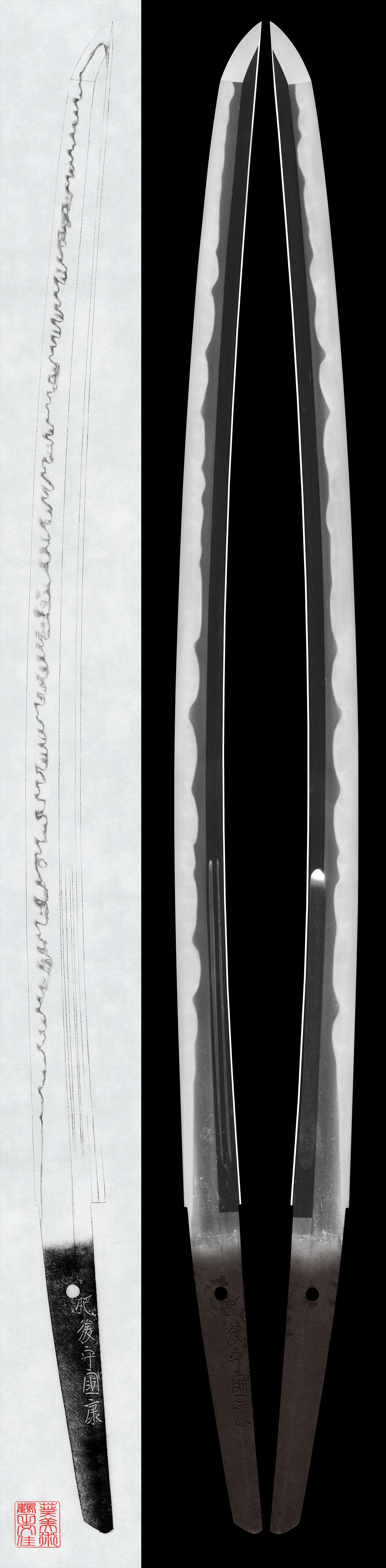
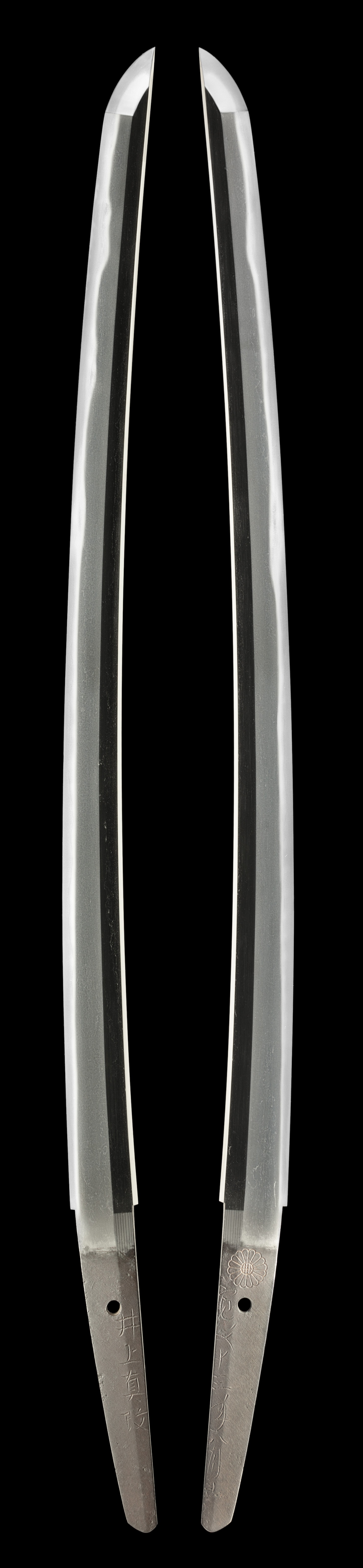
Osaka in the early-to-mid Edo period was a merchant capital, a city of commerce and capital rather than a castle town tied to a single daimyo house, and the swordsmiths who gathered there worked for a wealthy townsman clientele as much as for warriors. The grouping known as Osaka Shinto (大坂新刀) took shape in Settsu from two feeder currents. One was the Horikawa line of Kyoto: Izumi no Kami Kunisada, the elder Kunisada whom later sources call the Oya-Kunisada, came down to Osaka after the death of his master Horikawa Kunihiro in Keicho 19 (1614), and with him came Kawachi no Kami Kunisuke, a late disciple of the same Kunihiro. The other was the Ishido tradition of Settsu and Ise, which had revived the koto Bizen choji in new-sword steel; the Kunisuke house traced its descent to that group, and its second generation, known as Naka-Kawachi, turned the line decisively toward the Ishido clove. From these beginnings the school grew through the Kanbun, Enpo, and Genroku years into the most coherent regional manner of the shinto age. What binds these smiths is a shared steel before any shared temper. The forging is the bright, packed Osaka ko-itame, sometimes called the Osaka-gitae, a jihada so tightly worked that the grain scarcely shows, the ji-nie adhering minutely and fine chikei threading the surface, the jigane clear and lustrous. A second constant is the start of the temper: nearly every blade opens with a straight suguha yakidashi at the base before the hamon declares its individual pattern, and a deep, bright nioiguchi runs the length above it. Within that common grammar the great hands diverge.
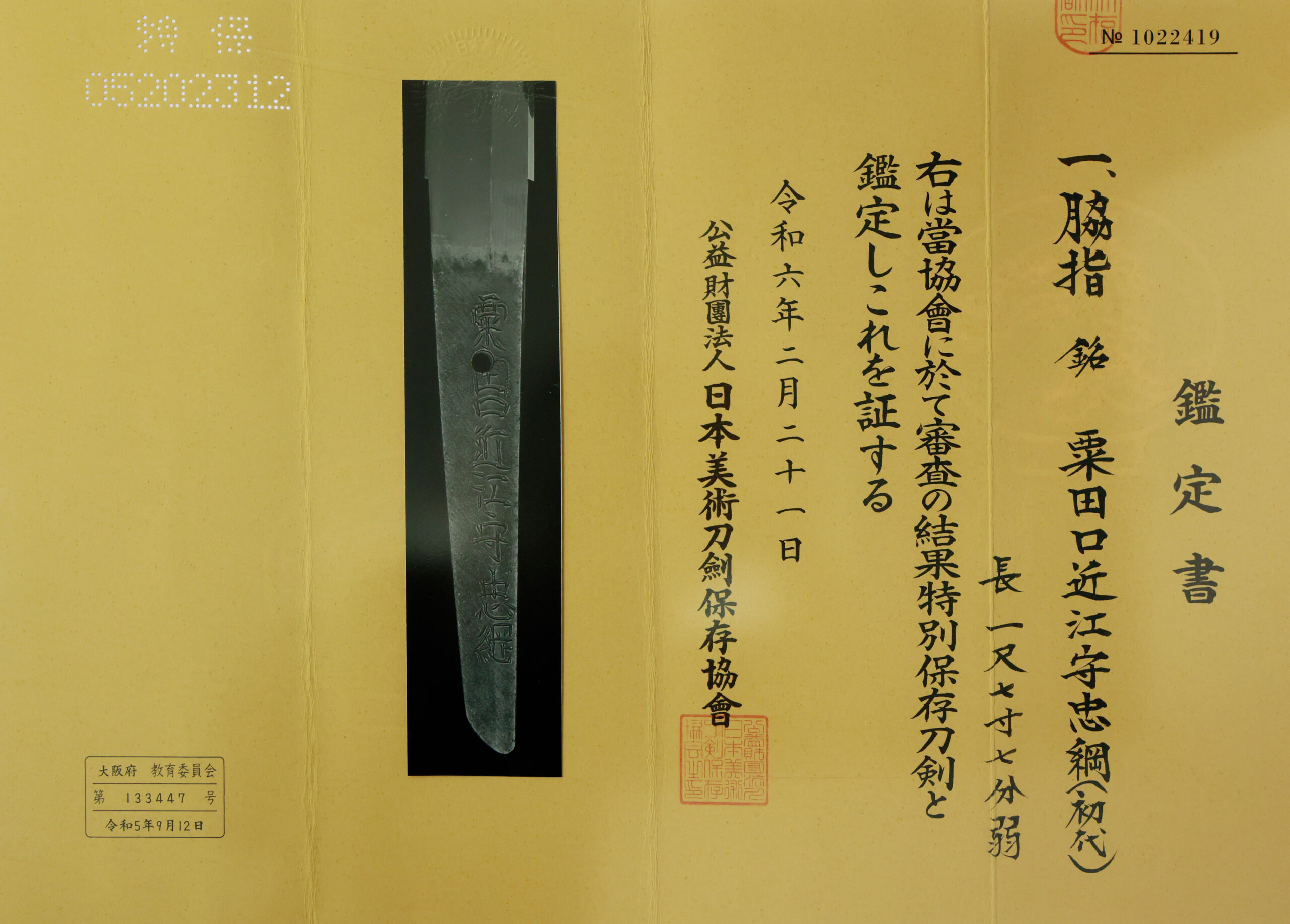
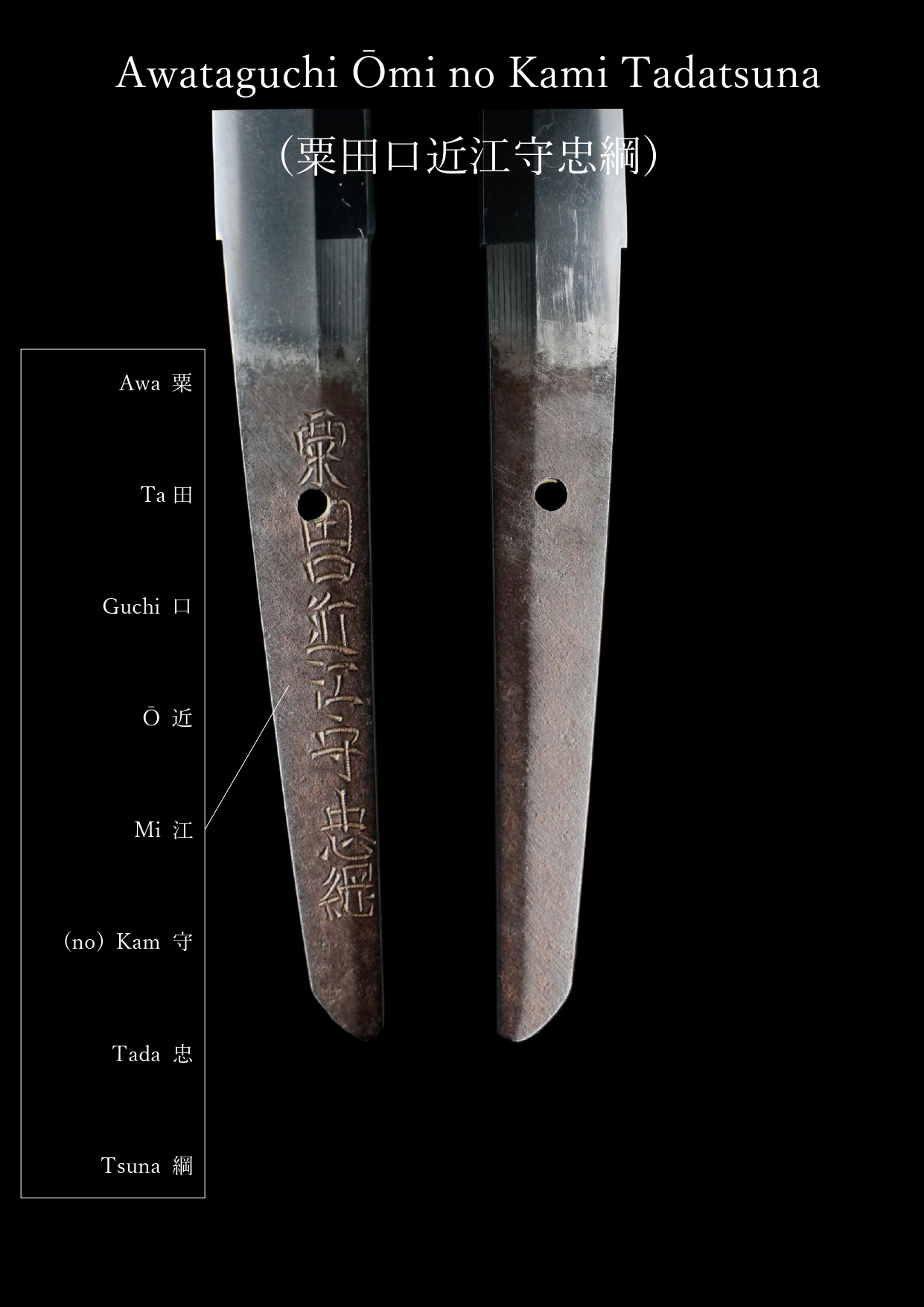
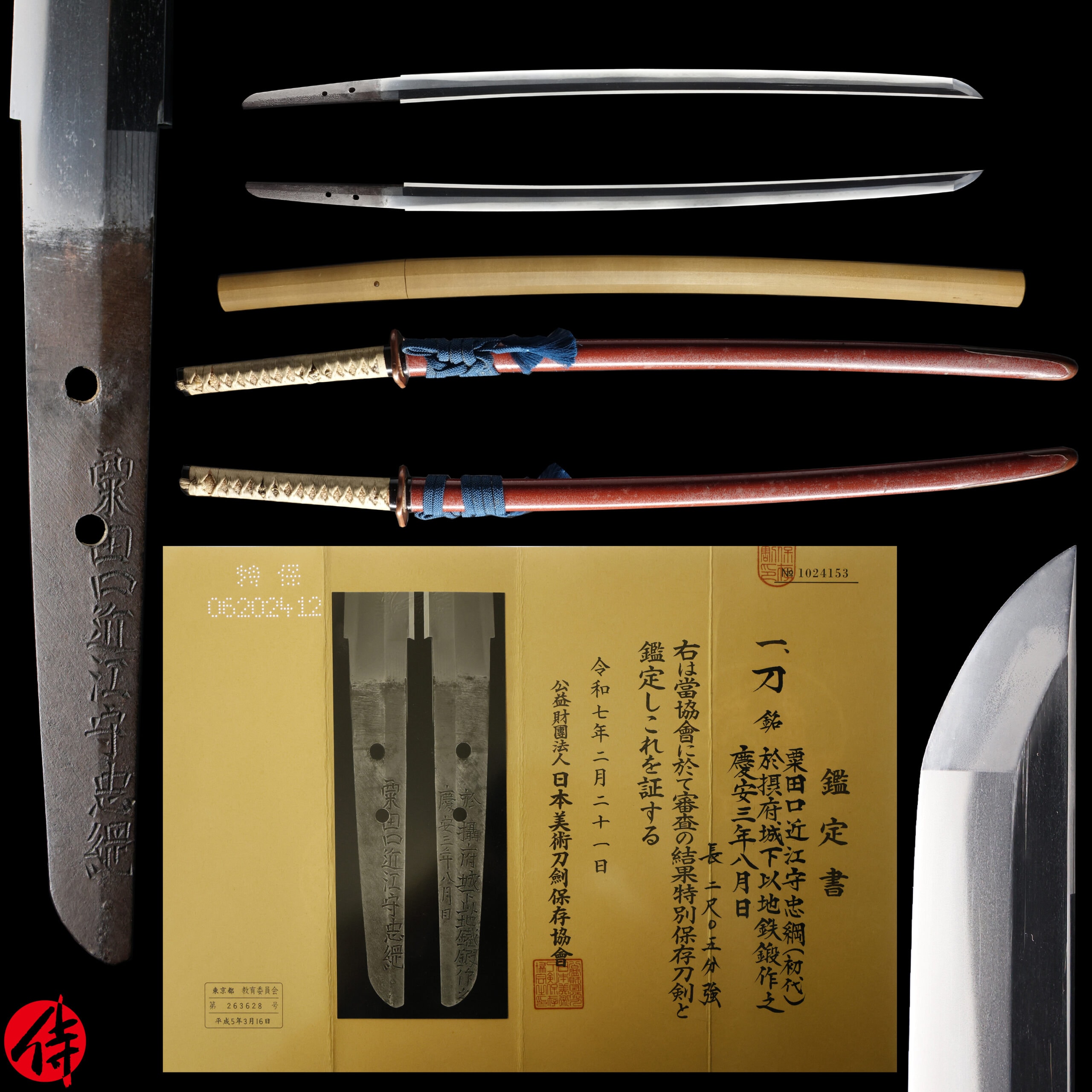
Tsuda Echizen no Kami Sukehiro founded the billowing toranba, the surging-wave toran-midare that became the school's most imitated signature. Inoue Shinkai, called the Osaka Masamune, tempered no wave at all but a deeply nie-laden suguha shading into shallow notare, with kinsuji and sunagashi entering vigorously, and the published sources pair the two by contrast as the school's two great champions, Sukehiro outstanding for nioi and Shinkai for fine ko-nie. Ikkanshi Tadatsuna carried the Sukehiro wave into his own sudareba, the surging temper that reads like a hanging bamboo blind, and matched it with the relief carving treasured as Ikkanshi-bori. The Echigo no Kami Kanesada line followed Sukehiro's toran so faithfully that the second generation is read as approaching the model, marking his own work with a leaning katayama-midare and three linked gunome below the yokote; Naka-Kawachi and his brothers Higo no Kami Kuniyasu and Ise no Kami Kuniteru held the rival clove wing, the flamboyant choji crowned by the fist-shaped kobushigata-choji over a beautifully ordered ji. A collector seeks Osaka Shinto for the union of bright steel and brilliant edge, an art-sword (bijutsu-token) appeal in which the jigane itself is half the pleasure. The grouping reads at kantei from its own grammar: look first for the Osaka-gitae, the lustrous near-muji ko-itame, then for the straight yakidashi opening the temper, then for the deep clear nioiguchi; the individual hand follows from the pattern above, Sukehiro's and Kanesada's and Tadatsuna's toran, Shinkai's nie-deep suguha, the Kunisuke wing's fist-shaped clove. The standing of the best members is high in the NBTHK register: Shinkai is rated Sai-jo saku, Tadatsuna and Kunisuke Jo-jo saku, and the line of the second Kanesada is held to rank immediately after Sukehiro and Shinkai, with later admirers such as the shinshinto smith Nagato no Kami Suketaka still copying the toranba a century on. Many of these blades are signed and dated, so their inscriptions double as documentary anchors for the whole tradition, and provenance, where it survives, runs through known houses and modern collectors, the Yamauchi of Tosa, the Itakura, the Imperial collection, and the Meiji sword-lover General Tani Tateki. A signed Shinkai of the Enpo prime or a dated Tadatsuna carrying his own carving is a landmark when it appears, while the productive clove masters of the Kunisuke wing offer a more attainable entry into the brightest steel and edge the early Osaka school produced. Learn more →