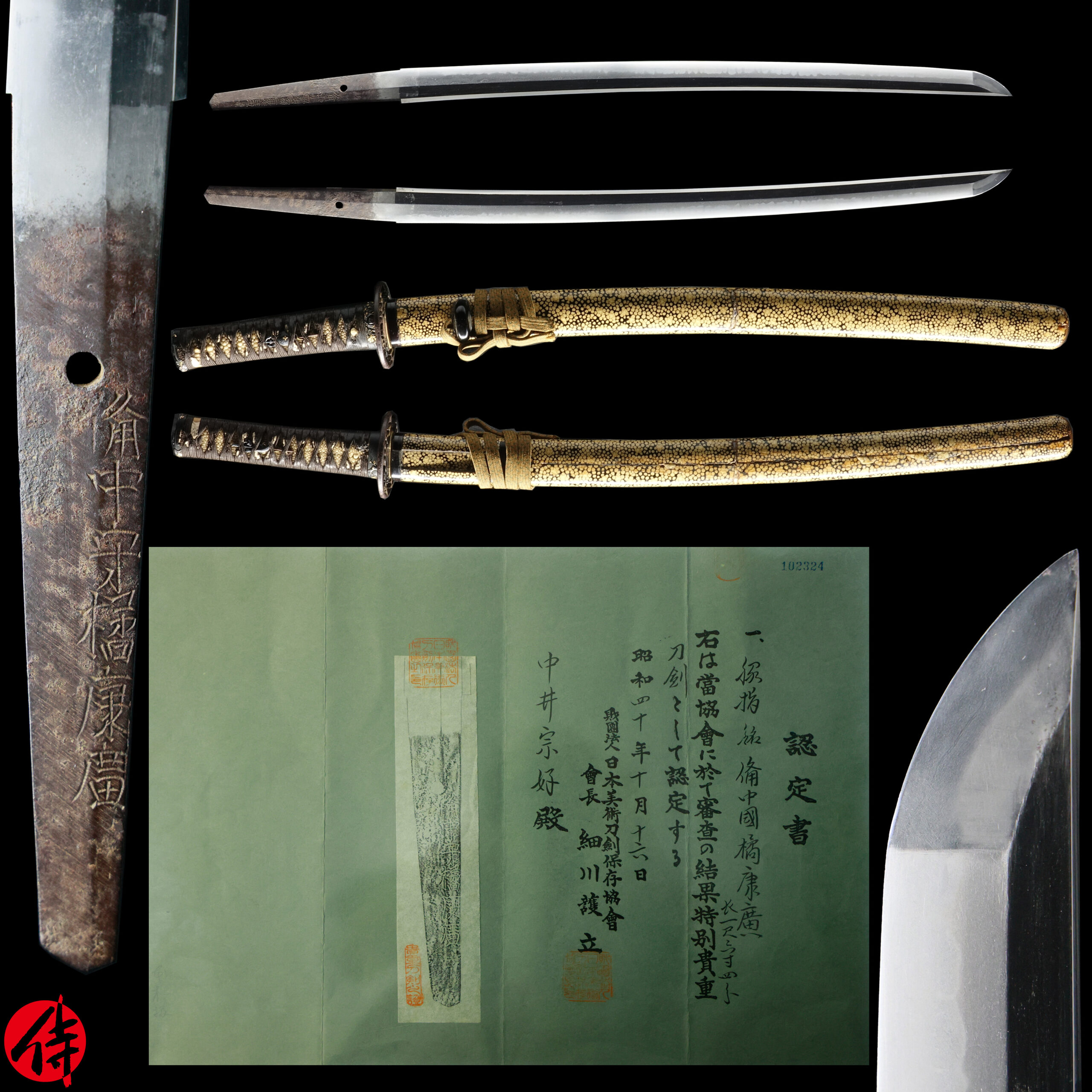
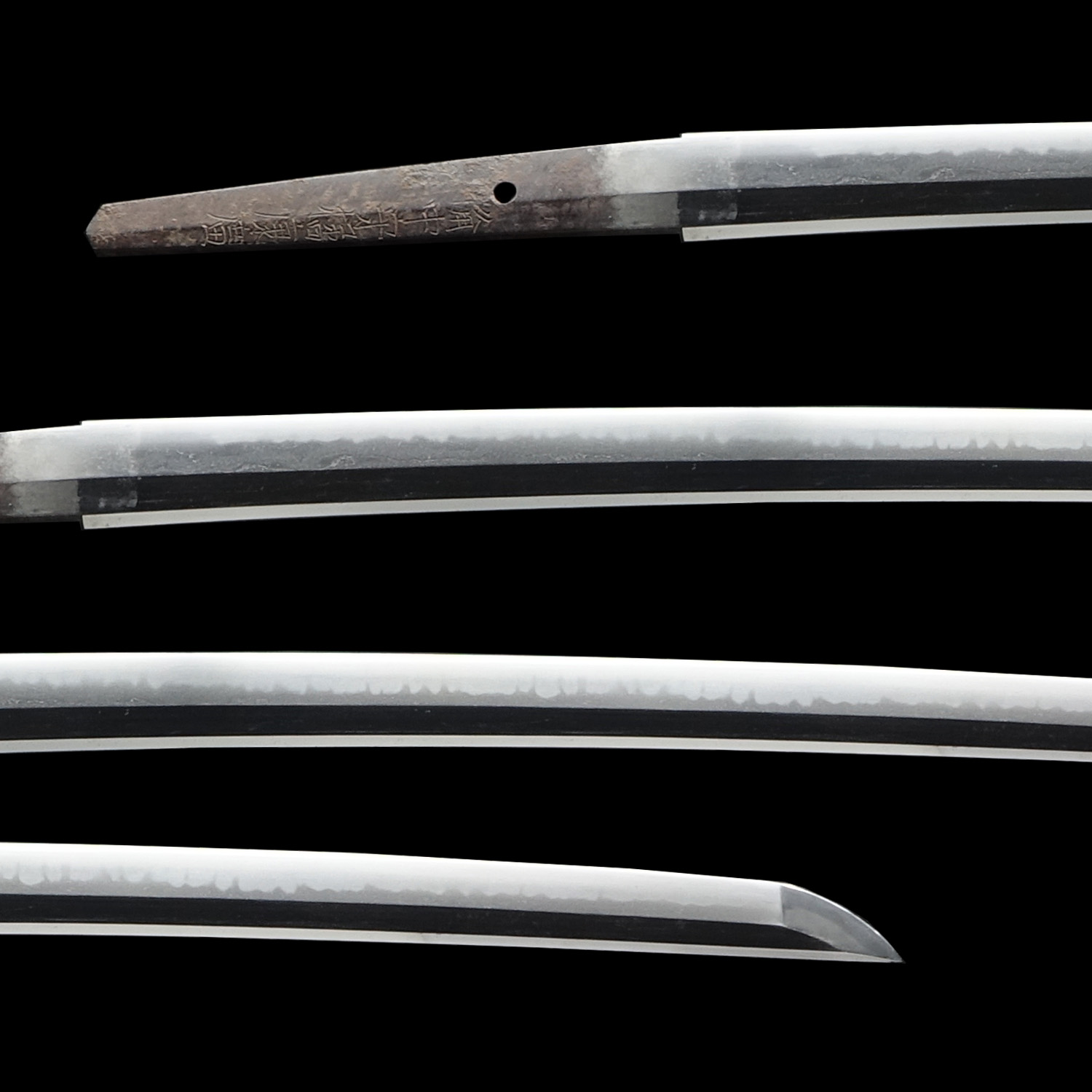
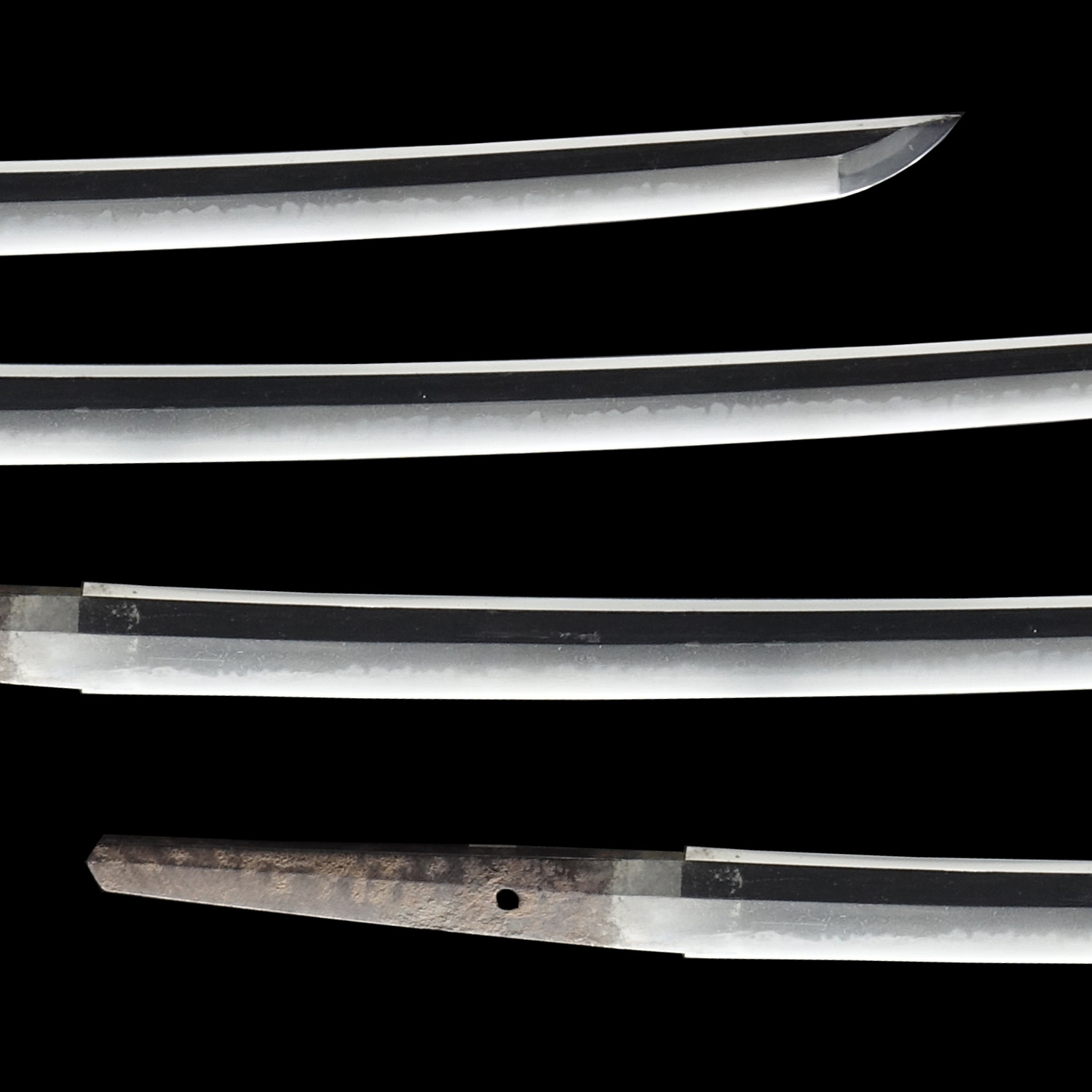
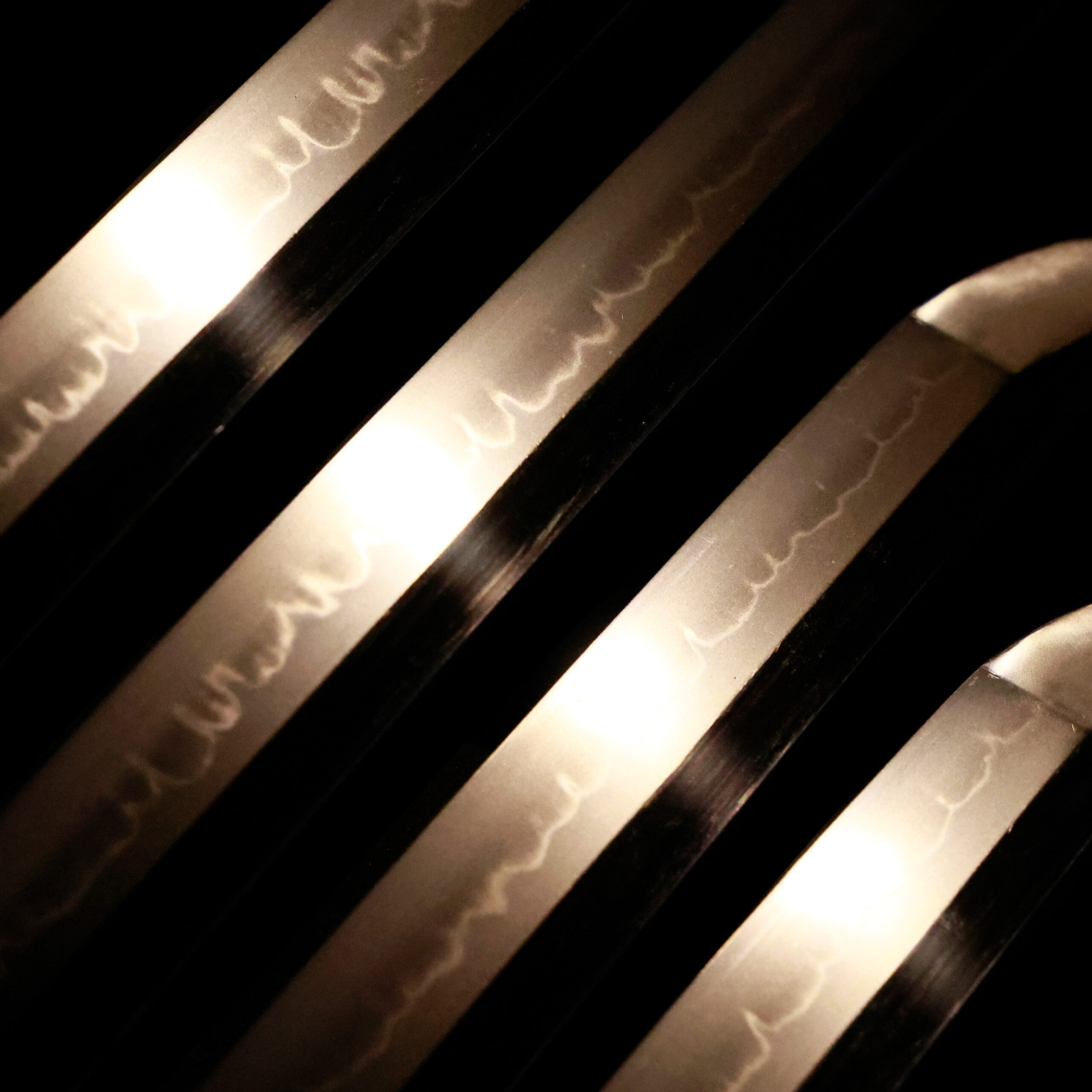
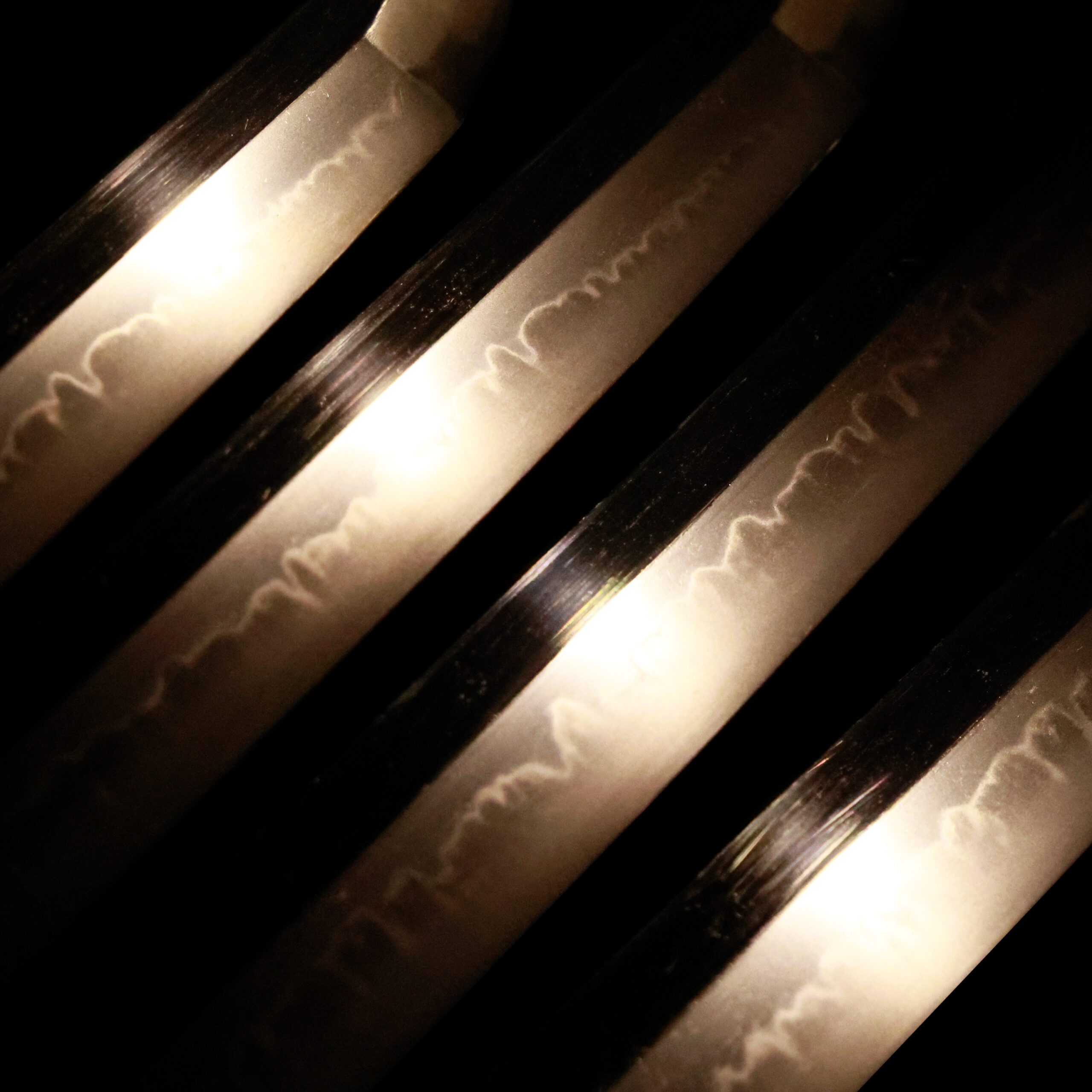
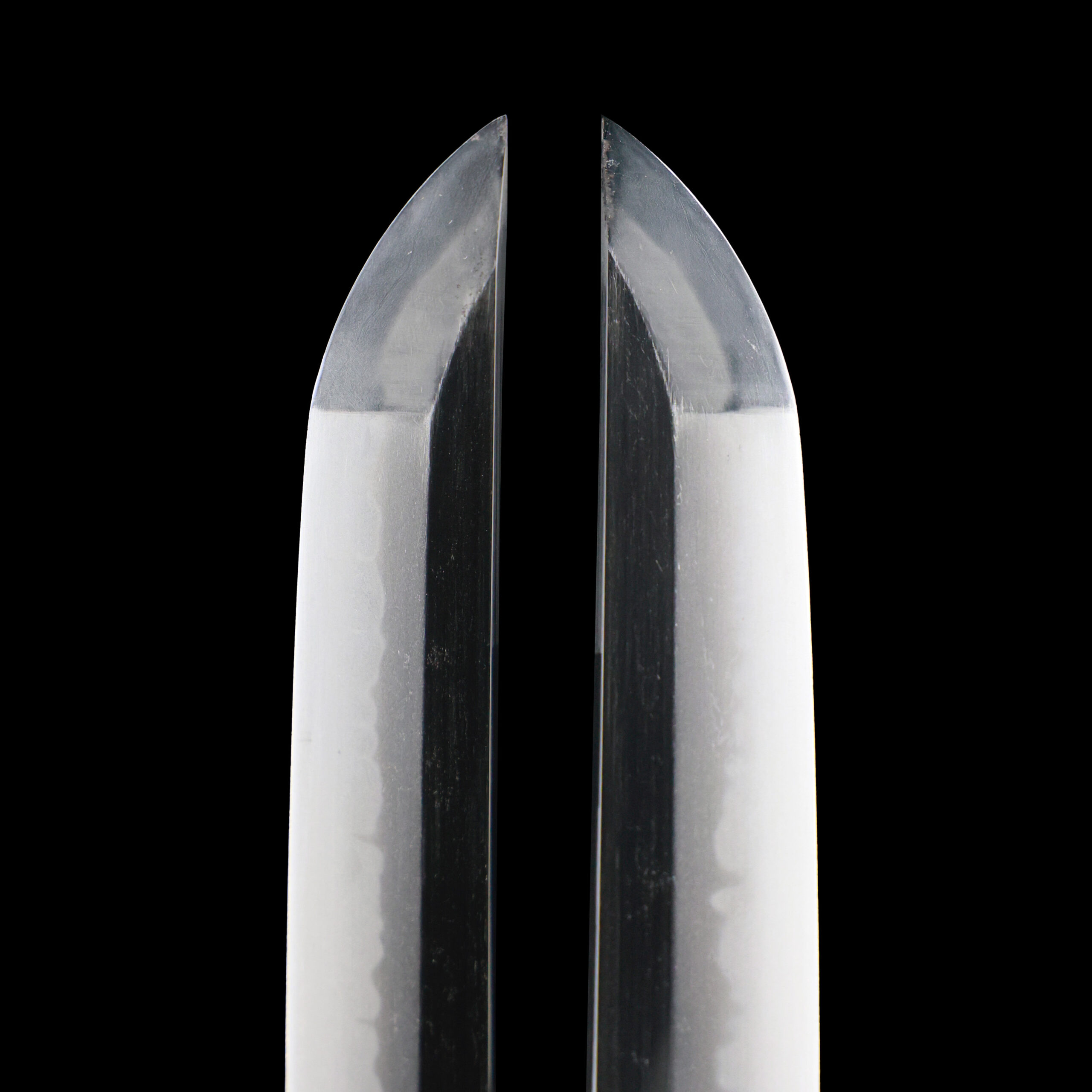
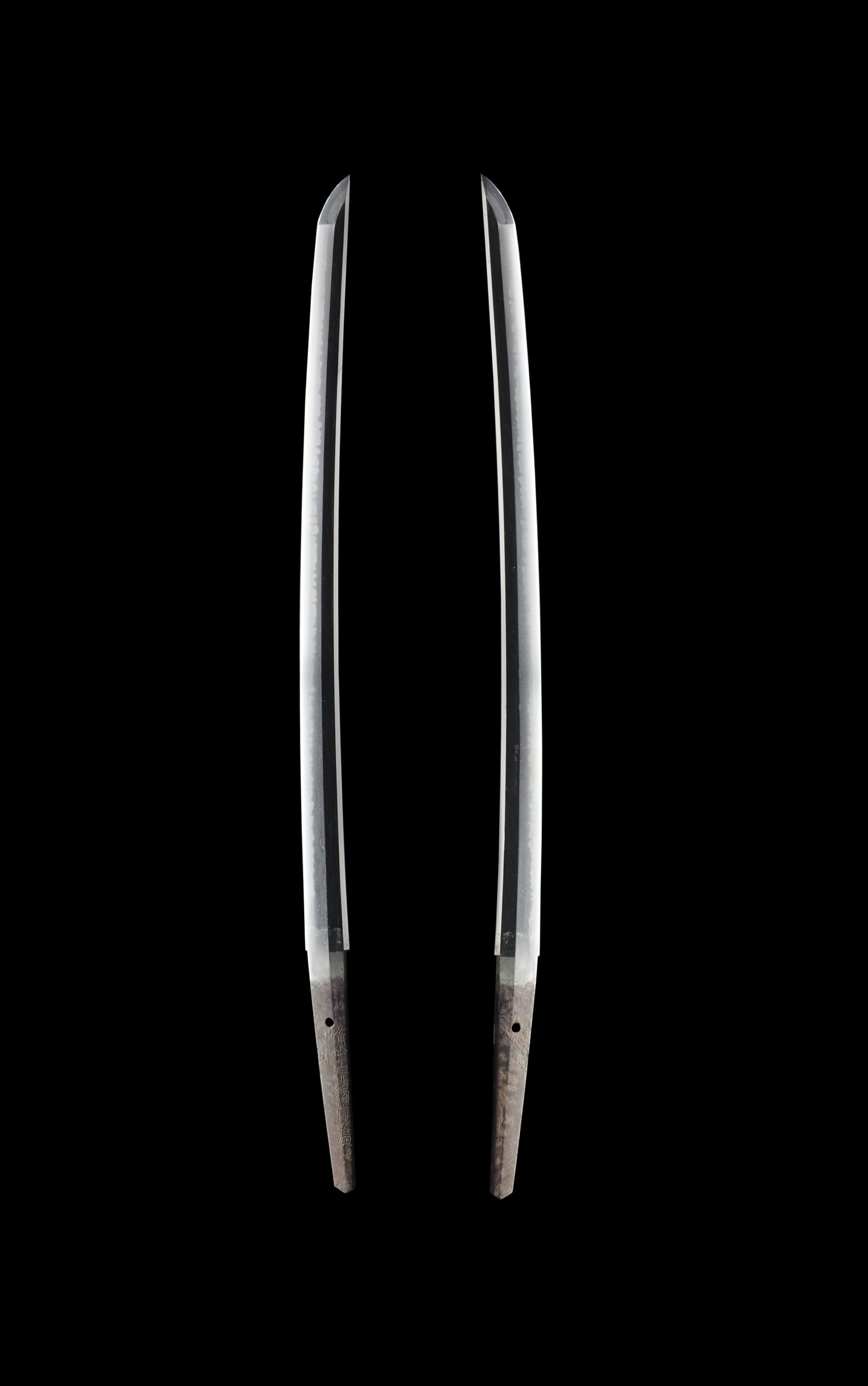
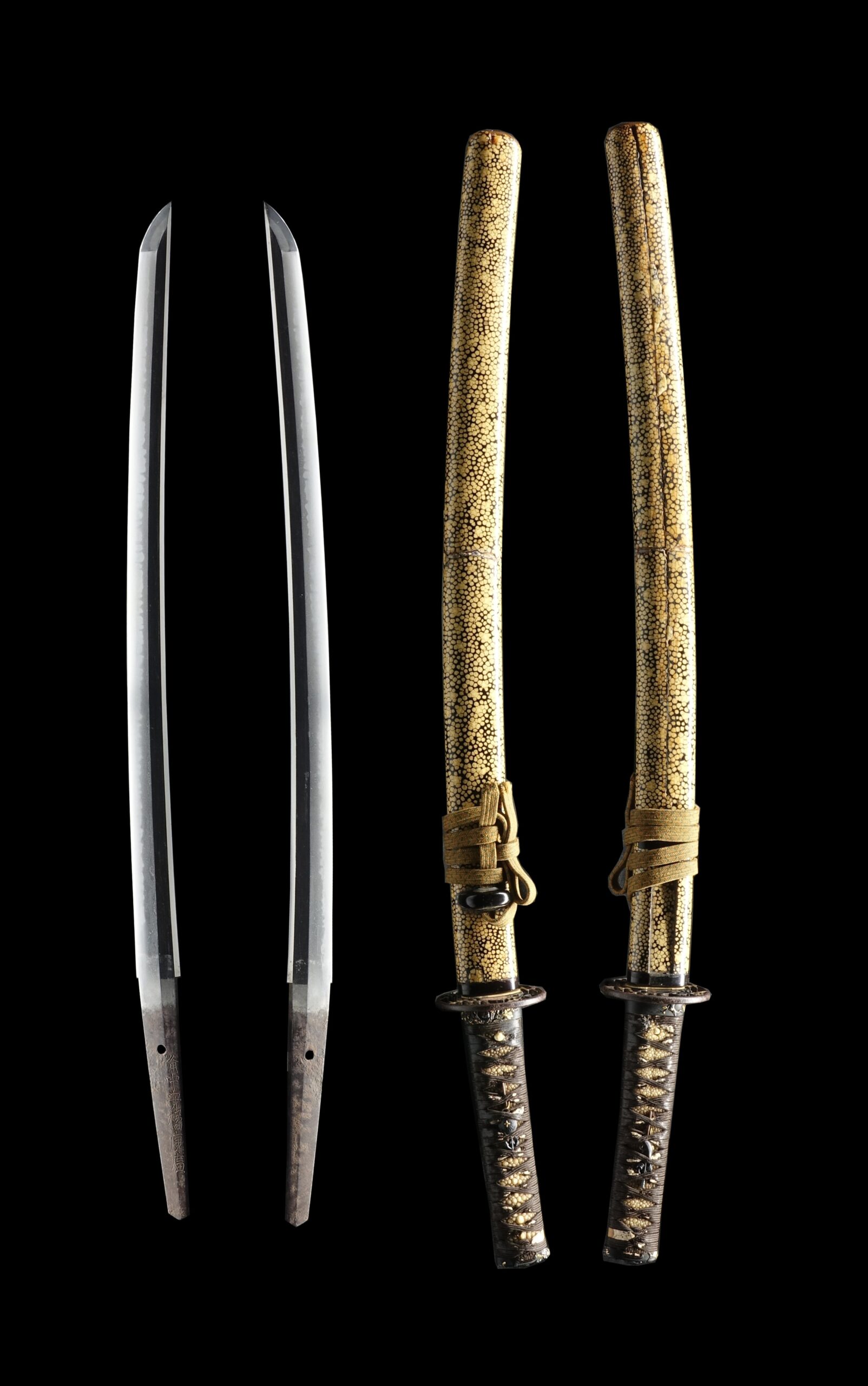
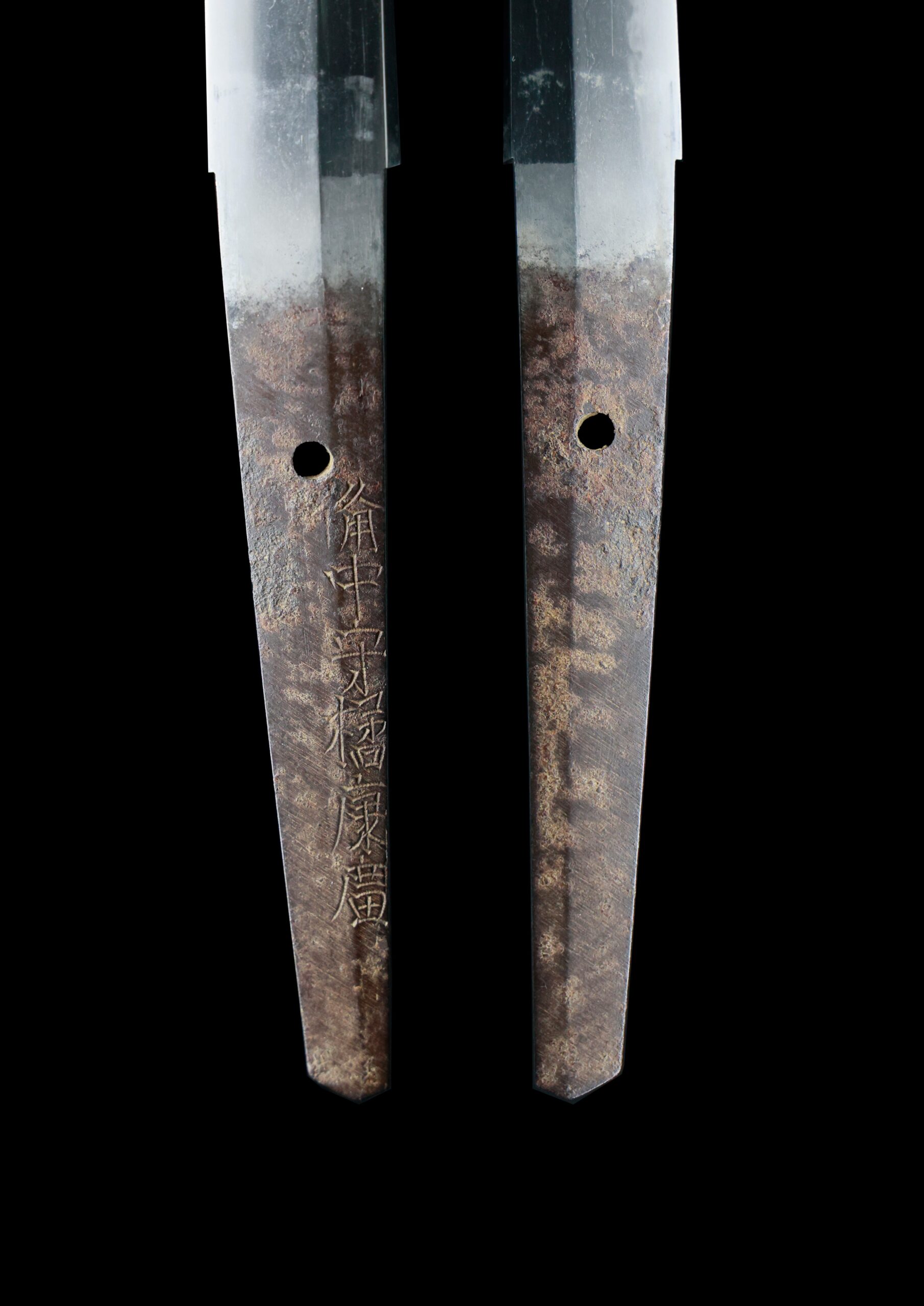
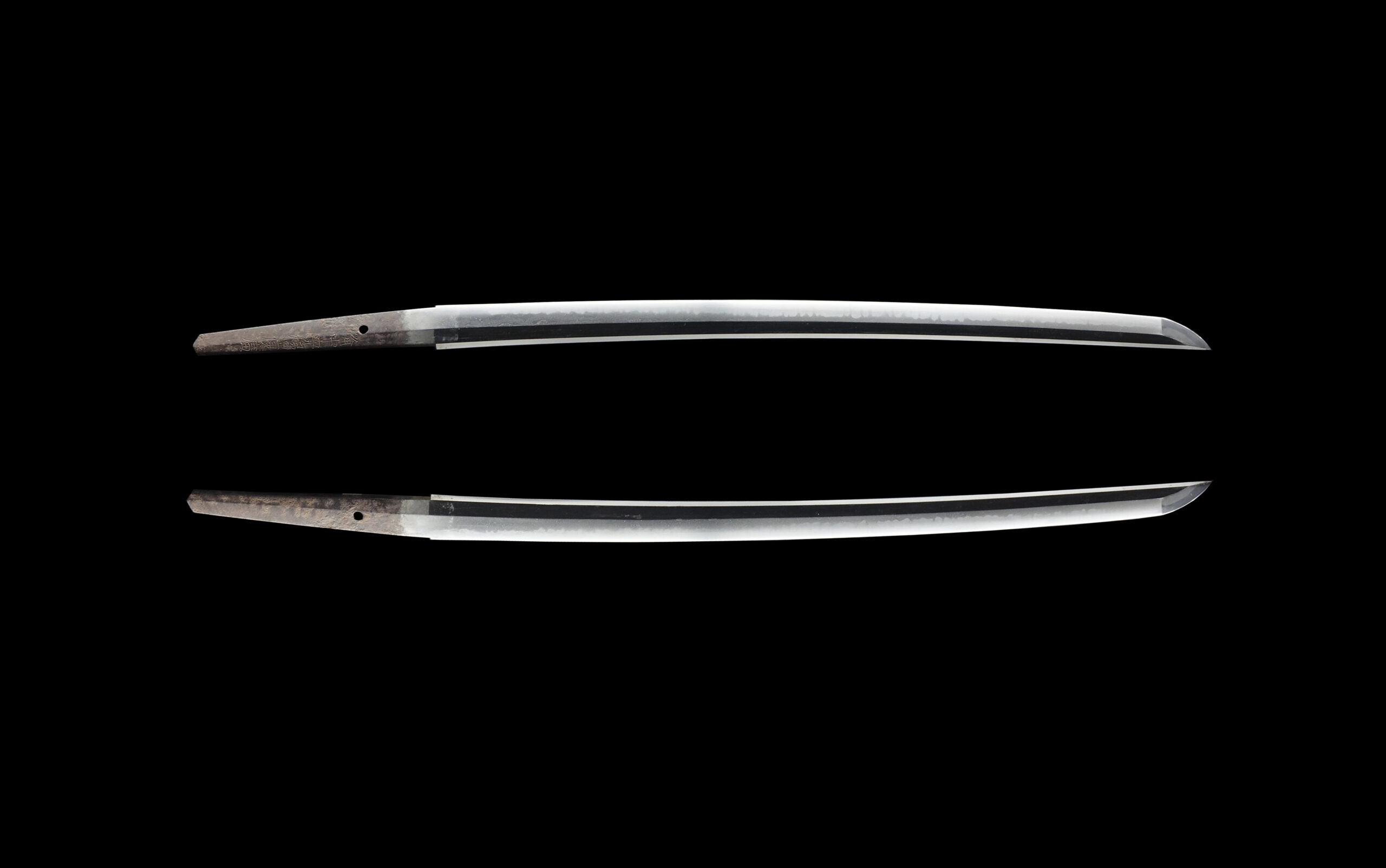
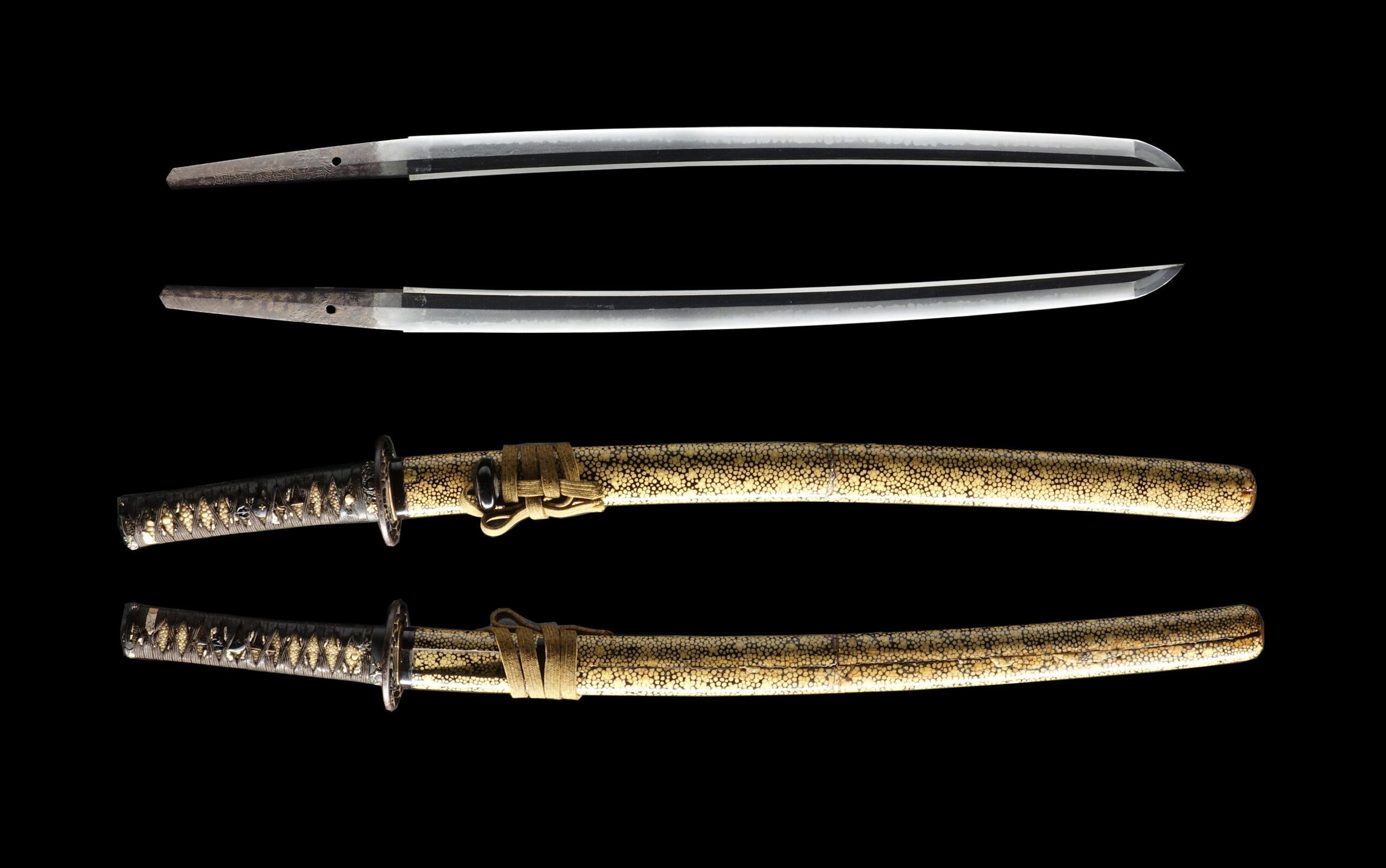
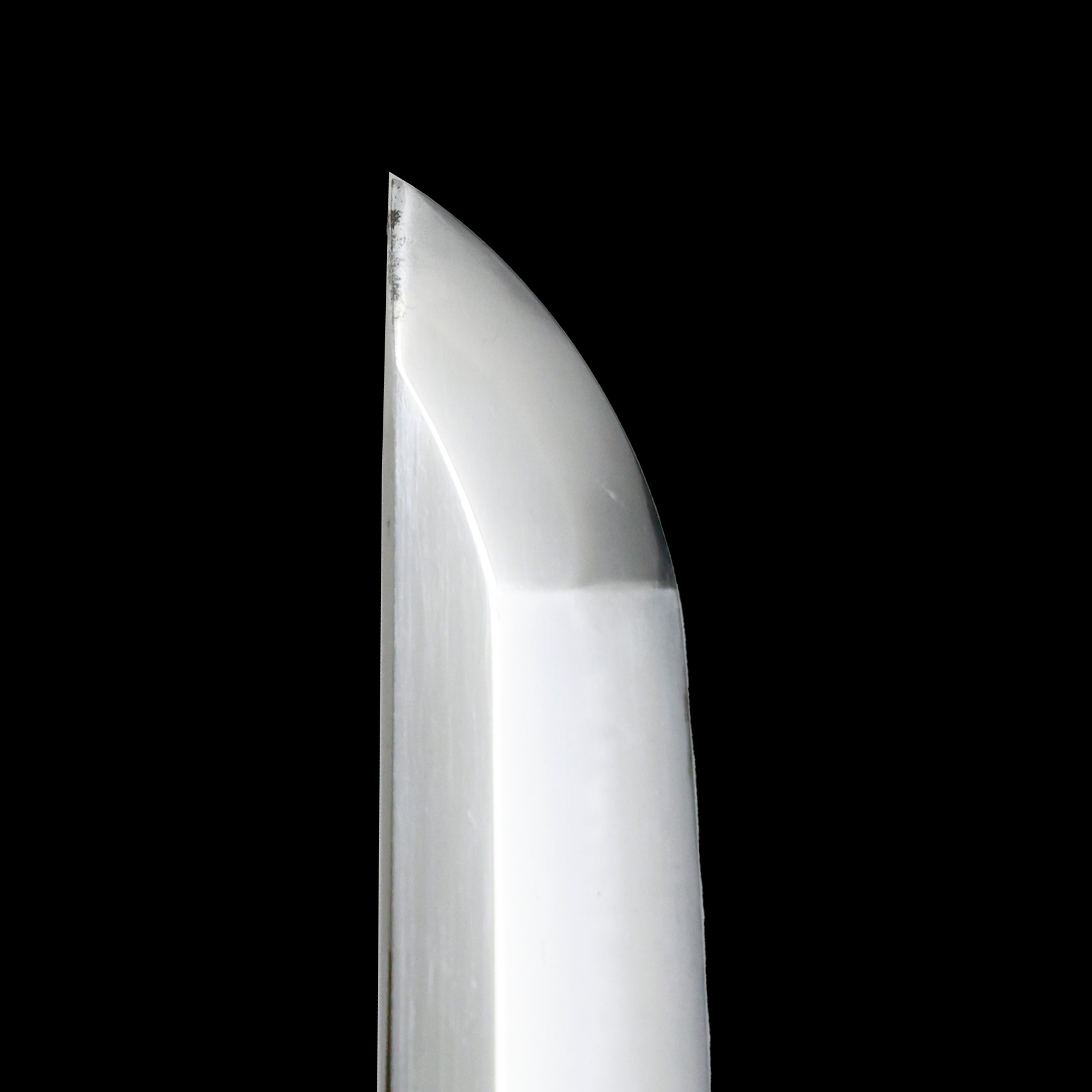
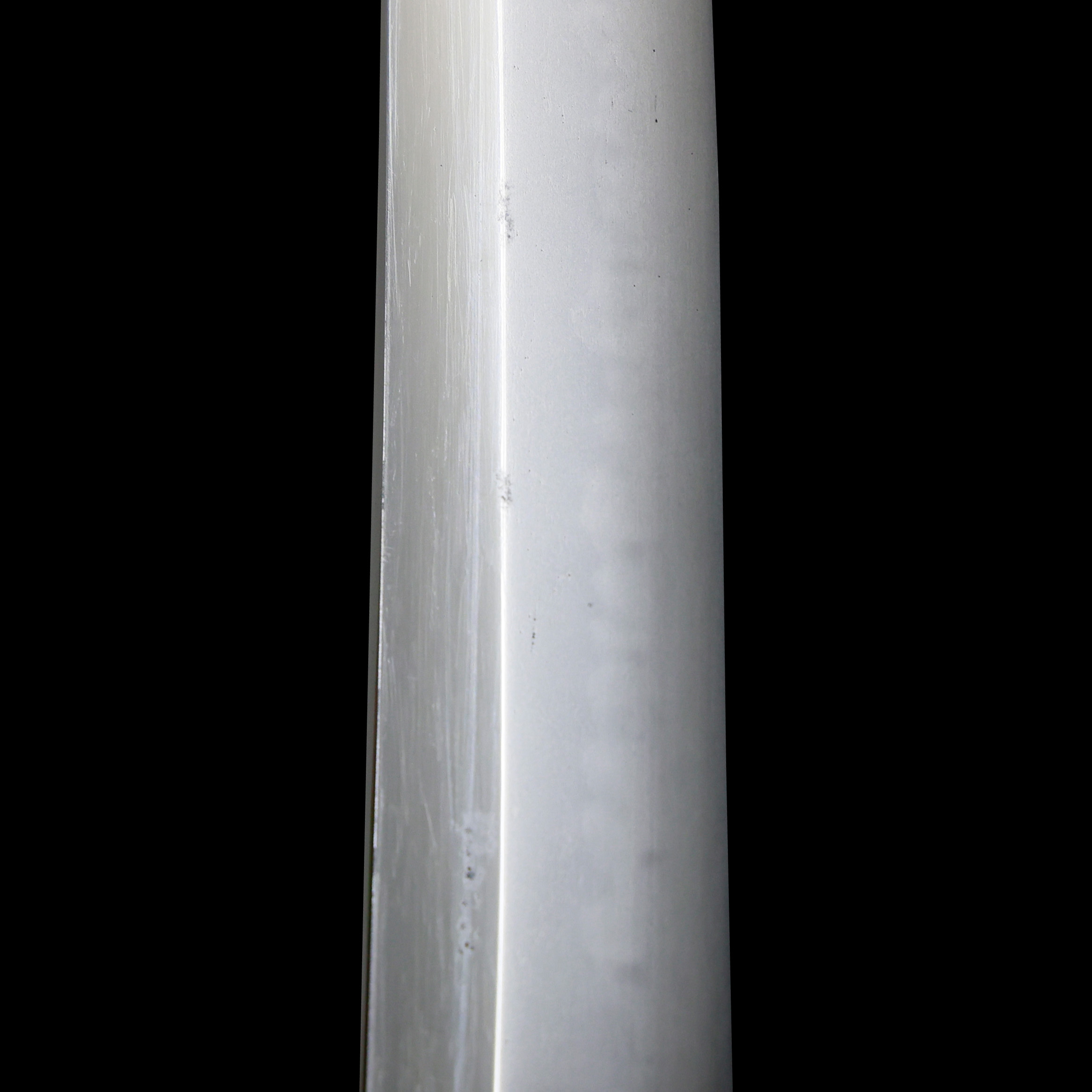
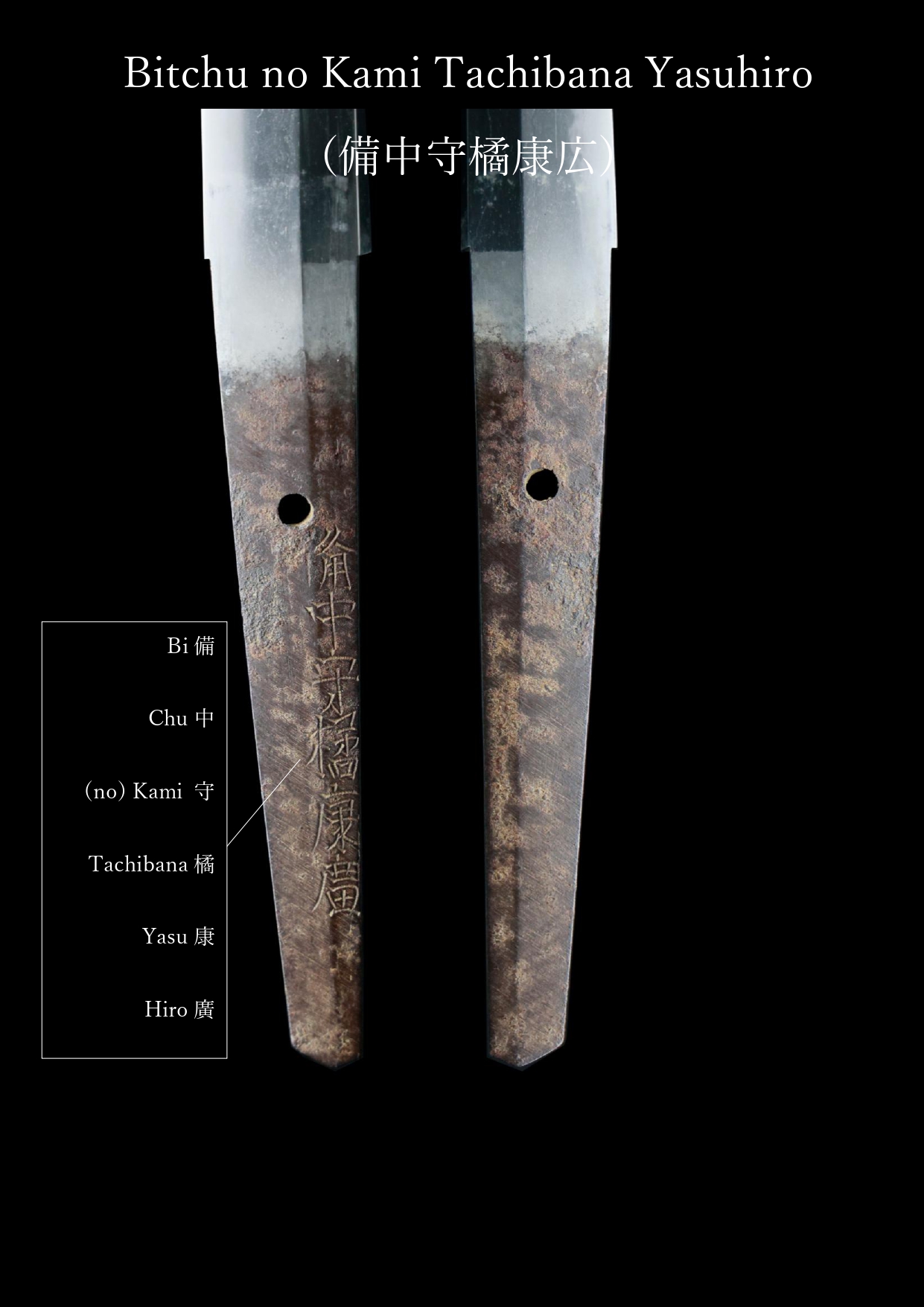
This blade was signed by Bitchu no Kami Tachibana Yasuhiro (備中守橘康広). Yasuhiro was active in sword-forging during the Kanbun (1661-1673: Early Edo Period). Yasuhiro belonged to a prestigious sword school called Kishu Ishido.
Ishido School
His father, Tosa Shogen Tachibana Yasuhiro (土佐将監橘康廣), was born in Omi province, located in Shiga prefecture. And he belonged to Omi Ishido school during the early Edo period. Ishido school was initially founded by Sukenaga, an offspring of Ichimonji Sukemune, who made Fukuoka Ichimonji school in Bizen province (Today’s Okayama prefecture). During 1492-1501 (Late Muromachi period), Sukenaga and his school moved from Bizen province to Omi province after being summoned by Gamou family, a powerful feudal line in that region. Sukenaga started to live in front of Ishido temple, and he changed his surname to Ishido.
Kishu& Osaka Ishido School
As of the early Edo period, many Ishido swordsmiths moved to other parts of Japan, looking for better opportunities. There are four areas: Edo, Osaka, Kishu (Wakayama prefecture), and Chikuzen (Fukuoka prefecture). Omi Ishido school is the origin of whole other Ishido branches that flourished during the Edo period.
Following this trend, Yasuhiro’s father, who belonged to Omi Ishido school, moved from Omi province to Kishu province. It is said that the father was the founder of Kishu Ishido school and played an essential role in making this school prosperous.
Yasuhiro was born as the son of the head of Kishu Ishido school. And he mastered excellent sword forging techniques from his father. And it is said that Yasuhiro served Tokugawa Yorinobu, the first head of Kishu domain, who was the 10th son of Tokugawa Ieyasu. Yasuhiro exclusively forged swords for Kishu domain for many years.
Later in his career, Yasuhiro received the honorable title “Bitchu no Kami” in 1657 and moved to Settsu city in Osaka to spread the tradition of Ishido school. He built the foundation of Osaka Ishido school. Yasuhiro is known as one of the most prominent figures that made Osaka Isido school prosperous during the early Edo period.
Osaka city flourished as a castle town and became the business center during the early Edo period. Many swordsmiths moved to Osaka to look for better opportunities. They not only forged swords for those Samurai who lived in Osaka but also for feudal lords nationwide. Among many swordsmiths active in the same period as Yasuhiro, he was one of the most famous figures in Osaka Ishido school.
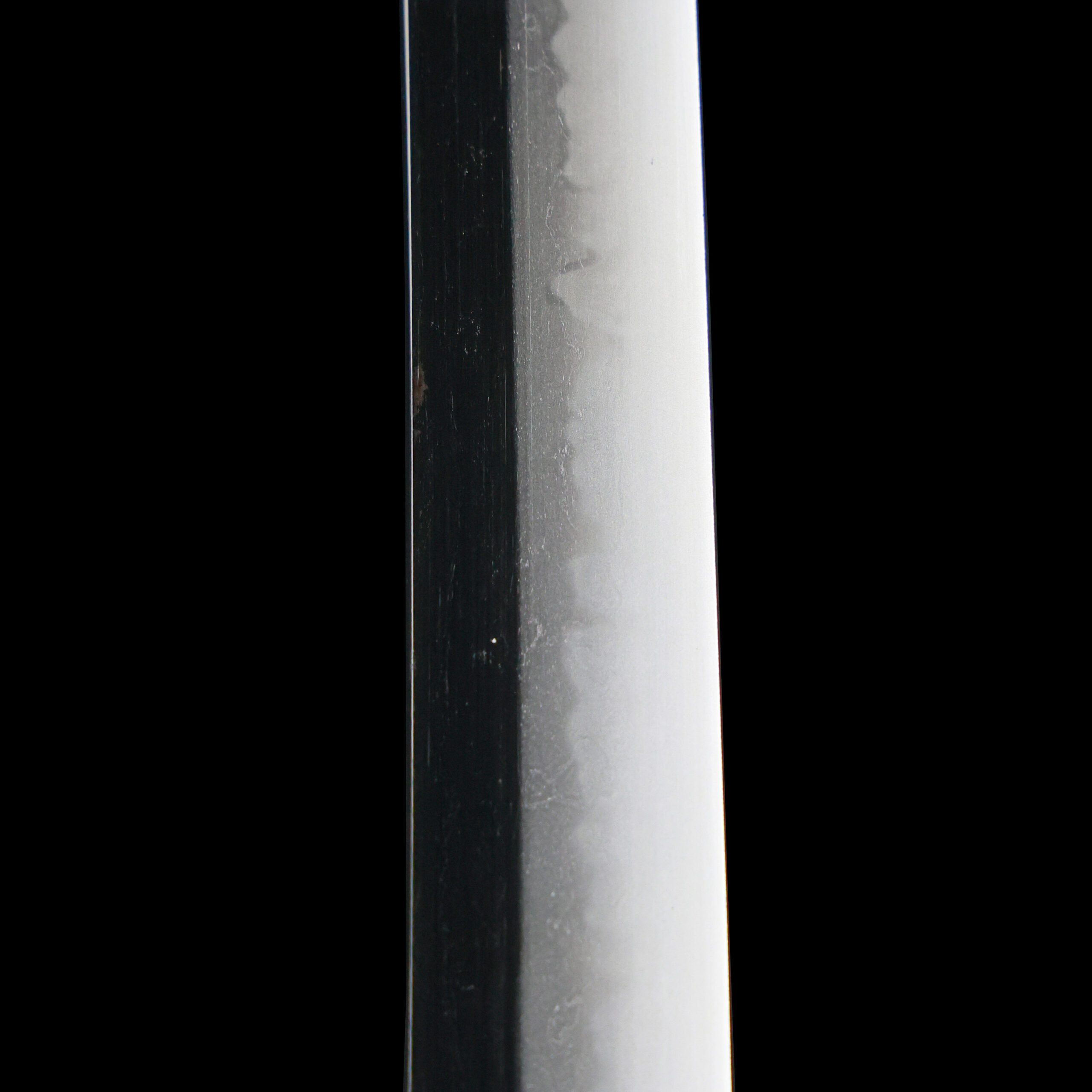
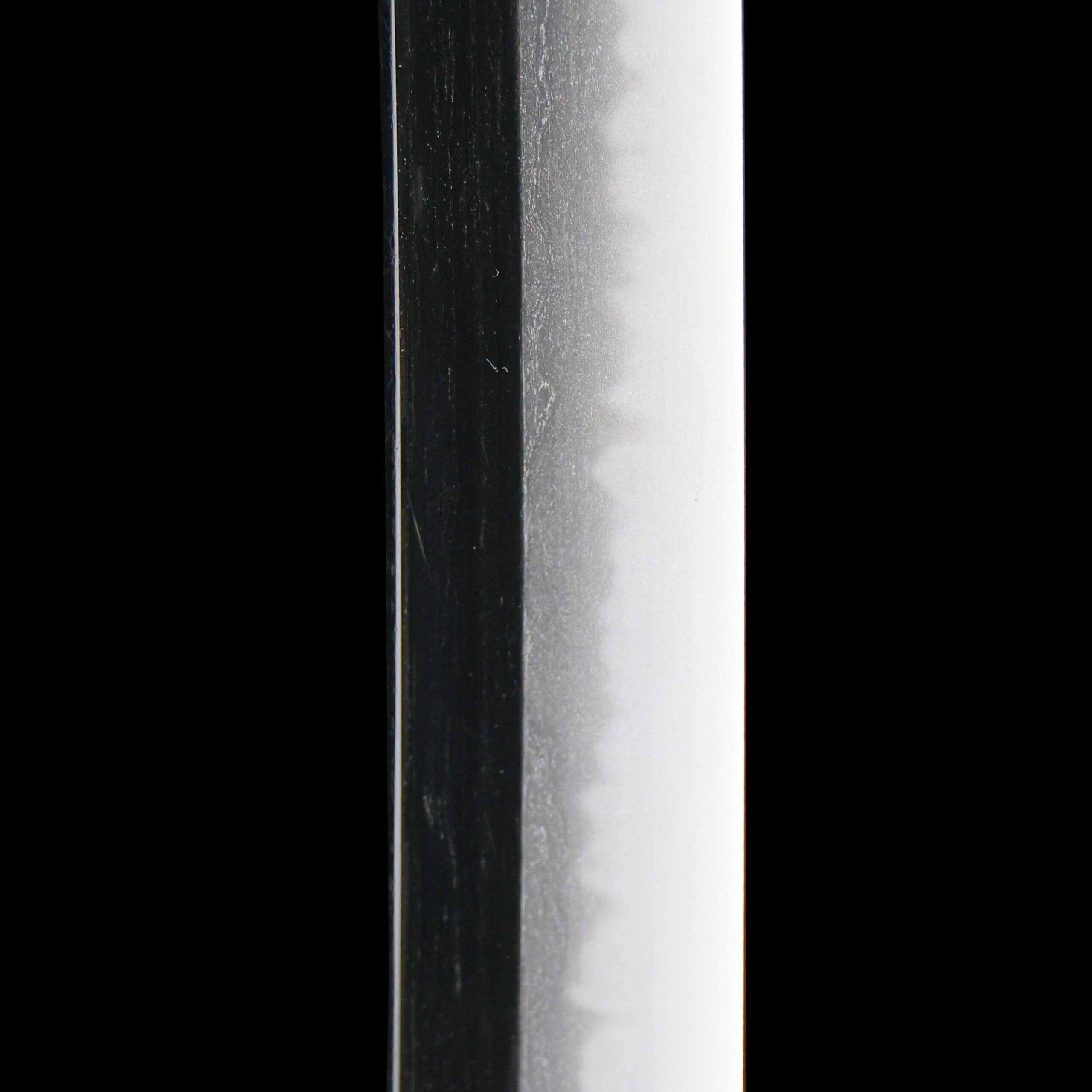
*Please keep in mind that there are small black rust on this blade.
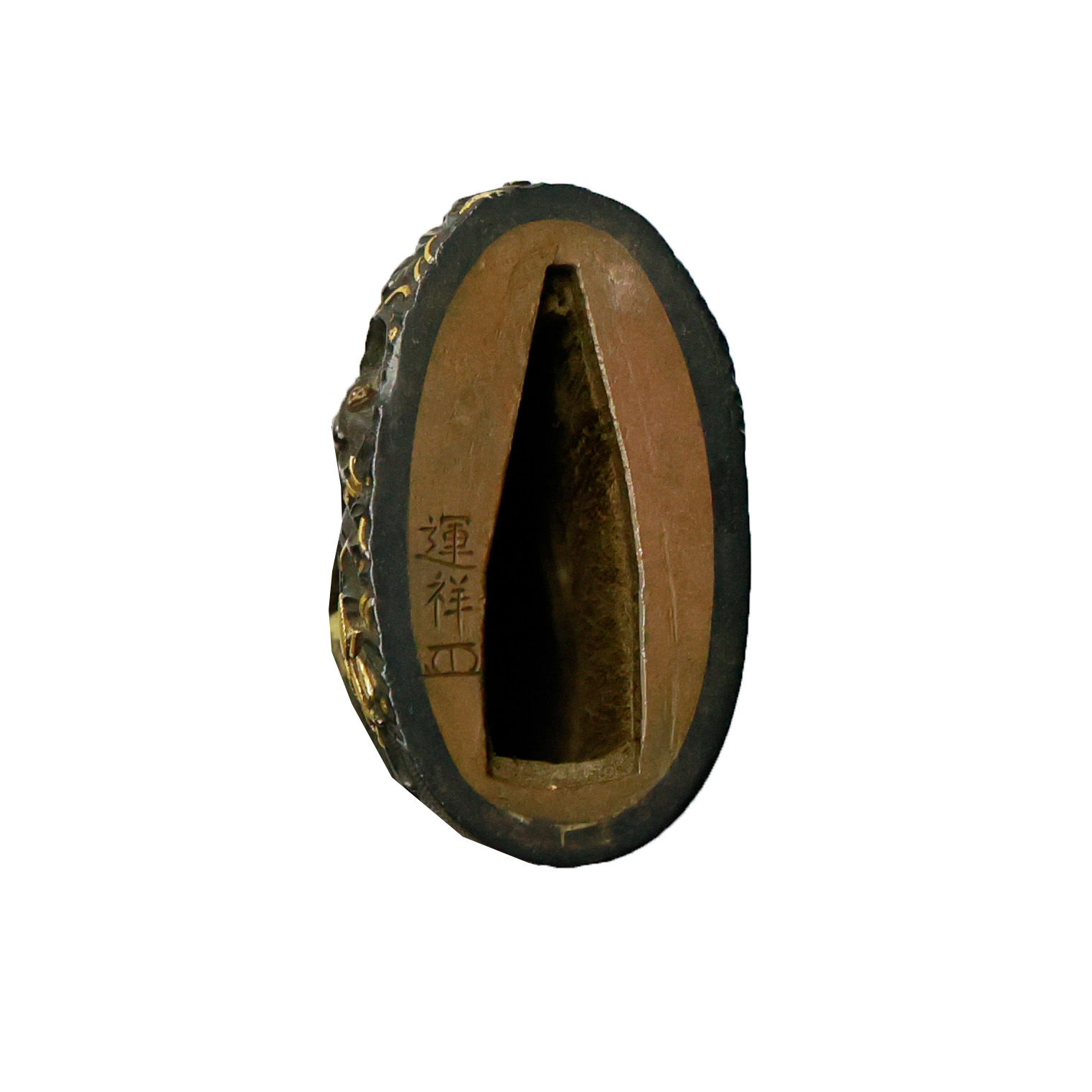
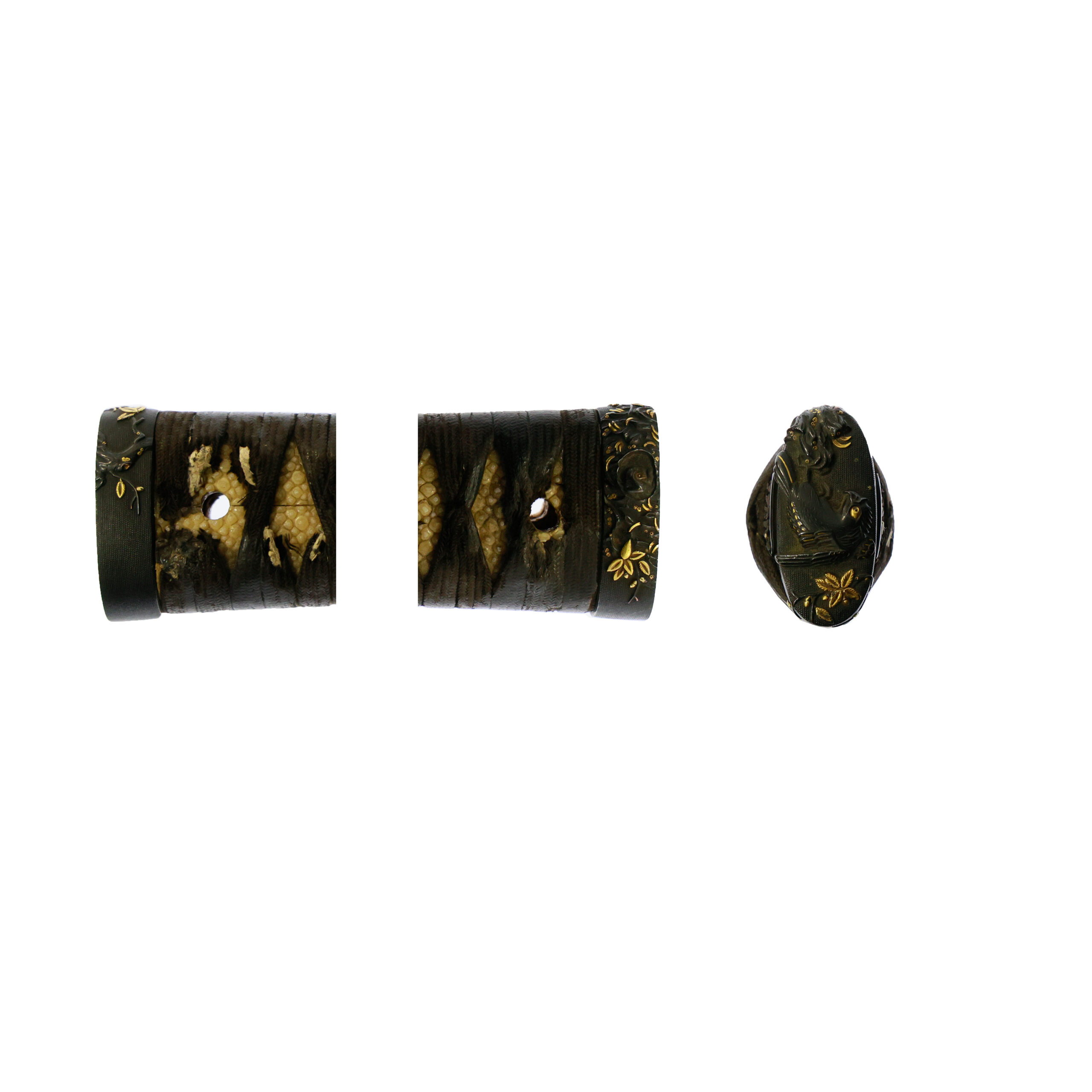
Fuchi-Kashira
The motif of this Fuchi-Kashira is a hawk (鷹, Taka). Hawks were admired by samurai because of their sharp eyes and claws, and their powerful way of soaring high in the sky and swiftly catching their prey. Samurai saw these traits as symbols of calmness and strength, and they identified with the hawk’s nature.
Falconry, or hawk hunting, was also a formal and respected activity practiced by high-ranking warriors such as shoguns and daimyos from the medieval period through the Edo period. Because of this, the hawk was not only seen as a beautiful bird, but also as a symbol of power and social status. For samurai, keeping a hawk close was both an honor and a source of pride.
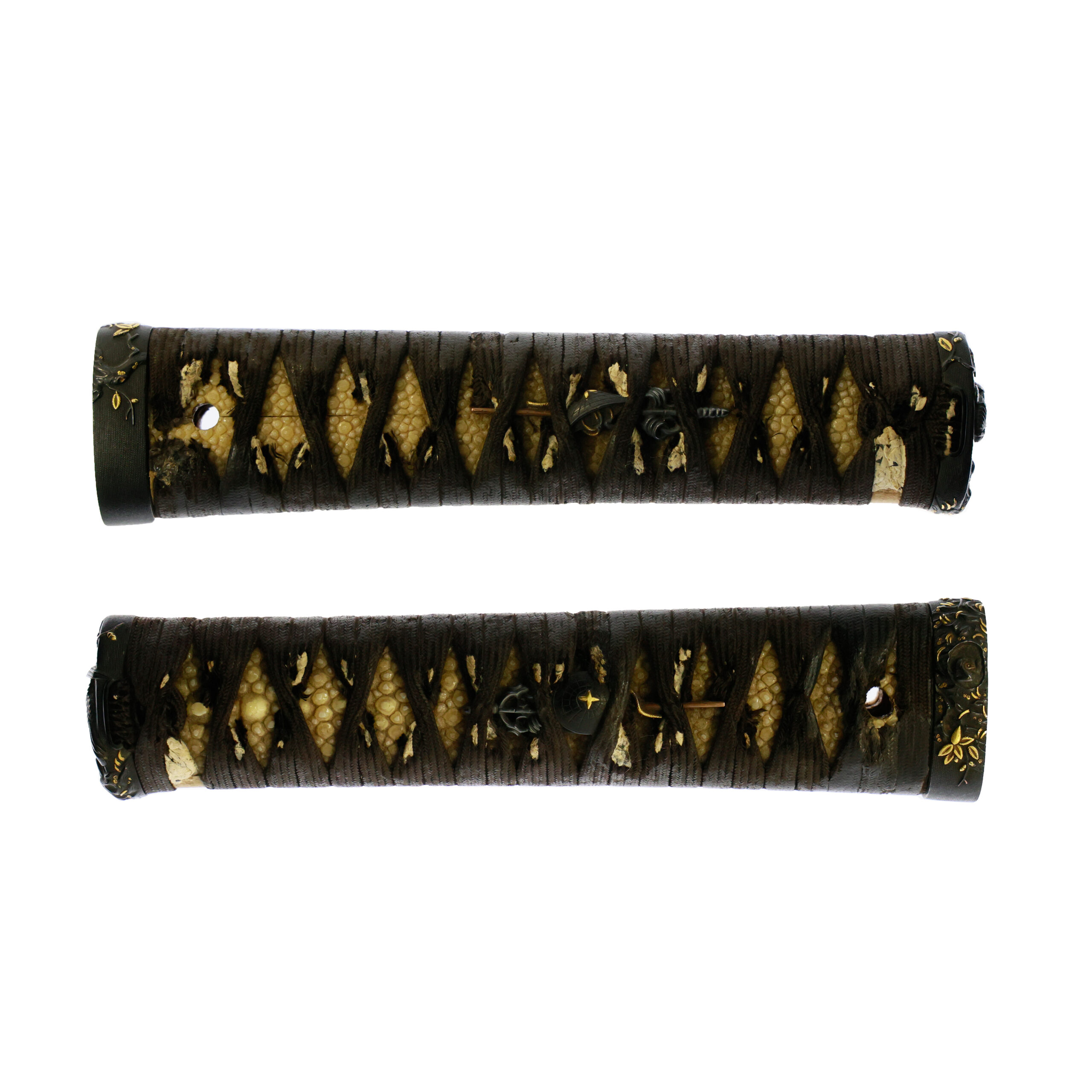
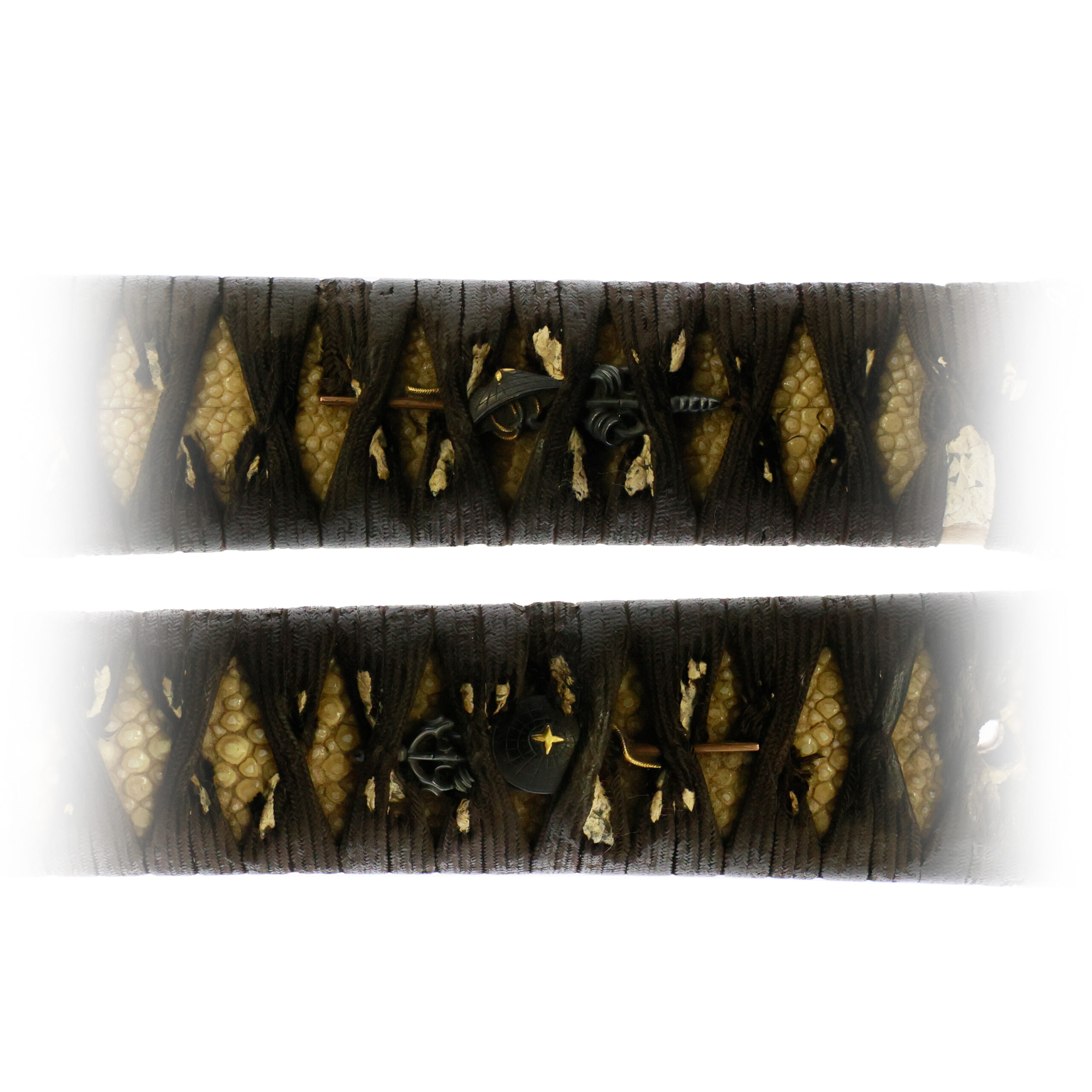
Tsuka and Menuki
*Please keep in mind that there are some aging on this Tsuka Ito (thread on the handle).
The motif of this menuki is a shakujō (錫杖) and a kasa (笠). The shakujō is a long staff used by monks when walking. It has metal rings at the top that make a sound as the monk walks, helping to ward off evil spirits and let others know someone is coming. The kasa is a hat that protects the monk from rain and sunlight during travel, and it also shows that the monk is keeping some distance from the ordinary world. At first, it may seem unusual to see these peaceful items on a sword, a weapon made for battle. However, many samurai respected Buddhist ideas, and they valued the balance between strength and inner peace.
Tsuba and Habaki
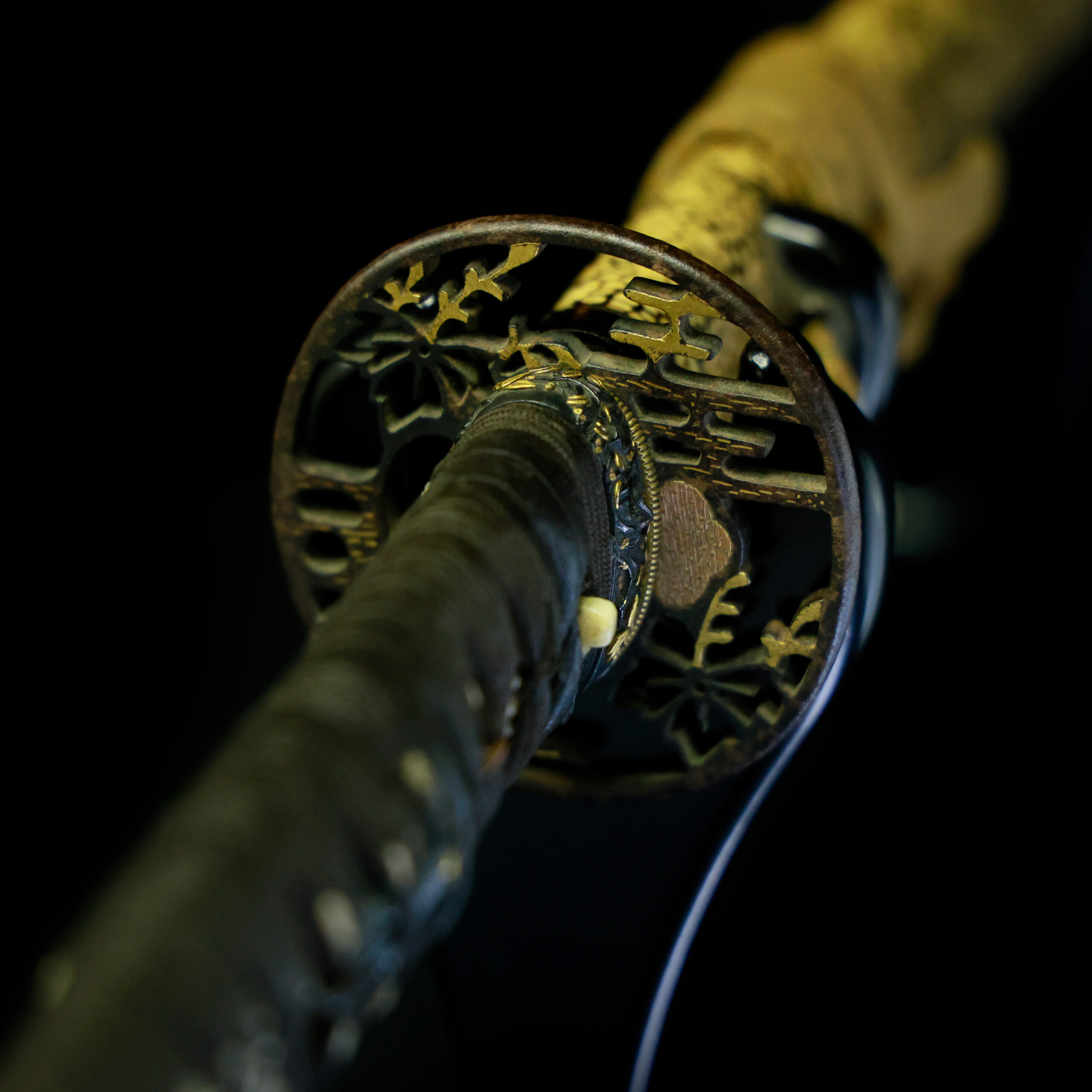
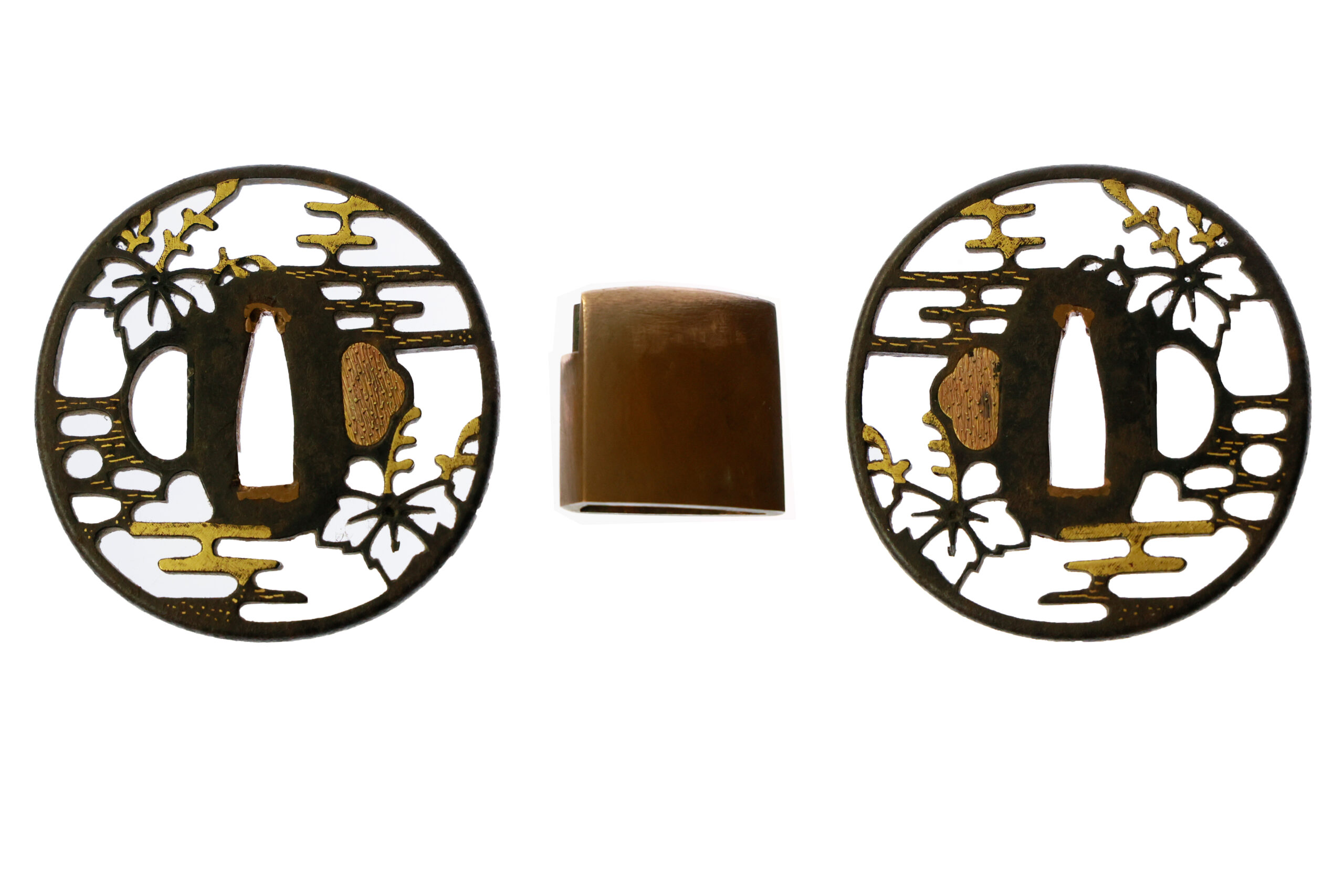
This type of Tsuba is called Heianjo Sukashi Tsuba. It is a type of iron sword guard made in Kyoto during the middle Edo period. It is known for its beautiful openwork designs, called “sukashi,” which show delicate patterns. These designs often include plants, animals, and Buddhist symbols. The name “Heianjo” refers to Kyoto’s old name and its elegant culture. These tsuba are more valued for their artistic beauty than for practical use, and they were popular among tea masters and people who loved art.
Saya
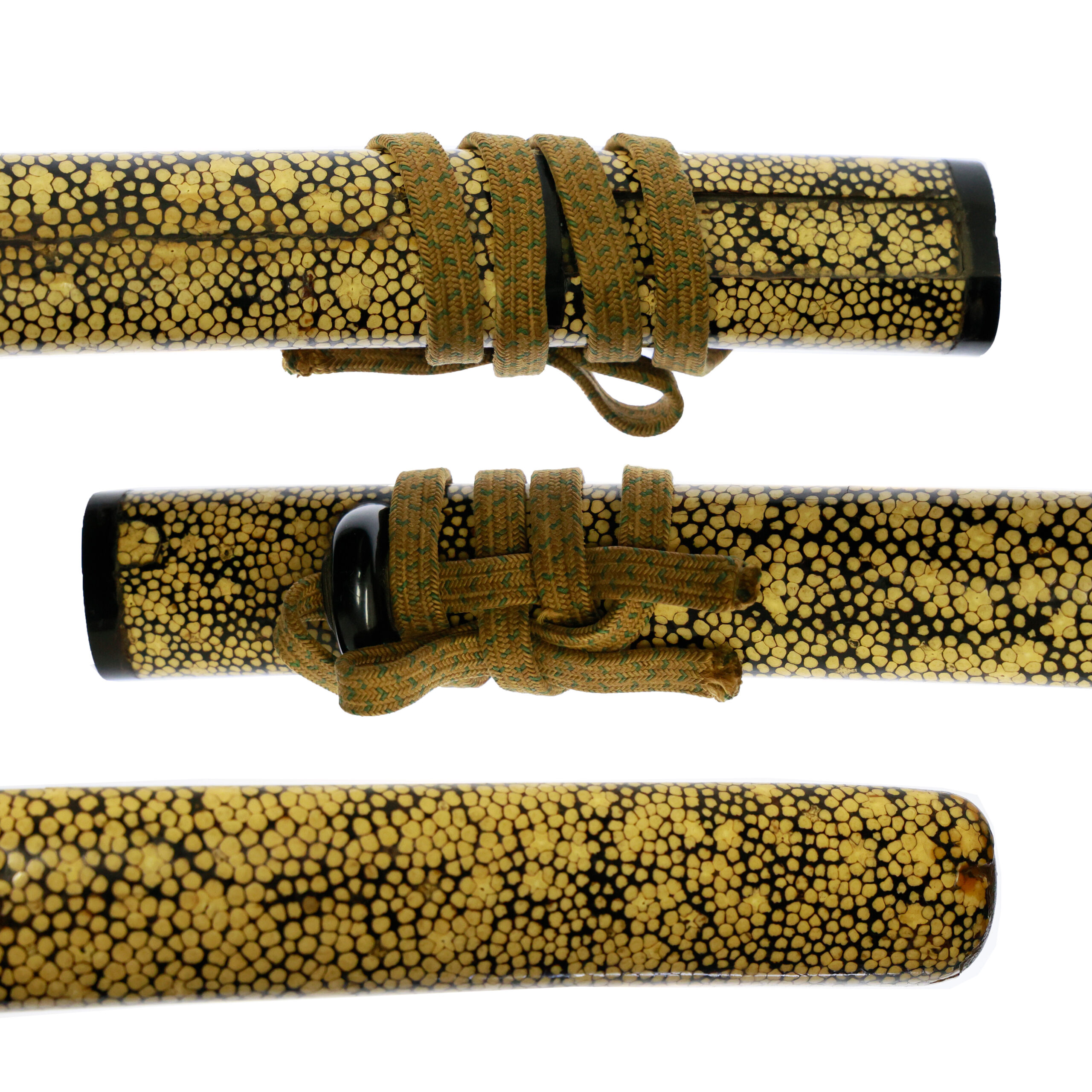
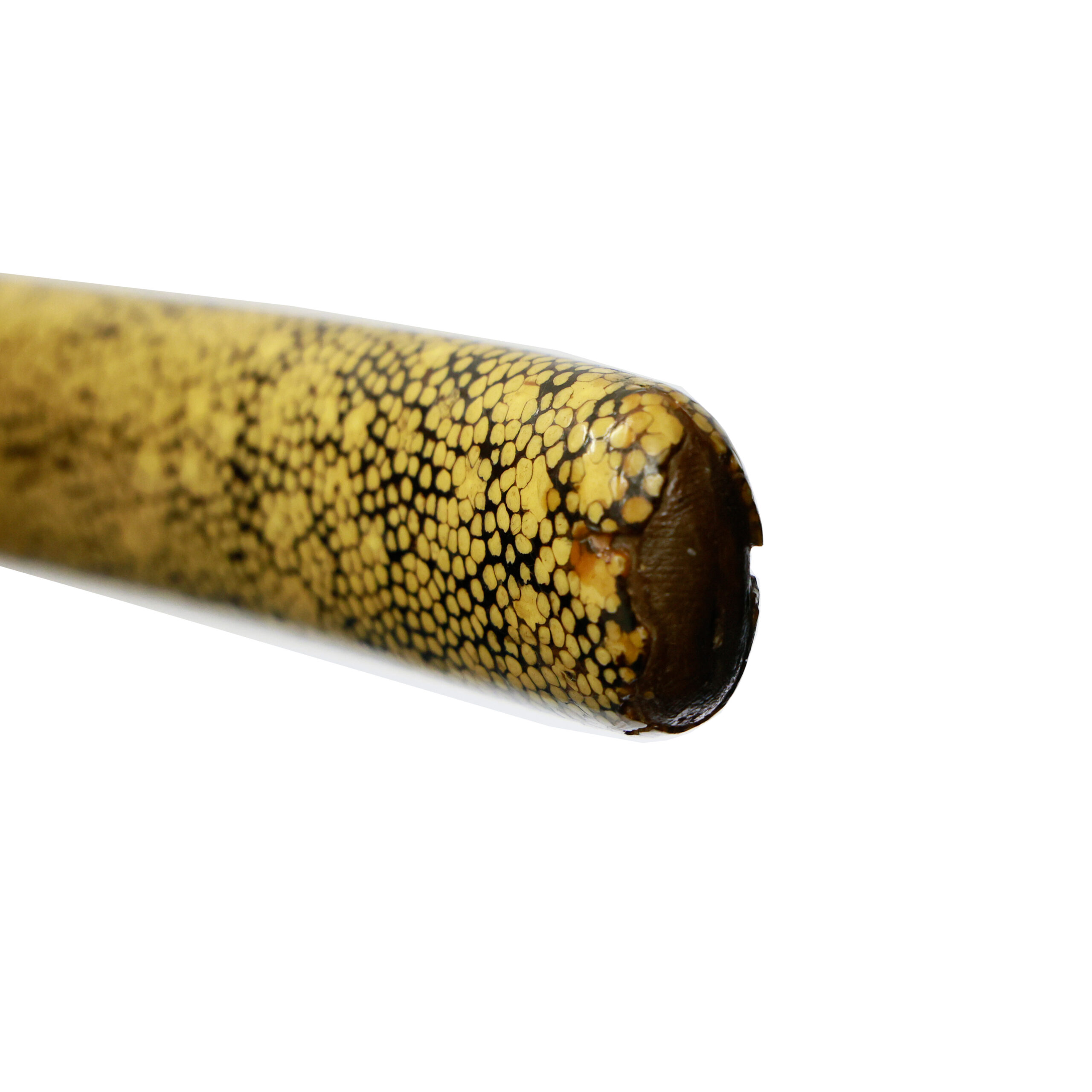
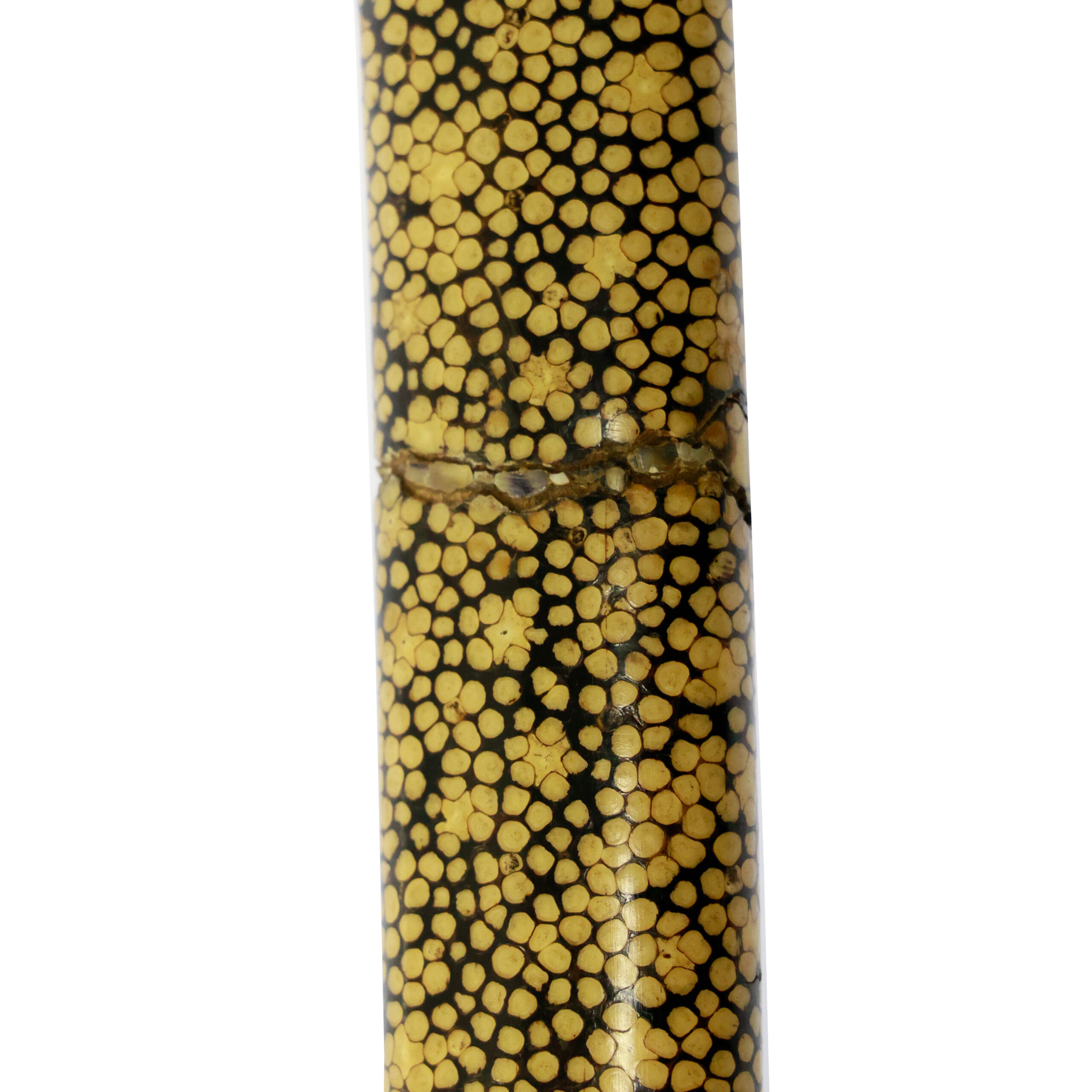
*Please keep in mind that there are some damages on this Saya.
The Saya appears to be made in the kairagi samegawa togidashi-zaya style(梅花皮鮫皮研出鞘), which involves wrapping the scabbard with the skin of a kairagi-zame (a type of shark known for its distinctive bumpy texture). After applying lacquer over the sharkskin, the surface is polished to reveal the unique pattern beneath. This technique highlights both the natural texture of the skin and the refined craftsmanship involved.
Authentication Paper
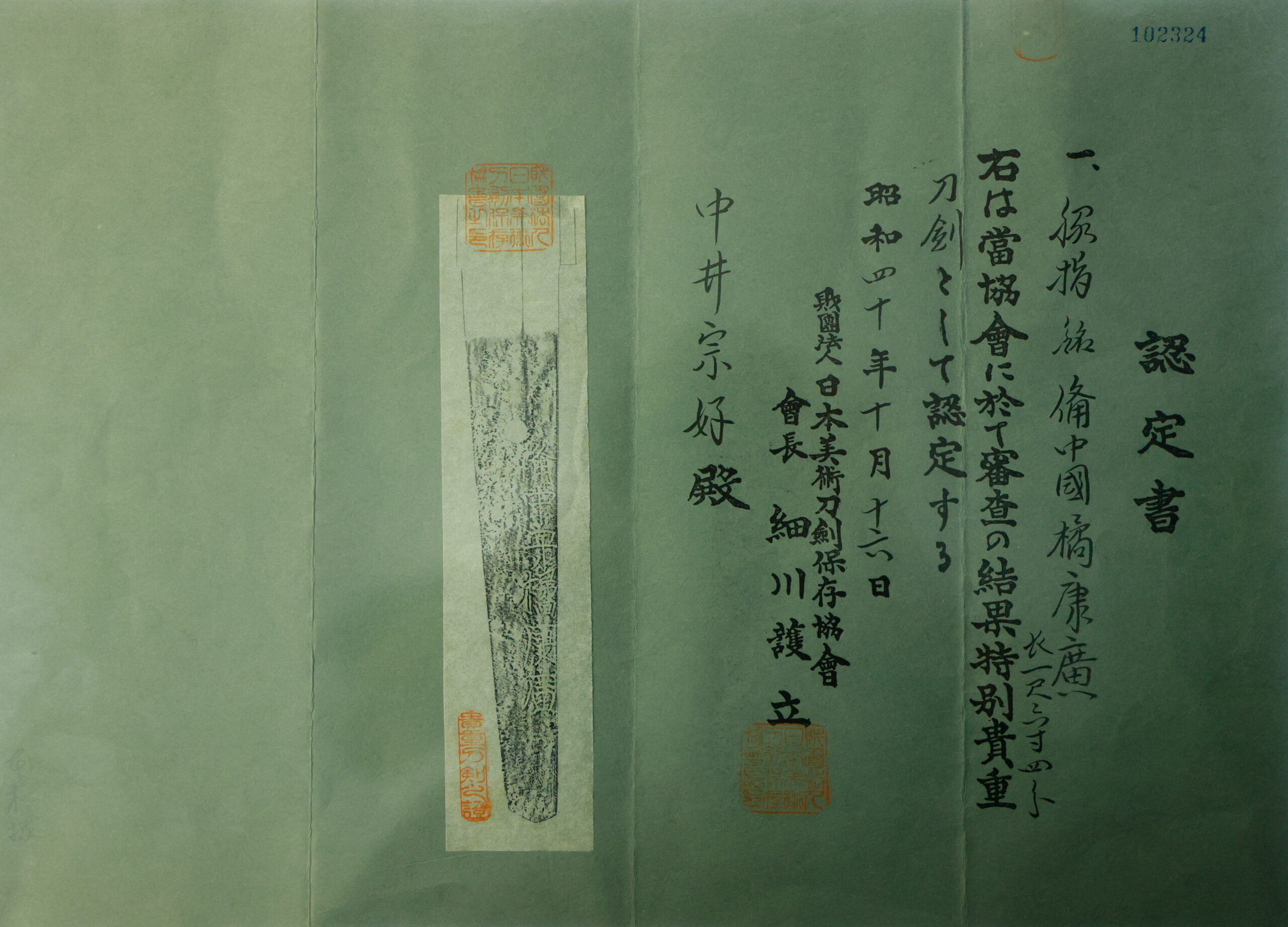
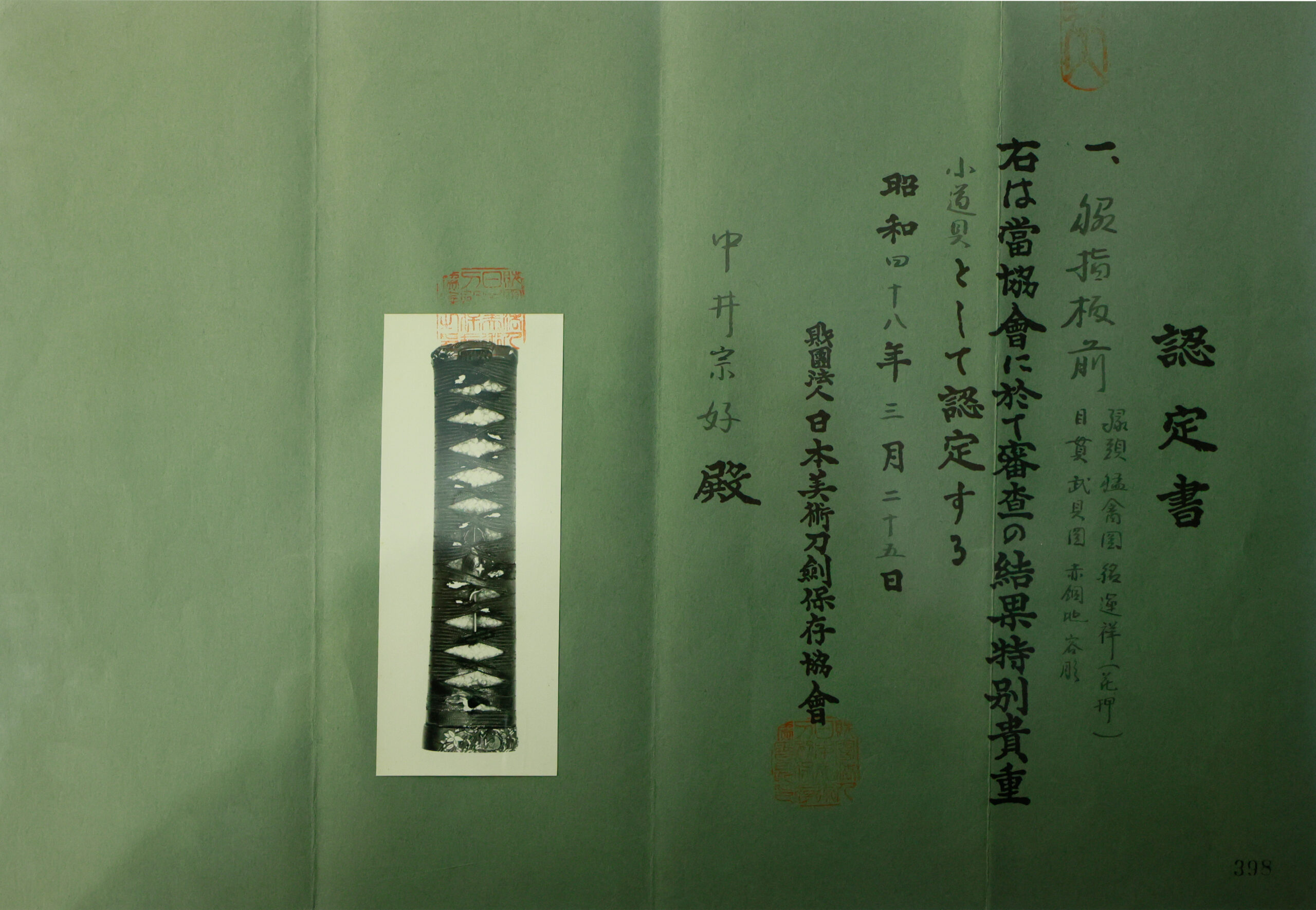
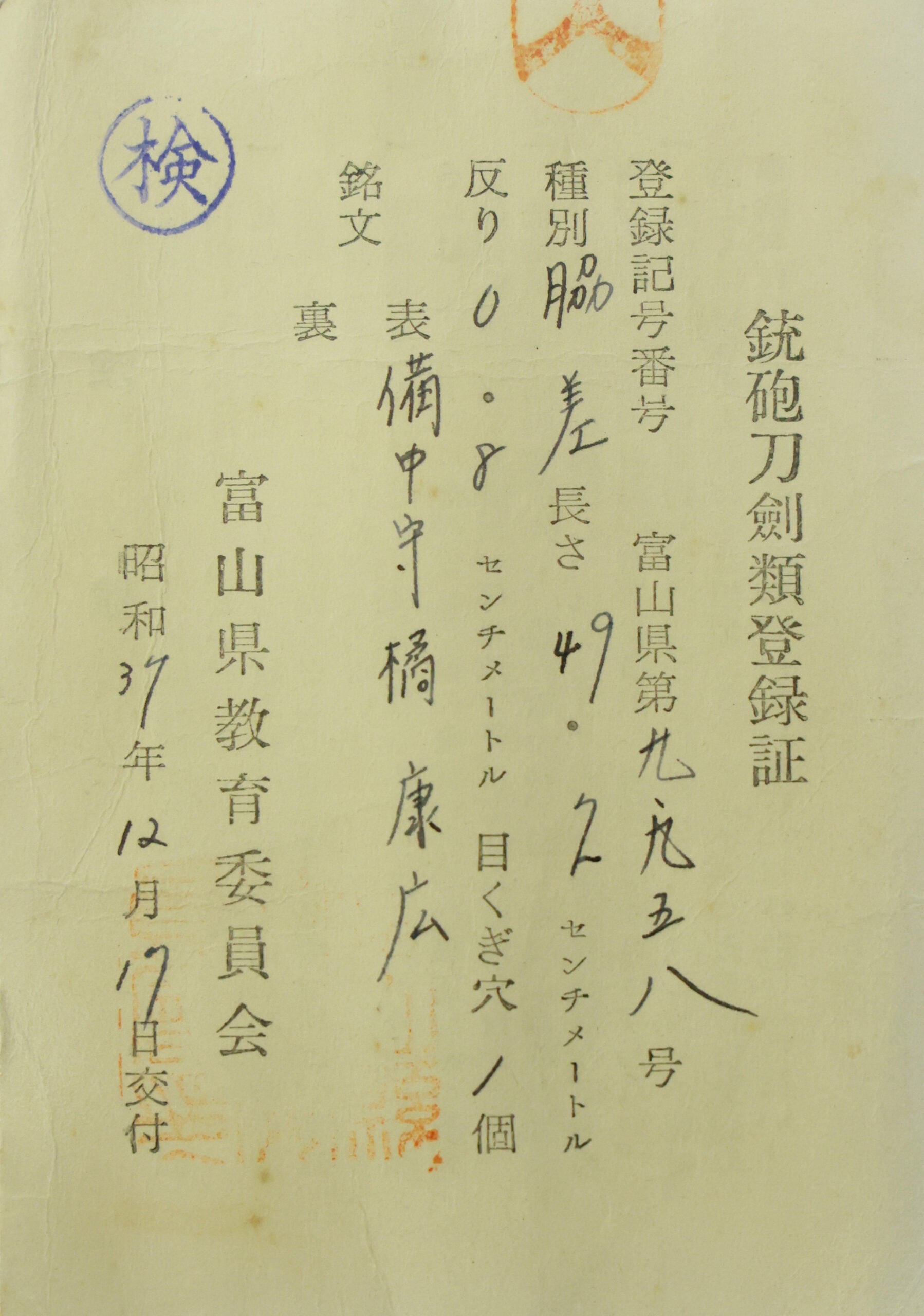
They authenticated the blade on October 16th in the 40th year of Showa (1965) and its Tsuka on March 25th in the 48th year of the Showa era (1973). They appraised it as a Tokubetsu Kiho Touken, an old form of the certificate. The purchaser will receive the

 NihontoWatch