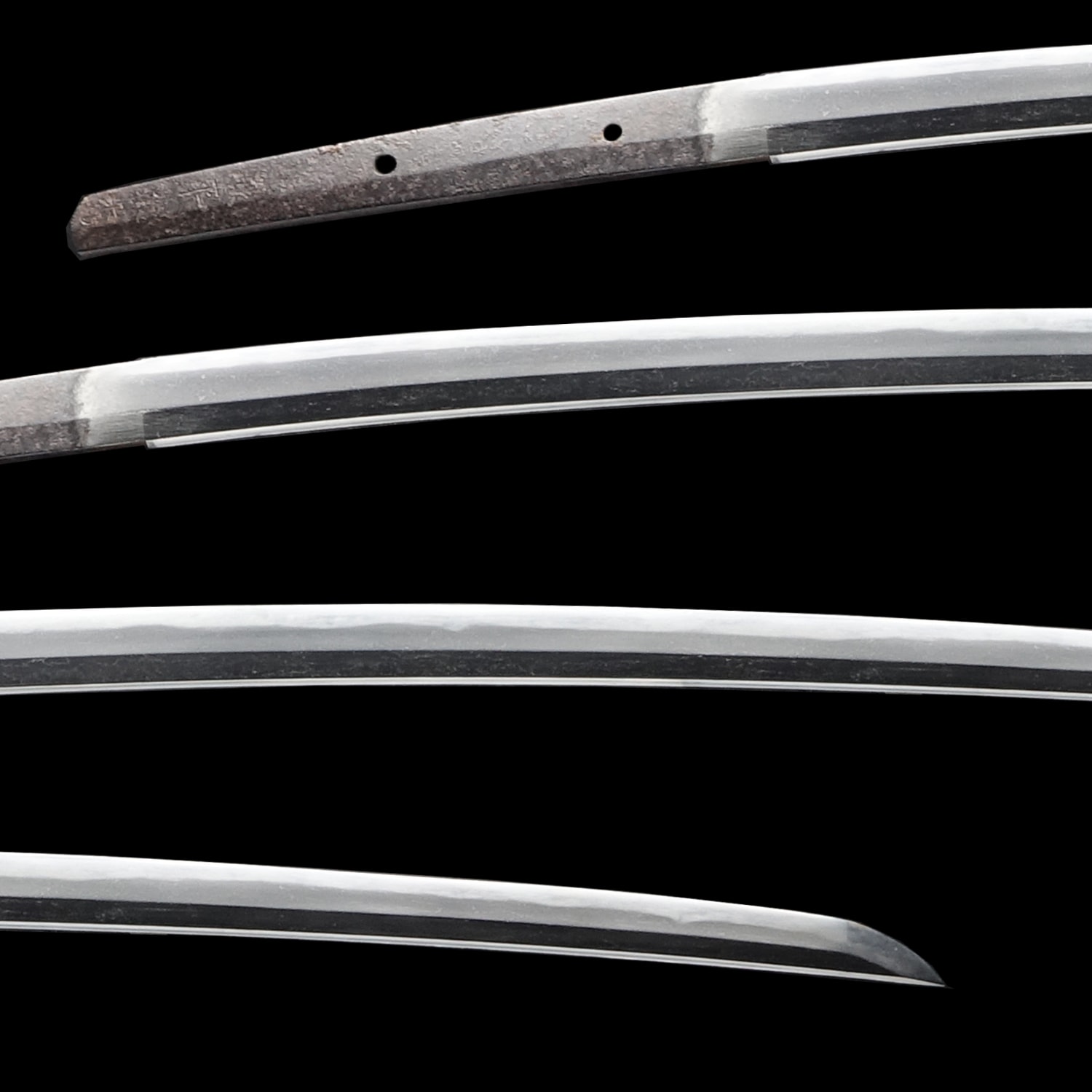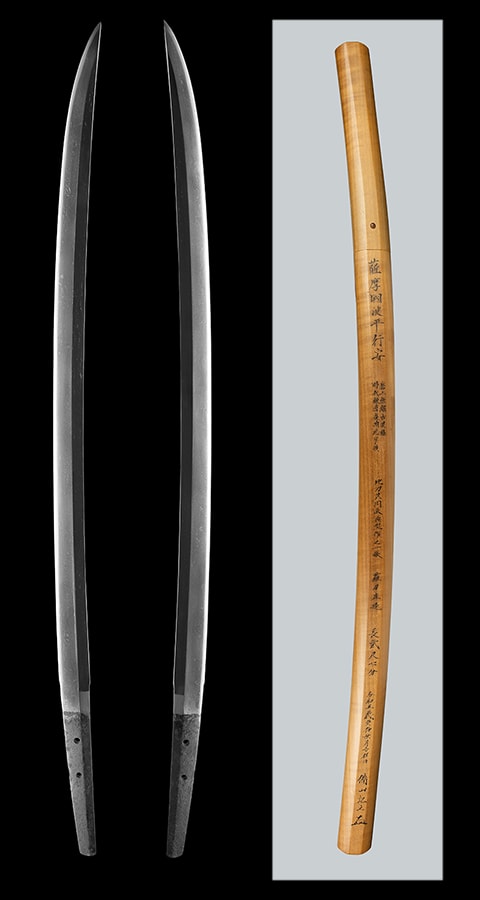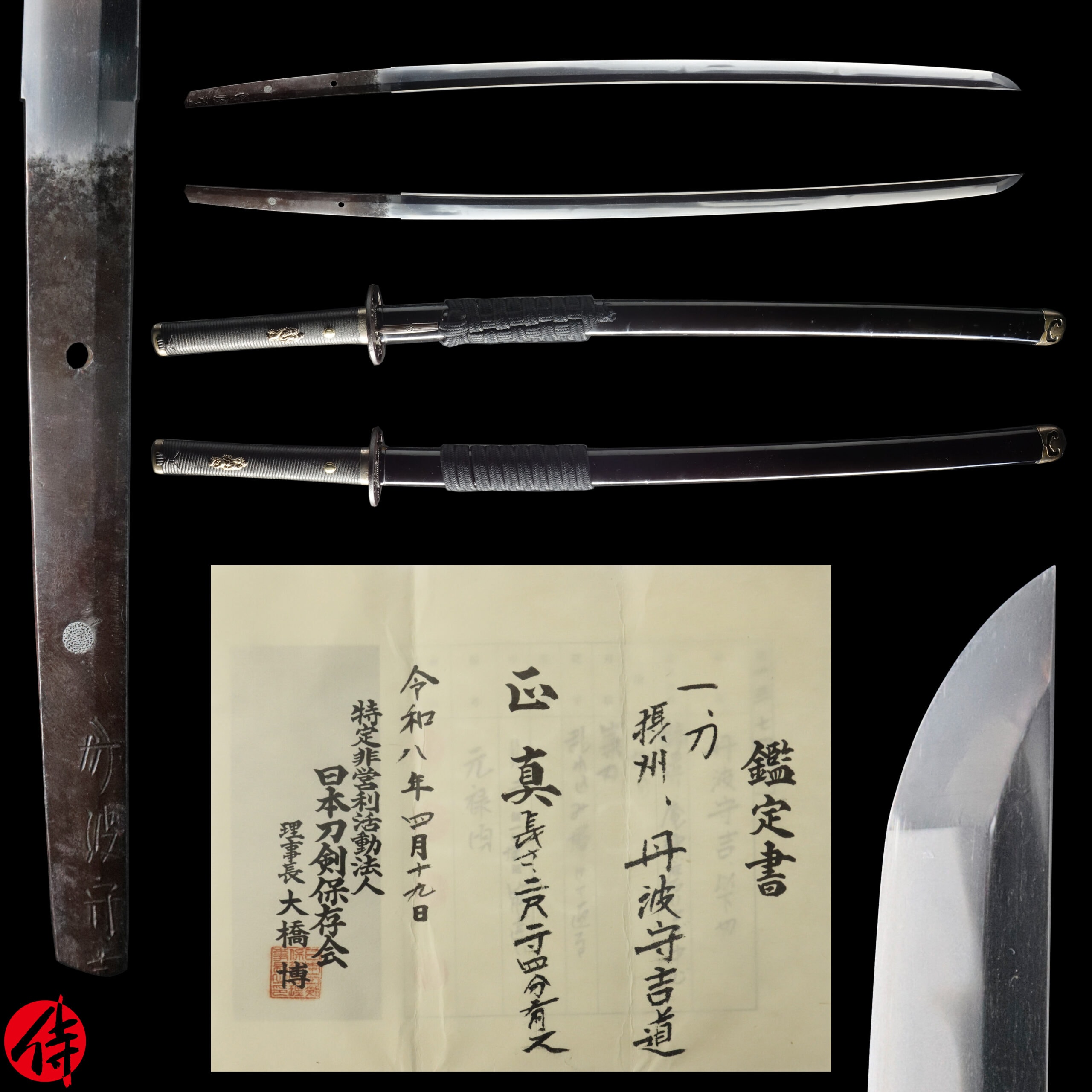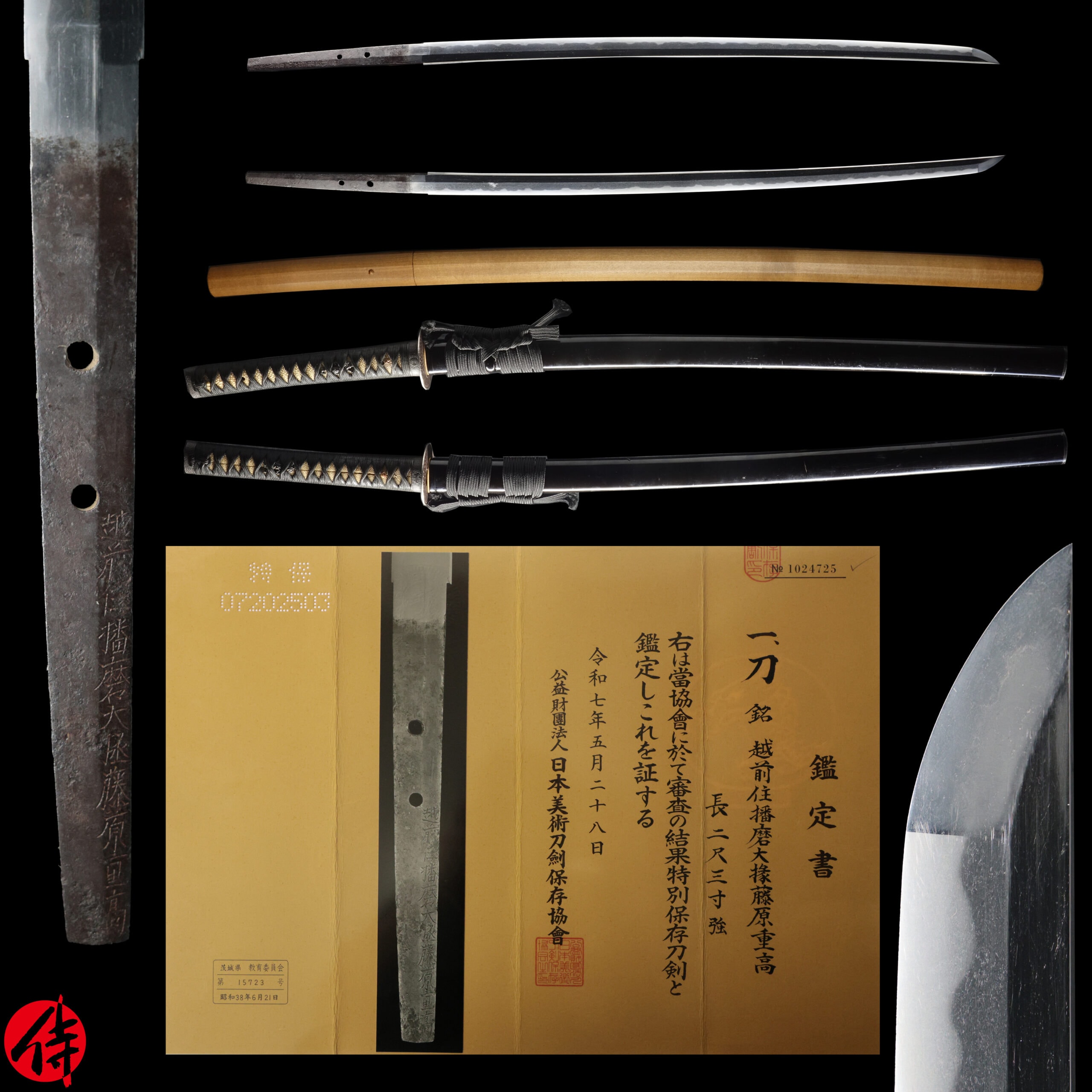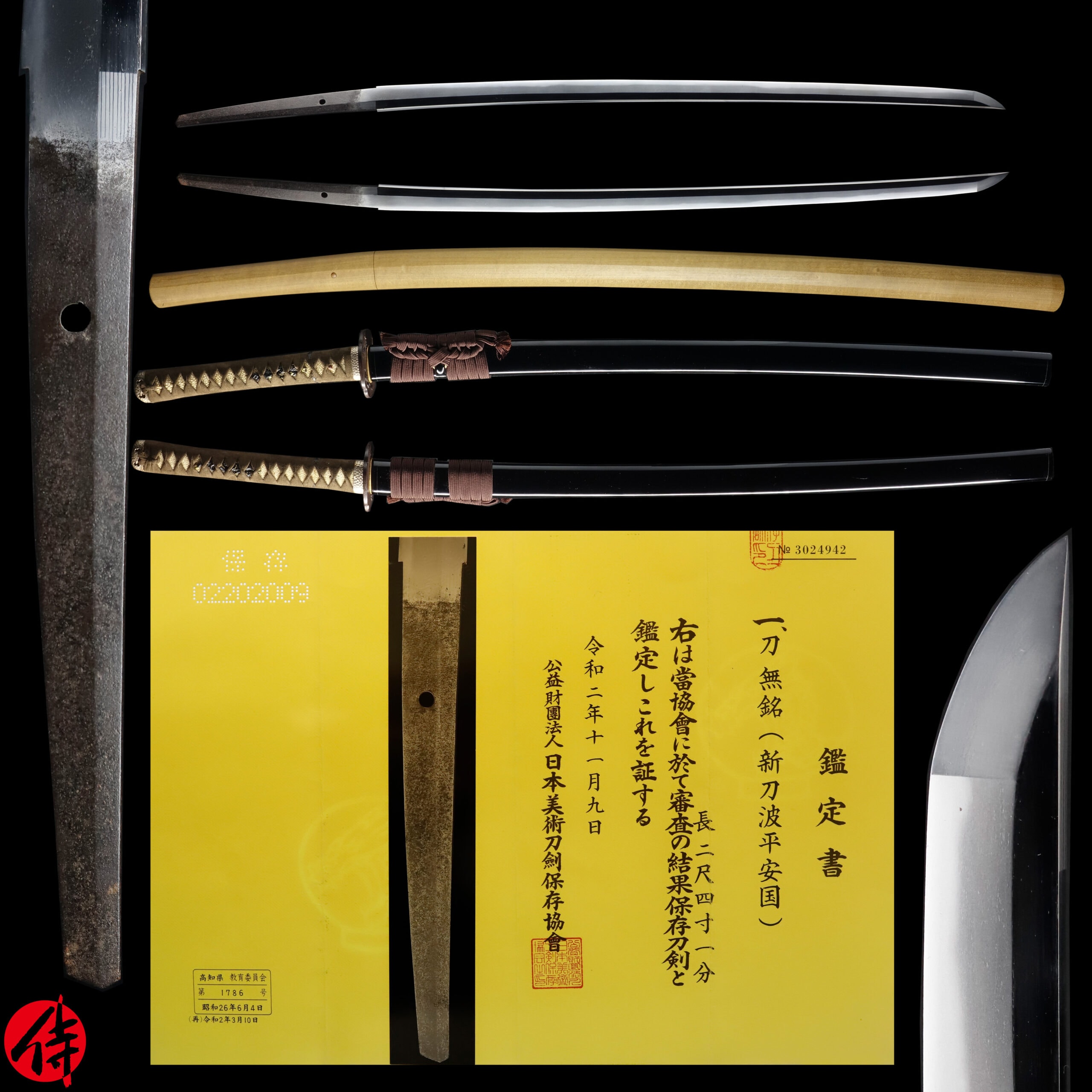
Antique Japanese Sword Katana attributed to Naminohira Yasukuni NBTHK Hozon Certificate
SOLD
Tracked across 81 dealers worldwide · price history · sold archive
Specifications
73.1 cm
1.1 cm
About the school
Naminohira School波平派
The Naminohira school traces its origins to the late Heian period, when a swordsmith named Masakuni migrated from Yamato Province and established himself at Naminohira in Taniyama District, Satsuma Province. His son Yukiyasu succeeded him, and the lineage continued unbroken into the late Edo *shinshintō* era. The collective term *Ko-Naminohira* designates smiths and works dating no later than the Nanbokuchō period, distinguishing the school's formative generations from later practitioners. This geographic isolation in southern Kyushu allowed the development of a distinctive regional aesthetic that balanced mainland influences with local forging traditions. The school's technical identity reveals a pronounced Yamato character in both construction and tempering, yet the forging exhibits a characteristic density and slight tenacity (*nebari*) that distinguishes Naminohira work from its Yamato antecedents. The *jigane* typically shows strongly flowing *itame-hada*, often with a whitish cast and well-adhering *ji-nie*, while thick *chikei* appear throughout the ground. In the *hamon*, a fine *hoso-suguha* or narrow *suguha*-based temper predominates, with the *nioiguchi* displaying a distinctive *urumi* tendency—a moist, soft quality that creates a subdued, somewhat *shizumi*-inclined appearance. A diagnostic feature appears at the *hamachi*, where slight *yaki-otoshi* marks the transition from untempered to tempered steel. The school's Nanbokuchō-period works often present extended *ō-kissaki* and deep *koshizori*, embodying the martial aesthetic of that turbulent age. The Naminohira tradition experienced a renaissance during the Edo period, producing masters such as Ichi Heian Yasushiro, who in Kyōhō 6 (1721) was summoned to forge for Shōgun Tokugawa Yoshimune. His exceptional skill earned him the privilege of engraving the *ichiyō aoi* crest on his *nakago* and the court appointment of *Shume no Suke*. His work and that of his contemporary Masakiyo represent the apex of Satsuma *shintō*, demonstrating how provincial schools could achieve recognition at the highest levels of Tokugawa society. The scarcity of early signed works, particularly from the Kamakura and Nanbokuchō periods, renders extant examples invaluable for understanding the school's development and its role in transmitting Yamato forging methods to Japan's southern frontier.