



The Haitōrei edict of 1876 ended sword wearing and nearly ended the craft itself. Military demand and imperial patronage kept a remnant alive, and in 1906 Gassan Sadakazu and Miyamoto Kanenori were named Artists to the Imperial Household.
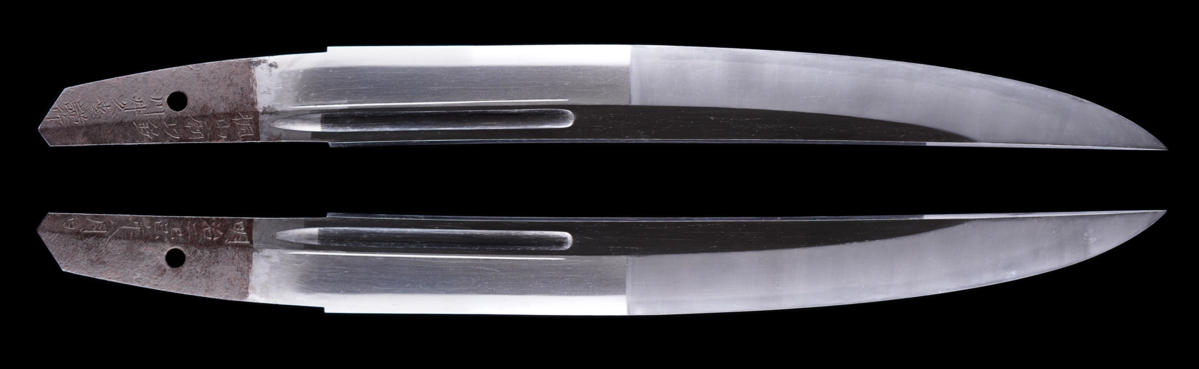
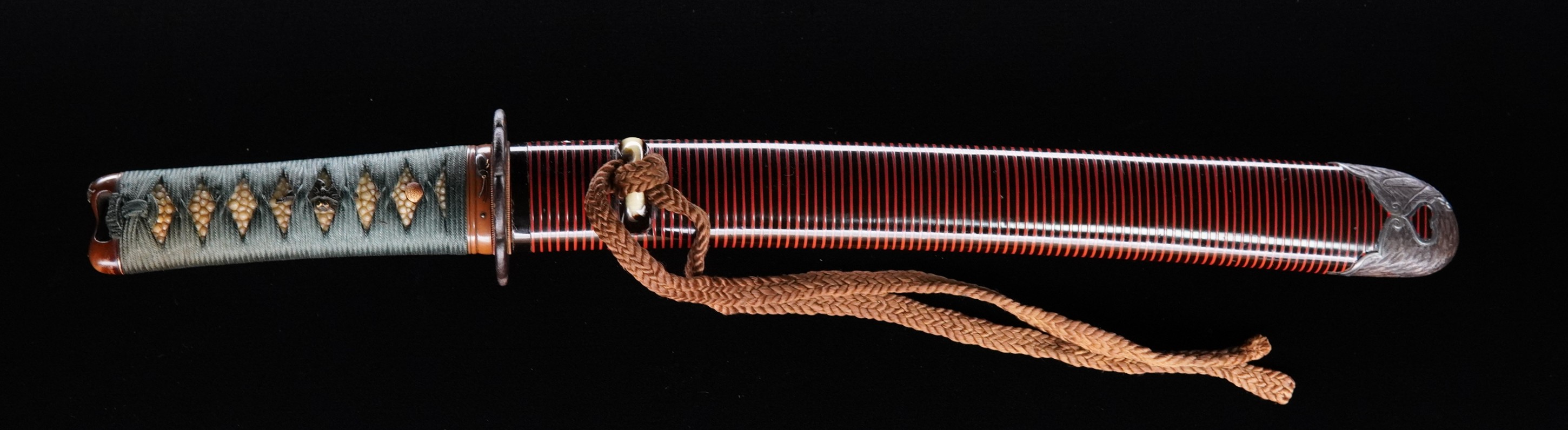
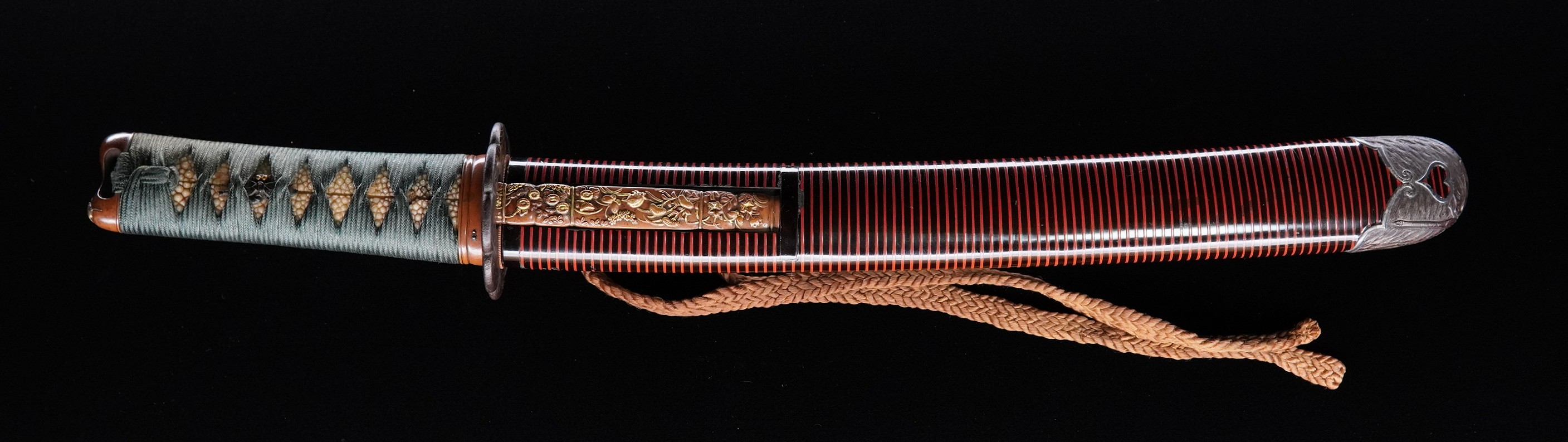
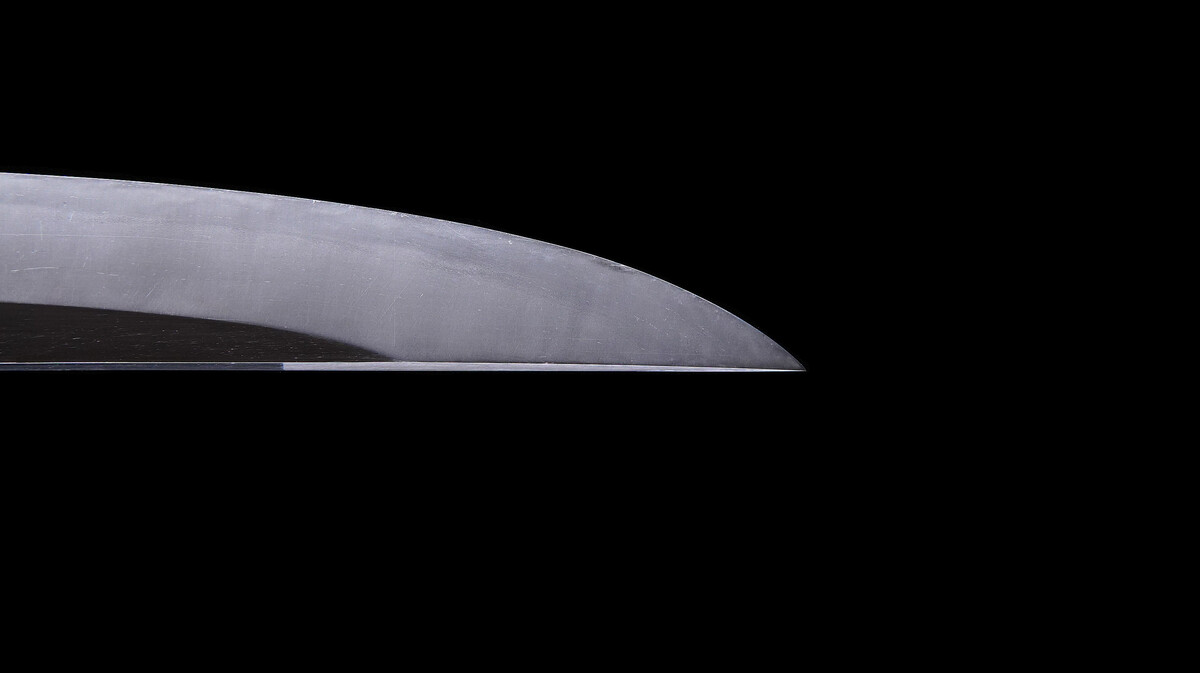
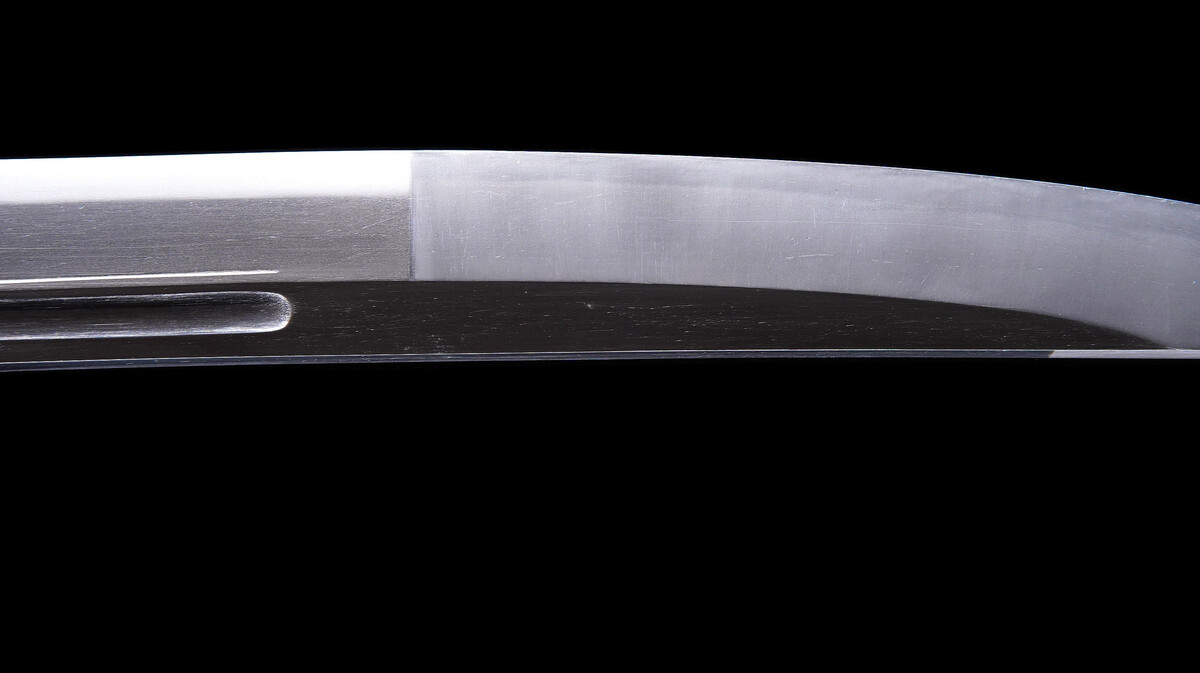
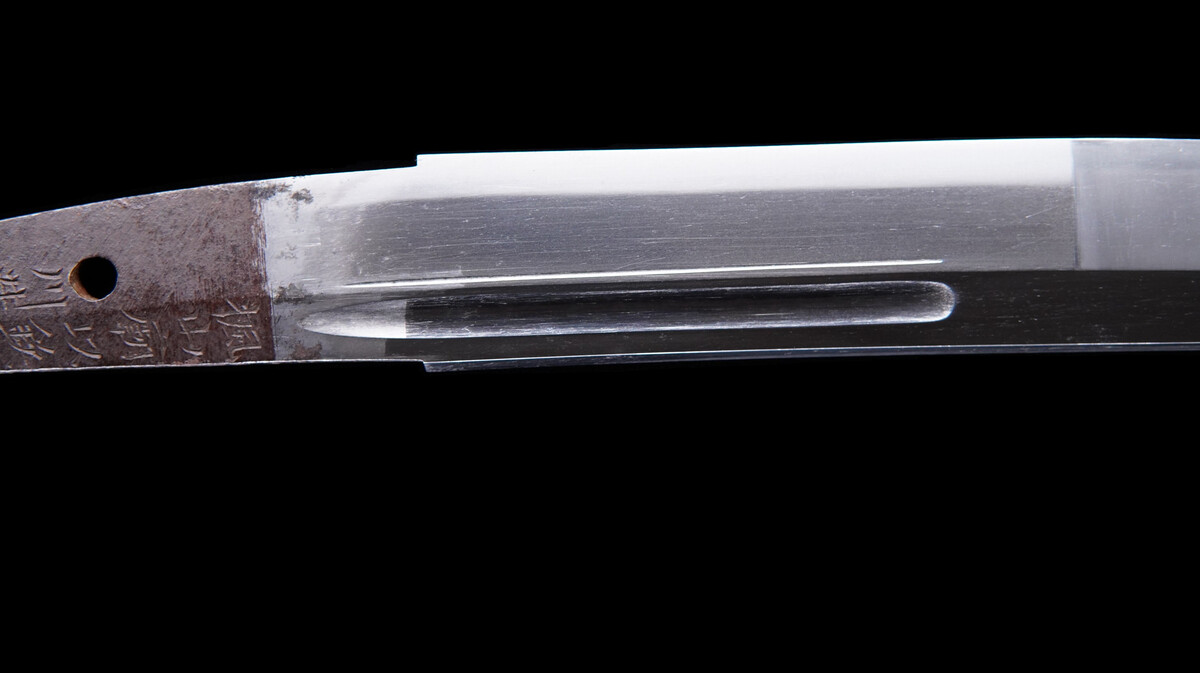
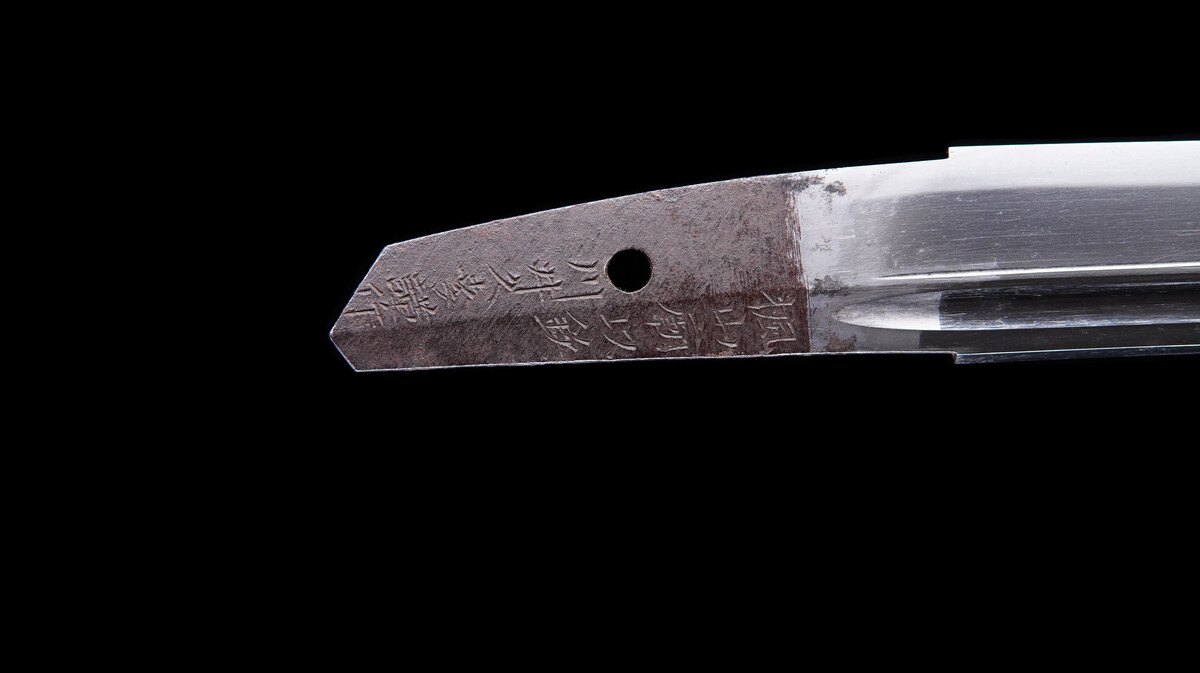
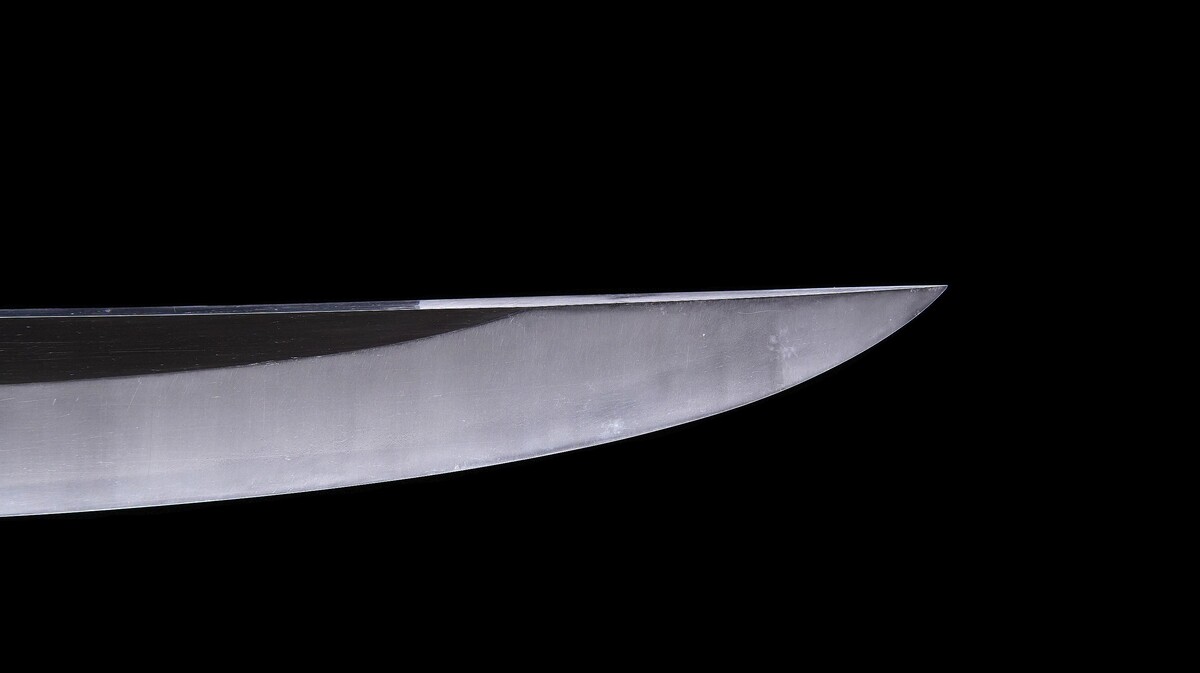
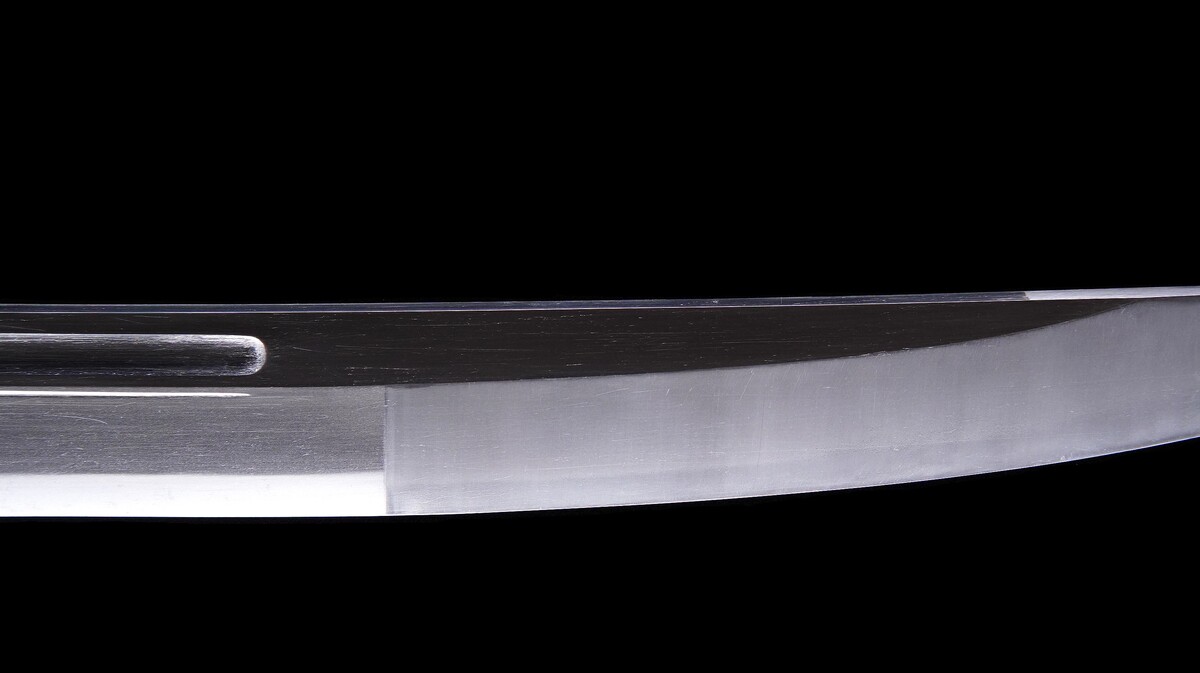
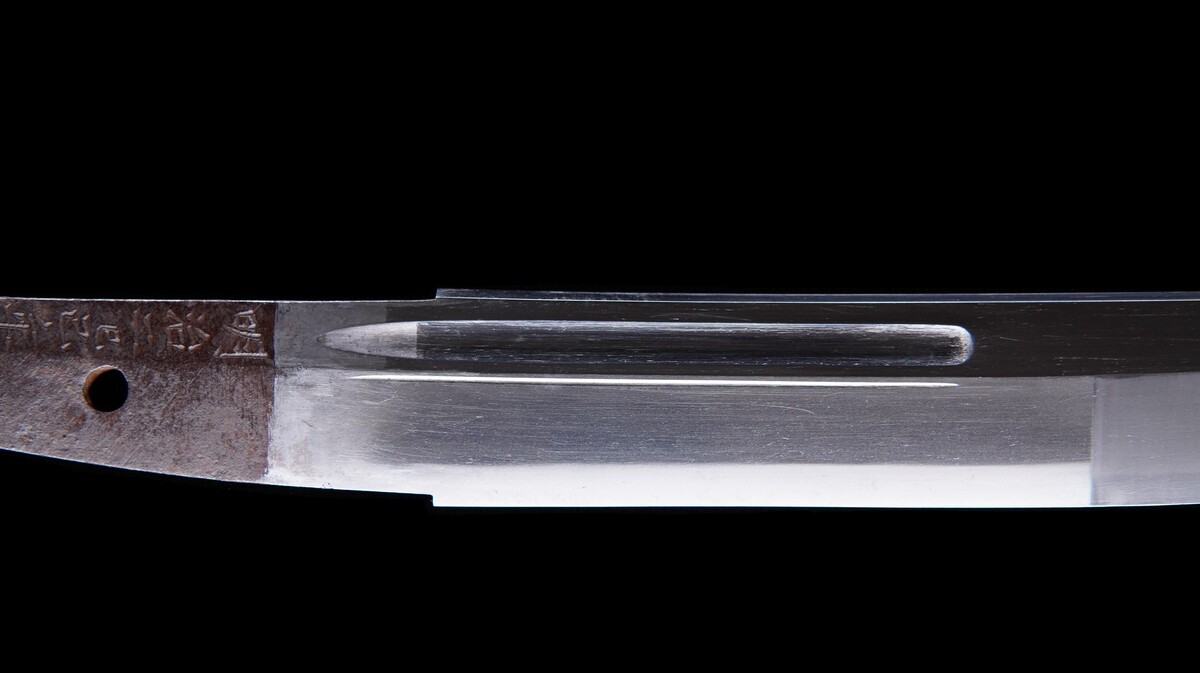
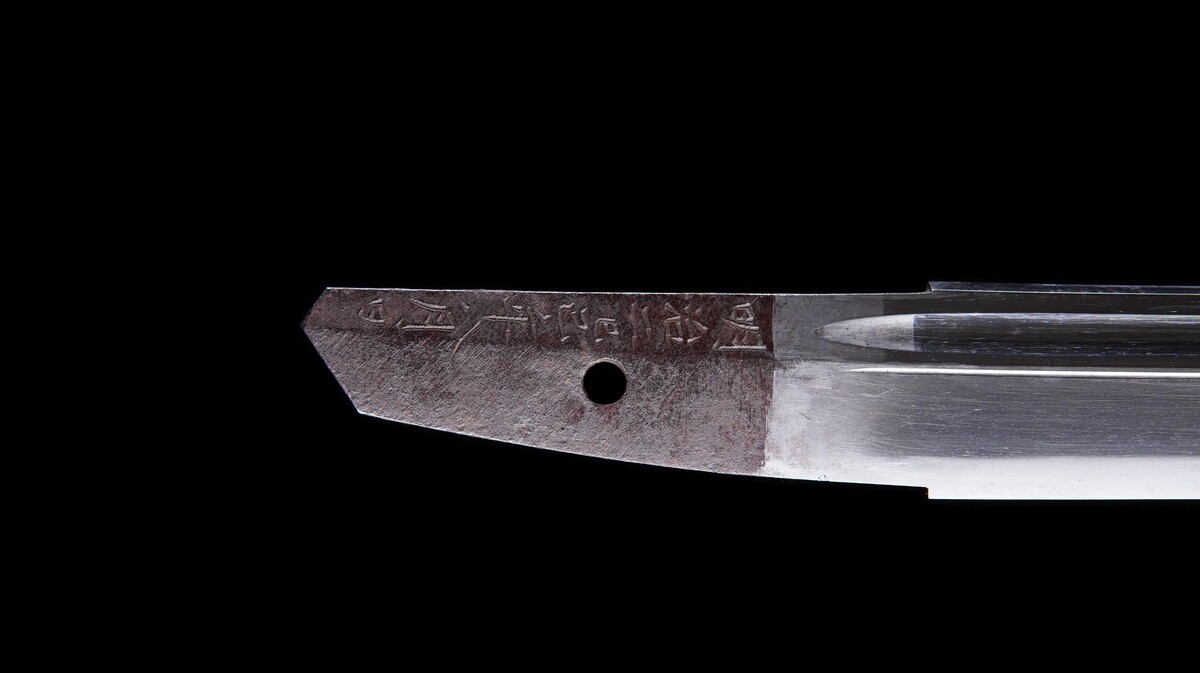
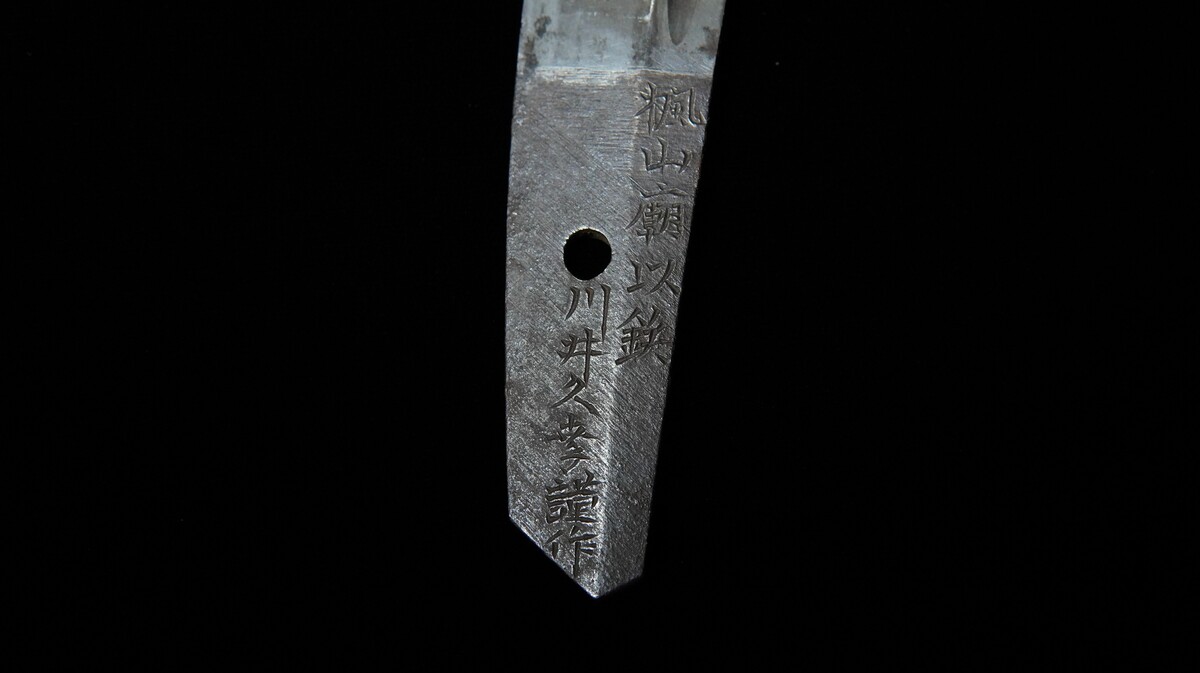
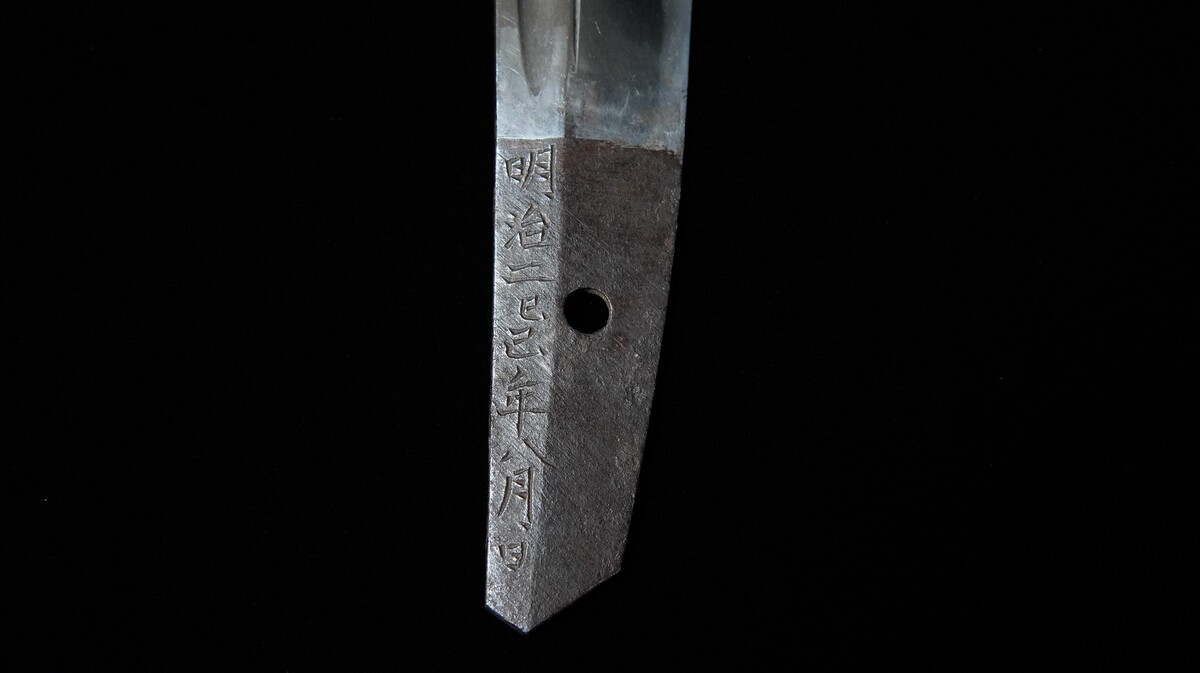
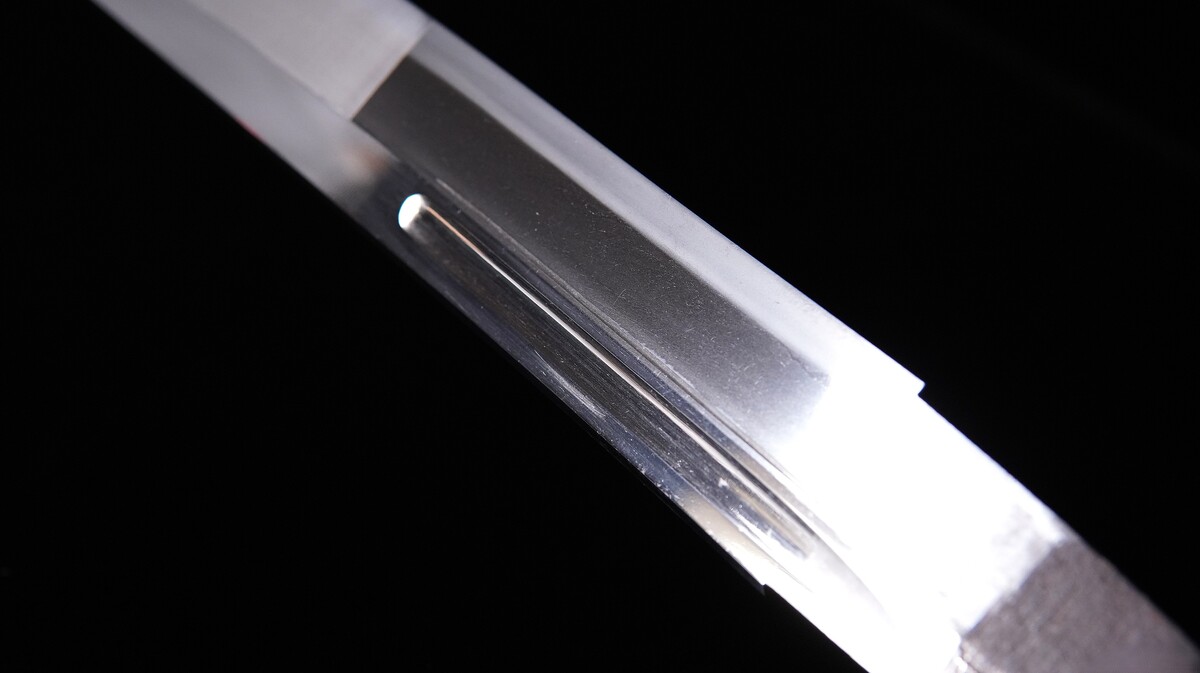
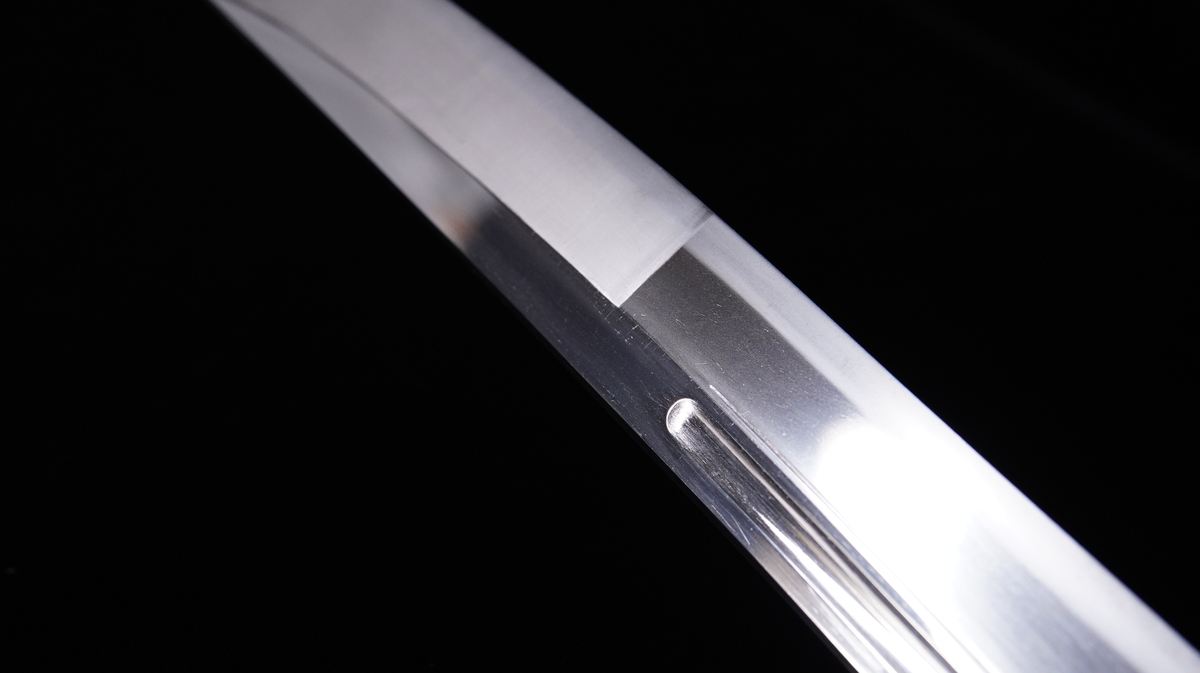
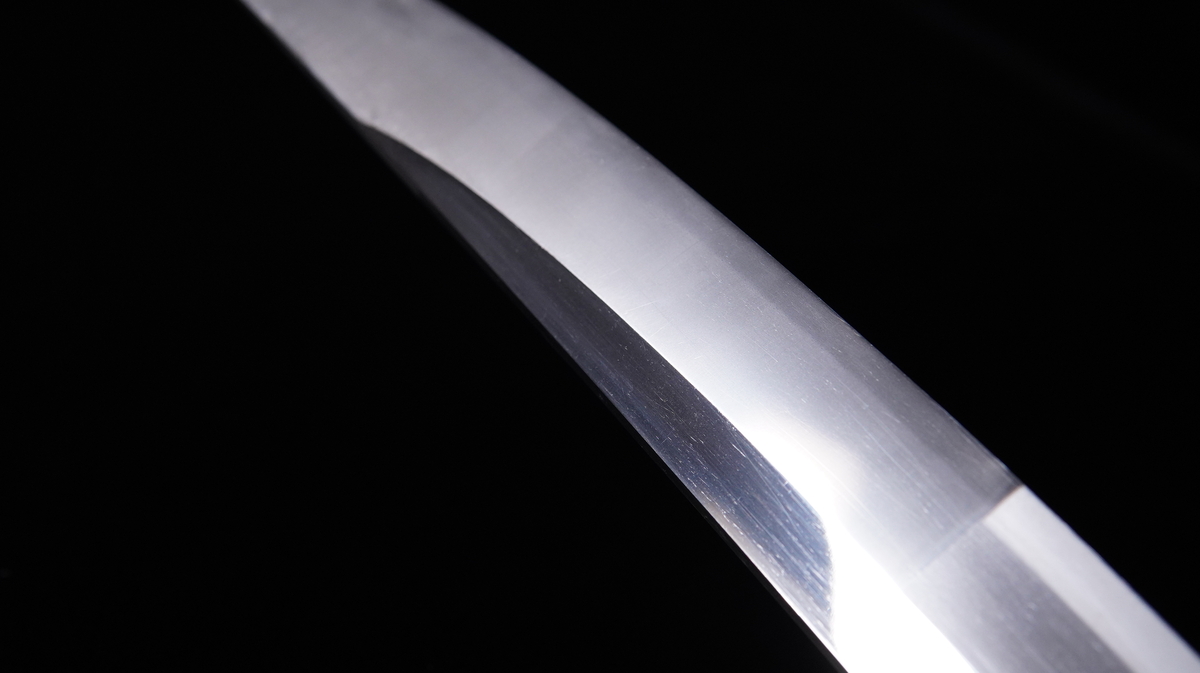
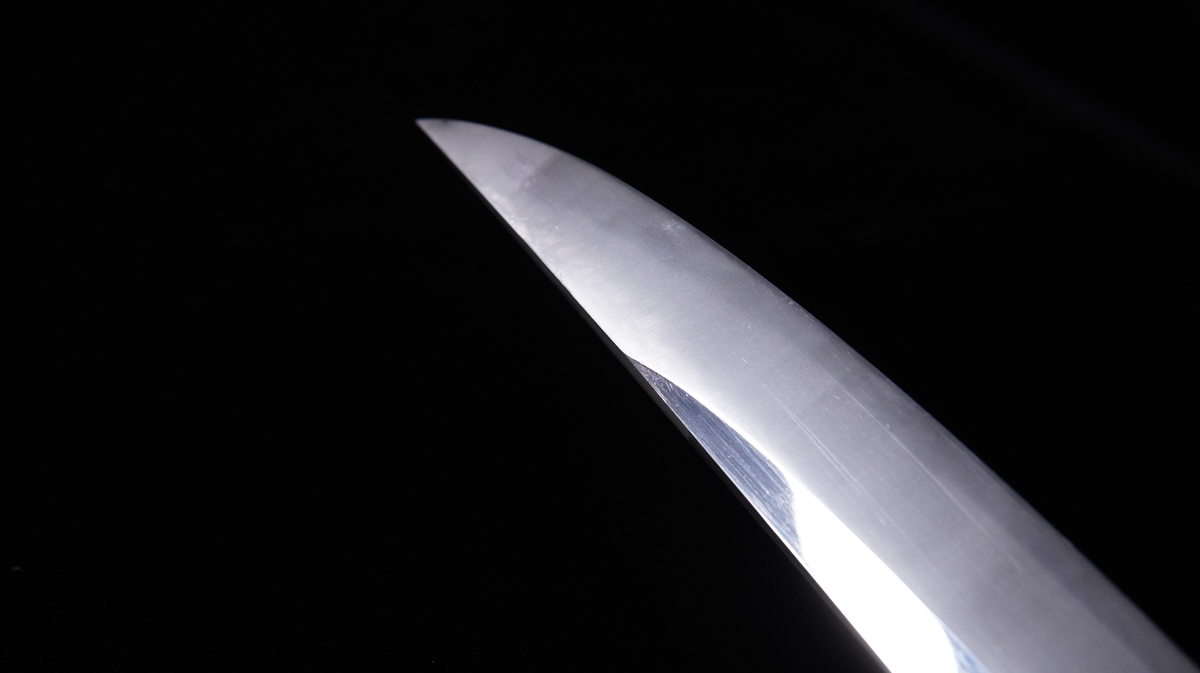
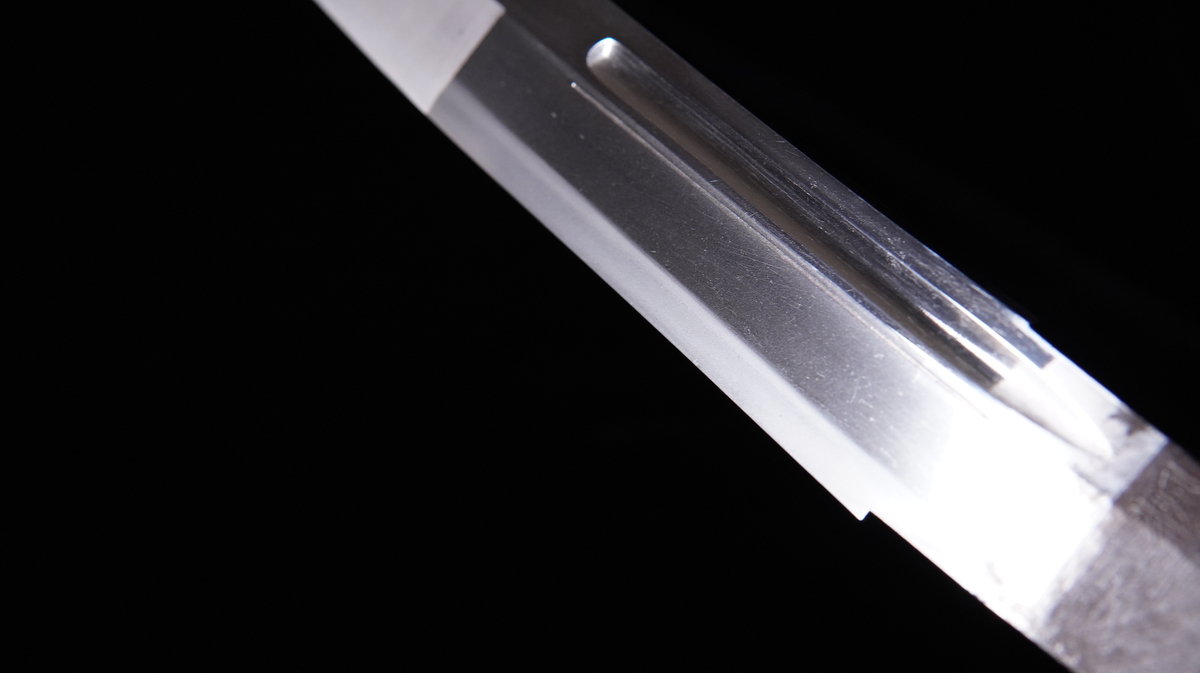
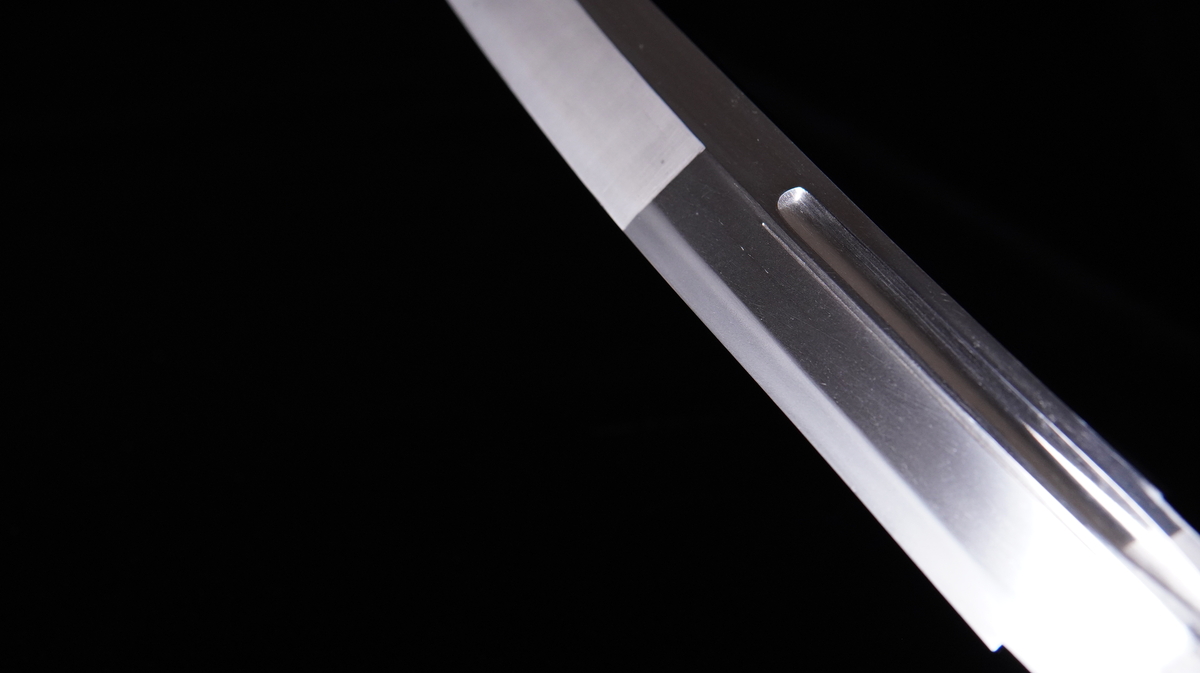
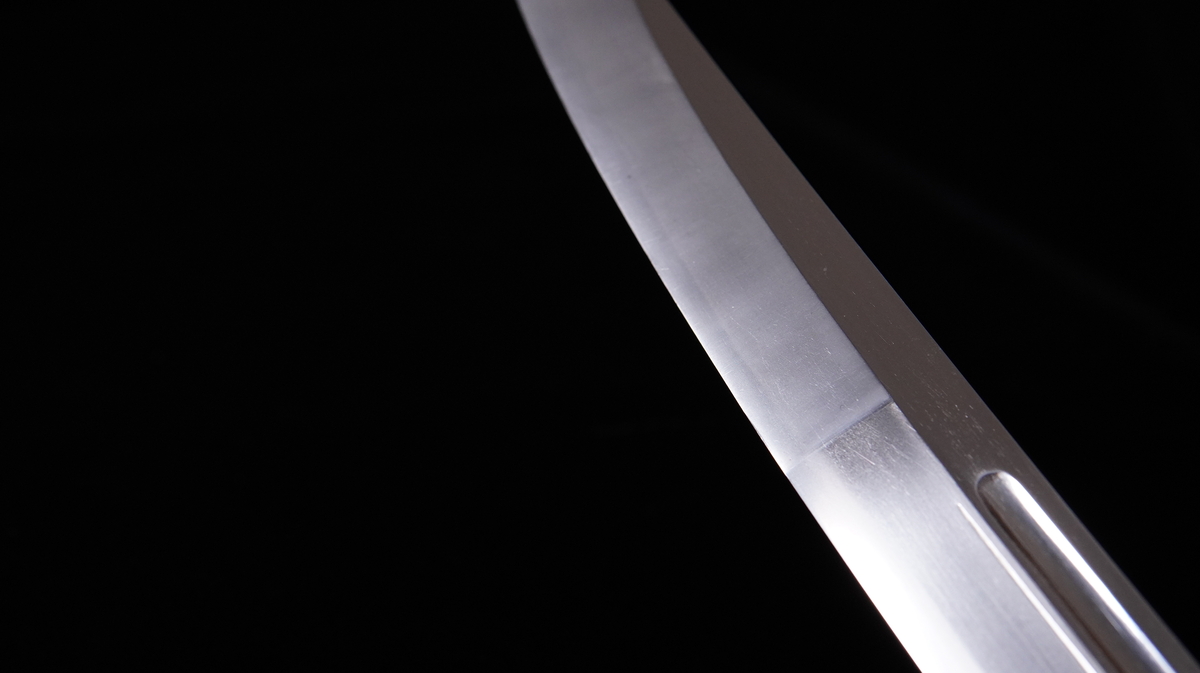
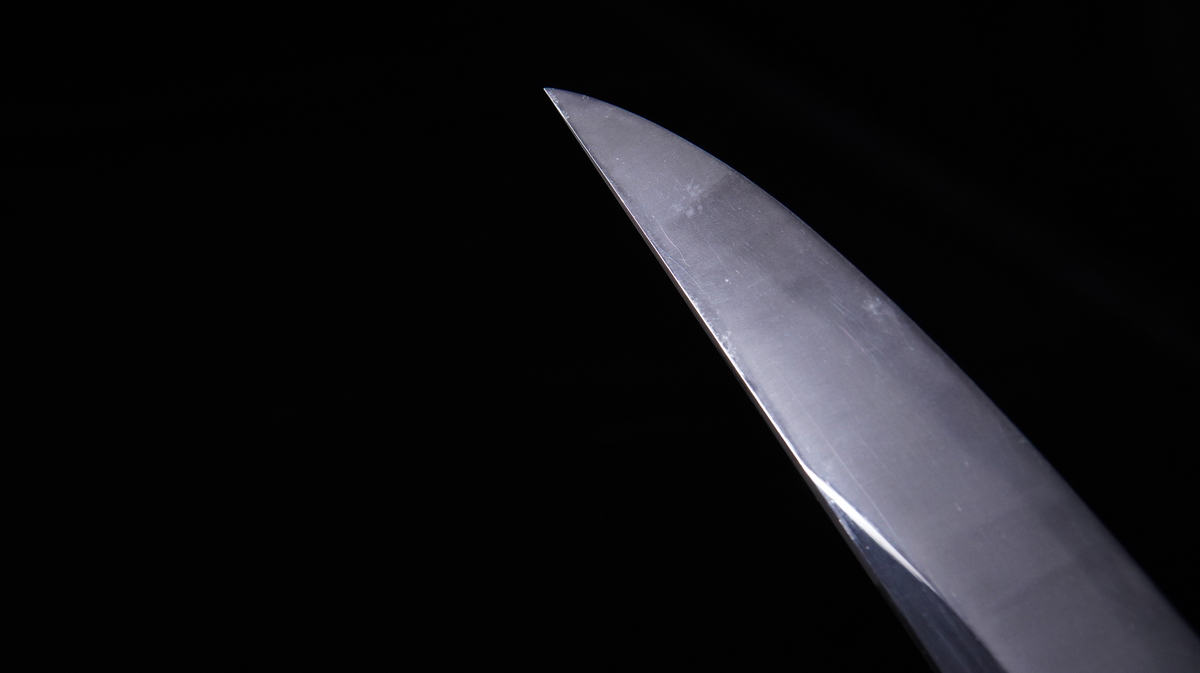
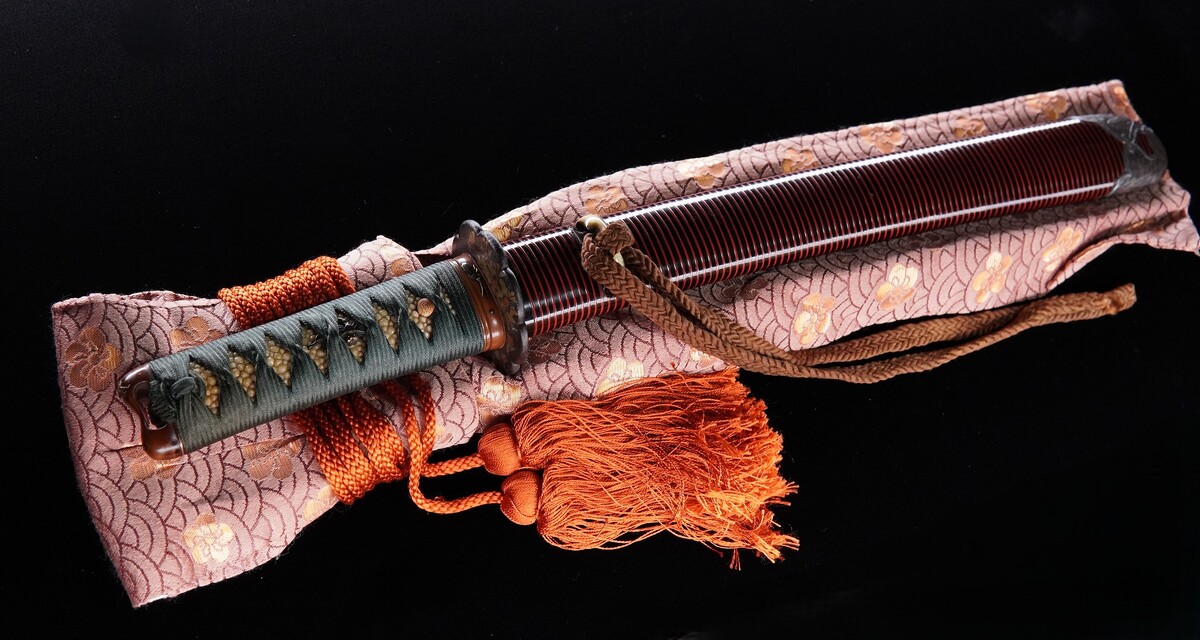
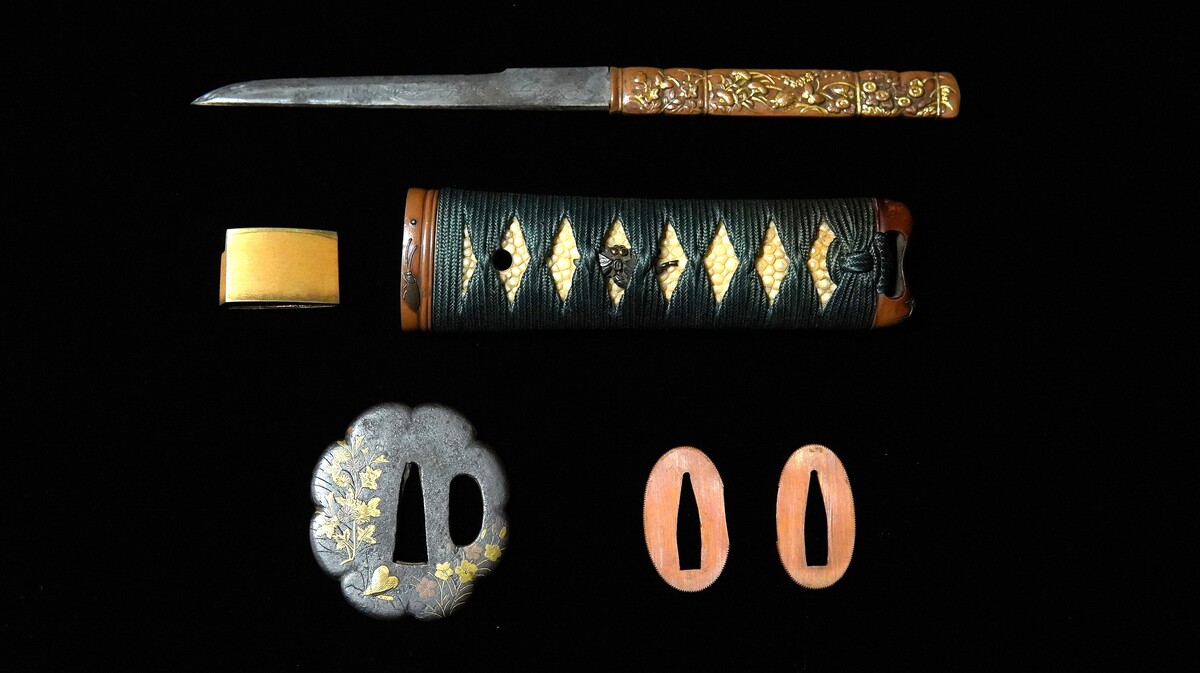
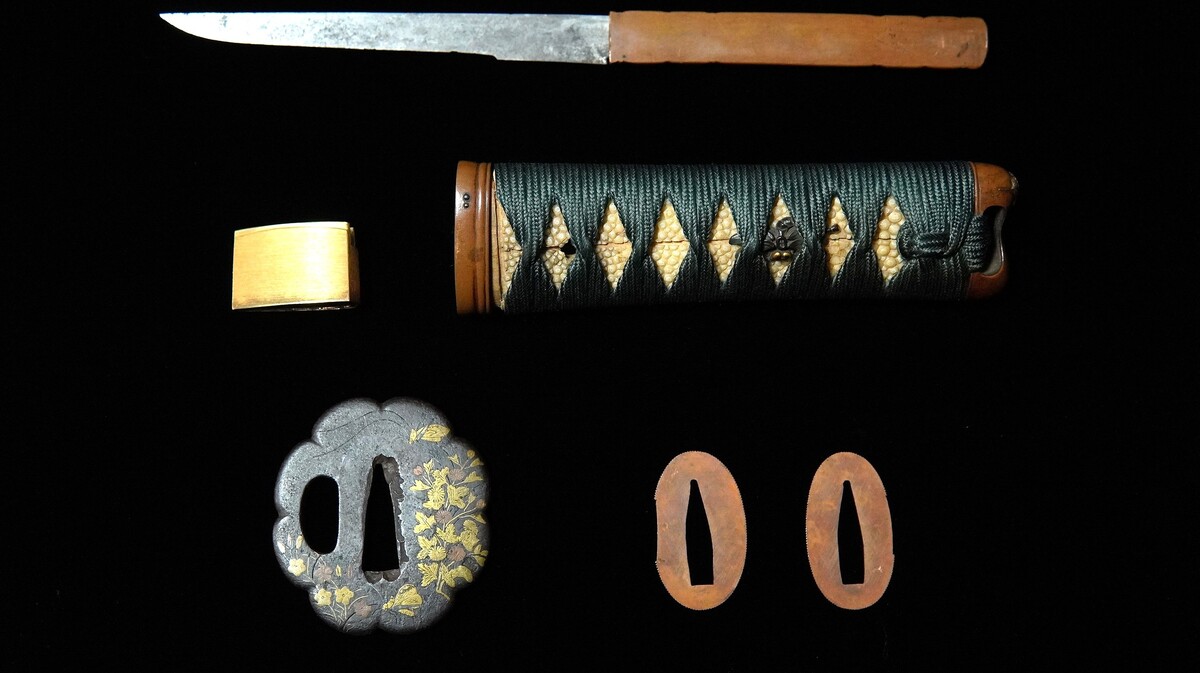
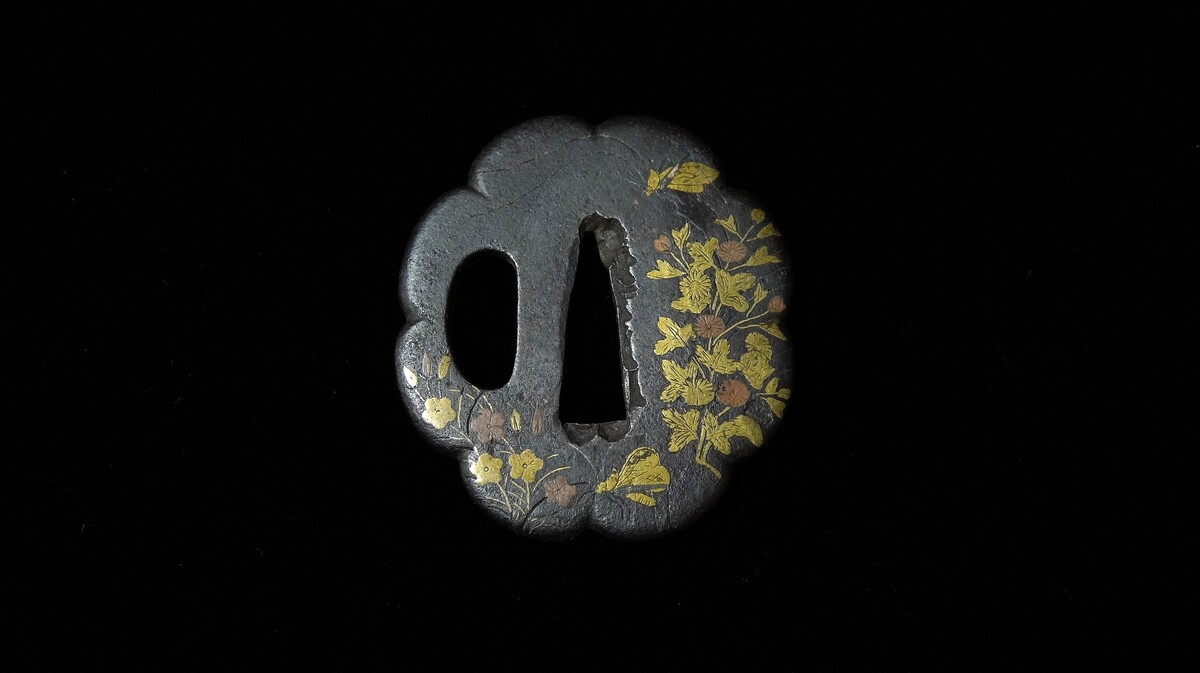
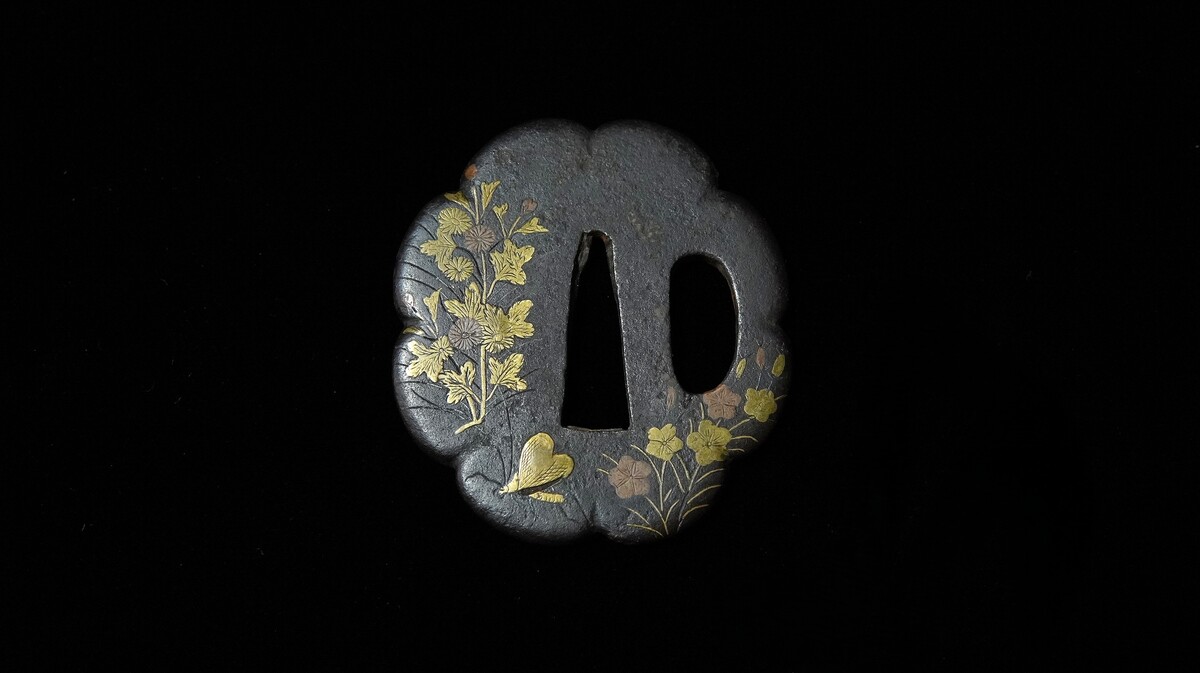
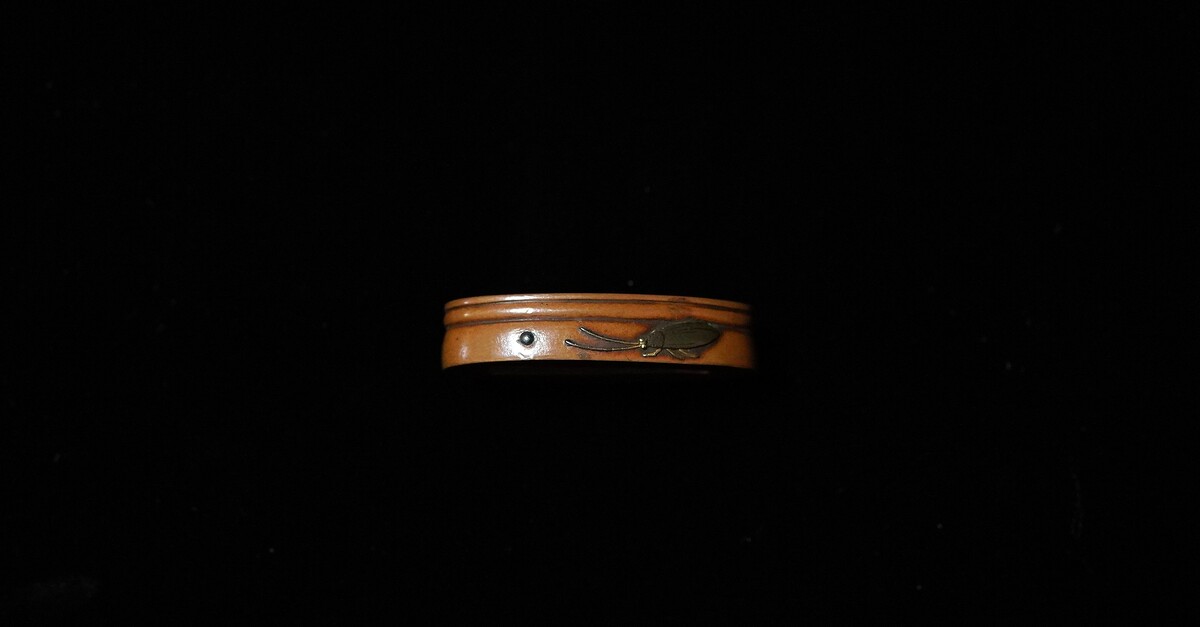
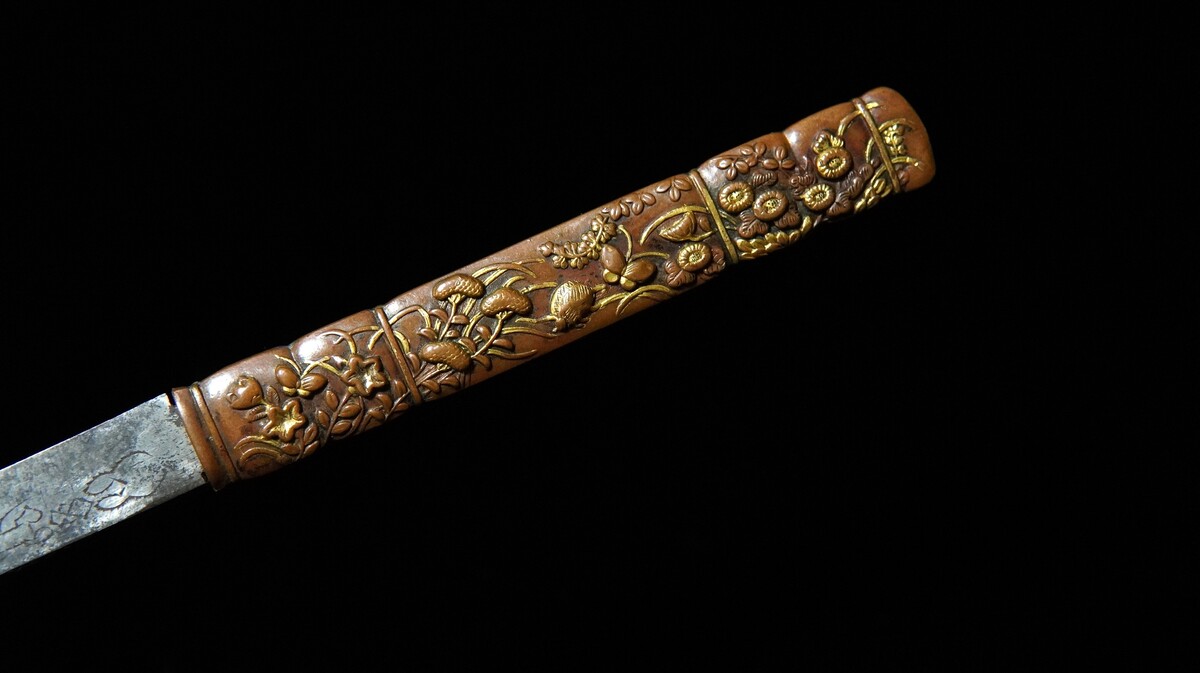
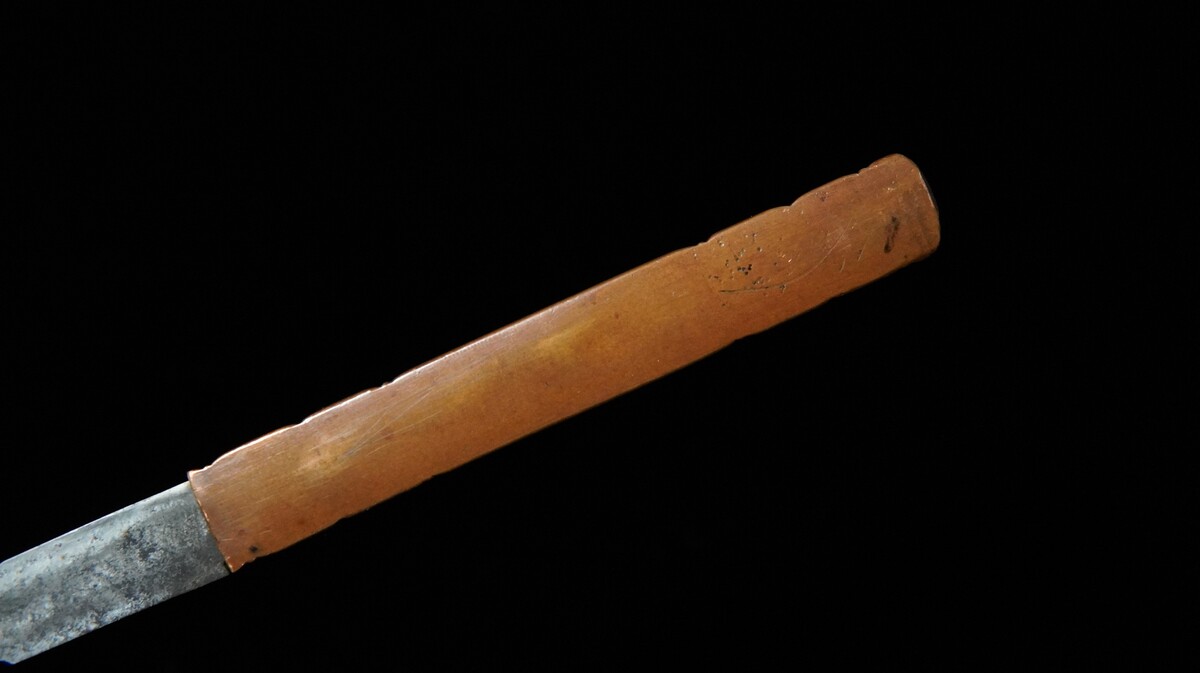
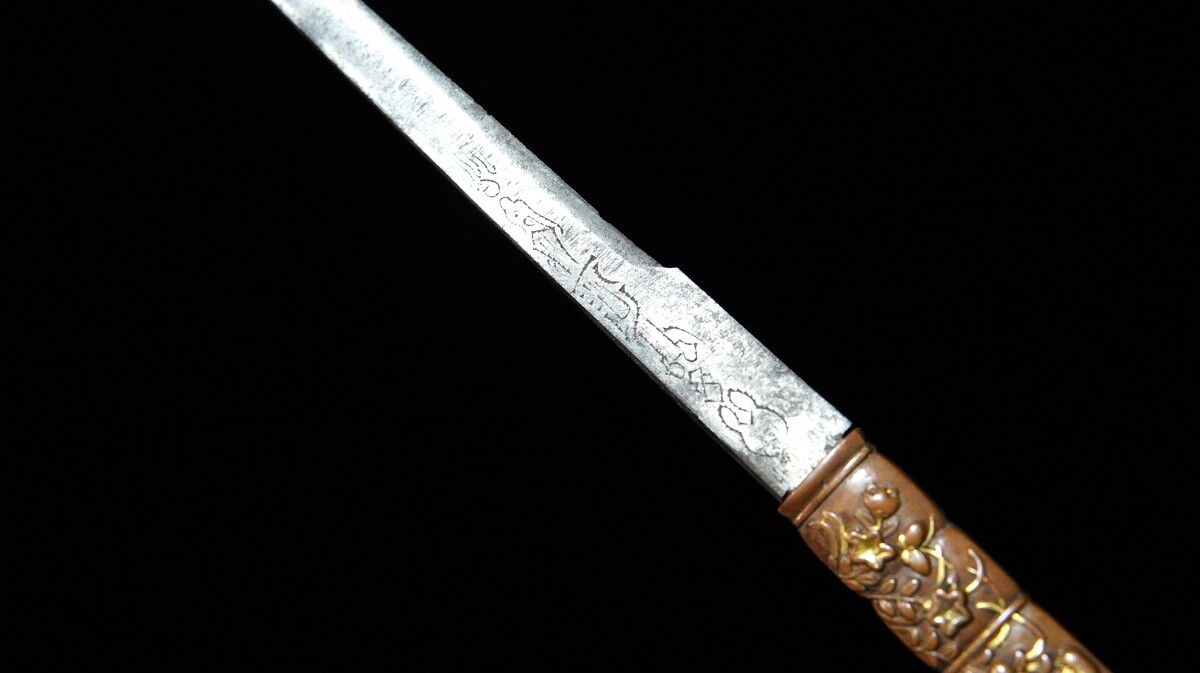
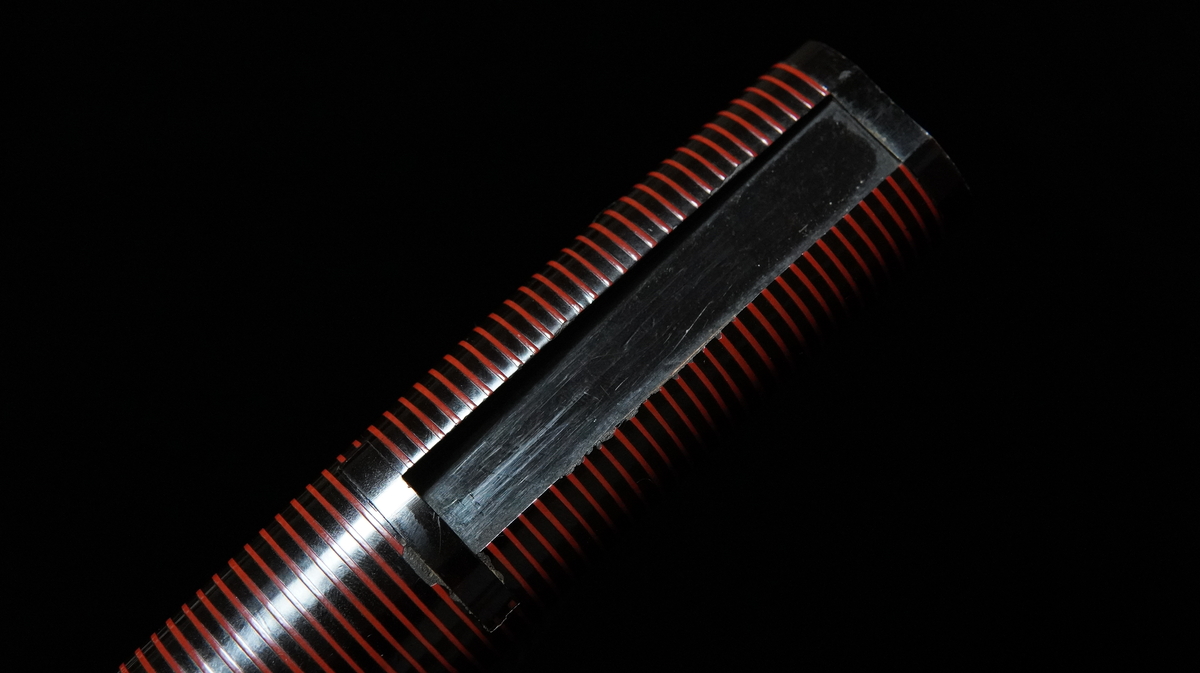
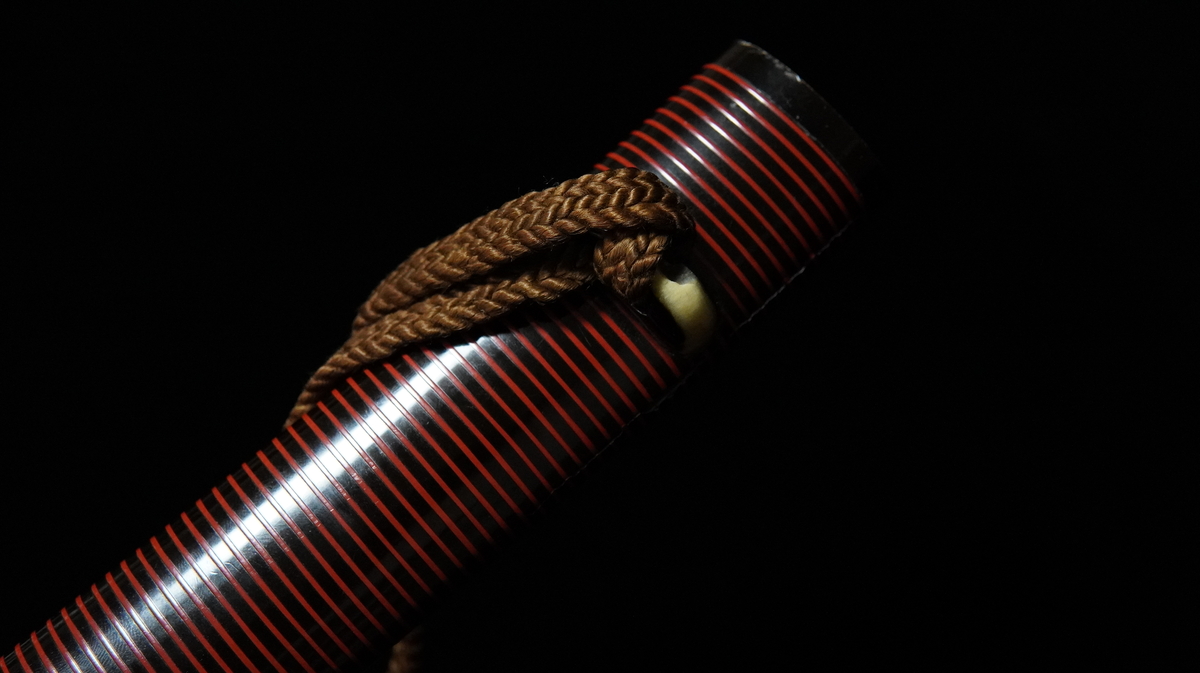
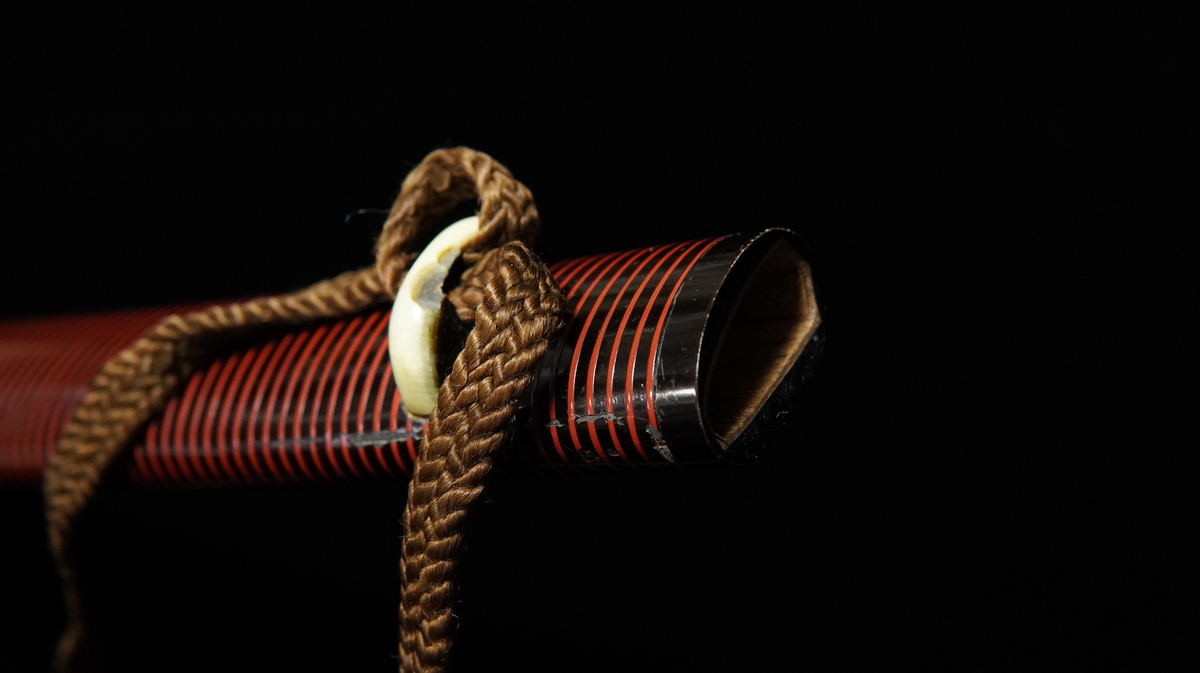
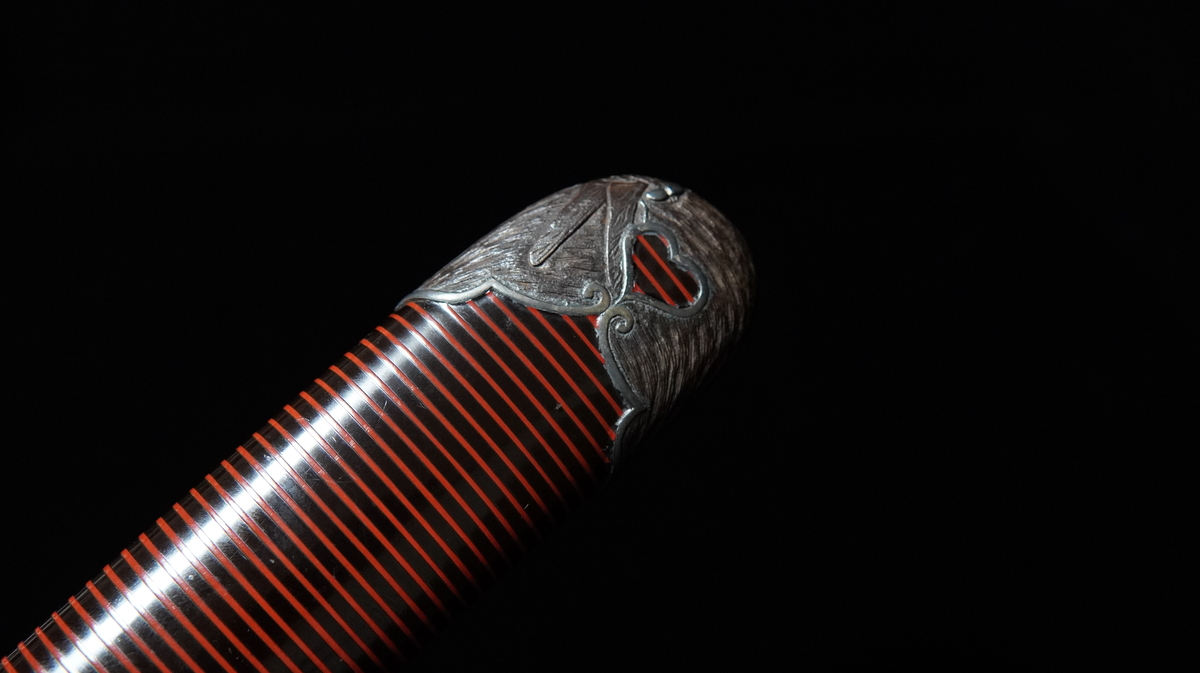
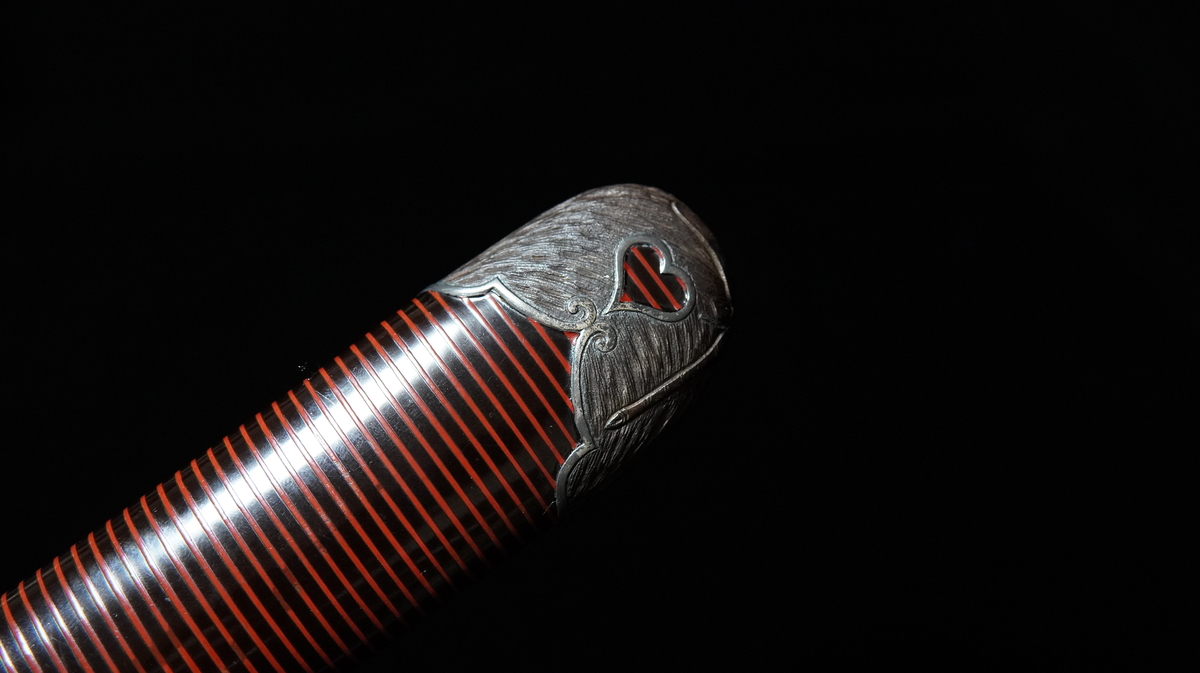
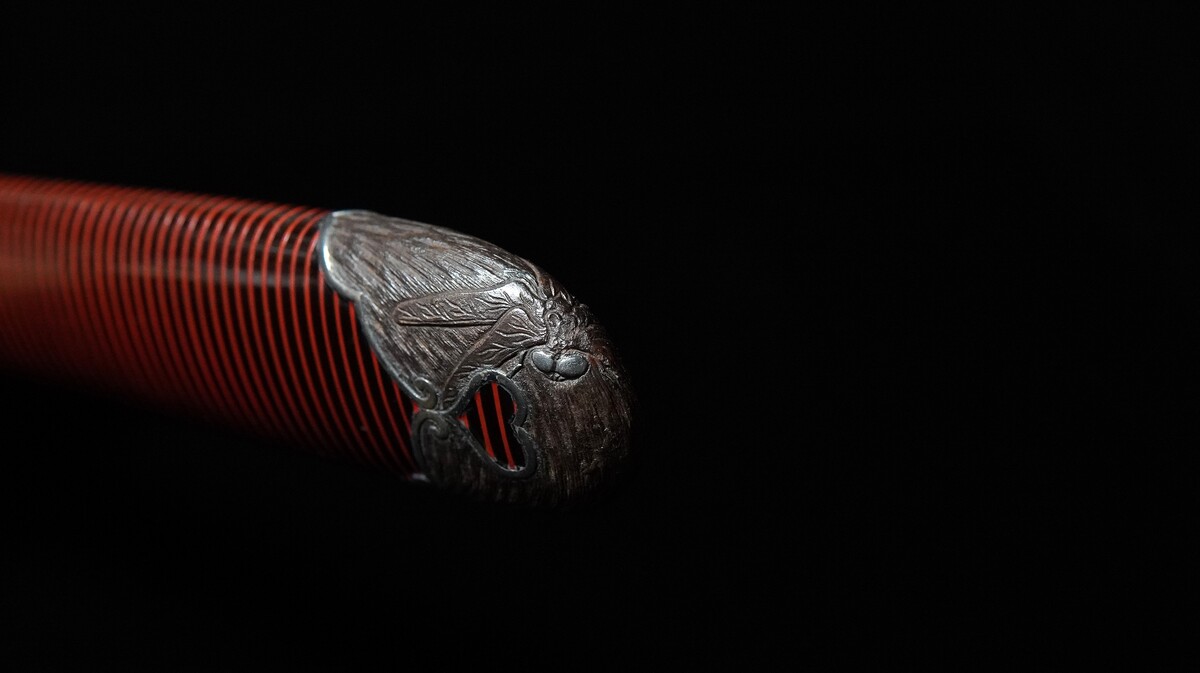
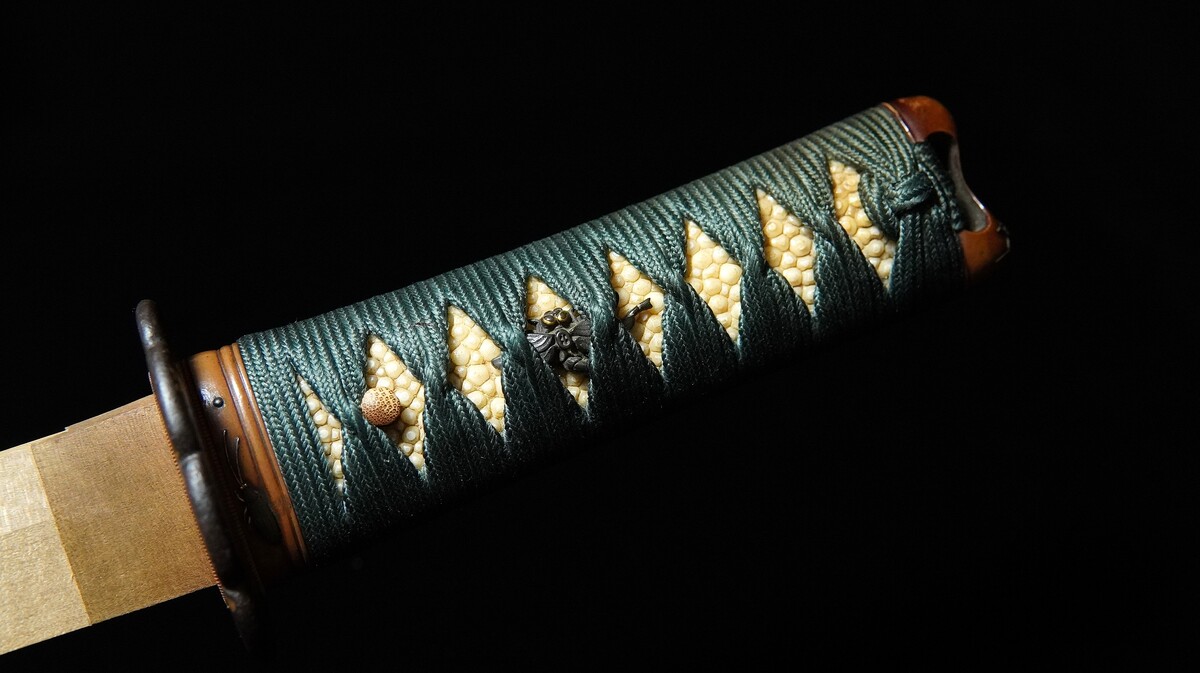
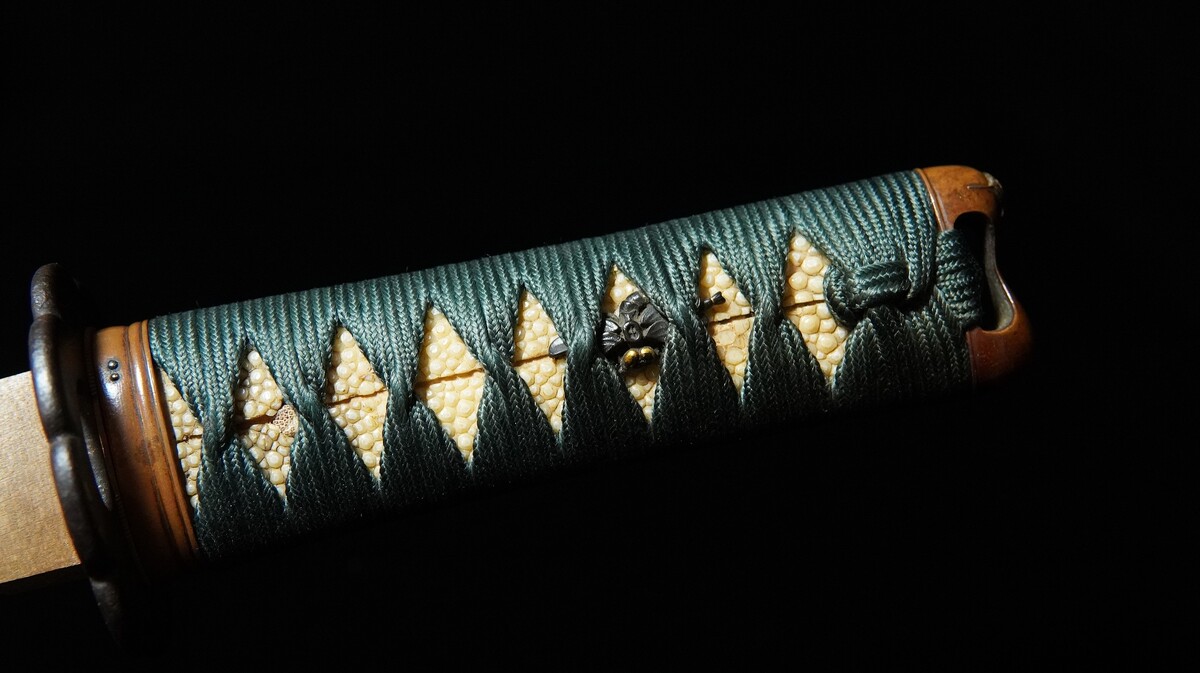
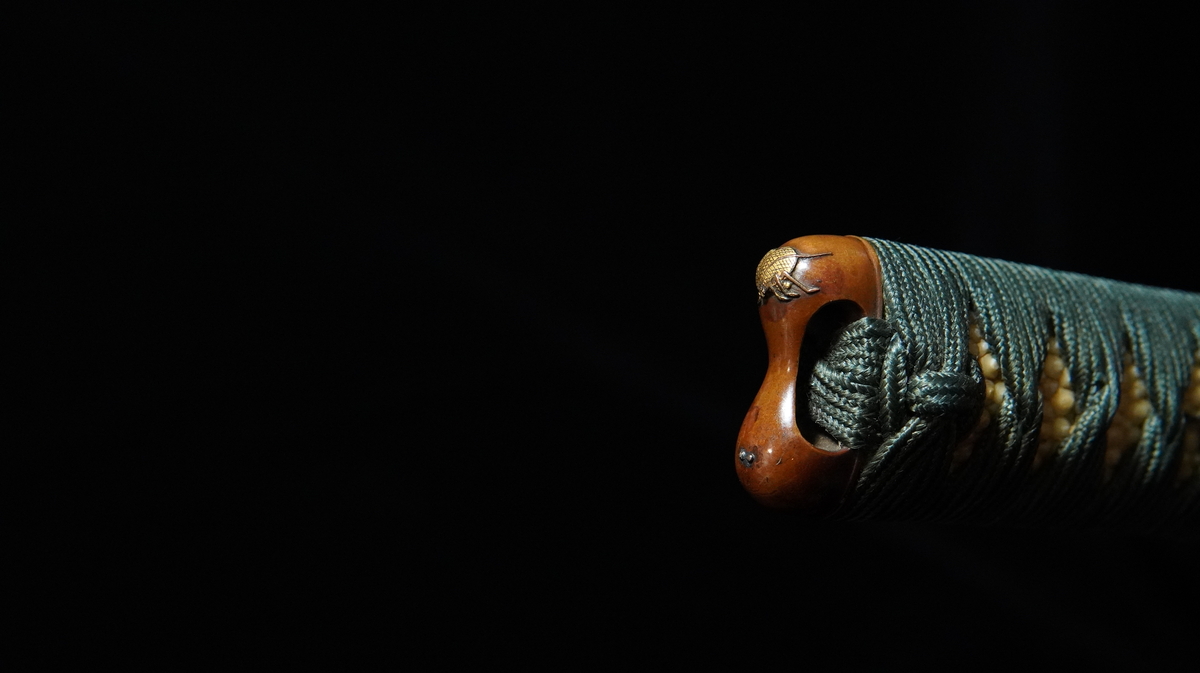
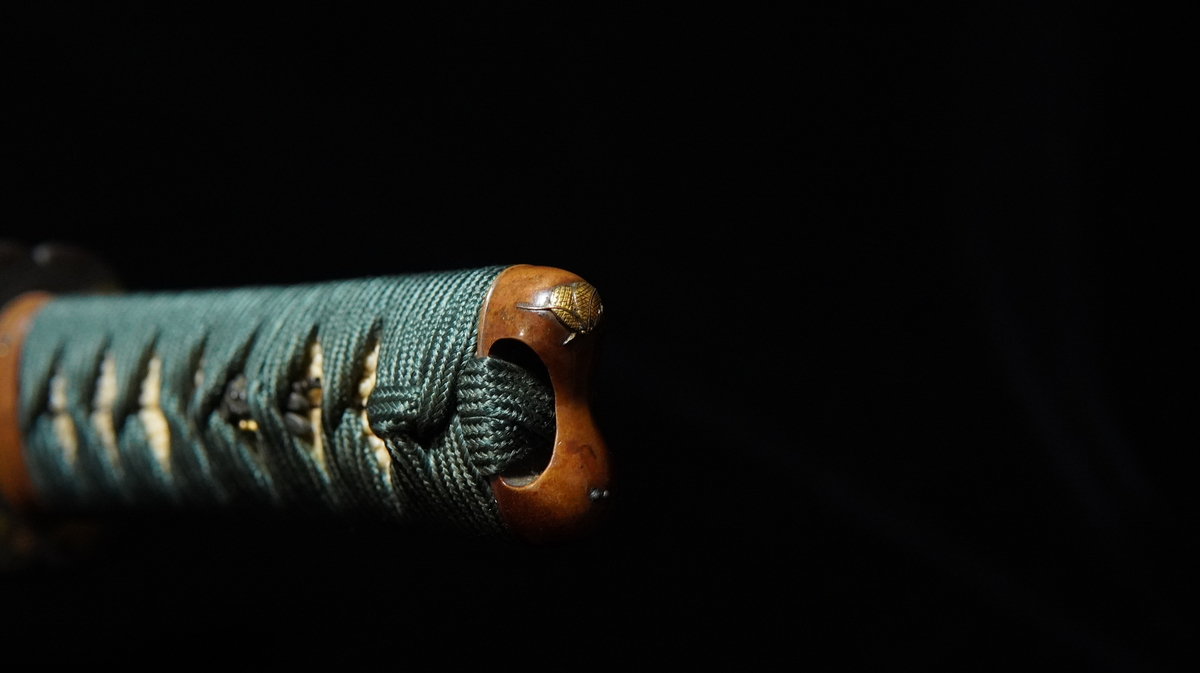
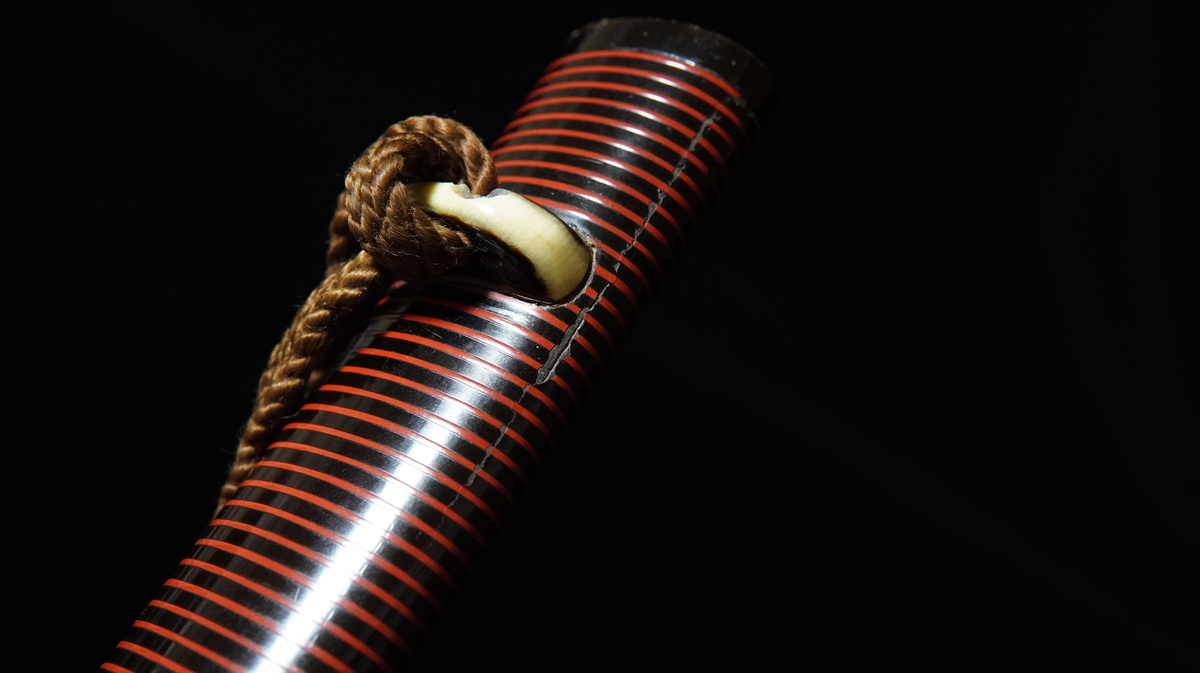
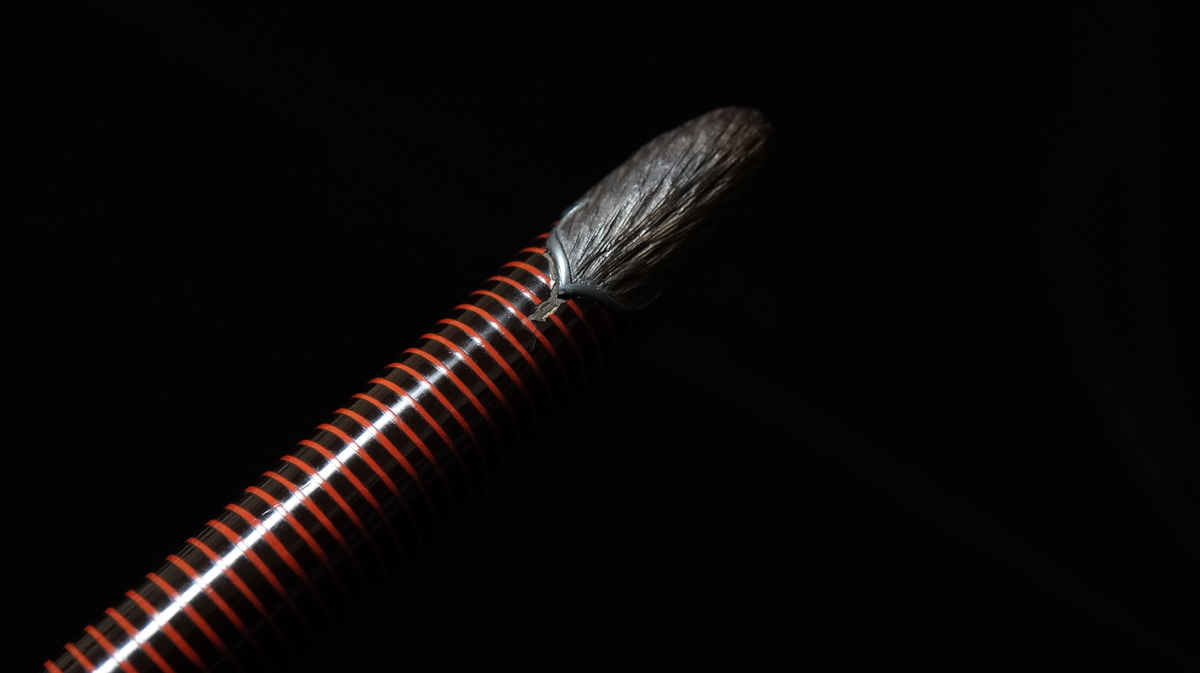
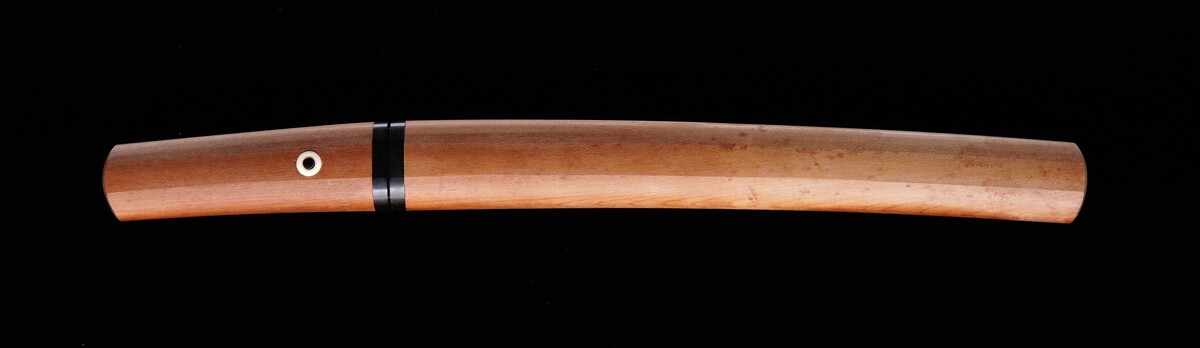
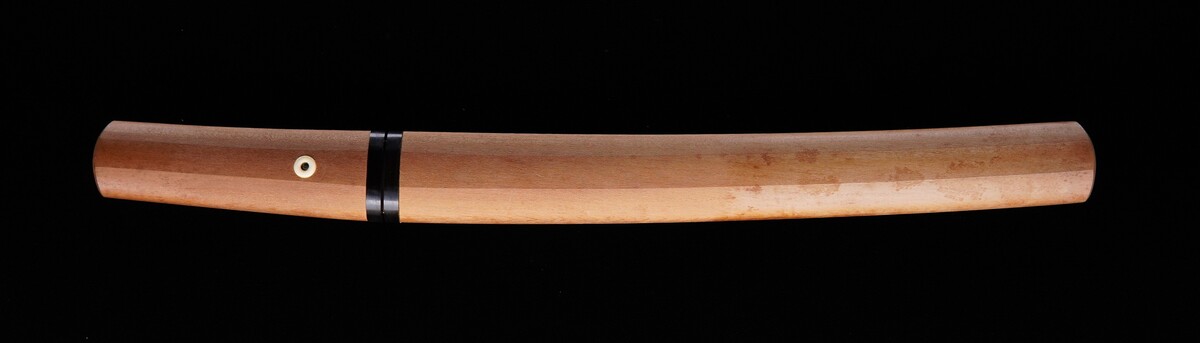
川井久幸は幕府の旗本で刀鍛冶。銘はよく切れていますが気になるところがあります。 『刀工大鑑』等では久幸は1868年(明治元年)9月に亡くなったとされていますが、本刀は明治二年の年紀入り。しかし『日本刀銘鑑』によれば川井久幸には明治二年年紀作の記載がある旨も見られ、どちらかの説が誤りと言うことになります。以上のことから鑑定機関の判断も分かれそうですので「銘無保証」という形でご承知ください。 しかしながら、おそらく造りで良い短刀拵と白鞘が付属しますから、銘を気にされない方にはよろしいかと思います。 刃文は直刃。地鉄は小板目。帽子はやや掃き掛けて返る。表裏に腰樋と添樋。 笛巻塗鞘短刀拵が付属します。いずれも素銅と鉄、虫の図で揃えられており、鐔と小柄は秋草に虫。目貫は赤銅の勝虫。鎺は金着せ。拵だけで一人歩きできる統一感のある良い拵です。 白鞘も、やや板目でとってはいますが、縁・鯉口・目釘が角加工されていて良いですね。 刀身に若干のヒケと点錆・薄錆、拵の鞘の塗にひび割れ、栗形に割れ。白鞘にシミ汚れございます。写真にて詳細ご確認頂ければと思います。
Offered by Katana Yamadaiya


Translated from the shop's Japanese ·
Rows still in Japanese are as written by the shop
Musashi · around 1818-1830
Fujishiro Jo saku · Tōken Taikan top 60%
2 pieces on the market now
Meiji: survival after the edict
The Haitōrei edict of 1876 ended sword wearing and nearly ended the craft itself. Military demand and imperial patronage kept a remnant alive, and in 1906 Gassan Sadakazu and Miyamoto Kanenori were named Artists to the Imperial Household.