Edo was the sword’s age of connoisseurship: the Hon’ami appraisers, the shogunal register of famous blades of 1719, and a thriving literature turned the sword into an object of study even as it ceased to be drawn in war.
 NihontoWatchNihontoWatch
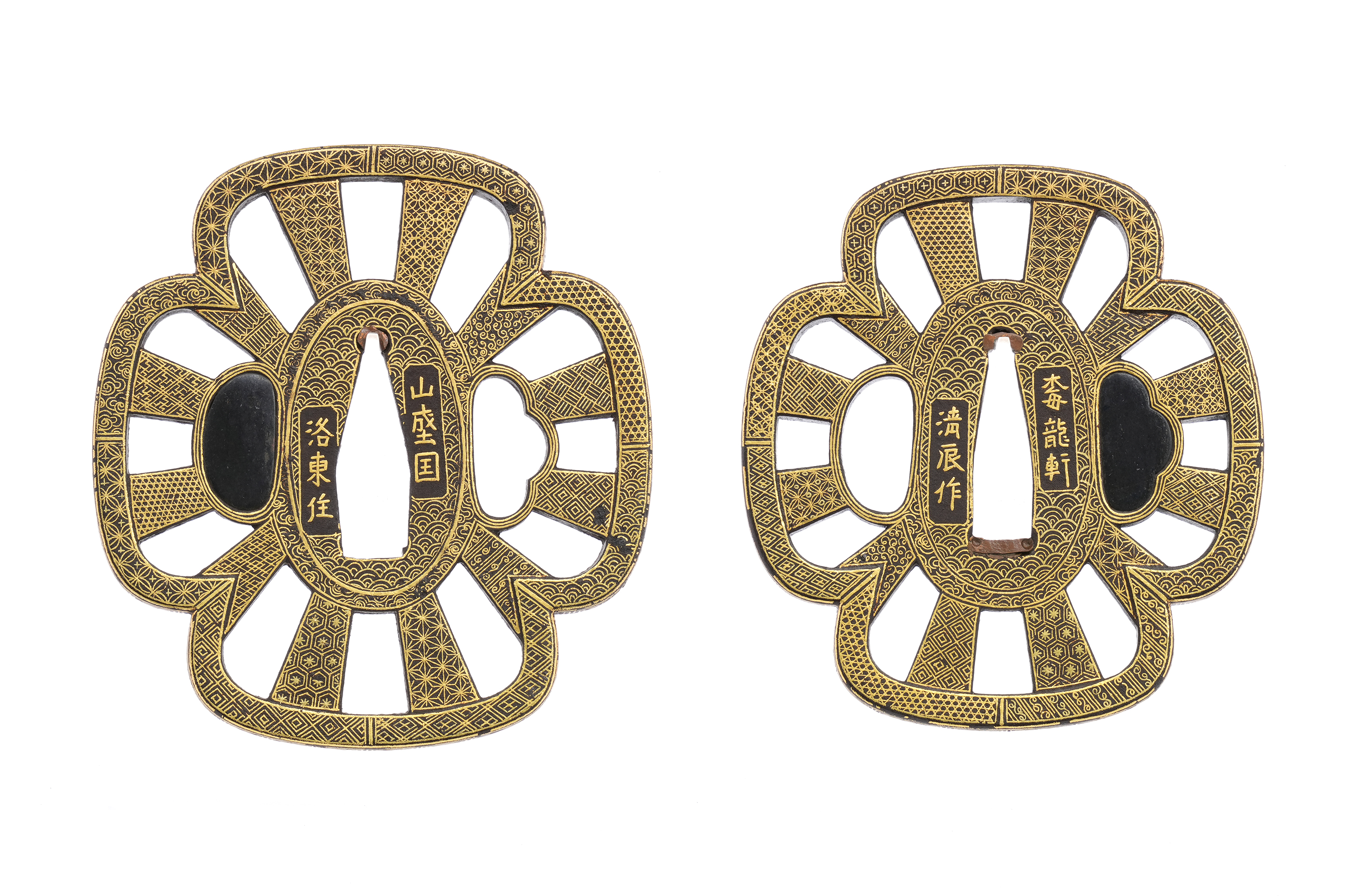
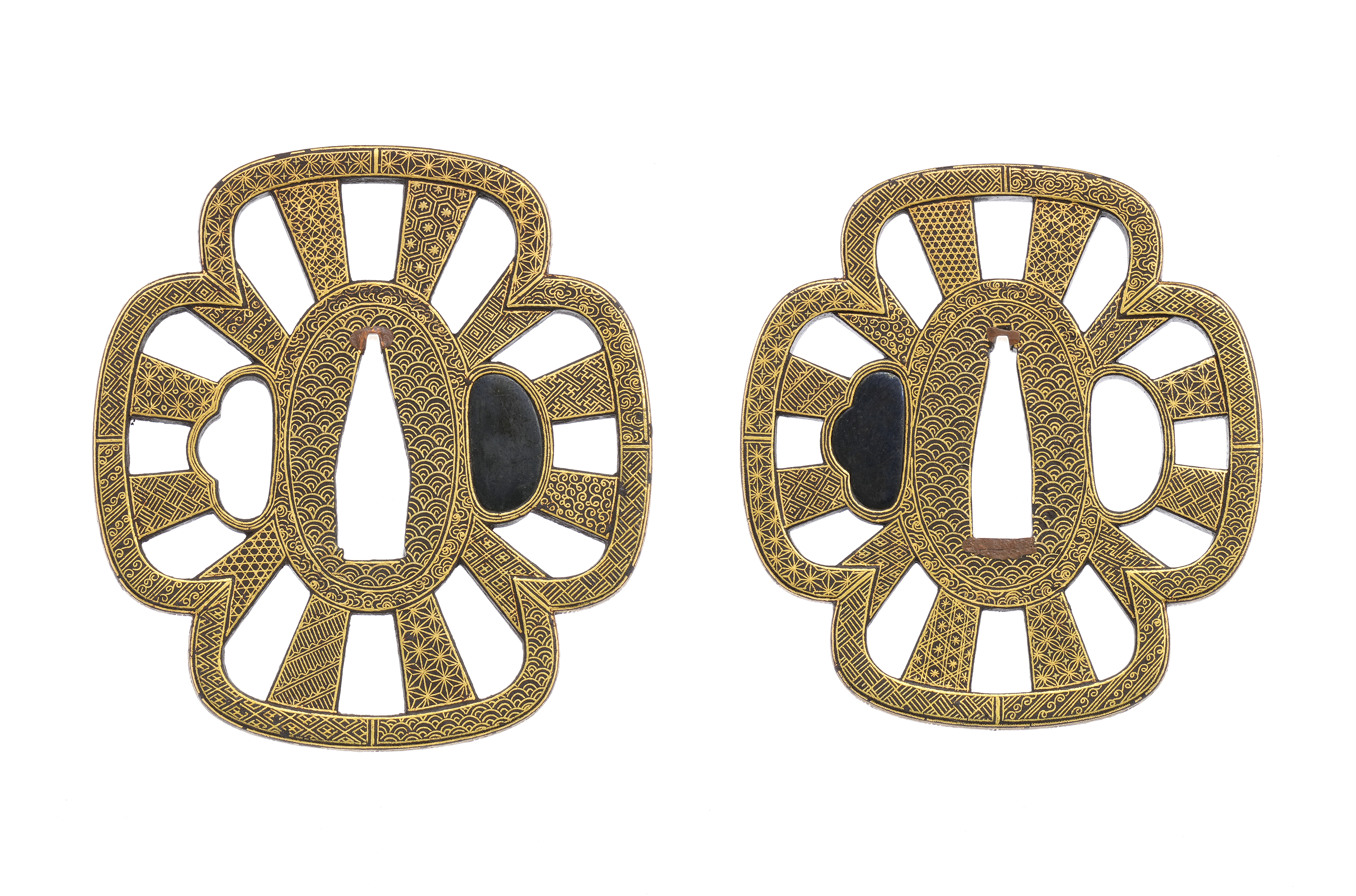
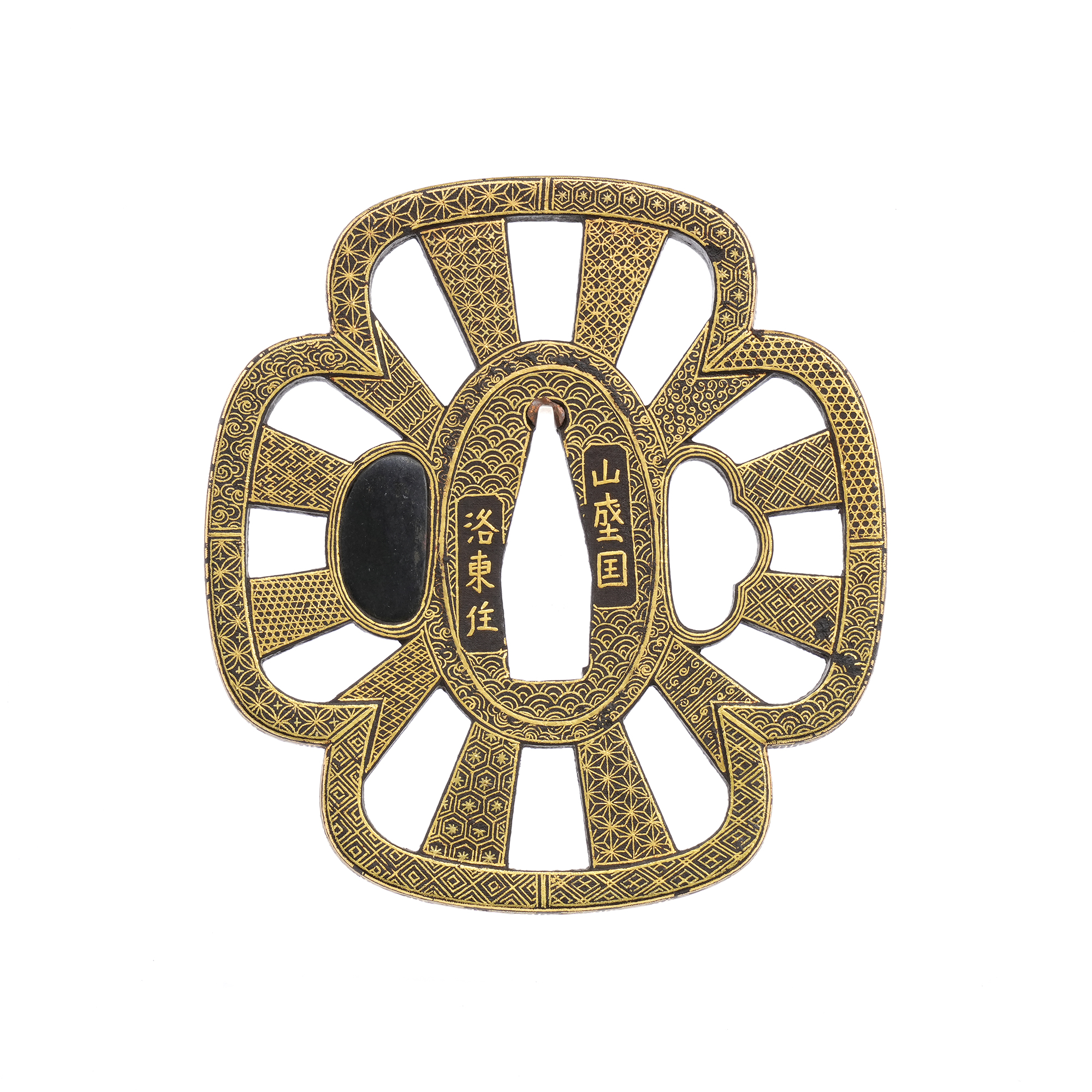
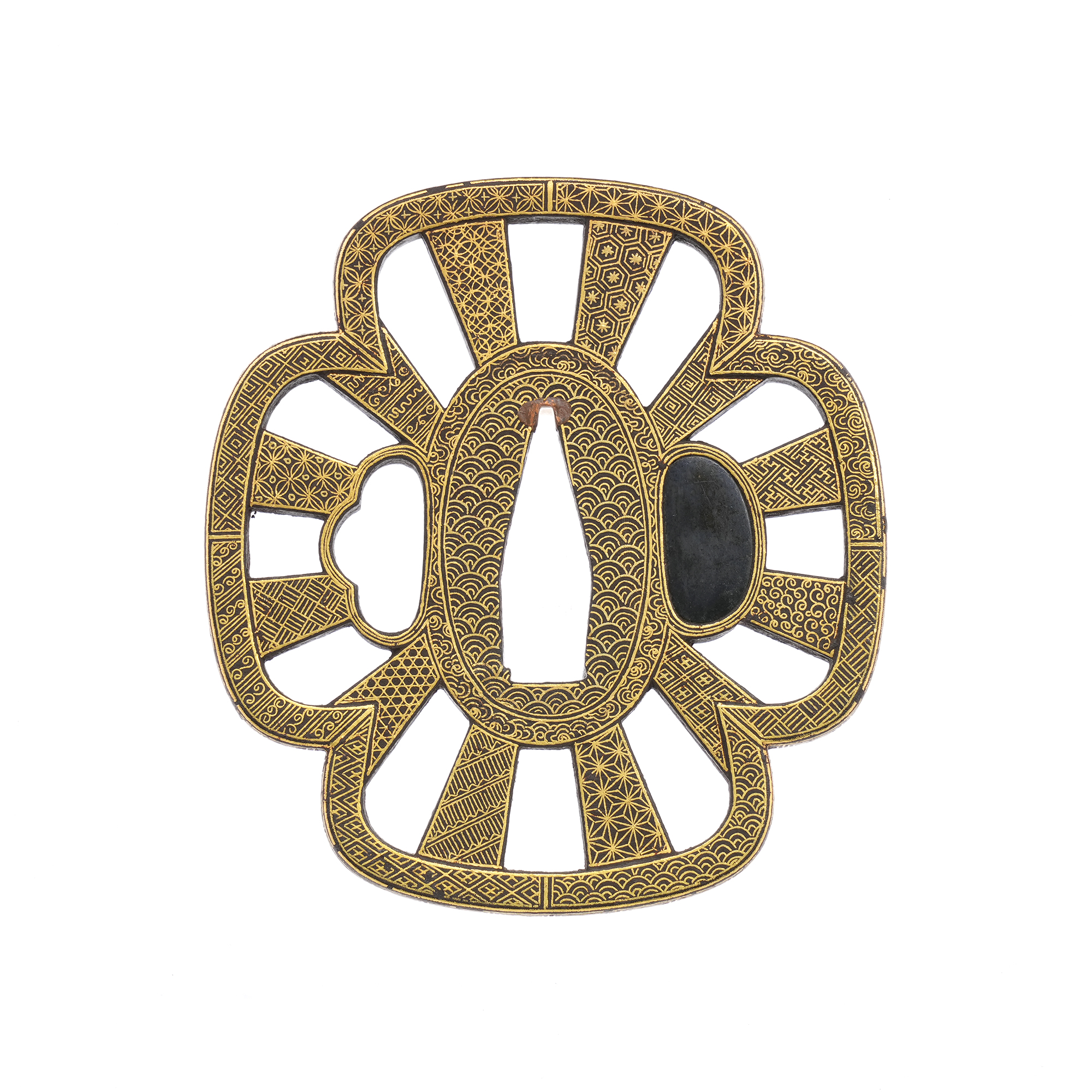
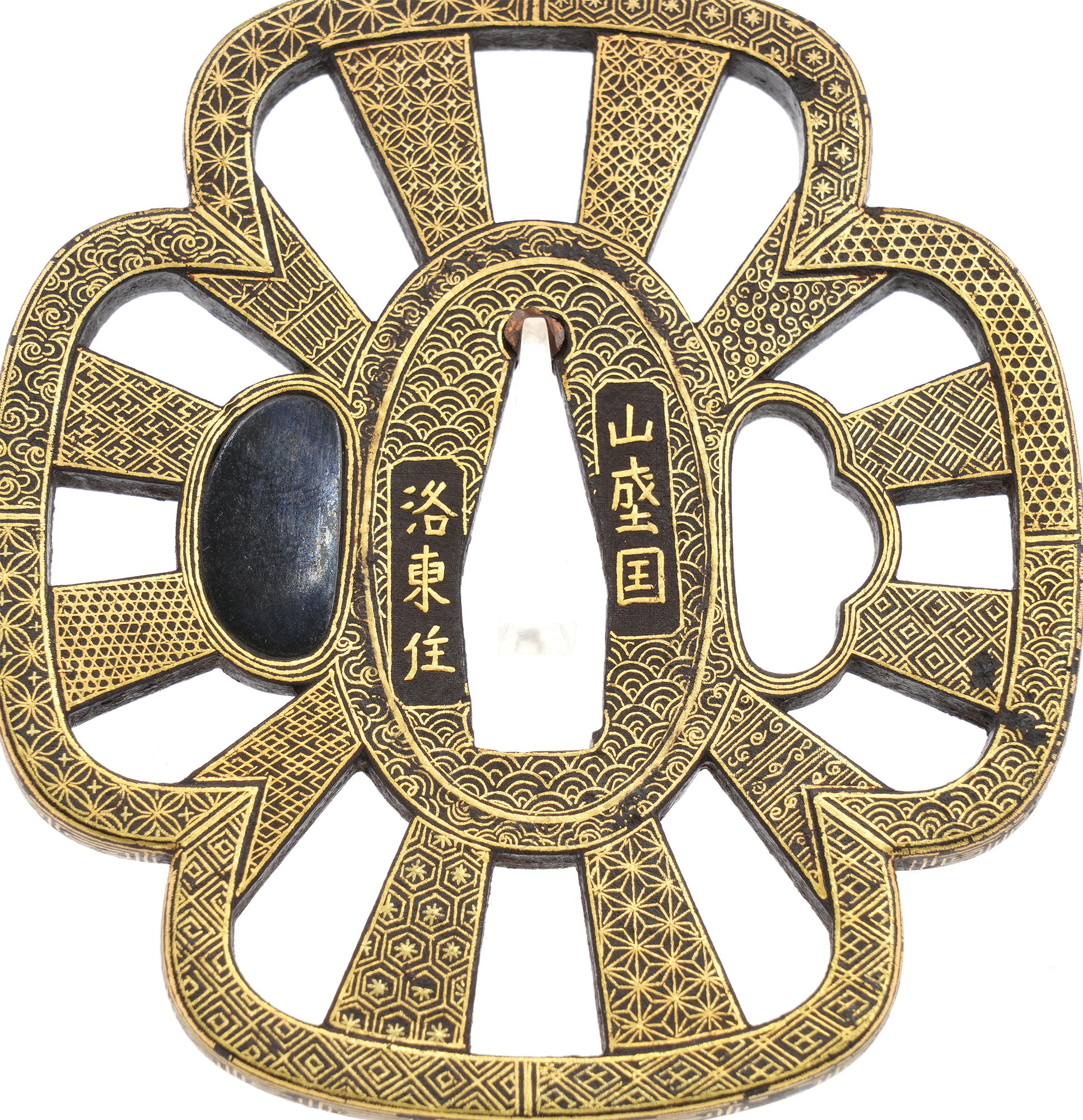
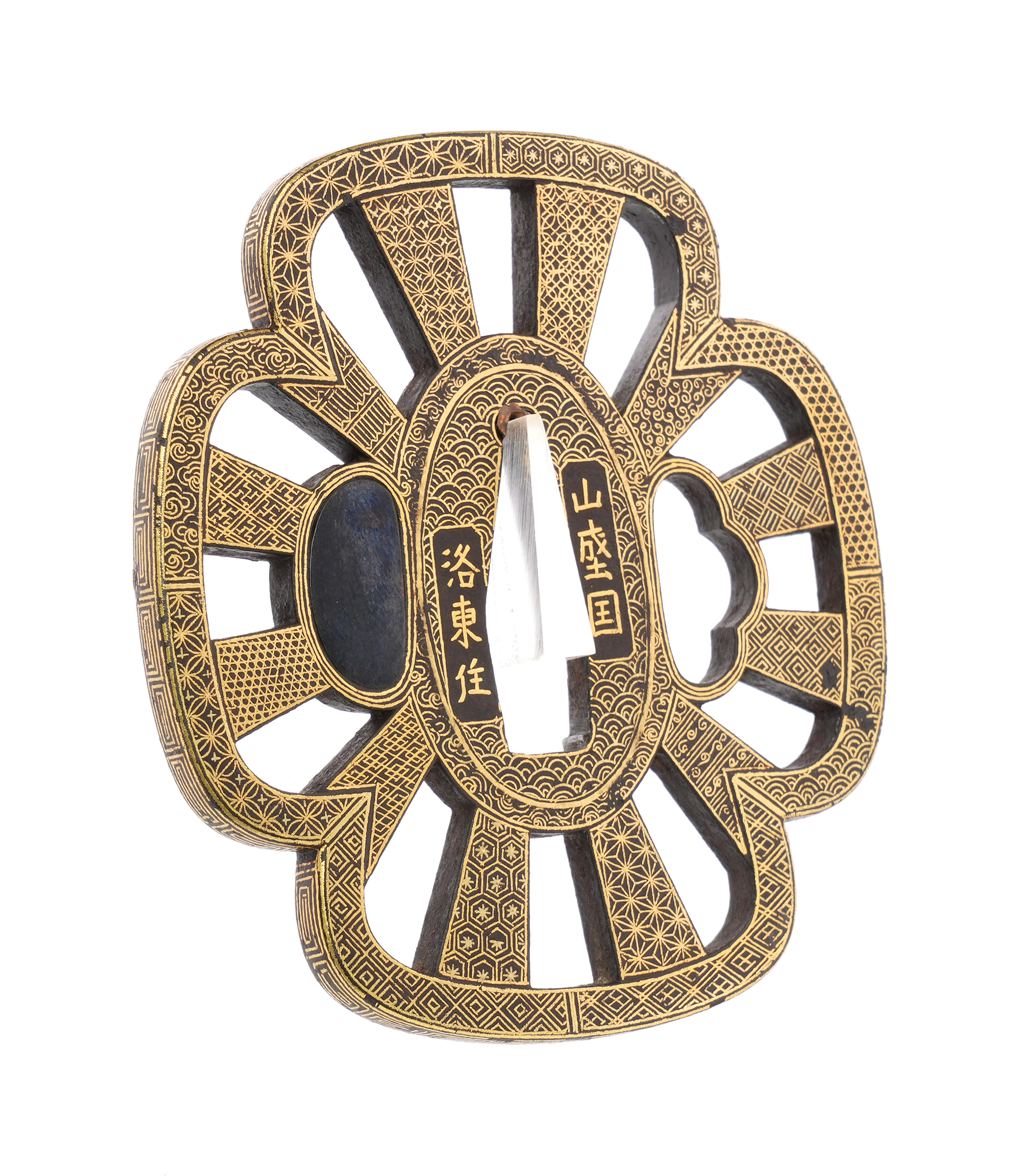
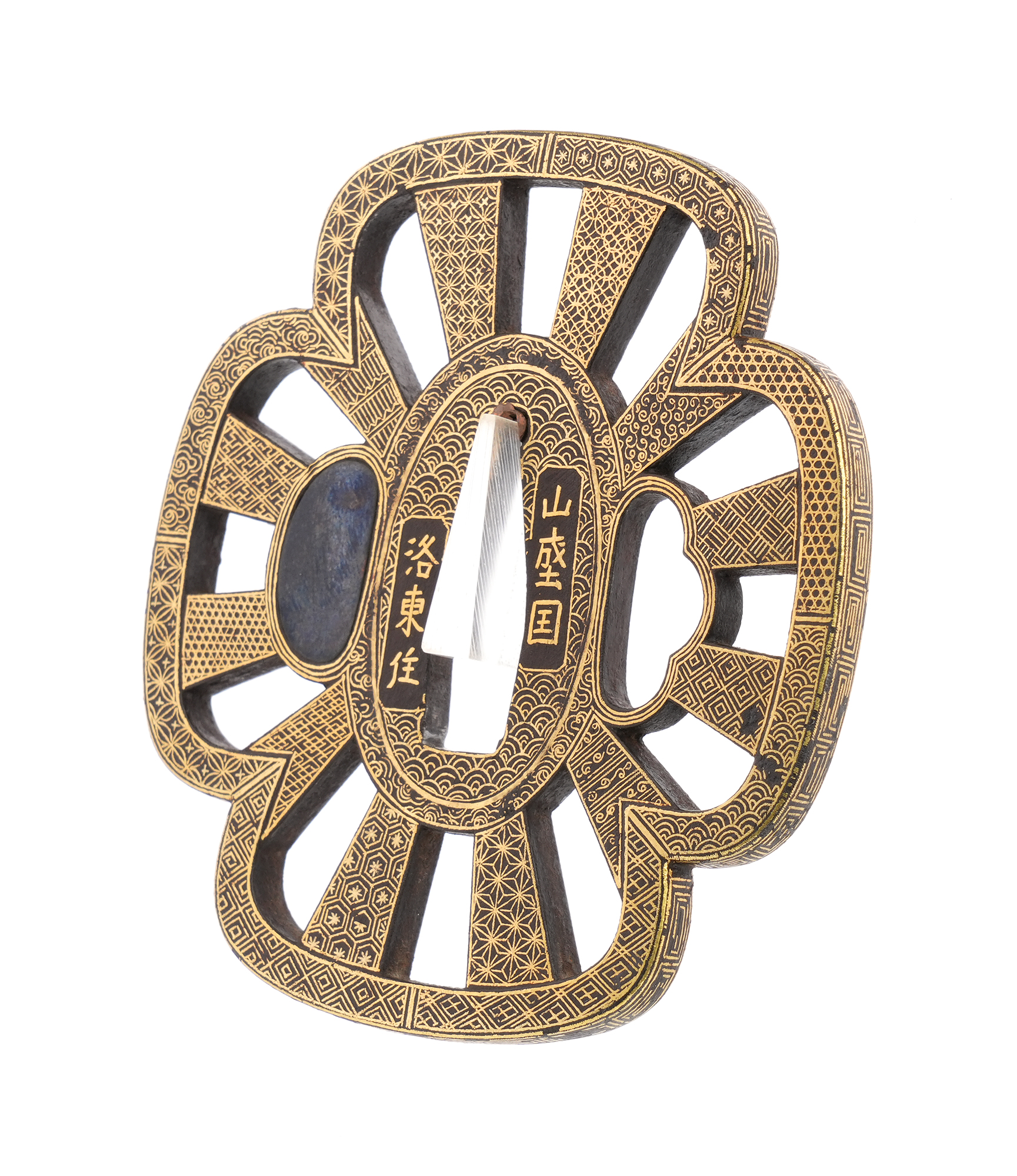
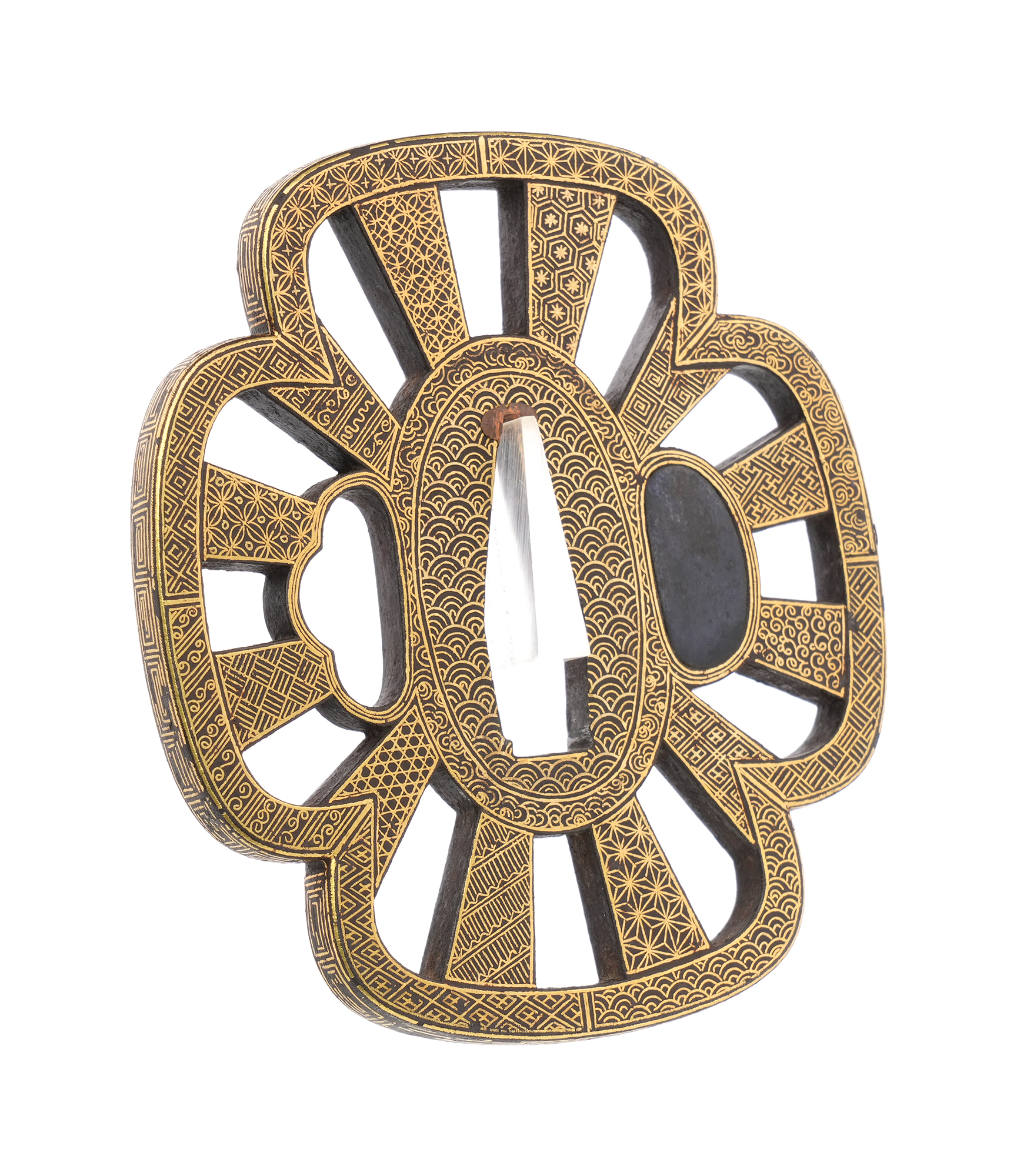
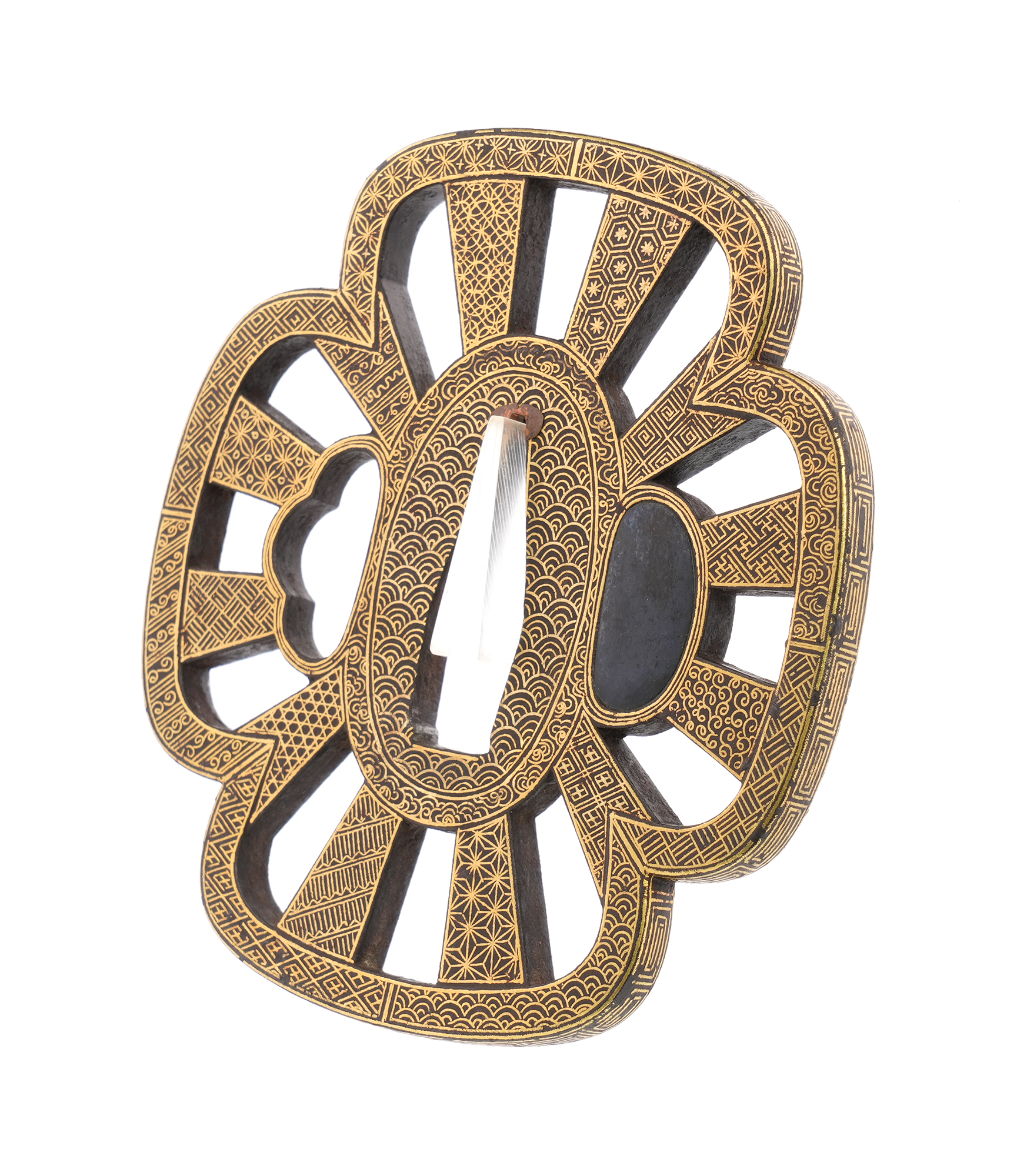
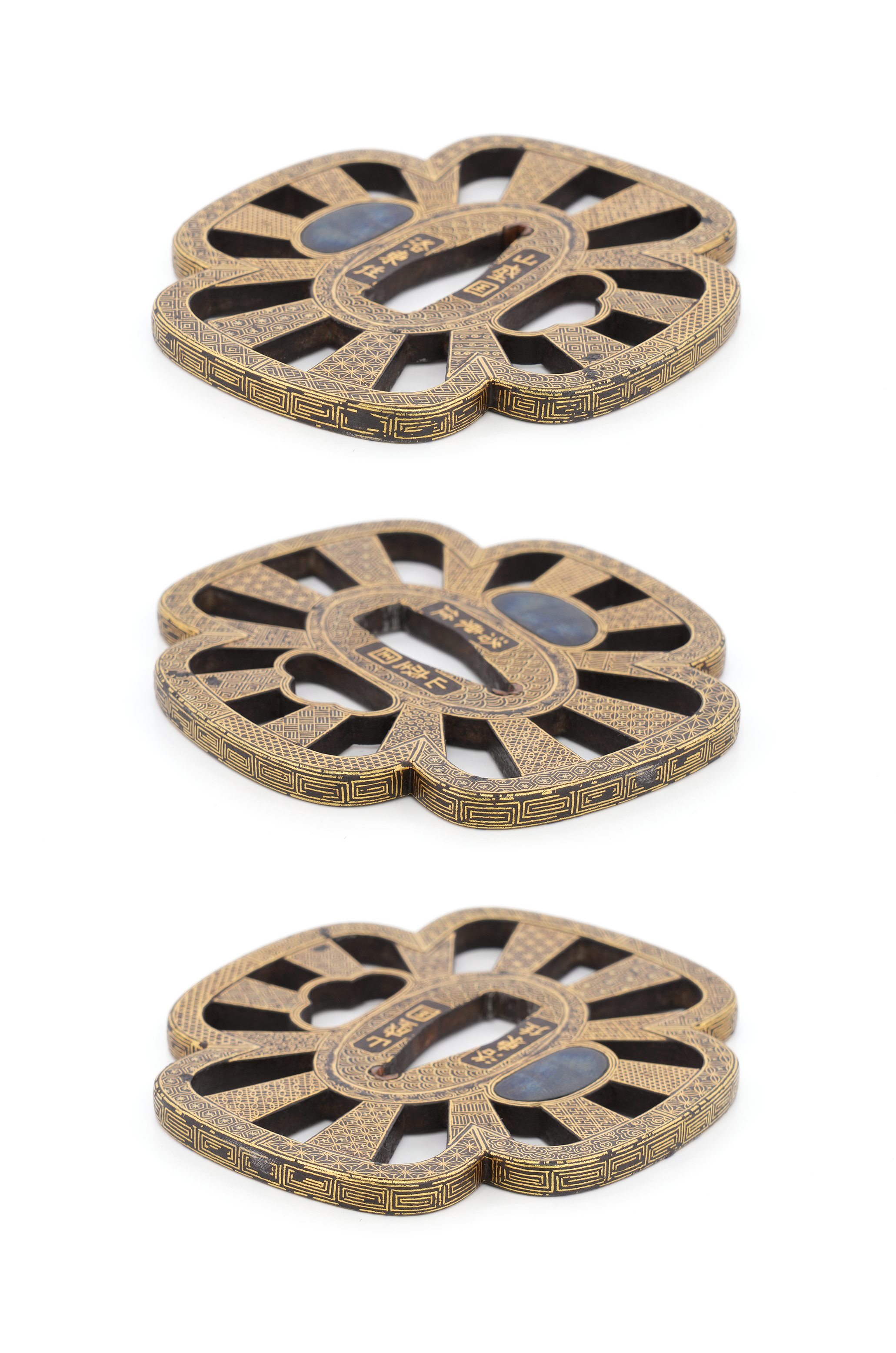
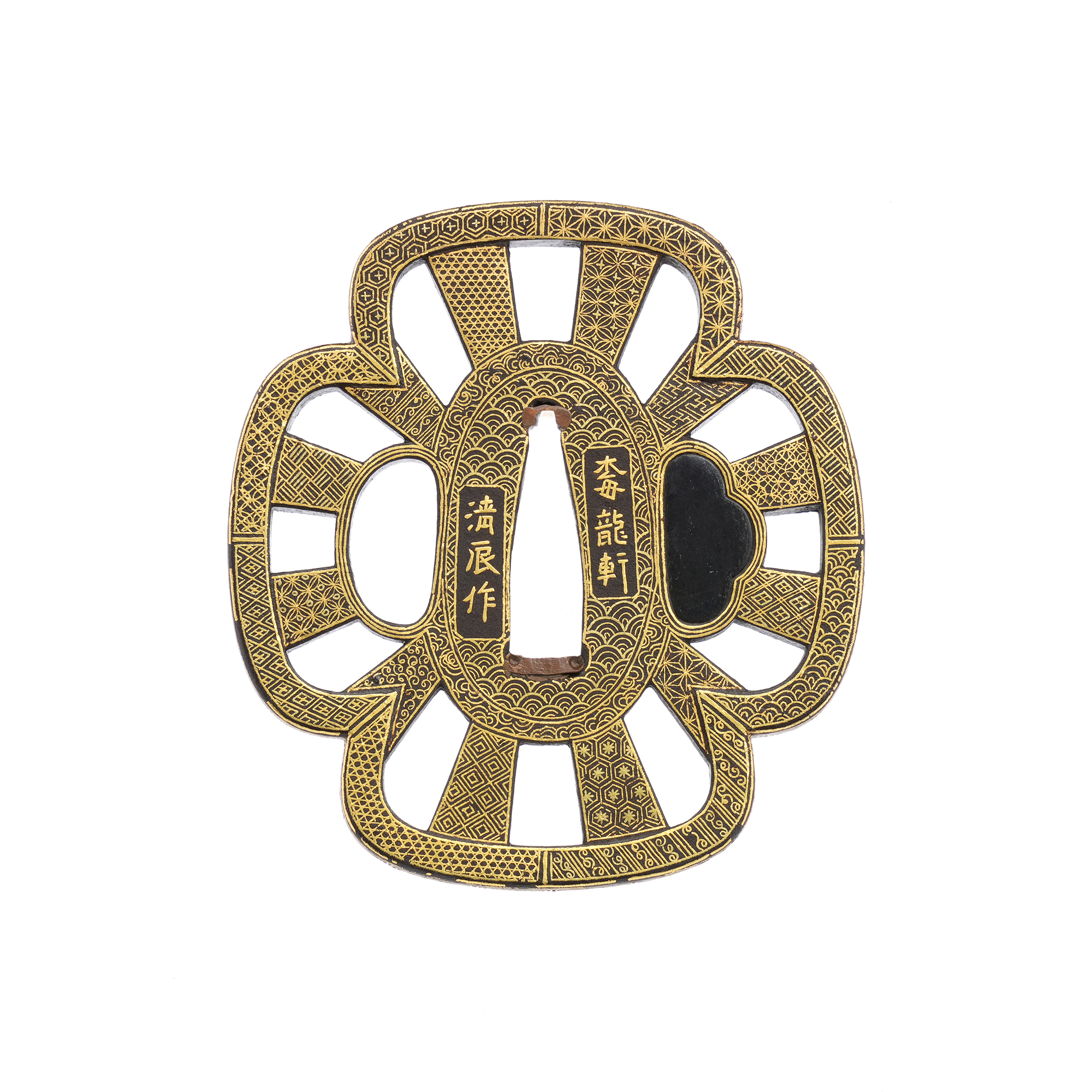
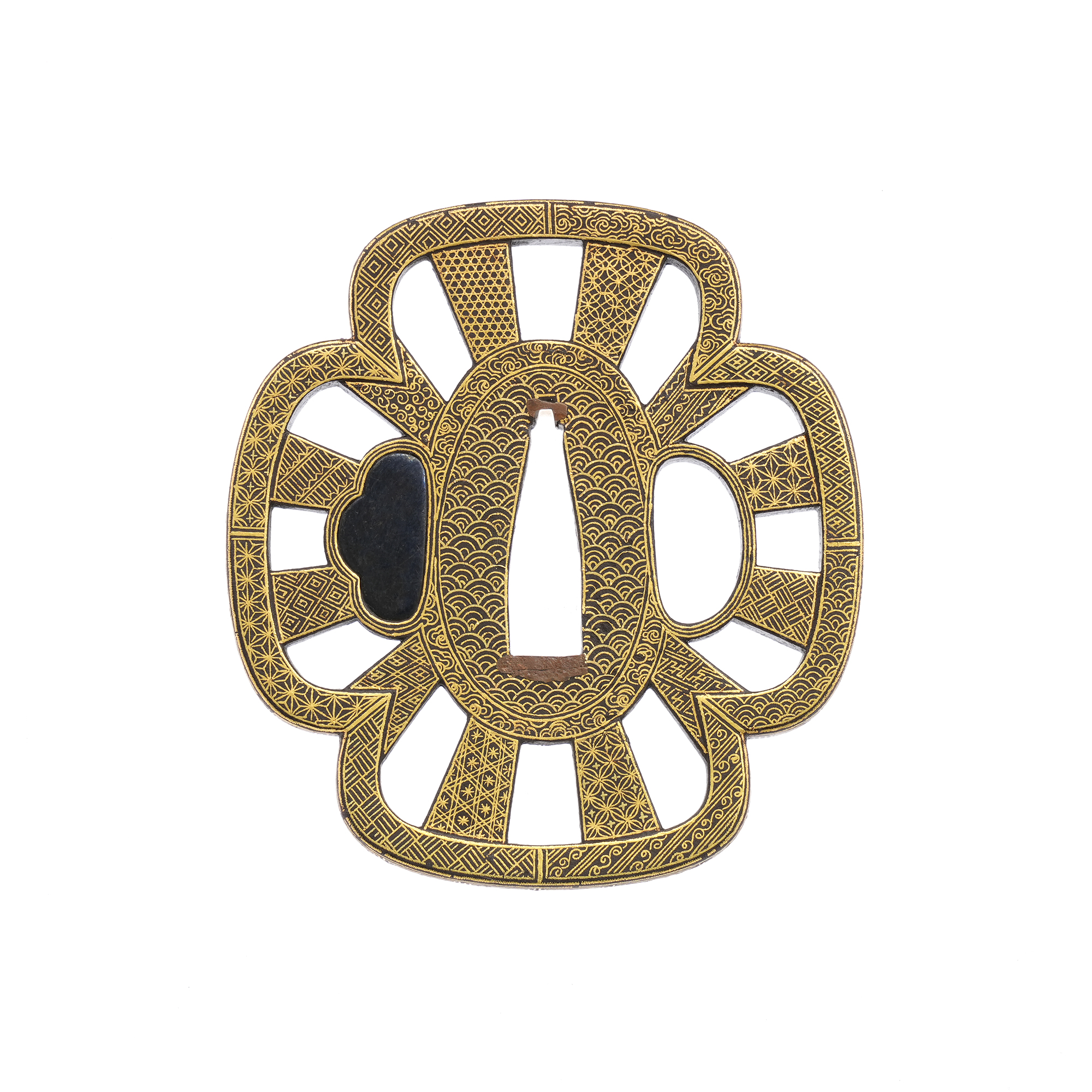
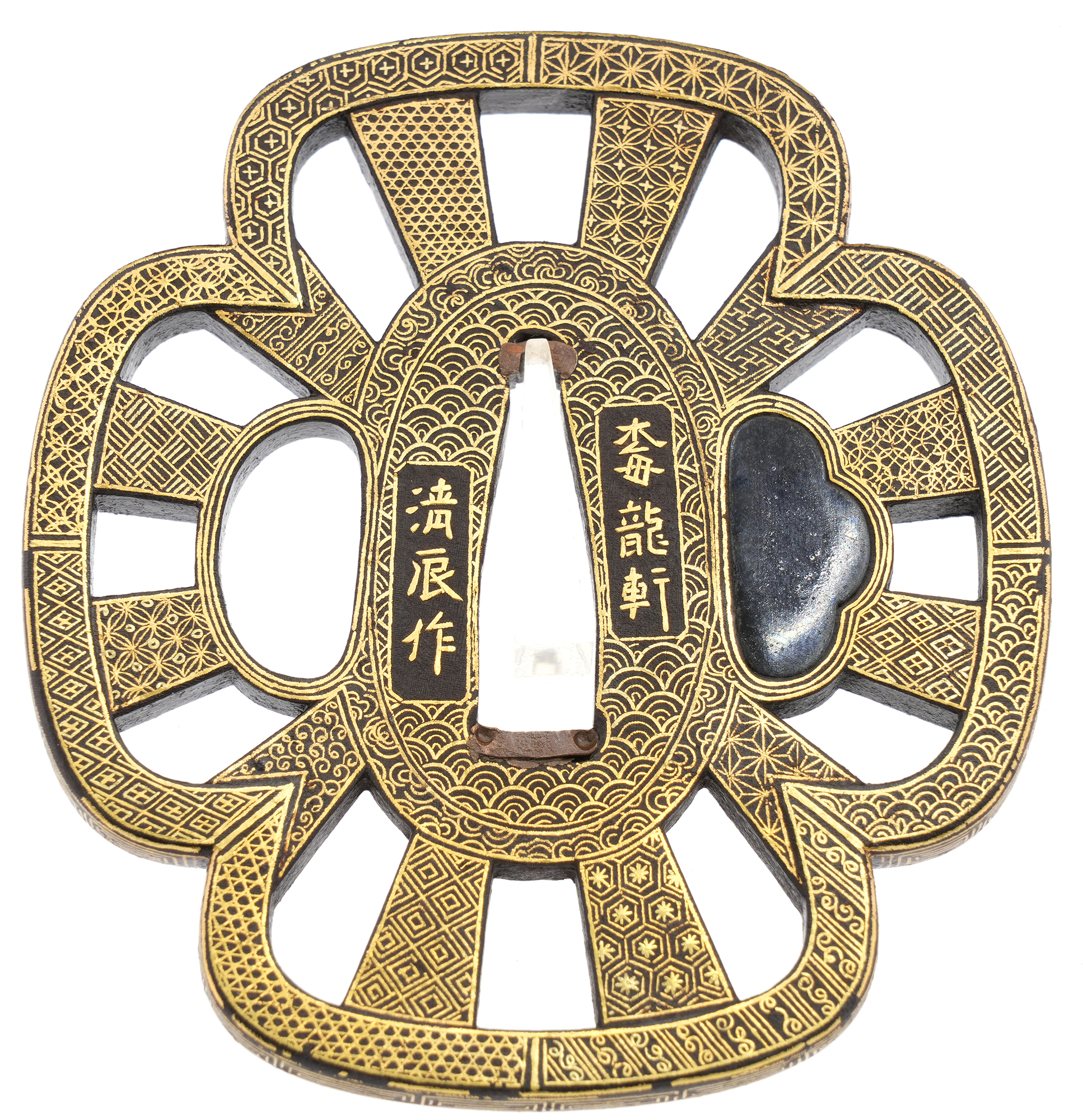
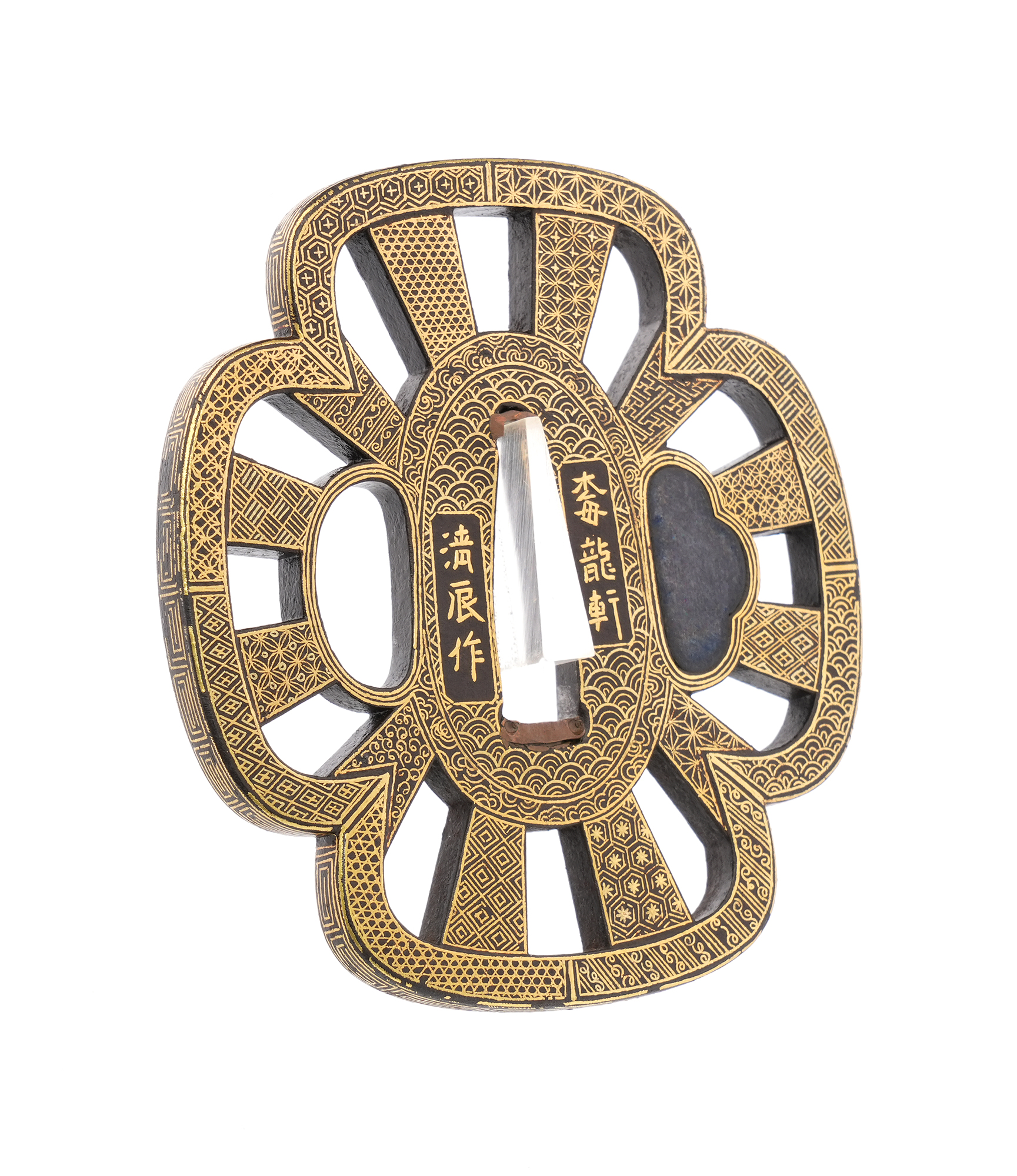
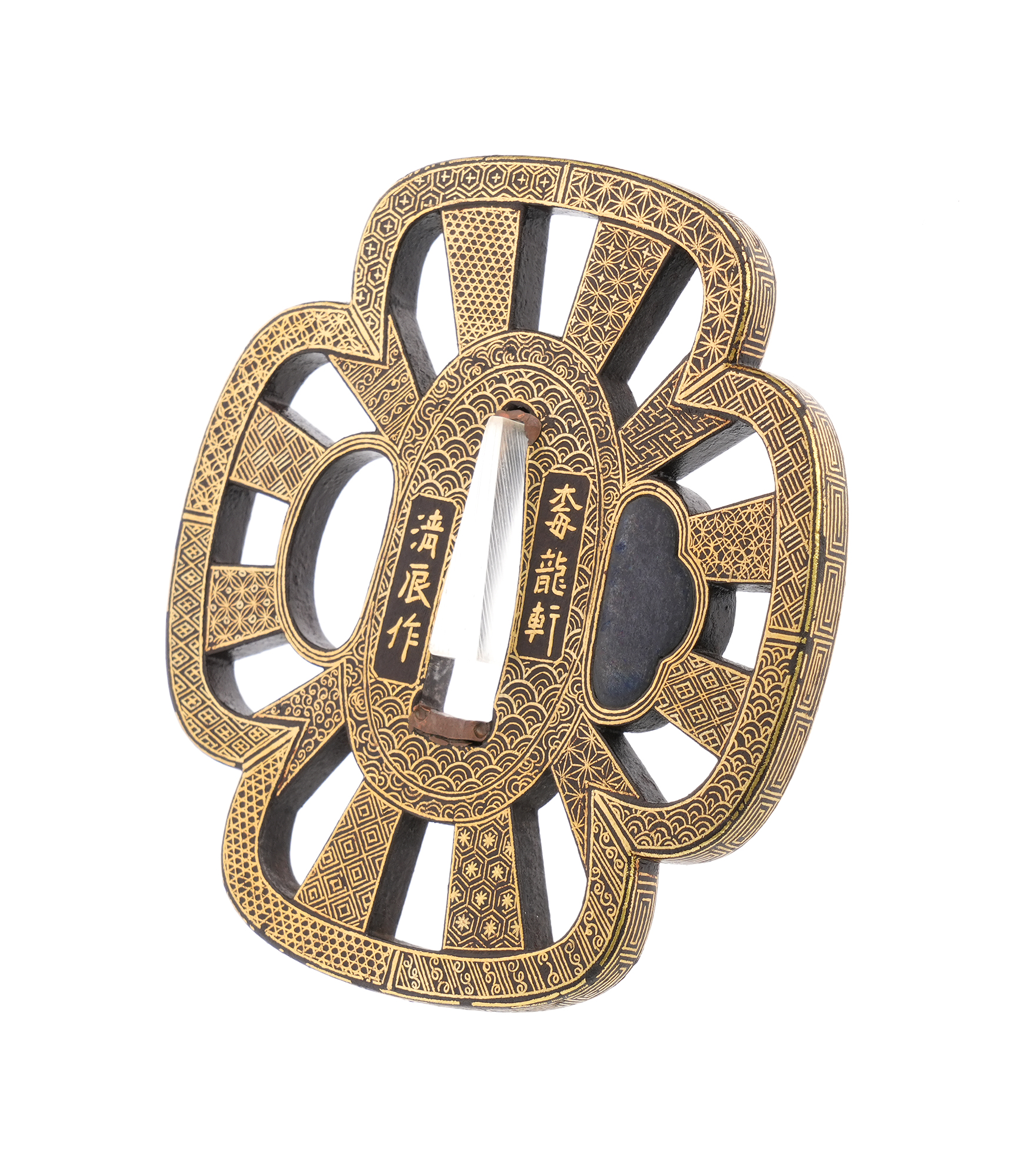
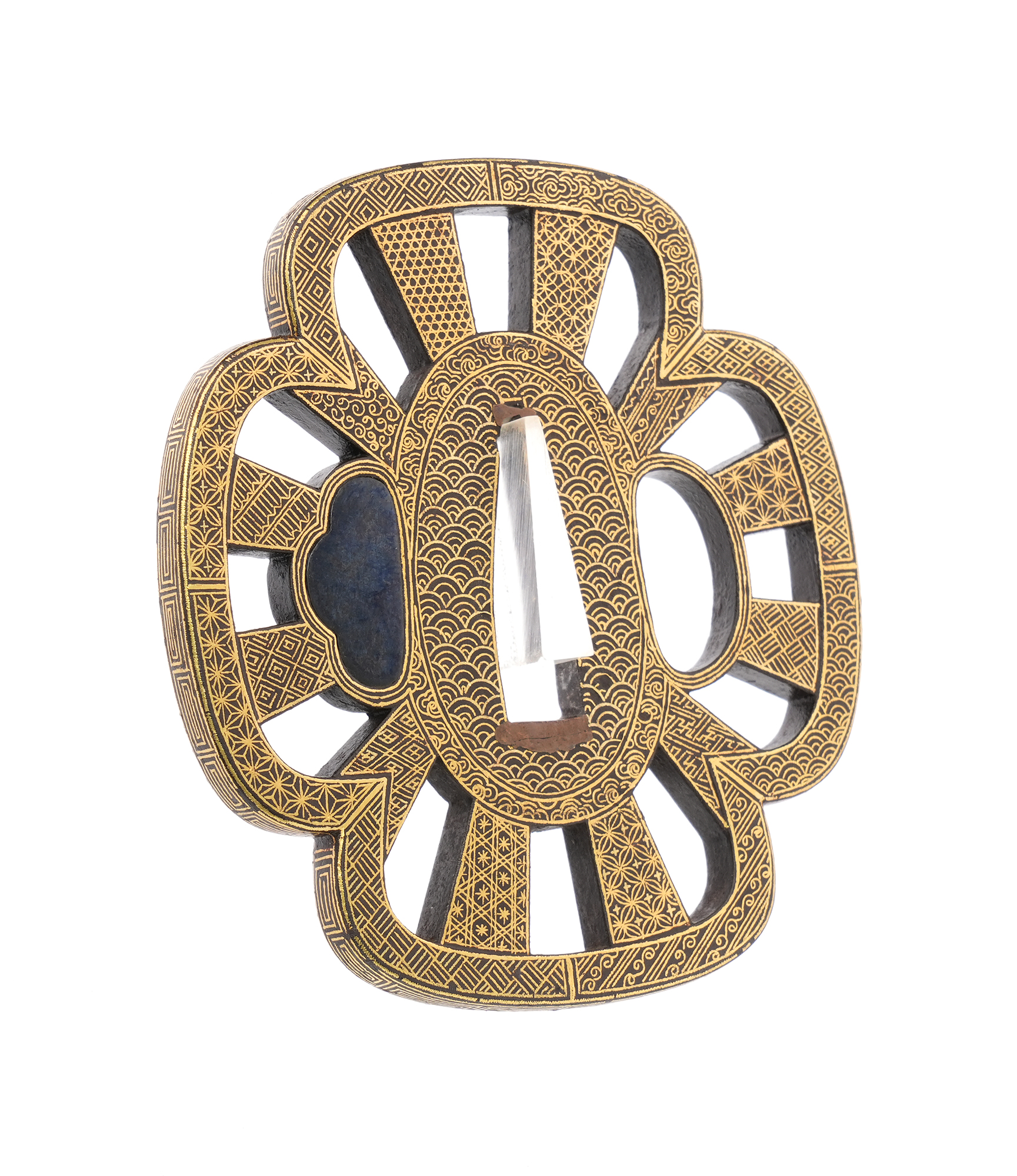
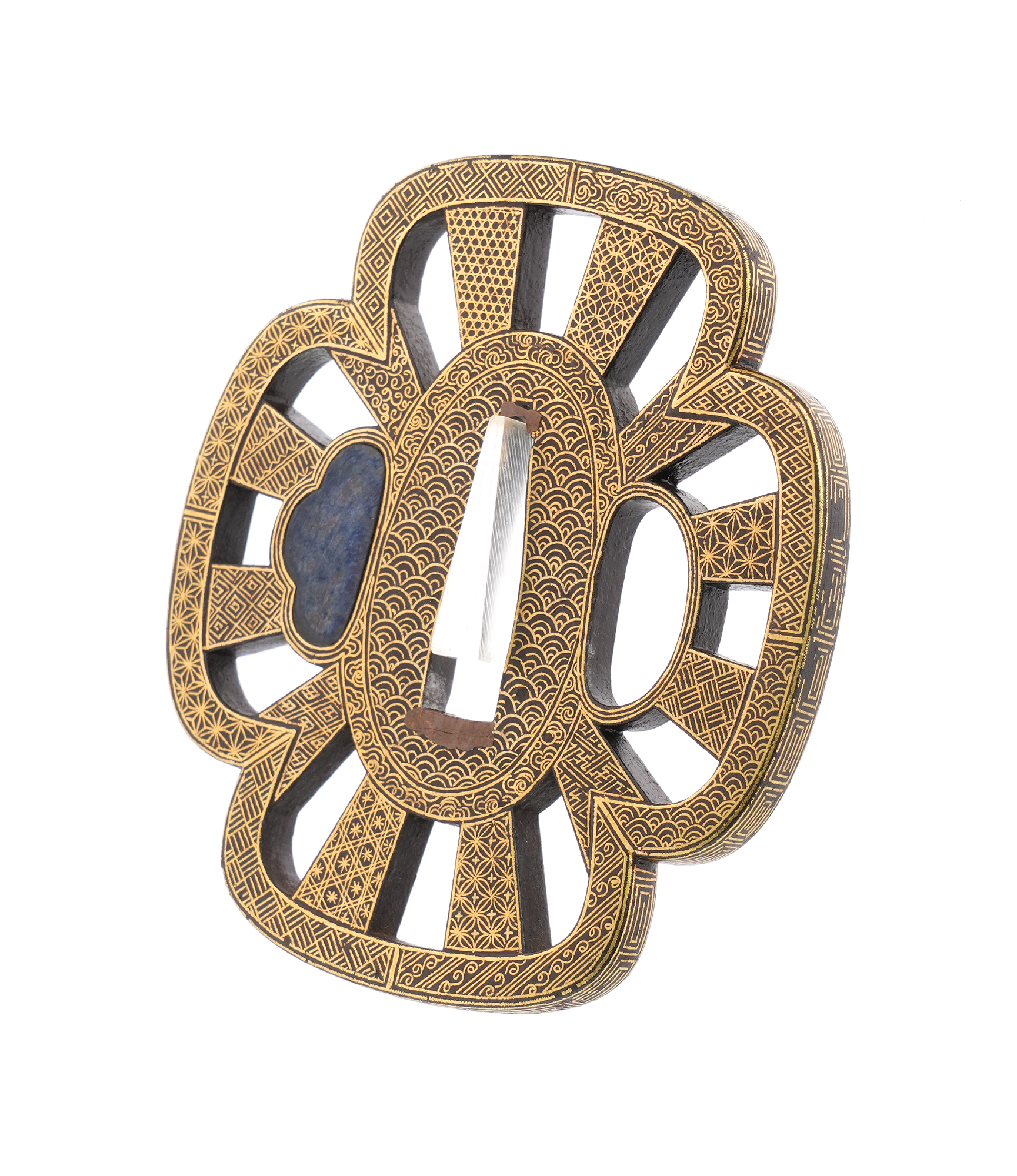
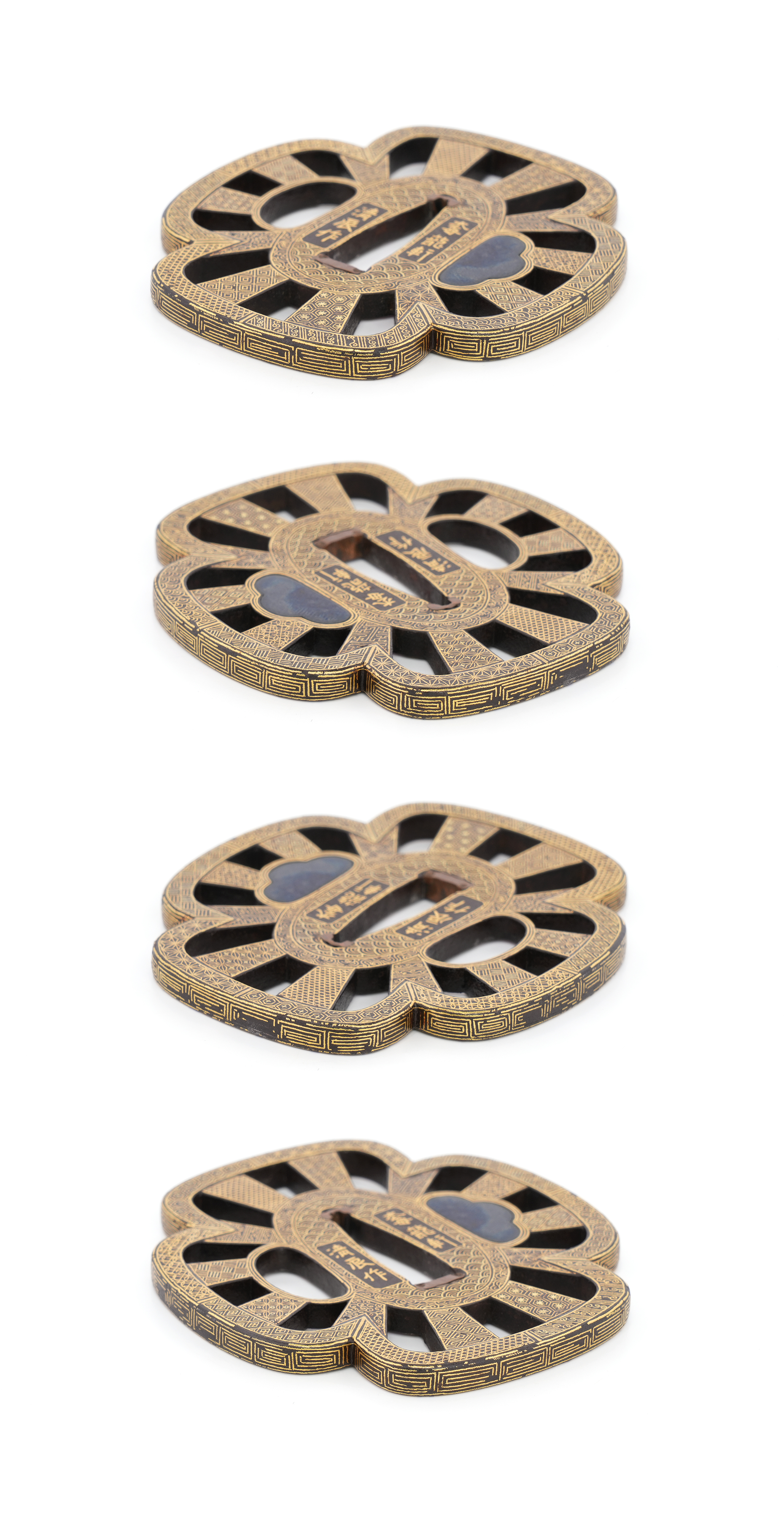
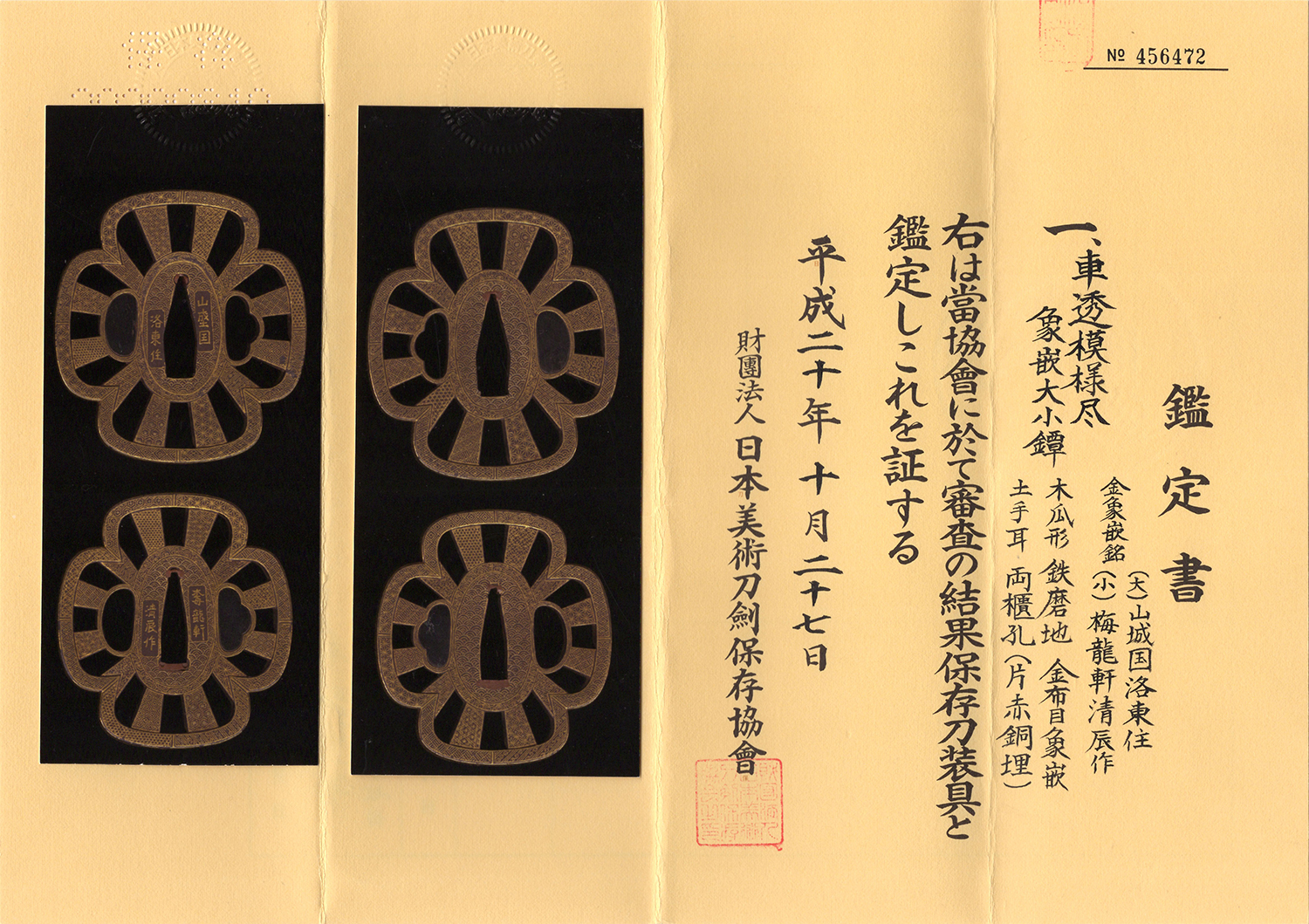
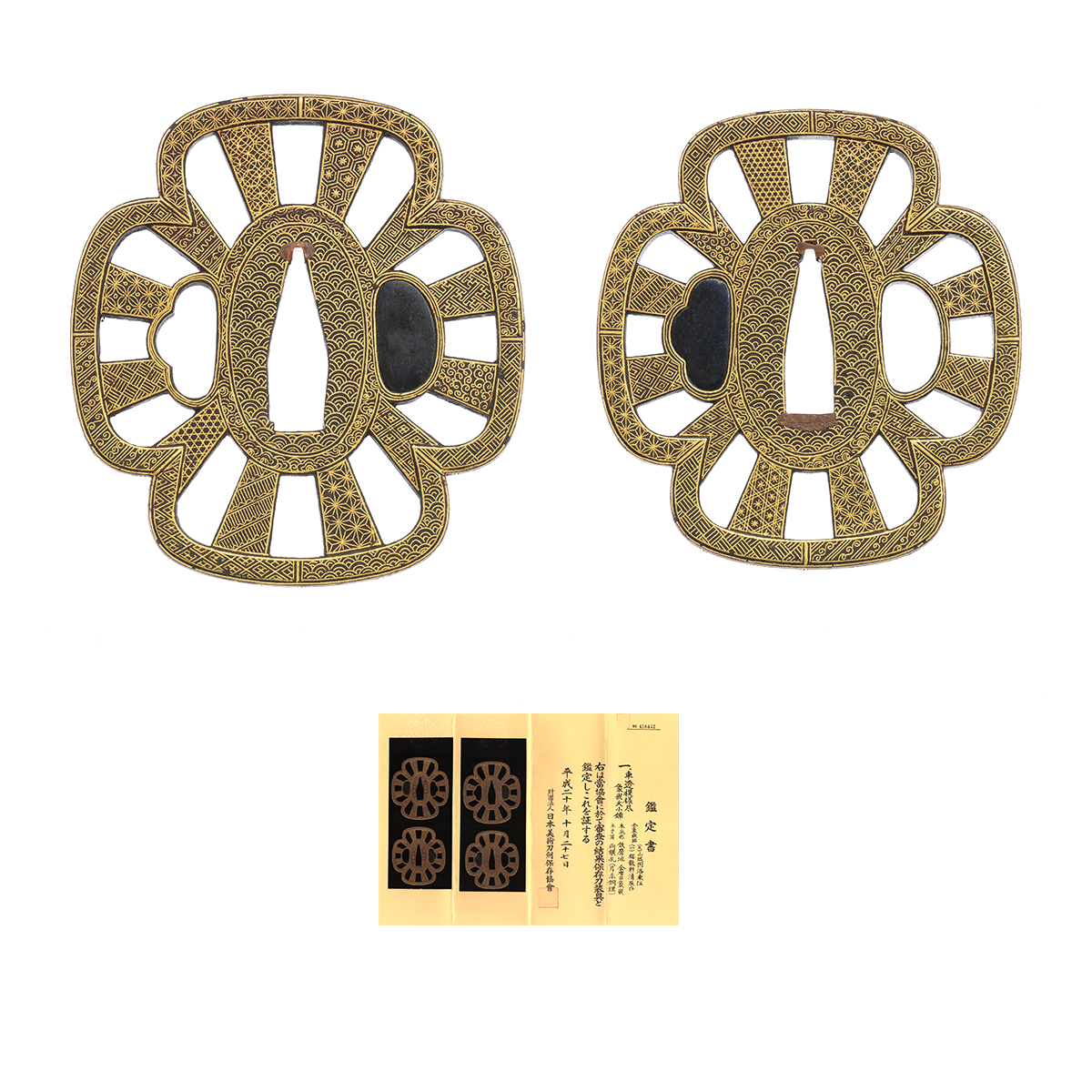
Accompanied by Hozon Tosogu Kanteisho, paulownia wood box. Bairyuken Kiyotatsu was a kinko active in Kyoto, Yamashiro Province during the late Edo period. He is said to be a descendant of the Heianjo Zogan or Kyo Shoami lineages, and is known as a member of a school of zogan masters who applied magnificent nunome zogan in gold and silver to tetsu-ji tsuba. Using the go-mei "Bairyuken," he left behind many works that are dense and rich in decorativeness, and he is evaluated as a skilled hand. This work features a mokko-gata tetsu-ji with kuruma-sukashi, and within each section, various auspicious patterns such as asa-no-ha, shippo, kikkou, seigaiha, and sayagata are arranged. The kin nunome zogan applied to the entire surface is extremely dense, and by skillfully using different designs for each pattern, a rich decorativeness is created. The tetsu-ji is well-forged, the outlines of the sukashi are orderly, and both the dai and sho show a well-proportioned form; shakudo is set in the hitsu-ana, and careful finishing has been applied down to the fine details. The preservation state of the zogan is also good, and it well conveys the gorgeous atmosphere of the time of production to the present day. It is a superior work that skillfully combines diverse auspicious patterns with exquisite kin nunome zogan, and its completeness as a daisho set is high; it well demonstrates the gorgeous style unique to Kyo zogan masters, and it is a masterpiece rich in highlights where one can enjoy the high level of technique and design sense of late Edo kinko.
NihontoWatchBairyuken Kiyotatsu梅龍軒清辰
Offered by Toushin

Its photos show a certificate that isn’t in our records yet. Current NBTHK and NTHK shinsa papers are the independent check we rely on, so it’s worth asking the dealer for a clear photo of the certificate. — Hoshi
As written by the shop
Machine translation from the shop's Japanese · may contain errors ·
Yamashiro · around Edo (mid-late 18c)
The Edo period (1615 to 1868)
Edo was the sword’s age of connoisseurship: the Hon’ami appraisers, the shogunal register of famous blades of 1719, and a thriving literature turned the sword into an object of study even as it ceased to be drawn in war.
We could not find an authenticity certificate on the seller’s listing. Japanese swords and fittings are normally papered by the NBTHK (or the NTHK). Without one, the attribution is the seller’s own assessment and has not been independently verified — treat it with caution and ask the dealer about certification before buying.
As a rule we do not accept returns, except when we have sent a different item from the one ordered or when there is a significant discrepancy between the description and the item. If you wish to return an item, please contact us within 3 days of its arrival and then send it back.
¥1,320,000