 NihontoWatchNihontoWatch
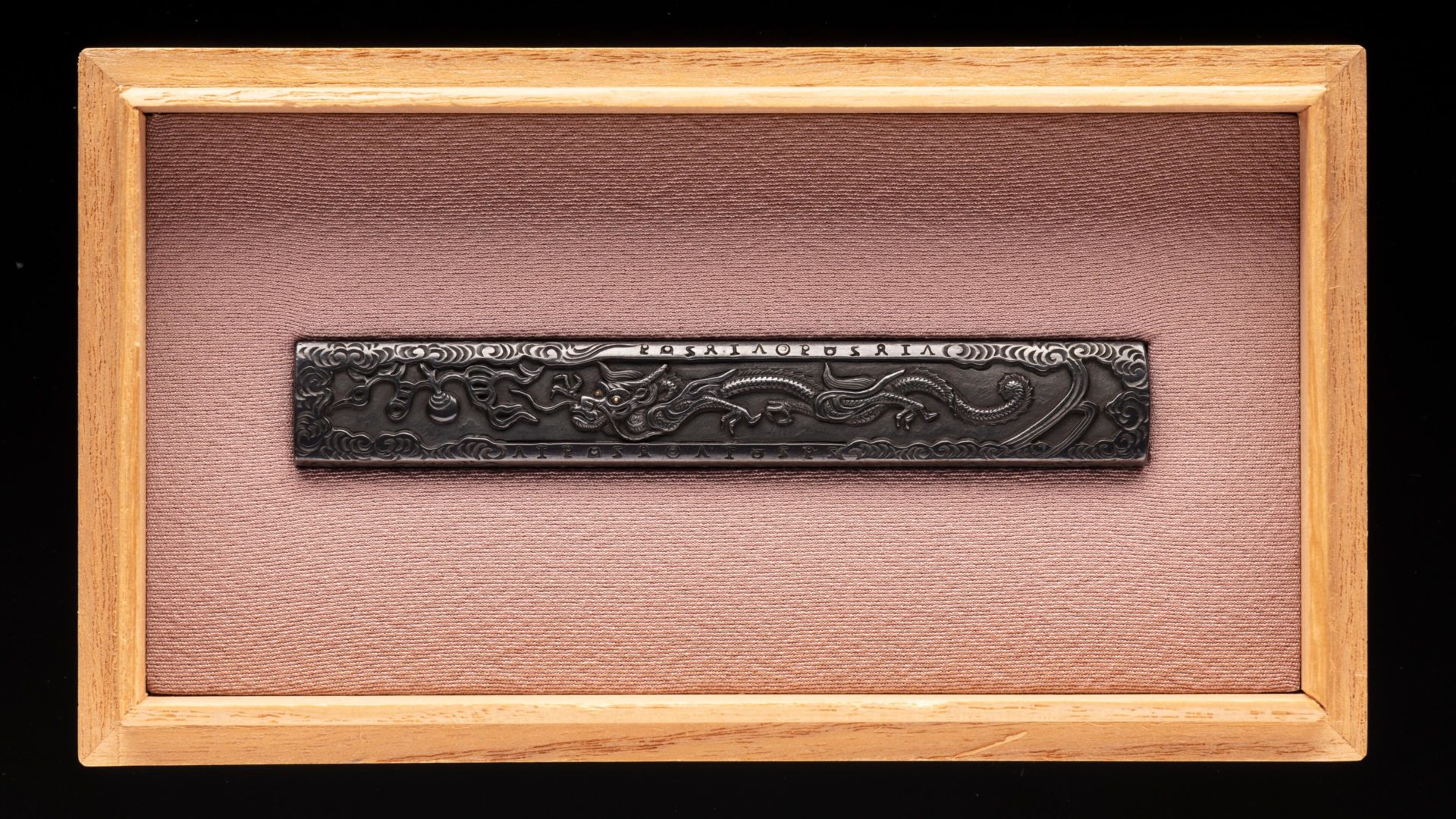
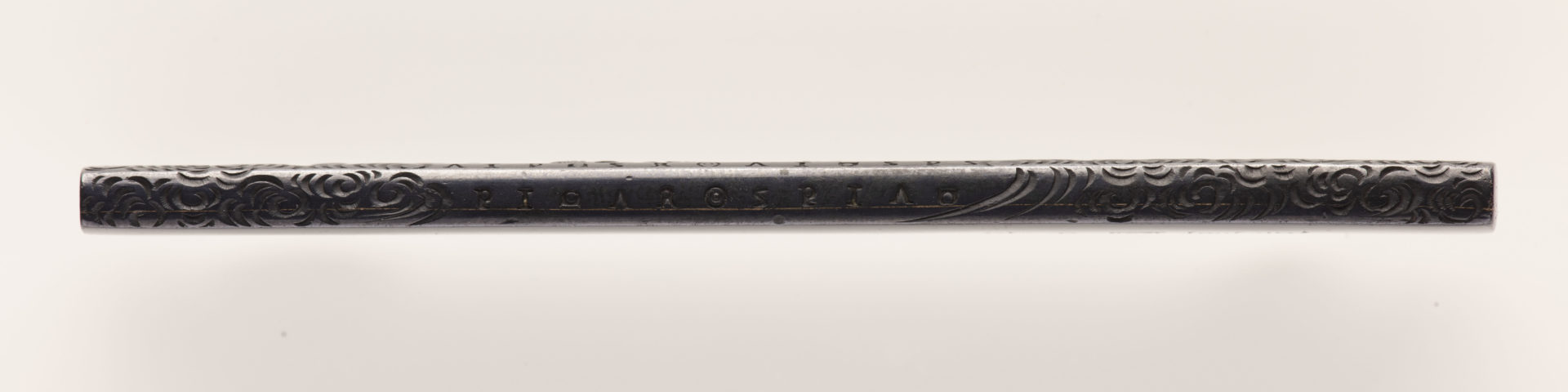
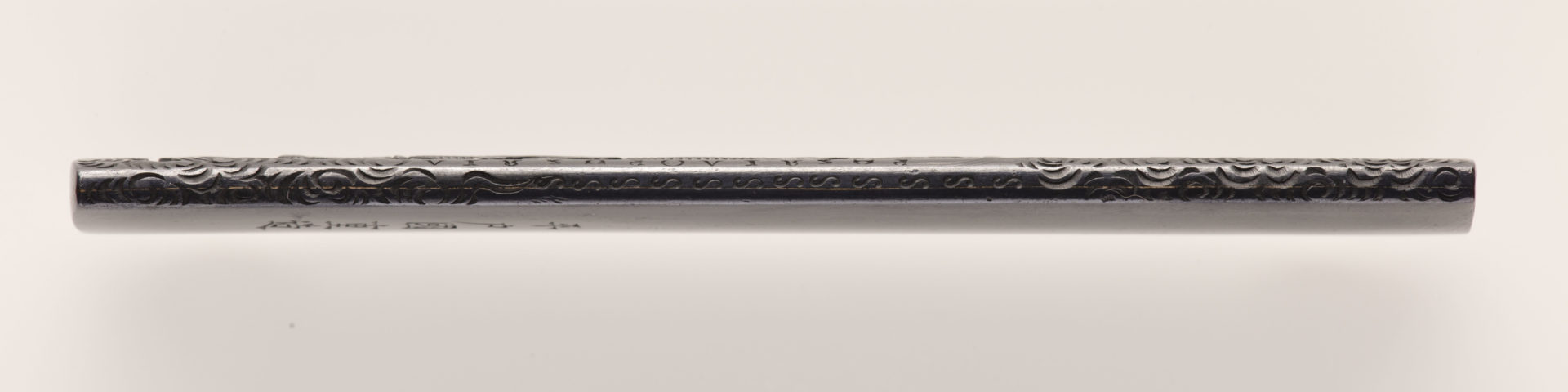
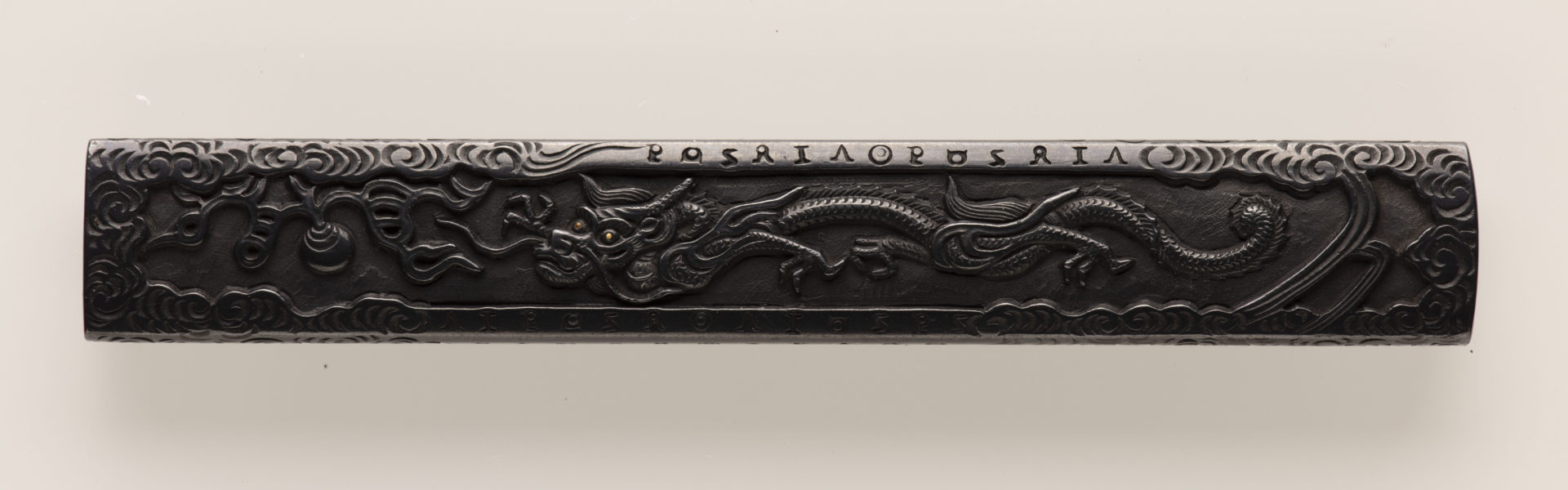
Hirado is an island lying off the coast of Nagasaki, and until the early Edo period, had been a port of call for ships from all over Asia since the Nara period. It’s relevance as a port was magnified with the increased trade with Korea and China in the 14th and 15th centuries, and eventually the Dutch East India Company under the supervision of the Matsuura Clan in the early 17th century. The Dutch and Portuguese stylistic influence on Japanese sword fittings of the were manifested through this trade and a style of work collectively known as “Namban” was popularized in Japan during this time. The European style was exotic and fashionable to the Japanese in many respects and also influenced style of clothing to a lesser extent, and even Japanese armor can be seen to exhibit elements of the European style armor. In his book, “The Japanese Toso Kinko Schools”, Markus Sesko writes that there are thought to be at least two, and maybe three generations working under the name Hirado Kunishige. Markus also notes active work years are around 1716-1736. It is my feeling, that since there are a wide variety of somewhat generic looking signatures, it could be within the realm of possibility that Kunishige perhaps had a number of workers under him to produce works in his name rather than multiple generations. There is an extant tsuba signed Hirado Nagasada which is assumed to be a student. Kunishige works exhibit the “foreign” flare that embodied the fashionable Namban style seen in Hizen province works of this time. The overwhelming majority of Hirado fittings are rendered on brass, likely because brass was a major import product, and thus also in demand, however some works on copper are seen. Works produced on shakudo such at this kozuka are exceedingly rare. In fact among the many Kunishige works I have seen over the past couple of decades, this kozuka, (and a set of fuchi kashira set that will also be listed), are the only two examples of Hirado works on shakudo that have encountered. It is a very high quality shakudo with a rich depth of blue/black color and nice luster. The carving is also skillfully rendered and travels over the front side and onto the edges. This element of design demonstrates the caliber of carving skill Kunishige held. His signature is also confidently and adroitly rendered in crisp, deep strokes that illustrate a more careful and formal result that I am used to seeing among other Kunishige specimens. Also, the addition of the final kanji, “tsukuru”, is seldom seen. Thus, with this additional kanji, the careful carving of the signature, and the choice of shakudo, I consider curiously that this might have been a creation that was more special in nature and intent than that of the more common production we see bearing his name. This kozuka was featured in the NBTHK’s monthly journal, Token Bijutsu, in issue number 647, December of 2010, as a prominent part of an article illustrating Kunishige’s work. It is fitted and held in a nice Palownia wood box and is accompanied by NBTHK Hozon papers attesting to it’s authenticity and quality.
NihontoWatchOffered by Legacy Swords

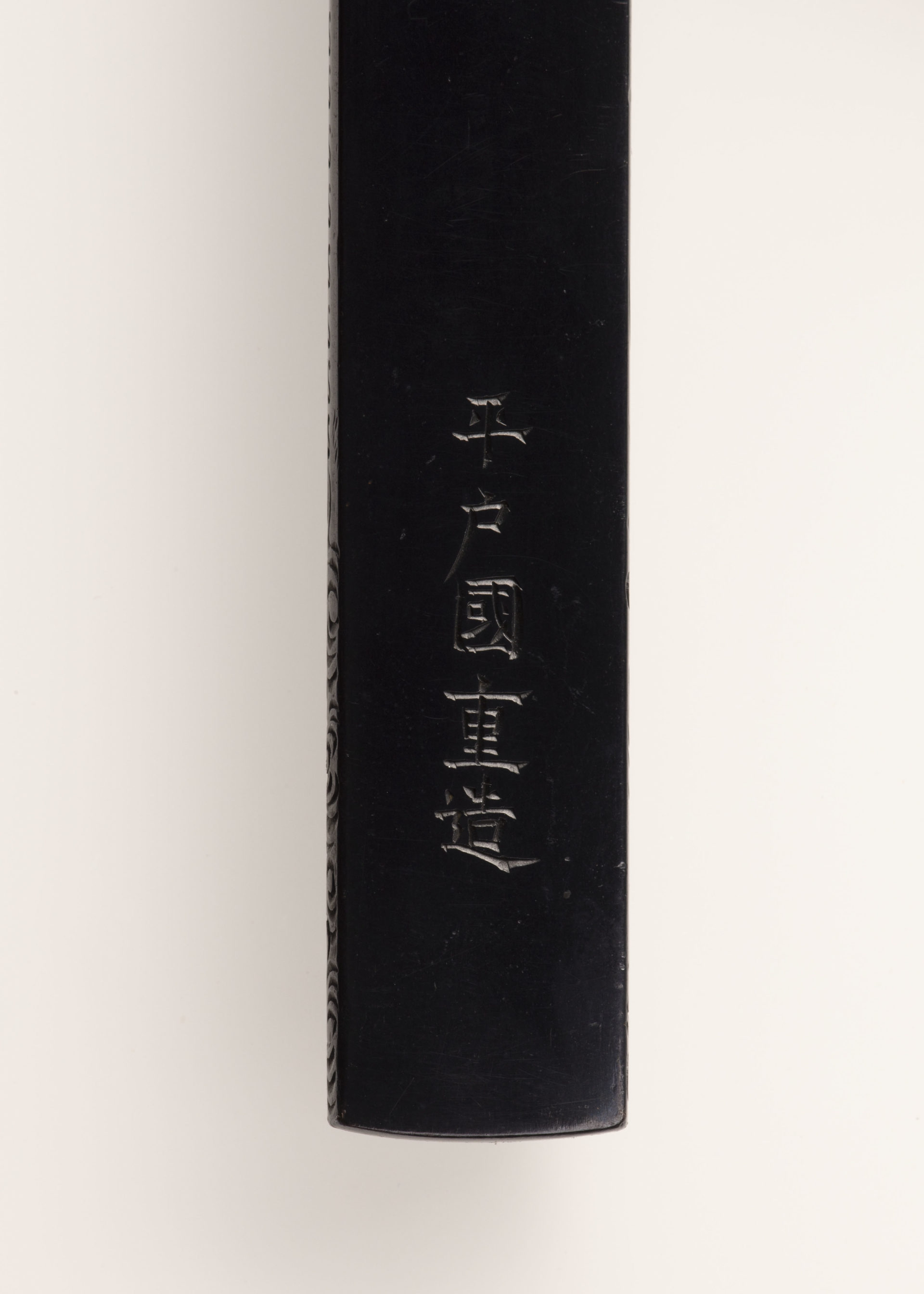
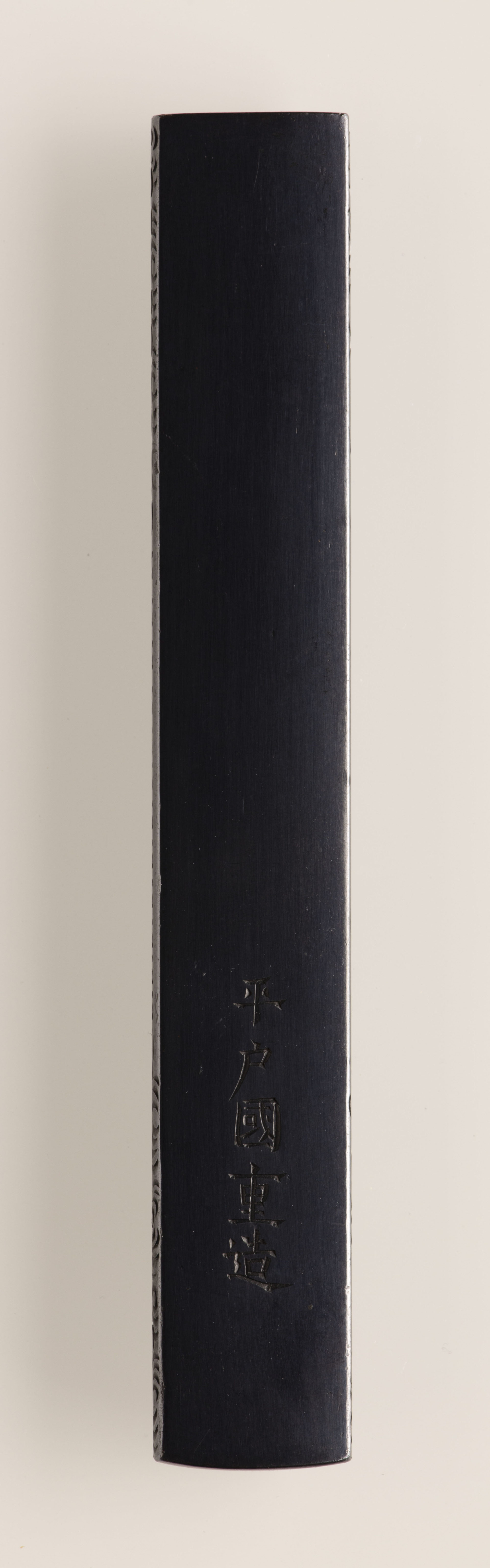
Hirado Kunishige
Edo
Hizen
Signed
Hozon (NBTHK)
Kinko
3 pieces on the market now
Where Kunishige stands among comparable artisans: across all of nihontō, and within tradition, era, and period. The tiers (Foremost · Leading · Major · Notable) weigh official designations from the NBTHK and Japan's Agency for Cultural Affairs, together with historical honors of lasting repute such as the Sansaku and Meibutsu-chō.
Select a lens to see how it's measured.
Kinko · Hizen
4 pieces on the market now
| Smith | Era | Designated |
|---|---|---|
| Kunishige国重 | — | 1 |
Certifies a genuine fitting worth preserving: a correct signature, or, if unsigned, an identifiable era and school, with recognized artistic and craft value.
The NBTHK (Nihon Bijutsu Tōken Hozon Kyōkai, the Society for the Preservation of Japanese Art Swords) is a public-interest incorporated foundation founded in 1948 and supervised by Japan’s Agency for Cultural Affairs (Bunkachō); it is based at the Japanese Sword Museum in Tokyo. Its expert panels physically examine each submitted work (shinsa) and issue a certificate (kanteishō) ranking it by artistic and historical merit. NBTHK papers are the most widely recognized standard of authentication for Japanese swords and fittings.
NBTHK official site