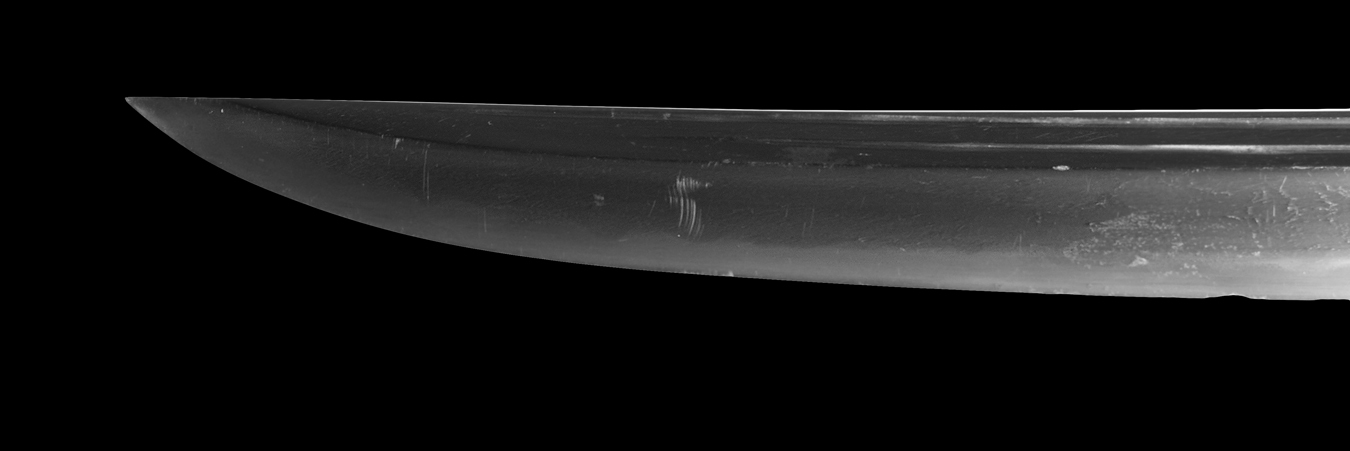
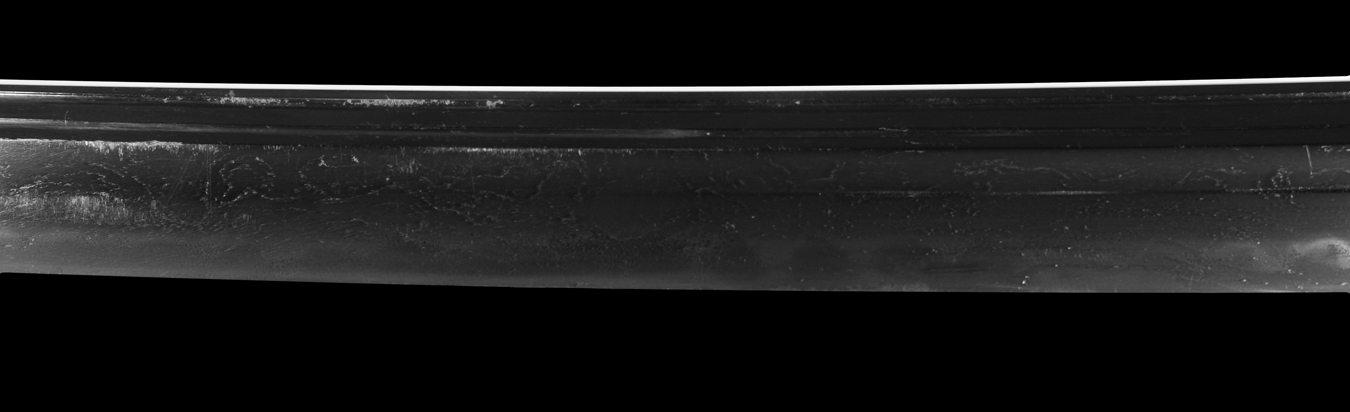
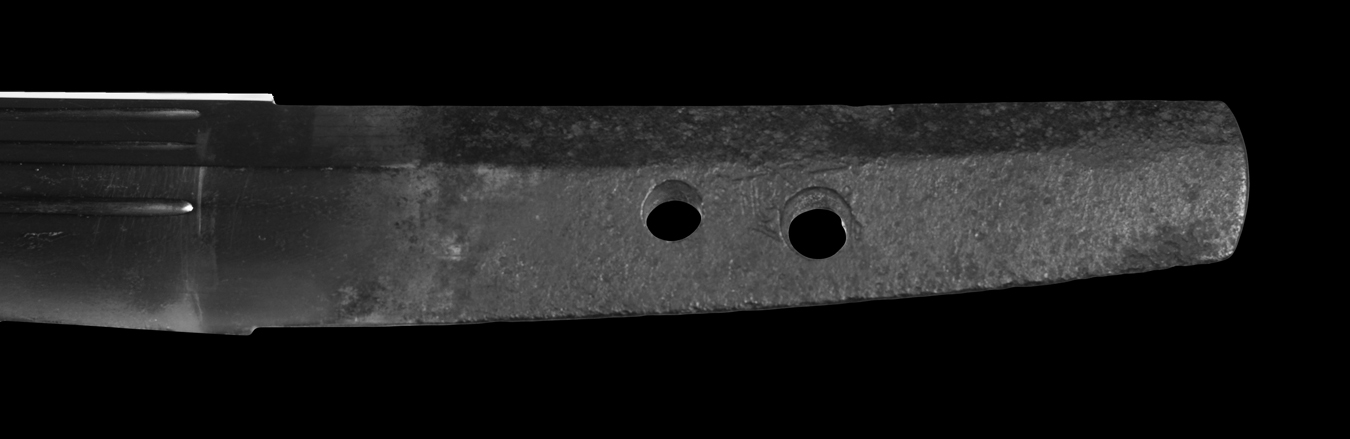
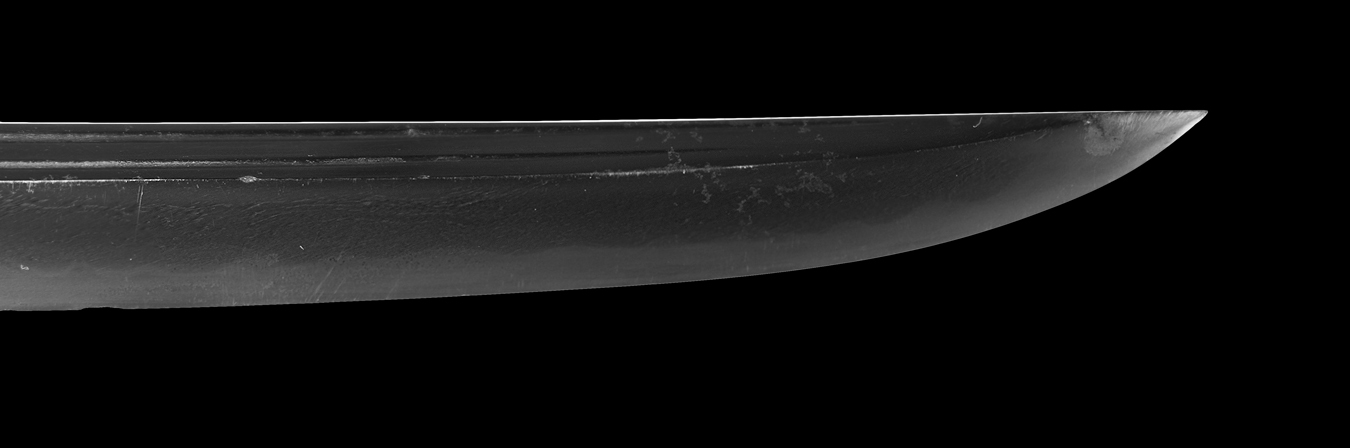
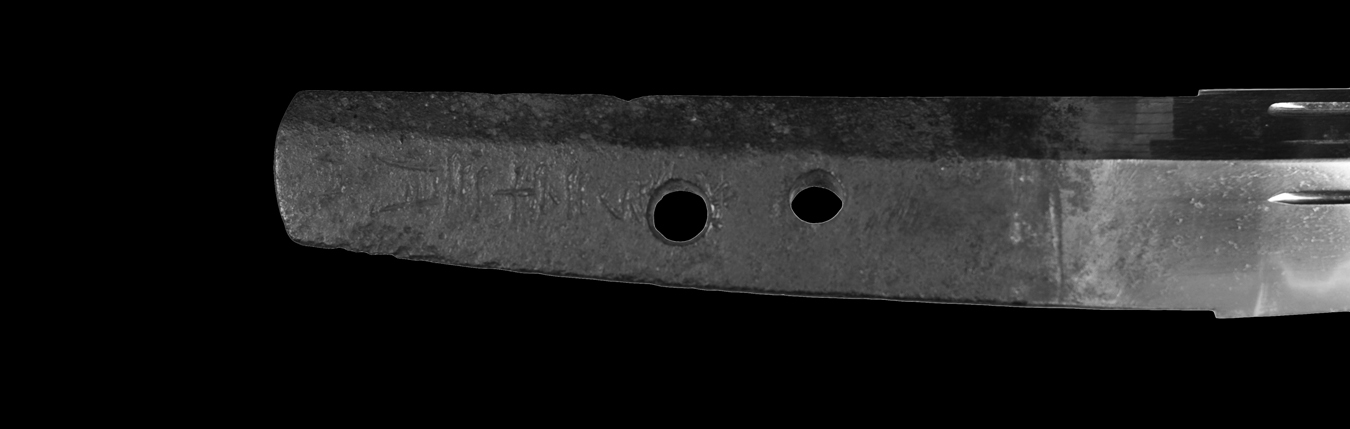
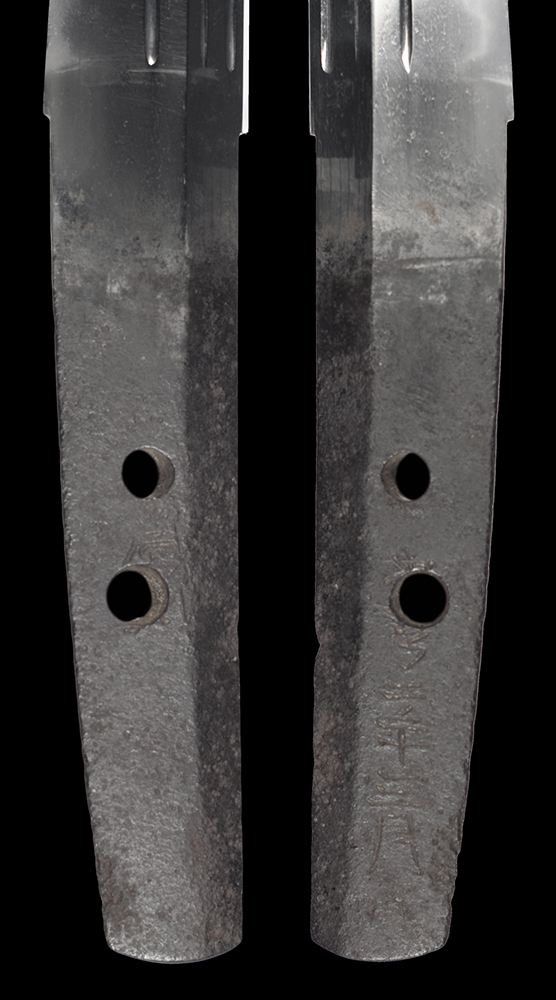
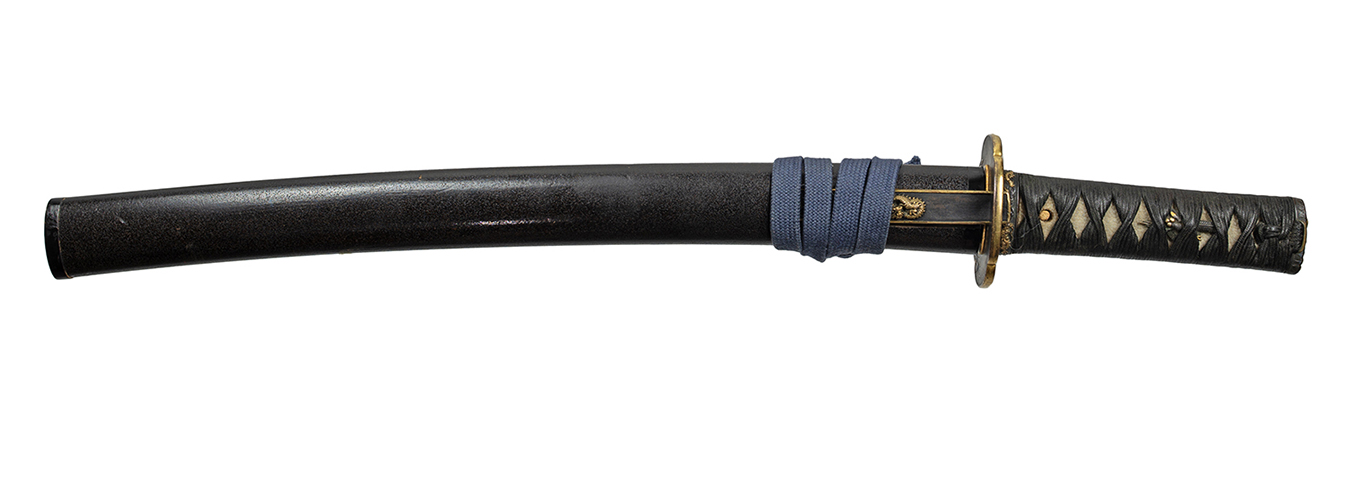
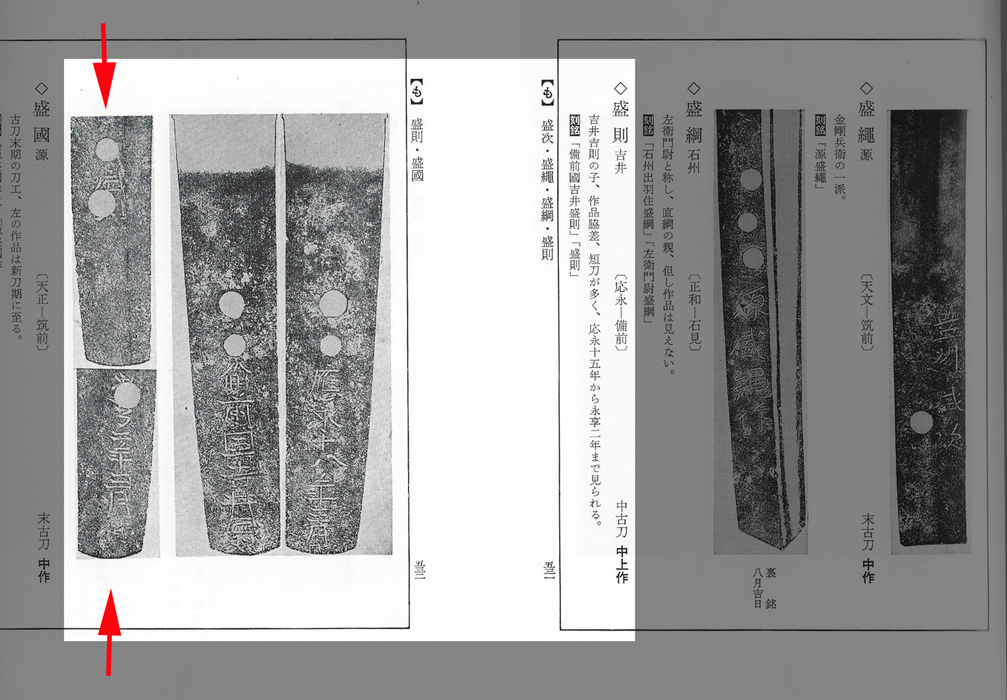
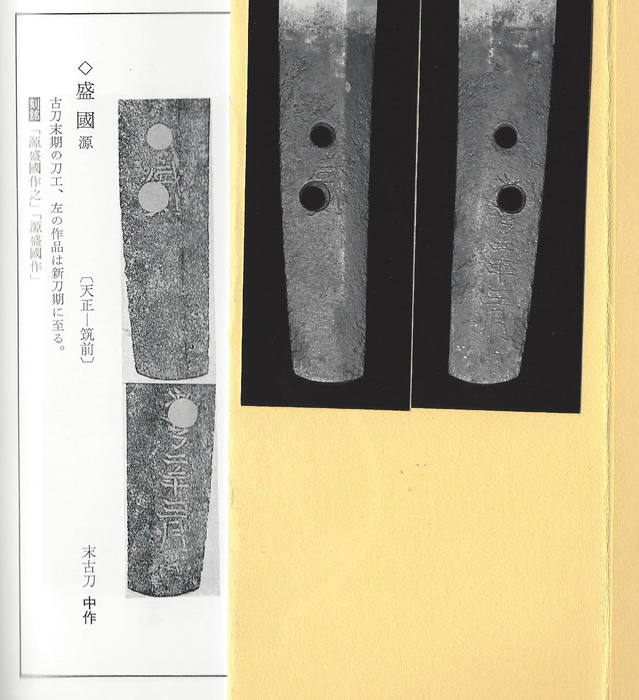
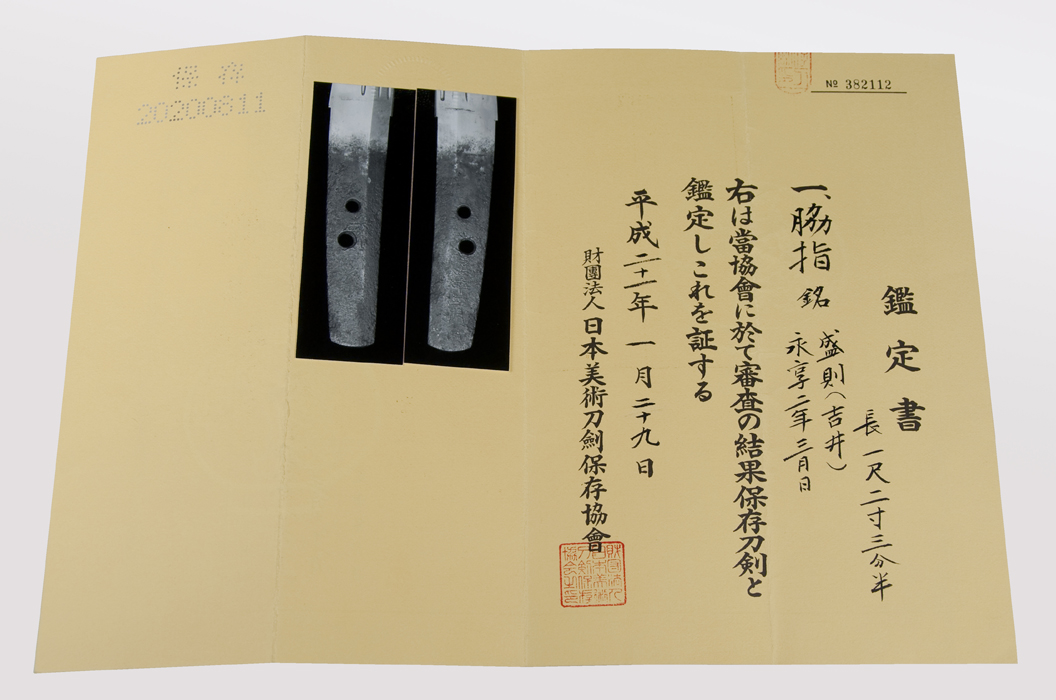
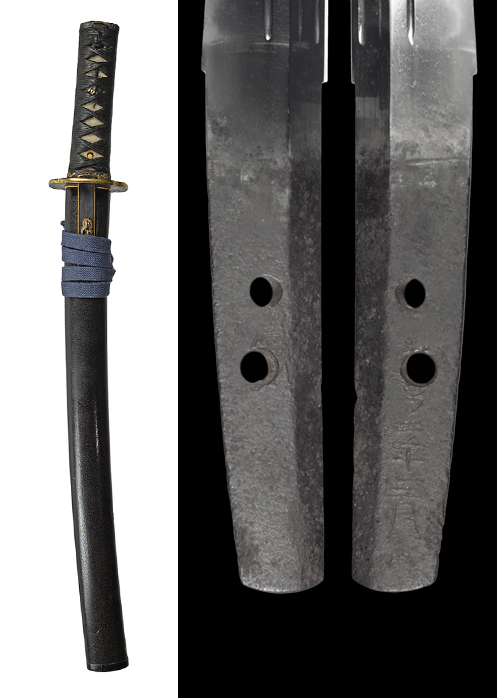
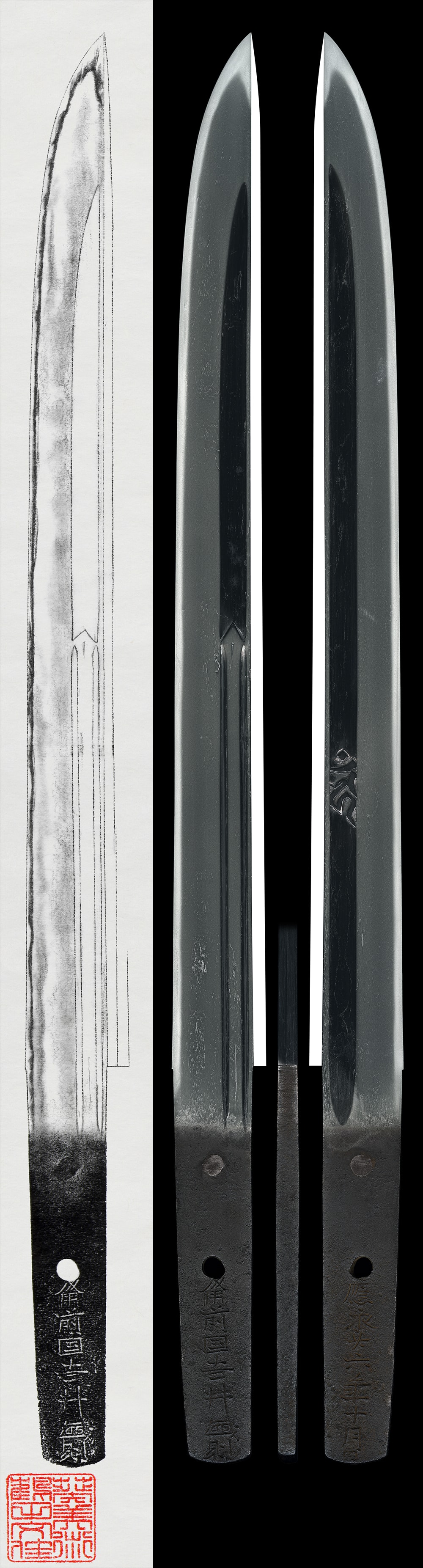
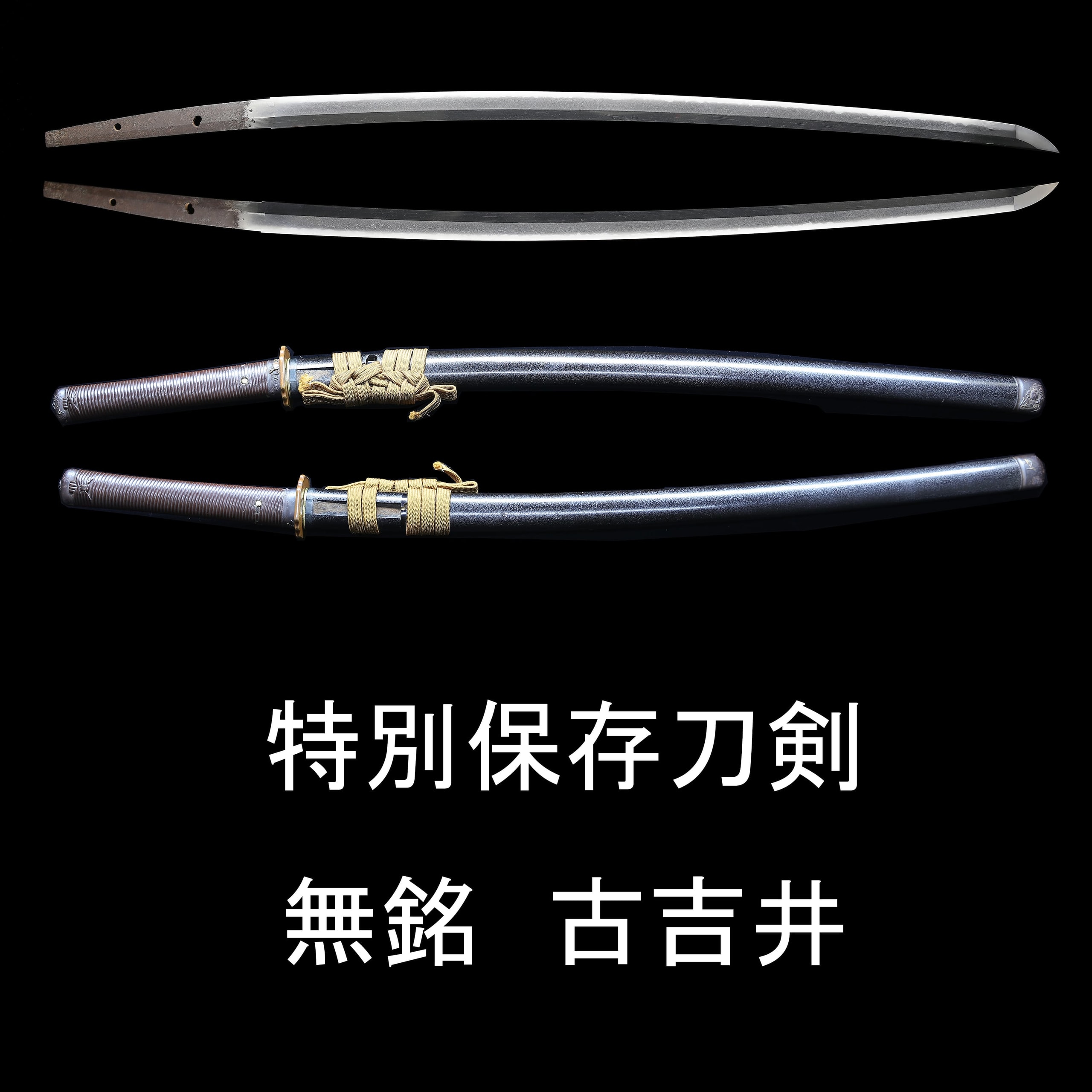
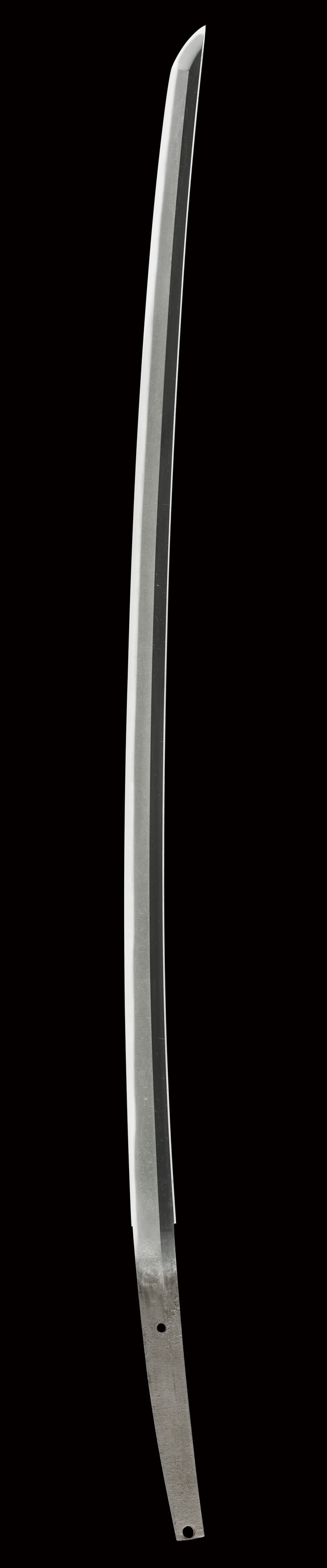
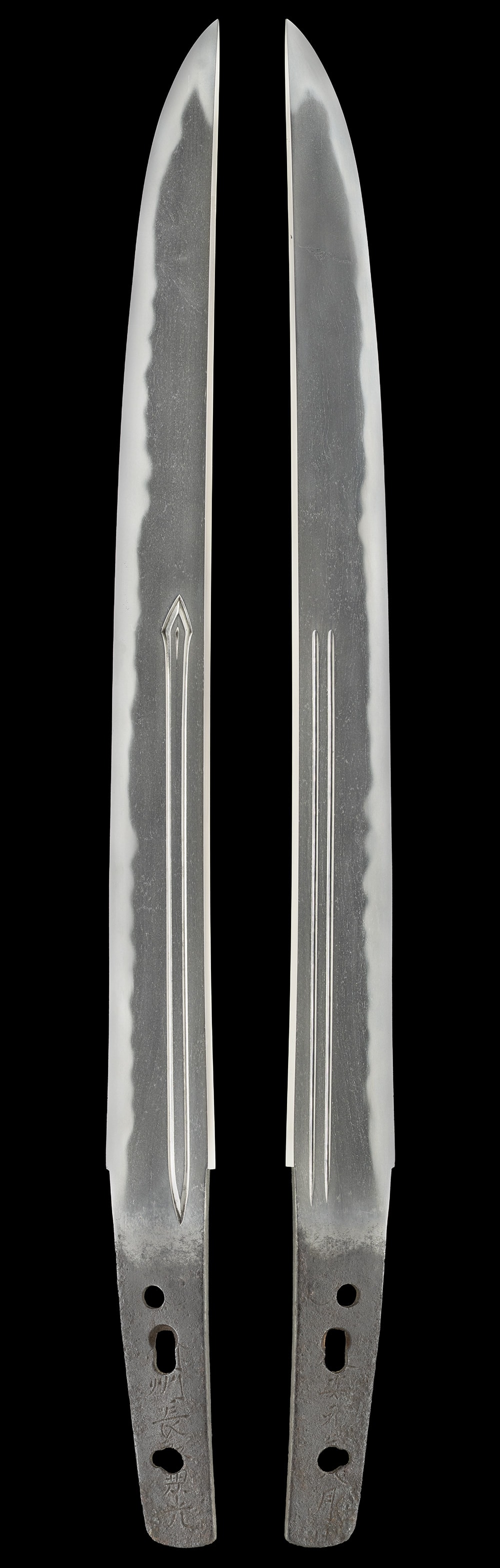
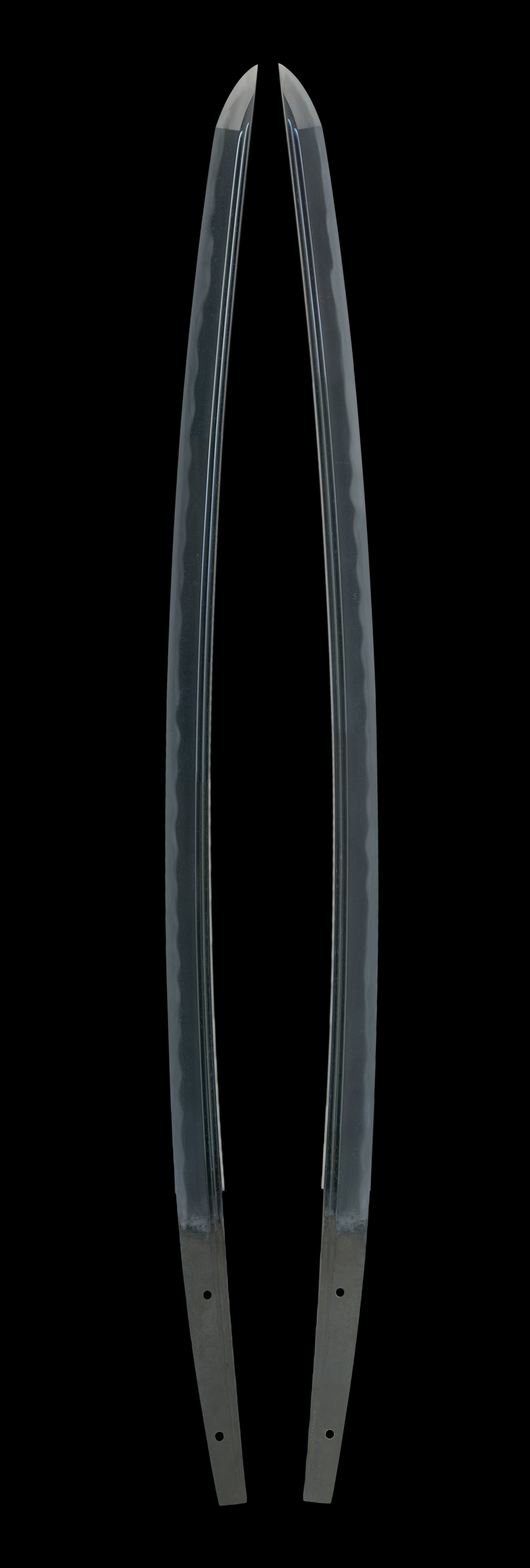
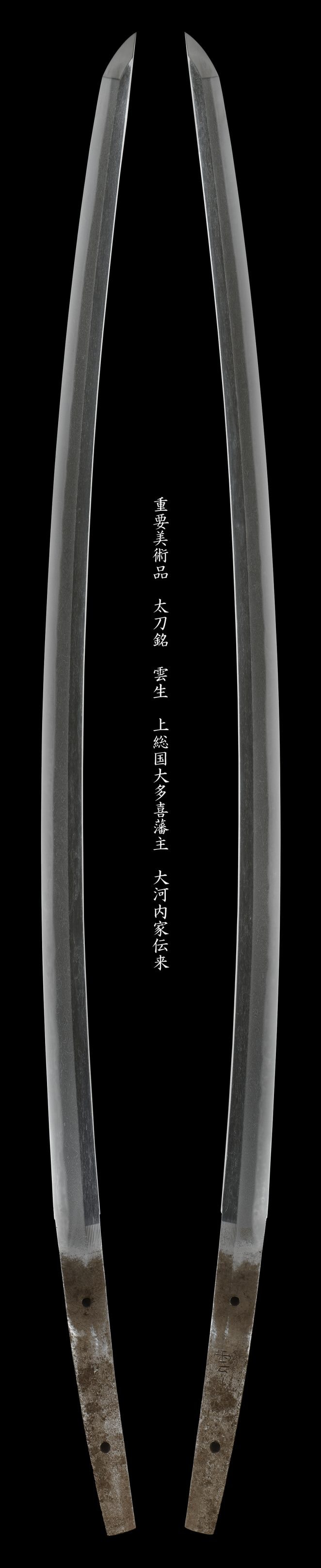
Morinori of the Bizen Yoshii group signed his earliest surviving blade Bizen Province resident Yoshii Morinori and dated it the eighth month of Eiwa 4, a year corresponding to 1378, and from that tachi of the late Nanbokucho his work runs forward into the Oei era of the early fifteenth century in a small body of signed and dated pieces. Because none of his datable work descends beyond the Nanbokucho, the published sources place him among the Ko-Yoshii, the older tier of the school that the NBTHK separates by name from the plainer Yoshii production of the full Muromachi period. The Yoshii group is traditionally held to have begun with Tamenori in the late Kamakura period, though works that far back are exceedingly rare, and within the surviving body it is the Ko-Yoshii pieces of the fourteenth century, Morinori's among them, that carry the school at its finest. One of his katana, whose individual portion of the folded-back signature has been cut away, is appraised from the calligraphic style of the remaining characters as the work of the Ko-Yoshii Morinori who was active around the Meitoku era of the 1390s.
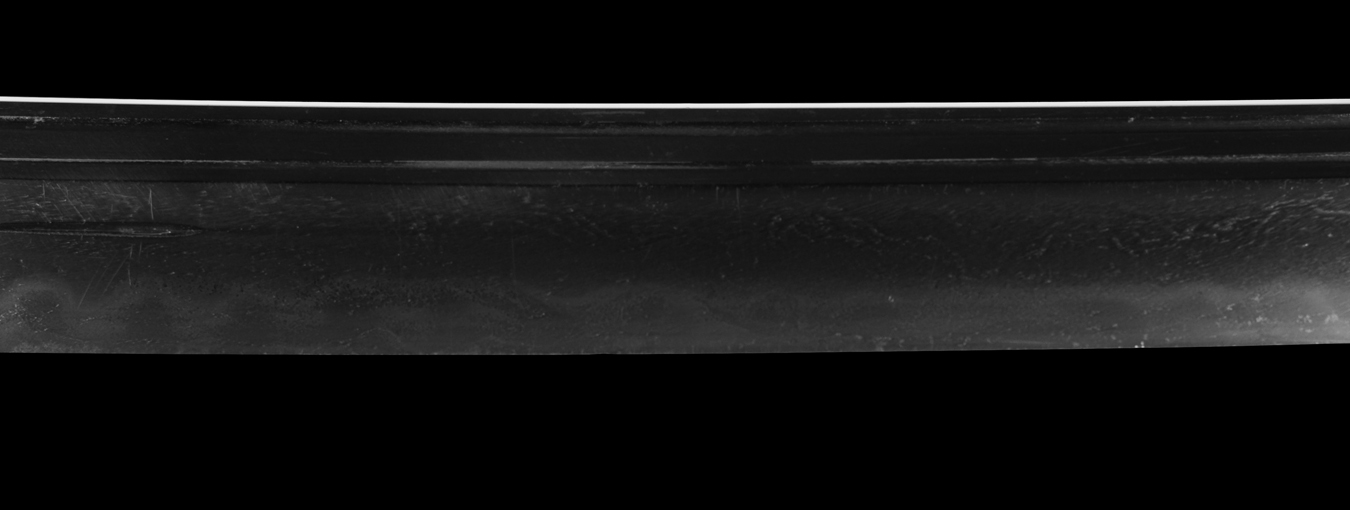
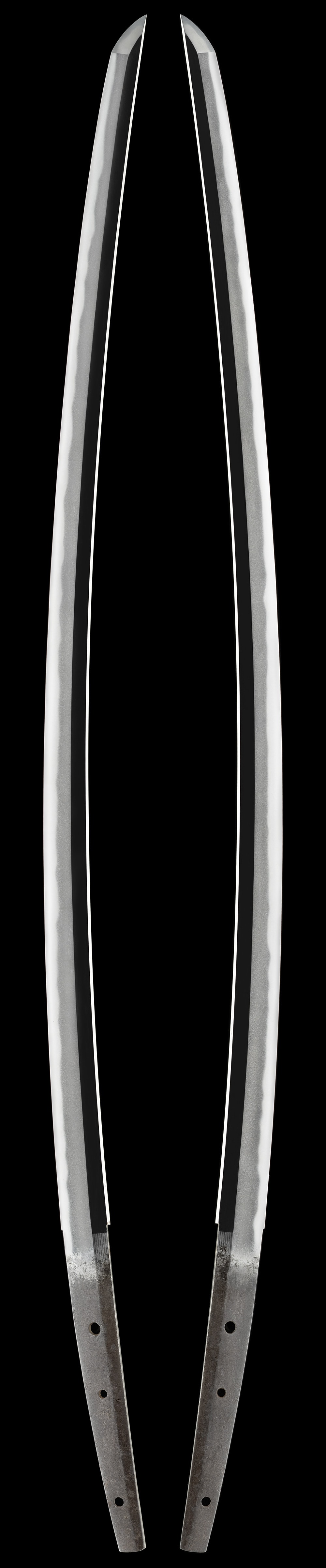
His recognized hand is the school's own face read at its peak, and the published sources locate its heart in two things. The first is the temper, a gunome linked in an orderly, continuous run, of which they write that "the greatest point of appreciation lies in the way the gunome are linked in a regular sequence[[c:1]]". On his broader katana this becomes a ko-gunome carried in a regular, repeating line with slight variation in the individual forms, the row mixing in somewhat pointed elements, with ashi and yo entering, the nie standing strongly so that the habuchi loosens here and there into hotsure, and frequent sunagashi running through it with kinsuji entering the temper. On the Eiwa tachi the same hand reads as a gunome-midare mixed with pointed elements, the form already showing the variation that marks his row apart from a placid suguha. The second hallmark lies in the ji, where the school raises an utsuri the published sources call distinctive among all Bizen works[[c:2]], one in which "the very shape of the hardened edge appears as though cast as a shadow[[c:3]]" into the steel, so that the reflection seems to repeat the outline of the temper rather than the soft, cloud-like midare-utsuri of the Osafune mainstream.
The jigane beneath that utsuri is an itame that flows and stands somewhat in the grain, at times taking on an ayasugi-like tendency that the published sources count as a further tell of the Yoshii jigane, with ji-nie applied and chikei entering, and on one katana mokume mixed into the itame and the whole forged tightly and well consolidated. Across his recognized work the boshi enters in midare-komi and turns back in a small ko-maru or a slightly larger o-maru, on one blade running off into hakikake at the tip and on another with kinsuji entering the turn. He carves a bo-hi on both faces of his longer blades, terminated in maru-dome on the Eiwa tachi and run off in kaki-nagashi on the later katana. The signatures are long mei cut toward the mune, and where the blade has been shortened the long signature survives folded back as an orikaeshi-mei, the device by which several of his pieces have kept their attribution through the loss of their original tang.
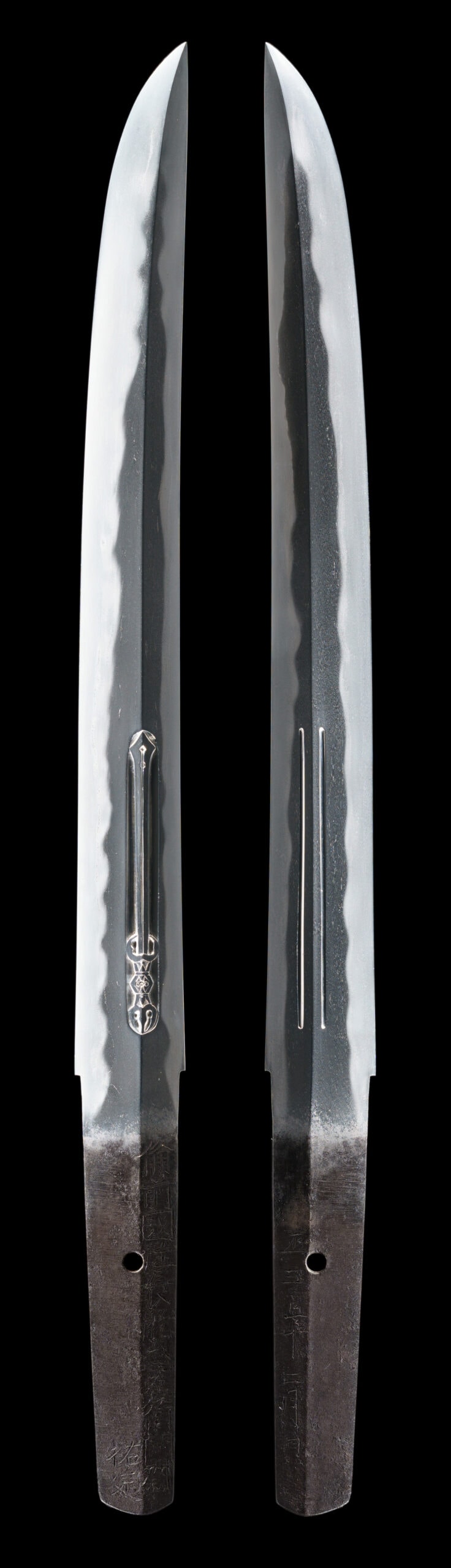
Apart from this prime hand the published sources record a quieter signed register in his Oei tanto, a register the kantei must hold separately from the linked gunome. The dated tanto is hira-zukuri with mitsu-mune, slightly extended in proportion as sun-nobi and with almost no curvature, over an itame that flows toward the edge and is tightly forged throughout, the ji-nie adhering and the temper a narrow suguha in ko-nie, the boshi straight and turning back in a rounded form. On its omote he cut a kawari-hi and on the ura a suken carved in relief within a katana-hi, the relief work giving the small standard-form blade its principal point of interest. The published sources read this tanto as a well-composed work of small, standard form, and value it, together with the Eiwa tachi, as a dated piece that fixes his period of manufacture, the two inscriptions bracketing his career from the late Nanbokucho into Oei.
What sets Morinori apart from the rest of fourteenth-century Bizen is therefore not power or flamboyance but the particular Yoshii combination his own blades carry. While the other Bizen branches were drawn through the Muromachi period into the consolidated Osafune mainstream, the Yoshii group alone continued and held its distinctive linked gunome and its school utsuri, and Morinori stands among the dated Ko-Yoshii smiths whose signed pieces fix that late-Nanbokucho manner. On his finest katana the published sources find not only this smith's hand but the characteristic style of the entire group clearly shown, in the ayasugi-tending jigane, the reflected utsuri and the regular gunome strongly covered in nie with frequent sunagashi, and they judge both ji and ha sound. His name continues forward into the Muromachi Yoshii line beside Kiyonori and the other dated hands of the school, so that he reads as one of the documentary anchors by which the older Ko-Yoshii is told apart from the later production carrying the same name.
Morinori's work survives in a small number of signed and dated pieces, four of them papered to the Juyo rank across the twenty-second, twenty-eighth and fortieth sessions, the inscriptions running from Eiwa 4 in 1378 through the Oei era. The Fujishiro appraisers rate him at the chu-jo saku level, a standing above the average run of the school's hands, and the published sources reserve their warmest assessment for his fortieth-session katana, of which they write that its "ample, robust and sound form is excellent, and along the habuchi strongly lustrous nie glitters, the workmanship outstanding[[c:4]]". None of his blades carries one of the higher cultural-property designations, and none carries a recorded daimyo provenance, so his pieces belong to the upper-Juyo tier rather than to the museum-held patrimony of the great Kamakura names. For a private collector this means a dated, signed Ko-Yoshii Morinori, when one of the few survives to come to market, is an attainable rather than an unreachable thing, though it appears only from time to time and rewards patience, valued less for rarity of name than for being a signed and datable witness to the late-Nanbokucho Yoshii hand at its most characteristic.