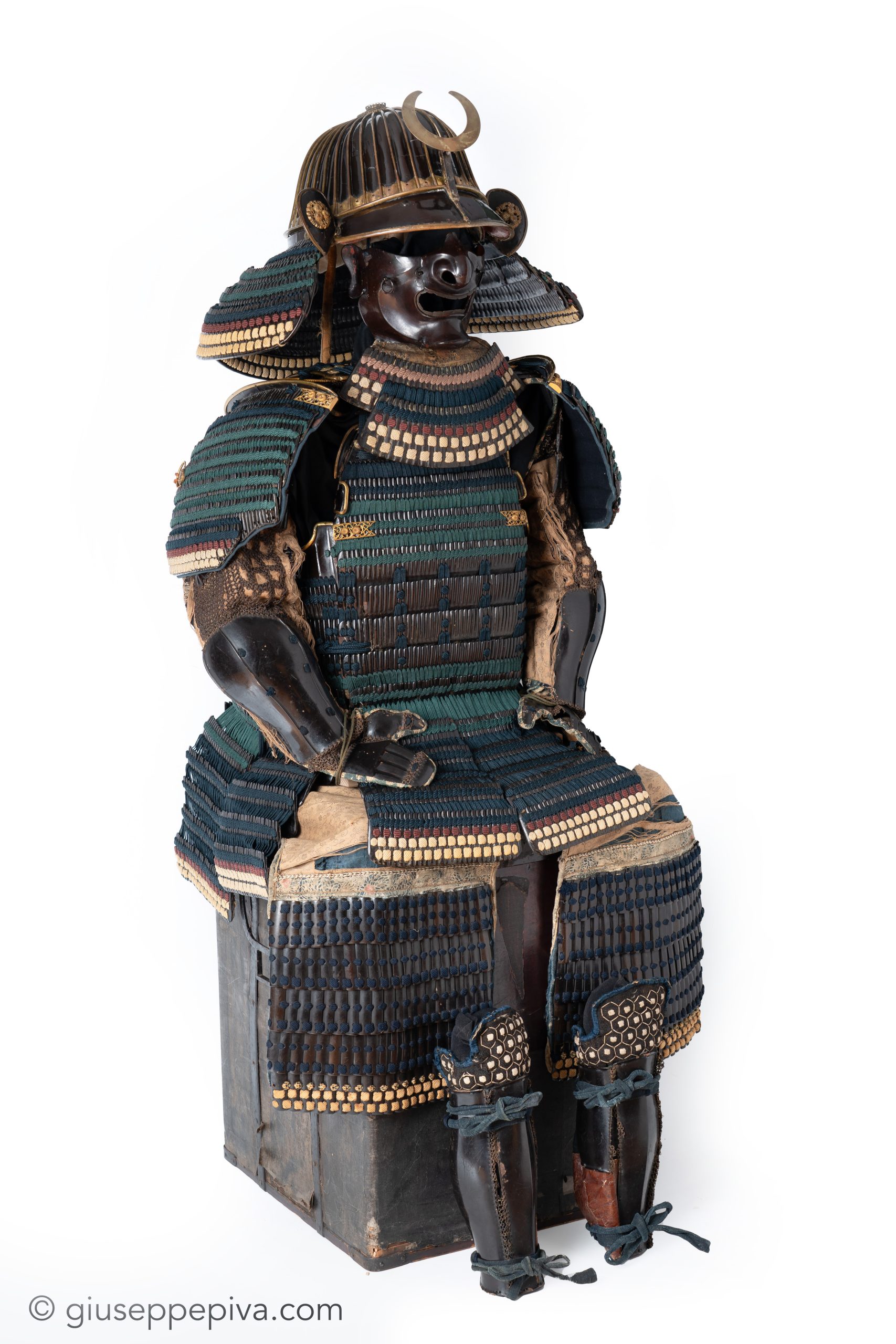
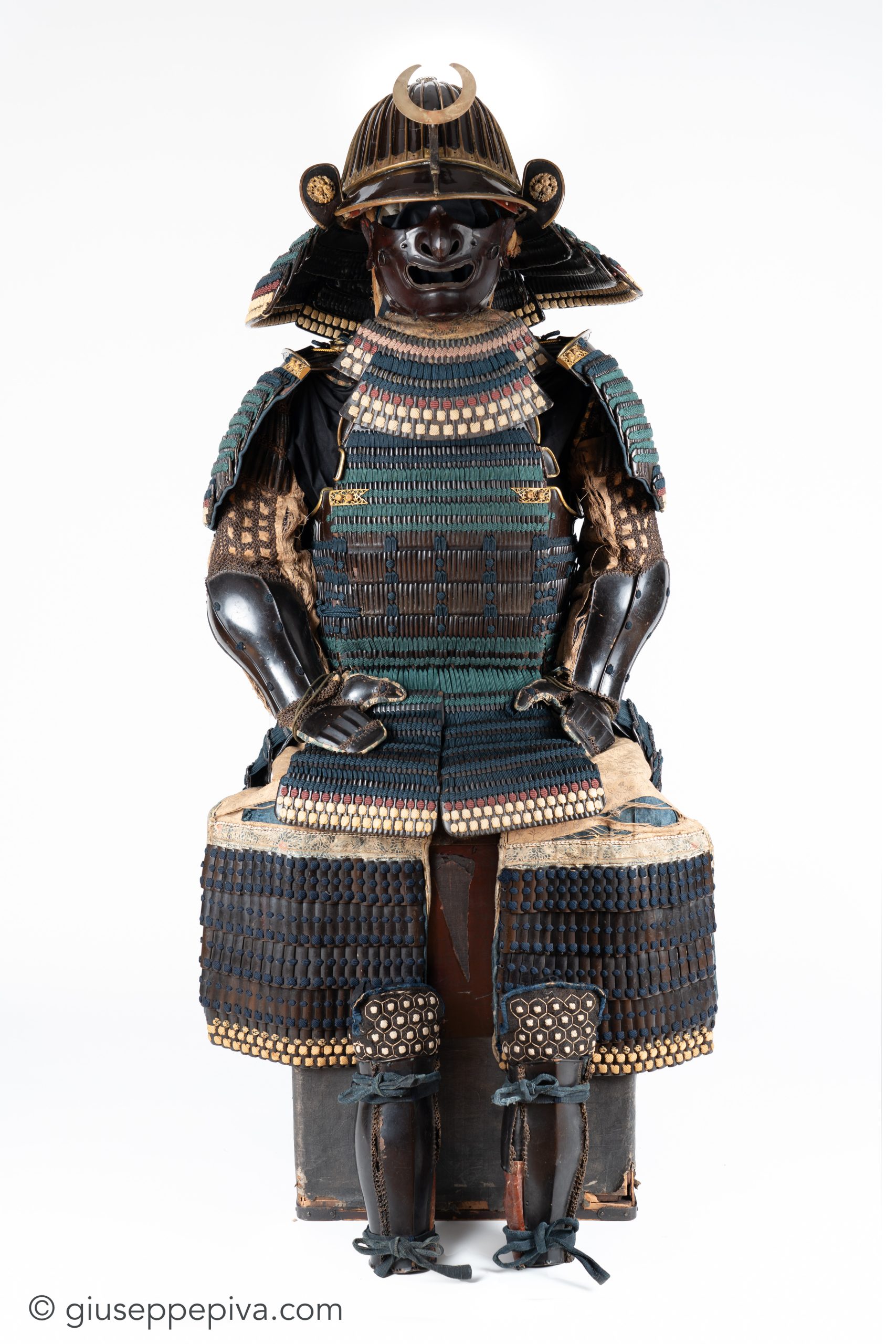
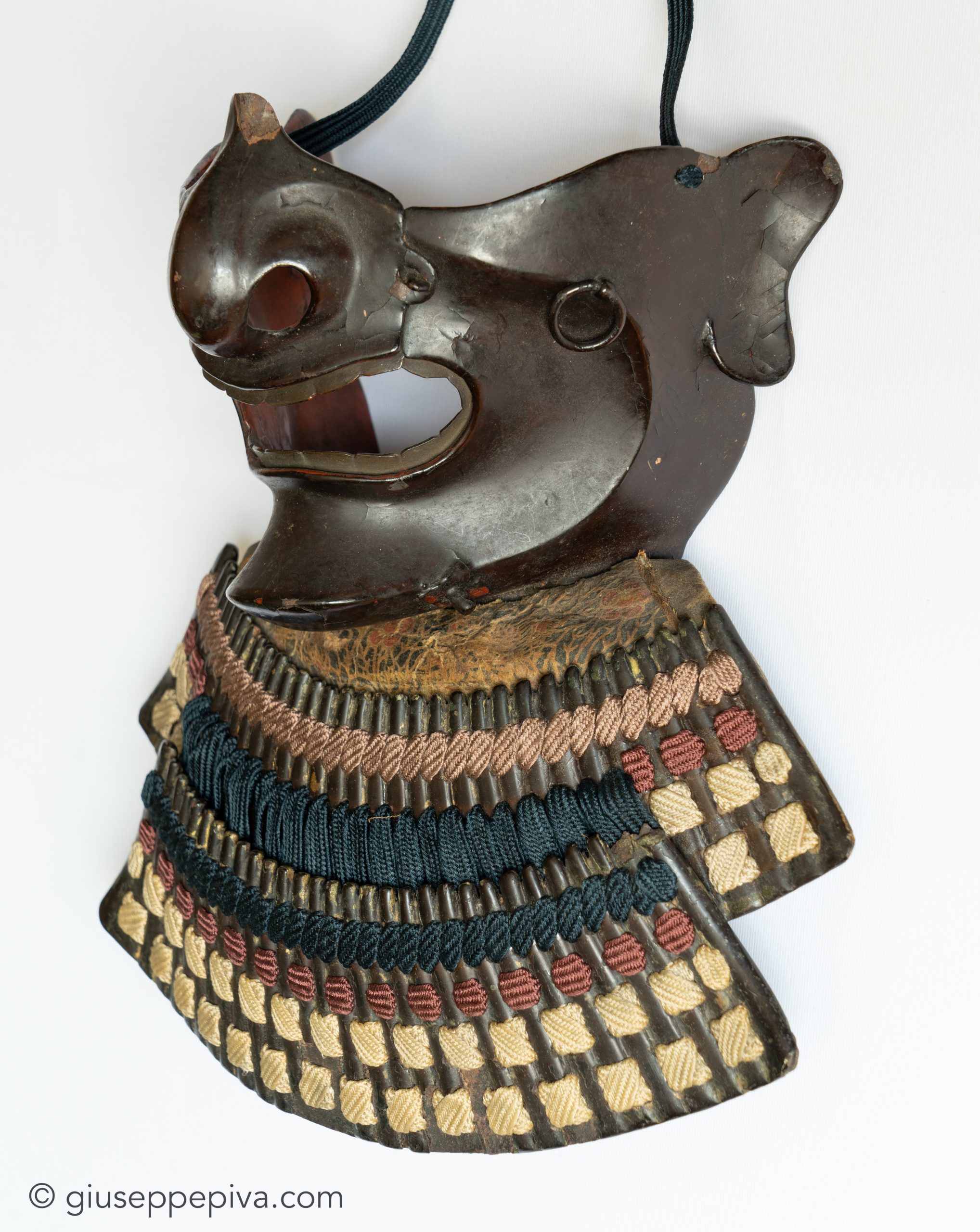
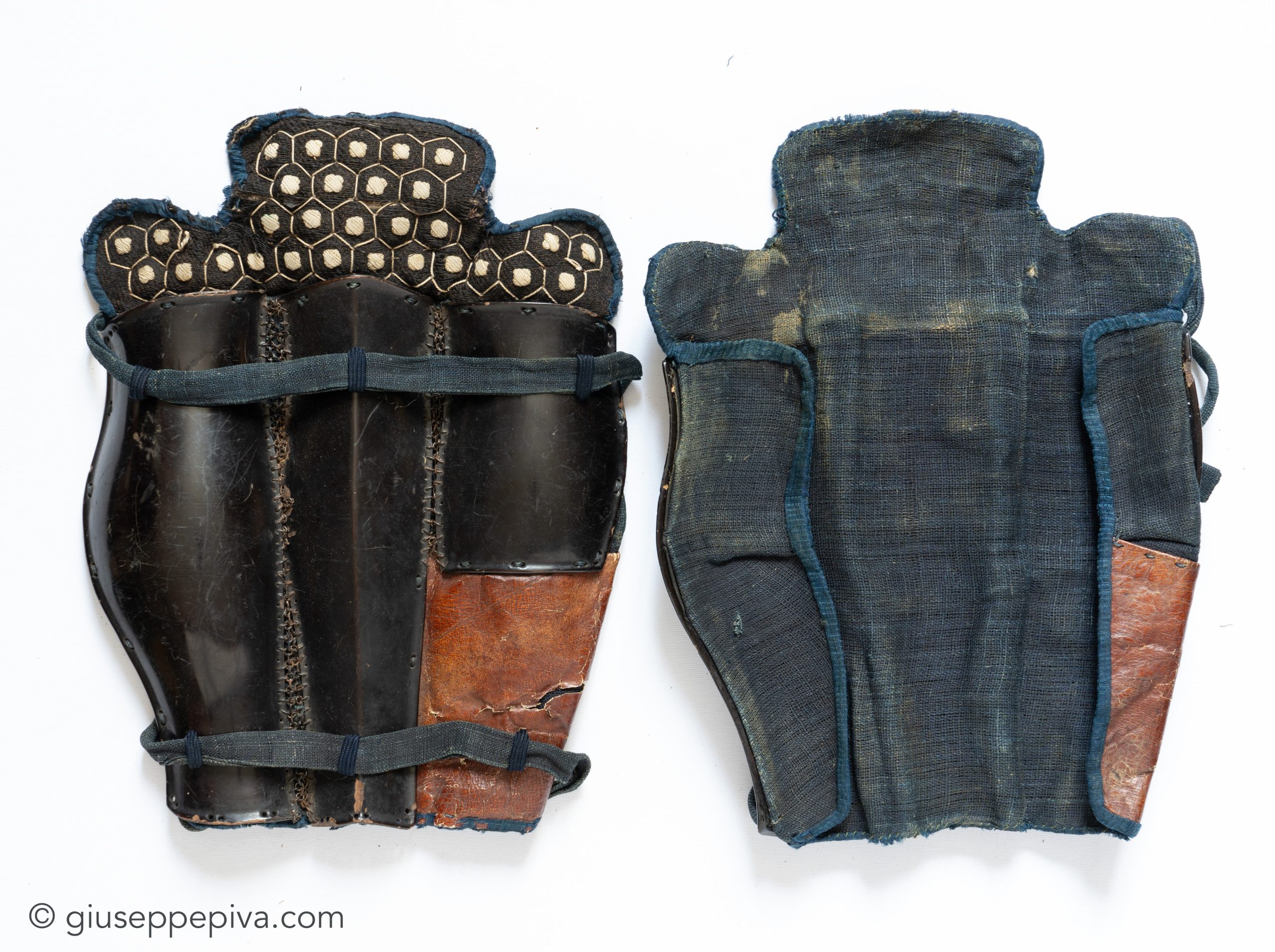
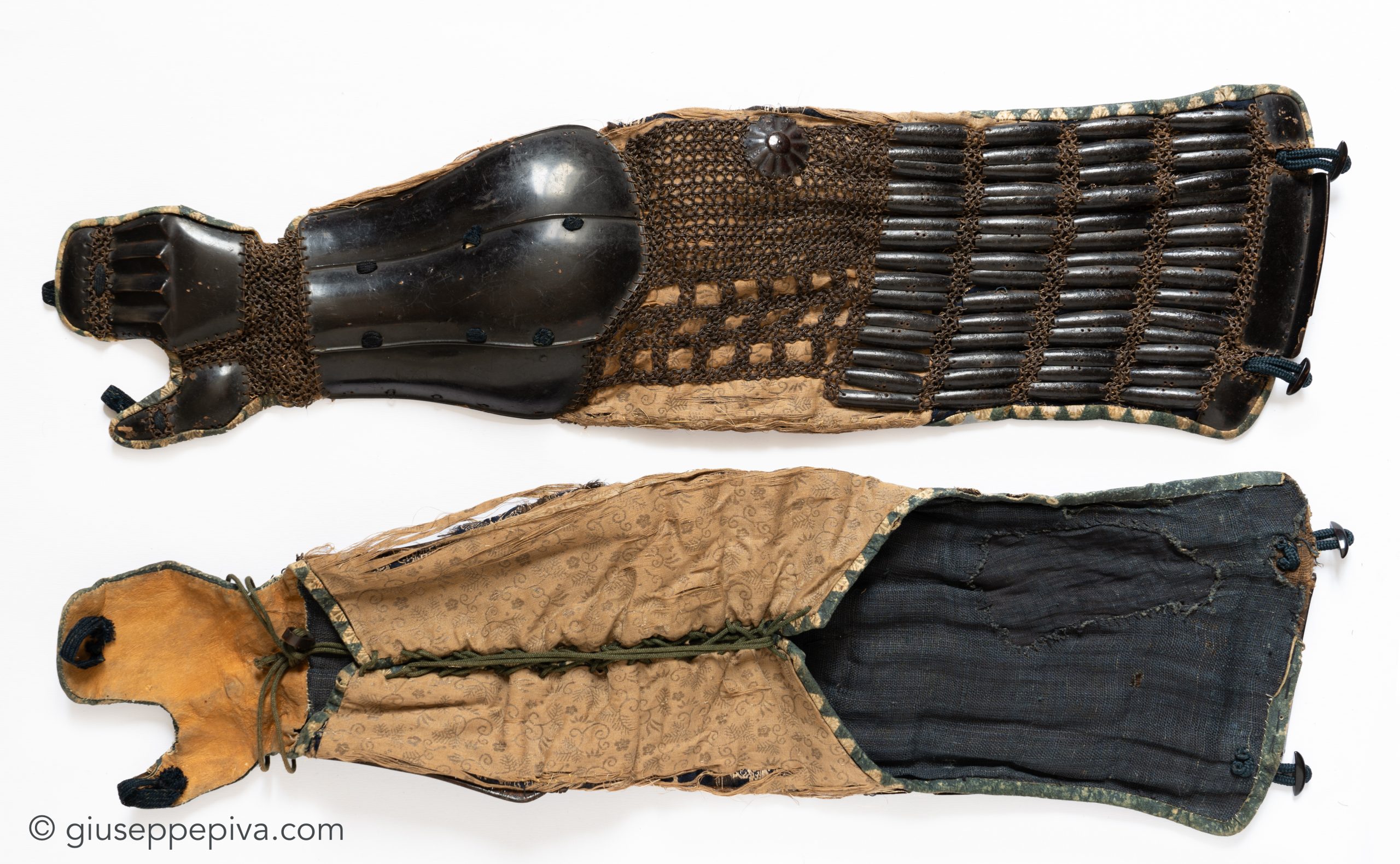
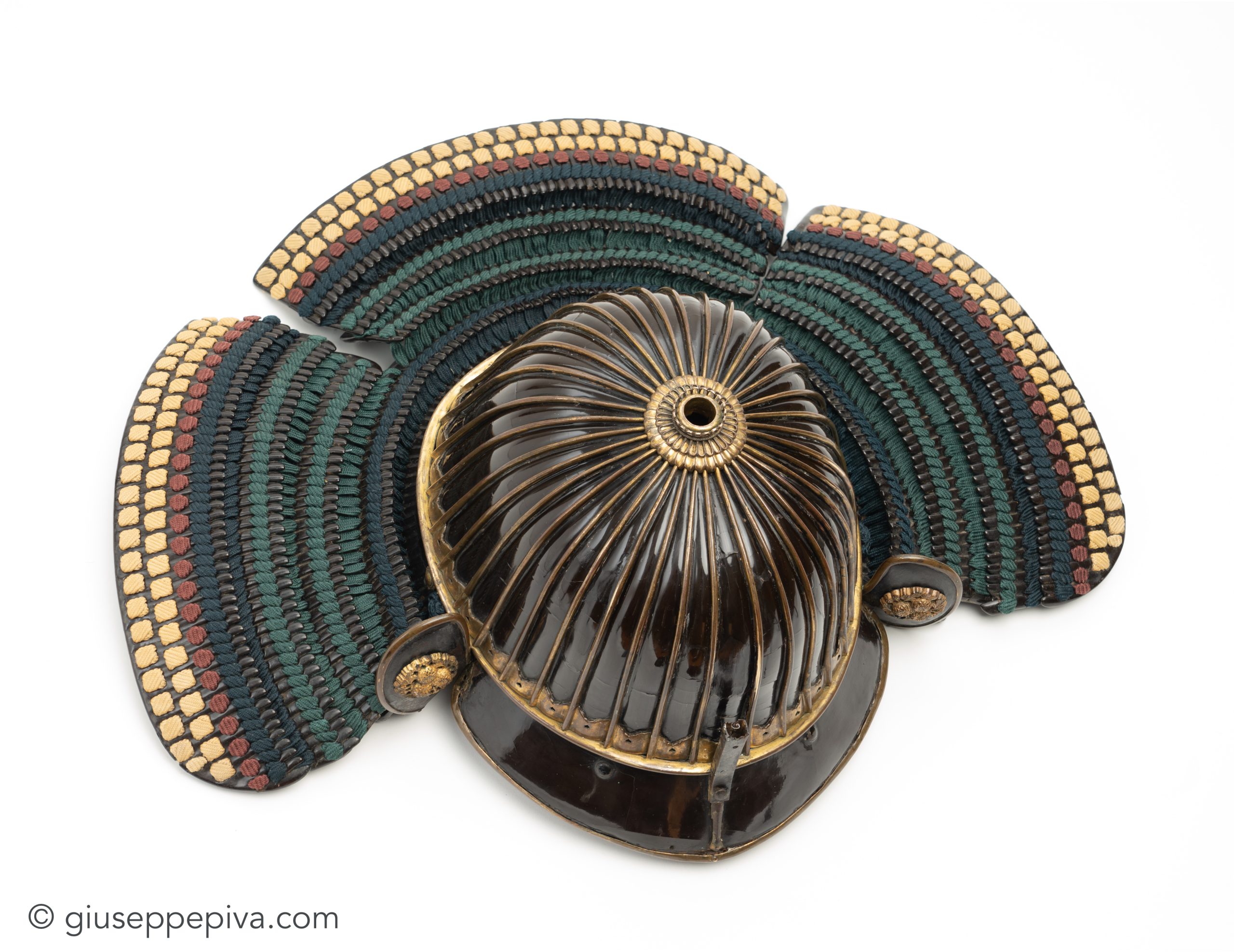
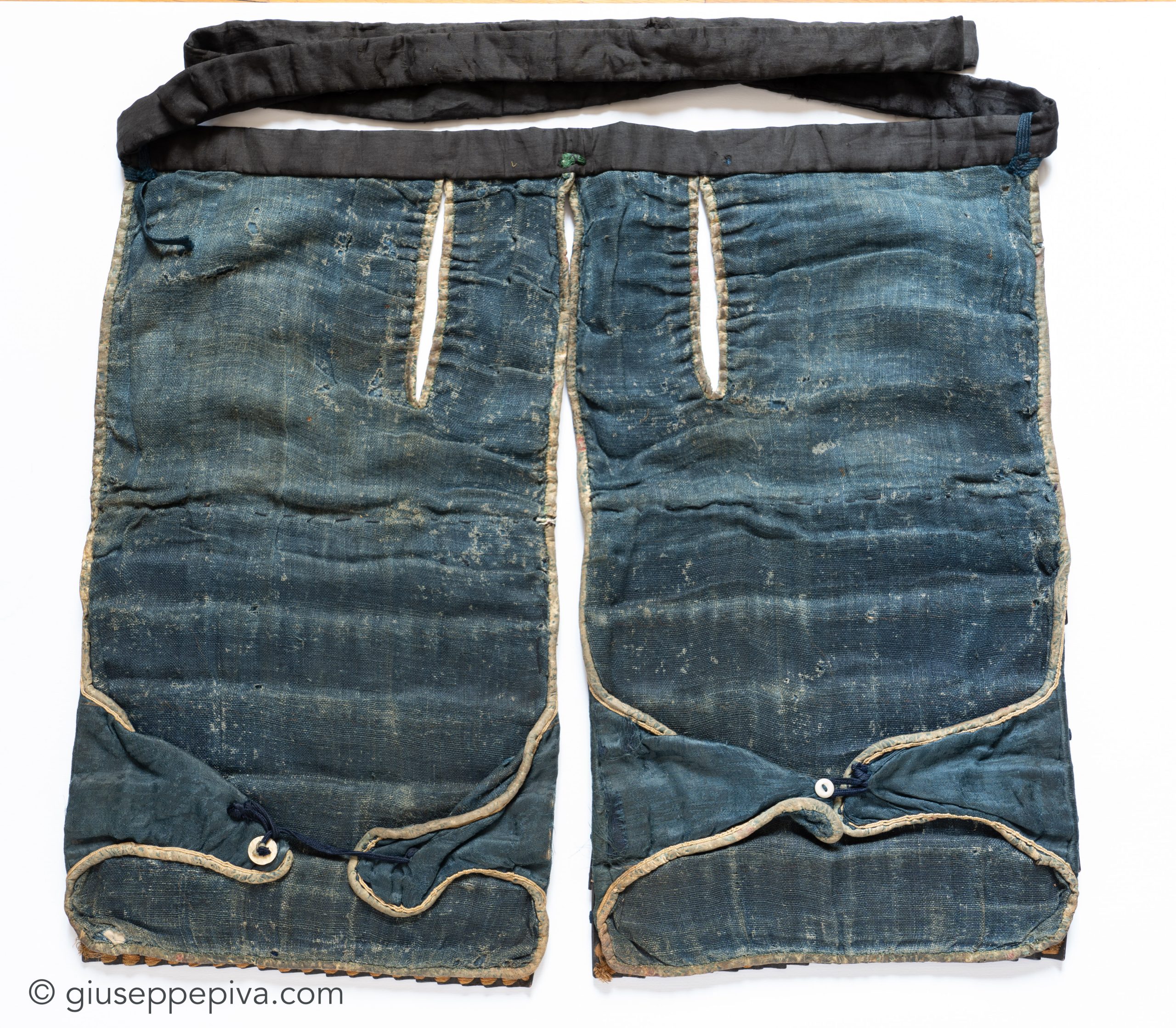
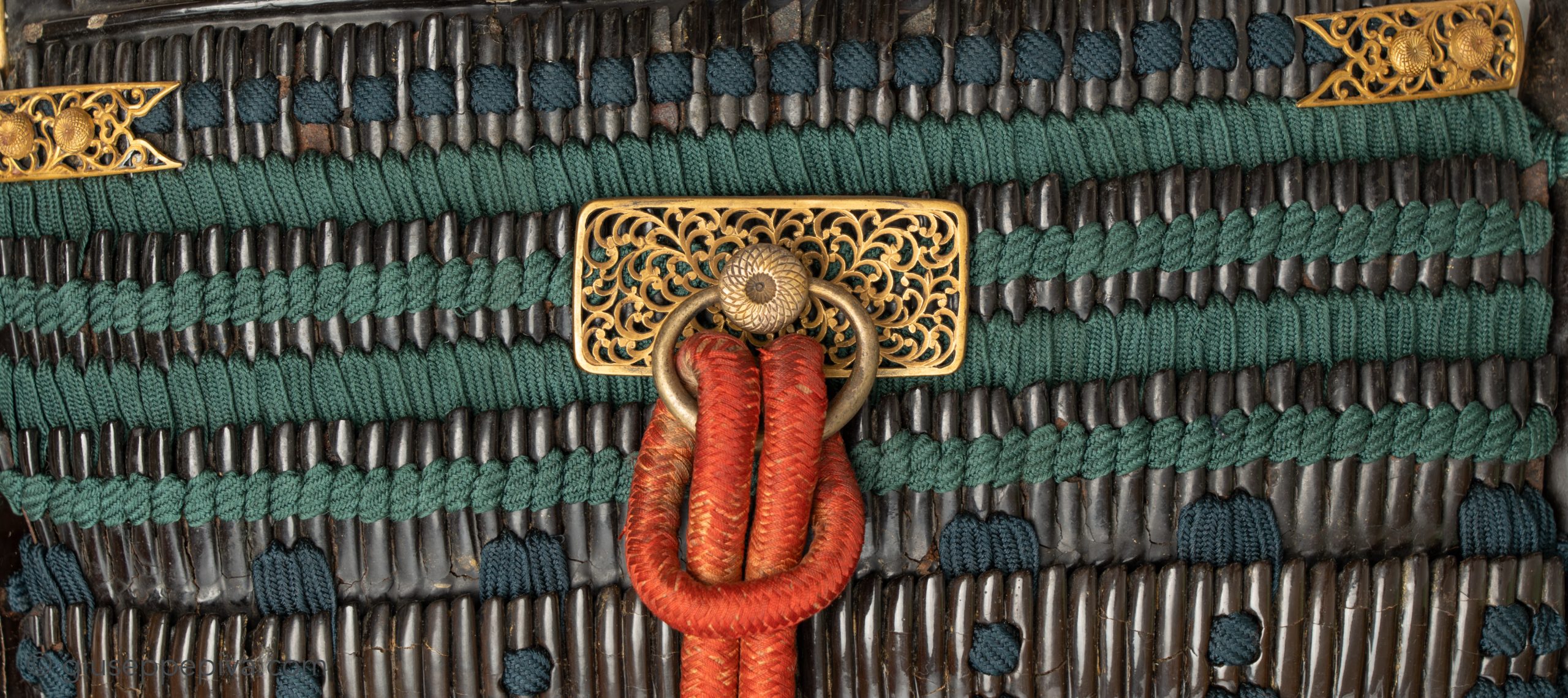
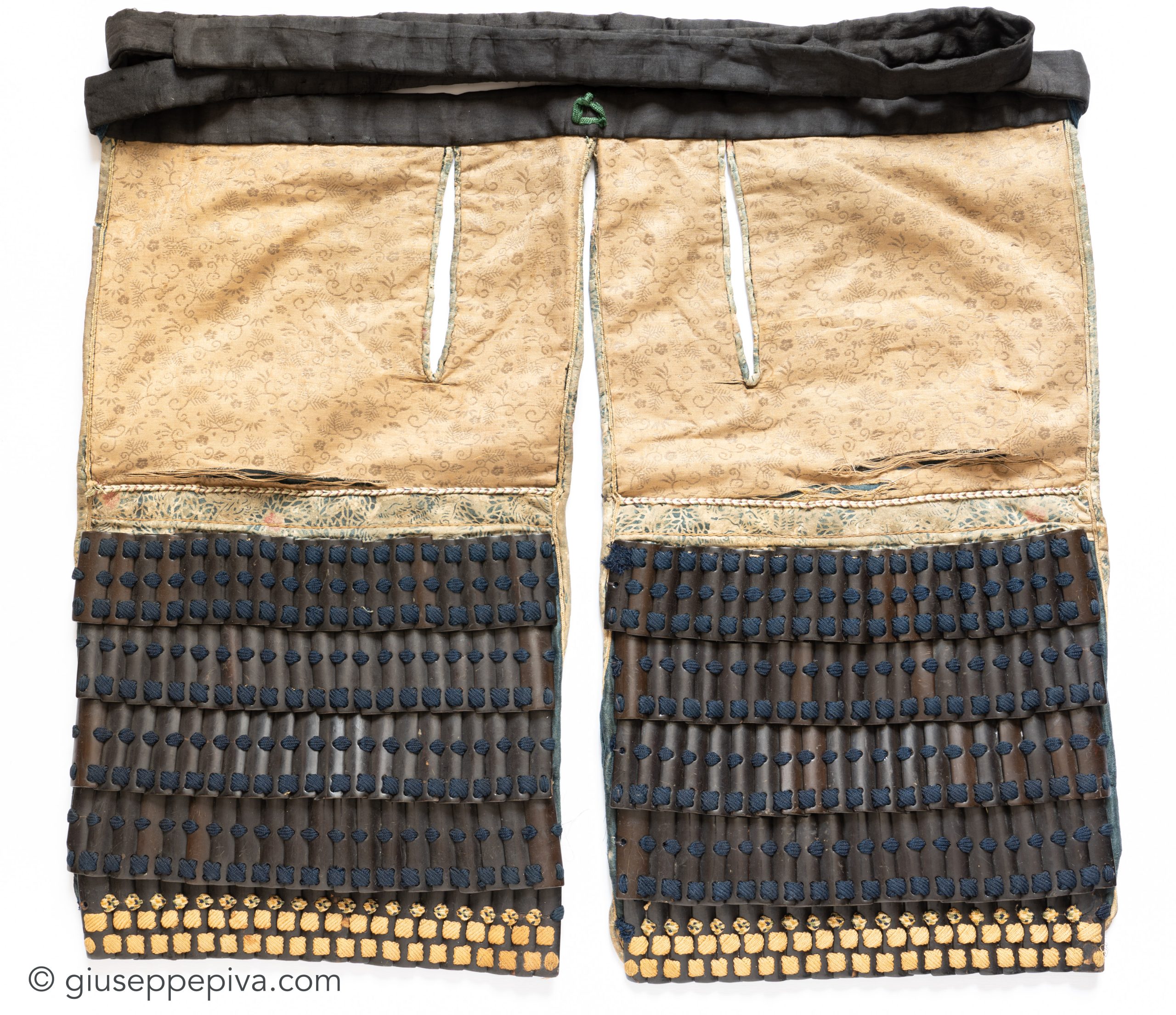
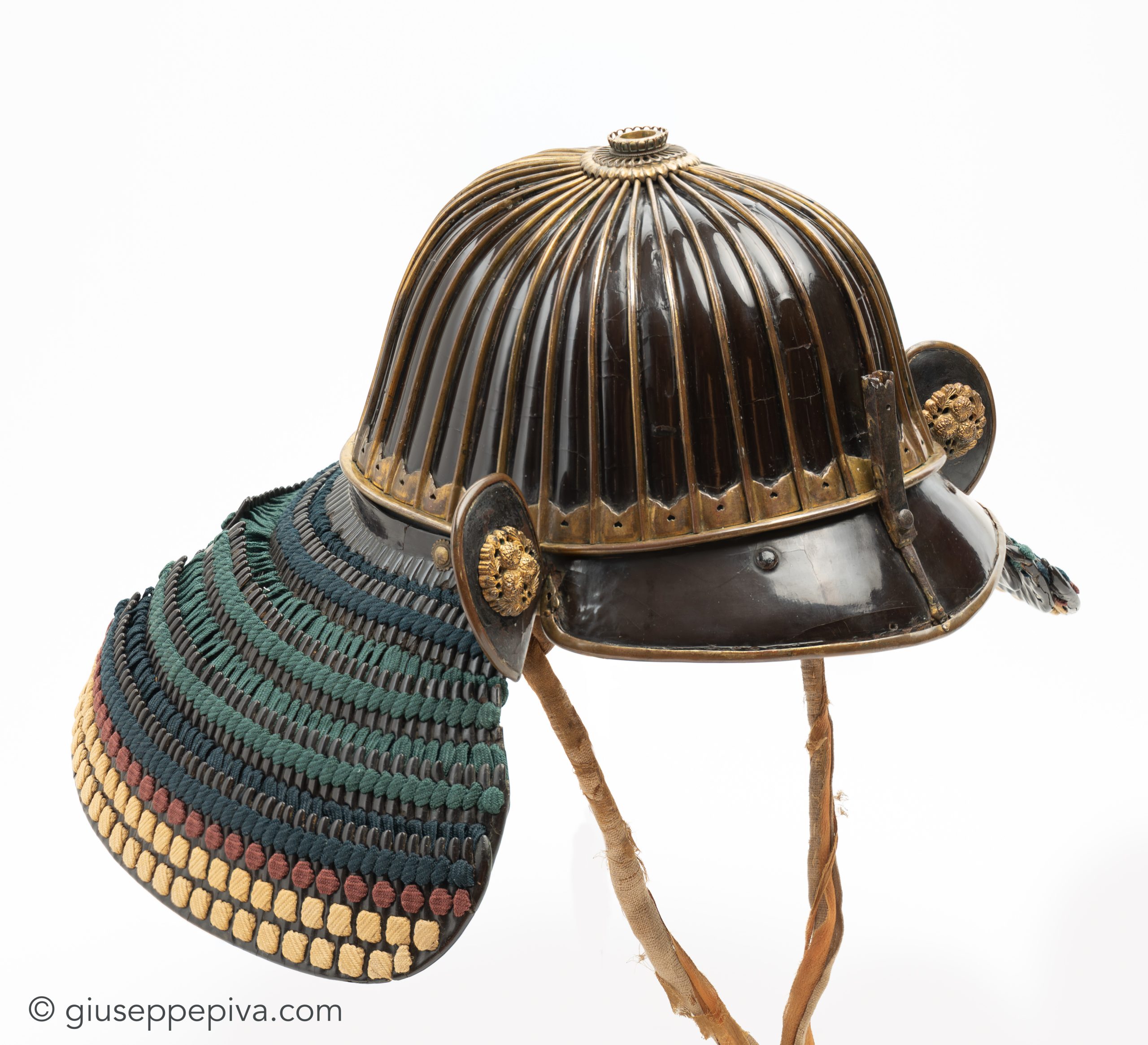
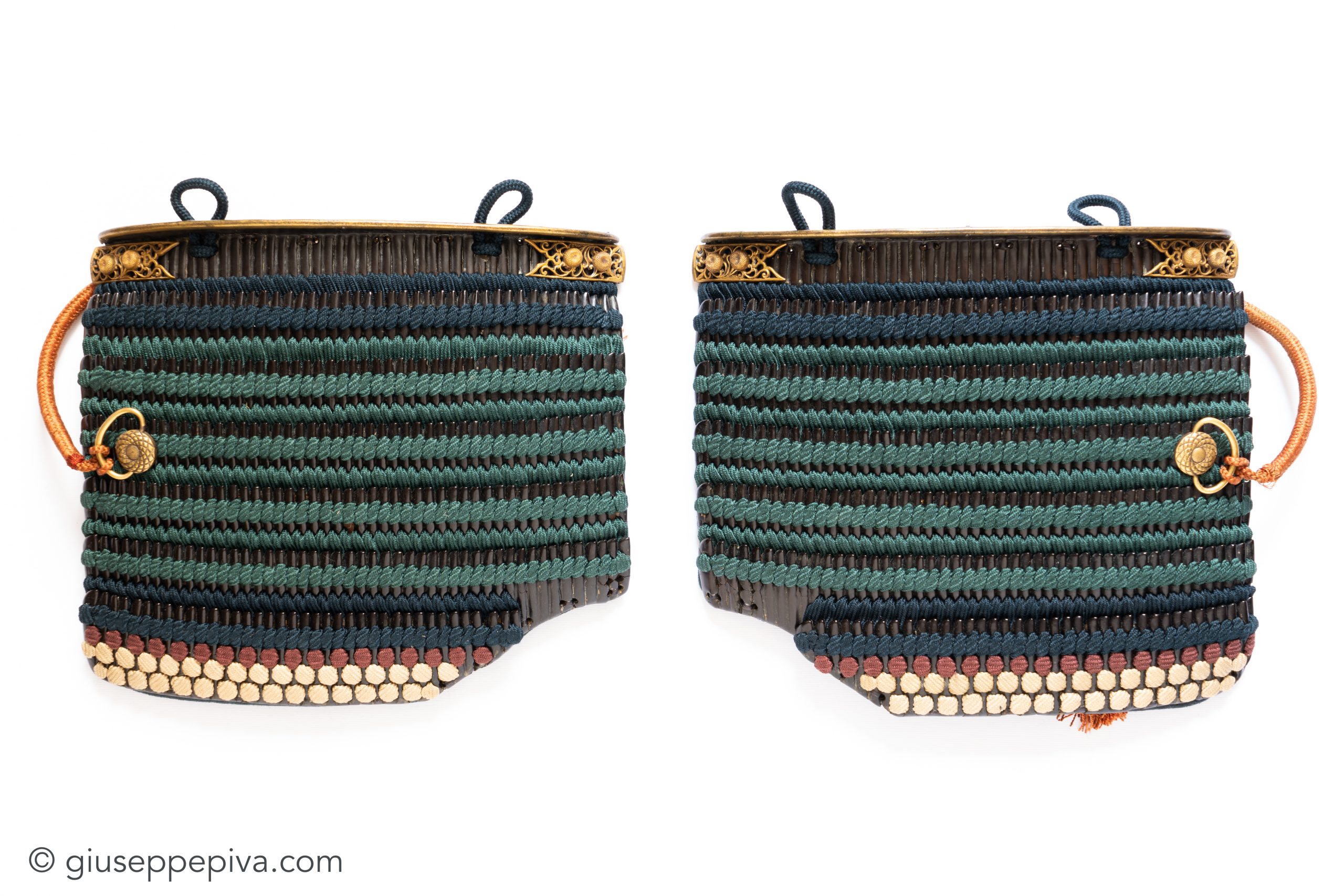
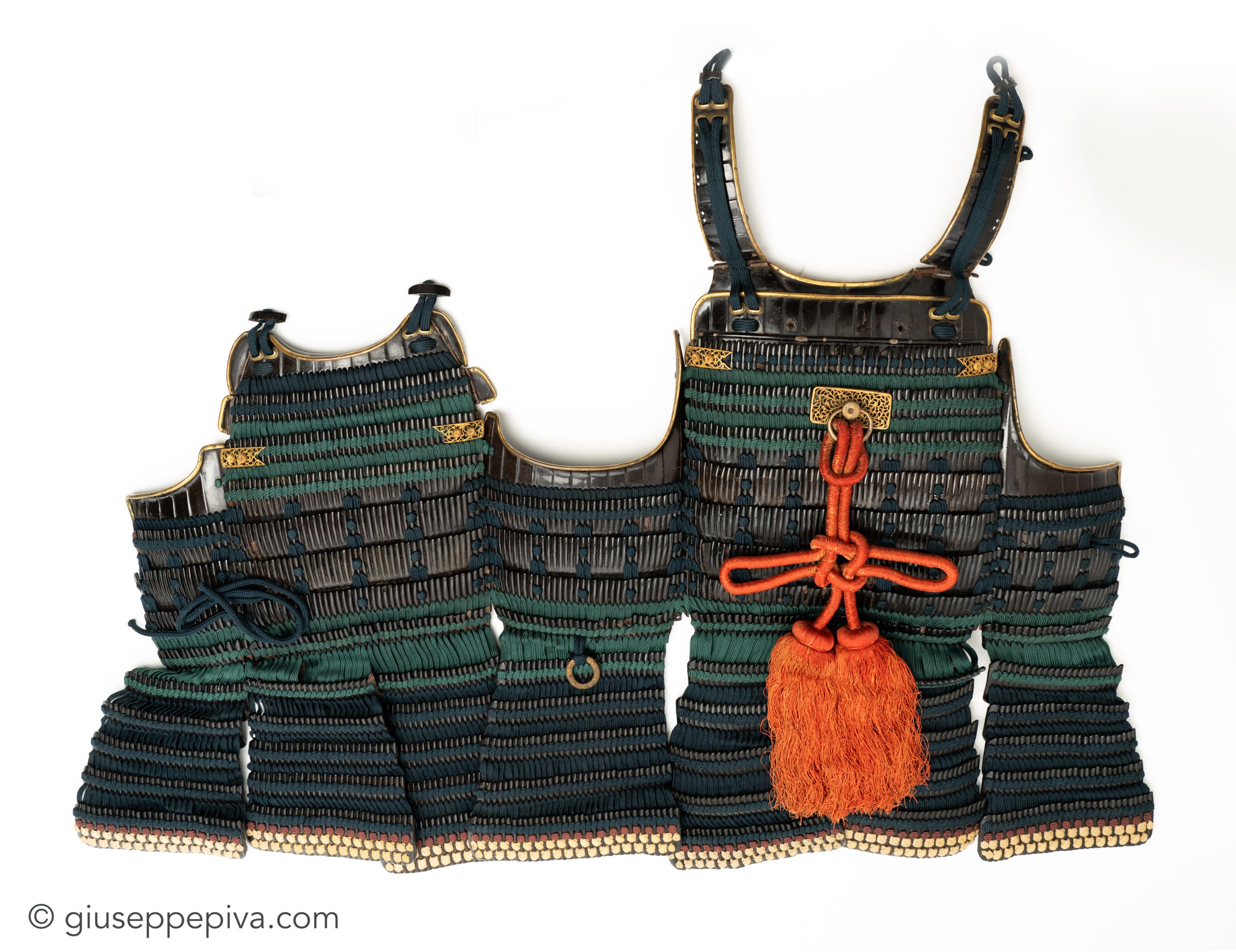
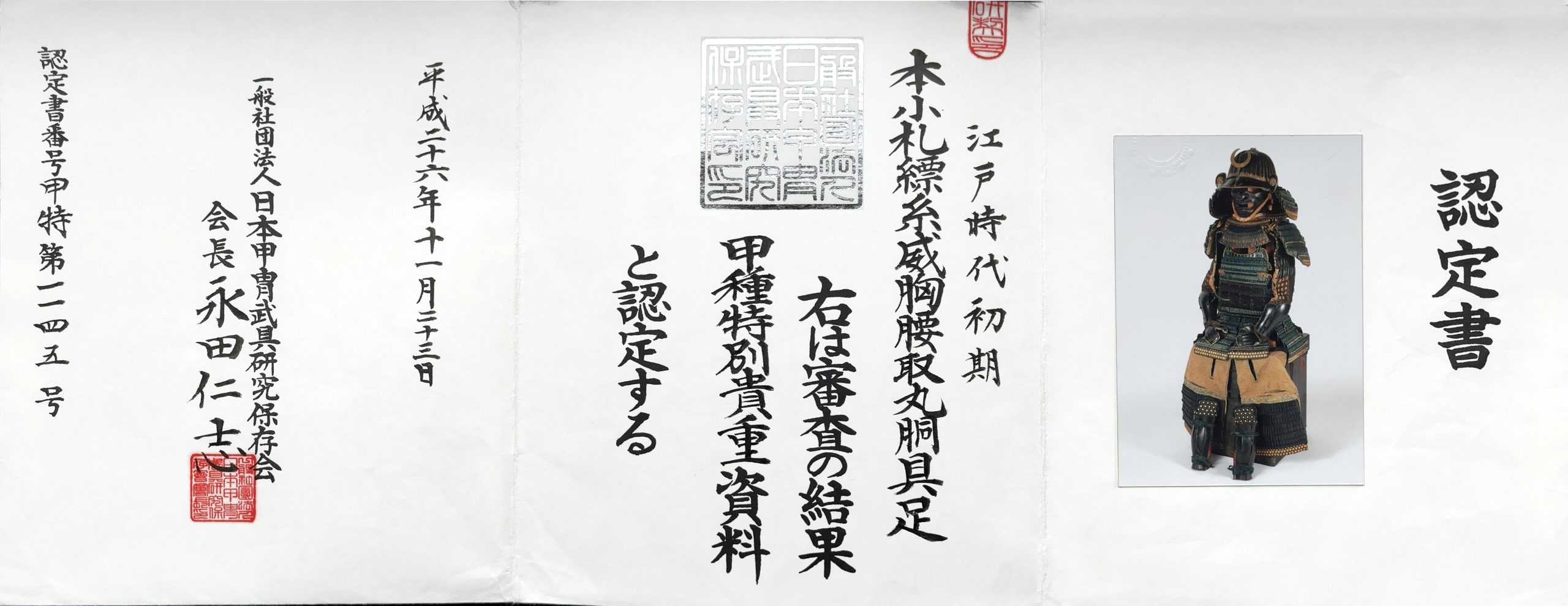
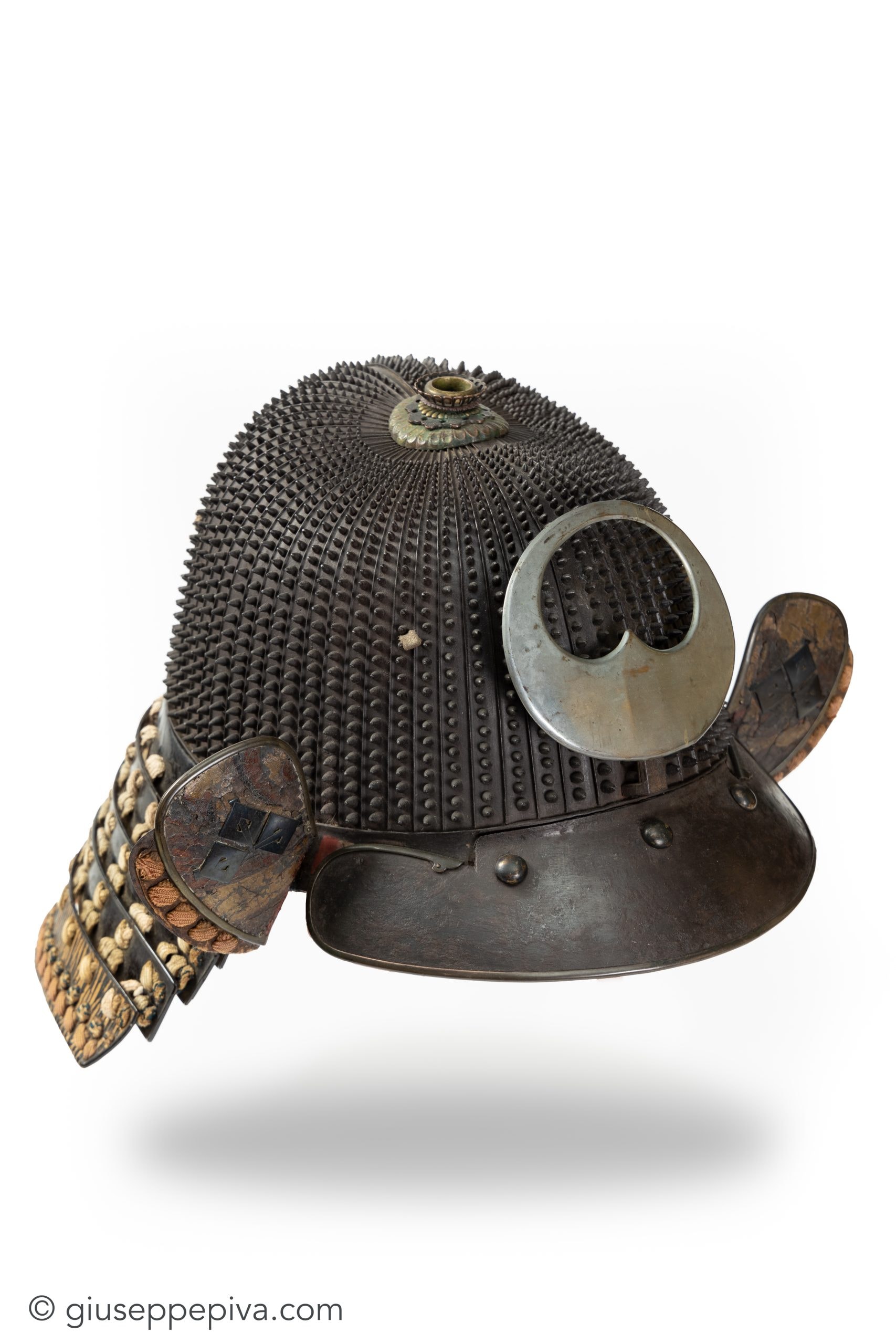
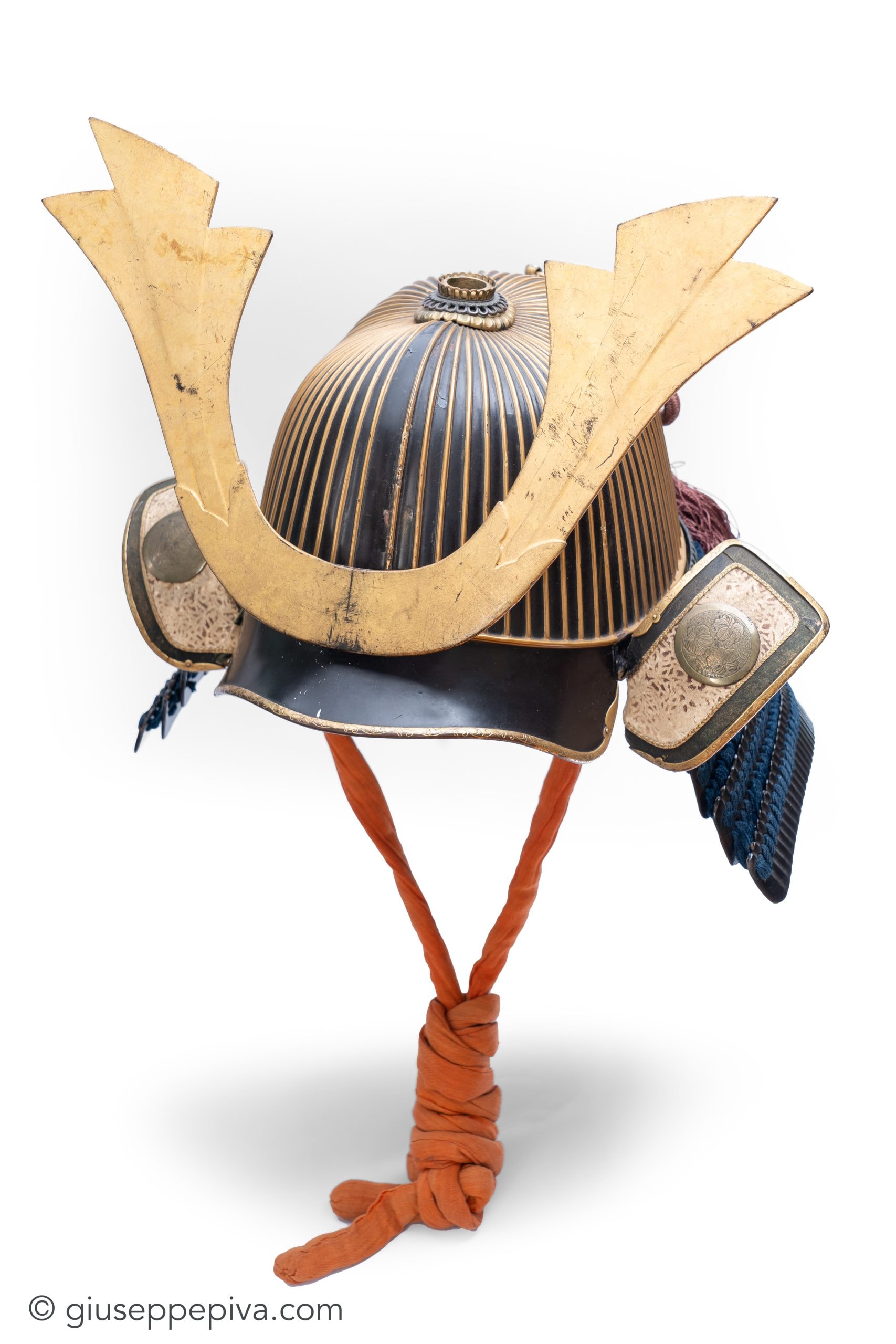
This is a complete samurai armor featuring characteristics of early tosei gusoku production in Western Japan. The armor includes a 32-plate so-fukurin kabuto, a rare lacquered iron ressei-men, and a maru-do cuirass with hon-kozane construction. Certified by the Association for the Research and Preservation of Japanese Helmets and Armor as Kōshu-tokubetsu-kichō-shiryō.
 NihontoWatch
Haruta · Edo
Edo
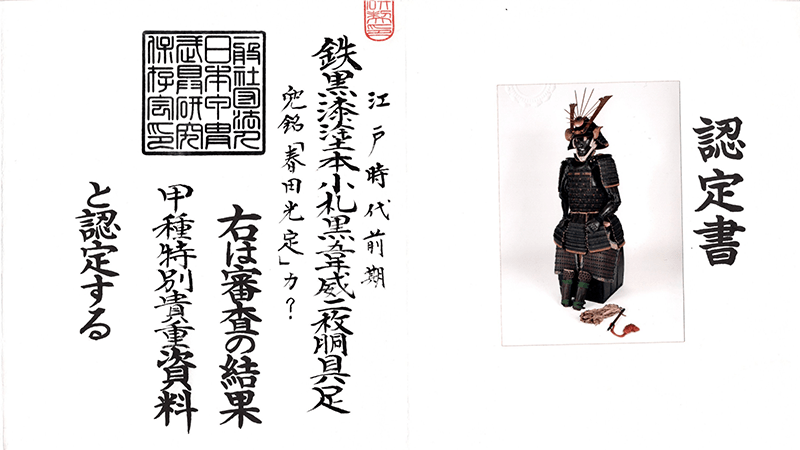
Kōshū Tokubetsu Kichō Shiryō · Nihon Katchū Bugu Kenkyū Hozon Kai
The first-class (kō-grade) of the especially-valuable rank and the society’s second-highest grade, reserved for armour of exceptional importance.
Japanese armour is not certified by the NBTHK. The Nihon Katchū Bugu Kenkyū Hozon Kai (the Association for the Research and Preservation of Japanese Helmets and Armour), founded in 1961, is the principal body for armour. Its shinsa grades a piece as 資料 (shiryō, "reference material") across five ascending ranks: Hozon, Kichō, Tokubetsu Kichō, Kōshū Tokubetsu Kichō, and the highest, Jūyō Bunka Shiryō. The 資料 framing reflects the society’s purpose of preserving armour as cultural and historical reference, distinct from the NBTHK’s sword paper tiers.
€45,000
This is a complete samurai armor featuring characteristics of early tosei gusoku production in Western Japan. The armor includes a 32-plate so-fukurin kabuto, a rare lacquered iron ressei-men, and a maru-do cuirass with hon-kozane construction. Certified by the Association for the Research and Preservation of Japanese Helmets and Armor as Kōshu-tokubetsu-kichō-shiryō.
NihontoWatchHaruta · Edo
Edo
Kōshū Tokubetsu Kichō Shiryō · Nihon Katchū Bugu Kenkyū Hozon Kai
The first-class (kō-grade) of the especially-valuable rank and the society’s second-highest grade, reserved for armour of exceptional importance.
Japanese armour is not certified by the NBTHK. The Nihon Katchū Bugu Kenkyū Hozon Kai (the Association for the Research and Preservation of Japanese Helmets and Armour), founded in 1961, is the principal body for armour. Its shinsa grades a piece as 資料 (shiryō, "reference material") across five ascending ranks: Hozon, Kichō, Tokubetsu Kichō, Kōshū Tokubetsu Kichō, and the highest, Jūyō Bunka Shiryō. The 資料 framing reflects the society’s purpose of preserving armour as cultural and historical reference, distinct from the NBTHK’s sword paper tiers.
€45,000