 NihontoWatchNihontoWatch
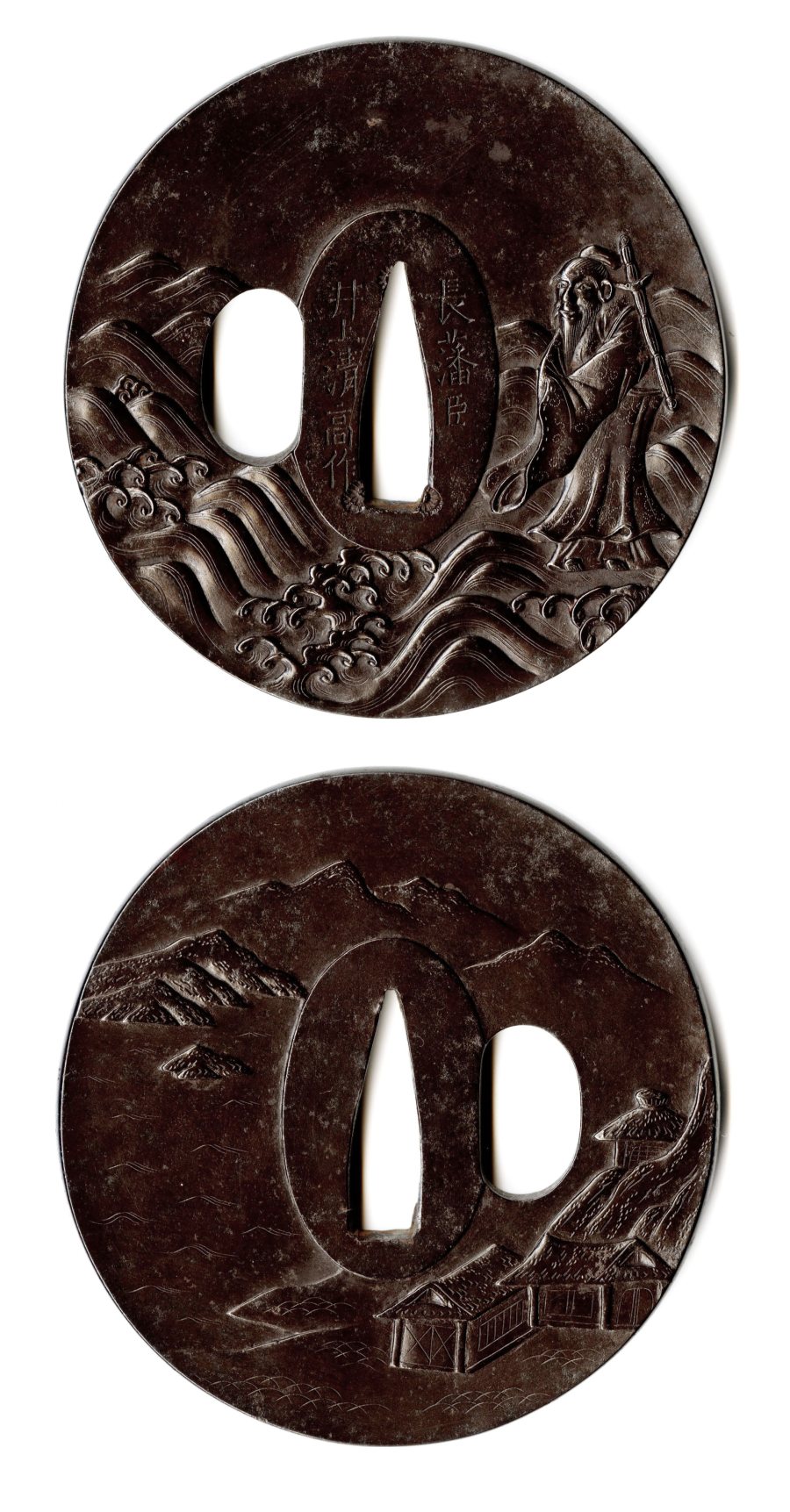
Carefully executed sukidashi takabori is applied to a thick, lustrous tetsu-migakiji surface. On the omote, a figure thought to be a sennin stands atop surging waves with a ken strapped to his back and hands clasped in prayer. The ura features a peaceful sansui-zu, with distant mountains and a lake, and a hermitage standing nearby. There is a Chinese tale called "Bassen Kakai" in which "eight sennin each use their own treasures to cross the eastern sea, clashing with the clan of the Dragon King who rules the ocean"; among them, the one carrying a ken on his back is thought to be Lu Dongbin, who was also known as a kensen. Kiyotaka was the first generation of the Inoue family and a joko who became a kakae-ko of the Choshu han in Kansei 2; this work is also finished as a yuhin that demonstrates his polite and skillful ability. Kincha-kawari-nuri-zaya uchigatana wakizashi koshirae
NihontoWatchOffered by Touken Sakata

As written by the shop
Machine translation from the shop's Japanese · may contain errors ·
Nagato
1 piece on the market now
Certifies a genuine fitting worth preserving: a correct signature, or, if unsigned, an identifiable era and school, with recognized artistic and craft value.
The NBTHK (Nihon Bijutsu Tōken Hozon Kyōkai, the Society for the Preservation of Japanese Art Swords) is a public-interest incorporated foundation founded in 1948 and supervised by Japan’s Agency for Cultural Affairs (Bunkachō); it is based at the Japanese Sword Museum in Tokyo. Its expert panels physically examine each submitted work (shinsa) and issue a certificate (kanteishō) ranking it by artistic and historical merit. NBTHK papers are the most widely recognized standard of authentication for Japanese swords and fittings.
NBTHK official siteWe accept returns within 3 days including the day of arrival. Return shipping, the original outbound shipping, and refund transfer fees are the customer's responsibility. If there is a trade-in item, or the destination is overseas, returns and refunds cannot be accepted.
¥150,000