NihontoWatch Mon

NihontoWatchBETA

MarketAuctions
Encyclopedia
NihontoWatch Mon

NihontoWatchBETA

MarketAuctions
Encyclopedia

Description

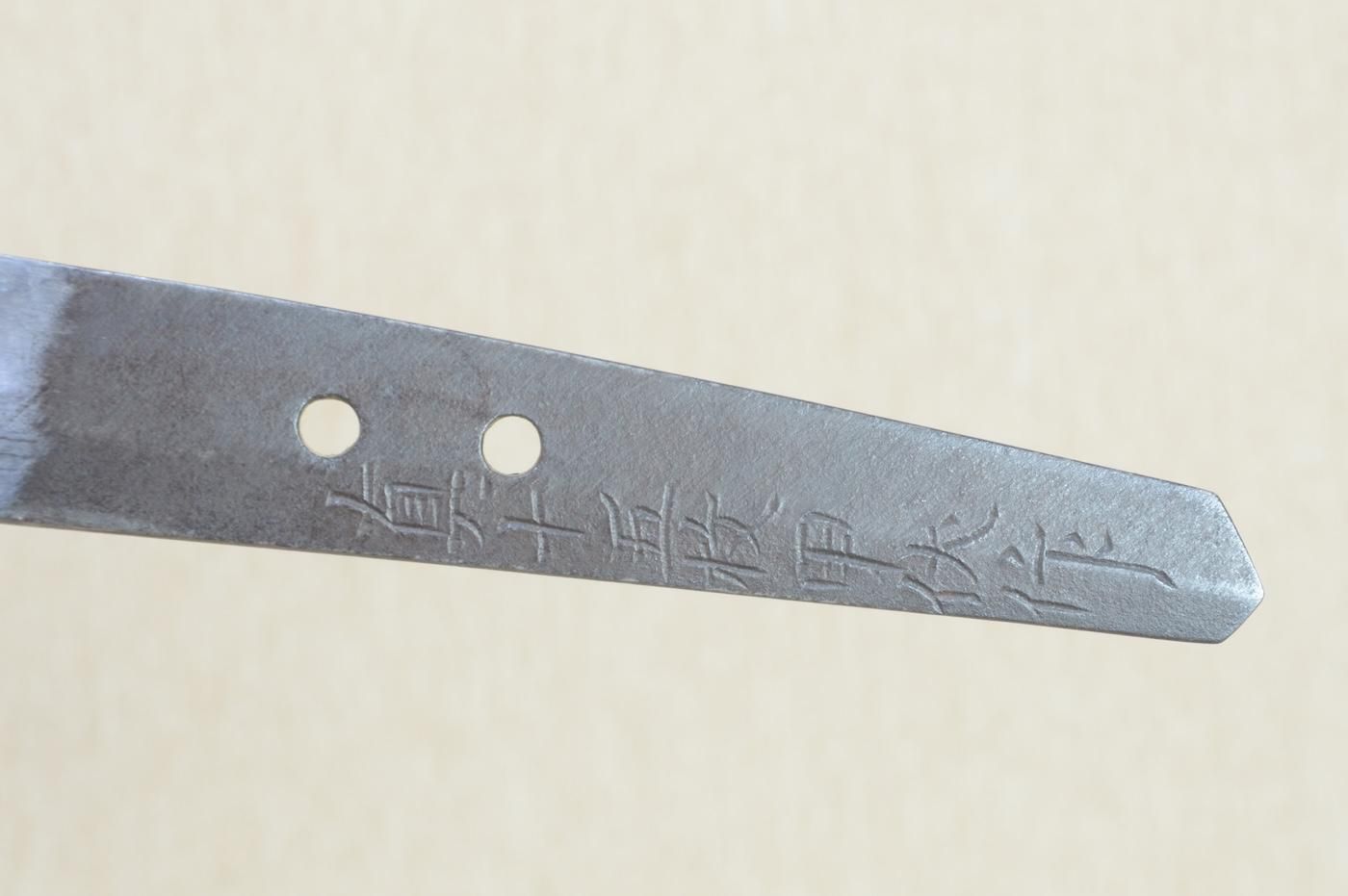
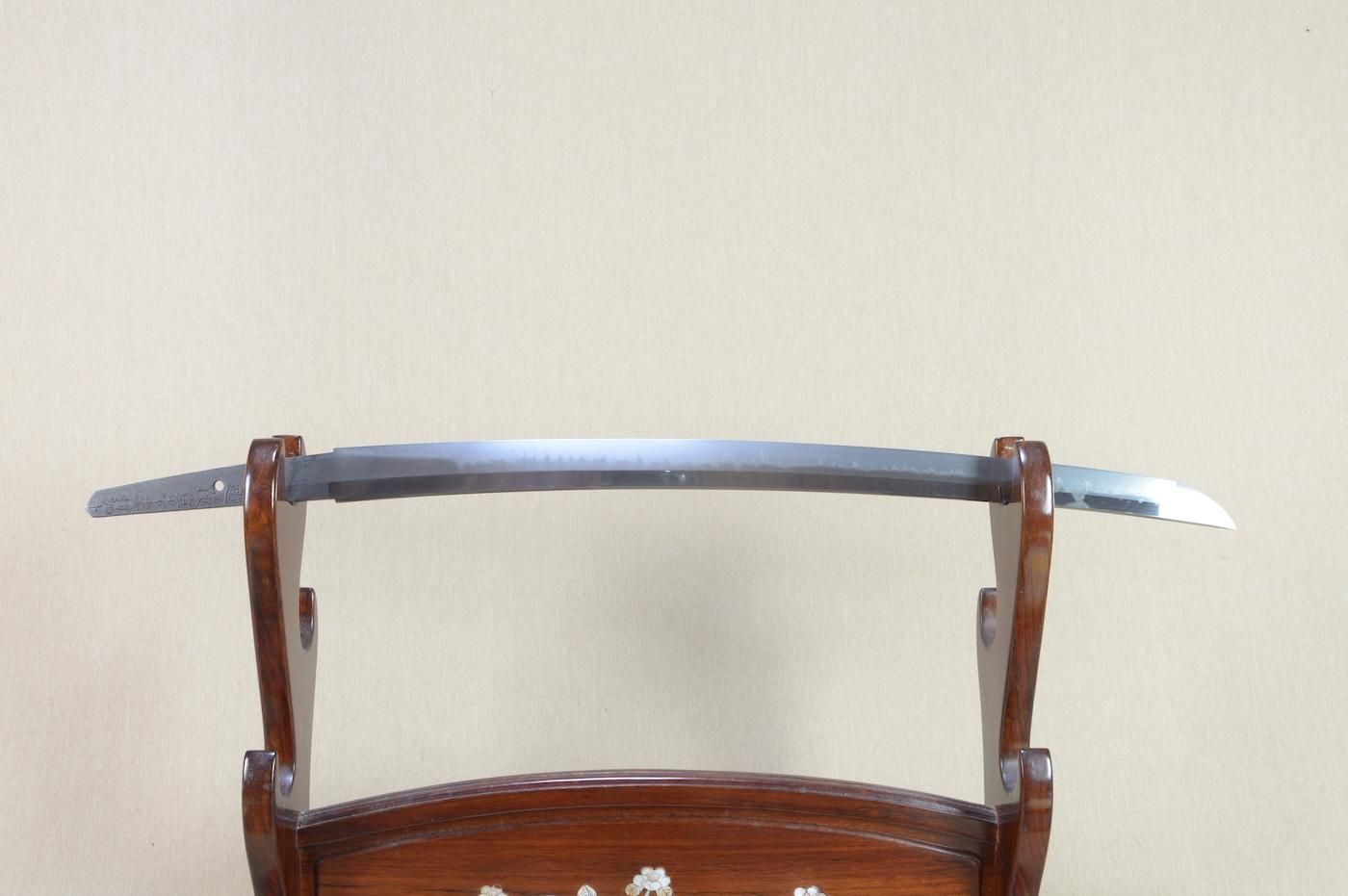
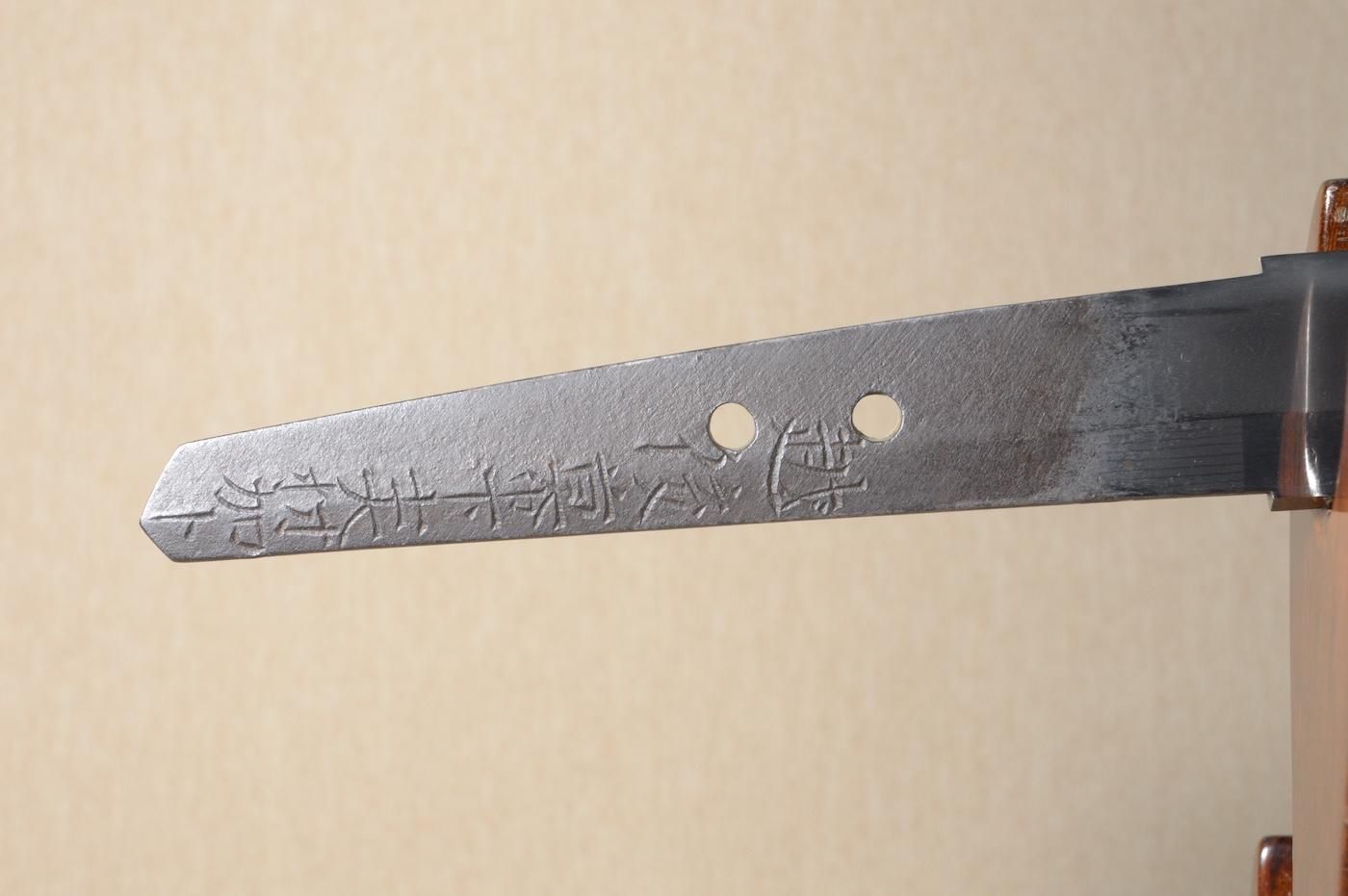
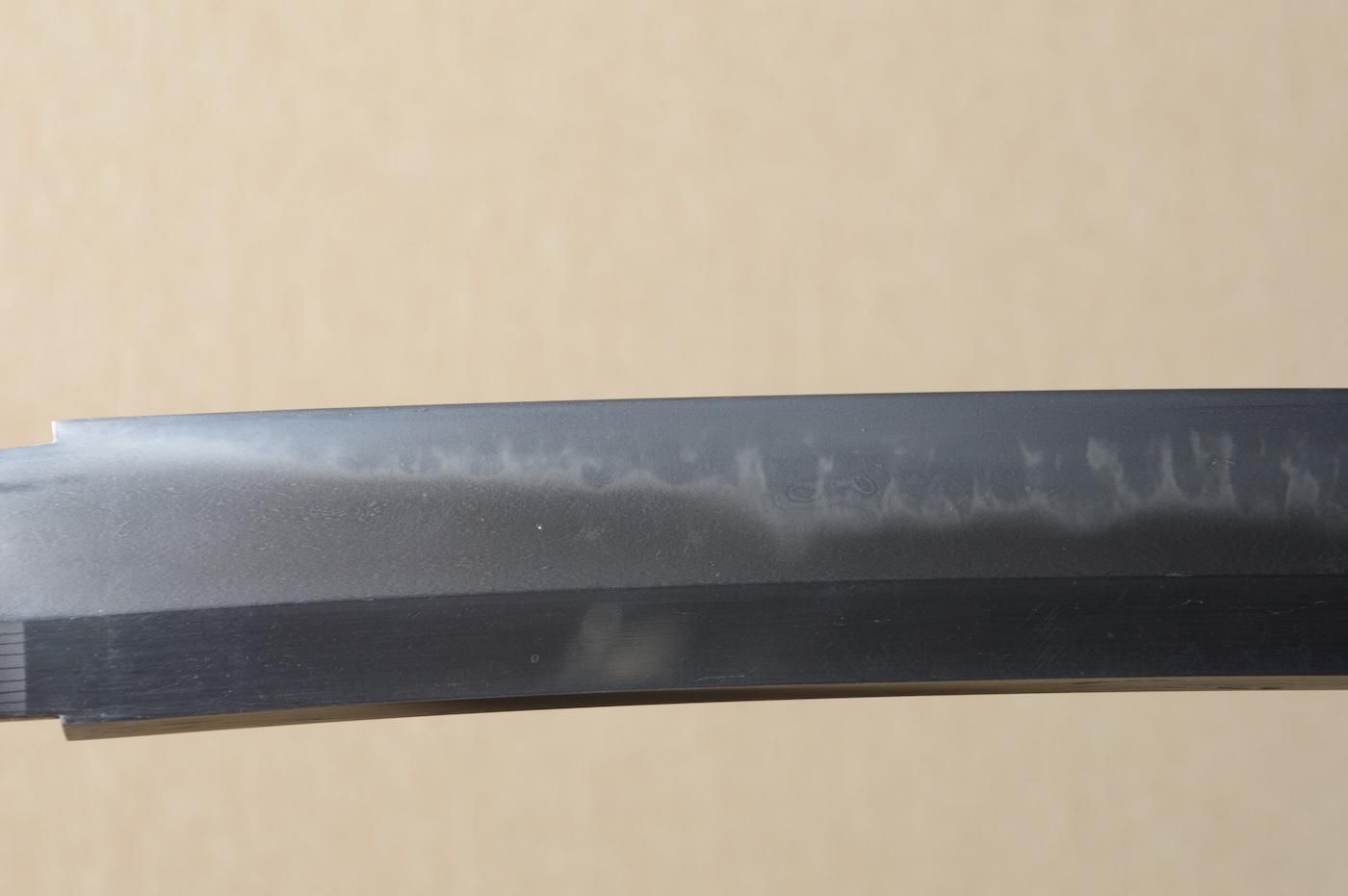
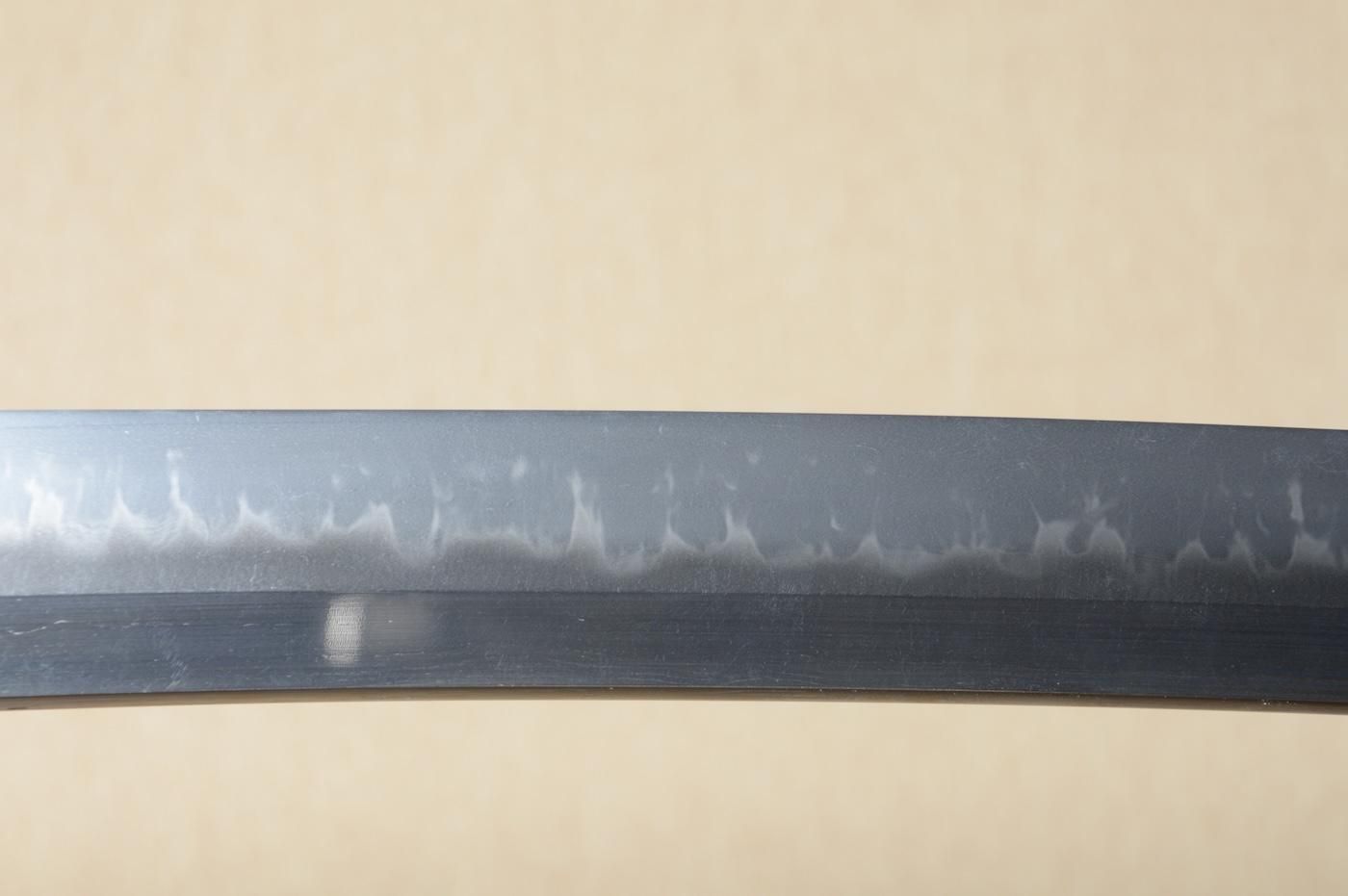
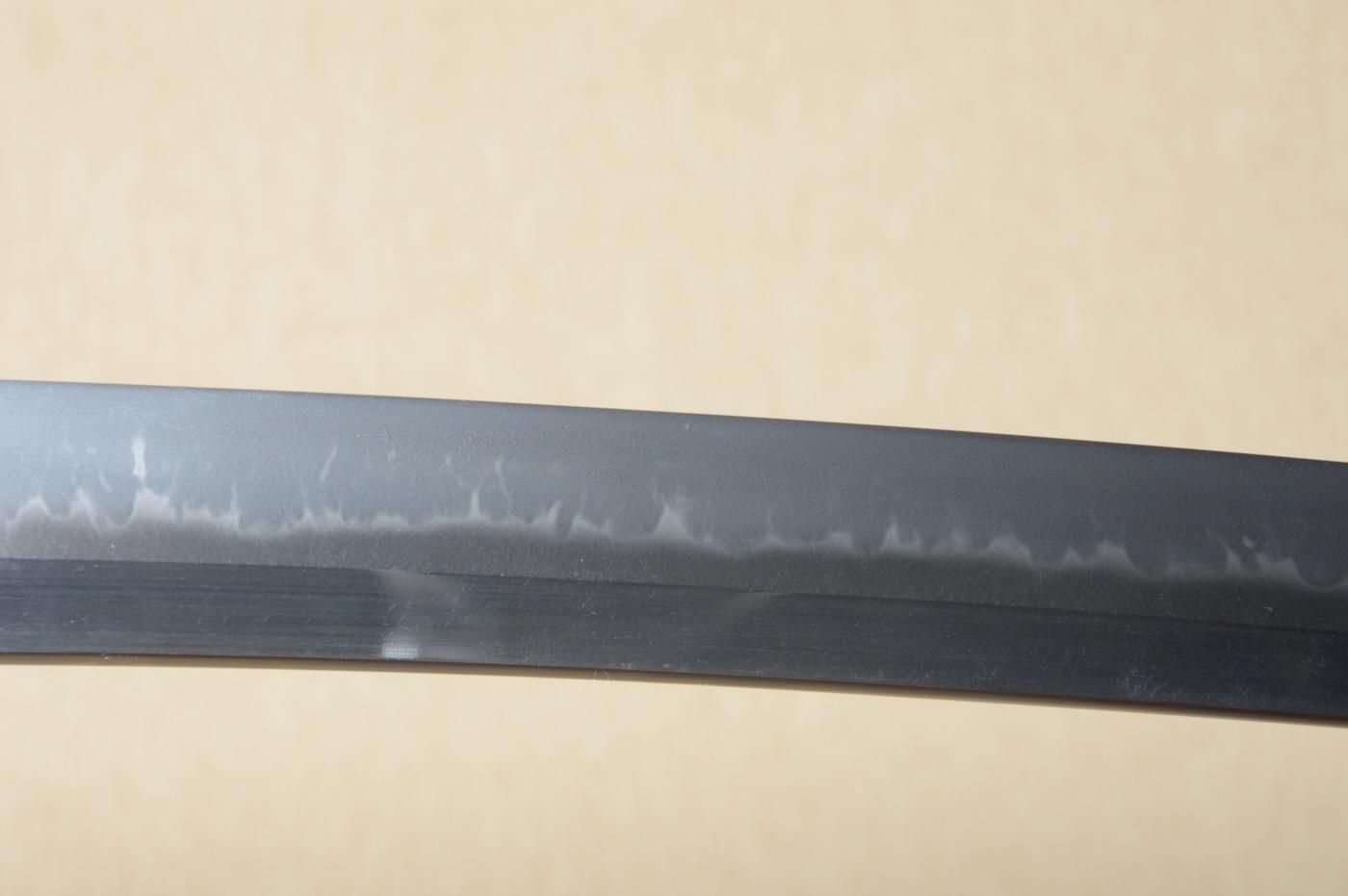
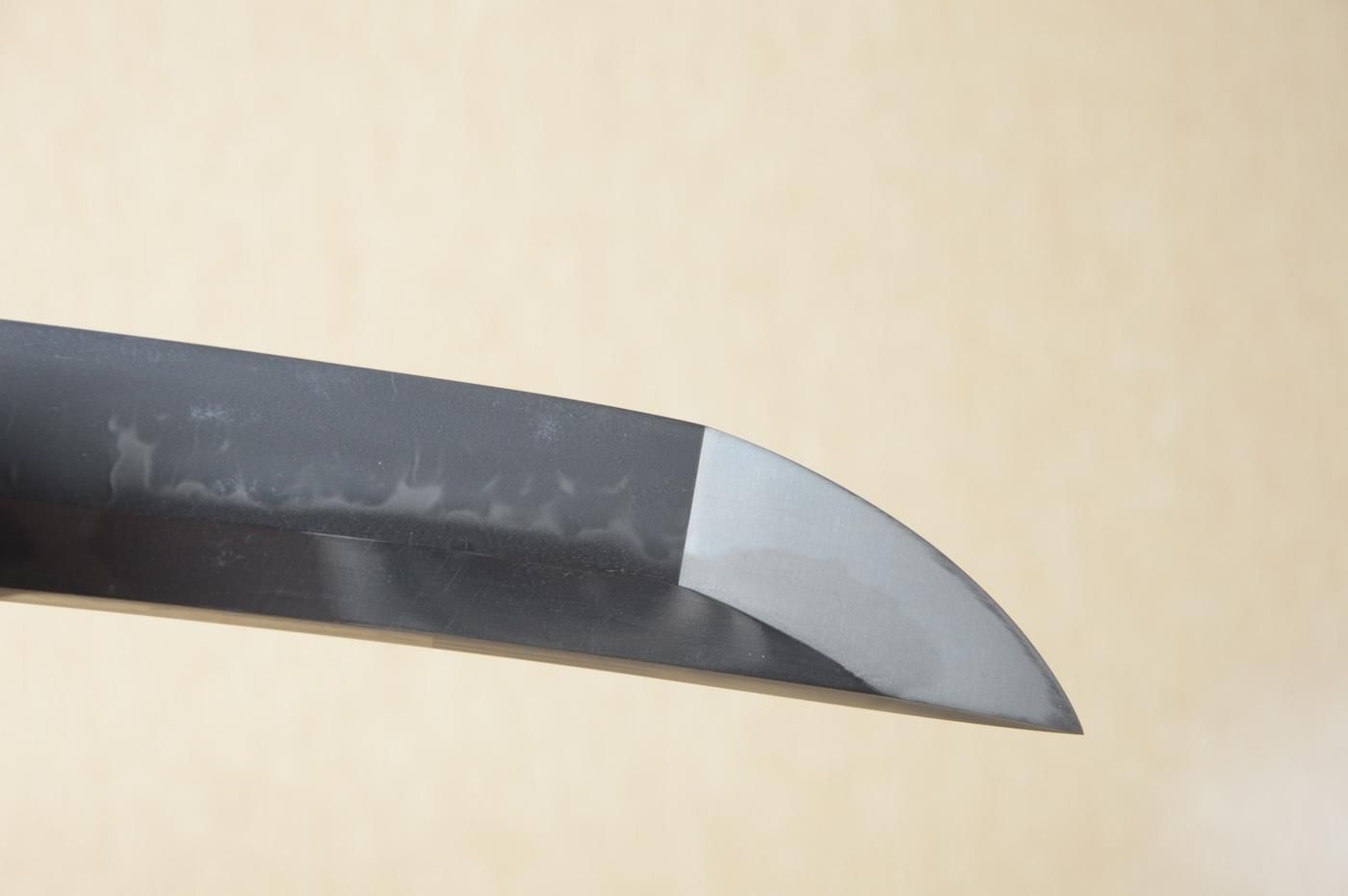
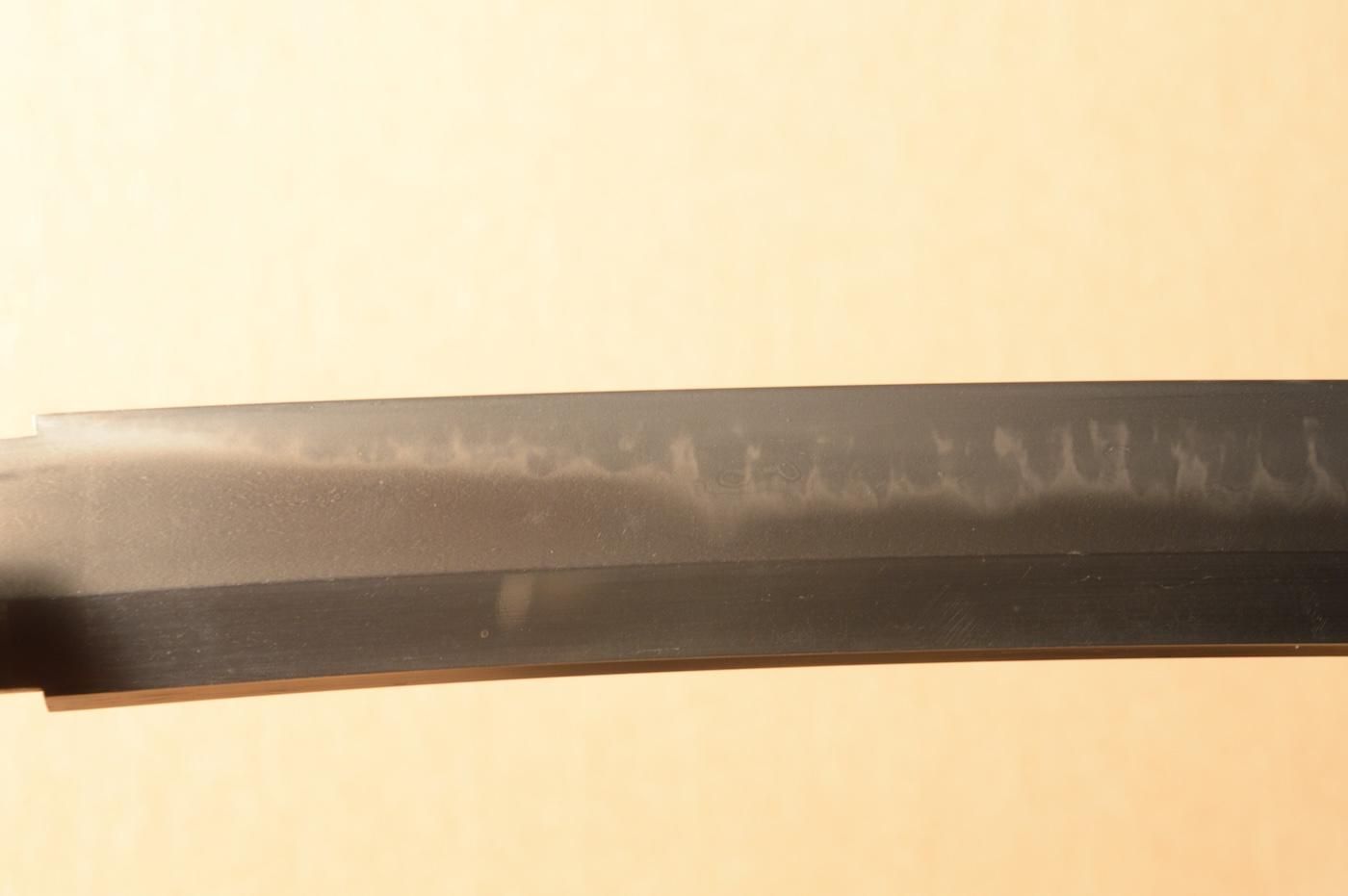
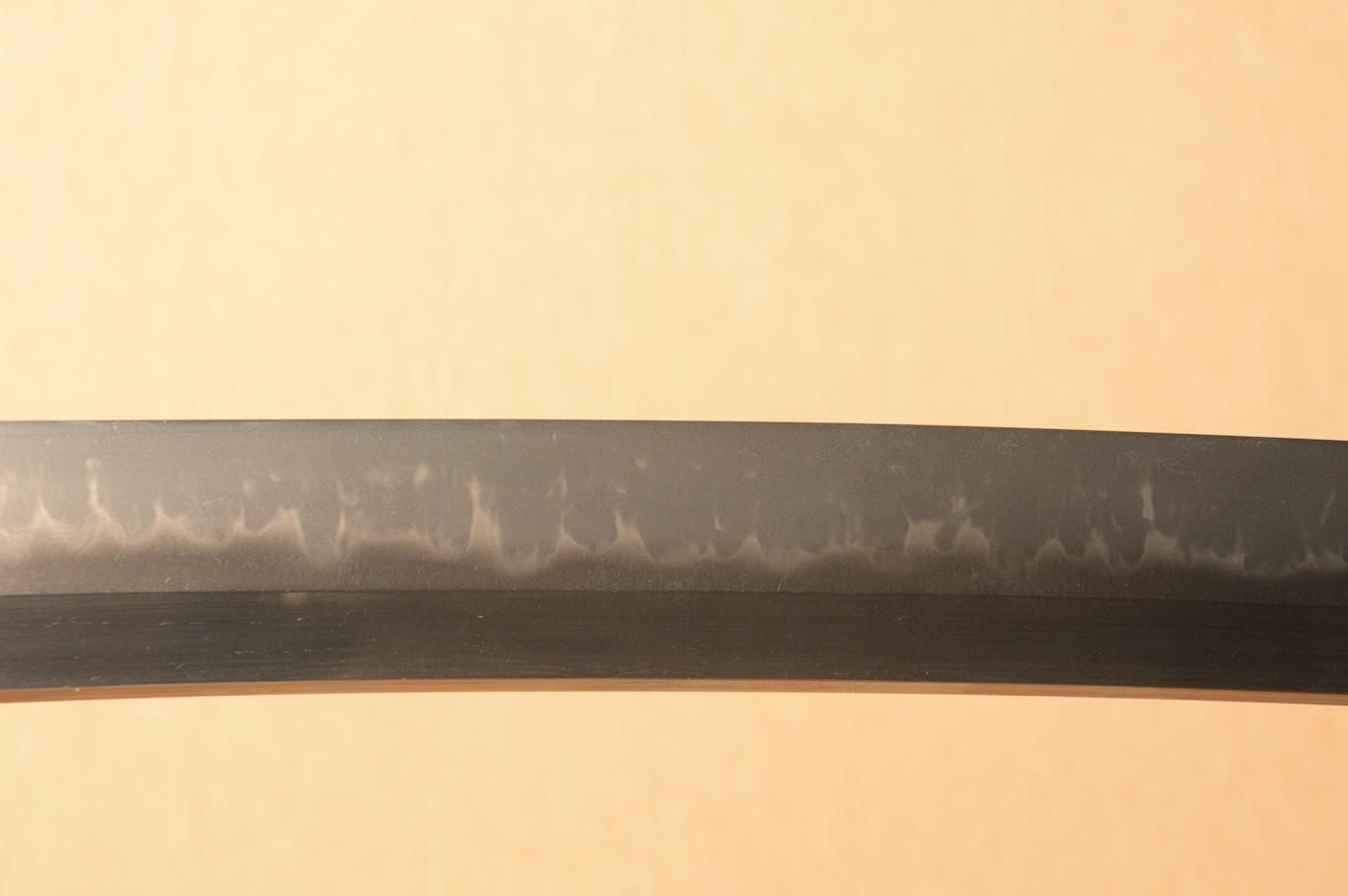
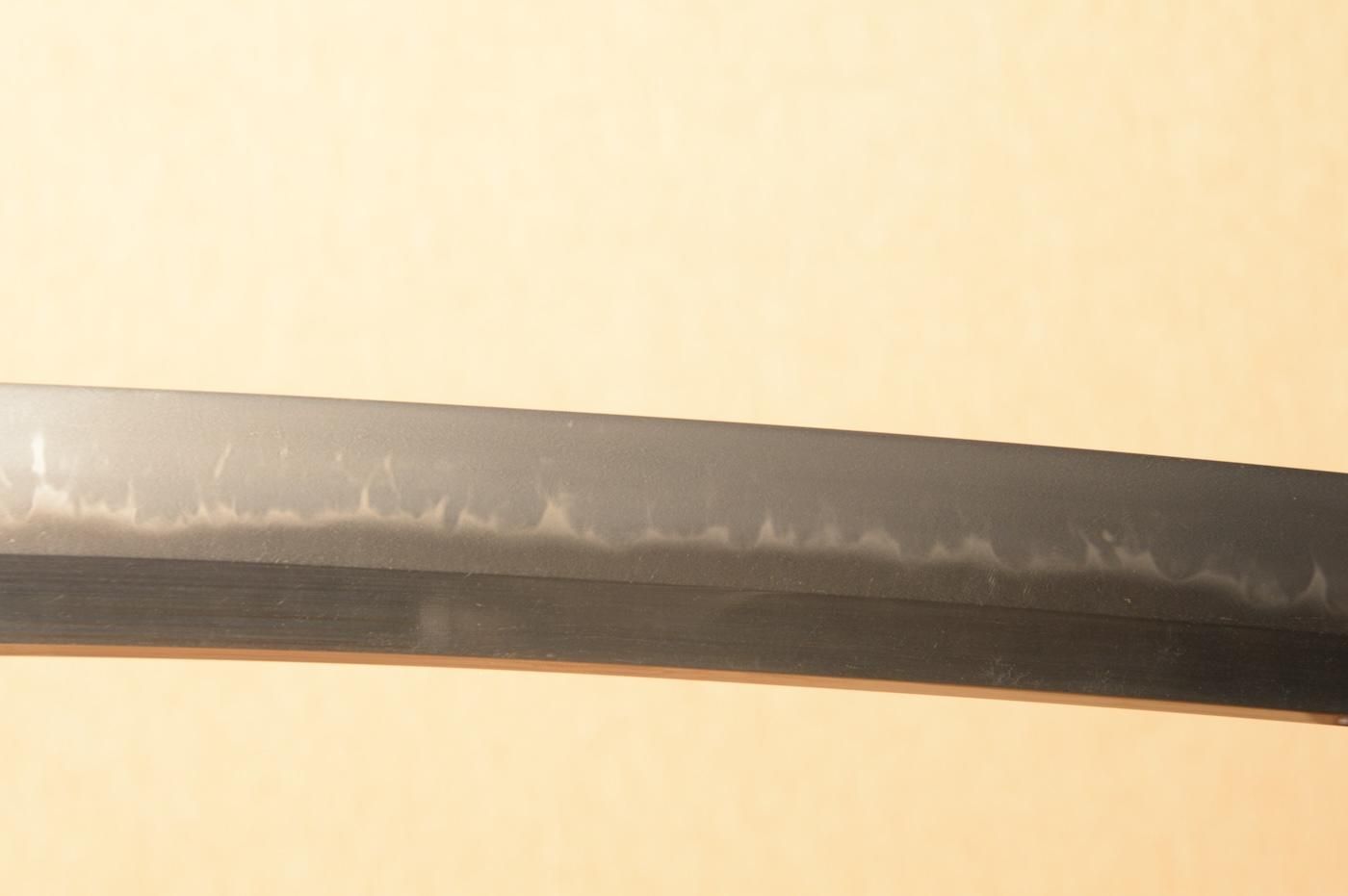
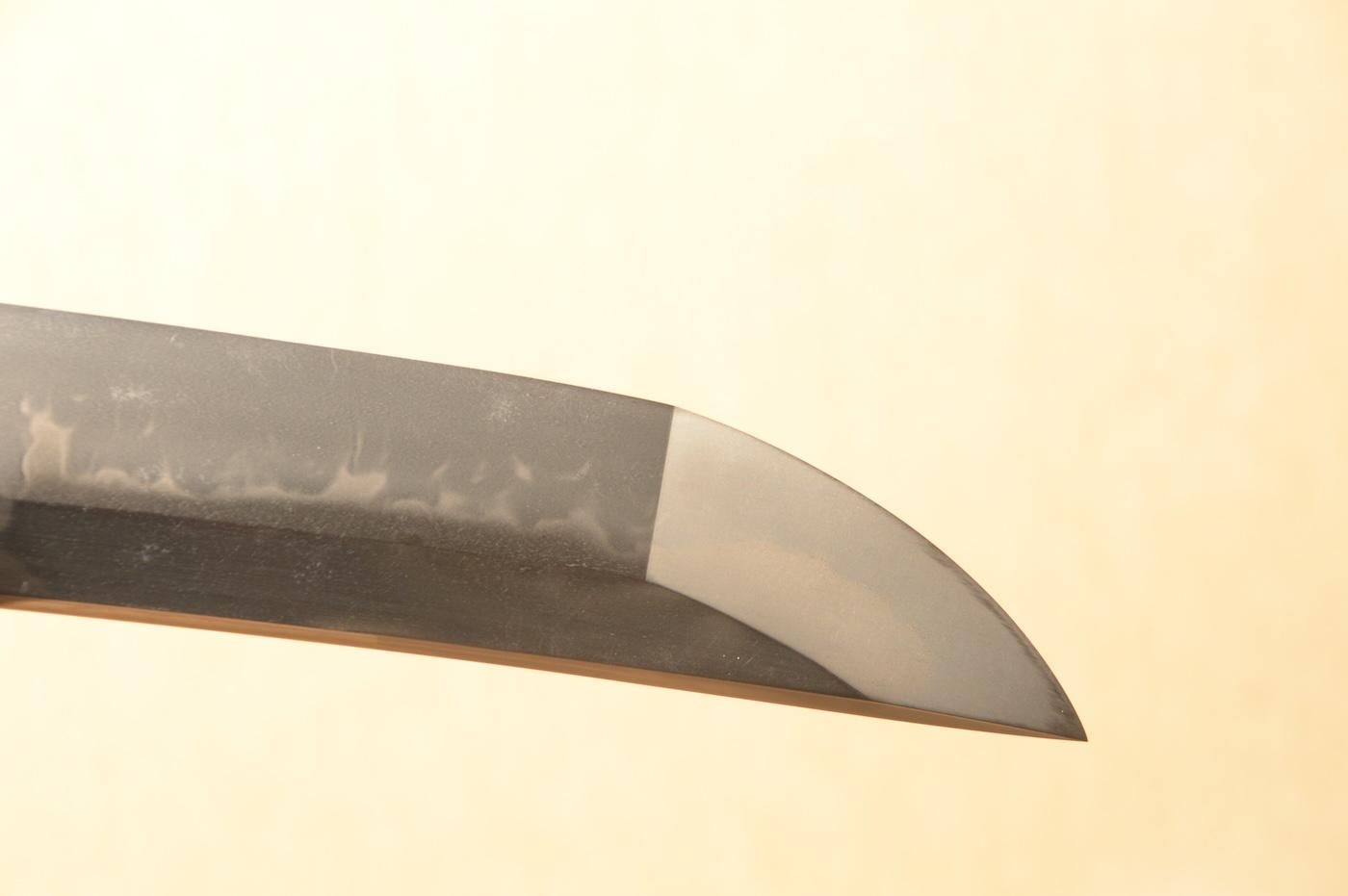
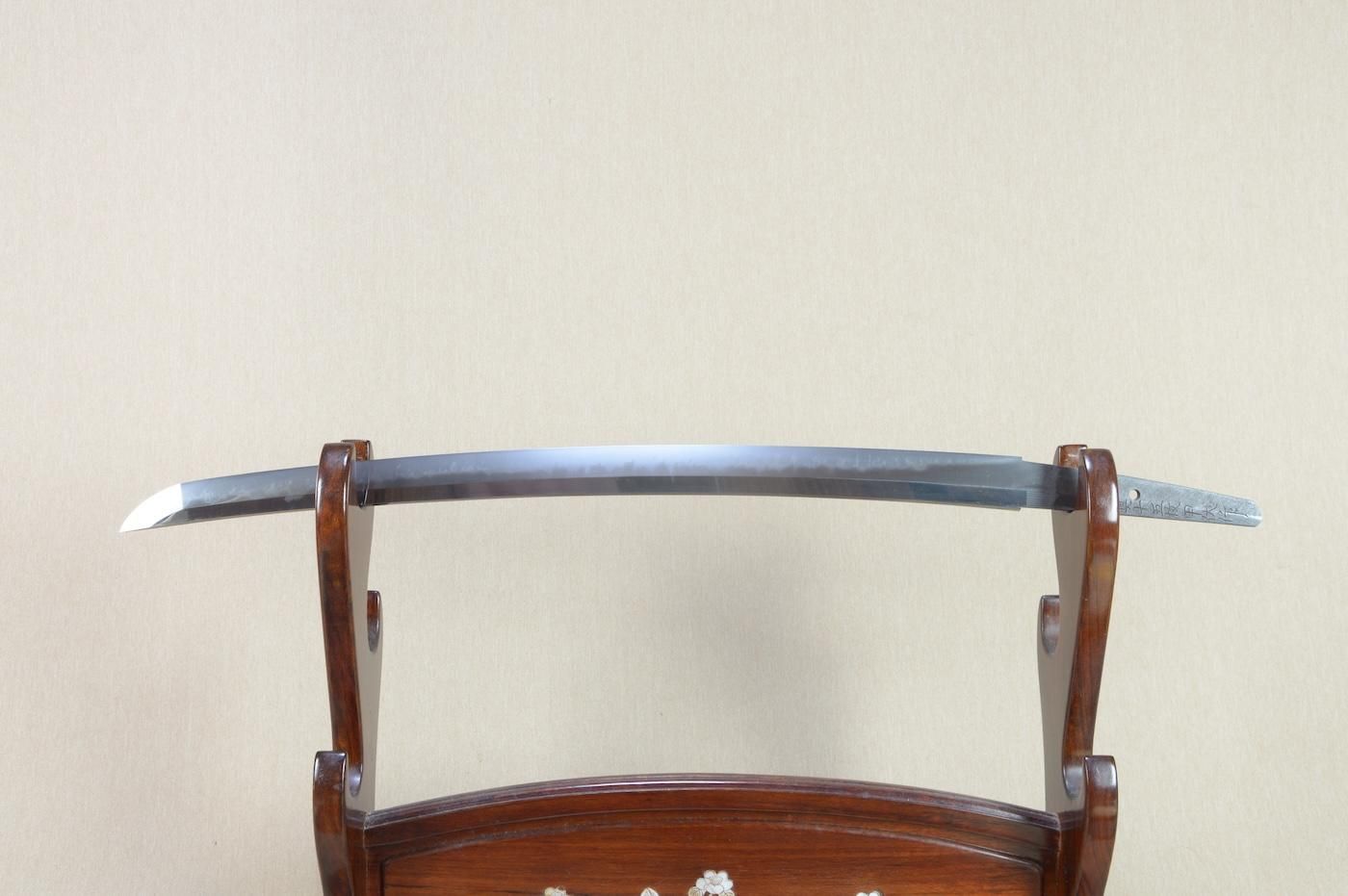
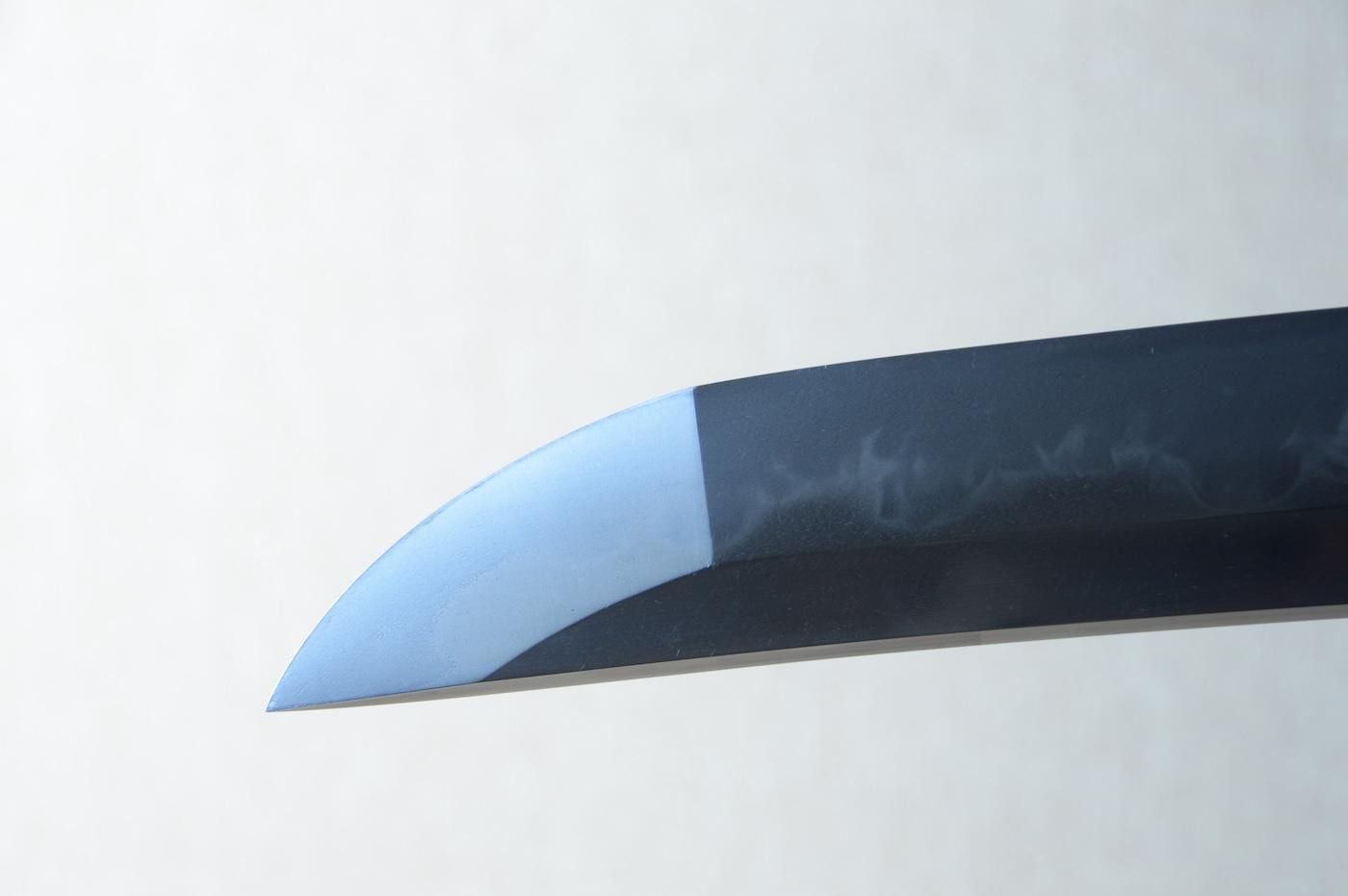
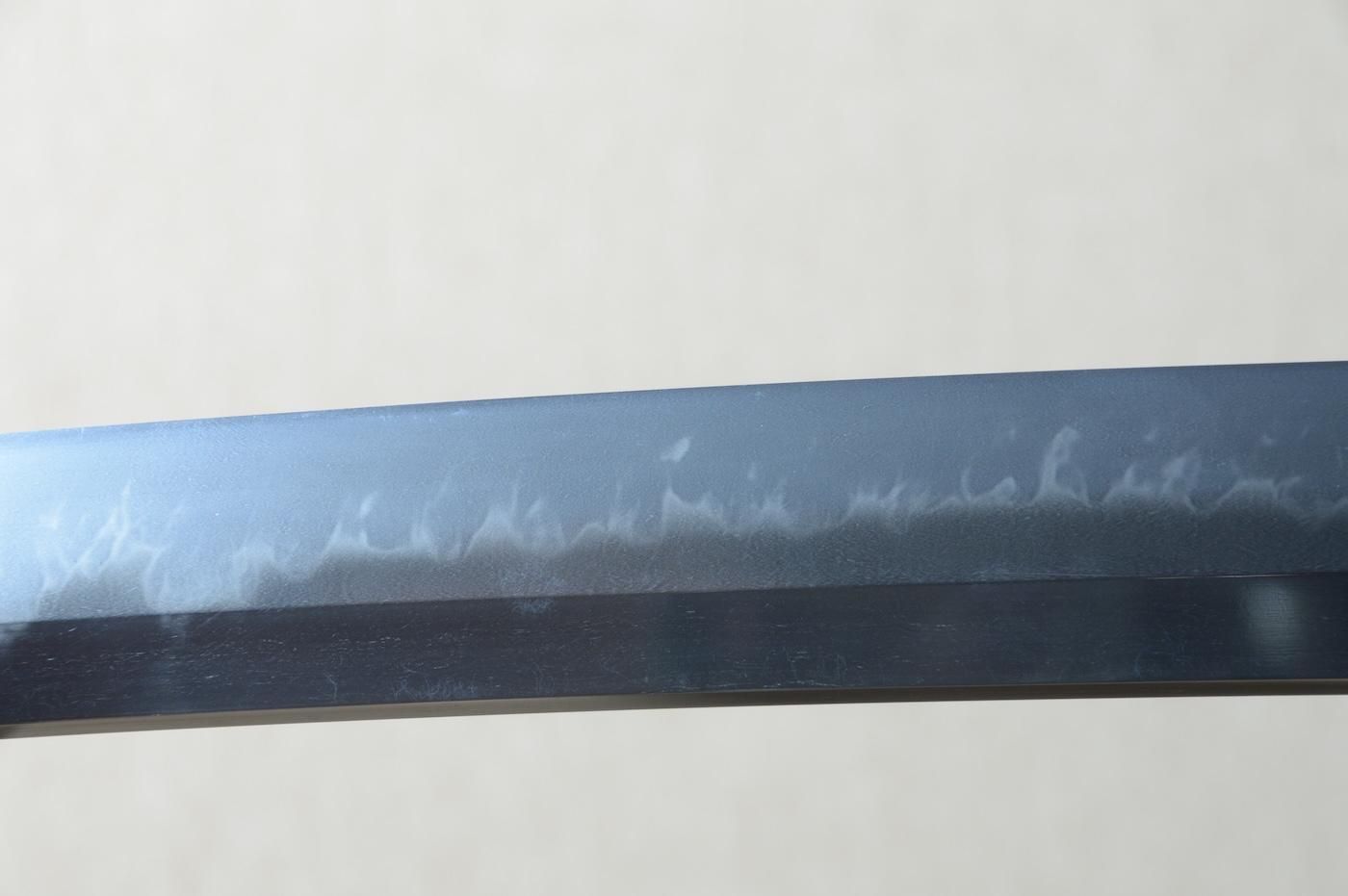
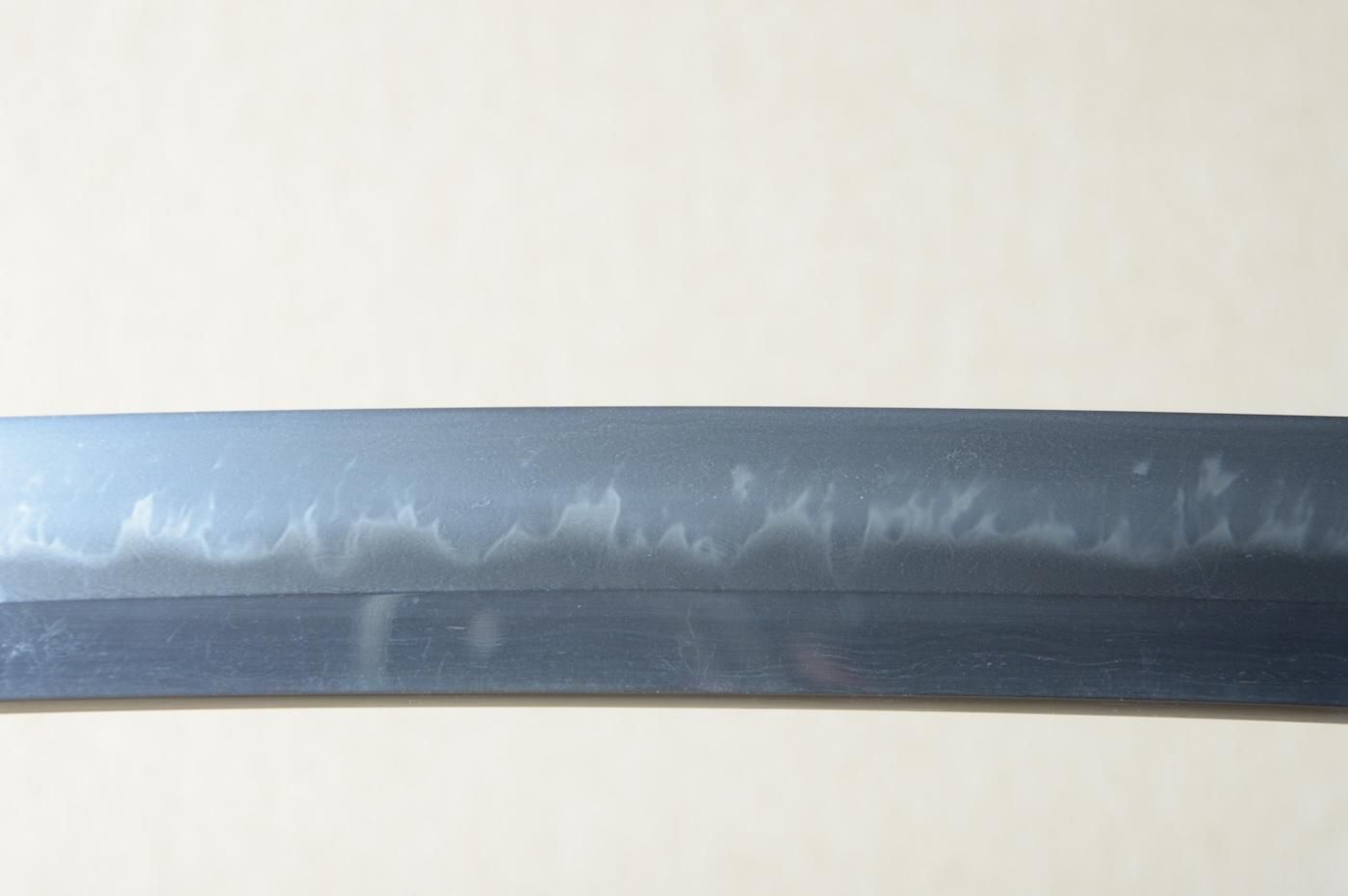
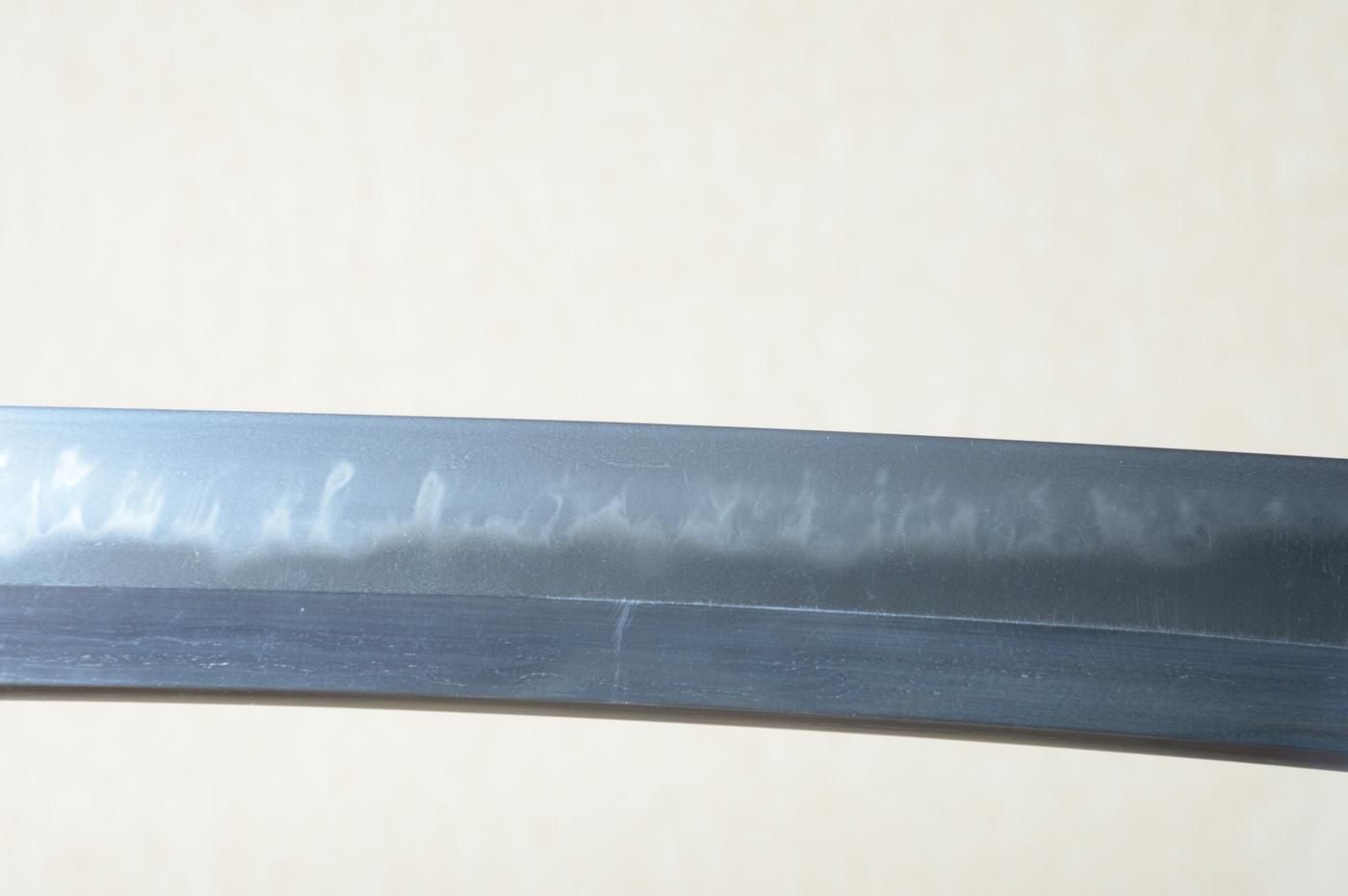
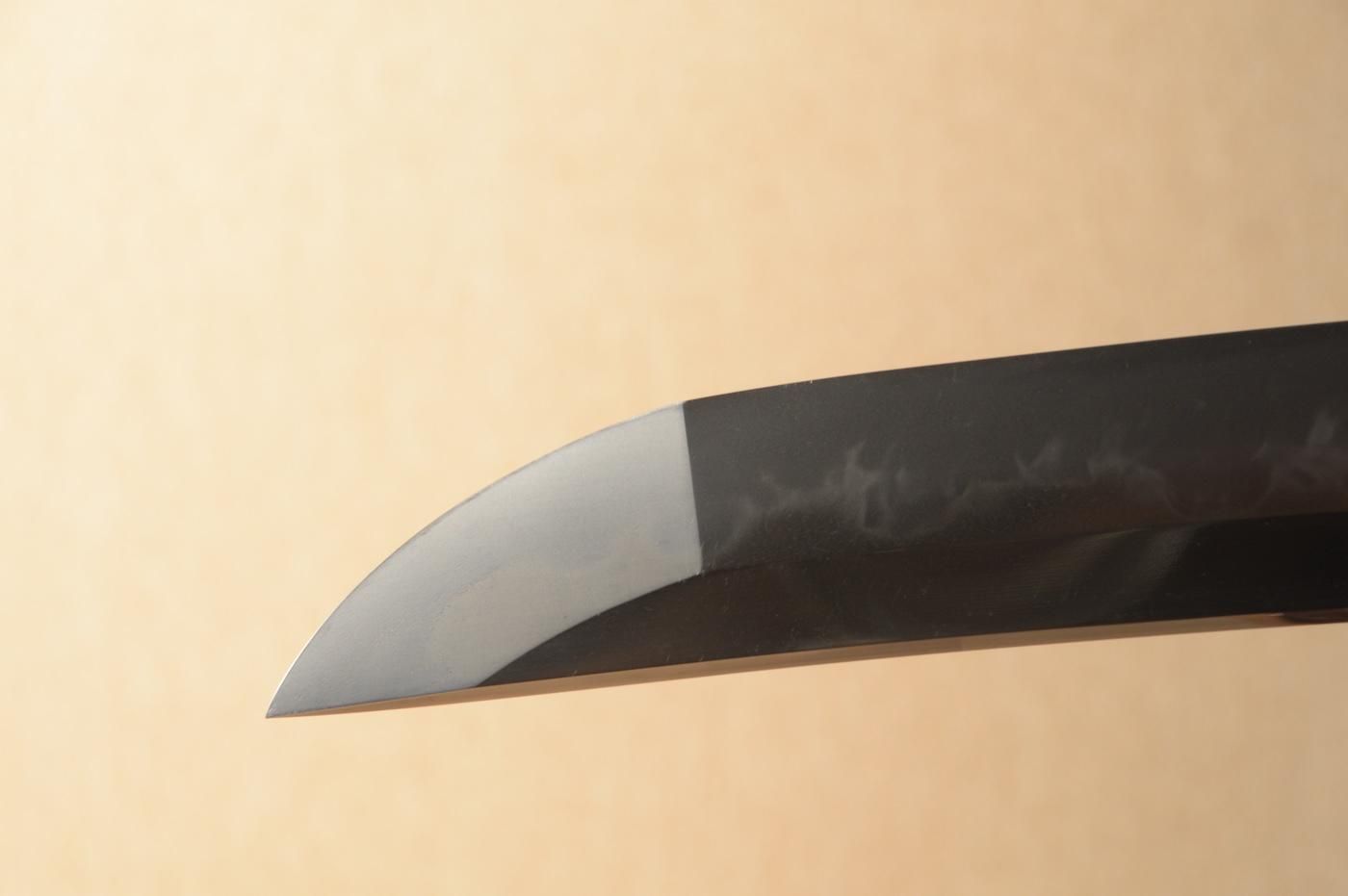
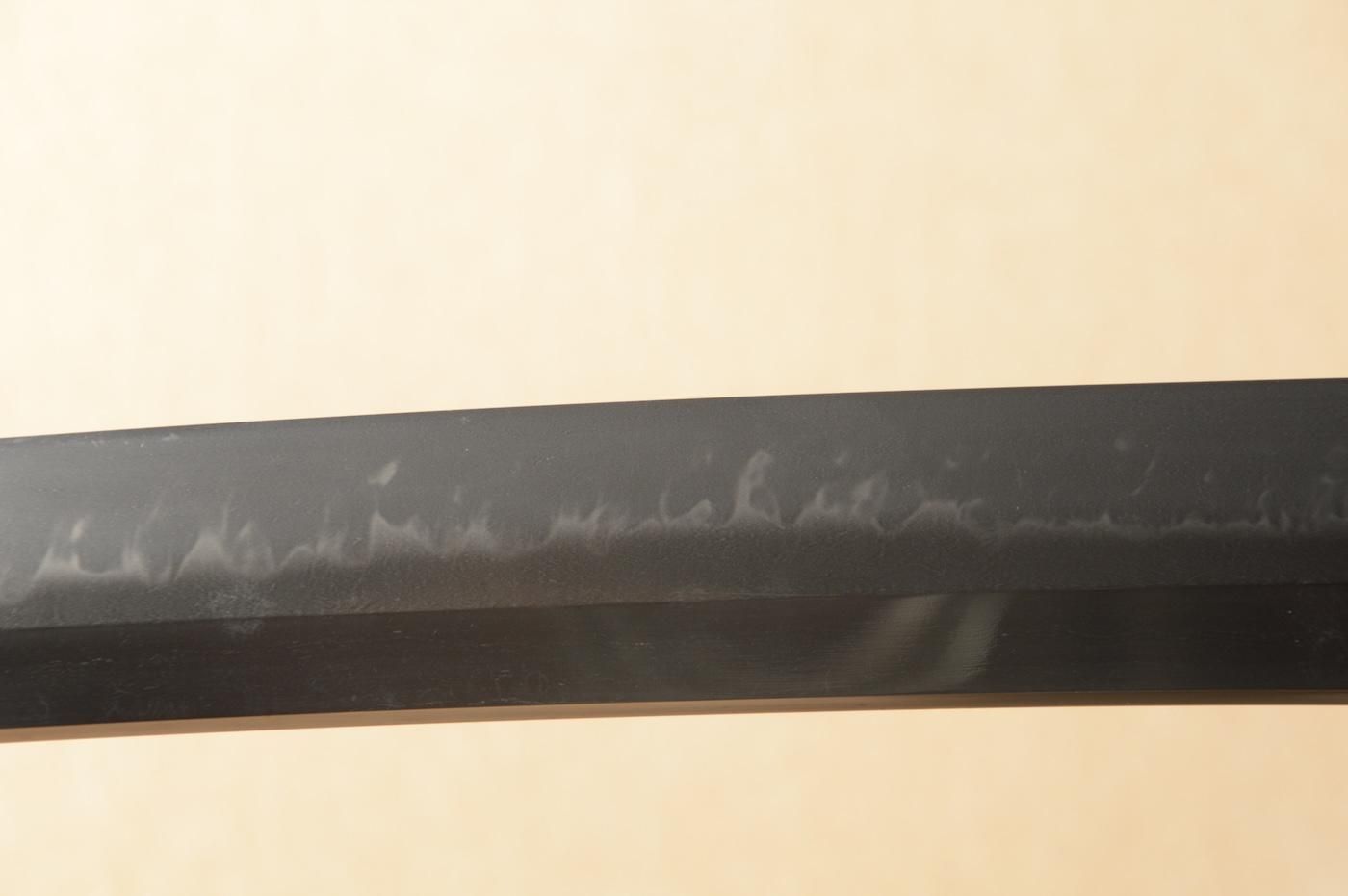
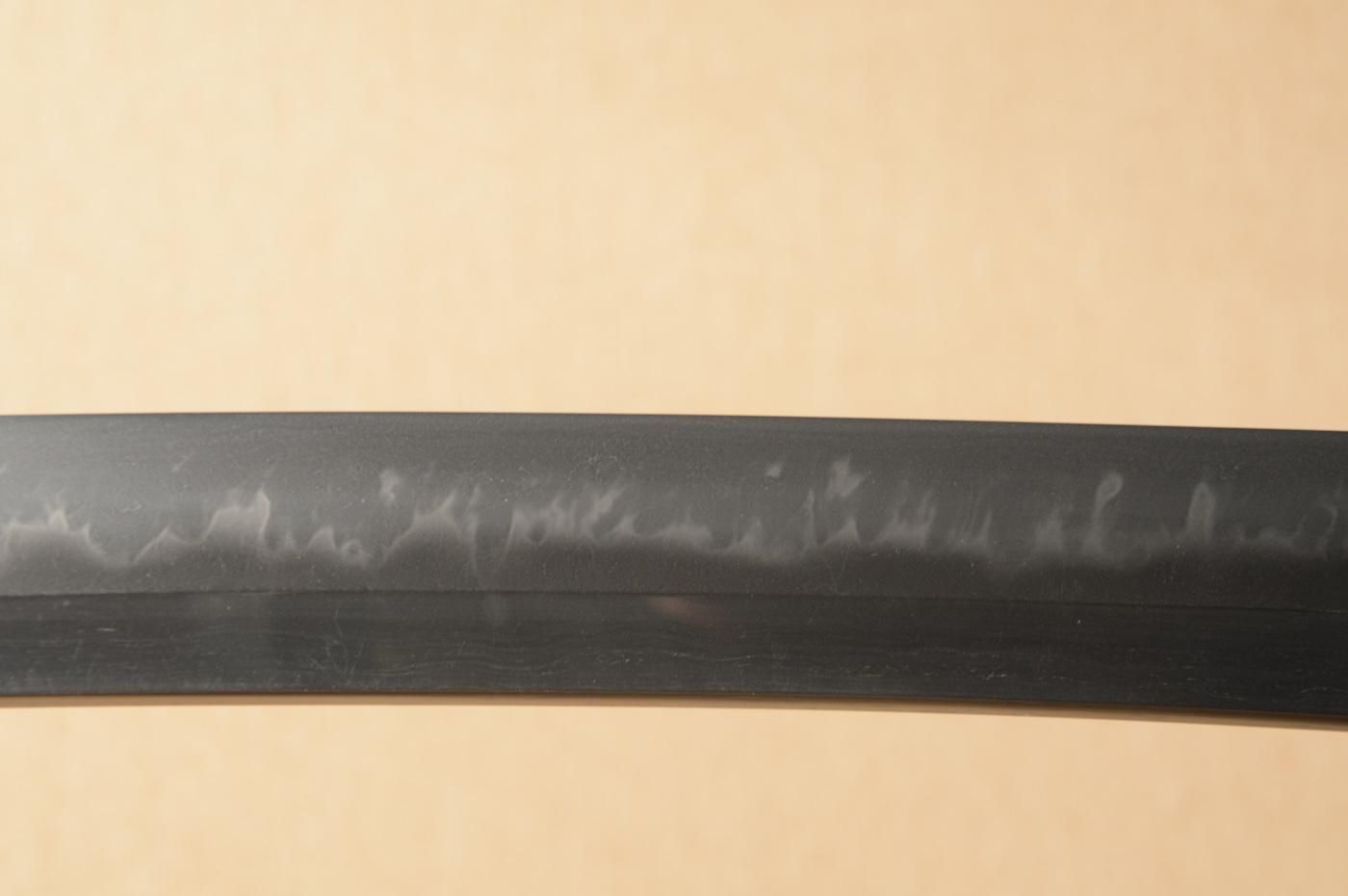
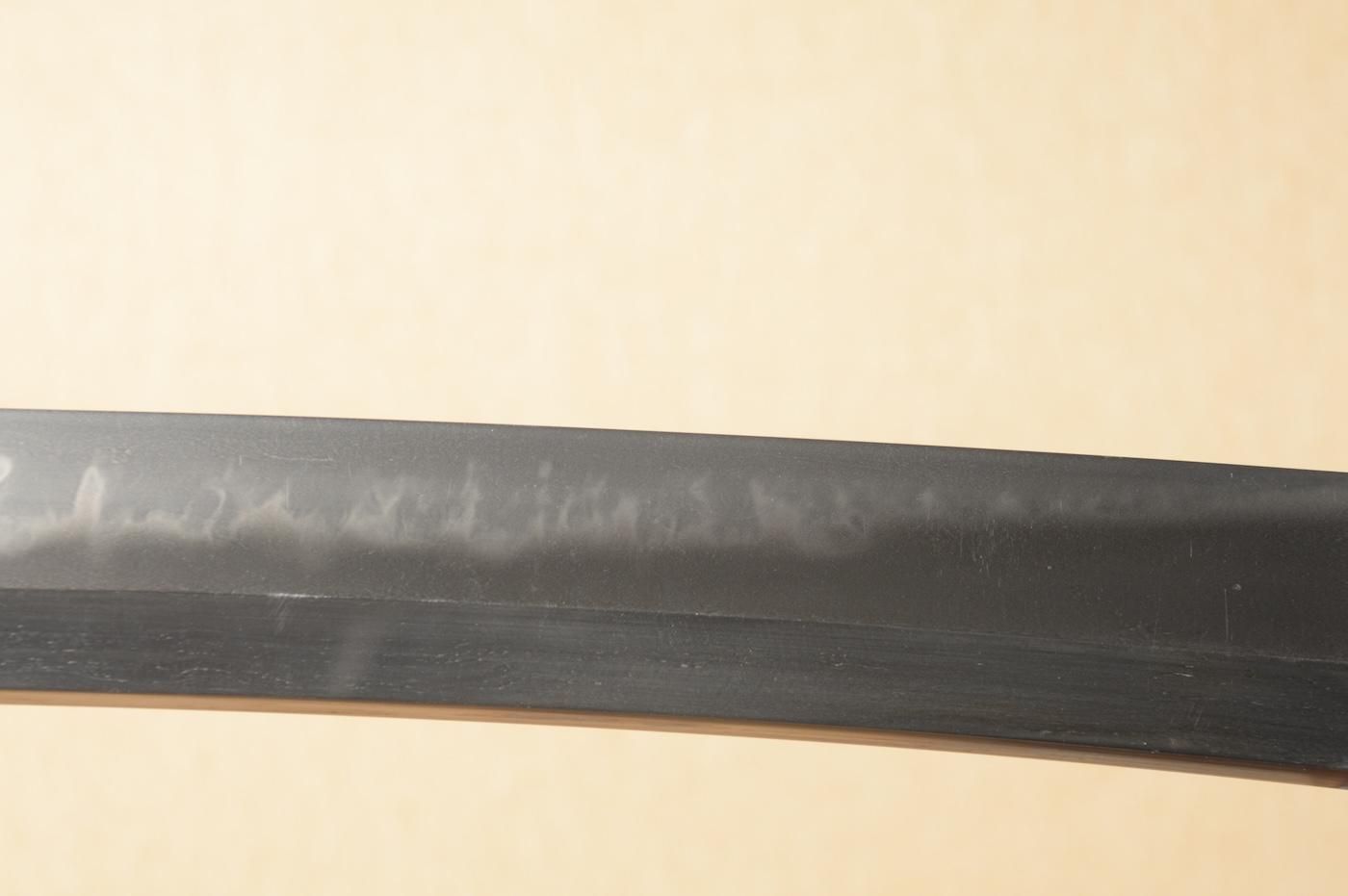
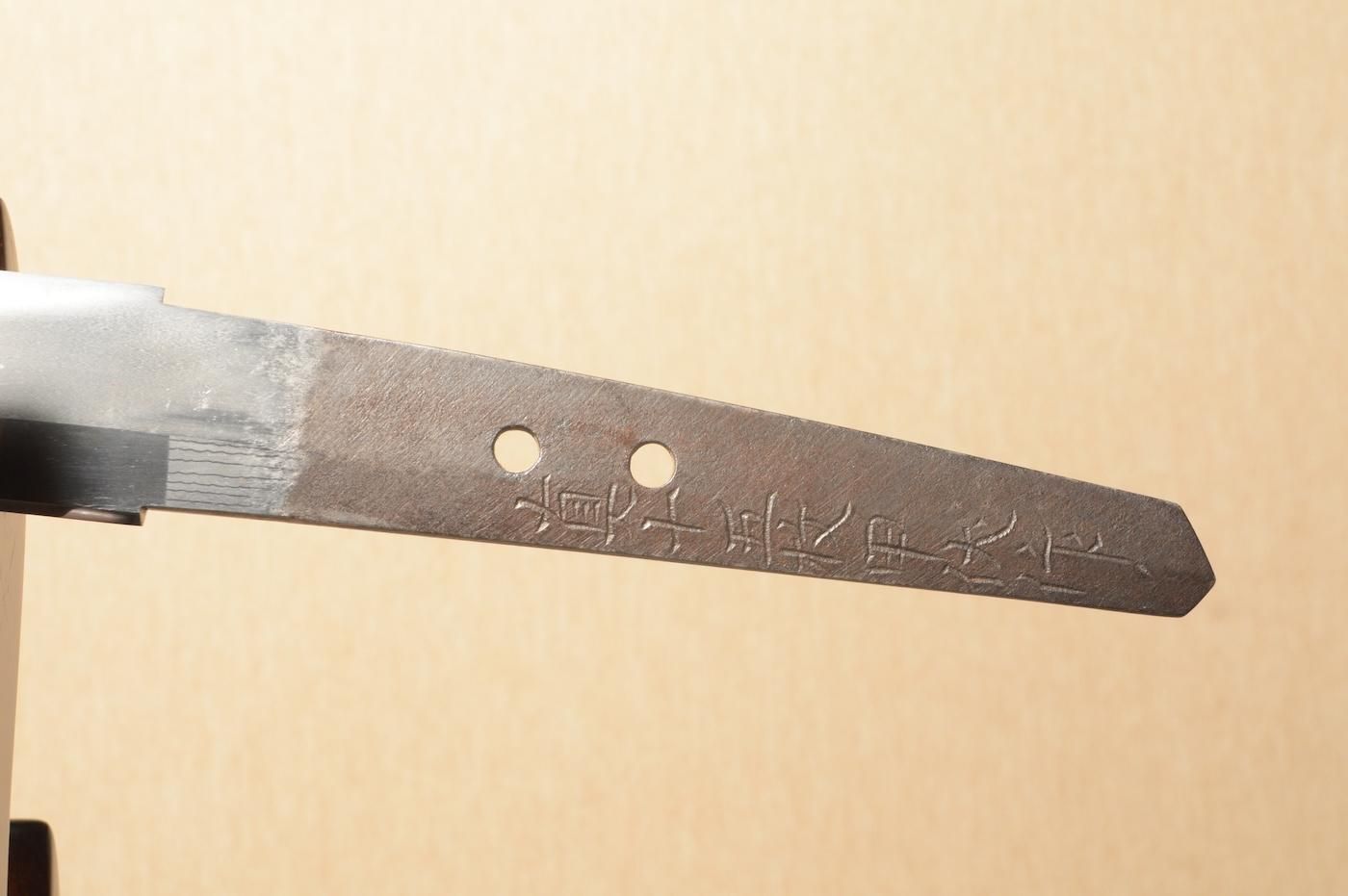
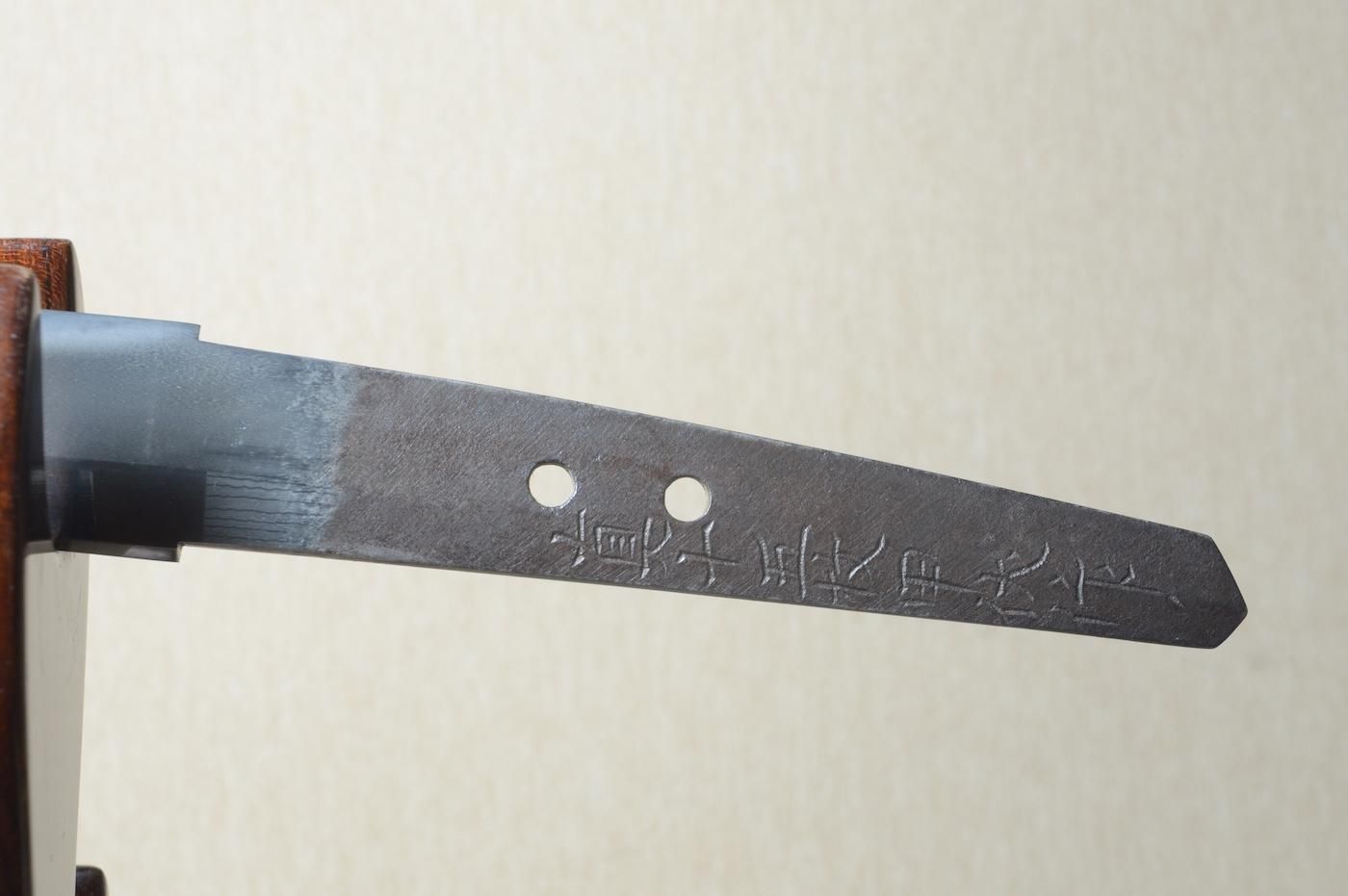
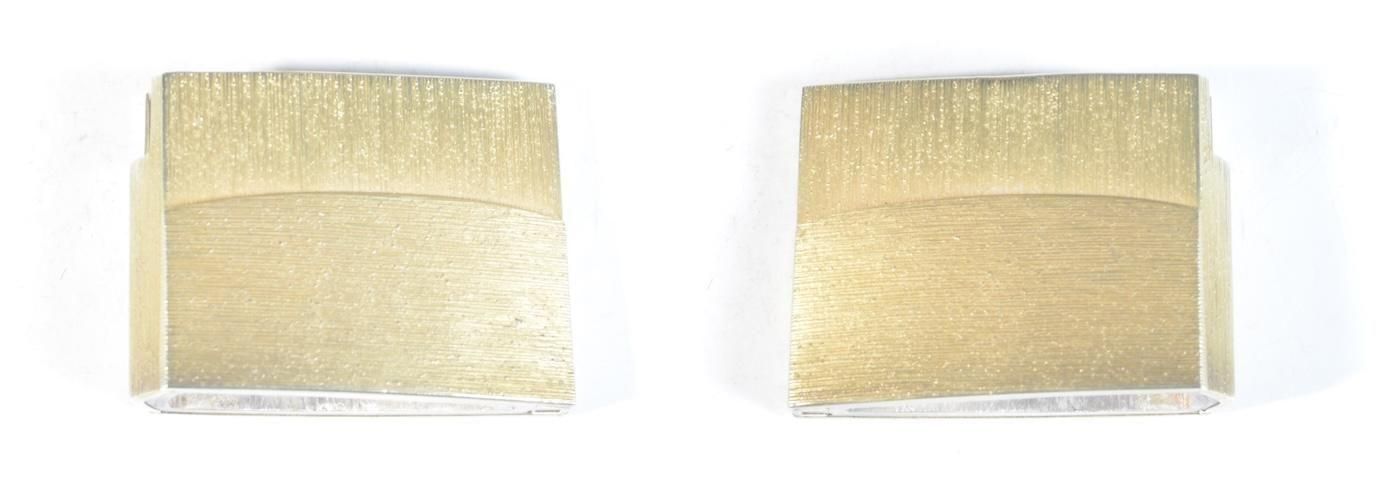
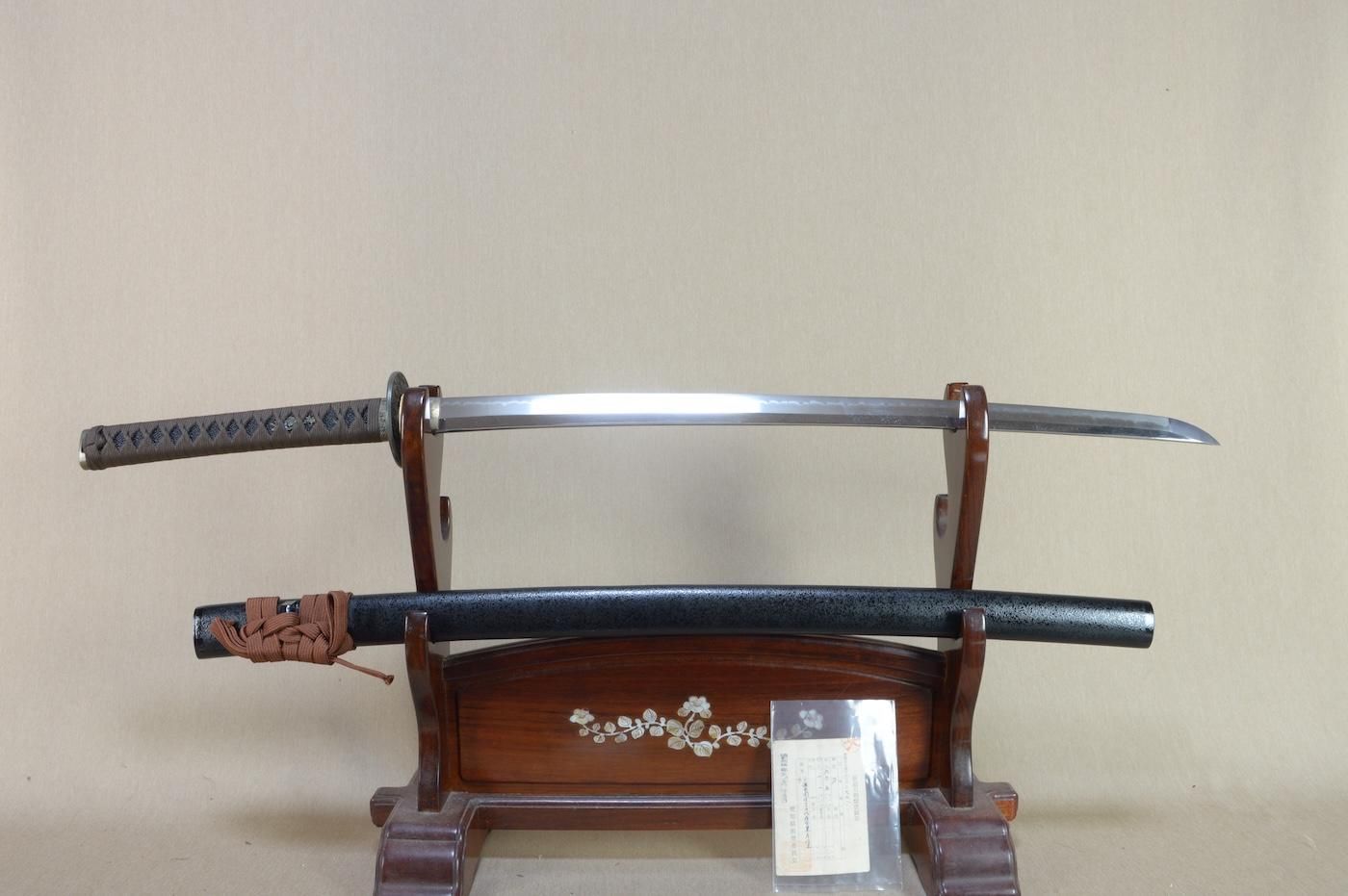
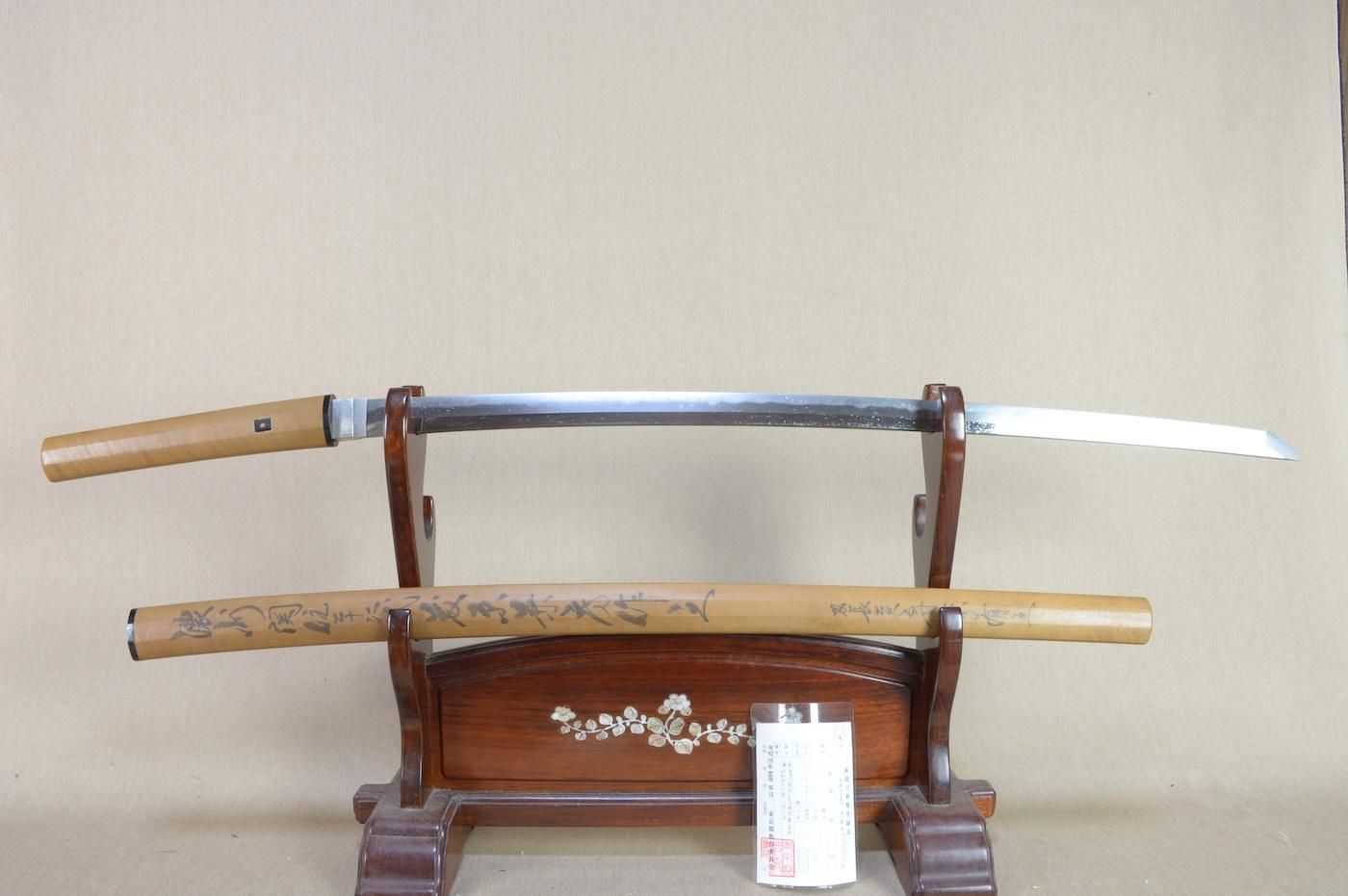
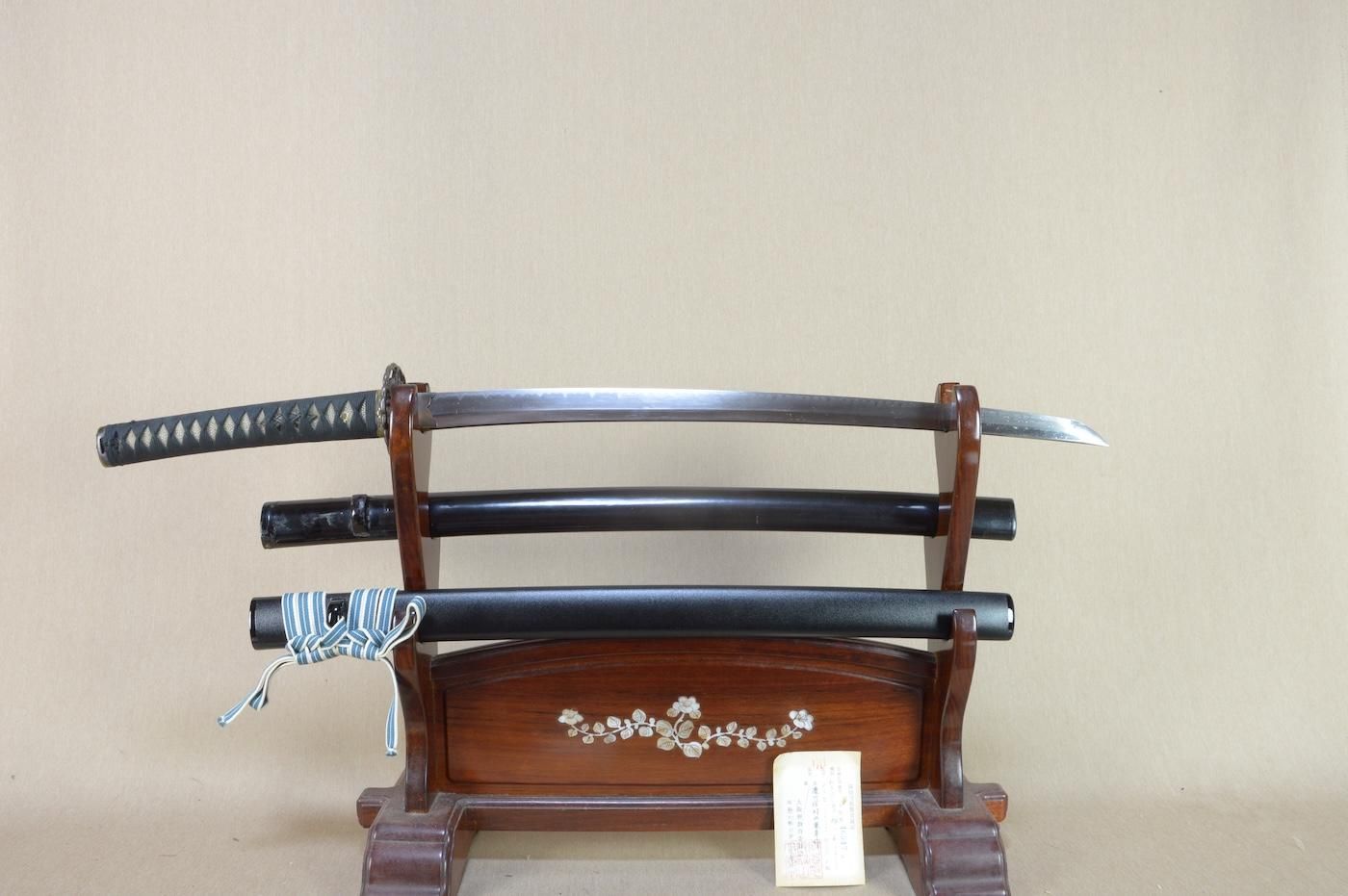
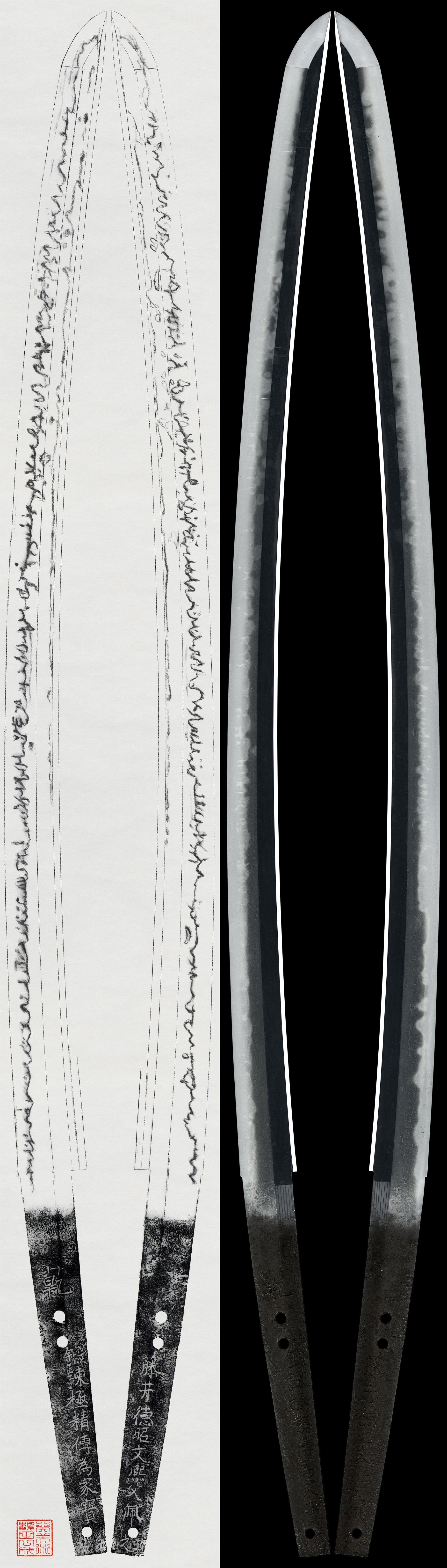
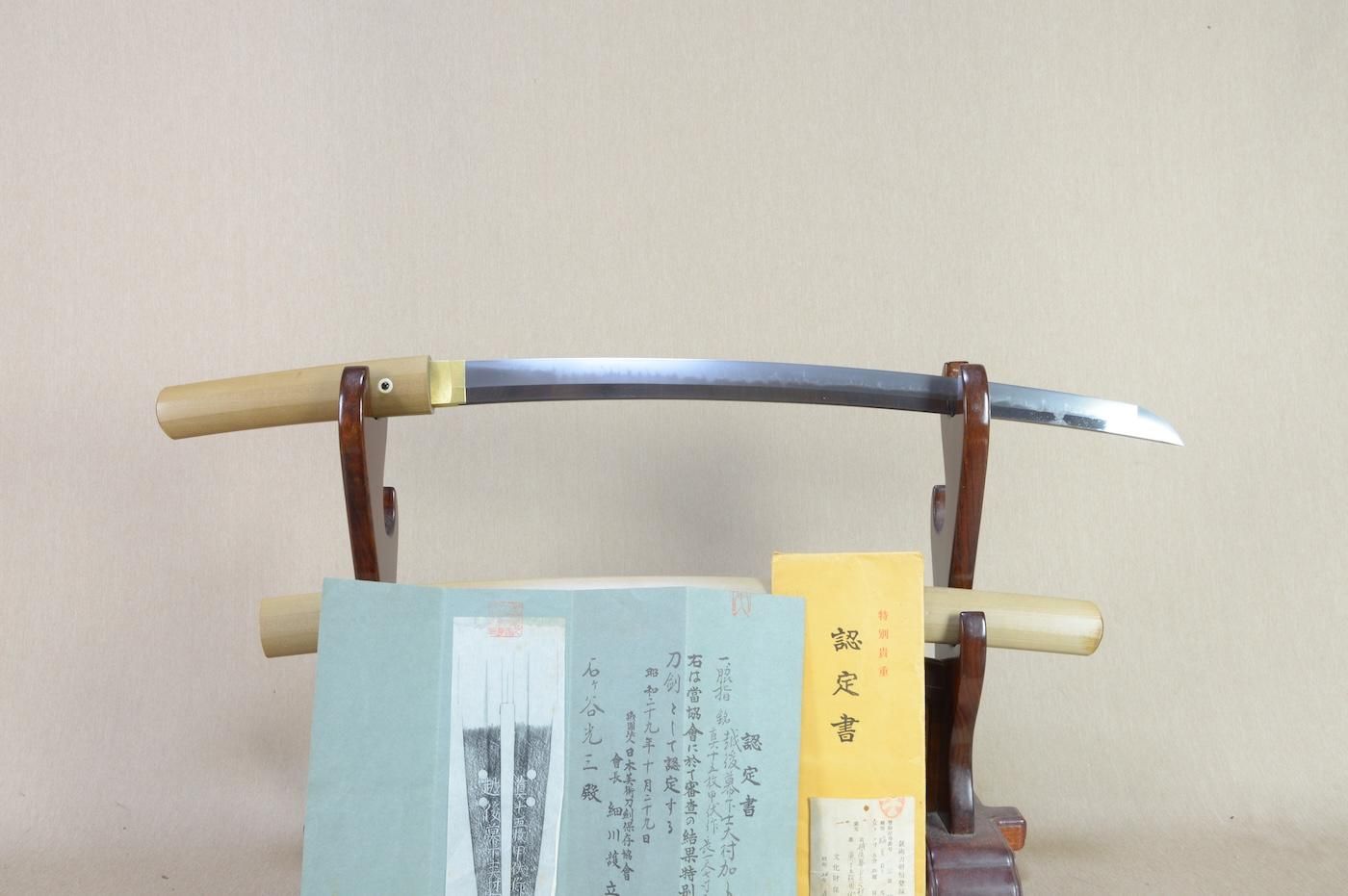
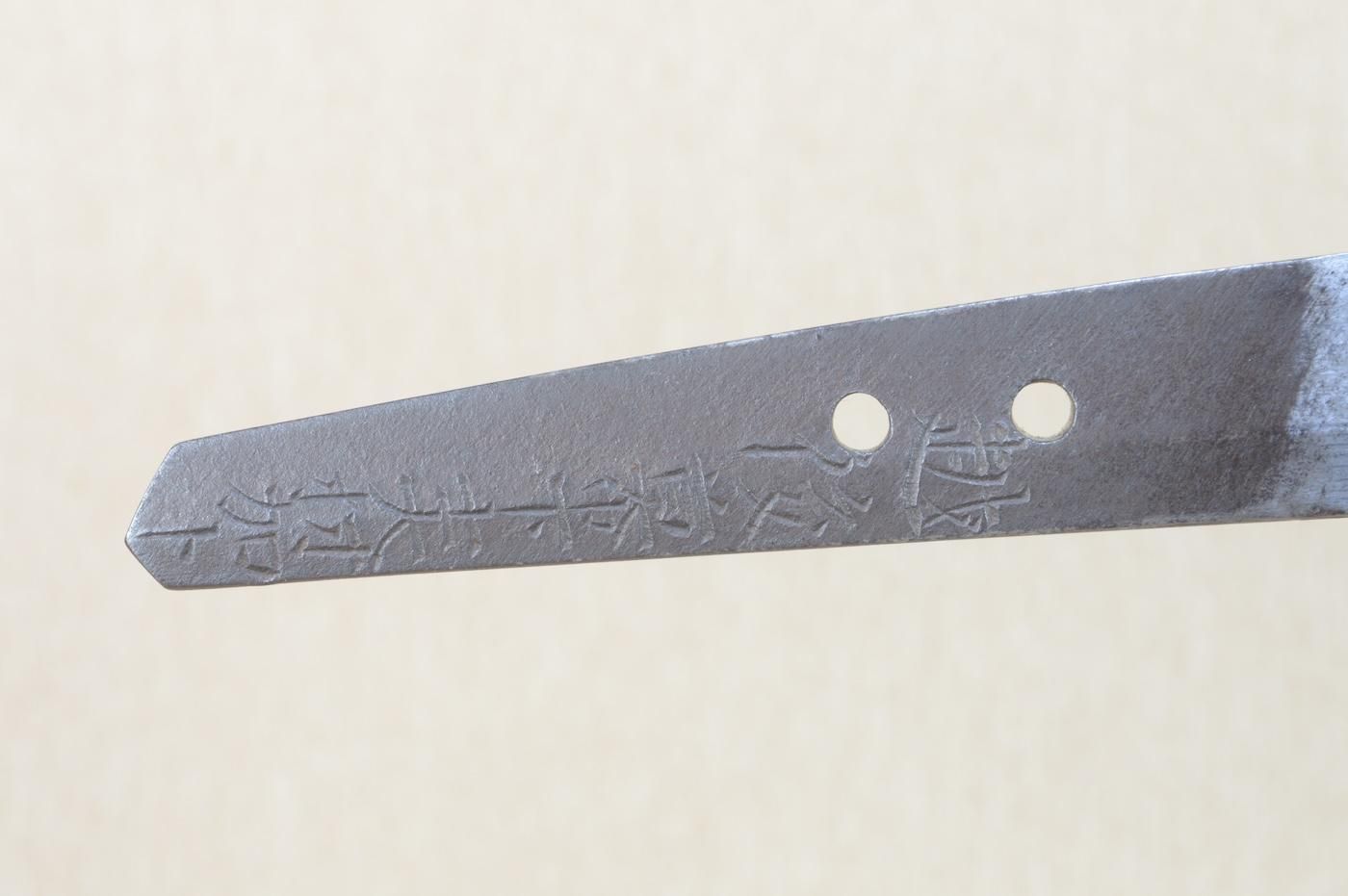
This is a wakizashi made by Omura Kaboku during the Edo period (circa 1644-1648). The blade features a wide and robust appearance with a beautiful polish, showcasing a well-grained itame hada and a vibrant choji-midare hamon with long ashi and yo. It comes with a shirasaya and a gold-gilt habaki.

NihontoWatch MonNihontoWatchBETA
MarketAuctionsEncyclopedia
Swords›Omura Kaboku›Kaboku›Wakizashi: Omura Kaboku 52.6cm - Exceptional Polish, Ideal for Appreciation, Iai, and Tameshigiri
wakizashiTokubetsu Kichō
Omura Kaboku

Wakizashi: Omura Kaboku 52.6cm - Exceptional Polish, Ideal for Appreciation, Iai, and Tameshigiri

mei · Shoho–Jokyo (1644-1684) · nagasa 52.6cm · sori 1.56cm

SOLD
Omura Kaboku — 1 of 40
Omura Kaboku — 2 of 40
Omura Kaboku — 3 of 40
Omura Kaboku — 4 of 40
Omura Kaboku — 5 of 40
Omura Kaboku — 6 of 40
Omura Kaboku — 7 of 40
Omura Kaboku — 8 of 40
Omura Kaboku — 9 of 40
Omura Kaboku — 10 of 40
Omura Kaboku — 11 of 40
Omura Kaboku — 12 of 40
Omura Kaboku — 13 of 40
Omura Kaboku — 14 of 40
Omura Kaboku — 15 of 40
Omura Kaboku — 16 of 40
Omura Kaboku — 17 of 40
Omura Kaboku — 18 of 40
Omura Kaboku — 19 of 40
Omura Kaboku — 20 of 40
Omura Kaboku — 21 of 40
Omura Kaboku — 22 of 40
Omura Kaboku — 23 of 40
Omura Kaboku — 24 of 40
Omura Kaboku — 25 of 40
Omura Kaboku — 26 of 40
Omura Kaboku — 27 of 40
Omura Kaboku — 28 of 40
Omura Kaboku — 29 of 40
Omura Kaboku — 30 of 40
Omura Kaboku — 31 of 40
Omura Kaboku — 32 of 40
Omura Kaboku — 33 of 40
Omura Kaboku — 34 of 40
Omura Kaboku — 35 of 40
Omura Kaboku — 36 of 40
Omura Kaboku — 37 of 40
Omura Kaboku — 38 of 40
Omura Kaboku — 39 of 40
Omura Kaboku — 40 of 40
1 / 40
1 / 40
Omura Kaboku — 1 of 40Omura Kaboku — 2 of 40Omura Kaboku — 3 of 40Omura Kaboku — 4 of 40Omura Kaboku — 5 of 40Omura Kaboku — 6 of 40Omura Kaboku — 7 of 40Omura Kaboku — 8 of 40Omura Kaboku — 9 of 40Omura Kaboku — 10 of 40Omura Kaboku — 11 of 40Omura Kaboku — 12 of 40Omura Kaboku — 13 of 40Omura Kaboku — 14 of 40Omura Kaboku — 15 of 40Omura Kaboku — 16 of 40Omura Kaboku — 17 of 40Omura Kaboku — 18 of 40Omura Kaboku — 19 of 40Omura Kaboku — 20 of 40Omura Kaboku — 21 of 40Omura Kaboku — 22 of 40Omura Kaboku — 23 of 40Omura Kaboku — 24 of 40Omura Kaboku — 25 of 40Omura Kaboku — 26 of 40Omura Kaboku — 27 of 40Omura Kaboku — 28 of 40Omura Kaboku — 29 of 40Omura Kaboku — 30 of 40Omura Kaboku — 31 of 40Omura Kaboku — 32 of 40Omura Kaboku — 33 of 40Omura Kaboku — 34 of 40Omura Kaboku — 35 of 40Omura Kaboku — 36 of 40Omura Kaboku — 37 of 40Omura Kaboku — 38 of 40Omura Kaboku — 39 of 40Omura Kaboku — 40 of 40
Measurements & details
Smith
Omura Kaboku
Type
Wakizashi
School
Omura Kaboku
Period
Around 1644–1684(Shoho–Jokyo)
Province
Echigo
Signature
Signed(100% of this smith's designated works are signed)
Measurements
Nagasa 52.6cmSori 1.56cmMotohaba 3.2cmSakihaba 2.4cmKasane 0.67cmWeight 542g
Description

This is a wakizashi made by Omura Kaboku during the Edo period (circa 1644-1648). The blade features a wide and robust appearance with a beautiful polish, showcasing a well-grained itame hada and a vibrant choji-midare hamon with long ashi and yo. It comes with a shirasaya and a gold-gilt habaki.

About the maker

Kaboku

加卜

Omura Kaboku (Echigo / Mito shinto) · Hitachi · around 1644-1684

Fujishiro Jo saku · Tōken Taikan top 21%

›

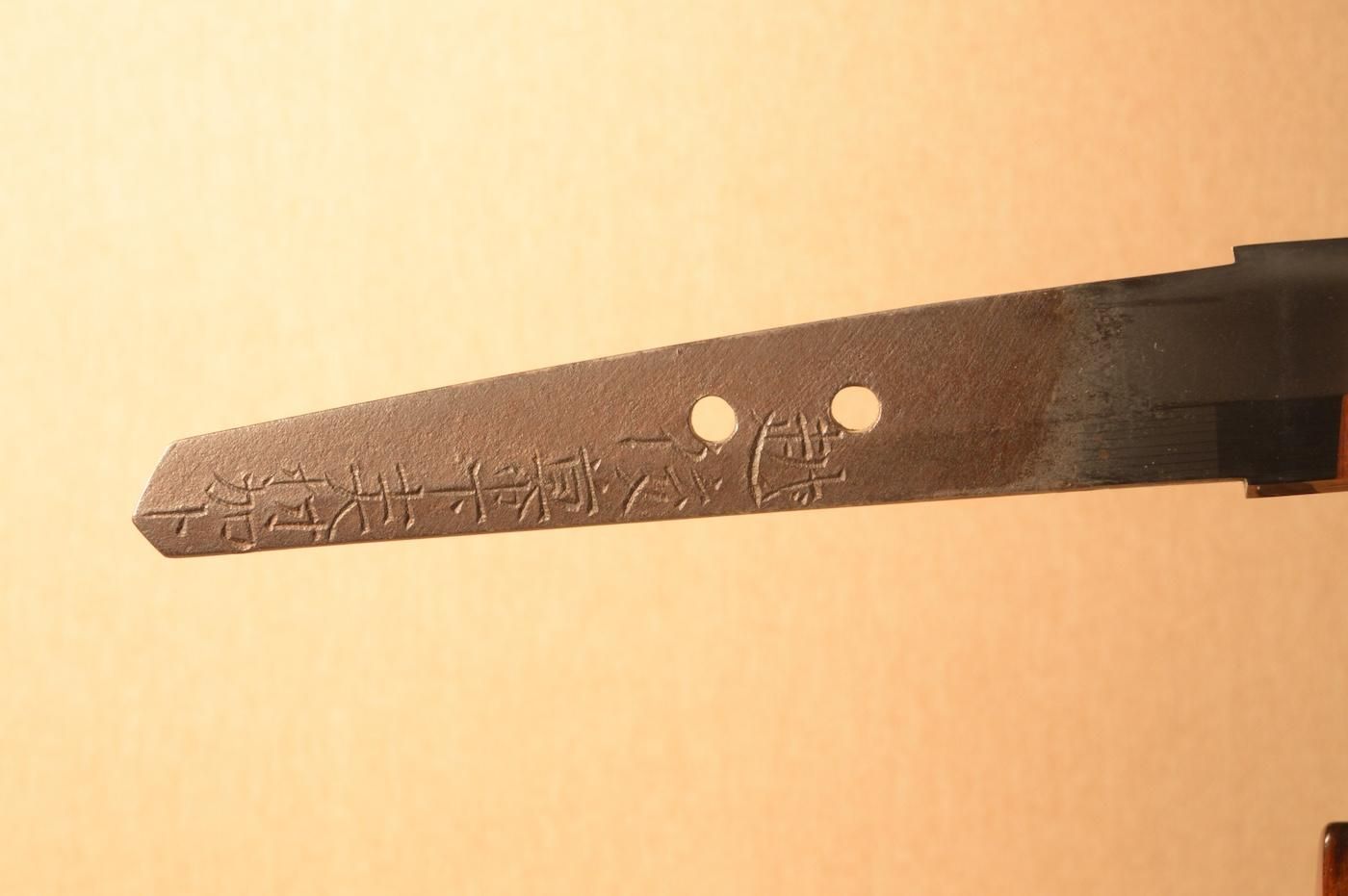
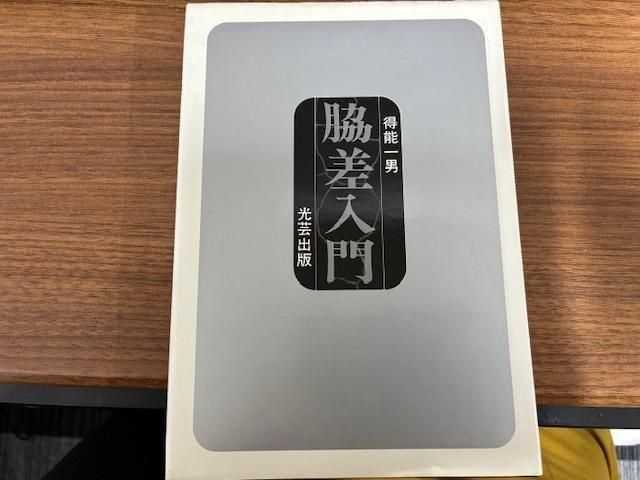
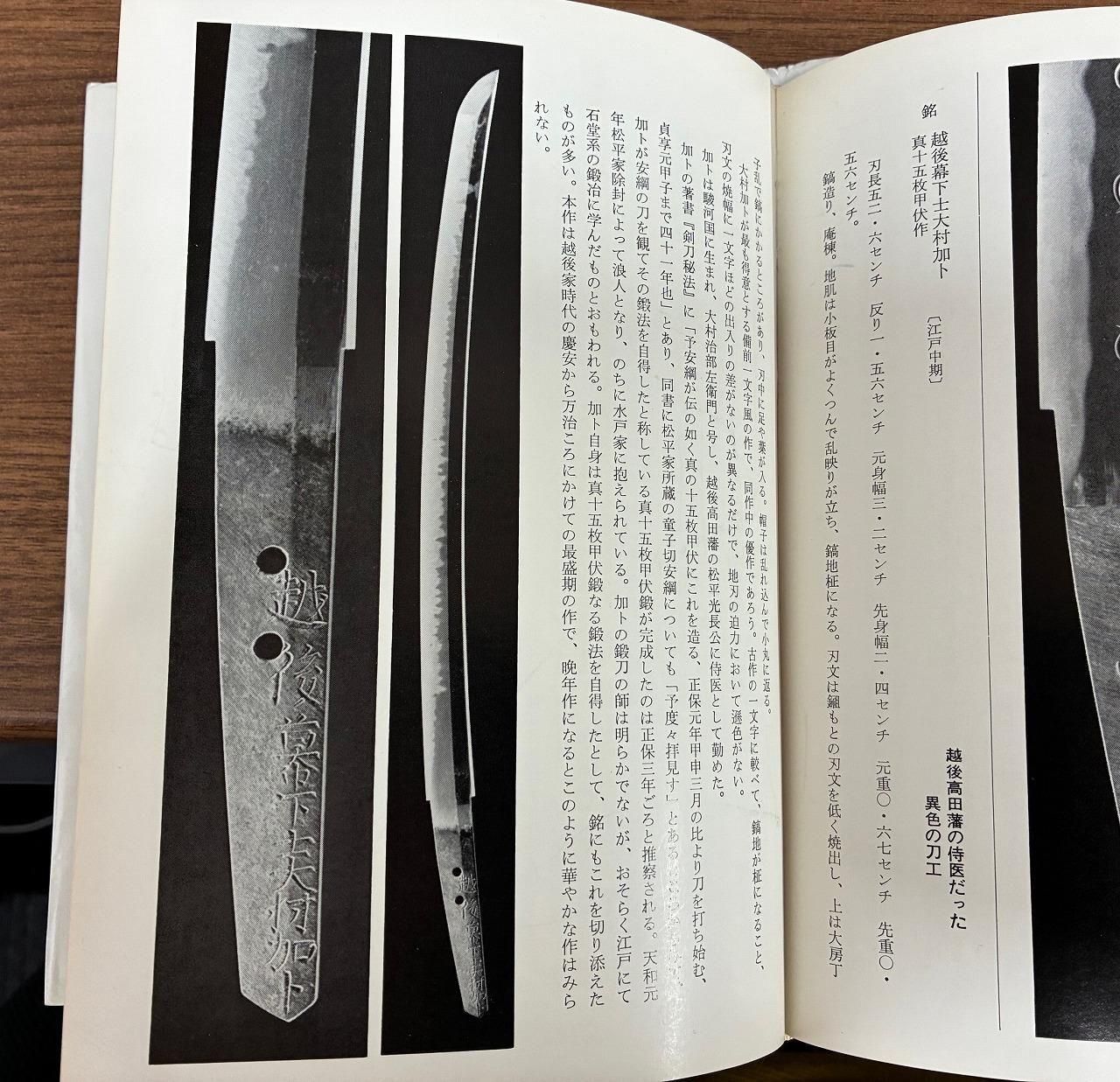
On a katana now in Osaka, dated the eighth month of Shōhō 2 (1645), Ōmura Kaboku cut not only his signature but a small manifesto: the construction, "true fifteen-plate kabuse"[[c:1]], the proud disclaimer "I am no smith"[[c:2]], and a line that the blade was forged to be heard of nine hundred years hence. The man behind that inscription was Ōmori Jibuzaemon, a physician born at Anzai on the outskirts of Sunpu in Suruga, who took up the forge as an avocation alongside his medical practice. By his own account in the Tōken Hihō, his treatise on swords, he began forging in the third month of Shōhō 1 (1644) and over the forty-one years to Jōkyō 1 (1684) made about a hundred blades. He served Matsudaira Mitsunaga, lord of Takada in Echigo, by virtue of his medicine; after that house was dispossessed he became a rōnin, went up to Edo, and entered the attendance of Tokugawa Mitsukuni of the Mito domain. His teacher is not clearly known, and his small signed corpus is prized by the published sources as much for the documentary value of its long inscriptions as for the blades themselves.

Kaboku worked in two distinct manners, and the gunome that runs through both is the thread that ties his hand together. The first is a brilliant Bizen tradition. Over an itame mixed with mokume, densely forged and carrying a standing midare-utsuri, he tempers a large chōji mixed with gunome, into which ashi and yō enter frequently; the nioi is deep and the nioiguchi clear, and the bōshi runs slightly midare-komi before turning in ko-maru. The published sources liken this work to the splendid chōji of the Ishidō current, calling it "the fine Ishidō-style chōji workmanship"[[c:3]], and judge his masterpieces to lie among these Bizen-tradition pieces. His other manner is Sōshū. There the temper is a broad suguha or a notare-based large gunome-midare worked deep in nie, with thick ashi, hotsure and yubashiri, and kinsuji and sunagashi coursing freely through the edge.

The jigane shifts with the manner, and reading it is the surest way into his work. In the Bizen mode the forging is a dense itame with mokume, the grain tightly closed beneath the bright midare-utsuri that rises in the old Bizen jigane. In the Sōshū mode the same itame stands a little more openly, here mixed with moku and flowing nagare-hada, and carries fine ji-nie together with a chikei that enters well though subdued; on the latest of the surviving blades the steel color is described as somewhat blackish, a strong, clearly textured jigane. His shapes are those of an early-Edo shintō katana: shinogi-zukuri with iori-mune, a thick kasane and a somewhat high shinogi, the sori shallow and the chū-kissaki extended. The published sources praise the proportions of the sixty-second-session blade as "robust and stalwart"[[c:4]], an ordinary width carried with abundant nikuoki.

The surviving Jūyō blades let his two registers be set against one another. The eleventh-session katana is the Bizen voice at its clearest, its large chōji and gunome over a bright utsuri judged probably his finest, the published sources calling it "likely his crowning achievement"[[c:5]]. The nineteenth and twenty-third pieces lean to Sōshū, the one a wide suguha with gunome and sunagashi, the other a notare-based large gunome-midare in deep nie. The sixty-second-session katana, designated in 2016 and the most fully described of the four, is the strongest statement of that manner: a broad suguha base mixed with gunome, chōji-like elements and shallow notare in a companion arrangement, kinsuji and sunagashi frequent, and the bōshi tempered so deeply that it becomes ichimai-like with tobiyaki on the reverse. The published sources read it as a work "plainly made with a keen awareness of Gō Yoshihiro"[[c:6]], and note that he also left a broad suguha in the manner of Shinkai. Across his nakago he cut unusually full long inscriptions, recording the kabuse plate count on nearly every blade and styling himself at times Yasuhide, which is why his dated, self-named pieces are treated as valuable source material.

What distinguishes Kaboku is the breadth of an amateur who answered to no school line and ranged freely between Bizen and Sōshū. His Bizen chōji sets him among the Ishidō-influenced smiths of the early shintō without binding him to them, while his Sōshū work, looking past his own century to Gō, gives him an ichimai-tempered bōshi and a thick nie activity that few of his contemporaries pursued so deliberately. The published sources name Bandō Tarō Toden among his disciples, but his line did not carry far; he is remembered less as the head of a tradition than as a singular figure, a doctor of letters who forged a hundred blades and wrote a book about it, and whose surviving swords are read off their own long signatures rather than off any documented descent.

For the collector Kaboku is a rare and particular name rather than a famous one. He has no National Treasures and no Important Cultural Properties; his record runs through the Jūyō rank, with four blades on official record, all of them katana and all signed. None carries a documented daimyō provenance in the surviving papers, and current holders are largely unrecorded, the blades having passed into private hands in Shizuoka, Tottori and Osaka among others. His total output was small to begin with, about a hundred swords across a working life that was never his principal occupation, and the designated pieces are held rather than traded; a signed Ōmura Kaboku comes to the open market only seldom. A privately held example is a notable thing for a collector to encounter, valued the more for the long inscriptions in which a seventeenth-century physician set down, in his own hand and his own words, exactly how and why he made the blade.

Historical importance

Where Kaboku stands among comparable artisans: across all of nihontō, and within tradition, era, and period. The tiers (Foremost · Leading · Major · Notable) weigh official designations from the NBTHK and Japan's Agency for Cultural Affairs, together with historical honors of lasting repute such as the Sansaku and Meibutsu-chō.

随一
Foremost
屈指
Leading
有数
Major
著名
Notable

Select a lens to see how it's measured.

Designation record
5 designated works
Jūyō
5
Kaboku — full profileOmura Kaboku (Echigo / Mito shinto) school
About the school

Omura Kaboku

大村加卜

Shinto · Hitachi

›

Born at Anzai on the outskirts of Sunpu in Suruga Province, the smith who signed himself Omura Kaboku (大村加卜) came to swordmaking by an unusual road. His personal name was Omori Jibuzaemon, and his primary calling was medicine; the setsumei describe him as a physician, even a surgeon, who entered the service of Matsudaira Mitsunaga, lord of the Takada Domain in Echigo, on the strength of his medical practice. After that house was dispossessed by kaieki he became a rōnin, went up to Edo, and later took service with Tokugawa Mitsukuni of the Mito Domain. Learn more →

1 recorded smiths5 designated works
Leading smiths
SmithEraDesignated
Kaboku加卜1644-16845
Explore the Omura Kaboku school →
Authenticity not guaranteed

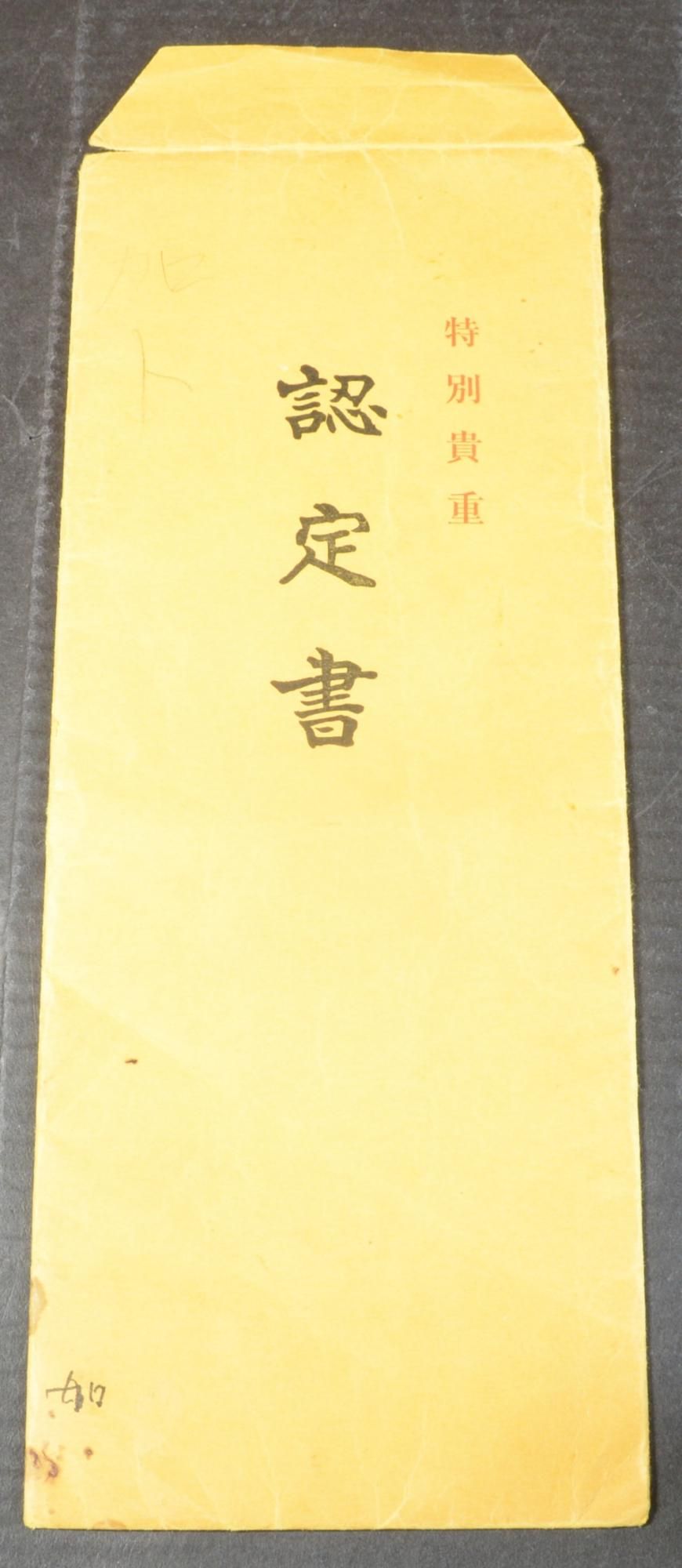
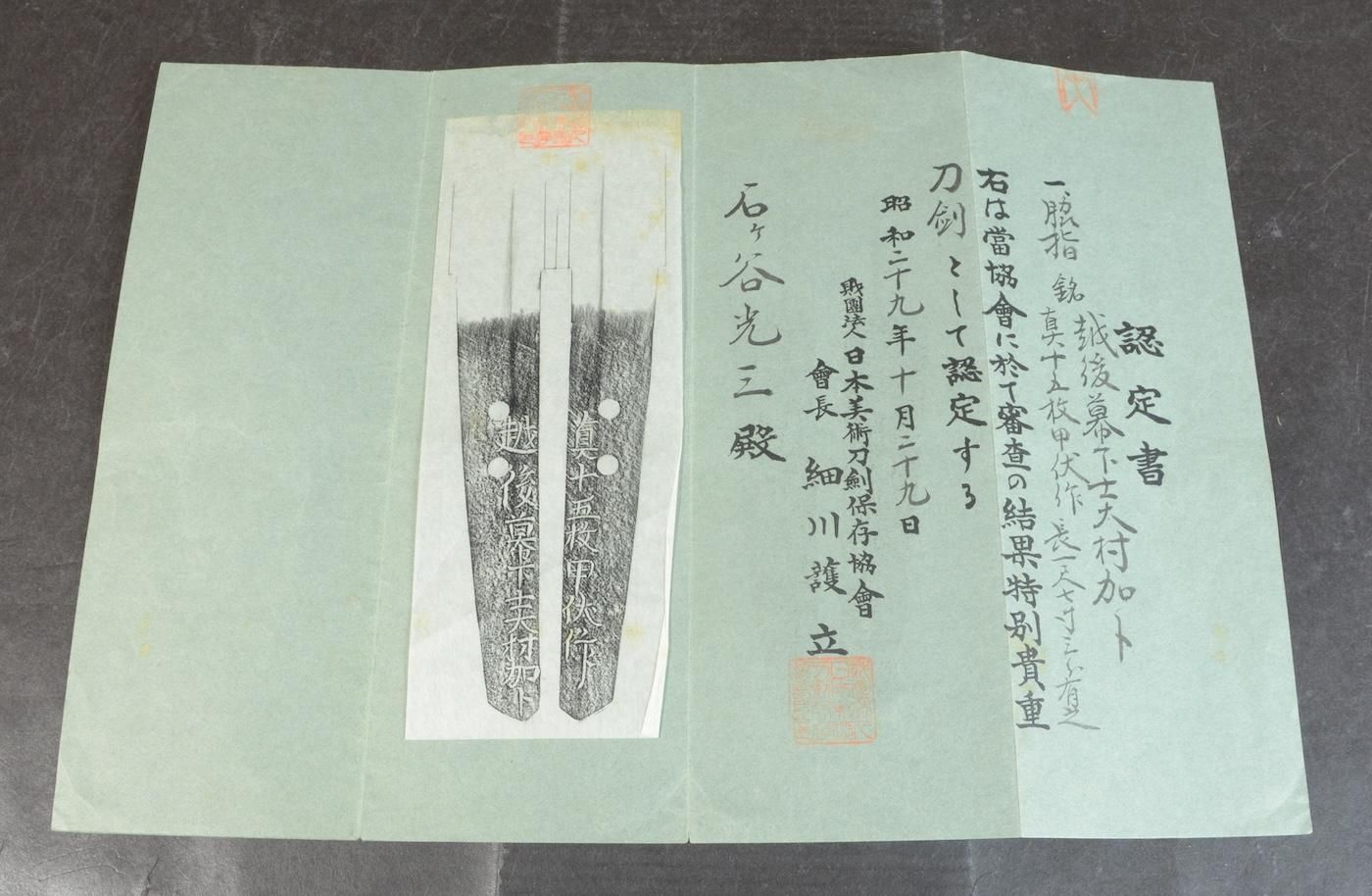
This work carries older NBTHK “Kichō”-era papers, which the NBTHK no longer issues and now regards as unreliable. To confirm the attribution, submission to an official Japanese examination body (such as the NBTHK or NTHK) for modern certification could be considered.

Seller
I
Ikeda Art
🇯🇵Ships from Japan
›
✓Verified dealerikedaart.net
Wire transferPayPal
Return policy

Please contact us promptly after the item's arrival. Except where the item is defective, we cannot accept returns. For returns due to customer circumstances, the cost is the customer's responsibility. In the case of a defective item, we bear the cost.

View all of Ikeda Art’s listings→View this item on the dealer’s site→

Previously sold by Omura Kaboku

Choshuya
Wakizashi - by Omura Kaboku - Omura Kaboku - True 15-Plate Kobuse-zukuriWakizashi - by Omura Kaboku - Omura Kaboku - True 15-Plate Kobuse-zukuri
Sold

Wakizashi

ByOmura Kaboku
SOLD
Samurai Shokai
Tokuho
Wakizashi - Tokuho - by Omura Kaboku - Omura Kaboku - True Jūgōmai Kōbuse-zukuriWakizashi - Tokuho - by Omura Kaboku - Omura Kaboku - True Jūgōmai Kōbuse-zukuri
Sold

Wakizashi

ByOmura Kaboku
SOLD
Aoi Art
Hozon
Katana - Hozon - by Omura Kaboku - Mumei (attributed to Omura Kaboku) - Ken Tanren Gokusei Den Tame Kaho Fujii Noriaki Bunki Chichi Kore wo HakuKatana - Hozon - by Omura Kaboku - Mumei (attributed to Omura Kaboku) - Ken Tanren Gokusei Den Tame Kaho Fujii Noriaki Bunki Chichi Kore wo Haku
Sold

Katana

ByOmura Kaboku
SOLD

Swords

  • Katana
  • Wakizashi
  • Tantō
  • Tachi
  • Naginata
  • Yari

Fittings

  • Tsuba
  • Fuchi-Kashira
  • Kozuka
  • Menuki

By Certification

  • Tokujū
  • Jūyō
  • Tokuho
  • Hozon

Resources

  • Dealer Directory
  • Artist Directory
  • Glossary
  • Browse All
Nihontowatch© 2026
TermsPrivacyCookiesAbout

Description

This is a wakizashi made by Omura Kaboku during the Edo period (circa 1644-1648). The blade features a wide and robust appearance with a beautiful polish, showcasing a well-grained itame hada and a vibrant choji-midare hamon with long ashi and yo. It comes with a shirasaya and a gold-gilt habaki.

NihontoWatch MonNihontoWatchBETA
MarketAuctionsEncyclopedia
Swords›Omura Kaboku›Kaboku›Wakizashi: Omura Kaboku 52.6cm - Exceptional Polish, Ideal for Appreciation, Iai, and Tameshigiri
wakizashiTokubetsu Kichō
Omura Kaboku

Wakizashi: Omura Kaboku 52.6cm - Exceptional Polish, Ideal for Appreciation, Iai, and Tameshigiri

mei · Shoho–Jokyo (1644-1684) · nagasa 52.6cm · sori 1.56cm

SOLD
Omura Kaboku — 1 of 40
Omura Kaboku — 2 of 40
Omura Kaboku — 3 of 40
Omura Kaboku — 4 of 40
Omura Kaboku — 5 of 40
Omura Kaboku — 6 of 40
Omura Kaboku — 7 of 40
Omura Kaboku — 8 of 40
Omura Kaboku — 9 of 40
Omura Kaboku — 10 of 40
Omura Kaboku — 11 of 40
Omura Kaboku — 12 of 40
Omura Kaboku — 13 of 40
Omura Kaboku — 14 of 40
Omura Kaboku — 15 of 40
Omura Kaboku — 16 of 40
Omura Kaboku — 17 of 40
Omura Kaboku — 18 of 40
Omura Kaboku — 19 of 40
Omura Kaboku — 20 of 40
Omura Kaboku — 21 of 40
Omura Kaboku — 22 of 40
Omura Kaboku — 23 of 40
Omura Kaboku — 24 of 40
Omura Kaboku — 25 of 40
Omura Kaboku — 26 of 40
Omura Kaboku — 27 of 40
Omura Kaboku — 28 of 40
Omura Kaboku — 29 of 40
Omura Kaboku — 30 of 40
Omura Kaboku — 31 of 40
Omura Kaboku — 32 of 40
Omura Kaboku — 33 of 40
Omura Kaboku — 34 of 40
Omura Kaboku — 35 of 40
Omura Kaboku — 36 of 40
Omura Kaboku — 37 of 40
Omura Kaboku — 38 of 40
Omura Kaboku — 39 of 40
Omura Kaboku — 40 of 40
1 / 40
1 / 40
Omura Kaboku — 1 of 40Omura Kaboku — 2 of 40Omura Kaboku — 3 of 40Omura Kaboku — 4 of 40Omura Kaboku — 5 of 40Omura Kaboku — 6 of 40Omura Kaboku — 7 of 40Omura Kaboku — 8 of 40Omura Kaboku — 9 of 40Omura Kaboku — 10 of 40Omura Kaboku — 11 of 40Omura Kaboku — 12 of 40Omura Kaboku — 13 of 40Omura Kaboku — 14 of 40Omura Kaboku — 15 of 40Omura Kaboku — 16 of 40Omura Kaboku — 17 of 40Omura Kaboku — 18 of 40Omura Kaboku — 19 of 40Omura Kaboku — 20 of 40Omura Kaboku — 21 of 40Omura Kaboku — 22 of 40Omura Kaboku — 23 of 40Omura Kaboku — 24 of 40Omura Kaboku — 25 of 40Omura Kaboku — 26 of 40Omura Kaboku — 27 of 40Omura Kaboku — 28 of 40Omura Kaboku — 29 of 40Omura Kaboku — 30 of 40Omura Kaboku — 31 of 40Omura Kaboku — 32 of 40Omura Kaboku — 33 of 40Omura Kaboku — 34 of 40Omura Kaboku — 35 of 40Omura Kaboku — 36 of 40Omura Kaboku — 37 of 40Omura Kaboku — 38 of 40Omura Kaboku — 39 of 40Omura Kaboku — 40 of 40
Measurements & details
Smith
Omura Kaboku
Type
Wakizashi
School
Omura Kaboku
Period
Around 1644–1684(Shoho–Jokyo)
Province
Echigo
Signature
Signed(100% of this smith's designated works are signed)
Measurements
Nagasa 52.6cmSori 1.56cmMotohaba 3.2cmSakihaba 2.4cmKasane 0.67cmWeight 542g
Description

This is a wakizashi made by Omura Kaboku during the Edo period (circa 1644-1648). The blade features a wide and robust appearance with a beautiful polish, showcasing a well-grained itame hada and a vibrant choji-midare hamon with long ashi and yo. It comes with a shirasaya and a gold-gilt habaki.

About the maker

Kaboku

加卜

Omura Kaboku (Echigo / Mito shinto) · Hitachi · around 1644-1684

Fujishiro Jo saku · Tōken Taikan top 21%

›

On a katana now in Osaka, dated the eighth month of Shōhō 2 (1645), Ōmura Kaboku cut not only his signature but a small manifesto: the construction, "true fifteen-plate kabuse"[[c:1]], the proud disclaimer "I am no smith"[[c:2]], and a line that the blade was forged to be heard of nine hundred years hence. The man behind that inscription was Ōmori Jibuzaemon, a physician born at Anzai on the outskirts of Sunpu in Suruga, who took up the forge as an avocation alongside his medical practice. By his own account in the Tōken Hihō, his treatise on swords, he began forging in the third month of Shōhō 1 (1644) and over the forty-one years to Jōkyō 1 (1684) made about a hundred blades. He served Matsudaira Mitsunaga, lord of Takada in Echigo, by virtue of his medicine; after that house was dispossessed he became a rōnin, went up to Edo, and entered the attendance of Tokugawa Mitsukuni of the Mito domain. His teacher is not clearly known, and his small signed corpus is prized by the published sources as much for the documentary value of its long inscriptions as for the blades themselves.

Kaboku worked in two distinct manners, and the gunome that runs through both is the thread that ties his hand together. The first is a brilliant Bizen tradition. Over an itame mixed with mokume, densely forged and carrying a standing midare-utsuri, he tempers a large chōji mixed with gunome, into which ashi and yō enter frequently; the nioi is deep and the nioiguchi clear, and the bōshi runs slightly midare-komi before turning in ko-maru. The published sources liken this work to the splendid chōji of the Ishidō current, calling it "the fine Ishidō-style chōji workmanship"[[c:3]], and judge his masterpieces to lie among these Bizen-tradition pieces. His other manner is Sōshū. There the temper is a broad suguha or a notare-based large gunome-midare worked deep in nie, with thick ashi, hotsure and yubashiri, and kinsuji and sunagashi coursing freely through the edge.

The jigane shifts with the manner, and reading it is the surest way into his work. In the Bizen mode the forging is a dense itame with mokume, the grain tightly closed beneath the bright midare-utsuri that rises in the old Bizen jigane. In the Sōshū mode the same itame stands a little more openly, here mixed with moku and flowing nagare-hada, and carries fine ji-nie together with a chikei that enters well though subdued; on the latest of the surviving blades the steel color is described as somewhat blackish, a strong, clearly textured jigane. His shapes are those of an early-Edo shintō katana: shinogi-zukuri with iori-mune, a thick kasane and a somewhat high shinogi, the sori shallow and the chū-kissaki extended. The published sources praise the proportions of the sixty-second-session blade as "robust and stalwart"[[c:4]], an ordinary width carried with abundant nikuoki.

The surviving Jūyō blades let his two registers be set against one another. The eleventh-session katana is the Bizen voice at its clearest, its large chōji and gunome over a bright utsuri judged probably his finest, the published sources calling it "likely his crowning achievement"[[c:5]]. The nineteenth and twenty-third pieces lean to Sōshū, the one a wide suguha with gunome and sunagashi, the other a notare-based large gunome-midare in deep nie. The sixty-second-session katana, designated in 2016 and the most fully described of the four, is the strongest statement of that manner: a broad suguha base mixed with gunome, chōji-like elements and shallow notare in a companion arrangement, kinsuji and sunagashi frequent, and the bōshi tempered so deeply that it becomes ichimai-like with tobiyaki on the reverse. The published sources read it as a work "plainly made with a keen awareness of Gō Yoshihiro"[[c:6]], and note that he also left a broad suguha in the manner of Shinkai. Across his nakago he cut unusually full long inscriptions, recording the kabuse plate count on nearly every blade and styling himself at times Yasuhide, which is why his dated, self-named pieces are treated as valuable source material.

What distinguishes Kaboku is the breadth of an amateur who answered to no school line and ranged freely between Bizen and Sōshū. His Bizen chōji sets him among the Ishidō-influenced smiths of the early shintō without binding him to them, while his Sōshū work, looking past his own century to Gō, gives him an ichimai-tempered bōshi and a thick nie activity that few of his contemporaries pursued so deliberately. The published sources name Bandō Tarō Toden among his disciples, but his line did not carry far; he is remembered less as the head of a tradition than as a singular figure, a doctor of letters who forged a hundred blades and wrote a book about it, and whose surviving swords are read off their own long signatures rather than off any documented descent.

For the collector Kaboku is a rare and particular name rather than a famous one. He has no National Treasures and no Important Cultural Properties; his record runs through the Jūyō rank, with four blades on official record, all of them katana and all signed. None carries a documented daimyō provenance in the surviving papers, and current holders are largely unrecorded, the blades having passed into private hands in Shizuoka, Tottori and Osaka among others. His total output was small to begin with, about a hundred swords across a working life that was never his principal occupation, and the designated pieces are held rather than traded; a signed Ōmura Kaboku comes to the open market only seldom. A privately held example is a notable thing for a collector to encounter, valued the more for the long inscriptions in which a seventeenth-century physician set down, in his own hand and his own words, exactly how and why he made the blade.
Historical importance

Where Kaboku stands among comparable artisans: across all of nihontō, and within tradition, era, and period. The tiers (Foremost · Leading · Major · Notable) weigh official designations from the NBTHK and Japan's Agency for Cultural Affairs, together with historical honors of lasting repute such as the Sansaku and Meibutsu-chō.

随一
Foremost
屈指
Leading
有数
Major
著名
Notable

Select a lens to see how it's measured.

Designation record
5 designated works
Jūyō
5
Kaboku — full profileOmura Kaboku (Echigo / Mito shinto) school
About the school

Omura Kaboku

大村加卜

Shinto · Hitachi

›

Born at Anzai on the outskirts of Sunpu in Suruga Province, the smith who signed himself Omura Kaboku (大村加卜) came to swordmaking by an unusual road. His personal name was Omori Jibuzaemon, and his primary calling was medicine; the setsumei describe him as a physician, even a surgeon, who entered the service of Matsudaira Mitsunaga, lord of the Takada Domain in Echigo, on the strength of his medical practice. After that house was dispossessed by kaieki he became a rōnin, went up to Edo, and later took service with Tokugawa Mitsukuni of the Mito Domain. Learn more →
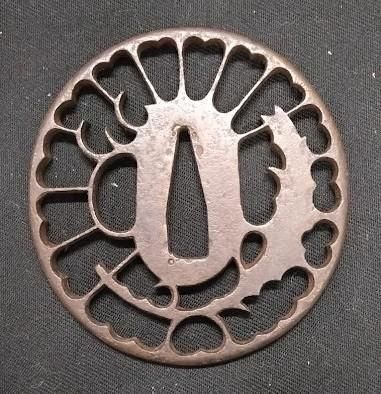
1 recorded smiths5 designated works
Leading smiths
SmithEraDesignated
Kaboku加卜1644-16845
Explore the Omura Kaboku school →
Authenticity not guaranteed

This work carries older NBTHK “Kichō”-era papers, which the NBTHK no longer issues and now regards as unreliable. To confirm the attribution, submission to an official Japanese examination body (such as the NBTHK or NTHK) for modern certification could be considered.

Seller
I
Ikeda Art
🇯🇵Ships from Japan
›
✓Verified dealerikedaart.net
Wire transferPayPal
Return policy

Please contact us promptly after the item's arrival. Except where the item is defective, we cannot accept returns. For returns due to customer circumstances, the cost is the customer's responsibility. In the case of a defective item, we bear the cost.

View all of Ikeda Art’s listings→View this item on the dealer’s site→

Previously sold by Omura Kaboku

Choshuya
Wakizashi - by Omura Kaboku - Omura Kaboku - True 15-Plate Kobuse-zukuriWakizashi - by Omura Kaboku - Omura Kaboku - True 15-Plate Kobuse-zukuri
Sold

Wakizashi

ByOmura Kaboku
SOLD
Samurai Shokai
Tokuho
Wakizashi - Tokuho - by Omura Kaboku - Omura Kaboku - True Jūgōmai Kōbuse-zukuriWakizashi - Tokuho - by Omura Kaboku - Omura Kaboku - True Jūgōmai Kōbuse-zukuri
Sold

Wakizashi

ByOmura Kaboku
SOLD
Aoi Art
Hozon
Katana - Hozon - by Omura Kaboku - Mumei (attributed to Omura Kaboku) - Ken Tanren Gokusei Den Tame Kaho Fujii Noriaki Bunki Chichi Kore wo HakuKatana - Hozon - by Omura Kaboku - Mumei (attributed to Omura Kaboku) - Ken Tanren Gokusei Den Tame Kaho Fujii Noriaki Bunki Chichi Kore wo Haku
Sold

Katana

ByOmura Kaboku
SOLD

Swords

  • Katana
  • Wakizashi
  • Tantō
  • Tachi
  • Naginata
  • Yari

Fittings

  • Tsuba
  • Fuchi-Kashira
  • Kozuka
  • Menuki

By Certification

  • Tokujū
  • Jūyō
  • Tokuho
  • Hozon

Resources

  • Dealer Directory
  • Artist Directory
  • Glossary
  • Browse All
Nihontowatch© 2026
TermsPrivacyCookiesAbout
NihontoWatch Mon

NihontoWatchBETA

MarketAuctions
Encyclopedia
NihontoWatch Mon

NihontoWatchBETA

MarketAuctions
Encyclopedia