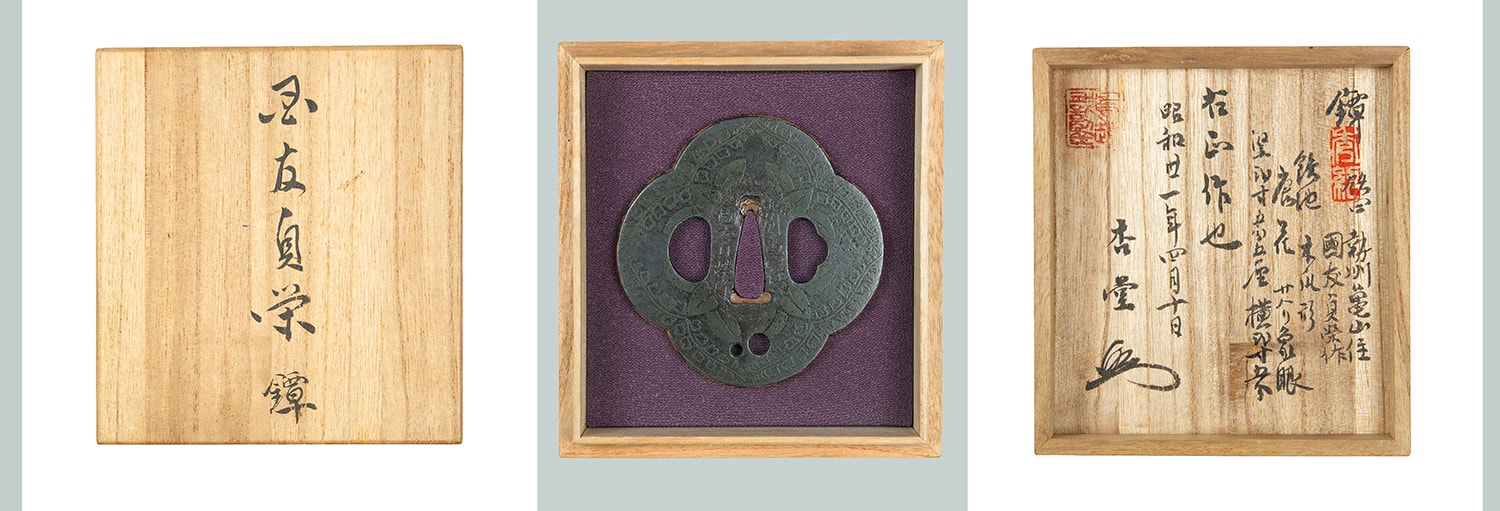
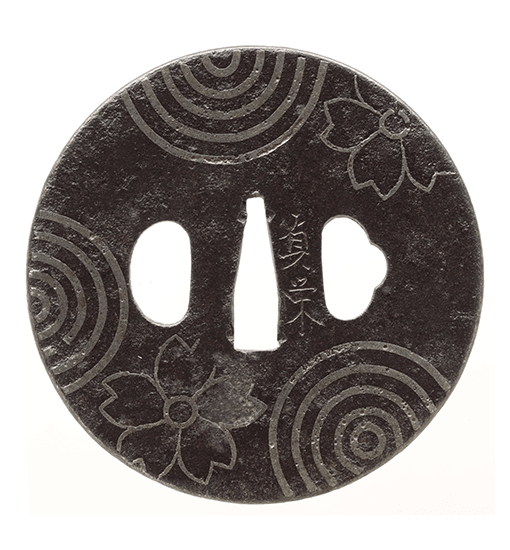
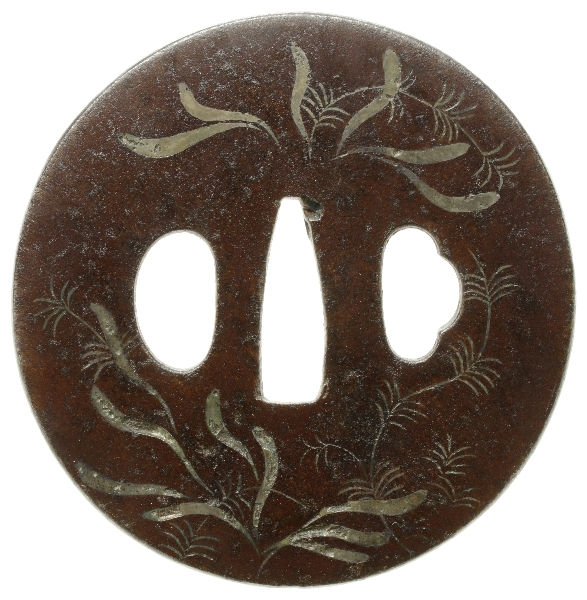
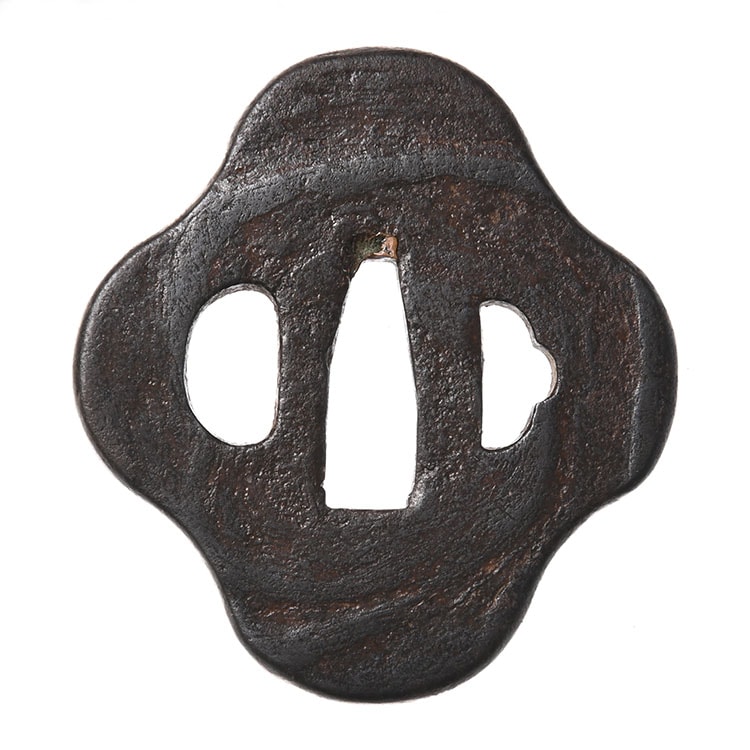
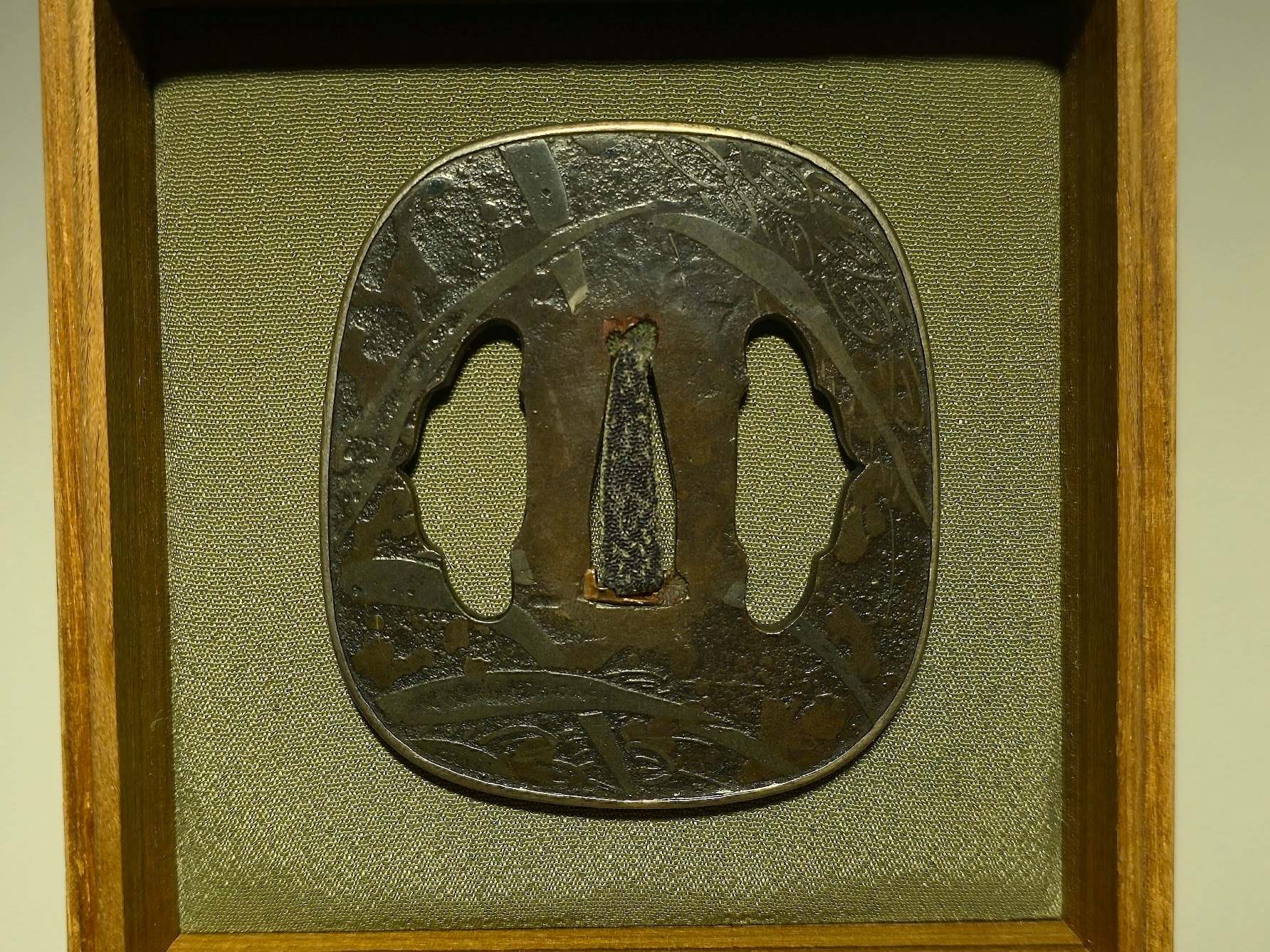
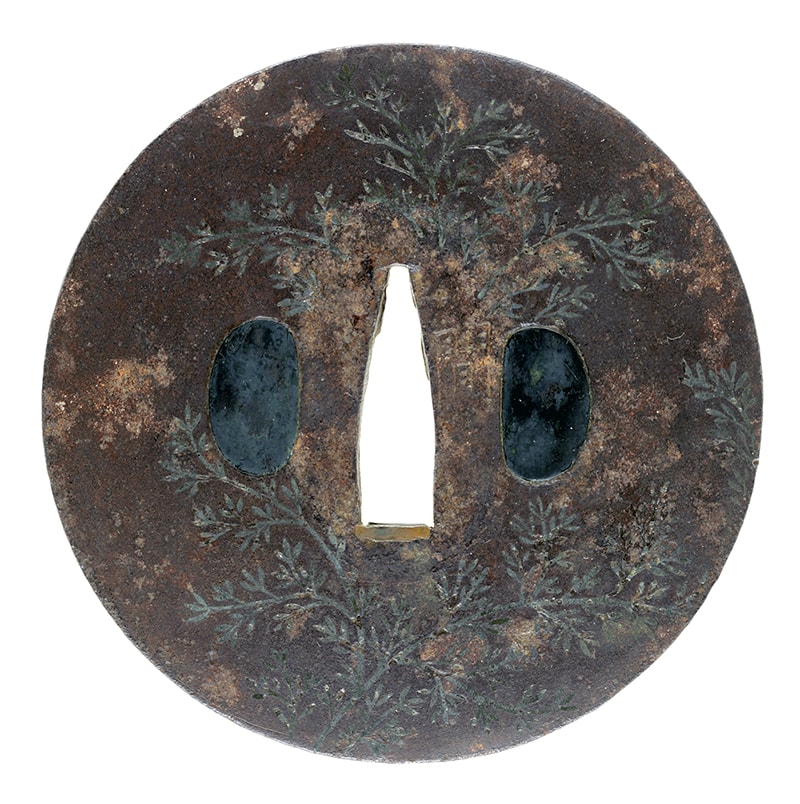
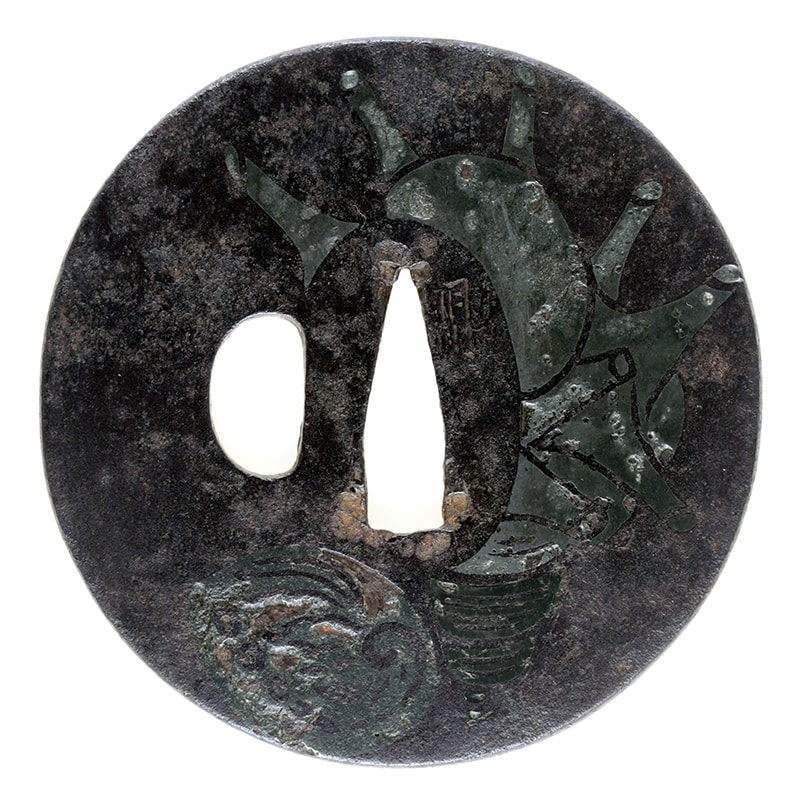
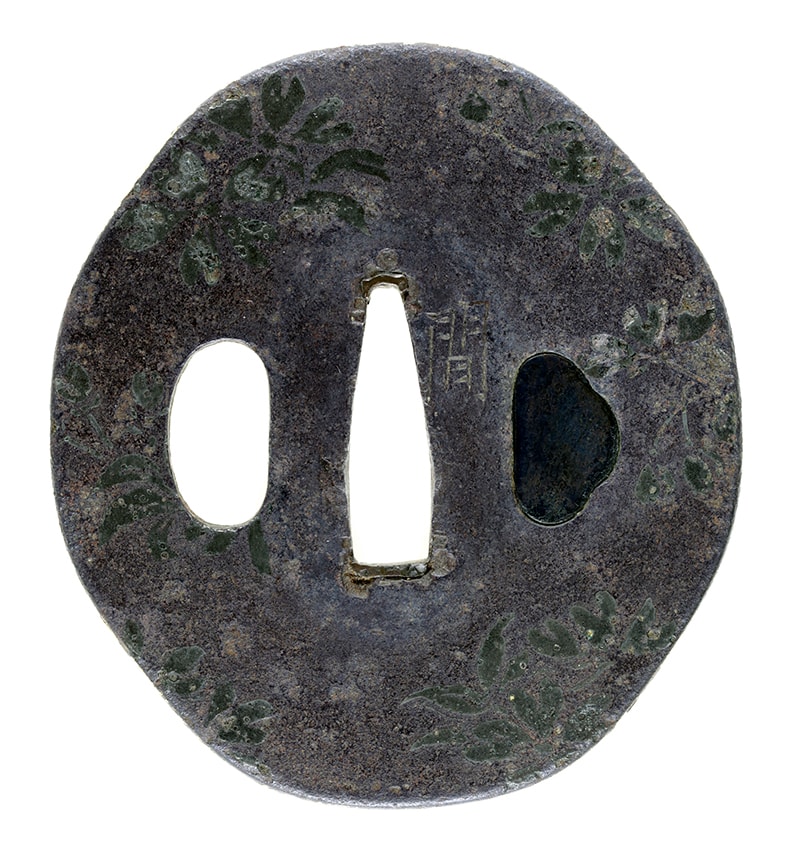
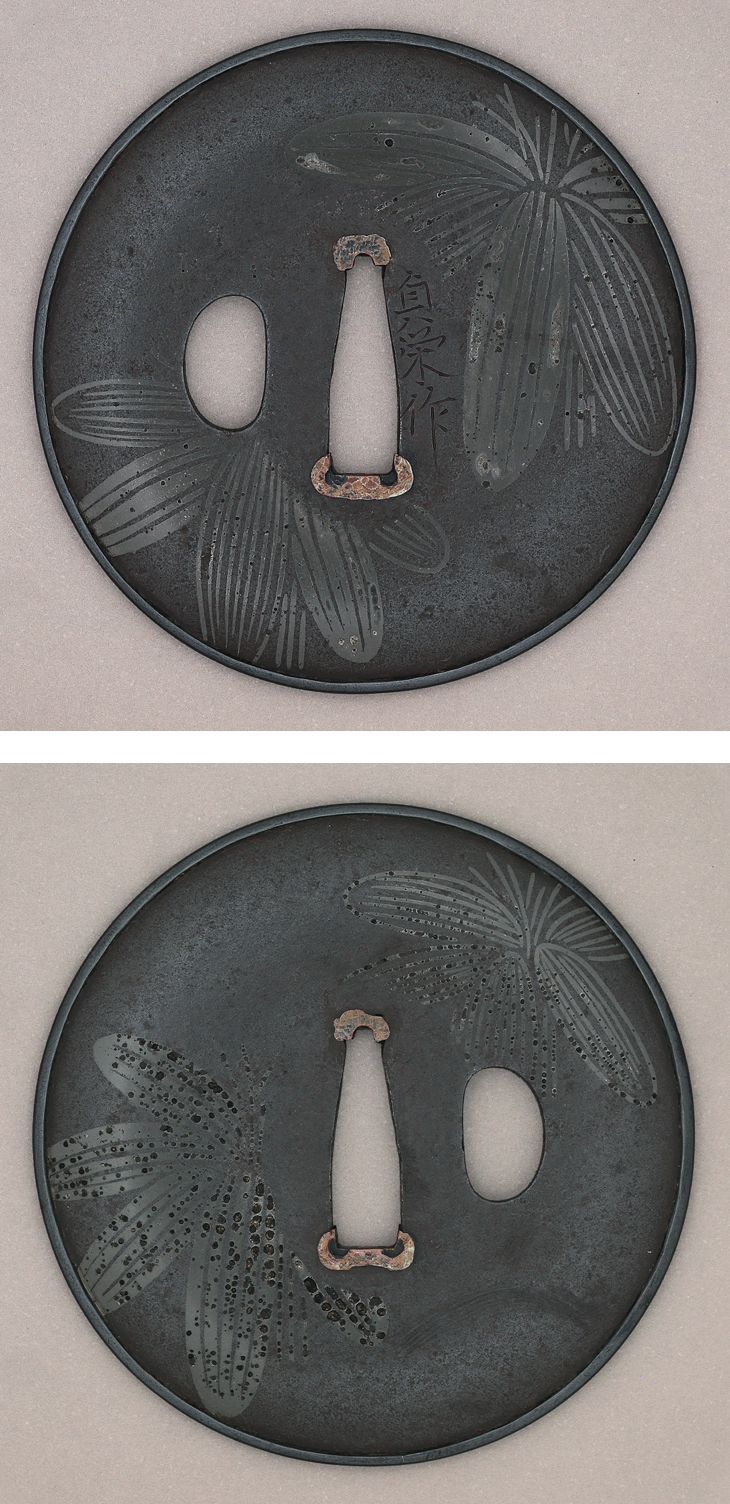
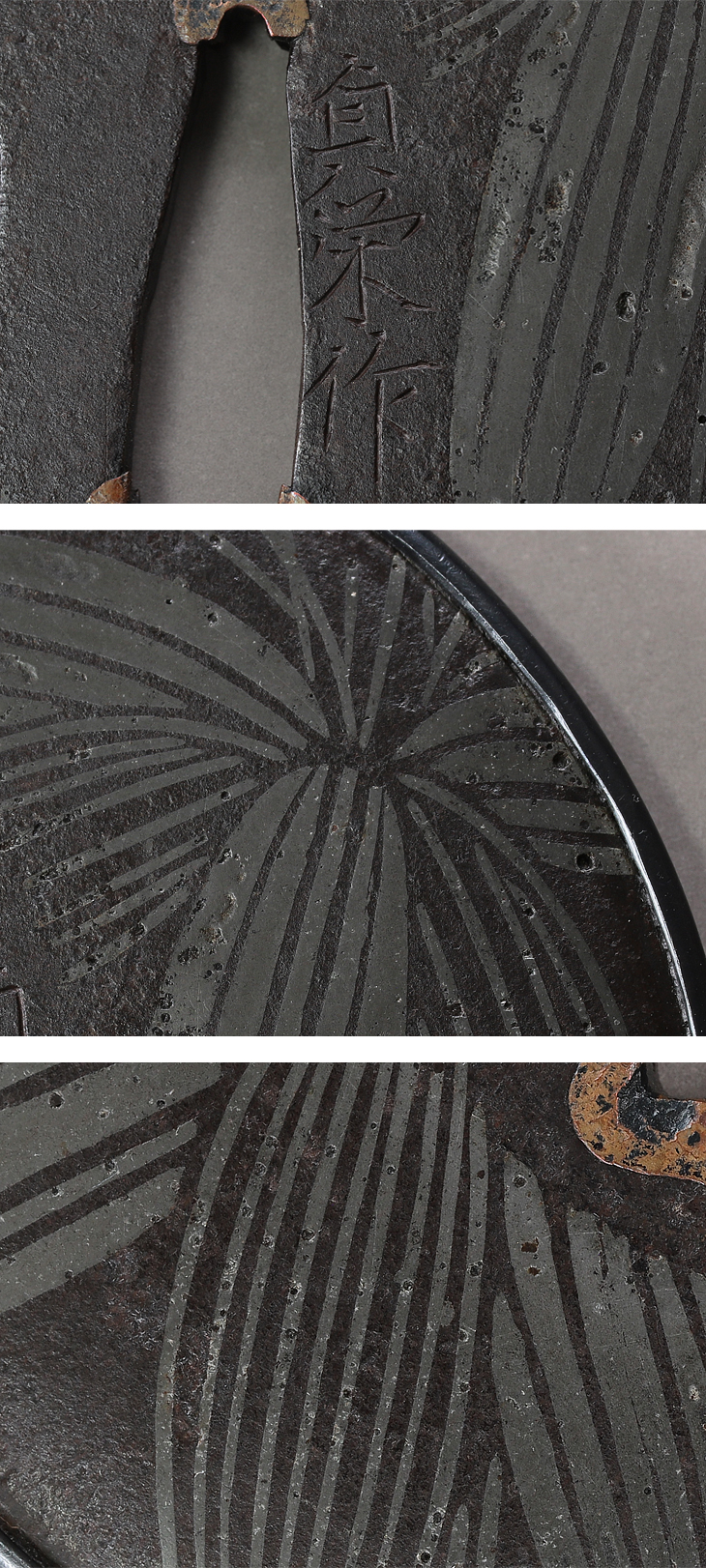
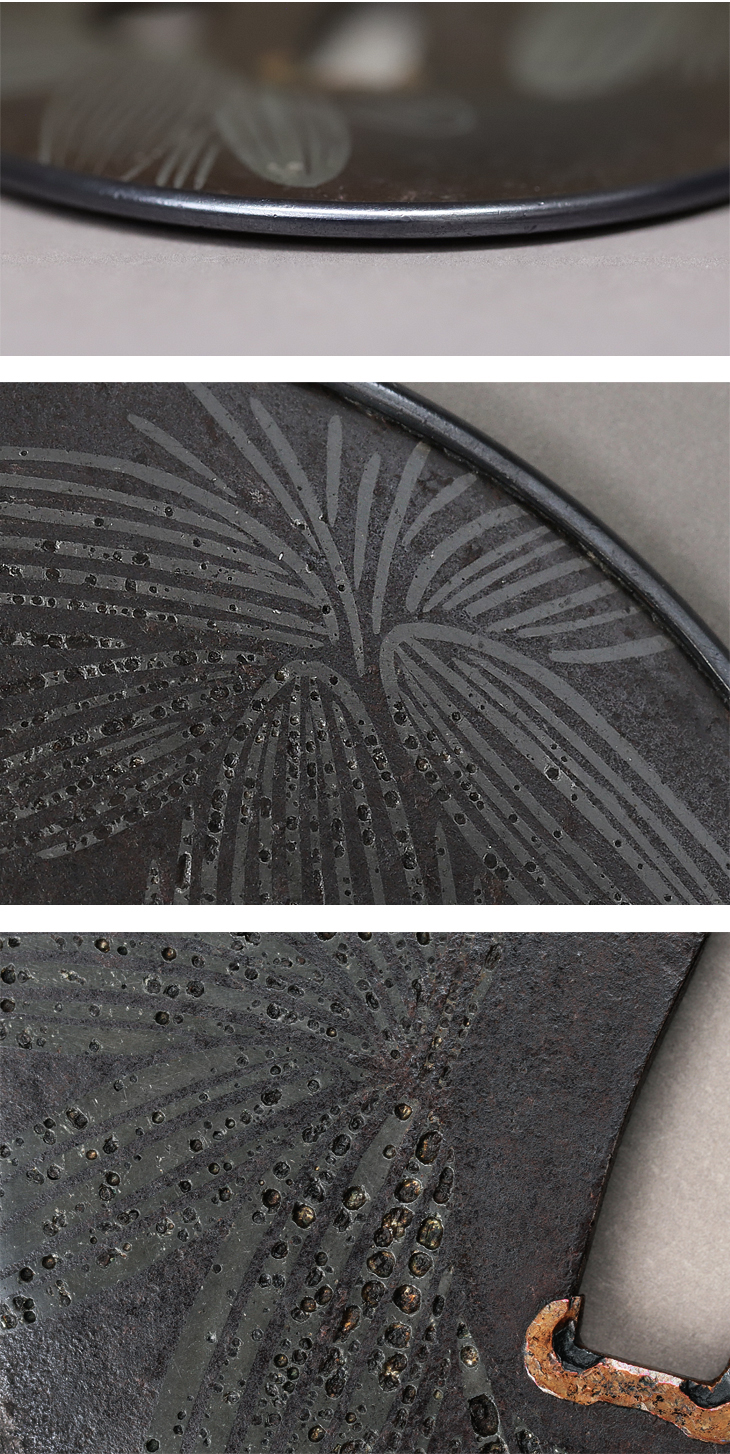
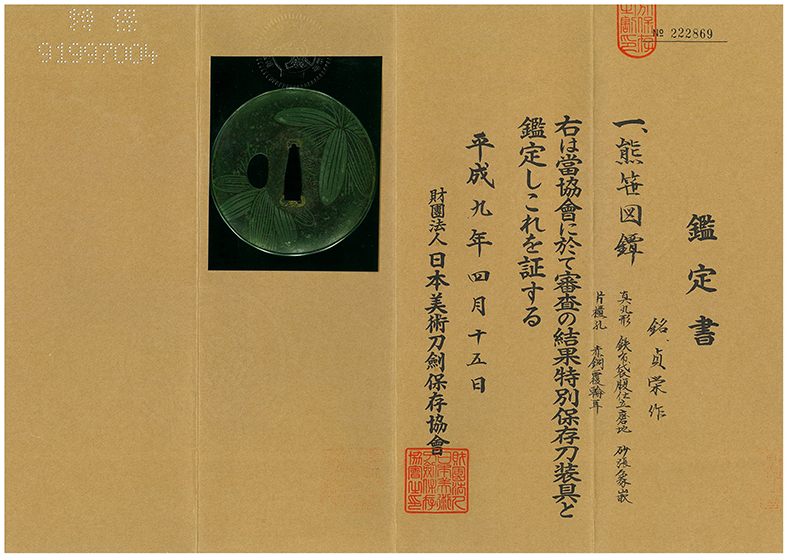
This is a tsuba made by Sadaei, dating to the mid-Edo period. The tsuba features a Kumasasa (bear bamboo grass) design with sahari inlay on an iron base. It comes with a Tokubetsu Hozon certificate.
 NihontoWatch
signed · Edo
Kinko · Ise
3 pieces on the market now
Where Sadahide stands among comparable artisans: across all of nihontō, and within tradition, era, and period. The tiers (Foremost · Leading · Major · Notable) weigh official designations from the NBTHK and Japan's Agency for Cultural Affairs, together with historical honors of lasting repute such as the Sansaku and Meibutsu-chō.
Select a lens to see how it's measured.
Kinko · Ise
9 pieces on the market now
The Hazama school (Hazama-ha 間派), also known as the Kameyama tsuba makers, emerged in the castle town of Kameyama in Ise Province from around the Genroku era (1688-1704). The school's founders were members of the Kunitomo (国友) family, originally matchlock gunsmiths (teppou kaji) who had lived in Omi Province. "[[c:2]] Works bear either the single-character signature "間" (Ma) or personal names such as Kunitomo Sadaei and Masaei (正栄), linking the school's named artisans to a shared workshop tradition rooted in the military metalworking crafts of the Kunitomo lineage. The Hazama school's defining contribution is sahari-zougan (佐波理象嵌), an inlay technique employing sahari, a distinctive alloy of copper, tin, and lead.
"[[c:4]] Techniques attested across the corpus include suemon-zougan (applied inlay), takabori takanikubori (high-relief carving) in shakudou, hira-zougan (flat inlay), and the yakite kusarashi (fired and corroded) surface treatment. "[[c:5]] The Hazama school occupies a singular position within the broader kinko tradition as the only lineage to have applied sahari inlay to tsuba production. " The school's origin as firearms craftsmen who transferred their metalworking mastery to a peaceful art form, and their creation of a decorative vocabulary without parallel elsewhere in tsuba production, secure their place as one of the most distinctive regional schools of the mid-Edo period. Learn more →
| Smith | Era | Designated |
|---|---|---|
| Masahide正秀 | — | 3 |
| Sadahide貞秀 | — | 3 |
| Masataka正孝 | — | 0 |
A Hozon-certified fitting of notably superior craftsmanship and condition, often with signature or workmanship of high reference value.
The NBTHK (Nihon Bijutsu Tōken Hozon Kyōkai, the Society for the Preservation of Japanese Art Swords) is a public-interest incorporated foundation founded in 1948 and supervised by Japan’s Agency for Cultural Affairs (Bunkachō); it is based at the Japanese Sword Museum in Tokyo. Its expert panels physically examine each submitted work (shinsa) and issue a certificate (kanteishō) ranking it by artistic and historical merit. NBTHK papers are the most widely recognized standard of authentication for Japanese swords and fittings.
NBTHK official siteFor one-of-a-kind items such as swords, sword fittings, and antiques, please contact us about a return within 3 days of the item's arrival and ship it back within 8 days. Refunds are issued the same day the returned item arrives.