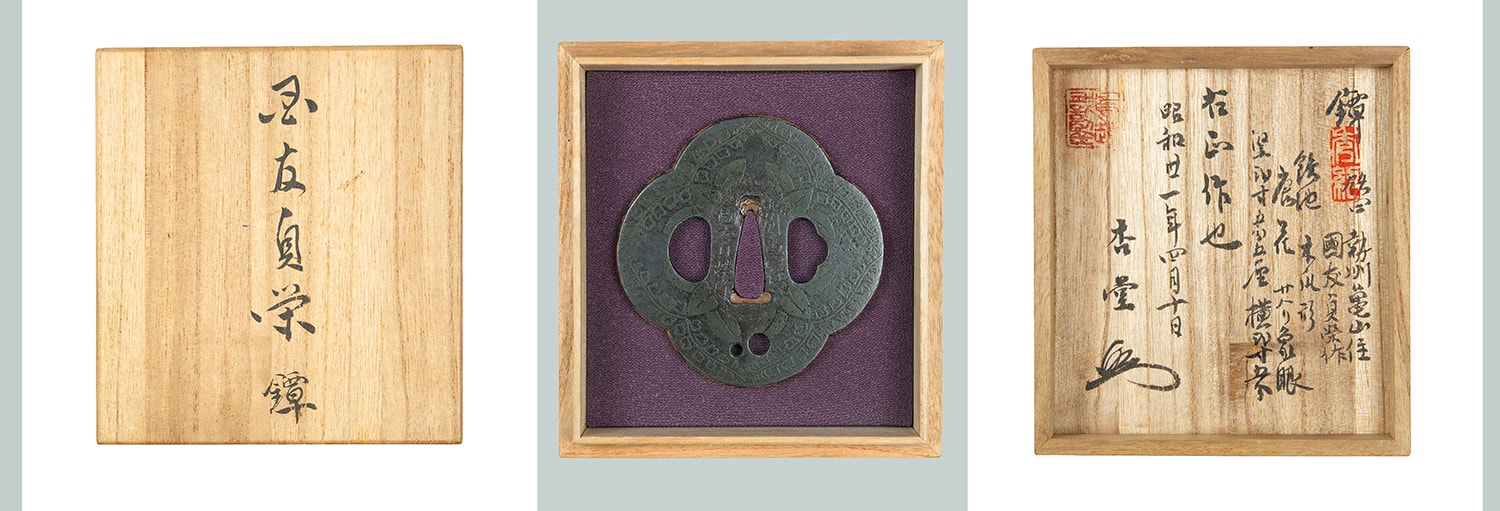
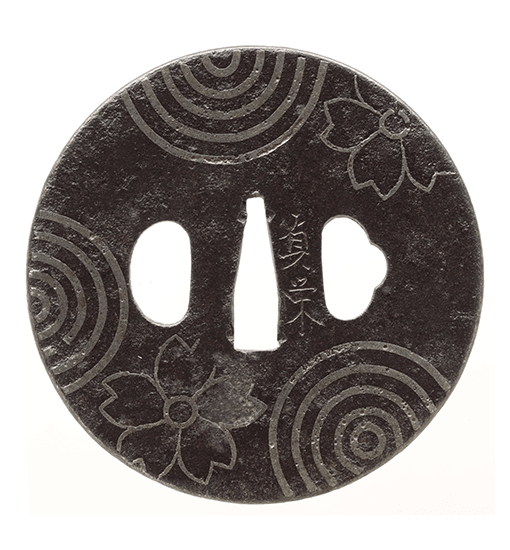
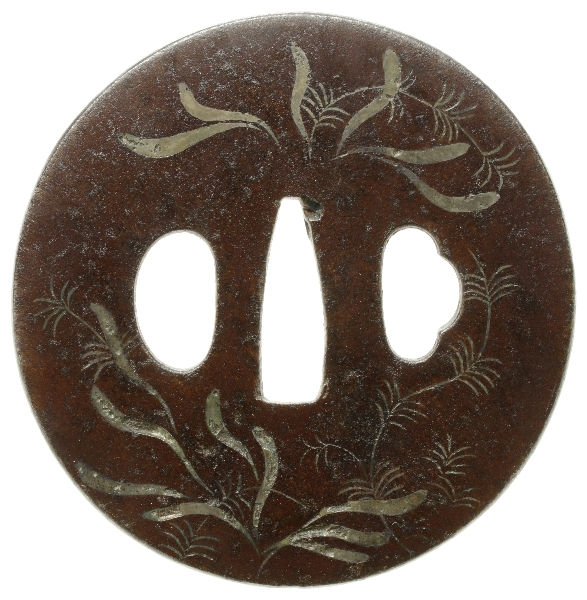
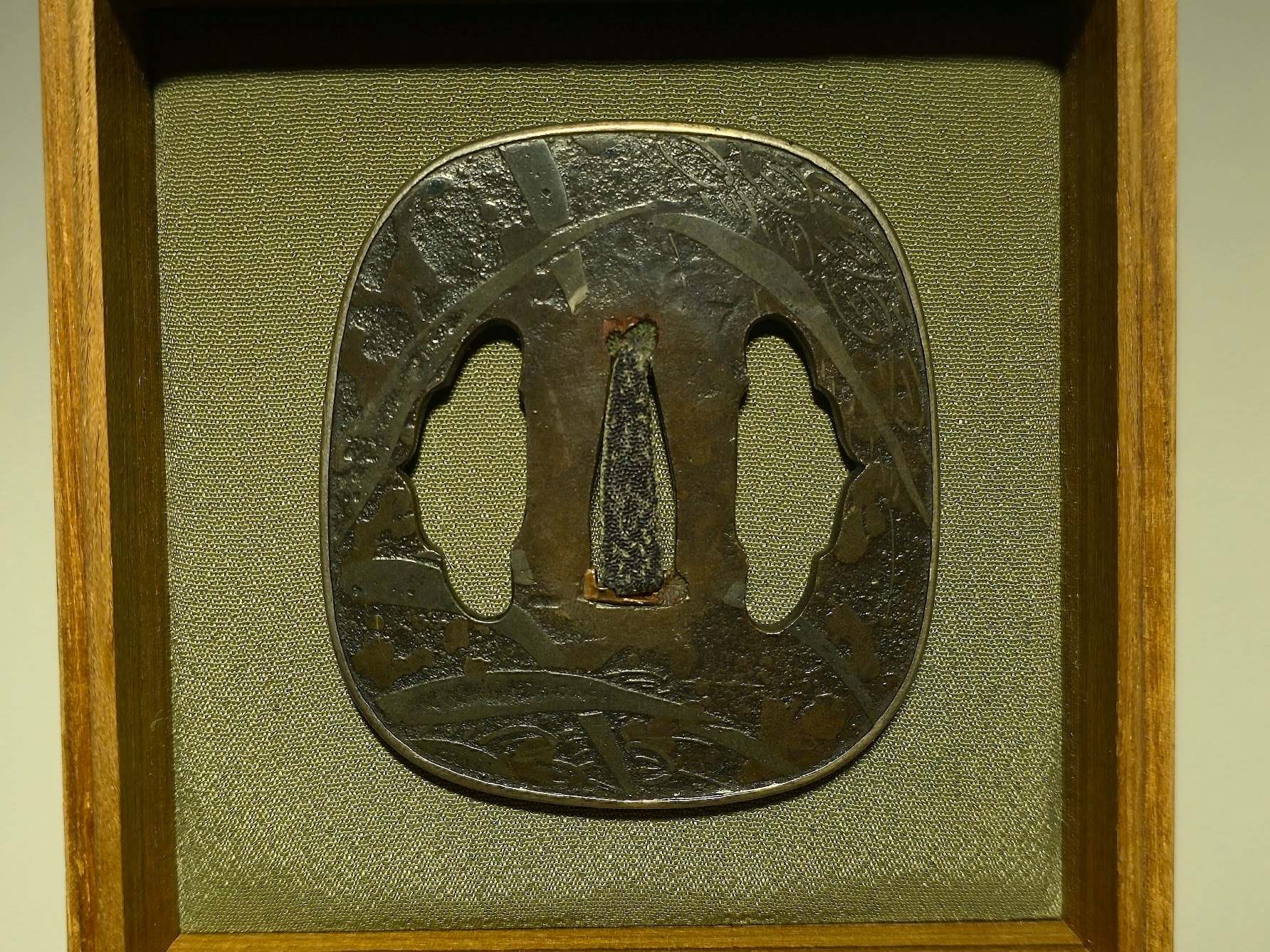
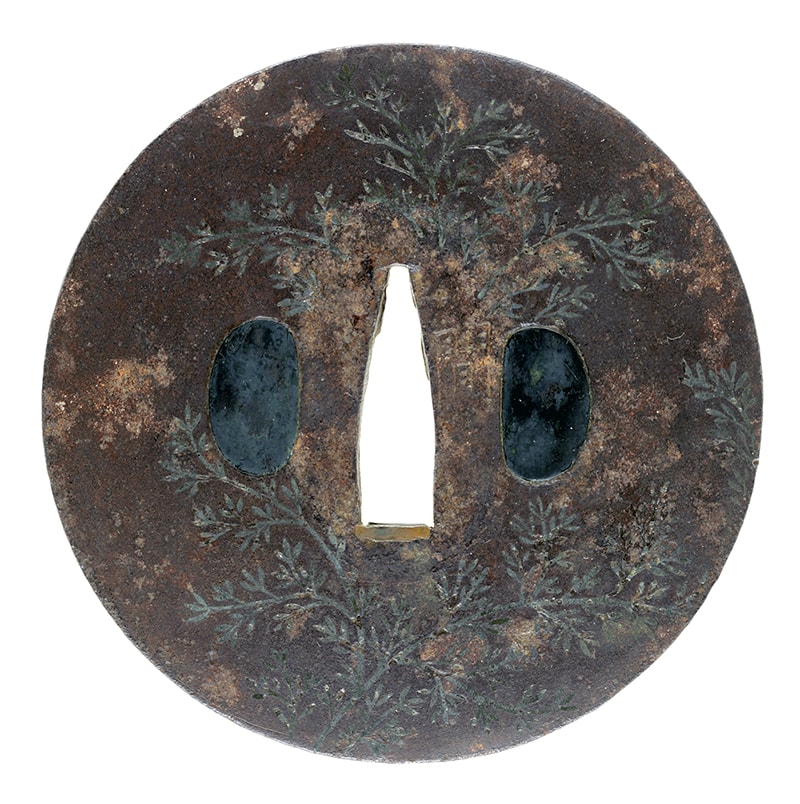
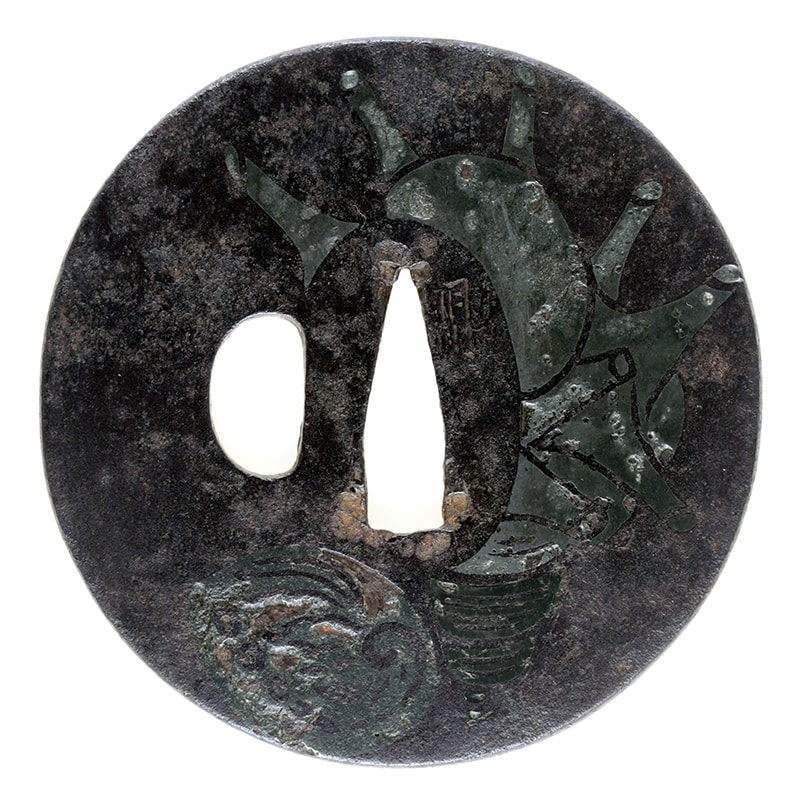
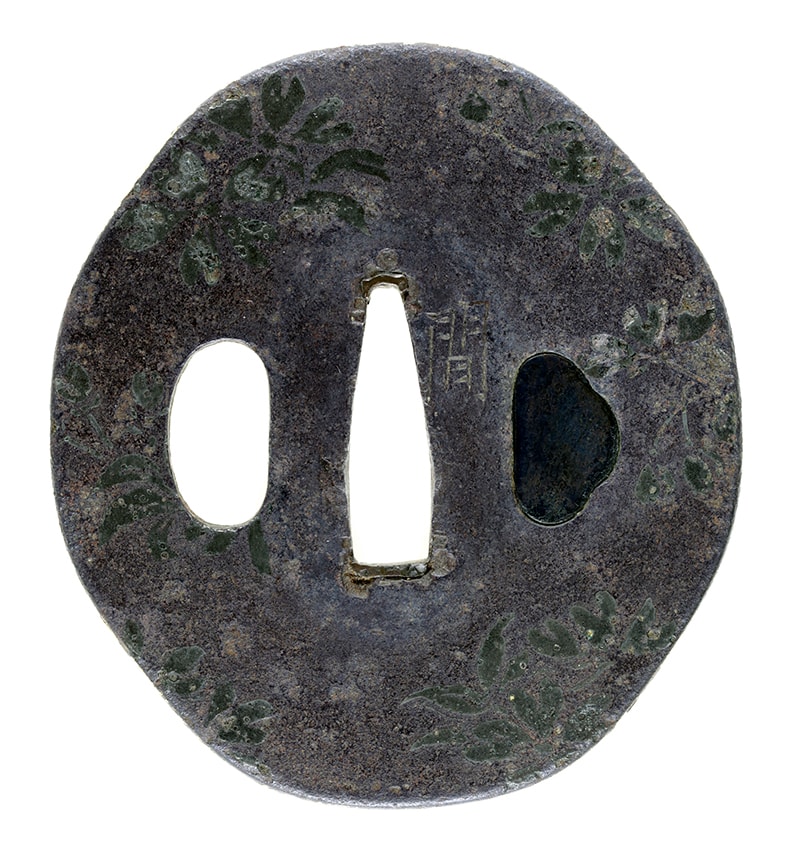
The Aida group (Aida-), also referred to as the Ma group (Ma-), designates a circle of makers who lived in Kameyama in Province from around the Genroku era (1688--1704). Their works are commonly called "Kameyama ," taking their place of residence as their name. Most pieces bear the single-character signature "間" (Ma), though some carry personal names such as Kunitomo Sadahide (国友貞栄). The group's identity is collective rather than individual, and the treats their output as a coherent lineage unified by locale, technique, and aesthetic disposition.
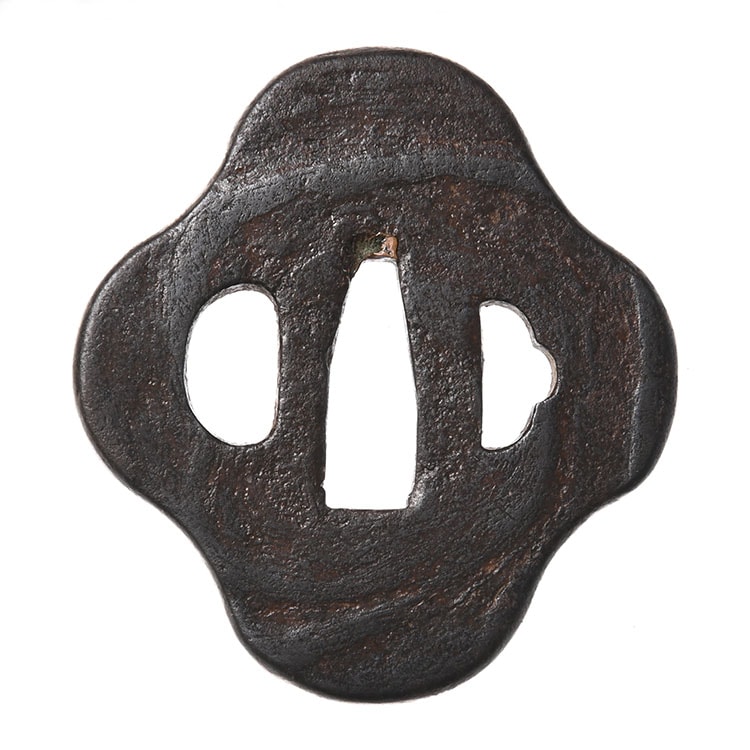
The defining specialty of the Aida group is sahari- --- inlay executed in the copper-tin alloy sahari, a material known from antiquity among the treasures of the Shōsōin, yet whose "use on is not found outside this lineage." Their style is described as "unconventional," showing "ingenuity in form" across a range of plate materials including iron, copper, , , and brass. Upon these grounds they present "large-scale bold designs" further embellished with sahari and mixed-metal inlay, "producing a type of with a distinctly individual character." Characteristic constructions include goishi-gata forms whose thickness tapers from the toward the rim, as well as bold kawari-gata silhouettes. Techniques range from takanikubori in with to flat inlay, often combined with kusarashi surface treatments. The observes that small voids where sahari has flaked away do not diminish visual appeal but rather heighten the work's "elegant charm" (gashu).
The Aida group occupies a singular position within the -period tradition. Their works are "valued for their superior designs and for the intriguing flavor of their inlay," and they have "long enjoyed popularity." The consistently emphasizes the group's daring compositional sense --- the capacity to shift taste and approach between front and reverse, achieving contrasts in which "the distinctive character of 'Ma' is clearly expressed." That sahari inlay remains exclusive to this Kameyama lineage underscores the group's technical isolation and enduring appeal within the broader canon of Japanese sword fittings.