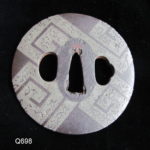
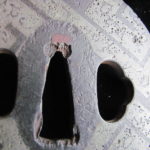
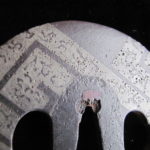
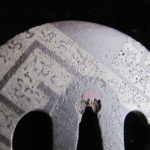
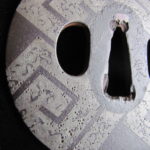
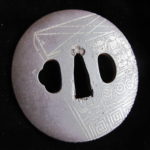
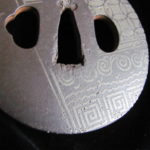
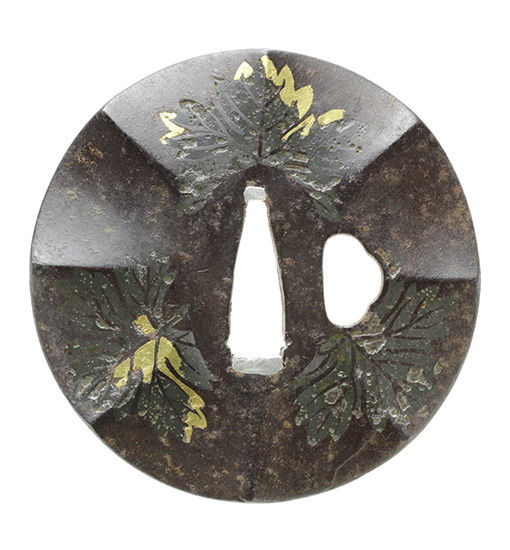
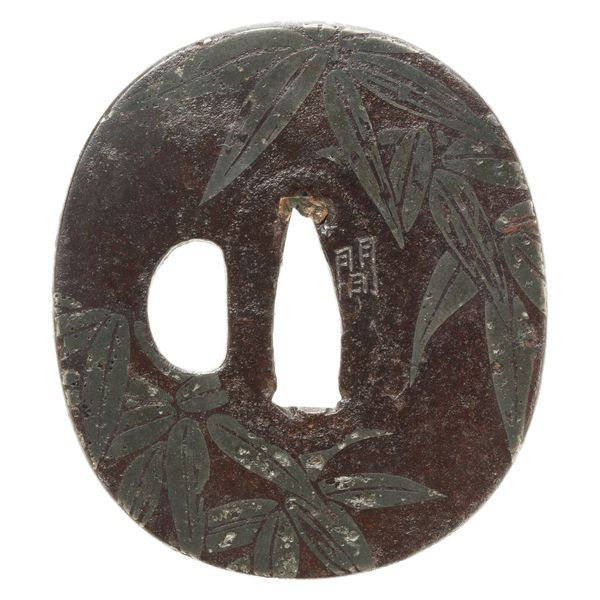
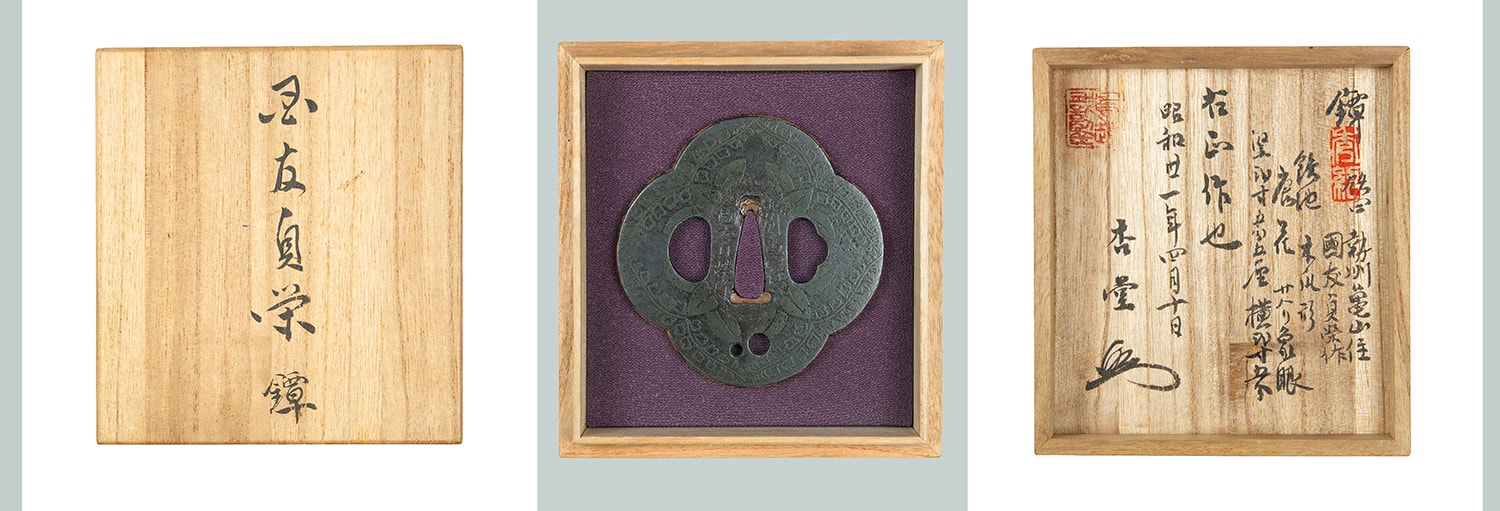
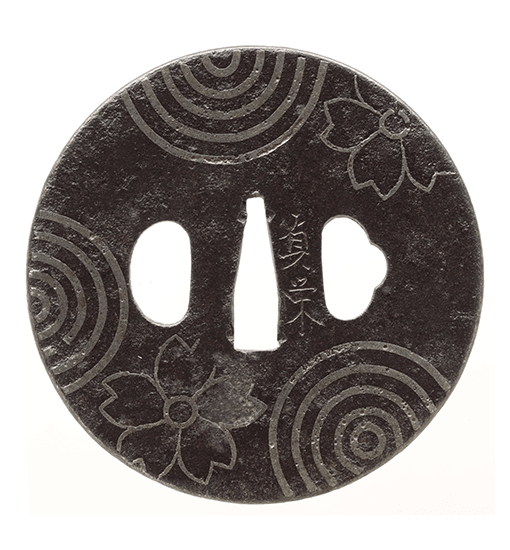
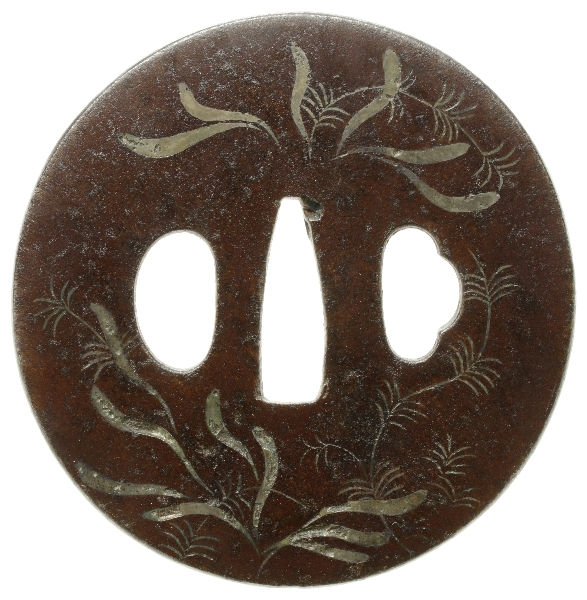
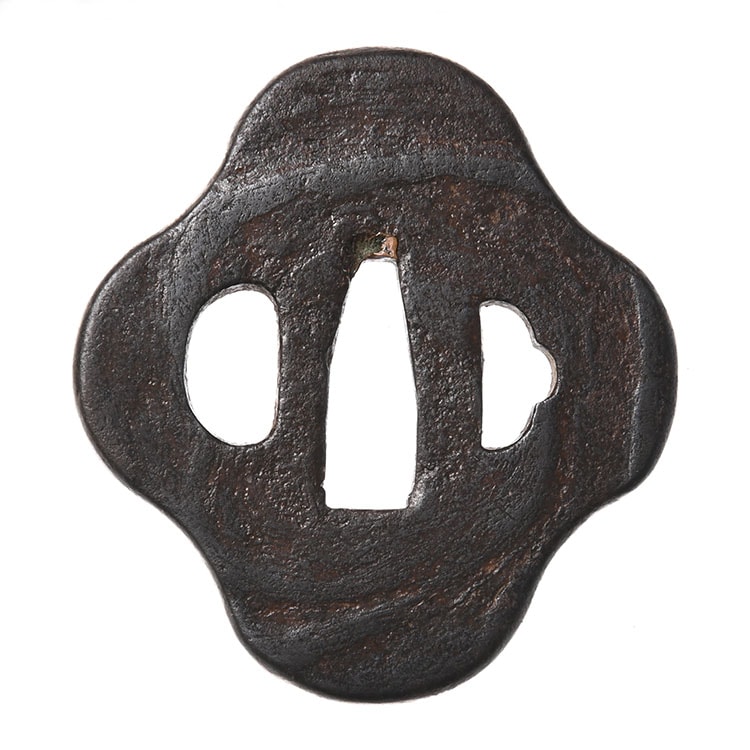
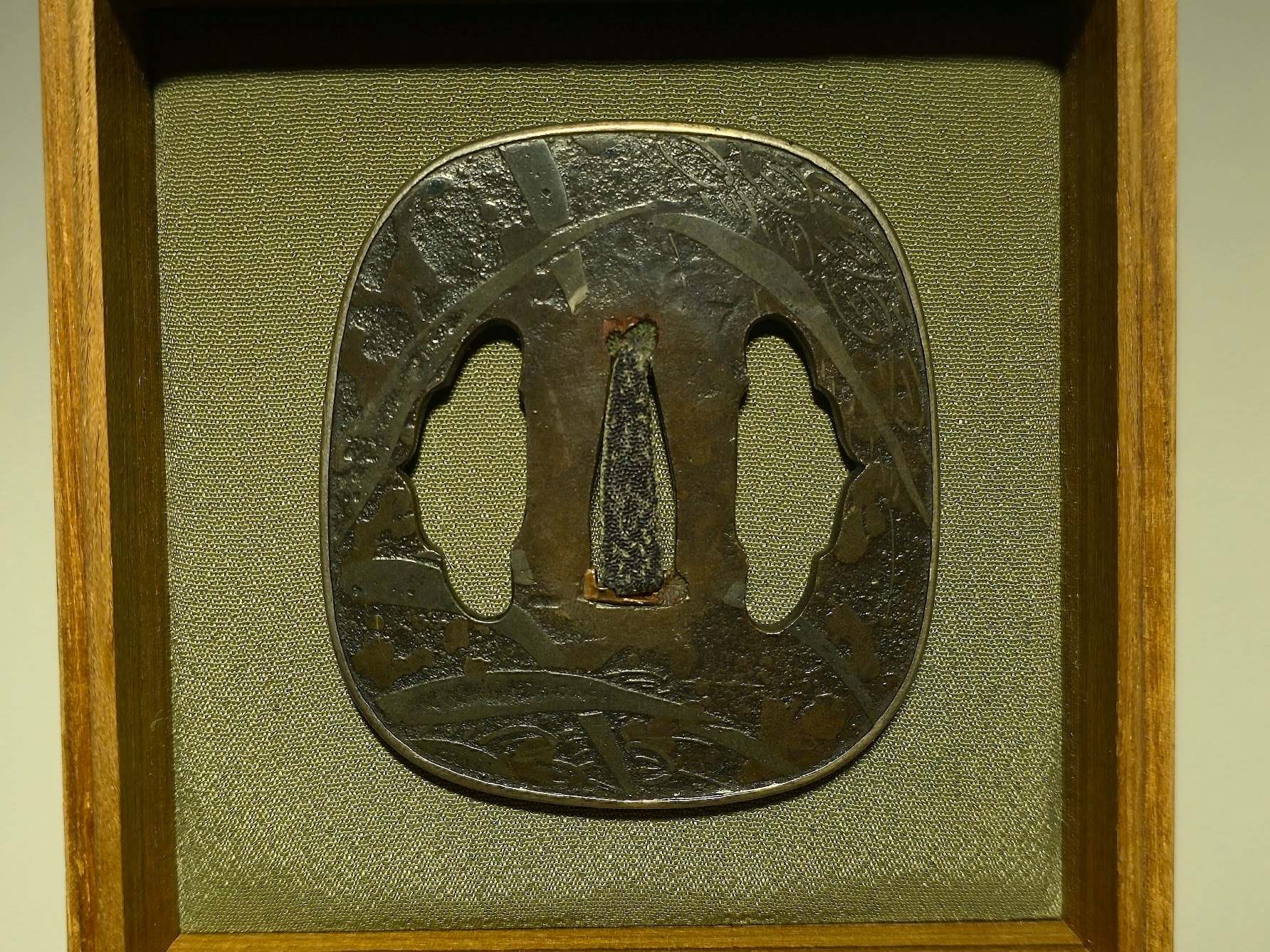
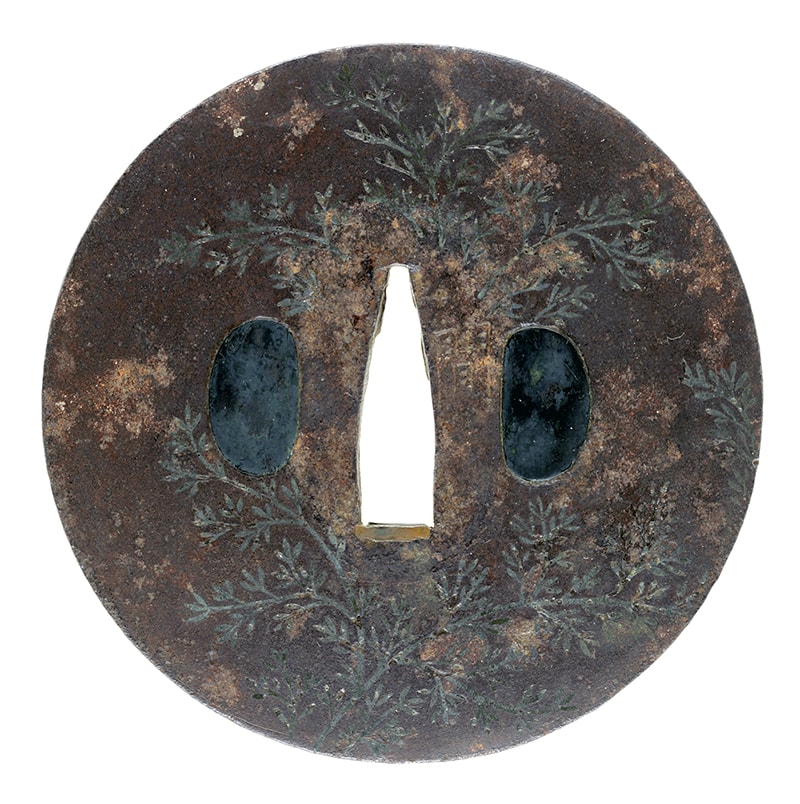
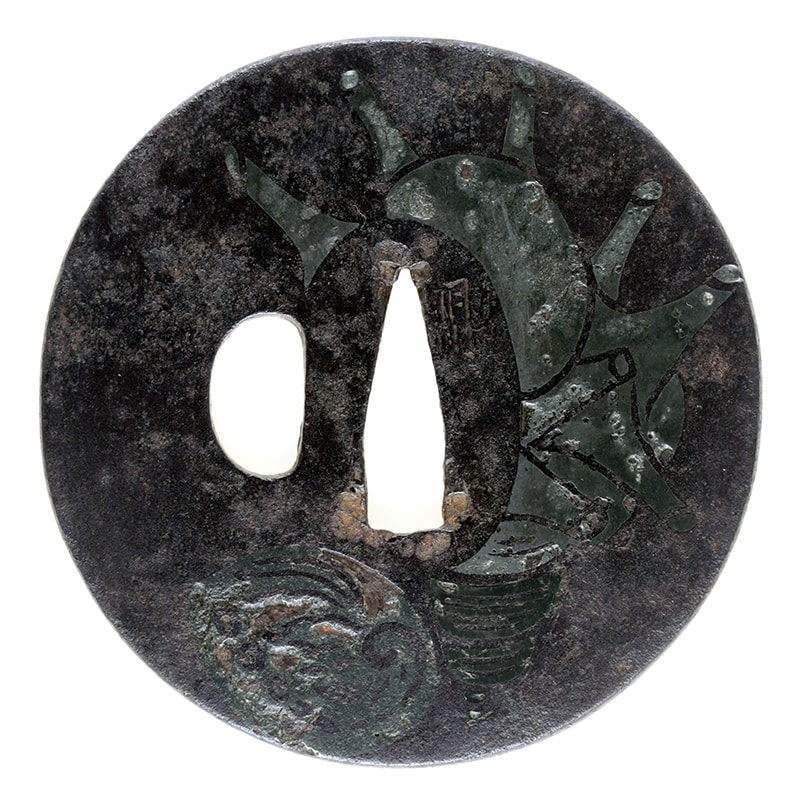
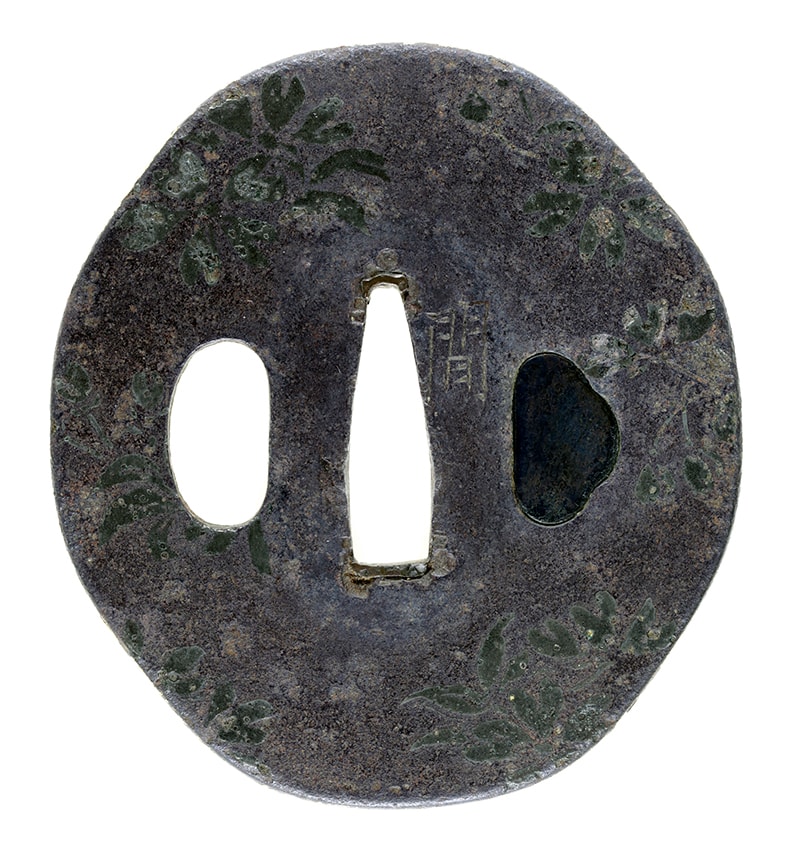
This is an iron tsuba with sahari inlay, signed by Teiei (Sadaiye), a master smith of the Hazama school around 1700. The tsuba features a Raimon (lightning) design and comes with an NBTHK Hozon paper dated 2022. It is described as being in pristine condition, a classic example of the smith's work.


Hazama School
Edo
Signed
Hozon (NBTHK)
Kinko · Ise
11 pieces on the market now
The Hazama school (Hazama-ha 間派), also known as the Kameyama tsuba makers, emerged in the castle town of Kameyama in Ise Province from around the Genroku era (1688-1704). The school's founders were members of the Kunitomo (国友) family, originally matchlock gunsmiths (teppou kaji) who had lived in Omi Province. "[[c:2]] Works bear either the single-character signature "間" (Ma) or personal names such as Kunitomo Sadaei and Masaei (正栄), linking the school's named artisans to a shared workshop tradition rooted in the military metalworking crafts of the Kunitomo lineage. The Hazama school's defining contribution is sahari-zougan (佐波理象嵌), an inlay technique employing sahari, a distinctive alloy of copper, tin, and lead.
"[[c:4]] Techniques attested across the corpus include suemon-zougan (applied inlay), takabori takanikubori (high-relief carving) in shakudou, hira-zougan (flat inlay), and the yakite kusarashi (fired and corroded) surface treatment. "[[c:5]] The Hazama school occupies a singular position within the broader kinko tradition as the only lineage to have applied sahari inlay to tsuba production. " The school's origin as firearms craftsmen who transferred their metalworking mastery to a peaceful art form, and their creation of a decorative vocabulary without parallel elsewhere in tsuba production, secure their place as one of the most distinctive regional schools of the mid-Edo period. Learn more →
| Smith | Era | Designated |
|---|---|---|
| Masahide正秀 | — | 3 |
| Masataka正孝 | — | 0 |
| Sadahide貞秀 | — | 1 |
| Sadahide/Teiei貞栄 | 1670 | 2 |
Certifies a genuine fitting worth preserving: a correct signature, or, if unsigned, an identifiable era and school, with recognized artistic and craft value.
The NBTHK (Nihon Bijutsu Tōken Hozon Kyōkai, the Society for the Preservation of Japanese Art Swords) is a public-interest incorporated foundation founded in 1948 and supervised by Japan’s Agency for Cultural Affairs (Bunkachō); it is based at the Japanese Sword Museum in Tokyo. Its expert panels physically examine each submitted work (shinsa) and issue a certificate (kanteishō) ranking it by artistic and historical merit. NBTHK papers are the most widely recognized standard of authentication for Japanese swords and fittings.
NBTHK official site3-day return window from receipt.
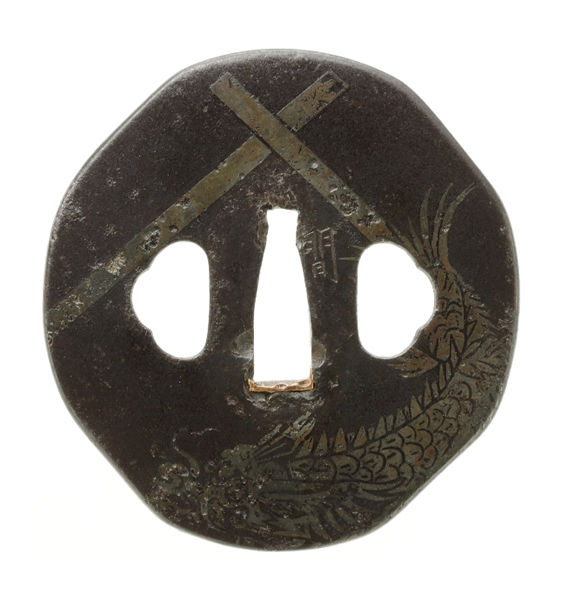
This is an iron tsuba with sahari inlay, signed by Teiei (Sadaiye), a master smith of the Hazama school around 1700. The tsuba features a Raimon (lightning) design and comes with an NBTHK Hozon paper dated 2022. It is described as being in pristine condition, a classic example of the smith's work.


Hazama School
Edo
Signed
Hozon (NBTHK)
Kinko · Ise
11 pieces on the market now
The Hazama school (Hazama-ha 間派), also known as the Kameyama tsuba makers, emerged in the castle town of Kameyama in Ise Province from around the Genroku era (1688-1704). The school's founders were members of the Kunitomo (国友) family, originally matchlock gunsmiths (teppou kaji) who had lived in Omi Province. "[[c:2]] Works bear either the single-character signature "間" (Ma) or personal names such as Kunitomo Sadaei and Masaei (正栄), linking the school's named artisans to a shared workshop tradition rooted in the military metalworking crafts of the Kunitomo lineage. The Hazama school's defining contribution is sahari-zougan (佐波理象嵌), an inlay technique employing sahari, a distinctive alloy of copper, tin, and lead.
"[[c:4]] Techniques attested across the corpus include suemon-zougan (applied inlay), takabori takanikubori (high-relief carving) in shakudou, hira-zougan (flat inlay), and the yakite kusarashi (fired and corroded) surface treatment. "[[c:5]] The Hazama school occupies a singular position within the broader kinko tradition as the only lineage to have applied sahari inlay to tsuba production. " The school's origin as firearms craftsmen who transferred their metalworking mastery to a peaceful art form, and their creation of a decorative vocabulary without parallel elsewhere in tsuba production, secure their place as one of the most distinctive regional schools of the mid-Edo period. Learn more →
| Smith | Era | Designated |
|---|---|---|
| Masahide正秀 | — | 3 |
| Masataka正孝 | — | 0 |
| Sadahide貞秀 | — | 1 |
| Sadahide/Teiei貞栄 | 1670 | 2 |
Certifies a genuine fitting worth preserving: a correct signature, or, if unsigned, an identifiable era and school, with recognized artistic and craft value.
The NBTHK (Nihon Bijutsu Tōken Hozon Kyōkai, the Society for the Preservation of Japanese Art Swords) is a public-interest incorporated foundation founded in 1948 and supervised by Japan’s Agency for Cultural Affairs (Bunkachō); it is based at the Japanese Sword Museum in Tokyo. Its expert panels physically examine each submitted work (shinsa) and issue a certificate (kanteishō) ranking it by artistic and historical merit. NBTHK papers are the most widely recognized standard of authentication for Japanese swords and fittings.
NBTHK official site3-day return window from receipt.