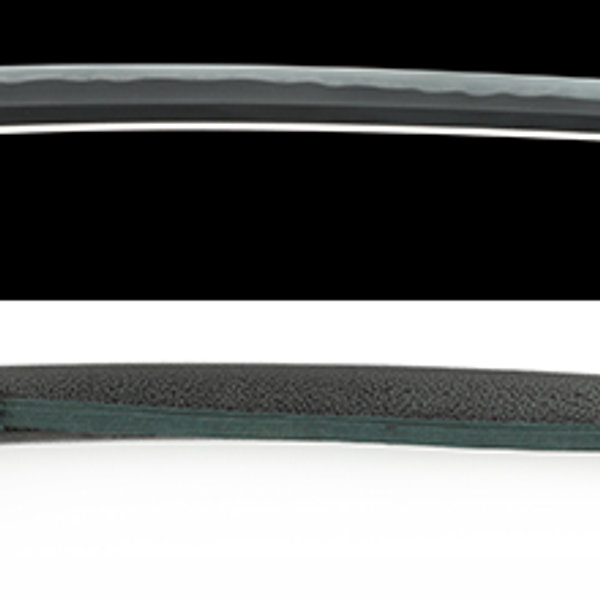
This listing from Ginza Choshuya features a katana signed by Fujiwara Hisayuki, who forged it at the age of seventy with Ishii Masaoki. The tang bears an inscription stating it was tested and worn by the Shinto Munen-ryu swordsman Togasaki Kido-ken Hanei in January of Ansei 3 (1856). Hisayuki, born Kawai Hisayuki, was the eldest son of Hatamoto Kawai Sojiro Hisataka, and dedicated his free time to mastering sword forging techniques from the Bunsei era.
mei · Ansei (1854-1860)


Musashi · around 1854-1860
7 pieces on the market now
We could not find an authenticity certificate on the seller’s listing. Japanese swords and fittings are normally papered by the NBTHK (or the NTHK). Without one, the attribution is the seller’s own assessment and has not been independently verified — treat it with caution and ask the dealer about certification before buying.
If, due to our fault, the item differs significantly from its proper condition, the item may be returned. Cooling-off is within one week of the item's arrival.
This listing from Ginza Choshuya features a katana signed by Fujiwara Hisayuki, who forged it at the age of seventy with Ishii Masaoki. The tang bears an inscription stating it was tested and worn by the Shinto Munen-ryu swordsman Togasaki Kido-ken Hanei in January of Ansei 3 (1856). Hisayuki, born Kawai Hisayuki, was the eldest son of Hatamoto Kawai Sojiro Hisataka, and dedicated his free time to mastering sword forging techniques from the Bunsei era.
mei · Ansei (1854-1860)


Musashi · around 1854-1860
7 pieces on the market now
We could not find an authenticity certificate on the seller’s listing. Japanese swords and fittings are normally papered by the NBTHK (or the NTHK). Without one, the attribution is the seller’s own assessment and has not been independently verified — treat it with caution and ask the dealer about certification before buying.
If, due to our fault, the item differs significantly from its proper condition, the item may be returned. Cooling-off is within one week of the item's arrival.