Edo was the sword’s age of connoisseurship: the Hon’ami appraisers, the shogunal register of famous blades of 1719, and a thriving literature turned the sword into an object of study even as it ceased to be drawn in war.
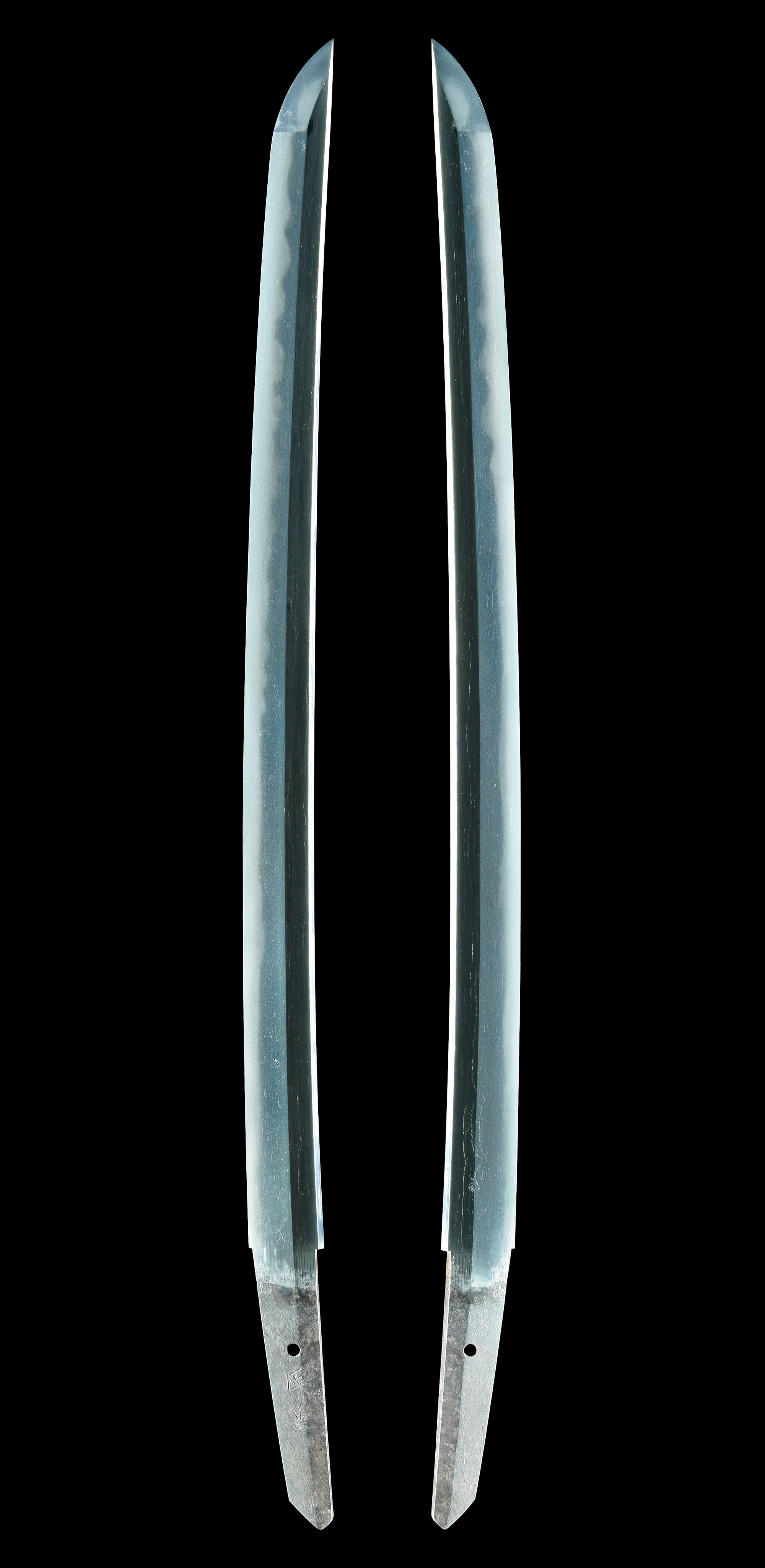
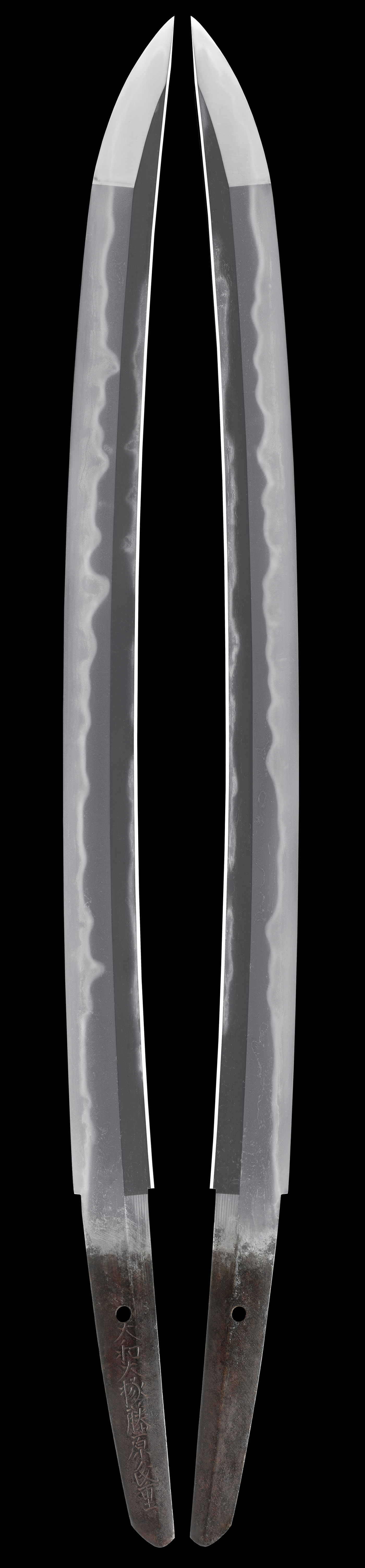
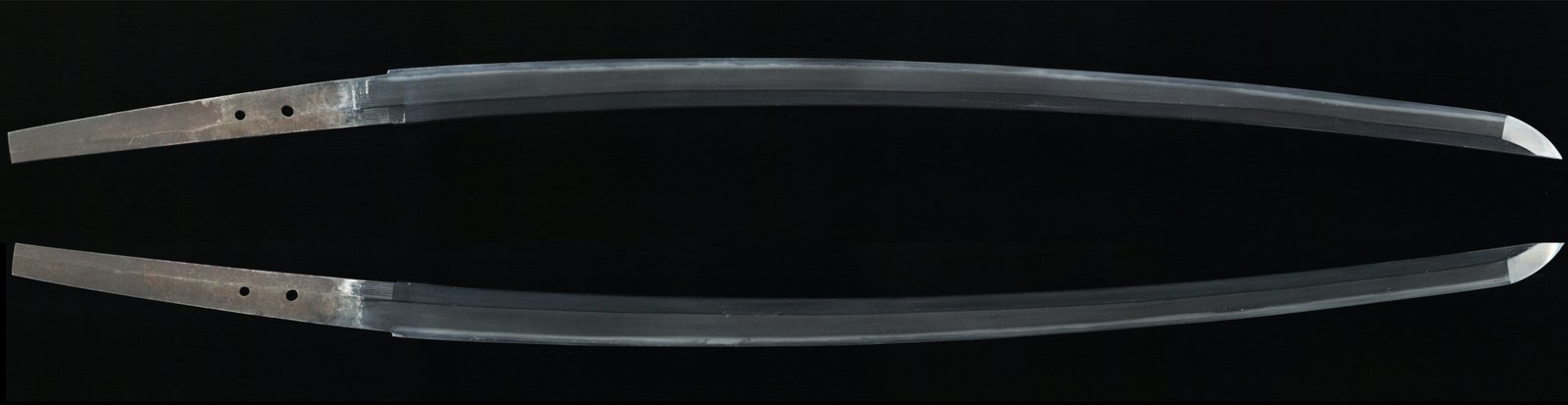
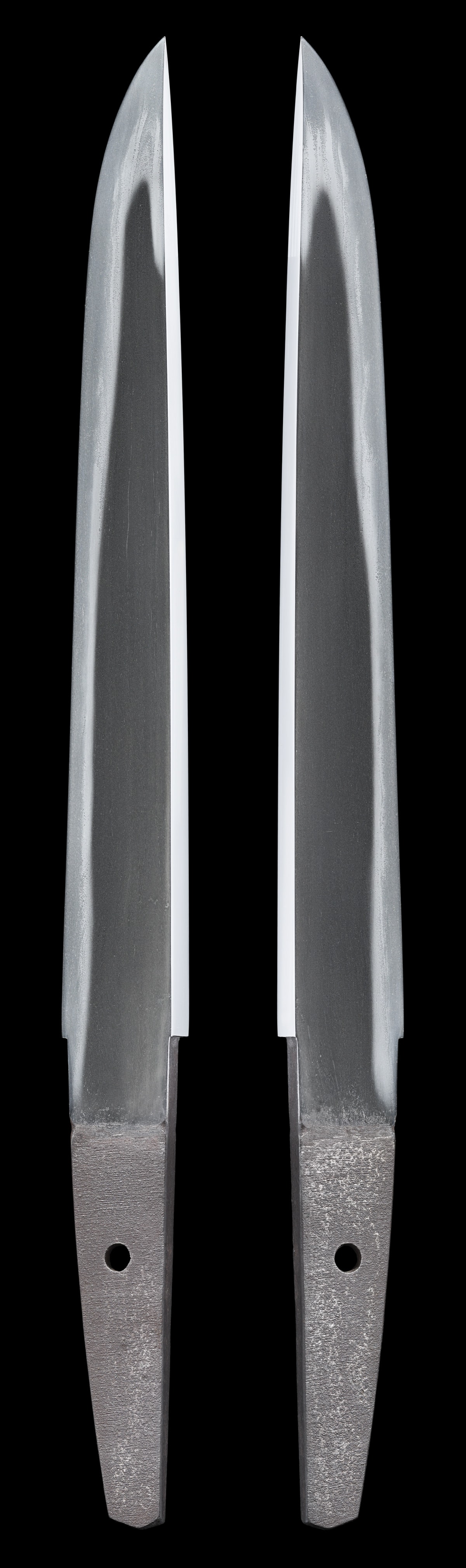
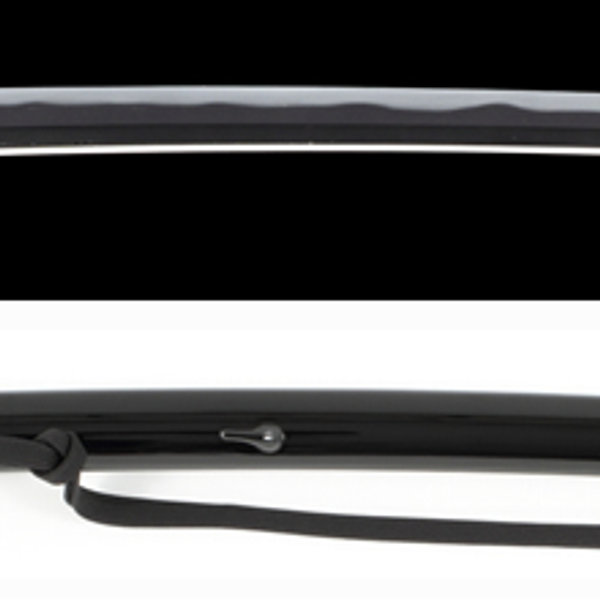
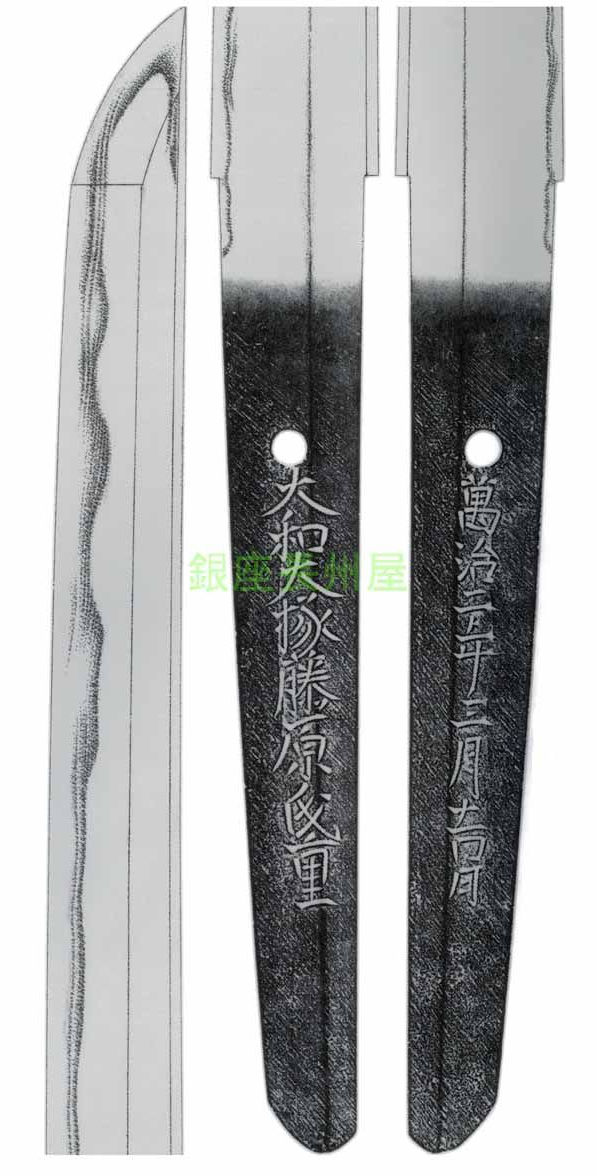
This katana is signed by Omi Daijo Fujiwara Ujishige (1st Gen.), a swordsmith from Himeji in Harima Province, active in the early Edo period. He received the title of Omi Daijo in Meireki 1 (1655) and was highly respected for his work, including dedication swords for prominent shrines. His lineage continued, leading to Tegarayama Masashige, known for his magnificent Toran-midare hamon.
 NihontoWatch
mei · Meireki (1655-1658)
Wakimono · Harima · around 1655-1658
Fujishiro Chu-jo saku · Tōken Taikan top 76%
3 pieces on the market now
Where Ujishige stands among comparable artisans: across all of nihontō, and within tradition, era, and period. The tiers (Foremost · Leading · Major · Notable) weigh official designations from the NBTHK and Japan's Agency for Cultural Affairs, together with historical honors of lasting repute such as the Sansaku and Meibutsu-chō.
Select a lens to see how it's measured.
Years he was demonstrably active, proven by signed-and-dated blades
Wakimono · Awa
10 pieces on the market now
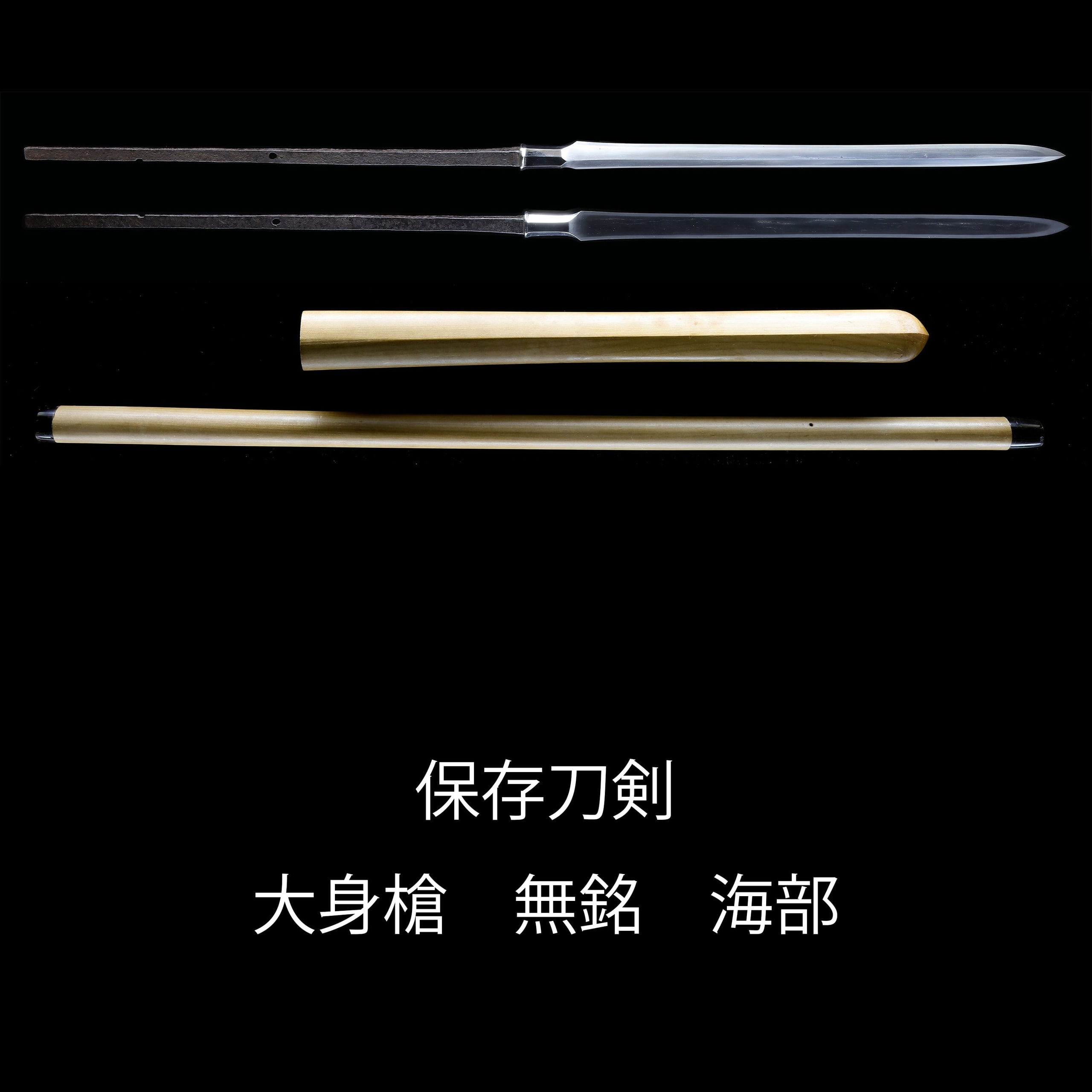
The Kaifu group (Kaifu-ha, 海部) takes its name from the Kaifu district of Awa Province on Shikoku, in the region of present-day Tokushima. The Kotō Meizukushi and the Kokon Meizukushi place the founder as Kaifu Tarō Ujiyoshi (海部太郎氏吉), set around the Kōryaku era (1379-1381), and record a second strand said to descend from a pupil of Naminohira around the Ōan era (1368-1375) who signed with the single character Fuji (藤). No blade securely traces back to those origins, and the setsumei are consistent that the group's documented activity belongs to the Muromachi period, growing conspicuous from its latter half. The smiths who appear by name on the designated blades are Ujiyoshi (氏吉), Ujishige (氏重), Yasuyoshi (泰吉) with a Daiei 5 (1525) example, and Yasunaga (泰長), placed around the Daiei era; one tantō by Ujishige is read as the earliest of the line, end of Nanbokuchō into early Muromachi. A shintō continuation survives in Fujiwara Ujiyoshi of Kaifu in Ama district, working in the Kyōhō era (1716-1736), whose hand the setsumei describes as late kotō in appearance, his ancestors' manner carried forward without absorbing other provinces' shifts. Forging across the group runs to ko-itame or itame that often flows and inclines toward masame near the edge, with ji-nie and chikei that the setsumei repeatedly call subdued or lacking strong brilliance; shirake-utsuri and a faintly blackish kanairo recur. The temper is most often a suguha base, from a narrow line on the tantō to a broad suguha mixed with ko-notare, gunome, and midare, the nioiguchi frequently hazy and oceanic (bōyō) rather than tight, with ko-nie, kinsuji, and sunagashi; bōshi turn back in ō-maru with long kaeri or run midare-komi with a togari tendency.
The signature Kaifu form is the hira-zukuri tantō of wide mihaba and slight uchizori, carrying a bonji with suken and gomabashi cut as deep kaki-nagashi grooves, the long mei boldly chiselled in thick strokes. The setsumei also note the kiriba-zukuri wakizashi known as Kaifu mountain swords (Kaifu no yamatō), and a high, thick build of utilitarian character; a flowing masame-tinged jigane with hazy temper and a coarse, bōbō nie reads as the group's ordinary signature, while finer pieces in the same idiom step above it. For kantei, a deeply tempered suguha-based blade whose ko-itame carries dense ji-nie can at a glance suggest Go Yoshihiro, and the group's drift toward a Naminohira manner and the old saying that Kaifu work "changed into E" mark the lines along which it is read. The standing of these smiths rests on cutting character: the meibutsu Iwakiri Kaifu, a katana by Ujiyoshi recorded in the Kyōhō Meibutsu-chō, takes its name from its sharpness, was held by the Miyoshi of Awa with whom Miyoshi Nagayoshi is said to have won martial exploits, and passed thereafter to the Kuroda of Fukuoka. The Ujishige tantō once in the collection of Itō Miyoji is published in the Kōzan Oshigata; a katana by the later Yamato Daijō Ujishige stands at Hiromine Shrine; and two wakizashi by Fujiwara Ujiyoshi were given to the Imperial Household Agency by volunteers from Tokushima. Signed Kaifu blades are few, which makes each named example reference material for the group as a whole. Learn more →
| Smith | Era | Designated |
|---|---|---|
| Ujiyoshi氏吉 | 1492-1501 | 3 |
| Yasunaga泰長 | 1521-1528 | 1 |
| Yasuyoshi泰吉 | 1504-1521 | 1 |
| Ujishige氏重 | 1655-1658 | 2 |
| Ujiyoshi氏吉 | 1596-1615 | 2 |
The Edo period (1615 to 1868)
Edo was the sword’s age of connoisseurship: the Hon’ami appraisers, the shogunal register of famous blades of 1719, and a thriving literature turned the sword into an object of study even as it ceased to be drawn in war.
We could not find an authenticity certificate on the seller’s listing. Japanese swords and fittings are normally papered by the NBTHK (or the NTHK). Without one, the attribution is the seller’s own assessment and has not been independently verified — treat it with caution and ask the dealer about certification before buying.
If, due to our fault, the item differs significantly from its proper condition, the item may be returned. Cooling-off is within one week of the item's arrival.