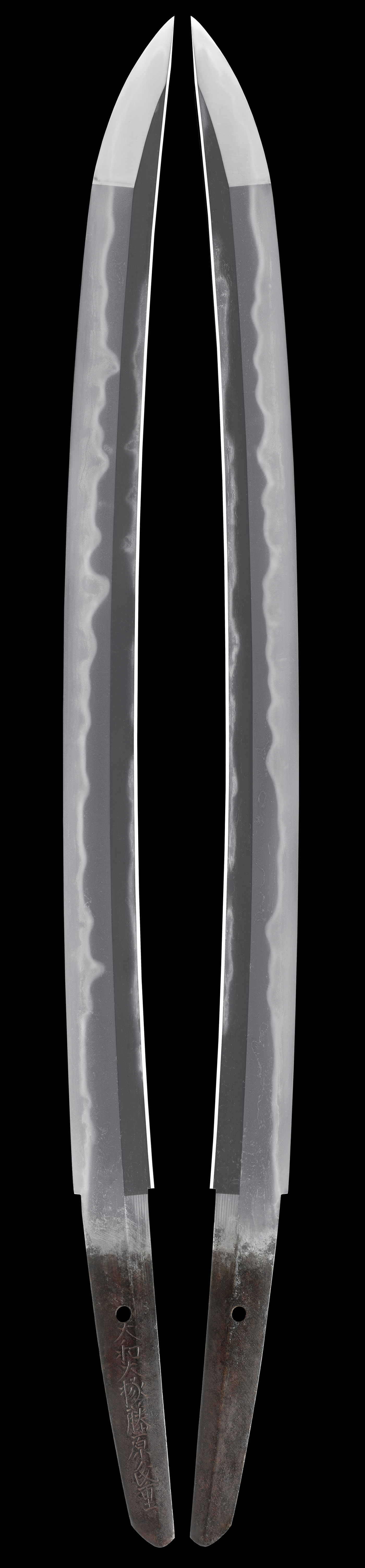
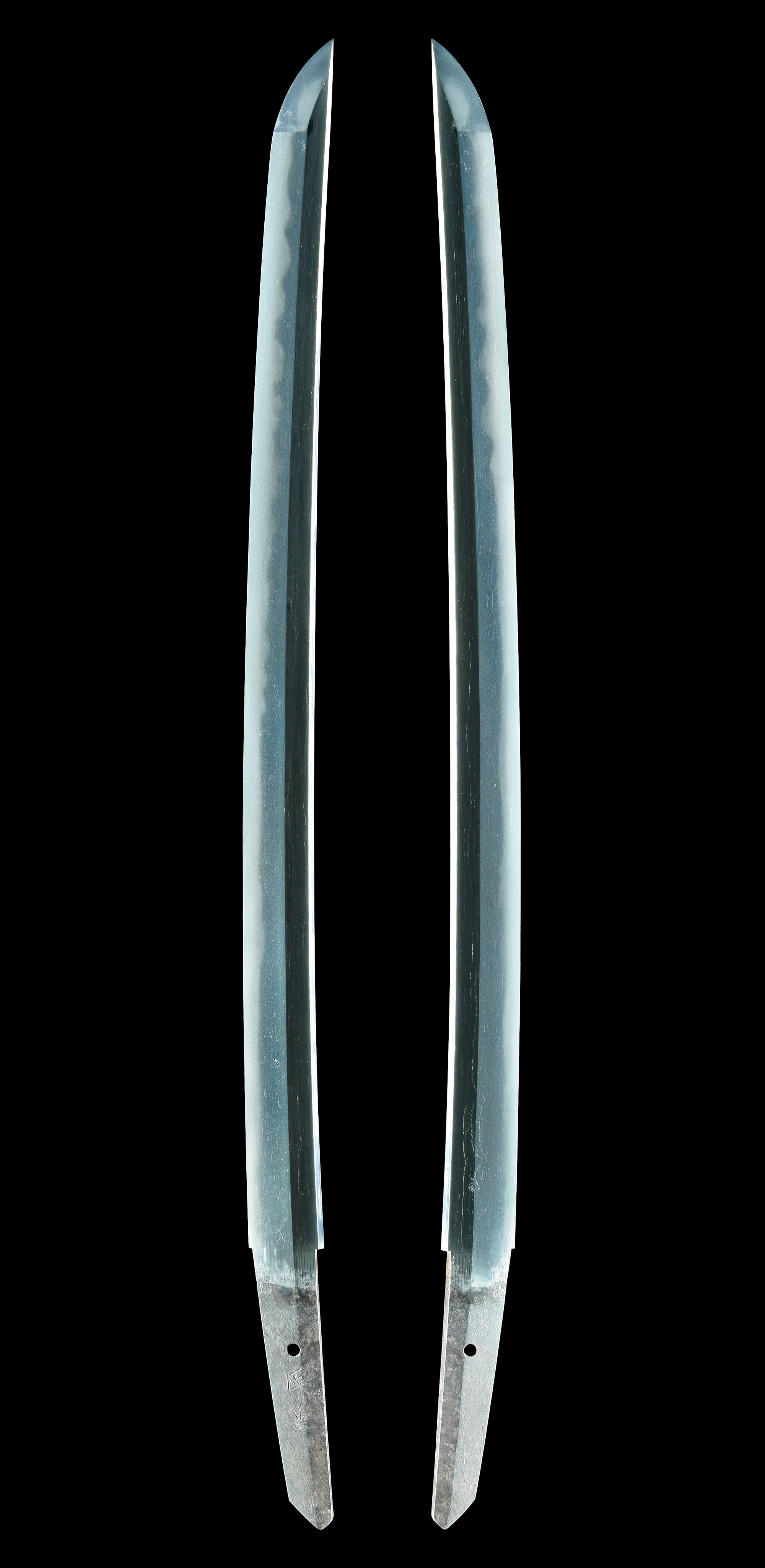
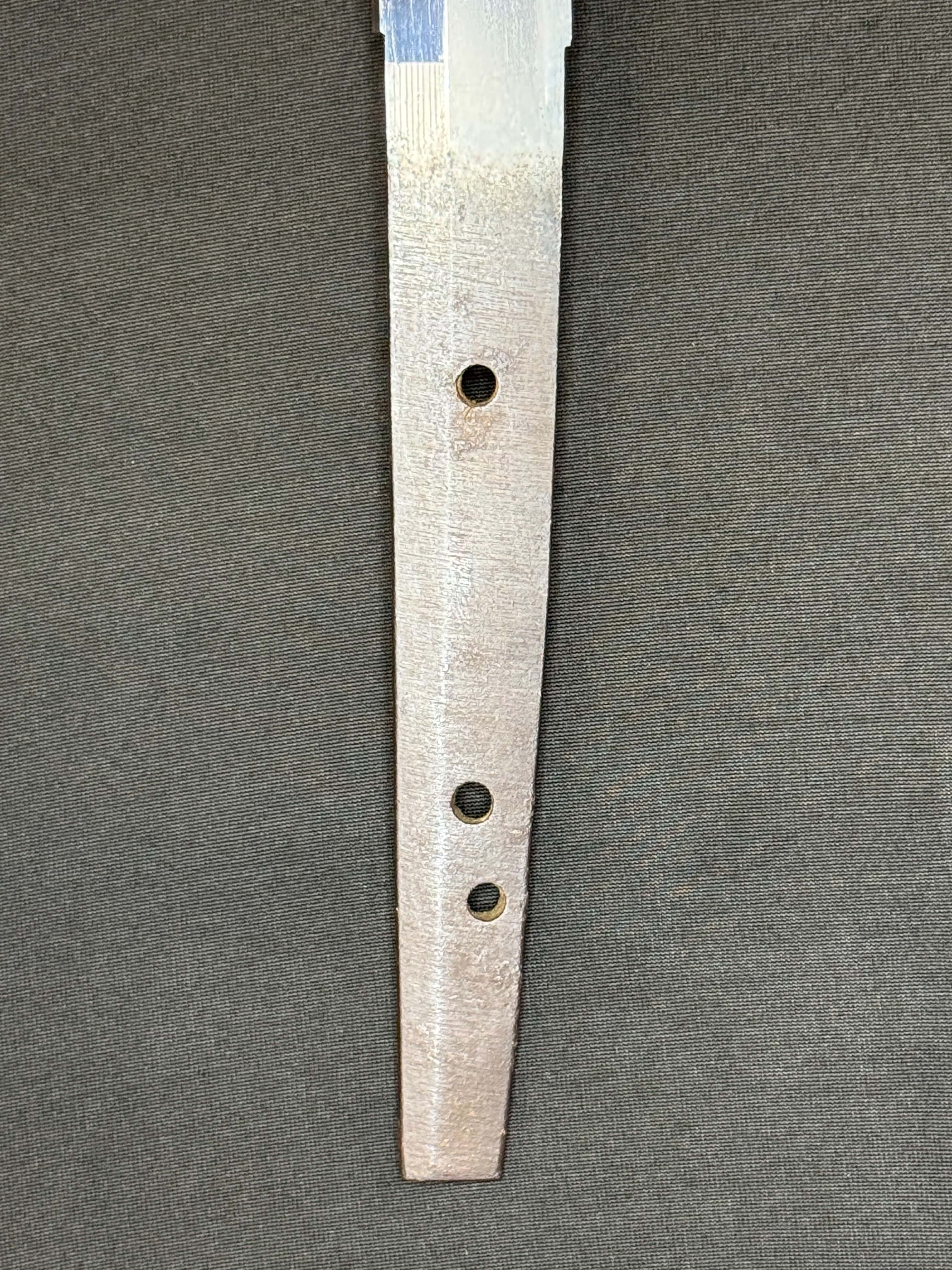
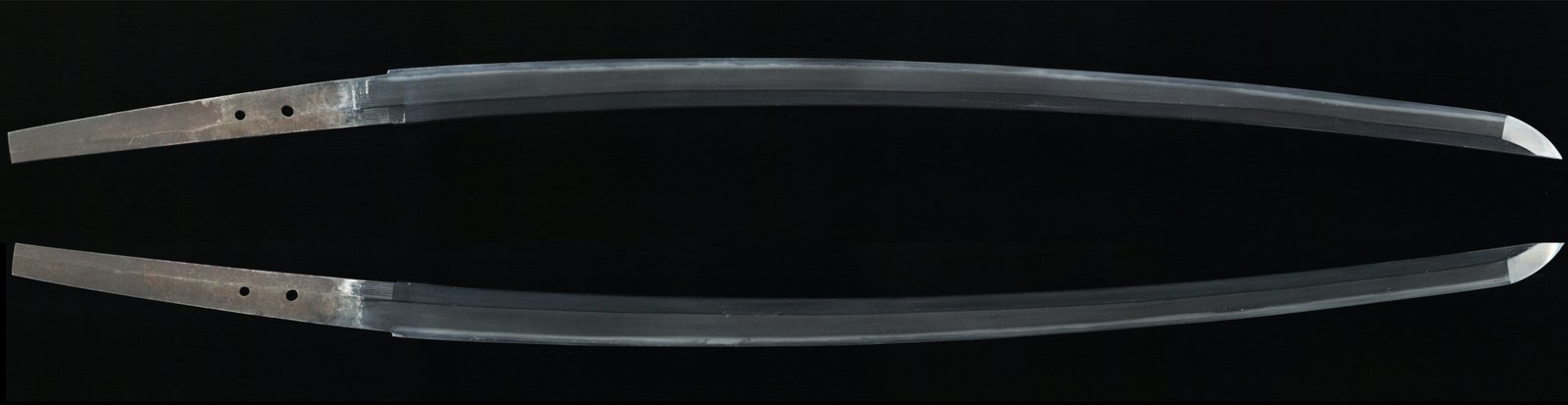
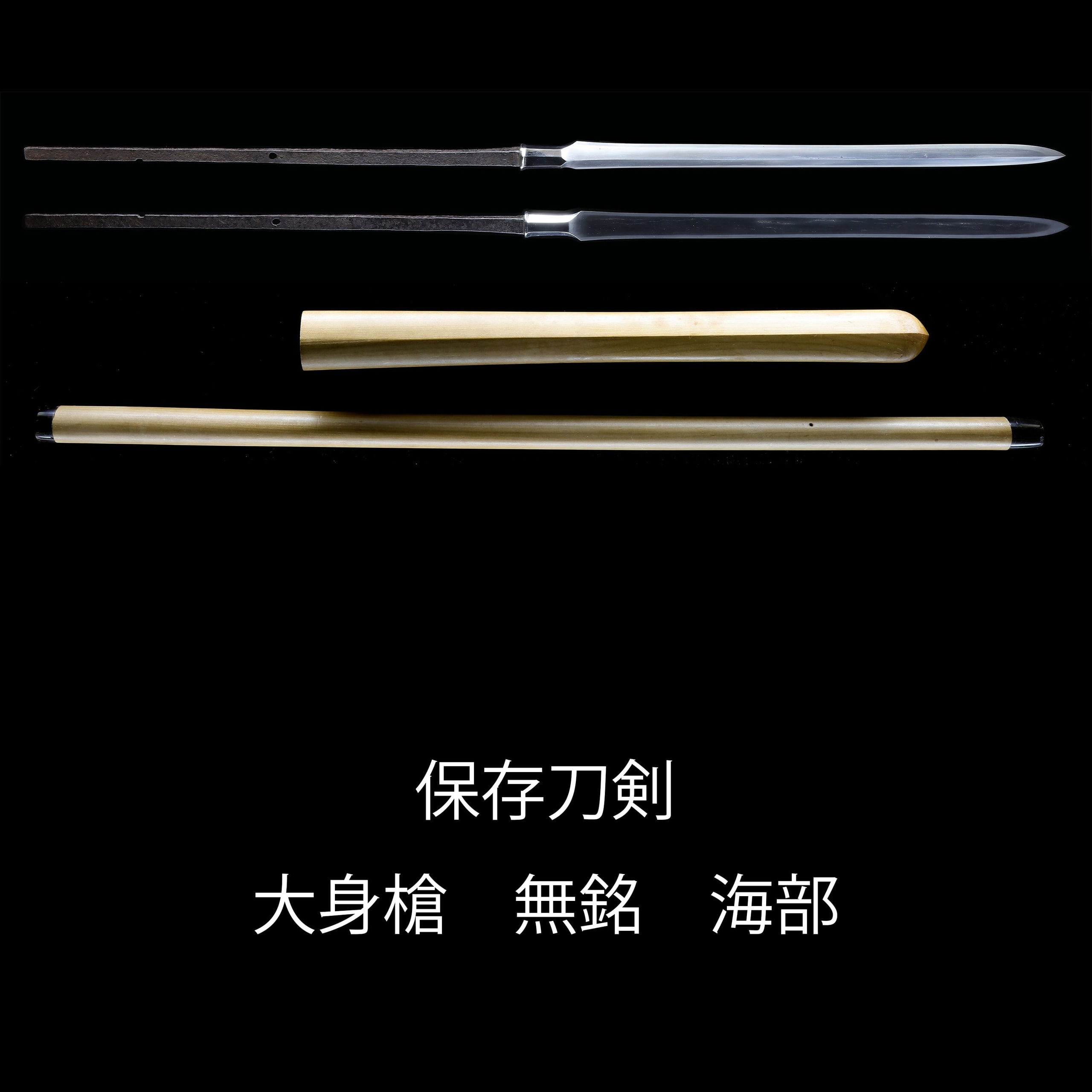
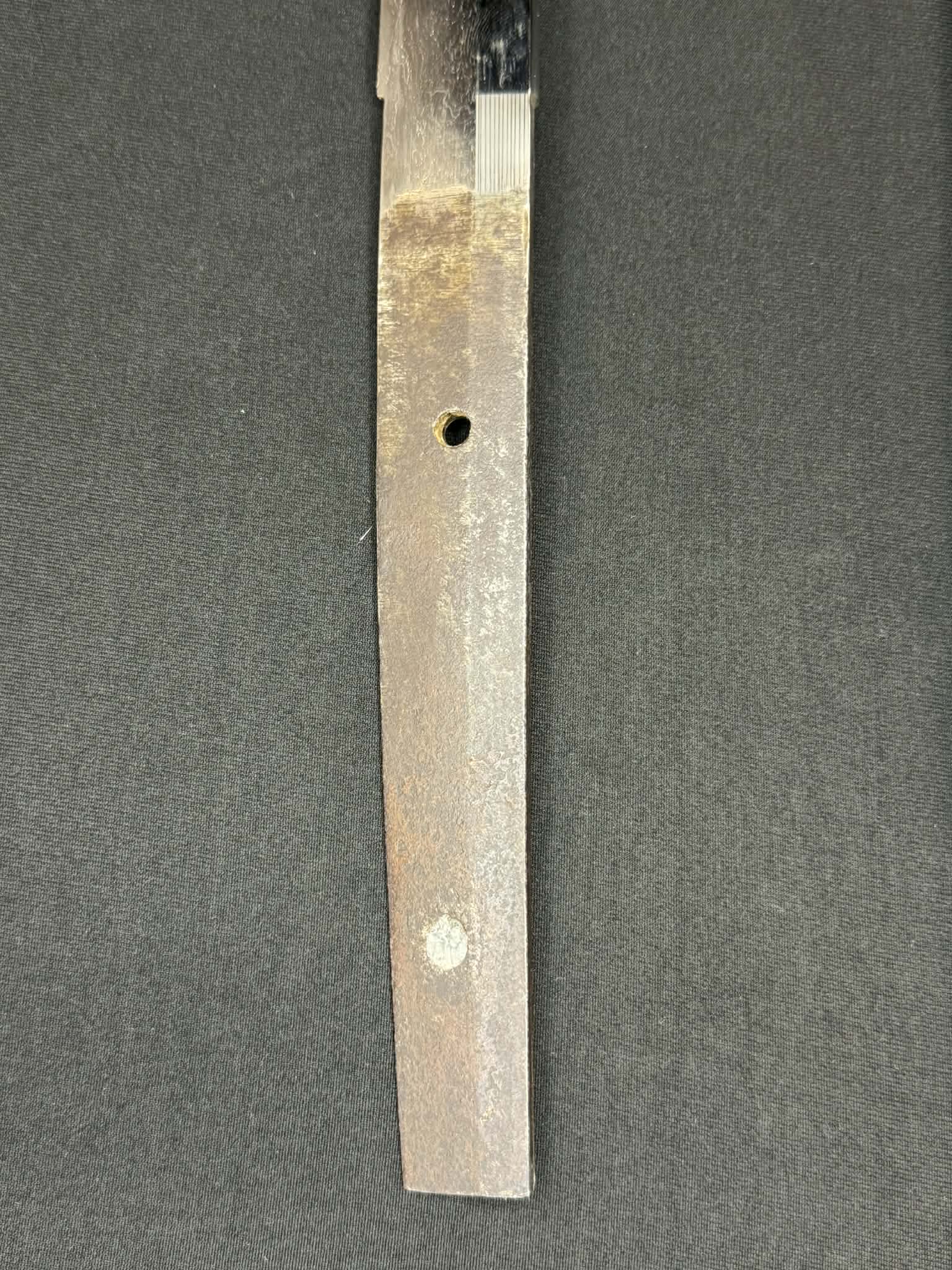
The Kaifu group of Awa Province traces its founding to Kaifu Taro Ujiyoshi, placed by the Meizukushi around the Koryaku era (1379-1381). No works by this earliest Ujiyoshi survive, however, and it is from the latter half of the period that the activity of the Kaifu smiths becomes conspicuous. The name Ujiyoshi was carried forward across multiple generations, with extant signed blades ranging from the mid- period through to a rare -period example -- a in the Imperial Collection () by a Kyoho-era Ujiyoshi whose workmanship, the observe, is "almost exactly like what one sees in late work," suggesting his ancestors' style was transmitted unchanged.
The characterize Kaifu workmanship by a tightly forged accompanied by dense and ; a broad -based into which , , and shallow are mixed; and a deep with adhering . The overall impression, one examiner notes, "at a glance calls to mind Go Yoshihiro" -- a deeply tempered, powerful style distinctive among provincial smiths. The known as "Iwakiri Kaifu," recorded in the Kyoho -cho, exemplifies this character. Formerly in the possession of the Miyoshi family of Awa, it is transmitted that the warlord Miyoshi Nagayoshi achieved martial exploits with this blade before it passed into the hands of the Kuroda family of Fukuoka.
The Kaifu group occupies a distinctive position among late provincial schools. Their ability to produce blades of a character reminiscent of the great tradition, combined with the historical resonance of the Iwakiri Kaifu and its -cho pedigree, elevates Ujiyoshi beyond the level of a regional craftsman to a name of recognized importance in the canon.