Perry’s arrival in 1853 unraveled the Tokugawa peace and created the first mass demand for working swords in two centuries. Kiyomaro, called the Masamune of Yotsuya, died on its eve; Munetsugu and Yukihide carried the boom to the end.
 NihontoWatchNihontoWatch
This wakizashi is a masterpiece by Ichige Tokurin (Norichika), a leading smith of the Mito school during the late Edo period. It features an Unokubi-zukuri shape with koshi-hi engravings, a fine ko-itame jigane, and a vibrant gunome-midare hamon. The blade comes with a gold foil habaki, shirasaya, and an elaborate koshirae with shakudo fittings, and is accompanied by an NBTHK Tokubetsu Hozon Token certificate.
Certificate reading — 銘 水府住市毛徳鄰 文政二年八月日
NihontoWatchOffered by World Seiyudo


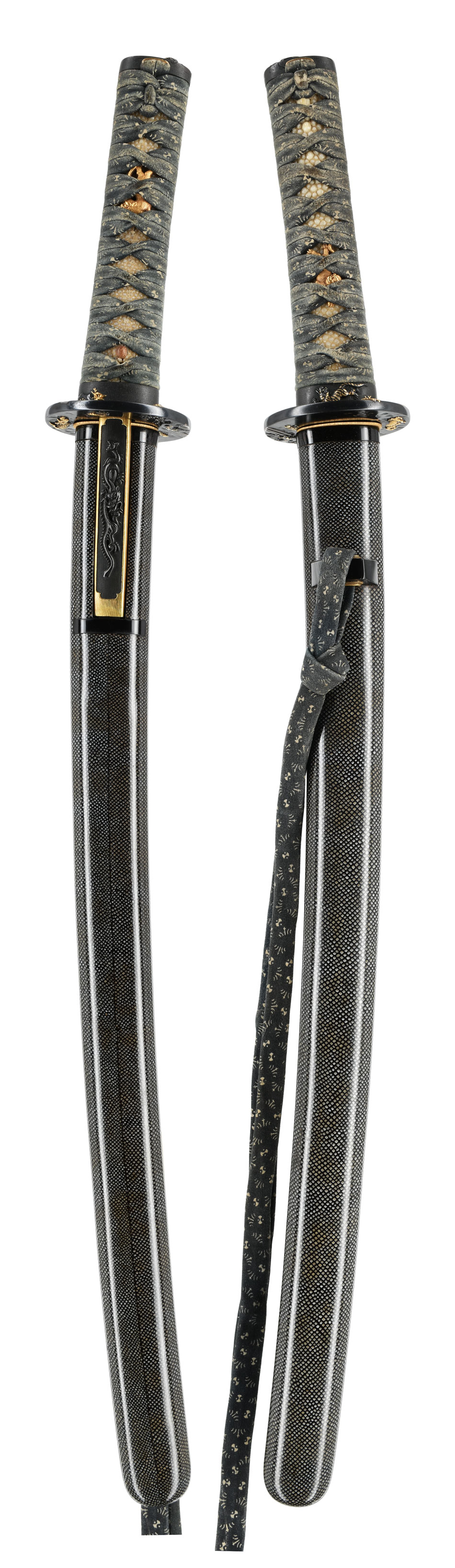
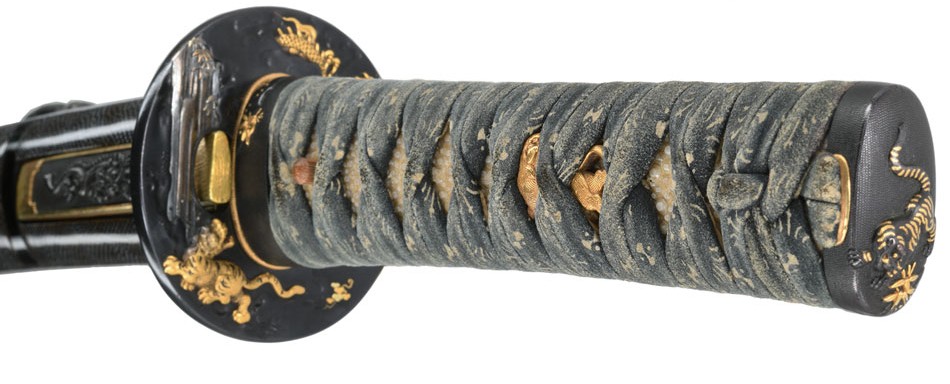
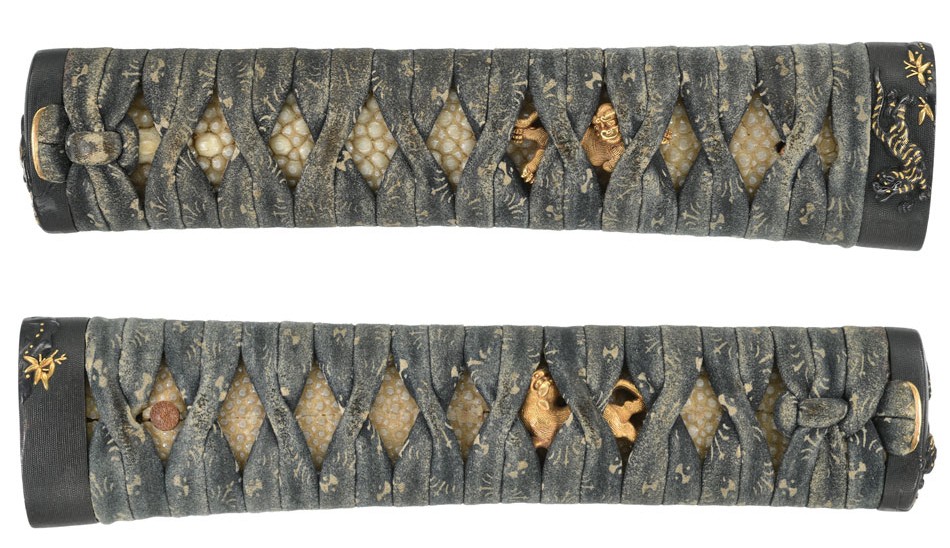
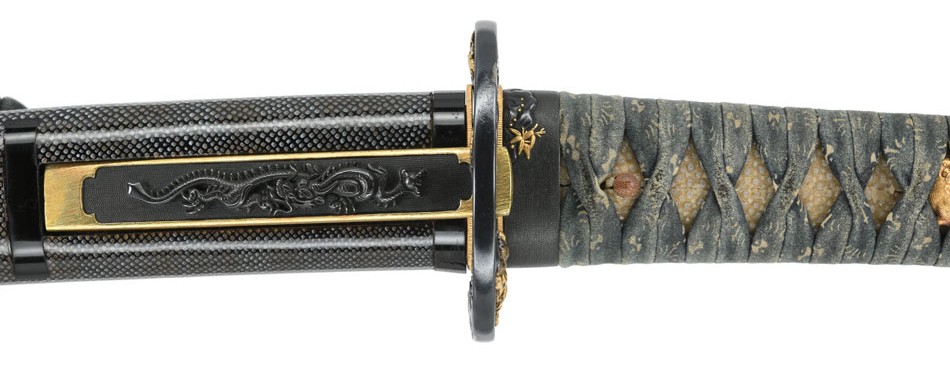

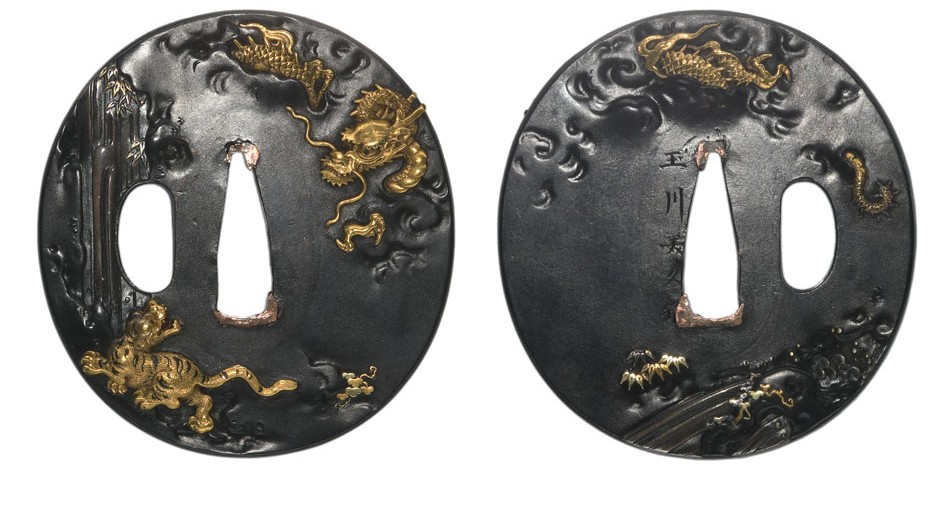
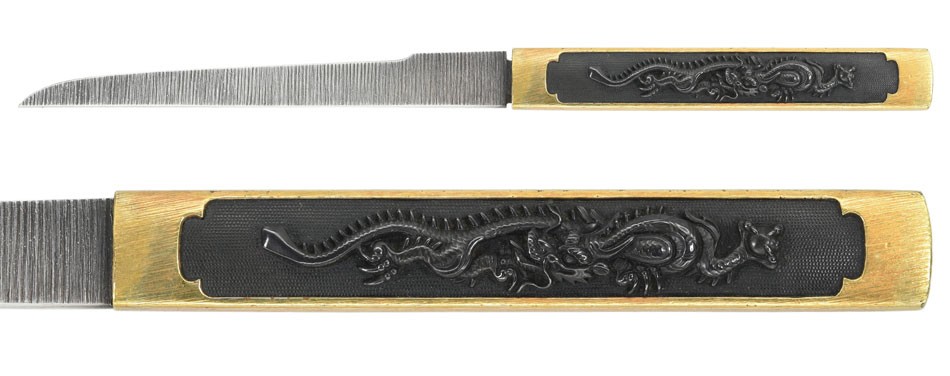
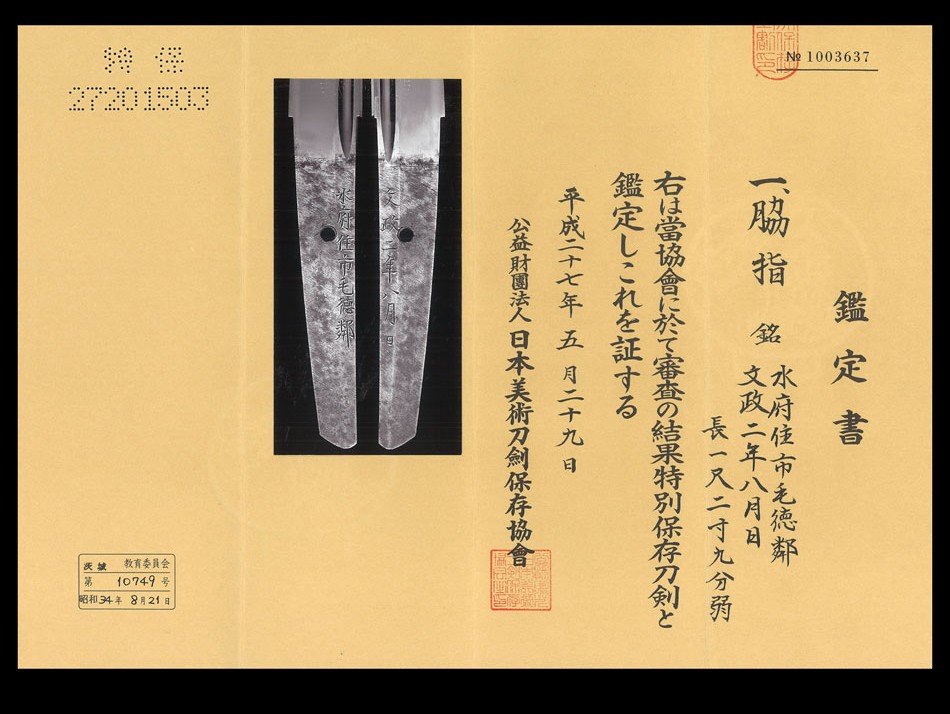
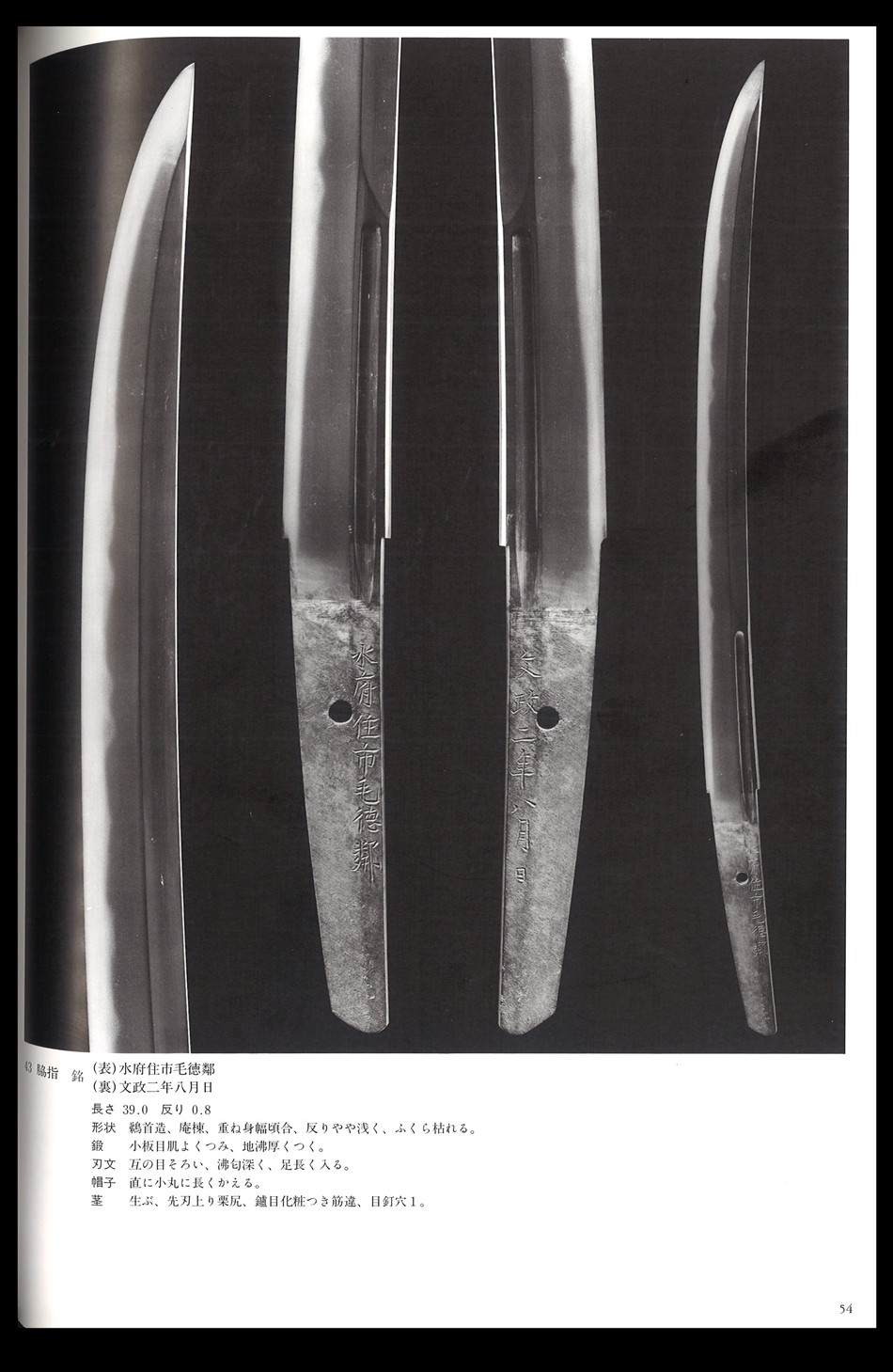
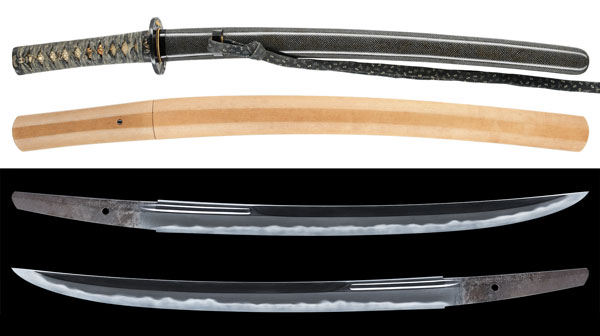
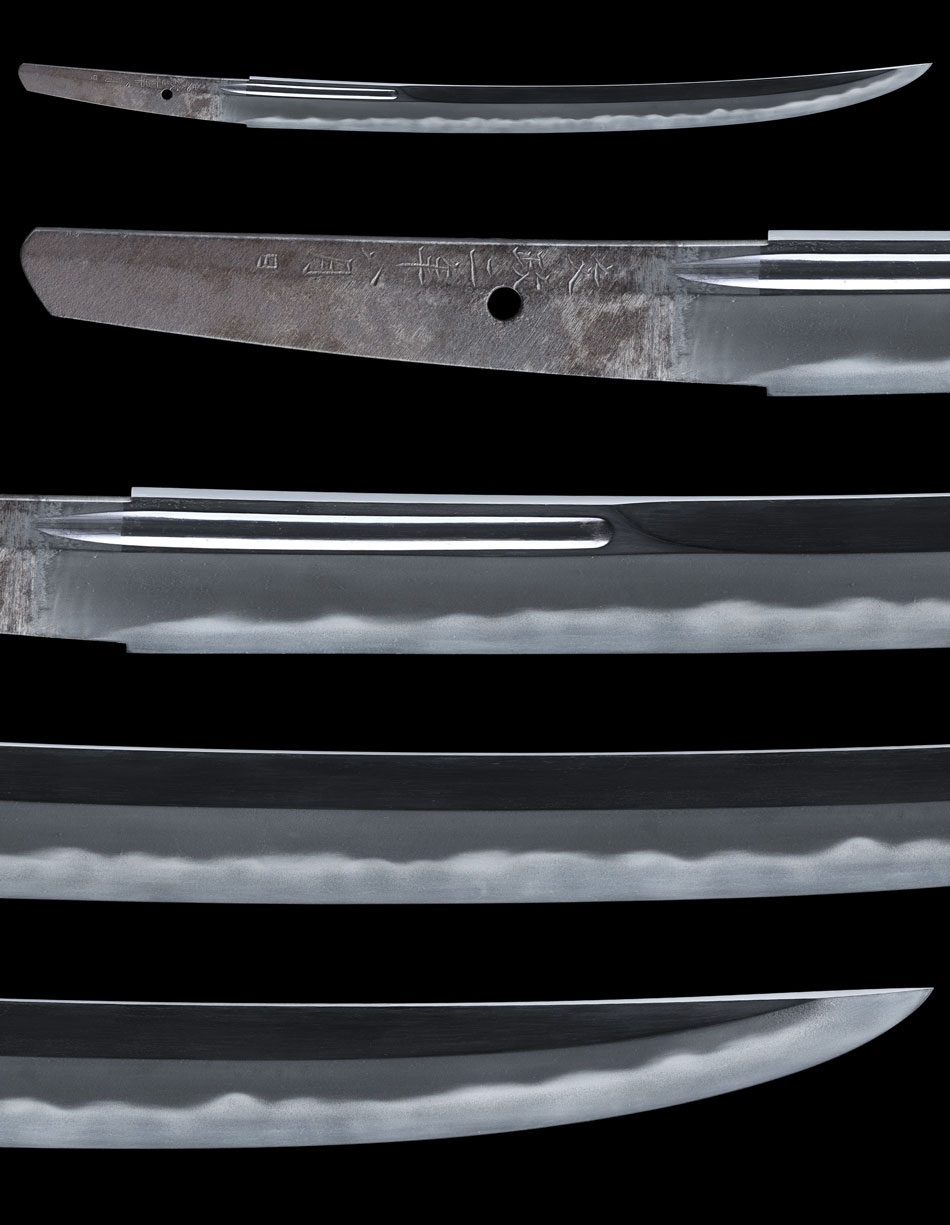
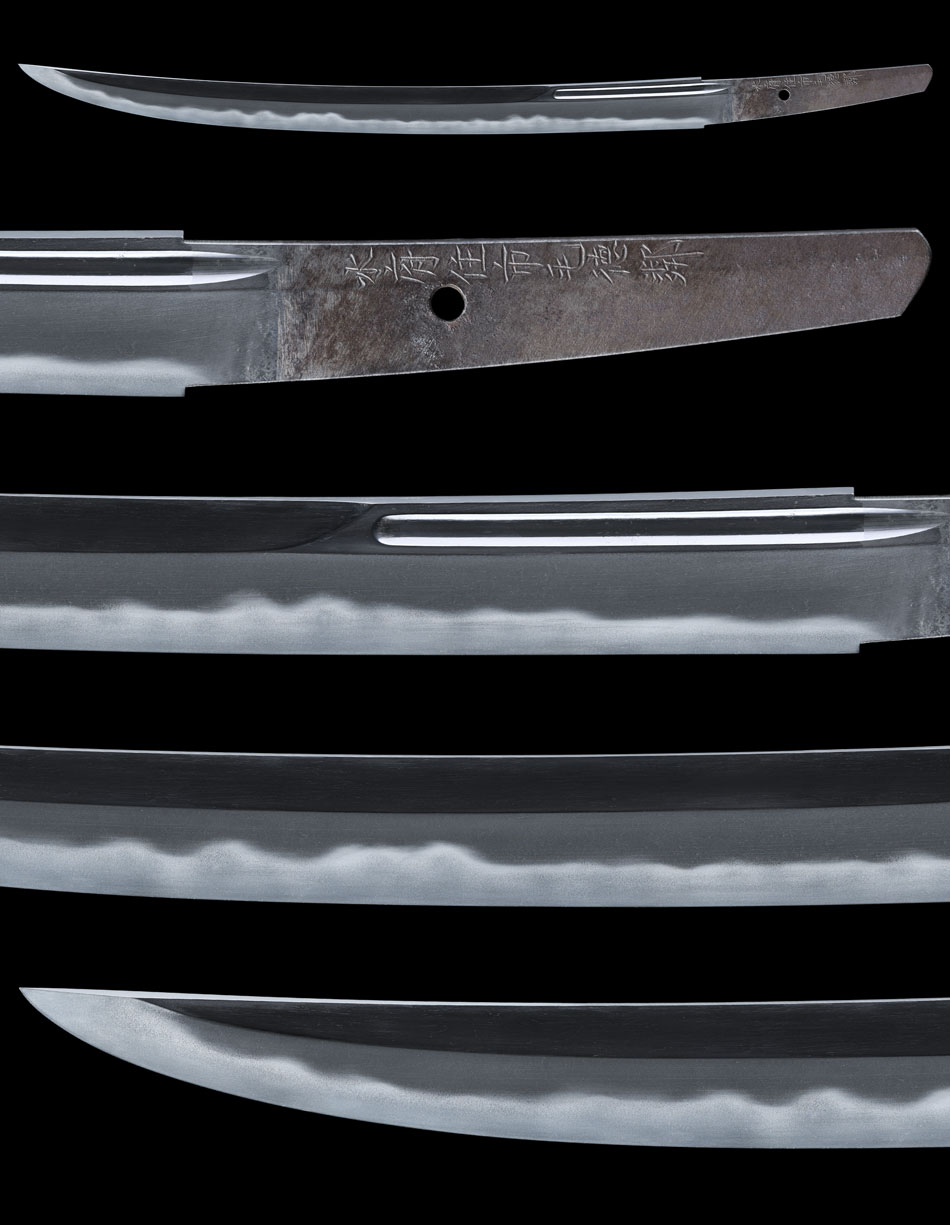
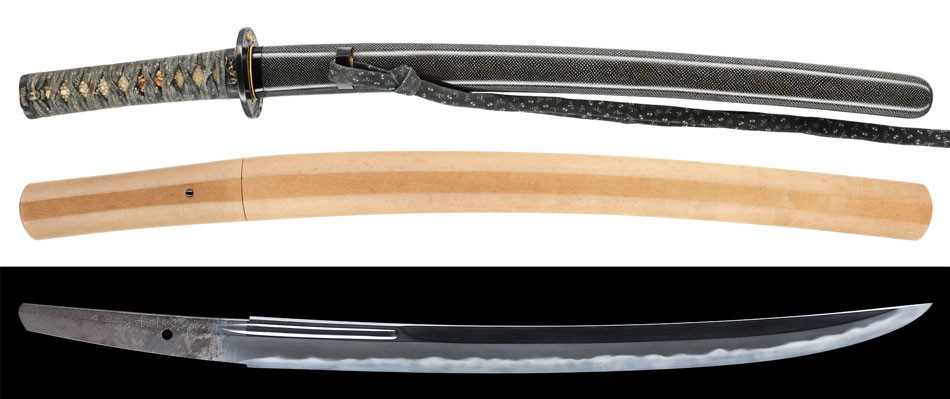
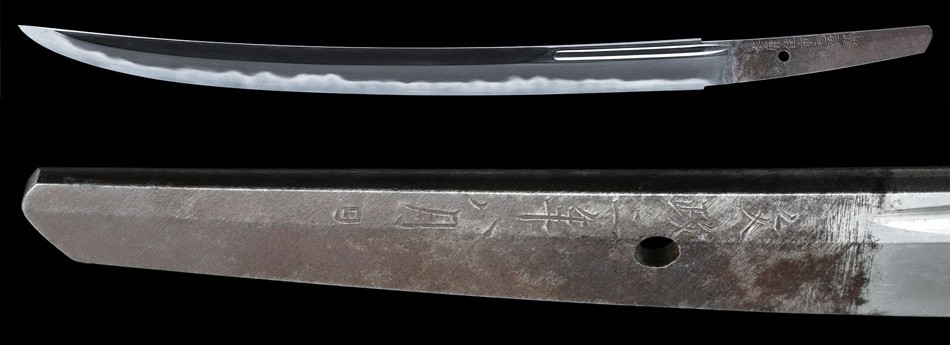
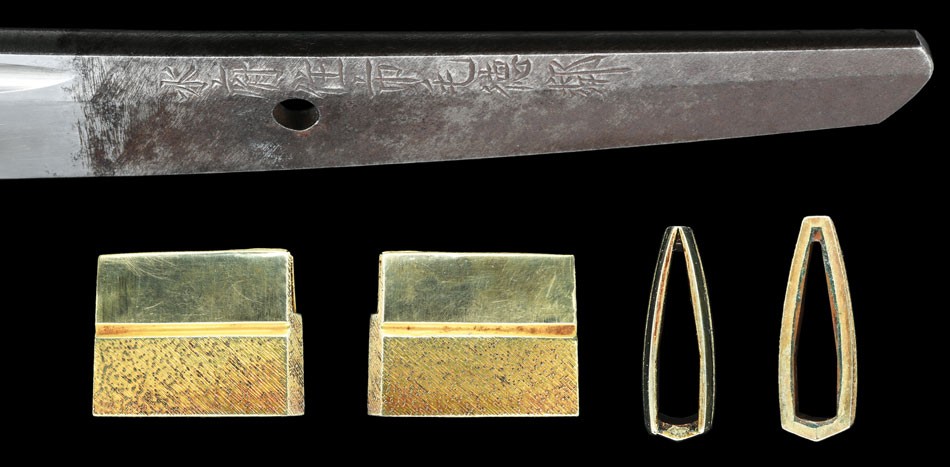
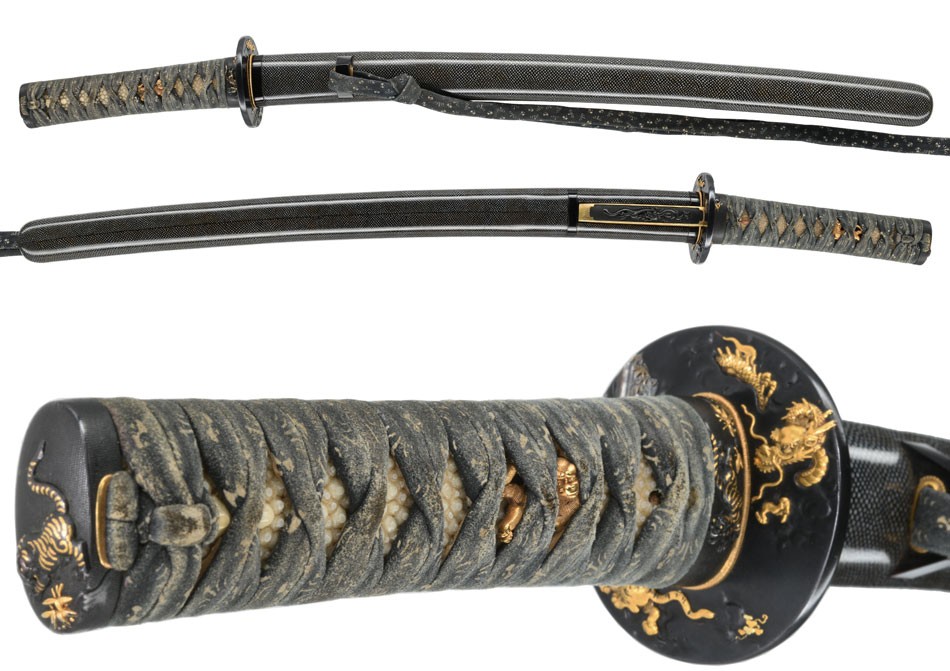
Mito (Hitachi), shinshinto · Hitachi · around 1812-1830
Fujishiro Jo saku · Tōken Taikan top 39%
1 piece on the market now
Ichige Tokurin signed his blades with the province at the head of a long inscription and his common name Genzaemon set into it, as on the Suifu Ichige Genzaemon Tokurin katana, and the published sources read his life as plainly as those signatures. Born in An'ei 6, in 1777, he was a retainer of the Mito domain who first trained under the domain smith Kume Naganori, then went to Osaka and entered the school of Ozaki Suketaka. In Bunka 6, at thirty-three, he was made the retained smith of the Mito domain; in Tenpo 1 he received the title Omi-no-suke; and he died in Tenpo 6, in 1835. The published sources describe two manners in his work: the toran-midare that follows his teacher's approach, and a straight-temper style akin to that of the Osaka smith Shinkai. In both, they write, the nioiguchi is bright and clear and the work is skilled.
The toran is the manner the published sources call the one he most favored and best commanded[[c:1]]. It is a large gunome-midare that crests in regular swells, built over a ko-itame well packed and clear. The temper often begins with a straight yakidashi at the machi before the wave pattern opens above it. Long ashi enter the crests, the nioi runs deep, ko-nie lie thickly through the line, sunagashi plays across it, and the nioiguchi stands bright and clear. The published sources judge his success here by control. Of his finest wakizashi they observe that the wave forms are tempered in order without breaking down, and that the particles of nie are even and well matched, lying without unevenness. Of one katana they write that the toran workmanship was something the bakumatsu smiths attempted in numbers, 「濤瀾乱れの作柄は, 幕末期の刀工が挙って試みているが, 中でも徳鄰は抜群」, Tokurin standing out among them.
The jigane beneath both manners is the same refined steel. It is a ko-itame that packs tightly, at times with mokume and flowing grain mixed in. The ji-nie is applied fine and at times dust-fine and thick, fine chikei enter well, and the steel is clear. On his best pieces the published sources call this forging a degree above the rest. The hamon is read with the same vocabulary in either manner: deep nioi, thickly applied ko-nie, fine kinsuji and sunagashi, and the bright, clear nioiguchi that recurs as the point of his work. On all but one of his blades the boshi runs straight to a small ko-maru, at times turning back a little deeply with the tip lightly brushed. Most of his blades are shinogi-zukuri katana and wakizashi, somewhat broad, the kasane thick, with a tendency to funbari and an extended chu-kissaki. The exception is a hira-zukuri tanto with uchizori and a thick kasane.
The second manner is a Shinkai-style suguha. It is a chu-suguha or wide suguha, at times a suguha-toned base shallowly undulating, with choji, gunome and long ashi entering it. The published sources call it 「同作としては比較的珍らしい真改風の作域」, comparatively rare among his work, and prize it for that. On these pieces the nie is applied a degree thicker and the more uniform, and the bright, clear nioiguchi is again the point singled out. Two dated blades recorded in Honma's inventory of the Imperial collection belong to this manner. A wakizashi of Bunka 11 (1814), signed Mito Hachiman-ju, has a shallowly undulating suguha with deep nioi over a well-packed ko-itame, the nioiguchi clear; a katana of Bunsei 4 (1821), signed Suifu-ju, is tempered in a wide suguha with ashi entering well, and its boshi, the single exception in his record, ends in an o-maru. The entry calls both well made and the wakizashi 「特に優れている」, especially fine. His signatures are themselves a dating key. Up to about the Bunka era he cut Mito-ju (水戸住), and from about the Bunsei era Suifu-ju (水府住). On that basis the published sources place one undated katana after the start of Bunsei, and, from the likeness of its signature to a Bunsei 2 piece, perhaps in that very year.
The dated piece against which that katana is measured survives. It is a small tanto dated the second month of Bunsei 2, its ko-itame well packed with fine ji-nie, tempered in a large gunome-midare that rises from a short straight yakidashi, thick ashi entering and the ji and ha both bright and clear. The published sources call it an outstanding piece among his works. Its signature departs from his usual practice: five characters on the omote, the name Ichige Tokurin with no province or common name, and the date on the ura. Of a wakizashi the published sources write that 「この作は, 彼の典型といえるもの」, typical of him and outstanding in workmanship, and on one katana they find 「彼の本領が遺憾無く発揮されている」. His standing rests on this control. His crests hold their shape and his nie lie uniform, and the refined suguha shows that his skill did not rest on a single manner.
Apart from the two blades in Honma's inventory, both presented to the court by the governor of Ibaraki Prefecture, Tokurin's record is wholly of the Juyo tier. That inventory calls him 「水戸新々刀工中の白眉」, the finest of the Mito shinshinto smiths. Nine of his blades are designated Juyo, all of them signed and on ubu tangs. Eight carry a long signature, often with the province and his common name, and the ninth is the five-character Bunsei 2 tanto. The published sources call several of them his finest or most representative work. He has no National Treasures, no Important Cultural Properties and no Tokubetsu Juyo, and no museum or daimyo holding is recorded against his name. The Fujishiro appraisal places him at Jo-saku, and the Toko Taikan values his work at 380 points, the standing of a capable late-Edo master of the Mito school. For a private collector his blades are not beyond reach in the way a Kamakura name would be, but they come forward only rarely. A healthy signed and dated example, in the toran he made his own or in the rarer Shinkai-style suguha, rewards patience, and the best of them show what the published sources call 「沸の粒が均一でよく揃ってむらなくつき」, nie whose particles are even and well matched.
Where Tokurin stands among comparable artisans: across all of nihontō, and within tradition, era, and period. The tiers (Foremost · Leading · Major · Notable) weigh official designations from the NBTHK and Japan's Agency for Cultural Affairs, together with historical honors of lasting repute such as the Sansaku and Meibutsu-chō.
Select a lens to see how it's measured.
Years he was demonstrably active, proven by signed-and-dated blades
Shinshinto · Hitachi
5 pieces on the market now
The Mito swordsmiths worked under the Tokugawa branch house that governed Suifu (水府) in Hitachi province during the closing decades of the Edo period. The setsumei gather two principal hands whose blades carry the shinshintō date inscriptions of the Bunka through Keiō years, together with a daishō by the tenth lord of the domain. Ichige Tokuchika (市毛徳鄰, also recorded with the title Ōmi-no-suke and at times read Tokurin), common name Genzaemon, was born in An'ei 6 (1777); he first studied under the domain smith Kume Naganori, then traveled to Osaka to train in the school of Ozaki Suketaka, and in Bunka 6 (1809) was taken on as an officially retained smith of the domain. Katsumura Tokukatsu (勝村徳勝), common name Hikoroku, was born in Bunka 6 (1809) in Mito and learned first from the domain smith Sekinai Tokumune; in Kaei 5 (1852) he was sent by domain order up to Edo, where the records say he entered the circles of Hosokawa Masayoshi and the Ishidō smith Unju Korekazu, and in the Bunkyū years he relocated to the Mito residence at Koishikawa. The third name is Tokugawa Keitoku (順公, Junkō), tenth lord of the domain, whose daishō survives in a black wax-lacquer mounting with hollyhock-crested fittings by the domain artisan Tamagawa Yoshihisa. The setsumei place all of this within the bakumatsu service of a domain whose Tokugawa loyalist temper is felt in the martial bearing of its blades. The two productive hands do not share a single style, and the setsumei keep them apart. Tokuchika is read primarily through his Osaka schooling: a tightly forged ko-itame with dense ji-nie and fine chikei, and a tempering range that runs from large gunome-midare swept into a billowing tōran manner after Suketaka, to a quieter suguha with shallow notare that the writers compare to Shinkai and to Suishinshi Naotane. His hamon characteristically opens with a yakidashi, carries deep nioi and thick nie, and shows kinsuji and sunagashi against a bright nioiguchi; the bōshi turns in ko-maru with a long kaeri.
Tokukatsu reads as the opposite temperament. The setsumei describe broad, long blades of thick kasane and shallow sori with an imposing martial form, forged in masame-hada that tends toward standing grain, tempered in a chū-suguha base with shallow notare and intermittent ko-gunome, the habuchi breaking into hotsure with abundant sunagashi and kinsuji, and a bōshi swept with vigorous hakikake. The writers read in this a Yamato temperament and link his later work directly to the Shikkake tradition, noting that his early period followed Sekinai's itame and gunome before he settled into the masame and suguha of Yamato-den. For kantei, the recurring inscriptions Suifu-jū, Mito-jū, and Tosumi anchor the signatures, with Tokuchika's wording shifting from Mito-jū to Suifu-jū around the Bunsei era, a marker the writers use to date the work. Several blades carry named or recorded provenance: a Tokukatsu katana bears the inscription naming Sakai Tadahiro of Shizuoka, another is styled with the gō Shōri-ken (勝利剣, "Victory"), and a third was judged to carry a daimei by his disciple Masakatsu. The setsumei also record the Imperial line: a wakizashi signed Mito Hachiman-jū Ichige Tokurin, presented through the Governor of Ibaraki, is recorded in Honma's inventory of the Imperial collection, and there the writers name Tokuchika the finest of the Mito shinshintō smiths. Horimono appear rarely, the Tokukatsu katana with bonji and sankō-ken in ukibori being noted as unusual for his hand. Across the corpus the writers treat Tokuchika's tōran and Shinkai-toned work and Tokukatsu's Yamato-den masame as the two distinct registers by which Mito blades of the bakumatsu are recognized. Learn more →
| Smith | Era | Designated |
|---|---|---|
| Tokurin徳鄰 | 1812-1830 | 11 |
| Norikatsu徳勝 | 1848-1872 | 5 |
| Norikatsu徳勝 | 1868-1912 | 0 |
| Yoshiatsu慶篤 | — | 1 |
| Tokurin徳隣 | 1818-1830 | 1 |
Bakumatsu: the last war market
Perry’s arrival in 1853 unraveled the Tokugawa peace and created the first mass demand for working swords in two centuries. Kiyomaro, called the Masamune of Yotsuya, died on its eve; Munetsugu and Yukihide carried the boom to the end.
A Hozon-certified blade judged to show notably superior workmanship and a better state of preservation. The bar is higher: re-tempered blades and most unsigned Muromachi/Edo works are excluded.
The NBTHK (Nihon Bijutsu Tōken Hozon Kyōkai, the Society for the Preservation of Japanese Art Swords) is a public-interest incorporated foundation founded in 1948 and supervised by Japan’s Agency for Cultural Affairs (Bunkachō); it is based at the Japanese Sword Museum in Tokyo. Its expert panels physically examine each submitted work (shinsa) and issue a certificate (kanteishō) ranking it by artistic and historical merit. NBTHK papers are the most widely recognized standard of authentication for Japanese swords and fittings.
NBTHK official siteNo cooling-off period or returns; refund only if the purchased sword is proven fake, capped at purchase price (excludes commission sales, accessories, auction items).
¥4,500,000