Around 1800 Suishinshi Masahide argued in his writings that the craft must return to the old masters’ methods: the fukkotō revival. His greatest successor Naotane worked convincingly in Bizen and Sōshū manners that had been dead for centuries.
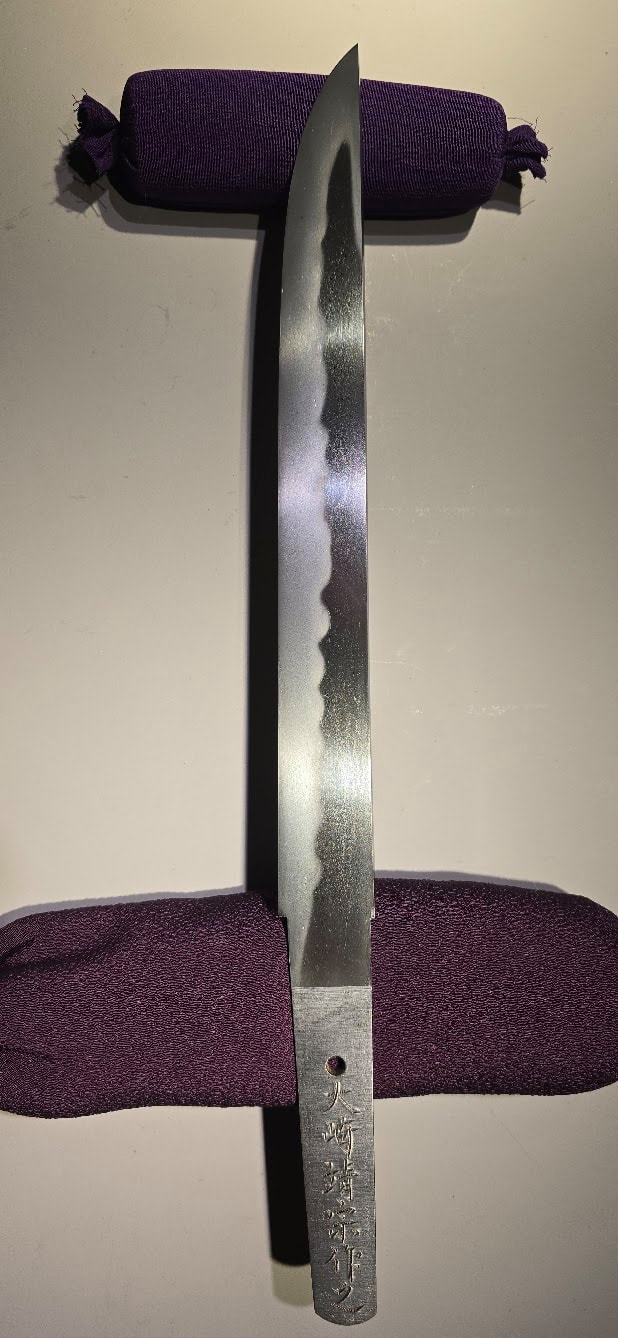
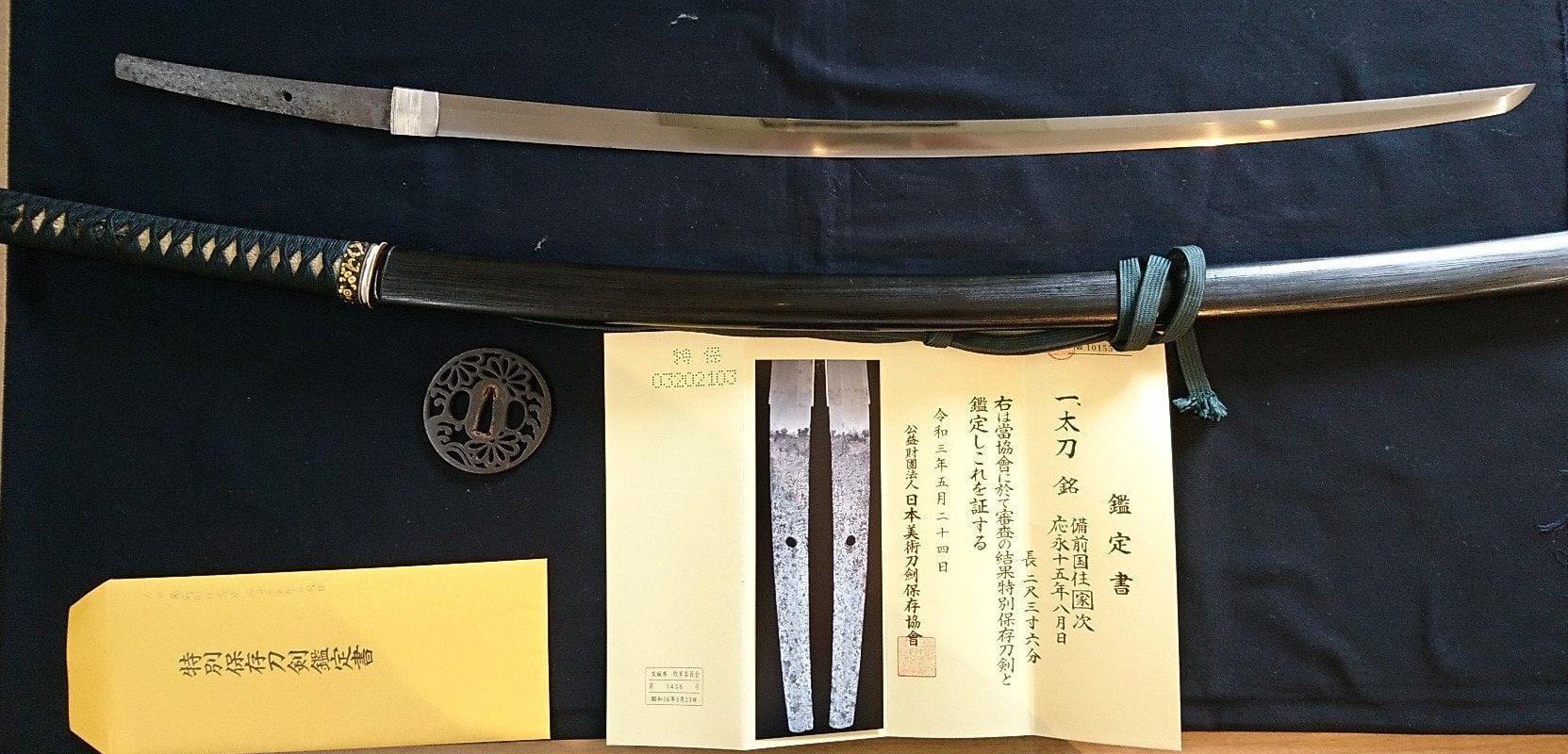
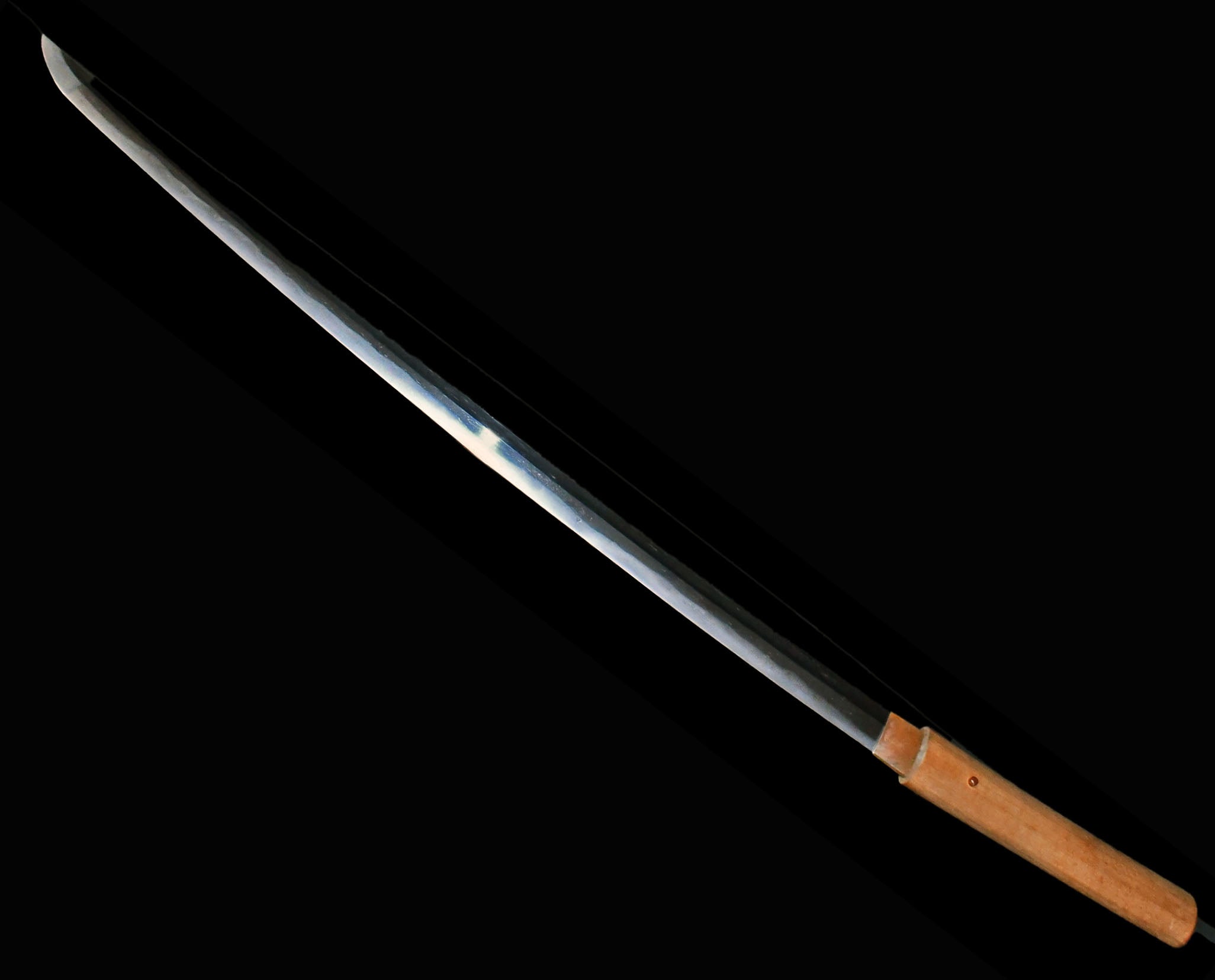
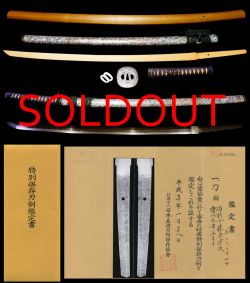
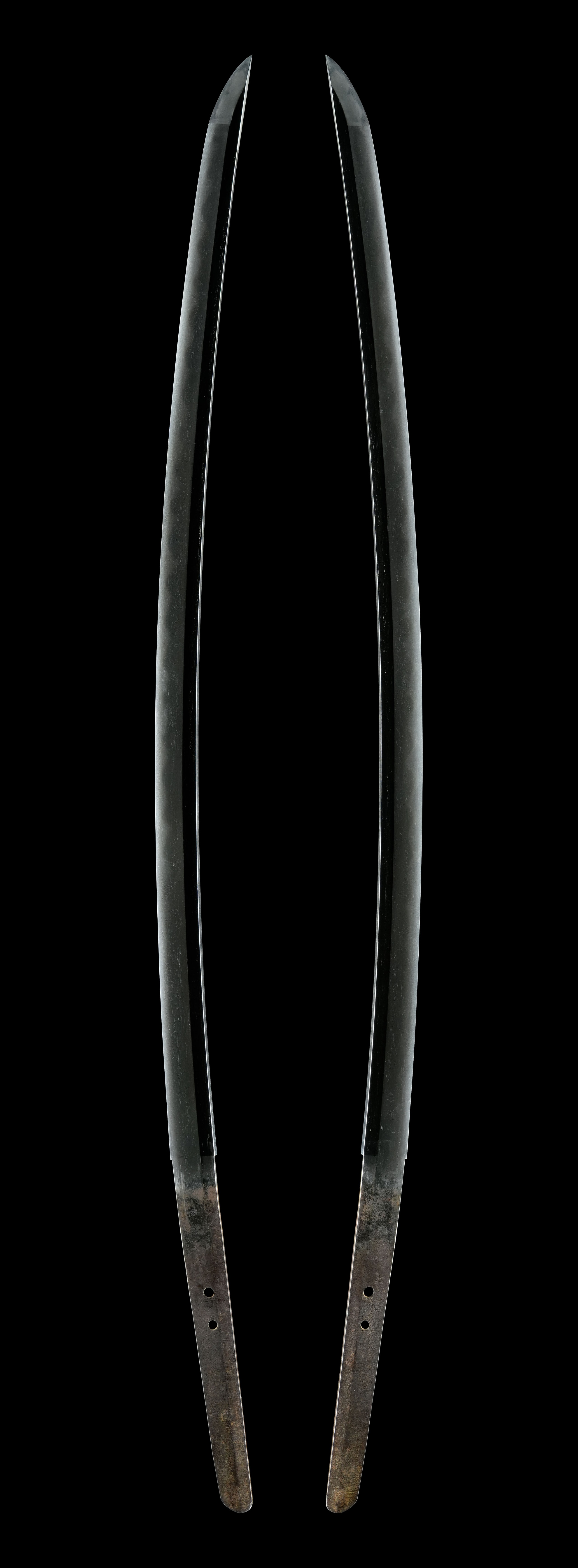
Meibun: "Bizennosuke Fujiwara Munetsugu" "Keio gannen gogatsu hi" Classification: Katana Nagasa: 2-shaku 3-sun 7-bu 5-rin Sori: 5-bu 1-rin Ehime Prefecture Board of Education Motohaba: 31 mm Motokasane: 7.5 mm Sakihaba: 24 mm Sakikasane: 5.5 mm Toshin weight: 861 grams (approximate) With Nihon Bijutsu Token Hozon Kyokai kanteisho This work features a finely packed ko-itame hada kitae with a dynamic and powerful gunome-midare, featuring sunagashii and mixed nie. The nioiguchi is extremely bright and clear; please enjoy the high level of skill displayed in Munetsugu's late years, forged with great care. It comes with koshirae featuring a raden saya, which is a wonderful mounting that is in no way inferior to the blade itself. Koyama Munetsugu was a tokō of the Edo period. His common name was Koyama Sobei. Born in Mutsu Shirakawa in Kyowa 3. He was a student of Kato Tsunahide, and Chounsai Tsunatoshi was his fellow pupil. He was retained by the Matsudaira family, and around the Bunsei era, he moved to Kuwana following the Matsudaira family's transfer to Ise, later relocating to Edo. Around the Koka era, he received the title of Bizennosuke. He also used the go Issensai and Seiryosai. It appears he passed away in the early Meiji period. His son, Soichiro, succeeded him as the second generation. His older brother was the fellow tokō Koyama Munehira, and his disciples included Tairyusai Munekan. 0 Yen (Tax included)
 NihontoWatch
signed · Bizen · Shin-Shinto · nagasa 71.98cm · sori 1.55cm
The Shinshintō revival
Around 1800 Suishinshi Masahide argued in his writings that the craft must return to the old masters’ methods: the fukkotō revival. His greatest successor Naotane worked convincingly in Bizen and Sōshū manners that had been dead for centuries.
A Hozon-certified blade judged to show notably superior workmanship and a better state of preservation. The bar is higher: re-tempered blades and most unsigned Muromachi/Edo works are excluded.
The NBTHK (Nihon Bijutsu Tōken Hozon Kyōkai, the Society for the Preservation of Japanese Art Swords) is a public-interest incorporated foundation founded in 1948 and supervised by Japan’s Agency for Cultural Affairs (Bunkachō); it is based at the Japanese Sword Museum in Tokyo. Its expert panels physically examine each submitted work (shinsa) and issue a certificate (kanteishō) ranking it by artistic and historical merit. NBTHK papers are the most widely recognized standard of authentication for Japanese swords and fittings.
NBTHK official sitePlease notify us of your intention to return, by email or fax, no later than the day after the item's arrival. Return shipping, insurance, and refund transfer fees are the customer's responsibility.
 Koshirae