NihontoWatch Mon

NihontoWatch

Market
Encyclopedia
Kantei
NihontoWatch Mon

NihontoWatch

Market
Encyclopedia
Kantei

Description

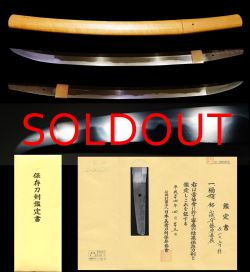
Meibun: "Yamashiro no Kuni Fujiwara Hidetoki" Type: Wakizashi Nagasa: 1 shaku 5 sun Sori: 4 bu Ibaraki Prefecture Board of Education Motohaba: 30 mm Motokasane: 7 mm Sakihaba: 22 mm Sakikasane: 6 mm Toshin weight: 702 grams (approximate) With NBTHK Kanteisho (Certificate) This sword features a refined jigane of small itame-hada with a hamon based on gunome. The habuchi is adorned with brilliant kinsuji and sparkling nie grains, presenting a grand and imposing taihai. It is a magnificent work that truly confirms its reputation as a wazamono. The first generation Hidetoki originated from Mino province, was known as Gonbei Hidetoki, and also produced swords in Edo and Owari. He was a swordsmith of the Tokuin school and is said to have been a pupil of Kanetsune. 0 Yen (Tax included)

NihontoWatch MonNihontoWatch
MarketEncyclopediaKantei
Swords›Yamashiro›Wazamono O-kissaki Goso Taihai, Mei "Yamashiro no Kuni Fujiwara Hidetoki," Hozon Token
katanaHozon
山城国藤原秀辰

Wazamono O-kissaki Goso Taihai, Mei "Yamashiro no Kuni Fujiwara Hidetoki," Hozon Token

Yamashiro · Edo

SOLD
山城国藤原秀辰 — 1 of 1
山城国藤原秀辰 — 1 of 1
Measurements & details
Smith
山城国藤原秀辰
Type
Katana
Period
Edo
Province
山城
Measurements
Motohaba 3cmSakihaba 2.2cmKasane 0.7cm
Description

Meibun: "Yamashiro no Kuni Fujiwara Hidetoki" Type: Wakizashi Nagasa: 1 shaku 5 sun Sori: 4 bu Ibaraki Prefecture Board of Education Motohaba: 30 mm Motokasane: 7 mm Sakihaba: 22 mm Sakikasane: 6 mm Toshin weight: 702 grams (approximate) With NBTHK Kanteisho (Certificate) This sword features a refined jigane of small itame-hada with a hamon based on gunome. The habuchi is adorned with brilliant kinsuji and sparkling nie grains, presenting a grand and imposing taihai. It is a magnificent work that truly confirms its reputation as a wazamono. The first generation Hidetoki originated from Mino province, was known as Gonbei Hidetoki, and also produced swords in Edo and Owari. He was a swordsmith of the Tokuin school and is said to have been a pupil of Kanetsune. 0 Yen (Tax included)

Historical context

For two and a half centuries of peace the sword was the warrior’s legal badge rather than his weapon. Each great city developed its own manner, Edo’s tested strength against Ōsaka’s polished brilliance, until demand thinned in the era’s last decades.

The Edo period (1615 to 1868) →

NBTHK Certificate
Hozon Tōken保存刀剣
Sword Worthy of Preservation
›

Certifies a genuine blade worth preserving: a signature confirmed correct, or, if unsigned, an era, province, and school that the NBTHK can reliably identify.

About the NBTHK›

The NBTHK (Nihon Bijutsu Tōken Hozon Kyōkai, the Society for the Preservation of Japanese Art Swords) is a public-interest incorporated foundation founded in 1948 and supervised by Japan’s Agency for Cultural Affairs (Bunkachō); it is based at the Japanese Sword Museum in Tokyo. Its expert panels physically examine each submitted work (shinsa) and issue a certificate (kanteishō) ranking it by artistic and historical merit. NBTHK papers are the most widely recognized standard of authentication for Japanese swords and fittings.

NBTHK official site→
Seller
K
Kusanagi
🇯🇵Ships from Japan
›
✓Verified dealerkusanaginosya.com
✓Ships worldwideWire transfer
Return policy

Please notify us of your intention to return, by email or fax, no later than the day after the item's arrival. Return shipping, insurance, and refund transfer fees are the customer's responsibility.

View all of Kusanagi’s listings→View this item on the dealer’s site→

Swords

  • Katana
  • Wakizashi
  • Tantō
  • Tachi
  • Naginata
  • Yari

Fittings

  • Tsuba
  • Fuchi-Kashira
  • Kozuka
  • Menuki

Armor

  • Kabuto
  • Samurai Armor

By Certification

  • Tokujū
  • Jūyō
  • Tokuho
  • Hozon

Resources

  • Dealer Directory
  • Artist Directory
  • The Daily Kantei
  • Glossary
  • Browse All
Nihontowatch© 2026
TermsPrivacyCookiesAbout

Description

Meibun: "Yamashiro no Kuni Fujiwara Hidetoki" Type: Wakizashi Nagasa: 1 shaku 5 sun Sori: 4 bu Ibaraki Prefecture Board of Education Motohaba: 30 mm Motokasane: 7 mm Sakihaba: 22 mm Sakikasane: 6 mm Toshin weight: 702 grams (approximate) With NBTHK Kanteisho (Certificate) This sword features a refined jigane of small itame-hada with a hamon based on gunome. The habuchi is adorned with brilliant kinsuji and sparkling nie grains, presenting a grand and imposing taihai. It is a magnificent work that truly confirms its reputation as a wazamono. The first generation Hidetoki originated from Mino province, was known as Gonbei Hidetoki, and also produced swords in Edo and Owari. He was a swordsmith of the Tokuin school and is said to have been a pupil of Kanetsune. 0 Yen (Tax included)

NihontoWatch MonNihontoWatch
MarketEncyclopediaKantei
Swords›Yamashiro›Wazamono O-kissaki Goso Taihai, Mei "Yamashiro no Kuni Fujiwara Hidetoki," Hozon Token
katanaHozon
山城国藤原秀辰

Wazamono O-kissaki Goso Taihai, Mei "Yamashiro no Kuni Fujiwara Hidetoki," Hozon Token

Yamashiro · Edo

SOLD
山城国藤原秀辰 — 1 of 1
山城国藤原秀辰 — 1 of 1
Measurements & details
Smith
山城国藤原秀辰
Type
Katana
Period
Edo
Province
山城
Measurements
Motohaba 3cmSakihaba 2.2cmKasane 0.7cm
Description

Meibun: "Yamashiro no Kuni Fujiwara Hidetoki" Type: Wakizashi Nagasa: 1 shaku 5 sun Sori: 4 bu Ibaraki Prefecture Board of Education Motohaba: 30 mm Motokasane: 7 mm Sakihaba: 22 mm Sakikasane: 6 mm Toshin weight: 702 grams (approximate) With NBTHK Kanteisho (Certificate) This sword features a refined jigane of small itame-hada with a hamon based on gunome. The habuchi is adorned with brilliant kinsuji and sparkling nie grains, presenting a grand and imposing taihai. It is a magnificent work that truly confirms its reputation as a wazamono. The first generation Hidetoki originated from Mino province, was known as Gonbei Hidetoki, and also produced swords in Edo and Owari. He was a swordsmith of the Tokuin school and is said to have been a pupil of Kanetsune. 0 Yen (Tax included)

Historical context

For two and a half centuries of peace the sword was the warrior’s legal badge rather than his weapon. Each great city developed its own manner, Edo’s tested strength against Ōsaka’s polished brilliance, until demand thinned in the era’s last decades.

The Edo period (1615 to 1868) →

NBTHK Certificate
Hozon Tōken保存刀剣
Sword Worthy of Preservation
›

Certifies a genuine blade worth preserving: a signature confirmed correct, or, if unsigned, an era, province, and school that the NBTHK can reliably identify.

About the NBTHK›

The NBTHK (Nihon Bijutsu Tōken Hozon Kyōkai, the Society for the Preservation of Japanese Art Swords) is a public-interest incorporated foundation founded in 1948 and supervised by Japan’s Agency for Cultural Affairs (Bunkachō); it is based at the Japanese Sword Museum in Tokyo. Its expert panels physically examine each submitted work (shinsa) and issue a certificate (kanteishō) ranking it by artistic and historical merit. NBTHK papers are the most widely recognized standard of authentication for Japanese swords and fittings.

NBTHK official site→
Seller
K
Kusanagi
🇯🇵Ships from Japan
›
✓Verified dealerkusanaginosya.com
✓Ships worldwideWire transfer
Return policy

Please notify us of your intention to return, by email or fax, no later than the day after the item's arrival. Return shipping, insurance, and refund transfer fees are the customer's responsibility.

View all of Kusanagi’s listings→View this item on the dealer’s site→

Swords

  • Katana
  • Wakizashi
  • Tantō
  • Tachi
  • Naginata
  • Yari

Fittings

  • Tsuba
  • Fuchi-Kashira
  • Kozuka
  • Menuki

Armor

  • Kabuto
  • Samurai Armor

By Certification

  • Tokujū
  • Jūyō
  • Tokuho
  • Hozon

Resources

  • Dealer Directory
  • Artist Directory
  • The Daily Kantei
  • Glossary
  • Browse All
Nihontowatch© 2026
TermsPrivacyCookiesAbout
NihontoWatch Mon

NihontoWatch

Market
Encyclopedia
Kantei
NihontoWatch Mon

NihontoWatch

Market
Encyclopedia
Kantei