Koto Mumei with Koshirae.
This is a mumei Koto blade estimated to be of the Yamashiro tradition from the late Kamakura period to the Nanbokucho period.
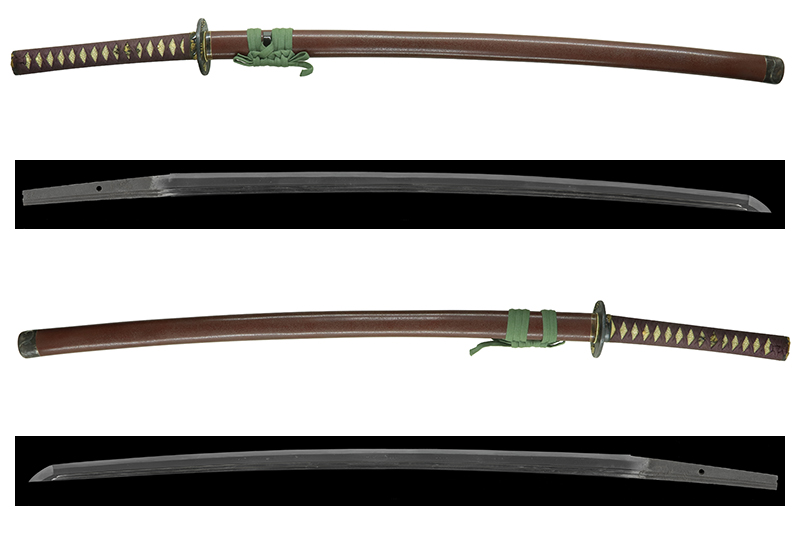
It features ko-gunome-midare on itame-hada; there is small rust, but the jihada is in good condition.
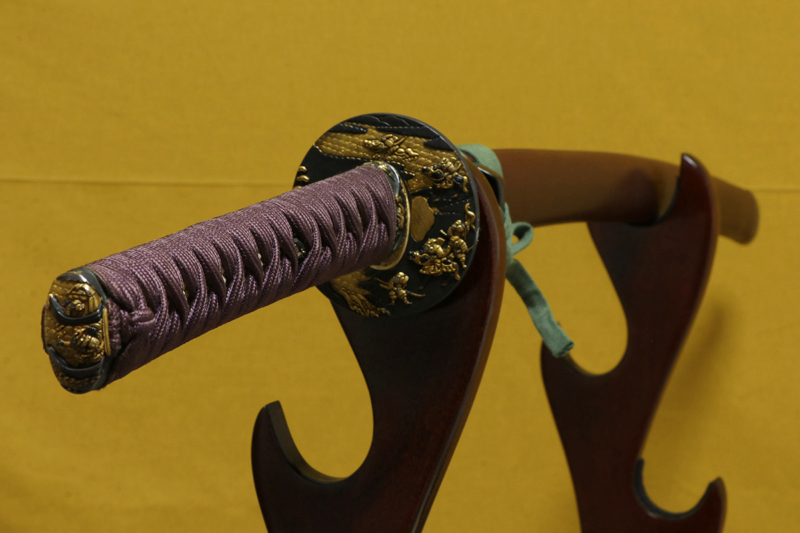
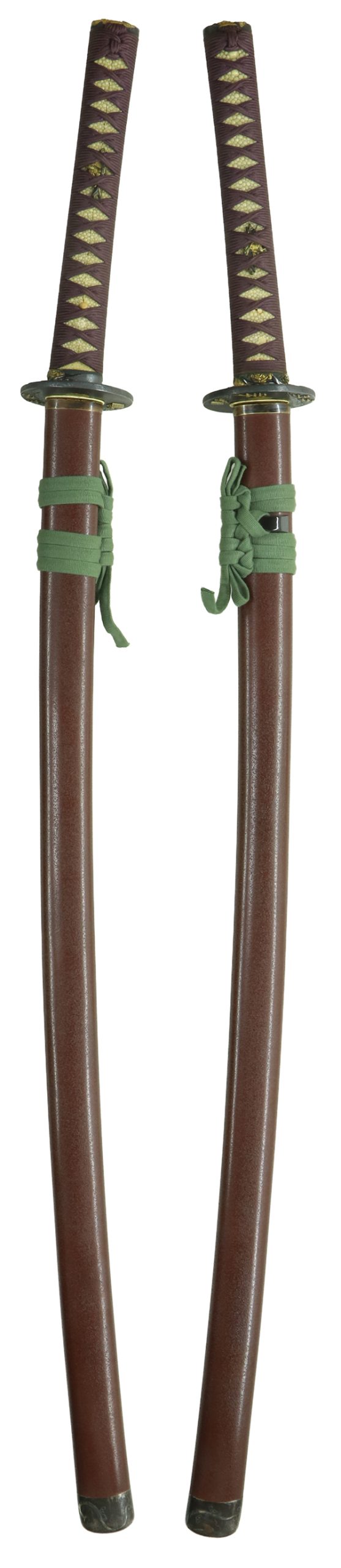
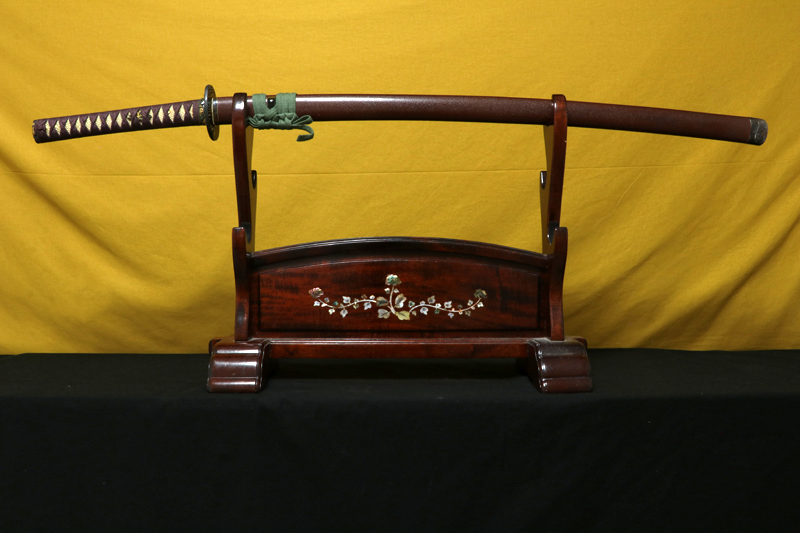
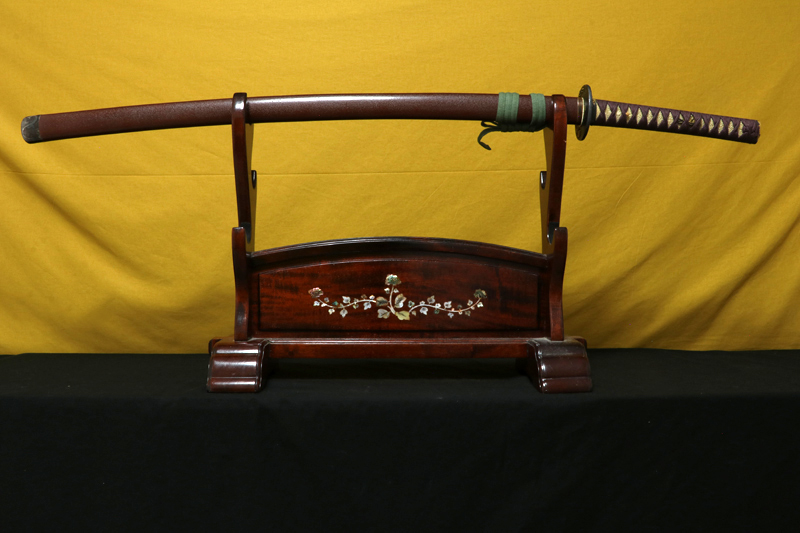
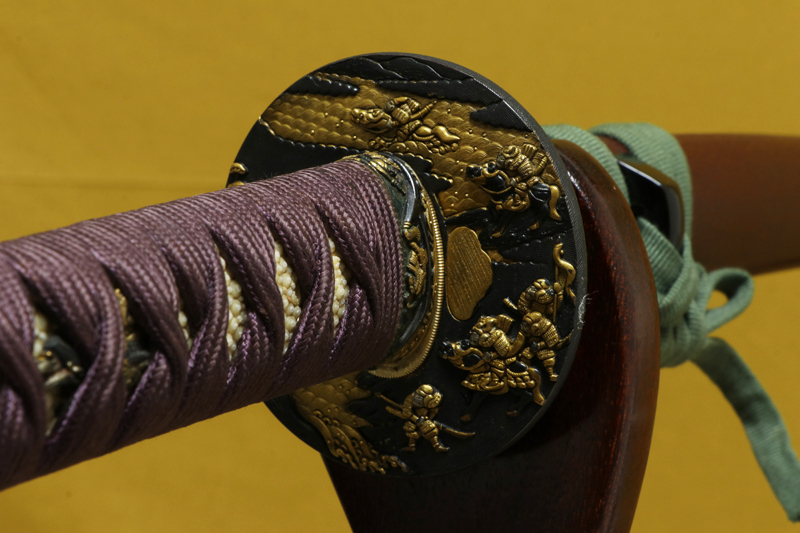
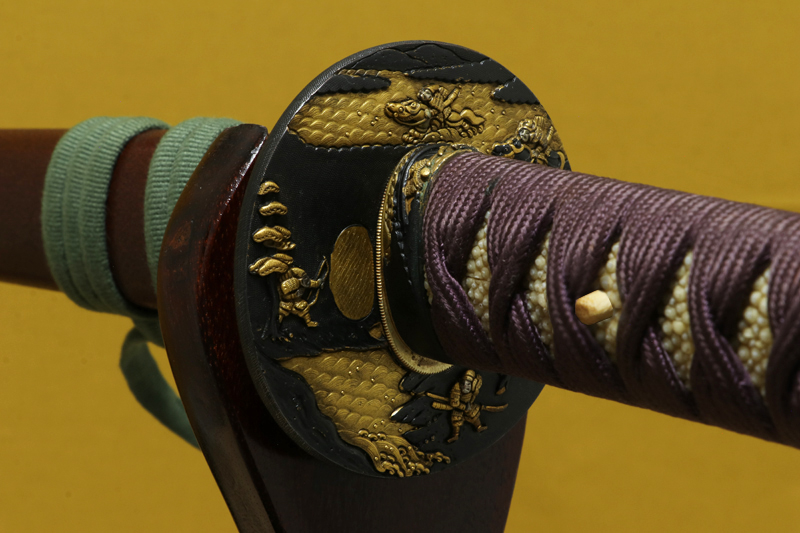
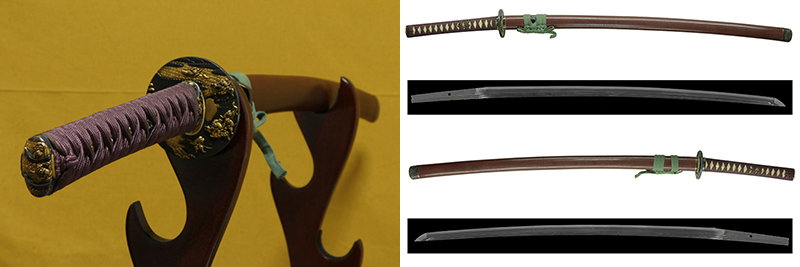
Equipped with a magnificent koshirae depicting the Battles of Uji-gawa and Dan-no-ura, it is in good condition.
It is ideal for a collection and is a masterpiece for which NBTHK appraisal is also something to look forward to.
This is an unsigned Koto katana, believed to be a work of the Yamashiro tradition from the late Kamakura to Nanbokucho period.
The blade features an itame-hada with a ko-gunome-midare hamon. Despite minor rust spots, the jihada remains clearly visible.
The magnificent koshirae features scenes from the Battles of Uji River and Dan-no-ura and is in excellent condition.
An excellent collector’s piece and a promising candidate for NBTHK appraisal.
「刀姿 sword figure」
Shinogi-zukuri, iori-mune, mihaba is somewhat narrow, kasane is ordinary, torii-zori, ko-kissaki. Nakago is o-suriage, yasurime are sujikai, kurijiri is kurijiri.
Shinogi-zukuri with an iori-mune, slightly narrow mihaba, standard kasane, torii-zori, and ko-kissaki. The nakago is o-suriage, with sujikai yasuri-me and a kurijiri nakago-jiri.
「彫り物 carving」
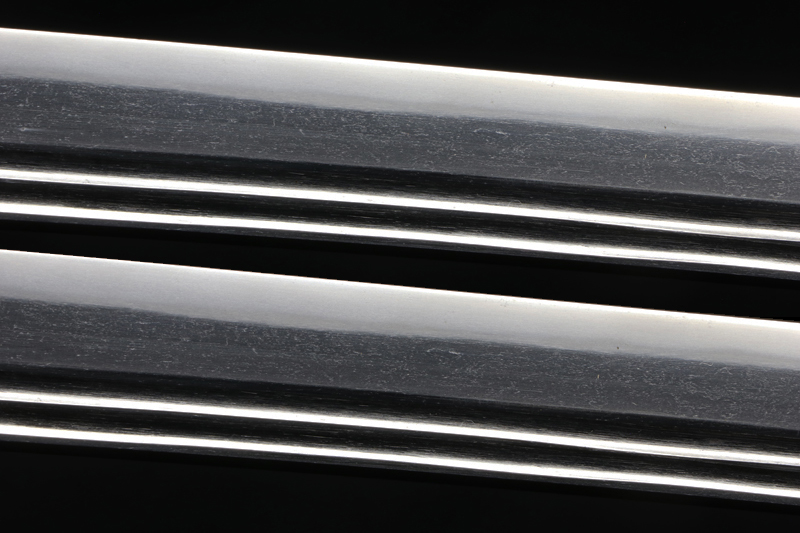
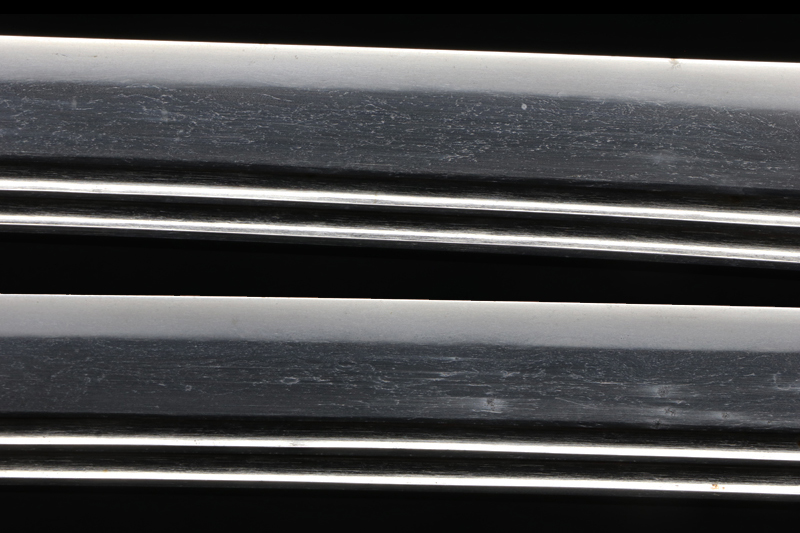
The horimono consists of futasuji-hi on the omote and ura which are kaki-toshi at the nakago-jiri.
The horimono consists of futasuji-hi on both sides, extending through to the end of the nakago (kaki-toshi).
「地鉄 jigane」
Jigane is itame-hada mixed with ko-itame, with ji-nie.
The jigane is itame-hada mixed with ko-itame, with ji-nie.
「刃紋 hamon」
Hamon is suguha-style ko-gunome, habuchi has ko-nie and ko-ashi enters, kinsuji works within the ha. Boshi enters according to the hamon, is togari, and has a slight kaeri.
The hamon is suguha-based ko-gunome, with ko-nie along the habuchi and small ashi. Kinsuji can be seen within the hamon. The boshi follows the hamon, becoming pointed with a slight kaeri.
「特徴 detailed」
This work is a mumei Koto, and it is estimated that it was originally a tachi with a nagasa of about 2 shaku 6 sun (78.8 cm) manufactured from the late Kamakura period to the Nanbokucho period. From the characteristics of the sword figure and the ji-ba, the possibility that it was a tachi of the Yamashiro tradition is considered.
The jigane is itame-hada, and it is a blade that has been tempered with ko-gunome-midare. Due to the old polish, small rust can be seen, but the jihada can be appreciated well.
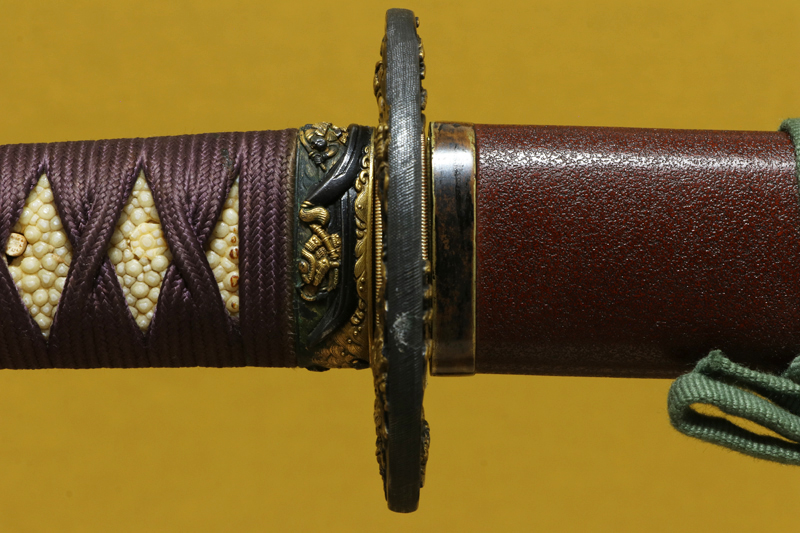
The koshirae is very wonderful; the fuchi-kashira and tsuba are unified as a matching set of fittings with the Battle of Uji-gawa as the theme, and the menuki are decorated with a depiction of the Battle of Dan-no-ura. Also, it is a magnificent tailoring with attention to detail, such as using gold-wrapped suaka-ji for the seppa. Both the design and craftsmanship are worth seeing, and the preservation state is also good.
It is a blade ideal for appreciation and collection, combining the charm unique to Koto with a magnificent koshirae themed on the Genpei War. It is a masterpiece for which submitting to NBTHK appraisal is also something to look forward to.
This is an unsigned Koto katana, believed to have originally been a tachi measuring approximately 2 shaku 6 sun (78.8 cm), dating from the late Kamakura to Nanbokucho period. Judging from its sugata, jigane, and hamon, it is possibly a work of the Yamashiro tradition.
The blade features an itame-hada with a ko-gunome-midare hamon. Although there are a few small rust spots due to the old polish, the jihada remains clearly visible.
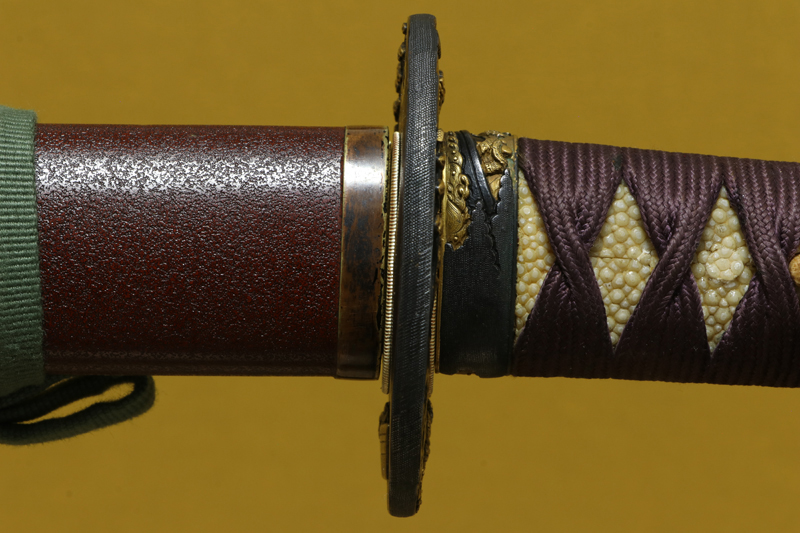
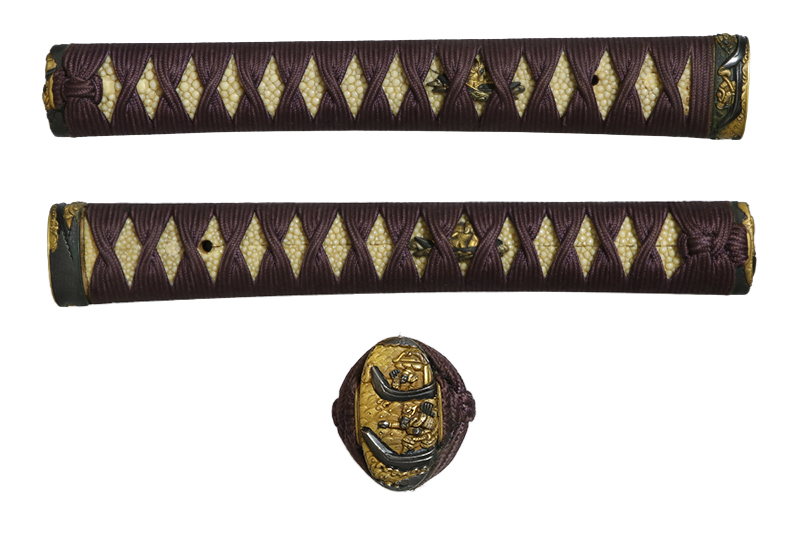
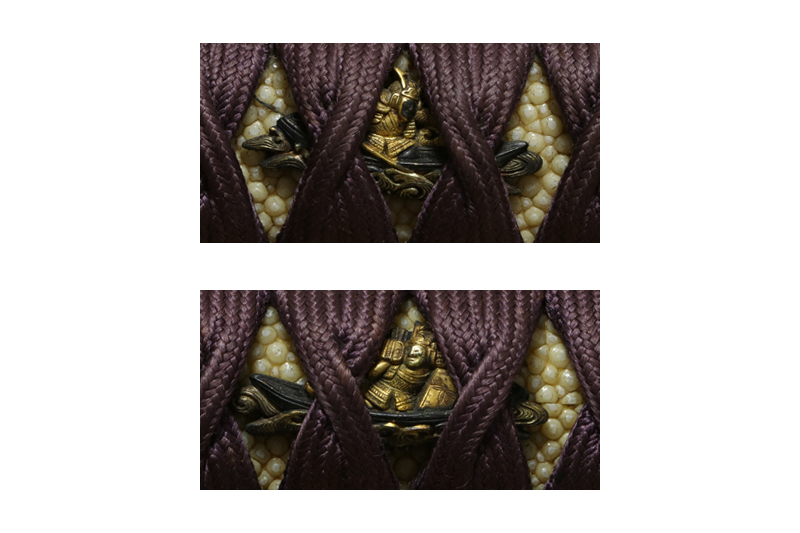
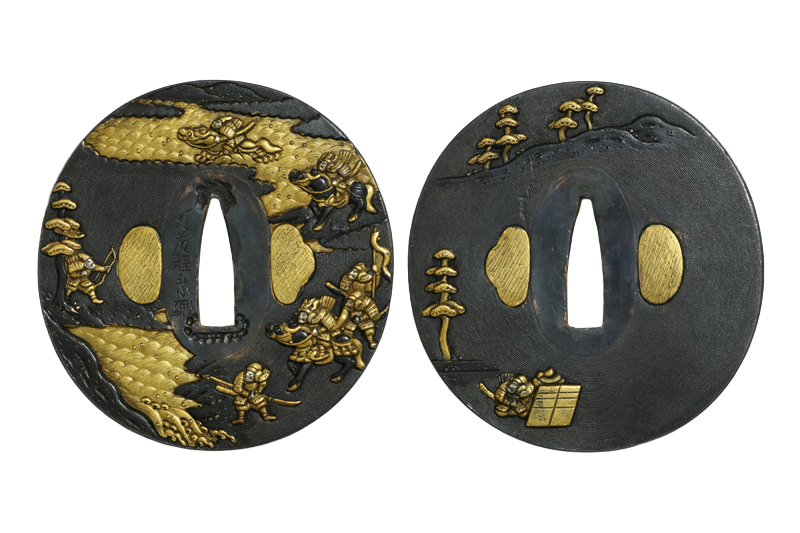
The koshirae is particularly magnificent. The fuchi-kashira and tsuba form a matching set by the same craftsman, depicting scenes from the famous Battle of Uji River, while the menuki feature scenes from the Battle of Dan-no-ura. The seppa are made of copper with gold foil covering, reflecting the exceptional attention to detail. The craftsmanship and design are impressive, and the entire koshirae is in excellent condition.
Combining the historical charm of a Koto blade with magnificent koshirae featuring scenes from the Genpei War, this is an outstanding sword for appreciation and collection. It is also a fascinating candidate for NBTHK appraisal.
「拵 Koshirae」
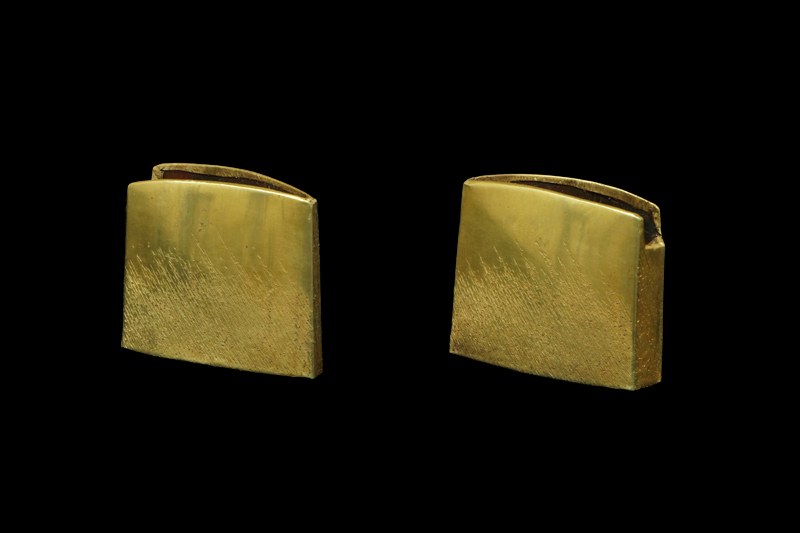
Habaki: Gold-wrapped suaka-ji single-piece Koshi-Yujo.
Tsuba: Shakudo nanako-ji, Battle of Uji-gawa design, gold zogan (Mei: Goto Teijo, kao).
Fuchi-Kashira: Shakudo nanako-ji, Battle of Uji-gawa design, gold zogan (Mei: Goto Teijo, kao).
Menuki: Shakudo-ji, Dan-no-ura design, gold zogan.
Seppa: Gold-wrapped suaka-ji.
Tsuka: Same has an oyatsubu. Tsuka-maki is dark brown pure silk morotsumi-maki.
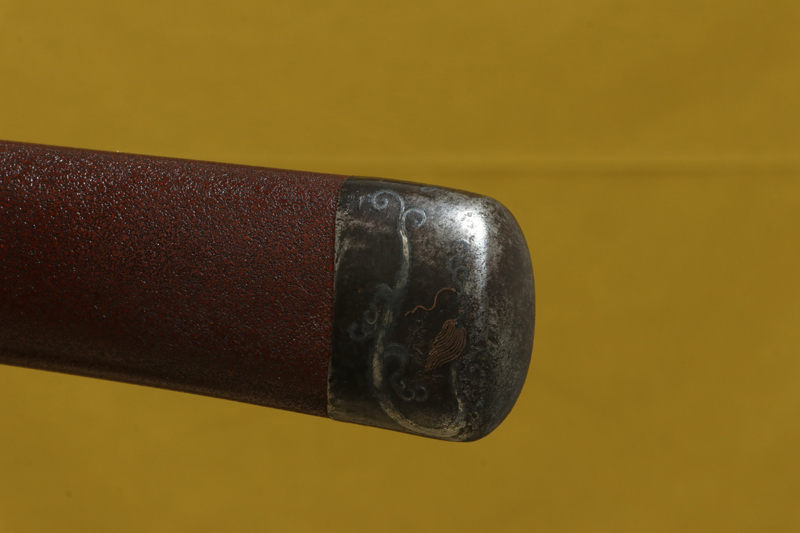
Saya: Dark brown dry lacquer ishime.
Kojiri: Tetsu-ji, dragon design.
「刀剣の状態 condition of blade」
Polish: Due to the old polish, small rust can be seen, but the jihada can be appreciated well.
Flaws: There are no flaws that would become a defect.
Machine translation from the shop's Japanese · may contain errors ·
Koto Mumei with Koshirae.
This is a mumei Koto blade estimated to be of the Yamashiro tradition from the late Kamakura period to the Nanbokucho period.
It features ko-gunome-midare on itame-hada; there is small rust, but the jihada is in good condition.
Equipped with a magnificent koshirae depicting the Battles of Uji-gawa and Dan-no-ura, it is in good condition.
It is ideal for a collection and is a masterpiece for which NBTHK appraisal is also something to look forward to.
This is an unsigned Koto katana, believed to be a work of the Yamashiro tradition from the late Kamakura to Nanbokucho period.
The blade features an itame-hada with a ko-gunome-midare hamon. Despite minor rust spots, the jihada remains clearly visible.
The magnificent koshirae features scenes from the Battles of Uji River and Dan-no-ura and is in excellent condition.
An excellent collector’s piece and a promising candidate for NBTHK appraisal.
「刀姿 sword figure」
Shinogi-zukuri, iori-mune, mihaba is somewhat narrow, kasane is ordinary, torii-zori, ko-kissaki. Nakago is o-suriage, yasurime are sujikai, kurijiri is kurijiri.
Shinogi-zukuri with an iori-mune, slightly narrow mihaba, standard kasane, torii-zori, and ko-kissaki. The nakago is o-suriage, with sujikai yasuri-me and a kurijiri nakago-jiri.
「彫り物 carving」
The horimono consists of futasuji-hi on the omote and ura which are kaki-toshi at the nakago-jiri.
The horimono consists of futasuji-hi on both sides, extending through to the end of the nakago (kaki-toshi).
「地鉄 jigane」
Jigane is itame-hada mixed with ko-itame, with ji-nie.
The jigane is itame-hada mixed with ko-itame, with ji-nie.
「刃紋 hamon」
Hamon is suguha-style ko-gunome, habuchi has ko-nie and ko-ashi enters, kinsuji works within the ha. Boshi enters according to the hamon, is togari, and has a slight kaeri.
The hamon is suguha-based ko-gunome, with ko-nie along the habuchi and small ashi. Kinsuji can be seen within the hamon. The boshi follows the hamon, becoming pointed with a slight kaeri.
「特徴 detailed」
This work is a mumei Koto, and it is estimated that it was originally a tachi with a nagasa of about 2 shaku 6 sun (78.8 cm) manufactured from the late Kamakura period to the Nanbokucho period. From the characteristics of the sword figure and the ji-ba, the possibility that it was a tachi of the Yamashiro tradition is considered.
The jigane is itame-hada, and it is a blade that has been tempered with ko-gunome-midare. Due to the old polish, small rust can be seen, but the jihada can be appreciated well.
The koshirae is very wonderful; the fuchi-kashira and tsuba are unified as a matching set of fittings with the Battle of Uji-gawa as the theme, and the menuki are decorated with a depiction of the Battle of Dan-no-ura. Also, it is a magnificent tailoring with attention to detail, such as using gold-wrapped suaka-ji for the seppa. Both the design and craftsmanship are worth seeing, and the preservation state is also good.
It is a blade ideal for appreciation and collection, combining the charm unique to Koto with a magnificent koshirae themed on the Genpei War. It is a masterpiece for which submitting to NBTHK appraisal is also something to look forward to.
This is an unsigned Koto katana, believed to have originally been a tachi measuring approximately 2 shaku 6 sun (78.8 cm), dating from the late Kamakura to Nanbokucho period. Judging from its sugata, jigane, and hamon, it is possibly a work of the Yamashiro tradition.
The blade features an itame-hada with a ko-gunome-midare hamon. Although there are a few small rust spots due to the old polish, the jihada remains clearly visible.
The koshirae is particularly magnificent. The fuchi-kashira and tsuba form a matching set by the same craftsman, depicting scenes from the famous Battle of Uji River, while the menuki feature scenes from the Battle of Dan-no-ura. The seppa are made of copper with gold foil covering, reflecting the exceptional attention to detail. The craftsmanship and design are impressive, and the entire koshirae is in excellent condition.
Combining the historical charm of a Koto blade with magnificent koshirae featuring scenes from the Genpei War, this is an outstanding sword for appreciation and collection. It is also a fascinating candidate for NBTHK appraisal.
「拵 Koshirae」
Habaki: Gold-wrapped suaka-ji single-piece Koshi-Yujo.
Tsuba: Shakudo nanako-ji, Battle of Uji-gawa design, gold zogan (Mei: Goto Teijo, kao).
Fuchi-Kashira: Shakudo nanako-ji, Battle of Uji-gawa design, gold zogan (Mei: Goto Teijo, kao).
Menuki: Shakudo-ji, Dan-no-ura design, gold zogan.
Seppa: Gold-wrapped suaka-ji.
Tsuka: Same has an oyatsubu. Tsuka-maki is dark brown pure silk morotsumi-maki.
Saya: Dark brown dry lacquer ishime.
Kojiri: Tetsu-ji, dragon design.
「刀剣の状態 condition of blade」
Polish: Due to the old polish, small rust can be seen, but the jihada can be appreciated well.
Flaws: There are no flaws that would become a defect.
Historical context
The Kamakura period (1185 to 1333)
›
Nearly every later authority calls Kamakura the golden age of the sword: the first warrior government as patron, the great traditions at full strength simultaneously, and, tradition holds, the finest smiths of the realm rotating through Go-Toba’s court.
We could not find an authenticity certificate on the seller’s listing. Japanese swords and fittings are normally papered by the NBTHK (or the NTHK). Without one, the attribution is the seller’s own assessment and has not been independently verified — treat it with caution and ask the dealer about certification before buying.
Within 3 days of the item's arrival, we offer a refund or an exchange. Return shipping and the bank transfer fee for the refund are at the customer's expense.


 NihontoWatch